Plant pre-orders are now open for spring 2027!
🍁We are proudly a Canadian business. Thank you for supporting us! 🍁

-
Grow With Us
-
Apple Trees
-
Cherries
-
Pear
-
Plum
-
Budwood
-
Scionwood
-
Rootstock
-
Collections By Zone
-
Collections by Use
Grow With UsFruit TreesBerries & VinesOther PerennialsPropagation MaterialSpecial CollectionsTree Supplies -
-
Learn With Us
-
Plan Before You Order
-
Basic Ordering Guide
-
Rootstocks & Tree Size
-
Pruning
-
Signs Of Tree Stress
Learn With UsGuide For BeginnersYour New Tree - Planting CareHolistic AftercareGraftingEvents -
About Us
-
New to bareroot plants?
NOW OPEN FOR ORDERS!
All bareroot trees, plants & tubers will ship Spring 2027
Grapes
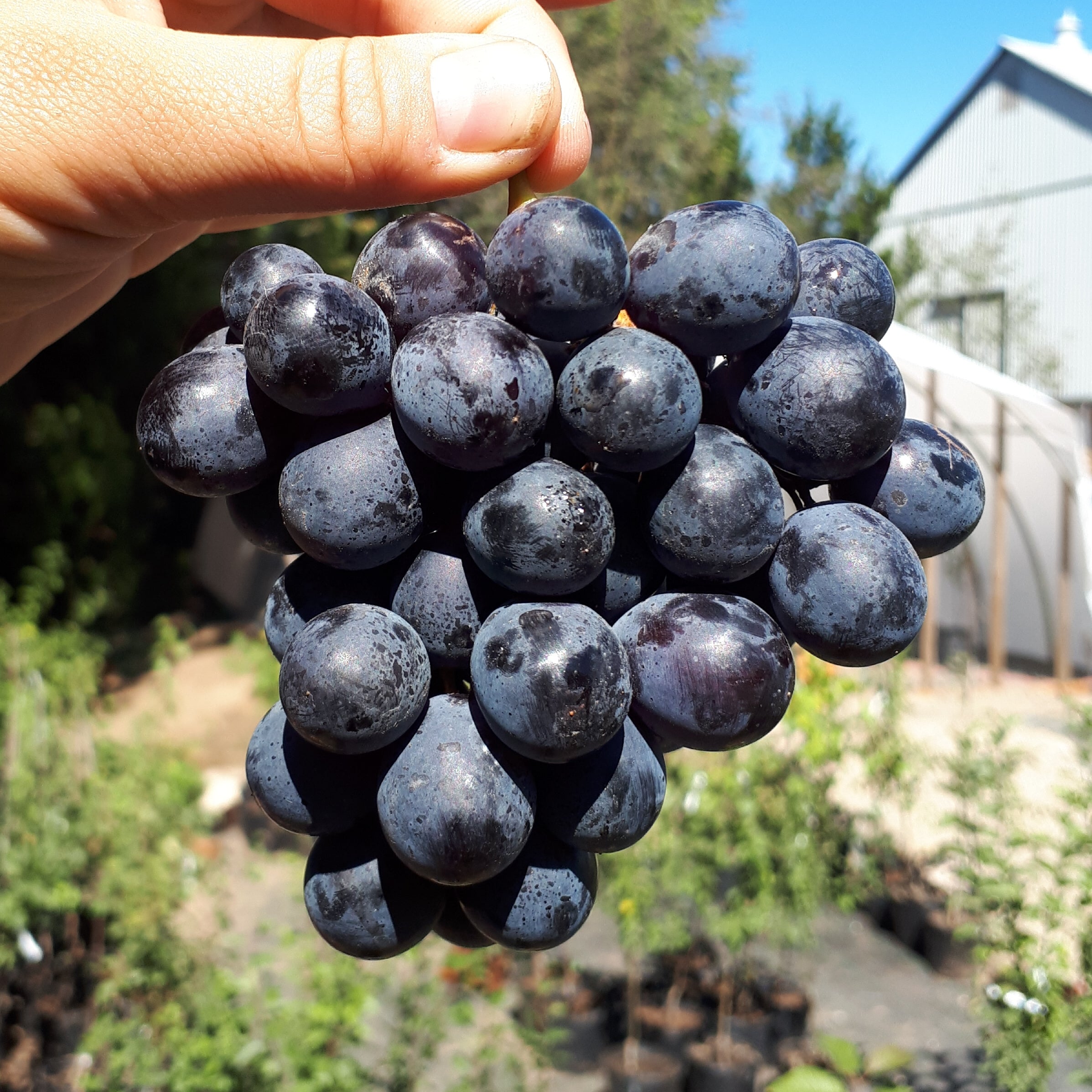
Grapes
Vitis spp.
Grapes have long been a staple of many cultures and we are happy to offer these cold hardy varieties for Canadian growers. Best grown when trellised in full sun, these flexible vines can be grown in a variety of spaces to suit your needs. Nothing beats a fresh grape off the vine or when used for cooking, baking, or wine. Our grapes are self-pollinating.
We offer flat-rate shipping across Canada* on all our Grapes grown for Canadian climates, as well as a wide selection of hard to find fruit trees and plants. Shop quality trees and plants delivered conveniently to your door!
8 products
Sort by:
8 products
8 products
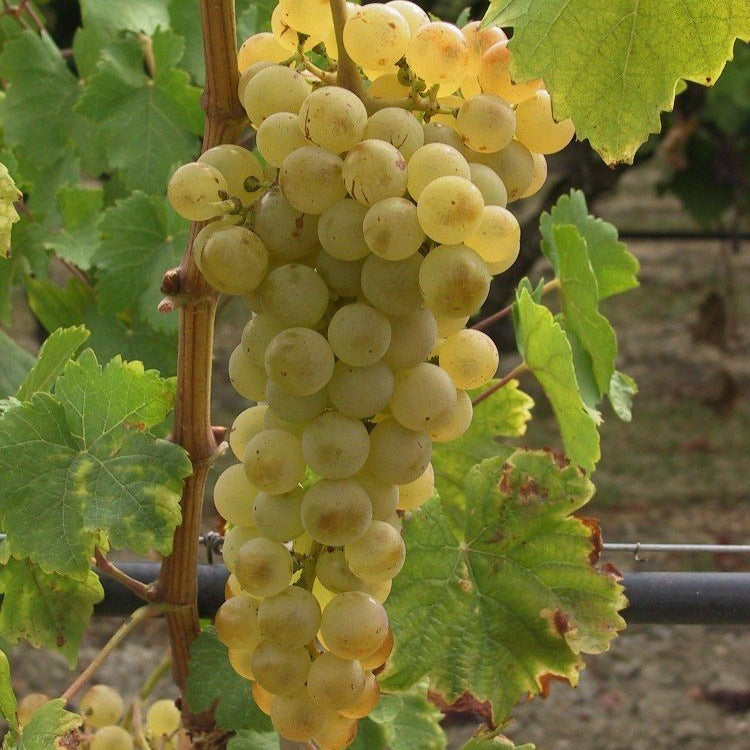
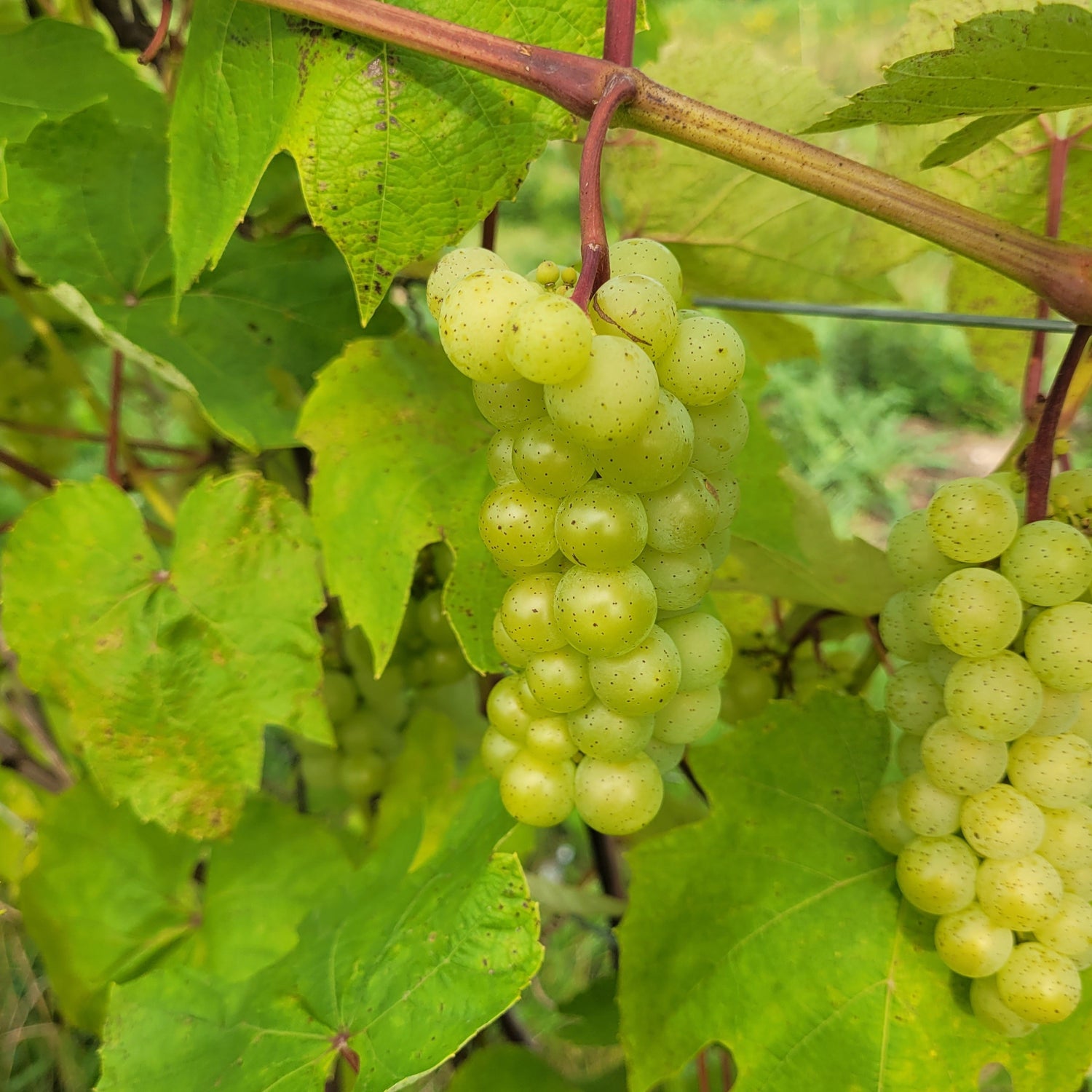
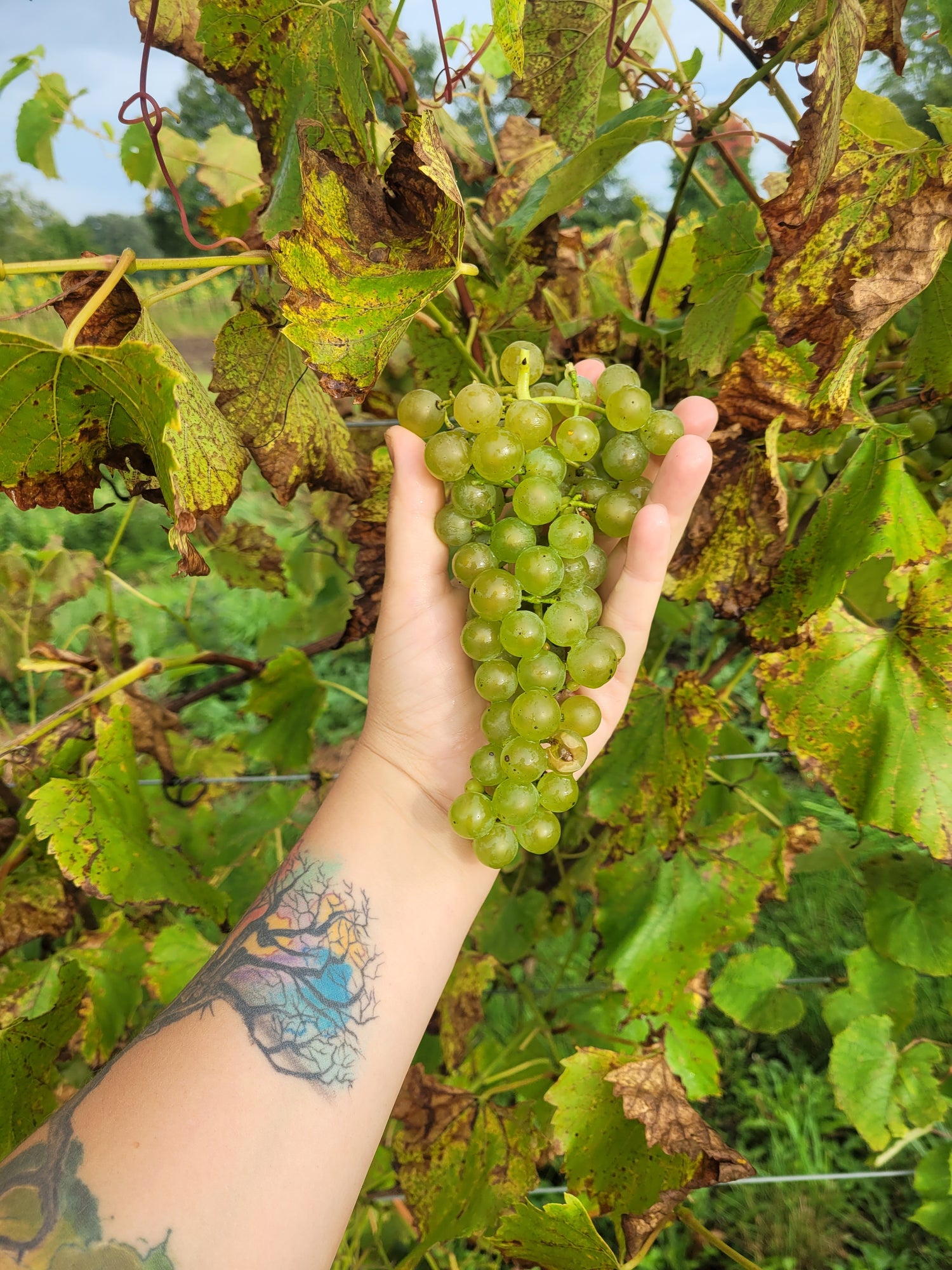
Species: Vitis riparia x Vitis labrusca
History: Brianna was bred by renowned grape breeder Elmer Swenson as a cross between Riverbank grape (V. riparia) and Fox grape (V. labrusca) as part of his effort to create high-quality grapes that were cold hardy enough to be grown in the cooler parts of North America. Brianna was first bred in 1983 on Swenson's farm in Wisconsin and released in 2001. It was named by Ed Swanson who was planning on naming it Brian due to its vigour but chose Brianna instead, believing the feminine name was more fitting for white wine.
Why We Grow It: Brianna is a seeded green grape with an excellent complex fruity flavour that has hints of grapefruit and pineapple. The medium-large green fruit is suitable for fresh eating or making wine or juice. This variety boasts good disease resistance, vigorous growth, and begins producing fruit at a young age.

Species: Vitis sp. (hybrid)
History: Canadice is a cross between Bath and Himrod that was first bred in 1954 at the New York State Agricultural Experiment Station in Geneva, New York. Selected for its seedless nature and cold hardiness, it was released in 1977. The variety was named for Canadice Lake, one of the nearby Finger Lakes.
Why We Grow It: Canadice produces seedless red grapes that are sweet with a hint of spice. The fruit is best known for fresh-eating but it can also be used for jellies, juice and wine. Although this is one of the more cold hardy varieties of seedless grape, it may still suffer winter injury in a particularly cold year.

Species: Vitis labrusca x V. vinifera
History: Concord was created by Ephraim Bull in Massachusetts. In 1843, he began breeding wild V. labrusca grapes, occasionally hybridizing them with V. vinifera, in an effort to breed a good quality grape that could survive a colder climate. After growing 22,000 seedlings, he found one that fit what he was looking for. He named it Concord after the town where his farm was located and introduced it in 1854. In 1869, Dr. Thomas Welch created pasteurized Concord grape juice that prevented fermentation, marketing it as a non-alcoholic substitute for Communion wine. This business eventually became the Welch's company that still exists today. By 1923, Concord became the most commonly grown commercial grape in North America and although its status has fallen somewhat, it is still commonly grown and used in many grape products. The distinct colour of the grapes is also the reason why grape-flavoured products are coloured purple!
Why We Grow It: Concord produces dark blue slipskin grapes that are aromatic with a sweet flavour. This hardy, vigorous variety is great for fresh eating, baking, and jelly and is suitable for juice and wine as well. The grapes do contain a large seed.

Species: Vitis sp. (hybrid)
History: Frontenac was bred by renowned cold hardy grape breeder Elmer Swenson at the University of Minnesota. It was released in 1996 and since then has become commonly planted in Canada and northeastern America where other wine grapes will not perform as well.
Why We Grow It: Frontenac produces a blue grape that is best used for wine-making. It is suitable for rosés, dry red wines, and fortified wines such as port. It is high in both acidity and sugar, producing a balanced wine with a nice colour.
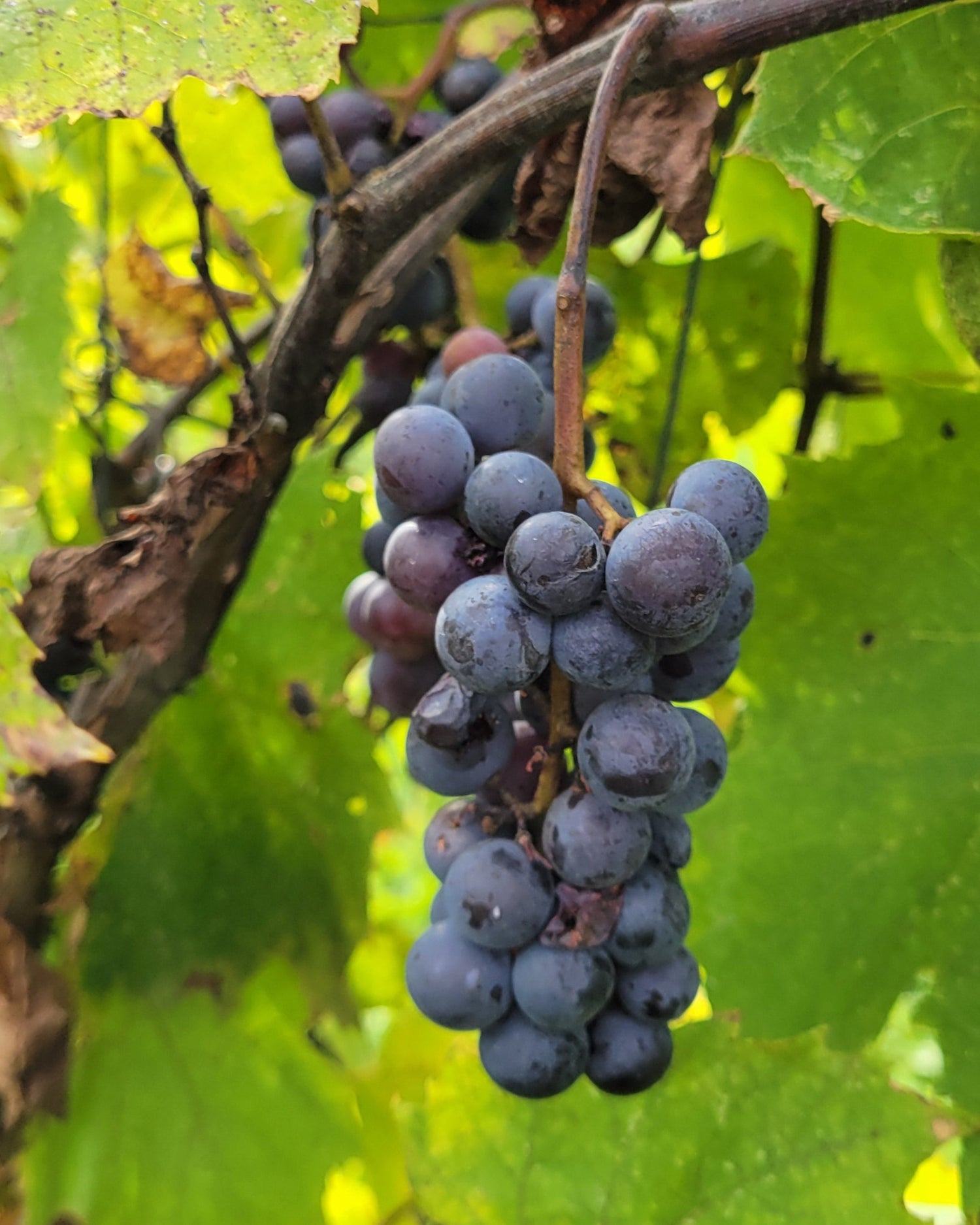
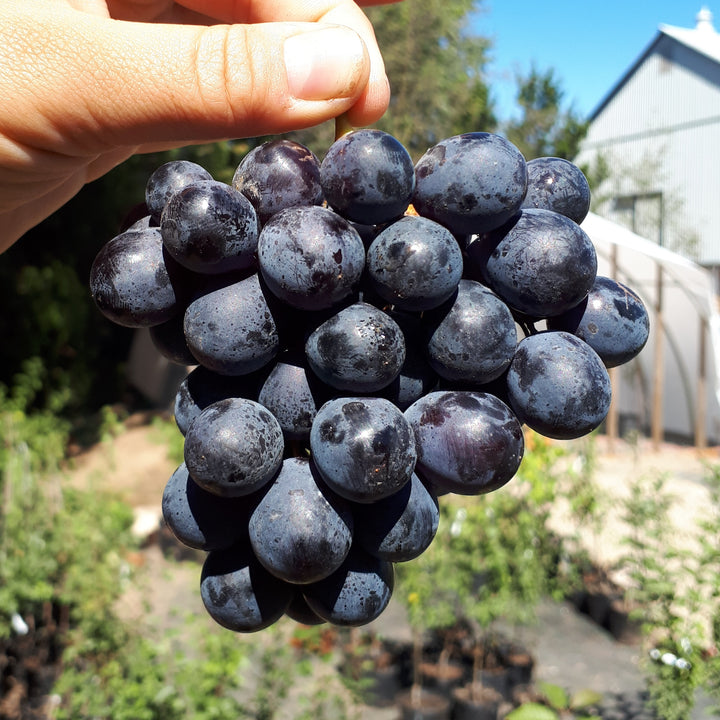
Species: Vitis sp. (hybrid)
History: Montreal Blues is one of the many varieties created by renowned grape breeder Elmer Swenson in Osceola, Wisconsin, as part of his effort to breed cold hardy grapes suitable for growing in the colder climates of North America. This variety was released in 1998 and in some areas is also known as St. Theresa, named for Saint Therese of Lisieux who was a French nun who planted flowers to show her love of God.
Why We Grow It: This variety produces large clusters of blue, Concord-like grapes with a nice, mild sweet flavour. They are quite cold hardy and can be made into pies, jams, or juice!
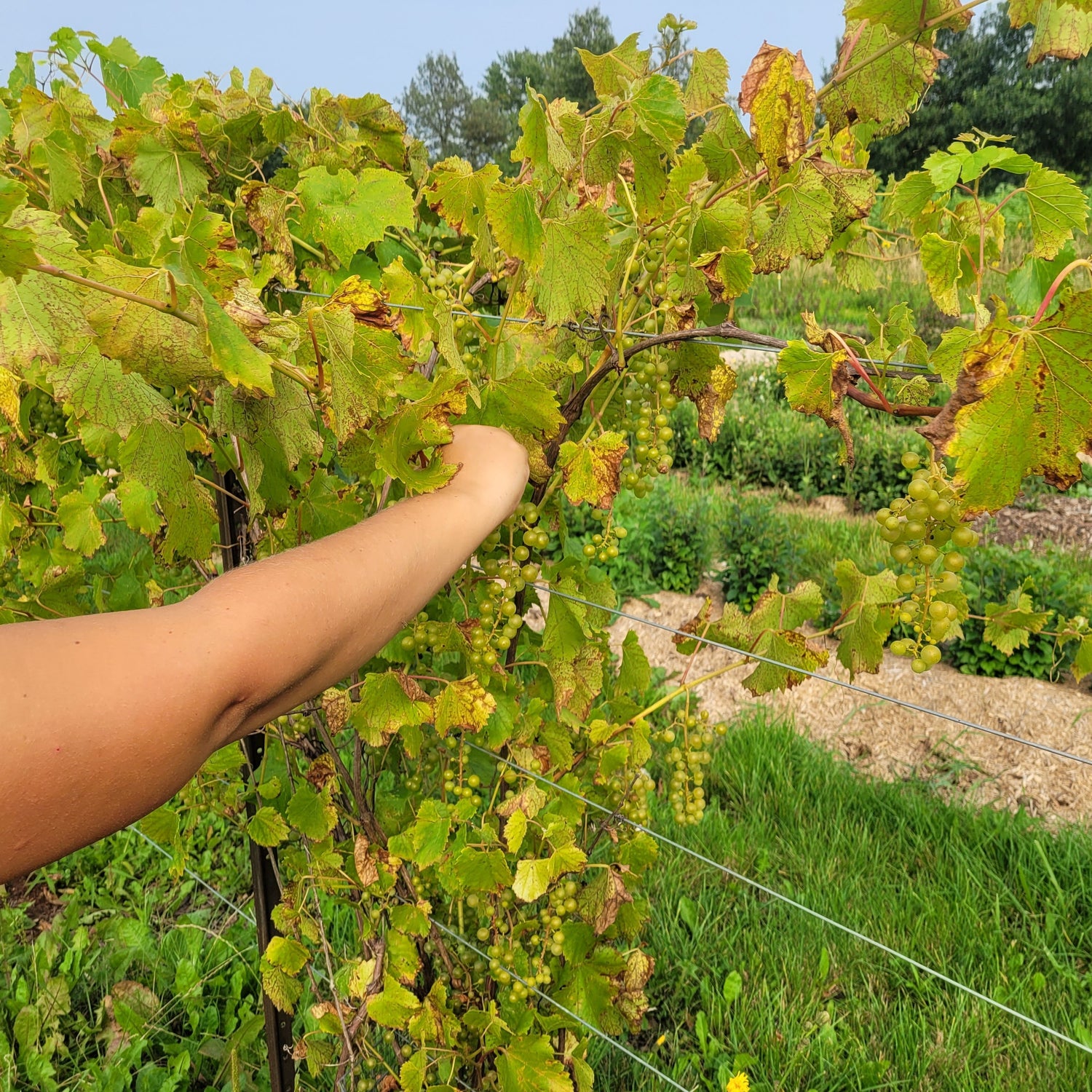
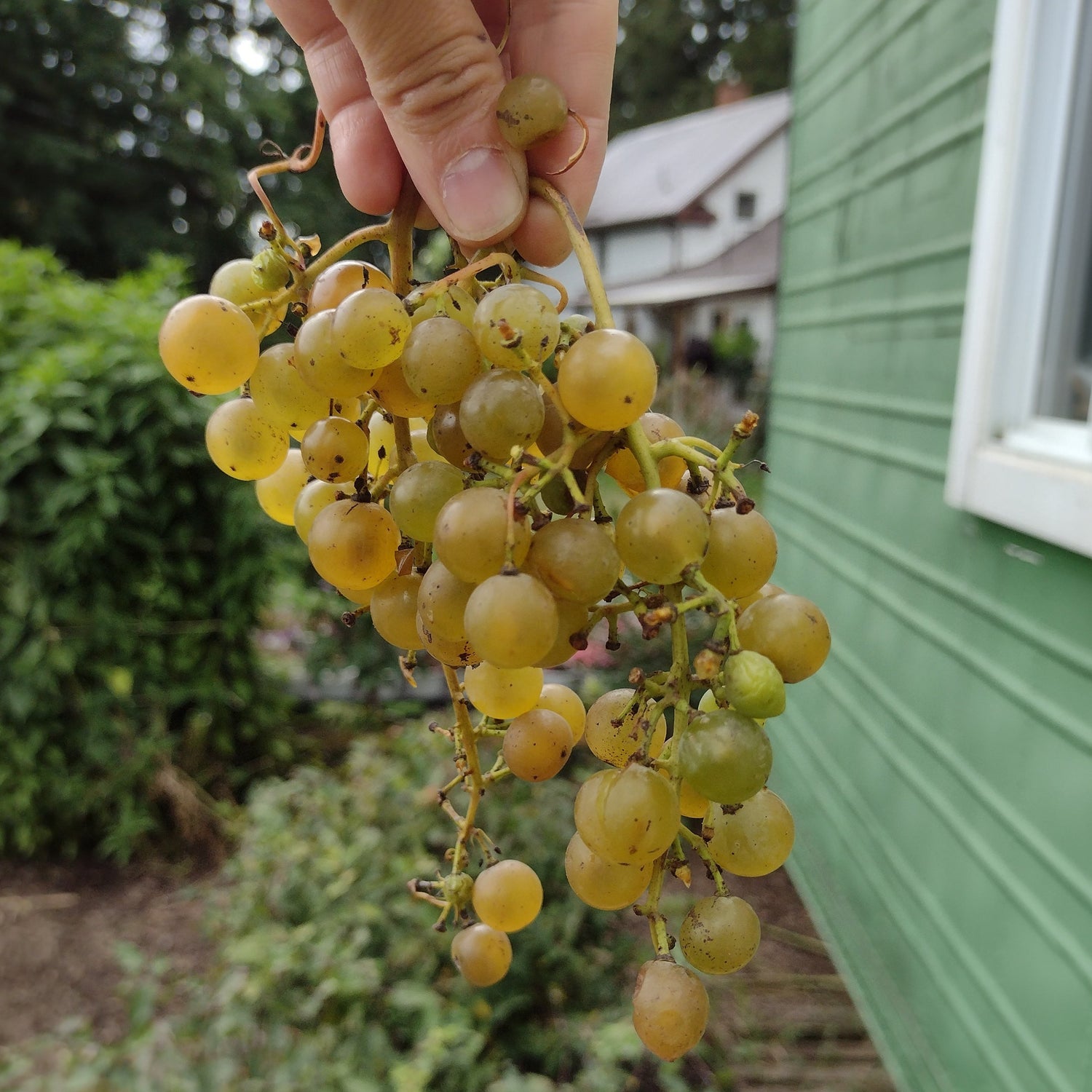
Species: Vitis vinifera x V. rupestris x V. ripraria x V. labrusca
History: Osceola Muscat/ES.8-2-43 was bred by renowned grape breeder Elmer Swenson as part of his effort to mix French and North American grapes to create high-quality varieties that grow well in cooler climates. Osceola Muscat is a cross between four different species: Common grape (Vitis vinifera), Vitis rupestris, Riverbank grape (Vitis riparia) and Fox grape (Vitis labrusca). Swenson bred it on his farm near Osceola, Wisconsin and in 2010 the variety was named after the town. The grape's alternate name, Muscat de Swenson, is named after Swenson himself who passed away in 2004.
Why We Grow It: Osceola Muscat produces loose clusters of seeded, intensely aromatic grapes with notes of peach and apricot. The small-medium, thin skinned fruit is suitable for fresh eating or juice and wine. This is one of the hardiest 'muscat' varieties available and is relatively vigorous.
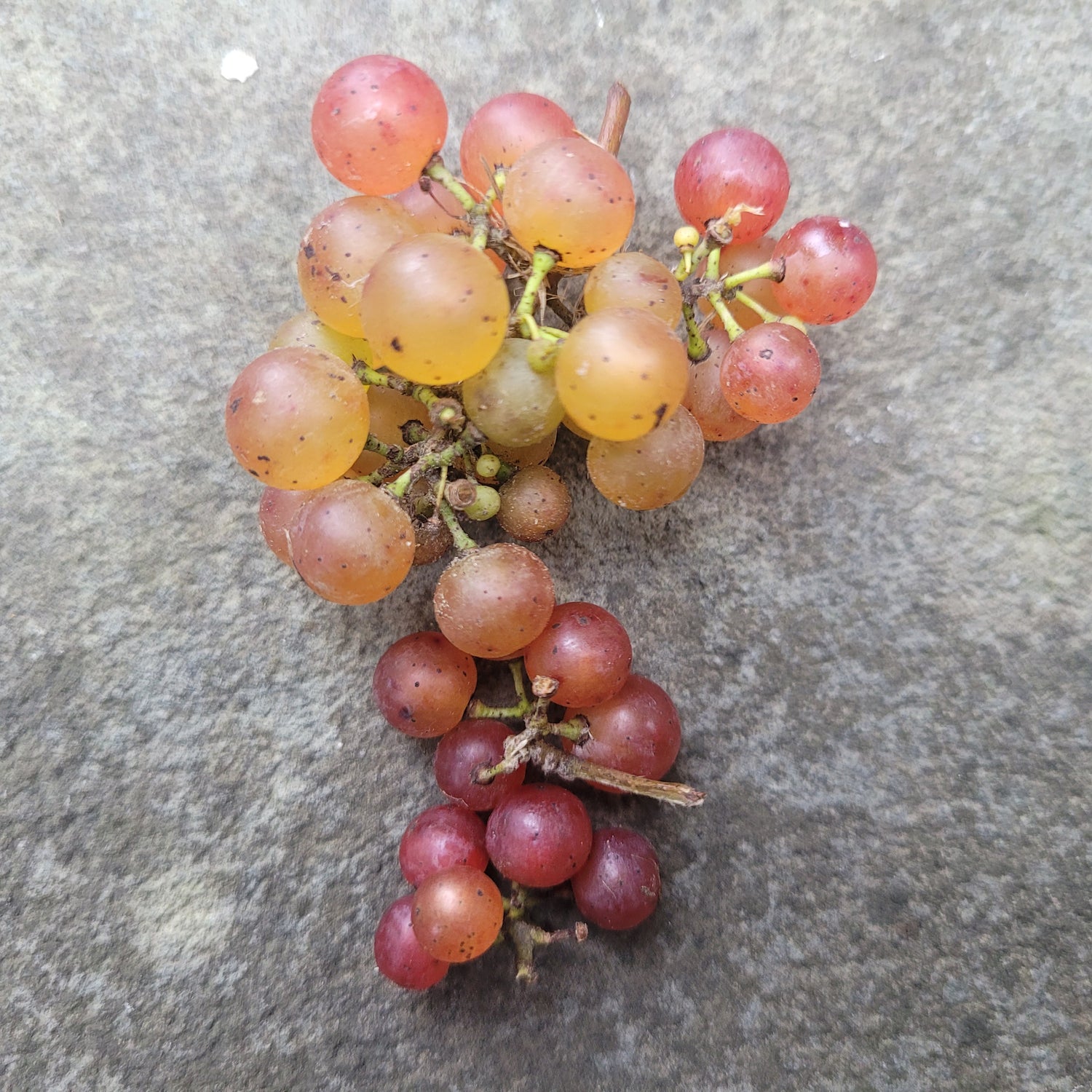
Species: Vitis labrusca x Vitis riparia x Vitis vinifera, and small amounts of other species of different Vitis from North America
History: Bred by Elmer Swenson in Wisconsin, Somerset is one of numerous varieties he created for growing in our cooler North American climates. This cultivar has become increasingly popular in recent years and has good potential for commercial growing. The variety was released in 2002.
Why We Grow It: One of the hardiest, highest quality seedless grape varieties out there, this is an excellent table grape: sweet, spicy, with strong notes of strawberry. The grapes have beautiful pink flushed skin and are most decadent if allowed to sit on a sunny window sill for a week or so after harvest. Although the fruit is on the smaller to medium end of the scale, the vines produce large, heavy clusters that more than compensate for the size of the individual grapes. The grapes have a firm texture with some crunch.


Species: Hybrid, contains Vitis labrusca and Vitis riparia
History: Trollhaugen is one of several varieties created by grape breeder Elmer Swenson in Wisconsin as part of an effort to create more grape varieties that can be grown in our cooler North American climates. It was developed by Swenson in 1985 and released in 2000, although the variety was named by David McGregor, the first winemaker to market wine in Minnesota. Trollhaugen translates from Norwegian as 'troll mound' but it is possibly named for the Trollhaugen ski resort in Wisconsin.
Why We Grow It: These Concord-like grapes have a mild, sweet flavour and are seedless. The vine is very vigorous and cold hardy, and produces medium clusters of small to medium grapes. Excellent for the home orchard!
Recently viewed products
Need help?
Call Us
519-804-6060
Email Us
sales@silvercreeknursery.caVisit Us
2343 Gerber Road, Wellesley ON N0B 2T0
Call Us
519-804-6060
Email Us
sales@silvercreeknursery.caVisit Us
2343 Gerber Road, Wellesley ON N0B 2T0
Hours
Friday: 9:00am-4:00pm
August til Thanksgiving Fruit Tasting Weekend. Please call in advance if you are unsure or driving from far away!
Call or email to make an appointment if you wish to visit another time.
Friday: 9:00am-4:00pm
August til Thanksgiving Fruit Tasting Weekend. Please call in advance if you are unsure or driving from far away!
Call or email to make an appointment if you wish to visit another time.
Policies
Regretfully, due to CFIA regulations we cannot ship outside of Canada and cannot ship fruit (apple, pears, stone fruits, and quince), or grape vines to BC.
To view our shipping, terms of sale & refund policies, please visit our POLICIES page.
Regretfully, due to CFIA regulations we cannot ship outside of Canada and cannot ship fruit (apple, pears, stone fruits, and quince), or grape vines to BC.
To view our shipping, terms of sale & refund policies, please visit our POLICIES page.