Nut Trees & Bushes (Ungrafted)

Nut Trees & Bushes (Ungrafted)
The following is a collection of hardy nut trees, predominantly grown for edible nut production. It also includes some other 'non-production' species such as hickory and oak, though in our humble opinion they certainly can produce a valuable crop too!
Most of these trees are grown from seed (they will have seedling in the title) so some of them may not be true to type. We also have a small number of clonally propagated nut trees!
Note: All species listed here should be planted in groups of 2-3 for optimal pollination.
We offer flat-rate shipping across Canada* on all our Nut Trees & Bushes, as well as a wide selection of heritage fruit trees and plants. Shop quality trees grown for Canadian climates and hard to find plants delivered conveniently to your door!
18 products
Sort by:
18 products
18 products
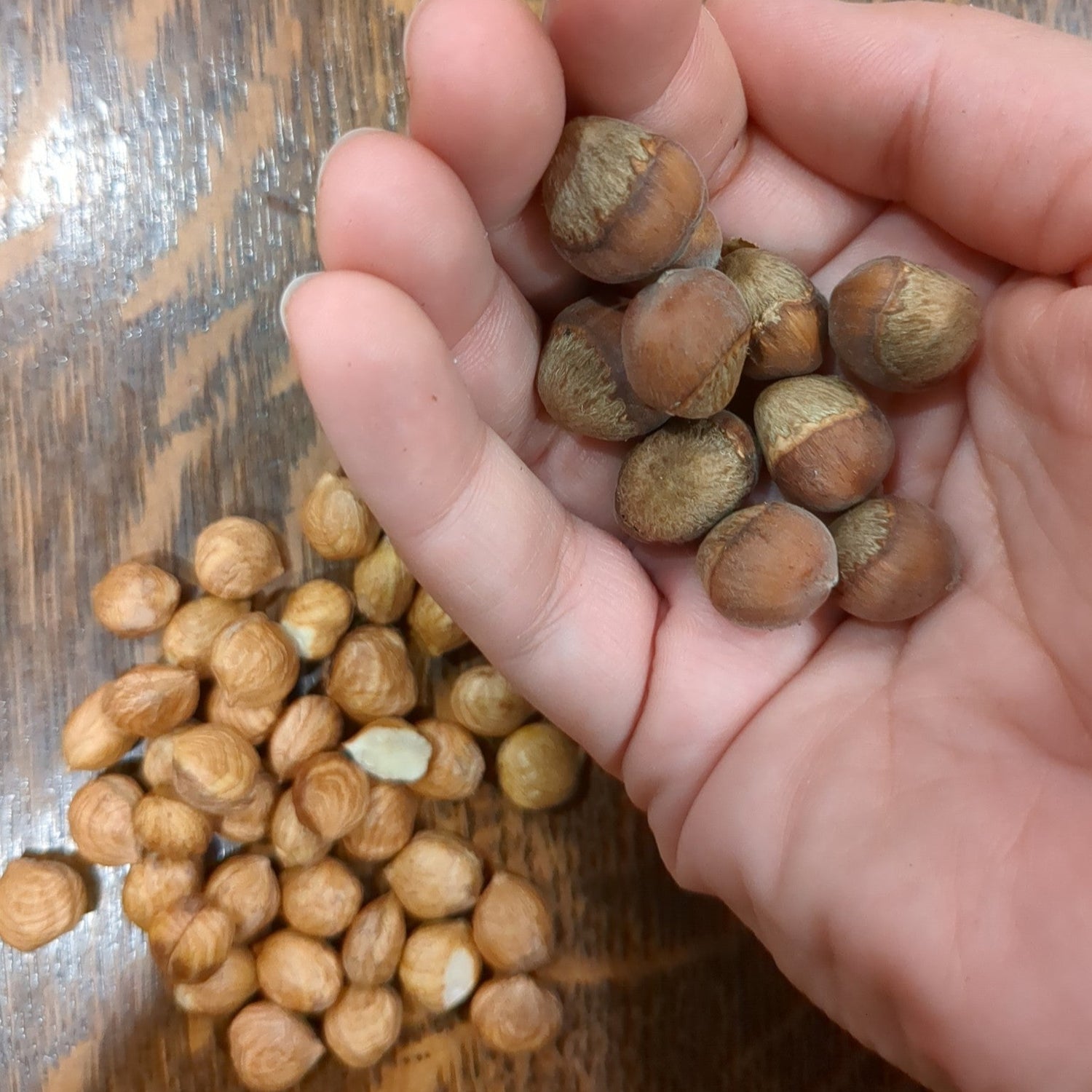
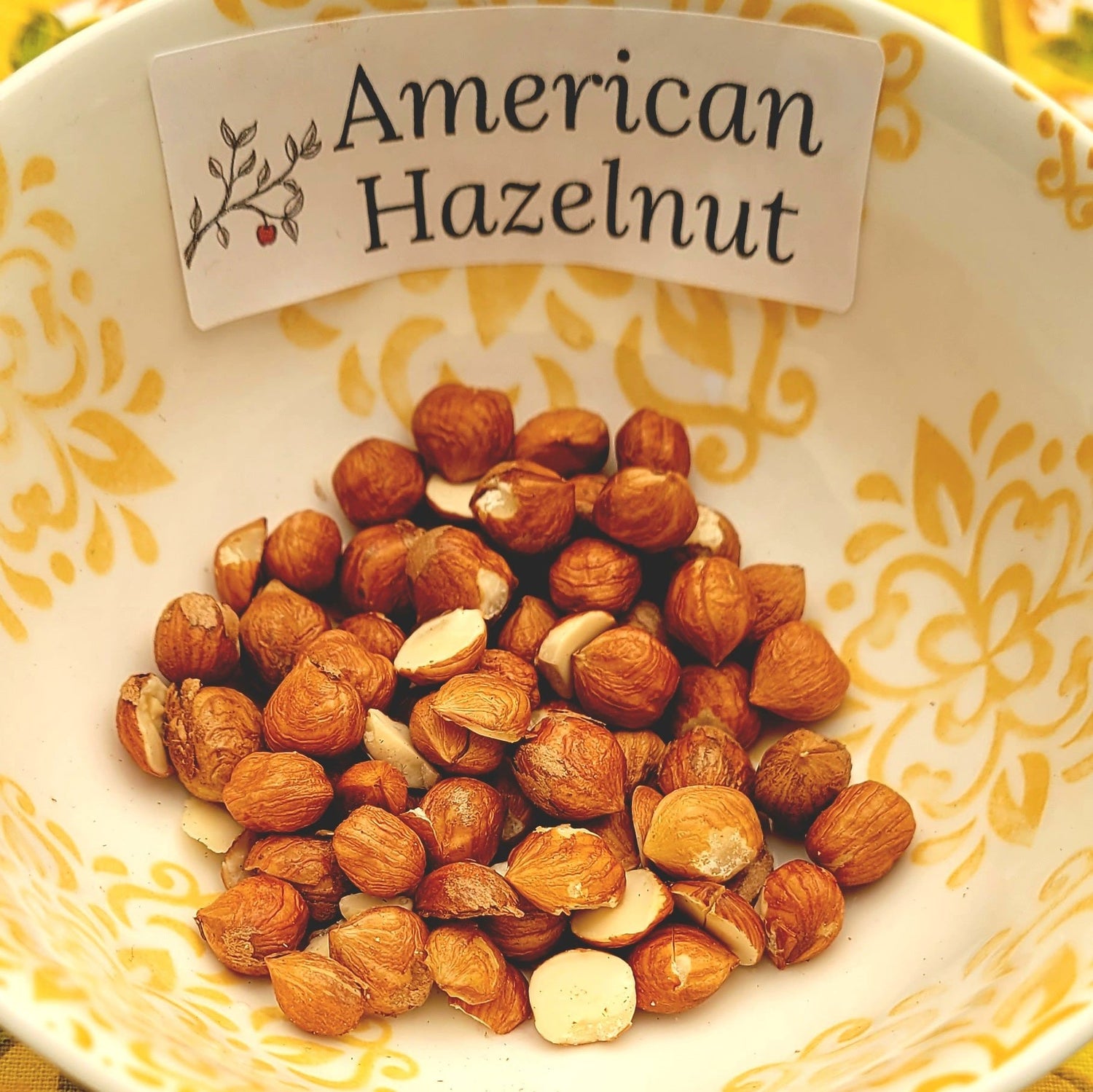
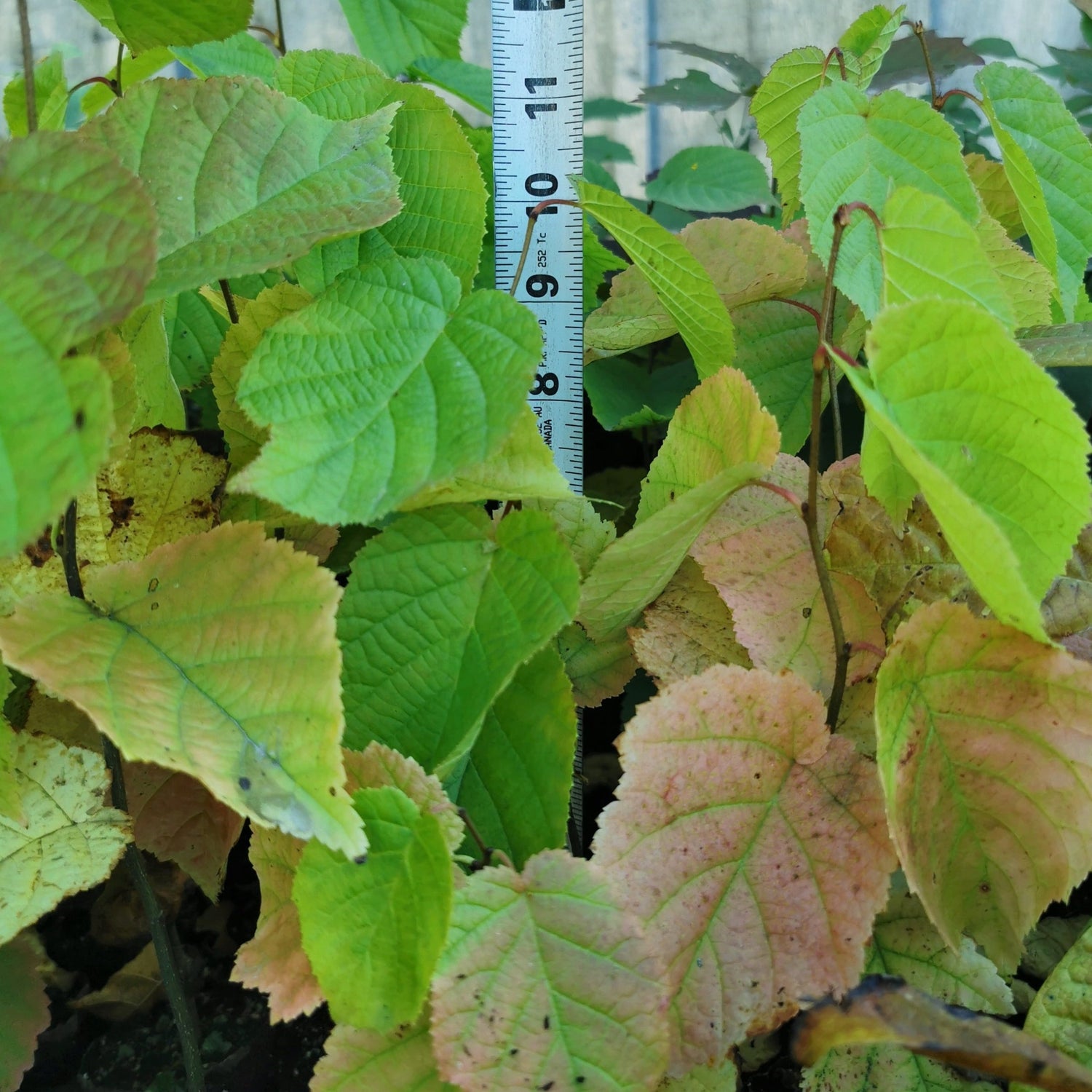
Species: Corylus americana
History: American hazelnuts are native to eastern and central Canada and the US. The nuts are an important food source to many animals and as such the shrubs are most often cultivated for planting in native and wildlife gardens. Indigenous peoples also use the shrub for medicinal purposes.
Why We Grow It: This thicket forming native shrub produces nutritious hazelnuts and fodder for animals. It is an excellent species to incorporate into a pasture/grazing system.
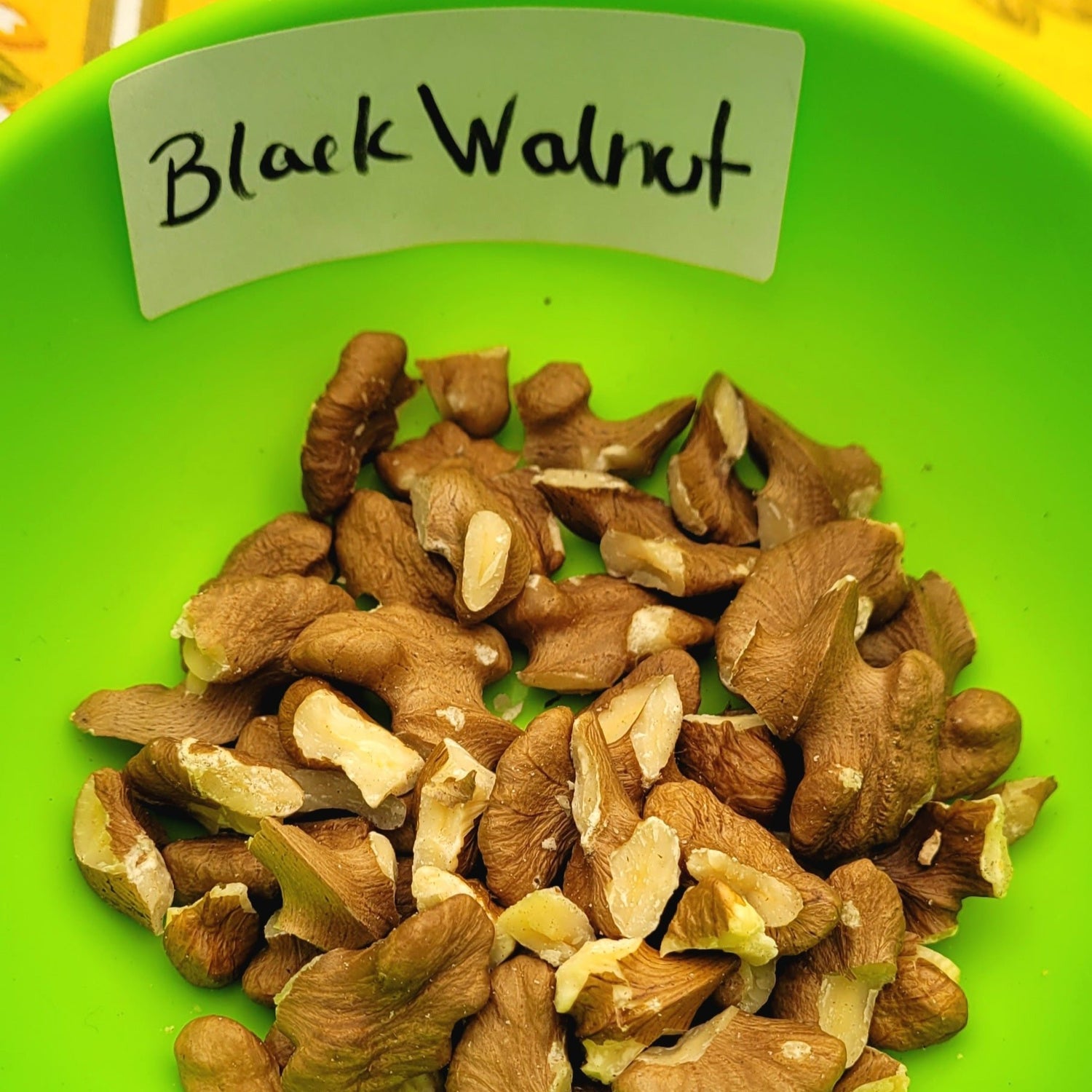
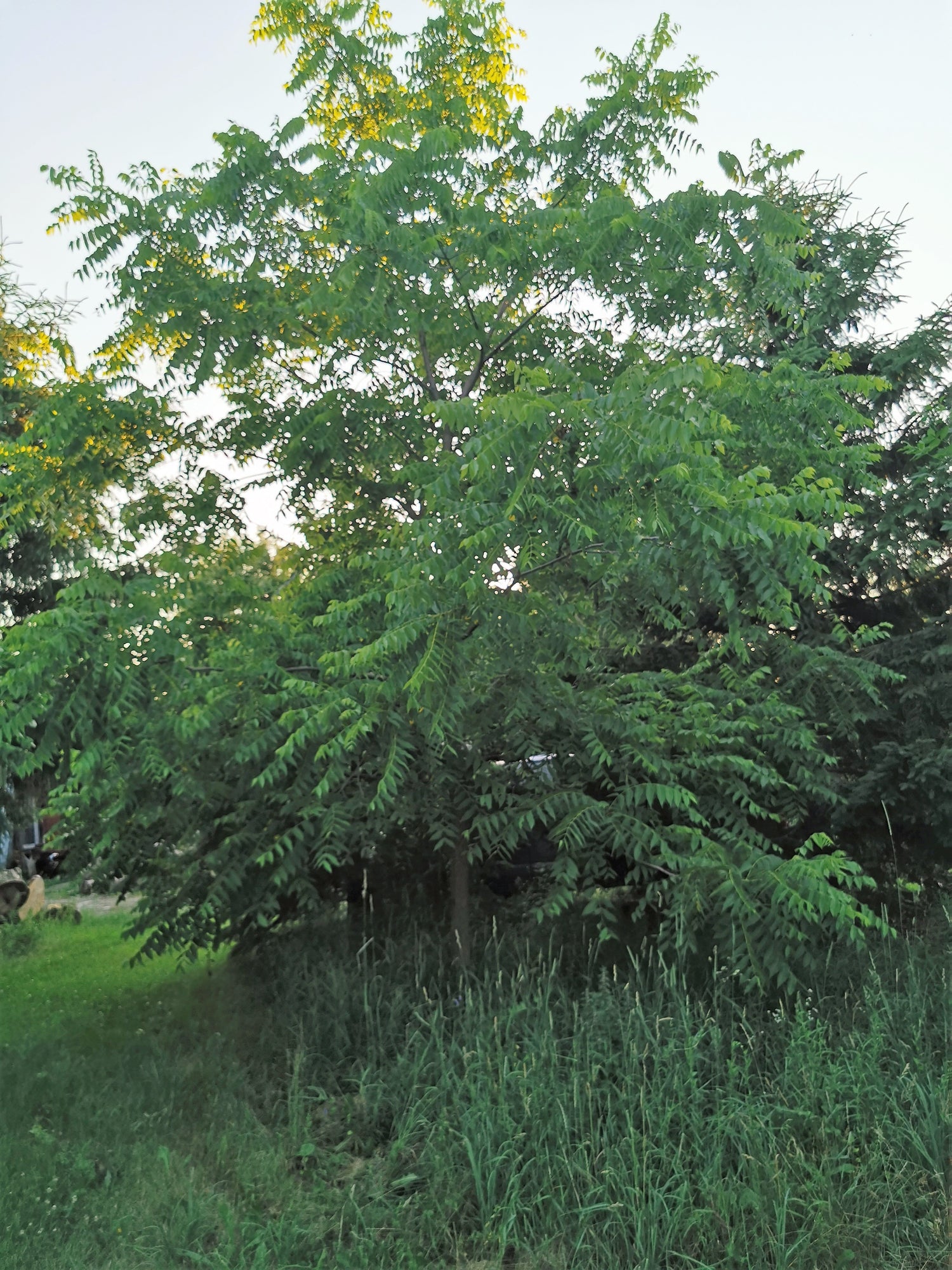
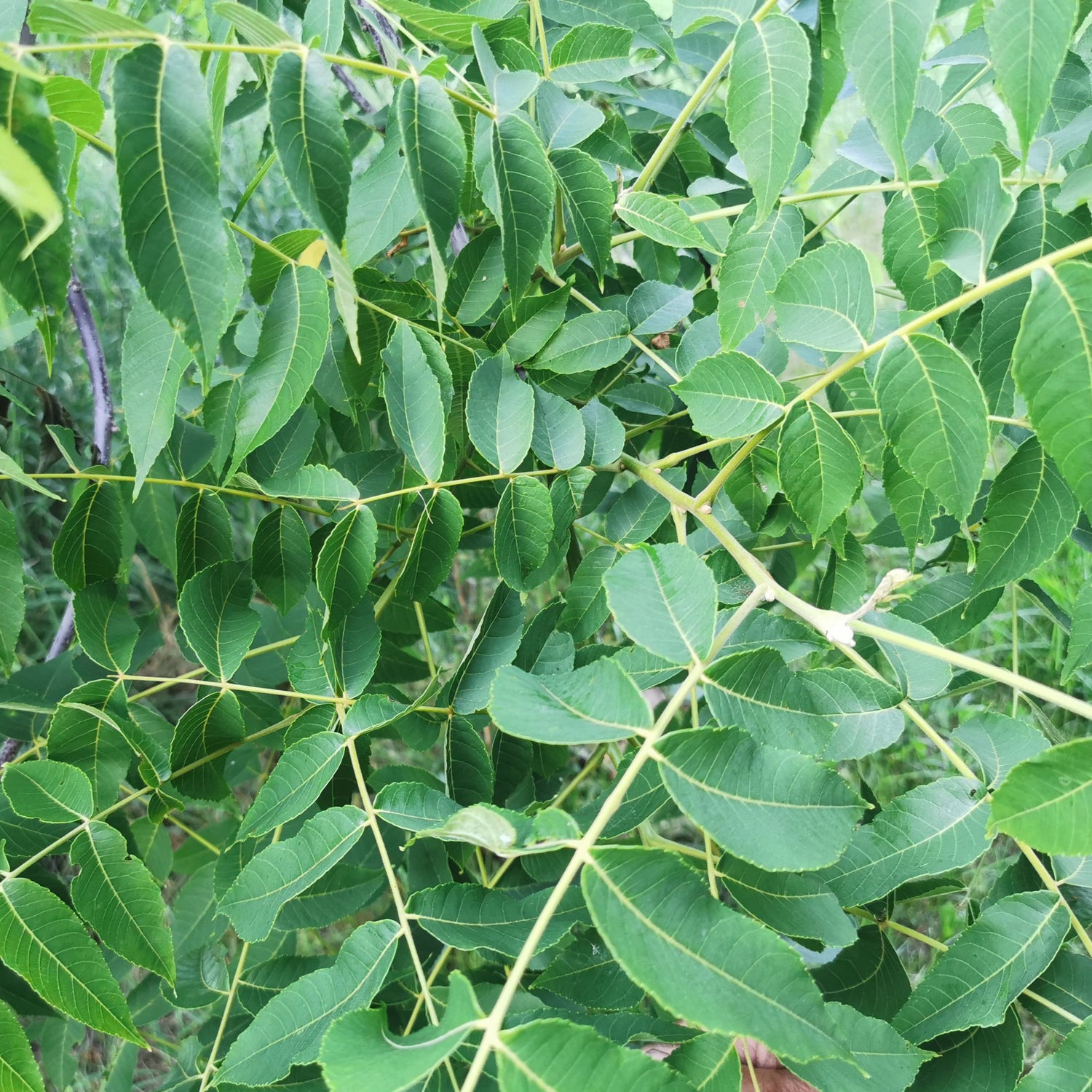
Species: Juglans nigra or hybrid. Our seeds are collected from trees that may have been cross-pollinated by closely related species so the resulting seedlings may be hybrids.
History: Native to much of the eastern and central United States and southern Ontario, Black Walnut has long been used as a source of food, dye, lovely dark wood, and as an ornamental tree. Although it is said to have a better flavour than the English walnut, the Black walnut remains less popular due to the increased difficulty of harvesting the nut meat from within the husk. Black walnut is also infamous for being allelopathic, meaning it secretes toxic chemicals (juglones) into the soil to reduce plant competition.
Why We Grow It: Black walnut is a beautiful tree that produces nuts with a stronger flavour than that of English walnuts. The sap can be boiled to make walnut syrup, which tastes very similar to maple syrup but with notes of caramel and butterscotch. Also, the husks can be used in brewing beer!
Be mindful of the juglones in the in the roots/nut husks, they are toxic to many other species. They require a buffer of about 50'/30m from the edge of the trees canopy for juglone-sensitive plants. This article from The Garden Hoe has a helpful list of plants that tolerate juglones. However there are recent (2019) studies showing healthy soil high in organic matter and mycorrhizal fungi actually reduce the toxicity of juglones suggesting many plants can grow below juglans species in a healthy ecosystem - it will be interesting to see more study done in this area!
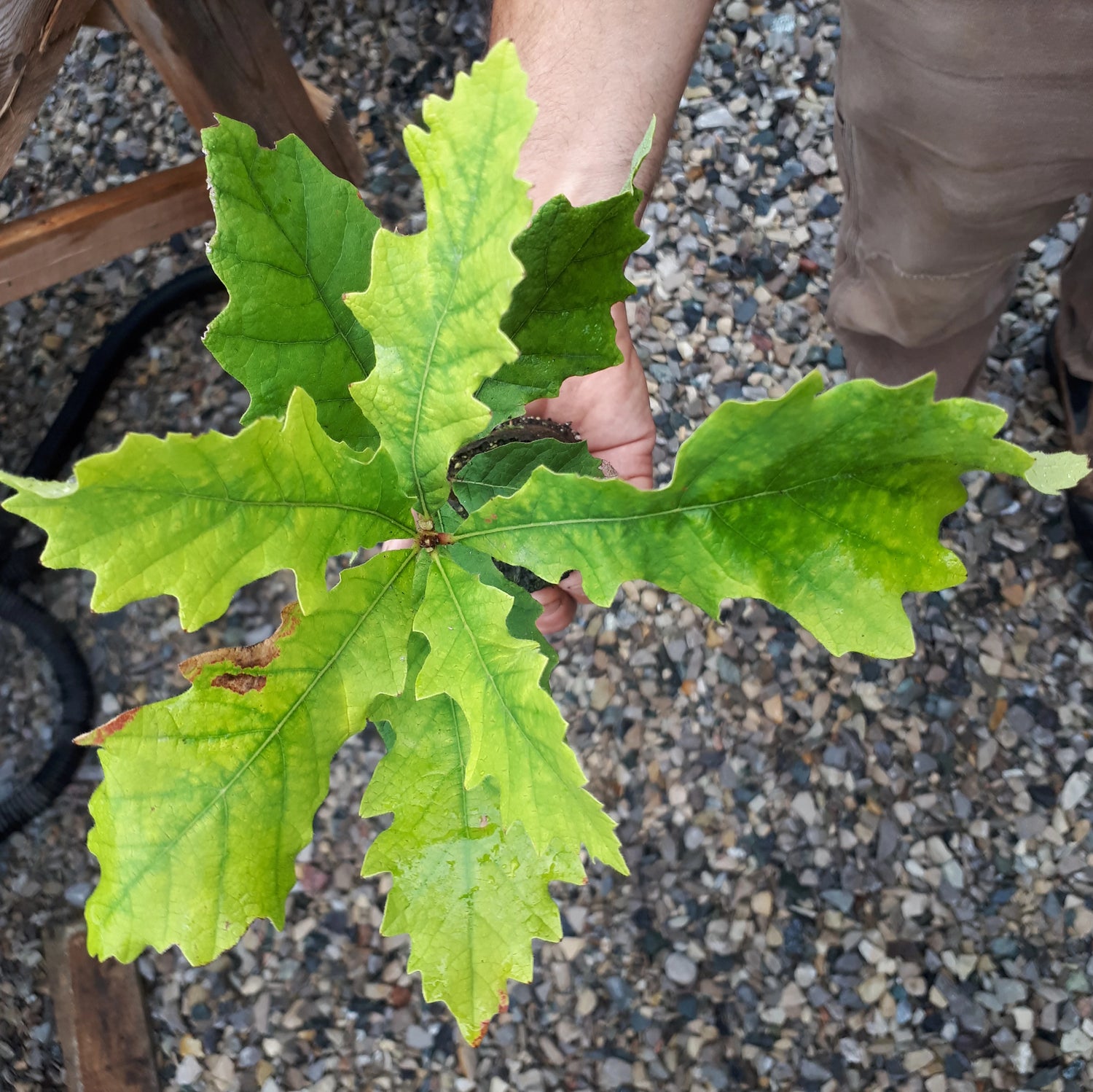
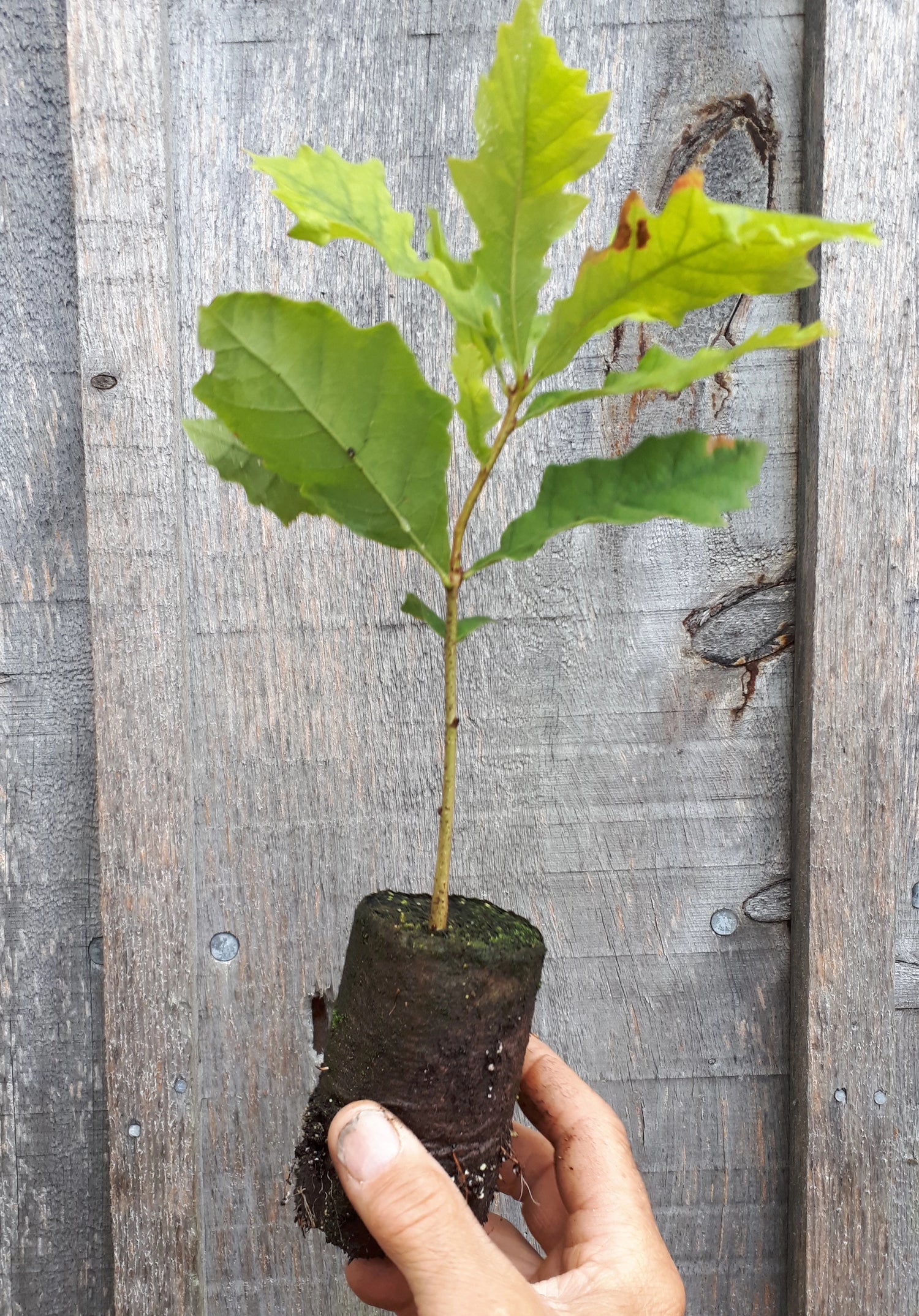
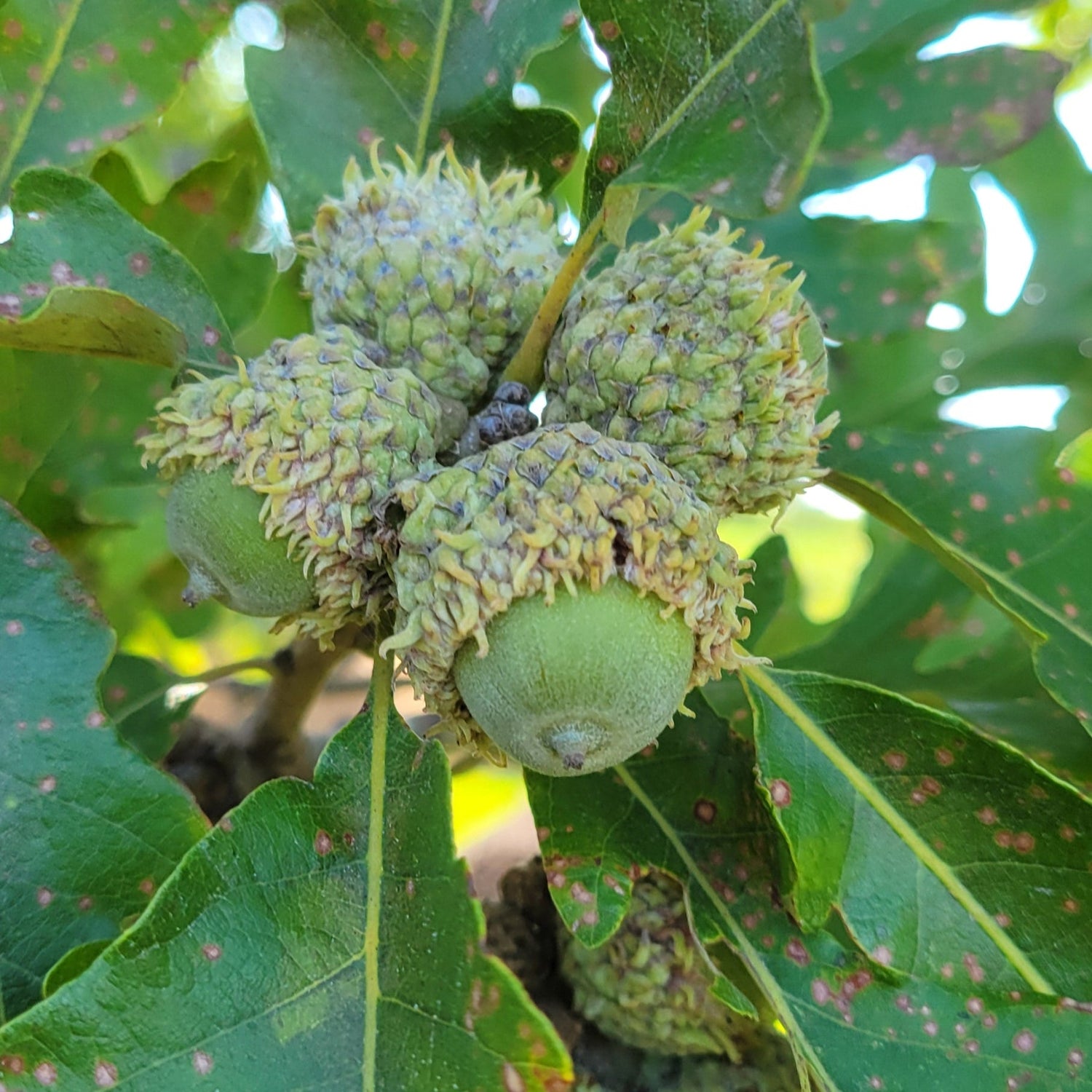
Species: Quercus macrocarpa or hybrid. Our seeds are collected from trees that may have been cross-pollinated by closely related species so the resulting seedlings may be hybrids.
History: Burr Oaks are native to much of the central United States with populations in Canada stretching from Alberta to New Brunswick. The tree has been planted ornamentally across North America and the durable wood has uses such as flooring and barrels. The acorns, the largest in North America, are a source of food for many animals and indigenous peoples use the bark medicinally. Numerous towns and a book of poetry are named after this tree.
Why We Grow It: The Burr Oak's acorns have slightly less tannins than other oaks, making it the preferred choice for eating. It still requires processing to remove tannins, but once done, the nuts can be toasted, and/or made into flour and used in baking. It is one of the largest oaks in North America, making quite the specimen when full grown.
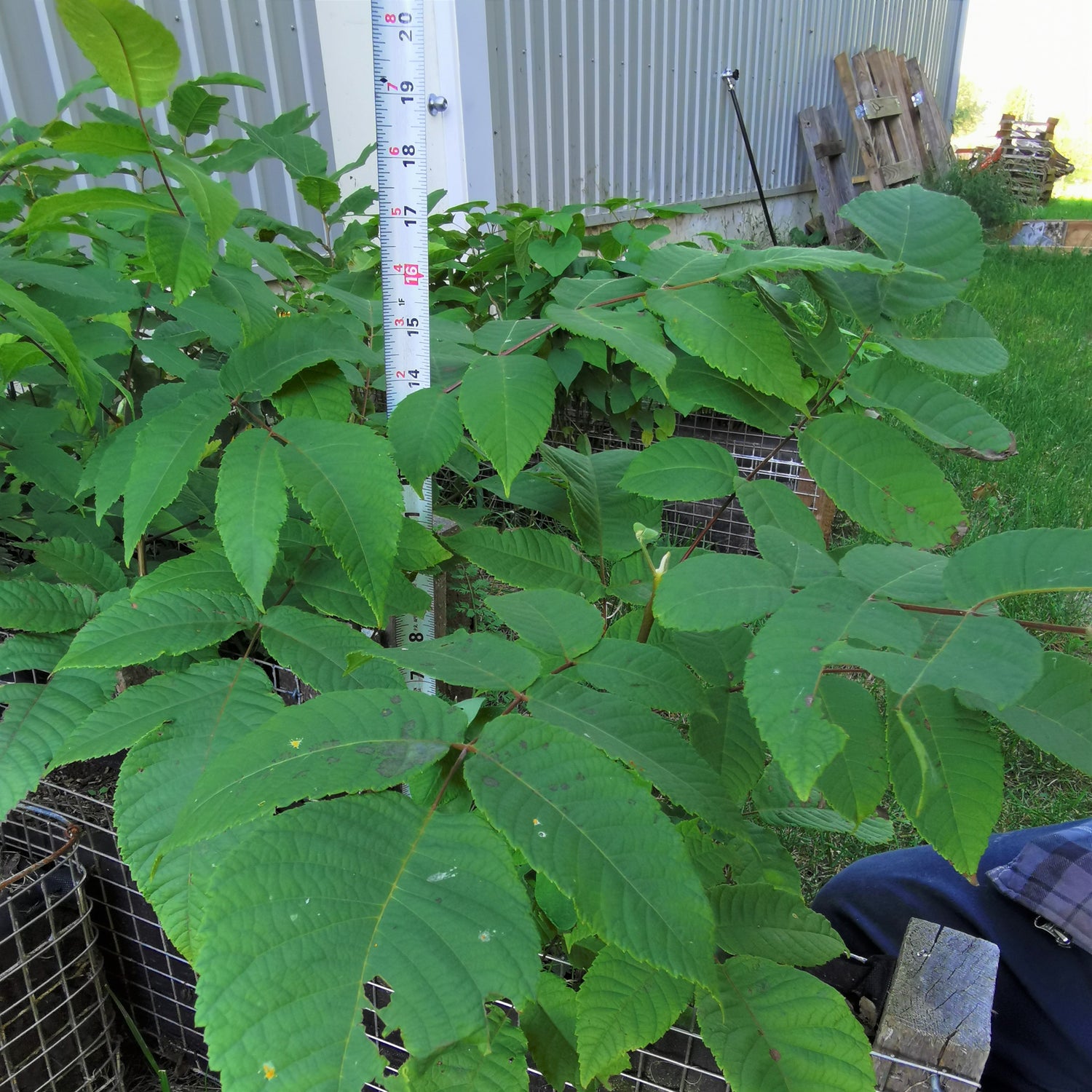
Species: Juglans cinerea or hybrid. NOTE: Butternuts are known to hybridize readily with other closely related species so there is no guarantee on whether these seedlings are pure, though the mother trees appear very true to type.
History: Butternut is an endangered tree native to southeastern Canada and the eastern United States where they grow naturally along sunny stream banks with rich, well-draining soil. The nuts have been used as a source of food and made into a butter-like oil by indigenous peoples. The trees have also been used for making syrup, furniture, and woodcarving. Unfortunately, Butternuts are highly endangered today due to Butternut Canker which has decimated their population within two decades.
Why We Grow It: By planting endangered species, collectively we can help Mother Nature potentially find a naturally resistant variety of Butternut. The nuts are quite similar to other walnuts but with a milder flavour. They can survive in zone 2, but they must be planted somewhere zone 3 or warmer to produce nuts. The sap can be boiled to make walnut syrup, which tastes very similar to maple syrup but with notes of caramel and butterscotch.
Be mindful of the juglones in the in the roots/nut husks, they are toxic to many other species. They require a buffer of about 50'/30m from the edge of the trees canopy for juglone-sensitive plants. This article from The Garden Hoe has a helpful list of plants that tolerate juglones. However there are recent (2019) studies showing healthy soil high in organic matter and mycorrhizal fungi actually reduce the toxicity of juglones suggesting many plants can grow below juglans species in a healthy ecosystem - it will be interesting to see more study done in this area!
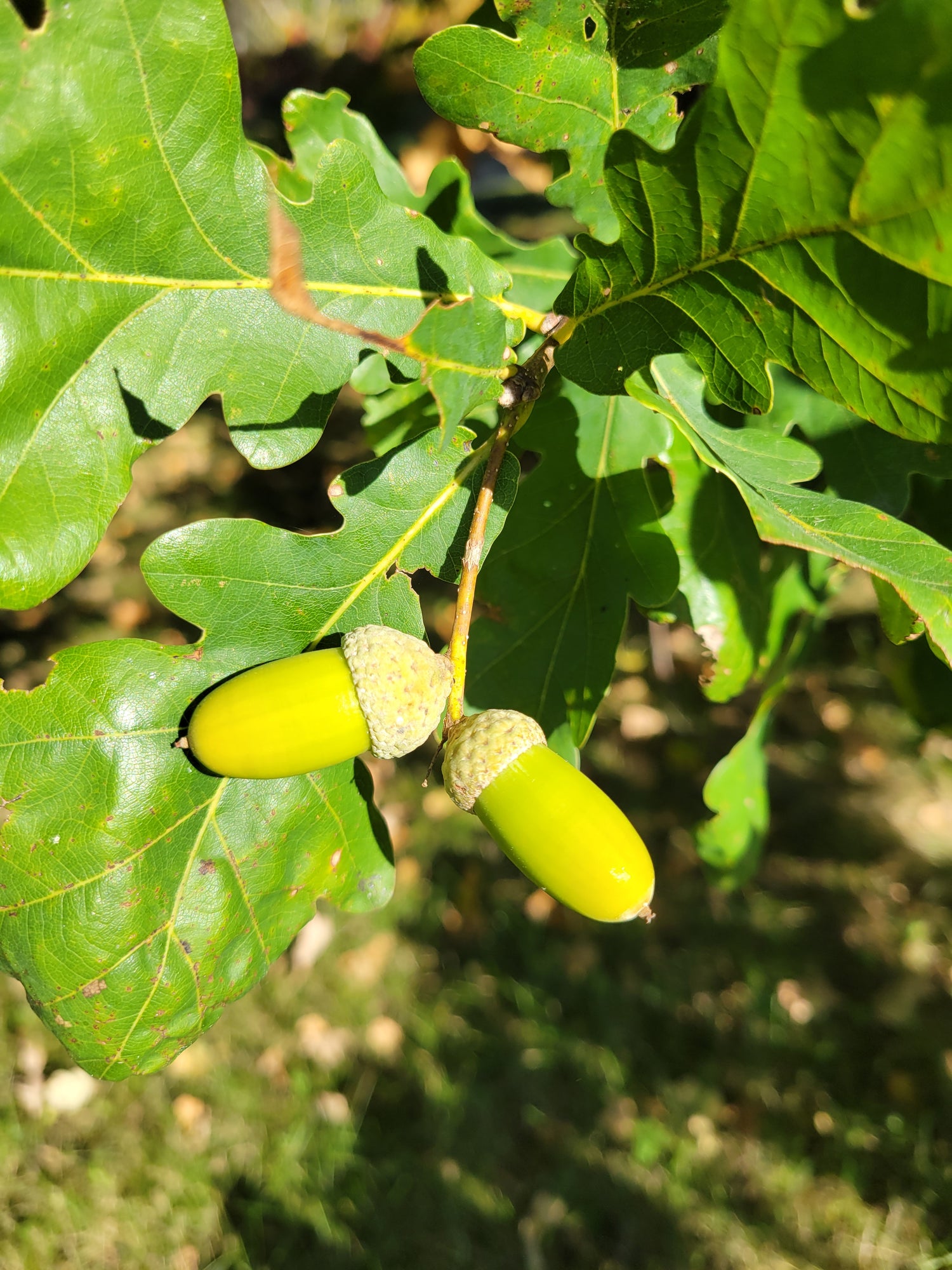
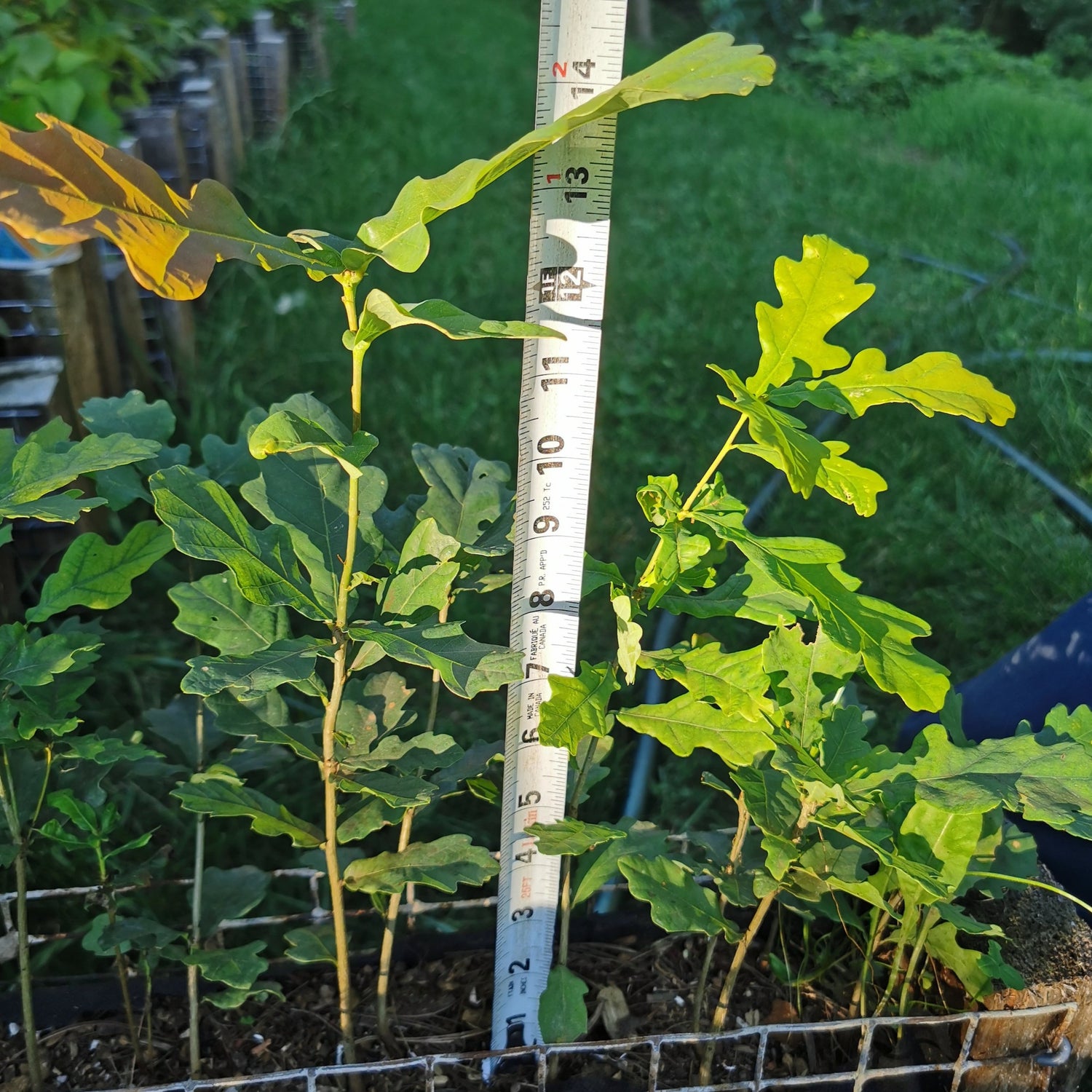
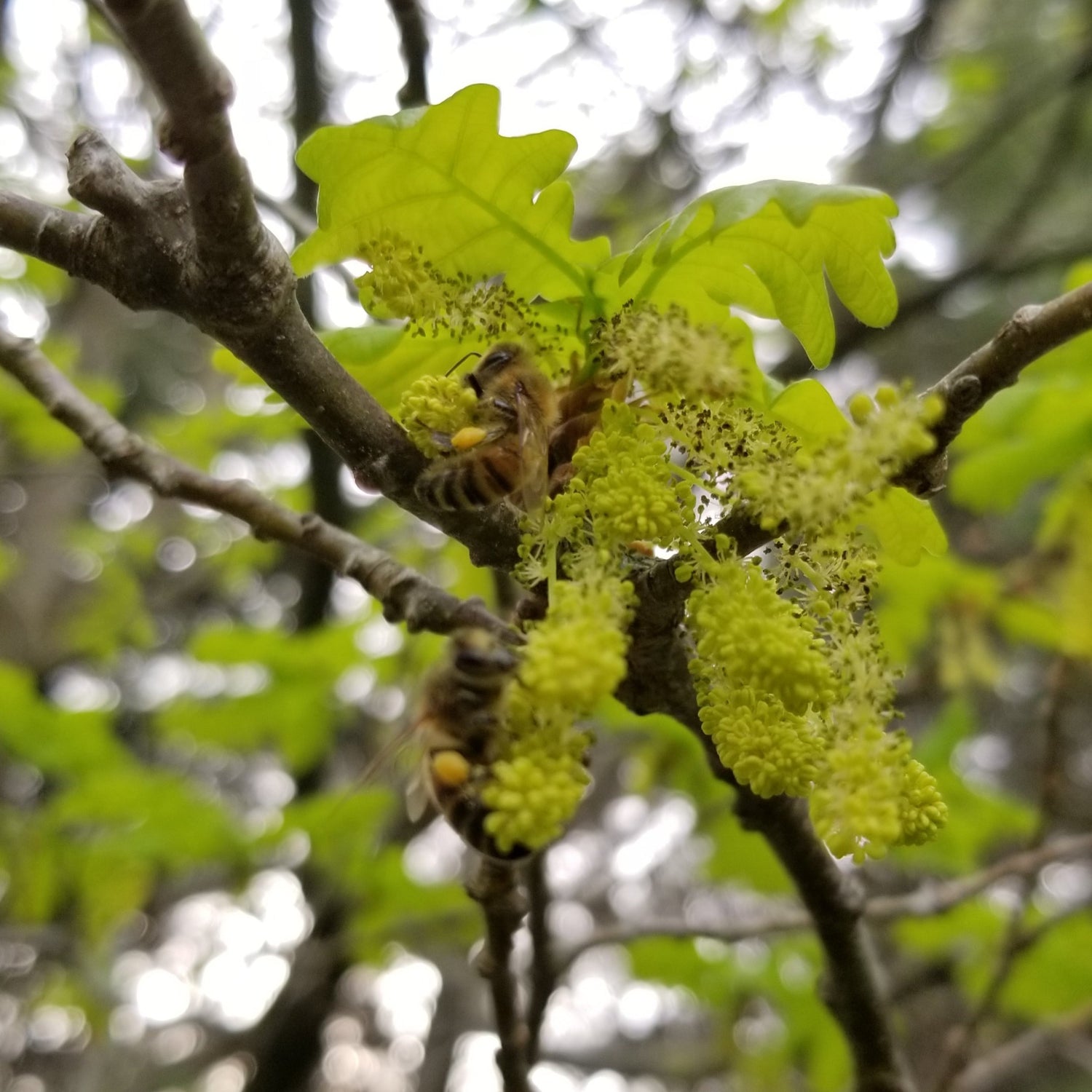
Species: Quercus robur or hybrid. Our seeds are collected from trees that may have been cross-pollinated by closely related species so the resulting seedlings may be hybrids.
History: The English Oak is native to much of Europe where it is culturally significant in many countries. It appears on coats-of-arms, coins, and national emblems, and features prominently in folklore, stories, historical events, and even the legal process in Basque Country. There are numerous examples of exceptionally large and old English Oaks across Europe, such as The Majesty Oak in England with a circumference of 12.2m and the Stelmužė Oak in Lithuania which is believed to be over 1500 years old. The oaks are grown commercially for their durable wood and for ornamental purposes.
Why We Grow It: The English Oak's acorns are large (2.3-3cm long) and lower in tannins than red oaks, which make them more rewarding after going through the work of cracking and leaching the tannins to use them as a flour/food source. The wood is popular in barrel and cask making thanks to its elastic yet durable strength, and resistance to rot. Very long-lived trees, these majestic beauties can grow up to the ripe old age of 450 years old. It's also one of the few oak species that attracts and supports honey bees as a pollen source!
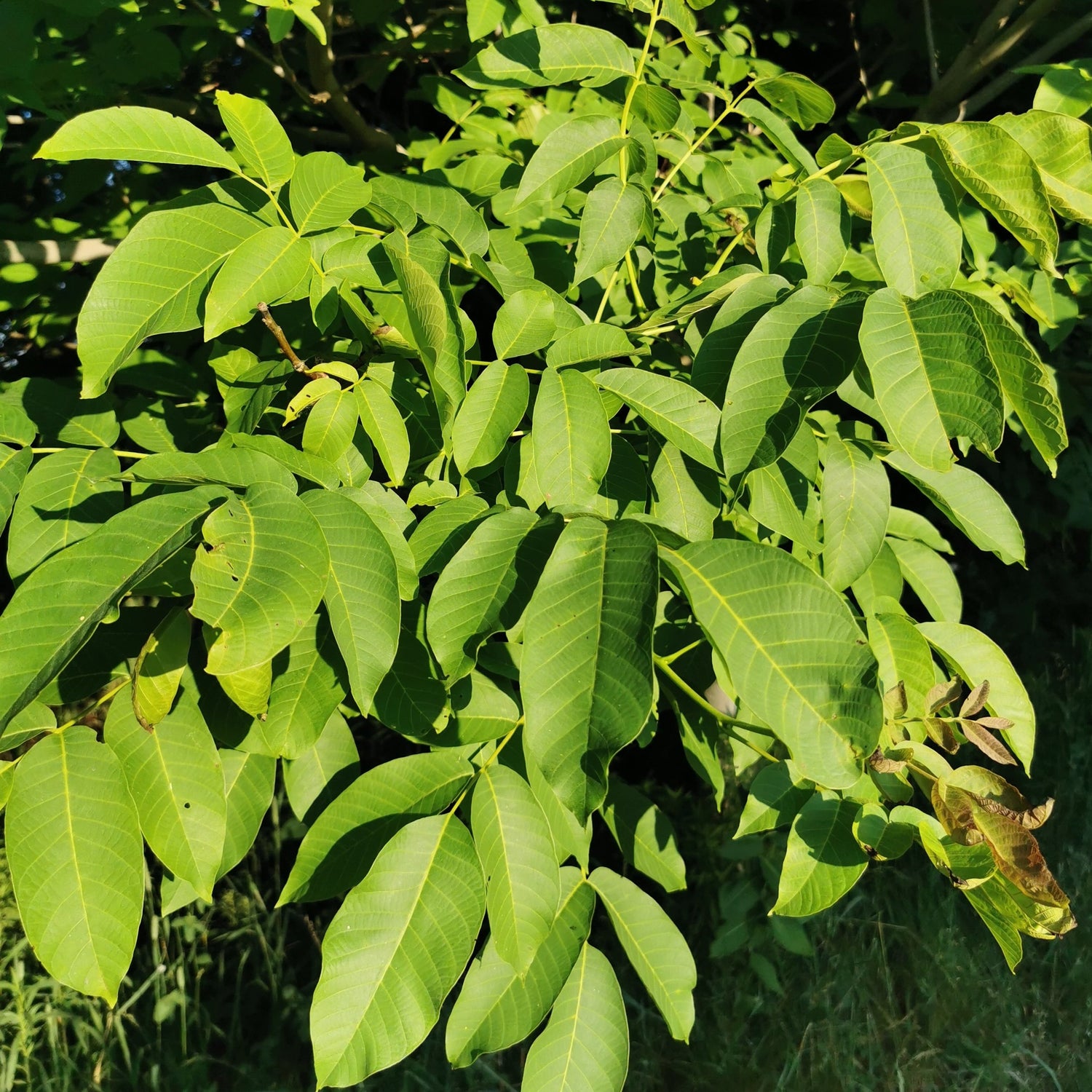
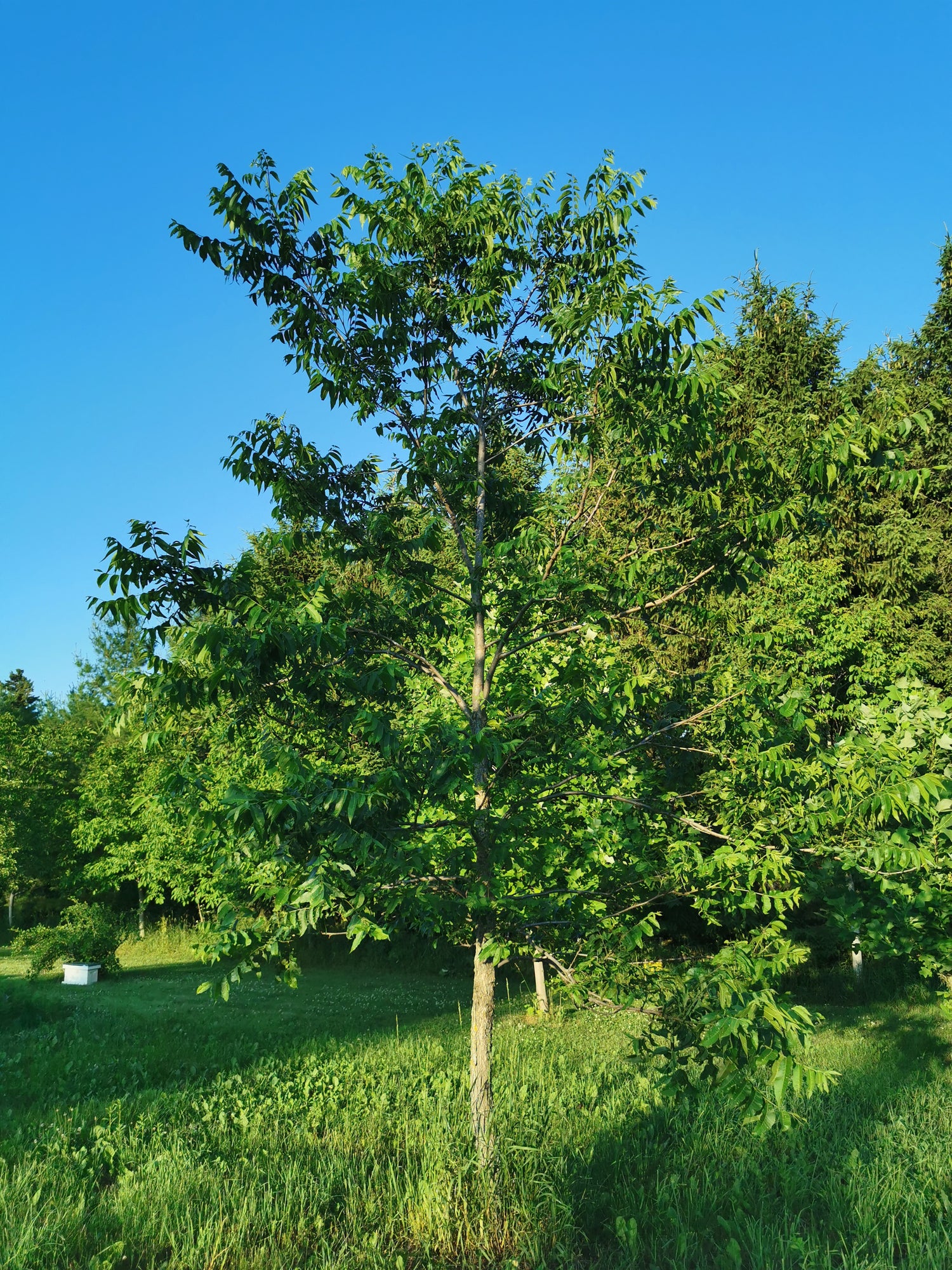
Species: Juglans regia or hybrid. Our seeds are collected from trees that may have been cross-pollinated by closely related species so the resulting seedlings may be hybrids.
History: English Walnut (aka Persian/Carpathian Walnuts) is native from the Balkans to the Himalayas and China. It possibly originated in Iran and over time has been spread across the world by Alexander the Great, the Romans, trade along the Silk Road, and British colonizers. In Italy, there were legends of witches gathering under an old English Walnut tree in Benevento to perform sabbats which in turn has inspired works such as the ballet Il Noce de Benevento. Still commonly grown and cultivated today, China is the main producer of commercial walnuts.
Why We Grow It: Although they aren't native like our other walnut trees, English Walnuts are known for being easier to open than Black Walnuts and remain popular for a reason. Our seedlings come a mother tree near Listowel ON, an extra boon when Ontario grown English Walnuts are said to produce sweeter nuts than those from California! The sap can be boiled to make walnut syrup, which tastes very similar to maple syrup but with notes of caramel and butterscotch. The husks can be used to flavour beer, like hops.
Be mindful of the juglones in the in the roots/nut husks, they are toxic to many other species. They require a buffer of about 50'/30m from the edge of the trees canopy for juglone-sensitive plants. This article from The Garden Hoe has a helpful list of plants that tolerate juglones. However there are recent (2019) studies showing healthy soil high in organic matter and mycorrhizal fungi actually reduce the toxicity of juglones suggesting many plants can grow below juglans species in a healthy ecosystem - it will be interesting to see more study done in this area!
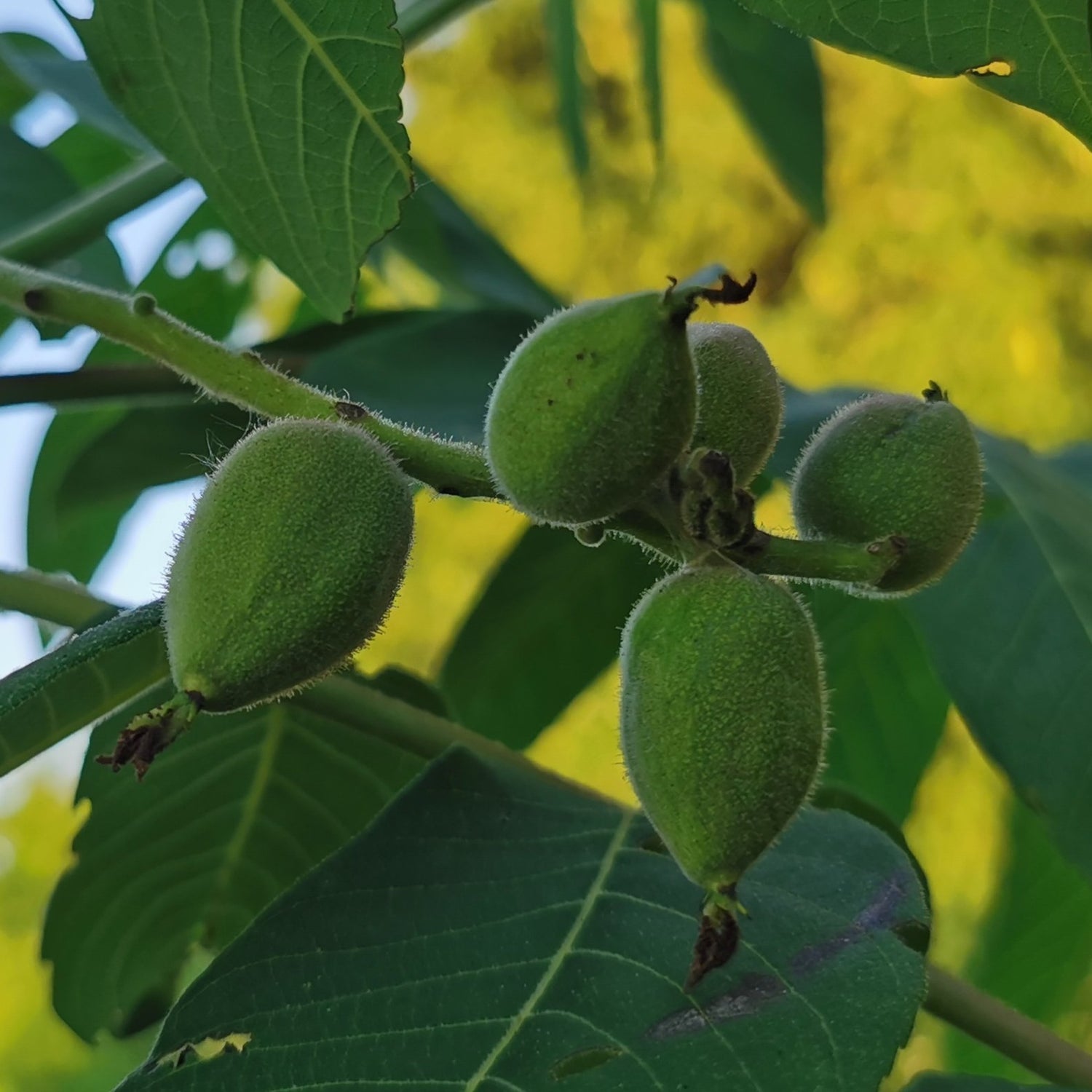
Species: Juglans ailantifolia var. cordiformis or hybrid. Our seeds are collected from trees that may have been cross-pollinated by closely related species so the resulting seedlings may be hybrids.
History: Heartnuts are a sport of the Japanese Walnut that have a heart-shaped shell and kernel instead of the usual elliptical shell. They have good commercial potential in the Great Lakes area where the climate is similar to that of Japan.
Why We Grow It: These trees produce an abundance of tasty nuts that are sweet than other walnuts and lack the bitter aftertaste. Ideally, they will produce heart-shaped nuts but since they are seedlings they may produce the usual rounder nuts of the regular Japanese walnut. They are sensitive to spring frosts for nut production, so they are best planted in a sheltered location.


Species: Corylus heterophylla, C. americana, or C. heterophylla x C. americana
History: These hazelnut seedlings are grown from seed sourced from an open-pollinated, mixed hazelnut orchard at Grimo Nut Nursery. Since the orchard is open-pollinated, the resulting seedlings may be Asian hazelnuts, American hazelnuts, or hybrids of the two!
Why We Grow It: With such random cross-pollination, each seedling has the chance to be quite unique! Regardless of what you get, they will produce nuts that are excellent for a variety of uses!
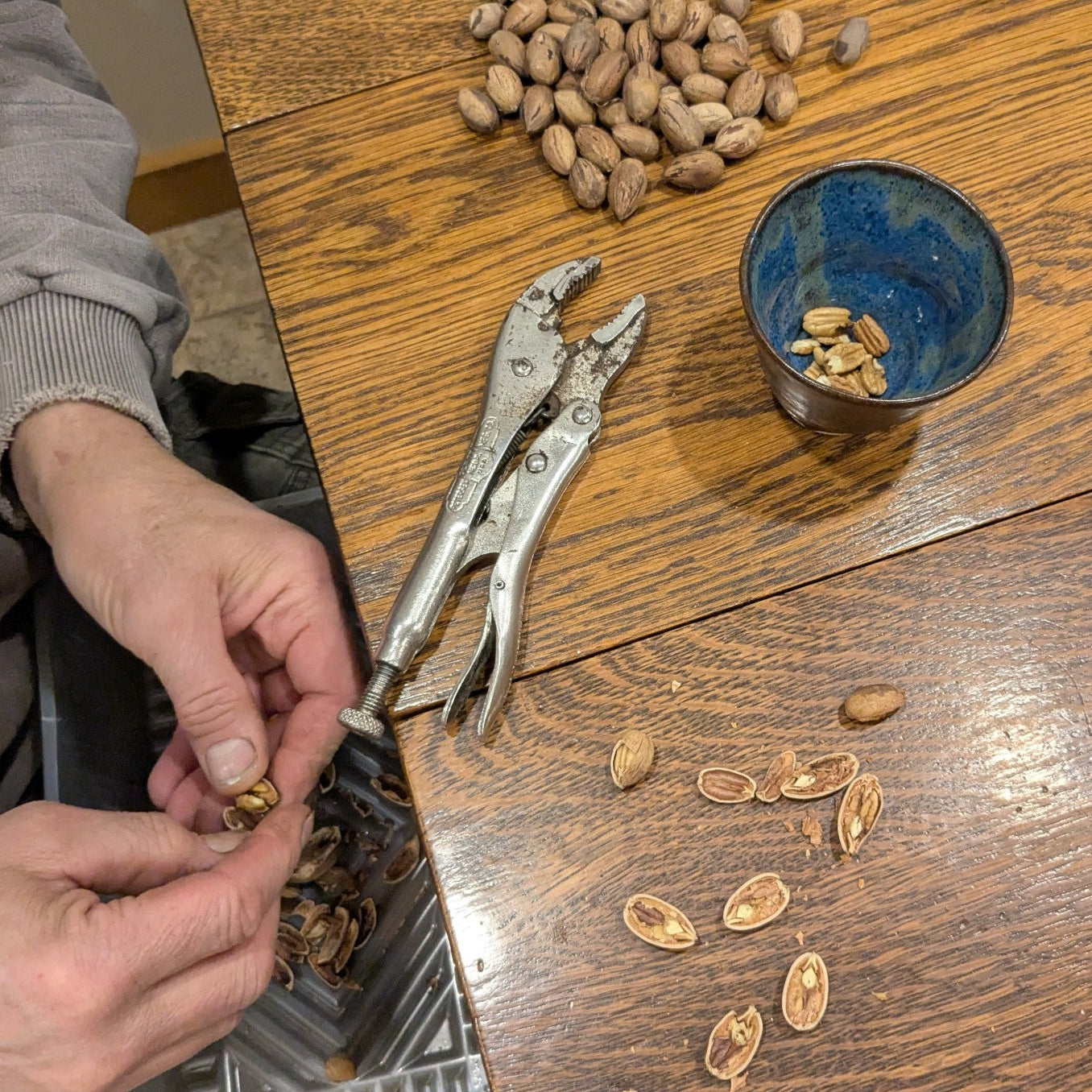
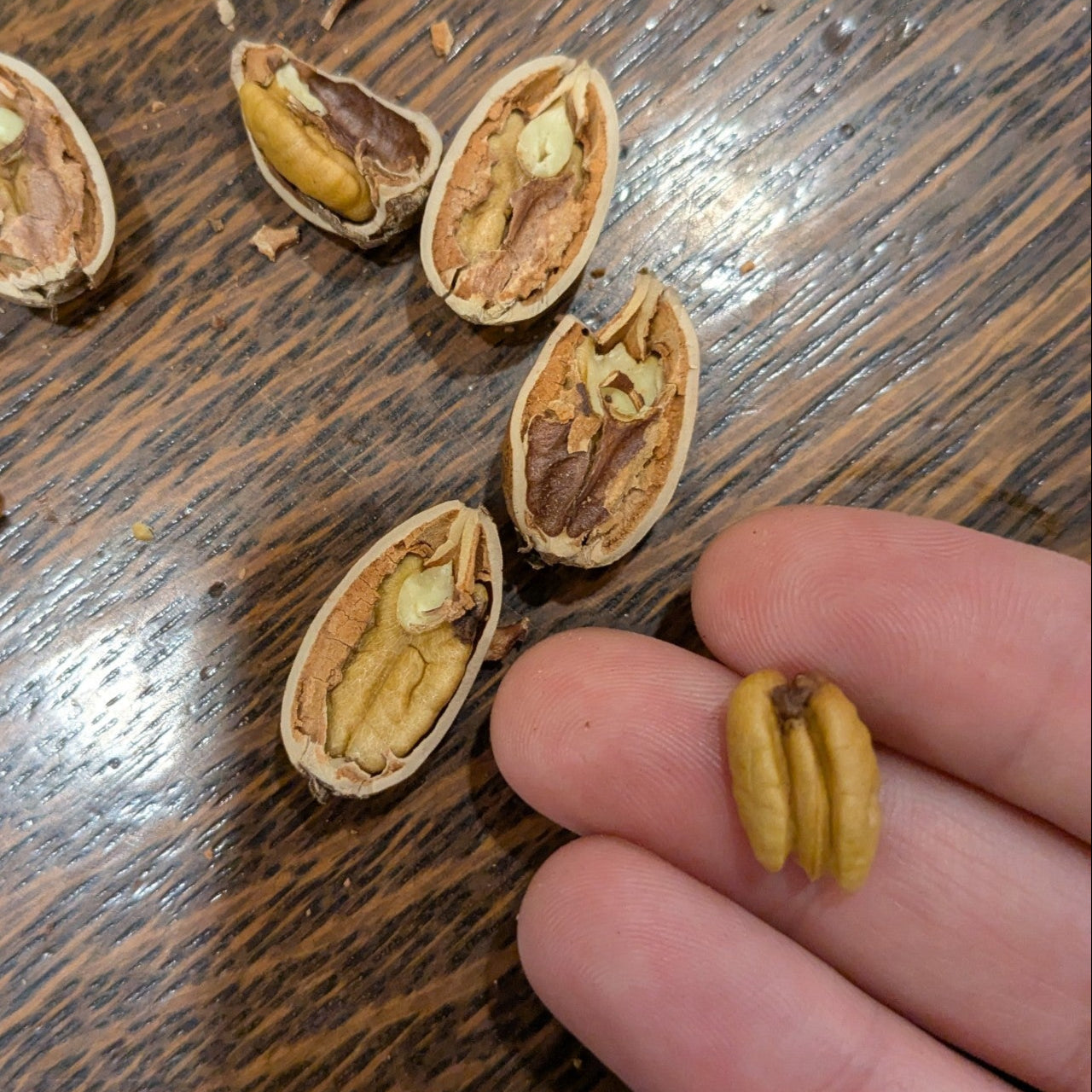
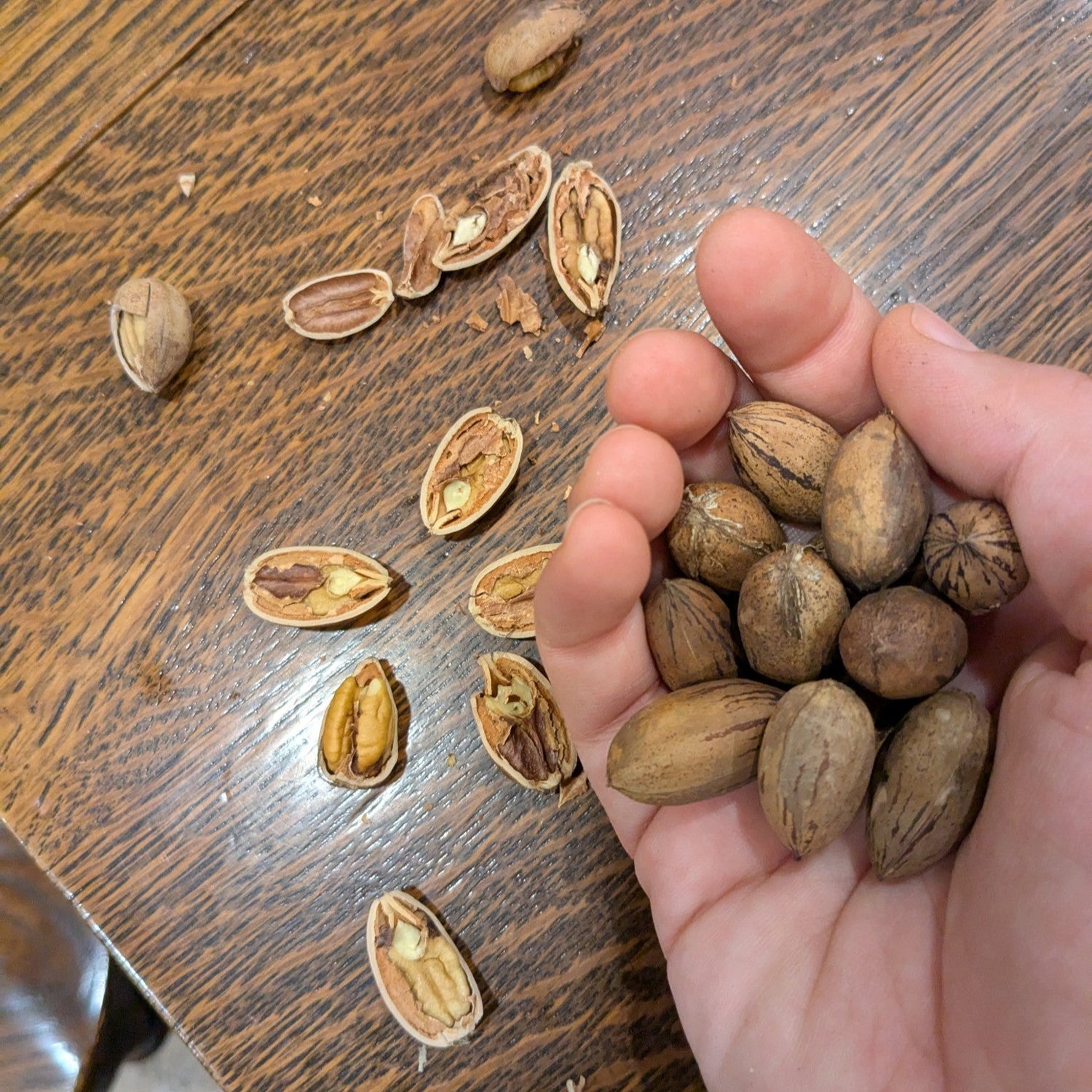
Species: Carya illinoinensis or hybrid. Our seeds are collected from trees that may have been cross-pollinated by closely related species so the resulting seedlings may be hybrids.
History: Pecan enthusiasts John Gordon and Gary Fernald, determined to get pecans to ripen regularly in Ontario, collected nuts and and grafting material from the earliest ripening pecan trees along the northern edge of their range in Iowa and Missouri. These were grown and tested at Grimo Nut Nursery and the best were chosen to form the Ultra Northern pecan strain.
Why We Grow It: Considering the amount of hard work that went into bringing these trees to Ontario, it's hard to turn down the ability to have a pecan tree in your own backyard. Like a regular pecan, the nuts can be used in a variety of ways for cooking and baking, such as the persimmon and pecan cookies Steph made (see pictures)!
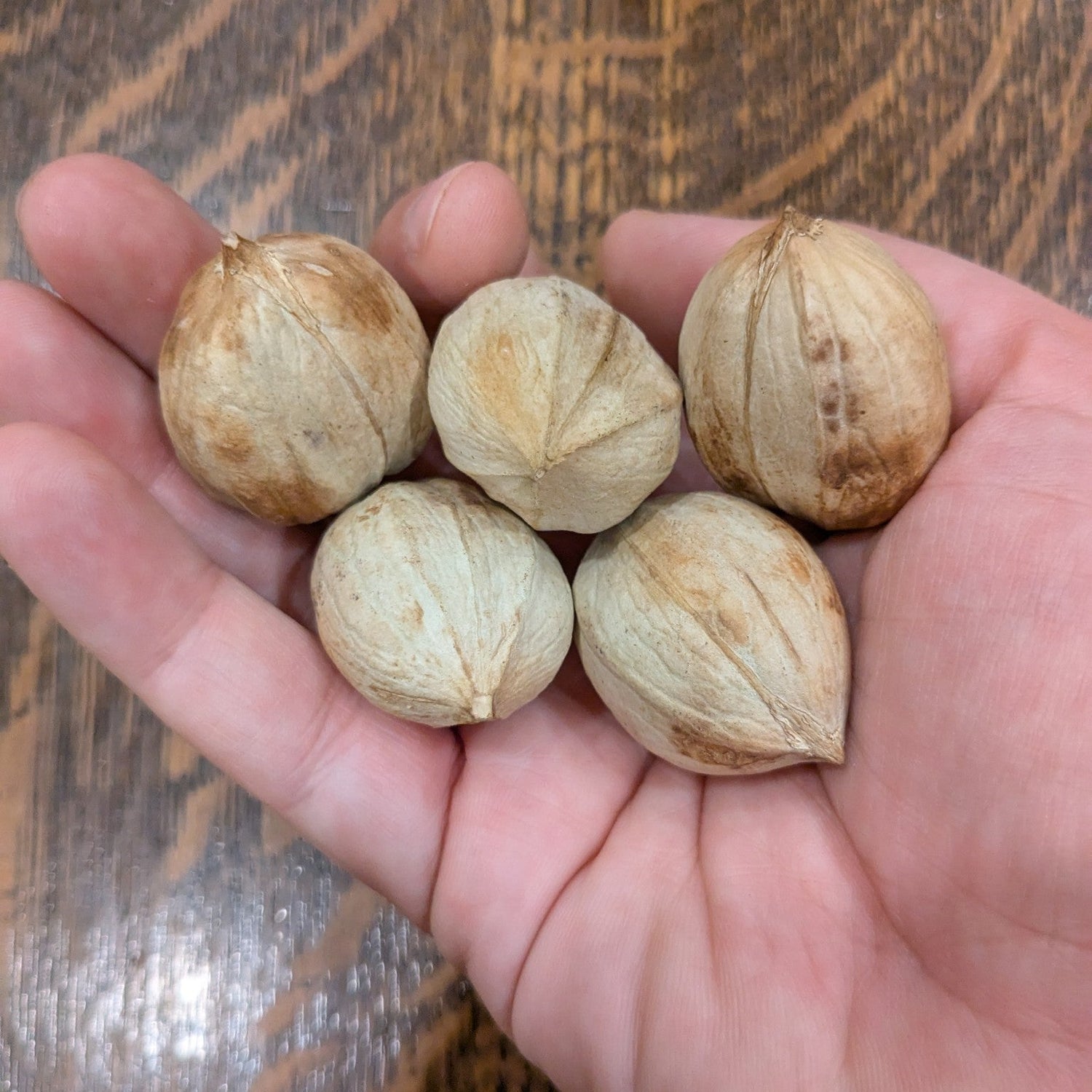
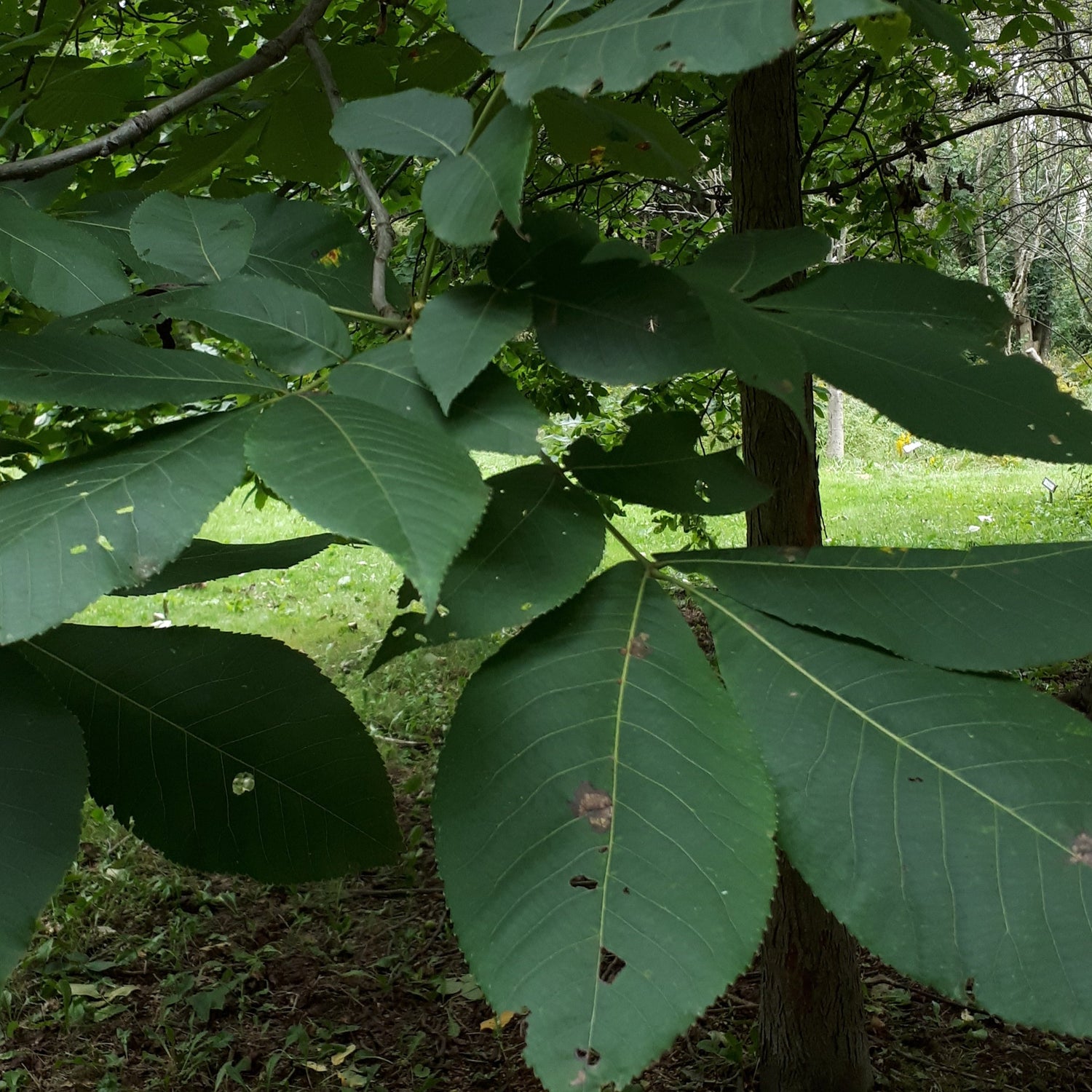
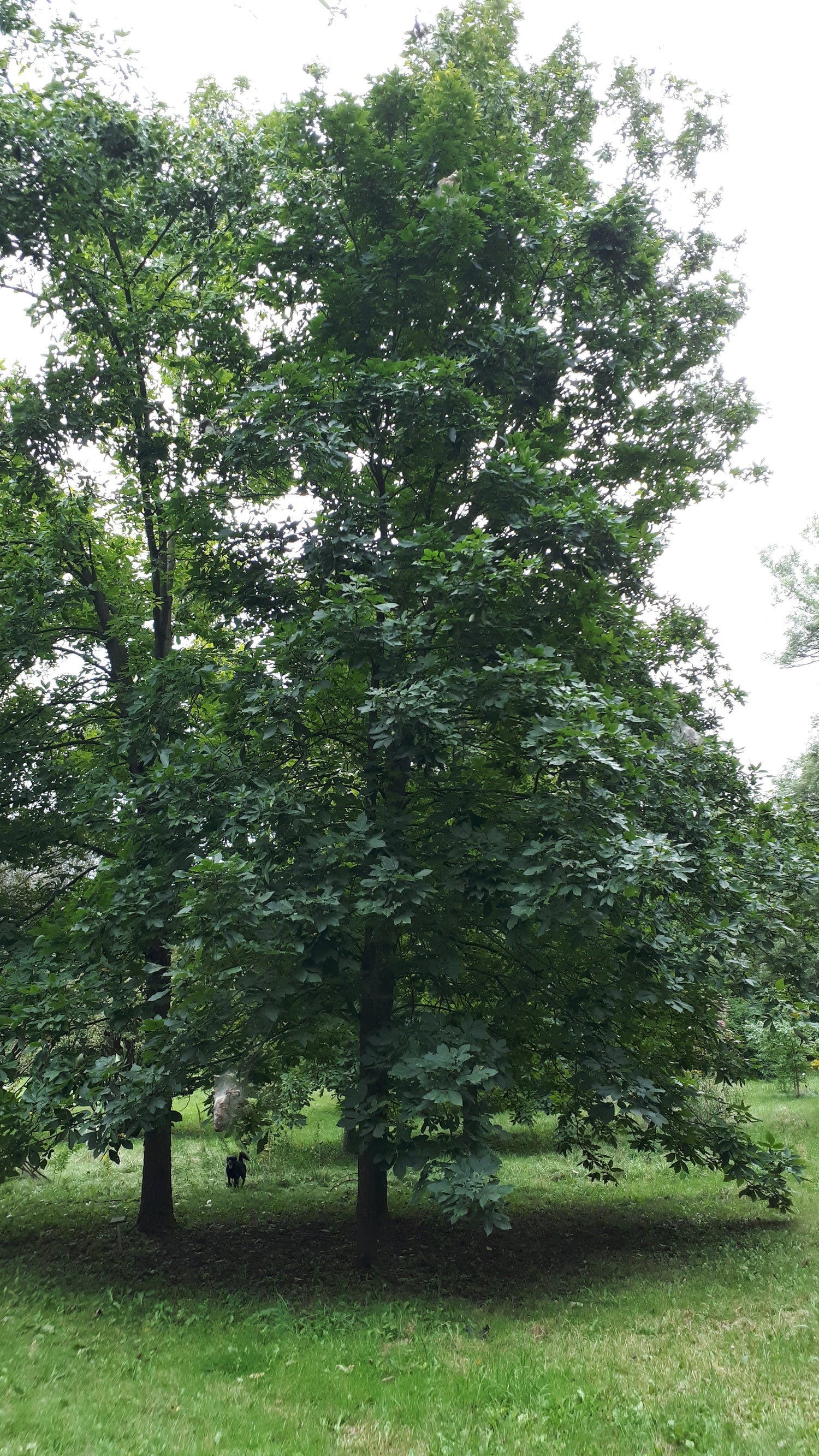
Species: Carya ovata or hybrid. Our seeds are collected from trees that may have been cross-pollinated by closely related species so the resulting seedlings may be hybrids.
History: Shagbark Hickory is native to parts of southern Ontario and much of the eastern United States. Much more common than the Shellbark Hickory, Shagbark Hickory is an important source of food for many species. Indigenous peoples also used the nuts as a food source and made the kernel milk into various dishes, along with using the wood to make bows. The strong wood is also used to make items such as tool handles and drumsticks that require extra durability. Check out this blog post by one of our customers to learn more cool history about these trees.
Why We Grow It: Shagbark Hickory produces an abundant crop of small hickory nuts every year and the sap can also be boiled for a unique flavored syrup (we haven't tried this yet, but would love to hear about it if you have!). The tree gets its name from the unique peeling bark, adding extra visual appeal wherever the tree is planted.
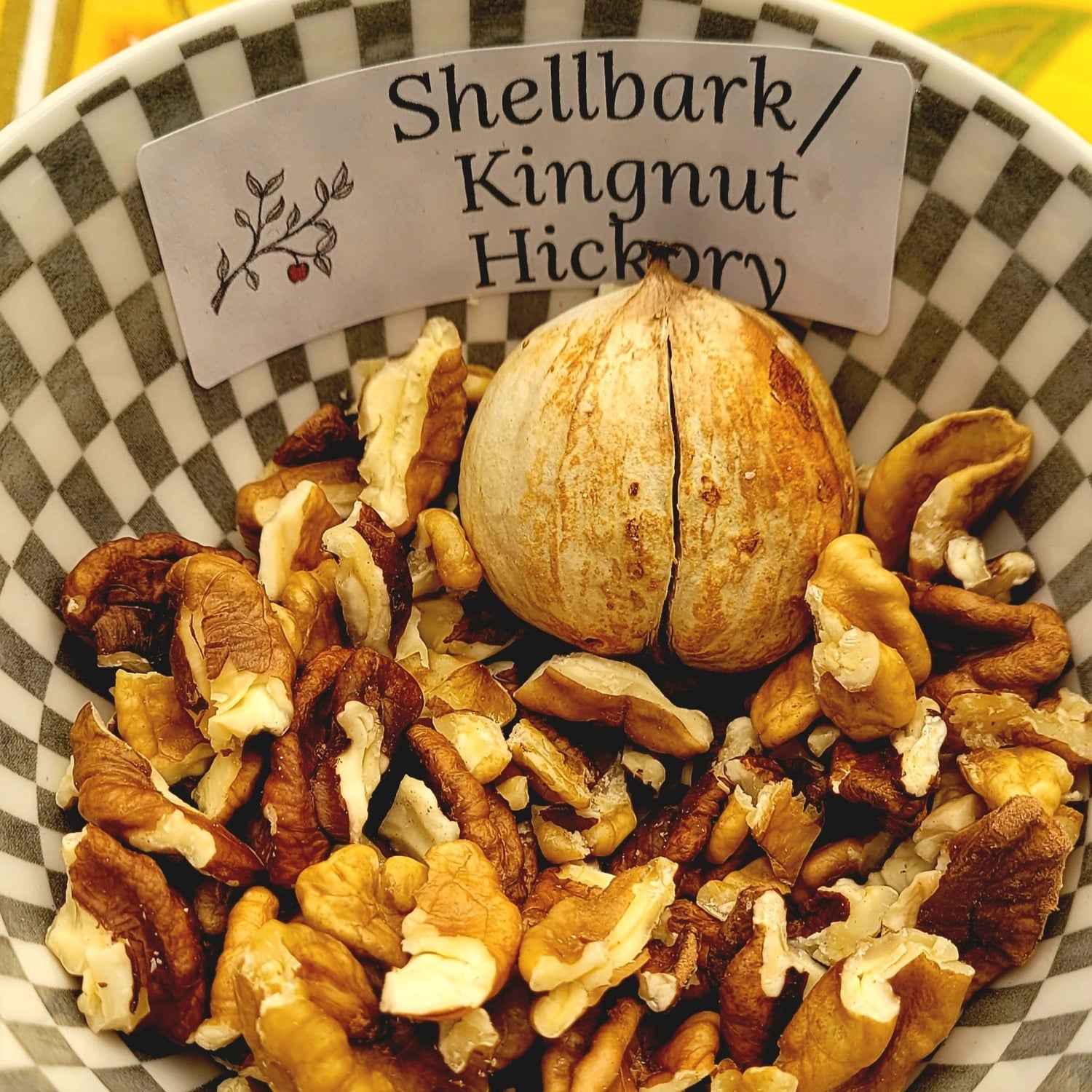
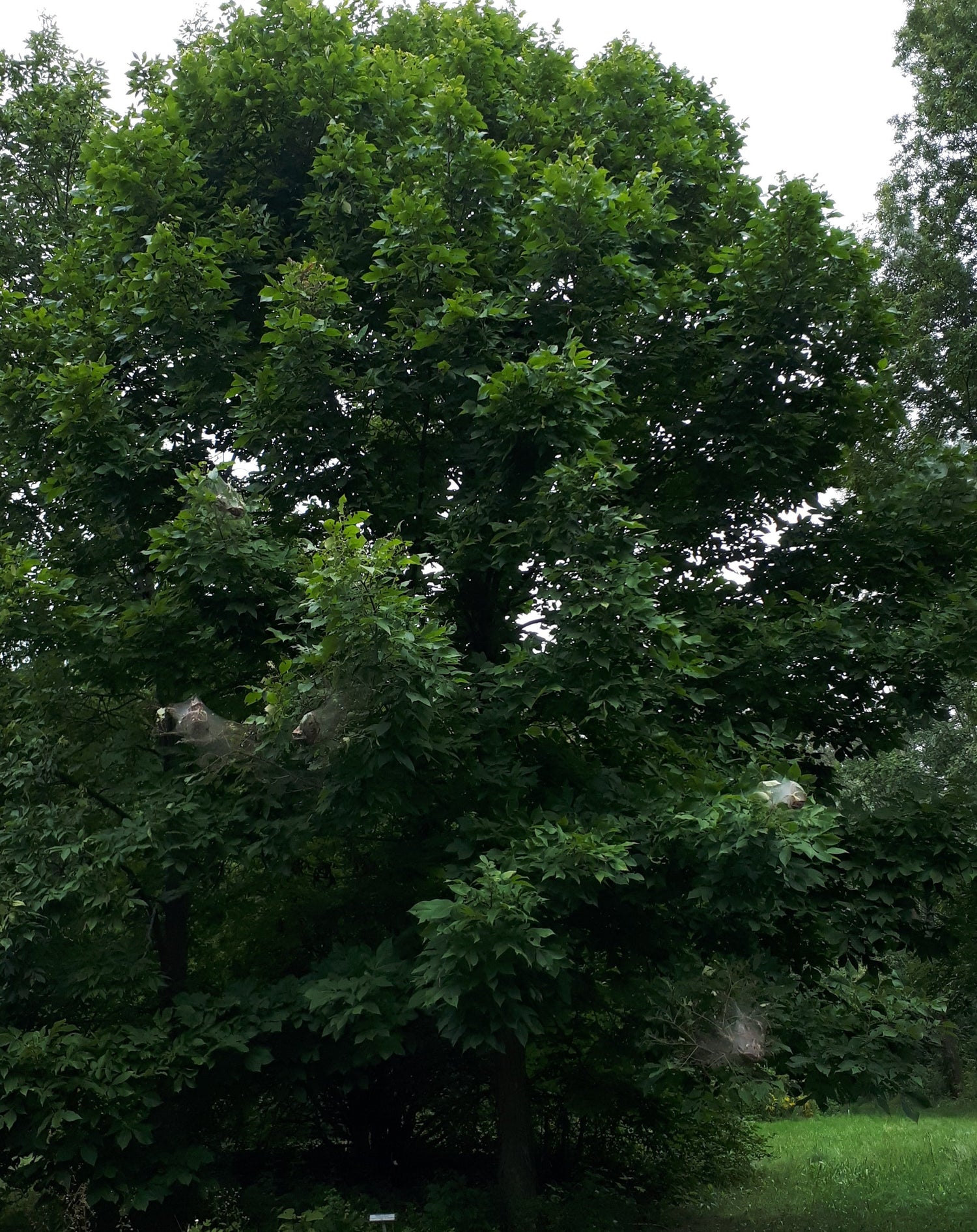
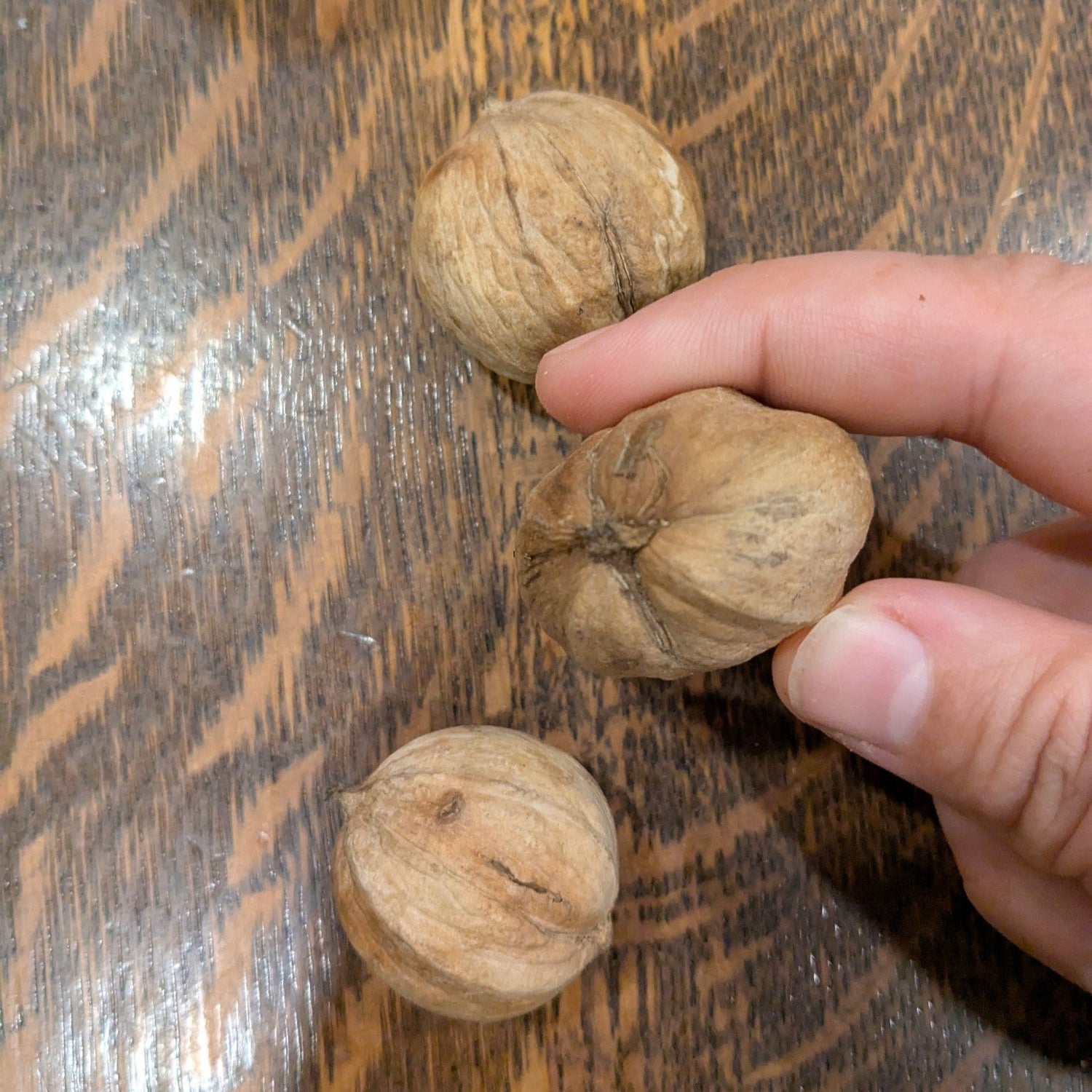
Species: Carya laciniosa or hybrid of C. laciniosa and C. ovata
History: Shellbark Hickory can be found naturally growing in scattered pockets of southern Ontario and parts of the northern and central United States. It is relatively uncommon in its native range due to its poor seed dispersal and human activity has made the tree even more rare. A wide variety of wildlife feeds on the nuts, the largest among the hickories, and there are some plantations although it is not commonly grown commercially as the nuts are quite difficult to crack. The wood, which is hard and strong yet flexible, is used to make furniture and tool handles while the inner bark has been used by indigenous peoples to make items such as baskets and snowshoes. Check out this blog post by one of our customers to learn more cool history about these trees.
Why We Grow It: Although difficult to crack, it is worth the effort to access the sweet nuts which are great eaten raw or baked into pies like pecans. The tree itself is quite attractive with unique bark that looks like it is flaking or peeling in strips once the tree matures.
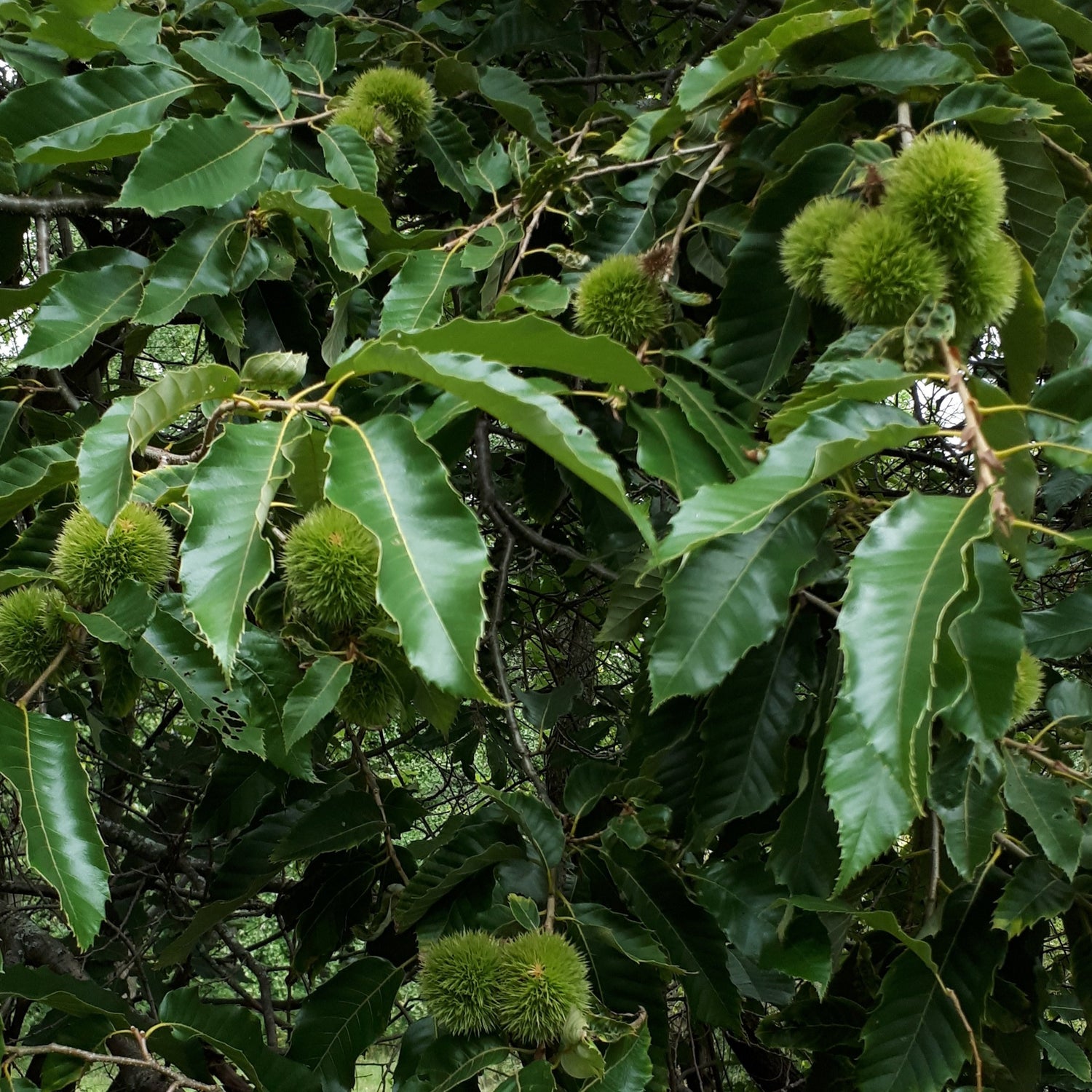
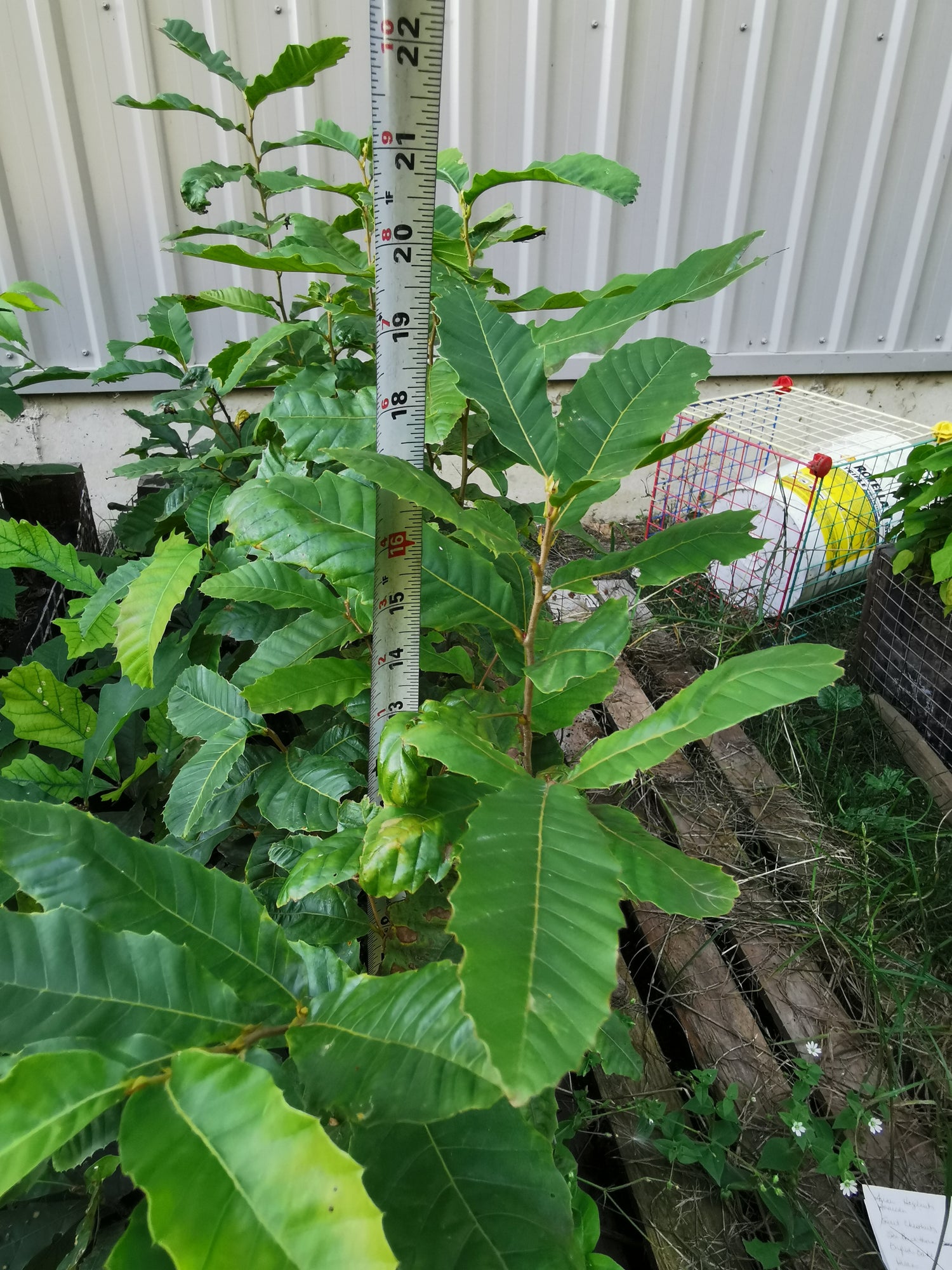
Species: Castanea dentata x mollissima
History: These seedlings are a cross between Chinese chestnuts and American chestnuts grown from seed from Grimo Nut Nursery. As a hybrid of Chinese and American chestnuts, these seedlings have blight resistance along with good cold hardiness.
Why We Grow It: This tree has incredible potential as a truly sustainable food source for humans. High in vitamins and starch, the nuts can be used to make a flour food staple, or pressed for oil to be made into bio fuel. For more inspiration and ideas in growing sweet chestnuts as a crop, we recommend the book Restoration Agriculture: Real-World Permaculture for Farmers by Mark Shepard.
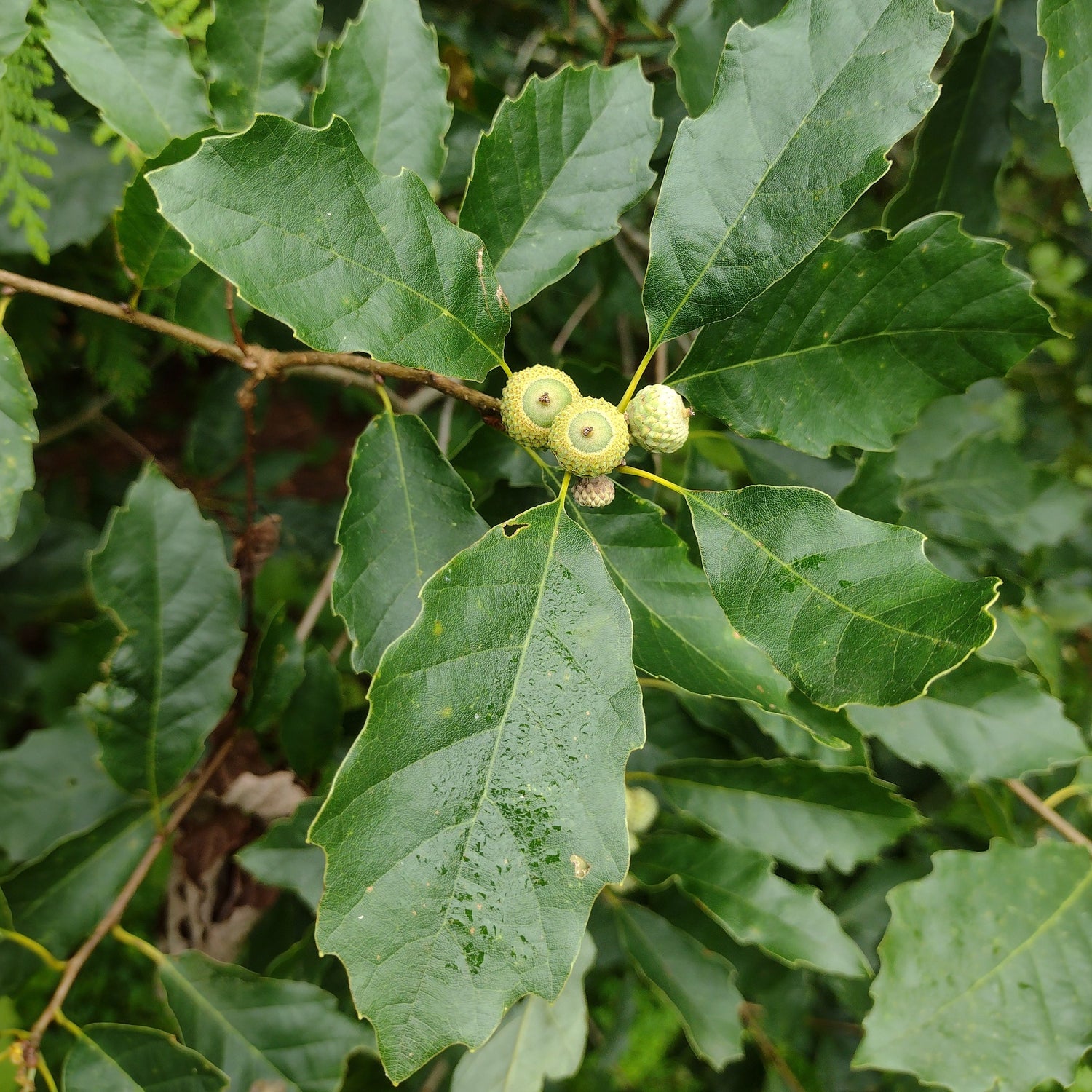
Species: Quercus prinoides or hybrid. Our seeds are collected from trees that may have been cross-pollinated by closely related species so the resulting seedlings may be hybrids.
History: Dwarf Chinquapin Oak (also spelled Chinkapin) is native to southern Ontario and much of the eastern and central United States. It was first described in 1801 by German botanist Karl Ludwig Willdenow but was likely well-known amongst indigenous groups in its range for its edible acorns.
Why We Grow It: Dwarf Chinquapin Oaks are most well known for producing mild sweet acorns that can be eaten raw or processed, making them popular with humans and wildlife alike. They are also quite quick to start producing acorns, only taking 3-5 years where some larger species may take decades.
Species: Carya ovata or hybrid. Our seeds are collected from trees that may have been cross-pollinated by closely related species so the resulting seedlings may be hybrids.
History: These are seedlings of Weschke Shagbark Hickories, a variety that was discovered in Iowa by Carl Weschke and named in 1926. It was selected for its excellent flavour.
Why We Grow It: While these seedlings will vary from their parents, the goal is that the excellent qualities of Weschke Shagbark Hickories will be passed along to its offspring! Weshcke Shagbark Hickories are known for having excellent flavour and thin shells that are easier for cracking. For more fascinating nut lore, enjoy this ebook.

Species: Quercus bicolor or hybrid. Our seeds are collected from trees that may have been cross-pollinated by closely related species so the resulting seedlings may be hybrids.
History: Swamp White Oak is native to parts of southern Ontario and a few places in Quebec and down into the US. It is an important food source of many animals. Traditionally, the acorns are used by indigenous peoples as a source of food and the bark is used as medicine. The hard, durable wood is used for a variety of purposes including furniture, flooring, boats, and barrels. It is also used for landscaping with some trees planted at the 9/11 Memorial Site.
Why We Grow It: Swamp White Oaks are great trees whether you are looking for a native tree to feed wildlife or a stately addition to your landscape. These trees are easy to transplant and are tolerant of many soil conditions so long as the area is moist. The acorns are a great food source for many species and can also be processed for use in cooking and baking.

Species: Corylus avellana
History: Yamhill was created by the Oregon State University hazelnut breeding program which released it in 2008. It was initially bred by Shawn Mehlenbacher and David Smith in 1990. Despite its small nut size, Yamhill was selected for its resistance to Eastern Filbert Blight, good quality, and high productivity. The variety was named Yamhill after Yamhill County in Oregon where a lot of hazelnut production takes place.
Why We Grow It: Yamhill is a disease-resistant variety that boasts a small but good quality nut that is great for baking (including making chocolate!). The tree is quite productive and also tends to have a more compact growth habit, making it a good option for those with limited space.

Species: Corylus avellana
History: Wepster was created by the Oregon State University hazelnut breeding program with the goal of creating a good variety for the blanched hazelnut market. It was initially bred by Shawn Mehlenbacher and David Smith in 1997. Despite its small nut size, Wepster was selected for its resistance to Eastern Filbert Blight, excellent quality, high productivity, reliable cropping, and fast growth. It was eventually released by the Oregon Agricultural Experiment Station in 2013. The variety was named Wepster in honour of the Wepster family who were quite active in the Oregon hazelnut industry and made important contributions to the breeding program.
Why We Grow It: Wepster boasts many excellent traits including high productivity and reliability, disease resistance, and great kernel quality. Developed for the baking and chocolate industry, it is a great choice for those who love using hazelnuts in the kitchen.

Species: Corylus avellana
History: PollyO was created by the Oregon State University hazelnut breeding program. The initial cross was made by Shawn Mehlenbacher and David Smith in 2001. PollyO was bred for the blanched nut market and selected for its resistance to Eastern Filbert Blight, excellent quality, high productivity, and fast growth. It was eventually released by the Oregon Agricultural Experiment Station in 2018. The variety was named PollyO in honour of Polly Owen who was the director of the hazelnut industry office for over two decades.
Why We Grow It: Bred for the blanched nut market, PollyO produces an excellent quality nut for fresh eating and baking (including use in chocolate!). The trees are highly productive and are a great option for those looking for an abundance of aromatic hazelnuts.