Plant pre-orders are now open for spring 2027!
🍁We are proudly a Canadian business. Thank you for supporting us! 🍁
-
Grow With Us
-
Apple Trees
-
Cherries
-
Pear
-
Plum
-
Budwood
-
Scionwood
-
Rootstock
-
Collections By Zone
-
Collections by Use
Grow With UsFruit TreesBerries & VinesOther PerennialsPropagation MaterialSpecial CollectionsTree Supplies -
-
Learn With Us
-
Plan Before You Order
-
Basic Ordering Guide
-
Rootstocks & Tree Size
-
Pruning
-
Signs Of Tree Stress
Learn With UsGuide For BeginnersYour New Tree - Planting CareHolistic AftercareGraftingEvents -
About Us
-
New to bareroot plants?
NOW OPEN FOR ORDERS!
All bareroot trees, plants & tubers will ship Spring 2027
Sea Buckthorn
Sea Buckthorn
Hippophae rhamnoides
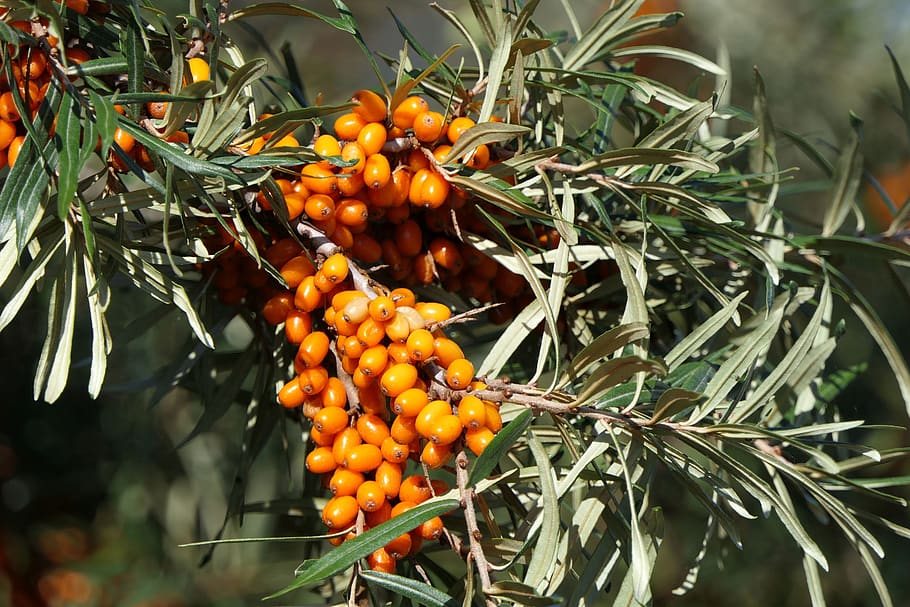
Sea buckthorn are tough and extremely prolific plants that produce large crops of vibrant orange berries, although you'll have to get past the thorns to get them. The nutritious berries pack quite the tart, tropical punch and are best used in juice and baking where the powerful flavour can be balanced out. Both male and female sea buckthorn plants are needed for pollination and fruit set. One male plant can pollinate up to 5-6 female plants.
We offer flat-rate shipping across Canada* on all our bare-root Sea Buckthorn plants, as well as a wide selection of premium fruit trees and plants grown for Canadian climates. Shop quality bareroot trees and plants delivered conveniently to your door!
8 products
Sort by:
8 products
8 products

Species: Hippohae rhamnoides
History: Lord was developed by Latvian professor of agriculture, Andrejs Bruvelis, and was likely selected for its relatively few thorns and excellent performance as a pollination partner for female plants.
Why We Grow It: A vigorous and strong pollinator, Lord has silvery green leaves which may be used as animal fodder- rather than discarding prunings from the plant, try feeding them to birds, or better yet, let some chickens keep the base of the bush clean and sucker-free by purposefully pasturing them through your plants. Sea Buckthorn have nodules on their roots which help fix nitrogen into the ground, and are a common plant in permaculture orchards for this natural 'fertilizer' effect on plants in their vicinity.


Species: Hippophae rhamnoides
History: Mary sea buckthorn, aka Marija Bruvele, is a Latvian variety that was bred by professor of agriculture Andrejs Bruvelis as a cross between the female varieties Botanicheskaya Ljubitelskaya, Chuyskaya, and native male plants from the coastal area of the Baltic Sea. The goal was to create a variety better adapted to maritime climates. The berries are high in oil content so this variety tends to be grown commercially for oil production.
Why We Grow It: A prolific variety that holds onto berries well, prolonging harvest for 4-6 weeks. The berries have a milder flavour compared to other sea buckthorns with much lower acid content. They can be made into a sunshine yellow juice, best diluted 70% with water for a Canadian version of orange juice. It's also nearly thornless, which makes harvesting much easier.
The leaves and young branches are suitable for animal fodder, which we can attest to from the hens that run around our retail area in summer, sampling from our potted sea buckthorn plants whenever Steph isn't around to chase them away. Sea Buckthorn have nodules on their roots which help fix nitrogen into the ground, and are a common plant in permaculture orchards for this natural 'fertilizer' effect on plants in its vicinity.

Species: Hippophae rhamnoides
History: Aside from its Russian origins, it is difficult to determine more about Prorachnaya sea buckthorn in English.
Why We Grow It: This Russian variety boasts heavy crops of large berries with a high oil content. Even better, this variety has relatively few thorns which makes picking said berries that much easier for the grower.

Species: Hippophae rhamnoides
History: Aside from the fact that Klavdija sea buckthorn originated in Russia, little can be found about the origins of this variety in English.
Why We Grow It: Klavdija, like other Russian-bred sea buckthorns, is noted for its excellent flavour that is on the sweeter side. The bush produces good crops and, unlike other Russian varieties, boasts moderate drought resistance.

Species: Hippophae rhamnoides
History: Pollmix sea buckthorn was developed as a series of clones to aid in the pollination of female sea buckthorn plants. It is a German cultivar.
Why We Grow It: Although Pollmix does not produce berries, it is a good option for pollinating female varieties! Aside from that, the attractive silvery green leaves can make this shrub an appealing plant to have in the yard, and it is also good for erosion control or creating windbreaks.

Species: Hippophae rhamnoides
History: Sea buckthorn is native to parts of Europe and Asia where it has been a source of food, medicine, and fodder for centuries. These seedlings were grown by us so it will be a bit of a surprise to see what the mature plants are like!
Why We Grow It: If you're looking for a dense, fruiting bush, look no further! These cold-hardy plants are grown from seed, and unlike cultivated varieties it is uncertain whether each seedling is male or female. The nodules on their roots help fix nitrogen into the soil, and the resilient plants are salt tolerant. They can withstand the juglones from walnuts and will reach up to 6 meters tall, forming virtually impermeable thickets if left to their own devices. The berries have a wide range of uses and the leaves can be enjoyed in tea.

Species: Hippophae rhamnoides
History: Sunny (known originally in Russian as Botanicheskaya Ljubitelskaya) was first developed in Russia and was further tested and introduced by Latvian agronomists who gave it the name Sunny (aka Solnechnaya with 'solnech' meaning 'sunny' and 'naya' being a female suffix). It was selected for its large berries and high juice content, making it a good option for commercial growing for comestible products. Commercially, it is the most widely grown sea buckthorn variety in central and eastern Europe.
Why We Grow It: Sunny produces large berries that are lower in acidity than most other varieties, giving them a comparatively sweeter (but still sour!) taste. They also have a higher juice content than other sea buckthorn berries, making them a great option for those looking to process them into juice or other sea buckthorn products.

Species: Hippophae rhamnoides
History: Tatiana (aka Tatjana) was developed in Latvia by renowned professor of agriculture Andrejs Bruvelis. The large berries, high oil content, and long harvest period have made it a popular commercial variety, particularly in the nutraceutical industry.
Why We Grow It: Tatiana produces large berries with a distinctly dark orange/reddish tinge. They are high in acidity so there is a strong sourness paired with their otherwise pleasant flavour, making them a great option for using in food or beverages. They are also quite high in oil which is said to beneficial for hair and skin.
Recently viewed products
Need help?
Call Us
519-804-6060
Email Us
sales@silvercreeknursery.caVisit Us
2343 Gerber Road, Wellesley ON N0B 2T0
Call Us
519-804-6060
Email Us
sales@silvercreeknursery.caVisit Us
2343 Gerber Road, Wellesley ON N0B 2T0
Hours
Friday: 9:00am-4:00pm
August til Thanksgiving Fruit Tasting Weekend. Please call in advance if you are unsure or driving from far away!
Call or email to make an appointment if you wish to visit another time.
Friday: 9:00am-4:00pm
August til Thanksgiving Fruit Tasting Weekend. Please call in advance if you are unsure or driving from far away!
Call or email to make an appointment if you wish to visit another time.
Policies
Regretfully, due to CFIA regulations we cannot ship outside of Canada and cannot ship fruit (apple, pears, stone fruits, and quince), or grape vines to BC.
To view our shipping, terms of sale & refund policies, please visit our POLICIES page.
Regretfully, due to CFIA regulations we cannot ship outside of Canada and cannot ship fruit (apple, pears, stone fruits, and quince), or grape vines to BC.
To view our shipping, terms of sale & refund policies, please visit our POLICIES page.