Organic & Natural Fertilizers

Organic & Natural Fertilizers
While in certain situations it's possible to plant a tree and forget about it until it's fruiting, that's only really possible if you are planting it in an ecosystem that is incredibly rich and full of organic matter. Even then, it's prudent to at least prune your tree occasionally to help it build a strong structure to bear the weight of the crop.
99.9% of the time, we are planting into abused, degraded soil. And without healthy soil, we simply cannot have nutrient dense, healthy plants/food. So to achieve this end, we must consider the symbiotic relationship between plants, soil, and ourselves. Below is a collection of products to help us nurture Mother Nature and you can find our recommendations here on how to amend your soil.
Michael Phillips developed an excellent simple spray program (click here for more), which we highly recommend. We have been using his approach since 2016 with excellent results in our orchards and nursery. Nigel Palmer also has an excellent book on making your own amendments worth checking out for further learning (see books here).
17 products
Sort by:
17 products
17 products
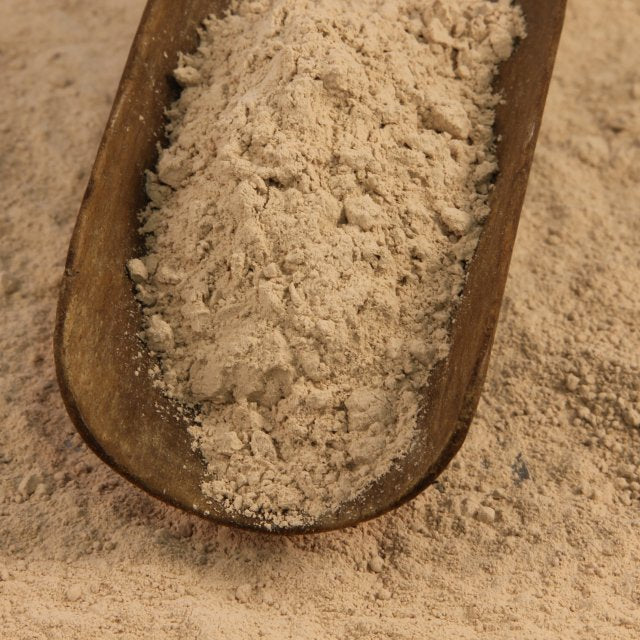
Azomite comes from an old volcanic deposit discovered in Utah in the 40s. It contains an array of minerals and rare earth elements that are beneficial for plants. While it is fairly easy to add macronutrients (NPK; or nitrogen, phosphorous, and potassium) to your soil, many often miss the importance of adding micronutrients like those contained in azomite which your plants also need.
Contents: A unique array of over 70 minerals, trace, and rare earth elements
Size: Bagged in 4.4lb/2kg bag (around 5 cups).
Application: 1/4 to 1/2 cup per tree, work the dust into the top 3in of the soil. This means a bag will treat 10-20 trees.
Soil: Any

Huplaso is a new basalt from New Brunswick which is proving to be an excellent rock dust option. All basalts originate from volcanic activity and consequently can be rich sources of macro, micro, and trace elements. Huplaso comes from mafic volcanic rock that dates back to the Middle Ordovician times. This deposit emerged from a rapidly cooling magma deposit on the east coast of Canada and contains 57 different mineral elements.
One of the great benefits of basalt is that it generally carries a high paramagnetic reading. The advantage of paramagnetism is not readily embraced by current science. However, most soil scientists are aware of the work of Phil Callahan, who has contributed significantly to the understanding of what constitutes a healthy soil. Because of its own high paramagnetic value, Huplaso is a powerful tool to use in your soils. It is also a valuable liming agent in soils.
This product is approved for organic use.
Equivalency Measurement - 6 cups/2kg
Application: 1 cup per tree, work the dust into the top 3in of the soil. This means a bag will treat 6 trees.
Apply 1/2lb-3lb per cubic foot of soil mix, unless mixing with other rock dusts, in which case adjust accordingly. Use the highest rate for high value crops, poor soils and/or for potentially increased crop yield.


As an organic slow-release fertilizer, bone meal is primarily used as a source of phosphorus and protein. Phosphorus promotes early growth, root formation and fruit development in trees, shrubs and other garden plants.
Contents: 4-10-0, bovine source
Size: Bagged in 2.2lb/1kg or 4.4lb/2kg bag
Application: Application rates depend on your soil type, but the general rate is 10lb per 100 square feet, or about 1/4-1/3 cup per tree mixed into the soil when planting; one 1kg bag has enough product for planting ~10-12 bareroot trees. DO NOT apply directly to the tree itself, apply it to the soil around the tree.
- Please Note: If you are adding phosphorous to your soil via fertilizers such as bone meal or soft rock phosphate and also using the Root Rescue mycorrhizal inoculant, reduce the application rate of the phosphorous source by 1/4-1/2. Too much phosphorous will negatively impact the mycorrhizal fungi, potentially slowing or even preventing your plants from forming a relationship with these incredible fungi.
Soil: Bone meal is best suited for slightly acidic soils (below pH 7) for the bone meal to be most available to the plants.

CropSil® is a silicon-based plant nutrient in a Monosilicic Acid form that acts as a bioregulator in the dynamics of plant cell growth, metabolism, and enzyme production. Extensive scientific research and field trials have proven Monosilicic Acid strengthens plants cell walls, increases vigor and improves resistance to stress, resulting in better rooting and crop quality. It interacts positively with other nutrients like macro and micro-nutrients and trace elements enhancing their agronomic performance and efficiency. It also enhances plant processes such as hydration and chlorophyl production.
CropSil as a plant process enhancer gives your plant more of what it’s looking for!
CropSil® works as a transport agent bringing nutrients from the root zone to the rest of the plant.
CropSil® also increases uptake of available CO2 and H2O enhancing the metabolism of plant nutrients.
- Optimizes input performance such as fertilizers and biostimulants
- Increases bio-mass of plant’s branch, stem and roots
- Improved ripening, higher brix and nutritional value with a longer shelf-life
- 100% biologically available and highly beneficial to all plants
- Easy to use as a foliar spray or irrigation additive
- Can be mixed with chemical, biostimulants, fertilizers and micro-nutrients
- Suitable for seedlings with starter, sapling transplanting treatments
CropSil® is stabilized silicic acid used to supercharge your spray medium. By adding a small amount of CropSil® to your water, you can improve the performance of watering and foliar spraying your crops. CropSil® also optimizes all other inputs in a tank mix allowing for a reduction in the usage of chemical inputs. With a super charged solution, plants build stronger cell walls, larger more erect leaves with increased chlorophyll production and increased root mass that will optimize the improved uptake of nutrients, leading to more natural vigor and an increased resistance to stress. Therefore, the need for copious amounts of fertility and protective chemical inputs that also damage and toxify our soils is greatly reduced. Thus, enabling plants and crops to grow in a more natural way to produce healthier, productive and sustainable outcomes.
Bio-available mono-silicic acid Si(OH)4 the only form of silicon (Si) utilized by plants
Silicon is the second most abundant element on earth and can be found in all soil. The belief is that plants are unable to use silicon in its most common form and are still able to grow to maturity without the use of silicon (Si). Silicon is not considered to be essential to a plant’s growth and is not recognized as a primary nutrient for plants like NPK. However, the truth is that silicon does play very important roles in the growth cycle of all plants (vigor, production, stress resistance, etc.) as is being researched and discovered by academia. Studies have shown that silicon has a positive influence on uptake and vascular transport of micro-nutrients as well as improving the mechanical strength (structure) of the plant. Helping plants to resist stress and improve growth. Natural weathering process turns a very small portion of silicon into plant available silicon (PAS), known as Monosilicic Acid (MSA) or Orthosilicic Acid (OSA) the only form of silicon utilized by plants. However, silicic acid is very unstable and in a soil environment rapidly binds to itself (polymerizes), quickly becoming once again unavailable to plants and leading to silicon deficiency and plant stress. What research has shown is when stablized into a mono-silicic acid form and introduced to plants it can have very profound affects on many plant processes. In particular cell growth, nutrient transportation, hydration and chlorophyl production.

We use this in our orchard for all trees (both in our experimental orchard and nursery stock) as the effective microbe component of our holistic spray system. You can download the holistic spray recipe here.
EM-1 contains three groups of beneficial microbes (Yeast, Photosynthetic Bacteria, and Lactic Acid Bacteria) that work together to improve soil and plant health. By increasing the number and diversity of microbes in the soil, EM-1 helps to increase nutrient bioavailability for plants. It also improves the health of other beneficial organism like mycorrhizae and earth worms. Apply as a soil drench or foliar spray.
Foliar Spray: 5-10L/Ha
Soil Remediation : 5L/m2
You can extend the use of this product by brewing it following these directions.
Learn more about theses beneficial microbes here.


GRO BioDiverse Compost is a locally made compost certified for use in organic operations! This 100% natural amendment has a variety of benefits including:
- Improved water retention
- Better plant growth
- Increased soil fertility and health
- Better soil structure
- Improved soil biology through the addition of beneficial organisms such as protozoa, bacteria, nematodes, and fungi
This product is not sterilized.
Note on Pricing and Shipping:
Due to the size and weight of the bags of compost, shipping it adds an additional $10 in shipping fees. We have included this in the price of the compost so please select either the Pickup Only option below if you are purchasing a bag for pickup or the Shipping Only option if you want your order shipped.

Gypsum is a common hydrated calcium sulfate mineral. One of its benefits comes from its ability to break up heavy, compacted clay soils, as it can effectively change the soil structure of soils that have been compacted due to flooding, over cropping and heavy traffic. It has the ability to penetrate the millions of fine clay particles in heavy or hardpan type soils and loosen the soil structure. This process then creates air and moisture spaces that eventually loosen and break-up the soil structure. The only problem is that this doesn't happen overnight, it takes yearly applications, over about a three-year period to get the job done. For most home gardeners however, reducing compaction and improving aeration is better accomplished by the application of an organic mulch in nearly any landscape.
Gypsum is neutral and does not change the soil pH, thus making it useful for adding calcium without moving your ph of the soil. However it is also valuable for reducing excess sodium in soils. Excess sodium can interfere with nutrient as well as water uptake in the plants.
Lime and gypsum are not equal. Lime is calcium carbonate, while gypsum is calcium sulfate. Gypsum will add calcium to your soil without moving the ph while lime will move your ph upwards. As gypsum is more soluble than lime, it's calcium will become available more quickly to your plants. Careful however, as excess calcium levels in your soil can tie up the magnesium uptake, even when the magnesium levels are high.
Application
In calcium deficient soils, use at a rate of 1 pound for 10 sq ft of soil surface 1-3 times a year.
This is a very high grade gypsum that we bring in because it is a consistent fine grind, and consequently excellent for drip irrigation.
Equivalency Measurement - 7 cups/2kg
Owen adds "Hey so I got some of your gypsum in and just did some testing. at 1 tbsp per 5 gal that works out to about 3 grams per Gal. The EC was about 1.0. for flush this ratio would work fine I'd even go as low as 2 g per Gal.
For just an addition of calcium into your feed I'd say even 1 gram per gallon. I'm going to come back to you around end of May and see how my flush does.
This is just a reference for anyone coming to you guys using rockwool and possibly needed some suggestions this may help them out."

Unsulphured blackstrap molasses are a great way of getting some much-needed nutrients to your trees in a more natural way, generally being considered high in iron, calcium, and magnesium. It is also a key ingredient in our Holistic Spray if you are using effective microbes.
Please note the molasses we carry is not food grade.
Contents: Organic, unsulphured, pasteurized, non-GMO blackstrap molasses
Size: 945mL bottle
Application:
-
Root Drench - 1tsp per 1L of water during vegetative state every 7-14 days
- Root Drench During Bloom - 2tsp per 1L of water every 7-14 days
- Foliar - 1/4tsp of water per 1L of water every 14 days
Soil: Any


The high oil content of a fish hydrolysate is known to benefit the development of soil mycorrhizae, which are excellent in themselves at breaking down organic soil matter and releasing the valuable nutrients into the soil.
We use this in our orchard for all trees (both in our experimental orchard and nursery stock) as part of our holistic spray system. You can download the holistic spray recipe here.
Fish Hydrolysate, in its simplest form, is ground up fish transformed into a liquid, by means of a cold process, where the breakdown of molecular bonds occurs through various biological and enzymatic processes. This breaks down the smaller pcs of fish body- bones, cartilage and meat- into a nutrient rich soup that also contains a high concentration of valuable fish oil.
Fish hydrolysate is different from fish emulsion. The latter is also made from ground up fish waste. However this is commonly done under a heated process, where the fish meal and more importantly, the fish oil are then removed and sold separately. This makes fish emulsion a less desirable product for soil and plant health than fish hydrolysate.
The fish used for the production of our fish hydrolysate are wild fish waste from the cold waters of the Pacific West Coast.
This product is approved for organic use.


Root Rescue is a certified organic mycorrhizal inoculant designed to set your plants up with a symbiotic relationship that will provide benefits such as establishing new roots more easily, improving nutrient uptake, and increasing disease resistance. This company has been working with the University of Guelph since 2009 to create this cocktail of 18 species of fungi. This inoculant is suitable for any transplanting a variety of plants including hardwoods and softwoods, bushes, flowers, veggies, etc.
Please Note: If you are using Root Rescue along with adding phosphorous via fertilizers such as bone meal or soft rock phosphate, reduce the application rate of the phosphorous source by 1/4-1/2. Too much phosphorous will negatively impact the mycorrhizal fungi, potentially slowing or even preventing your plants from forming a relationship with these incredible fungi.

Phosphorous is one of the most important nutrients required by plants, aiding in root growth among other aspects of plant development! Soft rock phosphate, aka colloidal phosphate, comes from clay collected from basins of former hard phosphate mining operations. The clay nature of this product means it does not leach out of the soil due to water, allowing it to better stay in place and remain accessible to plants.
Application Rates:
- About 1 cup per tree dusted into backfill soil when planting. One bag has around 5 cups (2kg).
- Light Applications: Apply 3.2kg per 1,000 square feet, ¼ cup per plant, or 0.45kg per 20 foot row of vegetables.
- Normal Applications: Apply 5.5kg per 1,000 square feet, 1/3 cup per plant, or 1kg per 20 foot row.
- Please Note: If you are adding phosphorous to your soil via fertilizers such as bone meal or soft rock phosphate and also using the Root Rescue mycorrhizal inoculant, reduce the application rate of the phosphorous source by 1/4-1/2. Too much phosphorous will negatively impact the mycorrhizal fungi, potentially slowing or even preventing your plants from forming a relationship with these incredible fungi.

We use this in our orchard for all trees (both in our experimental orchard and nursery stock) as part of out holistic spray system. You can download the holistic spray recipe here.
Full of trace minerals, this liquid seaweed comes from the Ascophyllum nodosum plant in the Atlantic Ocean.
Kelp is one of the first tools you should reach for in the toolbox of plant care. There is hardly a comparable option that has the range of benefits that kelp can provide. Kelp improves seed germination, enhances crop defense mechanisms and growth, promotes stronger roots, resists drought and other environmental stresses- all the while boosting yields and improving soil health. How can a plant not like this stuff?
Because of its immersion in sea water, kelp is widely known for its content of beneficial trace elements such as copper, calcium, iron, magnesium, sodium, sulphur and more. Often people solely focus on the NPK ratios when it comes to their plants, thinking that this is all the plant needs. But the micro minerals are equally important, as very minute amounts of these can be critical to impacting optimum plant health and growth.
However the area where liquid kelp really excels can be found in the added benefit of its containing a range of plant hormones such as cytokinins, gibberellins and auxins as well as phytosanitary agents. It is these hormones that regulate, trigger and direct plant growth, both in the root zone, as well as in the leaflets and growth tips. As plant growth moves through root expansion, to building frame, it then changes over to its reproductive phase, where it begins to flower and set fruit. The plants requirements for the various hormones that trigger and impact these stages varies throughout these cycles.
Auxins are quite important early on in plant growth, as it regulates the expansion of the roots, along with the building of the structure and frame of the plant. Cytokinins are particularly crucial for much of the plant vegetation growth phase, as they initiate rapid cell division and new cell wall production.
Although cytokinins are important throughout all plant growth phases, as it comes into the important flowering stage, the hormone balance shifts more dominantly towards cytokinins. These promote cytokinesis, the process of stimulating cell division. They help improve leaf growth, but more importantly during the transition to reproductive growth, or flowering, they can shorten node length and directly assist in the production of more lateral bud development. This has been shown to increase flower yield and quality levels considerably.
Liquid kelp is also very effective in helping the plant resist plant stress, due to excessive heat conditions and drought.
Liquid quid kelp is best applied directly as a drench to the soil in the early stages of plant growth, so that it can help with root development. But when the plant is transitioning to the flower stage, it is preferable to use as a foliar.
When applying as a foliar, it is always best to spray your plants before 7:00 in the morning- or earlier, as it is in the coolness of the morning before the heat of the sun closes the stomata on the underside of the leaves when the plant is most able to absorb the valuable nutrients that liquid kelp provides. Adding a small amount of liquid yucca as a surfactant helps greatly in the plant absorption process, as this keeps the liquid from 'balling up' and forming droplets on the leaf surface. Instead, the surfactant breaks this water tension down and establishes a much greater liquid coverage of the leaf surface, making the whole process much more efficient.
Application rates are 5-10 ml per litre of water minimum, repeated every 7-30 days. This product is approved for organic use.
945mL bottle is enough for 200L of spray mix, or 4x 50L mixes.


Terra Biosa is a dynamic, microbial soil inoculant. It is categorized as a Biological Compost Aid for the cultivation and stimulation of soil productivity and plant health. This all-natural and organic product is useful in orchards, vineyards, gardens, and compost by providing the following benefits:
- Stimulates plants metabolism
- Enhances yield as well as quality of fruit and produce
- Improves resistance to fungal infestations
- Improves soil quality by restoring micro-organisms in the soil
We use this in our orchard for all trees (both in our experimental orchard and nursery stock) as the effective microbe component of our holistic spray system. You can download the holistic spray recipe here.
Recommended Application Rates:
Soil: Mix 1 tsp of Terra Biosa per 40 sq. ft. (4 m2) in your water and apply while irrigating. Apply every two weeks for best result.
Foliar care and feeding: Mix 1 tsp. of Terra Biosa per 1L of fresh (preferably structured) water and apply using a spray bottle. Remember to mist leaves on both sides.

TM-7 contains a blend of seven micronutrients as well as concentrated humic and fulvic acid. It can be used to stimulate microbial activity, increase nutrient uptake, and reduce nutrient leaching. It improves soil structure, builds plant immunity, and promotes growth and increased yields.
Derived from: Boron, cobalt sulfate, copper sulfate, ferrous sulfate, manganese sulfate, sodium molybdenate, zinc sulfate and chelated with humic and fulvic acids derived from fresh water cretaceous humate deposits.
Application: Can be used for seed activation and soil or foliar applications
Soil, container, or foliar application: 0.75-1.25g/gal
Field application: 2-4 pounds per acre every 3-6 weeks
Soil: Good for all soil types including containers and hydroponics

Volcanophos Rock Dust – Mineral-Rich Soil Amendment for Planting Fruit Trees
We like this product because:
Volcanophos rock dust adds phosphorus and trace minerals to soil—ideal for planting fruit trees, boosting root growth, and improving long-term fertility.
Key Benefits:
-
Natural phosphorus source for root growth and fruiting
-
Rich in trace minerals and rare earth elements
-
Enhances soil biology and nutrient availability
-
Ideal for planting fruit trees and orchard establishment
-
Micronized for faster breakdown and improved efficiency
-
Approved for organic use
Volcanophos is a carbonatite/phosphate igneous rock that comes from the Kapuskasing area in Ontario. The unique thing about this mineral is that it is the only igneous rock available in North America that contains apatite, which is a phosphorus source. In addition to this, the igneous base to this deposit means that it contains a profuse range of trace minerals and rare earth elements, which sedimentary rocks generally lack.
This material is micronized. This makes for a more costly product, as the material, which initially comes in a sand like texture, is then ground down into a fine powder. However, this greatly increases surface area of the rock dust, which in turn allows the biology in the soil to more readily access to the material. This results in it being broken down more rapidly.
As with all rock dusts, it is best mixed with a compost or peat carbon source in order to facilitate the breakdown into bio available forms. Therefore this is an excellent material to add to your compost piles at a rate of approx. 10% by volume.
This product is approved for organic use.
Application
VolcanoPhos is typically applied at a rate of 300 to 500 lbs per acre each year until optimal phosphorus levels are reached. In a soil mix, use at a rate of approx 1/2 cup per cubic foot of mix.
A certified agronomist should be consulted with regards to Volcanophos and its application rates specific to your needs.
Equivalency Measurement - 6 cups/2kg

Wollastonite comes from the area around Seeleys Bay in Ontario. Its source is a high grade calcium silicate deposit that when mined and ground down provides an excellent rock dust made up of approximately 27% silicon, 16.5% calcium, and 4% magnesium. Although most soils can benefit from the calcium addition, it is the silica content here that is of interest.
Silica is a crucial mineral, as it contributes greatly to building the strength of cell walls, which not only encourage upright plant structure, but they trigger a range of natural defense in turn. Strong cell walls protect the plant from pests that seek to chew and suck on the plant structures. A cell wall fortified with adequate silica levels also protects the plant from assault by the different fungal pathogens by making it much more difficult for the fungal pathogens to be able to eat their way through the cell walls into the cell center where it then gains a foothold and spreads.
Silica also boosts photosynthesis and chlorophyll development. The nutrient pathways in the plant- the xylem and phloem- govern the movement and translocation of mineral nutrients throughout the plant. It is silica that is responsible for the creation and maintenance of these pathways. And without adequate levels of silica in its structure, plants will all too often succumb more readily to the stresses brought on by drought and low water conditions.
"The stronger the cell wall, the more stress-resistant the plant, whether that stress is from pathogens or non-living factors." Graeme Sait, Australian Agronomist
This product is approved for organic use.
Application: 1 cup per tree, work the dust into the top 3in of the soil
Use at a rate of approximately 1/2 cup per cubic foot of soil mix.
Equivalency Measurement - 7 cups/2kg

Wool Pellets Soil Conditioner - Bethel Farm
Wool pellets are a natural, eco-friendly soil conditioner that improves moisture retention, promotes healthy plant growth, and reduces the need for chemical fertilizers. They help repel pests, regulate temperature, and break down over time to enhance soil health—making them a sustainable choice for any garden or house plant.
Key Benefits:
-
- Improves moisture retention around roots
- Reduces transplant shock
- Encourages deeper, stronger root systems
- Provides slow-release nitrogen over time
- Fully natural, biodegradable, and soil-building
To learn more about Bethel Farm (Julie raises happy sheep and produces quality lamb): visit Bethel Farm website.
To learn more about how to use pellets: visit Gezellige Farm website.