Dwarf Sour Cherry Bushes

Dwarf Sour Cherry Bushes
Prunus cerasus
Dwarf Sour Cherries Bushes are hardy, compact, economic, and excellent for home orchardists. We get reliable crops off our bushes in our test orchards, and the fact they are self-pollinating, easily netted for bird protection, can be picked from standing, and have excellent flavour to boot makes them a must in any home-grown food system!
We offer flat-rate shipping across Canada* on all our bare-root cherry bushes, as well as a wide selection of other fruit trees and native plants. We send live trees, straight to your door!
12 products
Sort by:
12 products
12 products
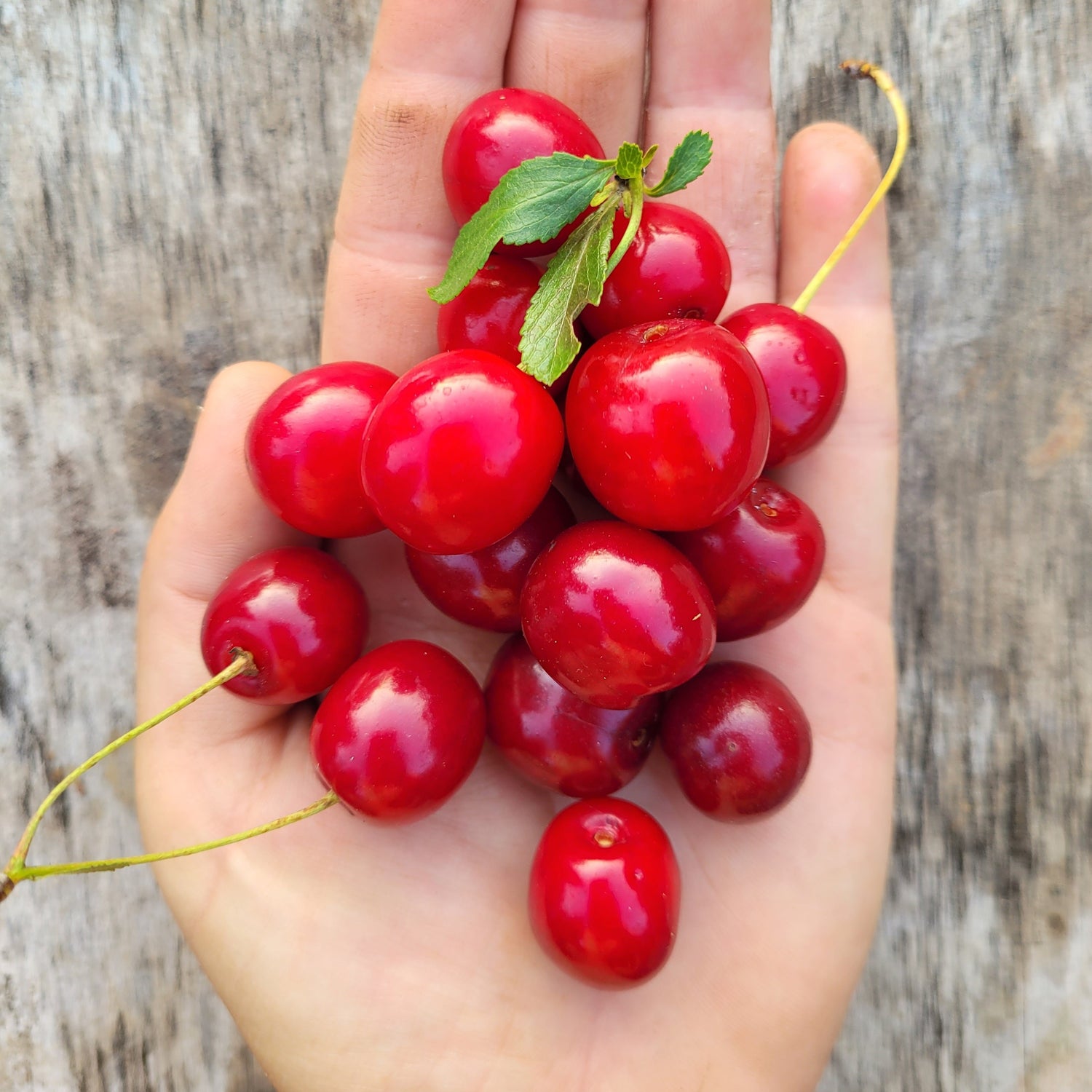
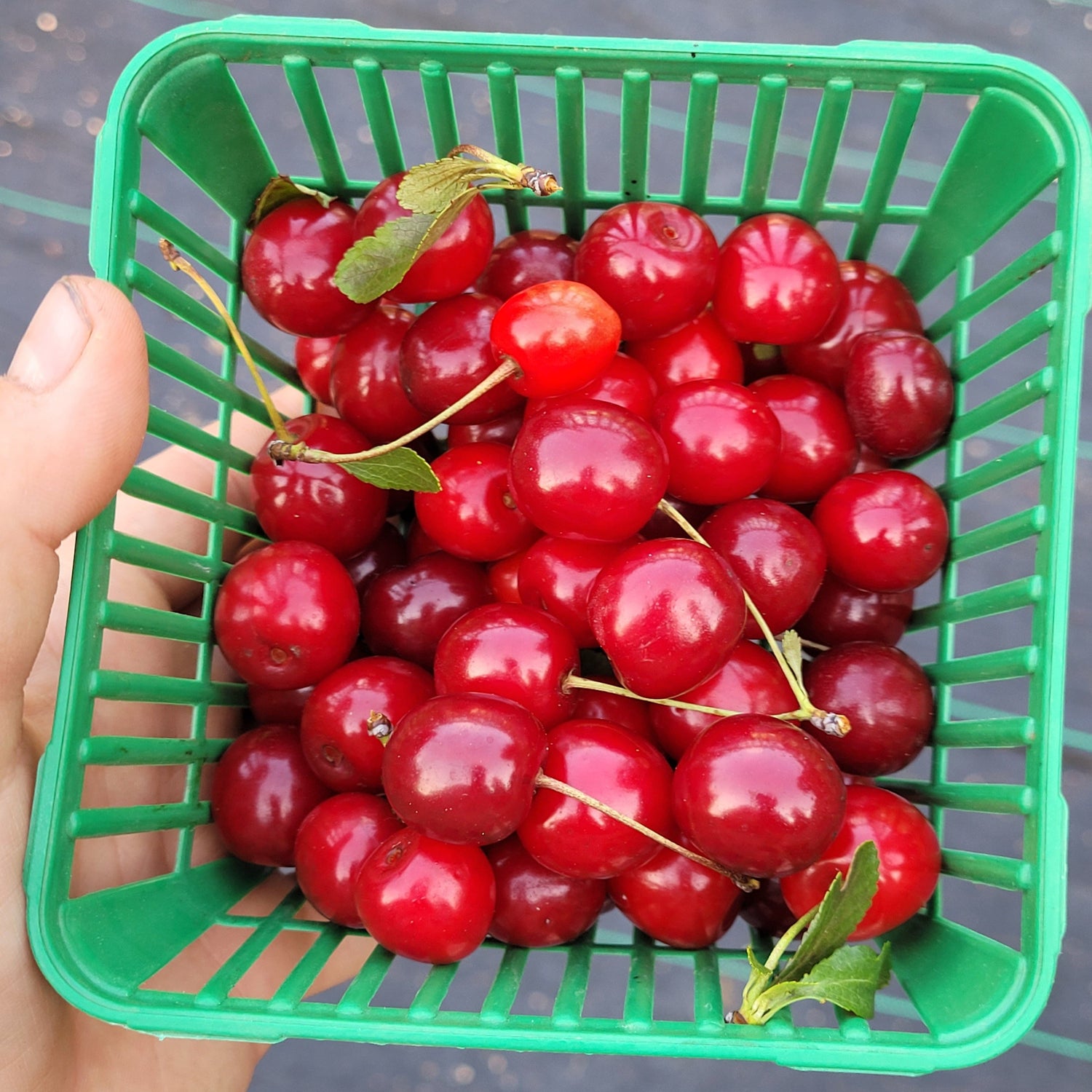
History: Crimson Passion dwarf sour cherries are one of several dwarf sour cherries developed and released by the University of Saskatchewan with the goal of creating sour cherries that were cold hardy, shorter in stature, and produced good quality fruit. This initiative began in the 1940s and Crimson Passion was released as part of the Romance series in 2004. It is the sweetest of the Romance series cherries.
Why We Grow It: Crimson Passion produces large sweet fruit, excellent for fresh eating or processing. It contains the same sugar content (20-22 Brix) as sweet cherries, but also contains the tangy flavour of sour cherries, combining the best of both worlds into one cold-hardy shrub. This variety reaches up to 10' at maturity, great for anyone with limited space.
Check our our blog post with some tasty sour cherry recipes!
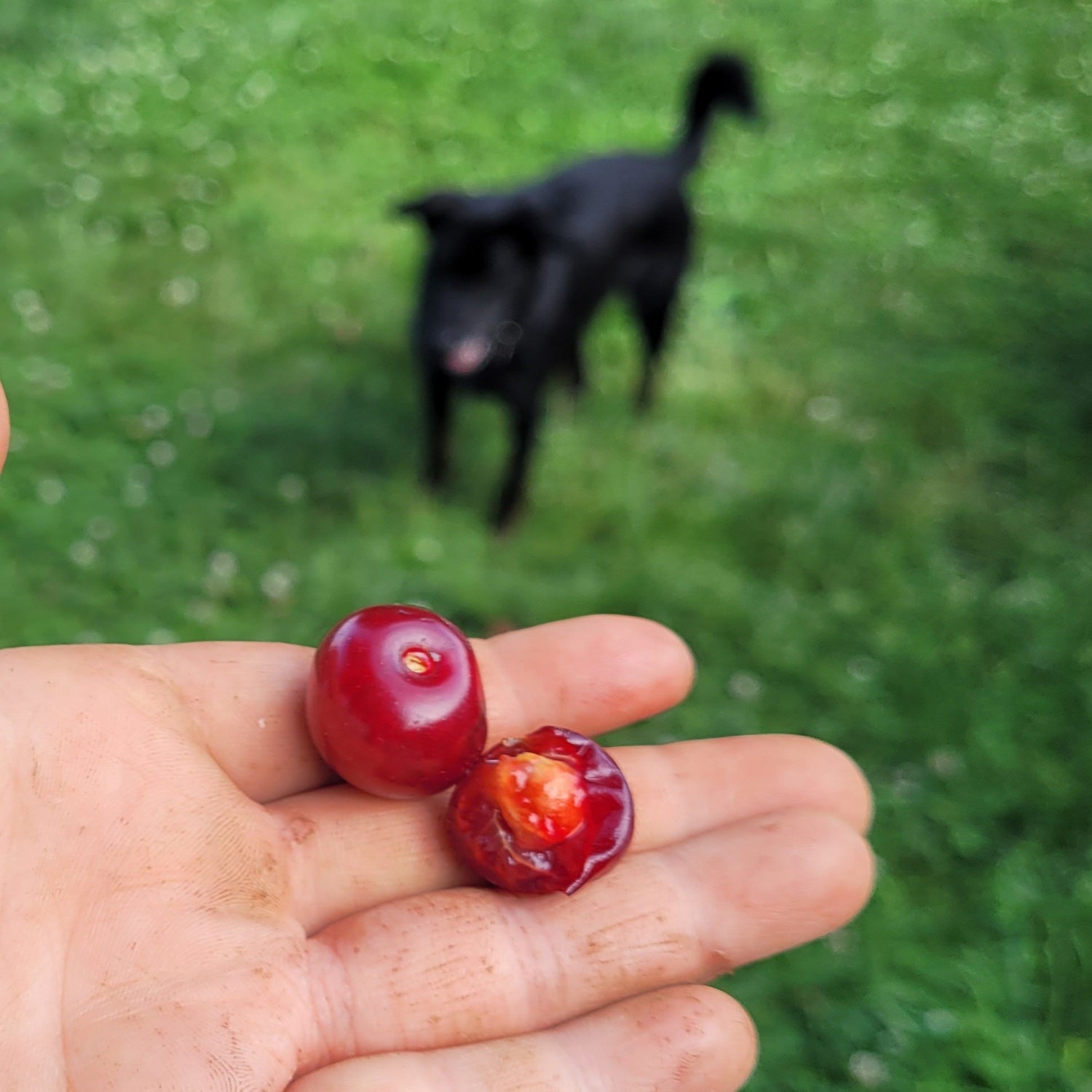
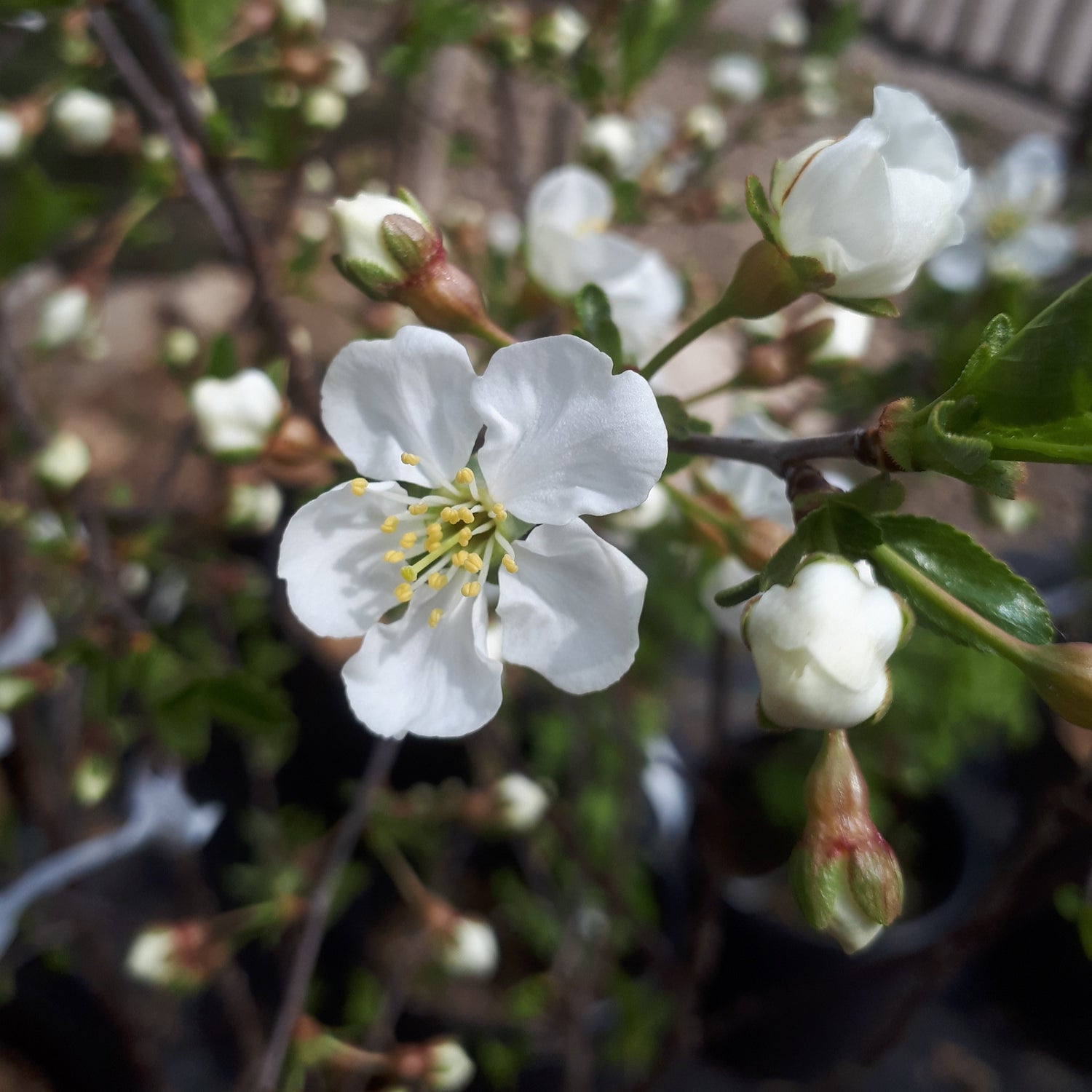
History: Juliet dwarf sour cherries are one of several dwarf sour cherries developed and released by the University of Saskatchewan with the goal of creating sour cherries that were cold hardy, shorter in stature, and produced good quality fruit. This initiative began in the 1940s and Juliet was released as part of the Romance series in 2004.
Why We Grow It: With good yield and deep red medium-sized fruit, Juliet is a favourite for those that enjoy the sweet-tart flavour! This is an excellent variety for the fresh market or processing. For anyone short on garden space, these cherry bushes reach 6-8 feet at maturity.
Check our our blog post with some tasty sour cherry recipes!
History: Romeo dwarf sour cherries are one of several dwarf sour cherries developed and released by the University of Saskatchewan with the goal of creating sour cherries that were cold hardy, shorter in stature, and produced good quality fruit. This initiative began in the 1940s and Romeo was released as part of the Romance series in 2004.
Why We Grow It: Romeo boasts very dark red fruit that has a nice sweet-tart flavour and plenty of juiciness. It has a high flesh to pit ratio, making each cherry just that much more enticing. Although the bush only reaches 7-8ft at maturity, it still yields around 25lb of fruit per plant.
Check our our blog post with some tasty sour cherry recipes!
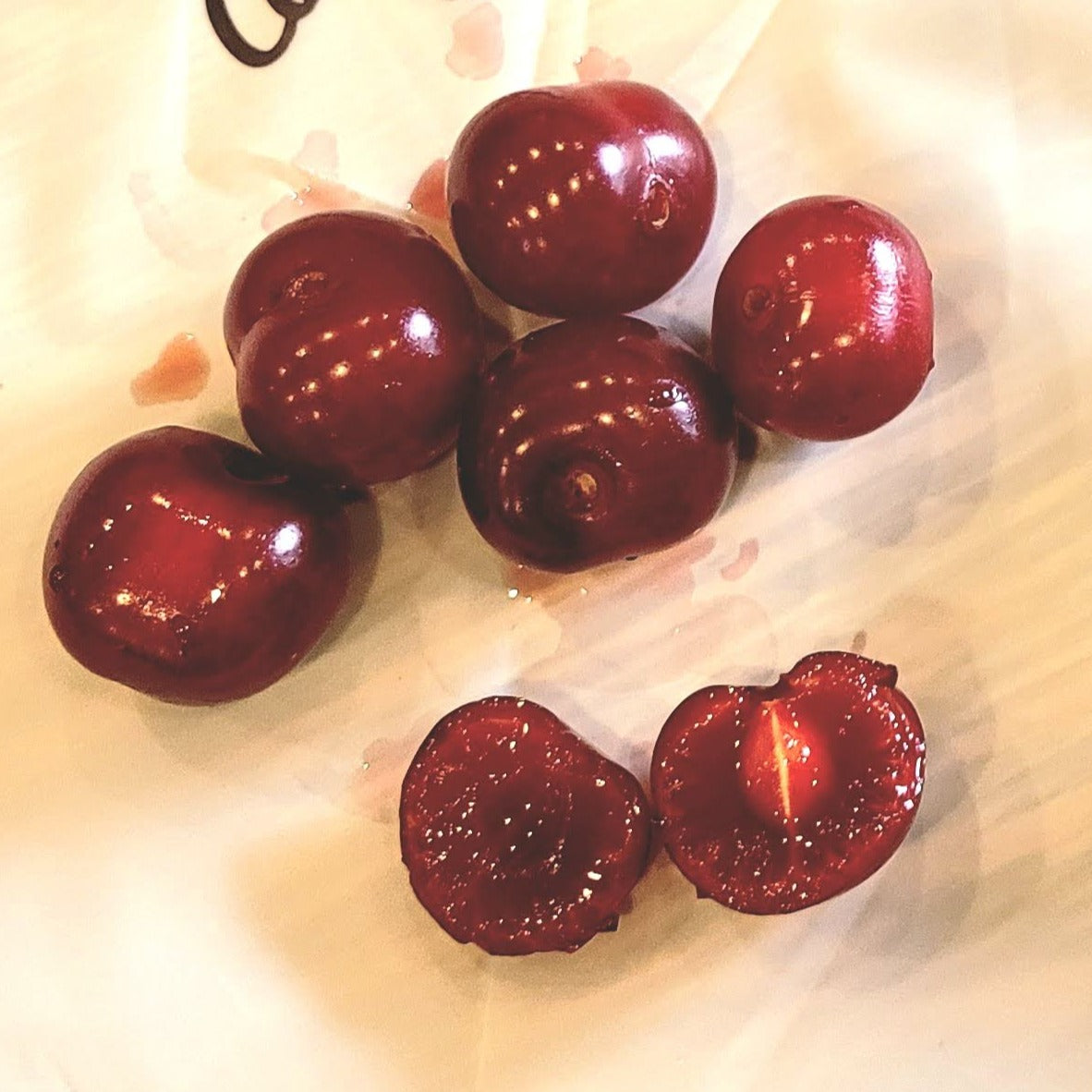
History: Carmine Jewel is one of several dwarf sour cherry shrubs developed at the University of Saskatchewan in an effort to combine cold hardiness, dwarf stature, and good quality fruit into one variety. This effort was started by Dr. Kerr (for whom Kerr applecrabs were named) in the 1940s and Carmine Jewel was released in 1999. It is considered the hardiest of the cherries they developed. Carmine Jewel cherries are now the most commonly grown commercial cherries in the prairies.
Why We Grow It: Carmine Jewel is a notably productive cultivar with small cherries that have a high flesh-to-pit ratio. Thanks to their firm flesh, they are a preferred variety for freezing and drying. The shrub is on the smaller size, reaching 6-7ft once mature, great for anyone who loves cherries but doesn't have a lot of space!
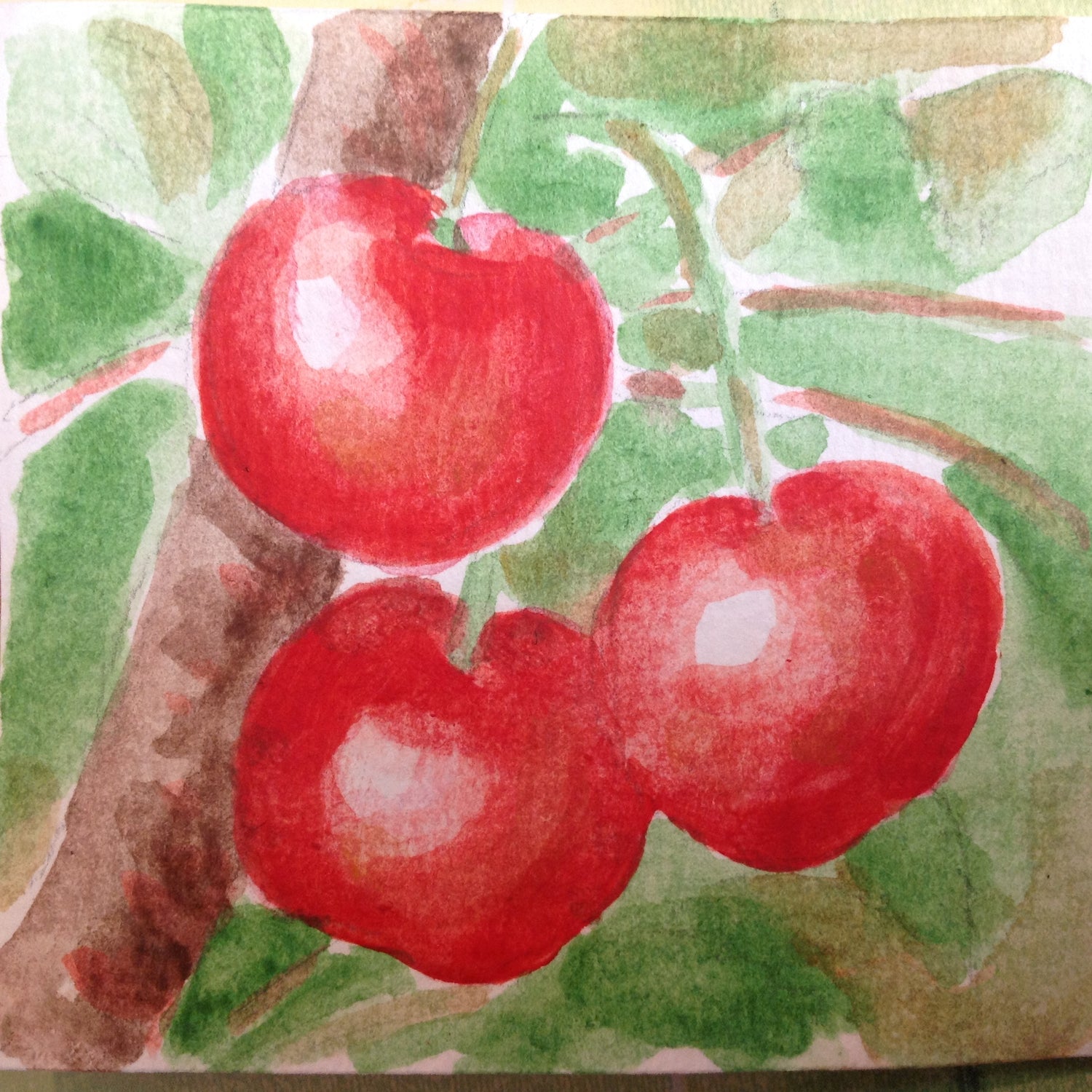
History: Cupid is a part of the Romance series of dwarf sour cherry bushes developed and released by the University of Saskatchewan in 2004. Their goal was to create cold-hardy, dwarfing bushes with good quality fruit. Cupid was likely selected for its good flavour and unusually large cherries, the largest in the Romance series.
Why We Grow It: These dark red, cold-hardy cherries have a sweet-tart flavour that can be enjoyed fresh for fans of a more astringent flavour or used for cooking, baking, and preserving. Cupid has the largest cherries of all the dwarf sour cherries in the Romance series and also ripens the latest, helping to extend the season.
Species: Prunus cerasus
History: These sour cherry seedlings are grown from Juliet seeds we've collected here at Silver Creek Nursery from our own trees! Juliet, is one of the members of the Romance Series released in 2004 from the University of Saskatchewan.
Why We Grow It: Seedling fruit trees are a great way to add some diversity and mystery to your garden or orchard! The parent variety, Juliet, has a sweet/tart flavour that some enjoy for fresh eating and is great for processing. A naturally dwarfing and bush-like variety. For a full description, see our Juliet page here.
Please Note: Since sour cherries tend to stay true to type more than apples, these seedlings will likely bear a strong resemblance to their parent variety. However, any specific information listed on this page should be taken with a grain of salt as there may be some variation from the parent tree.

History: Porthos was developed by Bob Bors at the University of Saskatchewan. It was selected for its large fruit and unusually sweet flavour. A member of the Musketeer Series, Porthos was released in 2022 as part of the university's 100 Years of Horticulture Celebrations.
Why We Grow It: Porthos produces large, deep red fruits that are quite sweet for sour cherries! This is a versatile variety that is great for fresh eating, baking, cooking, freezing, and making wine.
Check our our blog post with some tasty sour cherry recipes!

History: Athos was developed by the University of Saskatchewan and was first bred in 1992 as a cross between Kerr's Easy Pick and Cacanski Rubin. It was selected from among 2500 seedlings for its productivity, winter hardiness, extent of suckering, ease of fruit removal, and fruit quality. Part of the Musketeer Series, Athos was released in 2022 as part of the university's 100 Years of Horticulture Celebrations.
Why We Grow It: Athos produces burgundy red cherries that have a more balanced sweet/tart flavour compared to some of the other sour cherries. This makes them more desirable for fresh eating but they are still good for typical sour cherry uses like baking. The bush has more of a spreading growth habit which gives it some additional visual appeal as an ornamental plant.
Check our our blog post with some tasty sour cherry recipes!

History: Cutie Pie was developed at the University of Saskatchewan using Mongolian cherry material donated by plant breeder Les Kerr who first created the dwarf sour cherry bushes. It was selected for its compact size, good flavour, and extreme cold hardiness and released as part of the university's 100 Years of Horticulture Celebrations in 2021.
Why We Grow It: Cutie Pie is a compact plant, even compared to the other dwarf sour cherry bushes. Only reaching about 4ft tall once mature, this is a great option for those with limited space. The small, red cherries have a more balanced sweet/tart flavour so they are great for eating fresh and using in baking or cooking! It is a reliable and productive variety.
Check our our blog post with some tasty sour cherry recipes!

History: D'Artagnan was developed by the University of Saskatchewan and shares the same parents as several varieties in the Romance series. It was bred for and selected due to its suckering habit which makes it suitable to form a cold-hardy fruit-bearing hedge. D'Artagnan is the fourth variety released in the Musketeer series and was named for the fourth musketeer in The Three Musketeers. It was released in 2021 as part of the university's 100 Years of Horticulture Celebrations.
Why We Grow It: D'Artagnan produces dark red cherries similar in flavour to Juliet. Like Juliet, it can be eaten fresh or used for cooking and baking. Its main feature, however, is its tendency to sucker heavily which makes it suitable for forming hedges. If individual d'Artagnan bushes are planted 1m apart, they will eventually fill in to form an edible hedge. For those in colder climate areas especially, this can be a unique addition to an edible landscape!
Check our our blog post with some tasty sour cherry recipes!

History: Valentine was developed at the University of Saskatchewan and released in 2002 as part of the Romance series. Valentine stands out amongst the Romance series as having the reddest fruit and the highest vigour.
Why We Grow It: Valentine produces tart bright red cherries that are great for drying due to their colour. They are also excellent for baking, especially if you love cherry pie! If you prefer a sour flavour, pick the cherries as soon as they turn red on the bush. Otherwise, wait a week or so until the colour deepens and they will be a bit sweeter. Valentine gets taller than some of the other dwarf sour cherry bushes but has higher overall yields as a result.
Check our our blog post with some tasty sour cherry recipes!

History: Big Red was developed by Bob Bors at the University of Saskatchewan. It was one of several varieties an American company further evaluated in the US and selected as the best amongst them. Chosen for its notable cold hardiness, large size, and unique shape along with its good flavour, Big Red is sold under the name Wowza! in the US. The variety is still considered experimental since the original tree was accidentally destroyed prematurely.
Why We Grow It: Along with having good flavour, Big Red is most notable for its large size: the fruit can be twice as big as other dwarf sour cherries! The fruit is also uniquely elongated with a lobed end, giving it an appearance akin to Red Delicious apples. In trials at the University of Saskatchewan, the variety suffered no winterkill so it appears to be extremely cold hardy even in comparison to other dwarf sour cherries. The only downside to this variety is that it has lower yields than other varieties, perhaps as a tradeoff for its other traits.
Check our our blog post with some tasty sour cherry recipes!