Apple Scionwood

Apple Scionwood
For those looking to graft heritage and unique apple trees, we are happy to provide scionwood directly from our orchards! We offer a wide selection which will be listed further below.
ORDERING SCIONWOOD: Scionwood orders generally open in December and must be placed by the end of February. We require a minimum 25% deposit upfront.
If you are interested in scionwood but the sale season has ended, we are happy to add you to our request list for the following spring! Just send us a list of the varieties and quantities you are interested in and we will add you to our list.
SHIPPING/PICKING UP SCIONWOOD: We generally recommend that customers receive their scionwood orders by mid-April at the latest to ensure it arrives dormant, but can hold it longer if customers accept the risk that the scionwood may start breaking dormancy.
Due to the nature of nature, sometimes scions begin budding out early and we want to ensure you receive dormant scionwood that you will have time to graft with. If you need to hold your scionwood dormant until May, you will need to decide how you will do that. It is relatively simple, and you can learn more about storing scionwood at home here. If you are picking up your scion order, we recommend doing so ASAP after you receive your pickup notification via email.
Size: 12-18" or 30cm+, as available*. If a scion is less than 6" or 15cm, it will be discounted accordingly.
*Since we specialize in so many varieties, they each have a unique growth habit and vigor. Some cultivars will produce long relatively thick scions, and others tend to produce shorter, thin scions (see photos to the left). We will provide the best quality we can, within natural restraints.
112 products
Sort by:
112 products
112 products
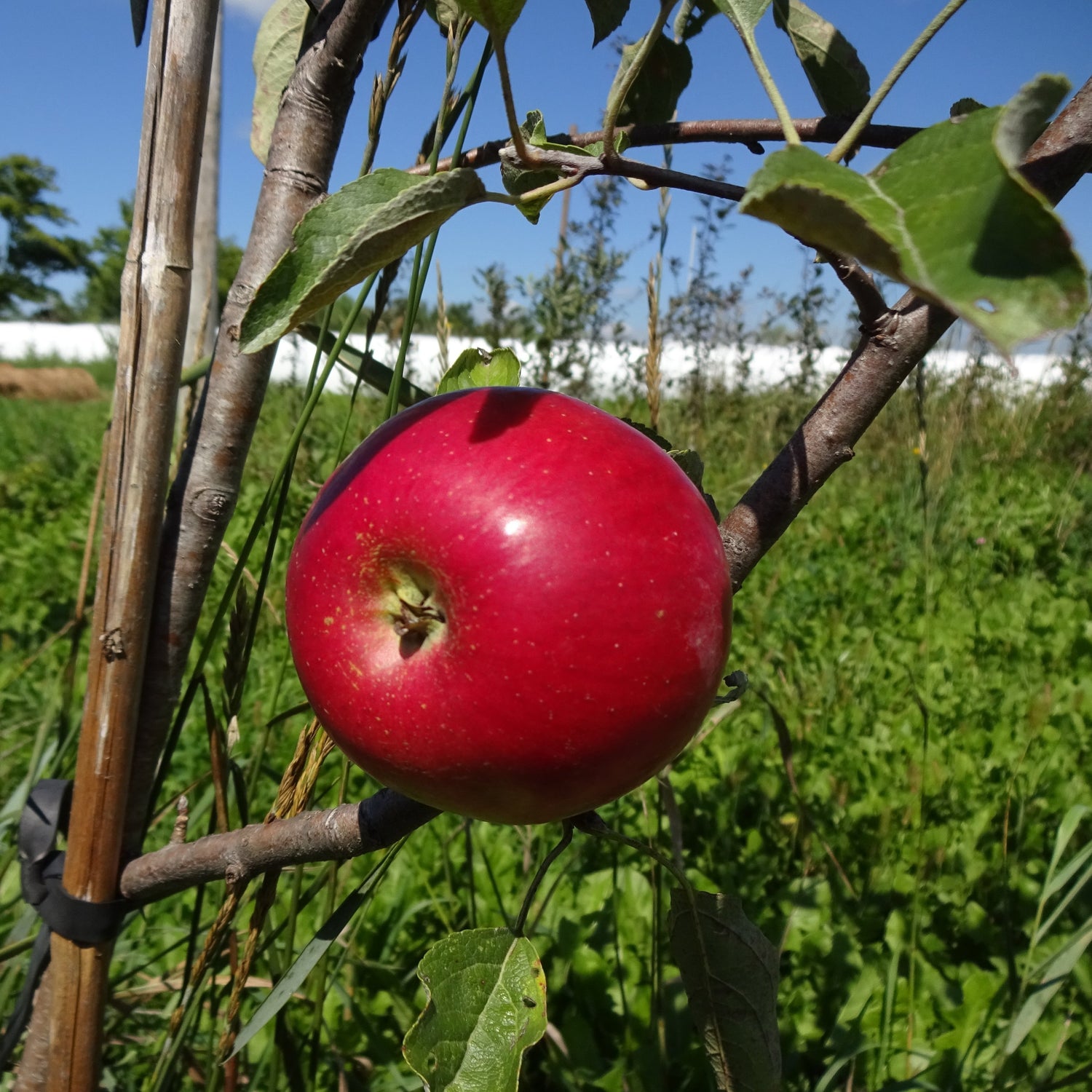
History: Akane was developed in Japan in 1937 at the Morioka Experimental Station. It is one of several kinds of produce created to better feed citizens and troops during WW2. The name 'akane' literally translates from Japanese as 'deep red.'
Why We Grow It: This crisp, sweet apple is great for fresh eating and has bright red skin. It tends to begin bearing at a young age and is relatively diseases resistant.
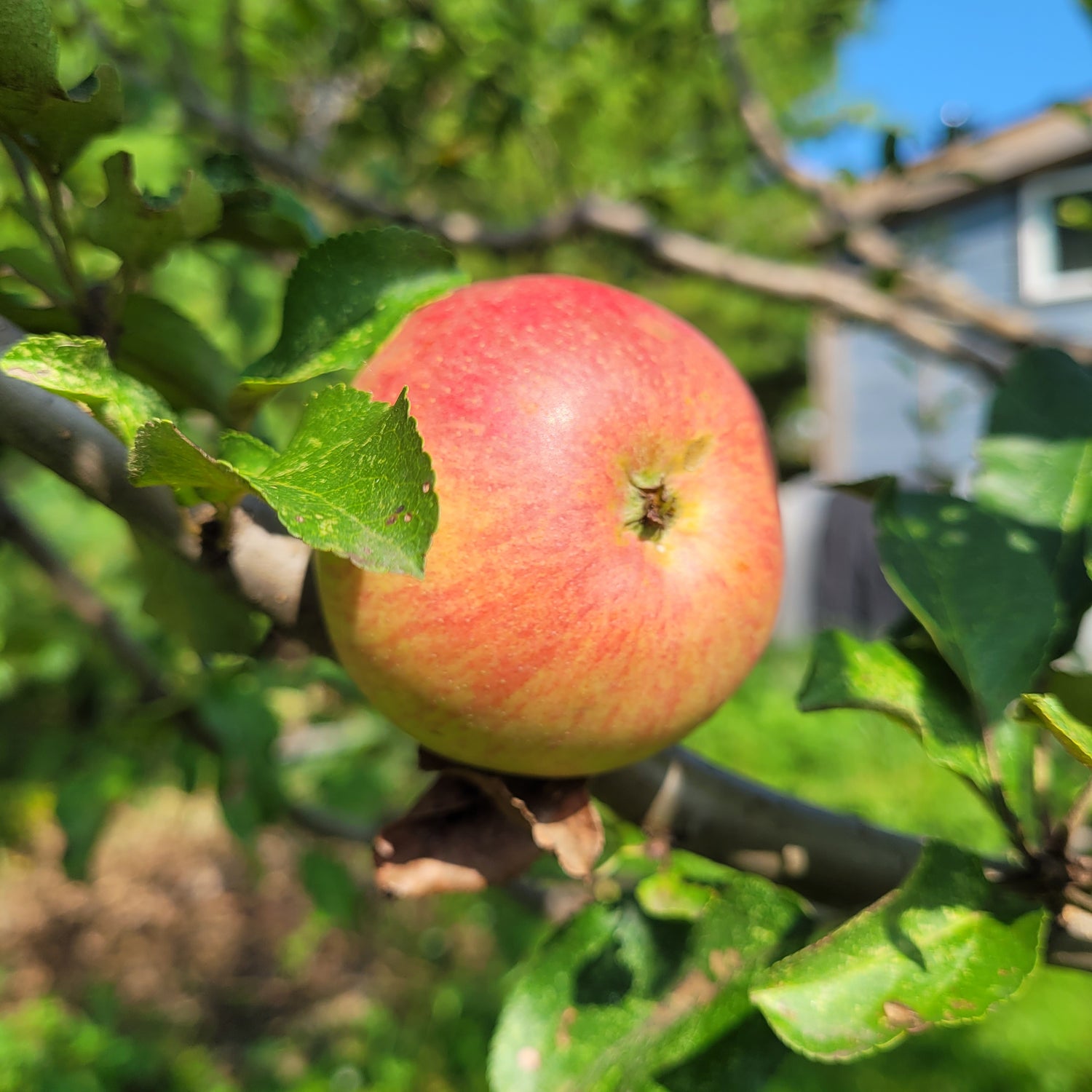
History: Alkmene, aka Early Windsor, was developed by M. Schmidt and H. Murawski at the Kaiser-Wilhelm-Institut für Züchtungsforschung in Müncheberg, Germany in the 1930s.* It was named after Hercules' mother Alcmene. After the chaos of WW2, it took about 30 years for Alkmene to be introduced to the rest of the world. It was released in 1962 and given the name Early Windsor for better marketability. It remains a popular apple in Europe today.
Why We Grow It: Alkmene produces a medium-sized crisp, juicy apple that has yellow skin overlaid with red stripes. The aromatic fruit is known for its rich flavour that is both honeyed and notably sharp. The tree is known to be quite a heavy cropper!
*While the Kaiser Wilhelm Institute was heavily involved with the Nazis during WW2, at the time of Alkmene's development the institute's president was Max Planck, a scientist who staunchly defended his Jewish colleagues. The institute was renamed in his honour following WW2. That is to say, we're not selling a Nazi apple.
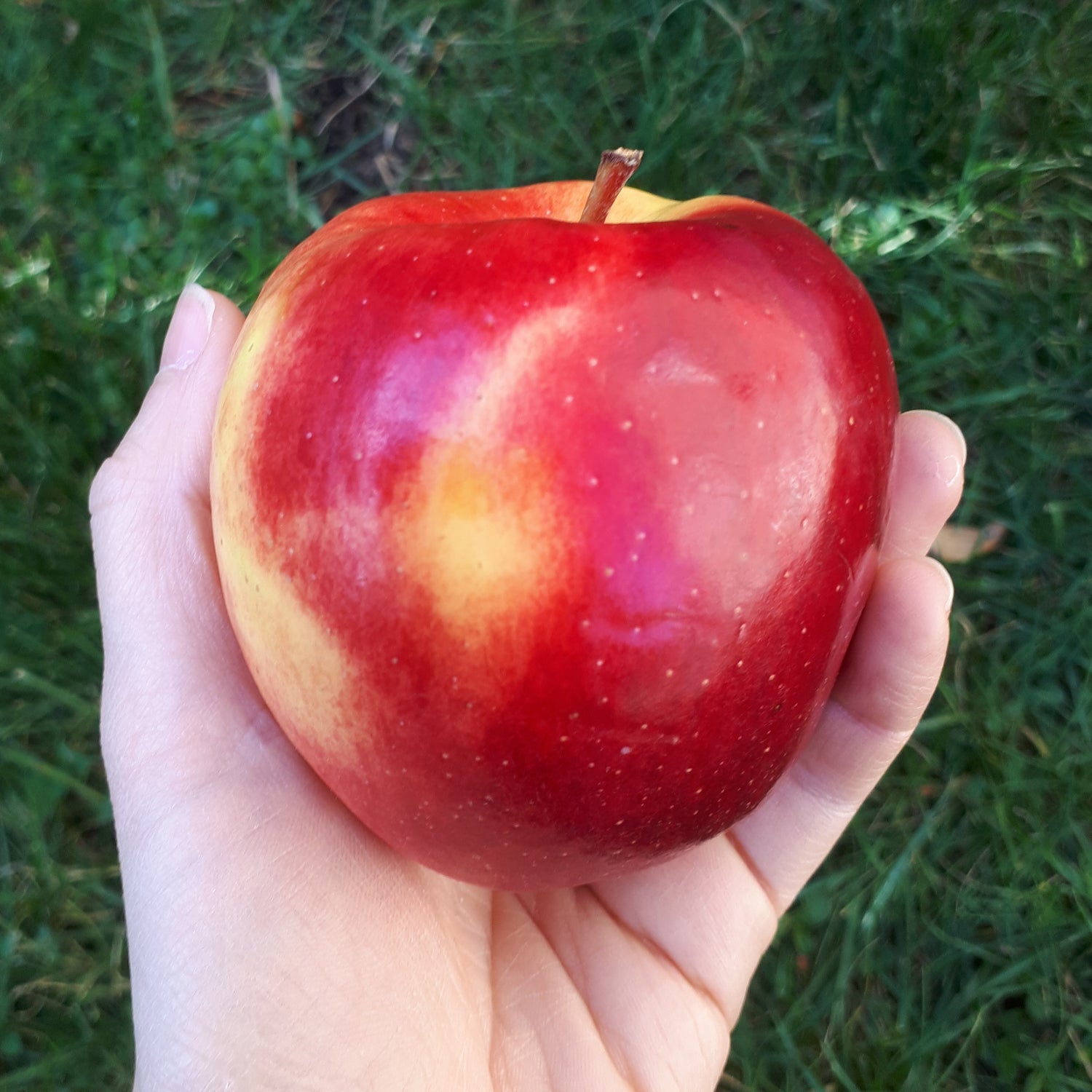
History: A chance seedling discovered in the 1980s in BC, this tender, aromatic, honeyed apple has been a hit ever since!
Why We Grow It: This delicious apple is very popular in the fresh eating market in Canada, thanks to its attractive bi-colour skin and slow browning qualities. It produces a medium-large fruit and is a good cropper.
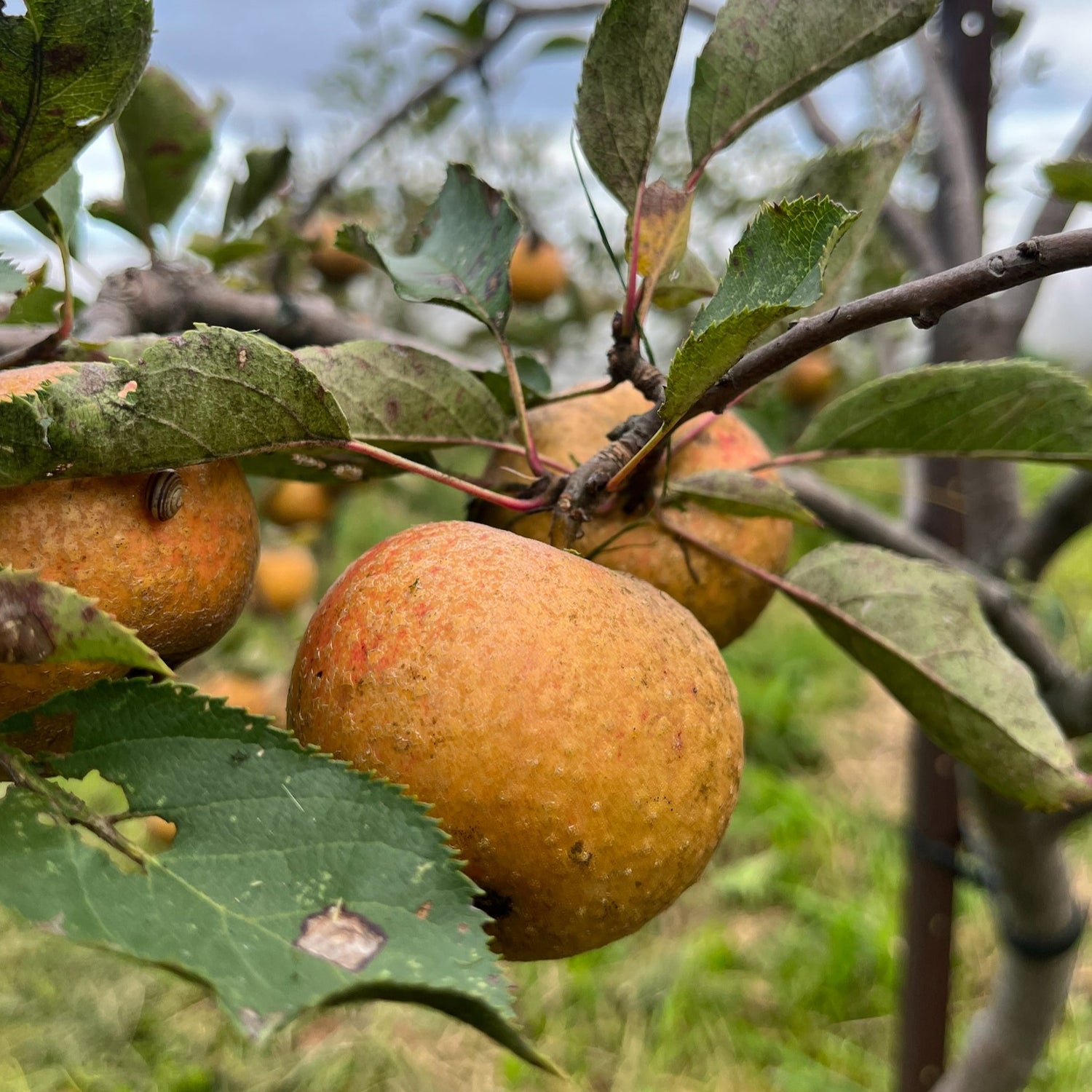
History: This unique apple, orangey-yellow-red undertones with russet over top, originated in the UK in the 1700s and has remained popular for over two centuries. There is some debate whether it was raised by a Dr. Ashmead or a lawyer named William Ashmead.
Why We Grow It: This Old World English apple has stuck with us thanks to it's unique flavour: nutty with notes of pear and spice. Fantastic fresh off the tree, and also in cider blends, Ashmead's Kernel mixes well with Cox's Orange Pippin.
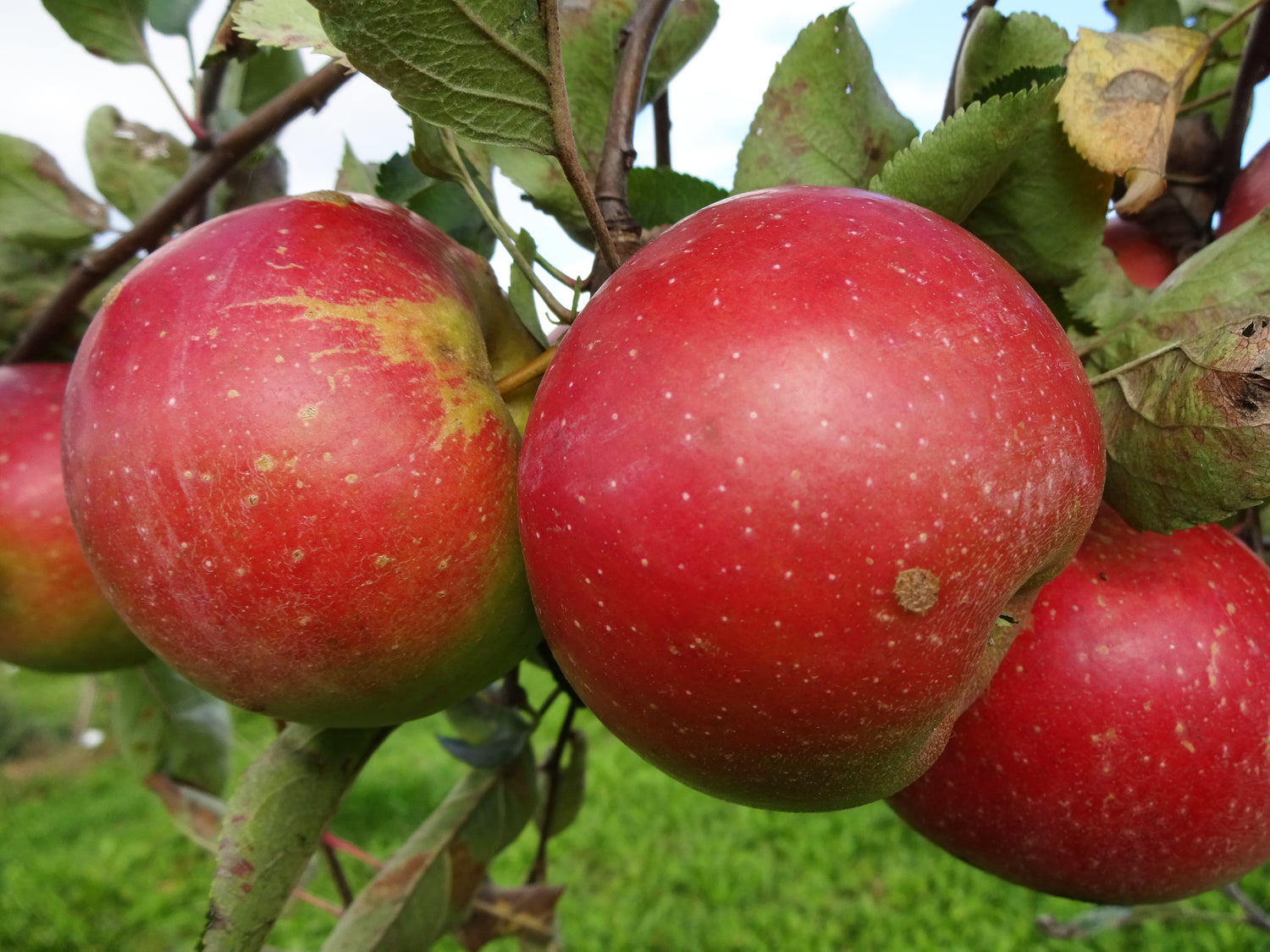
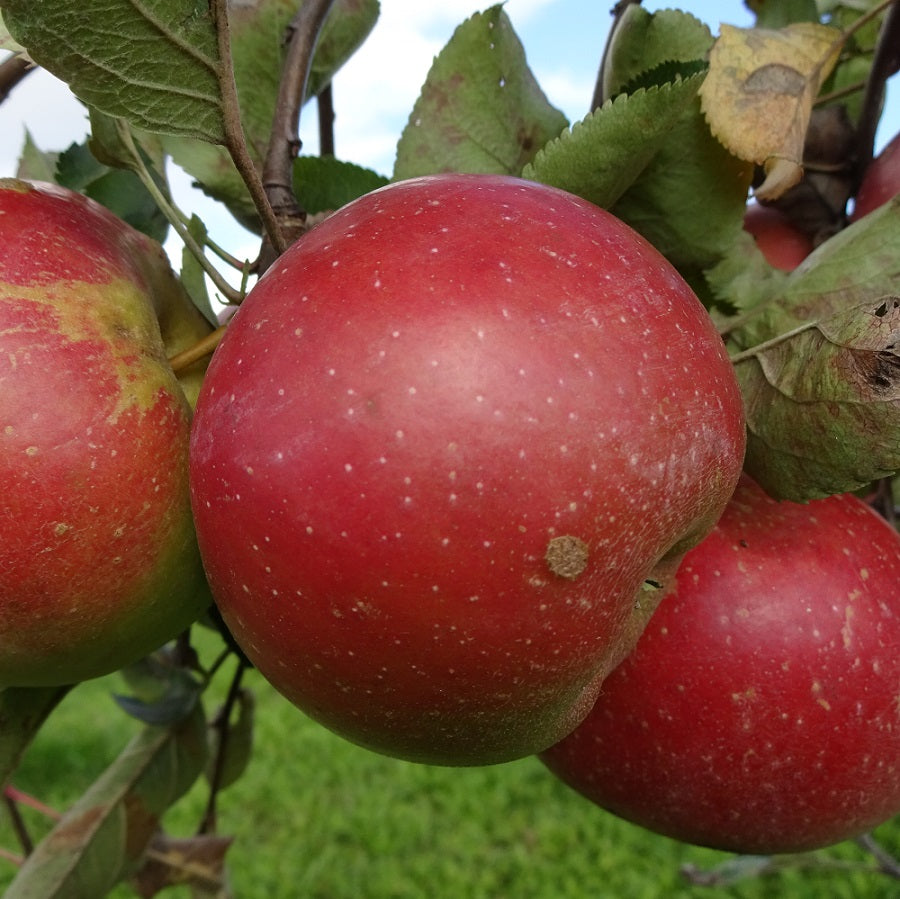
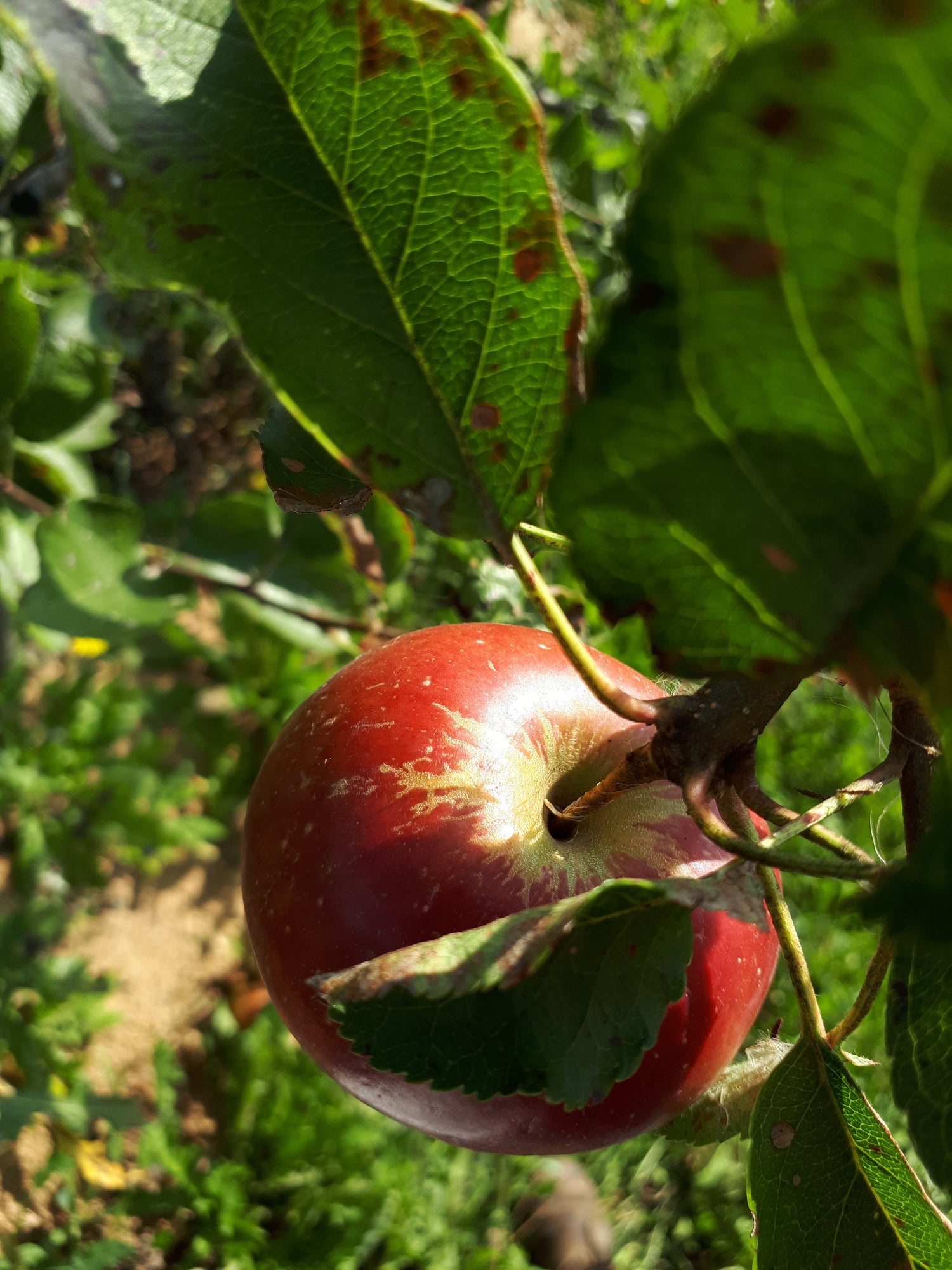
History: This classic American cooking apple was discovered by chance around 1740 in Massachusetts. It was eventually brought to the attention of a Col. Baldwin, after whom the variety was later named, who helped to spread it further. By 1850 this was one of the most commonly grown apples in the US, although its popularity began to decline by the 1900s, exacerbated by a terrible winter in 1934 that wiped out a significant number of trees. Despite this, Baldwin is making a bit of a comeback and a monument to this apple still stands in Wilmington, Massachusetts, around where it was discovered.
Why We Grow It: Baldwin apples produce large, greenish-yellow and maroon fruit with firm, sweet flesh that maintains its shape and crispness when cooked. The fruit produced in our test orchard has been attractive and blemish-free.
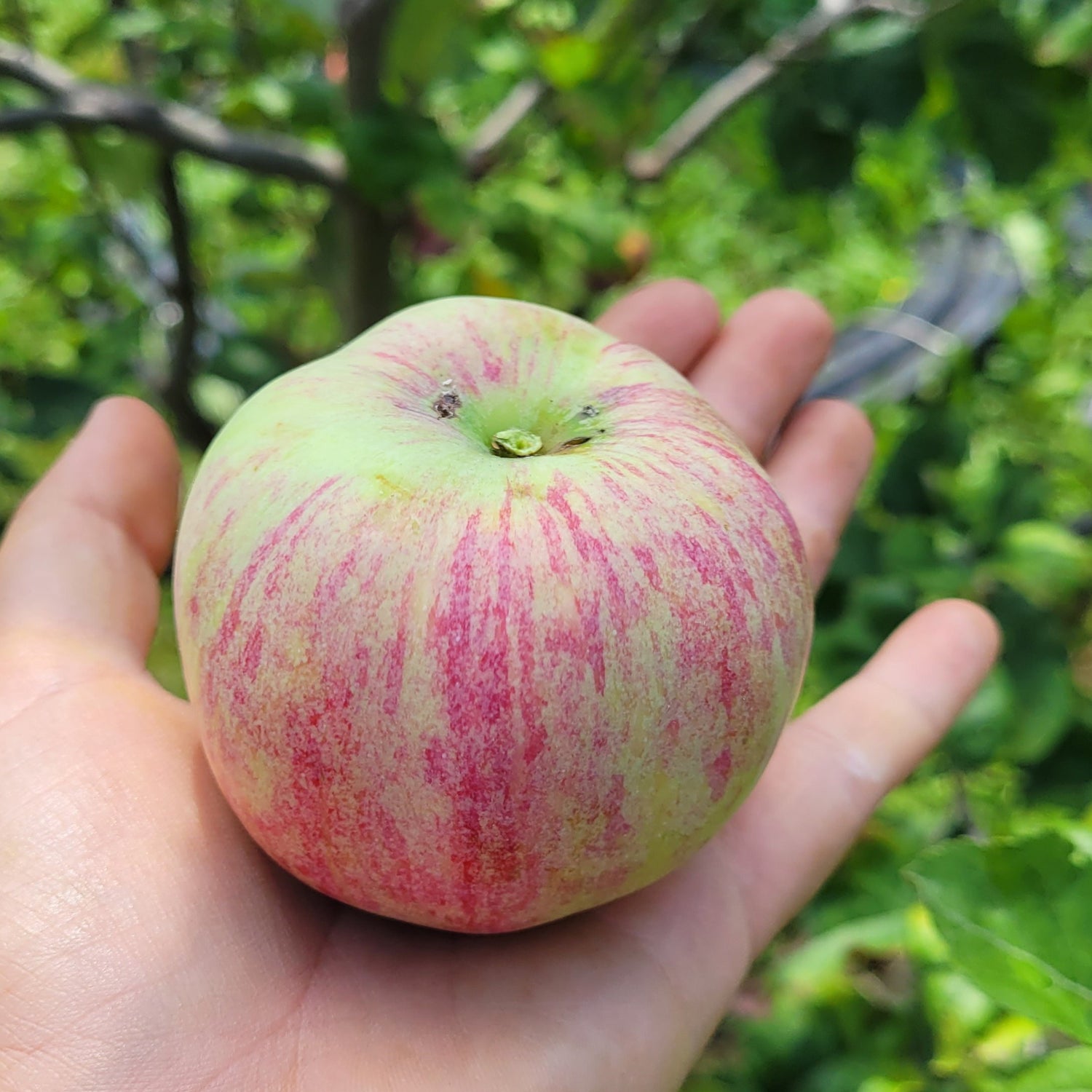
History: This cold-hardy apple was developed in the prairies and is for growing in colder, northern areas.
Why We Grow It: This unique apple produces a yellow fruit with red stripes. It is a rather uncommon variety and is great for sauce. It has begun producing reliably in our test orchard the last few years, and always has a bountiful crop.


History: Once one of the most popular commercial apples in the United States, Ben Davis apple trees were planted across the continent following its discovery around 1800. Due to its firm fruit and excellent keeping qualities, this apple was extremely easy to transport over longer distances which led to its popularity. Once storage and transportation improved, this apple was slowly replaced with better tasting varieties and it is now a relatively rare find. It's also a parent to Cortland.
Why We Grow It: The mellow, sub-acidic, mildly aromatic red fruit is not quite as flavourful as some apples but it stores exceptionally well, lasting into spring. Flavour improves in storage, like many heritage apples. The trees are reliable and heavy croppers, earning them the nickname of 'mortgage-lifters' when they were grown commercially.

History: The history of Blenheim Orange is a bit muddled depending on your source. We know it was discovered by George Kempster (either a baker, a tailor, or a basket weaver depending on who you ask!) in England in 1740 and it was originally named Kempster's Pippin. Some say he found it as a seedling growing along a wall of Blenheim Palace while others claim he grew it in his garden located near Blenheim, England. It was later renamed to Blenheim Orange in the early 1800s, likely when it was sold commercially through nurseries. This variety has many other names, including: Beauty of Dumbleton, Blooming Orange, and Northwitch Blenheim. The tree itself is also known for its sturdy wood and it was at one time popularly used to make railway cogs.
Why We Grow It: These large, somewhat flat apples feature orangey-red stripes over yellow skin with some russet. The fruit is good for fresh eating with a nutty taste and is quite nice when paired with cheese. It is also great for cooking and makes a stiff purée. The tree is highly vigorous but can be slow to come into production, although it has heavy crops once it does.

History: Discovered in New Zealand by farmer O. Moran in 1952, Braeburn took the world by a storm, becoming one of the most popular commercial apples in the United States and parenting many modern cultivars such as Jazz and Sweetie.
Why We Grow It: Its winning sweet-tart flavour wrapped in an attractive orangey-red skin makes it an excellent fresh eating apple. It is firm and holds its shape well when cooked, and keeps about 4 months. This variety is fairly disease susceptible, meaning it is better for the experienced natural grower or conventional orchards. It is moderately vigorous and a heavy cropper.
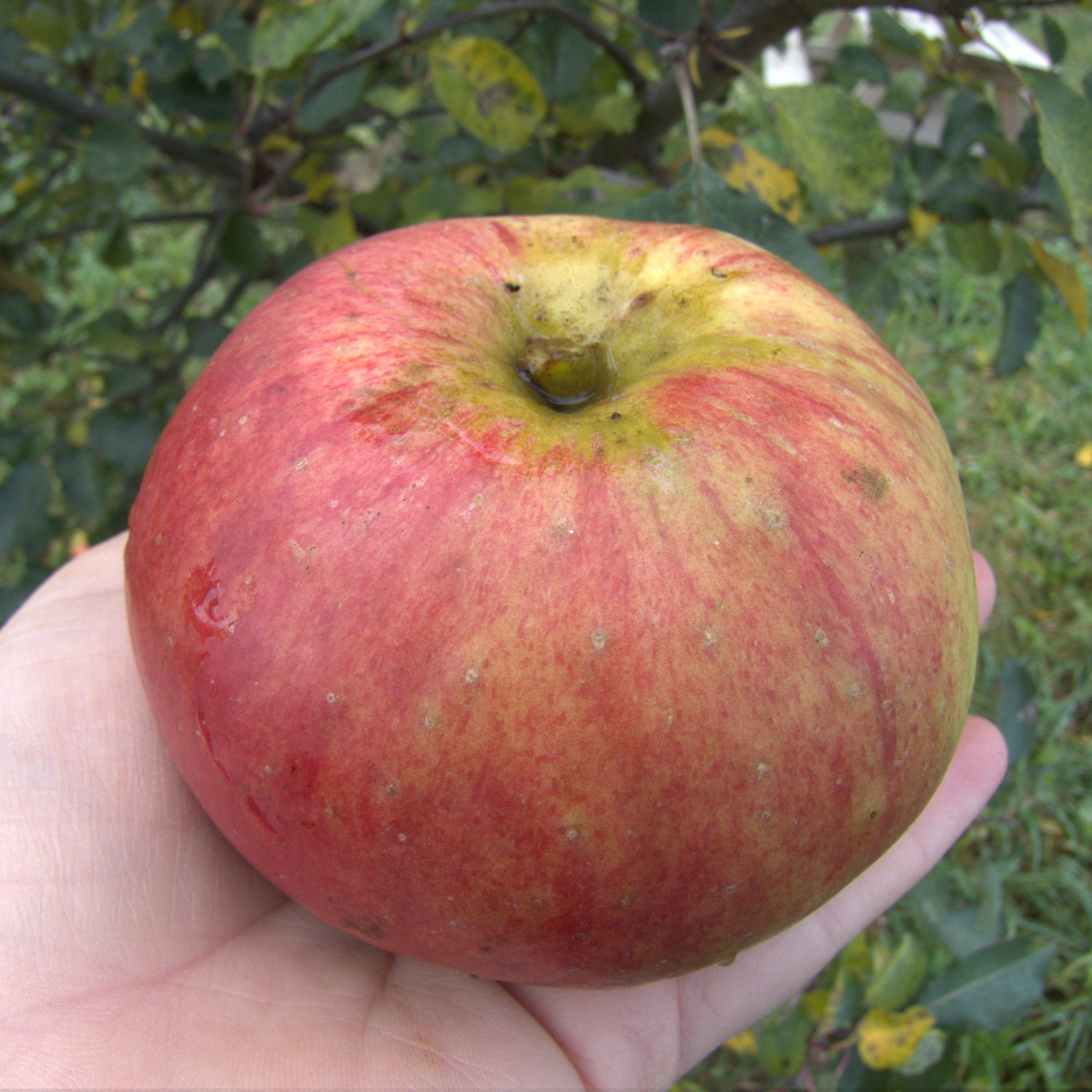
History: Bramley's Seedling was first planted in the UK in 1809 by Mary Ann Brailsford-Trump and was later named after the butcher who bought the property. Long considered the definitive British cooking apple, Bramley's Seedling is celebrated with its own festival, a plaque, and a commemorative window that was installed on its 200th anniversary. The original tree is still growing where it was planted over 210 years ago.
Why We Grow It: With its strong flavour and acidity, this apple is hard to beat when used for cooking, although the fruit doesn't hold its shape as well as other varieties. The fruit is large, greenish-yellow with orange flush and broad red stripes and store all winter. The trees are quite hardy and heavy croppers.

History: Brettacher Sämling (sämling meaning seedling in German) originated as a chance seedling on a farm in Brettach, Germany in the early 1900s. It is possibly a descendent of the French cooking apple, Lebel. It is known for its excellent storage qualities and is still grown commonly in parts of Germany.
Why We Grow It: Brettacher Sämling produces large, juicy apples with a sweet-tart fruity flavour that has a hint of spice. The apples, green with a red blush, are best enjoyed after being stored for two months. They are fairly versatile, also considered suitable for sauce and juice/cider. Compared to other apple trees, this variety is relatively low maintenance and only requires a hard prune every two to three years.

History: Brown's Apple was discovered in Devon, UK, in the early 1900s and is considered a traditional English cider apple. It remains quite popular in the area.
Why We Grow It: This traditional variety boasts cold-hardiness and a resistance to scab. It is great for making cider thanks to being simultaneously high in both acid and sugar, an uncommon feature in most apples. Brown's Apple presses to a fragrant, vintage quality juice.


History: Bulmer's Norman was imported from Normandy, France to England in the early 1900s by the cider making company H.P. Bulmer. This variety didn't even have a name when it arrived but quickly grew in popularity for use in making cider. This apple has since fallen out of the limelight and is primarily used for grafting other varieties onto its sturdy trunk.
Why We Grow It: Although less popular these days, this variety boasts vigorous growth, decent disease resistance, and a surprising tolerance for cold. This conical, green apple produces a bittersweet juice and is high in tannins.


History: This apple was developed in New York in 1974. It has never achieved major popularity but remains a curiosity due to the deep red colour of its skin which causes the flesh inside to become stained pink.
Why We Grow It: Along with its visual appeal, this apple boasts a sweet, sub-acidic flavour that makes it suitable for both fresh eating and making cider. Although these apples don't store well, the fruit hangs onto the tree for three weeks which helps to keep it available a little longer.
Picture of Burgundy apples on the tree courtesy of Shannon McInnis


History: Calville Blanc d'Hiver was discovered in France and first documented in 1598. It spread to other countries and was even grown by Thomas Jefferson in Monticello.
Why We Grow It: Known for its rather misshapen and lumpy appearance and the odd red splotches on its green skin, this apples exterior belies a strong, sweet-sharp flavour that makes it great for fresh eating, cooking, and cider. Some claim it rivals Bramley's Seedling as one of the best cooking apples with the added benefit that, unlike Bramley's, it holds its shape when baked or cooked. It is also boasts a high Vitamin C content.
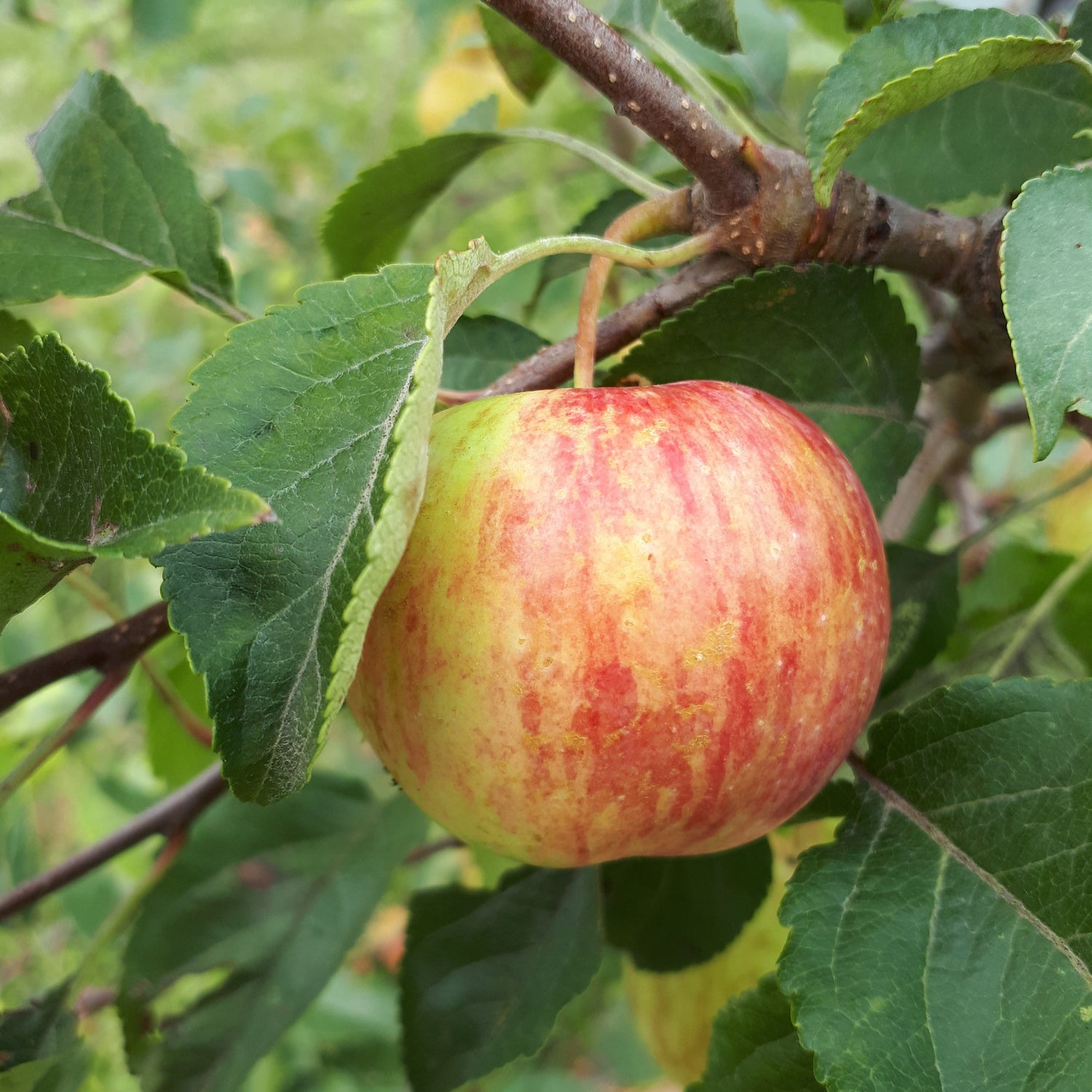
History: Chestnut crabapples were bred at the University of Minnesota in 1949. They are one of about thirty varieties that have been produced by the university's breeding program since it started in 1888.
Why We Grow It: The rosy-red Chestnut crabapple produces fruit that is unusually large for a crabapple with a nutty taste. Unlike other crabapples, it is sweet enough to eat fresh and can be used in cider while still being good for traditional crabapple recipes such as making jellies.

History: Chisel Jersey is believed to have originated in Martock, England in the 1800s. It spread little outside the immediate area for about a century but during the mid-1900s this apple became quite popular in commercial cider orchards. It has, however, lost some of that renown today despite being an excellent cider apple.
Why We Grow It: With small, green fruit featuring a striped red flush, this bittersweet cider apple is highly recommended in England as well as in Canada. It is high in tannins and sugars but low in malic acid and makes a great cider apple.

History: The Close apple was developed in 1938 in Virginia at the US Department of Agriculture Arlington Experimental Farm. It was bred by C.P. Close after whom it was named.
Why We Grow It: This early season apple is large with a pink blush. Its sharp, juicy flavour is complimented with softer flesh, making it great for creating a flavourful sauce. They are considered 'very hardy' in Martin Crawford's Directory of Apples, but we haven't tested this cultivar outside of our zone.
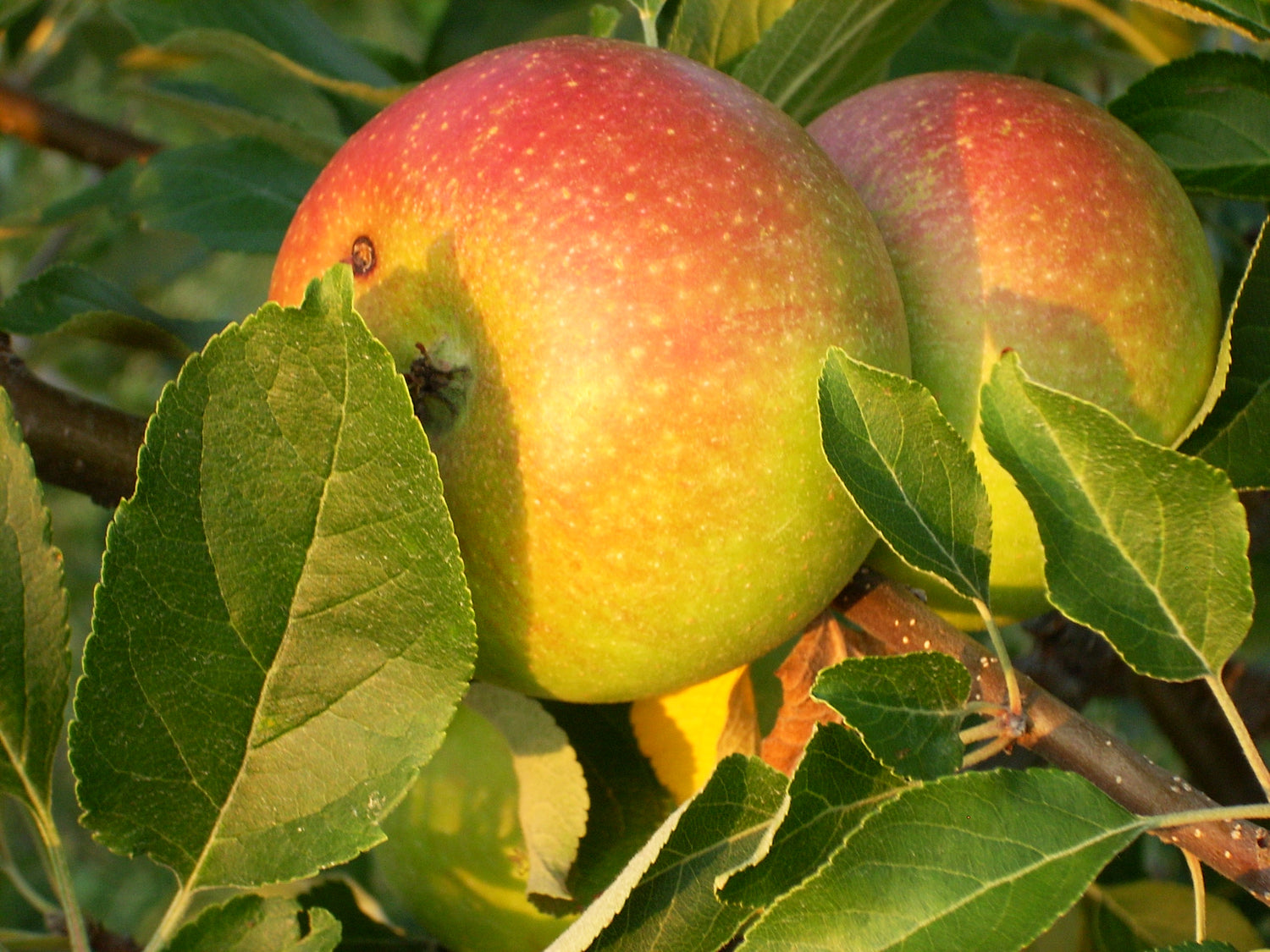
History: Cox's Orange Pippin was first grown in England in 1830 and was named after the retired brewer and horticulturalist who first bred it, Richard Cox. Its excellent flavour has earned it a spot as one of the best fresh eating apples in England where it has remained popular ever since. In fact, it still accounts for over 50% of fresh eating apples grown in the UK today. Despite its reputation, it is seldom grown commercially in North America due to its precocious nature and susceptibility to many common apple diseases.
Why We Grow It: This apple's reputation is hard to ignore with its sweet, subtle, aromatic flavour and attractive orange-red skin. Not only is it good for fresh eating, it is also popular in cider blends.

History: Diva was developed at Agriculture and Agri-Food Canada's St-Jean-sur-Richelieu Research Centre in Quebec by Shahrokh Khanizadeh. It was first bred in 1971 and underwent vigorous testing for fruit quality, cold hardiness, and disease resistance until its release in 2009. It is considered the first scab resistant apple released specifically for northern fresh eating and cider markets!
Why We Grow It: Diva doesn't disappoint after its many years of testing. This crisp apple boasts and excellent sweet flavour with some tartness and it is great for fresh eating, adding to salads and charcuterie boards, cider, and pies. It has done well in our orchard, producing reliable crops with few disease issues.
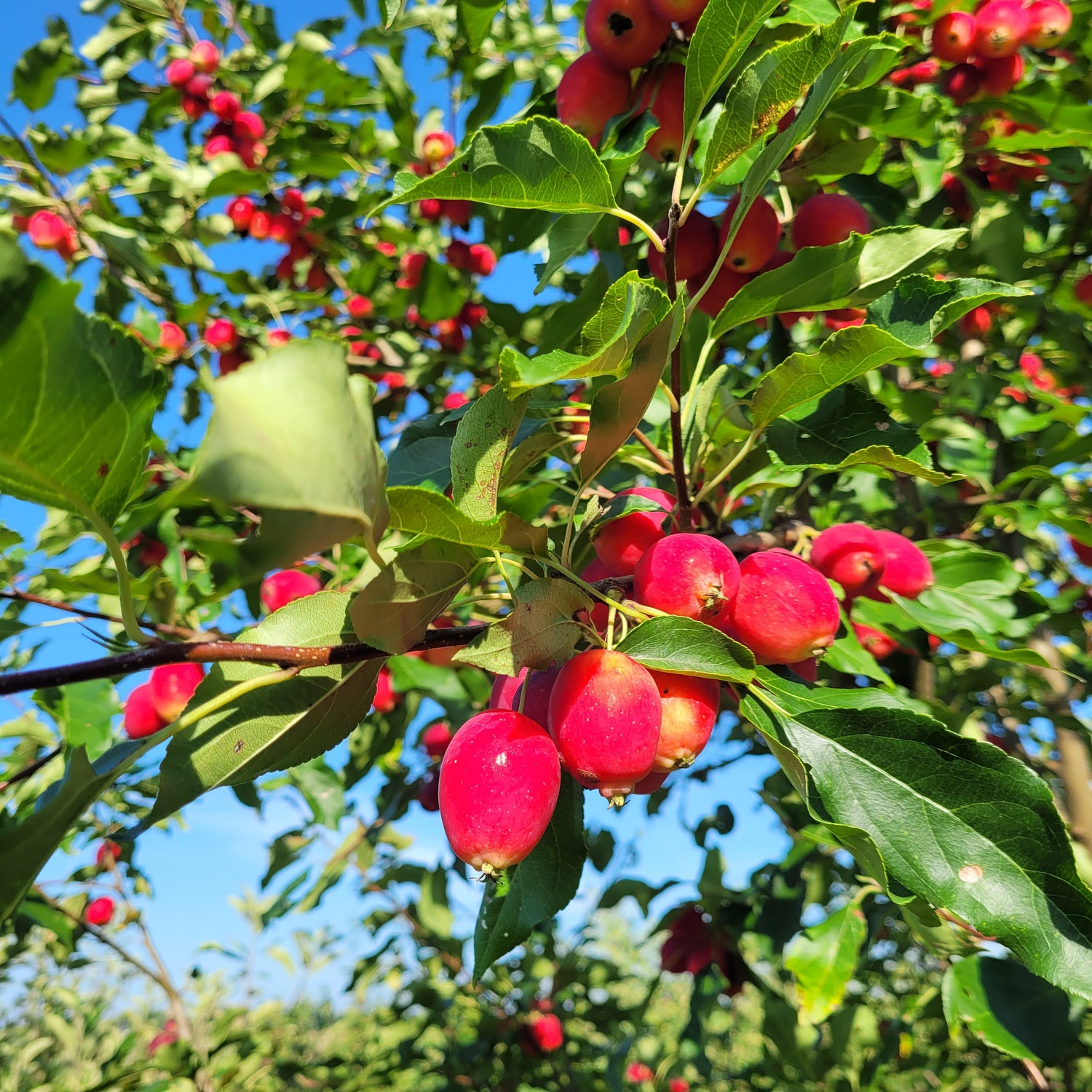
History: Dolgo crabapples originated in Russia and due to the slightly elongated shape of the fruit were named 'dolgo' which means 'long.' They were brought to the United States by N. E. Hansen around 1897.
Why We Grow It: Dolgo is a classic crabapple with a vibrant flavour, very tangy and delicious right off the tree in the heat of summer- as refreshing as lemonade! The bright red fruits are about the size of small plums. These apples are excellent for making jelly or as a unique addition to a cider blend. Along with being exceptionally cold hardy, the trees themselves are quite pretty and are often planted ornamentally.

History: Domaine apples originated in France some time before the 1900s. In the Pays d'Auge region in Normandy, Domaine is one of the 13 cultivars prized for making hard cider (included in that 13 are Fréquin Rouge and Noël des Champs, which we also have available). This apple was brought to the United States in 1949 but remains relatively unknown outside of its country of origin.
Why We Grow It: This bittersweet cider apple is high in tannins, low in acidity, and has a medium amount of sugar. Although not great for single-variety ciders, it can be an excellent addition when used in cider blends.

For the most up-to-date information see Claude Jolicoeur's website here!
History: Douce de Charlevoix (translated from French as 'sweet Charlevoix') was discovered by Claude Jolicoeur in a Quebecois village in the county of Charlevoix in the 1990s. He has since dubbed it a 'first class early cider apple' and in 2015 a cider blend using 40% Douce de Charlevoix won a bronze medal at the GLINTCAP competition.
Why We Grow It: This apple is quite attractive with orange-red stripes across green skin and makes an excellent juice with a notable bitter taste. In general this apple has medium tannins, some sweetness, and very little acidity. The tree itself is also quite vigorous and hardy.


History: Duchess of Oldenburg, or Duchess as we like to call it, originated in the 1700s in Russia. It spread to other countries where it became popular, especially in Victorian England. Its popularity was so great that at one point it was used as a reference cultivar when evaluating other varieties of apples. It is also likely the parent of several other varieties such as Northern Spy.
Why We Grow It: Duchess boasts an attractive fruit that is striped and mottled red over light green. Although these apples don't store well, the flesh is soft and is excellent for pies and applesauce. The trees themselves are quite hardy and disease resistant.

History: Eden™ was developed at Agriculture and Agri-Food Canada's Horticultural Research an Development Centre in St-Jean-sur-Richelieu, Quebec by Shahrokh Khanizadeh. The cross between Linda and Jonamac was made in 1971 and the resulting variety was released in 1985 due to its disease resistance and slow browning.
Why We Grow It: Eden™ produces medium to large crisp apples that boast a sweet, aromatic quality with some tartness. They are great for fresh eating and making cider. The fruit is also resistant to bruising and browning, making them an excellent candidate for drying and making into apple chips.
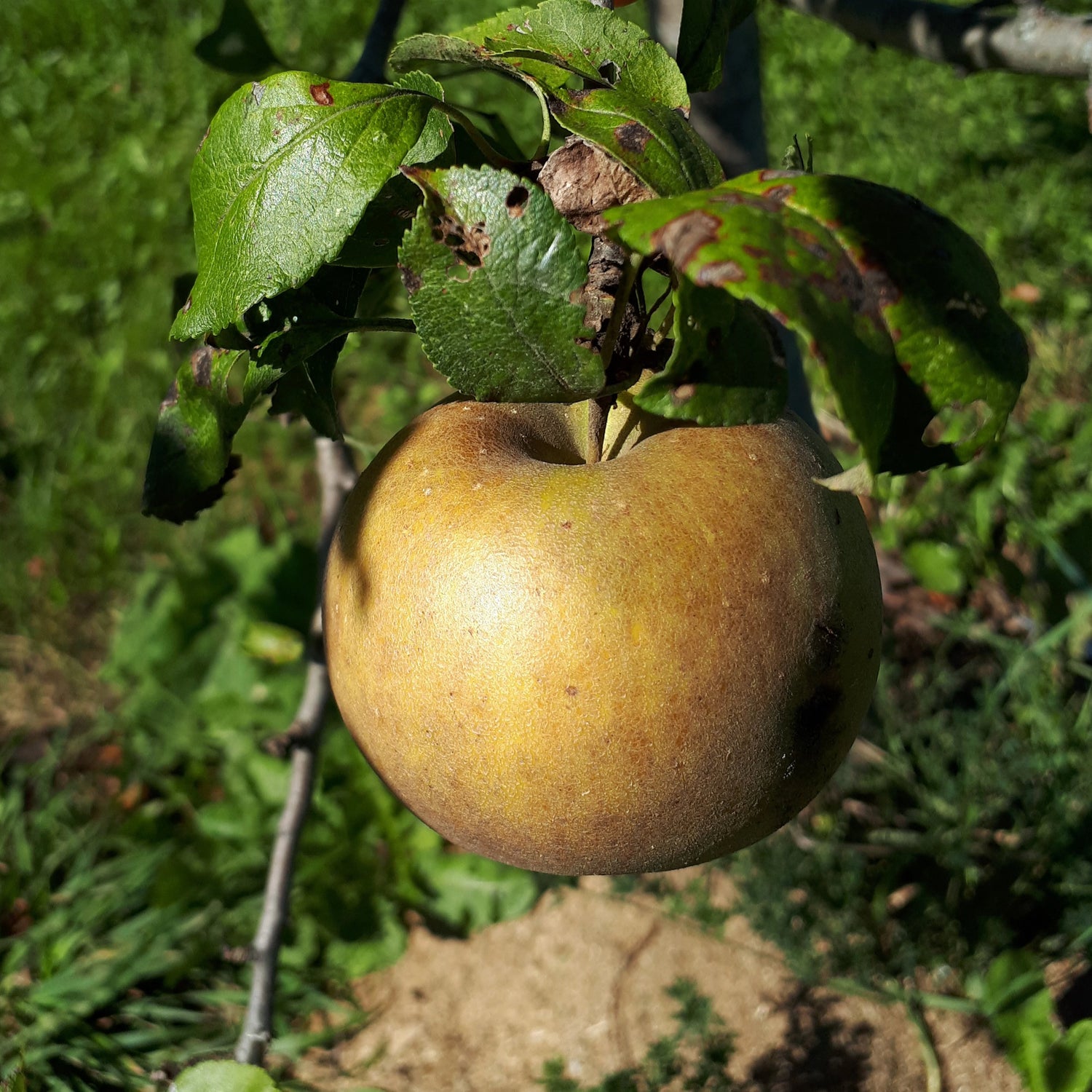
History: Egremont Russet first emerged in Britain in the early 1870s and has remained popular ever since. Even today, it is the third most common apple grown commercially in England.
Why We Grow It: Although the russet, a thick rough skin, coating this apple can be an acquired taste, there is a reason this apple has remained so popular. The fruit itself is an attractive gold dotted with yellow and it has an excellent sweet, nutty flavour. They are delicious fresh, when used for cooking, and in ciders. The trees are known for producing good, regular crops.

History: Elstar apples were developed in the Netherlands in the 1950s and are a cross between Golden Delicious and Ingrid Marie. This excellent combination has created what is considered one of the best Golden Delicious offspring. Fittingly, it has since become quite popular in continental Europe. Despite being introduced to the US in 1972, it has not attained the same level of popularity in North America.
Why We Grow It: Elstar is a flavourful variety, fine for fresh eating or sauce with its crisp, juicy flesh; very little acidity. The skin is distinctive, sporting a orangey-red marbled appearance.
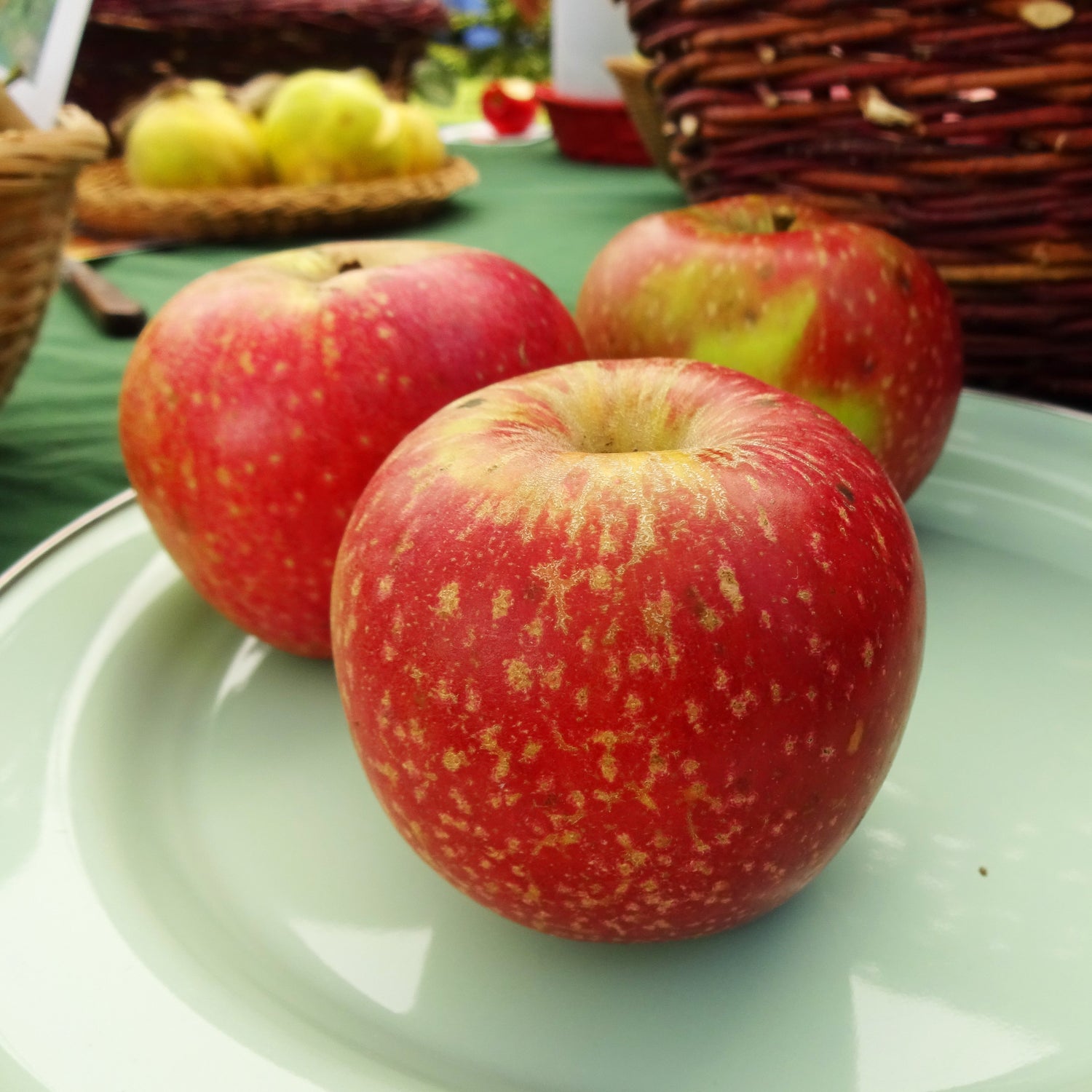
History: Esopus Spitzenberg was discovered near Esopus, New York in the early 1700s. Its main claim to fame is its supposed designation as Thomas Jefferson's favourite apple, a claim supported by the numerous Esopus Spitzenberg trees he had planted at his plantation Monticello. This apple was very popular in the US in the 1800s, considered one of the best for fresh eating, valuable for cooking, and a nice addition to cider blends.
Why We Grow It: The flavour of this particular variety is complex with high acid content, considered by many to be a high quality fresh-eating apple. This is helped by the attractive medium sized fruit which sports bright red skin. This variety keeps, with good flavour, until March. Despite being susceptible to just about every common apple disease, we still believe this apple is worth the extra effort and haven't had much issue growing it here.

History: Fallawater originated in Pennsylvania sometime before 1842, possibly from seeds brought by European colonizers. At one time it was quite popular in the southern United States. This variety has over twenty different names, many of which resemble Fallawater such as Fallenwalder, while others are more fun and unique like Molly Whopper, Green Mountain Pippin, and Prim's Beauty of the West.
Why We Grow It: No matter which name this variety goes by, you can always expect a large, attractive apple with a mildly sweet flavour. Fallawater is an excellent sauce and cooking apple and the fruit stores for a long time.
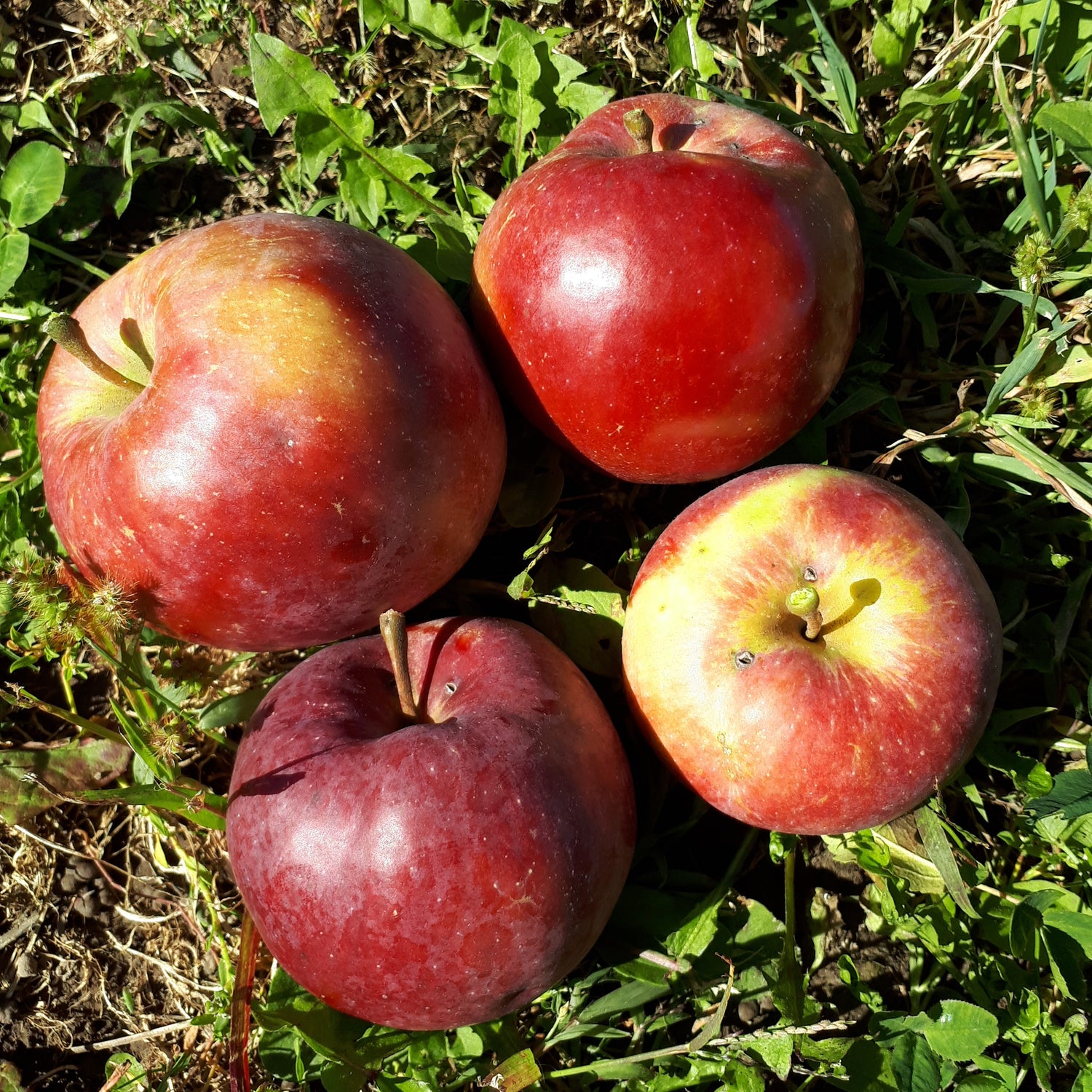
History: Fireside apples originated in 1943 from a breeding program at the Minnesota Agricultural Experiment Station. They are one of nearly 30 varieties that have been introduced by the university's breeding program since it began in 1888.
Why We Grow It: Fireside stands as an icon of toughness in the world of apples, thriving in cold northern areas. But don’t let this image fool you—Fireside has a warm heart! The flesh is amazingly sweet and very juicy.