Peach Scionwood

Peach Scionwood
For those looking to graft heritage and unique peach trees, we are happy to provide scionwood directly from our orchards! We offer a wide selection which will be listed further below.
ORDERING SCIONWOOD: Scionwood orders generally open in December and must be placed by the end of February. We require a minimum 25% deposit upfront.
If you are interested in scionwood but the sale season has ended, we are happy to add you to our request list for the following spring! Just send us a list of the varieties and quantities you are interested in and we will add you to our list.
SHIPPING/PICKING UP SCIONWOOD: We generally recommend that customers receive their scionwood orders by mid-April at the latest to ensure it arrives dormant, but can hold it longer if customers accept the risk that the scionwood may start breaking dormancy.
Due to the nature of nature, sometimes scions begin budding out early and we want to ensure you receive dormant scionwood that you will have time to graft with. If you need to hold your scionwood dormant until May, you will need to decide how you will do that. It is relatively simple, and you can learn more about storing scionwood at home here. If you are picking up your scion order, we recommend doing so ASAP after you receive your pickup notification via email.
Size: 12-18" or 30cm+, as available*. If a scion is less than 6" or 15cm, it will be discounted accordingly.
*Since we specialize in so many varieties, they each have a unique growth habit and vigor. Some cultivars will produce long relatively thick scions, and others tend to produce shorter, thin scions (see photos to the left). We will provide the best quality we can, within natural restraints.
9 products
Sort by:
9 products
9 products


History: Canadian Harmony peaches were developed at the Harrow Research and Development Centre in Ontario and released in 1968.
Why We Grow It: In our quest to bring the most cold-hardy peaches to our Canadian growers (you!), we added yet another excellent peach variety to the line-up. With large, freestone fruit of good quality, Canadian Harmony is hard to turn down. It is a great all-around peach that is good for eating, baking, and preserving; just about anything you can do with a peach. It is less suitable for big growers because of soft flesh, but well-suited for the backyard, yielding juicy, flavourful fruit with good sweetness.

History: Contender was developed at the North Carolina Agricultural Experiment Station and released in 1988. It is one of several peaches developed by the station with the goal of creating late-blooming varieties that are better able to avoid spring frosts
Why We Grow It: Contender is a good-quality cold hardy peach. It produces large, freestone peaches with a sweet flavour that are great for eating fresh off the tree. The fruit is firm and slow to brown, also making it an excellent option for canning and freezing.
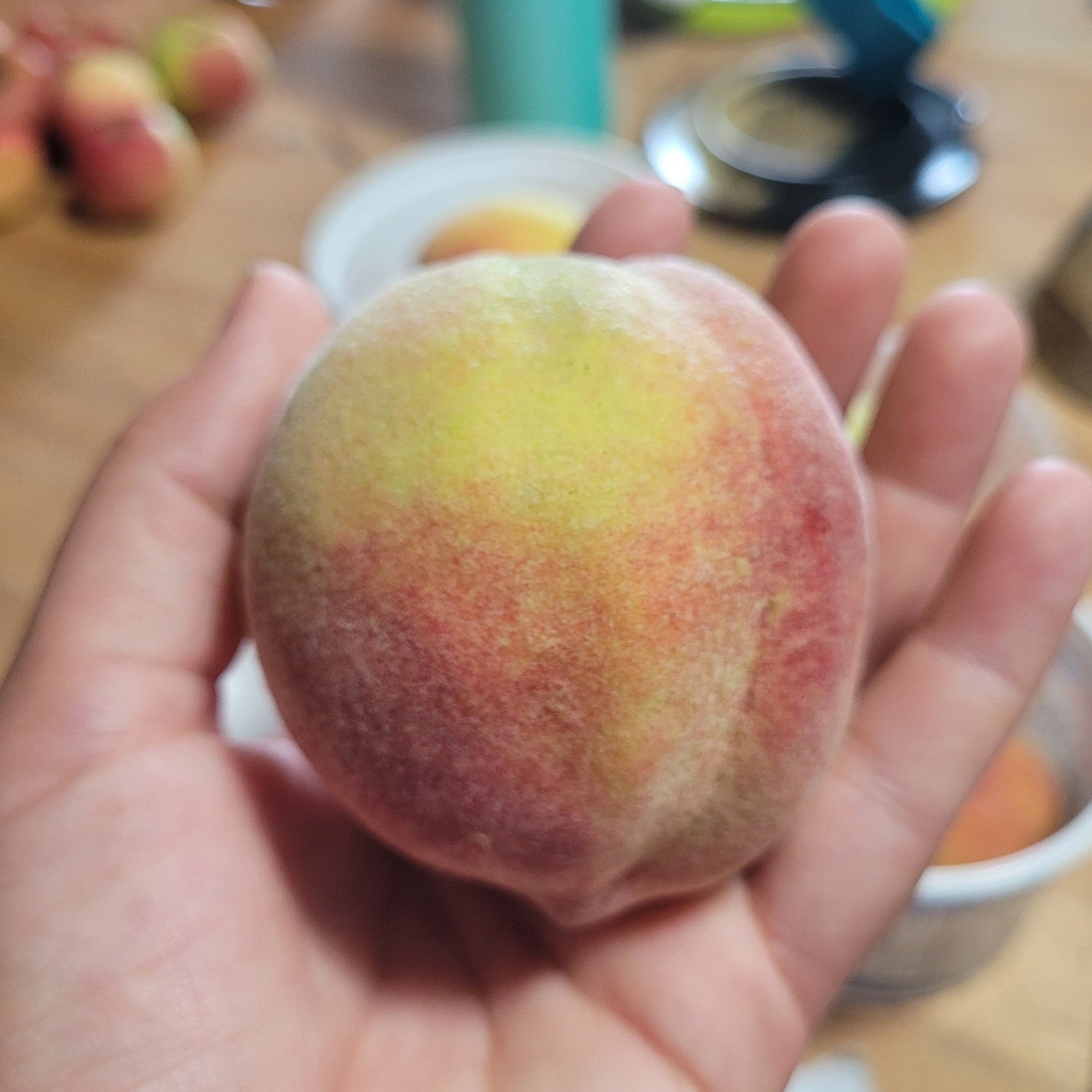
History: Crimson Rocket originated at the Appalachian Fruit Research Station in West Virginia as part of a breeding program to create columnar peach trees with good fruit quality. It was selected in 1996 for further testing and and patented in 2004.
Why We Grow It: Crimson Rocket is unique for its columnar growth, forming a narrow tree ideal for those with limited planting space! It produces freestone yellow peaches with a red blush with the perfect balance of sweet and tart, making it an excellent variety for fresh eating.


History: Harrow Diamond is one of the cold hardy peach varieties to come out of the Harrow Research and Development Center in Ontario. It was introduced in 1984.
Why We Grow It: This Canadian variety is one of the most cold hardy available and is one of the first to ripen in Ontario. The fruit is medium in size, mostly freestone but flesh does cling some to the pit, and of good flavour. Like Redhaven, it is non-browning, and it holds its shape well for canning or cooking.
Species: Prunus persica
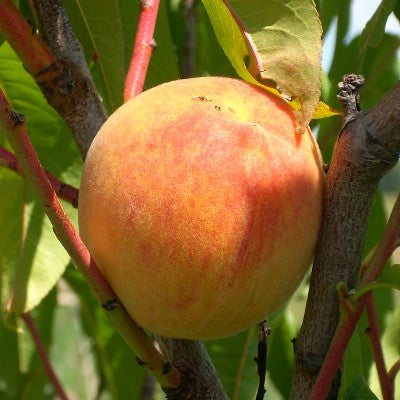
History: This scionwood is harvested from peach seedlings grown from peach seeds from the very trees we have in our orchards! The parents will be a mix of the Harrow Diamond, Redhaven, Reliance, Veteran, and seedling peaches from True Root Nursery.
Why We Grow It: Peach seedlings tend to stay fairly true to type so odds are you're going to get a pretty solid peach tree once they mature and it is hoped that growing them from seed here will make them a littler hardier! For those who prefer the certainty that comes with getting a named variety, these trees would also be great for grafting as rootstock, feeding wildlife, or planting along a fence line.
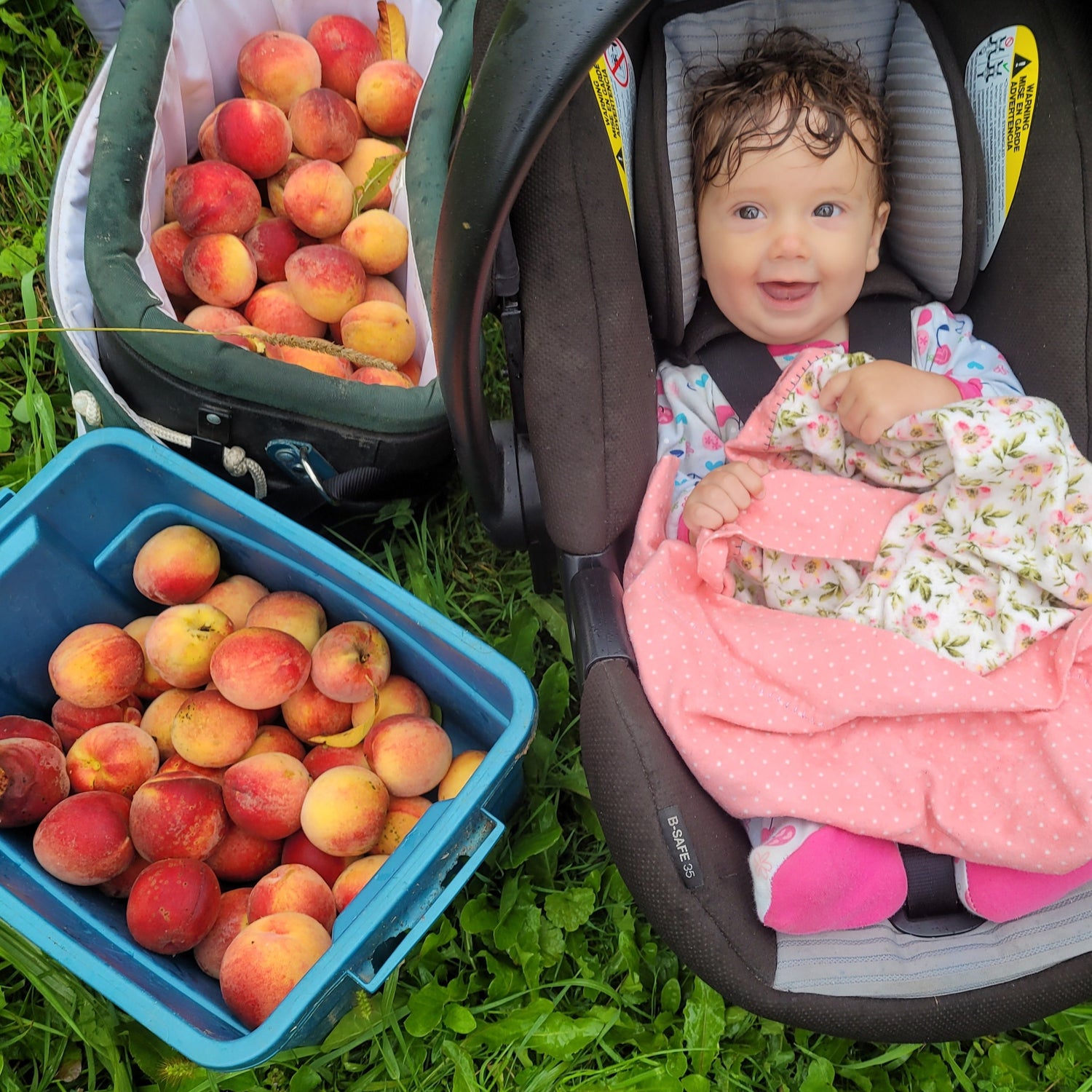
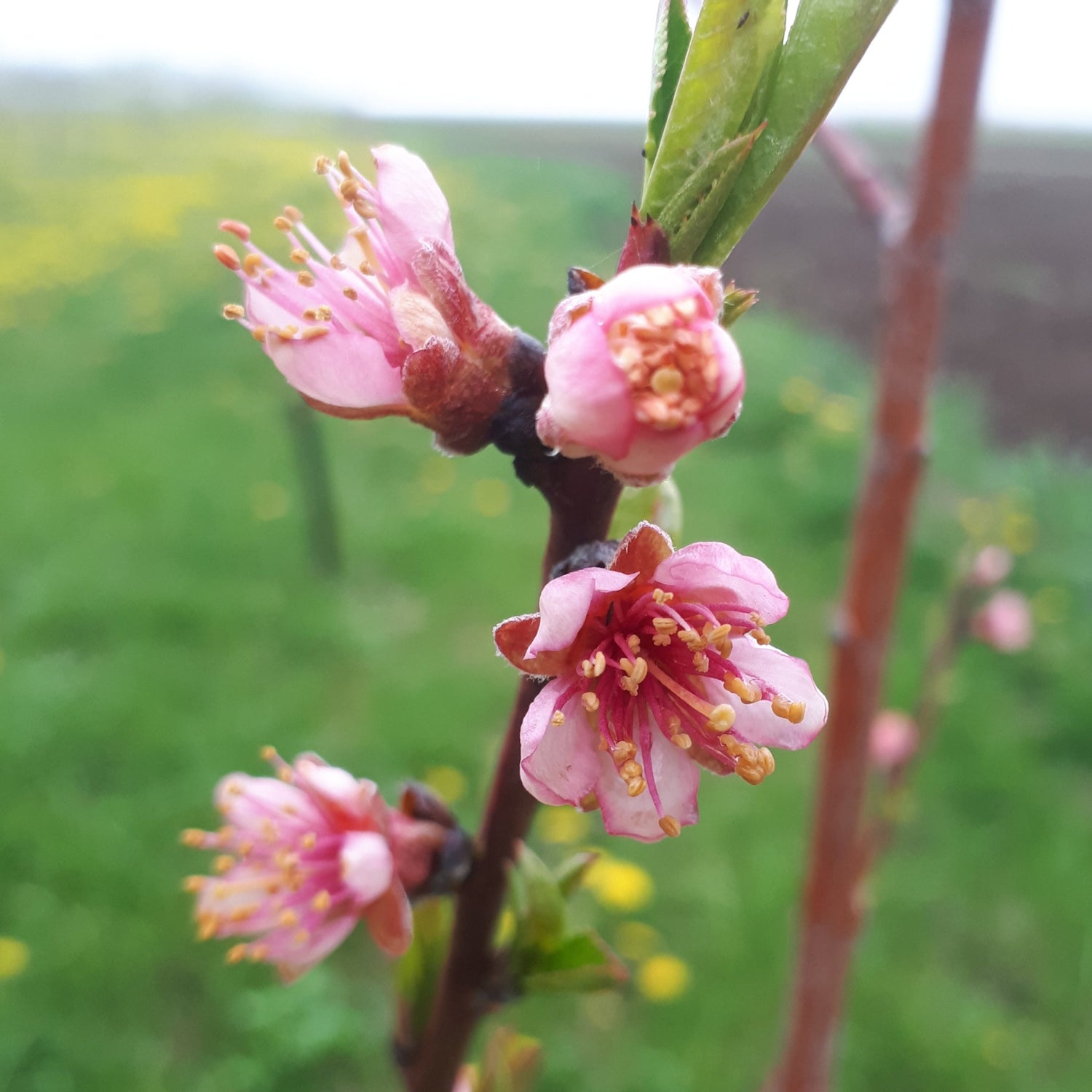
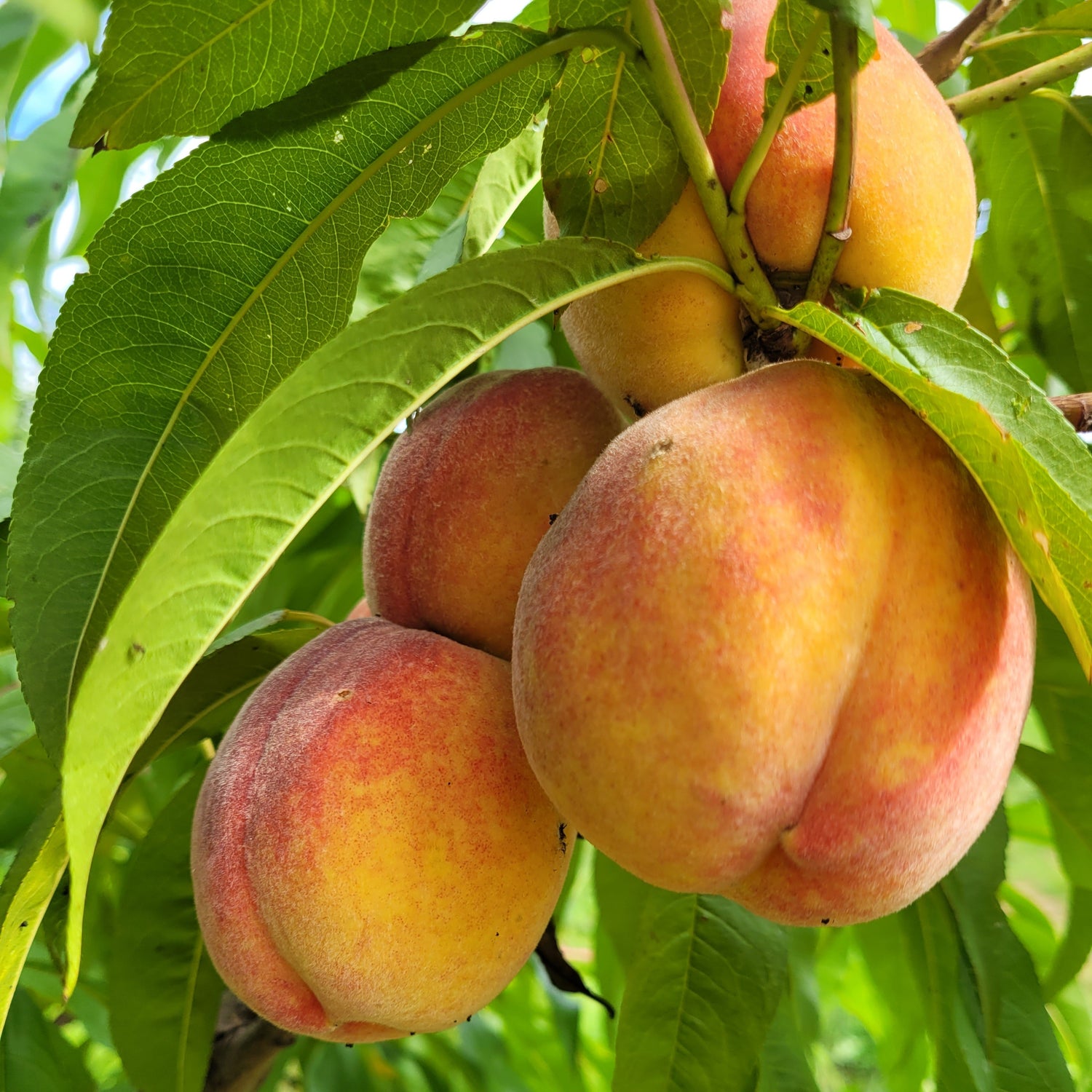
History: Redhaven peaches were created at Michigan State University's South Haven Research Center as part of the Haven series which began in 1924. Redhaven in particular was developed in the 1930s and released in the 1940s, making it the first commercial red-skinned peach variety. It is now one of the most commonly grown peaches in the world.
Why We Grow It: Redhaven is the most popular peach in North America, its sweet fruit being great for just about anything. The fruit is attractive, juicy, and flavourful and is slow to brown. The flesh does not turn brown when cut as quickly as other varieties. To ensure you can enjoy this great peach as much as possible, the tree begins bearing fruit at a young age, bears heavy crops, and the fruit ripens over a prolonged period of time which requires multiple harvests.
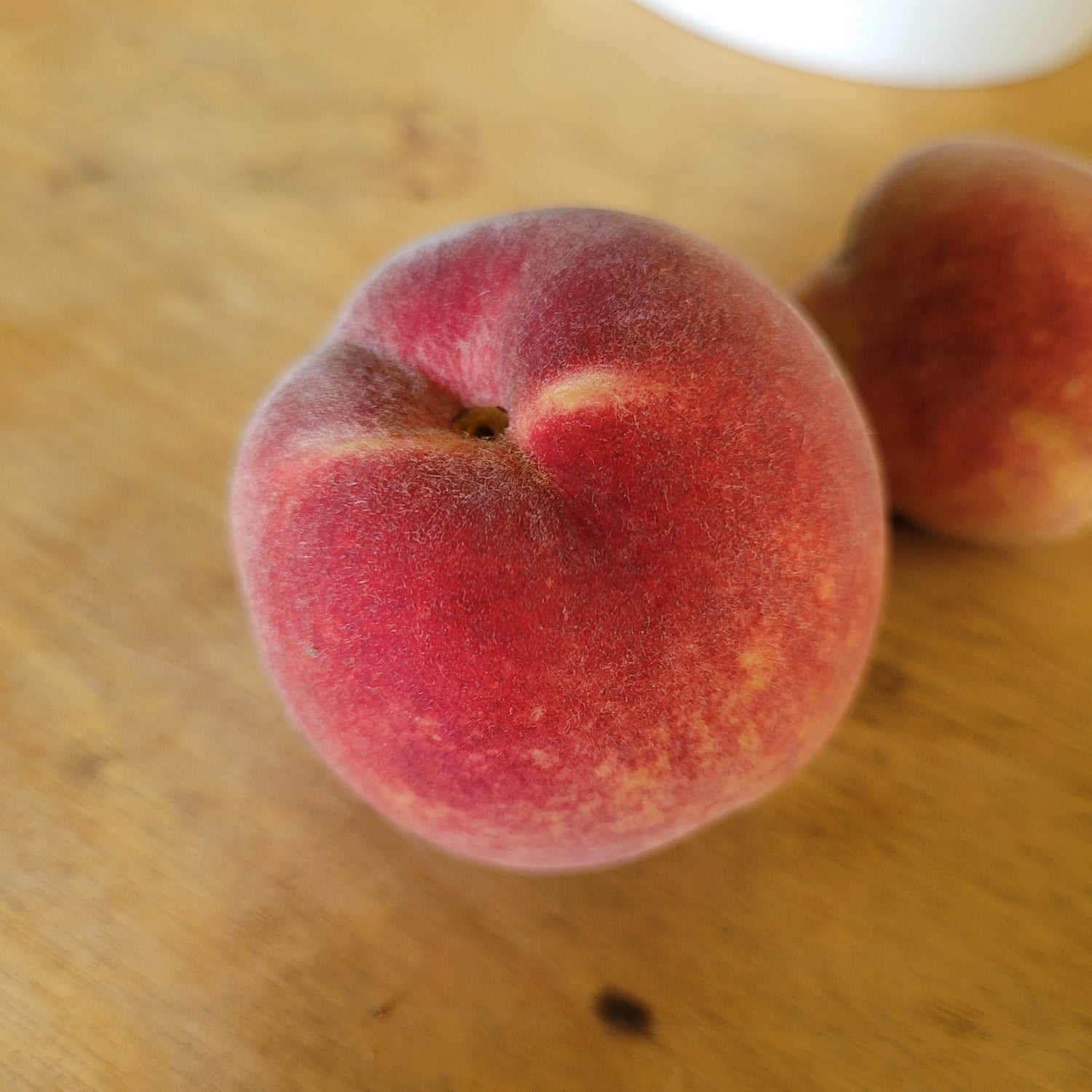
History: Reliance peaches were developed in a breeding program at the Agricultural
Extension Station in New Hampshire, where it was grown from seed in 1956. In 1961, the Reliance seedling got its first trial by fire, or ice in this case, as a severe cold spell dropped temperatures to -32°C. That summer only Reliance produced fruit and it was clear that this was a cold hardy winner. This tenacious peach was released in 1964.
Why We Grow It: Reliance is a very hardy variety that can still fruit after a winter low of -32°C, perfect for Canadian growers. The fruit is medium-sized, the skin is a dull red colour over yellow, and the flesh is bright yellow with freestone pit. It also tastes great and the fruit can be eaten fresh or used in baking and preserves.

History: Veteran peaches were developed in Vineland, Ontario and released in 1928.
Why We Grow It: Very hardy and of Canadian origin, Veteran is perhaps the most cold-hardy peach we offer. The freestone fruit is large with yellow flesh and an easy-to-peel skin. Although it has slightly mealy flesh, it boasts an excellent flavour and makes a great pie! This is the best preforming peach in our test orchard.
History: White Lady was created by Zaiger Genetics in California as part of their fruit breeding enterprise. It was selected for its unique white flesh, reddish skin, and overall excellent fruit quality. The variety was introduced in 1986.
Why We Grow It: White Lady is a unique variety featuring red blush over white skin and firm, white flesh. This freestone peach has quite low acidity giving it a very sweet flavour and it is great for fresh eating, canning, preserving, and baking. The tree itself is adaptable and the blossoms tolerate unpredictable spring weather better than most.