Premium Tree Collection

Introducing Premium Grade Trees at Silver Creek Nursery
For the first time, Silver Creek Nursery is proud to offer an exclusive collection of Premium Grade Trees, selected for their exceptional size, substantial caliper and beautifully developed branching.
These trees represent an elevated standard of quality, featuring a minimum height of 1.5 Meters (4.9 FT) to 1.75 Meters (5.7 FT) tall - or above in some cases! They have excellent caliper diameter and well-established branching structures. Carefully selected for their impressive presence and superior form, they offer an excellent choice for homeowners, landscapers and garden designers looking to make an immediate impact in the landscape.
Whether you're creating a stunning focal point, adding structure to a new garden, or investing in larger, more established trees, our Premium Grade collection offers something special.
What sets our Premium Grade Trees apart?
- Premium Size: Trees measuring 1.5 meters (4.9 FT) to 1.75 (5.7 FT) meters or taller (and/or 2 years + or older)
- Thick Caliper: Substantial trunk development for a more impressive, established appearance.
- Superior Branching: Well-branched specimens with attractive structure and form.
- Exceptional Quality: Carefully selected trees that meet our premium grading standards.
This is the first time we've made this higher-grade selection available for purchase at Silver Creek Nursery. Explore the collection and discover the difference that premium-sized, beautifully structured trees can make in your landscape.
Shop Premium Grade Trees at Silver Creek Nursery and bring home something exceptional.
Please note: our Premium Trees will fall within these parameters; it will be up to the customer to check the description on each individual tree variety when selecting for size, branching, premium grade and cost.
27 products
Sort by:
27 products
27 products
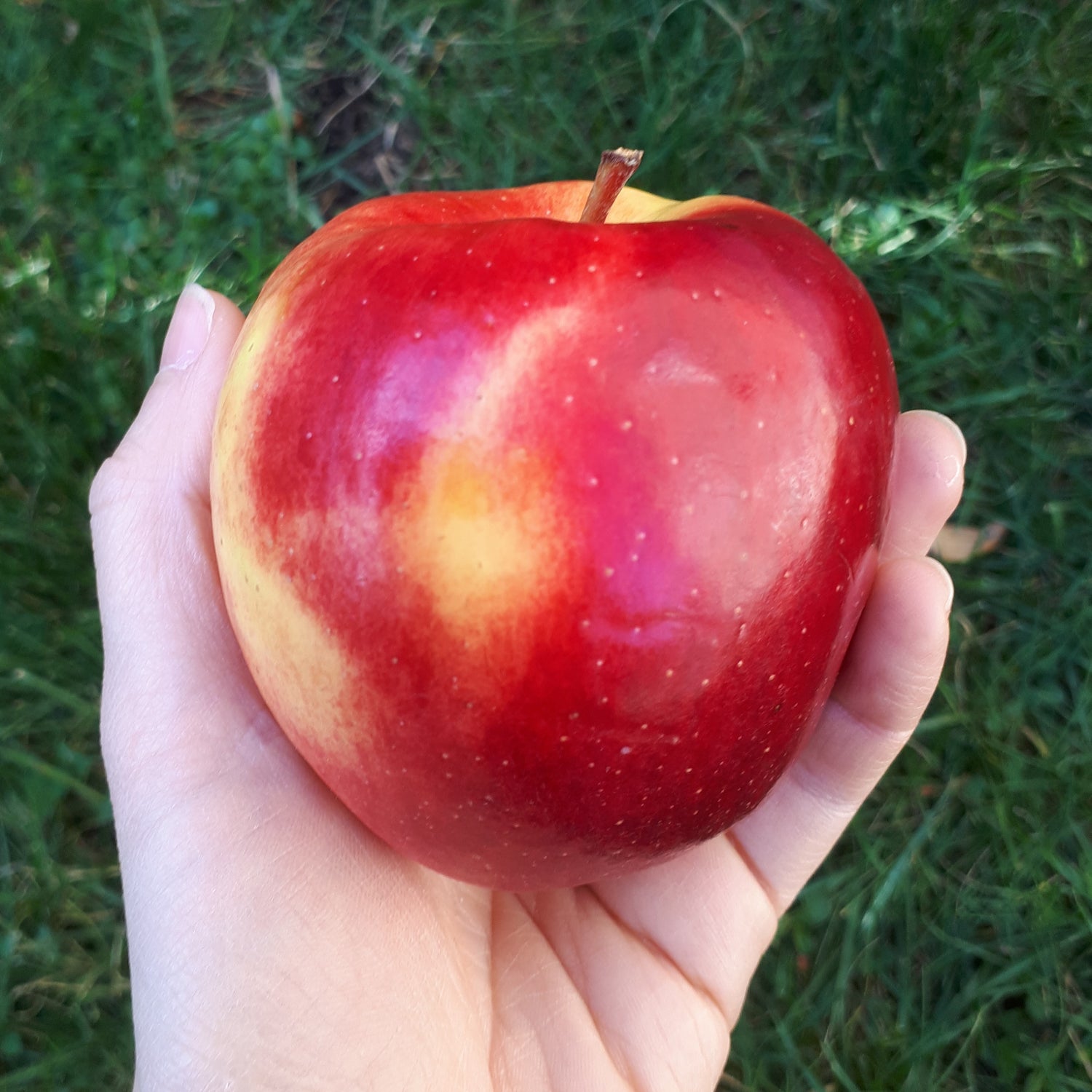
History: A chance seedling discovered in the 1980s in BC, this tender, aromatic, honeyed apple has been a hit ever since!
Why We Grow It: This delicious apple is very popular in the fresh eating market in Canada, thanks to its attractive bi-colour skin and slow browning qualities. It produces a medium-large fruit and is a good cropper.

History: This vintage quality cider apple is believed to have originated near Martock in England. This apple is so old it's not entirely certain when exactly it was first discovered, with estimates ranging from the 11th to 14th century.
Why We Grow It: This lesser-known apple is bitter with high acid, featuring a fruity flavour with a bitter aftertaste that is great when made into cider on its own or when mixed into a cider blend.

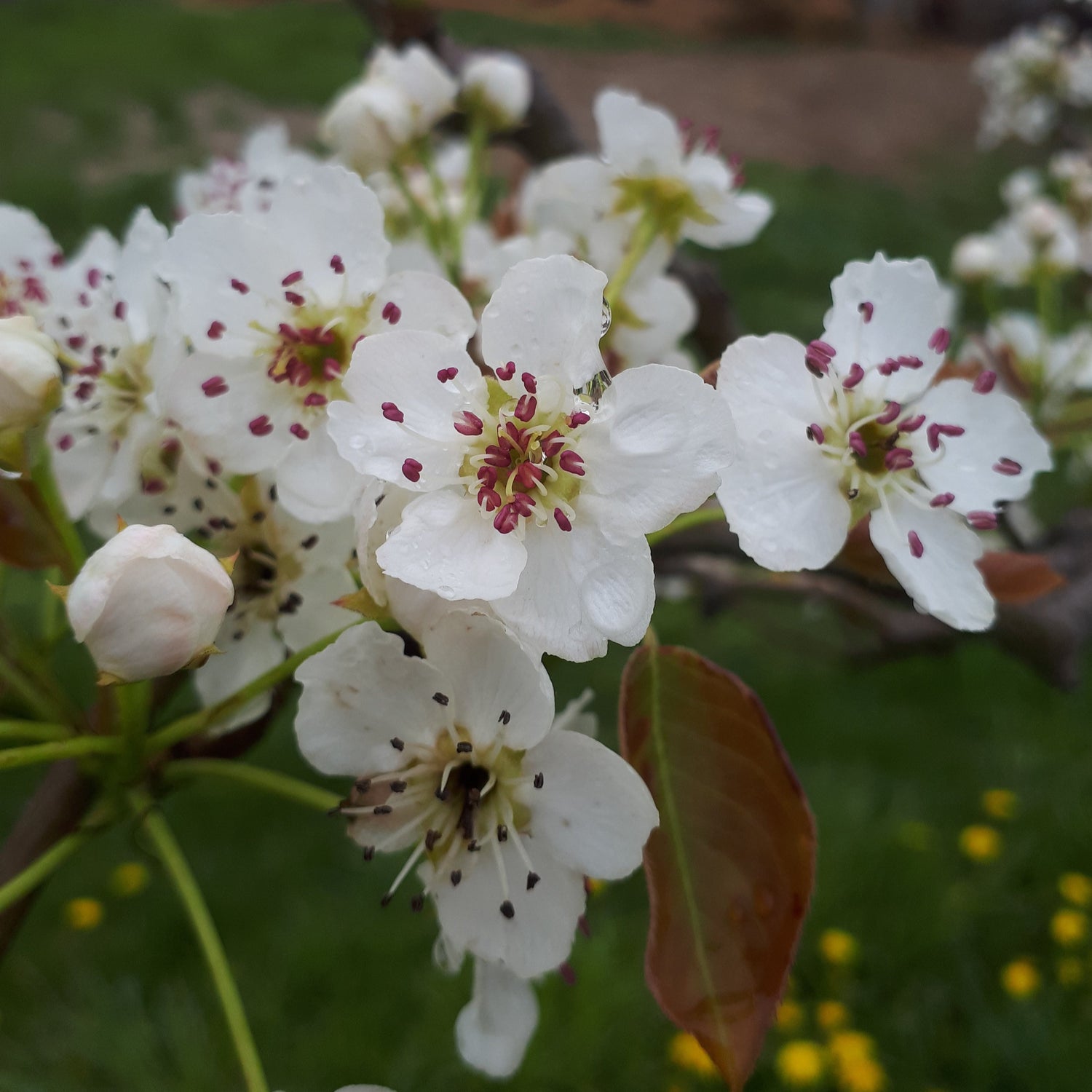
History: Chojuro (translated from Japanese as 'plentiful') was found as a chance seedling in the orchard of Toma Tatsujiro in Japan around 1895. From there it became the most popular pear in Japan until modern varieties began to supplant it in the 1950s. In Kawasaki, the city where Toma's orchard was located, a monument still stands to commemorate his work as a pear breeder. Chojuro is the most popular Asian pear in North America.
Why We Grow It: This popular Japanese heritage variety is hard to turn down. The flattish round fruit has russeted brown skin and can be quite large, and is excellent quality when the fruit is left to ripen into October: the sweet, crisp flesh takes on notes of butterscotch and/or white freezie! We recommend picking it when the colours turns yellow-brown so it will store through winter, otherwise it does not keep if allowed to over-ripen on the tree.

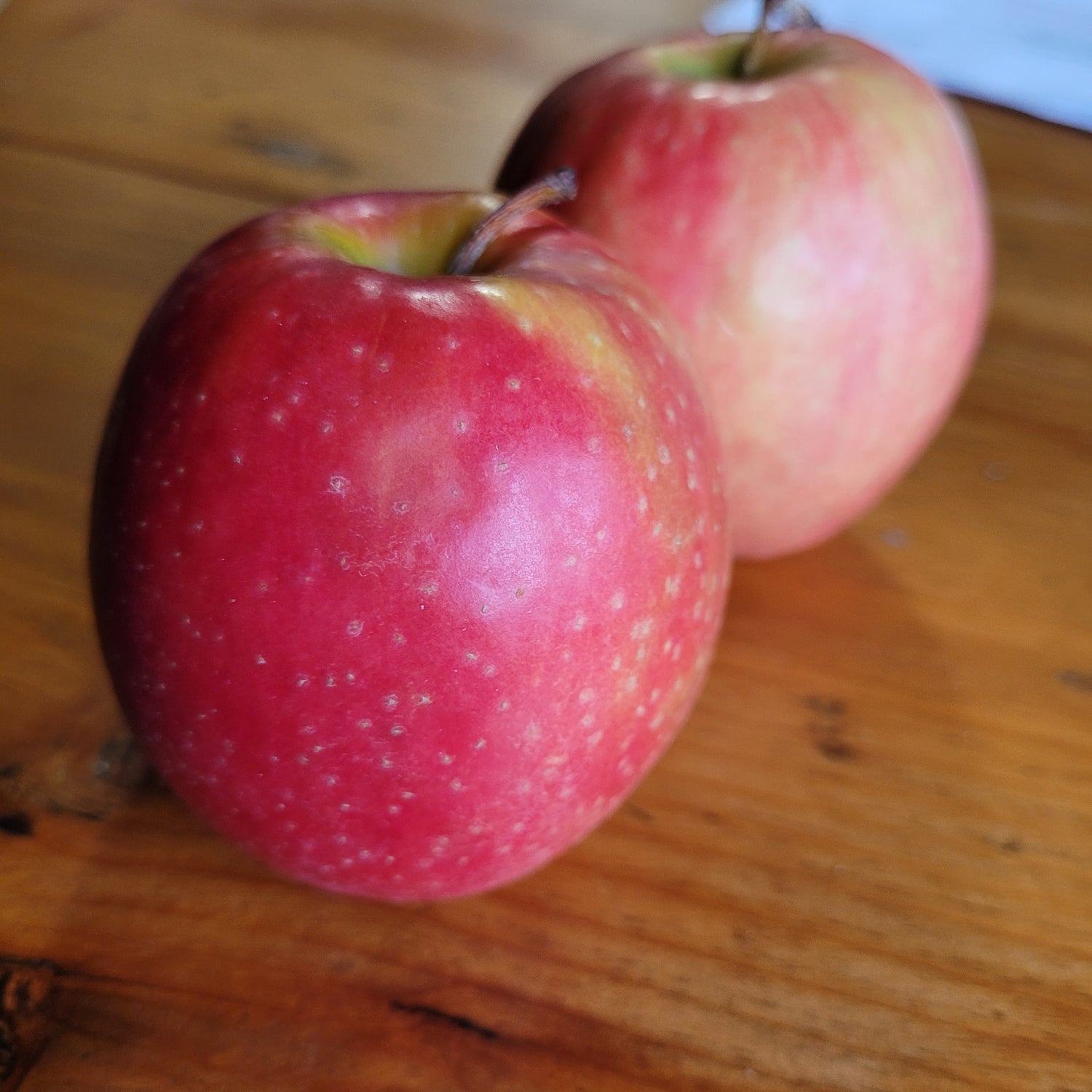
History: Cripps Pink was developed by John Cripps at the Western Australia Department of Agriculture in 1973 as a cross between Lady Williams (an Australian variety) and Golden Delicious. The successful result was introduced to the market in 1985. In just ten years, Cripps Pink became an extremely popular variety and over a million trees were planted in Australia alone. This variety remains popular in many countries around the world. This apple is also known as Pink Lady which is its brand name when the fruit meets very strict criteria for quality.
Why We Grow It: Cripps Pink has a refreshing honeyed sweet-tart flavour that makes it great for fresh eating, baking, and cider. The lovely fruit, yellow with a pinkish-red blush, is slow to brown and also stores exceptionally well.
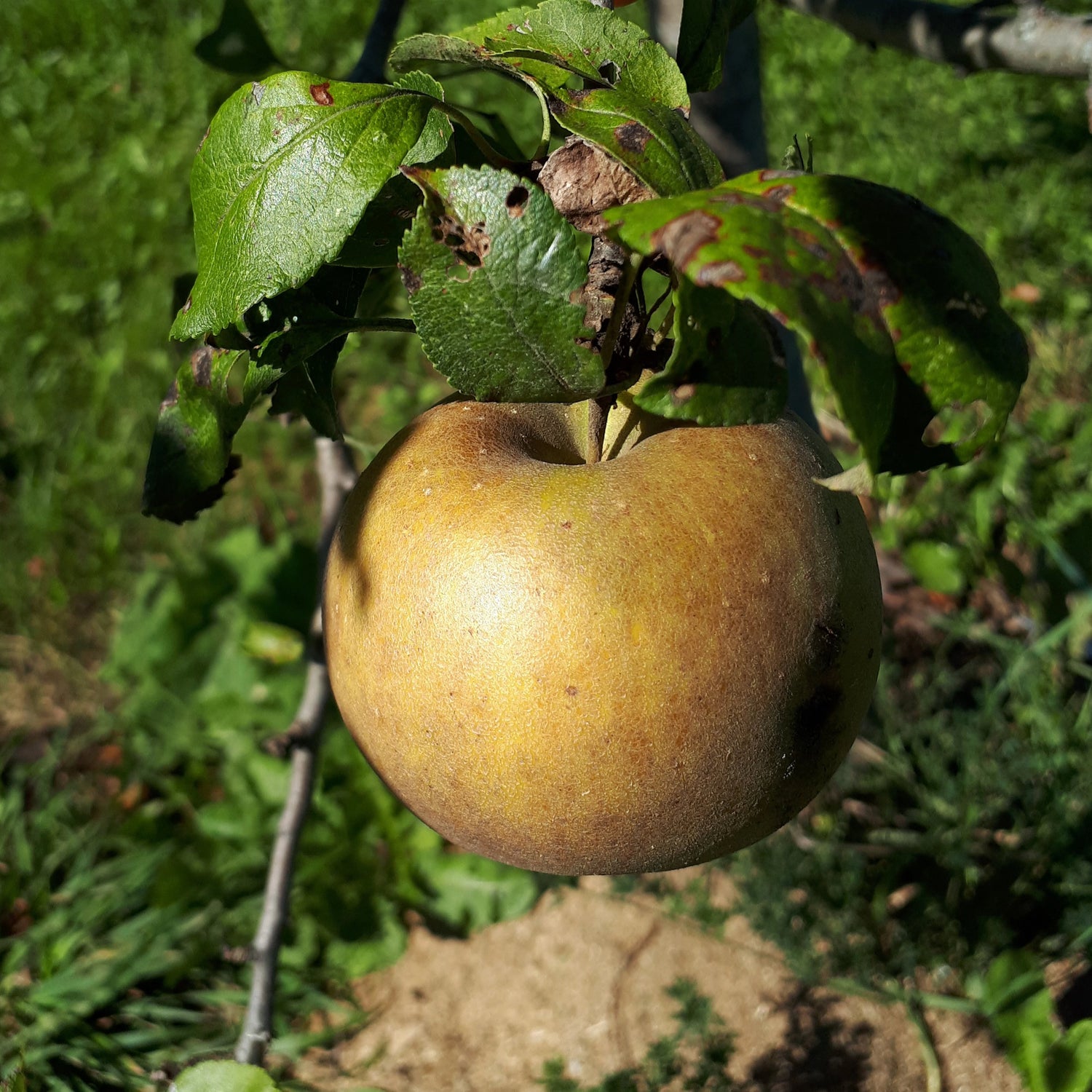


History: Egremont Russet first emerged in Britain in the early 1870s and has remained popular ever since. Even today, it is the third most common apple grown commercially in England.
Why We Grow It: Although the russet, a thick rough skin, coating this apple can be an acquired taste, there is a reason this apple has remained so popular. The fruit itself is an attractive gold dotted with yellow and it has an excellent sweet, nutty flavour. They are delicious fresh, when used for cooking, and in ciders. The trees are known for producing good, regular crops.

History: Elstar apples were developed in the Netherlands in the 1950s and are a cross between Golden Delicious and Ingrid Marie. This excellent combination has created what is considered one of the best Golden Delicious offspring. Fittingly, it has since become quite popular in continental Europe. Despite being introduced to the US in 1972, it has not attained the same level of popularity in North America.
Why We Grow It: Elstar is a flavourful variety, fine for fresh eating or sauce with its crisp, juicy flesh; very little acidity. The skin is distinctive, sporting a orangey-red marbled appearance.


History: Florina, aka Querina, was developed in France in the 1980s at the Station de Recherches d'Arboriculture Fruitiere. Despite being developed in France, its ancestry is made up of American varieties. Since its introduction it has become quite popular in continental Europe.
Why We Grow It: One of Steph and Mouse's favourites! Florina is a wonderful all-around apple for the backyard offering both rich flavour and easy care. The sweet, crisp fruits it produces are perfect right off the tree but also keep a few months. They are also great for organic production: resistant to scab, fireblight, mildew, and rosy apple aphid.
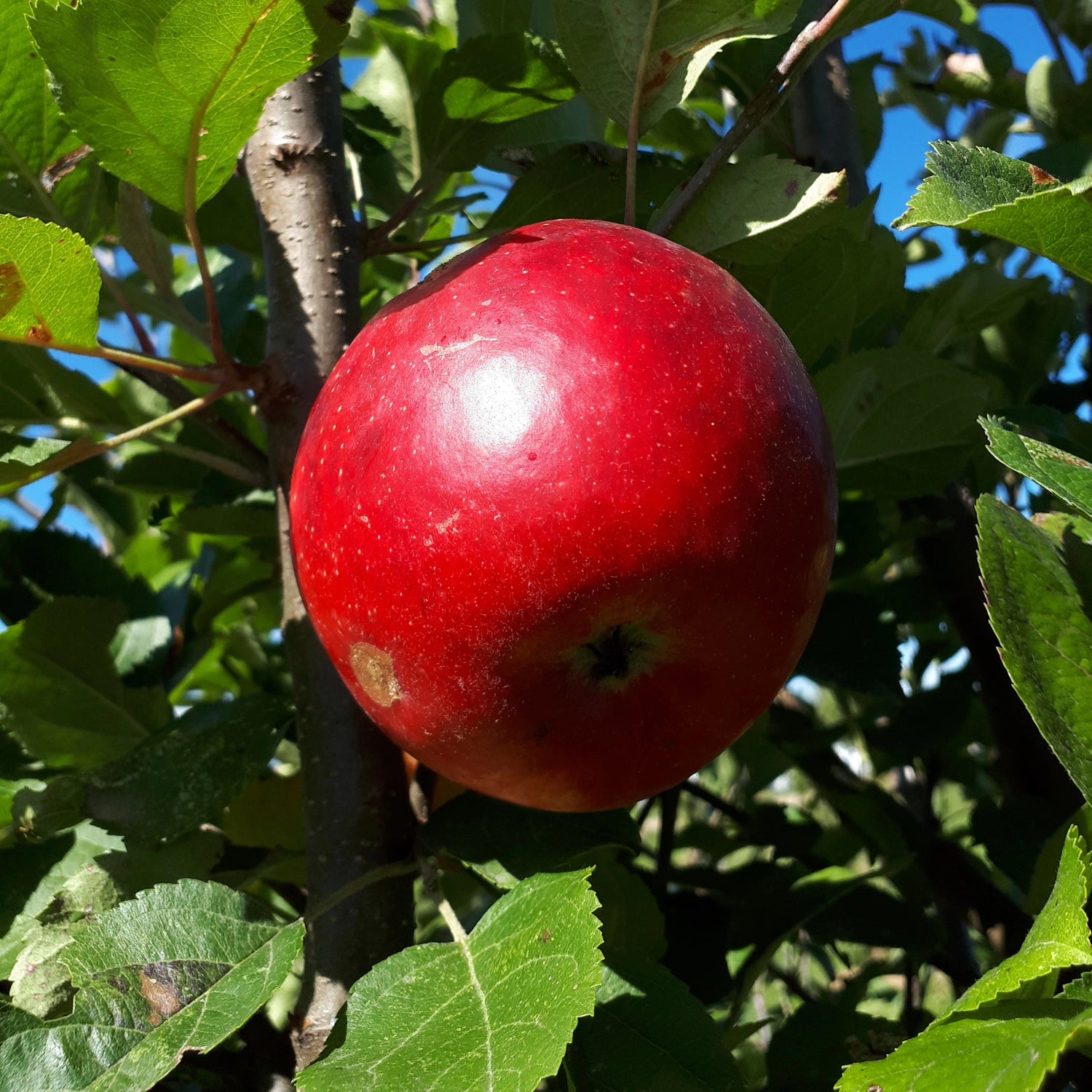
History: Freedom was developed in a breeding program at the New York State Agricultural Experiment Station in Geneva, New York in 1958. The goal was to create an apple that was immune to apple scab, and this particular variety was chosen from 120 other apples that were planted out from seed selected through an intensive breeding program. It was released in 1983 and given the name Freedom to represent its freedom from apple scab.
Why We Grow It: Low maintenance, disease-resistant, vigorous, good flavour, and a good keeper... all in one apple! Freedom is the perfect variety for growing organically, for pick-your-owns, backyards, and community orchards. Large red skinned apple, similar to McIntosh in flavour with sweet, subacidic, sprightly flavour and juicy white flesh. Crunchy, fine grained flesh.


History: A highly regarded cider apple of Normandy, France, where it has been grown for centuries. This cultivar is one of the traditional cultivars in the production of calvados (a brandy made from apples and sometimes pears) in the Pays d’Auge region.
Why we grow it: This cider apple has a unique spicy flavour that is high in tannins, low in acidity, and low in sugar. With it's rich history and beautiful brass coloured juice, this cultivar is a must in every well-rounded cider orchard.
Photo credit: Trizek, CC BY-SA 4.0, via Wikimedia Common
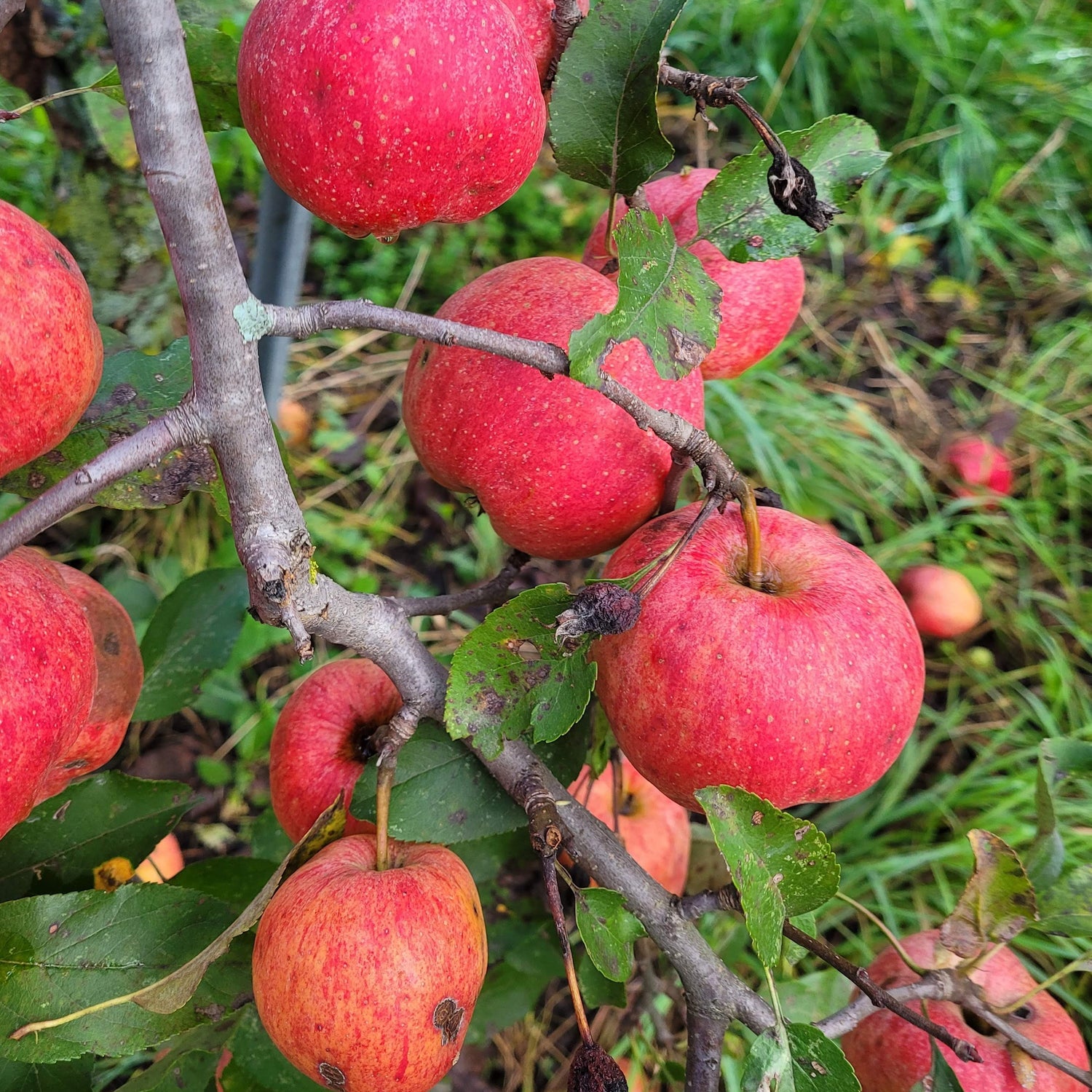
History: Gala apples are one of several varieties created by J.H. Kidd in New Zealand as part of his project to cross Cox's Orange Pippin with American varieties in the 1930s. He definitely succeeded with the Gala apple which has since become one of the most popular apple varieties worldwide and a mainstay in grocery stores.
Why We Grow It: This apple earned its popularity with its amazing flavour, especially when eaten fresh off the tree. Although many sports with a deeper red colour have been introduced and marketed as Gala, they often come at a compromise to flavour so we offer you the original Gala with full sweet crunchiness.


History: Ginger Gold has quite the dramatic origin. In 1969 Hurricane Camille hit Virginia and brought awful floods, devastating the orchards of Clyde and Frances "Ginger" Harvey. As Clyde Harvey went to save the few remaining trees in his Winesap orchard, he discovered a mysterious seedling that produced yellow apples instead of red. Genetic testing showed it was a seedling of Golden Delicious, Albermarle Pippin, and an unknown third variety. Clyde named the variety after his wife and it was introduced commercially in 1982. Since then, it has become a commercially popular early variety! In 2007, the Virginia General Assembly proposed a bill to make Ginger Gold the official state apple, although this bill was sadly tabled.
Why We Grow It: It is easy to see why this such a popular early apple! Ginger Gold produces lovely bright yellow apples that sometimes sport a red blush. These medium-large apples have are firm and juicy with a pleasant sweet flavour that has a nice tart finish. The fruit is slow to brown which makes them even better for fresh-eating along with drying. For fans of feeding wildlife, Ginger Gold apples are known to hang onto the tree well after they are ripe.


History: Golden Delicious was discovered by chance on a family farm in West Virginia and sold in 1914 to the Stark Brothers Nurseries. It has since become one of the most popular apples in North America. Since 1972, Clay County, where the apple was found, has hosted an annual Golden Delicious Festival and in 1995 it was declared the state fruit of West Virginia. Golden Delicious is also the parent of many varieties, including prominent ones such as Ambrosia and Gala.
Why We Grow It: It is easy to see why this apple is so popular with its attractive golden yellow skin and sweet, crisp cream-coloured flesh. Golden Delicious is a favourite for fresh eating, sauce, and apple butter. On top of that, it is resistant to scab, powdery mildew, and fire blight.

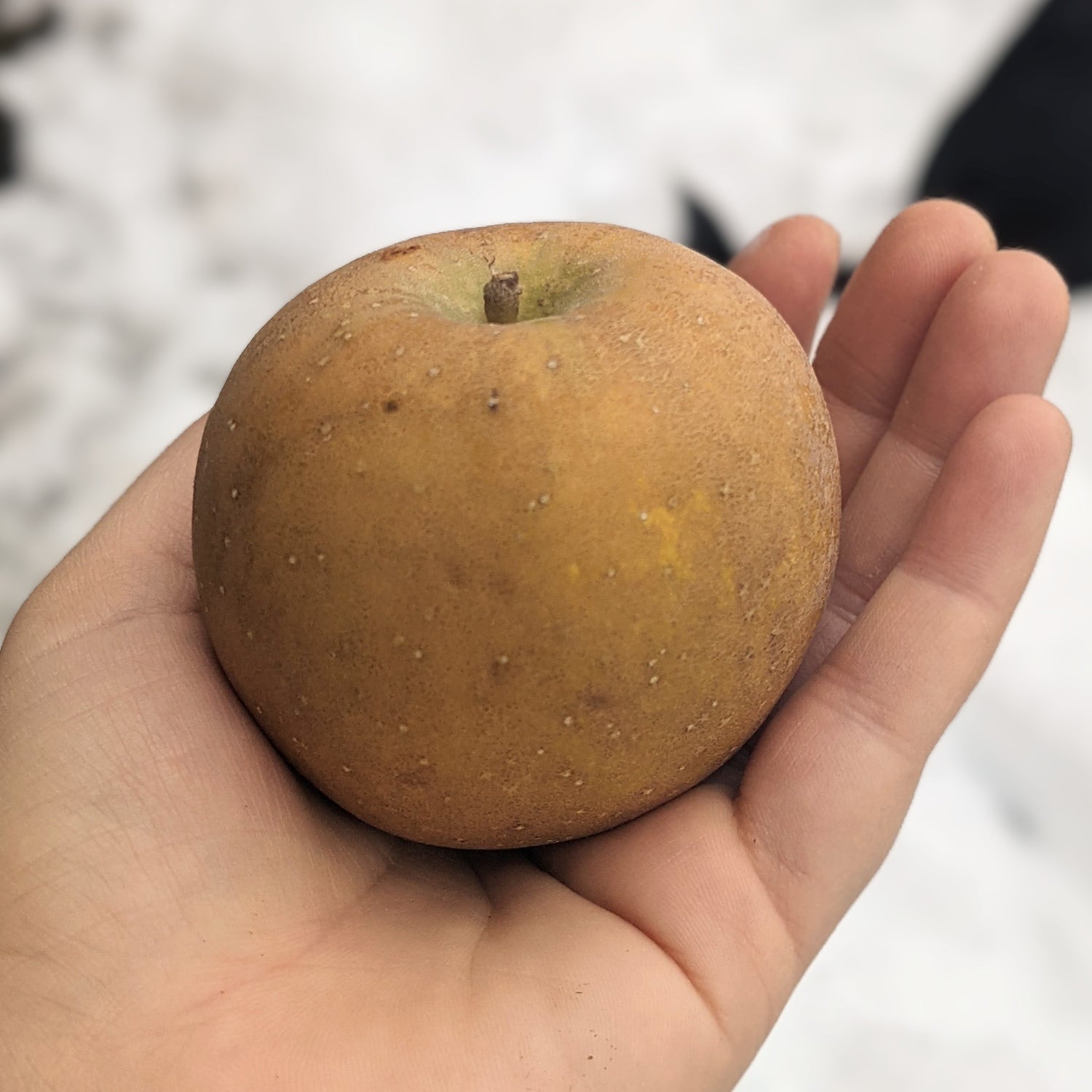
History: The origins of Golden Russet are unclear, but we know it was discovered in New York in the first half of the 1800s. It may have come from the seedling of an English russet variety and could have Ashmead's Kernel parentage. It was grown commercially for some time before falling out of favour, although it has regained some popularity recently due to its strengths in cider production.
Why We Grow It: With both lots of sweetness and acidity, Golden Russet is one of our favourites for fresh eating. The flavourful juice from these apples is also great for making cider. The thick russetted skin discourages insect damage and it is resistant to scab, canker, and powdery mildew. Its tip-bearing habit gives these hardy trees a wispy appearance.

History: There appears to be relatively little information on the origins of Hayatama aside from the fact it originated in Wakayama prefecture in Japan. It is potentially named for Kumano Hayatama Taisha, a Shinto shrine in the area.
Why We Grow It: Hayatama produces small, flattish golden-brown pears that are juicy and crisp with a sweet flavour. Although the fruit is small, the tree produces crops of a good size and will give you an ample harvest.

History: Hosui was developed at the Institute of Fruit Tree and Tea Science in Japan. It is a cross between Hiratsuka and Kosui and was selected for its excellent flavour, texture, and resistance to black spot. Hosui was released in 1972 and has since become one of the most popular Japanese varieties.
Why We Grow It: Hosui is more acidic than other pears, providing a sweet and tangy flavour that is unique amongst Asian pears. This early-ripening variety boasts vigorous growth and will produce heavy crops of these large, delicious, golden-brown fruits.
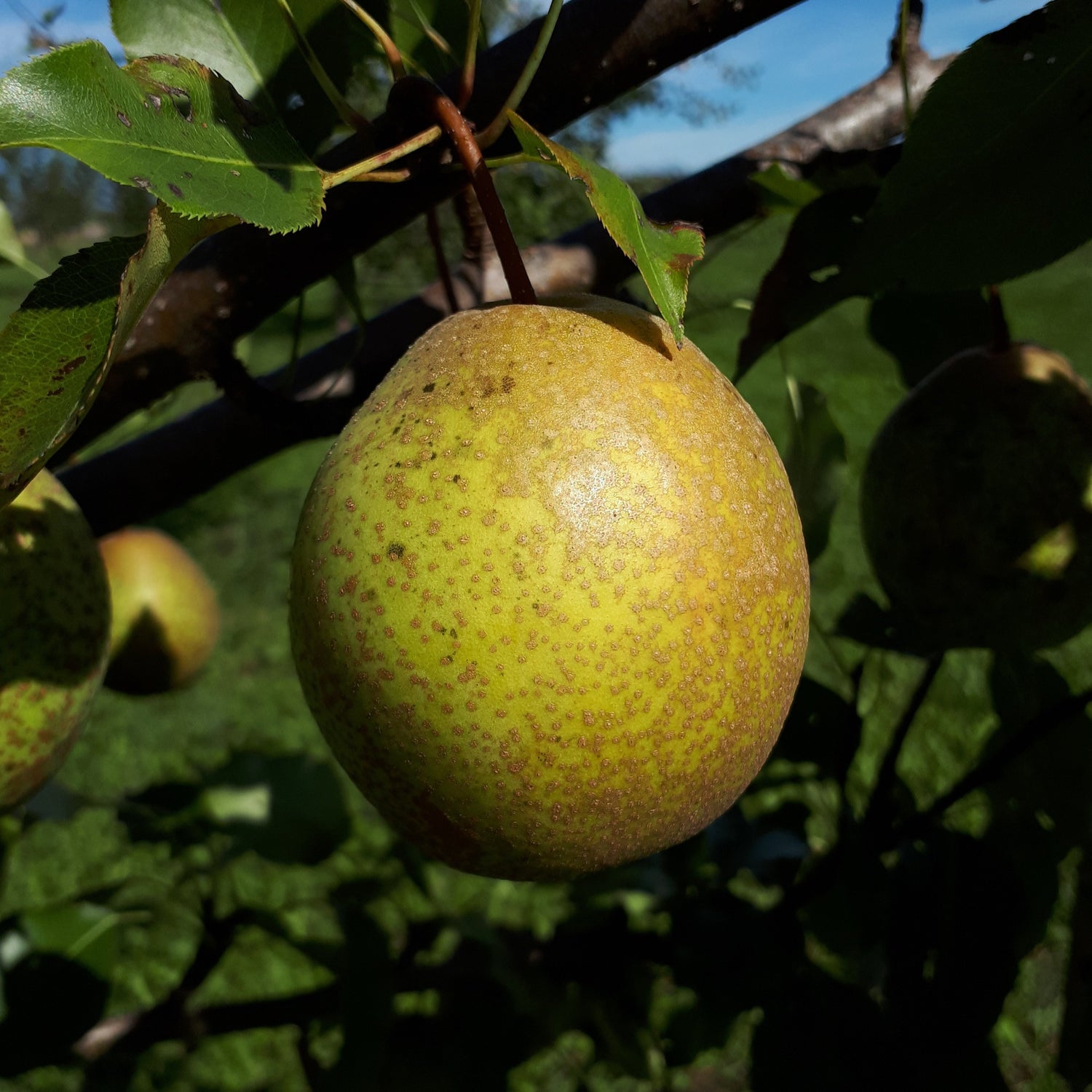
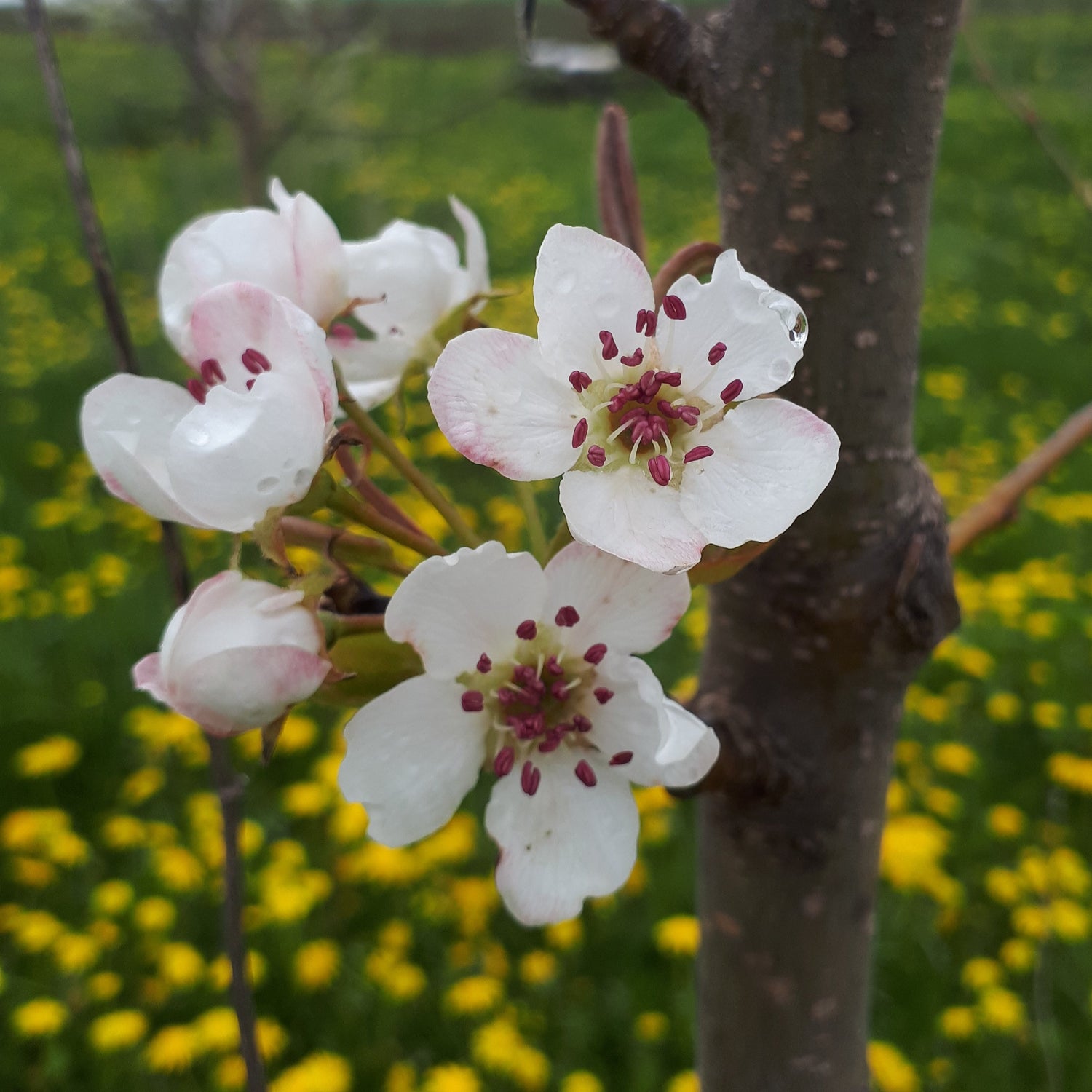
History: Mishirasu is an Asian pear from Japan.
Why We Grow It: Mishirasu is a popular variety since the fruit are extra large with a sweet, mild flavour and a nice crunch. The skin is brown and russeted, and the fruit have a roundish shape that is reminiscent of European pears.

History: The Niitaka Asian pear was developed in Japan as a cross between Amanogawa and Imamuraaki Asian pears in 1915 and was released in 1927.
Why We Grow It: Niitaka is a popular Japanese variety with large orange-brown fruit that is round and speckled. The flavour is sweet and mild.
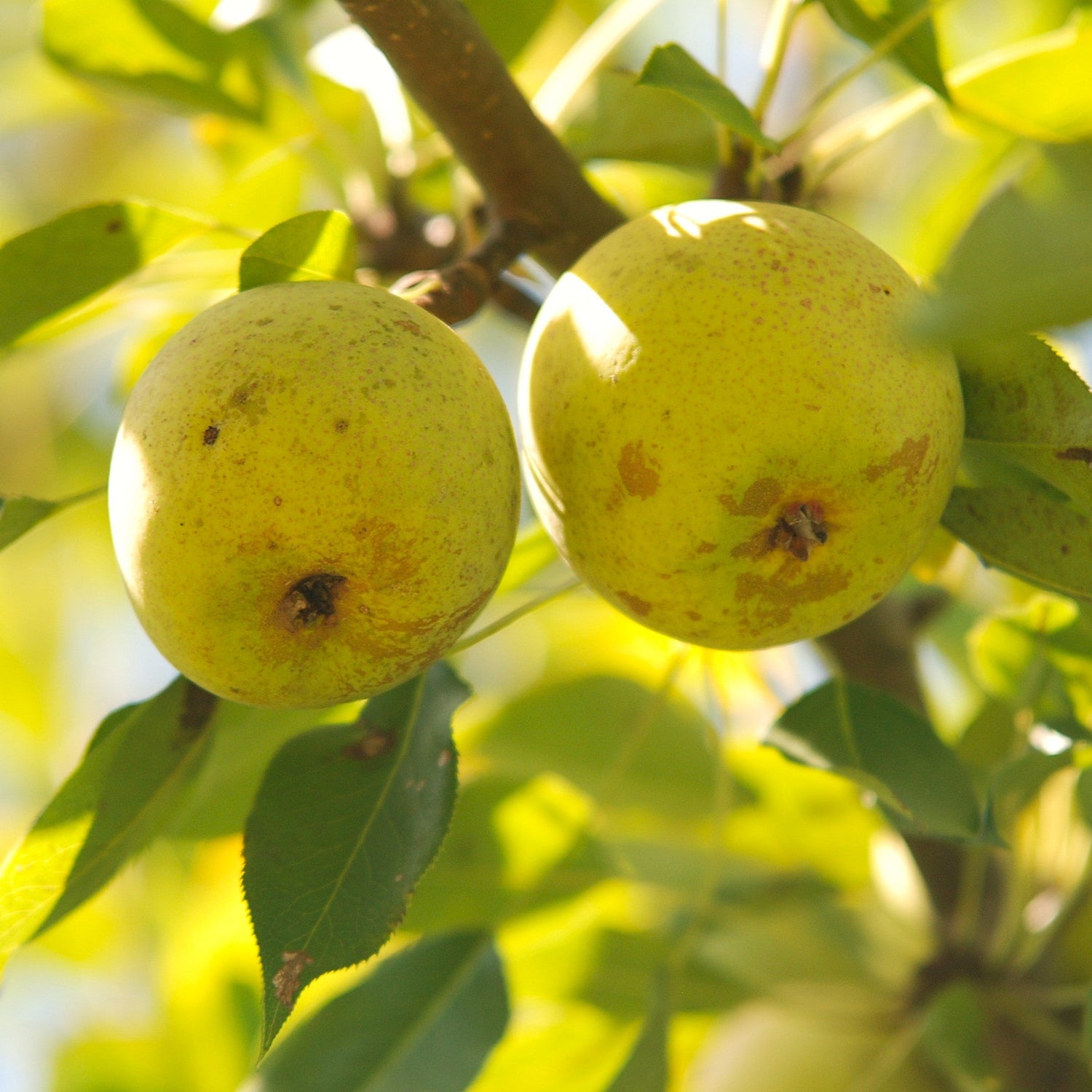
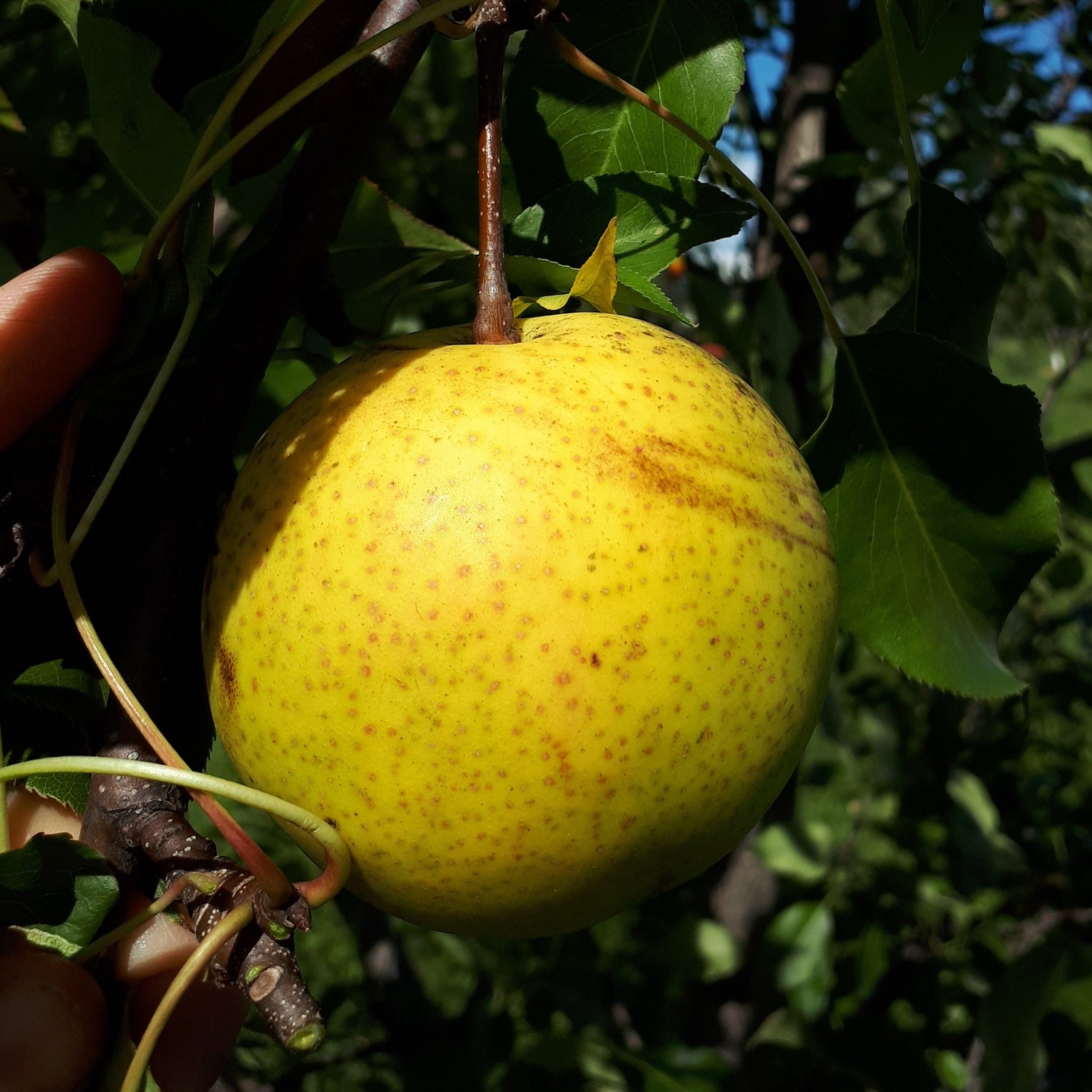
History: Ping Guo Li (translated from Mandarin as 'apple pear') was developed by Jilin Sheng in China and likely named for its round, apple-like shape. While its exact age is unknown, this pear is considered to be an old variety.
Why We Grow It: This Asian pear is nothing but sweet and juicy melting goodness! Its sweet flavour and soft texture are comparable to that of a European pear. So far it has performed very well in our test orchard and displays good cold-hardiness.

History: Rouville apples were created by R.L. Granger and G.L. Rouselle in 1962 at the Agriculture and Agri-food Canada research centre located in St.-Jean-sur-Richelieu, Quebec. The variety was introduced in 1983.
Why We Grow It: This lovely Quebec cider apple has a wonderful bitter-sweetness that is great for fresh eating and juicing and sauce. It is resistant to scab and has grown very well in our test orchard.
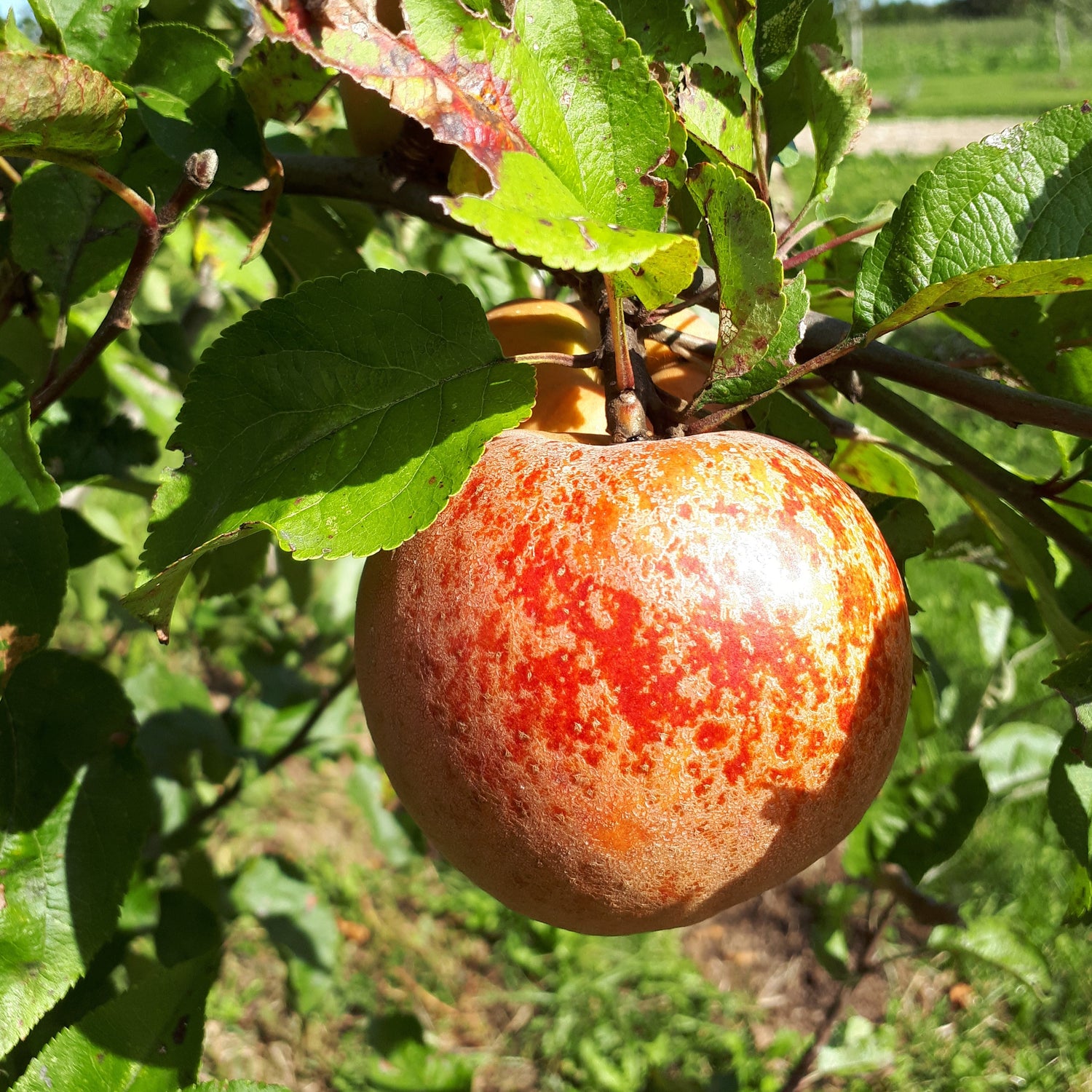
History: Roxbury Russet is the oldest American apple still under cultivation. It was discovered around 1650 in Roxbury, near Boston. These apples were well-known for their long keeping ability and qualities for cider making. They were grown by Thomas Jefferson at Monticello and are even referenced in one of Nathanial Hawthorne's novels. Due to the russet skin, these apples have never achieved true commercial success but they can still be commonly found in American farmer's markets.
Why We Grow It: Aside from its historic roots, Roxbury Russet is an excellent all-around apple that can be eaten fresh, used in cooking, and made into a great cider. It has a nice flavour that is sweet and sharp. This variety is also a good choice for organic orchards.

History: Little is known about this pear in the Western world aside from the fact it came from China. Seuri is possibly the Japanese version of the Chinese name Se Li (translated as 'red pear' from Mandarin).
Why We Grow It: Seuri Li has yellow-brown skin and the flesh is sweet yet slightly tart with a hint of apricot. It is considered one of the most flavourful of the Asian pears. The tree grows well and has heavy crops.


History: Shamrock apples were raised by K. Lapins at the Pacific Agri-Food Research Centre in 1970 and released in 1986.
Why We Grow It: This is a Canadian apple for all you Granny Smith lovers! Although a bit sweeter than Granny Smith, Shamrock apples still have some tartness and are hardy enough to survive in Canadian climates. They even resemble Granny Smith with their light green skin and white flesh.
Photos courtesy of Shannon McInnis!

History: Shinko (translated from Japanese as 'new light') was created in Niigata, Japan as part of a pear breeding program and released in 1941. It is a cross between Nijiseiki and Amanogawa.
Why We Grow It: Shinko produces medium, golden-brown pears that are crisp and sweet with rich flavour. Their taste and texture are both considered excellent! The trees are known for starting to bear at a young age and producing reliable and heavy crops of delicious fruit.

History: Shinseiki (translated from Japanese as 'new century') was developed in Japan and released in the 1940s. It is a cross between Chojuro and Nijiseiki.
Why We Grow It: Shinseiki is known for producing large harvests of round, yellow-green pears with a pleasant crunch early in the season. They have a mild, sweet flavour but can bruise easily due to their high juice content. The fruit hangs onto the tree well and the flavour improves over time.


Why We Grow It: Although it failed to take off commercially, Silken is an excellent early fresh-eating apple. It is attractive with pale yellow skin sometimes with a faint pinkish blush. The fruit has crisp, juicy flesh that is quite sweet with a little bit of acidity. The tree grows quickly and tends to start bearing fruit at a young age.
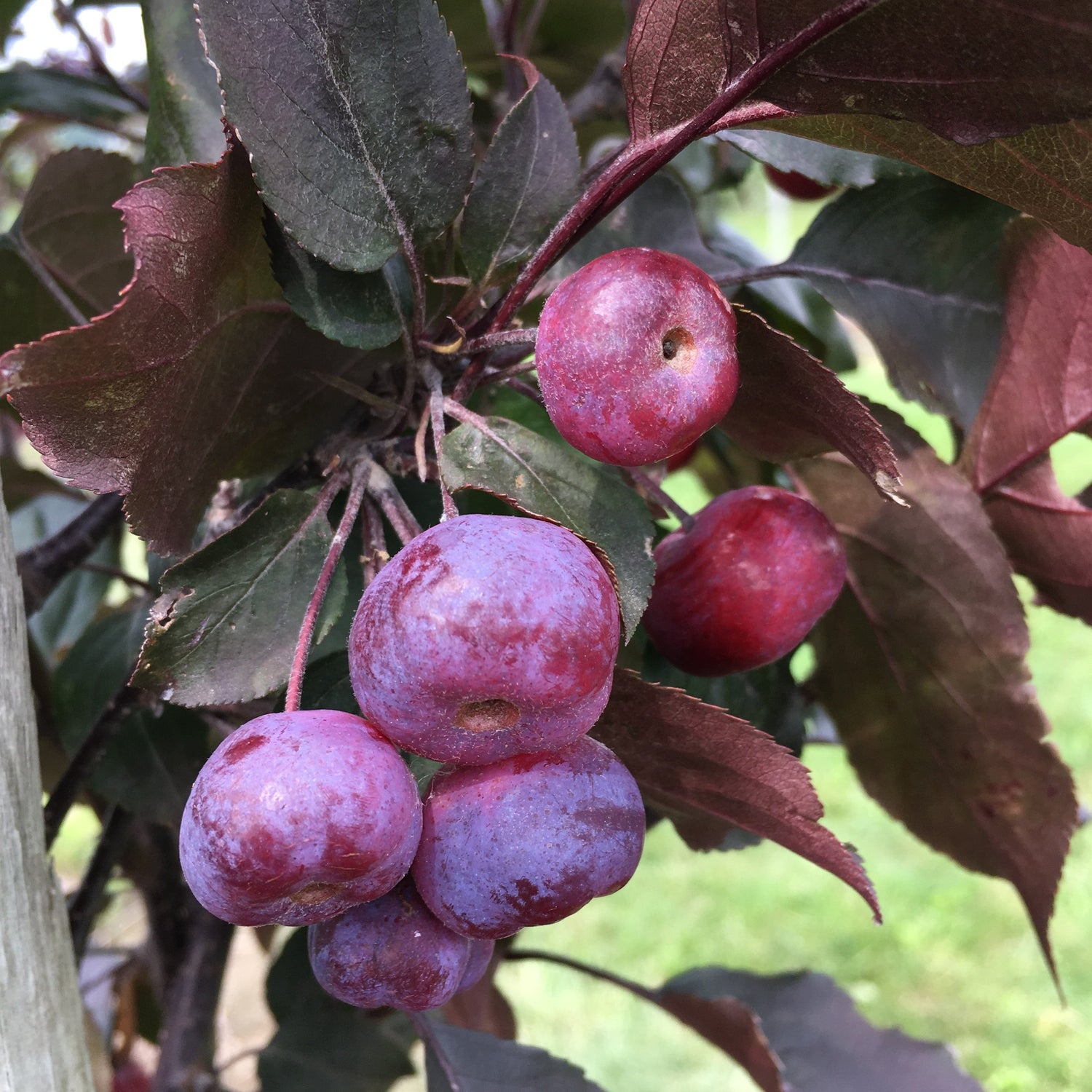
History: Thunderchild is a crabapple that was developed by Percy Wright, a prairie plant breeder in Saskatoon, Saskatchewan. Although it is unknown when exactly Thunderchild was created, it likely came about in the 1900s and can still be seen as a common ornamental tree in the area.
Why We Grow It: Thunderchild makes for a lovely ornamental tree with a profusion of pink blossoms in the spring and deep red foliage. The tiny dark red fruits it produces can be used in cider blends and to make jellies with a gorgeous orange hue. The tree is quite cold hardy and generally disease resistant.


History: Wolf River was raised from seed by Quebec lumberman William Springer in the latter half of the 19th century. When Springer and his family were moving by wagon to Wisconsin, they bought a bushel of Alexander apples along the way. Upon arriving at their new home, he planted the seeds from said apples along the bank of the Wolf River and the Wolf River apple grew from there. This variety has since garnered a reputation as a good cooking apple and for the incredible size of its fruit.
Why We Grow It: First and foremost, Wolf River is legendary for the huge size of its fruit. The apples can weigh a pound or more and there are stories of pies being made from a single apple. The fruit, green with red blush and stripes, has a sweet and tart flavour that is good for cooking and it holds its shape well when cooked. The tree itself is hardy and relatively disease resistant as well.