All Fruit Trees

All Fruit Trees
Looking for bareroot fruit trees Canada? We offer a wide variety of bareroot fruit trees including apples, apricots, pears, plums, cherries, quince, and peaches that are grown for the Canadian climate & we deliver cold-hardy fruit trees right to your door!
We also offer fruit trees for small gardens, heritage apples Ontario and you can filter all our fruit trees by hardiness zones. Search trees by collection or peruse all the varieties we carry below! We offer flat rate shipping across Canada.




320 products
Sort by:
320 products
320 products
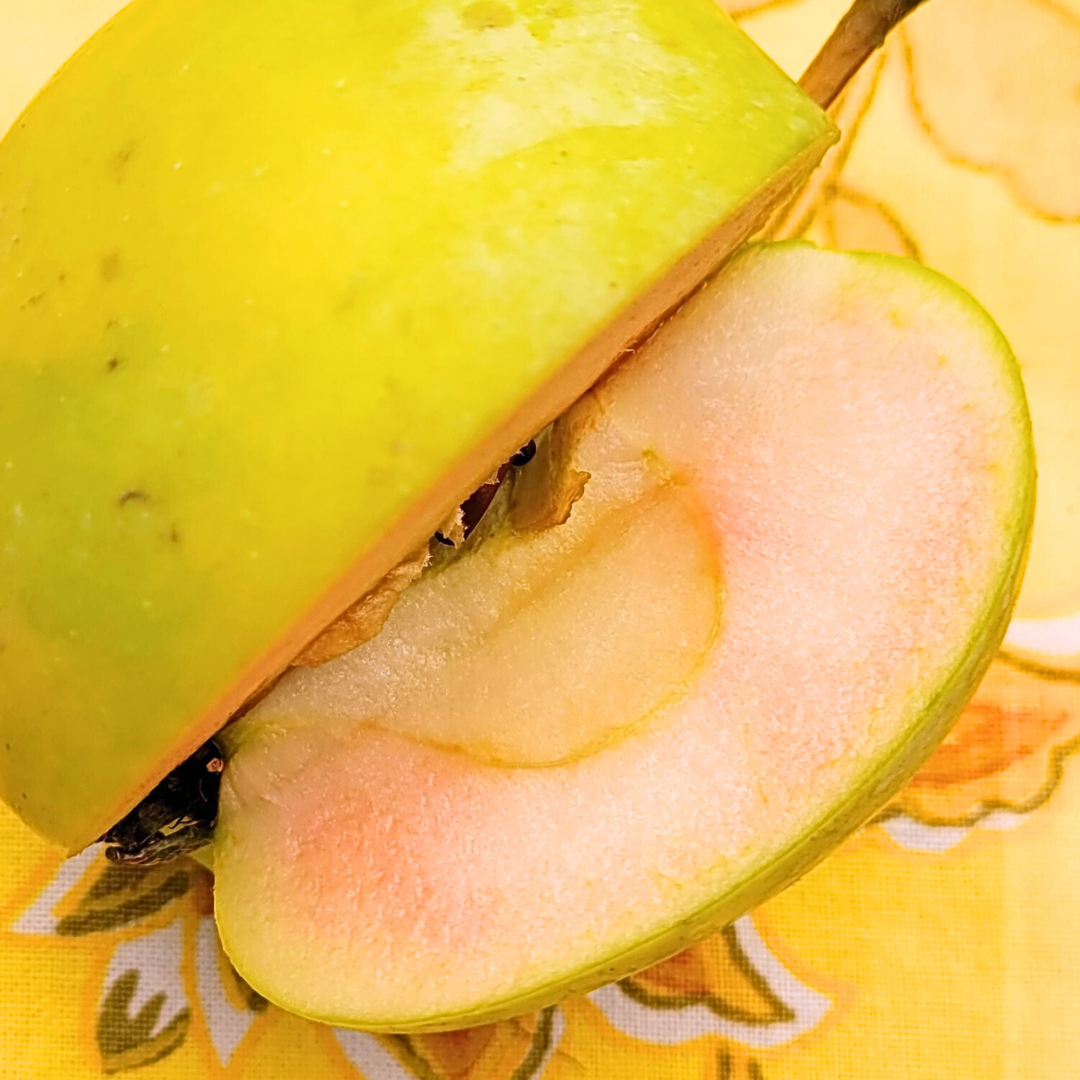
History: Airlie's Red Flesh originated on the farm of Lucky and Audrey Newell in Airlie, Oregon who sold the property in the 1960s. Two decades later in the 1980s, a Louis Kimzey was walking through the old orchard, bit into an apple from the tree, and was amazed at its stunning pink flesh. This was also known as Newell-Kimzey to reference those who found it and Airlie's Red Flesh as a reference to its place of origin and pink flesh. It also goes under a separate brand name.
Why We Grow It: This small, slightly conical apple has yellow skin that belies a bright pink interior that whitens near the core. Not only is it pretty, the fruit has a very sweet flavour with some mild astringency and the flesh is slow to brown. Along with the attractive fruit, the tree boasts bright pink blossoms that gives it an extra ornamental appeal.
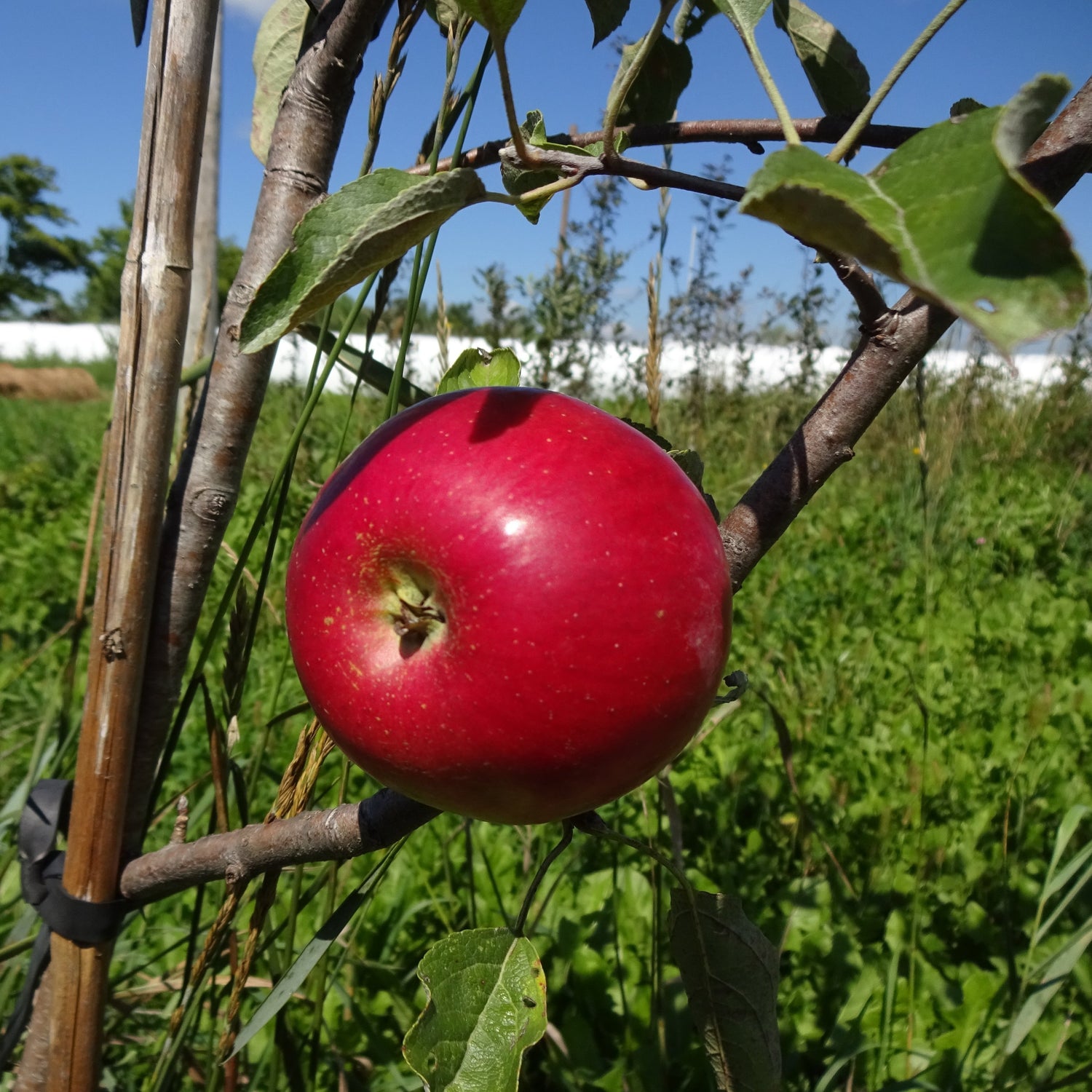
Why We Grow It: This crisp, sweet apple is great for fresh eating and has bright red skin. It tends to begin bearing at a young age and is relatively diseases resistant.
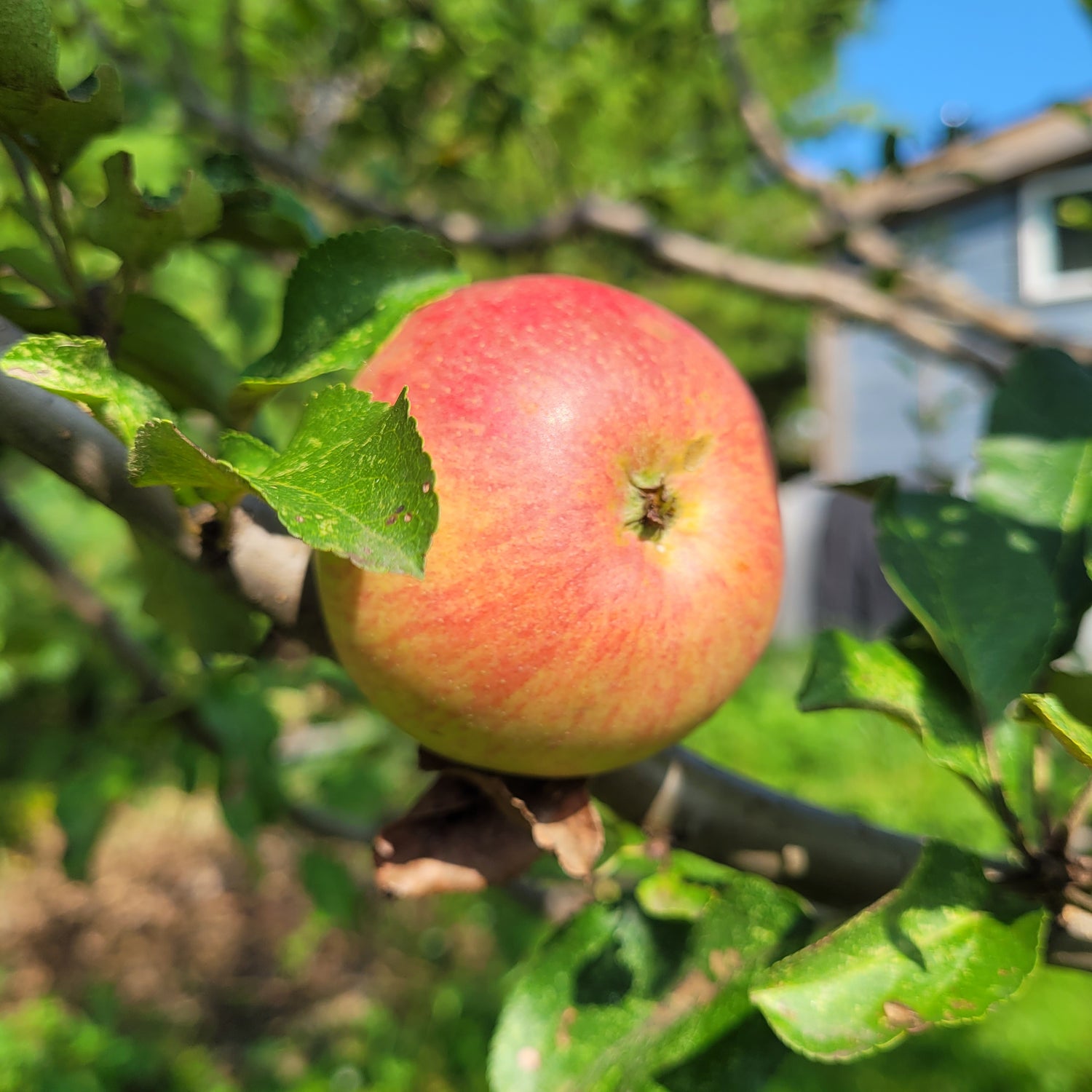
History: Alkmene, aka Early Windsor, was developed by M. Schmidt and H. Murawski at the Kaiser-Wilhelm-Institut für Züchtungsforschung in Müncheberg, Germany in the 1930s.* It was named after Hercules' mother Alcmene. After the chaos of WW2, it took about 30 years for Alkmene to be introduced to the rest of the world. It was released in 1962 and given the name Early Windsor for better marketability. It remains a popular apple in Europe today.
Why We Grow It: Alkmene produces a medium-sized crisp, juicy apple that has yellow skin overlaid with red stripes. The aromatic fruit is known for its rich flavour that is both honeyed and notably sharp. The tree is known to be quite a heavy cropper!
*While the Kaiser Wilhelm Institute was heavily involved with the Nazis during WW2, at the time of Alkmene's development the institute's president was Max Planck, a scientist who staunchly defended his Jewish colleagues. The institute was renamed in his honour following WW2. That is to say, we're not selling a Nazi apple.
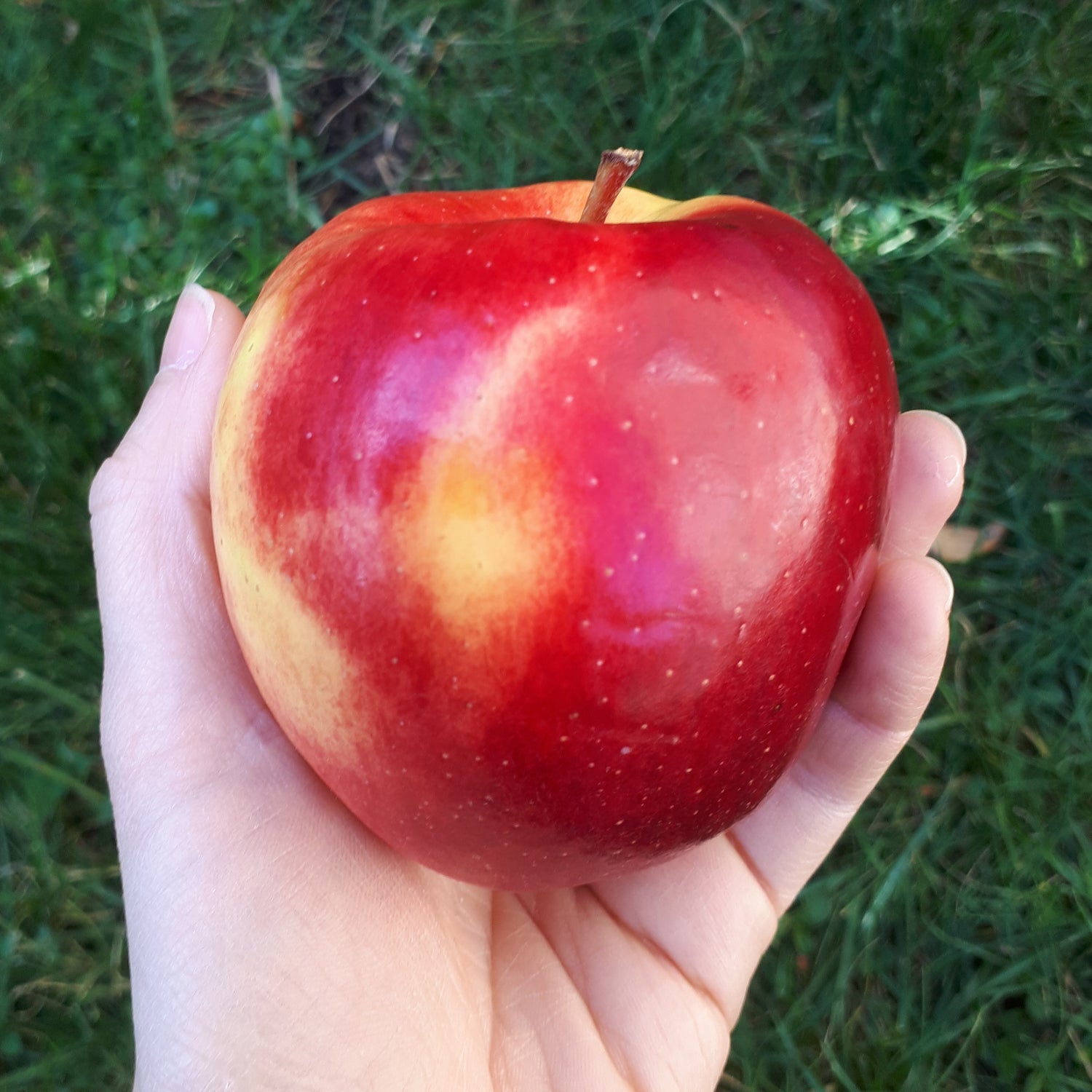
History: A chance seedling discovered in the 1980s in BC, this tender, aromatic, honeyed apple has been a hit ever since!
Why We Grow It: This delicious apple is very popular in the fresh eating market in Canada, thanks to its attractive bi-colour skin and slow browning qualities. It produces a medium-large fruit and is a good cropper.
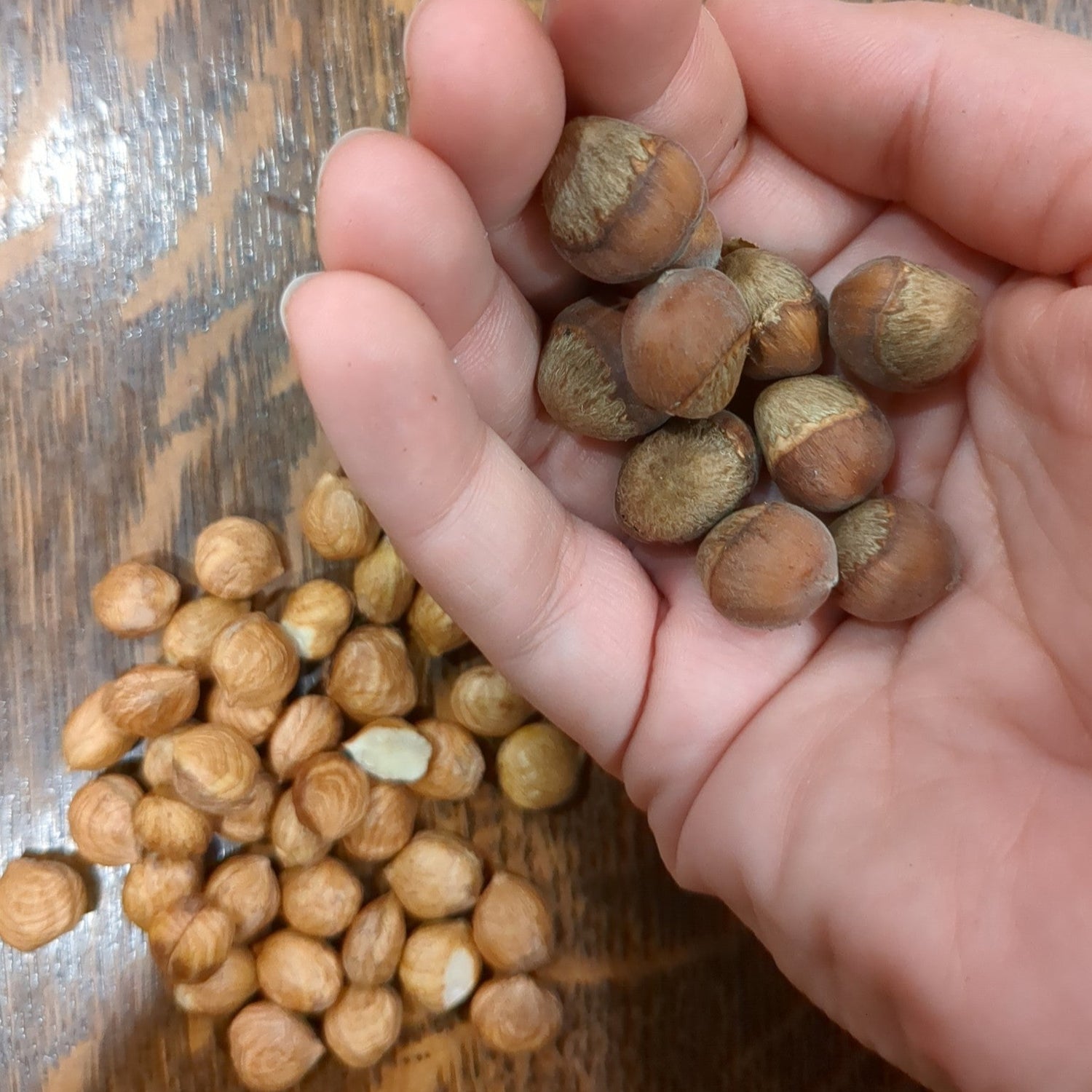
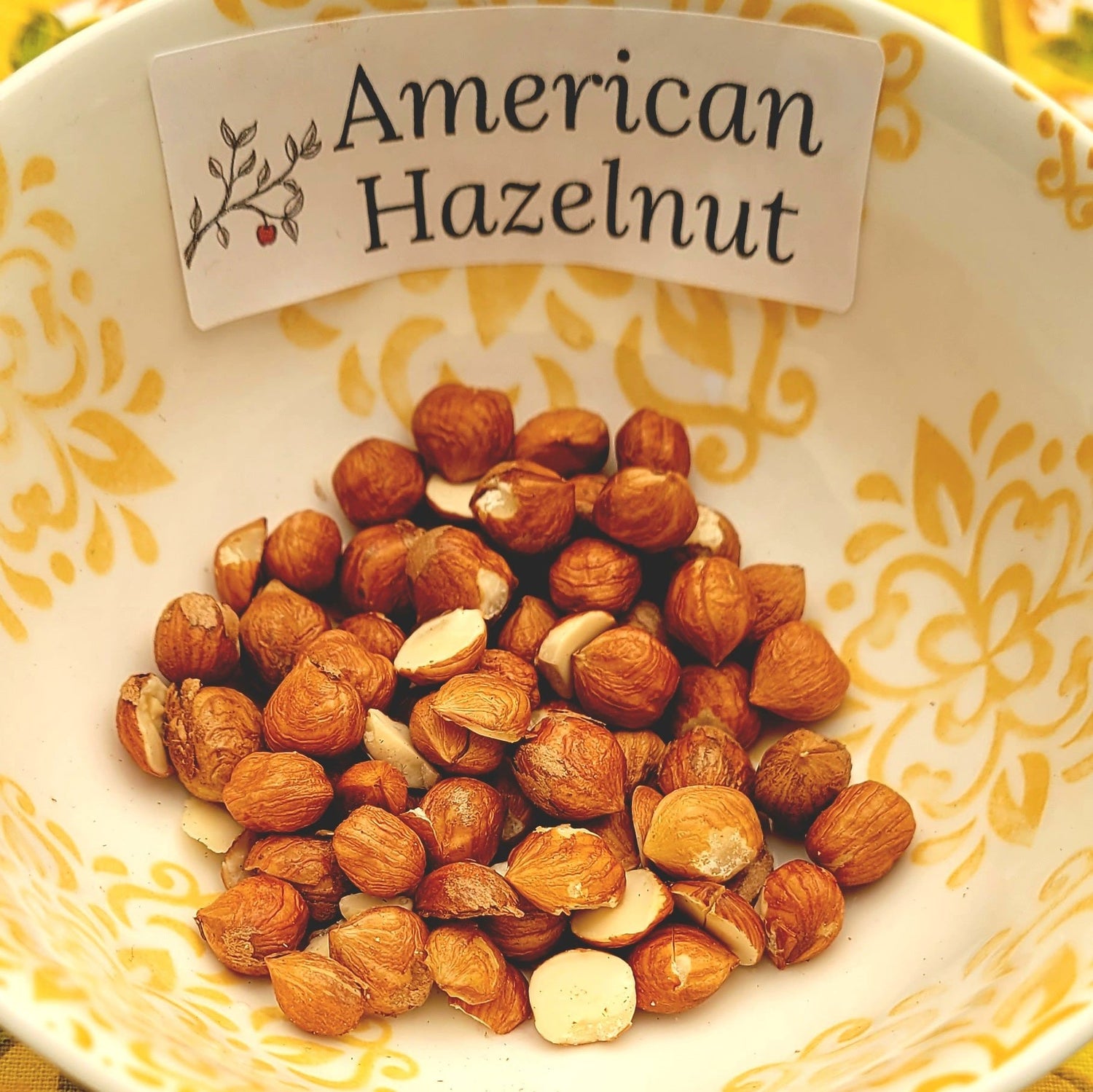
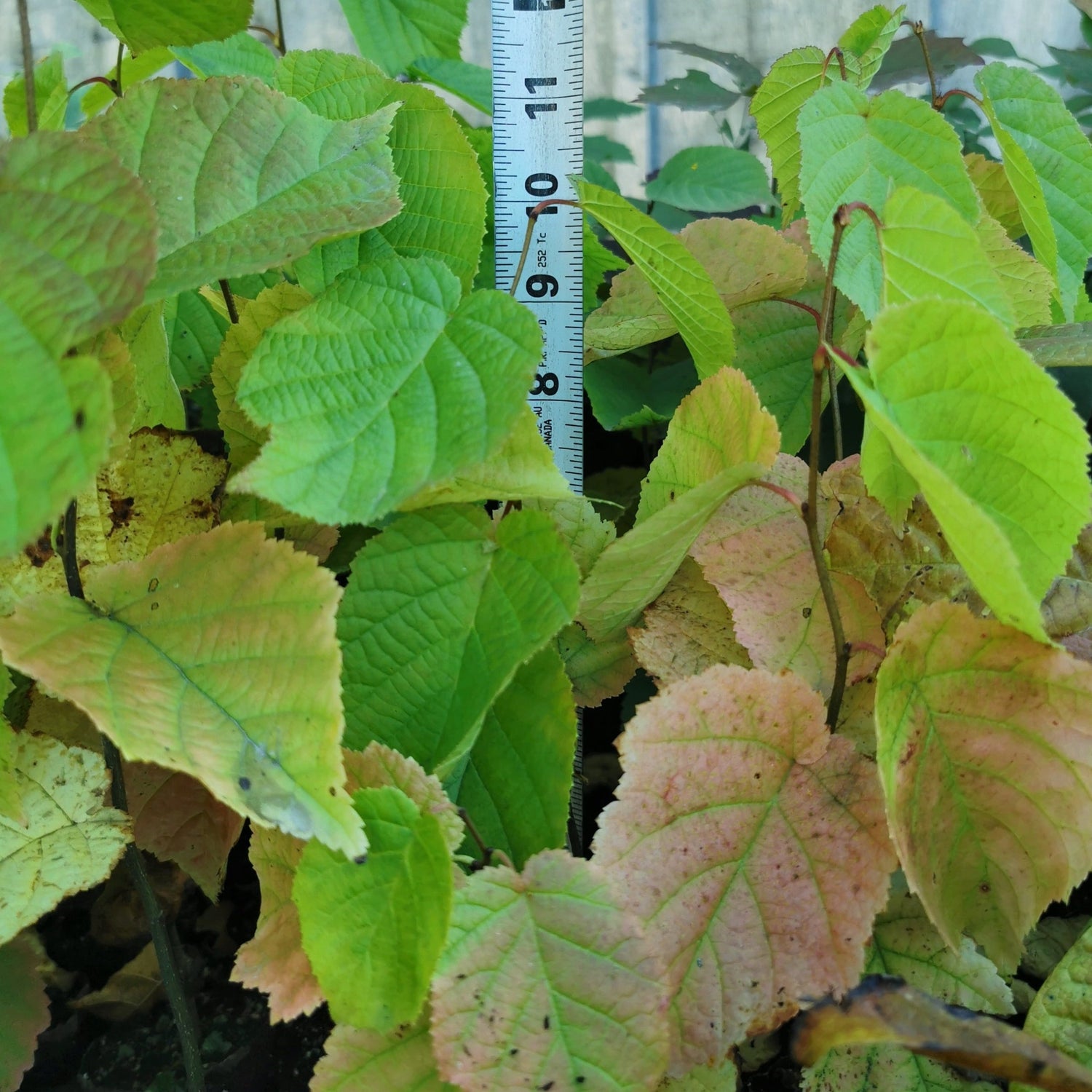
Species: Corylus americana
History: American hazelnuts are native to eastern and central Canada and the US. The nuts are an important food source to many animals and as such the shrubs are most often cultivated for planting in native and wildlife gardens. Indigenous peoples also use the shrub for medicinal purposes.
Why We Grow It: This thicket forming native shrub produces nutritious hazelnuts and fodder for animals. It is an excellent species to incorporate into a pasture/grazing system.

History: Anjou is an older variety of pear that likely originated in France or Belgium in the mid-1800s. They were originally called 'Nec Plus Meuris' but at some point adopted the name Anjou (or d'Anjou or Beurre d'Anjou) after the French region when introduced to England or the US. Anjou pears are still quite popular and are one of the most commonly grown pears in the United States.
Why We Grow It: Anjou is a popular pear due to its good eating quality and flavour. The skin is greenish yellow, and the flesh is firm and sports a hint of yellow. The fruit keeps well and the tree is vigorous and hardy.

History: Antonovka was discovered near Kursk, Russia in 1826 and then developed by renowned Russian plant breeder I.V. Michurin. It was released in 1888 and became a popular variety in Russia, Poland, and Belarus due to its good flavour and quality for cooking/baking. In Russia, Antonovka was given the name 'The People's Apple' and in 2008 a monument to it was unveiled in Kursk. Although this hardy variety is less popular outside of its homeland, it has been commonly used as rootstock due to its ability to grow a strong, deep root system that makes it hardier and more drought tolerant.
Why We Grow It: This tree produces a refreshing, juicy, tart yellow apple that cooks down well. It is also quite cold hardy which is a great feature in our Canadian environment.
History: Arkansas Black originated, as its name implies, in Arkansas sometime in the mid to late 1800s although there are conflicting opinions on who exactly discovered it. Some say John Crawford developed it in the 1840s, others believe DeKalb Holt developed it at his brother's nursery in the 1870s, and another account claims John Braithwaite found it growing in his orchard. Regardless, this unique looking apple eventually became the most popular apple in the state until a bad codling moth infestation followed by the Great Depression devastated commercial orchards. Despite this heavy blow, it is still a popular apple in backyards and small-scale orchards.
Why We Grow It: Arkansas Black produces a unique fruit that is a dark purplish-red that at times almost looks black. Fresh off the tree the fruit is hard and fairly acidic, but it softens and sweetens in storage and develops a more pronounced spiced flavour. It is good for pies, sauce, and cider and the fruit stores quite well! The tree itself is fairly disease resistant as well.
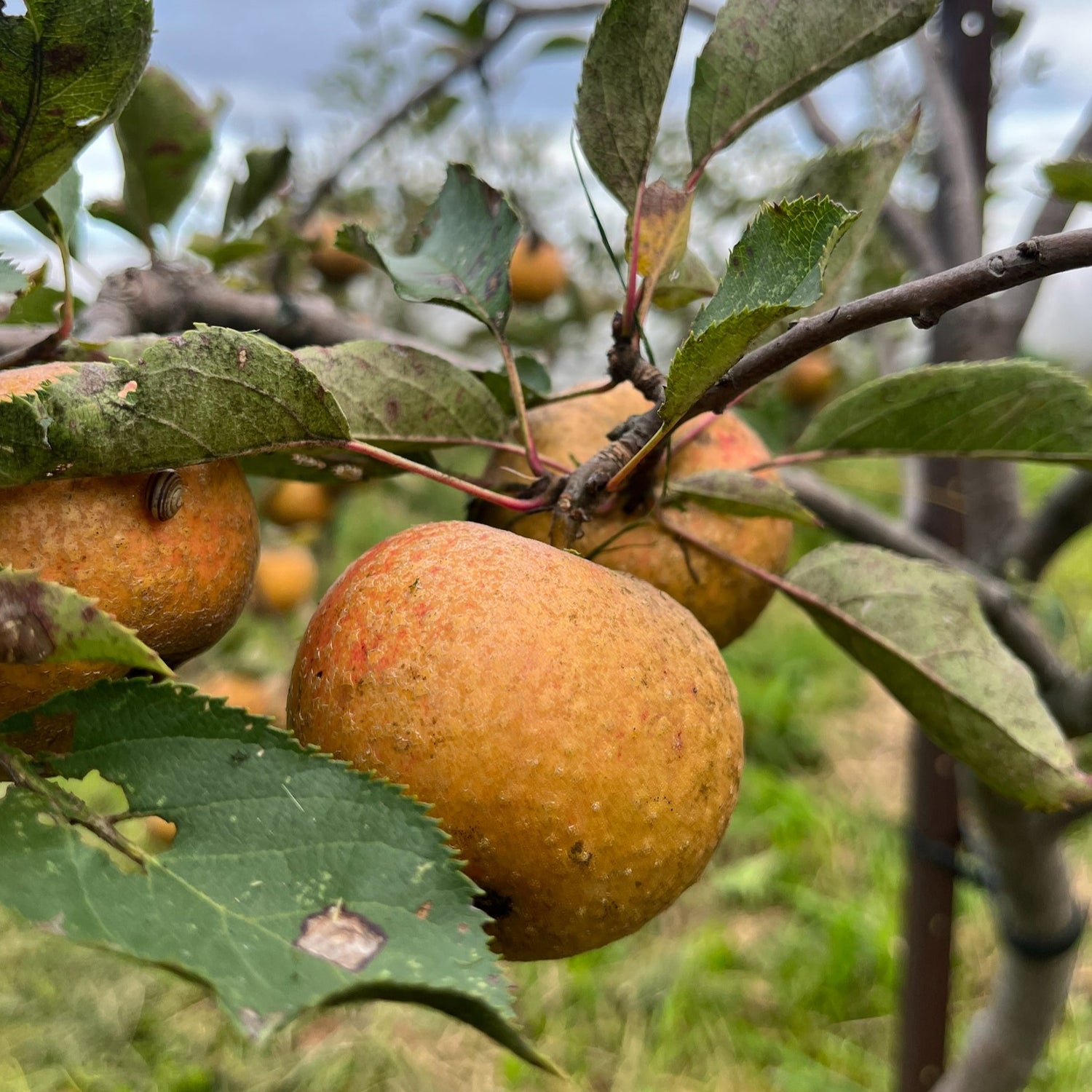
History: This unique apple, orangey-yellow-red undertones with russet over top, originated in the UK in the 1700s and has remained popular for over two centuries. There is some debate whether it was raised by a Dr. Ashmead or a lawyer named William Ashmead.
Why We Grow It: This Old World English apple has stuck with us thanks to it's unique flavour: nutty with notes of pear and spice. Fantastic fresh off the tree, and also in cider blends, Ashmead's Kernel mixes well with Cox's Orange Pippin.

History: Athos was developed by the University of Saskatchewan and was first bred in 1992 as a cross between Kerr's Easy Pick and Cacanski Rubin. It was selected from among 2500 seedlings for its productivity, winter hardiness, extent of suckering, ease of fruit removal, and fruit quality. Part of the Musketeer Series, Athos was released in 2022 as part of the university's 100 Years of Horticulture Celebrations.
Why We Grow It: Athos produces burgundy red cherries that have a more balanced sweet/tart flavour compared to some of the other sour cherries. This makes them more desirable for fresh eating but they are still good for typical sour cherry uses like baking. The bush has more of a spreading growth habit which gives it some additional visual appeal as an ornamental plant.
Check our our blog post with some tasty sour cherry recipes!
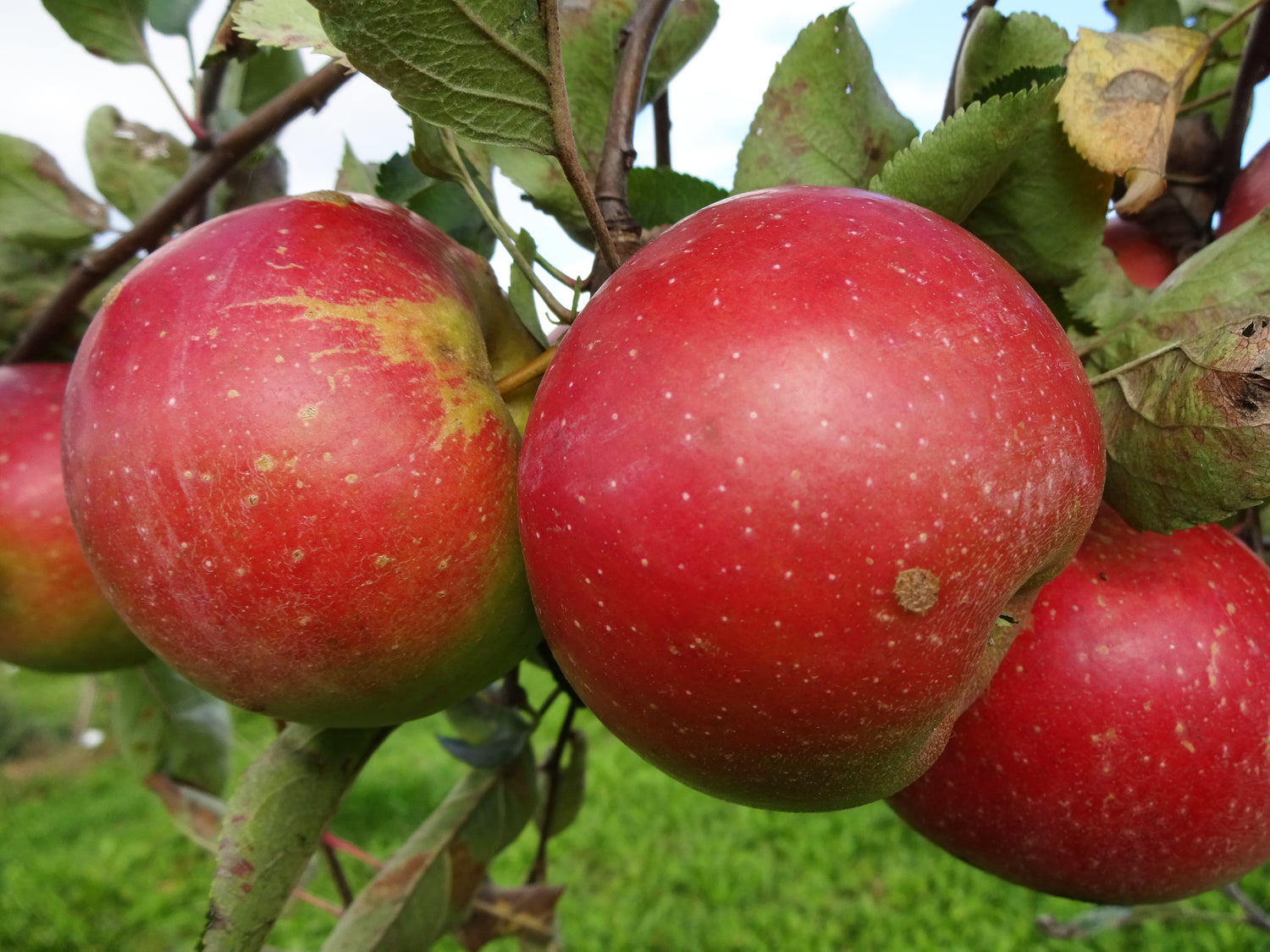
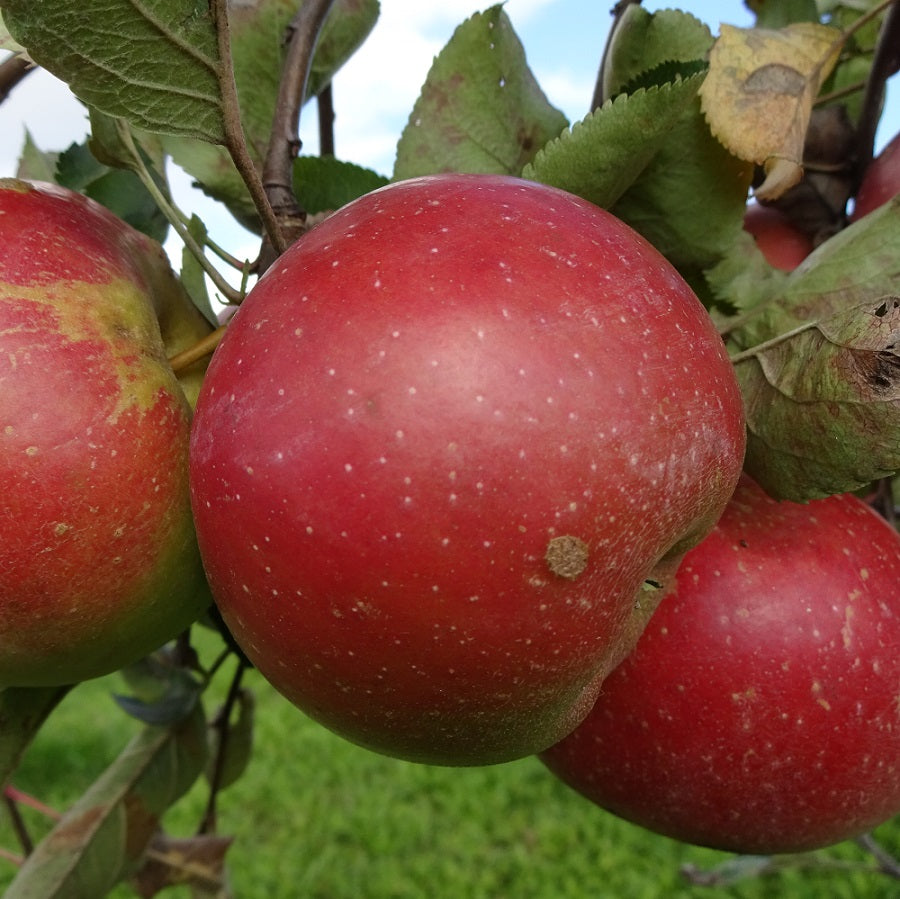
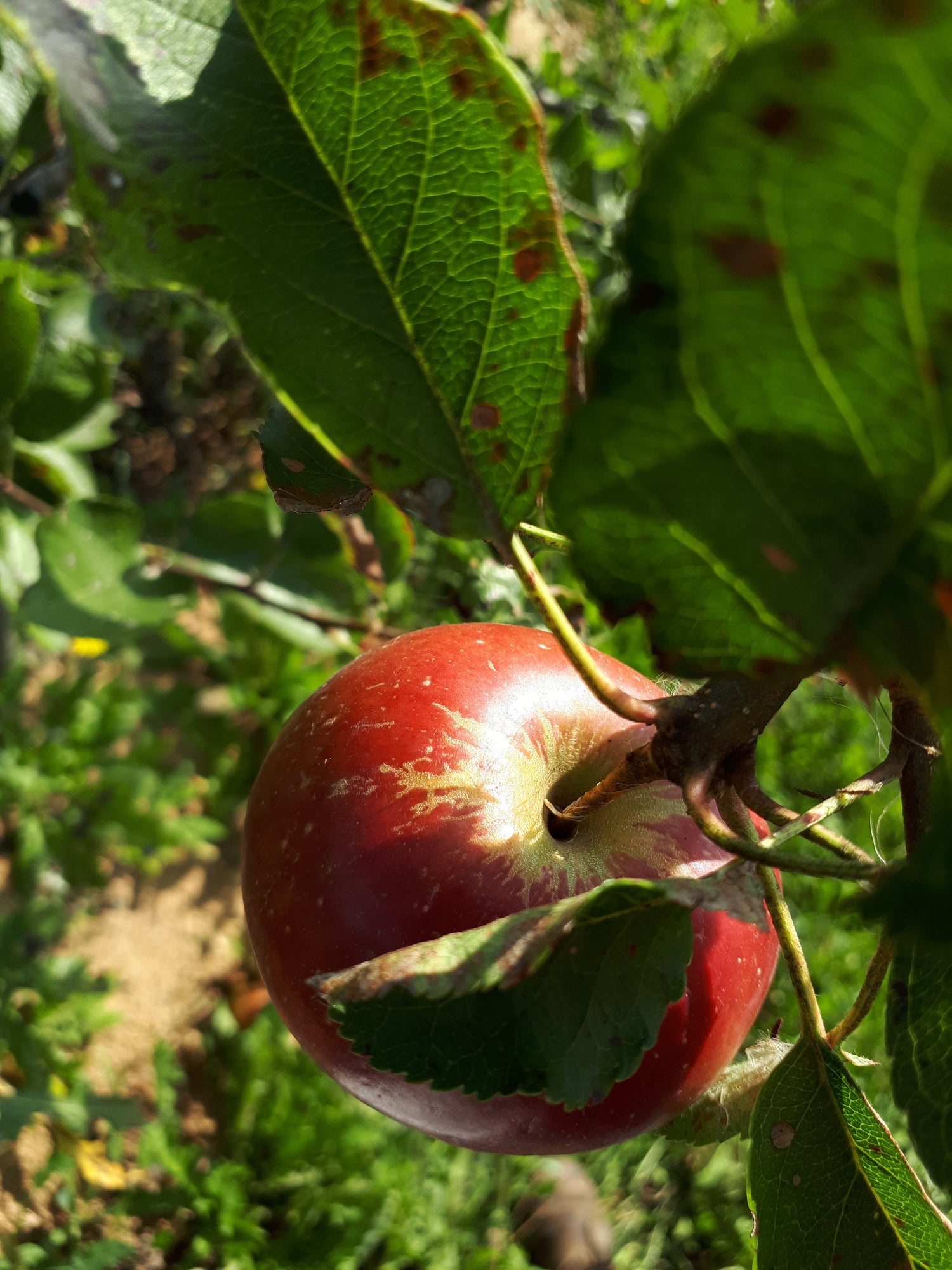
History: This classic American cooking apple was discovered by chance around 1740 in Massachusetts. It was eventually brought to the attention of a Col. Baldwin, after whom the variety was later named, who helped to spread it further. By 1850 this was one of the most commonly grown apples in the US, although its popularity began to decline by the 1900s, exacerbated by a terrible winter in 1934 that wiped out a significant number of trees. Despite this, Baldwin is making a bit of a comeback and a monument to this apple still stands in Wilmington, Massachusetts, around where it was discovered.
Why We Grow It: Baldwin apples produce large, greenish-yellow and maroon fruit with firm, sweet flesh that maintains its shape and crispness when cooked. The fruit produced in our test orchard has been attractive and blemish-free.
For the most up-to-date information on this cultivar, see Claude Jolicoeur's website here!
History: Well-known Quebec cidermaker Claude Jolicoeur discovered this variety as a chance seedling growing on his property. The fruit is bitter with a banana-like aroma, and was therefore given the name Banane Amère (translated from French as 'bitter banana').
Why We Grow It: Despite its inedible nature, Banane Amère is an excellent cider apple and produces a bittersweet juice. It shares some characteristics with the popular cider variety Yarlington Mill but tends to ripen better in our climate.
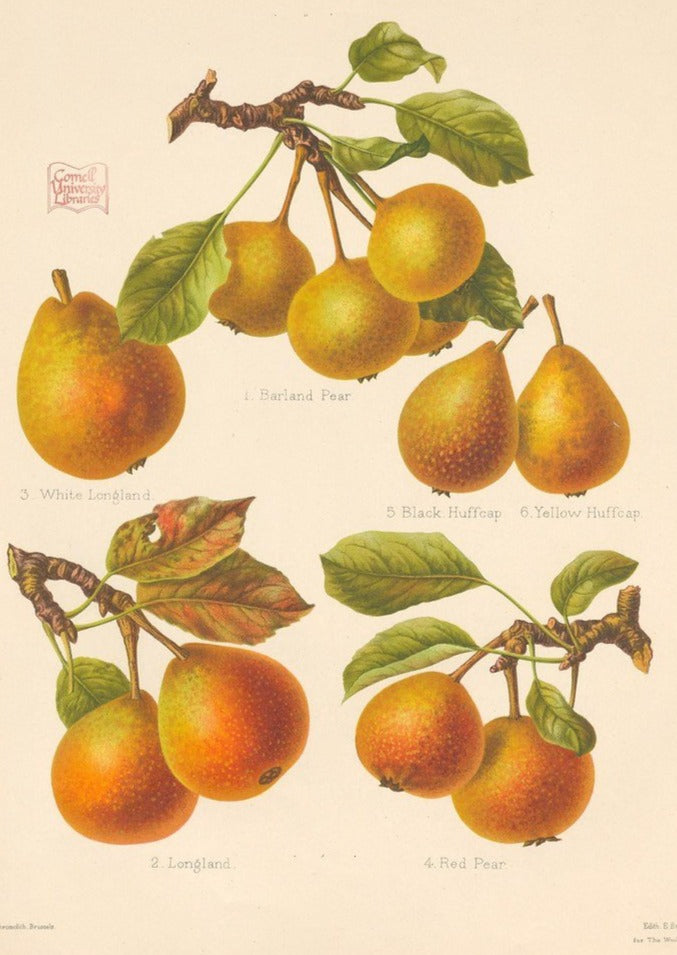
History: Although its exact origins are unclear, it is believed that Barland comes from Bosbury in England. It was already well known by the late 1600s and its perry was believed to have medicinal properties. This perry pear has stood the test of time and is still widely grown in the UK.
Why We Grow It: Barland remains one of the most popular perry varieties. This bittersharp perry pear can be made into a good single-variety perry or added into blends.
History: Barnet's history is somewhat of a mystery although we know it likely originated in Gloucester, England in the 1800s and was distributed by the Long Ashton Research Station in the 1900s. It is a traditional perry pear that is known by many names including Barn, Brown Thorn, and, adorably, Hedgehog. The last name is speculated to come from the fruit's resemblance to baby hedgehogs (aka hoglets) nestling in the grass.
Why We Grow It: Barnet produces small, brown russetted fruit that are quite juicy. The juice is quite mild since it is low in both tannins and acidity, making it a good choice for adding to perry blends. The ripe fruit is easily shaken from the tree for ease of harvest.
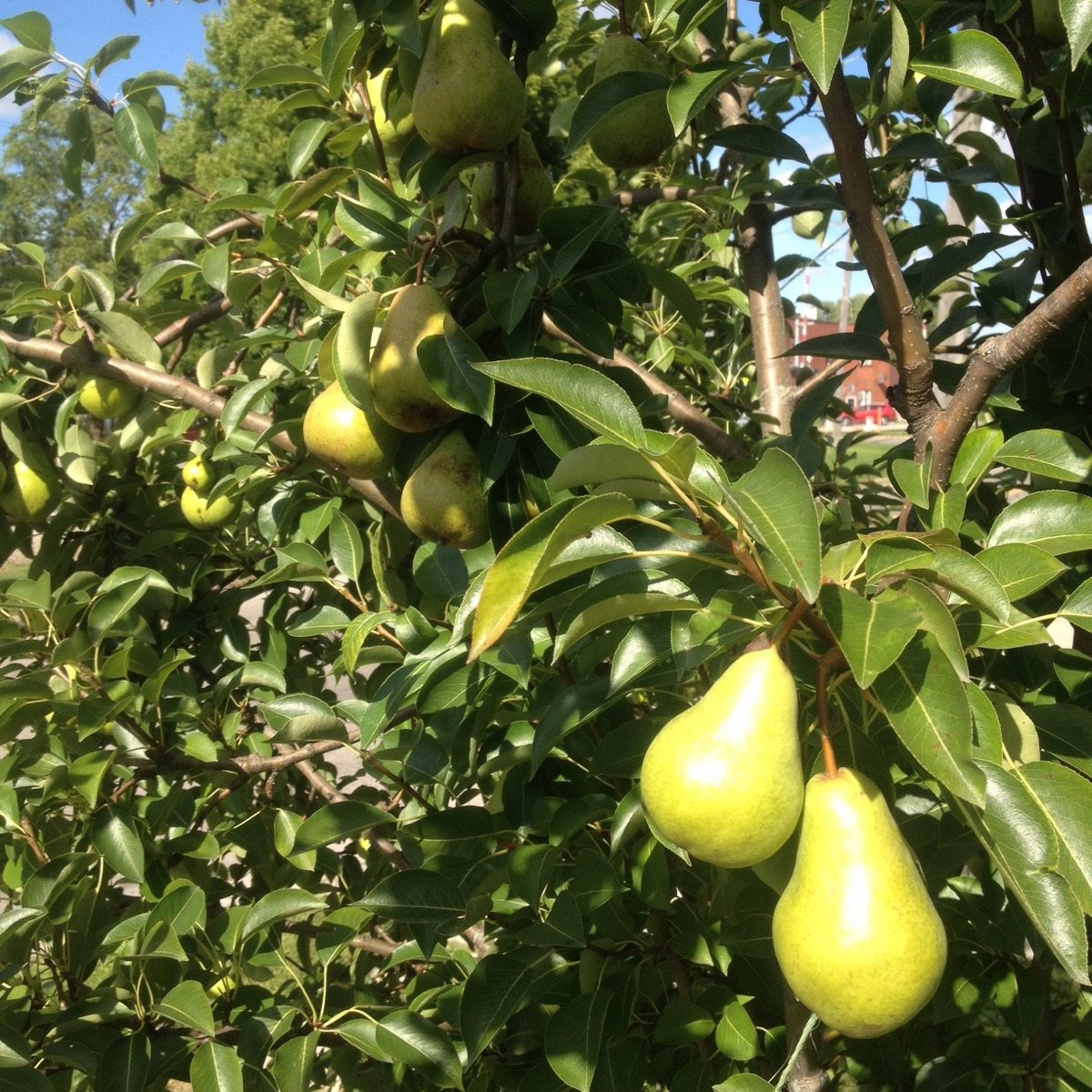
History: Bartlett pear, better known as William's Bon Chretien (translated from French as William's Good Christian) or William's pear in Europe, has a long history with unknown origins. What we do know is that in 1483 King Louis XI summoned holy man Francis of Paola to his deathbed and Francis offered the king a pear seed from his birthplace of Calabria in Italy. The name 'Good Christian' was given to the pear as a result. In 1799, this variety was brought to Roxbury, Massachusetts where it was planted and eventually renamed 'Bartlett' by Enoch Bartlett who was unaware of its origins. The mistake was not realized until 1828, by which time "Bartlett" pears were already popular in North America and the mistake could not be undone.
Why We Grow It: Bartlett is the most commonly grown pear in North America and with good reason. Not only is it productive and easy to grow, but it produces large yellow fruit with a delectable flavour.
Note: We graft our Dwarf Bartletts with an Old Home interstem to maintain compatibility between Province Quince rootstock and Bartlett.
Showing 15/320
Next