Easy Care for Beginner Growers

Easy Care for Beginner Growers
I listened to a very cool podcast recently (August 2026). Harry from Plant the Trees Podcast went over easy to grow plants for beginners in the context of Northeastern USA. This would also apply to Canadian growers with warm humid summers.
This episode made me reflect on our own experiences here at Silver Creek Nursery. Our test orchards don't always get as much care as we would like because we are busy with the nursery stock. The plants he mentioned in this episode which we're also growing have performed very well through all our neglect and reliably produce fairly clean fruit or tubers. This has inspired me to create this collection. I hope growers who give these a chance will get some easy wins and will be inspired to grow more challenging plants in the future!
Don't forget pears require two different varieties for pollination.
Cheers,
Zack
Trees for Beginners: 5 Perennials for Fruit, Timber, Starch, and Winter Florals
23 products
Sort by:
23 products
23 products
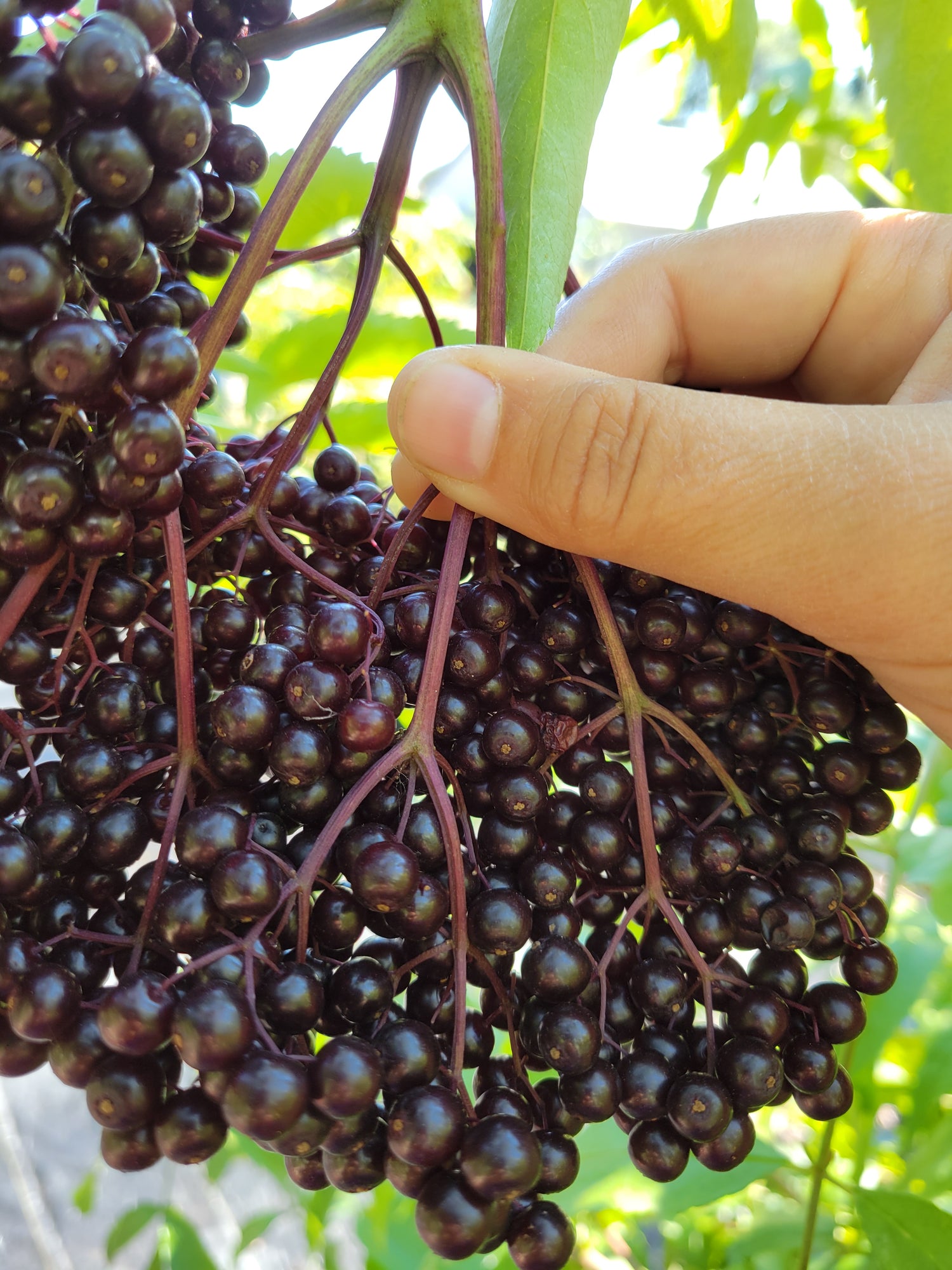
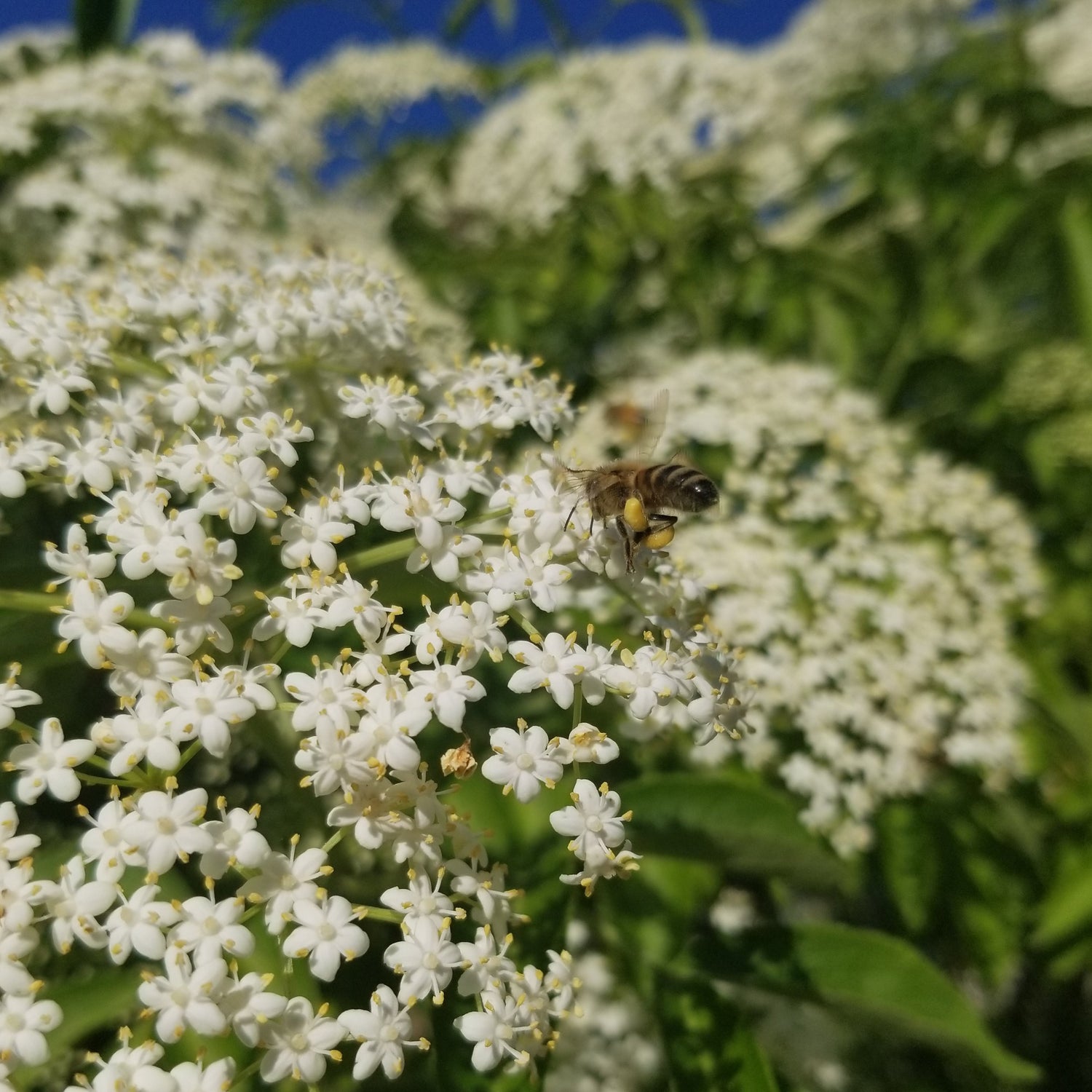
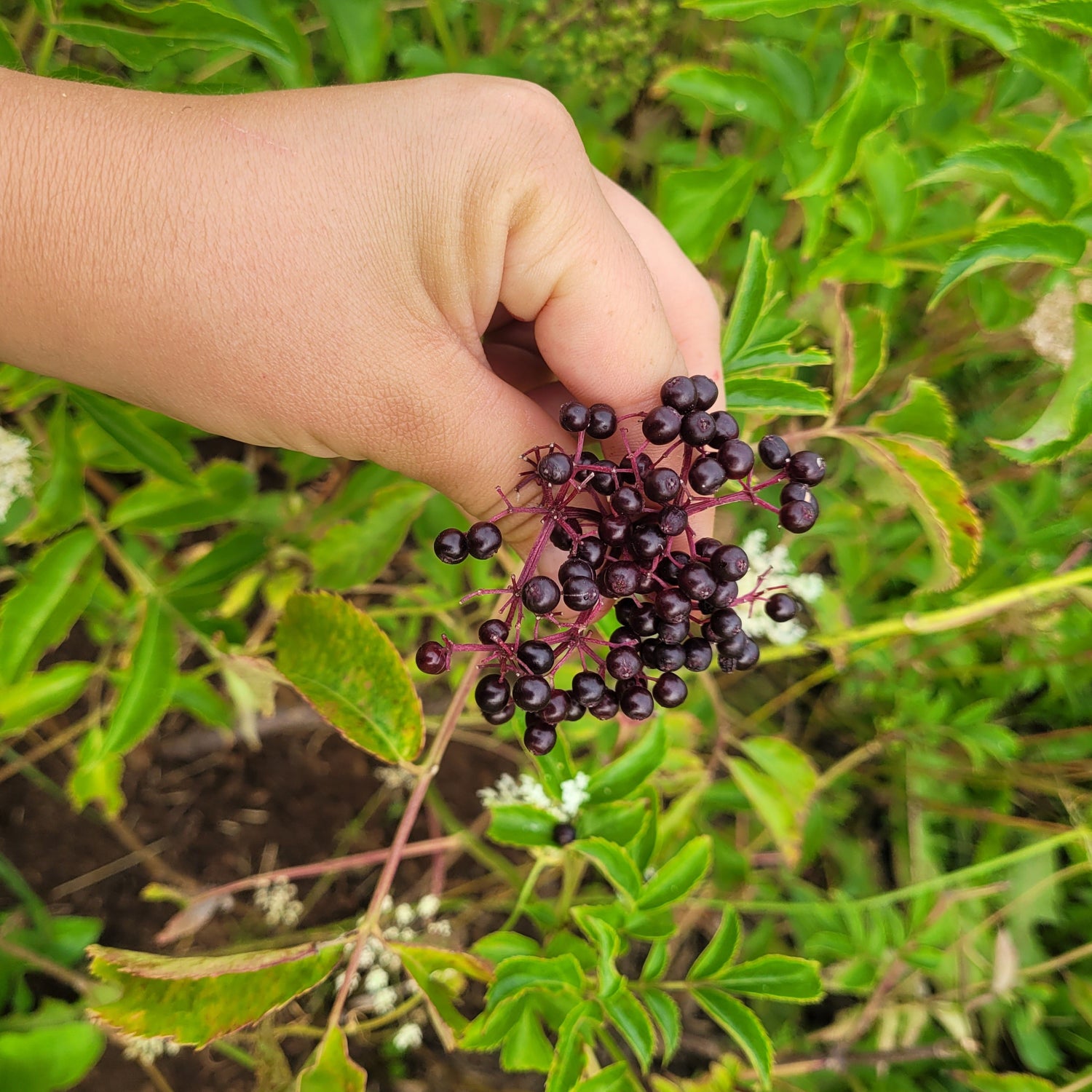
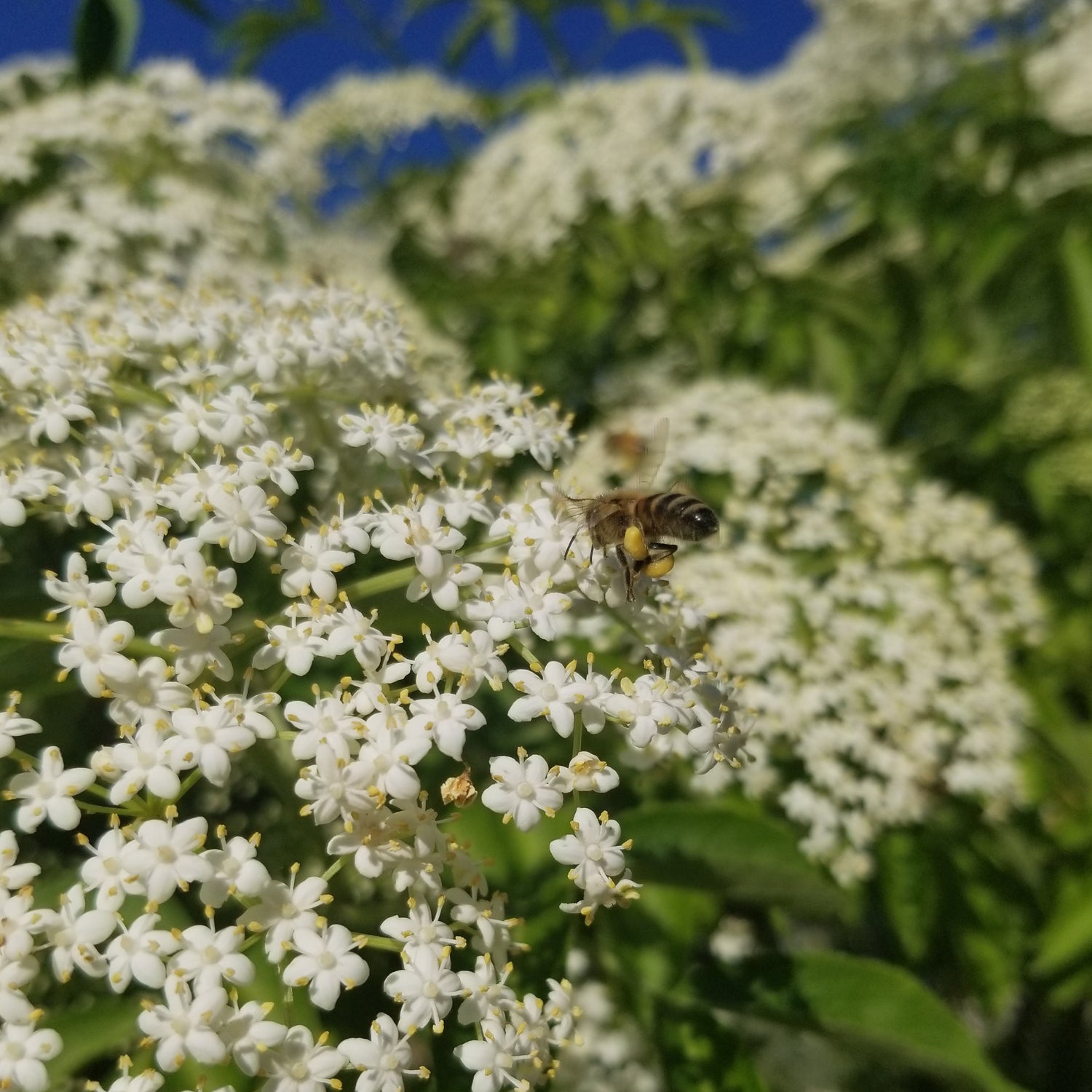
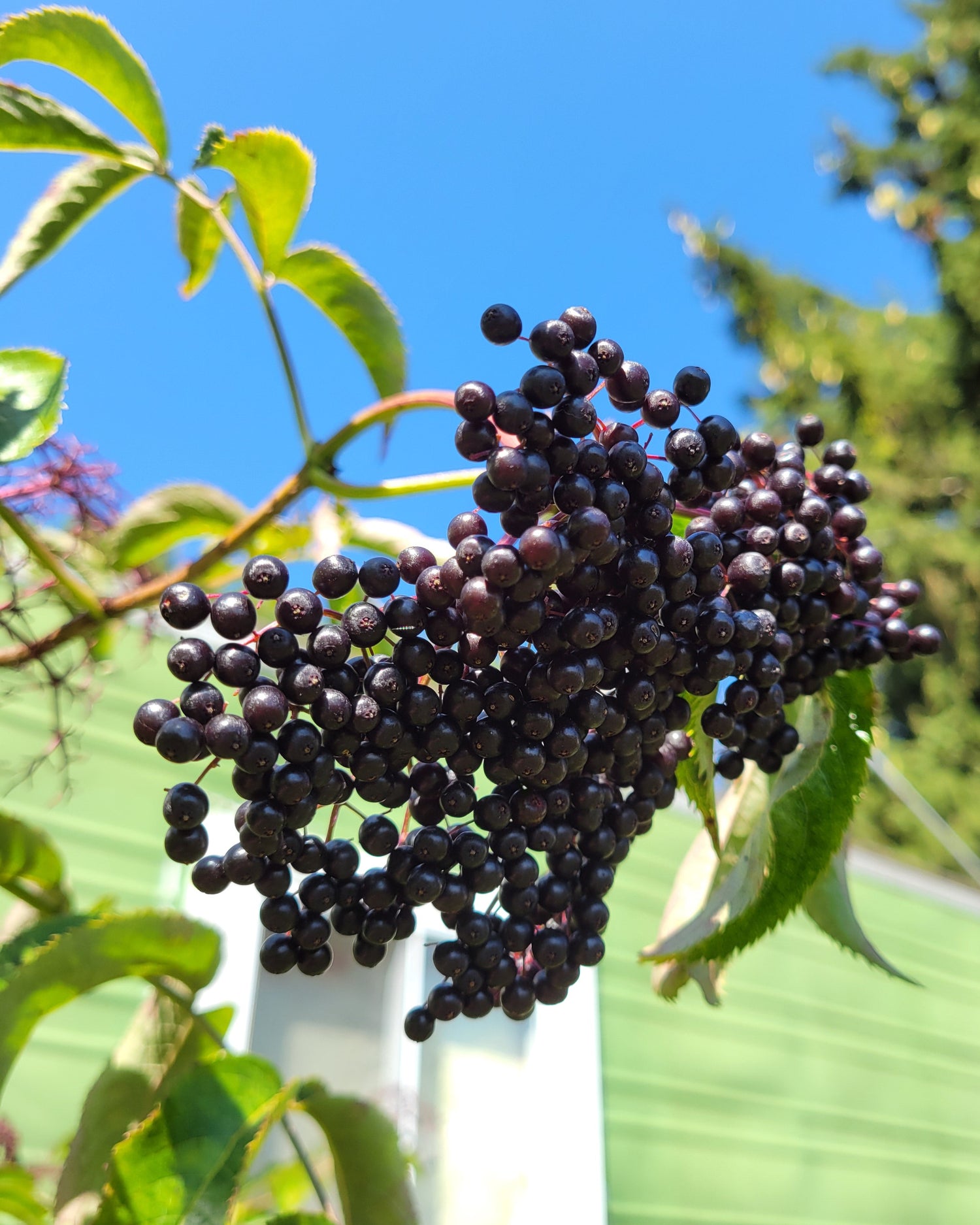
Species: Sambucus canadensis
History: York was developed at the New York Agricultural Experiment Station in Geneva, New York in 1964. It is a cross between the varieties Adams 2 and Ezyoff.
Why We Grow It: York is known for producing exceptionally large berries that are quite flavourful. This variety is also quite productive, a good choice for fans of these delightful dark purple berries! Eating the raw elderberries can cause adverse reactions so it is recommended that you cook them first.
Species: Sambucus canadensis
History: Scotia was developed at the Kentville AAFC Research and Development Centre in Nova Scotia. It is a seedling of another variety, Adams 2, and was released by the research station in 1960, alongside the variety Nova. It is grown commercially in Canada.
Why We Grow It: Scotia elderberries ripen early in the season and have the highest sugar content of any named cultivar- though also some of the smallest berries. They are great for a variety of uses such as making juice and wine, baked goods, and even tinctures. Eating the raw elderberries can cause adverse reactions so it is recommended that you cook them first!

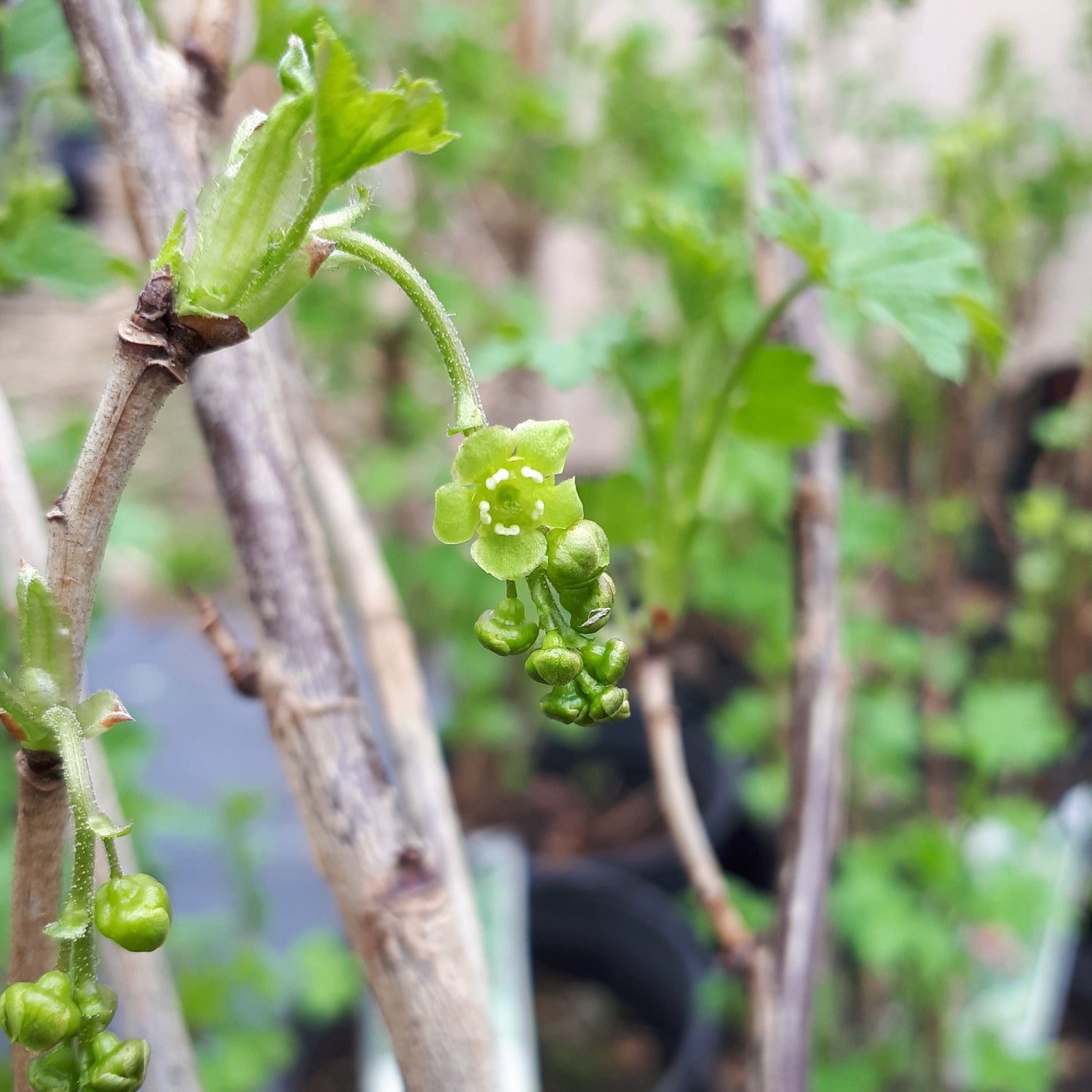

Species: Ribes nigrum
History: Titania black currant was developed by Pal Tamas in Sweden. It was bred as a cross between the varieties Consort, Kayaanin Musta, and Altaskaya Dessertnaya in 1969 and chosen for further evaluation in 1974. Since its release it has become one of the most popular currants in North America.
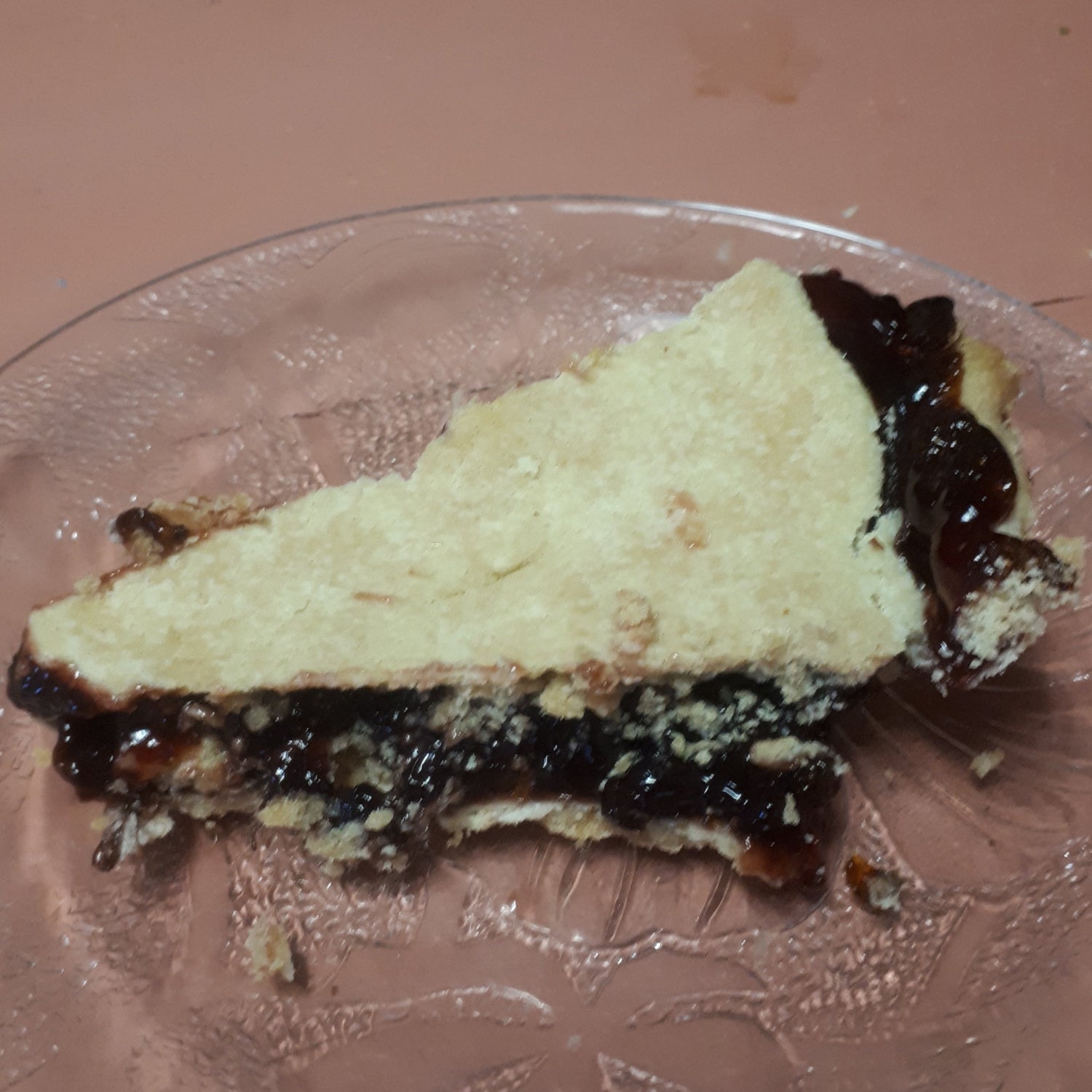
Why We Grow It: It is easy to see why Titania has become so popular. It produces large, juicy berries with a rich, mild flavour. It is also resistant to White Pine Blister Rust and mildew. The berries are great for a variety of uses, such as the black currant scones and black currant and blueberry tarts Steph made (see pictures)!

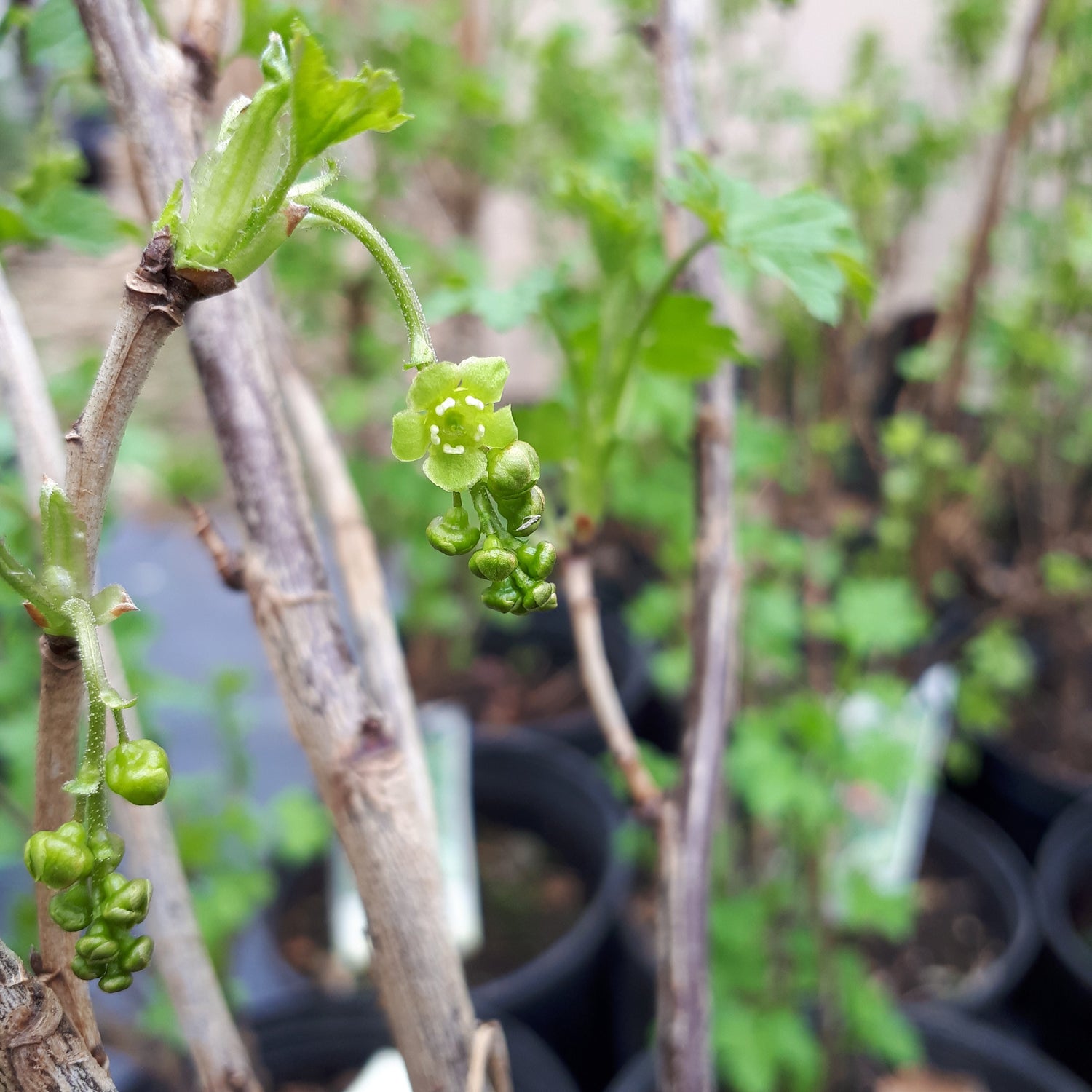
Species: Ribes nigrum
History: This black currant is a family classic that was grown by Ken's great-grandmother.
Why We Grow It: Grandma Ethel produces large fruit with a slightly stronger flavour than Titania and an unusual sweetness for a currant. The berries make a very tasty juice - the recipe can be found further below!
A note on the "Grandma" Series: Inspired by this modest currants' success here at the nursery, we decided to curate our own repertoire of family favourites! Check out our tried-n-true gooseberries, rhubarb and raspberries.
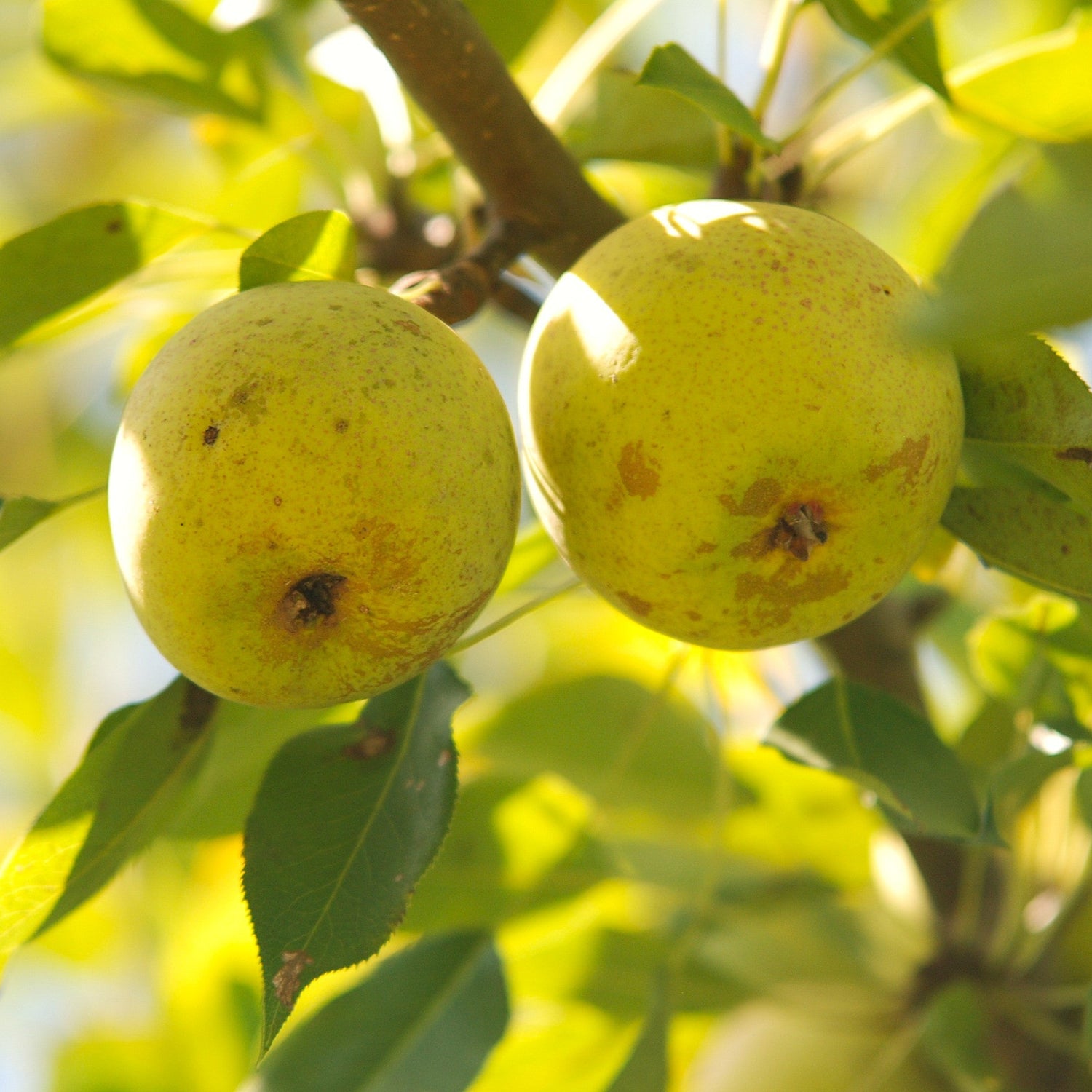
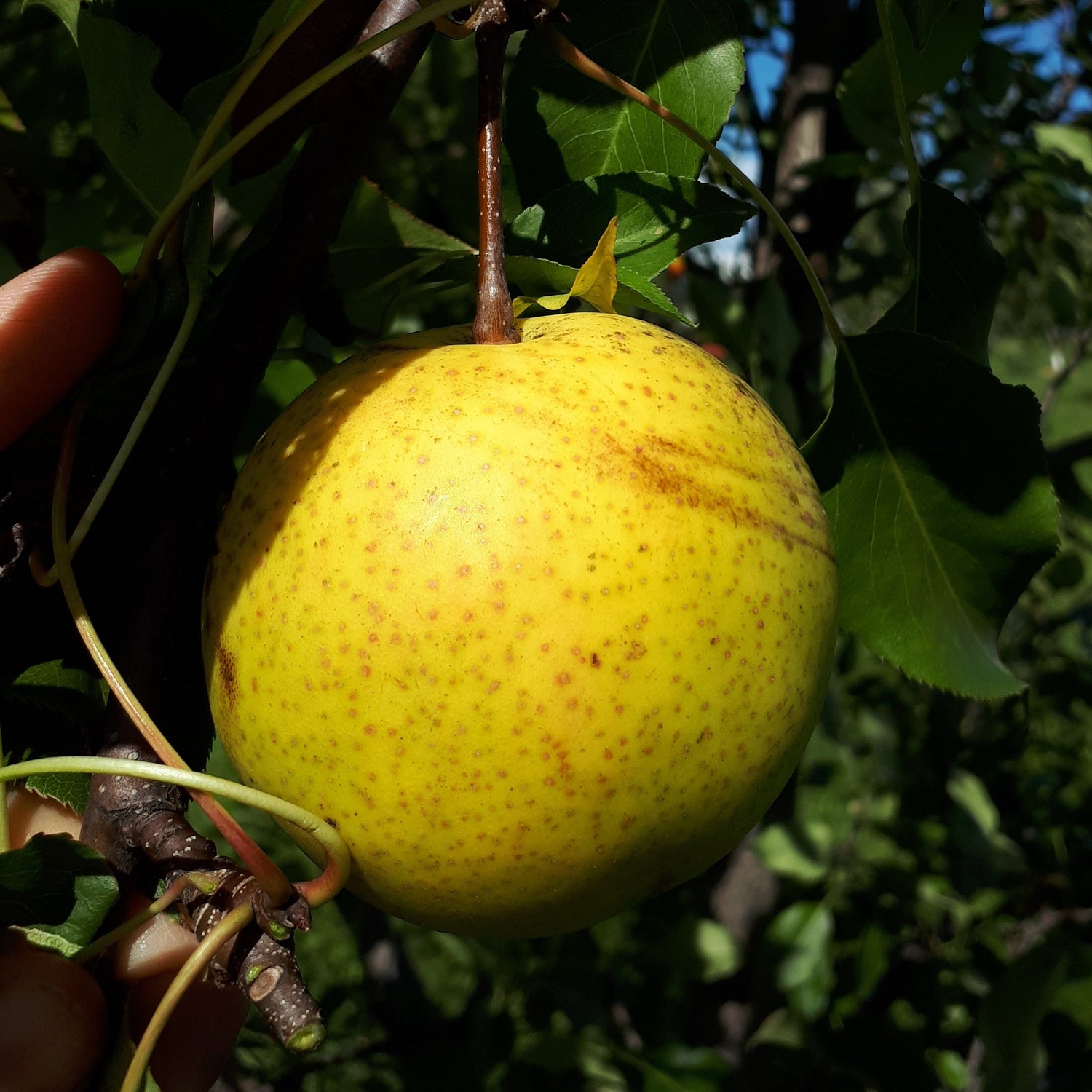
History: Ping Guo Li (translated from Mandarin as 'apple pear') was developed by Jilin Sheng in China and likely named for its round, apple-like shape. While its exact age is unknown, this pear is considered to be an old variety.
Why We Grow It: This Asian pear is nothing but sweet and juicy melting goodness! Its sweet flavour and soft texture are comparable to that of a European pear. So far it has performed very well in our test orchard and displays good cold-hardiness.

Species: Salix sp, most likely Salix discolor
History: Pussy willows are native to North America, Europe, and Asia and are culturally significant in all three continents. They are a New Years decoration in China and Iran and have been used in various sects of Christianity for purposes such as replacing palm fronds as a decoration for Palm Sunday in Europe and America where palms do not grow.
Why We Grow It: A fluffy signifier of spring, these cute willows are also a great early pollen source for bees and have medicinal uses.
Photo by Huckleberry Hives.

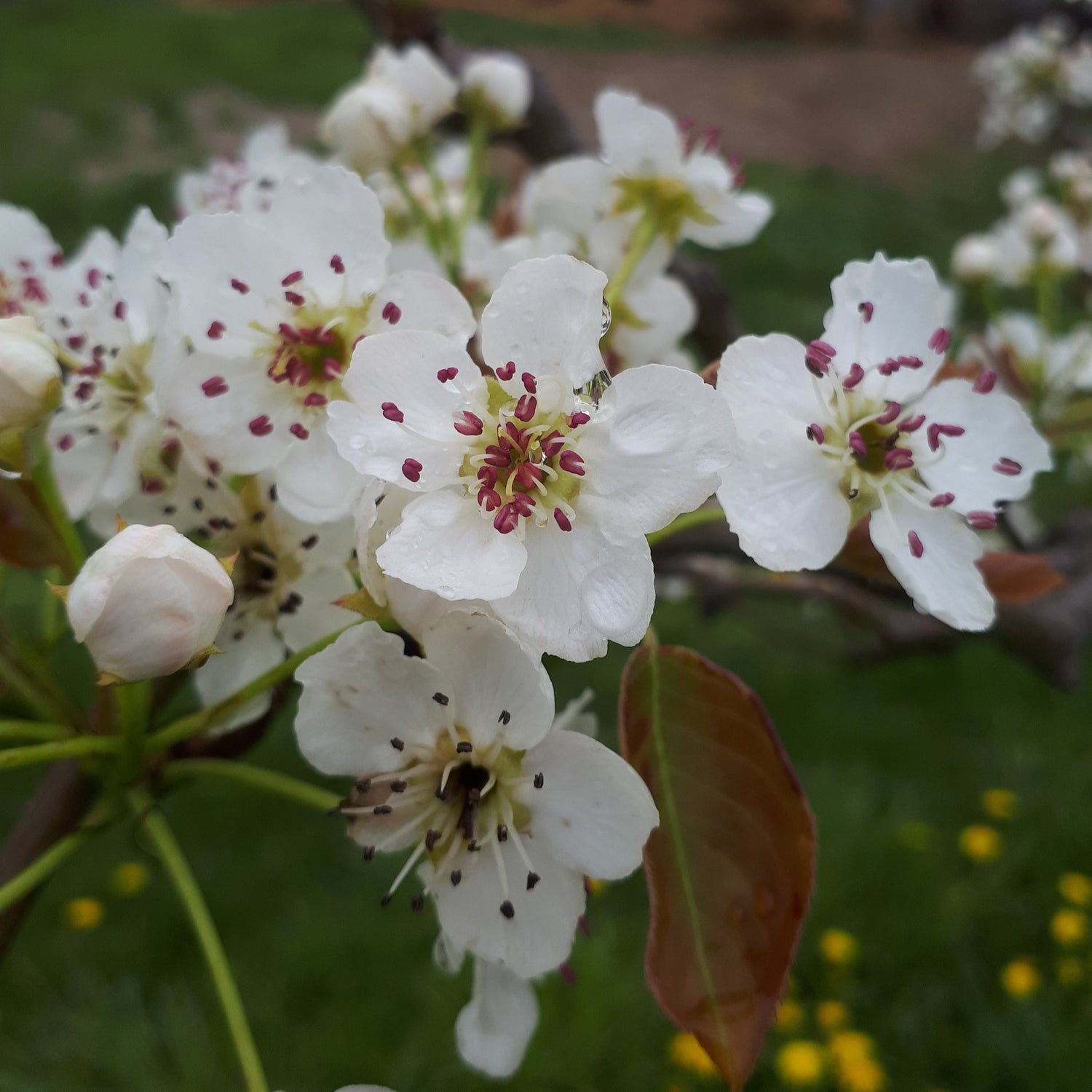
History: Chojuro (translated from Japanese as 'plentiful') was found as a chance seedling in the orchard of Toma Tatsujiro in Japan around 1895. From there it became the most popular pear in Japan until modern varieties began to supplant it in the 1950s. In Kawasaki, the city where Toma's orchard was located, a monument still stands to commemorate his work as a pear breeder. Chojuro is the most popular Asian pear in North America.
Why We Grow It: This popular Japanese heritage variety is hard to turn down. The flattish round fruit has russeted brown skin and can be quite large, and is excellent quality when the fruit is left to ripen into October: the sweet, crisp flesh takes on notes of butterscotch and/or white freezie! We recommend picking it when the colours turns yellow-brown so it will store through winter, otherwise it does not keep if allowed to over-ripen on the tree.
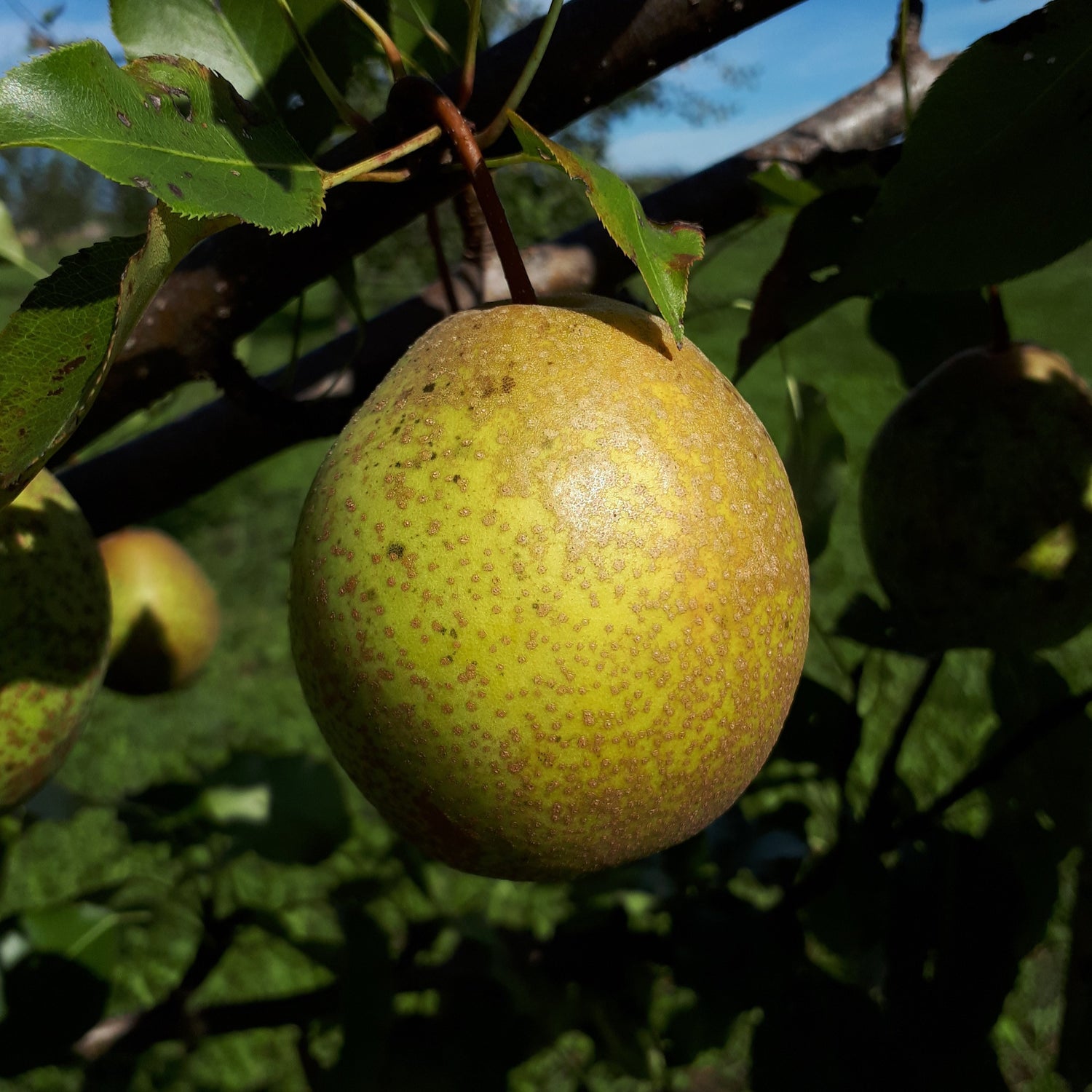
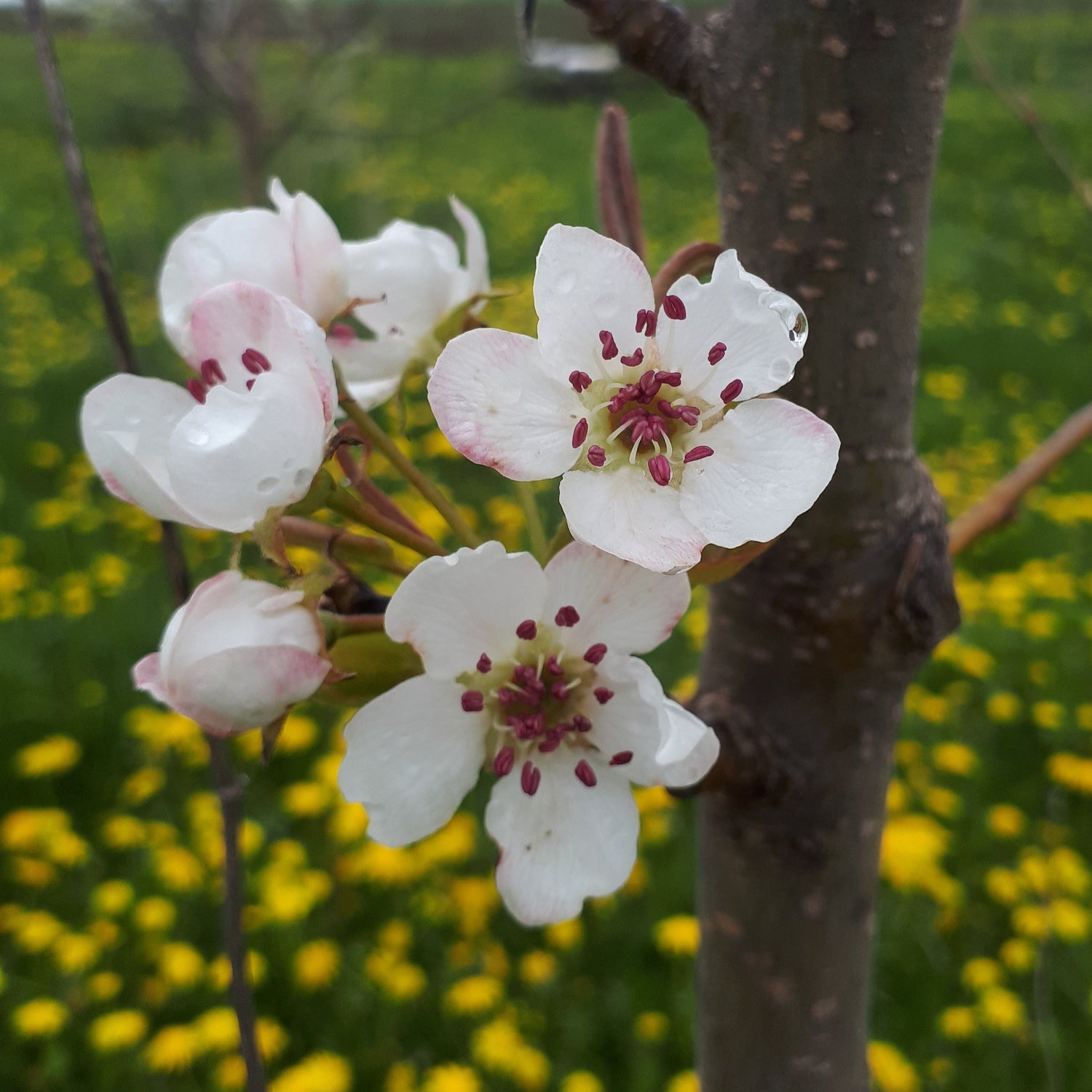
History: Mishirasu is an Asian pear from Japan.
Why We Grow It: Mishirasu is a popular variety since the fruit are extra large with a sweet, mild flavour and a nice crunch. The skin is brown and russeted, and the fruit have a roundish shape that is reminiscent of European pears.


Species: Helianthus tuberosus, Sunchokes are also known as Jerusalem Artichokes or J Chokes
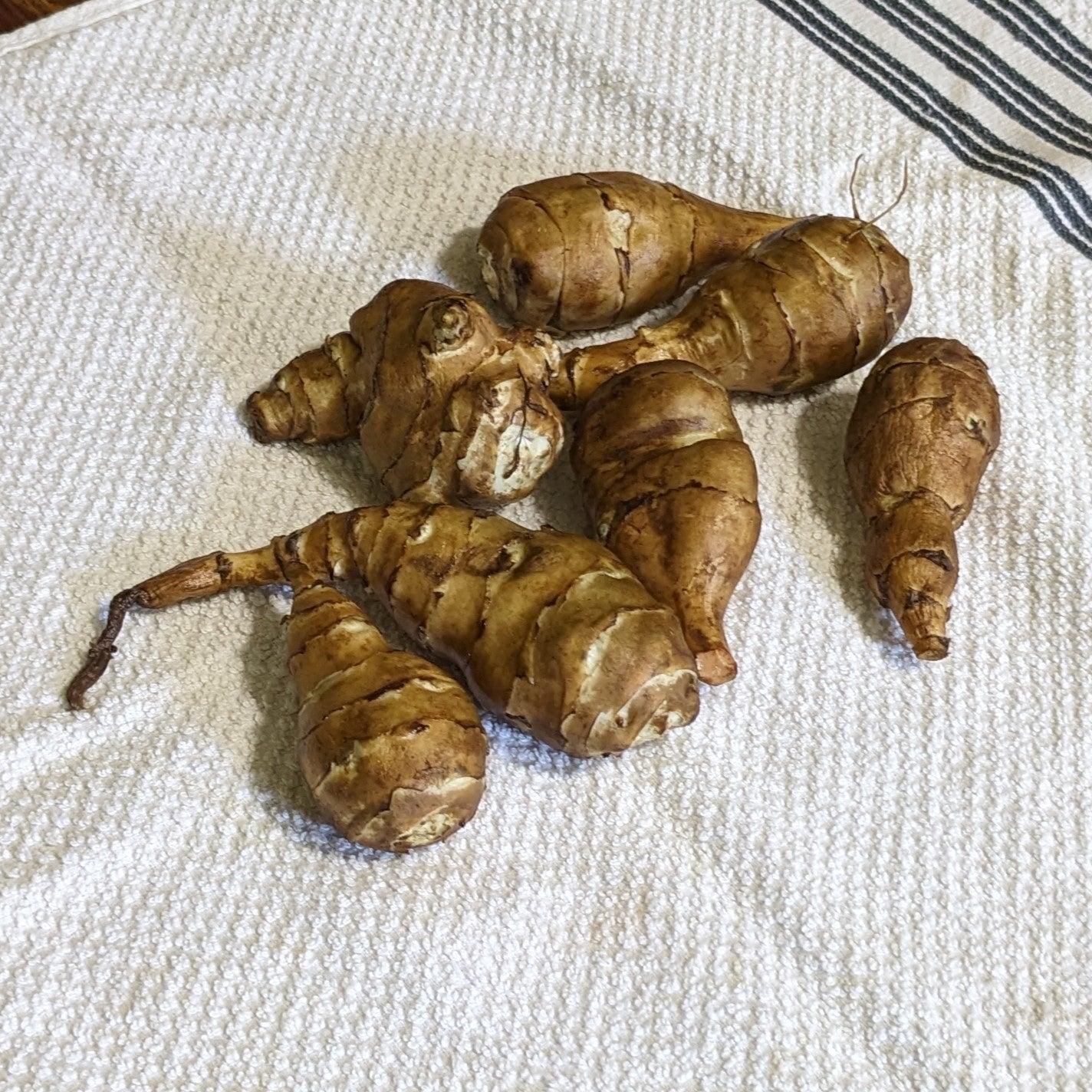
History: Our founder, Ken Roth, acquired Sunbeam from Sunny Nature Farm near Midland, ON. The owners of the farm were unsure what variety it was but Ken says it is now his favourite sunchoke, no contest! He collected and propagated the tubers, Mouse suggested he name them Sunbeam in honour of Sunny Nature Farm, and now we are happy to release them to the public in 2025!
Why We Grow It: Sunbeam won Ken over with its large, smooth tubers that are reminiscent of sweet potatoes. He finds them easier to clean than the other varieties we currently offer which makes processing them for cooking much smoother. Even compared to other sunchokes Sunbeam is highly productive and vigorous! Considering Ken has been growing his selection of sunchokes over the years, we trust his judgement when he says this one takes the cake.
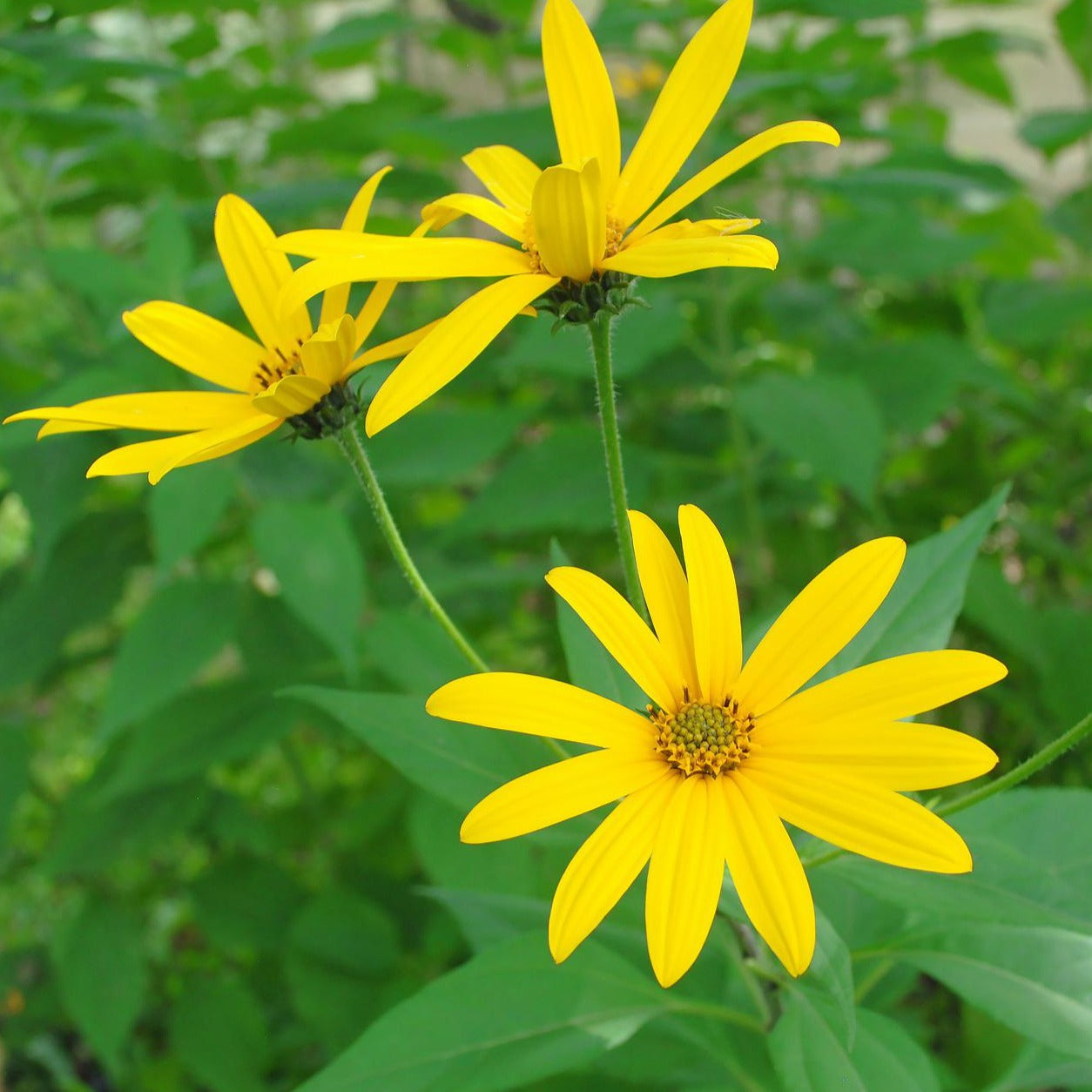
Species: Helianthus tuberosus, Sunchokes are also known as Jerusalem Artichokes or J Chokes
History: Little is known about the origins of Clearwater aside from the fact that it originated in Maine, possibly as a wild plant found in 1988.
Why We Grow It: Clearwater produces smooth, white tubers with a mild flavour that some say borders on sweet. This is a productive variety and the smoothness of the tubers generally makes them easier to clean. Sunchokes can be prepared and eaten in much the same way potatoes can, making them a very versatile food.


2026/2027 Staff Favourite
Our sunchokes are Zack's favourite this year! Zack has this to say about our OG sunchoke tubers: “It blows my mind how fast sunchokes grow. This particular variety has produced stalks almost 20ft high in two different locations for multiple years now. Though its tuber size is nothing to write home about, its stalk size sure is! I wonder about the soil-building potential of these giants! Not having to replant these edible tubers is such a blessing, but beware if you want to get rid of them.”
All Staff Favourites are 20% off. The Staff Favourite Discount cannot be combined with other quantity discounts.
Species: Helianthus tuberosus, Sunchokes are also known as Jerusalem Artichokes or J Chokes
History: Sunchokes are native to central North America and have traditionally been cultivated by indigenous peoples for their edible tubers. European colonizers sent samples back to Europe where it became naturalized. It has fallen into obscurity in North America but there was some success in marketing it commercially in the 1990s and 2000s. These sunchokes are the first ones we started offering here at Silver Creek Nursery! Although we do not know what variety (if any) they are, they have done quite well for us in our front garden and have been a tasty part of many staff meals over the years!
Why We Grow It: These native plants produce tasty root tubers that, like potatoes, can be prepared and eaten in a variety of ways including raw, roasted, or treated like sauerkraut. Most people can eat them no problem, but some folks do find they can get mildly gassy if they enjoy too much at a time, so if you have never eaten them before, moderation is advised. They are in the sunflower family so get quite tall and produce lovely little yellow flowers. They spread vigorously as well, and should be managed (easily done with mowing or hand pulling in summer).
The pictures on the left show Zack standing in front of the sunchoke patch by our front office! The photo was taken Aug. 7th, 2026 and they are already quite tall, but they will continue growing until they flower in September.

History: Meigetsu is an Asian pear that originated in Japan. The word 'meigetsu' roughly translates to 'beautiful moon' or 'grand moon.' Its name could also be a shortened version of 'Chushu no Meigetsu,' the Japanese name for the harvest moon in September.
Why We Grow It: Meigetsu Asian pears are pleasantly sweet with the flavour and aroma being compared to pineapples, watermelon, and butterscotch. The flesh is somewhat softer than other Asian pears, making the texture more akin to that of European pears.
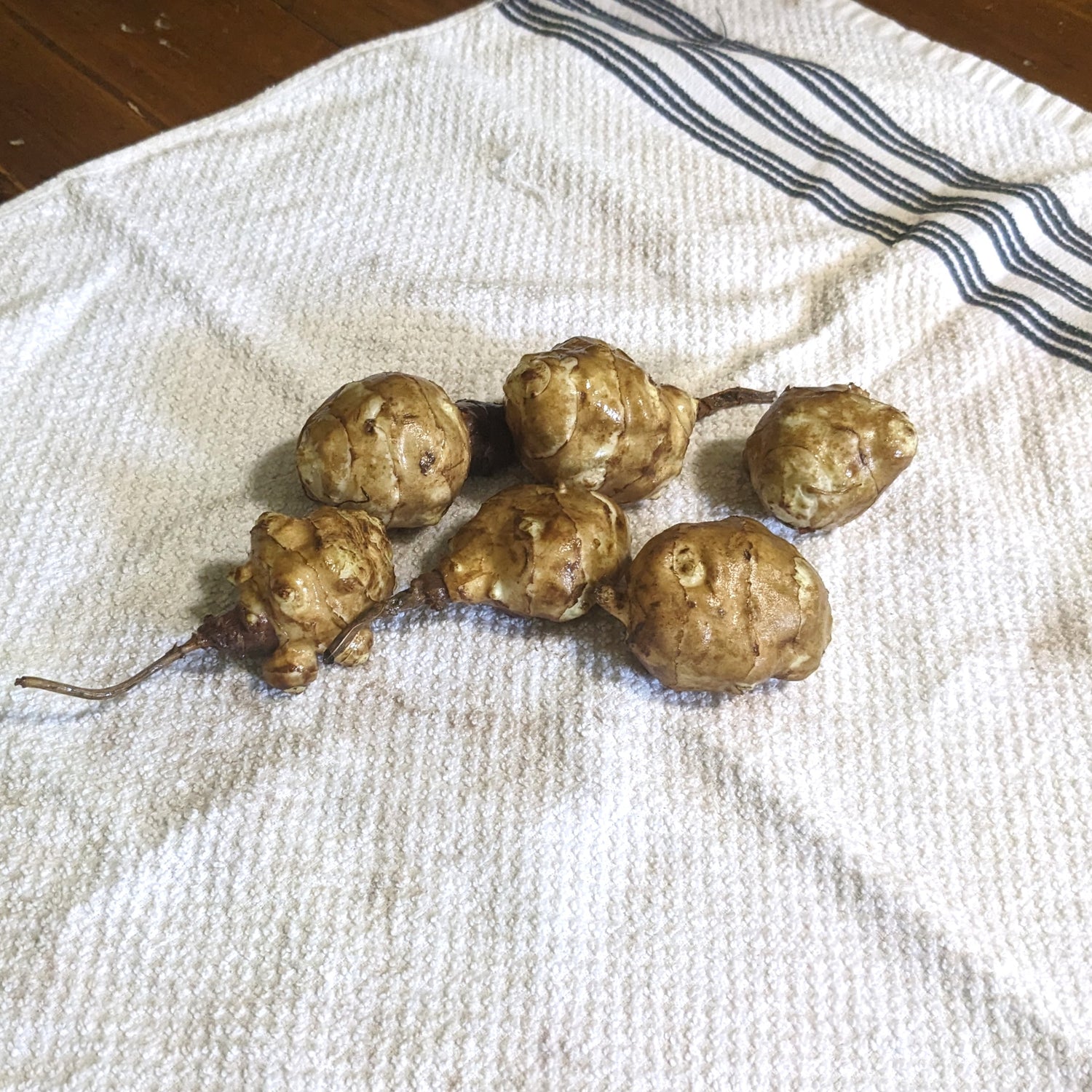
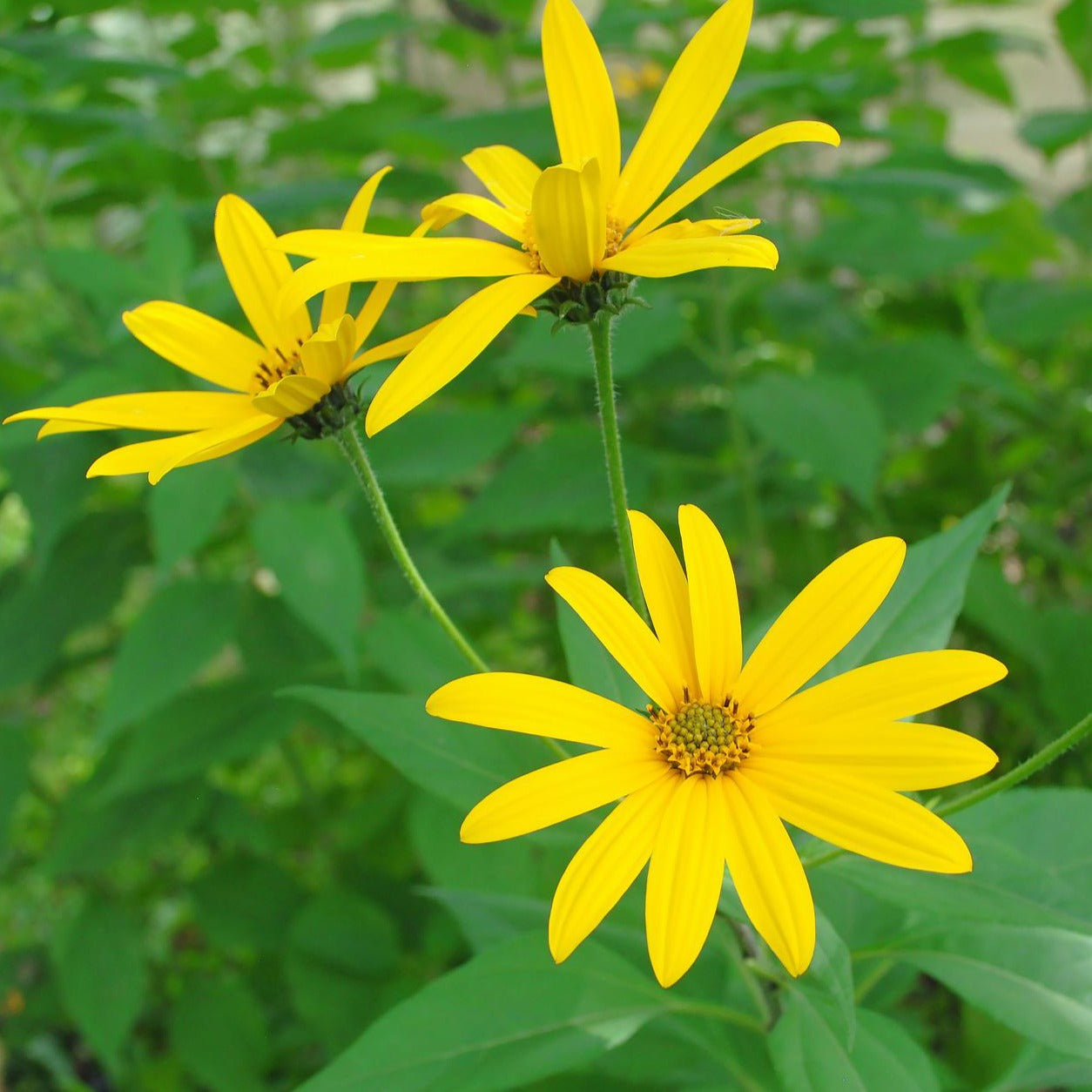
Species: Helianthus tuberosus, Sunchokes are also known as Jerusalem Artichokes or J Chokes
History: Stampede apparently originated on a reserve in northern Ontario where indigenous peoples had been cross-breeding the earliest flowering sunchokes they could find. They succeeded with Stampede which is an early flowering and ripening variety. In 1978, only two tubers were sent to Johnny's Selected Seeds in Maine, producing enough tubers by the end of the year that the nursery was able to introduce the new variety commercially in 1979.
Why We Grow It: Stampede is an extremely productive variety and produces relatively large, if somewhat knobby, white tubers. Like other sunchokes, Stampede can be prepared and eaten in a variety of ways, similar to the many ways you can use a potato! The early flowering and ripening time of this variety is great for anyone with a limited growing season.
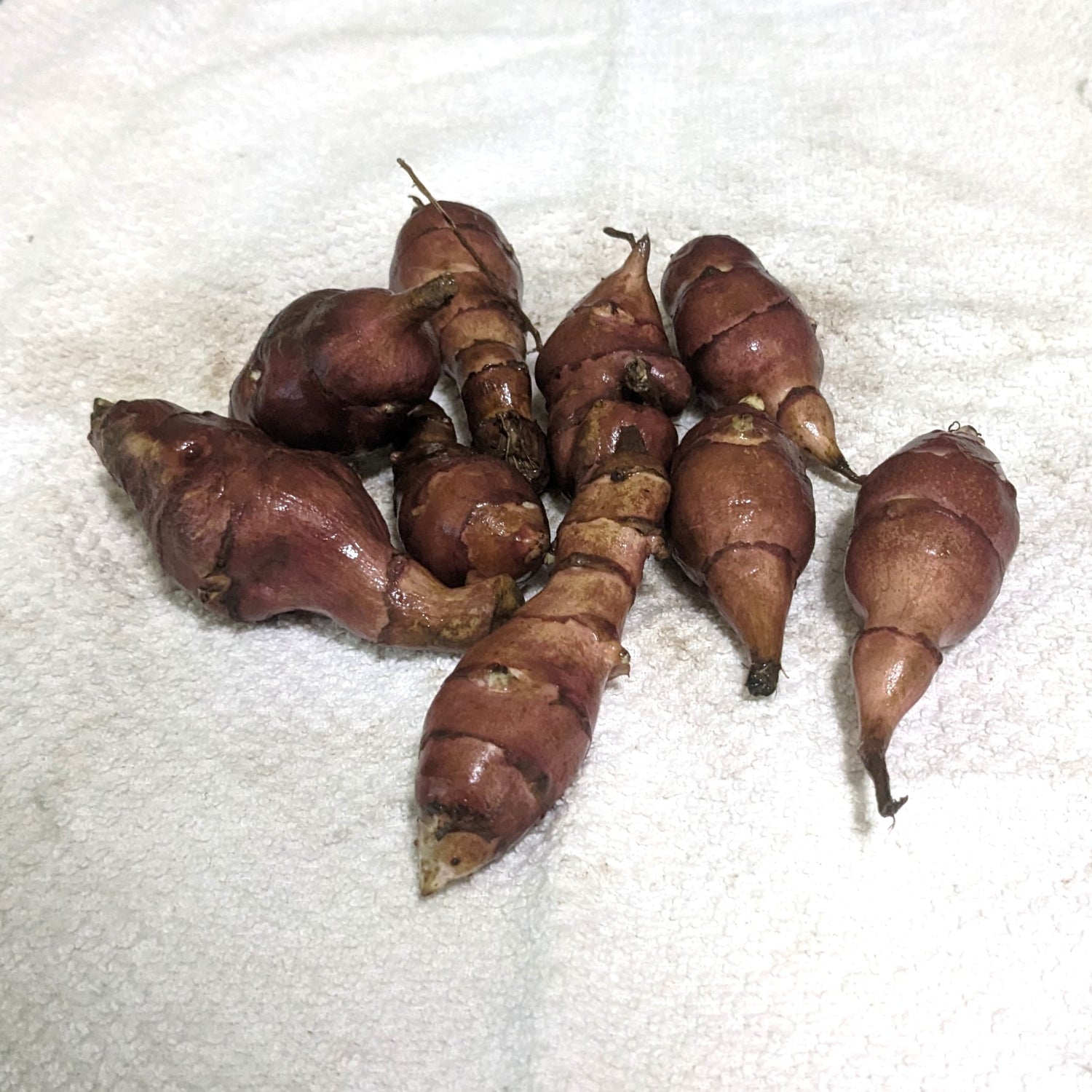
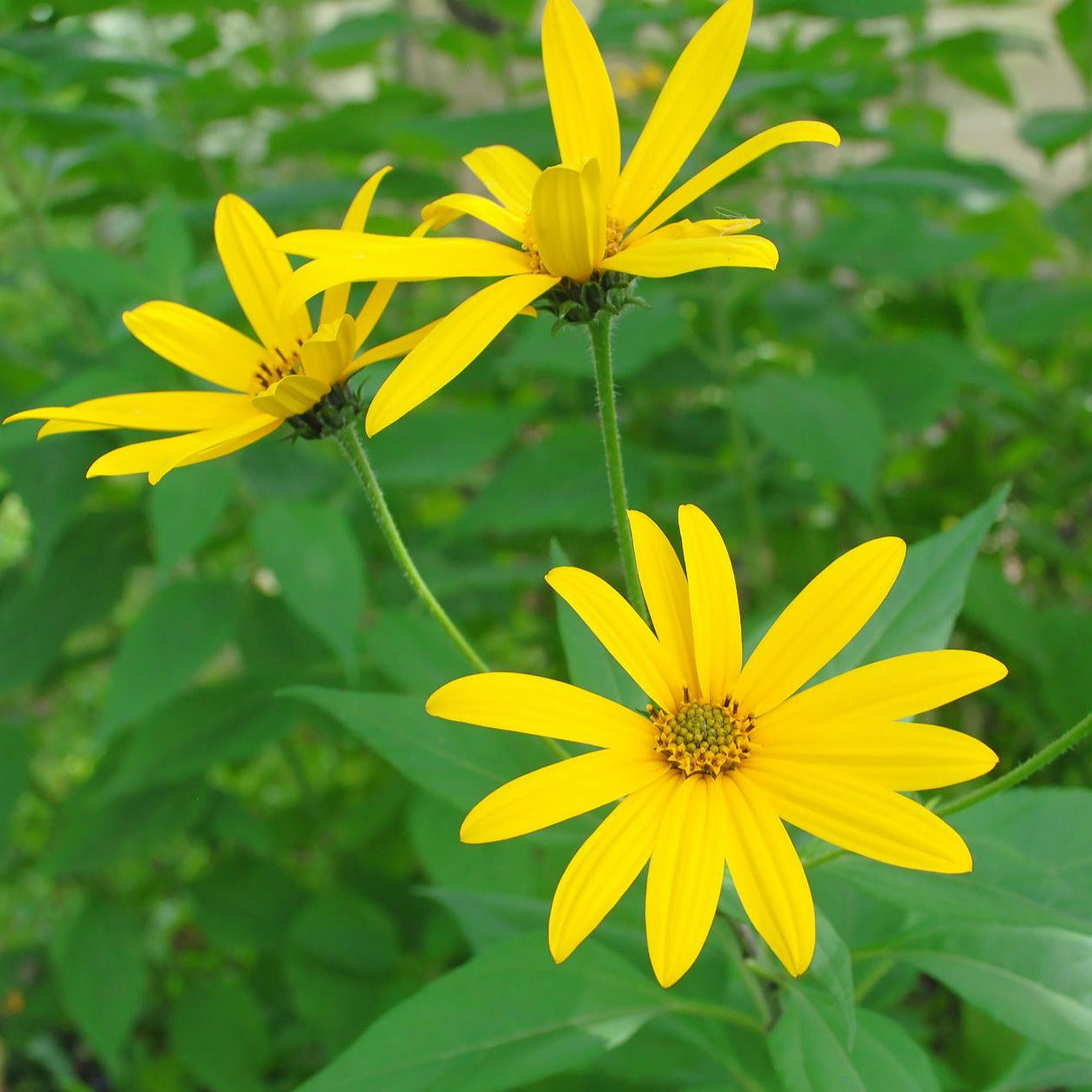
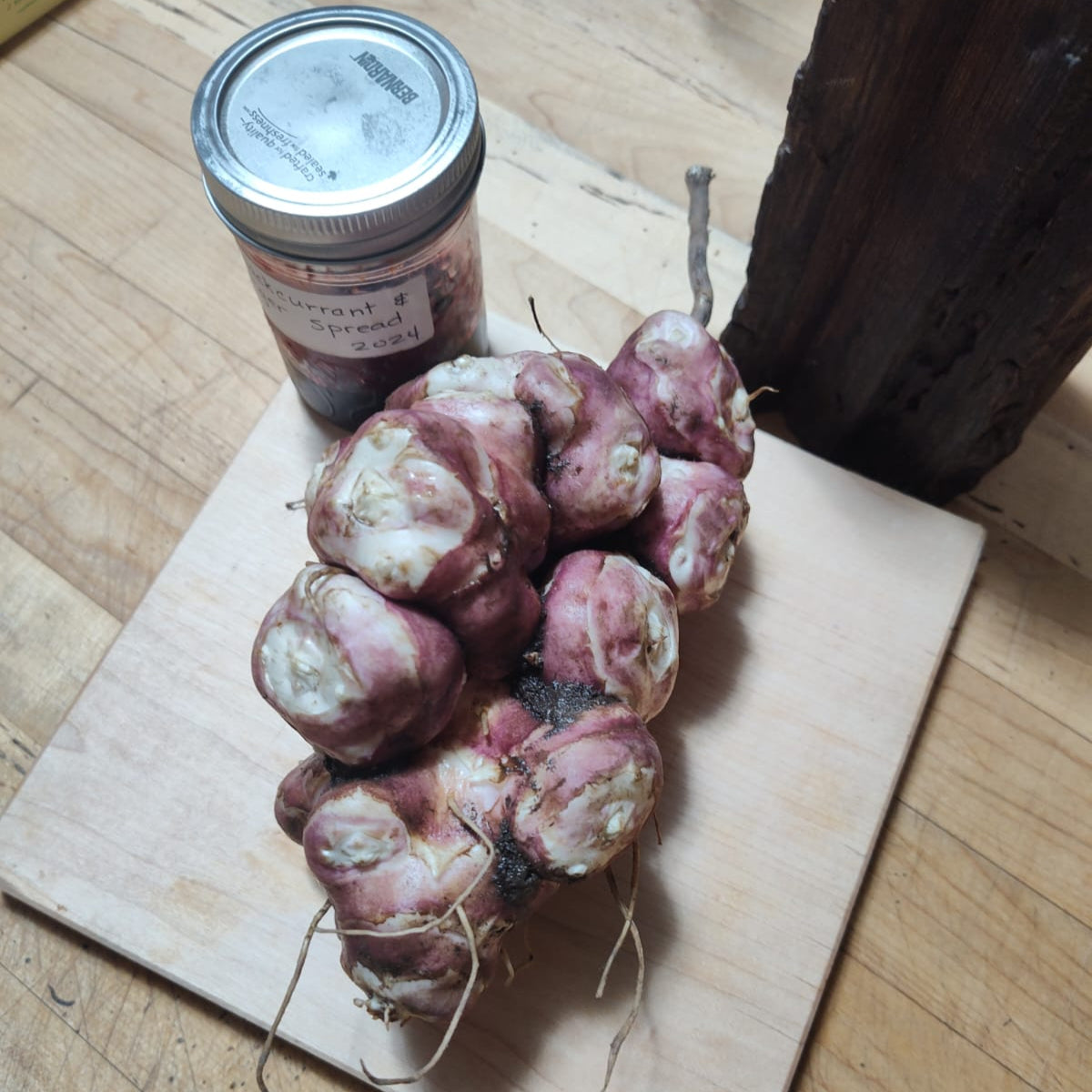
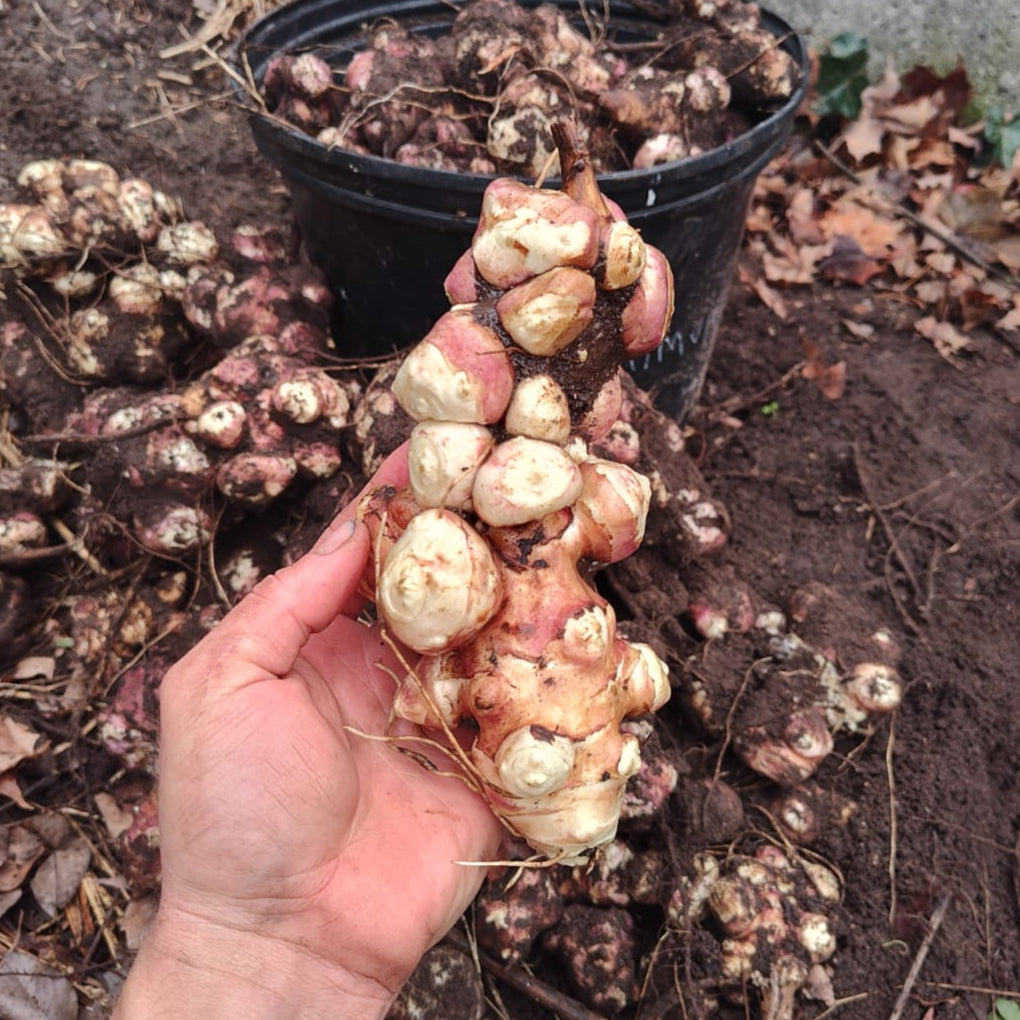
Species: Helianthus tuberosus, Sunchokes are also known as Jerusalem Artichokes or J Chokes
History: Beaver Valley Purple was introduced by heirloom vegetable gardener William Woys Weaver in the latter half of the 1900s. When he visited Sarah Morgan, a cook and gardener, at her home in Beaver Valley, Pennsylvania, she showed him the unique purple sunchokes growing in her garden. According to Morgan, the purple sunchokes had been growing on the property when her husband purchased it in 1920 and locals already considered it an heirloom variety at that time. Weaver, a fan of heritage vegetables, named the variety and began to offer it through the Seed Savers Exchange.
Why We Grow It: Beaver Valley Purple produces a unique reddish-purple tuber that is visually quite distinct from other sunchokes. Sunchokes, similar to a potato, can be prepared and eaten in a variety of ways!
Species: Helianthus tuberosus, Sunchokes are also known as Jerusalem Artichokes or J Chokes
History: Mavor sunchokes are of unknown origin since they were kindly given to us by a local customer named A. Mavor. We were impressed with the large size and flavour of this variety and wanted to make them available to more customers, so are offering them under the name Mavor as thanks to the person who gave them to us.
Why We Grow It: Mavor sunchokes produce large, knobby tubers that are great for cooking in all the same ways you would cook a potato. At least in our soil, some of the tubers produce have a nice reddish tinge to the skin. The tubers store quite well in the fridge. It is a quick growing variety and, like other sunchokes, can spread quite aggressively if left unmanaged.

History: Little is known about this pear in the Western world aside from the fact it came from China. Seuri is possibly the Japanese version of the Chinese name Se Li (translated as 'red pear' from Mandarin).
Why We Grow It: Seuri Li has yellow-brown skin and the flesh is sweet yet slightly tart with a hint of apricot. It is considered one of the most flavourful of the Asian pears. The tree grows well and has heavy crops.

History: The Niitaka Asian pear was developed in Japan as a cross between Amanogawa and Imamuraaki Asian pears in 1915 and was released in 1927.
Why We Grow It: Niitaka is a popular Japanese variety with large orange-brown fruit that is round and speckled. The flavour is sweet and mild.
Species: Helianthus tuberosus, Sunchokes are also known as Jerusalem Artichokes or J Chokes
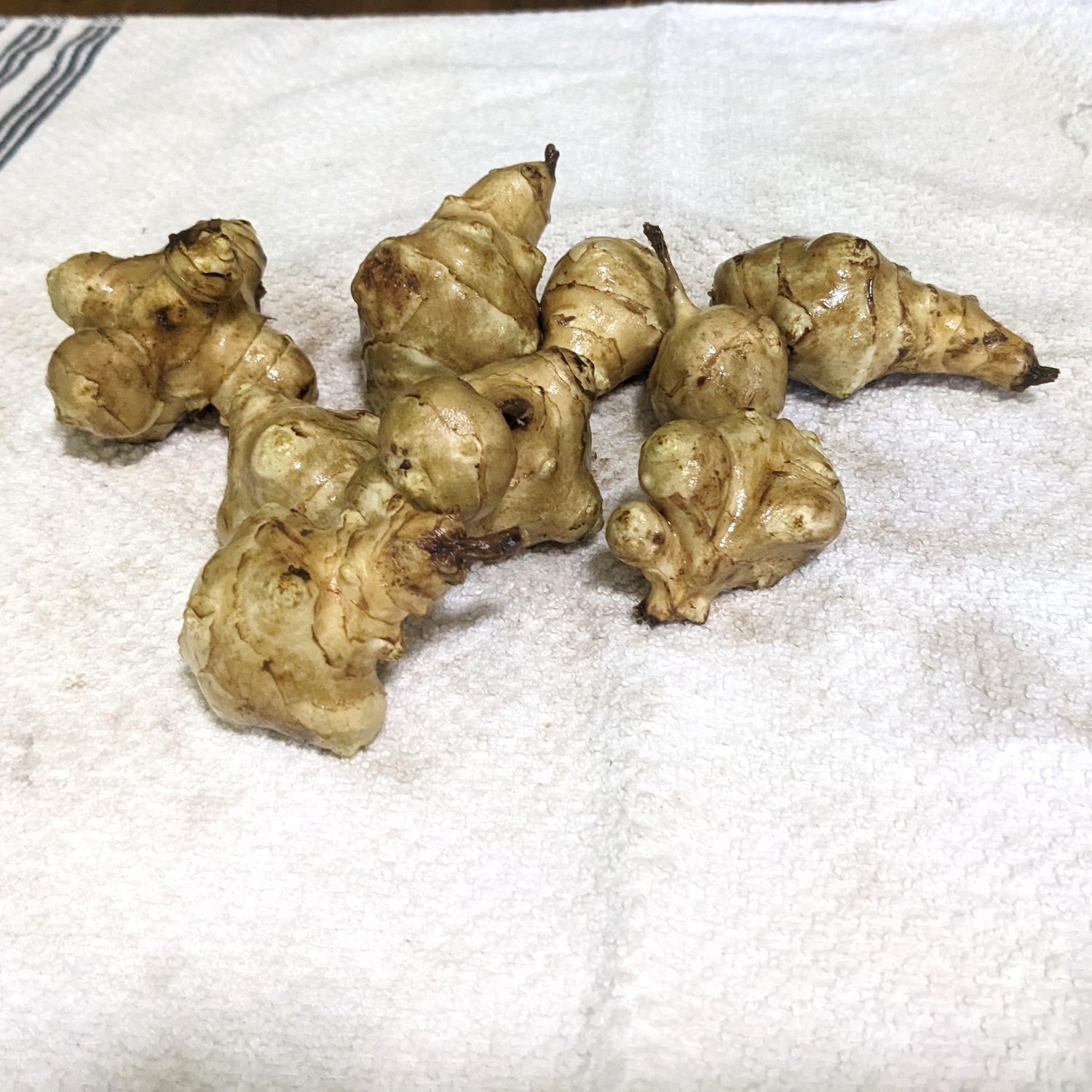
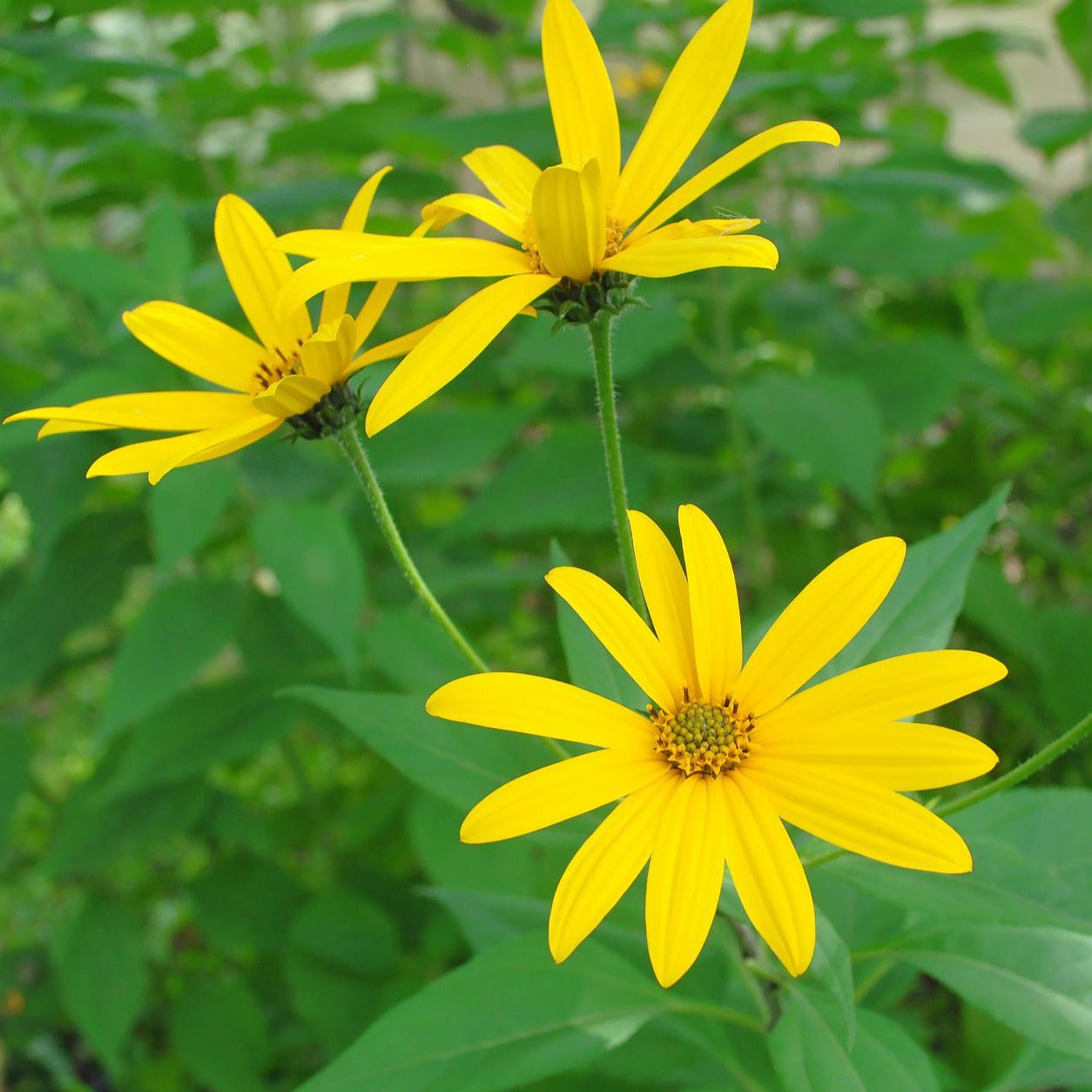
History: Corlis Bolton Haynes discovered a wild sunchoke growing on the farm her parents purchased in 1925 and then spent over sixty years selectively planting the biggest and smoothest tubers in order to improve on the plant. Corlis sadly passed away in 2003 but her family maintains the tradition of only replanting the biggest and best tubers.
Why We Grow It: This variety produces large, white, knobby tubers that like a potato can be prepared and eaten in a variety of ways! This variety is quite productive and the tall plants can be used as a temporary windbreak and/or privacy screen.

History: Shinko (translated from Japanese as 'new light') was created in Niigata, Japan as part of a pear breeding program and released in 1941. It is a cross between Nijiseiki and Amanogawa.
Why We Grow It: Shinko produces medium, golden-brown pears that are crisp and sweet with rich flavour. Their taste and texture are both considered excellent! The trees are known for starting to bear at a young age and producing reliable and heavy crops of delicious fruit.

History: Little information appears to be available on the origins of Kenko. Some sources say it was developed by Ken Taylor of Green Barn Nursery while others note that it is quite similar to another Asian pear variety called Olympic.
Why We Grow It: Kenko produces a large, brown pear that is crunchy and sweet. Kenko boasts many ideal traits including a long shelf life, good disease resistance, and winter hardiness.

History: Shinseiki (translated from Japanese as 'new century') was developed in Japan and released in the 1940s. It is a cross between Chojuro and Nijiseiki.
Why We Grow It: Shinseiki is known for producing large harvests of round, yellow-green pears with a pleasant crunch early in the season. They have a mild, sweet flavour but can bruise easily due to their high juice content. The fruit hangs onto the tree well and the flavour improves over time.

History: Hosui was developed at the Institute of Fruit Tree and Tea Science in Japan. It is a cross between Hiratsuka and Kosui and was selected for its excellent flavour, texture, and resistance to black spot. Hosui was released in 1972 and has since become one of the most popular Japanese varieties.
Why We Grow It: Hosui is more acidic than other pears, providing a sweet and tangy flavour that is unique amongst Asian pears. This early-ripening variety boasts vigorous growth and will produce heavy crops of these large, delicious, golden-brown fruits.

History: There appears to be relatively little information on the origins of Hayatama aside from the fact it originated in Wakayama prefecture in Japan. It is potentially named for Kumano Hayatama Taisha, a Shinto shrine in the area.
Why We Grow It: Hayatama produces small, flattish golden-brown pears that are juicy and crisp with a sweet flavour. Although the fruit is small, the tree produces crops of a good size and will give you an ample harvest.