In-Stock Apples
Malus domestica
A handy collection of all the apple varieties we currently have in stock!
107 products
Sort by:
107 products
107 products

History: Domaine apples originated in France some time before the 1900s. In the Pays d'Auge region in Normandy, Domaine is one of the 13 cultivars prized for making hard cider (included in that 13 are Fréquin Rouge and Noël des Champs, which we also have available). This apple was brought to the United States in 1949 but remains relatively unknown outside of its country of origin.
Why We Grow It: This bittersweet cider apple is high in tannins, low in acidity, and contains a moderate amount of sugar. Although not great for single-variety ciders, it can be an excellent addition when used in cider blends.
2026/2027 Staff Favourite
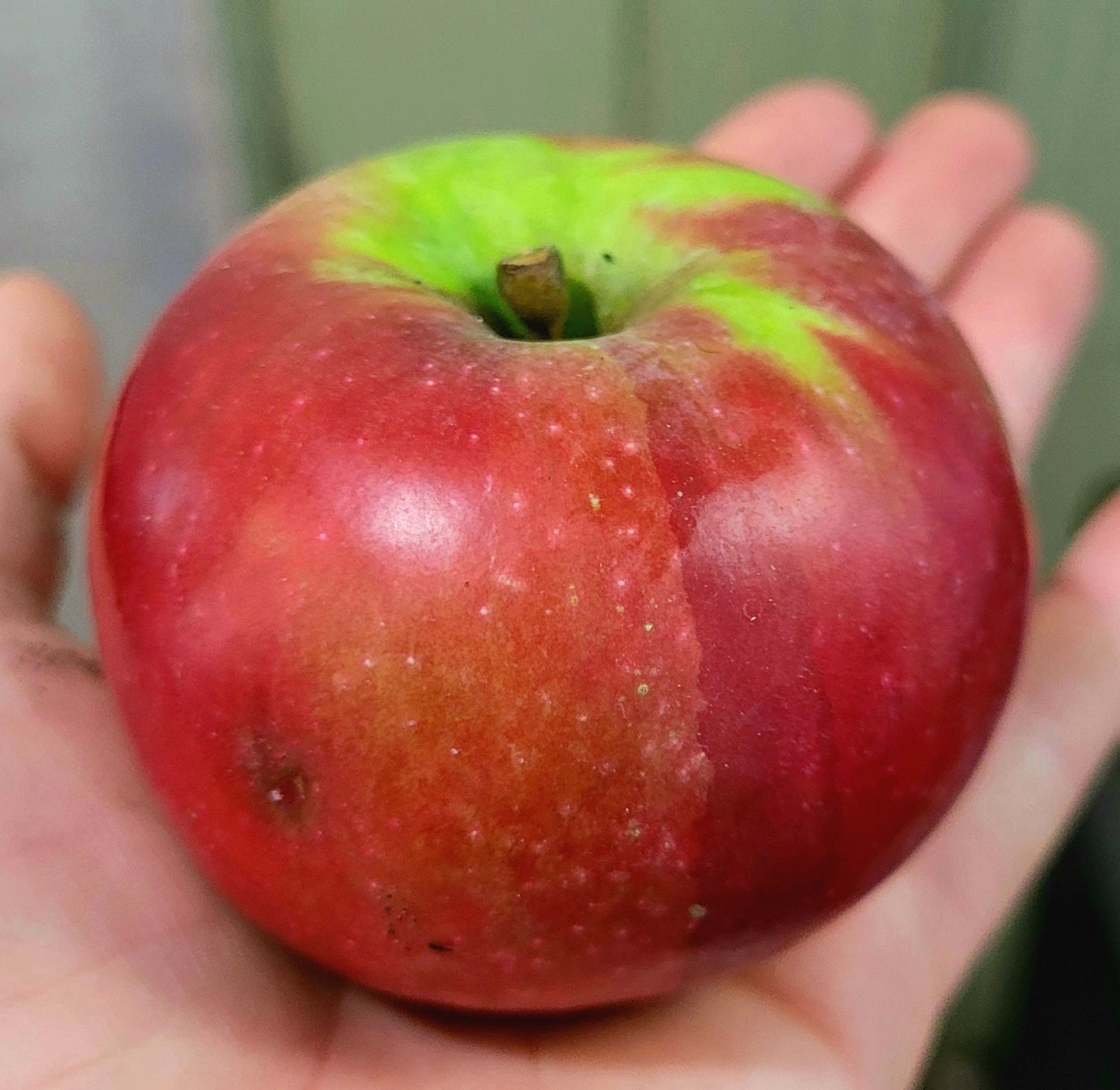
Snow is Mouse's favourite this year! In their eyes, “Snow is a standout Canadian heritage variety! This cold hardy apple is named for its snow-white flesh and it has a distinctively sweet flavour. For fans of Canadian and/or heritage apples, Snow apples are often a favourite!”
All Staff Favourites are 20% off. The Staff Favourite Discount cannot be combined with other quantity discounts.
History: Snow, aka Fameuse, apples originated near Lake Champlain in Quebec some time before the 1730s. The exact origin is unclear but this variety is thought to have originated from a seedling or cutting brought from France. From about 1750-1850, this was one of the most commonly grown apples in Quebec until the orchards were almost wiped out in the latter half of the 19th century by disease and failed to regain their popularity. However, these lovely apples may still be with us in their own way as they are one of the potential parents of McIntosh.
Why We Grow It: It is easy to see why Snow apples were once so popular. These apples have a lovely deep red skin with pure white flesh with a sweet strawberry flavour. These trees are also quite cold hardy and produce heavy crops.


History: Ketchankookem Trail was discovered in 2022 by Wayne Kuntze while he was vacationing on Manitoulin Island with his family. He found it growing wild along Ketchankookem Trail, being drawn to its bright yellow fruit with a pinkish-red blush. Now we are happy to officially introduce this variety in 2023!
Why We Grow It: This variety is worth growing for the name alone! Ketchankookem Trail shares a lot of similarities with Lodi and Yellow Transparent in terms of its early ripening time, yellow skin, and sprightly flavour. Like these other fine early-ripening varieties, it may also be good for sauce along with fresh eating.
This is a brand new variety and we're still learning about it! For any avid apple growers who decide to plant these out, feel free to keep us updated on how it grows, what you use the fruit for, etc, so we can provide as much information as possible!

History: Glowing Heart was bred in Toronto by Fred Jansen, one of the founders of the North American Fruit Explorers (NAFEX). This unique apple is still in its early years.
Why We Grow It: This variety has a unique pink and white flesh and is quite acidic. One bite will make you pucker! Although not the best option for fresh eating, this apple creates an aromatic jelly with rich flavour and can be used in ciders as well. It does well in organic orchards.
History: Mutsu apples (aka Crispin) were developed in the 1930s at the Aomori Apple Experiment Station in Japan as a cross between Golden Delicious and Indo apples, the same parentage as its sister apple Shizuka. This variety was named after Mutsu Province which was the previous name for the area where it was grown and released in 1949.
Why We Grow It: Mutsu apples have a lot going for them. They have a delicious sweet-tart flavour which is great for fresh eating and the golden yellow skin is quite attractive. The fruit itself is very large and keeps its shaped when cooked, making it an excellent choice for baking. The apples even store well, lasting all winter.

History: Bedan des Parts is a French cider apple from Normandy that originated in the 1800s. It is still a popular cider apple in the area today.
Why We Grow It: The continuing popularity of this apple is due to the good quality bittersweet juice it produces that blends well with other varieties. Although a late bloomer, it is quite a heavy cropper.
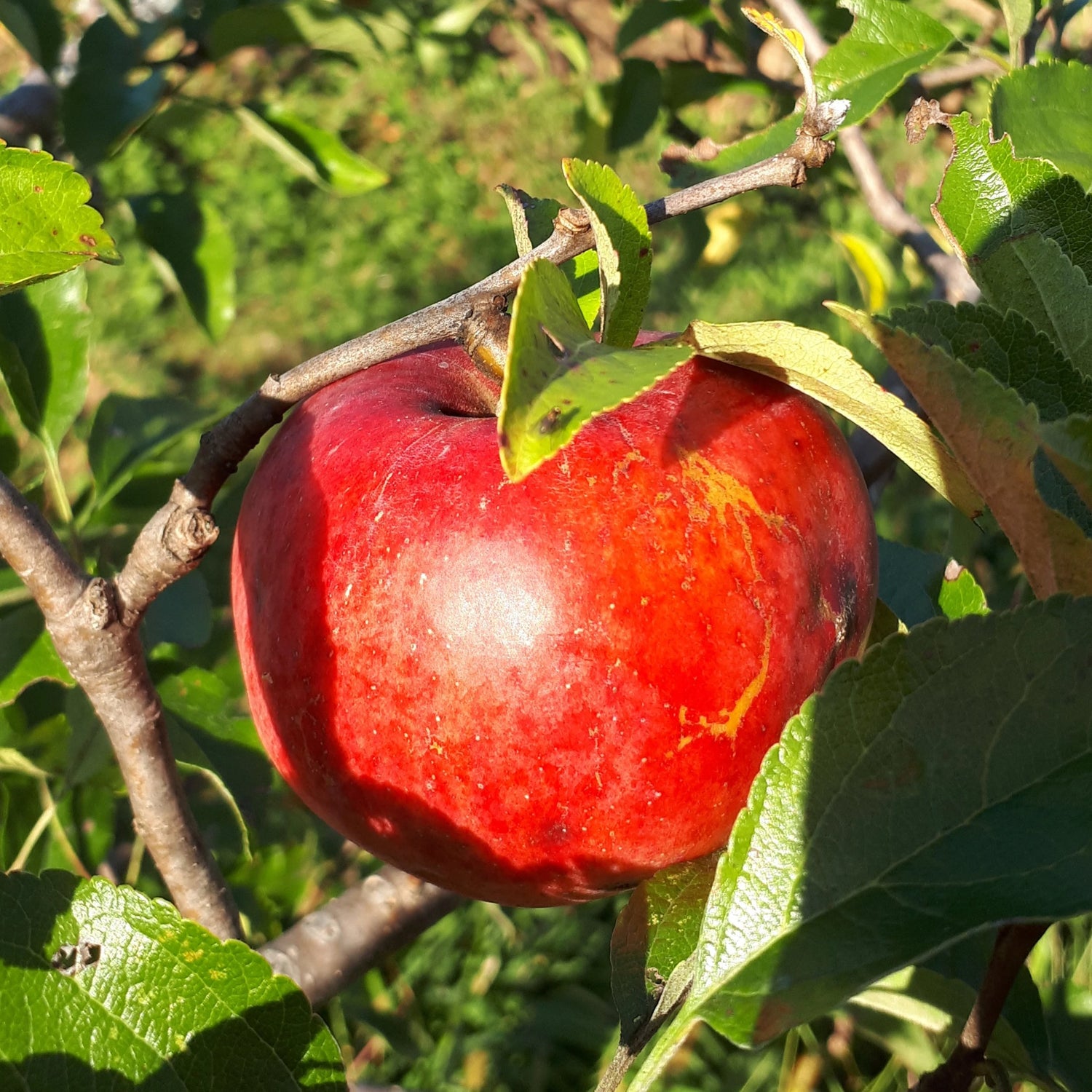
History: Nova Easygro was developed at the AAFC Kentville Research and Development Station in Nova Scotia and introduced in 1971.
Why We Grow It: Living up to its name, Nova Easygro is hard to beat if you're looking for a low-maintenance backyard tree or a clear winner for organic orchards. This variety is resistant to numerous common apple diseases and tastes great. The flavour is pleasant and sweet and the flesh is firm and white with the perfect texture, earning this apple favourable reviews at our tasting event.
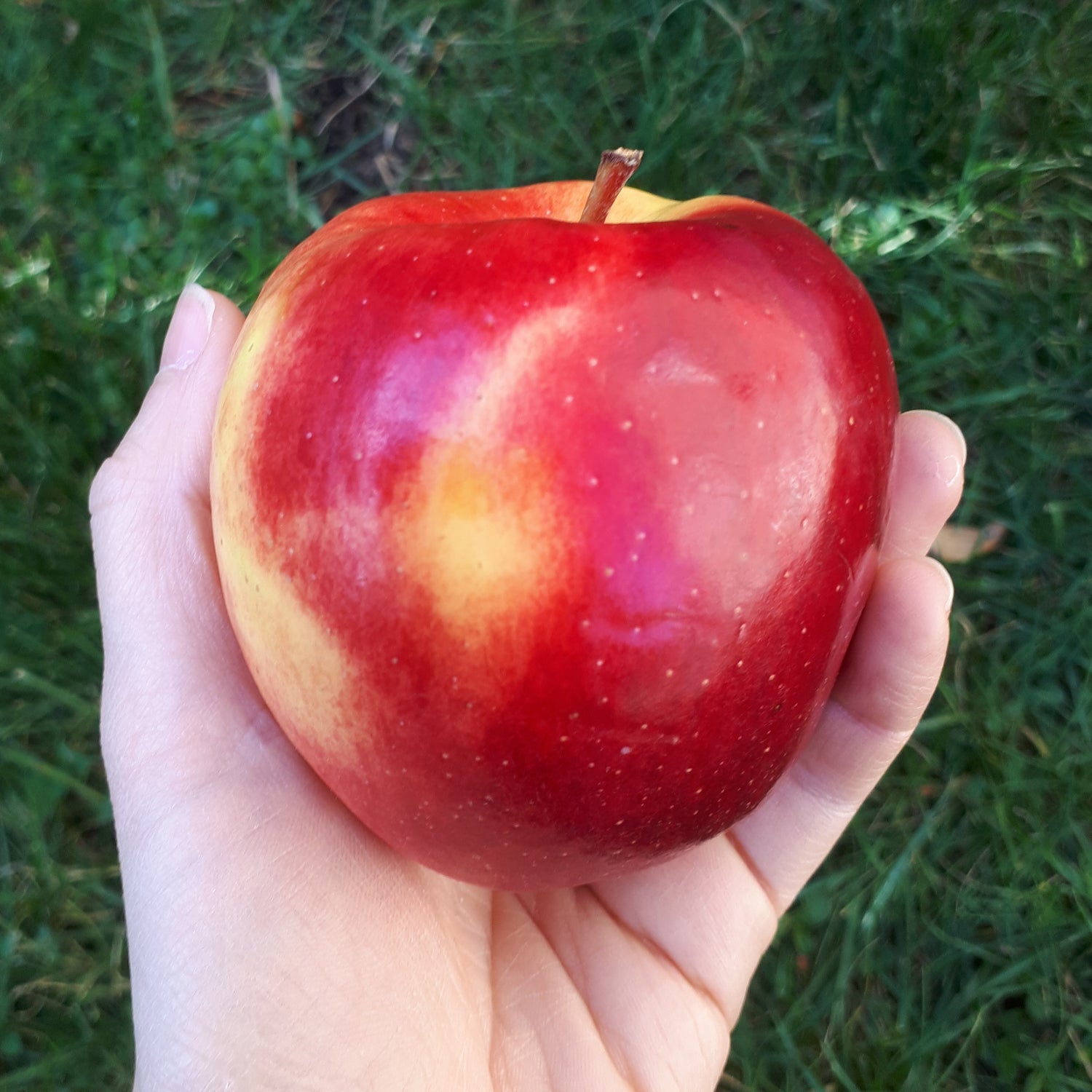
History: A chance seedling discovered in the 1980s in BC, this tender, aromatic, honeyed apple has been a hit ever since!
Why We Grow It: This delicious apple is very popular in the fresh eating market in Canada, thanks to its attractive bi-colour skin and slow browning qualities. It produces a medium-large fruit and is a good cropper.


History: Grimes Golden was discovered on the Grimes farm in what is now West Virginia in 1832. Local legend claims that it grew from a seed planted by John Chapman, better known as Johnny Appleseed. After its discovery, it was widely planted up until the 1930s when it became supplanted by more popular varieties such as its (likely) descendant, Golden Delicious.
Why We Grow It: Although less popular now than Golden Delicious, many claim that Grimes Golden has a superior flavour: sweeter and with a hint of spice. The fruit is great for fresh eating and making cider, and it stores quite well. The tree is moderately resistant to fire blight and mildew.
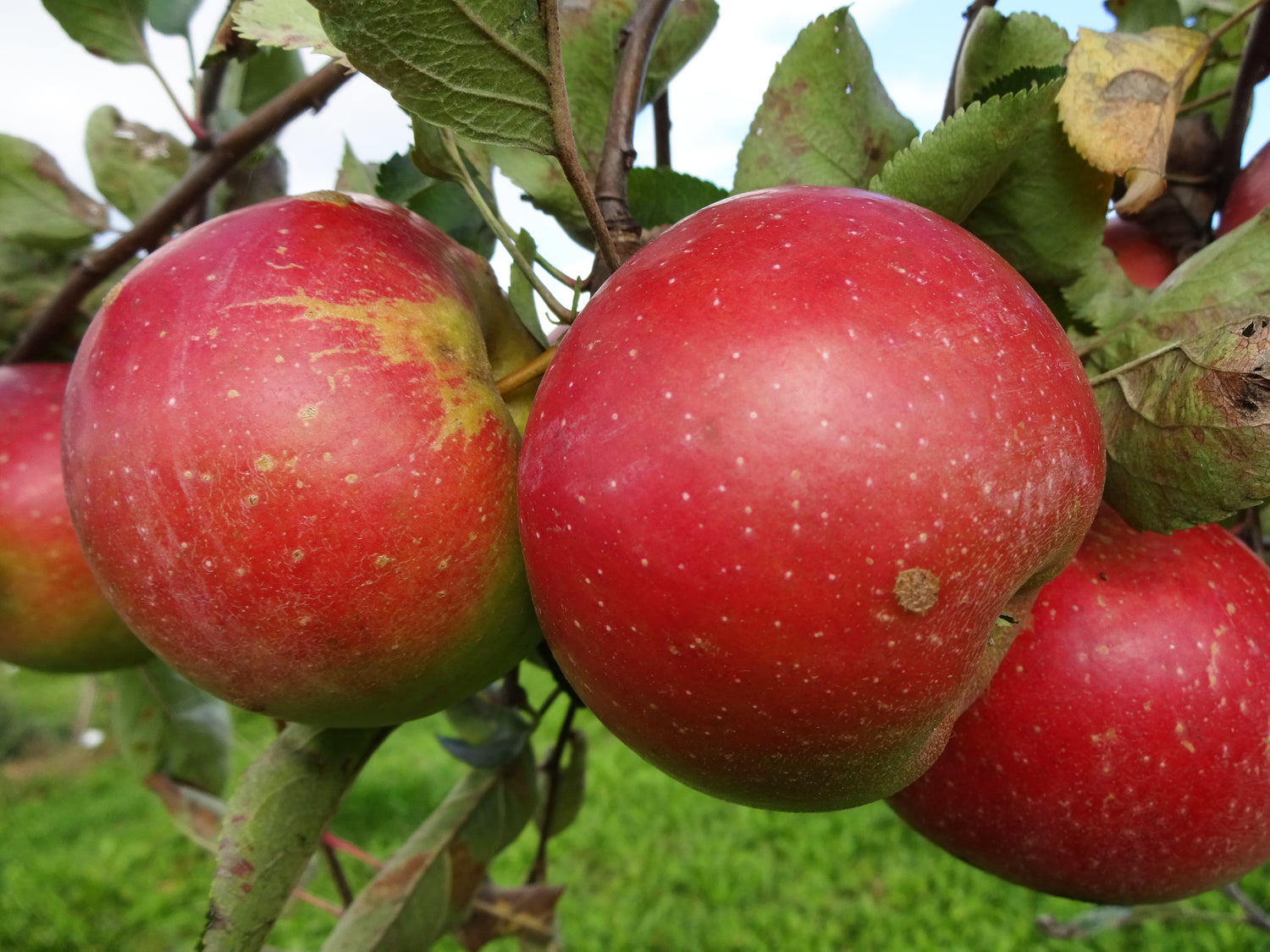
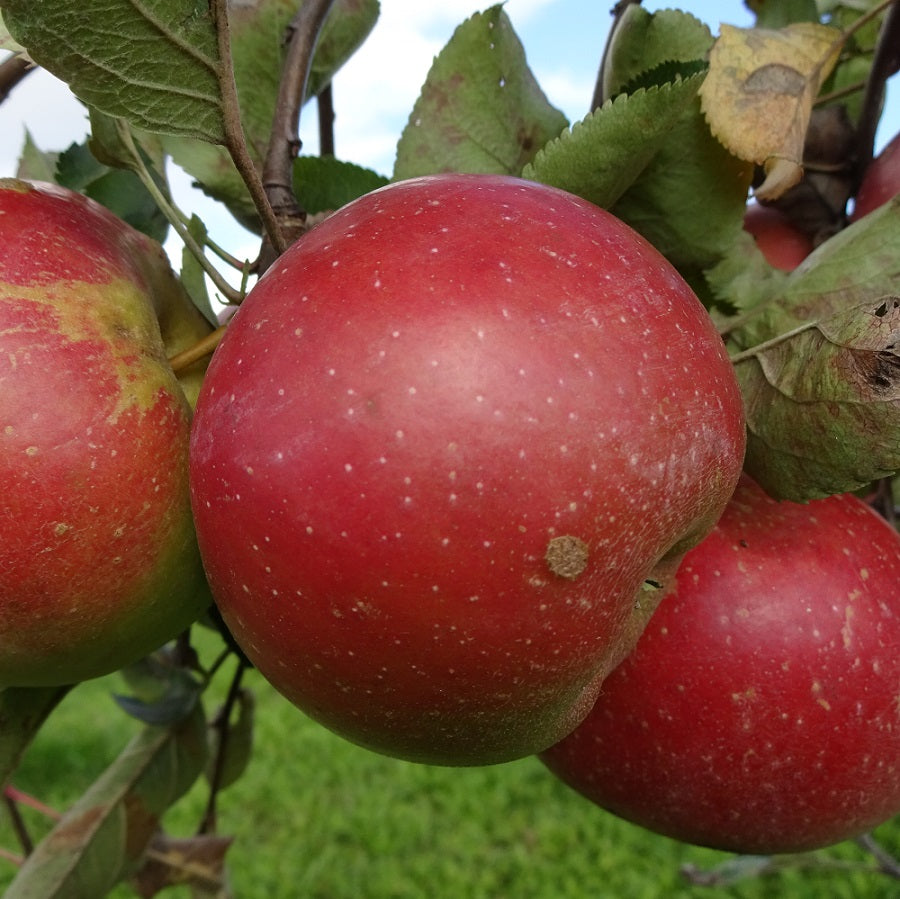
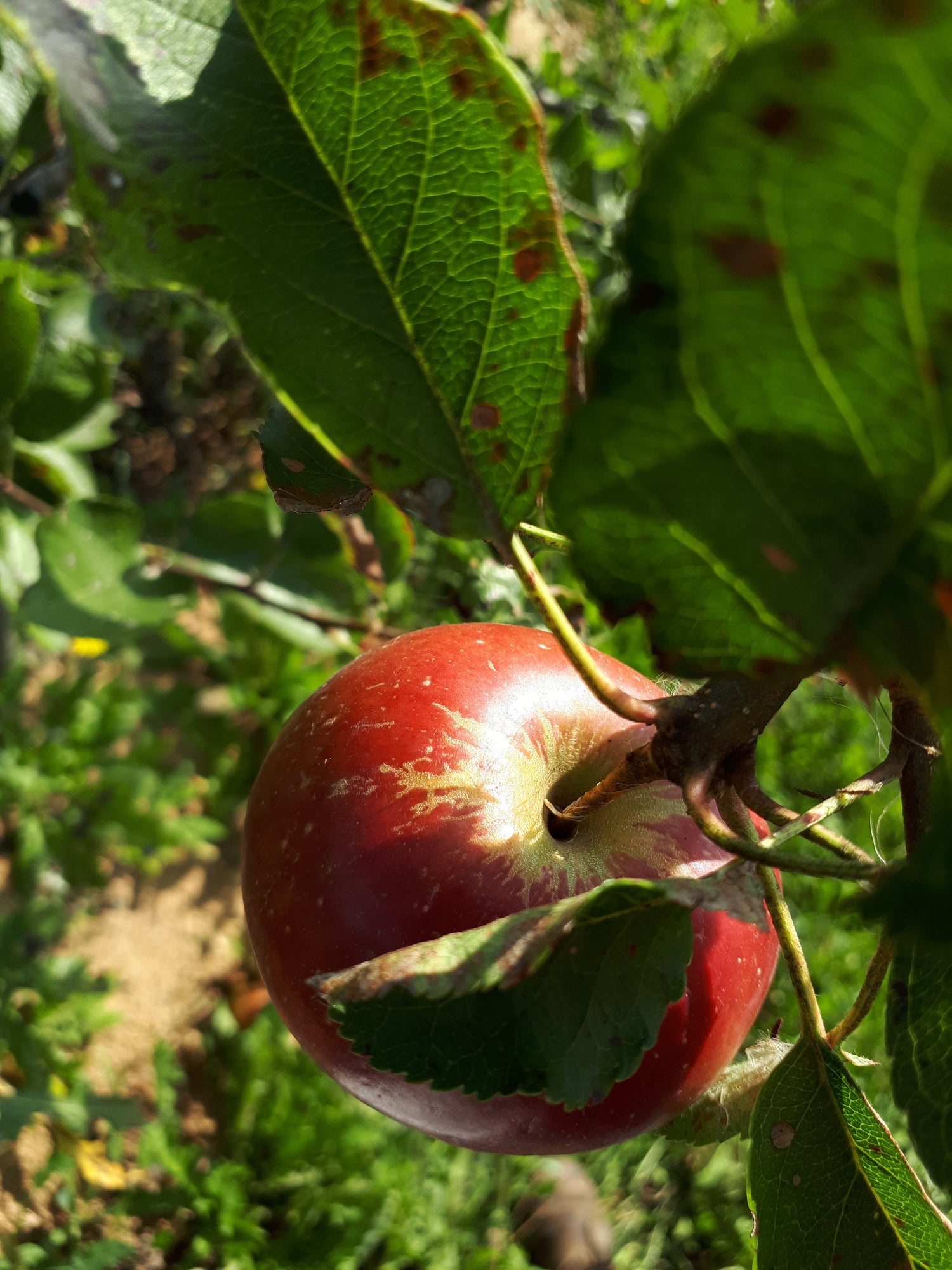
History: This classic American cooking apple was discovered by chance around 1740 in Massachusetts. It was eventually brought to the attention of a Col. Baldwin, after whom the variety was later named, who helped to spread it further. By 1850 this was one of the most commonly grown apples in the US, although its popularity began to decline by the 1900s, exacerbated by a terrible winter in 1934 that wiped out a significant number of trees. Despite this, Baldwin is making a bit of a comeback and a monument to this apple still stands in Wilmington, Massachusetts, around where it was discovered.
Why We Grow It: Baldwin apples produce large, greenish-yellow and maroon fruit with firm, sweet flesh that maintains its shape and crispness when cooked. The fruit produced in our test orchard has been attractive and blemish-free.

History: Shizuka (translated as "quiet" or "calm") was created at the Aomori Apple Experiment Station in Japan in the 1930s. It is a cross between Golden Delicious and Indo, the same parentage as its sister apple Mutsu.
Why We Grow It: Although it resembles Mutsu with its large yellow-green fruit, sometimes featuring a reddish-orange blush, Shizuka is sweeter and less acidic. This is an excellent fresh-eating apple for farm gate sales and it also keeps well. It is also great in salads due to its slow browning.


History: In 1817 Joel Gillet accidentally received Rome Beauty as a seedling in a shipment of nursery trees. His son planted the seedling along the Ohio River in Rome Township. When it began producing lovely red apples, Gillet's cousin started a nursery to propagate and promote it. Originally named Gillet's Seedling, the name was later changed to Rome Beauty in 1832 to honour the township. The original tree collapsed in the 1850s due to bank erosion but the variety still remains popular in the United States today.
Why We Grow It: The fruit is deep red, large, and slightly conical with cream coloured flesh. It has a mild flavour compared to something with more character like a russet, though still an excellent snacking apple. It makes a good cooking apple too since it keeps its shape when cooked. It also stores exceptionally well, lasting all winter long. Tip-bearing.


History: Wolf River was raised from seed by Quebec lumberman William Springer in the latter half of the 19th century. When Springer and his family were moving by wagon to Wisconsin, they bought a bushel of Alexander apples along the way. Upon arriving at their new home, he planted the seeds from said apples along the bank of the Wolf River and the Wolf River apple grew from there. This variety has since garnered a reputation as a good cooking apple and for the incredible size of its fruit.
Why We Grow It: First and foremost, Wolf River is legendary for the huge size of its fruit. The apples can weigh a pound or more and there are stories of pies being made from a single apple. The fruit, green with red blush and stripes, has a sweet and tart flavour that is good for cooking and it holds its shape well when cooked. The tree itself is hardy and relatively disease resistant as well.

History: Scarlet Vivian was originally an urban wild tree found by Wayne in 2018 and has been grown by Silver Creek Nursery's previous owner Ken Roth. It is likely a cross between a crabapple and an apple. We are excited to introduce this new variety in 2023!
Why We Grow It: Scarlet Vivian is quite similar to Dolgo although a little larger. For those who like very tart apples, this is an excellent one for fresh eating! The flavour is rich and complex, but balanced enough that it is quite enjoyable. However, Scarlet Vivian is best made into a jelly where its red colouration really shines. It may also have potential in cider blends. Based on Ken's observations, the tree appears to be relatively free of pest and disease issues.


History: The origins of Pomme Gris (translated as 'gray apple' from French) are a bit of a mystery. It may have originated in France in the 1600s as either a seedling or sport of the variety Reinette Gris which was then brought to Quebec by French or Swiss colonizers. Alternatively, it may have its origins in Quebec, perhaps being grown and propagated in Canada from the start. The first instance of this variety's documentation was by a William Forsyth in 1803 who believed the apple originated in Canada and made its way to Europe sometime in the 1700s. Regardless, this variety was grown in Quebec for centuries.
Why We Grow It: Pomme Gris is an excellent all-purpose apple! Although not the prettiest apple in the world, it is crisp, juicy, and aromatic with a nutty flavour and hints of vanilla. It was really a standout when our tree first produced fruit a couple years ago! The fruit can also be used for cooking and the apple would likely be a good addition to cider blends.

History: Somerset Redstreak originated in Somerset, England in the early 1900s. This cider apple is still widely planted in the UK.
Why We Grow It: These attractive apples, yellow with red blush and striping, create a nice bittersweet juice with no sharpness.
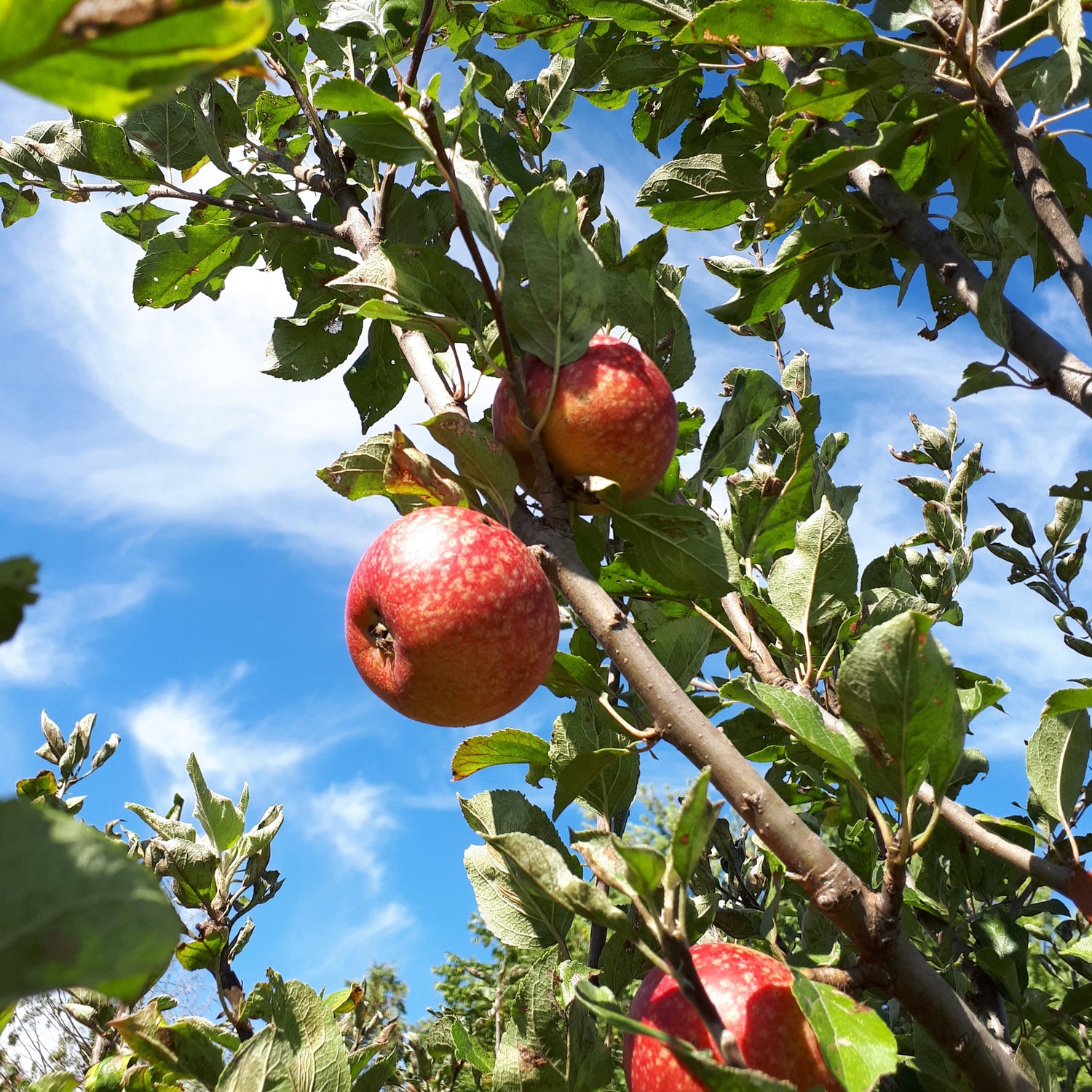
History: Porter's Perfection originated in Somerset in the UK some time in the 1800s. It became extremely popular in England although its popularity began to wane following the 1910s. It is still grown today but not as commonly as it once was. It shows promising results in the North American climate, unlike some other European cider cultivars.
Why We Grow It: This English cider apple produces a medium bittersharp cider. It has done well in different studies in Ontario with the Vineland Research Station with regards to juice composition, disease resistance and overall performance. The tree is a heavy cropper and grows vigorously.
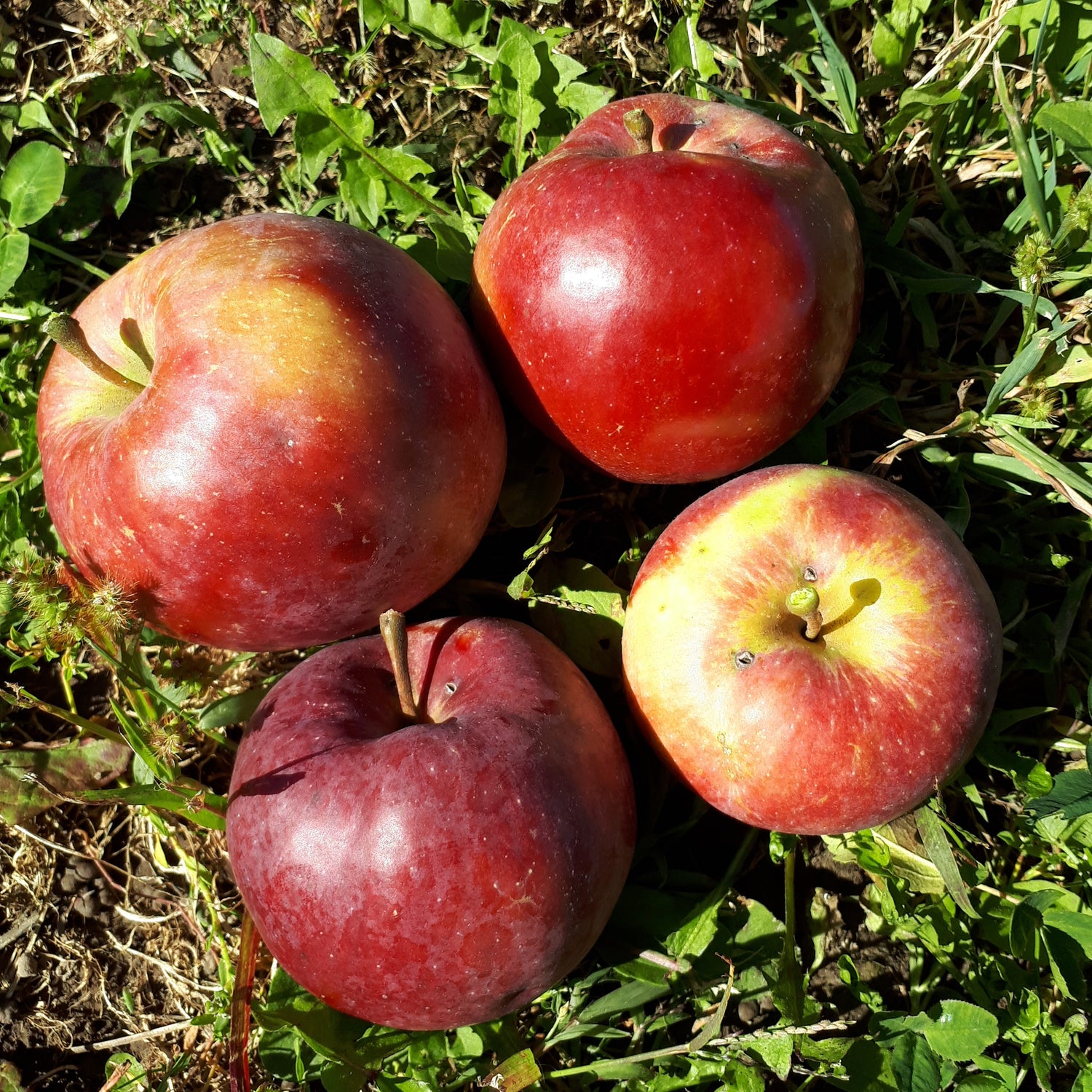
History: Fireside apples originated in 1943 from a breeding program at the Minnesota Agricultural Experiment Station. They are one of nearly 30 varieties that have been introduced by the university's breeding program since it began in 1888.
Why We Grow It: Fireside stands as an icon of toughness in the world of apples, thriving in cold northern areas. But don’t let this image fool you—Fireside has a warm heart! The flesh is amazingly sweet and very juicy.


History: Golden Delicious was discovered by chance on a family farm in West Virginia and sold in 1914 to the Stark Brothers Nurseries. It has since become one of the most popular apples in North America. Since 1972, Clay County, where the apple was found, has hosted an annual Golden Delicious Festival and in 1995 it was declared the state fruit of West Virginia. Golden Delicious is also the parent of many varieties, including prominent ones such as Ambrosia and Gala.
Why We Grow It: It is easy to see why this apple is so popular with its attractive golden yellow skin and sweet, crisp cream-coloured flesh. Golden Delicious is a favourite for fresh eating, sauce, and apple butter. On top of that, it is resistant to scab, powdery mildew, and fire blight.


History: Florina, aka Querina, was developed in France in the 1980s at the Station de Recherches d'Arboriculture Fruitiere. Despite being developed in France, its ancestry is made up of American varieties. Since its introduction it has become quite popular in continental Europe.
Why We Grow It: One of Steph and Mouse's favourites! Florina is a wonderful all-around apple for the backyard offering both rich flavour and easy care. The sweet, crisp fruits it produces are perfect right off the tree but also keep a few months. They are also great for organic production: resistant to scab, fireblight, mildew, and rosy apple aphid.

History: Kerr is an applecrab (cross between crabapple and apple) with Dolgo and Haralson parentage. It was developed at the Morden Research Station in Manitoba in the 1950s and named after plant breeder and ecologist William Les Kerr who was working at the station at the time.
Why We Grow It: The fruit is a pleasant dark red and unlike true crabapples, has a pleasantly sweet and tart flavour that makes it good for fresh eating. Although small, the fruit stores well and are quite juicy which makes them good for pressing. The juice does well when added to cider blends.


History: This apple was developed in New York in 1974. It has never achieved major popularity but remains a curiosity due to the deep red colour of its skin which causes the flesh inside to become stained pink.
Why We Grow It: Along with its visual appeal, this apple boasts a sweet, sub-acidic flavour that makes it suitable for both fresh eating and making cider. Although these apples don't store well, the fruit hangs onto the tree for three weeks which helps to keep it available a little longer.
Picture of Burgundy apples on the tree courtesy of Shannon McInnis

History: Maiden's Blush was first described in New Jersey in 1817 although it had already been popular in Philadelphia markets for some time. It likely originated around New Jersey in the late 1700s. Maiden's Blush continued to be commonly grown in the southern US through the early 1800s.
Why We Grow It: Maiden's Blush's uniqueness is still worthy of attention today, its flavour being an interesting mix of citrus-like acidity and sweetness that stand out among other apples. While it is good for fresh eating, particularly after a few weeks off the tree, it is most well known for cooking, baking, and drying due to its non-browning qualities.

History: Kandil Sinap* originated in the early 1800s around the Black Sea, although it is debated whether it originally came from the Crimean Peninsula in the Ukraine or the Sinop Peninsula in Turkey. It was at one time commonly exported into Russia.
*There are different thoughts on what Kandil Sinap translates to, some say it is 'candle of Sinop,' others 'sweet apple of Sinap,' and it translates directly from Turkish as 'oil lamp'
Why We Grow It: Kandil Sinap's most prominent feature is the odd shape of the fruit, strangely oblong and conical, almost resembling a candle in appearance. The odd green fruit have a sweet, sprightly flavour and are quite aromatic, although they do bruise easily. The tree naturally stays smaller but produces heavy crops and is great for backyard orchards.

History: The St. Lawrence apple was discovered in the Montreal area as a seedling of a Snow apple, the most popular variety in Quebec at the time. By 1835, these apples were commonly grown in the area where they were popular for fresh eating and cooking but have since faded into obscurity.
Why We Grow It: Although less popular now, these apples are still good for eating and baking. The boldly striped red skin also makes the fruit very attractive. The tree bears good crops each year and is relatively hardy.

History: Spigold (aka Spy Gold) was developed at the New York Agricultural Experiment Station in Geneva, New York and released in 1962. It is a cross between Red Spy and Golden Delicious that has remained somewhat popular in North America.
Why We Grow It: Spigold marries the best qualities of Golden Delicious and Red Spy. It produces very large apples that are crisp and juicy with a honeyed sweet/tart flavour. These large apples are excellent for fresh eating, making applesauce, baking into pies, and making into cider. They also store quite well and some say the flavour actually improves in storage.


Why We Grow It: Although it failed to take off commercially, Silken is an excellent early fresh-eating apple. It is attractive with pale yellow skin sometimes with a faint pinkish blush. The fruit has crisp, juicy flesh that is quite sweet with a little bit of acidity. The tree grows quickly and tends to start bearing fruit at a young age.
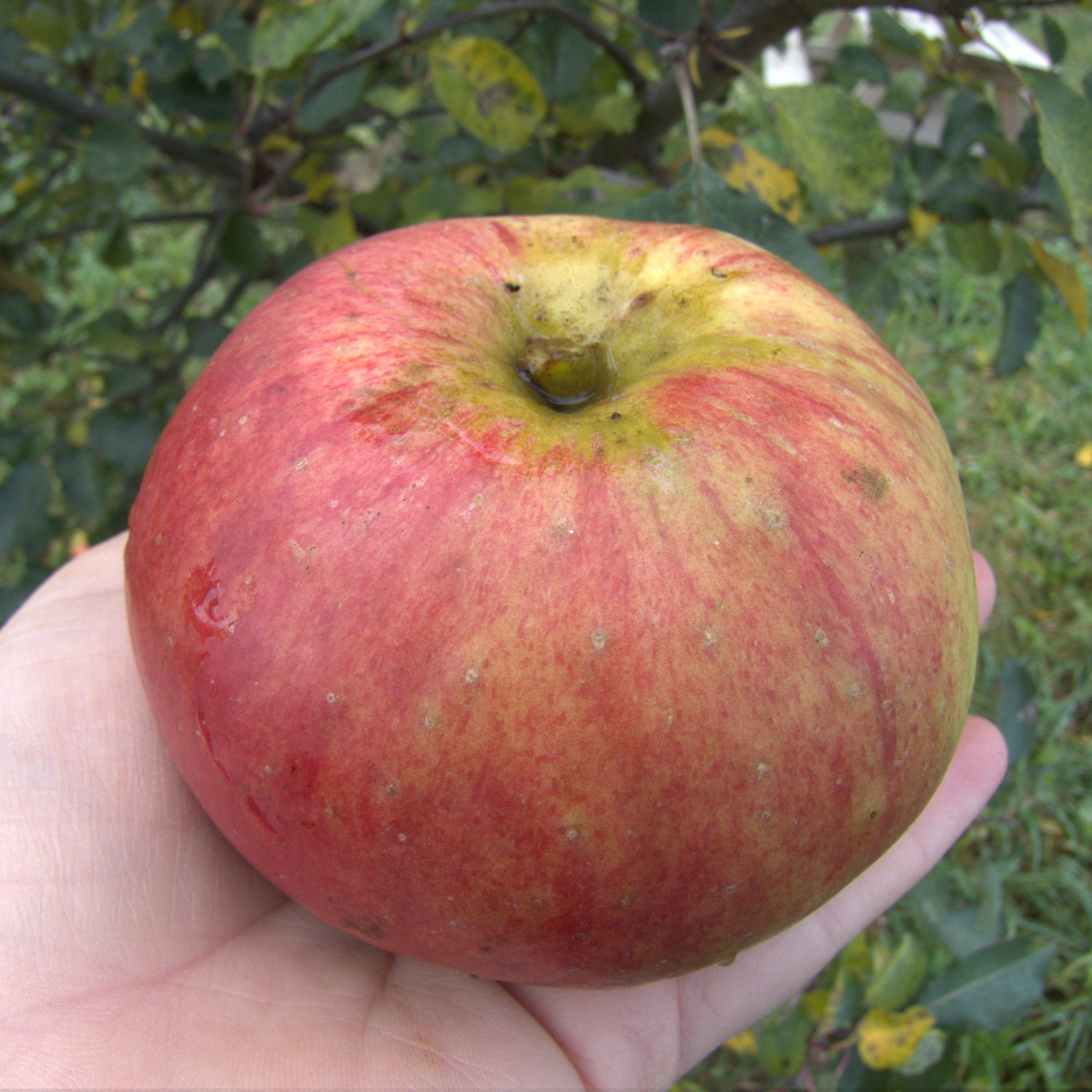
History: Bramley's Seedling was first planted in the UK in 1809 by Mary Ann Brailsford-Trump and was later named after the butcher who bought the property. Long considered the definitive British cooking apple, Bramley's Seedling is celebrated with its own festival, a plaque, and a commemorative window that was installed on its 200th anniversary. The original tree is still growing where it was planted over 210 years ago.
Why We Grow It: With its strong flavour and acidity, this apple is hard to beat when used for cooking, although the fruit doesn't hold its shape as well as other varieties. The fruit is large, greenish-yellow with orange flush and broad red stripes and store all winter. The trees are quite hardy and heavy croppers.

Our Fence Line Budget Bundle is the perfect option for those looking to plant a large number of fruit trees on a budget! The bundle contains a random mix of twenty of our 50-80cm grade fruit trees. It will primarily consist of apple trees, but you may also receive pear trees and/or stone fruit trees depending on what we have available.
This bundle is great for planting along fence lines, for feeding wildlife, and/or adding some diversity to your orchard!
A few things to note about the Fence Line Budget Bundle:
- Most, if not all, trees in the bundle will be apple trees
- Trees will be a mix of dwarf, semi-dwarf, and/or full-size
- These trees will all be B-Grade (could have minor damage but may not)
- Most trees will be labelled but some may be missing labels
- Trees in this bundle are not covered under our 90 day guarantee
- We do not accept requests for what kinds of trees you will receive


History: Shamrock apples were raised by K. Lapins at the Pacific Agri-Food Research Centre in 1970 and released in 1986.
Why We Grow It: This is a Canadian apple for all you Granny Smith lovers! Although a bit sweeter than Granny Smith, Shamrock apples still have some tartness and are hardy enough to survive in Canadian climates. They even resemble Granny Smith with their light green skin and white flesh.
Photos courtesy of Shannon McInnis!