In-Stock Apples
Malus domestica
A handy collection of all the apple varieties we currently have in stock!
108 products
Sort by:
108 products
108 products

History: Brown Snout was discovered on a farm in the UK in the mid-1800s. Its name comes from the brown russet around its calyx. H.P. Bulmer, a cider-making company, further propagated and spread this apple in the UK where it is still used today.
Why We Grow It: This medium bittersweet cider apple has small, uniquely coloured fruit that are sweet, slightly astringent, medium-tannin, and have low acidity.
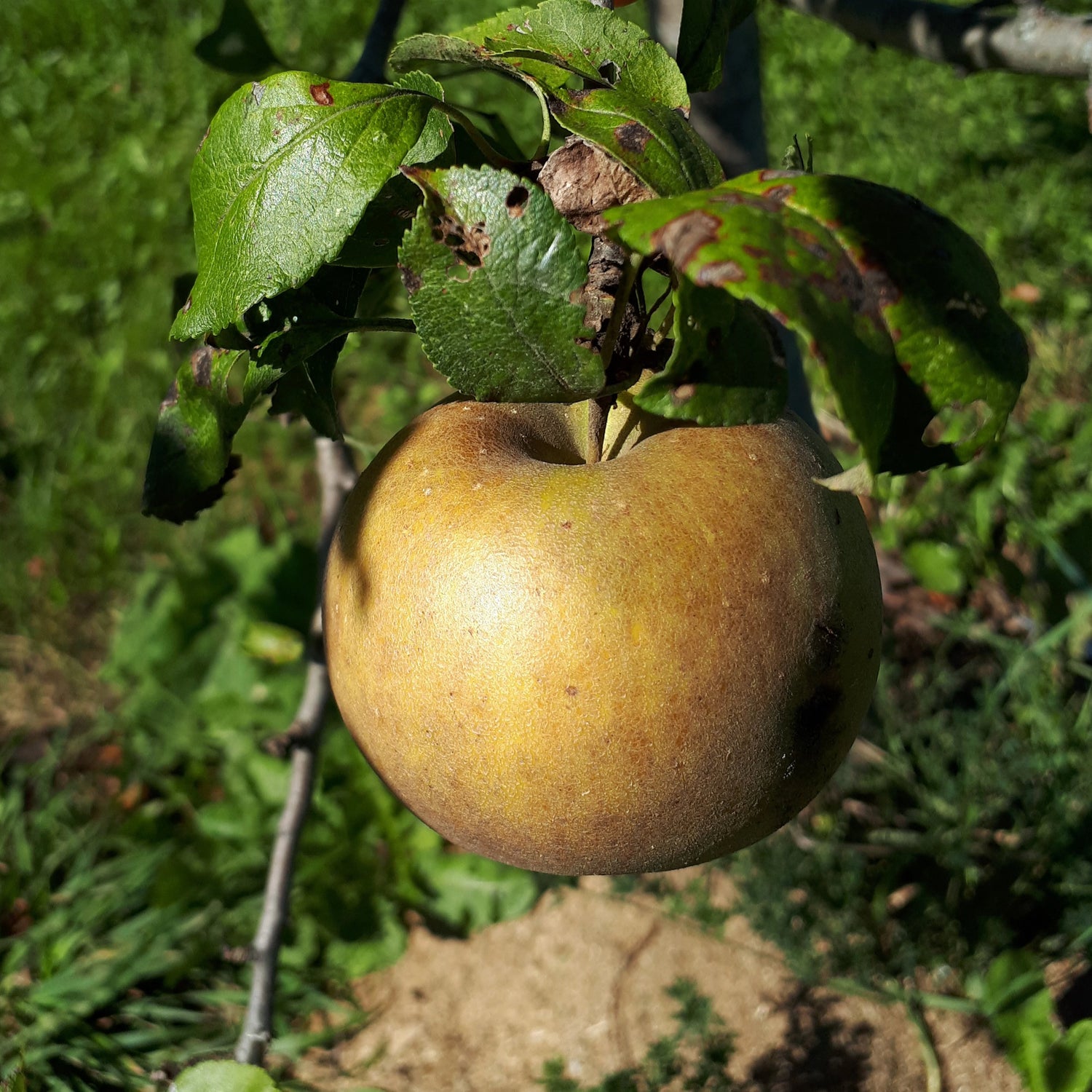


History: Egremont Russet first emerged in Britain in the early 1870s and has remained popular ever since. Even today, it is the third most common apple grown commercially in England.
Why We Grow It: Although the russet, a thick rough skin, coating this apple can be an acquired taste, there is a reason this apple has remained so popular. The fruit itself is an attractive gold dotted with yellow and it has an excellent sweet, nutty flavour. They are delicious fresh, when used for cooking, and in ciders. The trees are known for producing good, regular crops.
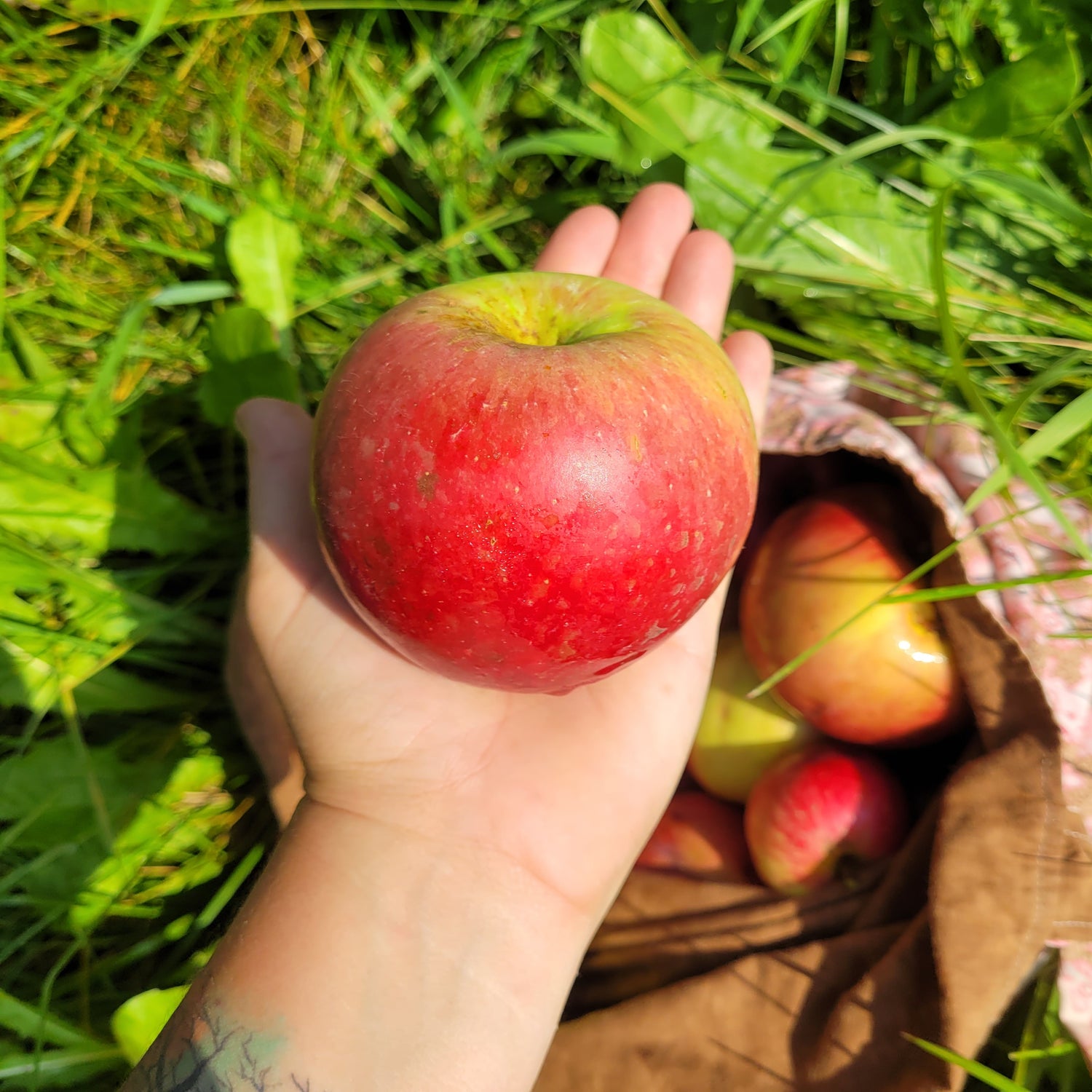
History: Wealthy apples were created by horticulturalist Peter Gideon after spending years trying to breed an apple variety that could survive Minnesota's harsh winters. With the very last of his money, he purchased seeds and scions in 1868 in one final attempt and was able to produce the Wealthy apple which he named after his wife, Wealthy Gideon. He gave scions away freely and Wealthy became one of the top five apples grown in the US.
Why We Grow It: A medium to large sized apple, Wealthy makes splendid applesauce, but is also very good for fresh eating with a balanced sweet-tart crunch. The tree is scab resistant and cold hardy, makes an excellent pollinator for other apples, and is well-suited for organic orchards.

History: Jonathan has an interesting history since there are two potential origins. One story says that Rachel Higley collected apple seeds from the local cider mill which she later grew on her new property in Ohio in 1796. She named one of the new varieties Jonathan after a young boy who often visited her orchard. The second, and more likely story, is that it was grown by farmer Philip Rick in the 1820s in New York. Originally named Rick, the apple was renamed Jonathan after the man who brought it to the attention of the Albany Horticultural Society.
Why We Grow It: These cheery red apples are crisp, juicy, and sweet. They are good for fresh eating as well as turning into pies and sauce. The fruit also stores quite well, lasting until January/February under optimal conditions.

History: Idared apples were developed at the University of Idaho Agricultural Experiment Station in 1942. Although its flavour is generally considered average, its excellent storage qualities have made it one of the most popular apple varieties in North America.
Why We Grow It: Idared's best quality is its ability to easily last six months when stored in a fridge, potentially until June under optimal storage conditions. The flesh tends to be softer and is white with some tinges of green. The flavour is described as sprightly, moderately acidic, and tangy, and this apple boasts a high Vitamin C content. It is great for baking and making applesauce. The tree's naturally somewhat smaller size makes Idared easier to prune and train.
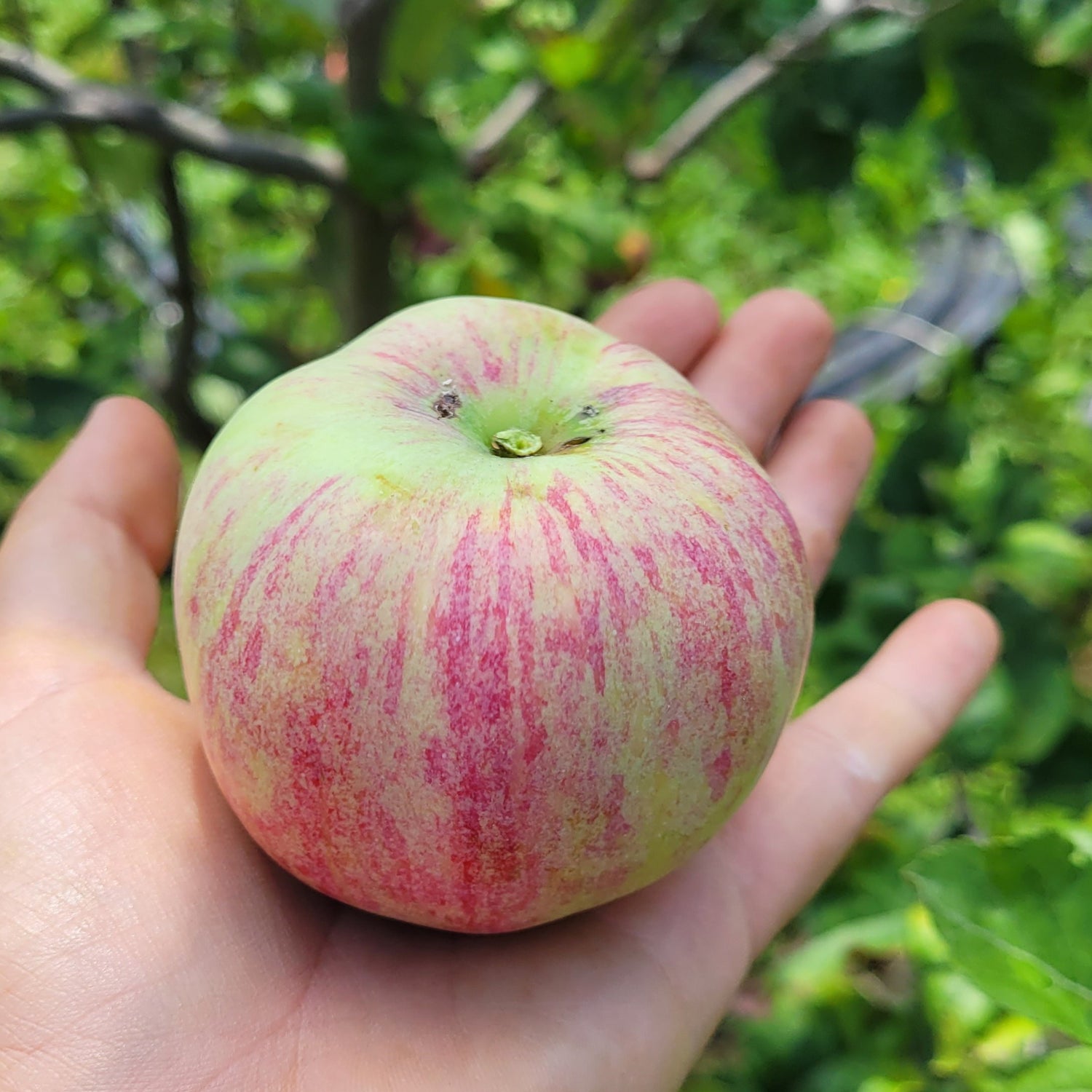
History: This cold-hardy apple was developed in the prairies and is for growing in colder, northern areas.
Why We Grow It: This unique apple produces a yellow fruit with red stripes. It is a rather uncommon variety and is great for sauce. It has begun producing reliably in our test orchard the last few years, and always has a bountiful crop.
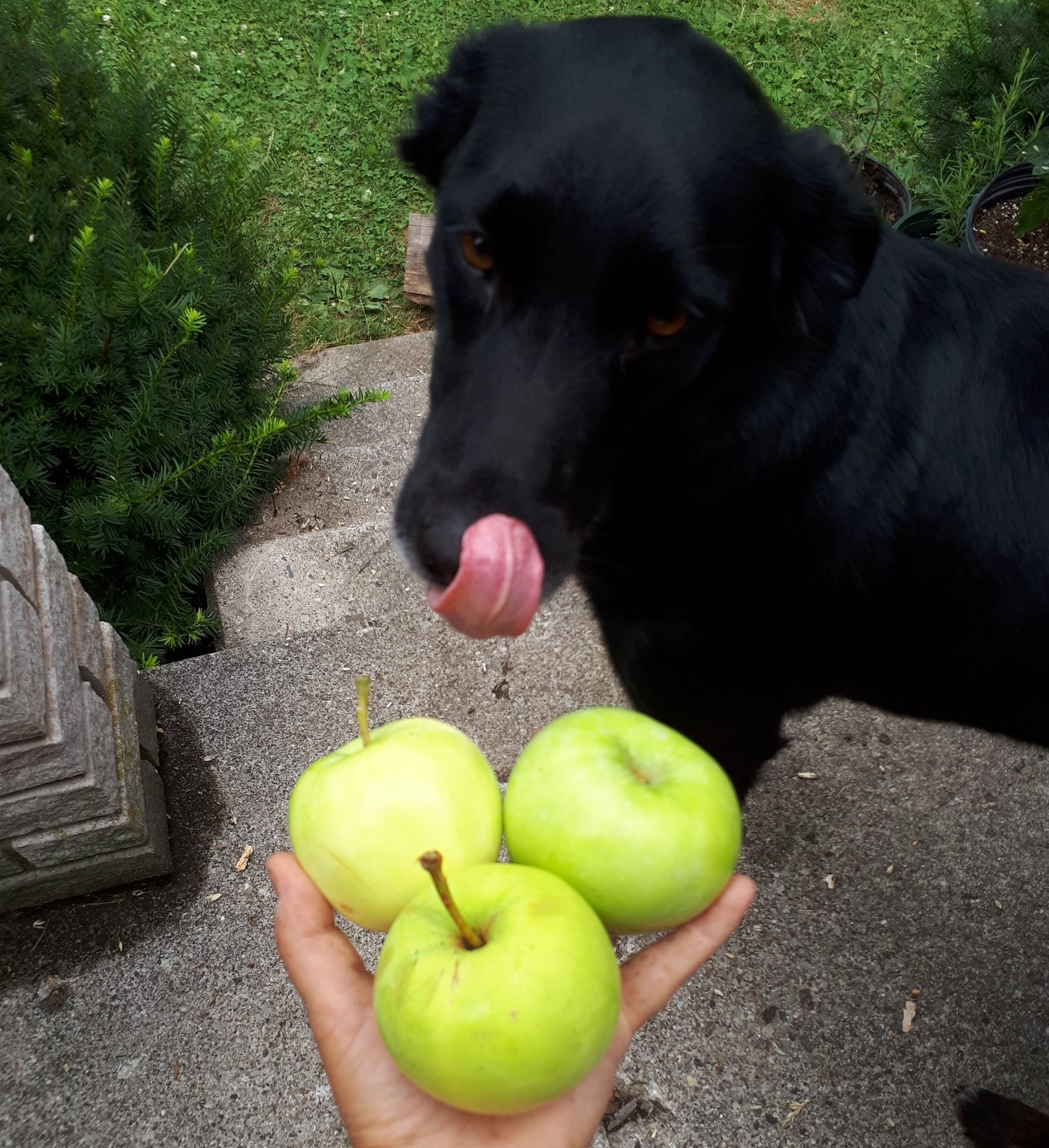
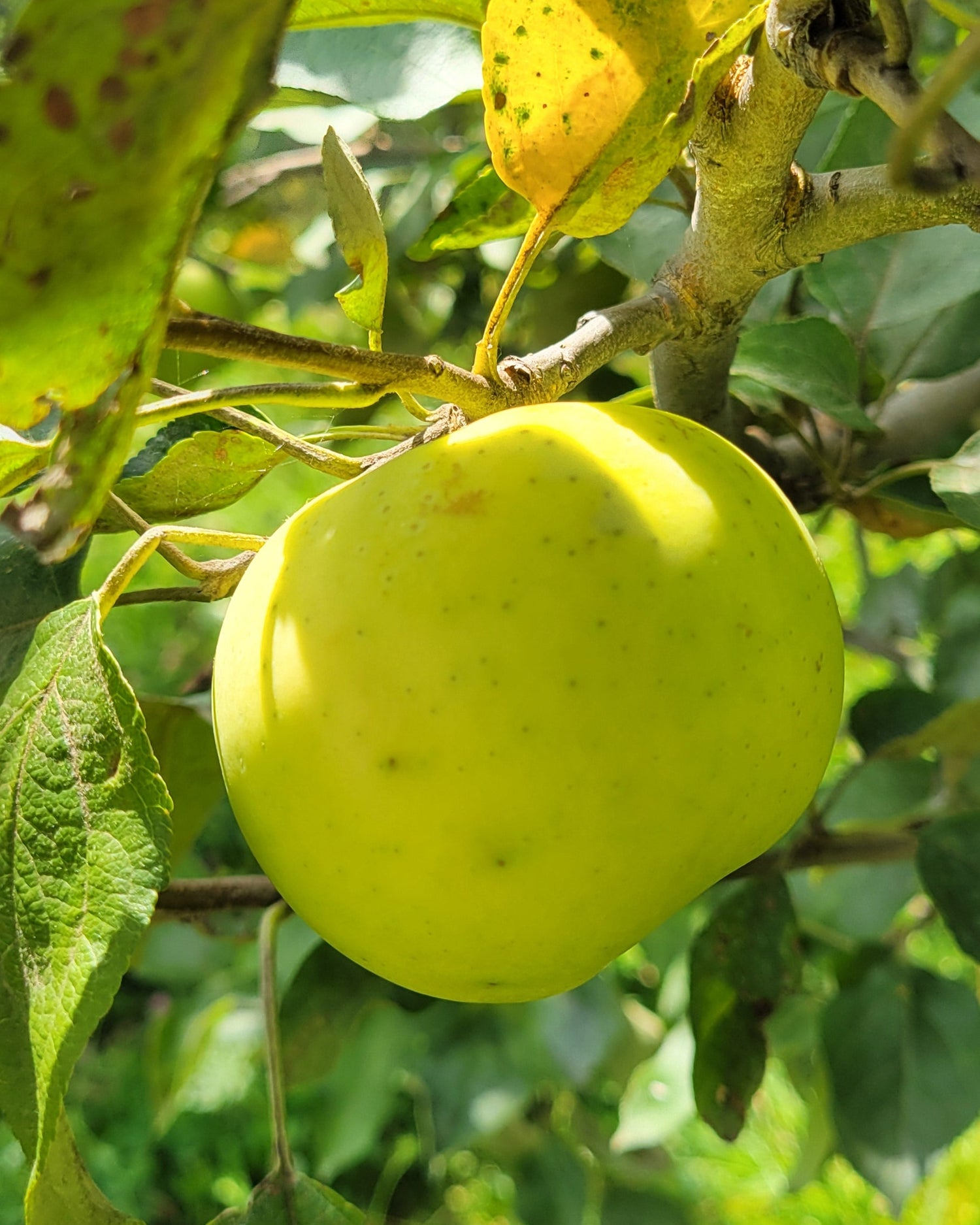
History: Yellow Transparent (aka White Transparent and Glass Apple) originated as a chance seedling in a nursery in Riga, Latvia around 1850. At the time Latvia was part of the Russian Empire so this variety is often considered Russian. Due to its early ripening and cold hardiness, this variety was widely grown in Europe, especially northern countries, where it is still grown today. It was imported to the US in the 1870s as part of an effort to import cold hardy Russian species that could potentially survive in states with harsher winters and became quite popular.
Why We Grow It: This classic early apple deserves a home in every home orchard. The fruit features pale yellow skin that almost looks transparent and white flesh with a sharp, sweet flavour. It can be eaten fresh but also makes a great applesauce. Like many early ripening apples, the fruit does not last long.

History: Jonagold, a cross between Golden Delicious and Jonathan, was developed in 1953 at the New York State Agricultural Experiment Station at Cornell University. With its large size and sweet flavour, it has become one of the most popular apples in North America and is especially popular in Belgium.
Why We Grow It: The fruit is attractive with a red blush over yellow skin. It has a pleasant sweet-sour flavour that makes it a great multi-purpose apple.


History: Little is known about the origin of this heritage apple, but Tolman Sweet has been highly valued since its discovery. It is uncertain whether it came from Massachusetts or New York in the 18th or 19th century but it was first recorded in 1822. This hardy tree was used as a source of rootstock at one time.
Why We Grow It: Tolman Sweet is a great all-purpose apple. The fruit are medium-sized with yellow skin, and have a distinctly sweet, dry flesh. They are nice for fresh eating but can also be used in baking, drying, and pickling. Their unusually low acid content helps to reduce acidity in both sweet and hard cider.
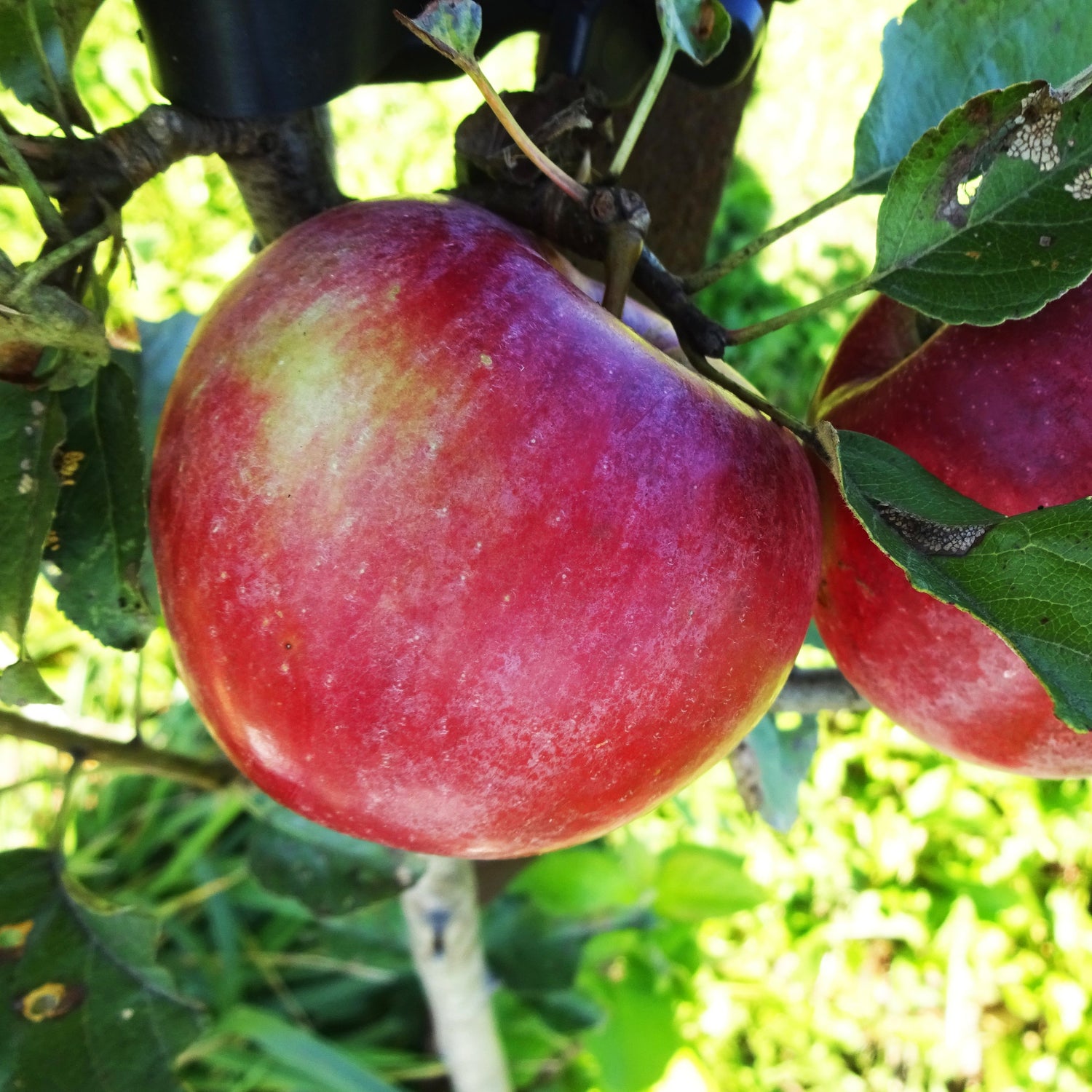
History: Sweet Sixteen was developed by the University of Minnesota and introduced in 1977. It is one of nearly thirty varieties released by the university since its breeding program began in 1888.
Why We Grow It: Some apples taste better when grown in colder climates, and Sweet Sixteen is one of them. For a fresh-eating apple, this is a favourite. Sweet Sixteen provides that crisp first bite that so many people love in an apple, and the pure white flesh will not disappoint for flavour with a very unique, distinct honeyed flavour. Its cold-hardiness and general disease-resistance (tolerant of scab and cedar rust) make it winner for the grower too.
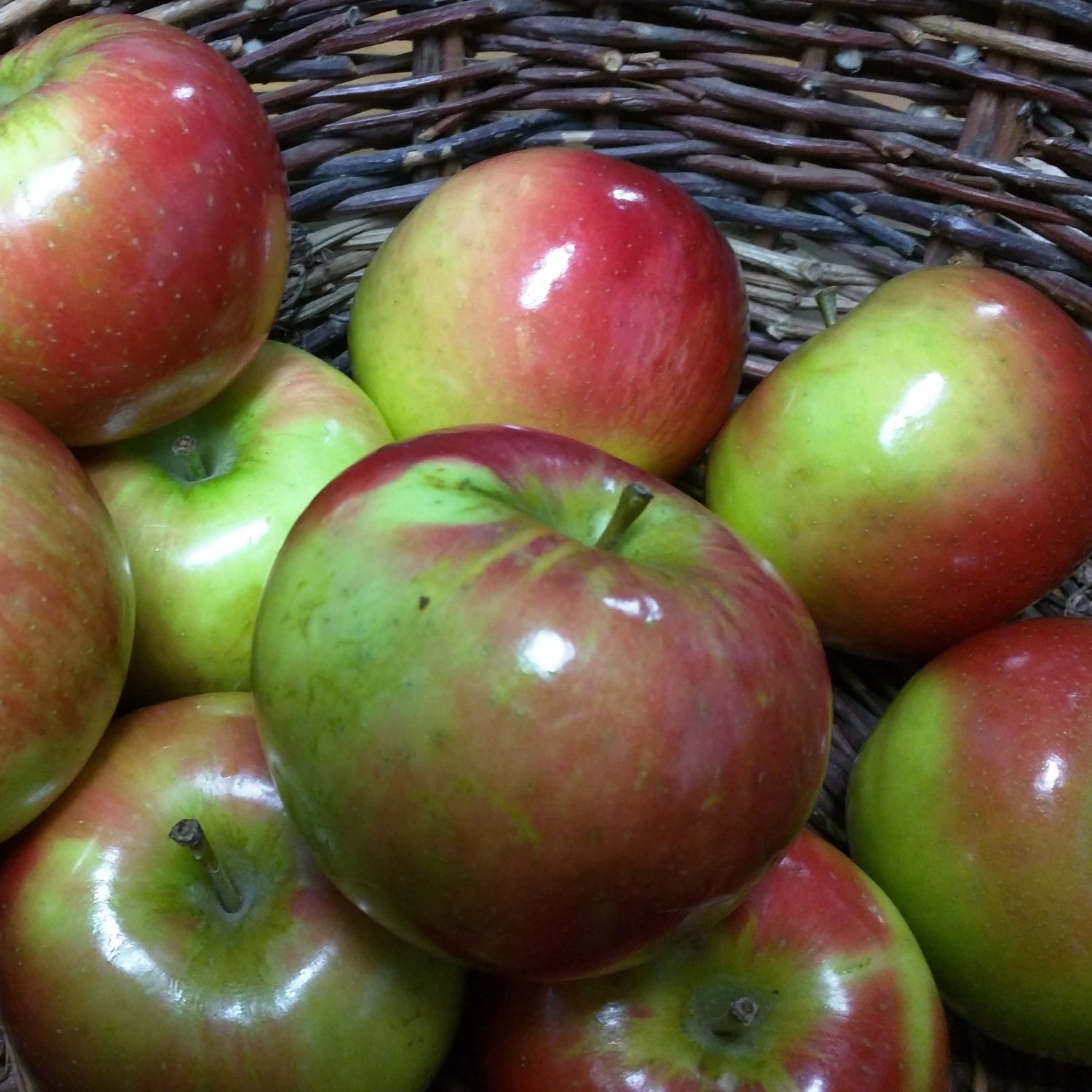
History: Honeycrisp apples were developed by the University of Minnesota in the 1960s and released in 1991. It is one of almost thirty varieties created by the university's breeding program since it began in 1888. The excellent flavour of Honeycrisp has allowed it to become one of the most popular apples in North America and in 2006 it became the state fruit of Minnesota.
Why We Grow It: Honeycrisp is popular for a reason. The apples are large and attractive with good flavour under favourable growing conditions. However, they are not an apple for beginner growers due to issues with some diseases especially in storage, but with diligent care you can produce these crunchy sweet apples in your own backyard/orchard.
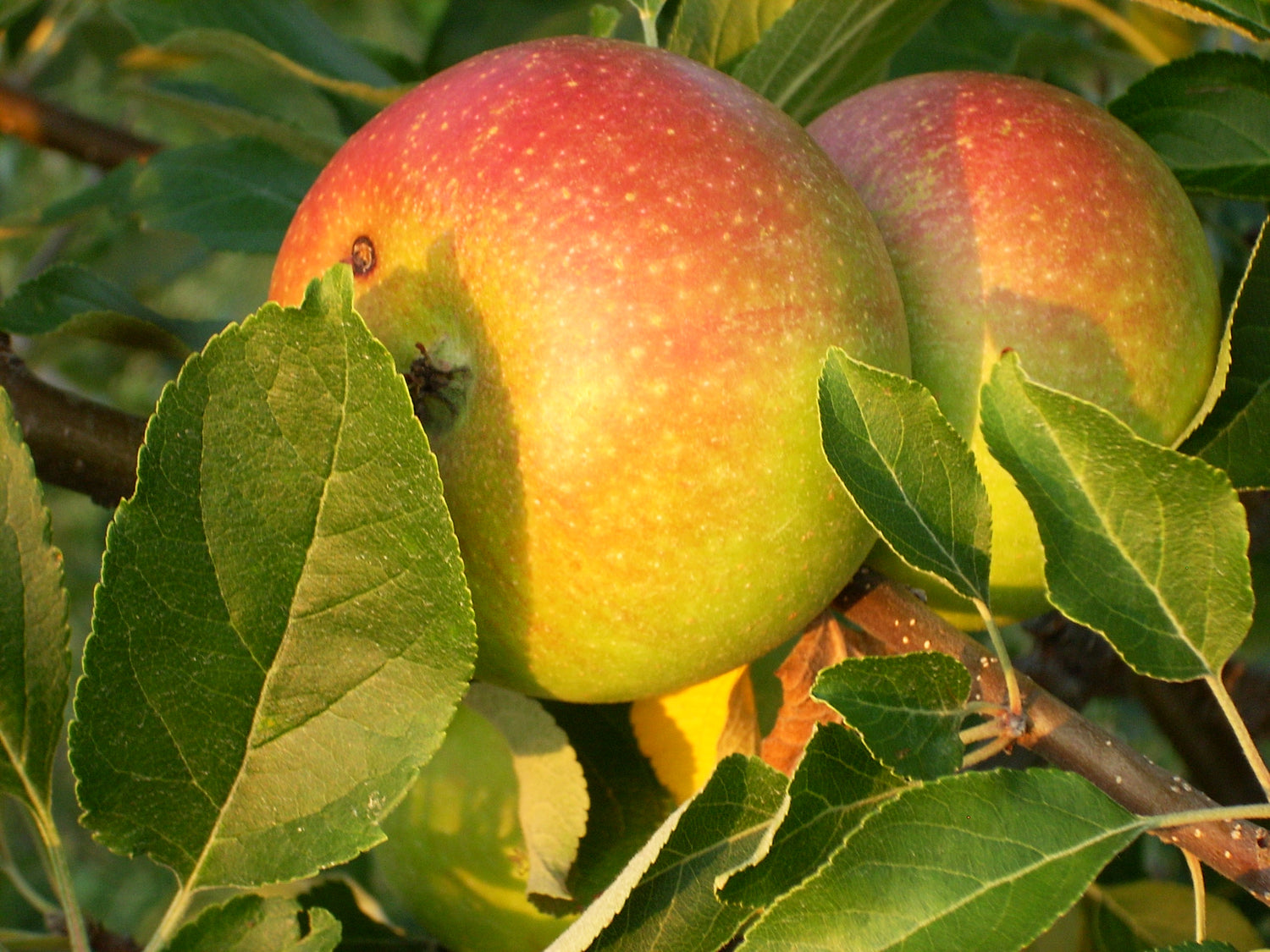
History: Cox's Orange Pippin was first grown in England in 1830 and was named after the retired brewer and horticulturalist who first bred it, Richard Cox. Its excellent flavour has earned it a spot as one of the best fresh eating apples in England where it has remained popular ever since. In fact, it still accounts for over 50% of fresh eating apples grown in the UK today. Despite its reputation, it is seldom grown commercially in North America due to its precocious nature and susceptibility to many common apple diseases.
Why We Grow It: This apple's reputation is hard to ignore with its sweet, subtle, aromatic flavour and attractive orange-red skin. Not only is it good for fresh eating, it is also popular in cider blends.


History: Fresco, also known by the brand name Wellant®, was developed through a fruit breeding collaboration between Inova Fruit and the Applied Plant Research at the Wageningen University and Research Center in the Netherlands. The goal was to create an apple variety that better aligned with changing consumer tastes. It was bred in the late 1900s and named Fresco during the years it underwent various tests before being released in 2004 under the brand name Wellant®. It is primarily grown and sold in Europe.
Why We Grow It: Fresco produces a large, deep red fruit that is crunchy with a strong flavour high in both sweetness and tartness. It is excellent for fresh eating and can be used in baking and cooking as well. An excellent multi-purpose apple!


History: Liberty was developed by the New York State Agricultural Experiment Station in Geneva, NY, in 1955 and released in 1978. It is a cross between Macoun and a Japanese crabapple (Malus floribunda), bred in hopes of achieving the disease resistance of the Japanese crabapple.
Why We Grow It: The creators of Liberty were highly successful in their goal, creating one of the most disease-resistant varieties. Liberty is a favourite for organic production as a result. The fruit is bright red with sweet, creamy flesh and it stores well.


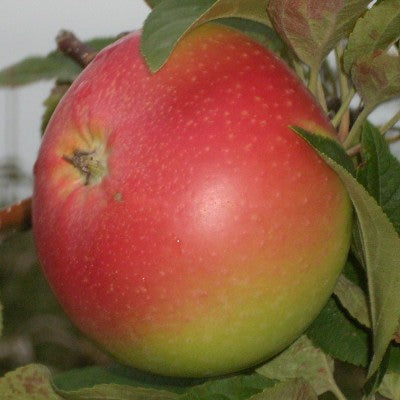
History: Winter Banana originated on David Flory's farm in Indiana around 1876. It was named Winter Banana due to the apparently banana-like aroma it gives off when ripe. It is also named Flory Banana or Flory Apple after David Flory. Winter Banana was grown on the west coast and gained some popularity in England and Germany. The thin skin of this variety is easily bruised which prevented it from being a commercial variety but it is still commonly found in gardens and farmer's markets.
Why We Grow It: This all-purpose apple is extremely attractive with pale yellow skin and a pinkish-red blush. The banana-like aroma is accompanied by sweet flesh with an acid tang. The flavour improves in storage and the apples can be kept all winter.

History: Discovered in New Zealand by farmer O. Moran in 1952, Braeburn took the world by a storm, becoming one of the most popular commercial apples in the United States and parenting many modern cultivars such as Jazz and Sweetie.
Why We Grow It: Its winning sweet-tart flavour wrapped in an attractive orangey-red skin makes it an excellent fresh eating apple. It is firm and holds its shape well when cooked, and keeps about 4 months. This variety is fairly disease susceptible, meaning it is better for the experienced natural grower or conventional orchards. It is moderately vigorous and a heavy cropper.
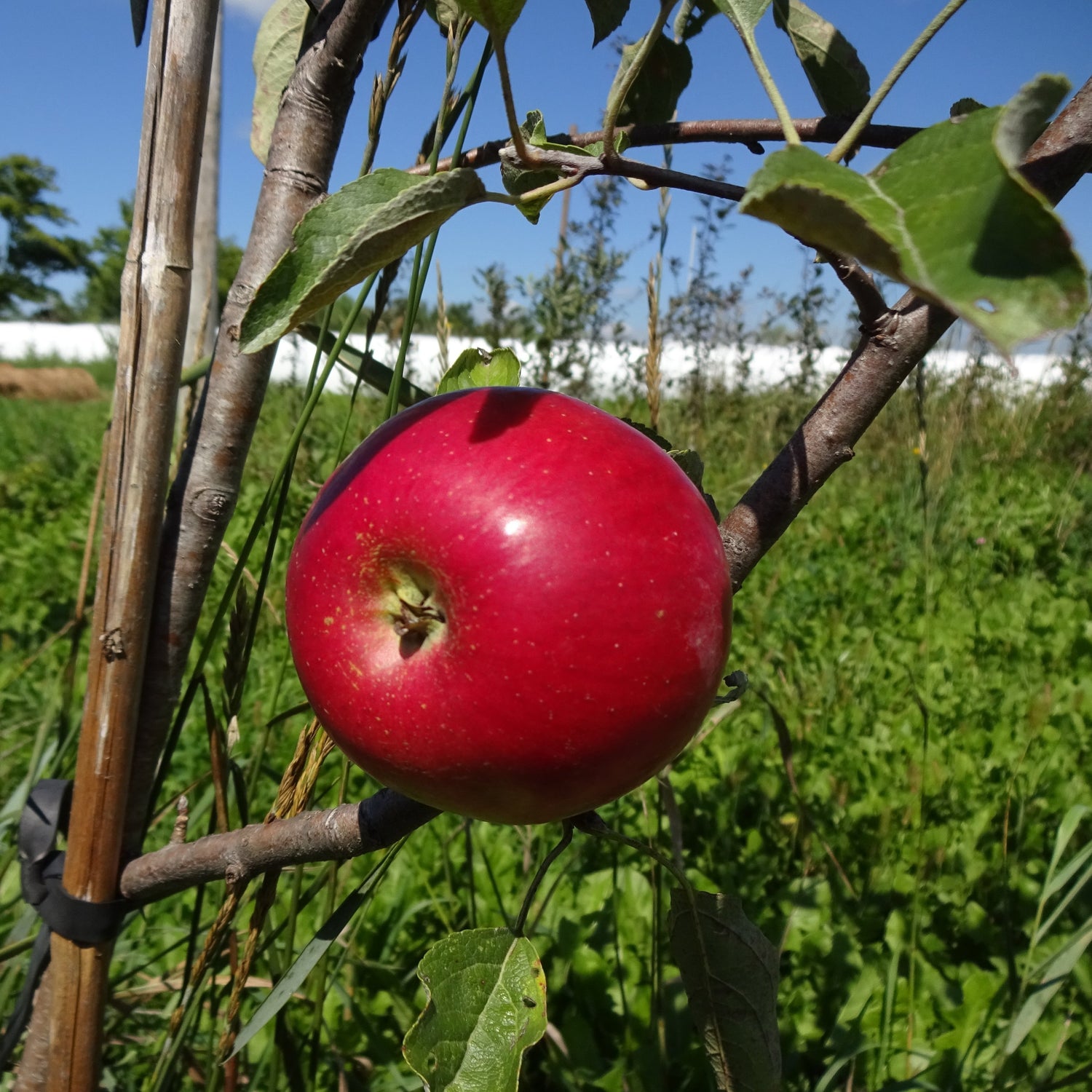
Why We Grow It: This crisp, sweet apple is great for fresh eating and has bright red skin. It tends to begin bearing at a young age and is relatively diseases resistant.

History: Vista Bella was created at Rutgers University in New Jersey in the 1950s and released in 1974. Although its poor keeping ability prevents it from being a commercial success, this early ripening variety is still a nice way to herald in the apple harvest season every year.
Why We Grow It: Vista Bella is the first red apple of the season. The flavour and texture are of better quality than other early apples, making Vista Bella an excellent choice for early farmer’s market sales and roadside stands. The flesh is crisp and juicy, although it softens quickly and, like other early apples, does not keep long.
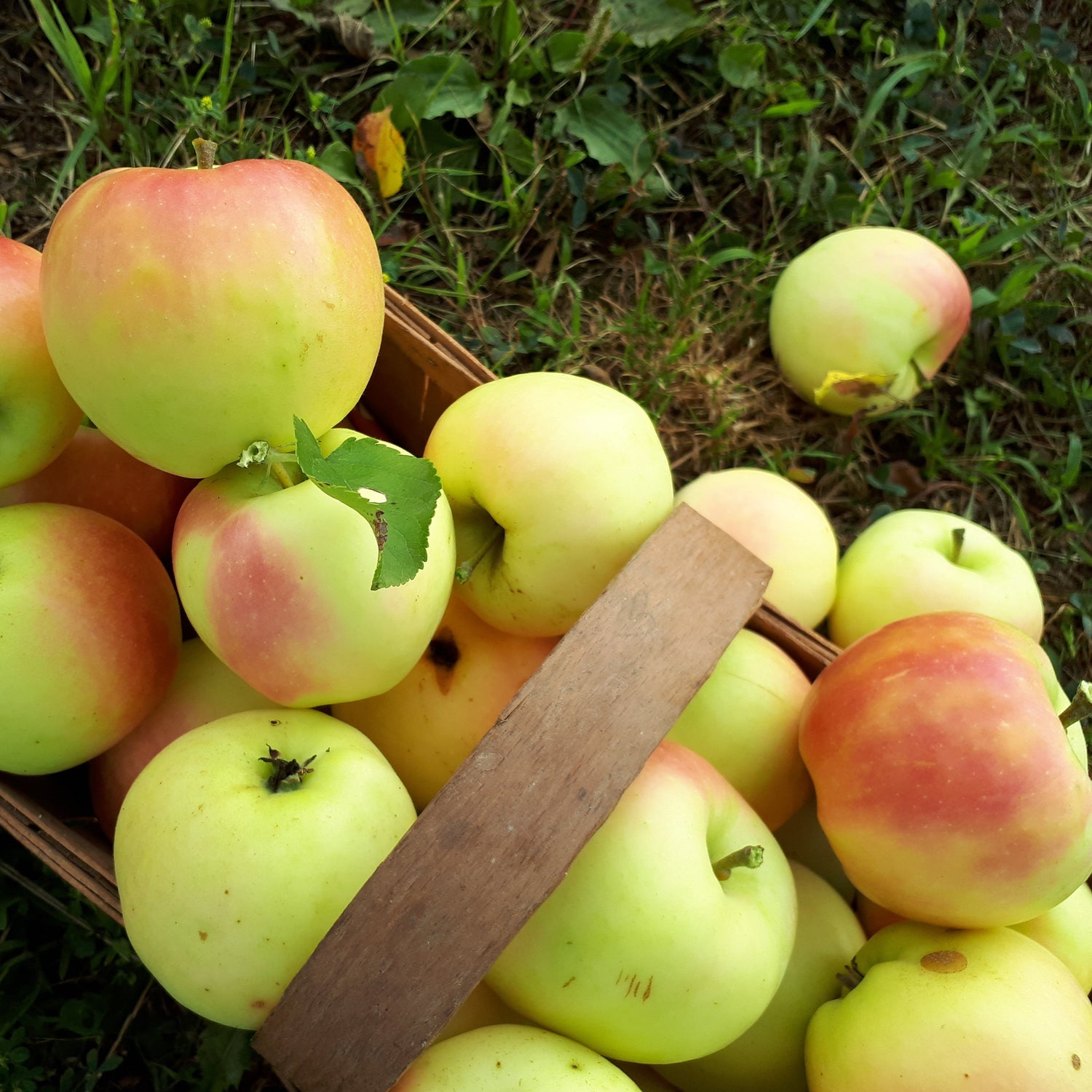
History: Pristine is another variety that was developed through the collaborative PRI disease-resistant breeding program run by Purdue University, Rutgers University, and the University of Illinois. It was introduced in 1994.
Why We Grow It: The program was successful with this apple which boasts a decent disease resistance, and performs very well in our orchard. The fruit is an attractive yellow-gold colour with a pink blush where the sun hits it, and the flesh is dense and white. It has a refreshing, sharp flavour and is good for fresh eating if you enjoy a good tart apple! Unlike many early season apples, it has a higher sugar content and stores decently well.
History: Whitney crabapples were grown from seed by nurseryman A.R. Whitney around 1865 at Whitney Nursery in Illinois, US. It became popular for its excellent cold hardiness and productivity and in the 1900s the state of Montana recommended it as one of the best crabapple varieties to grow.
Why We Grow It: These large (for a crabapple) yellow and red apples boast a sweet-sharp flavour with some astringency and juicy, crispy flesh. They are a truly multipurpose fruit and can be eaten fresh (if you like some astringency to your apple) or used for cooking, sauce, cider, and jelly. The trees are very cold hardy and boast good disease resistance as well.

History: Royal Gala is a natural sport (mutation) of the Gala apple that was patented by Stark Bro's Nurseries in 1977. It boasts a deeper red colouring than the original Gala which makes it more visually appealing. In New Zealand, where the Gala apple originated, it has been almost entirely replaced by the Royal Gala in commercial growing operations.
Why We Grow It: Like the Gala apple, Royal Gala is popular for a reason. It is juicy and crisp with a sweet flavour and the fruit stores quite well.

History: Granny Smith was discovered by Maria Ann "Granny" Smith as a chance seedling on her and her husband's farm in Australia in 1868. Having grown from apple seeds she had tossed, she found it to be an exceptional apple. She propagated it and brought the apples to market, earning the variety local popularity. She passed away two years later but local growers kept the variety going until it was noticed by the New South Wales Department of Agriculture in 1895. Thanks to its excellent shelf life, it became an important agricultural export and remains one of the most popular apple varieties in the world today. There has been an annual Granny Smith Festival in Eastwood since 1985 to commemorate Maria Ann Smith and her apple that attracts over 80k attendees each year.
Why We Grow It: This classic green apple barely needs an introduction! It is well known for its sweet and sharp flavour that is a delight for fresh eating and for its usage in cooking and baking. As an added bonus, Granny Smith also keeps well in storage and tends to start producing fruit at a young age.
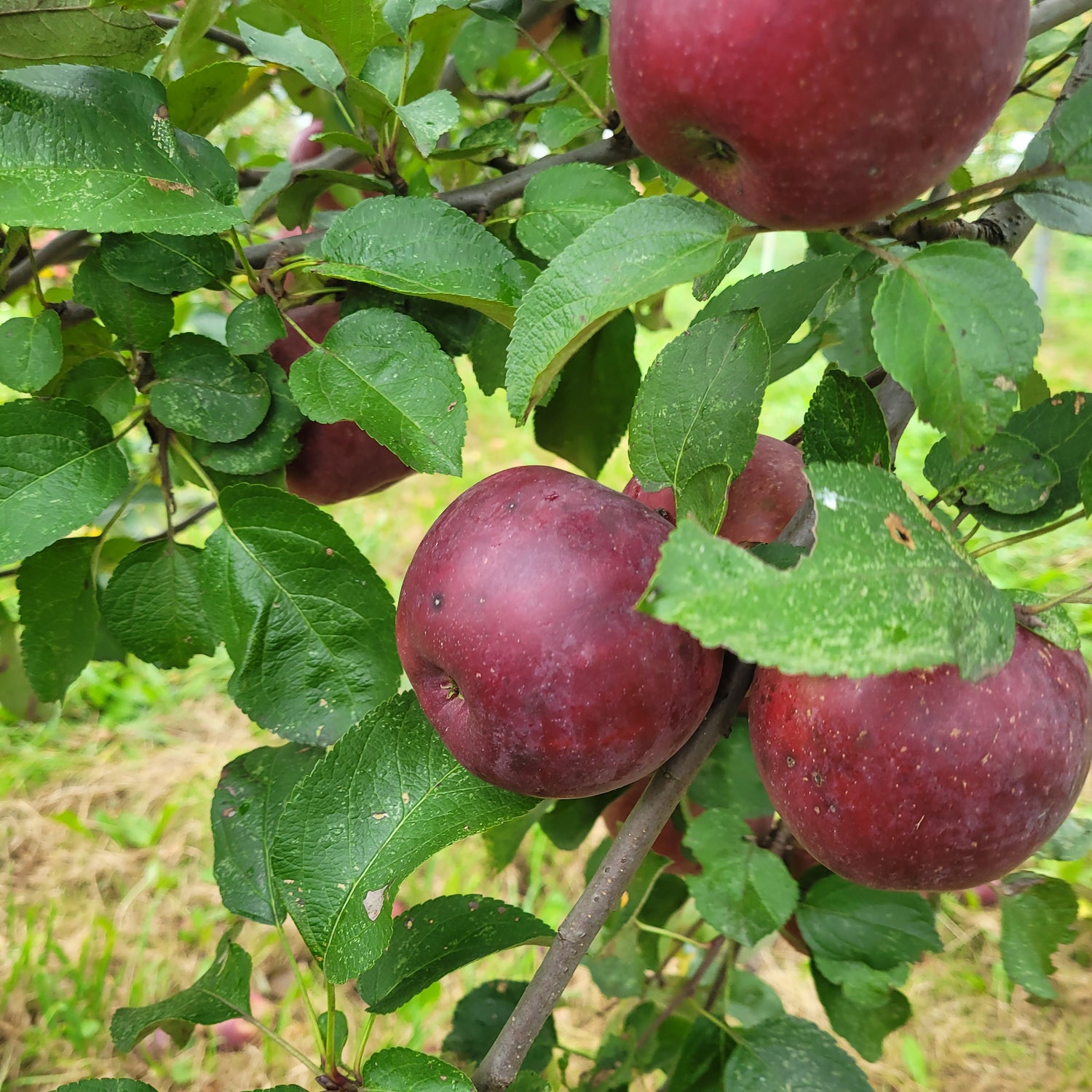
History: Spartan apples are a Canadian variety that was developed at the Pacific Agri-Food Research Centre in Summerland, BC in 1936 by Dr. R.C. Palmer. Of particular interest is the fact that Spartan apples are the first apple variety created by a formal scientific breeding program. They have been popular in North America ever since and are even commonly found in gardens in the UK.
Why We Grow It: This variety is known for its sweet/acid flavour and pleasant crunch, especially when eaten fresh off the tree. They tend to soften rather quickly after they are picked but luckily the fruit hangs on the tree 2-3 weeks after its ripe which helps to extend the optimal time to enjoy this variety. Spartan apples are also known for being relatively easy to grow, having decent disease resistance, heavy crops, and an ability to keep all winter.

History: Ginger Gold has quite the dramatic origin. In 1969 Hurricane Camille hit Virginia and brought awful floods, devastating the orchards of Clyde and Frances "Ginger" Harvey. As Clyde Harvey went to save the few remaining trees in his Winesap orchard, he discovered a mysterious seedling that produced yellow apples instead of red. Genetic testing showed it was a seedling of Golden Delicious, Albermarle Pippin, and an unknown third variety. Clyde named the variety after his wife and it was introduced commercially in 1982. Since then, it has become a commercially popular early variety! In 2007, the Virginia General Assembly proposed a bill to make Ginger Gold the official state apple, although this bill was sadly tabled.
Why We Grow It: It is easy to see why this such a popular early apple! Ginger Gold produces lovely bright yellow apples that sometimes sport a red blush. These medium-large apples have are firm and juicy with a pleasant sweet flavour that has a nice tart finish. The fruit is slow to brown which makes them even better for fresh-eating along with drying. For fans of feeding wildlife, Ginger Gold apples are known to hang onto the tree well after they are ripe.


History: Karneval (translated from Czech as 'Carnival') was developed at the Institute of Experimental Botany in Prague in the Czech Republic by Dr. Jaroslav Tupý. It is a cross between Vanda and Cripps Pink. It was released in 2011 and like many other modern apples, boasts a sweeter flavour and good disease resistance. However, the main reason this apple was likely selected and given its fun name was for the bright red striped that adorn it.
Why We Grow It: Karneval is medium sized apple that is sweet, juicy and just a little tart and aromatic. However, this apple is best known for its unique appearance: yellow skin with distinct red stripes that would make it feel at home at the circus. Great flavour, striking visual appeal, good storage capabilities, and good disease resistance make this apple an excellent choice for any grower.
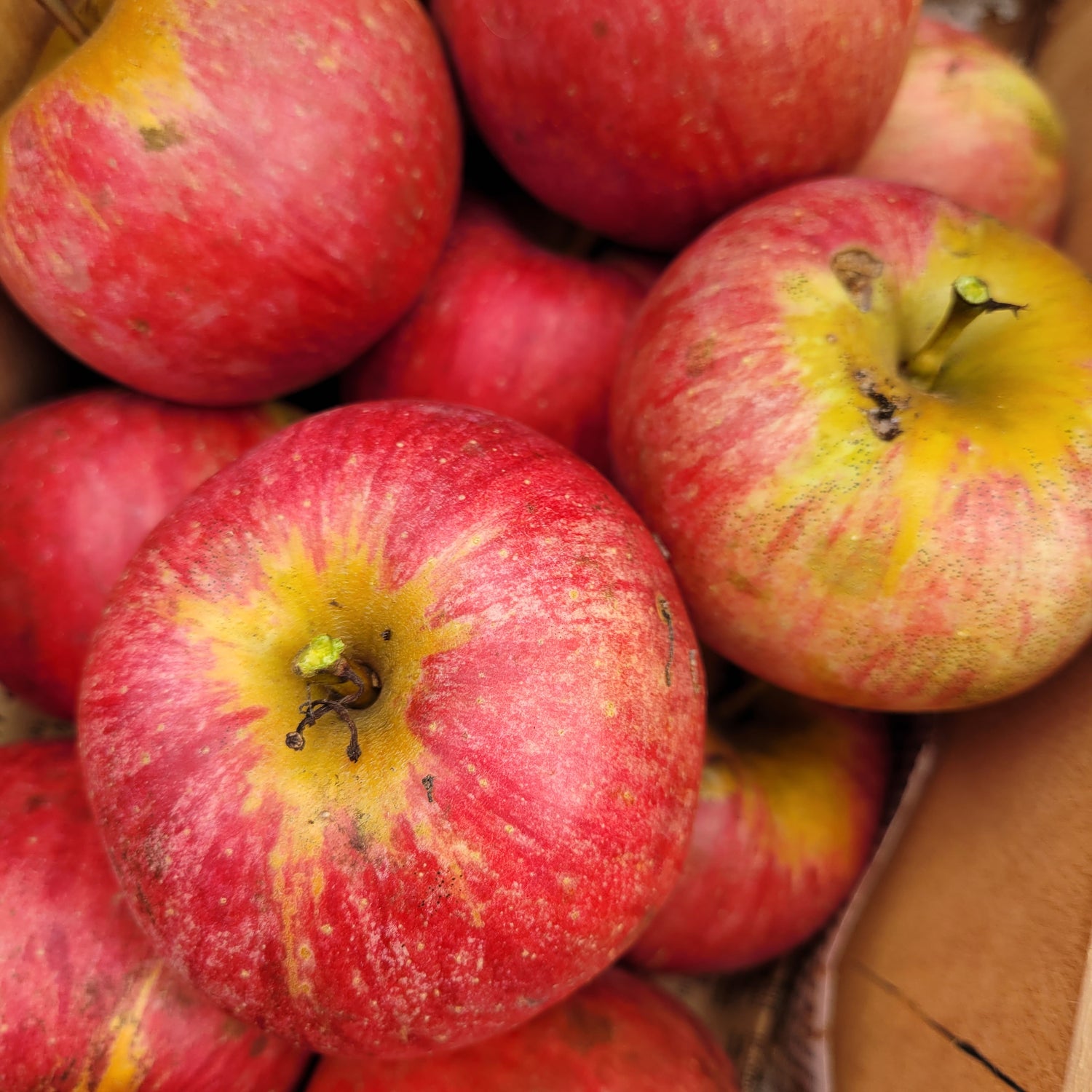
History: Northern Spy was first discovered in New York around 1800. It tends to be irregularly shaped and bruises easily, so it is not a popular commercial apple but it is still commonly grown in certain regions in the States today. It is featured in several poems and in 1953 a box of Northern Spy apples was sent to Senator Joseph McCarthy by the Toronto Globe and Mail during his infamous hunt for 'communist spies.'
Why We Grow It: Northern Spy apples are juicy with a balanced sweet-tart honeyed flavour, although they do tend to bruise easily due to their thin skin. To make up for that, they are known for making wonderful pies. The trees are cold hardy and vigorous.

History: Elstar apples were developed in the Netherlands in the 1950s and are a cross between Golden Delicious and Ingrid Marie. This excellent combination has created what is considered one of the best Golden Delicious offspring. Fittingly, it has since become quite popular in continental Europe. Despite being introduced to the US in 1972, it has not attained the same level of popularity in North America.
Why We Grow It: Elstar is a flavourful variety, fine for fresh eating or sauce with its crisp, juicy flesh; very little acidity. The skin is distinctive, sporting a orangey-red marbled appearance.


History: A highly regarded cider apple of Normandy, France, where it has been grown for centuries. This cultivar is one of the traditional cultivars in the production of calvados (a brandy made from apples and sometimes pears) in the Pays d’Auge region.
Why we grow it: This cider apple has a unique spicy flavour that is high in tannins, low in acidity, and low in sugar. With it's rich history and beautiful brass coloured juice, this cultivar is a must in every well-rounded cider orchard.
Photo credit: Trizek, CC BY-SA 4.0, via Wikimedia Common

History: Rouville apples were created by R.L. Granger and G.L. Rouselle in 1962 at the Agriculture and Agri-food Canada research centre located in St.-Jean-sur-Richelieu, Quebec. The variety was introduced in 1983.
Why We Grow It: This lovely Quebec cider apple has a wonderful bitter-sweetness that is great for fresh eating and juicing and sauce. It is resistant to scab and has grown very well in our test orchard.


History: Calville Blanc d'Hiver was discovered in France and first documented in 1598. It spread to other countries and was even grown by Thomas Jefferson in Monticello.
Why We Grow It: Known for its rather misshapen and lumpy appearance and the odd red splotches on its green skin, this apples exterior belies a strong, sweet-sharp flavour that makes it great for fresh eating, cooking, and cider. Some claim it rivals Bramley's Seedling as one of the best cooking apples with the added benefit that, unlike Bramley's, it holds its shape when baked or cooked. It is also boasts a high Vitamin C content.