In-Stock Apples
Malus domestica
A handy collection of all the apple varieties we currently have in stock!
108 products
Sort by:
108 products
108 products

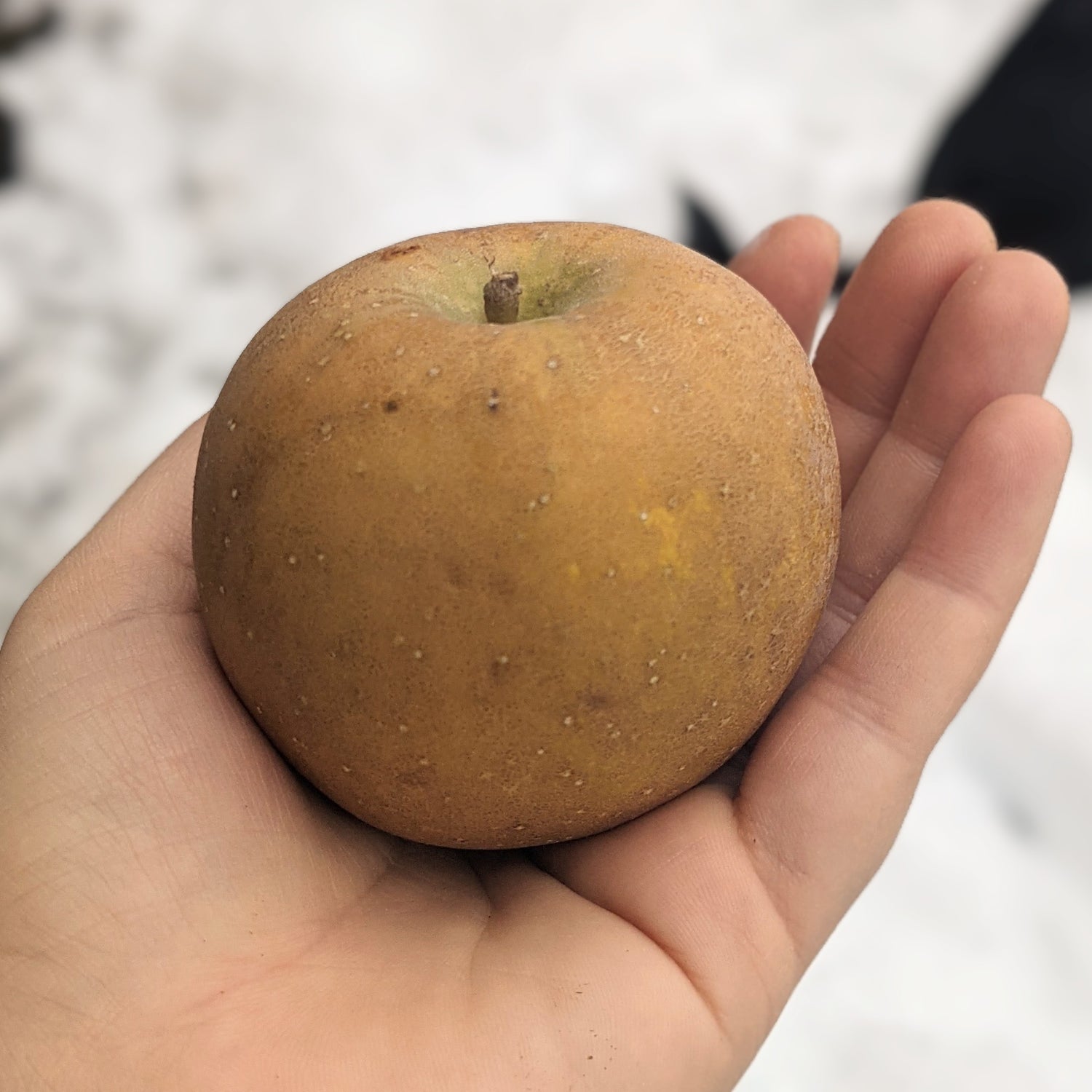
History: The origins of Golden Russet are unclear, but we know it was discovered in New York in the first half of the 1800s. It may have come from the seedling of an English russet variety and could have Ashmead's Kernel parentage. It was grown commercially for some time before falling out of favour, although it has regained some popularity recently due to its strengths in cider production.
Why We Grow It: With both lots of sweetness and acidity, Golden Russet is one of our favourites for fresh eating. The flavourful juice from these apples is also great for making cider. The thick russetted skin discourages insect damage and it is resistant to scab, canker, and powdery mildew. Its tip-bearing habit gives these hardy trees a wispy appearance.
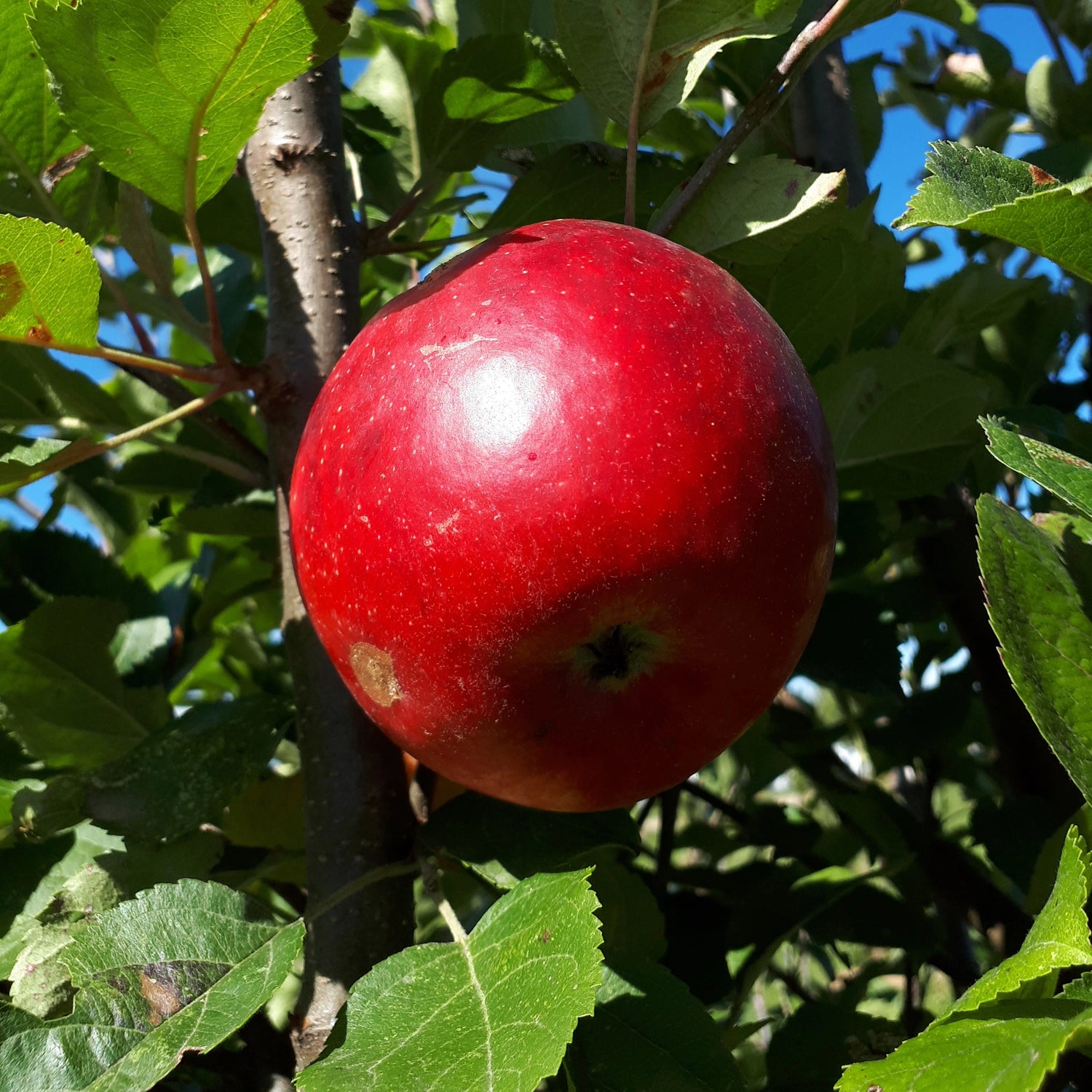
History: Freedom was developed in a breeding program at the New York State Agricultural Experiment Station in Geneva, New York in 1958. The goal was to create an apple that was immune to apple scab, and this particular variety was chosen from 120 other apples that were planted out from seed selected through an intensive breeding program. It was released in 1983 and given the name Freedom to represent its freedom from apple scab.
Why We Grow It: Low maintenance, disease-resistant, vigorous, good flavour, and a good keeper... all in one apple! Freedom is the perfect variety for growing organically, for pick-your-owns, backyards, and community orchards. Large red skinned apple, similar to McIntosh in flavour with sweet, subacidic, sprightly flavour and juicy white flesh. Crunchy, fine grained flesh.

History: This vintage quality cider apple is believed to have originated near Martock in England. This apple is so old it's not entirely certain when exactly it was first discovered, with estimates ranging from the 11th to 14th century.
Why We Grow It: This lesser-known apple is bitter with high acid, featuring a fruity flavour with a bitter aftertaste that is great when made into cider on its own or when mixed into a cider blend.
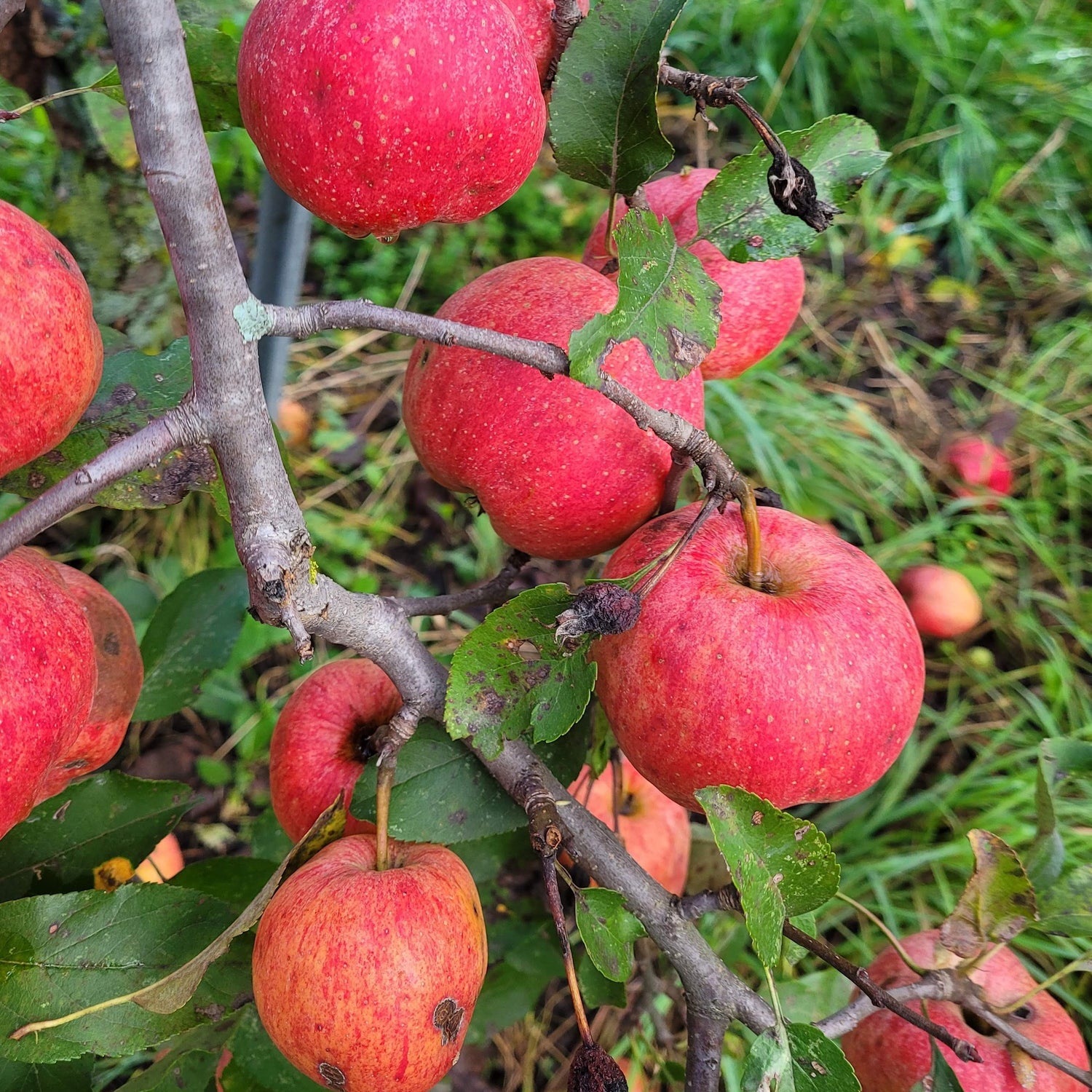
History: Gala apples are one of several varieties created by J.H. Kidd in New Zealand as part of his project to cross Cox's Orange Pippin with American varieties in the 1930s. He definitely succeeded with the Gala apple which has since become one of the most popular apple varieties worldwide and a mainstay in grocery stores.
Why We Grow It: This apple earned its popularity with its amazing flavour, especially when eaten fresh off the tree. Although many sports with a deeper red colour have been introduced and marketed as Gala, they often come at a compromise to flavour so we offer you the original Gala with full sweet crunchiness.
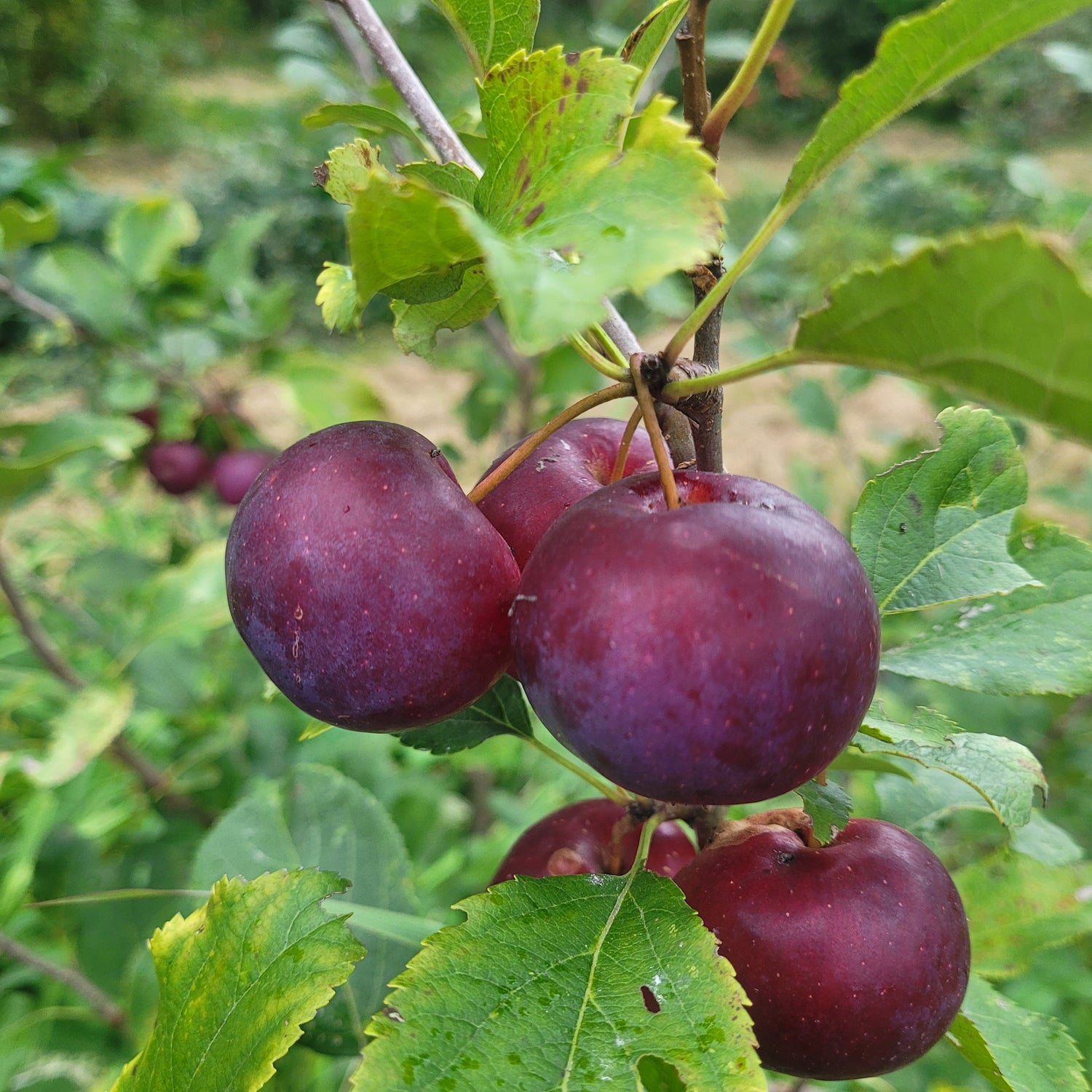
History: The exact origins of Hyslop are unclear but it was discovered sometime in the early 1800s around Boston by the Hyslop family who helped develop the area. This apple was popular for over a century but in recent years has fallen into obscurity.
Why We Grow It: Although definitely not recommended for fresh eating, Hyslop crabapples have a sub-acid, astringent flavour and are great in cider blends. They are also known as being one of the best apples for jellies. The tree is quite attractive with blue tinged blossoms in the spring and brilliant red/purple fruit in the fall.
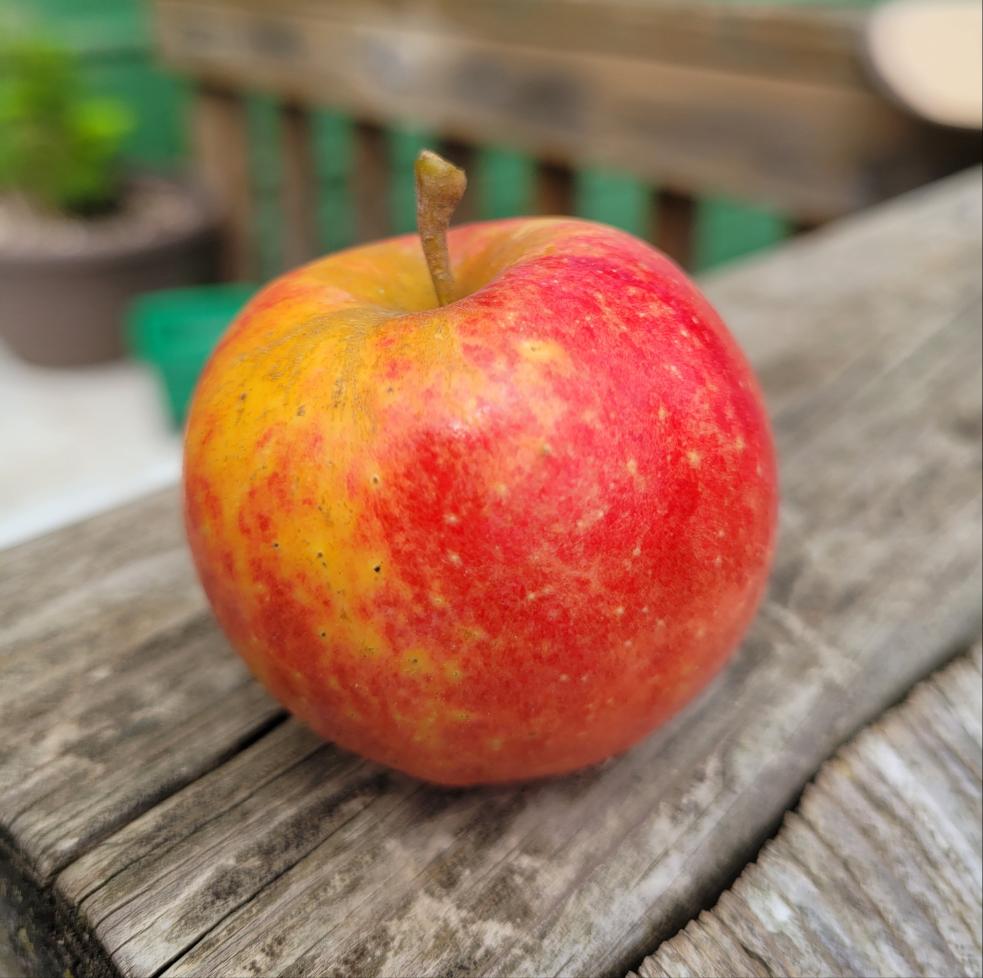
History: Norkent was bred as a cross between Haralson and Rescue at the Morden Research Station. It was one of tens of thousands of seedlings sent across the prairies as part of the Prairie Fruit Breeding Cooperative initiative by Agriculture and Agri-Food Canada in the 1960s. It was planted at the University of Alberta before being moved again to a backyard in Edmonton once the university ran out of space to it grow.
Why We Grow It: This pleasant and aromatic apple is one of the best fresh eating apples for colder climates! The flesh of this red apple is crisp and said to taste like a cross between an apple and pear.


History: Not to be confused with Pink Lady, Pink Pearl was developed by breeder Albert Etter who had the goal of creating red-fleshed apple varieties from seedlings of Surprise, a red-flashed variety. In 1940, he partnered with the California Nursery Company to bring some of these varieties to the public. Pink Pearl was selected as the best amongst his seedlings and released in 1945.
Why We Grow It: One of Steph's favourites! Pink Pearl is a delicious apple that is crisp with a pronounced unique fruity flavour and a nice blend of sweetness and sharpness. Its yellow-pink skin conceals a bright pink interior that is stunning to see compared to the white-ish flesh of most apples. It is great fresh or for applesauce, and it is relatively slow browning- it can be cut and bagged in the fridge the night before with very little change in colour the next day. Their pink colour adds a unique visual appeal to baked goods as well, such as with the gooseberry and Pink Pearl tarts Steph made pictured here!


History: Bulmer's Norman was imported from Normandy, France to England in the early 1900s by the cider making company H.P. Bulmer. This variety didn't even have a name when it arrived but quickly grew in popularity for use in making cider. This apple has since fallen out of the limelight and is primarily used for grafting other varieties onto its sturdy trunk.
Why We Grow It: Although less popular these days, this variety boasts vigorous growth, decent disease resistance, and a surprising tolerance for cold. This conical, green apple produces a bittersweet juice and is high in tannins.
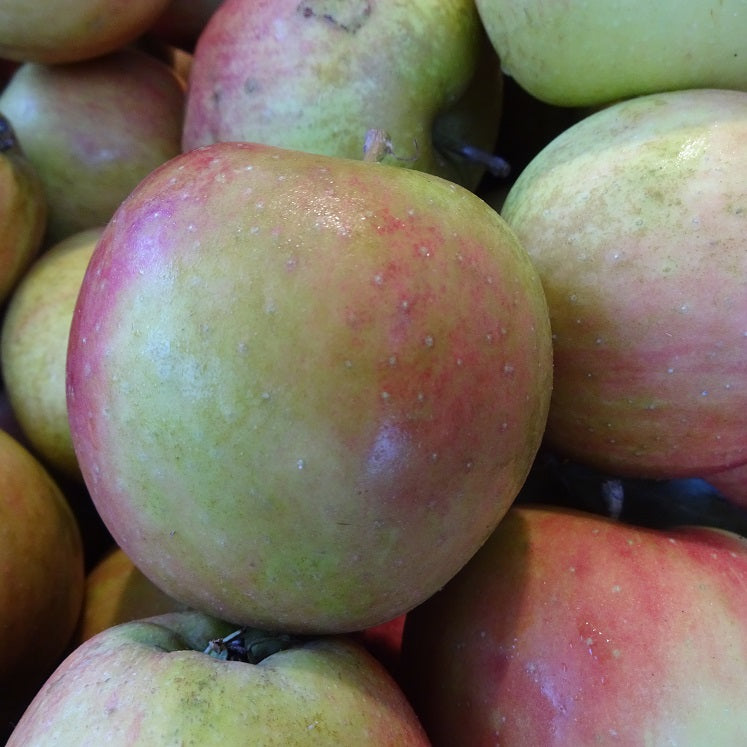
History: This apple was discovered as a chance seedling in 1856 in Boskoop, Netherlands where it has remained popular ever since.
Why We Grow It: Here's one for those of us who love some sharpness in an apple. With its sharp taste and large, greenish-red fruit, this apple is still popular at farmer's markets throughout Europe for both fresh eating and cooking (keeps its shape). It has value as a sharp in hard cider blends as well.

Why We Grow It: It is hard to turn down an apple that sounds as wonderful as Sundance! It is crisp and juicy with a spicy, citric flavour. Along with being great for fresh eating, the fruit also holds its shape well when baked. As an added bonus, this variety is resistant to many common apple diseases and stores quite well so you'll have plenty of high quality apples to easily last you through the winter.
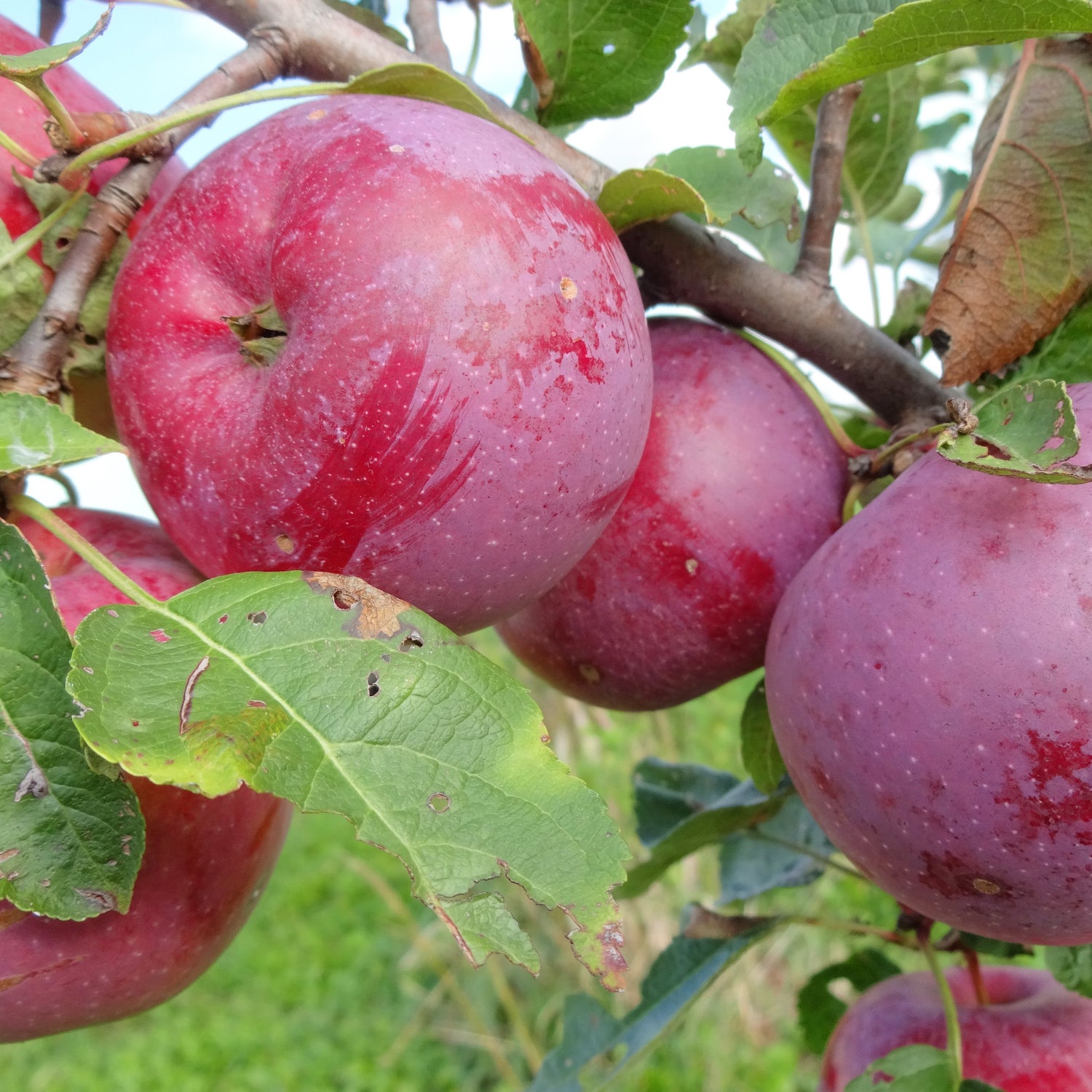
History: The creation and selection of Empire apples was a lot more intense compared to the chance origins of some of our older varieties. In 1945, scientists from the Cornell University New York State Agricultural Experiment Station collected thousands of seeds from the orchard of fruit nutritionist Lester C. Anderson. For years these seeds were grown and tested until Empire emerged as the best apple from amongst its siblings. It was released to the public in 1966 and has since become one of the top ten most popular apples in North America.
Why We Grow It: Empire is an excellent general-purpose apple for the Great Lakes area. The attractive green and red fruit is crisp and sweet and keeps well into the winter. The trees crop heavily and reliably, and the fruit is resistant to bruising, making life easier for the grower. They are also resistant to fireblight and cedar apple rust.


History: Redfree is one of the apples developed under the collaborative PRI disease-resistant breeding program run by Purdue University, Rutgers University, and the University of Illinois. It was bred in 1966 and officially introduce to the public in 1980.
Why We Grow It: Redfree apples are great for fresh eating with a pleasant, mildly sweet flavour and softer yet crisp flesh. The fruit does not ripen all at once, allowing a longer eating season. As its name would suggest, it has decent resistance to several common apple diseases.

History: John McIntosh planted several apple seedlings upon settling in Dundela, Ontario. From these, he discovered the famous McIntosh apple as a seedling in his orchard. The family began selling the fruit and grafted McIntosh trees in 1835 and in 1870 it entered commercial production. By the 1900s it was one of the most popular apples in northeastern North America, although its popularity waned over time as varieties such as Gala were introduced. Nonetheless, McIntosh apples still remain some of the most popular in North America. The original tree died in 1906 after being damaged by a house fire and a commemorative plaque marks where it stood. The apple has since been named Canada's national fruit. The Macintosh line of Apple computers was also named after this variety.
Why We Grow It: For fans of Canadian heritage apples in particular, this one is hard to beat. To the best of our knowledge, this is the original strain of McIntosh. Aside from its storied past, McIntosh apples boast soft, slightly tart flesh with high Vitamin C content. It is excellent for fresh eating and making applesauce.
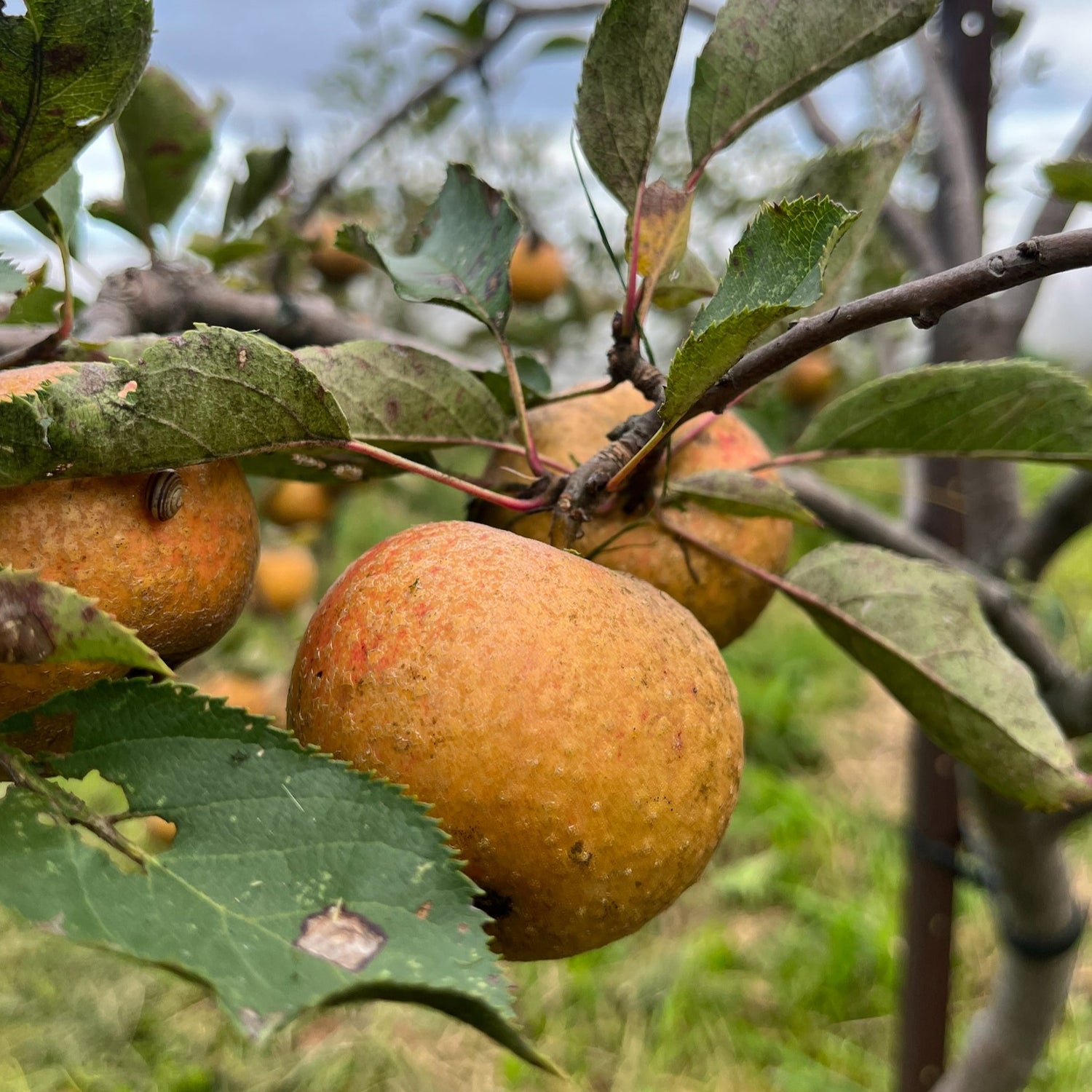
History: This unique apple, orangey-yellow-red undertones with russet over top, originated in the UK in the 1700s and has remained popular for over two centuries. There is some debate whether it was raised by a Dr. Ashmead or a lawyer named William Ashmead.
Why We Grow It: This Old World English apple has stuck with us thanks to it's unique flavour: nutty with notes of pear and spice. Fantastic fresh off the tree, and also in cider blends, Ashmead's Kernel mixes well with Cox's Orange Pippin.


History: Cortland apples were first bred in 1898 by Cornell University in New York and introduced in 1915. Since then, they have become one of the top fifteen apples in the US and Canada, although the majority are still grown relatively close to the university where they originated. While there are different versions of Cortland available with features such as redder skin, we are happy to offer the original!
Why We Grow It: Especially with older, popular varieties, we are always happy to offer what is, to the best of our knowledge, the original strain. Cortland is a sweet apple with crisp, juicy flesh. It is great for applesauce or drying as the flesh is slow to brown. The fruit keeps until Christmas under home storage conditions although the crispness and flavour does fade over time. This variety crops well annually and makes a good pollinator for others.


History: Duchess of Oldenburg, or Duchess as we like to call it, originated in the 1700s in Russia. It spread to other countries where it became popular, especially in Victorian England. Its popularity was so great that at one point it was used as a reference cultivar when evaluating other varieties of apples. It is also likely the parent of several other varieties such as Northern Spy.
Why We Grow It: Duchess boasts an attractive fruit that is striped and mottled red over light green. Although these apples don't store well, the flesh is soft and is excellent for pies and applesauce. The trees themselves are quite hardy and disease resistant.

History: In the 1830s in Lancaster County, Pennsylvania, a seedling apple tree grew beside the smokehouse of William Gibbons. Perhaps it sprang from a core that some one had tossed there while they tended the fire. Who knows? What we do know is that the aptly named Smokehouse was commonly grown in the area until its popularity waned as sweeter apple varieties appeared on the market. Still, this variety has stood the test of time due to its great flavour.
Why We Grow It: Traditionally Smokehouse apples are picked a little early and used for baking, but if they're allowed to ripen fully on the tree, some people have described the balanced flavour as being “like drinking fresh-pressed cider!”.


History: Woolbrook Pippin originated in 1903 at Woolbrook Nursery in the UK. It was discovered by J.H. Stevens and Son. It is a Cox's Orange Pippin seedling and received an Award of Merit from the Royal Horticultural Society in 1929.
Why We Grow It: Woolbrook Pippin produces a greenish apple overlaid with bright red stripes that is excellent for fresh eating. The fruit is firm, crisp, and juicy with a sweet, aromatic flavour balanced by a bit of tartness. This is a great choice for fans of Cox's Orange Pippin!

History: Golden Nugget was created more or less by accident when Golden Russet and Cox's Orange Pippin were crossed at the Kentville Agricultural Station in Nova Scotia in 1932. Despite being an accident, once researchers realized how flavourful this variety was they continued to raise it and eventually released it in 1964. Although a delicious apple, its small size prevented it from attaining true commercial success.
Why We Grow It: It is prized for its incredible flavour which is super sweet and tangy like a pineapple. Along with being great for fresh eating, it is also suited for cider. The tree itself boasts decent disease resistance.
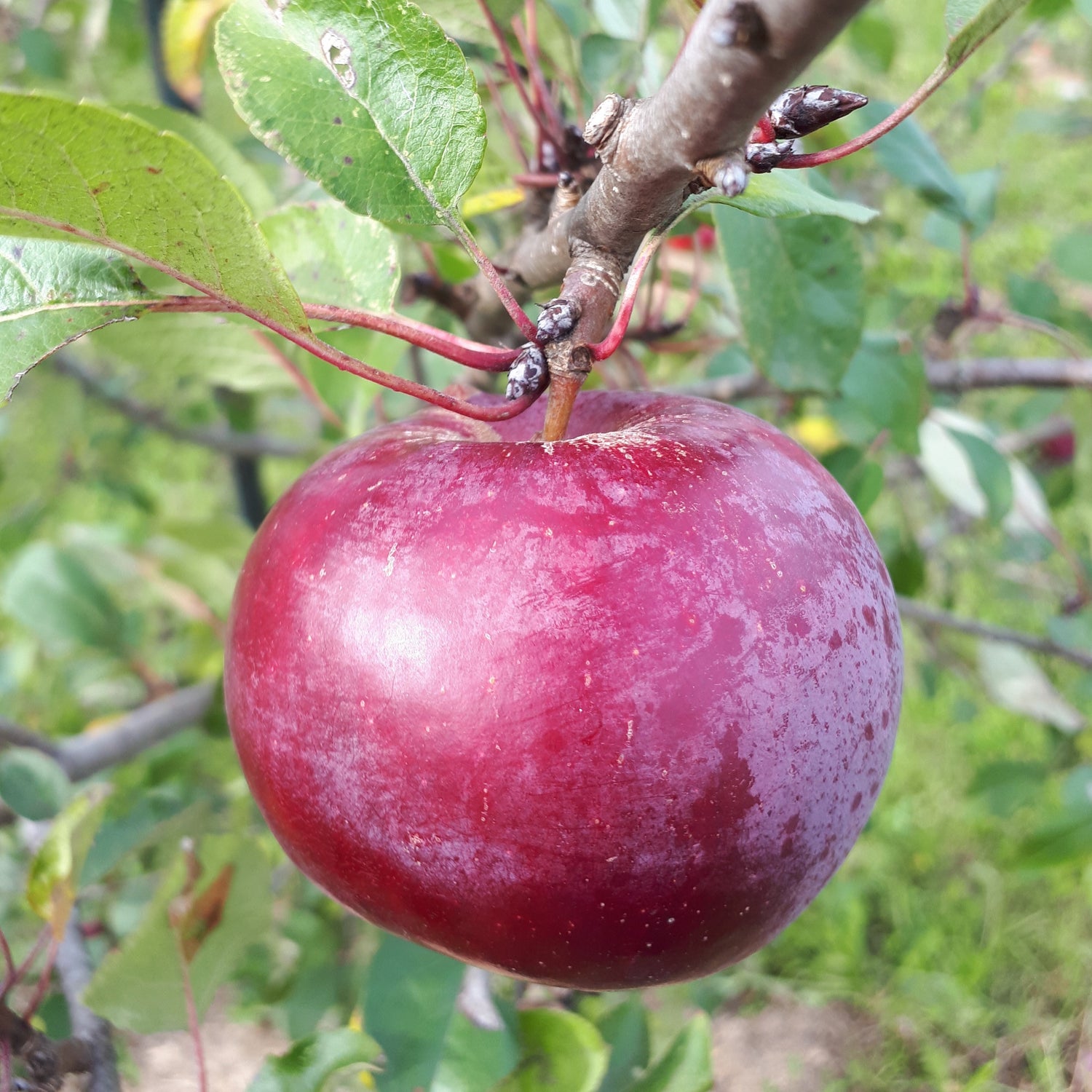
History: Novamac apples were developed at the AAFC Kentville Research and Development Centre in Nova Scotia and introduced in 1978.
Why We Grow It: Novamac is a variety that definitely deserved more attention. They are generally disease resistant and have proven to be very easy to grow in our test orchard where they are performing well. This apple has a nice vibrant tang but also lots of sweetness and notes of berry. The flesh is firmer than its namesake McIntosh, which it is descended from.
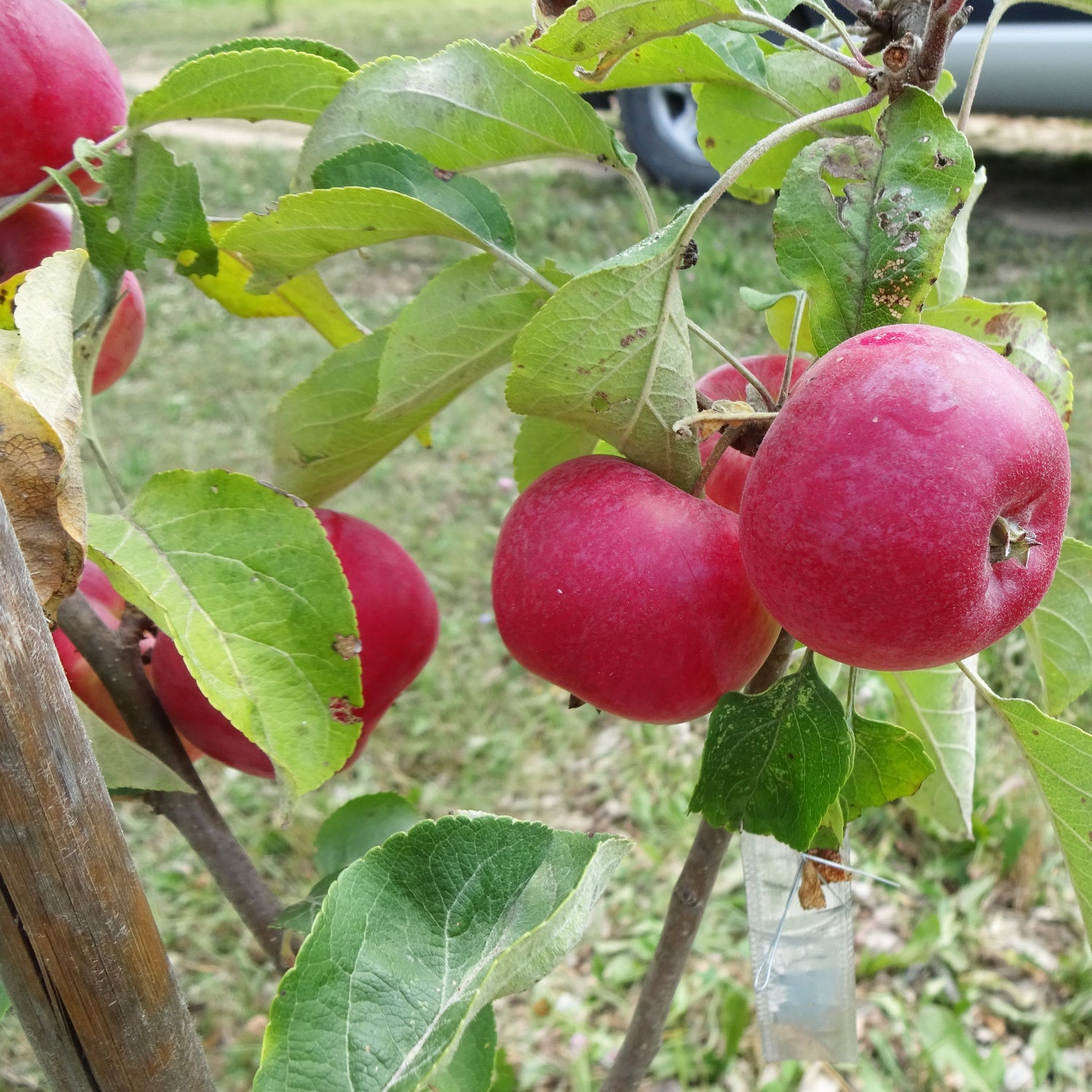
History: Parkland apples were variety created at the Morden Research and Development Centre in Manitoba and released in 1979. Like other varieties developed there, Parkland was designed to withstand the harsh prairie winters and is especially cold hardy. It has become the most commonly grown apple in Alaska after it was brought over in 1985 in an effort to determine which Canadian varieties could survive in the northern state.
Why We Grow It: Parkland is a very satisfying early season apple - sweet and crunchy. It's excellent snacking or applesauce although the fruit is small (about 2" diameter) with creamy flesh and red skin. The tree is quite hardy.

History: Twenty Ounce (aka Cayuga Redstreak) was discovered sometime in the early 1800s in Cayuga County, New York. It was first officially described in an 1844 issue of "The Magazine of Horticulture" by C.M. Hovey who called it Twenty Ounce due to its notable size.
Why We Grow It: These very large apples are excellent for cooking and make wonderful pies and applesauce. Save time with peeling and coring! They are a little tart for eating fresh, but makes an exceptional ingredient that keeps its shape when cooked.

History: Greensleeves was bred as a cross between James Grieve and Golden Delicious by Dr. Frank Alston at the East Malling Research Station in the UK in 1966. In 1981 it received the Royal Horticulture Society Award of Merit and was released the year after.
Why We Grow It: These round, golden apples have a nice sweet/tart flavour that mellows out with maturity. They are great for making juice or cider as well as fresh eating. The tree has low vigour so it naturally stays more compact, a useful feature if you don't have a lot of space.
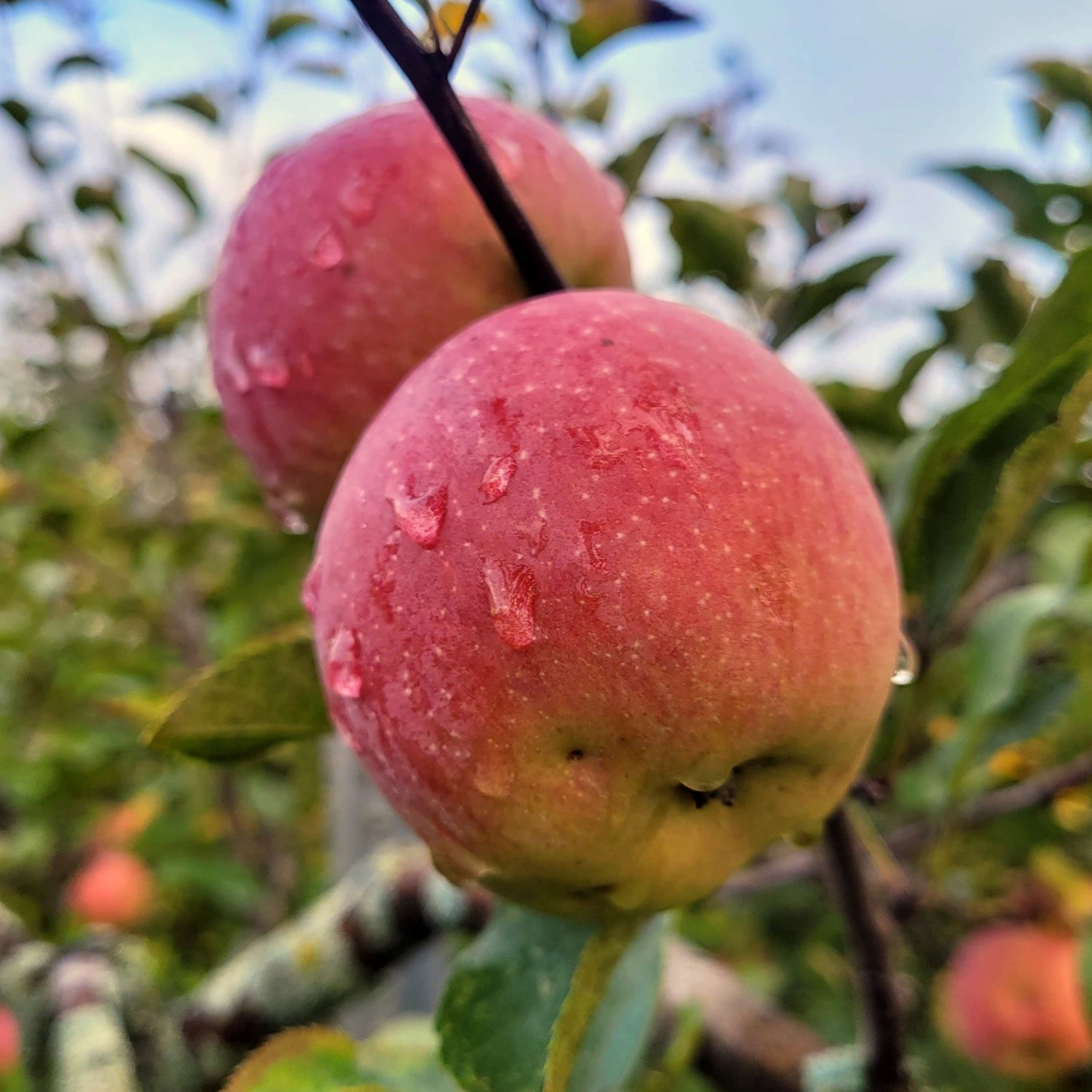
History: Fuji apples were developed at the Tohoku Research Station in Japan in the 1930s and released commercially in 1962. It was named after Fujisaki, the town where it was created. Despite being created in Japan, this apple is actually a mix of two American varieties. Its excellent flavour and attractive appearance has made it one of the most popular apples varieties in the world. It is commonly grown in the US, Japan, and China.
Why We Grow It: Its crisp, very juicy, sweet flesh makes Fuji a very popular variety. It also stores well, lasting about three months. To the best of our knowledge, this is the original strain.

History: Strawberry Pippin is another variety whose history we know little about. All we know is that it likely originated in England where it was first recorded in 1874. The 'pippin' in its name indicates that it was grown from seed by chance.
Why We Grow It: While we may not know much about its past, we do know why we are happy to grow it! Strawberry Pippin has an attractive red striped fruit which is quite firm and sweet. Its excellent flavour is best enjoyed picked fresh right off the tree. In our experience, Strawberry Pippin does well with minimal care, and is an excellent choice for the backyard.

History: Melba was developed by W.T. Macoun at the Central Experimental Farm in Ottawa in 1898. In 1924 it was released commercially and three years later received the Silver Wilder Medal from the American Pomological Society.
Why We Grow It: Melba is a lovely early market apple or backyard tree for making applesauce! The fruit is yellow with crimson flush and the crisp, white skin has a very sweet flavour.
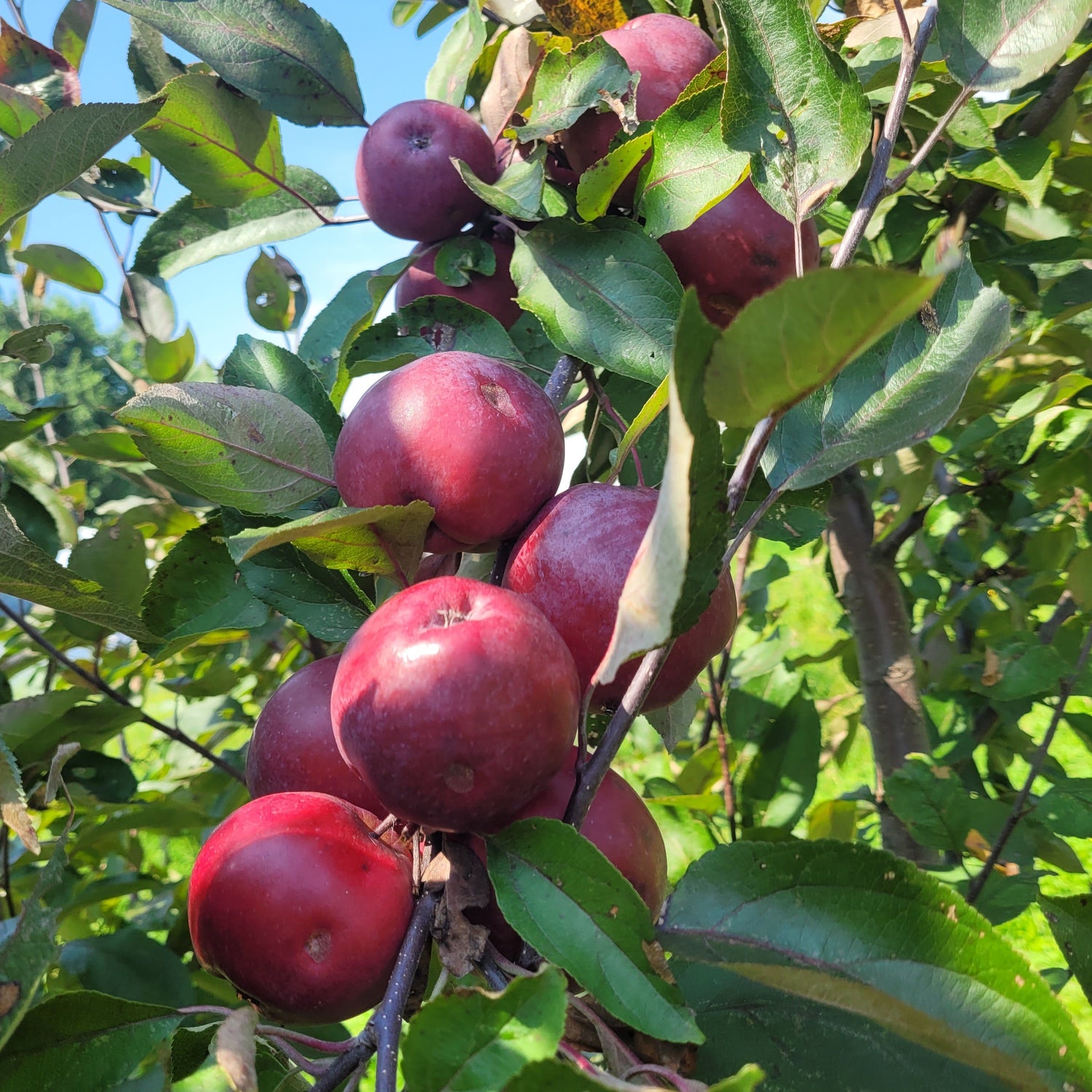
History: The Geneva crabapple was developed in the 1930s in collaboration with the Ottawa Experimental Farm and the New York State Agricultural Research Station based in Ottawa. The creation of this crabapple was head by Isabella Preston who specialized in creating cold-hardy ornamental plants.
Why We Grow It: This attractive crabapple has deep maroon flesh. The tree itself is quite visually appealing, sporting red leaves and bright pink flowers in the spring. The taste is reminiscent of rhubarb and is suitable for cooking as well. As it is a low sugar/high acid juice, it is best blended with another high sugar variety for cider. It also adds a nice red hue to blends.
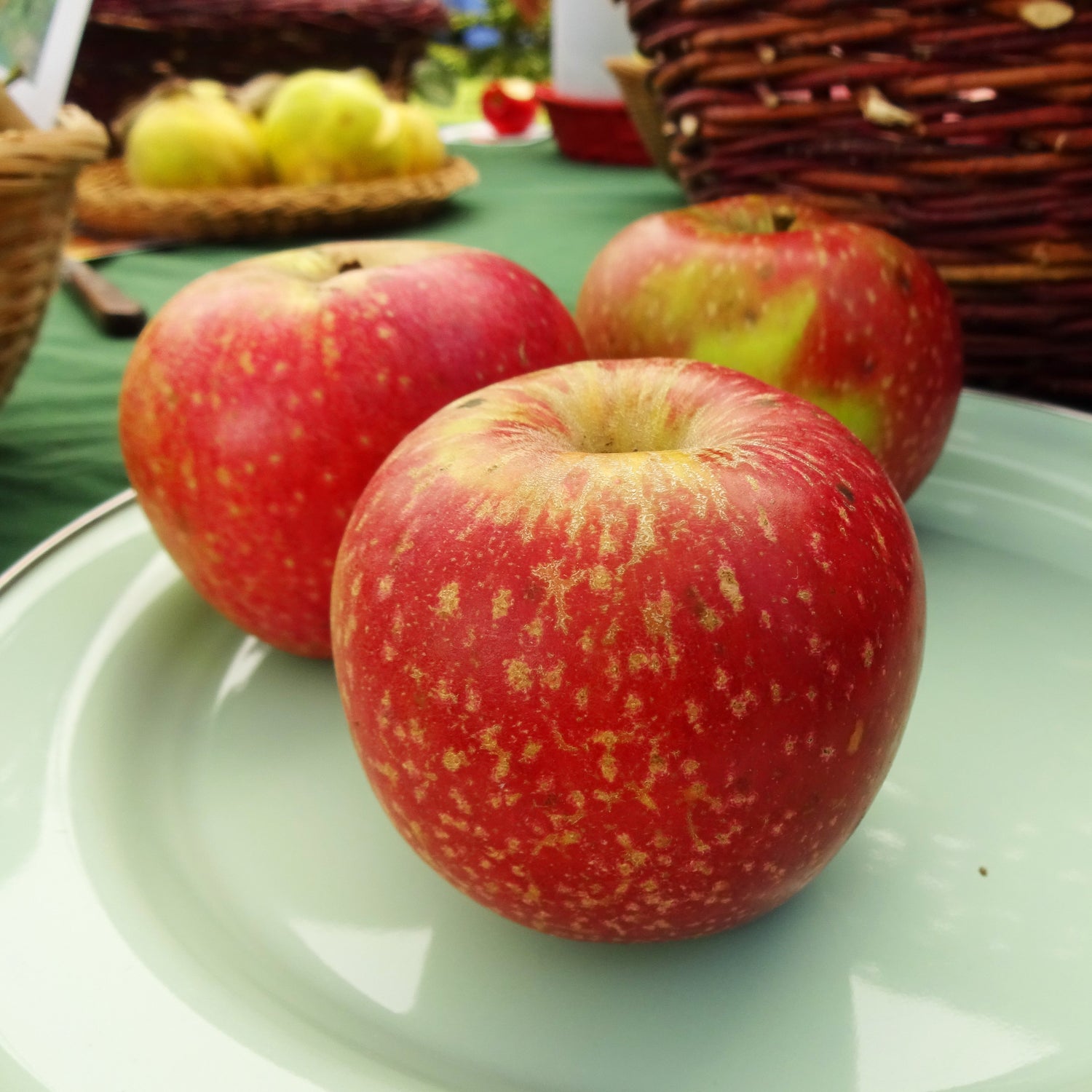
History: Esopus Spitzenberg was discovered near Esopus, New York in the early 1700s. Its main claim to fame is its supposed designation as Thomas Jefferson's favourite apple, a claim supported by the numerous Esopus Spitzenberg trees he had planted at his plantation Monticello. This apple was very popular in the US in the 1800s, considered one of the best for fresh eating, valuable for cooking, and a nice addition to cider blends.
Why We Grow It: The flavour of this particular variety is complex with high acid content, considered by many to be a high quality fresh-eating apple. This is helped by the attractive medium sized fruit which sports bright red skin. This variety keeps, with good flavour, until March. Despite being susceptible to just about every common apple disease, we still believe this apple is worth the extra effort and haven't had much issue growing it here.


History: Also known as Albemarle Pippin. This apple was discovered as a chance seedling (aka a pippin) in the village of Newtown in New York sometime in the late 1600s or early 1700s. It was commonly grown in colonial America, even earning praise from both George Washington and Thomas Jefferson. In 1838, the American minister to Great Britain gave some to Queen Victoria who loved the apples so much she removed tariffs on the variety and they became an important export until the tariffs were reinstated during WW2.
Why We Grow It: Newtown Pippin's popularity can be ascribed to its unique ‘rich pineapple flavour’ which it develops under optimum growing conditions. So far it has been performing well in our test orchard with good vigour and we have had no issues with diseases despite the tree's general susceptibility.
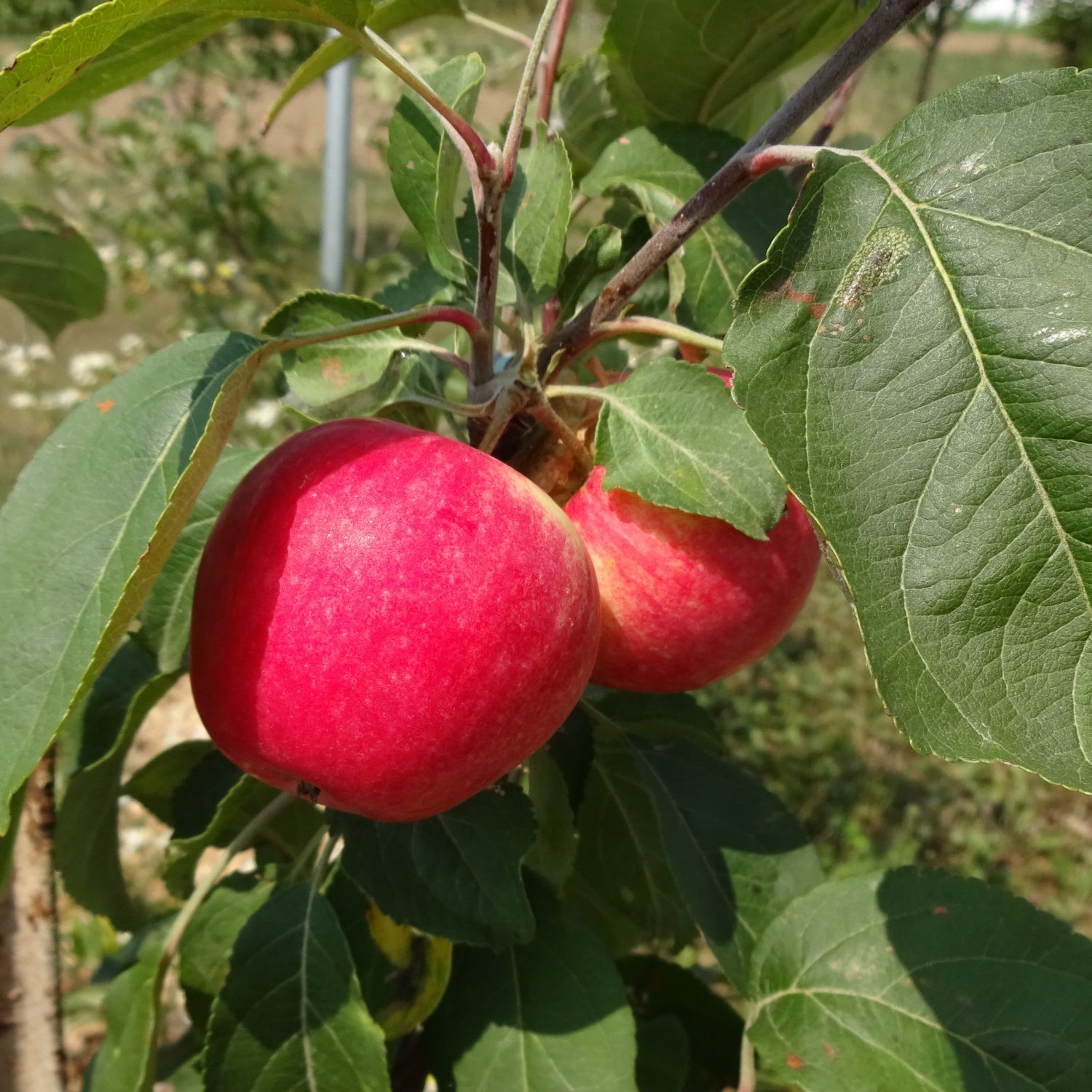
History: Norland apples were created by Dr. C.R. Ure and introduced in 1979 by the Agriculture Canada Research Station in Morden, Manitoba.
Why We Grow It: Since this variety was bred to survive in the prairies, it is very cold hardy. The fruit is medium-sized with sweet flesh that is good for fresh eating or applesauce. It bears heavy annual crops starting early in the life of the tree. A home orchardist in Dacre, ON described the fruit as "lovely with no pest damage; juicy, creamy-fleshed with excellent flavour."