Cherry Scionwood

Cherry Scionwood
For those looking to graft heritage and unique cherry trees, we are happy to provide scionwood directly from our orchards! We offer a wide selection which will be listed further below.
ORDERING SCIONWOOD: Scionwood orders generally open in December and must be placed by the end of February. We require a minimum 25% deposit upfront.
If you are interested in scionwood but the sale season has ended, we are happy to add you to our request list for the following spring! Just send us a list of the varieties and quantities you are interested in and we will add you to our list.
SHIPPING/PICKING UP SCIONWOOD: We generally recommend that customers receive their scionwood orders by mid-April at the latest to ensure it arrives dormant, but can hold it longer if customers accept the risk that the scionwood may start breaking dormancy.
Due to the nature of nature, sometimes scions begin budding out early and we want to ensure you receive dormant scionwood that you will have time to graft with. If you need to hold your scionwood dormant until May, you will need to decide how you will do that. It is relatively simple, and you can learn more about storing scionwood at home here. If you are picking up your scion order, we recommend doing so ASAP after you receive your pickup notification via email.
Size: 12-18" or 30cm+, as available*. If a scion is less than 6" or 15cm, it will be discounted accordingly.
*Since we specialize in so many varieties, they each have a unique growth habit and vigor. Some cultivars will produce long relatively thick scions, and others tend to produce shorter, thin scions (see photos to the left). We will provide the best quality we can, within natural restraints.
9 products
Sort by:
9 products
9 products

History: Érdi Bõtermõ is a Hungarian variety of sour cherry that is a cross between Pangy and Nady Angol. It was bred by the Hungarian Research Institute for Fruitgrowing and Ornamentals and remains popular in Europe. It was brought back to the US by Michigan State University biologist Pr. Amy Iezzoni who is researching and breeding new sour cherry cultivars. It was given the name "Danube" in North America, named after the river that flows through Hungary, since it was considered easier to pronounce and spell.
Why We Grow It: Érdi Bõtermõ is unique in that it has a surprisingly sweet flavour compared to other sour cherries, making them suitable for fresh eating along with baking and preserving. It ripens early and produces large fruit that are deep red with firm red flesh.
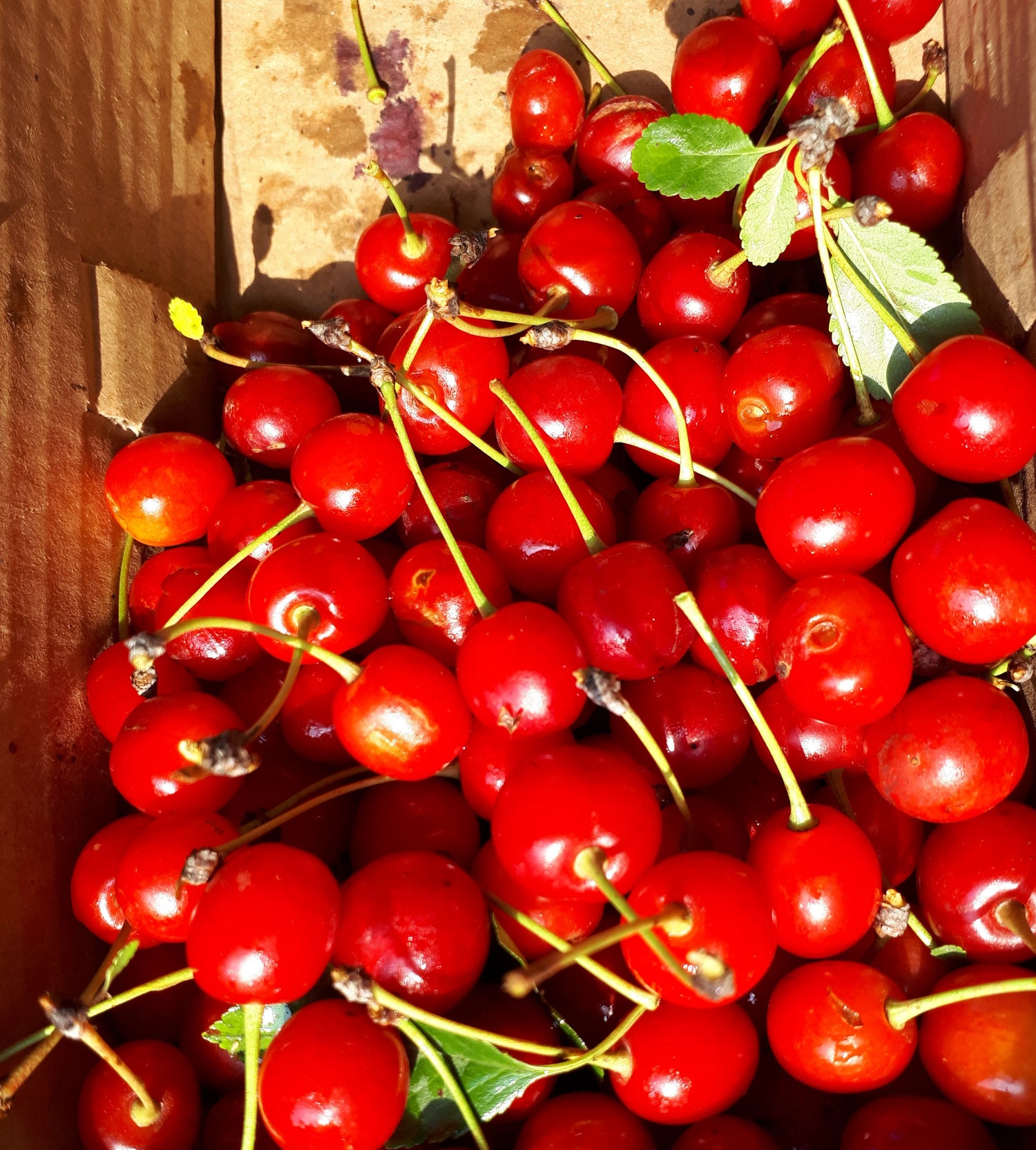
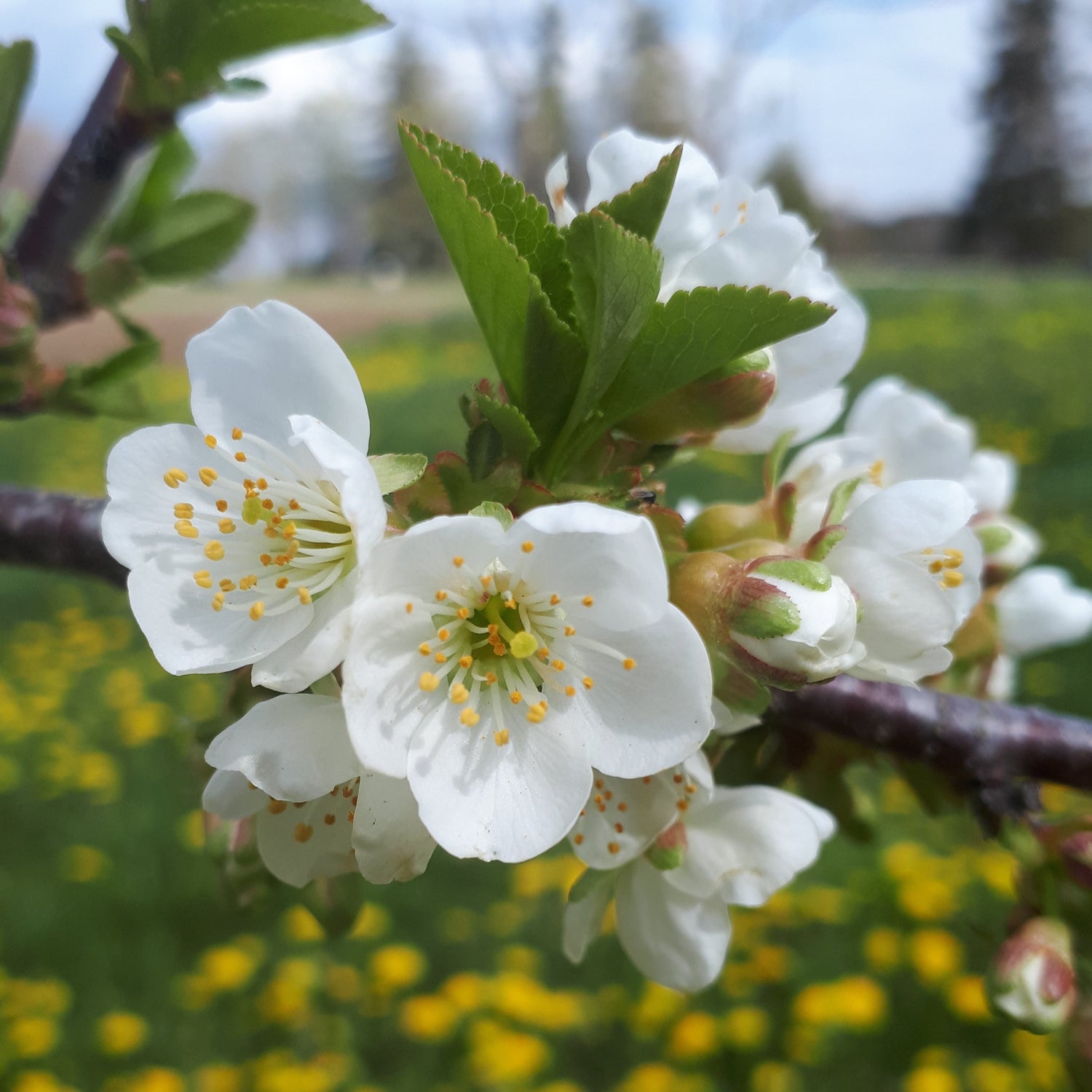
History: Meteor sour cherries were introduced by the University of Minnesota in 1952 as part of an effort to breed more cold hardy varieties.
Why We Grow It: Winter hardiness, reliable cropping, and a resistance to leaf spot make Meteor a good choice for the backyard. The fruit is bright red with yellow flesh. Meteor is classified as an amarelle type sour cherry, similar to Montmorency. It is excellent for making pie.
Check our our blog post with some tasty sour cherry recipes!
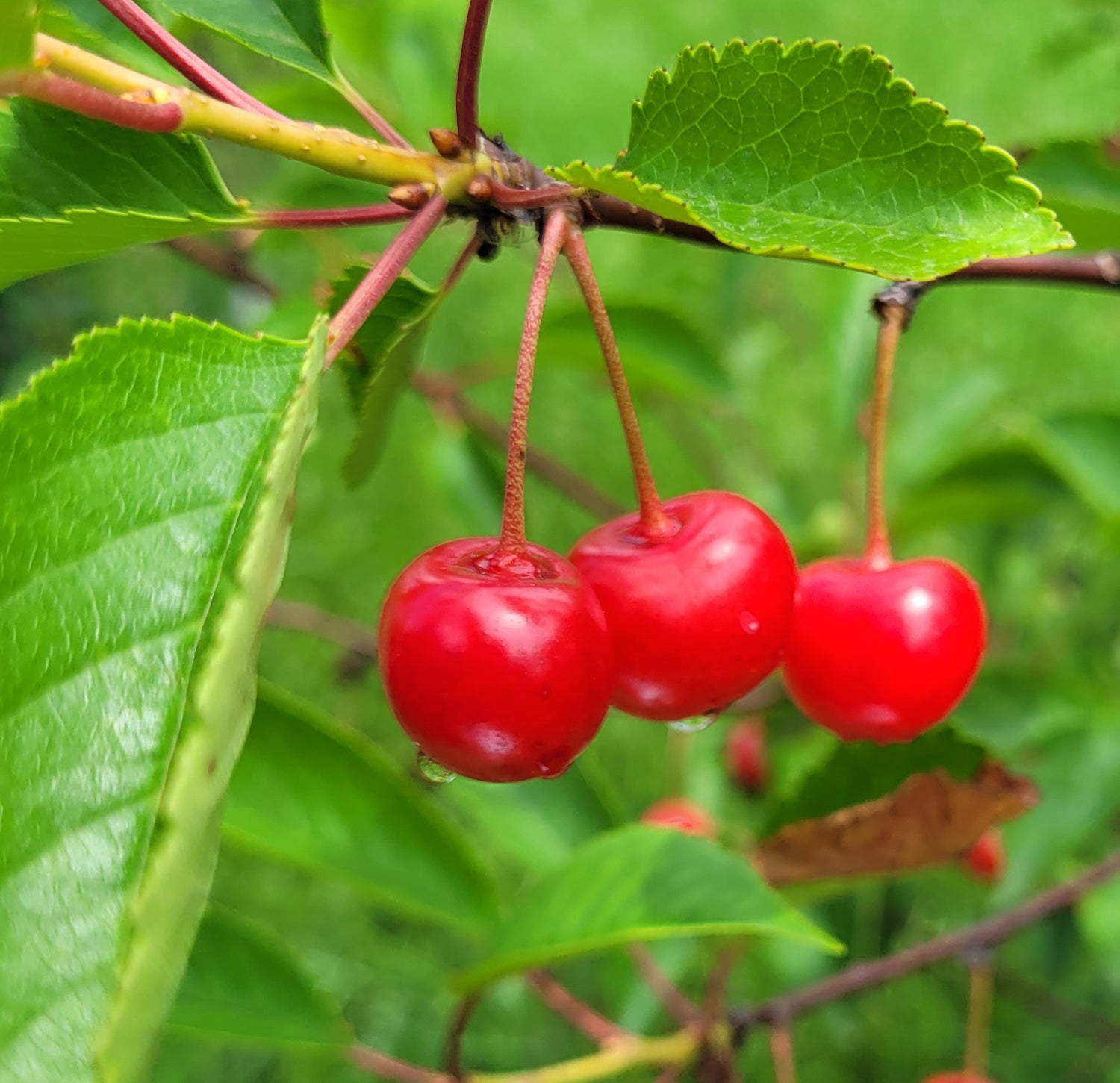
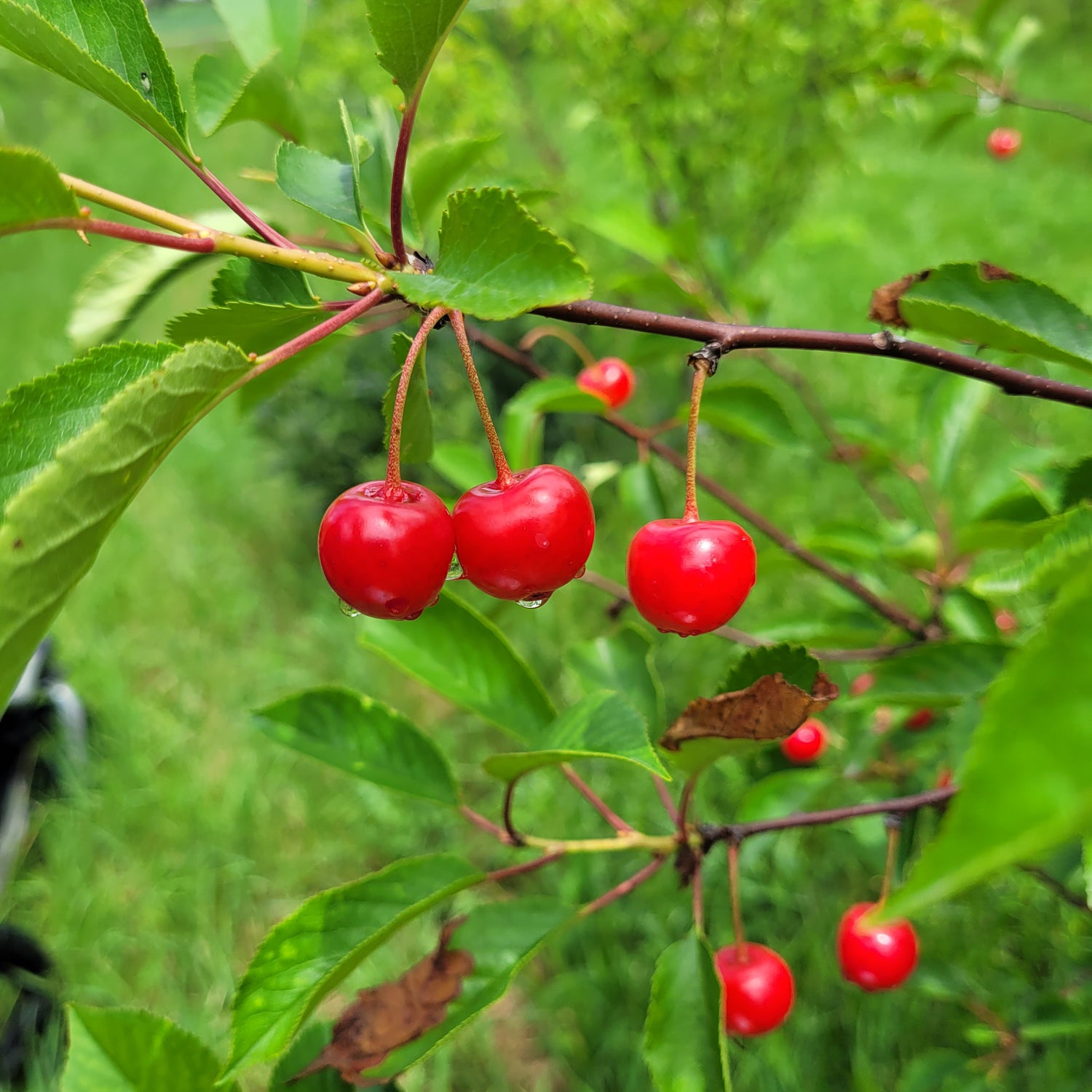
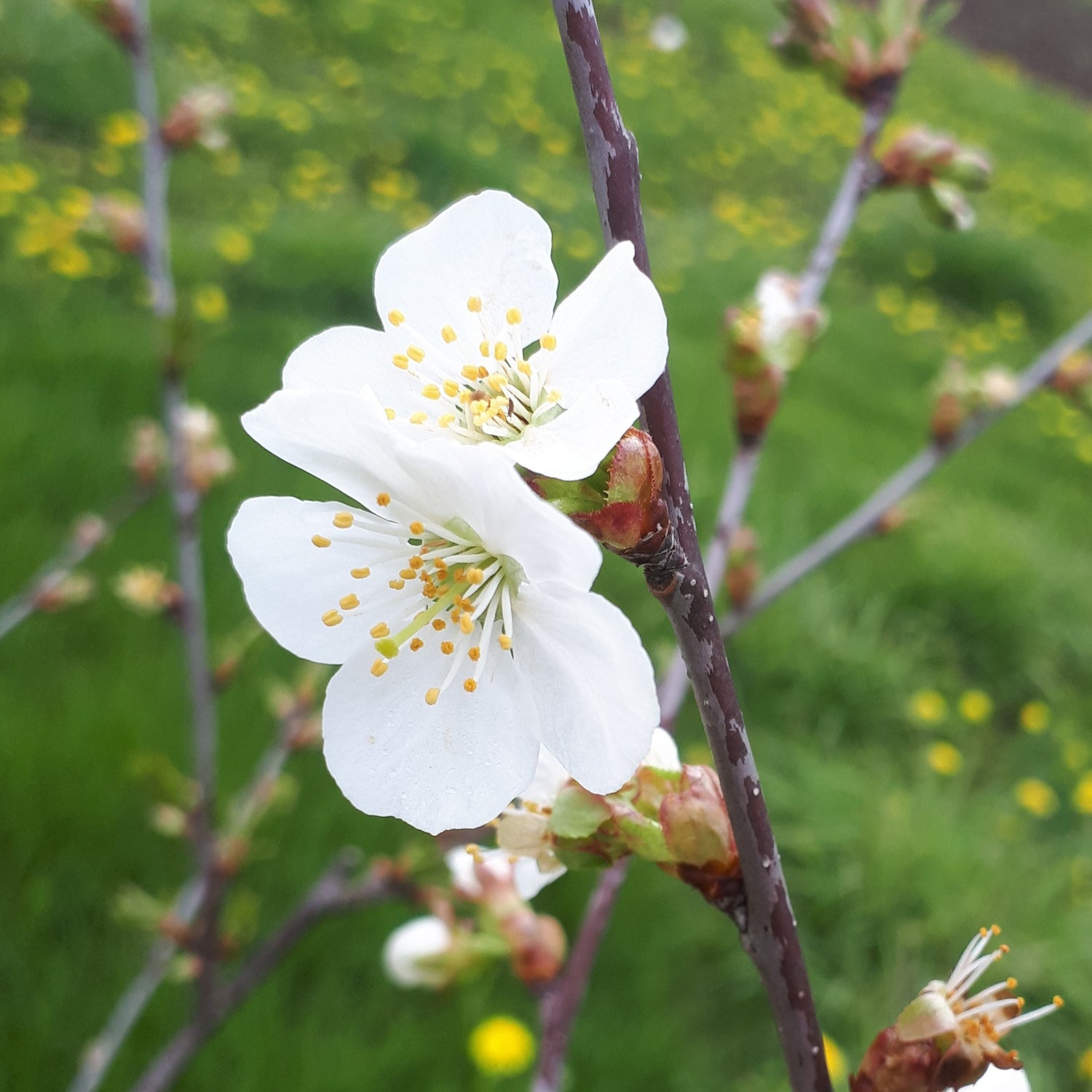
History: Montmorency sour cherries date back over 400 years, originating in the Montmorency Valley in France. From there they spread to England and eventually to North America where they are the most commonly grown sour cherry by far. Products that contain sour cherries are almost guaranteed to use this variety.
Why We Grow It: It's hard to ignore such a classic and beloved sour cherry. Montmorency produces bright red cherries that are perfect for making cherry pie, preserves, and jams. Montmorency is an amarelle cherry.
Check our our blog post with some tasty sour cherry recipes!
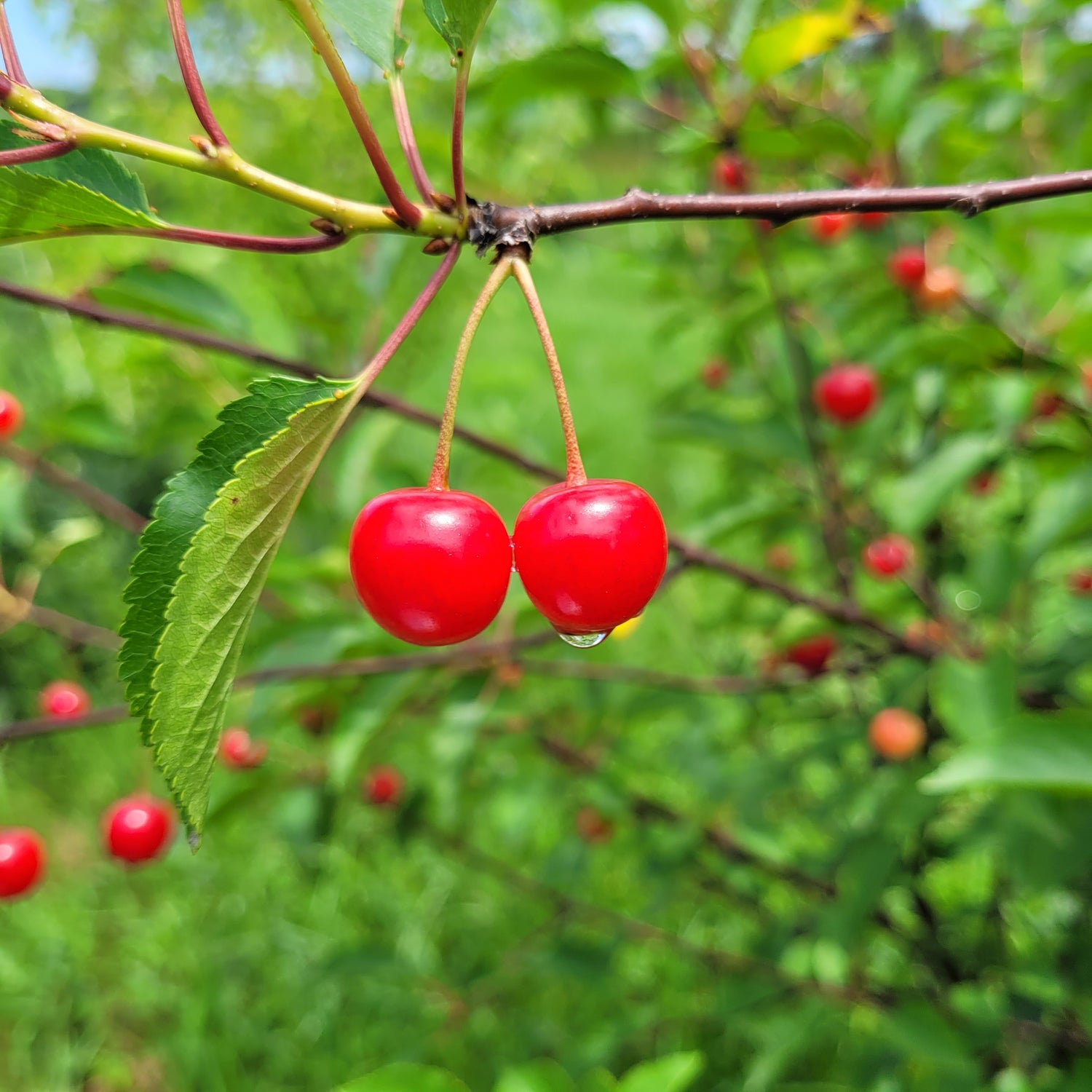

History: North Star sour cherries were created by the University of Minnesota as part of an effort to create varieties that are more resistant to the cold. They were introduced in 1950 and recently have been growing in popularity as a backyard variety.
Why We Grow It: North Star is a sour cherry with bright red skin which darkens as it ripens. It has an excellent flavour. The trees have a compact and weeping growth habit, making them an attractive addition to your yard whether in bloom in spring or bearing fruit in the summer. They are also self-pollinating, very hardy, and resistant to leaf spot and brown rot.
Check our our blog post with some tasty sour cherry recipes!
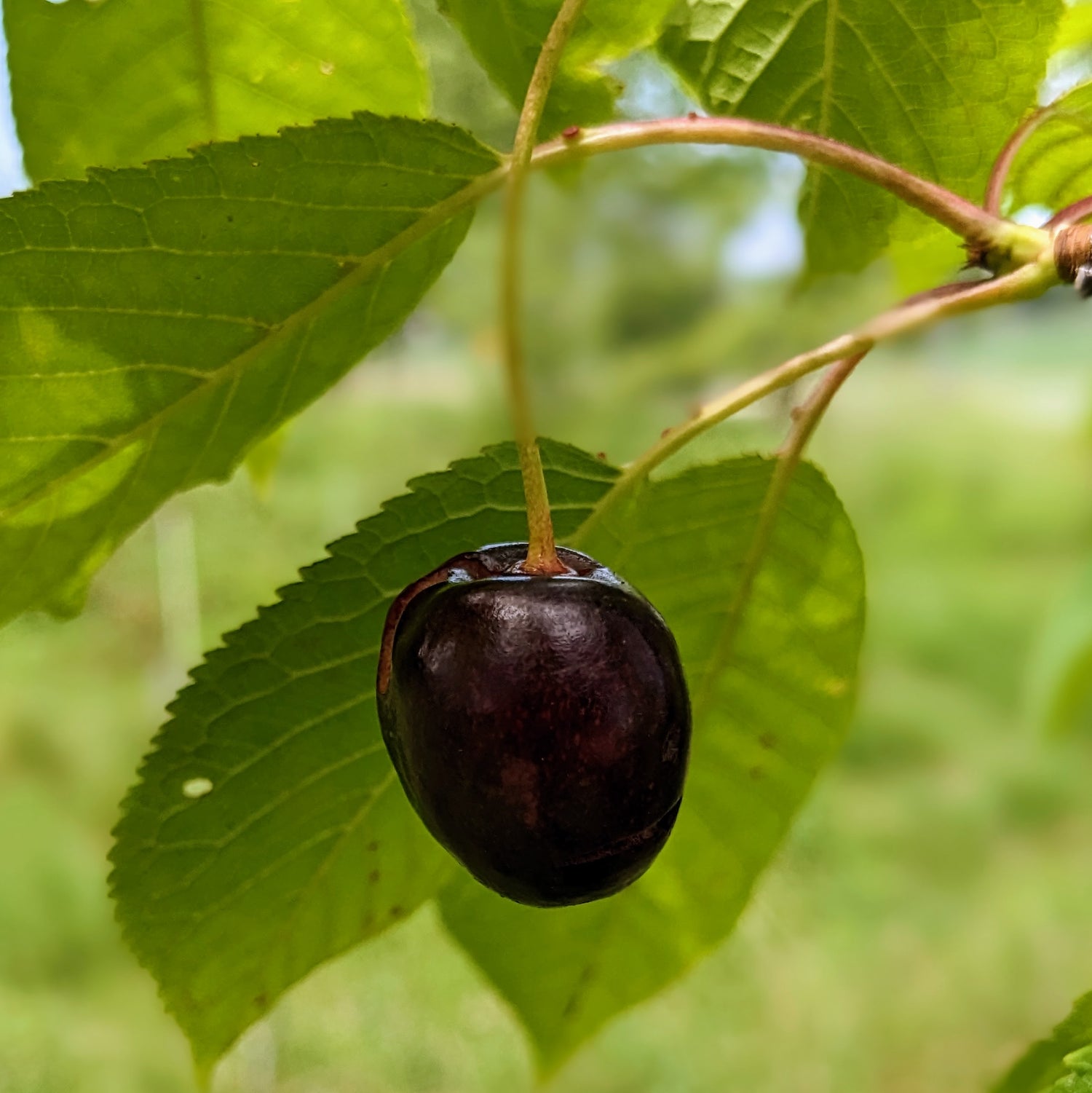
History: This heirloom sweet cherry originates from Arkona, Ontario where it was developed and grown by Ed Richter.
Why We Grow It: As an Ontario bred and raised sweet cherry, Richter cherries are well-suited to growing in our local conditions. We were fortunate to acquire this variety just before the removal of some very old Richter trees.


History: Sweetheart was developed at the Pacific Agri-Food Research Centre in Summerland, BC as a cross between Van and Newstar. The cross was made in 1975, the variety selected for further testing in 1982, and then finally released in 1994. It is the parent of several other sweet cherry varieties and was awarded the Outstanding Cultivar Award by the American Society for Horticultural Science in the 2010s.
Why We Grow It: These cherries boast the longest harvest period of any sweet cherry, and stores well too. The bright red, heart-shaped fruit are sweet and crack-resistant.

History: Vernon was developed at the Horticultural Experiment Station at Vineland, ON. It is an open-pollinated seedling of Windsor that was selected in 1925 and released in 1937. Like the other Vineland selections, its name starts with a 'v' to honour its origins. While it was grown commercially for some time, it has since faded out of commercial orchards as it became eclipsed by newer, better varieties.
Why We Grow It: Vernon produces a large, dark-fleshed cherry that is similar to its parent but is generally larger, firmer, and of better quality. It is unfortunately more prone to cracking than Windsor.
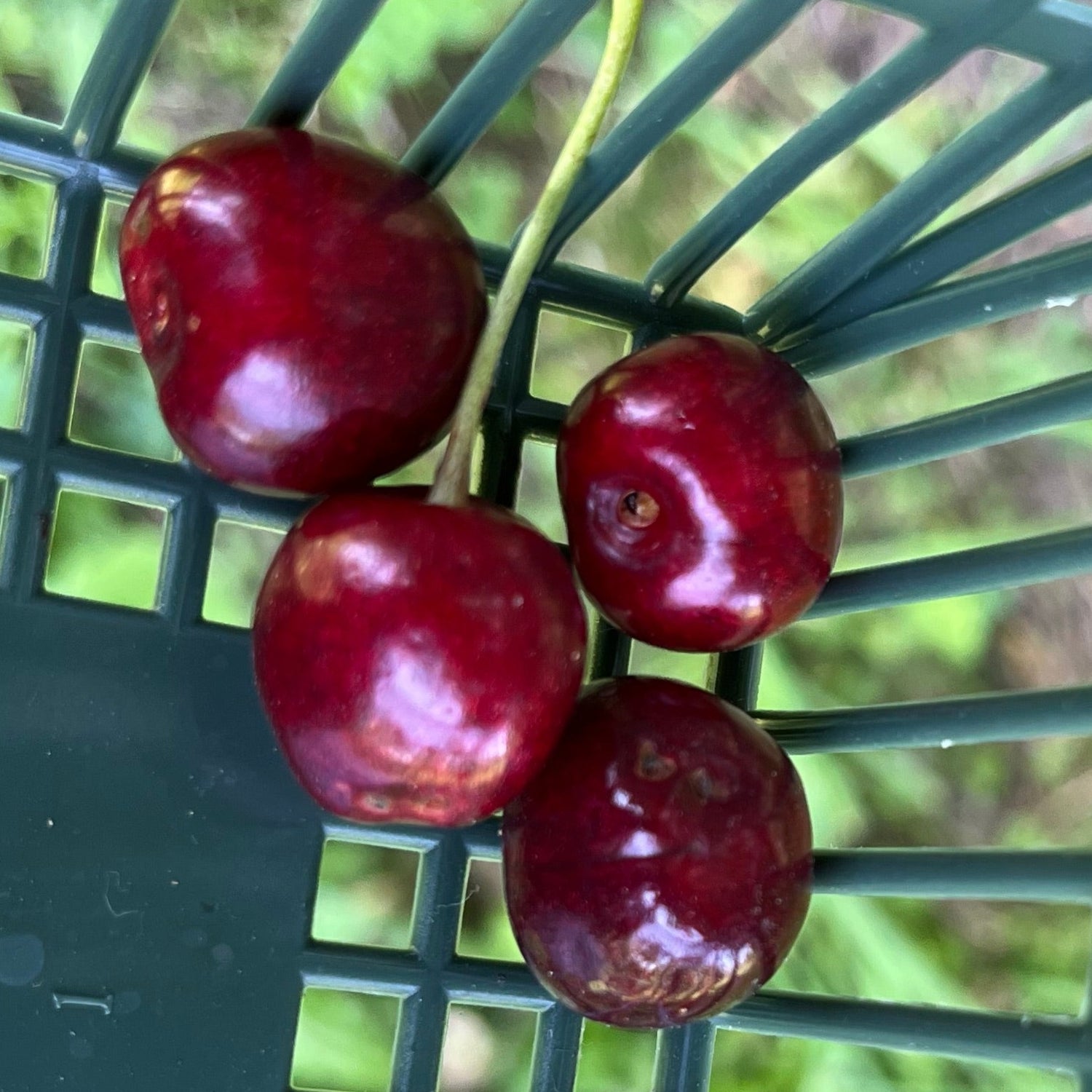
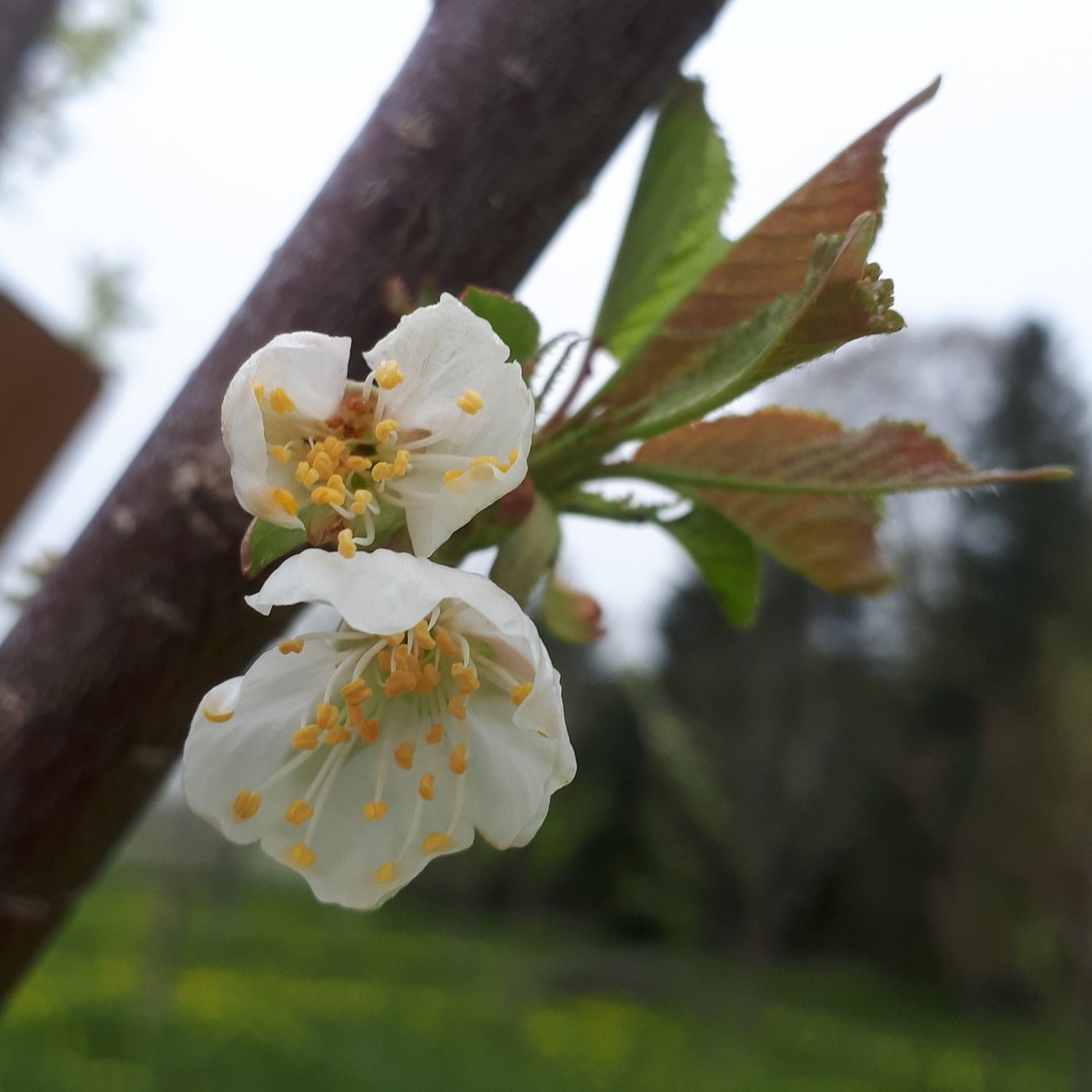
History: Viva originated in 1935 as a possible hybrid of Hedelfingen and Victor.
Why We Grow It: Viva produces medium-sized, dark red cherries with good flavour. They are suitable for many uses including fresh eating, cooking, and preserving. They are one of the first cherry varieties to ripen, creating a pleasant start to the cherry season.


History: Windsor sweet cherries originated on the farm of James Dougall in the 1800s and were introduced in 1871. His farm was located in Windsor, Ontario and the variety was named after the area.
Why We Grow It: Windsor produces large bright red fruit with firm, flavourful flesh. Along with being great for fresh eating, it is one of the very best for canning.