
Plum Budwood

Plum Budwood
Budwood orders have closed for 2026. Contact us if you want to be added to our 2027 waitlist!
For those looking to graft heritage and unique plum trees, we are happy to provide budwood directly from our orchards!
While our main business is in the finished product (grafted fruit trees), we also like to support those wishing to learn the grafting process for themselves. We can attest that it is a very enjoyable (and rather addictive) pastime!
ORDERING BUDWOOD: Budwood orders have closed for 2026. If you are interested in budwood for summer 2027, contact us and we can add you to our waitlist.
We've chosen a small selection of varieties to put online. If you are interested in a variety and don't see it listed, please contact us!
If you are interested in budwood but the sale season has ended, we are happy to add you to our request list for the following summer! Just send us a list of the varieties and quantities you are interested in and we will add you to our list.
SHIPPING/PICKING UP BUDWOOD: Budwood orders are ready for pickup or shipping in early August.
Click here to learn more about storing budwood at home.
For those new to the grafting process, we also offer the following resources:
- Our Summer Apple Grafting Workshop!
-
Fruit Tree Grafting for Everyone, a handy grafting guide co-authored by Steph who owns Silver Creek Nursery!
9 products
Sort by:
9 products
9 products
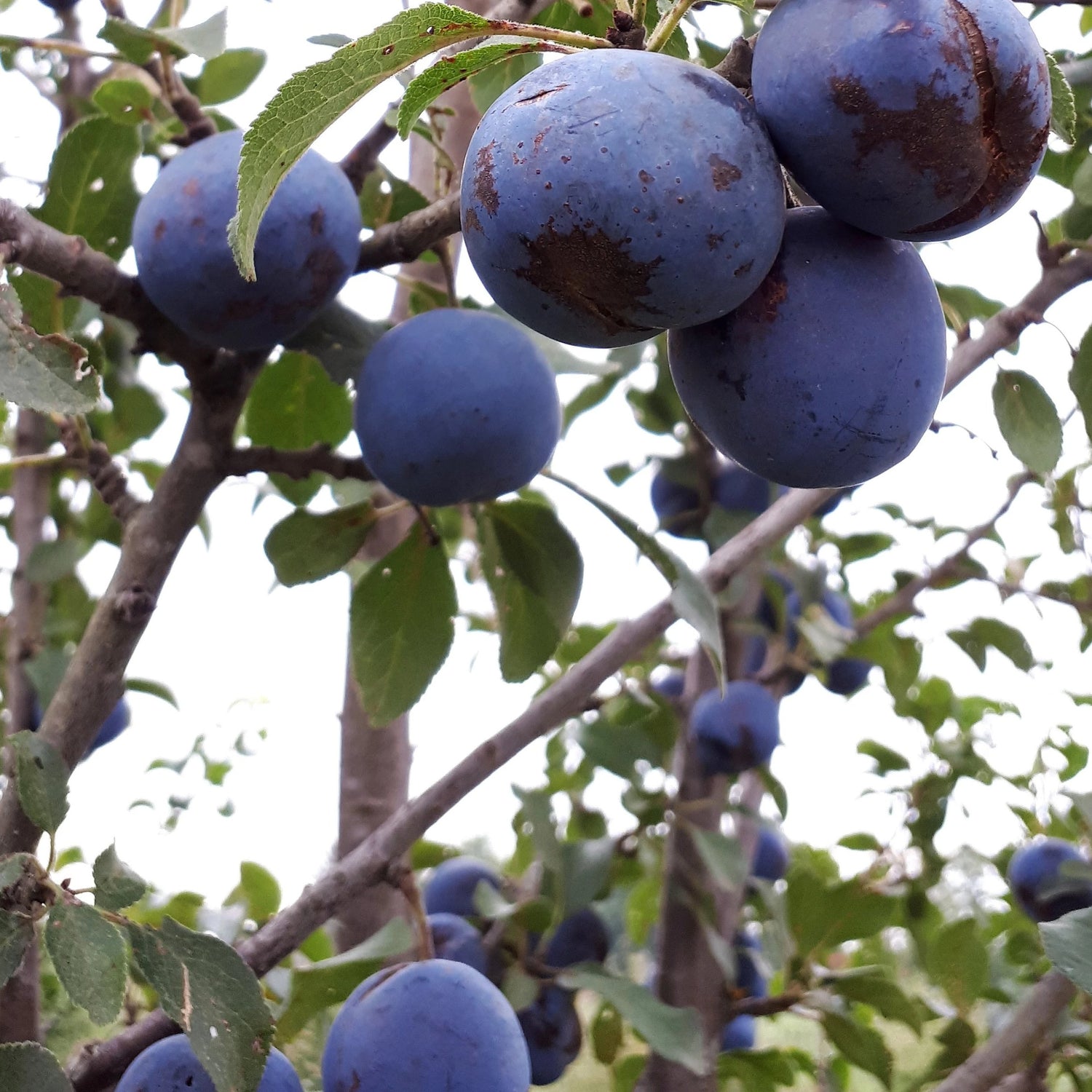
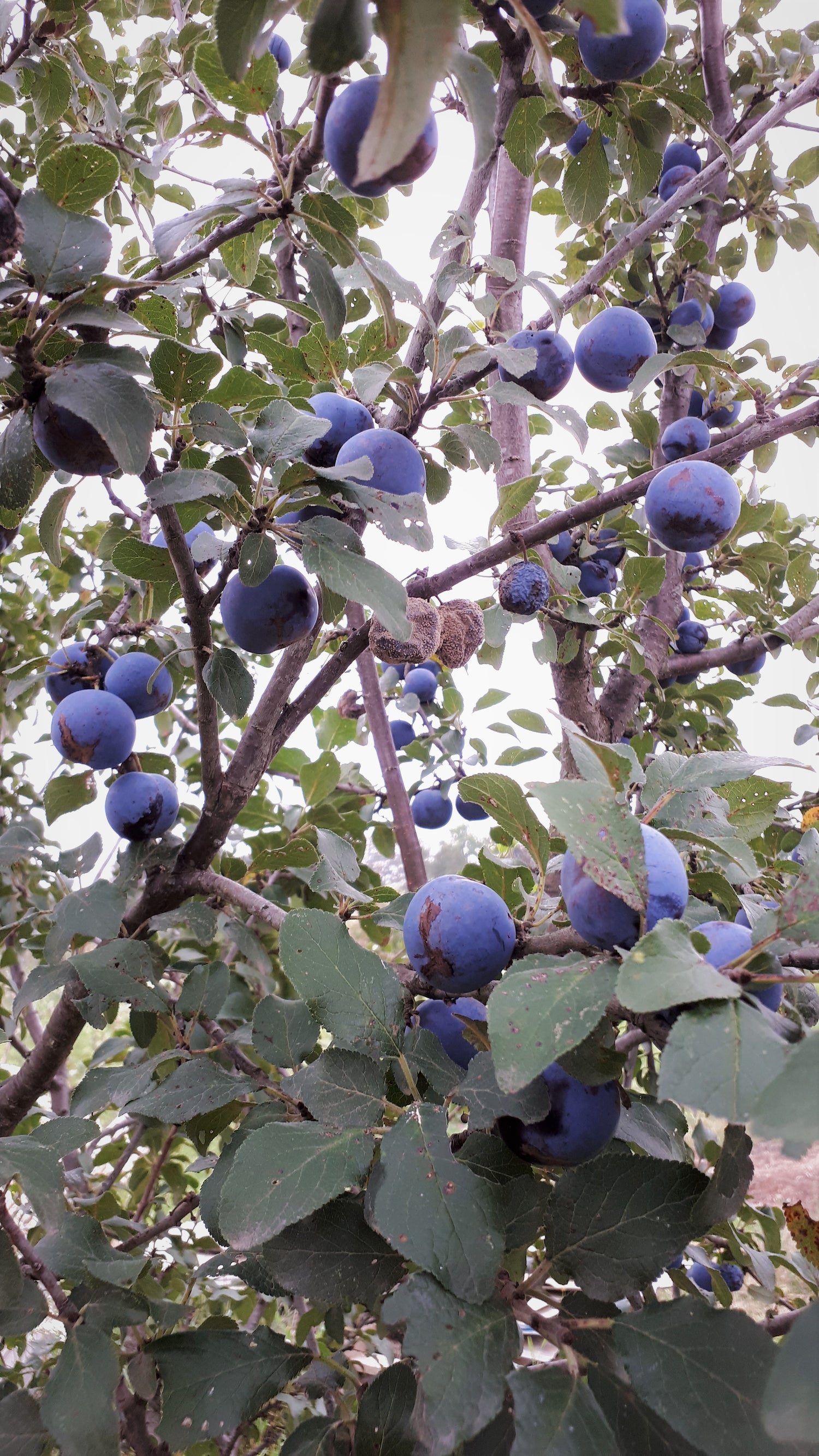
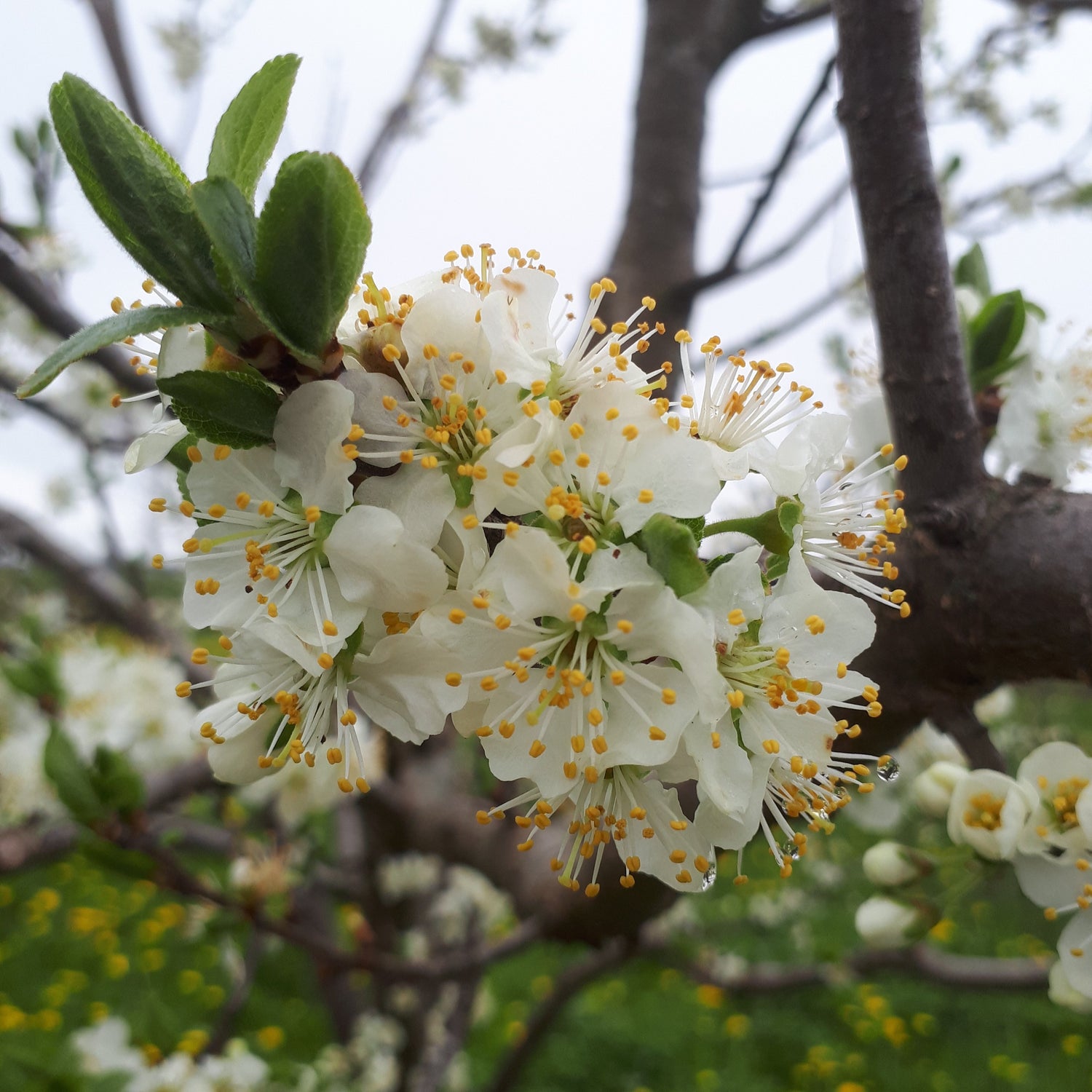
History: This European plum has contentious origins, making it difficult to determine if it is very old or extremely old. The name 'damson' stems from the Latin 'damascenum' meaning 'plum of Damascus.' As the name implies, some believe this plum may have come from the ancient city of Damascus and was brought to England by the Romans, making this plum thousands of years old. While this theory has been highly contested, there is ample evidence to prove that Damson plums have been grown in England for hundreds of years. It was introduced to the US in 1800 and was a a favourite due to its adaptability to its new home.
Why We Grow It: Damson produces small round clingstone fruit with a deep blue/purple skin and spicy yellow flesh. They are sweet enough to eat but also have some astringency which makes them less palatable than other varieties. However, they are superb for cooking, preserving, and making jam. The tree blooms late which allows it to avoid early frosts and this variety is self-fertile.
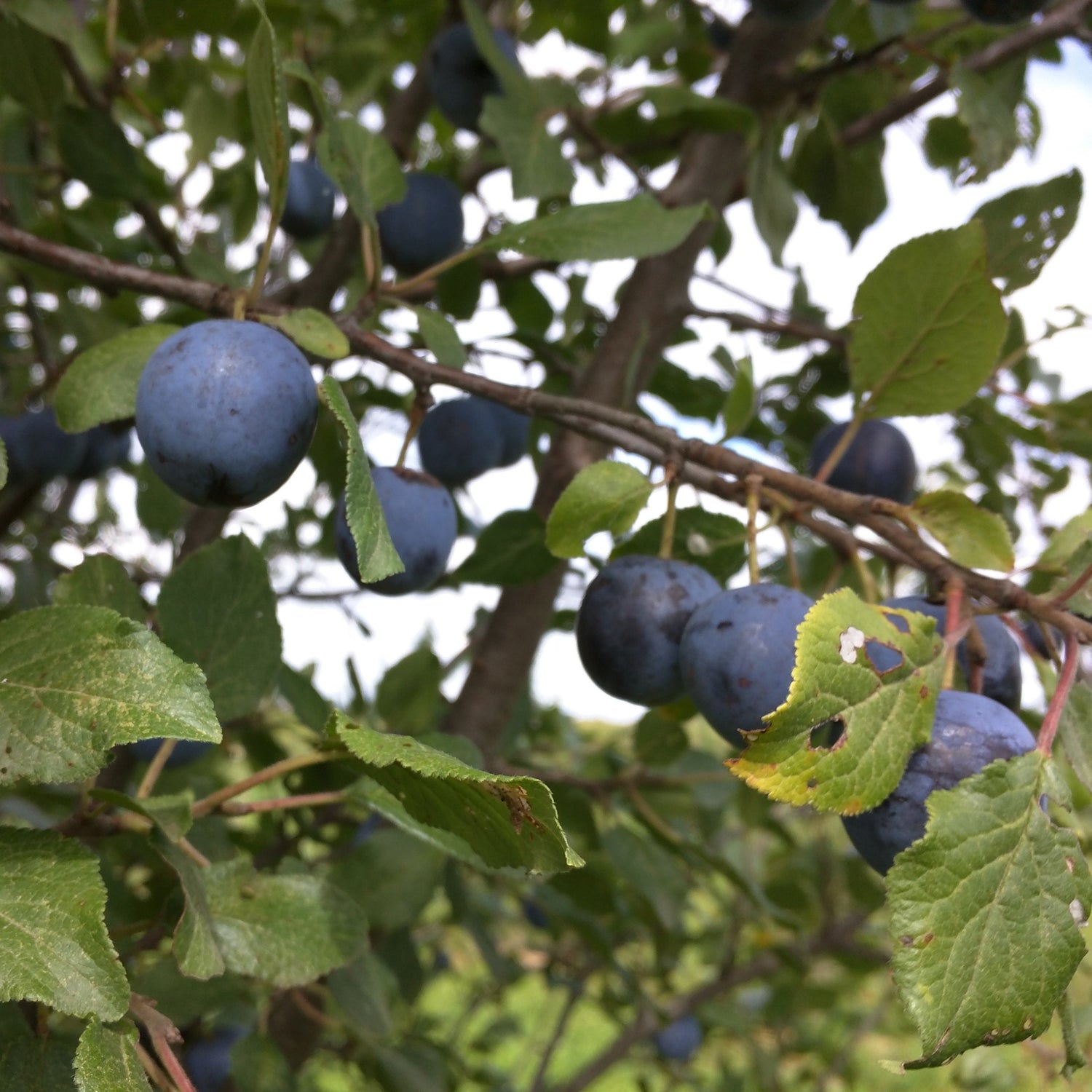
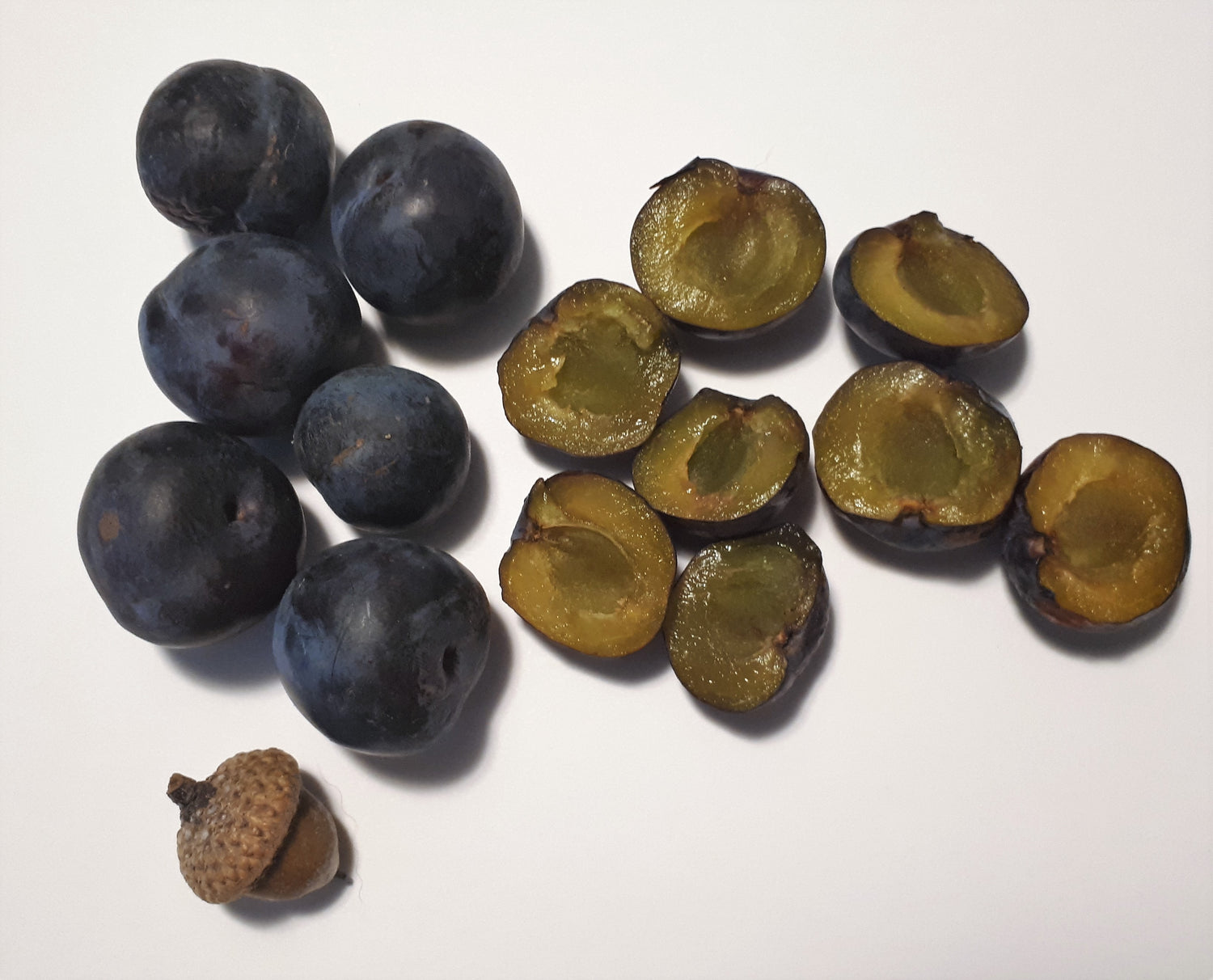
History: Little is known about this particular variety aside from that it's a Damson plum that originated in Sweden. 'Krikon' is the Swedish word for 'damson.'
Why We Grow It: Although its history is a bit of a mystery, we can certainly tell you that this is the best plum variety for very cold regions. It produces small round deep purple fruit that are good for cooking, preserving, and making jam. The flesh has a spicy, sweet flavour although some do not find it that great for fresh eating. Compared to regular Damson's Krikon Damson is a bit smaller, and more flavourful.
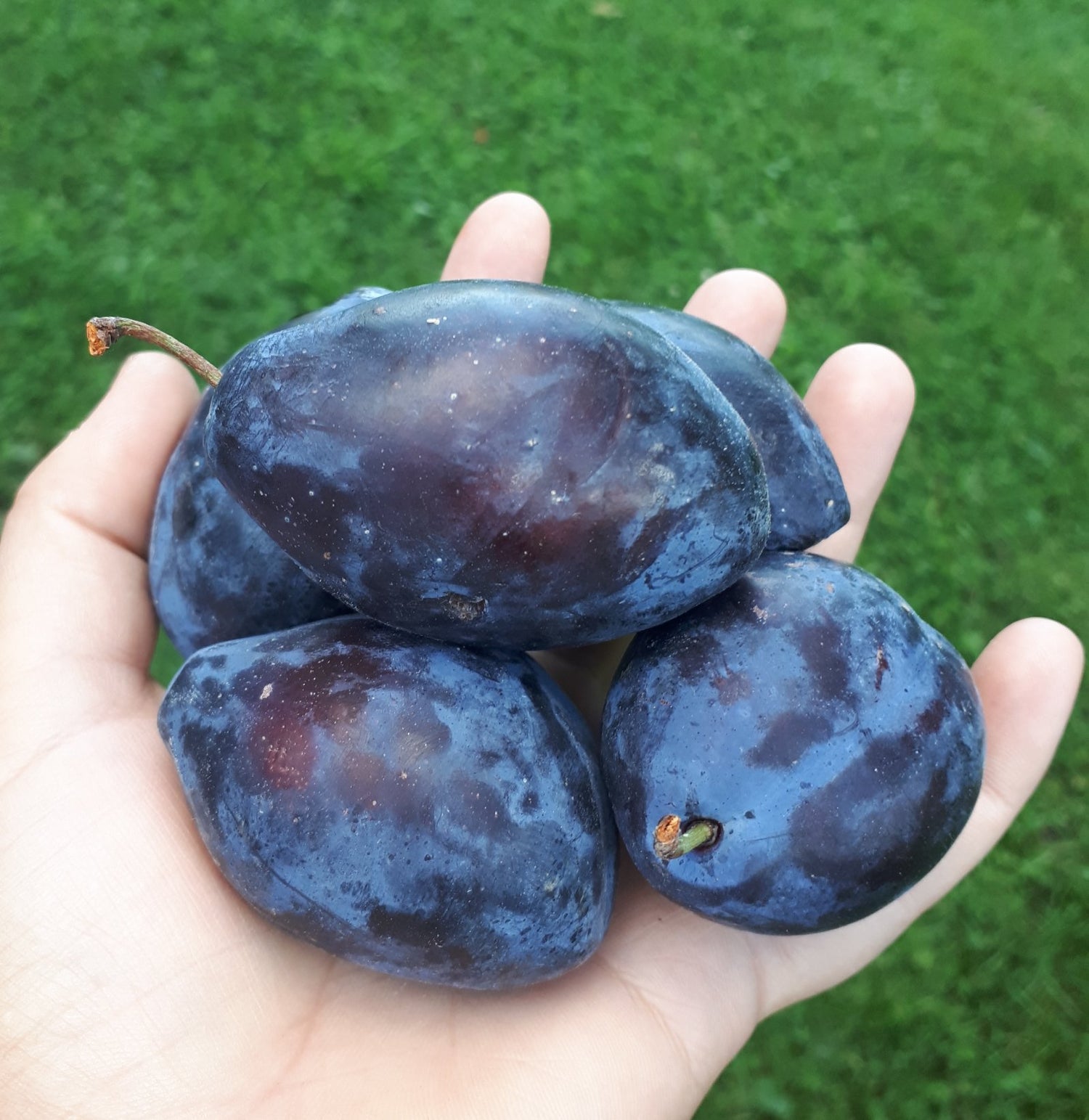
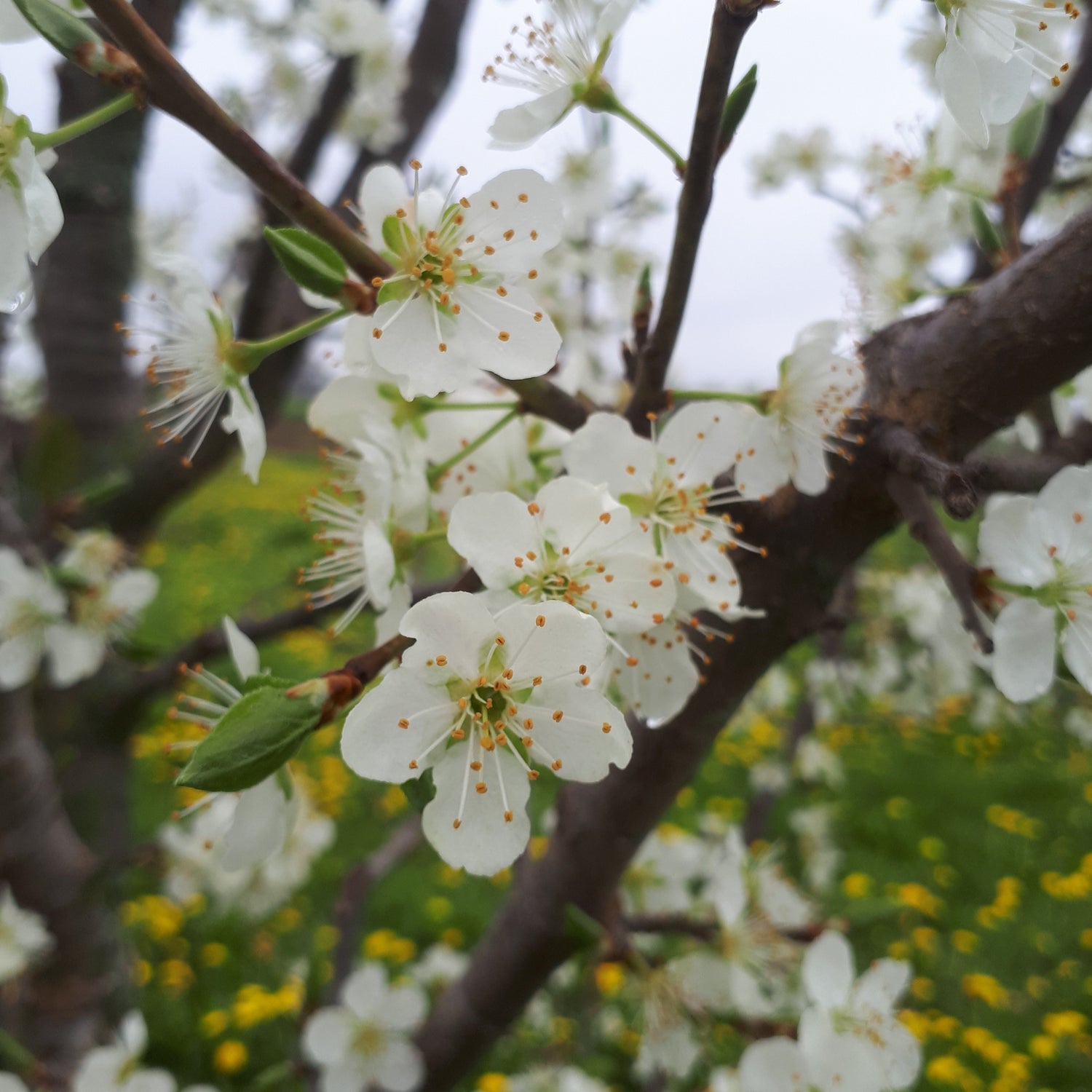
History: Late Italian plums originated in the coastal Mediterranean areas of Italy, although little is known about their history aside from that. They are still grown in Europe and North America today.
Why We Grow It: This European variety produces a large-sized blue plum with sweet yellow flesh. It is an all-purpose plum that is excellent for drying and great eaten fresh, canned, or incorporated into baking, desserts, or salads.
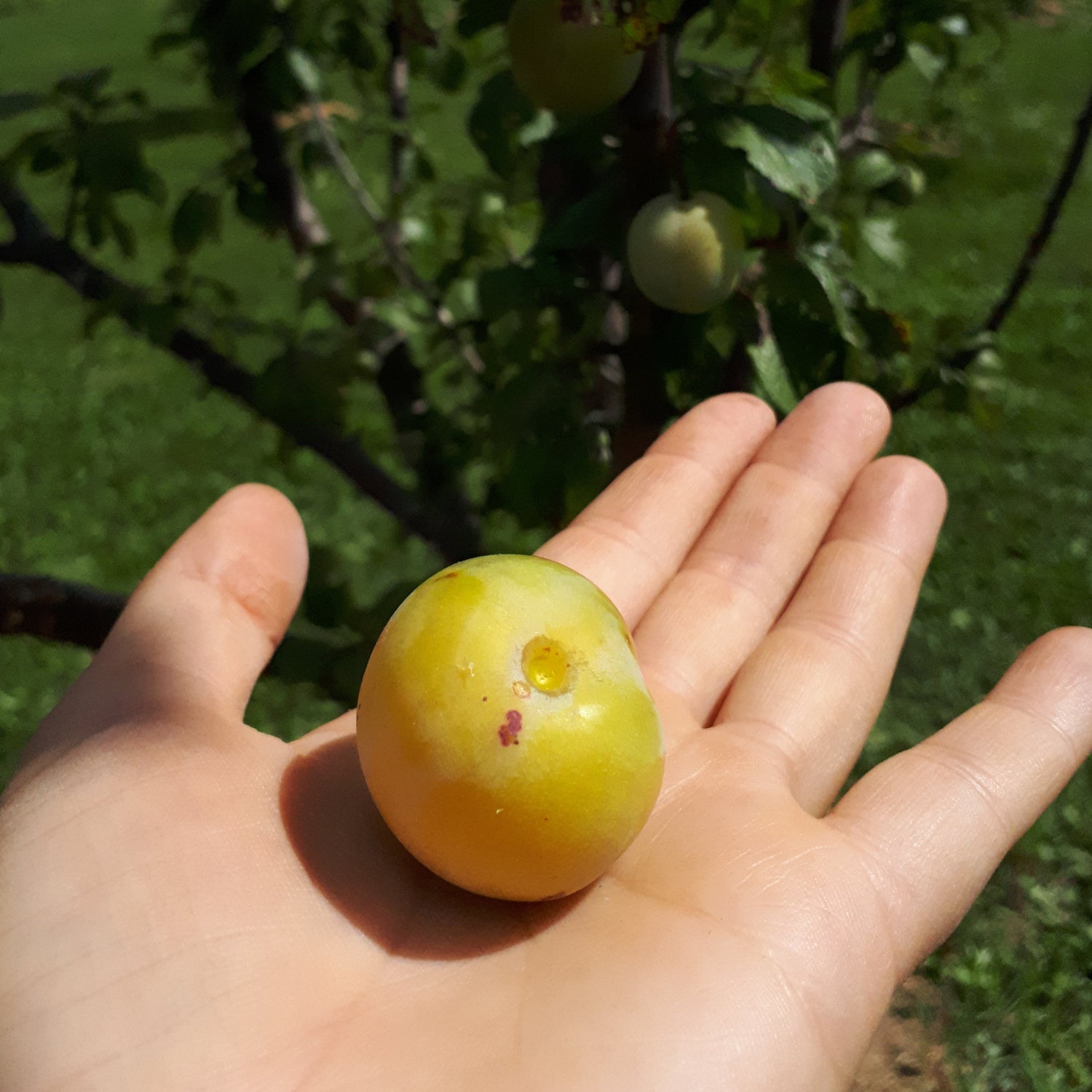
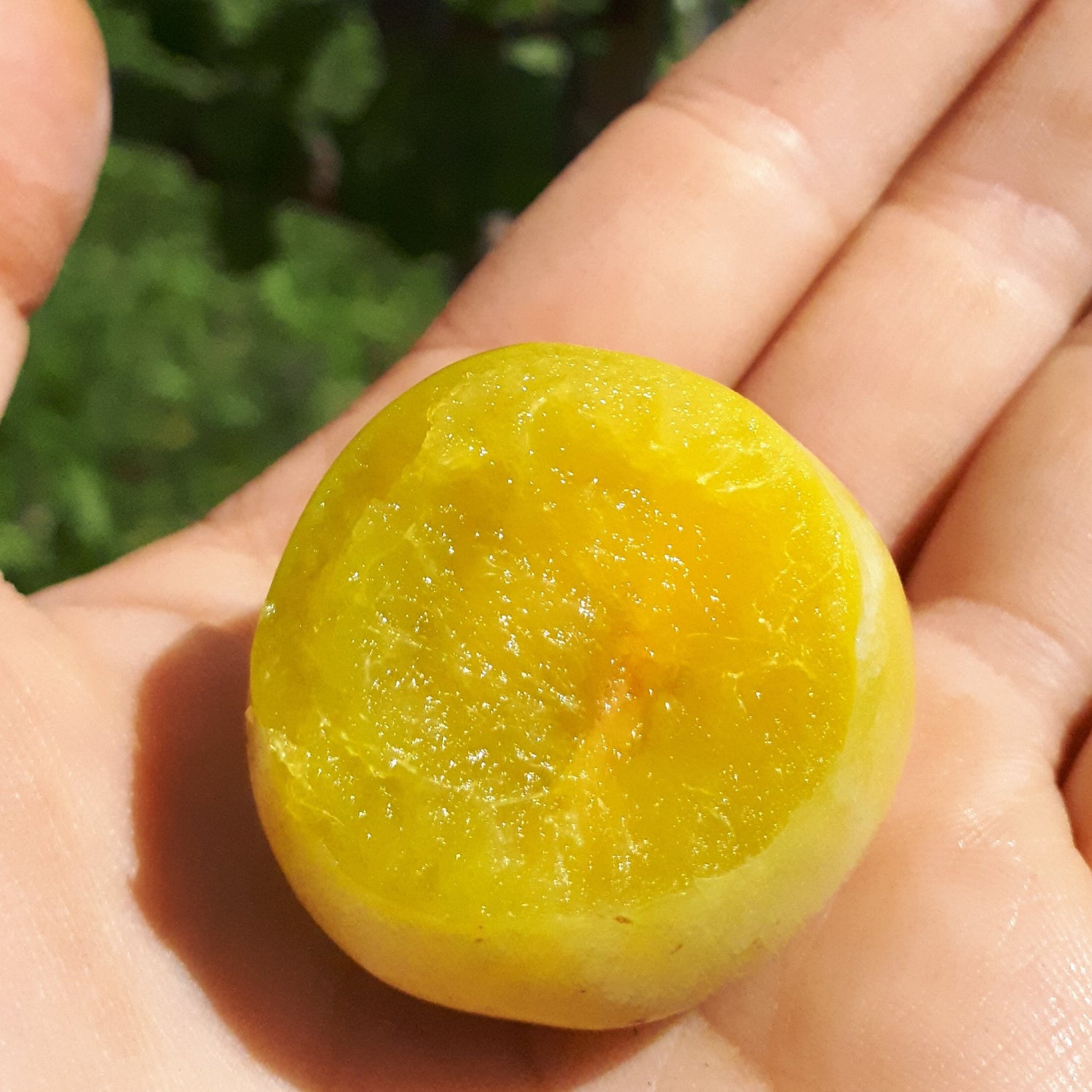
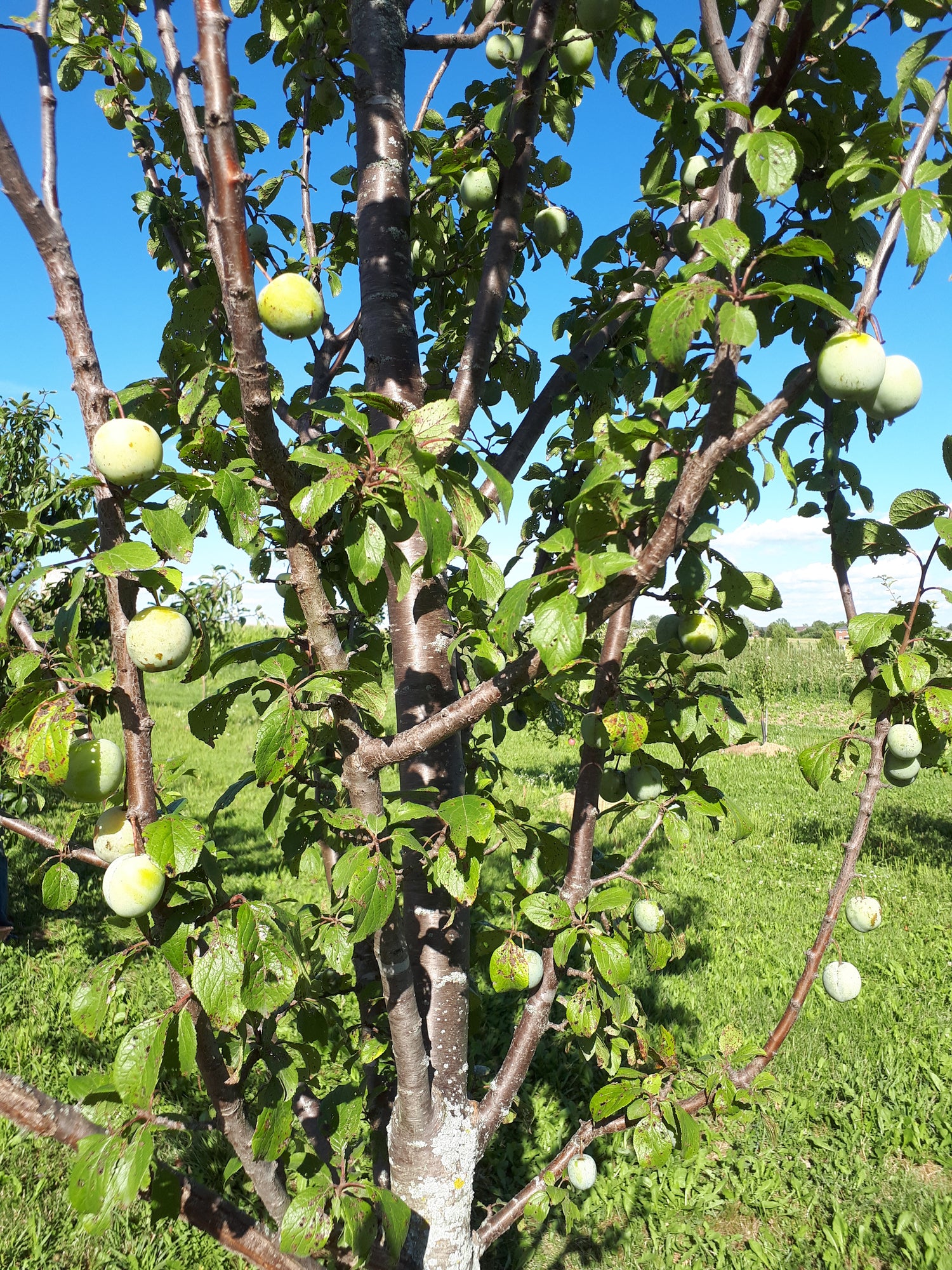
History: Likely cultivated from a wild plum growing in Asia, Mirabelle plums are a specialty of the Lorraine region in France where they are still primarily grown today. They are very popular in Europe and the French city of Metz has an annual Mirabelle Festival that spans two weeks. In 2006, the French city of Nancy created the world's longest Mirabelle tart which measured over 200m in length.
Why We Grow It: It's no why wonder that this European plum is so popular. Mirabelle plums are super sweet and flavourful with soft juicy flesh. The medium-sized yellow fruit is exquisite as a dessert plum, but can also be used in jams, chutneys and schnapps.


History: Ozark Premier plums were developed by the Missouri State Fruit Experiment Station and introduced in 1946. They are a cross between Burbank and Methley plums.
Why We Grow It: This Japanese plum produces exceptionally large semi-clingstone fruit which are juicy and firm with a flavour that is sweet with a mild tartness. These plums are great for cooking, fresh eating, and canning. The tree has good disease resistance and reliable crops.


History: President plum was first raised by Thomas Rivers at Rivers Nursery in England where he introduced it in 1901. They became quite popular due to their excellent performance as a fresh eating and cooking plum, as well as their late ripening time which means they are available when many other plums are no longer in season. They remain popular in the UK and United States.
Why We Grow It: This European variety is a great way to extend the plum season. The large, oval fruit has dark blue skin and yellow-orange flesh with a pleasant flavour. It is good for fresh eating and cooking. The tree is vigorous and produces heavy crops.
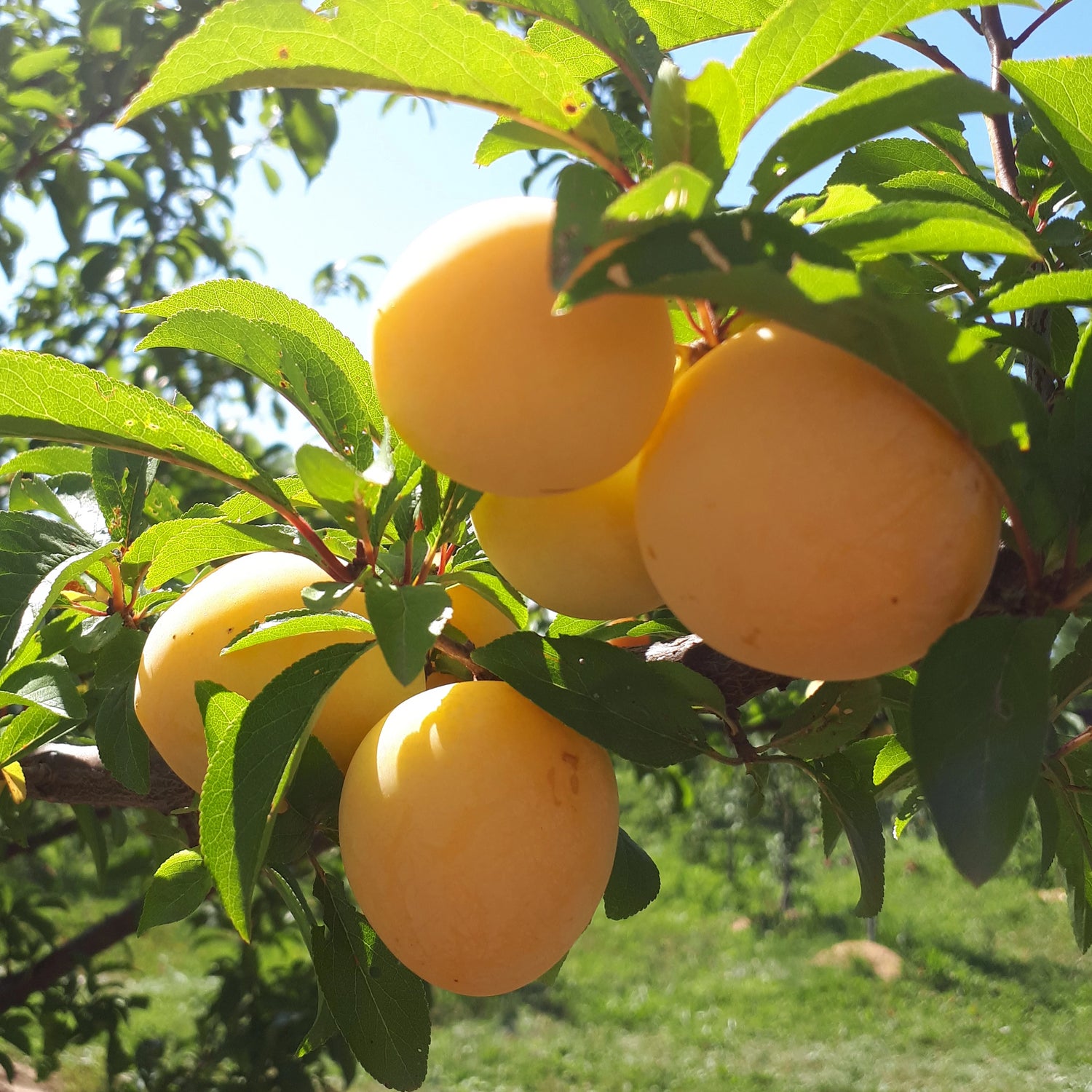
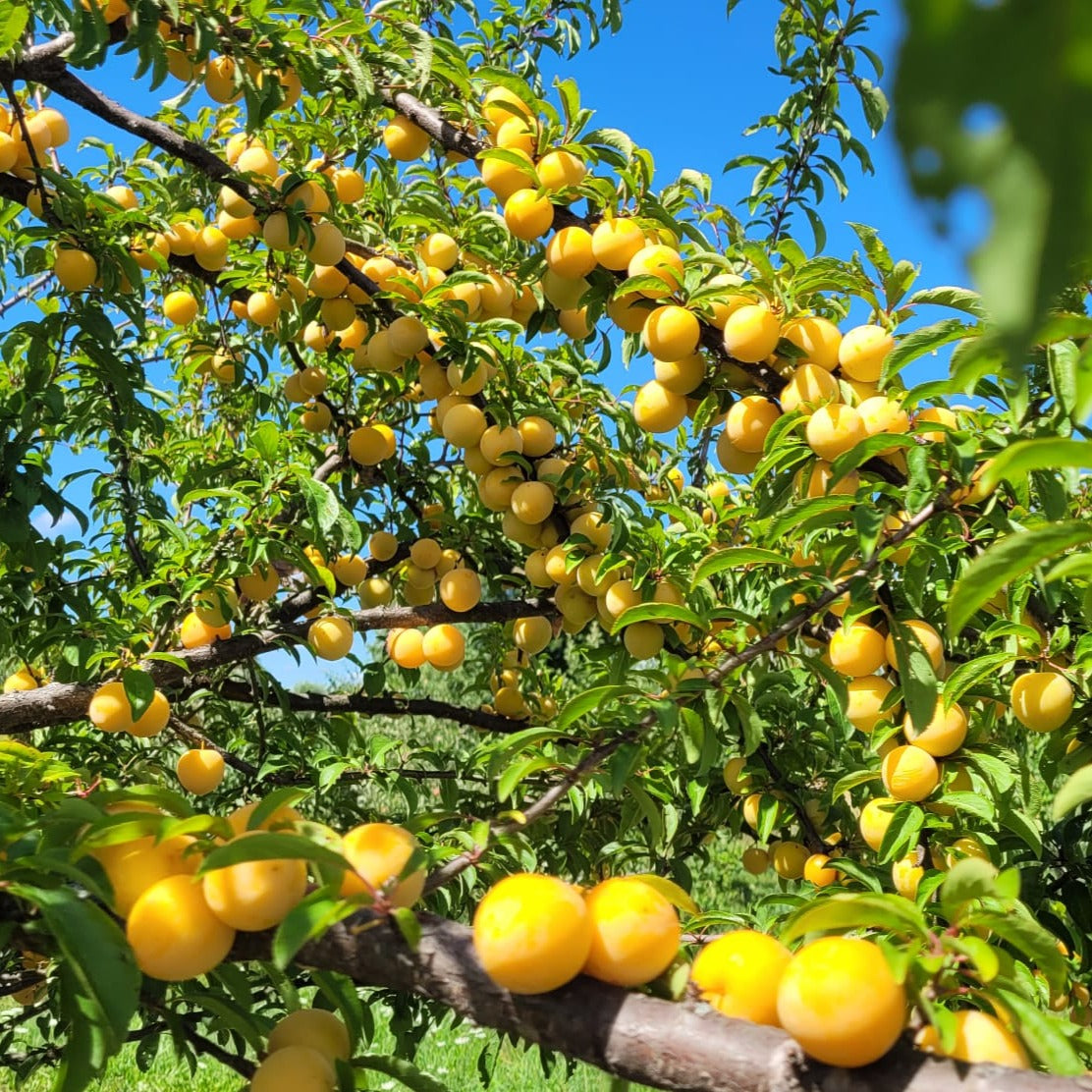
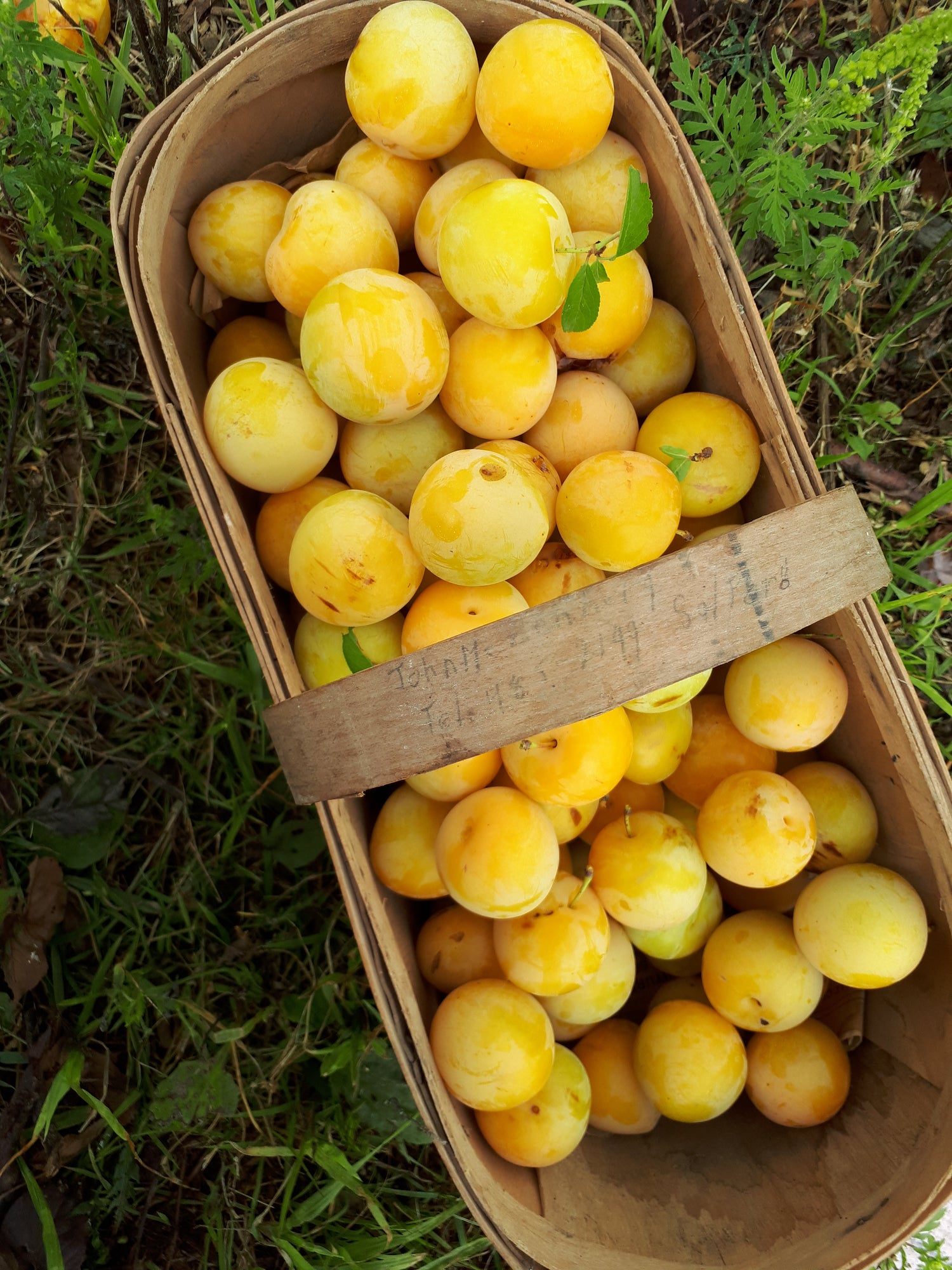
History: Shiro plums (translated from Japanese as 'white') were developed in California and introduced in 1899. They were bred by horticulturalist Luther Burbank who is renowned for his extensive experimentation with creating new plum varieties. Shiro plums are most commonly grown in the United States and Canada.
Why We Grow It: This early Japanese clingstone variety has yellow skin and flesh that is juicy and sweet. The fruit keeps longer than most plums, lasting two to four weeks, and the tree is known for its compact growth and heavy crops.
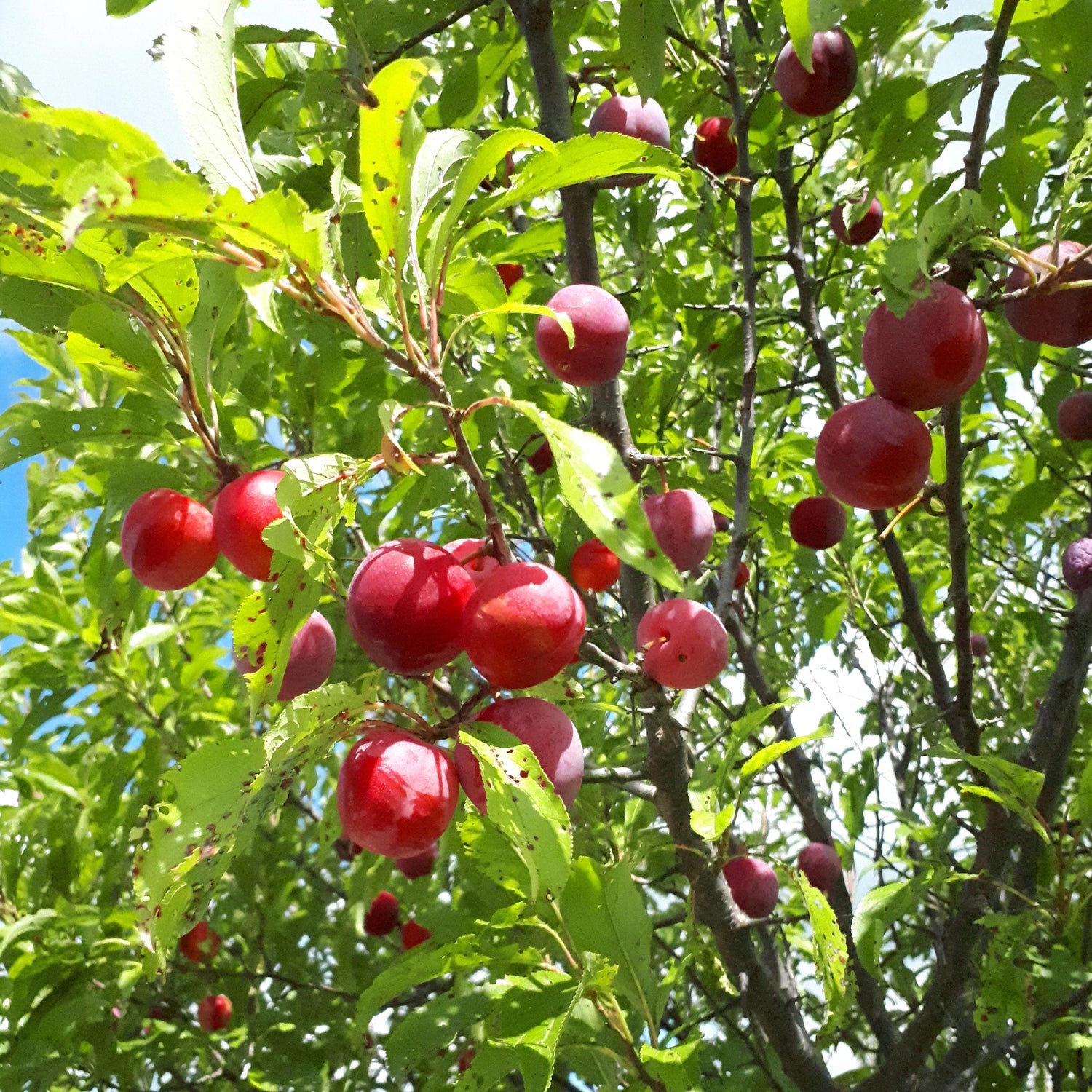
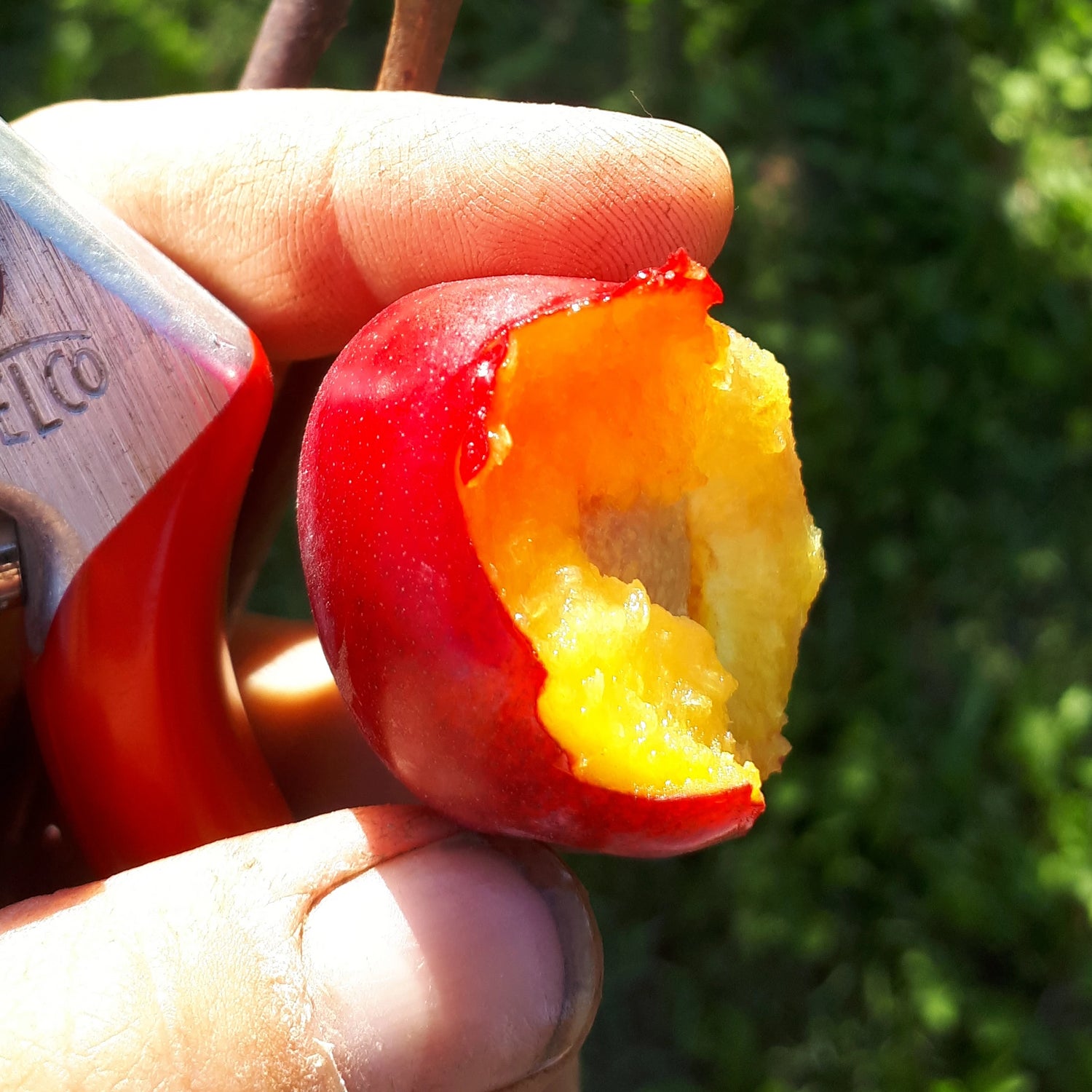
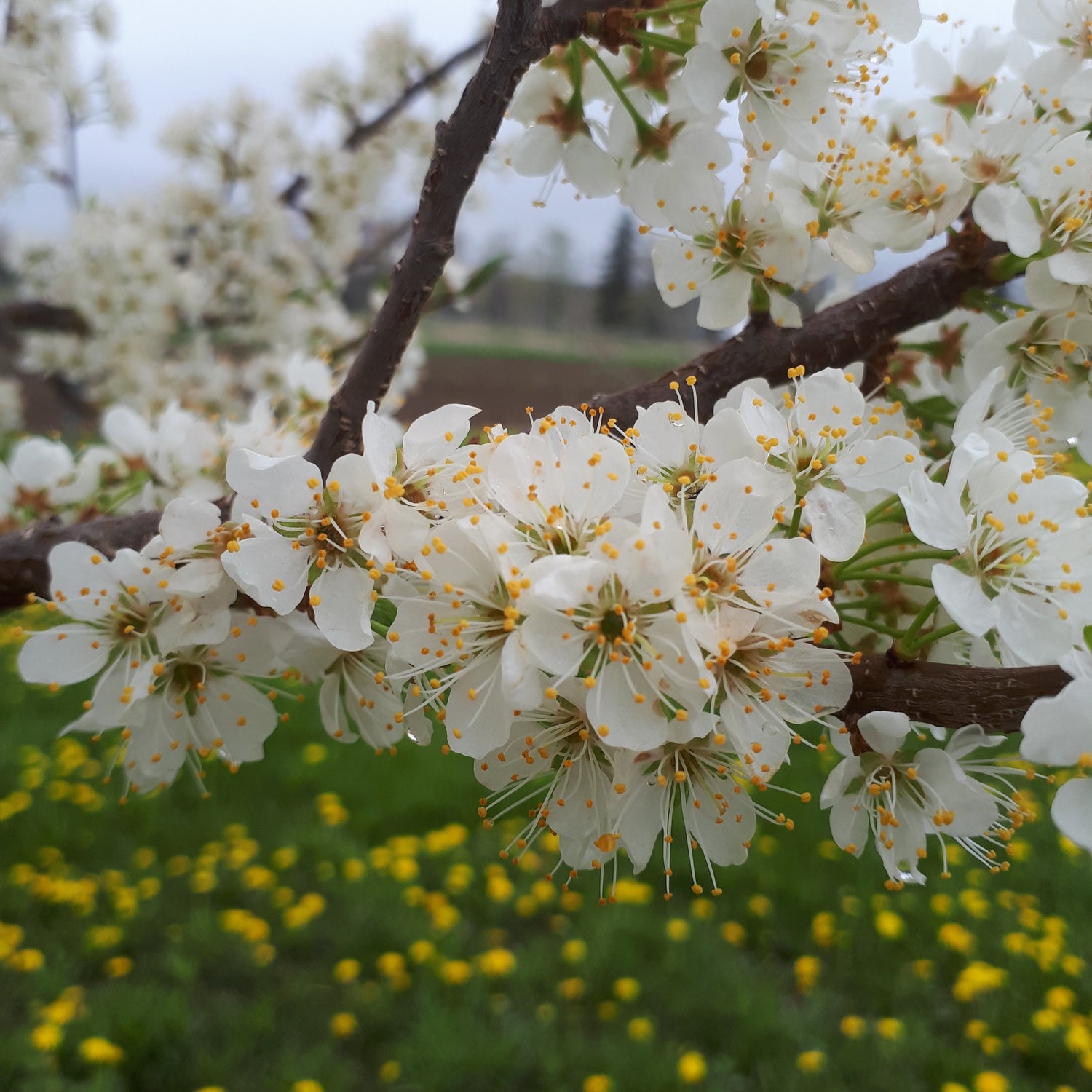
History: Toka is a hybrid of an American plum (Prunus americana) and a Japanese plum (Prunus salicina) that was created by Dr. N.E. Hansen who is known for his extensive career in developing cold hardy plant varieties. He developed Toka at the South Dakota Experiment Station and introduced it in 1911. It is unclear what 'Toka' translates to in English but 'toka' can mean 'etc/among other things' or 'river crossing' in Japanese
Why We Grow It: Toka is also known as Bubblegum plum due to its flavour and smell which bears an uncanny resemblance to bubblegum. These plums are incredibly aromatic, and will fill your kitchen with their perfumed scent as they sit out to ripen. The semi-clingstone fruit features deep red skin and bright yellow flesh that is firm but juicy. It is good for fresh eating or preserving.
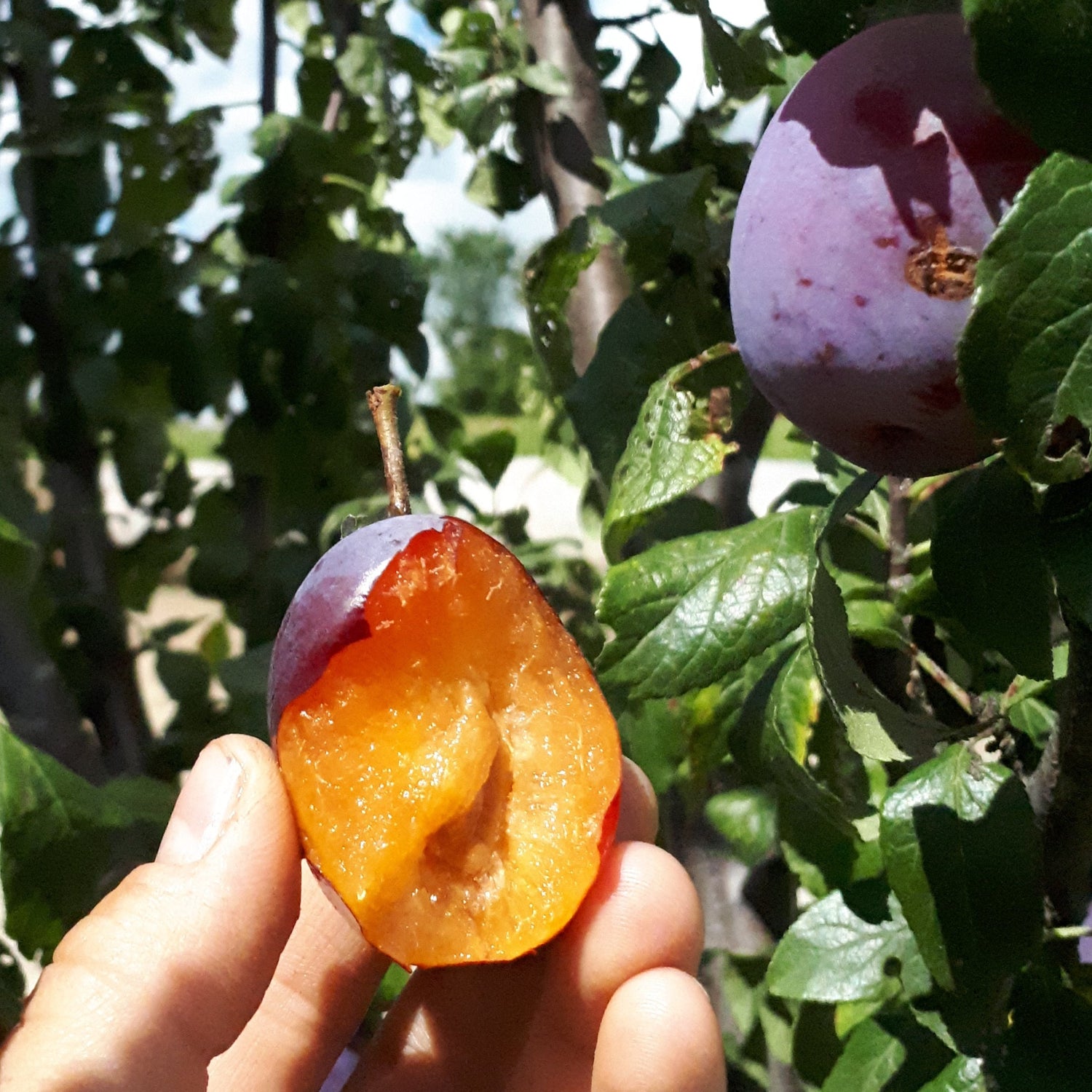
History: Waneta is a hybrid of Japanese plums (Prunus salicina) and American plums (Prunus americana) developed at the South Dakota Experimental Station by NE Hansen and introduced in 1913. It was developed at a time when hybrid plums were more important as a commercial crop. It was named after a Yanktonai man who played a prominent role in the War of 1812 and later became chief.
Why We Grow It: Waneta is a juicy and sweet clingstone plum with tart red skin. The flesh is a yellowish colour. The tree naturally stays a little smaller and has good crops, paired with decent cold hardiness.