All Fruit Trees

All Fruit Trees
Looking for bareroot fruit trees Canada? We offer a wide variety of bareroot fruit trees including apples, apricots, pears, plums, cherries, quince, and peaches that are grown for the Canadian climate & we deliver cold-hardy fruit trees right to your door!
We also offer fruit trees for small gardens, heritage apples Ontario and you can filter all our fruit trees by hardiness zones. Search trees by collection or peruse all the varieties we carry below! We offer flat rate shipping across Canada.




320 products
Sort by:
320 products
320 products
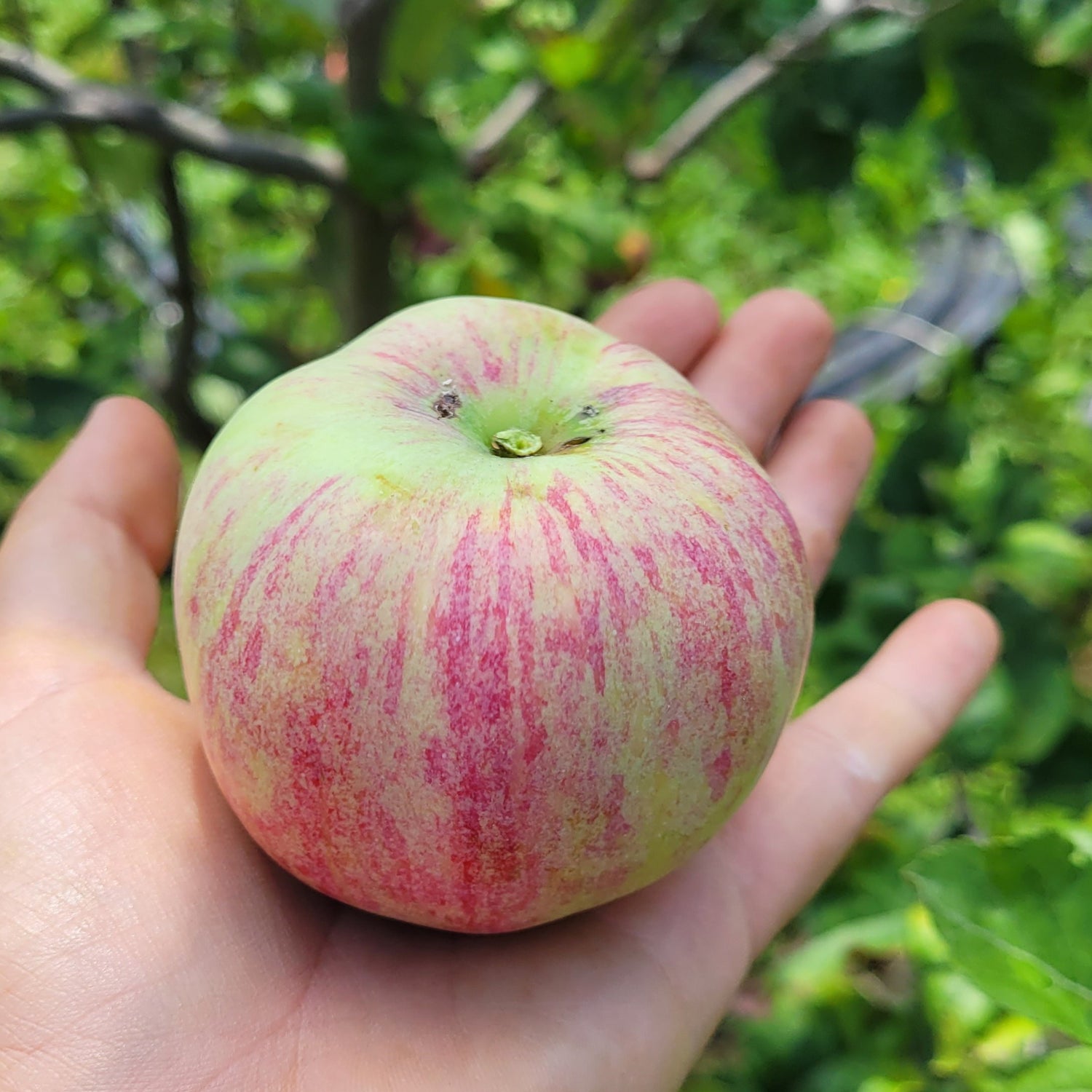
History: This cold-hardy apple was developed in the prairies and is for growing in colder, northern areas.
Why We Grow It: This unique apple produces a yellow fruit with red stripes. It is a rather uncommon variety and is great for sauce. It has begun producing reliably in our test orchard the last few years, and always has a bountiful crop.

History: Bedan des Parts is a French cider apple from Normandy that originated in the 1800s. It is still a popular cider apple in the area today.
Why We Grow It: The continuing popularity of this apple is due to the good quality bittersweet juice it produces that blends well with other varieties. Although a late bloomer, it is quite a heavy cropper.

History: The origins of Beer's Black are a mystery, but the excellent fruit proves why it continues to be a popular variety today!
Why We Grow It: Beer's Black produces medium figs with dark violet skin and magenta flesh that are quite sweet. They are excellent for eating fresh or drying!
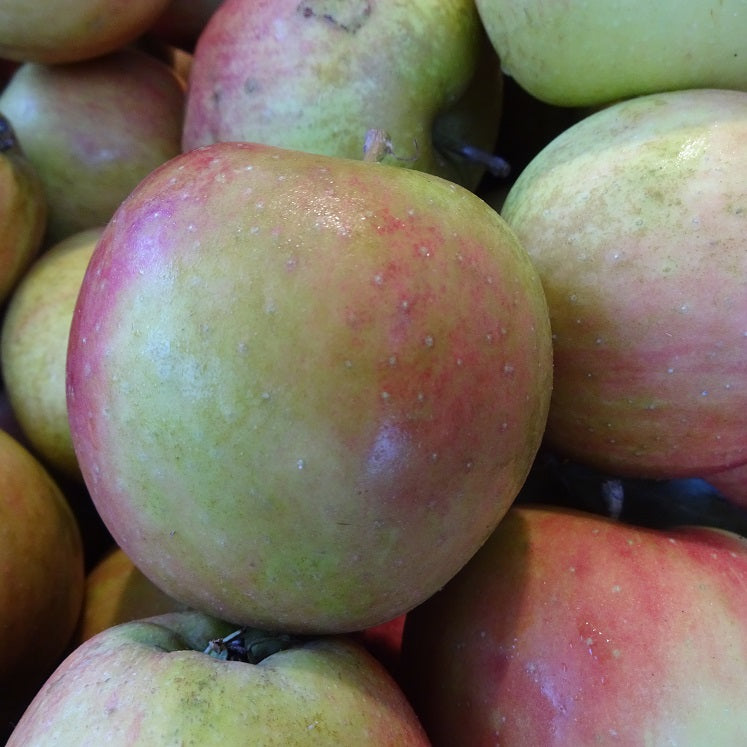
History: This apple was discovered as a chance seedling in 1856 in Boskoop, Netherlands where it has remained popular ever since.
Why We Grow It: Here's one for those of us who love some sharpness in an apple. With its sharp taste and large, greenish-red fruit, this apple is still popular at farmer's markets throughout Europe for both fresh eating and cooking (keeps its shape). It has value as a sharp in hard cider blends as well.


History: Once one of the most popular commercial apples in the United States, Ben Davis apple trees were planted across the continent following its discovery around 1800. Due to its firm fruit and excellent keeping qualities, this apple was extremely easy to transport over longer distances which led to its popularity. Once storage and transportation improved, this apple was slowly replaced with better tasting varieties and it is now a relatively rare find. It's also a parent to Cortland.
Why We Grow It: The mellow, sub-acidic, mildly aromatic red fruit is not quite as flavourful as some apples but it stores exceptionally well, lasting into spring. Flavour improves in storage, like many heritage apples. The trees are reliable and heavy croppers, earning them the nickname of 'mortgage-lifters' when they were grown commercially.

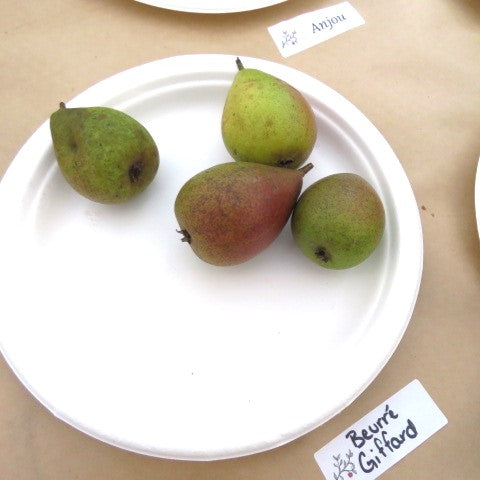
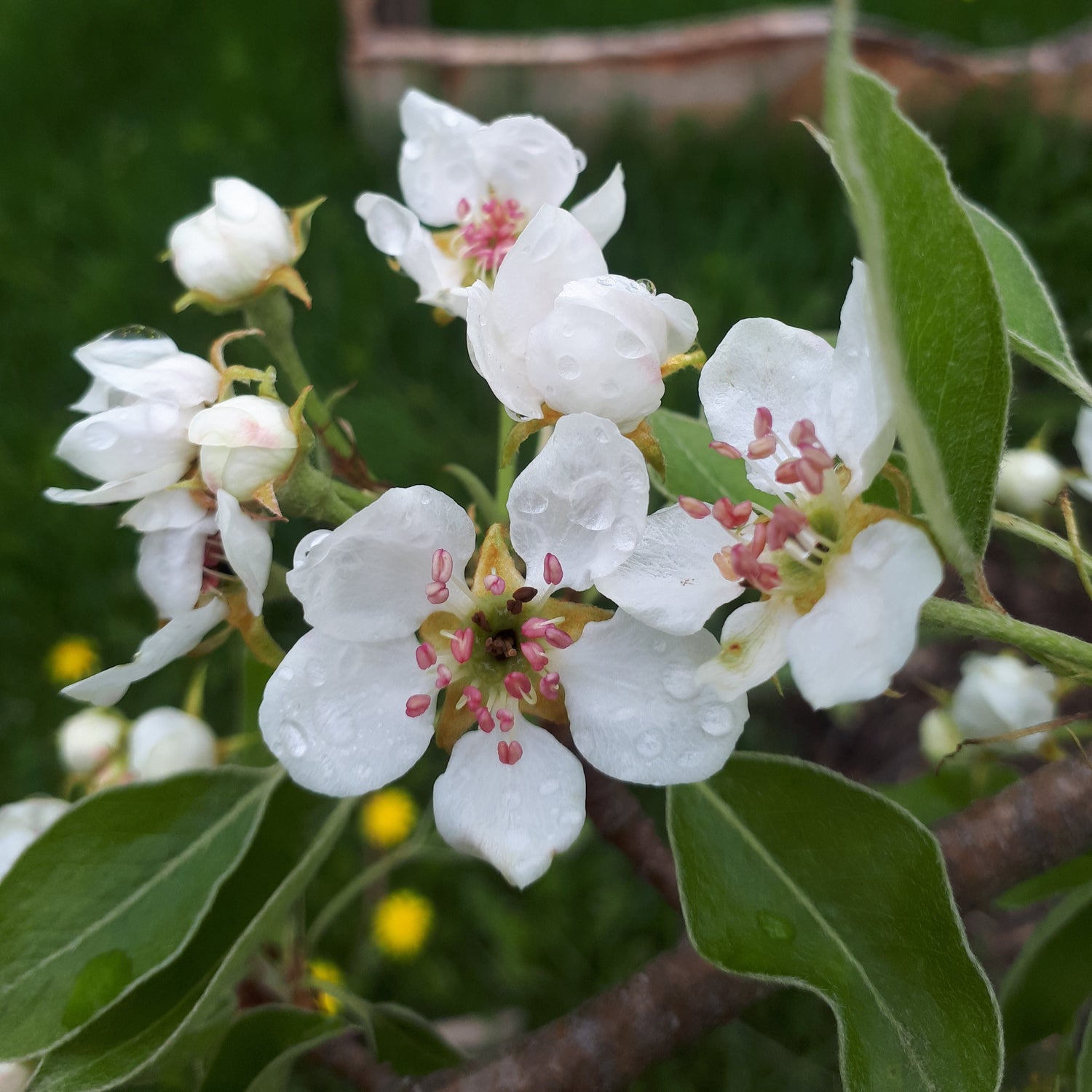
History: Beurré Giffard was discovered as a chance seedling by Nicolas Giffard in 1825 in France. "Beurré" translates from French as "butter-like," referring to the smooth, juicy flesh that was typical of pears developed at this time in France and Belgium. It was later introduced to the United States in 1850.
Why We Grow It: This French heirloom pear is one of the earliest ripening pears we offer. Its sweet, melting yet crisp flesh is similar to Bartlett with an excellent flavour.
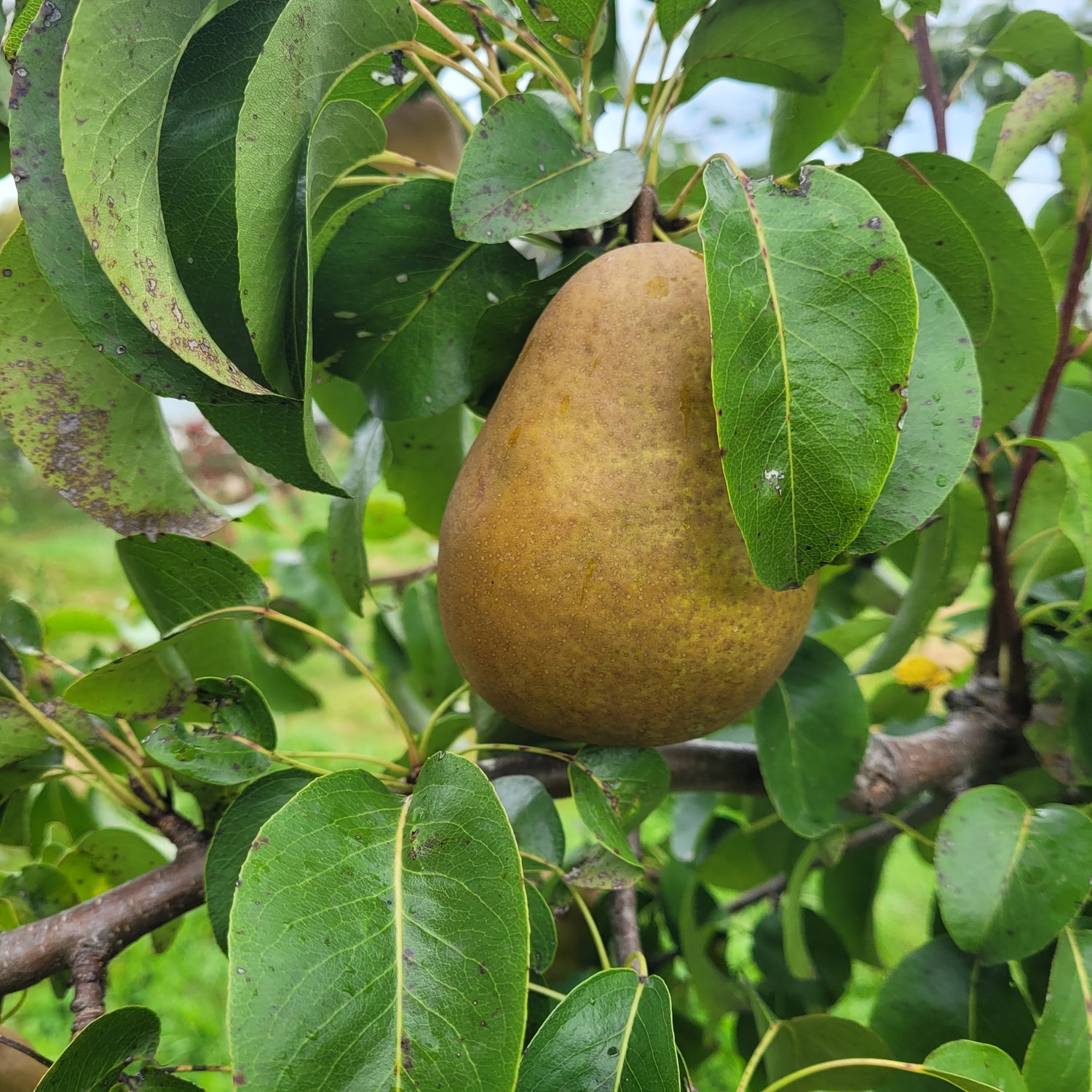
History: Beurré Hardy was cultivated in France around 1820 by a Monsieur Bonnet and was named after Julien Alexandre Hardy, the director of the Luxembourg Gardens located in Paris. "Beurré" translates from French as "butter-like," referring to the smooth, juicy flesh that was typical of pears developed at this time in France and Belgium. It is considered a classic French fresh-eating pear and remains popular to this day.
Why We Grow It: Beurré Hardy produces a sweet, aromatic pear with white/pinkish flesh that has a hint of rosewater. It grows quickly but can take a while to start fruiting, although once it does it produces reliably heavy crops when grown in warm areas. Its blooms are tolerant of late spring frosts although it isn't always a very reliable pollination partner.

History: Big Red was developed by Bob Bors at the University of Saskatchewan. It was one of several varieties an American company further evaluated in the US and selected as the best amongst them. Chosen for its notable cold hardiness, large size, and unique shape along with its good flavour, Big Red is sold under the name Wowza! in the US. The variety is still considered experimental since the original tree was accidentally destroyed prematurely.
Why We Grow It: Along with having good flavour, Big Red is most notable for its large size: the fruit can be twice as big as other dwarf sour cherries! The fruit is also uniquely elongated with a lobed end, giving it an appearance akin to Red Delicious apples. In trials at the University of Saskatchewan, the variety suffered no winterkill so it appears to be extremely cold hardy even in comparison to other dwarf sour cherries. The only downside to this variety is that it has lower yields than other varieties, perhaps as a tradeoff for its other traits.
Check our our blog post with some tasty sour cherry recipes!

History: A traditional French cider apple grown in Normandy, it is one of the varieties approved by the Appellation d'Origine Contrôlée for use in cider production in the region.
Why We Grow It: This apple produces an aromatic, bittersweet juice that can be used in cider and apple brandy. Although it only bears fruit every other year, it produces a considerable crop in a single season. It is also a great pollinator for other varieties due to its long blooming time.
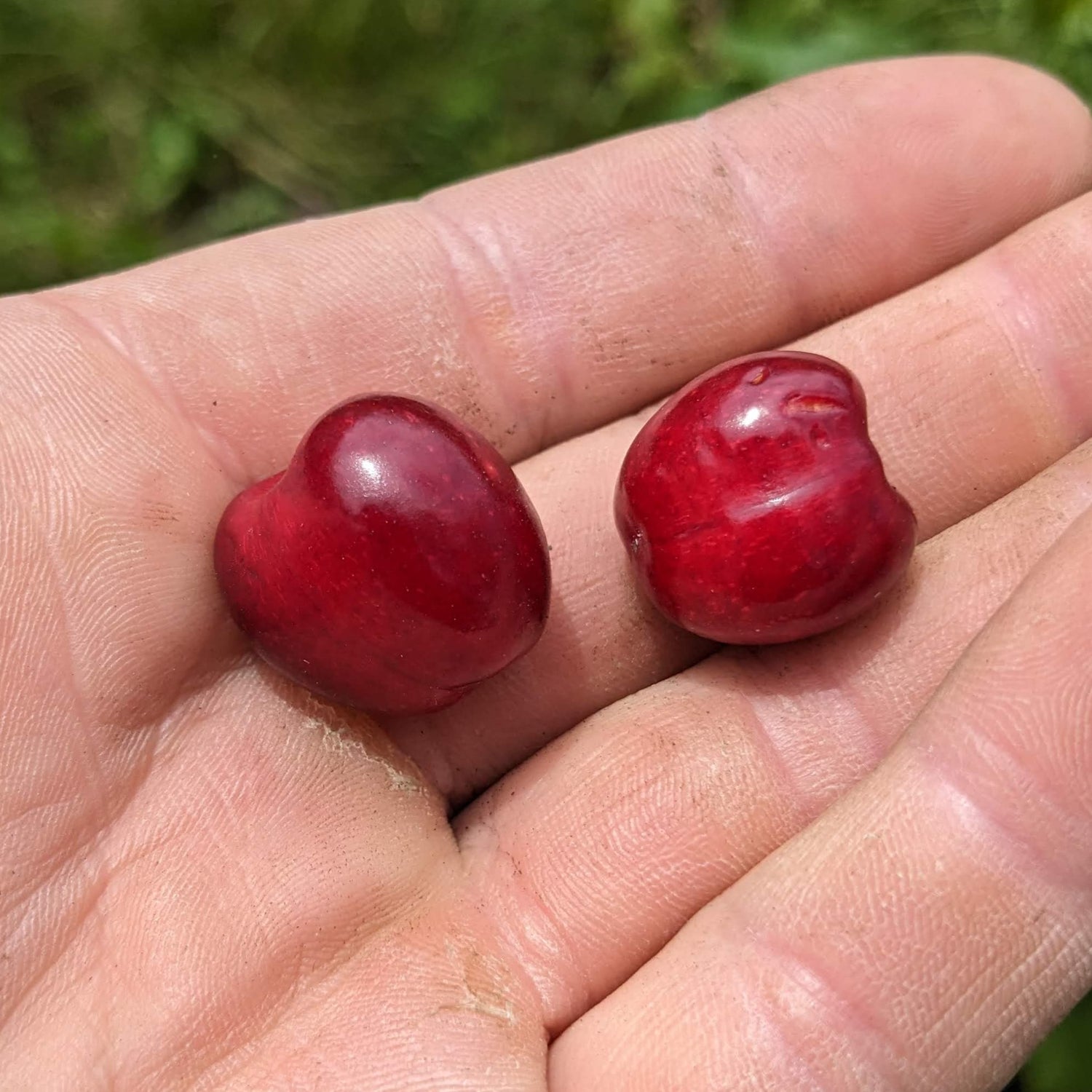
History: Bing sweet cherries originated near Salem, Oregon in 1875 as a cross between Black Republican and another sweet cherry variety. It was named after Ah Bing who worked as a nursery foreman for Seth Lewelling, the person who made Bing cherries into the top variety in the US. It is uncertain if Ah Bing himself developed the variety or if Lewelling simply named it after him as thanks for the 35 years he worked for him.
Why We Grow It: There are many reasons why this classic black sweet cherry has become the most commonly grown cherry in the US and the standard by which all other sweet cherries are measured. It produces large heart-shaped fruit with meaty purple-red flesh that is juicy and sweet. It has a semi-cling stone that is easy to remove, making it great for fresh eating and preserves. The tree is a heavy cropper, producing bountiful amounts of these lovely sweet cherries.

History: We have a collective of Franciscan missionaries to thank for this variety, when they started it in San Diego in 1768. Over the years, it became the favored fig to grow in California, including sweeping through the commercial orchards.
Why We Grow It: Excellent quality fig, with good production! Black skin, sweet strawberry-red flesh, with distinct flavour.
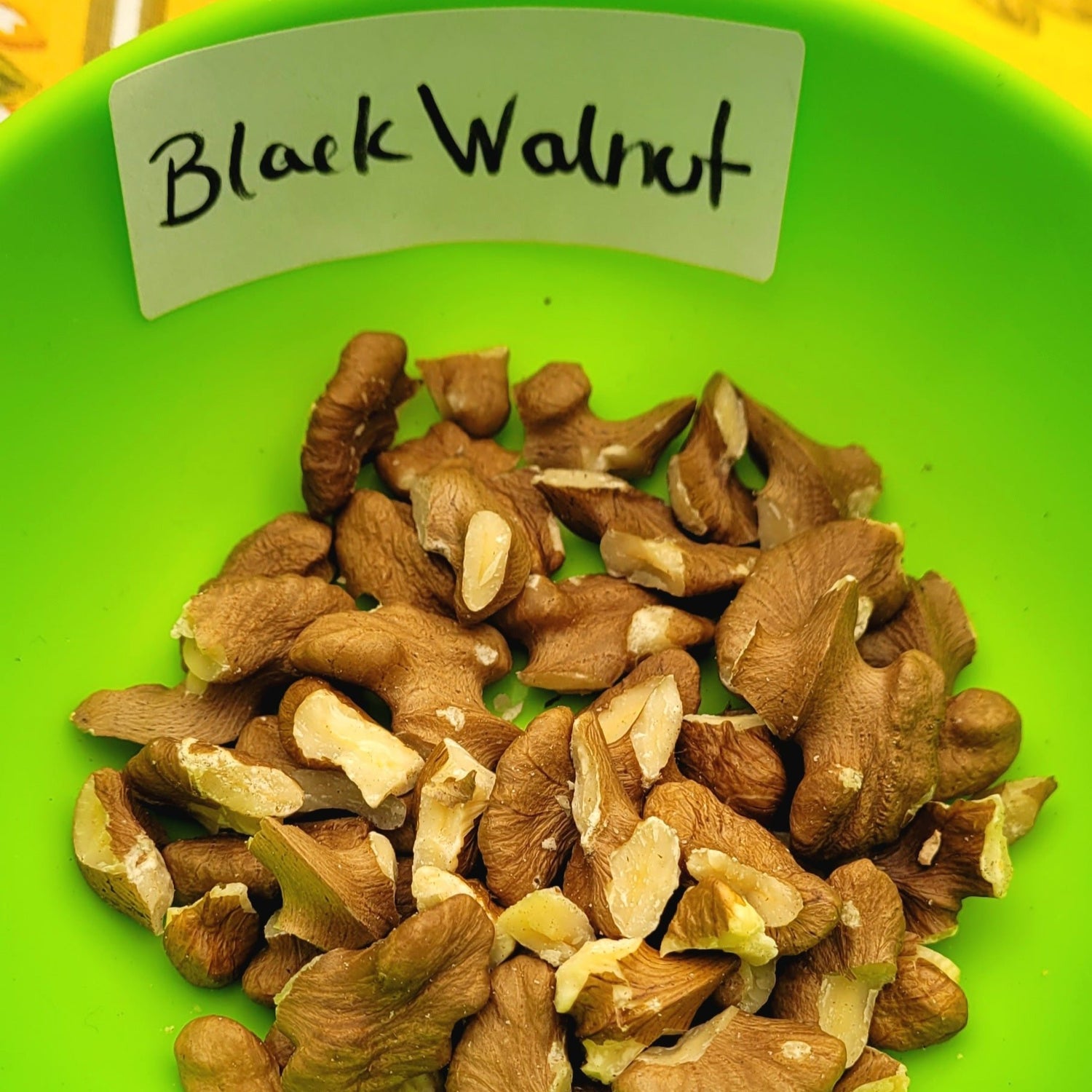
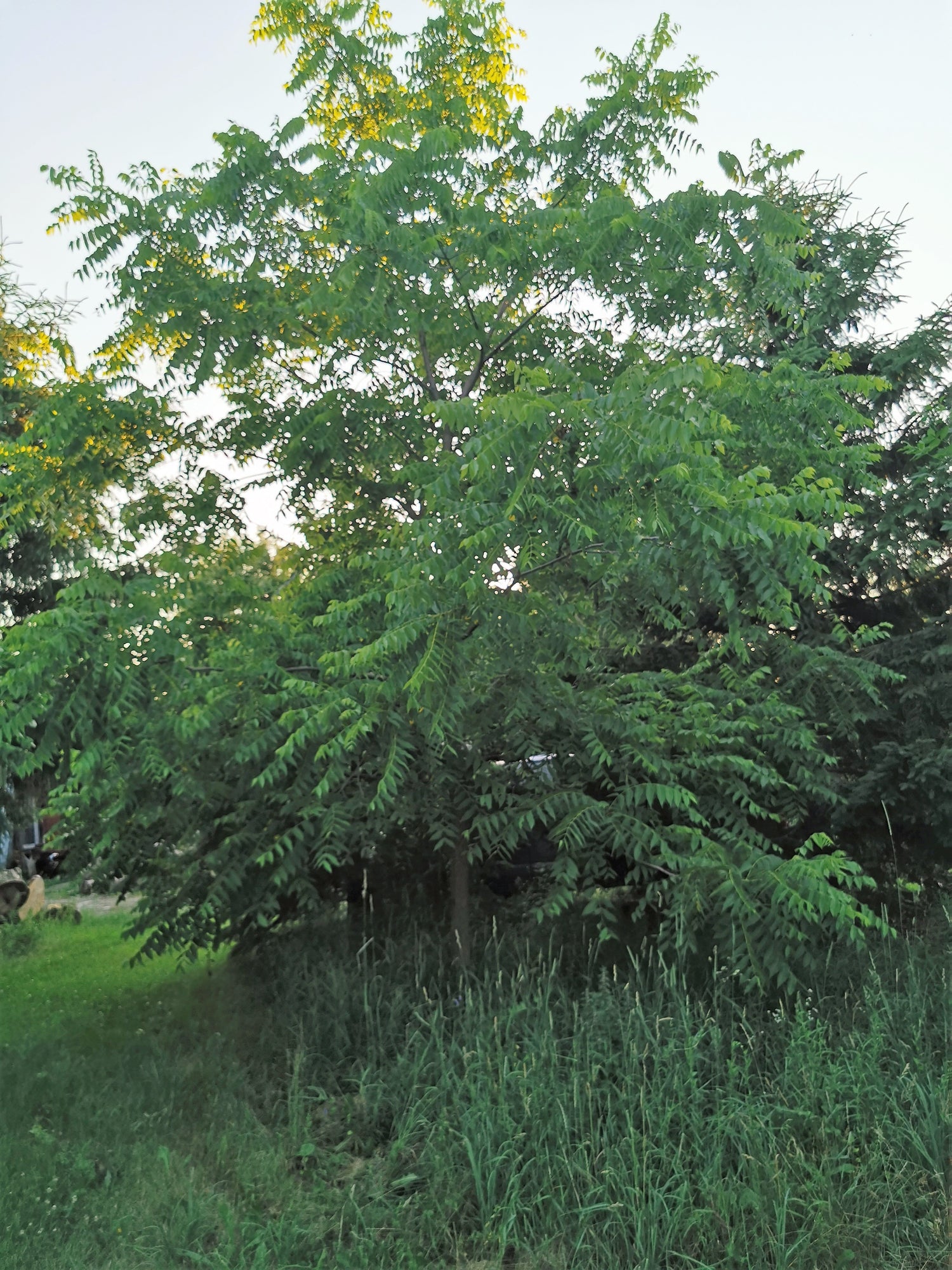
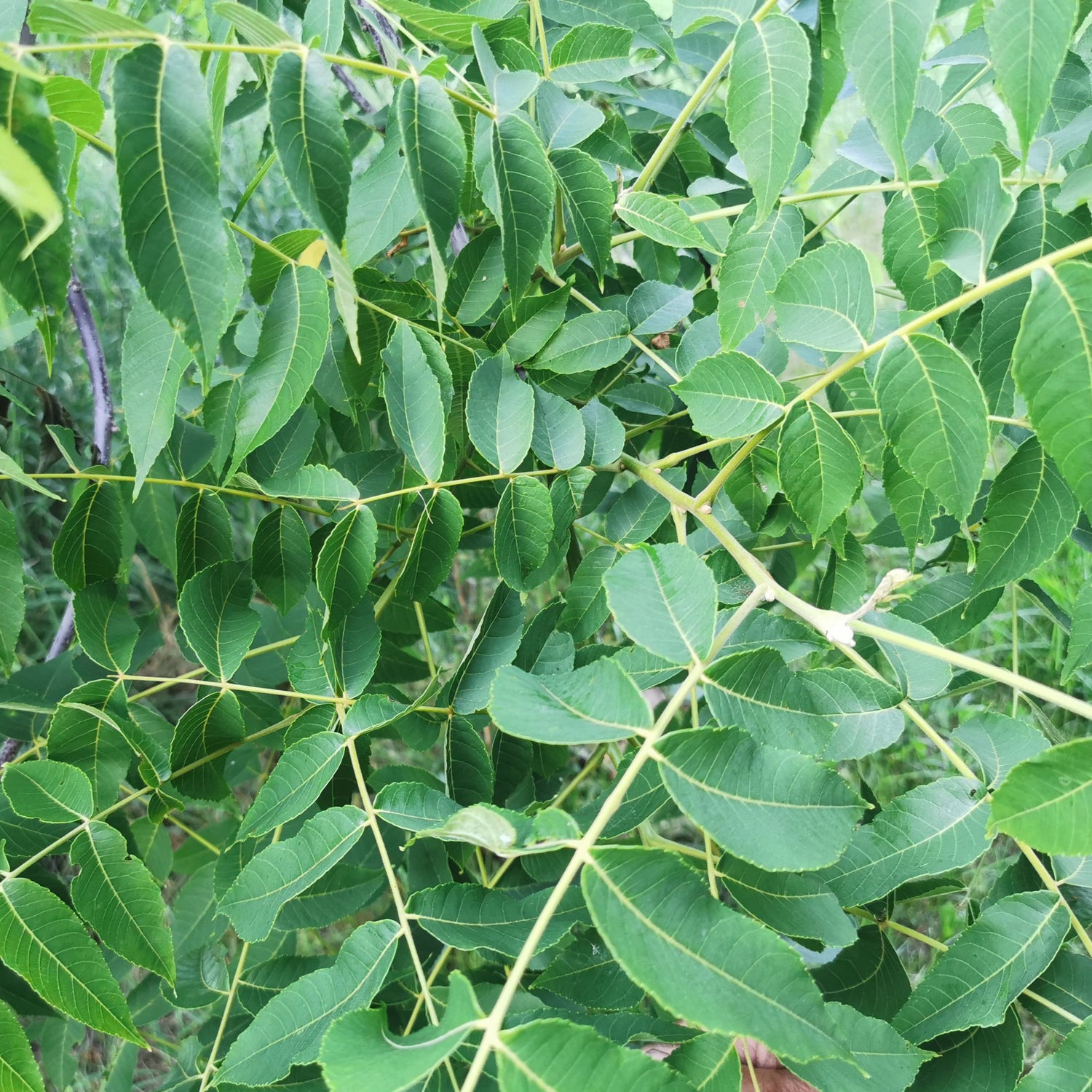
Species: Juglans nigra or hybrid. Our seeds are collected from trees that may have been cross-pollinated by closely related species so the resulting seedlings may be hybrids.
History: Native to much of the eastern and central United States and southern Ontario, Black Walnut has long been used as a source of food, dye, lovely dark wood, and as an ornamental tree. Although it is said to have a better flavour than the English walnut, the Black walnut remains less popular due to the increased difficulty of harvesting the nut meat from within the husk. Black walnut is also infamous for being allelopathic, meaning it secretes toxic chemicals (juglones) into the soil to reduce plant competition.
Why We Grow It: Black walnut is a beautiful tree that produces nuts with a stronger flavour than that of English walnuts. The sap can be boiled to make walnut syrup, which tastes very similar to maple syrup but with notes of caramel and butterscotch. Also, the husks can be used in brewing beer!
Be mindful of the juglones in the in the roots/nut husks, they are toxic to many other species. They require a buffer of about 50'/30m from the edge of the trees canopy for juglone-sensitive plants. This article from The Garden Hoe has a helpful list of plants that tolerate juglones. However there are recent (2019) studies showing healthy soil high in organic matter and mycorrhizal fungi actually reduce the toxicity of juglones suggesting many plants can grow below juglans species in a healthy ecosystem - it will be interesting to see more study done in this area!
History: Blakeney Red (aka Circus pear, Red pear, and Painted Lady) is believed to have originated in the English village of Blakeney, its birthplace and the prominent red blush on the fruit earning it its name. It may have been originally planted sometime in the 1700s but became better known starting around 1830 and was the most widely planted perry pear. It is still popular in the UK today and is gaining attention in North America as well. A yellow dye can also be made from this variety and it was used to dye khakis for British soldiers during WW1.
Why We Grow It: This perry pear produces small to medium yellow fruit with red blush and some russet. For those interested in perry, it's hard to ignore this variety's long history, although its quality can vary based on growing conditions.

History: The history of Blenheim Orange is a bit muddled depending on your source. We know it was discovered by George Kempster (either a baker, a tailor, or a basket weaver depending on who you ask!) in England in 1740 and it was originally named Kempster's Pippin. Some say he found it as a seedling growing along a wall of Blenheim Palace while others claim he grew it in his garden located near Blenheim, England. It was later renamed to Blenheim Orange in the early 1800s, likely when it was sold commercially through nurseries. This variety has many other names, including: Beauty of Dumbleton, Blooming Orange, and Northwitch Blenheim. The tree itself is also known for its sturdy wood and it was at one time popularly used to make railway cogs.
Why We Grow It: These large, somewhat flat apples feature orangey-red stripes over yellow skin with some russet. The fruit is good for fresh eating with a nutty taste and is quite nice when paired with cheese. It is also great for cooking and makes a stiff purée. The tree is highly vigorous but can be slow to come into production, although it has heavy crops once it does.

History: Bonne Louise de Jersey originated from Avranches in Normandy, France in the 1780s. It was originally known as Bonne Louise d'Avranches until it was taken to Jersey in the Channel Islands. As it grew in popularity in the UK, it was given the name Bonne Louise de Jersey instead.
Why We Grow It: Bonne Louise de Jersey is a rich, buttery pear that produces a juicy, red blushed fruit. In spring, this pear is also adorned with a profusion of notably attractive blossoms, adding a nice touch to any landscape. Although the tree is less vigorous than some other pears, this makes it suitable for potting and espalier.
Showing 30/320
Next