Apple Scionwood

Apple Scionwood
For those looking to graft heritage and unique apple trees, we are happy to provide scionwood directly from our orchards! We offer a wide selection which will be listed further below.
ORDERING SCIONWOOD: Scionwood orders generally open in December and must be placed by the end of February. We require a minimum 25% deposit upfront.
If you are interested in scionwood but the sale season has ended, we are happy to add you to our request list for the following spring! Just send us a list of the varieties and quantities you are interested in and we will add you to our list.
SHIPPING/PICKING UP SCIONWOOD: We generally recommend that customers receive their scionwood orders by mid-April at the latest to ensure it arrives dormant, but can hold it longer if customers accept the risk that the scionwood may start breaking dormancy.
Due to the nature of nature, sometimes scions begin budding out early and we want to ensure you receive dormant scionwood that you will have time to graft with. If you need to hold your scionwood dormant until May, you will need to decide how you will do that. It is relatively simple, and you can learn more about storing scionwood at home here. If you are picking up your scion order, we recommend doing so ASAP after you receive your pickup notification via email.
Size: 12-18" or 30cm+, as available*. If a scion is less than 6" or 15cm, it will be discounted accordingly.
*Since we specialize in so many varieties, they each have a unique growth habit and vigor. Some cultivars will produce long relatively thick scions, and others tend to produce shorter, thin scions (see photos to the left). We will provide the best quality we can, within natural restraints.
112 products
Sort by:
112 products
112 products

Why We Grow It: Melrose produces a flattish apple that has greenish skin overlaid with a bright red flush. It is firm, juicy, and sweet with a more acidic flavour that improves after a little while in storage. It is great for both fresh eating and cooking and can be stored for several months. The tree itself starts to bear at a young age and produces heavy crops, although it has a tendency to bear fruit every other year.

History: Michelin was raised by a French nurseryman in Normandy where it first bore fruit in 1872. It was named after pomologist Henri Michelin who studied cider varieties. In 1884 the Woolhope Field Naturalist's Club brought Michelin along with Medaille d'Or back to England where it became one of the most commonly planted cider varieties by the 1900s.
Why We Grow It: These juicy apples produce good quantities of bittersweet juice that make a nice addition to cider blends. The trees start producing fruit at a young age and have large, reliable crops. They have preformed well in recent studies at the Vineland Research station in our Canadian growing conditions.

History: Milwaukee was discovered around 1890 as a chance seedling growing on the farm of George Jeffrey is Milwaukee, Wisconsin. Named for its city of origin, it was first grown commercially around 1899 but is now considered rare today. DNA testing has shown that it is a seedling of Duchess, imparting excellent cold hardiness on this variety.
Why We Grow It: Milwaukee produces a large, red apple that is crisp, juicy, with a tart flavour that is a bit more intense than most people like for fresh eating. It instead shines when used for cooking, pies, and cider. For those looking an nice multi-purpose apple that is quite cold hardy, this is an excellent option!

History: Mother was first officially introduced to the world in an 1844 edition of the "Magazine of Horticulture." We know it came from General Stephen Gardner's farm in Massachusetts in the US but do not know any other details about its origins. It faded from popularity in the US during the 1900s but remained popular in the UK.
Why We Grow It: Mother produces medium-sized apples with yellow skin that turn deep red where exposed to the sun. This crisp, juicy apple is sweet with hints of pear and vanilla making it an excellent choice for fresh eating. It is also a popular option for baking pies! The fruit stores well, the blooms are tolerant of late spring frosts, and the tree tends to start producing at a young age. It is also susceptible to several common apple diseases, but we believe its other qualities outshine that fact.


History: Little is known about Muscadet de Dieppe aside from the fact it originated near the port of Dieppe in Normandy, France. It was commonly grown in the area since 1750 at least.
Why We Grow It: Considering this French cider variety was popular in an area known for its cider, this makes for a classic cider apple. The juice is bittersweet and aromatic which is excellent in both single-variety ciders and cider blends.
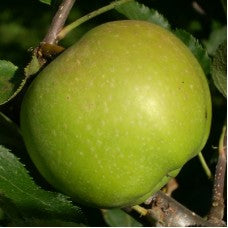
History: Mutsu apples (aka Crispin) were developed in the 1930s at the Aomori Apple Experiment Station in Japan as a cross between Golden Delicious and Indo apples, the same parentage as its sister apple Shizuka. This variety was named after Mutsu Province which was the previous name for the area where it was grown and released in 1949.
Why We Grow It: Mutsu apples have a lot going for them. They have a delicious sweet-tart flavour which is great for fresh eating and the golden yellow skin is quite attractive. The fruit itself is very large and keeps its shaped when cooked, making it an excellent choice for baking. The apples even store well, lasting all winter.

History: Also known as Albemarle Pippin. This apple was discovered as a chance seedling (aka a pippin) in the village of Newtown in New York sometime in the late 1600s or early 1700s. It was commonly grown in colonial America, even earning praise from both George Washington and Thomas Jefferson. In 1838, the American minister to Great Britain gave some to Queen Victoria who loved the apples so much she removed tariffs on the variety and they became an important export until the tariffs were reinstated during WW2.
Why We Grow It: Newtown Pippin's popularity can be ascribed to its unique ‘rich pineapple flavour’ which it develops under optimum growing conditions. So far it has been performing well in our test orchard with good vigour and we have had no issues with diseases despite the tree's general susceptibility.
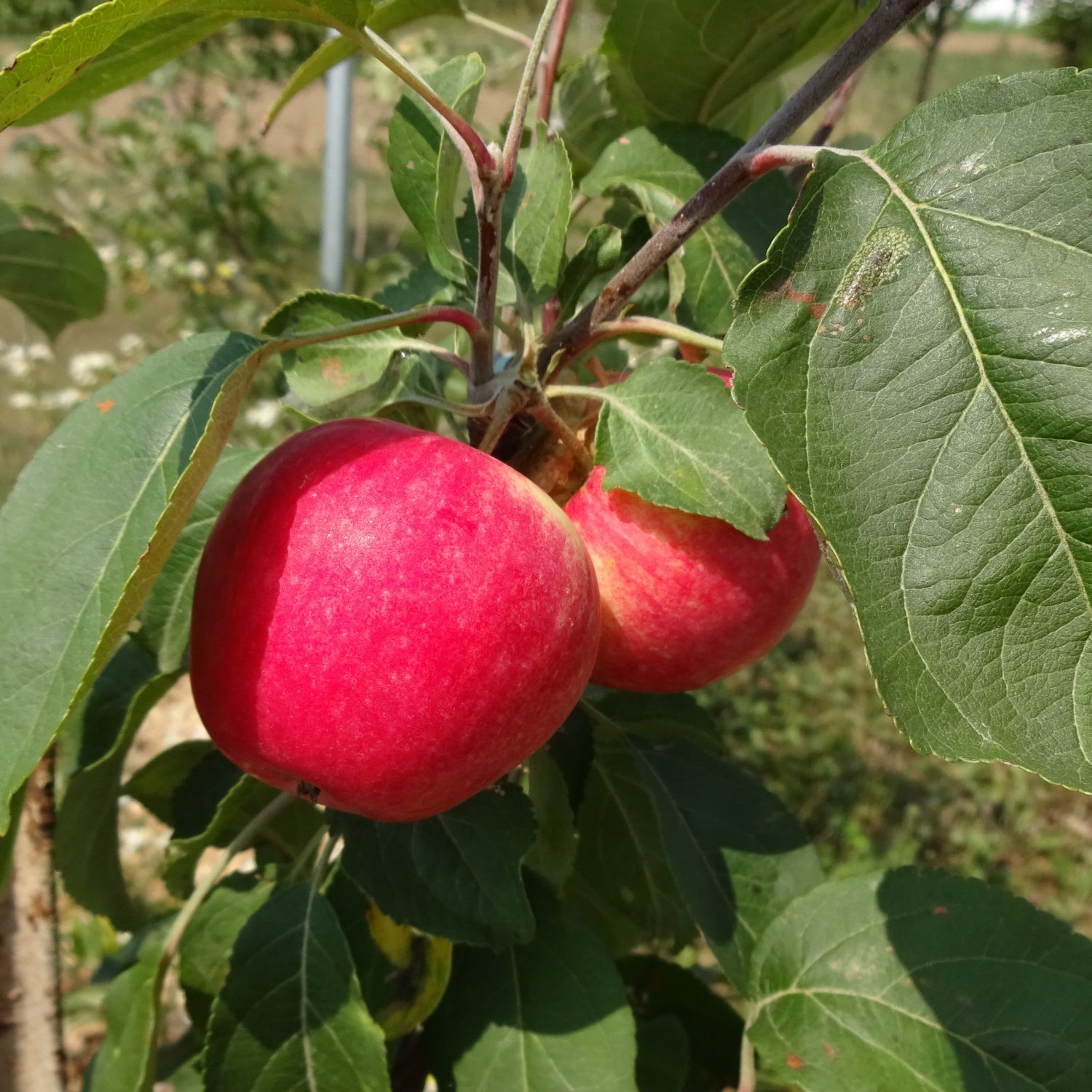
History: Norland apples were created by Dr. C.R. Ure and introduced in 1979 by the Agriculture Canada Research Station in Morden, Manitoba.
Why We Grow It: Since this variety was bred to survive in the prairies, it is very cold hardy. The fruit is medium-sized with sweet flesh that is good for fresh eating or applesauce. It bears heavy annual crops starting early in the life of the tree. A home orchardist in Dacre, ON described the fruit as "lovely with no pest damage; juicy, creamy-fleshed with excellent flavour."
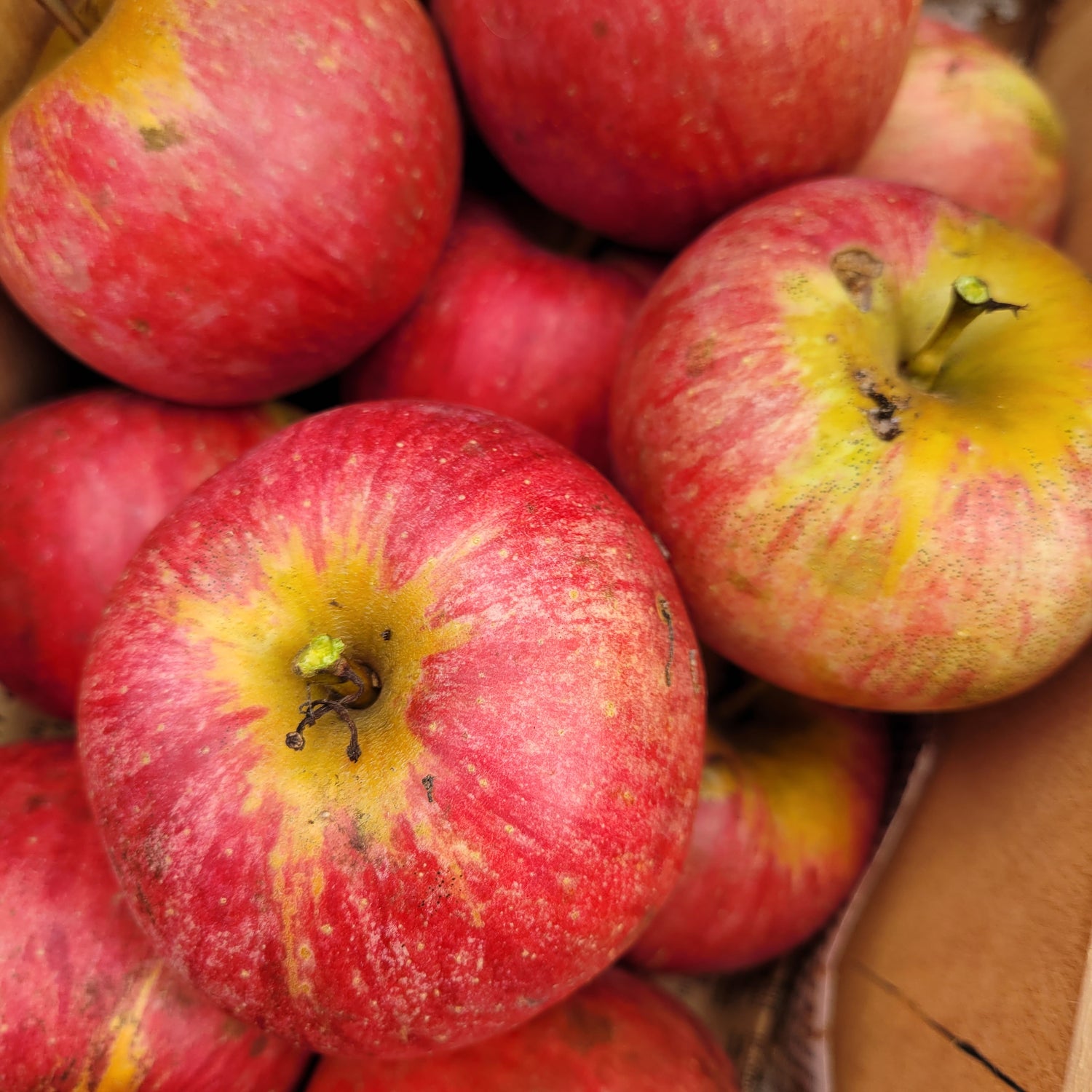
History: Northern Spy was first discovered in New York around 1800. It tends to be irregularly shaped and bruises easily, so it is not a popular commercial apple but it is still commonly grown in certain regions in the States today. It is featured in several poems and in 1953 a box of Northern Spy apples was sent to Senator Joseph McCarthy by the Toronto Globe and Mail during his infamous hunt for 'communist spies.'
Why We Grow It: Northern Spy apples are juicy with a balanced sweet-tart honeyed flavour, although they do tend to bruise easily due to their thin skin. To make up for that, they are known for making wonderful pies. The trees are cold hardy and vigorous.

History: Northwest Greening was grown from seed in 1849 by Jasen Hatch in Wisconsin with the intention of using it as rootstock. The graft ultimately failed and the rootstock grew into its own tree which grabbed the attention of E.W. Daniels in the 1870s when he sampled the fruit. He introduced Northwest Greening commercially in 1872 and it gained moderate success in the US.
Why We Grow It: Northwest Greening produces a medium to large green apple that is firm, dnese, and crisp. It has a sweet-tart flavour that is best suited to making pies and cider, both of which it is known for. The tree itself boasts decent disease-resistance and cold hardiness.

History: Novaspy (aka Nova Spy) was developed at the AAFC Kentville Research and Development Centre in Nova Scotia by A.C. Crowe. It was bred to be a more disease-resistant version of Northern Spy and has Northern Spy, Nova Easygro, and Golden Delicious heritage. It was commercially released in 1986, its name referencing its province of origin and the apple it was trying to replicate.
Why We Grow It: As with other apples released from the AAFC breeding program in Kentville, NS, you can expect excellent disease-resistance from Novaspy. However, its resemblance to Northern Spy is not close enough to warrant the name-- think of Novaspy as having its own new identity to try out. Tree comes into bearing early in life and is an easy one to take care of. Highly recommended for small-scale organic orchards.
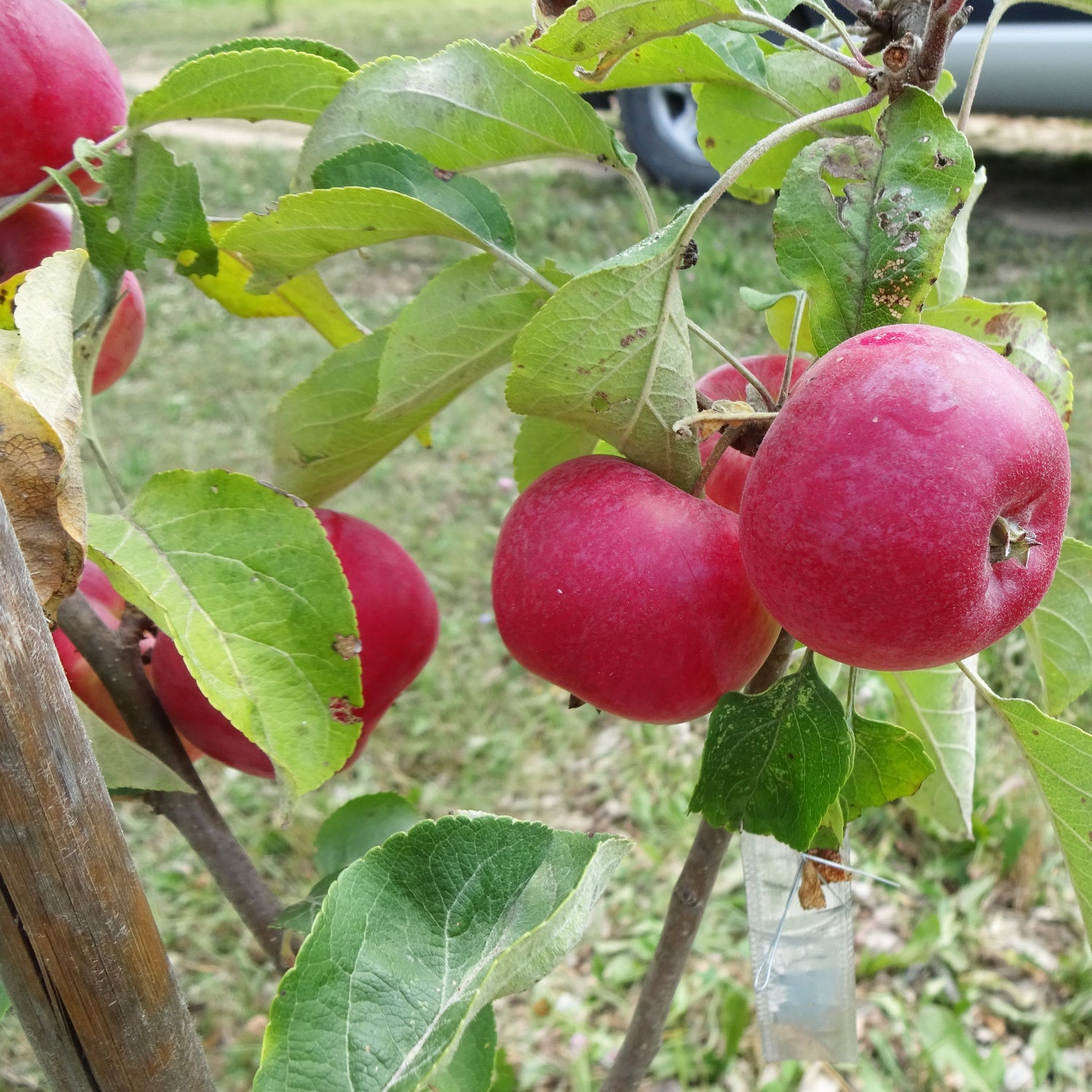
History: Parkland apples were variety created at the Morden Research and Development Centre in Manitoba and released in 1979. Like other varieties developed there, Parkland was designed to withstand the harsh prairie winters and is especially cold hardy. It has become the most commonly grown apple in Alaska after it was brought over in 1985 in an effort to determine which Canadian varieties could survive in the northern state.
Why We Grow It: Parkland is a very satisfying early season apple - sweet and crunchy. It's excellent snacking or applesauce although the fruit is small (about 2" diameter) with creamy flesh and red skin. The tree is quite hardy.

History: Paula Red (sometimes written Paulared) was discovered in Michigan in 1960 by Lewis Arends near a ravine where apples were dumped. It was one of several wild apple seedlings that had sprouted up from the discarded seeds. Likely pleased by its attractive red skin and flavour, Arends named it 'Paula Red' in honour of his wife Pauline. It is a cross between Duchess and McIntosh.
Why We Grow It: Paula Red produces medium to large red apples with small yellow/green patches that are juicy and firm with a nice sweet/tart flavour. The flavour has strong vinous and strawberry notes. It is also slower to brown. This early-ripening variety tends to soften relatively quickly which means it does not store very long, but it is great for making applesauce. The tree produces heavy crops although tends to bear every other year as a result.


History: Not to be confused with Pink Lady, Pink Pearl was developed by breeder Albert Etter who had the goal of creating red-fleshed apple varieties from seedlings of Surprise, a red-flashed variety. In 1940, he partnered with the California Nursery Company to bring some of these varieties to the public. Pink Pearl was selected as the best amongst his seedlings and released in 1945.
Why We Grow It: One of Steph's favourites! Pink Pearl is a delicious apple that is crisp with a pronounced unique fruity flavour and a nice blend of sweetness and sharpness. Its yellow-pink skin conceals a bright pink interior that is stunning to see compared to the white-ish flesh of most apples. It is great fresh or for applesauce, and it is relatively slow browning- it can be cut and bagged in the fridge the night before with very little change in colour the next day. Their pink colour adds a unique visual appeal to baked goods as well, such as with the gooseberry and Pink Pearl tarts Steph made pictured here!
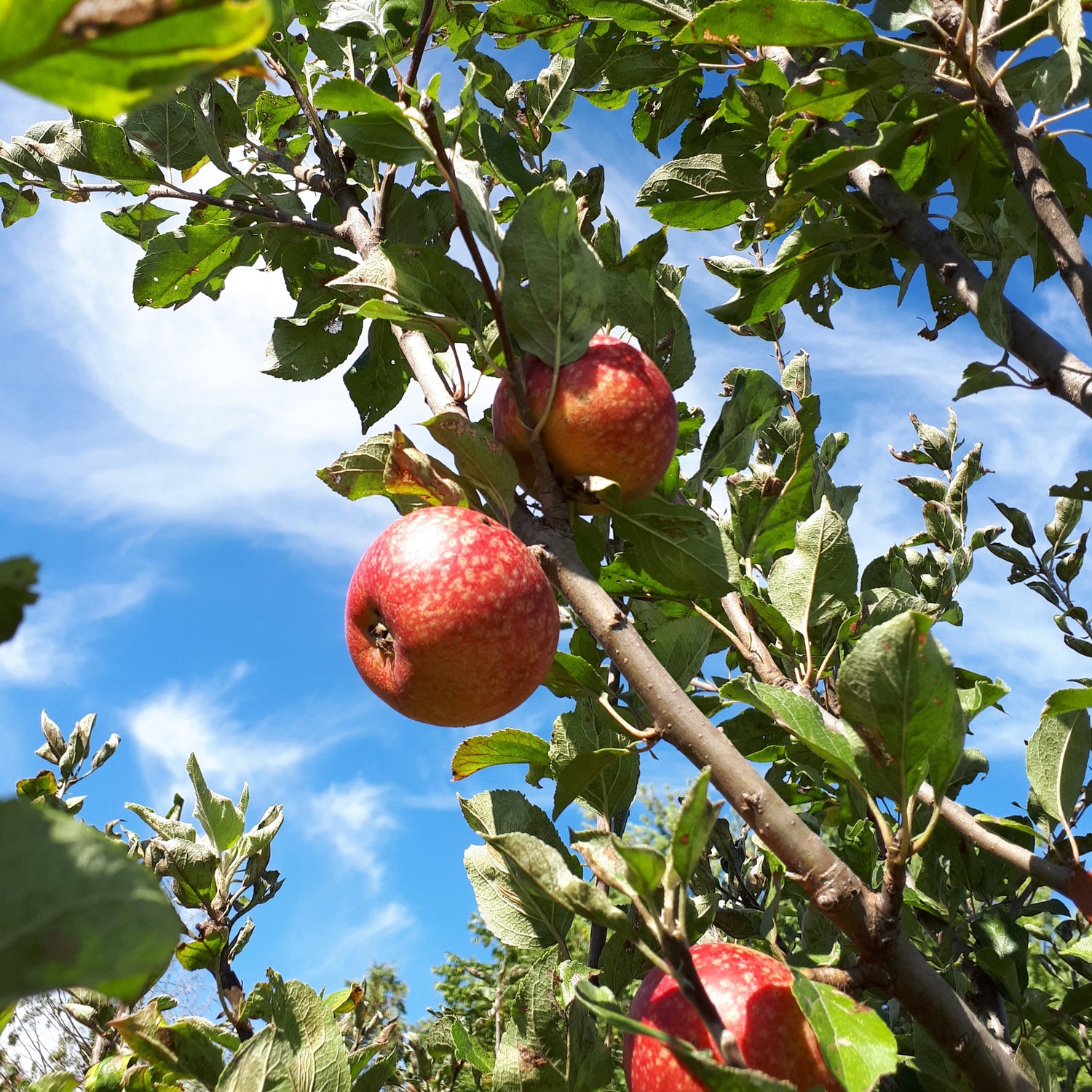
History: Porter's Perfection originated in Somerset in the UK some time in the 1800s. It became extremely popular in England although its popularity began to wane following the 1910s. It is still grown today but not as commonly as it once was. It shows promising results in the North American climate, unlike some other European cider cultivars.
Why We Grow It: This English cider apple produces a medium bittersharp cider. It has done well in different studies in Ontario with the Vineland Research Station with regards to juice composition, disease resistance and overall performance. The tree is a heavy cropper and grows vigorously.


History: Prima is one the apples developed from the collaborative PRI disease-resistant breeding program run by Purdue University, Rutgers University, and the University of Illinois. It was introduced in 1958 but unfortunately is no longer fully scab resistant due to the fungus evolving to overcome the resistance since then.
Why We Grow It: Another great apple for organic production and excellent for the backyard or farmer’s market sales! This apple is sweet, juicy, and flavourful and boasts good disease resistance..

Why We Grow It: Another successful introduction from the PRI breeding program, Priscilla boasts resistance to most common apple diseases including fireblight and scab. The fruit is also quite attractive with a deep red blush over yellow skin with a sweet and subacid flavour.

History: Red Gravenstein is a sport/mutation of the original Gravenstein/Yellow Gravenstein that is a striking bright red. Some say it is also sweeter than the original.
Why We Grow It: With attractive red skin, this is a lovely sport of the original Gravenstein. It is a good quality and sweet early apple that is excellent for home orchards.

History: Red Spy is a red sport of Northern Spy that was discovered in New York in 1895. It has many of the same qualities of Northern Spy but is generally larger and redder.
Why We Grow It: Like Northern Spy, Red Spy apples are juicy with a balanced sweet-tart honeyed flavour. Unlike the original, they boast a brighter red exterior and the fruit tends to be a little larger. They do tend to bruise easily due to their thin skin. To make up for that, they are known for making wonderful pies. The trees are cold hardy and vigorous.

History: Redfree is one of the apples developed under the collaborative PRI disease-resistant breeding program run by Purdue University, Rutgers University, and the University of Illinois. It was bred in 1966 and officially introduce to the public in 1980.
Why We Grow It: Redfree apples are great for fresh eating with a pleasant, mildly sweet flavour and softer yet crisp flesh. The fruit does not ripen all at once, allowing a longer eating season. As its name would suggest, it has decent resistance to several common apple diseases.

History: Rhode Island Greening emerged around 1650 where it was grown from seed by a Mr. Green near Green's End, Rhode Island. Mr. Green owned a tavern and often gave scions from the original tree to his customers, although the tree eventually died from the demand for scionwood. The name was originally the descriptive 'Green's Inn apple from Rhode Island' and later shortened to 'Rhode Island Greening.'* This apple was commonly grown in New York and is still quite common today.
*Fun fact: The Ontario ghost town Unopark got its name in a similar way. It was originally founded by Richard Parker, Mouse's ancestor, and the name is a shortened version of 'You know the Parkers?'
Why We Grow It: This apple's long-lasting popularity is due to its reputation as perhaps the definitive American pie-making apple. The large, dark-green apple is too tart to be eaten fresh but is great in pies and holds its shape well when cooked. It also produces nicely in our test orchard, producing large, blemish-free fruit despite it's generally poor disease resistance.

History: In 1817 Joel Gillet accidentally received Rome Beauty as a seedling in a shipment of nursery trees. His son planted the seedling along the Ohio River in Rome Township. When it began producing lovely red apples, Gillet's cousin started a nursery to propagate and promote it. Originally named Gillet's Seedling, the name was later changed to Rome Beauty in 1832 to honour the township. The original tree collapsed in the 1850s due to bank erosion but the variety still remains popular in the United States today.
Why We Grow It: The fruit is deep red, large, and slightly conical with cream coloured flesh. It has a mild flavour compared to something with more character like a russet, though still an excellent snacking apple. It makes a good cooking apple too since it keeps its shape when cooked. It also stores exceptionally well, lasting all winter long.

History: Rouville apples were created by R.L. Granger and G.L. Rouselle in 1962 at the Agriculture and Agri-food Canada research centre located in St.-Jean-sur-Richelieu, Quebec. The variety was introduced in 1983.
Why We Grow It: This lovely Quebec cider apple has a wonderful bitter-sweetness that is great for fresh eating and juicing and sauce. It is resistant to scab and has grown very well in our test orchard.

History: Royal Gala is a natural sport (mutation) of the Gala apple that was patented by Stark Bro's Nurseries in 1977. It boasts a deeper red colouring than the original Gala which makes it more visually appealing. In New Zealand, where the Gala apple originated, it has been almost entirely replaced by the Royal Gala in commercial growing operations.
Why We Grow It: Like the Gala apple, Royal Gala is popular for a reason. It is juicy and crisp with a sweet flavour and the fruit stores quite well.

Why We Grow It: Scarlet Vivian is quite similar to Dolgo although a little larger. For those who like very tart apples, this is an excellent one for fresh eating! The flavour is rich and complex, but balanced enough that it is quite enjoyable. However, Scarlet Vivian is best made into a jelly where its red colouration really shines. It may also have potential in cider blends. Based on Ken's observations, the tree appears to be relatively free of pest and disease issues.

History: Shizuka (translated as "quiet" or "calm") was created at the Aomori Apple Experiment Station in Japan in the 1930s. It is a cross between Golden Delicious and Indo, the same parentage as its sister apple Mutsu.
Why We Grow It: Although it resembles Mutsu with its large yellow-green fruit, sometimes featuring a reddish-orange blush, Shizuka is sweeter and less acidic. This is an excellent fresh-eating apple for farm gate sales and it also keeps well. It is also great in salads due to its slow browning.

History: In the 1830s in Lancaster County, Pennsylvania, a seedling apple tree grew beside the smokehouse of William Gibbons. Perhaps it sprang from a core that some one had tossed there while they tended the fire. Who knows? What we do know is that the aptly named Smokehouse was commonly grown in the area until its popularity waned as sweeter apple varieties appeared on the market. Still, this variety has stood the test of time due to its great flavour.
Why We Grow It: Traditionally Smokehouse apples are picked a little early and used for baking, but if they're allowed to ripen fully on the tree, some people have described the balanced flavour as being “like drinking fresh-pressed cider!”.
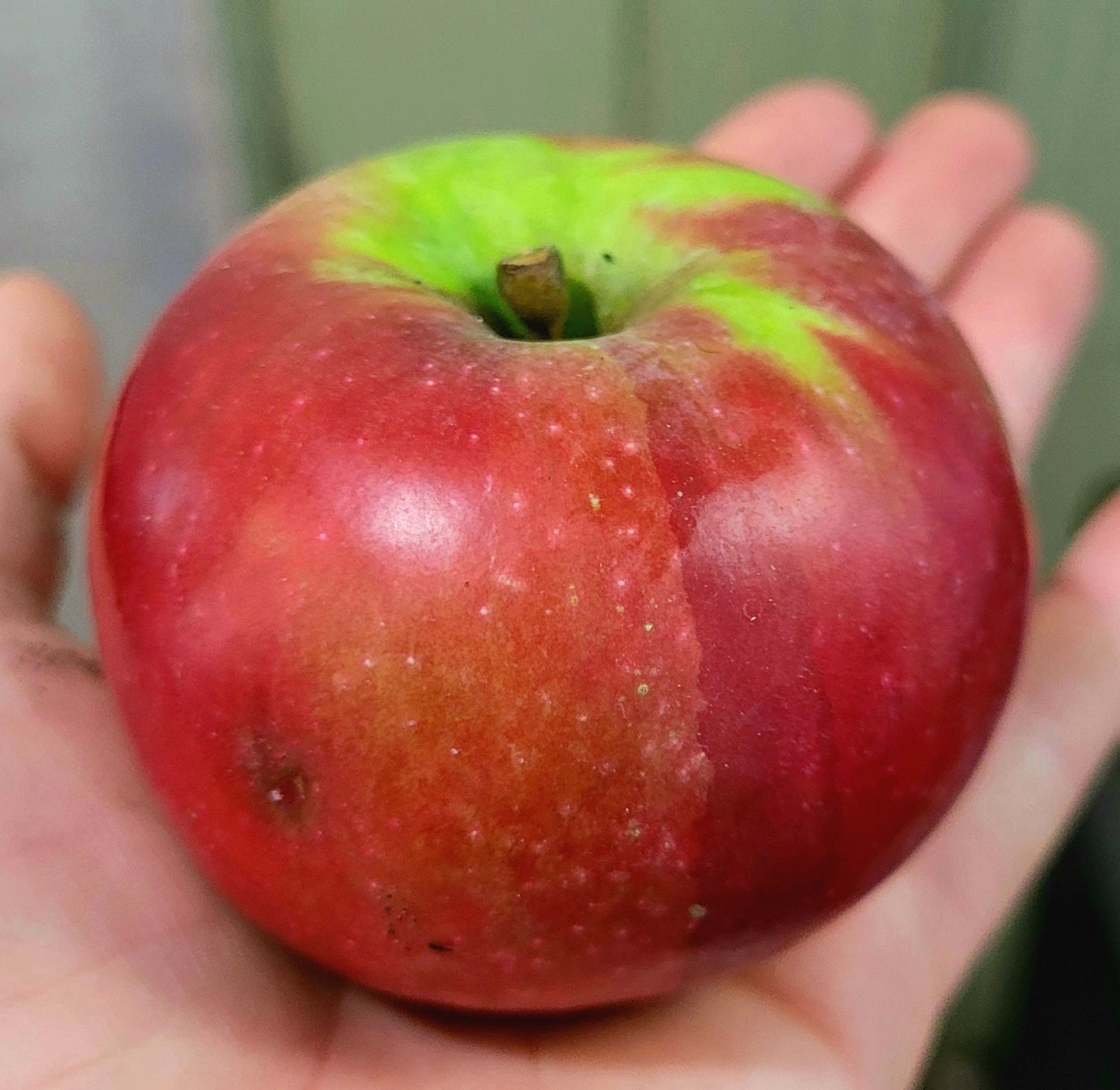
History: Snow, aka Fameuse, apples originated near Lake Champlain in Quebec some time before the 1730s. The exact origin is unclear but this variety is thought to have originated from a seedling or cutting brought from France. From about 1750-1850, this was one of the most commonly grown apples in Quebec until the orchards were almost wiped out in the latter half of the 19th century by disease and failed to regain their popularity. However, these lovely apples may still be with us in their own way as they are one of the potential parents of McIntosh.
Why We Grow It: It is easy to see why Snow apples were once so popular. These apples have a lovely deep red skin with pure white flesh with a sweet strawberry flavour. These trees are also quite cold hardy and produce heavy crops.
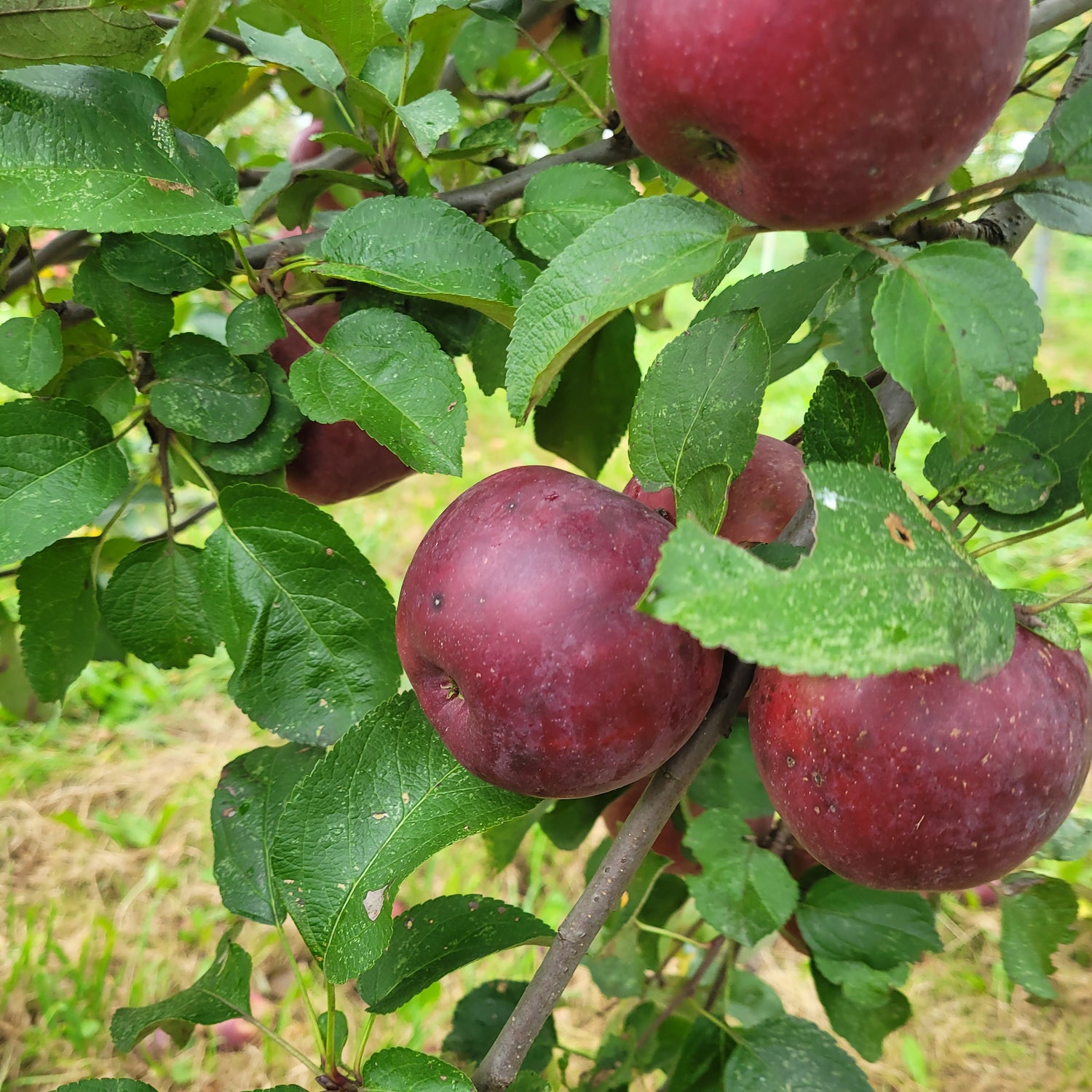
History: Spartan apples are a Canadian variety that was developed at the Pacific Agri-Food Research Centre in Summerland, BC in 1936 by Dr. R.C. Palmer. Of particular interest is the fact that Spartan apples are the first apple variety created by a formal scientific breeding program. They have been popular in North America ever since and are even commonly found in gardens in the UK.
Why We Grow It: This variety is known for its sweet/acid flavour and pleasant crunch, especially when eaten fresh off the tree. They tend to soften rather quickly after they are picked but luckily the fruit hangs on the tree 2-3 weeks after its ripe which helps to extend the optimal time to enjoy this variety. Spartan apples are also known for being relatively easy to grow, having decent disease resistance, heavy crops, and an ability to keep all winter.

History: Spigold (aka Spy Gold) was developed at the New York Agricultural Experiment Station in Geneva, New York and released in 1962. It is a cross between Red Spy and Golden Delicious that has remained somewhat popular in North America.
Why We Grow It: Spigold marries the best qualities of Golden Delicious and Red Spy. It produces very large apples that are crisp and juicy with a honeyed sweet/tart flavour. These large apples are excellent for fresh eating, making applesauce, baking into pies, and making into cider. They also store quite well and some say the flavour actually improves in storage.