Apple Scionwood

Apple Scionwood
For those looking to graft heritage and unique apple trees, we are happy to provide scionwood directly from our orchards! We offer a wide selection which will be listed further below.
ORDERING SCIONWOOD: Scionwood orders generally open in December and must be placed by the end of February. We require a minimum 25% deposit upfront.
If you are interested in scionwood but the sale season has ended, we are happy to add you to our request list for the following spring! Just send us a list of the varieties and quantities you are interested in and we will add you to our list.
SHIPPING/PICKING UP SCIONWOOD: We generally recommend that customers receive their scionwood orders by mid-April at the latest to ensure it arrives dormant, but can hold it longer if customers accept the risk that the scionwood may start breaking dormancy.
Due to the nature of nature, sometimes scions begin budding out early and we want to ensure you receive dormant scionwood that you will have time to graft with. If you need to hold your scionwood dormant until May, you will need to decide how you will do that. It is relatively simple, and you can learn more about storing scionwood at home here. If you are picking up your scion order, we recommend doing so ASAP after you receive your pickup notification via email.
Size: 12-18" or 30cm+, as available*. If a scion is less than 6" or 15cm, it will be discounted accordingly.
*Since we specialize in so many varieties, they each have a unique growth habit and vigor. Some cultivars will produce long relatively thick scions, and others tend to produce shorter, thin scions (see photos to the left). We will provide the best quality we can, within natural restraints.
112 products
Sort by:
112 products
112 products

History: The St. Lawrence apple was discovered in the Montreal area as a seedling of a Snow apple, the most popular variety in Quebec at the time. By 1835, these apples were commonly grown in the area where they were popular for fresh eating and cooking but have since faded into obscurity.
Why We Grow It: Although less popular now, these apples are still good for eating and baking. The boldly striped red skin also makes the fruit very attractive. The tree bears good crops each year and is relatively hardy.

History: Strawberry Pippin is another variety whose history we know little about. All we know is that it likely originated in England where it was first recorded in 1874. The 'pippin' in its name indicates that it was grown from seed by chance.
Why We Grow It: While we may not know much about its past, we do know why we are happy to grow it! Strawberry Pippin has an attractive red striped fruit which is quite firm and sweet. Its excellent flavour is best enjoyed picked fresh right off the tree. In our experience, Strawberry Pippin does well with minimal care, and is an excellent choice for the backyard.


History: Summer Rambo was first described in 1535 in France where it is known as Rambour d'Ete, named for its early ripening and the village of Rambures. It arrived in colonial America where it was called Summer Rambour which became Summer Rambo sometime before the 1850s. Its short shelf life means it never reached commercial success but it is a popular early apple at u-pick orchards and farmers' markets.
Why We Grow It: Summer Rambo produces oblong apples that are green with a red blush that ripen relatively early in the summer. This crisp, aromatic apple has a wine-like flavour that is good for fresh eating, cider, and sauce. Although it does not store well, it is a delightful summer treat!
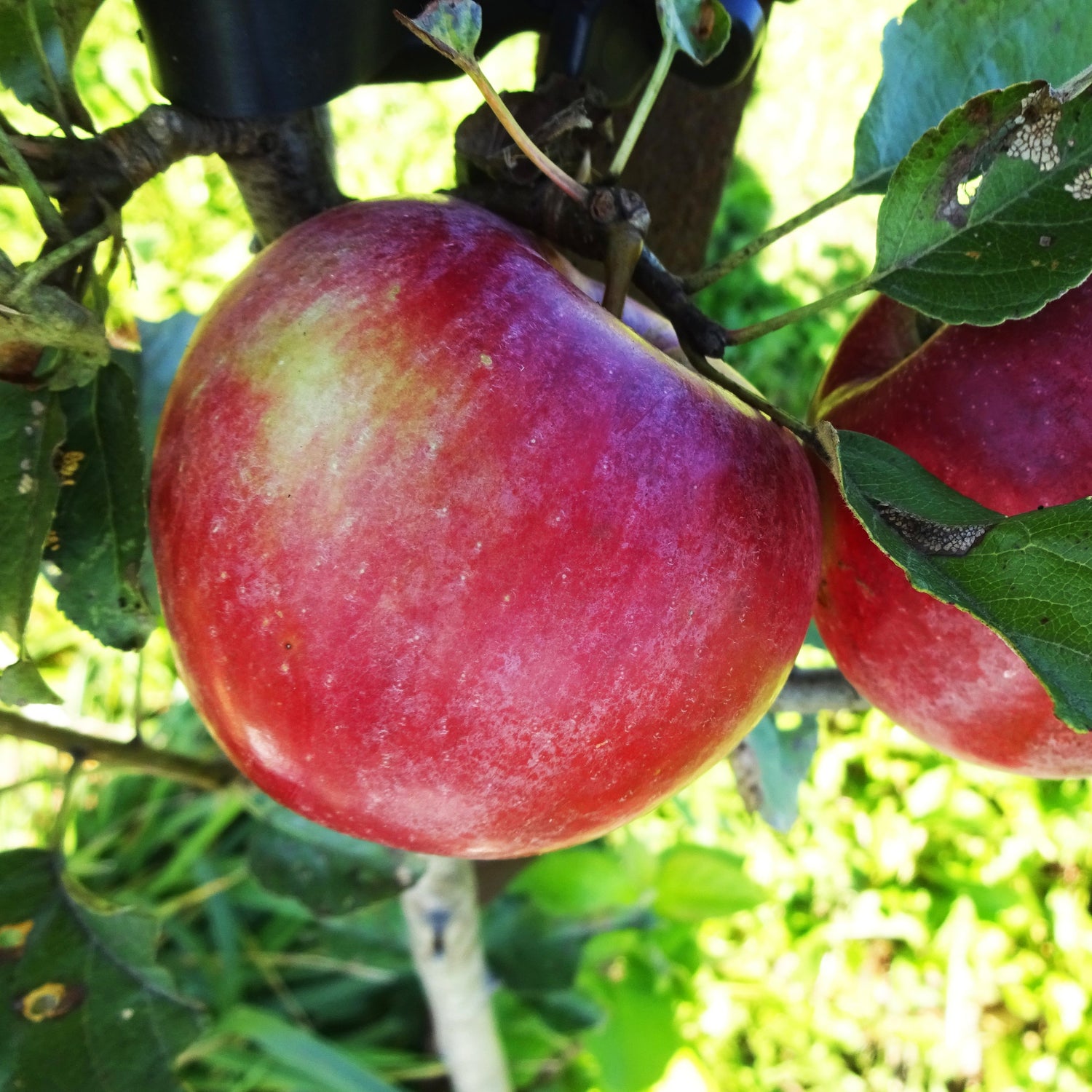
History: Sweet Sixteen was developed by the University of Minnesota and introduced in 1977. It is one of nearly thirty varieties released by the university since its breeding program began in 1888.
Why We Grow It: Some apples taste better when grown in colder climates, and Sweet Sixteen is one of them. For a fresh-eating apple, this is a favourite. Sweet Sixteen provides that crisp first bite that so many people love in an apple, and the pure white flesh will not disappoint for flavour with a very unique, distinct honeyed flavour. Its cold-hardiness and general disease-resistance (tolerant of scab and cedar rust) make it winner for the grower too.
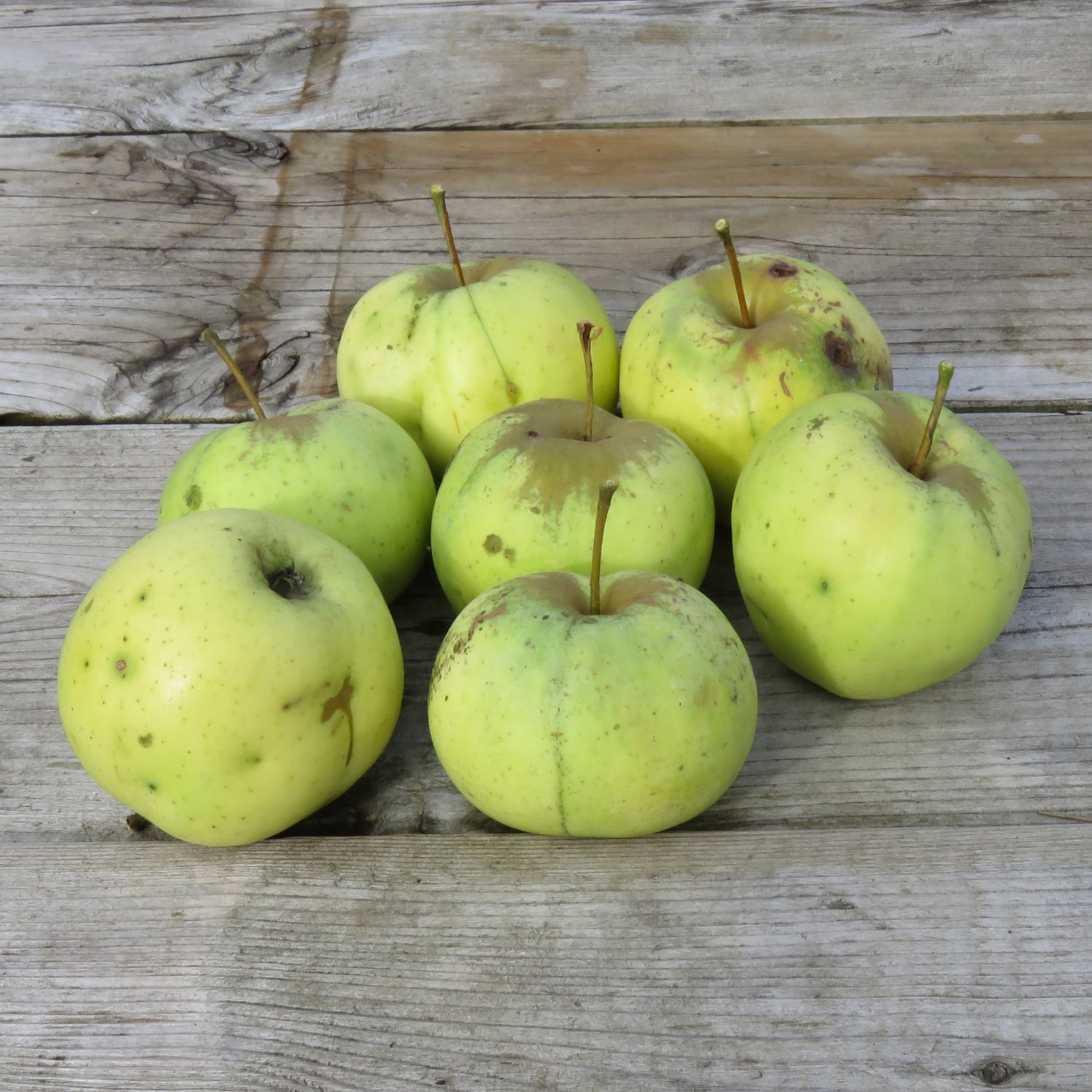
History: Little is known about the origin of this heritage apple, but Tolman Sweet has been highly valued since its discovery. It is uncertain whether it came from Massachusetts or New York in the 18th or 19th century but it was first recorded in 1822. This hardy tree was used as a source of rootstock at one time.
Why We Grow It: Tolman Sweet is a great all-purpose apple. The fruit are medium-sized with yellow skin, and have a distinctly sweet, dry flesh. They are nice for fresh eating but can also be used in baking, drying, and pickling. Their unusually low acid content helps to reduce acidity in both sweet and hard cider.
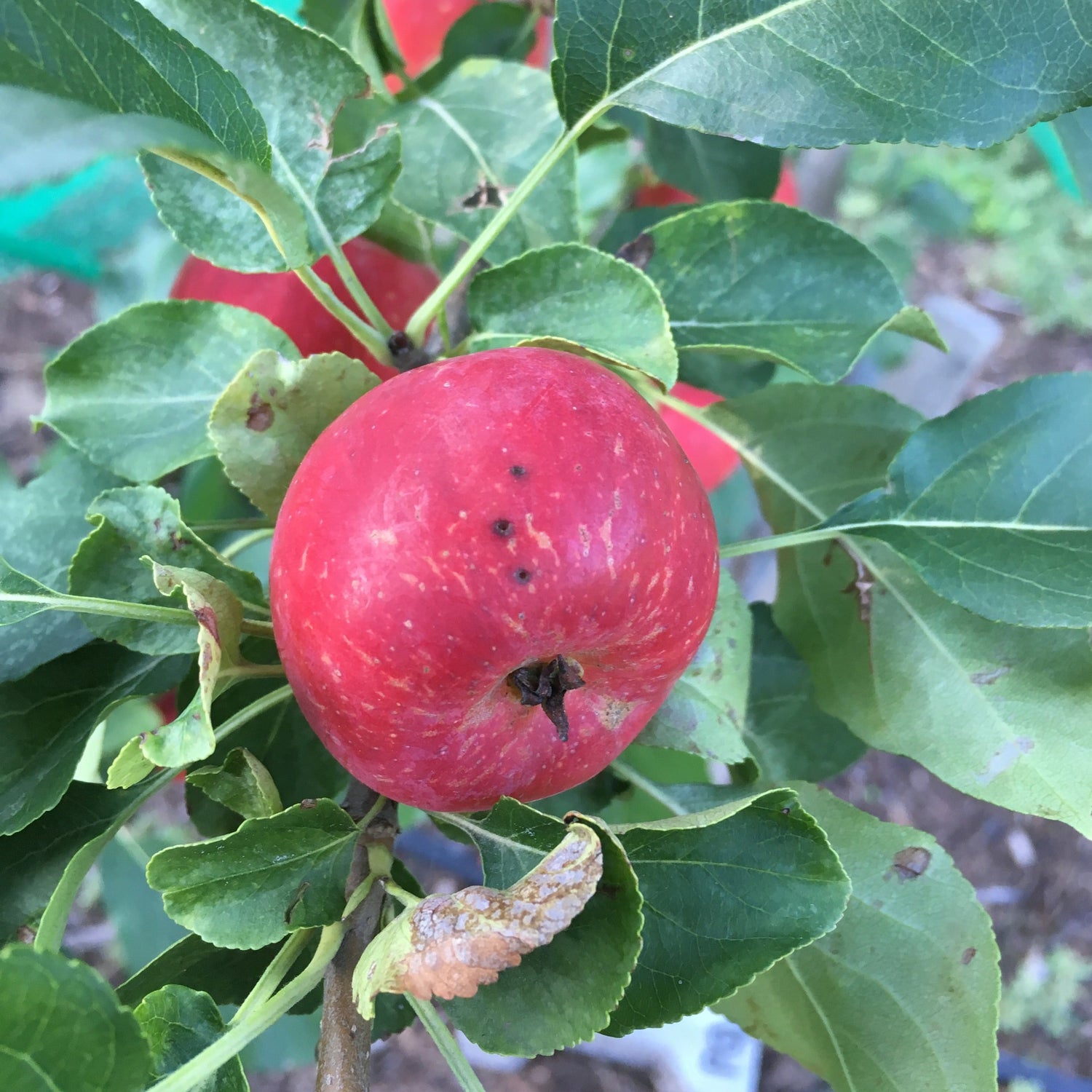
For the most up-to-date information see Claude Jolicoeur's website here!
History: This particular iteration of Trail, previously referred to as Bilodeau, has a bit of a messy history. A Trail crabapple tree was mislabeled at a Quebec nursery in the 1980s and sold to an unknowing customer named Claude Bilodeau who thought he was purchasing a pear tree. Later on Claude Jolicoeur, well-known Quebecois cider-maker and pomologist, took a cutting from this tree and found that the fruit (definitely not a pear!) was excellent for making cider. Since it was still a mystery what the original variety was, the crabapple was named Bilodeau by Jolicoeur after the owner of the tree - only for Paul Kron from the University of Guelph to confirm that it was actually Trail via DNA testing in 2022. The Trail crab was bred at Ottawa from a cross of Northern Queen x Rideau, it was selected in 1913 and introduced in 1920.
Why We Grow It: Despite the confusion, we are regardless happy to have this apple in our catalogue! This bittersharp cider apple has excellent cider-making qualities and, unlike most crabapples, is also great when eaten fresh or made into jelly!

History: Tremlett's Geneva Bitter (aka Geneva Tremlett's Bitter) come from a tree that was believed to be Tremlett's Bitter, an English cider variety. It was imported to Geneva, New York from England in the 1960s but at some point there was a mix-up and the mistake was only uncovered after many American growers had received scions from the erroneous tree.
Why We Grow It: Although this isn't the traditional bittersweet cider apple popular in England, Tremlett's Geneva Bitter still produces a good quality bittershap cider. Some say it is even better than the original!
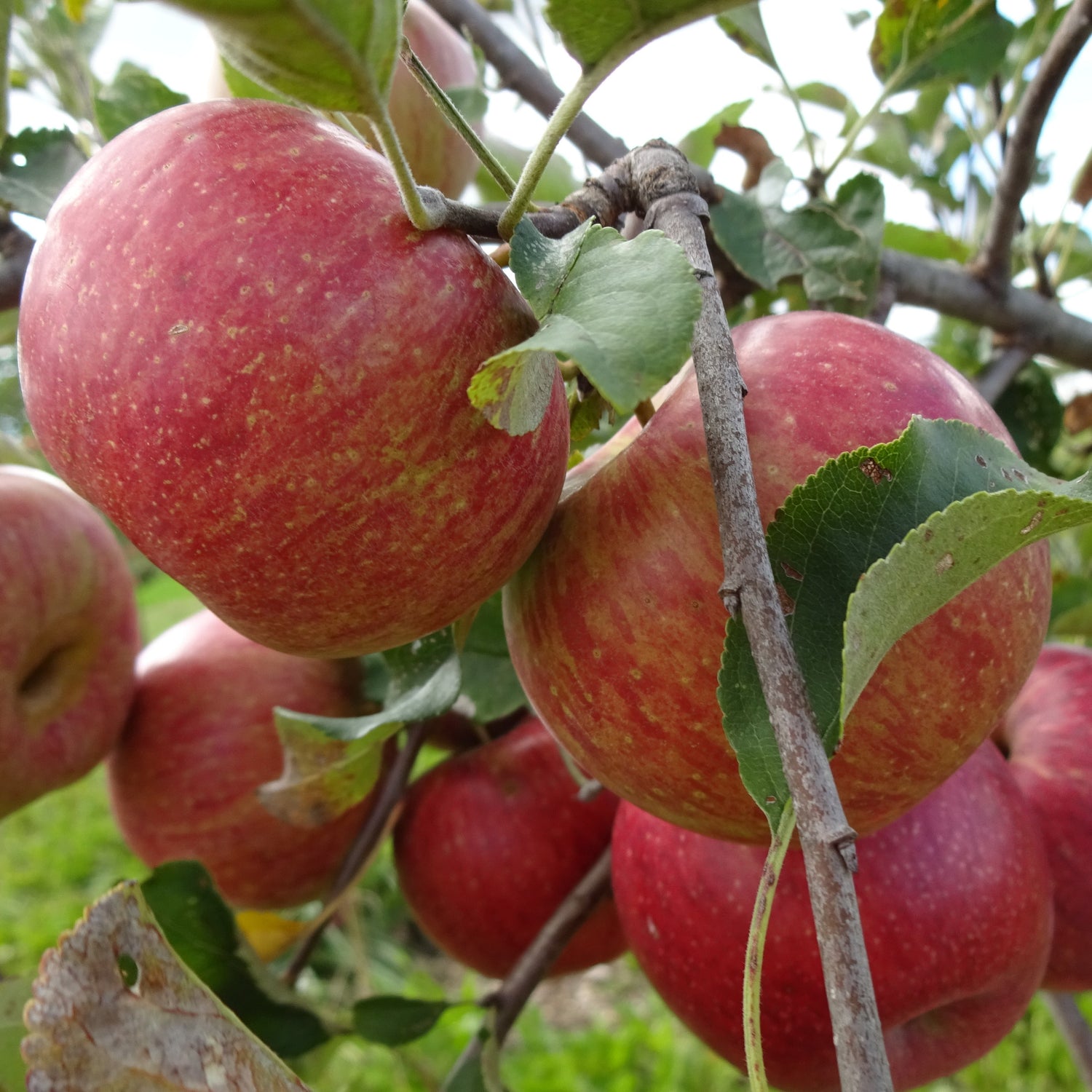
History: Tsugaru is another apple that was created at the Aomori Apple Experiment Station in Japan and released in 1975. It was likely named after Tsugaru, a nearby city, or the Tsugaru samurai clan that controlled the area during the Edo period. This variety is quite popular in Japan and represents the sweetness that is coveted among Japanese apple fans.
Why We Grow It: If you love sweet apples, you need to give Tsugaru a try. It has a very mild flavour with virtually no acid. It is performing very well in our test orchard, providing an abundance of nice clean fruit. It is one of Steph's favourites.

History: Twenty Ounce (aka Cayuga Redstreak) was discovered sometime in the early 1800s in Cayuga County, New York. It was first officially described in an 1844 issue of "The Magazine of Horticulture" by C.M. Hovey who called it Twenty Ounce due to its notable size.
Why We Grow It: These very large apples are excellent for cooking and make wonderful pies and applesauce. Save time with peeling and coring! They are a little tart for eating fresh, but makes an exceptional ingredient that keeps its shape when cooked.

History: Vista Bella was created at Rutgers University in New Jersey in the 1950s and released in 1974. Although its poor keeping ability prevents it from being a commercial success, this early ripening variety is still a nice way to herald in the apple harvest season every year.
Why We Grow It: Vista Bella is the first red apple of the season. The flavour and texture are of better quality than other early apples, making Vista Bella an excellent choice for early farmer’s market sales and roadside stands. The flesh is crisp and juicy, although it softens quickly and, like other early apples, does not keep long.

History: Wagener apples come from a seed that was planted by George Wheeler in the Finger Lakes area of New York in 1791. In 1796, Abraham Wagener purchased Wheeler's property and planted the seedling on his own property in Penn Yan village where the tree was known for producing attractive, tasty fruit in abundance every year. The variety was named after Wagener and became popular for its excellent storage qualities.
Why We Grow It: Wagener is ideal for the self-sufficient homesteader who values a late keeper, lasting until April in an ordinary cold cellar. When first picked they have a sharp, acidic taste and are great for cooking. In storage, they mellow to an excellent sweet, crisp apple that is perfect for fresh eating.
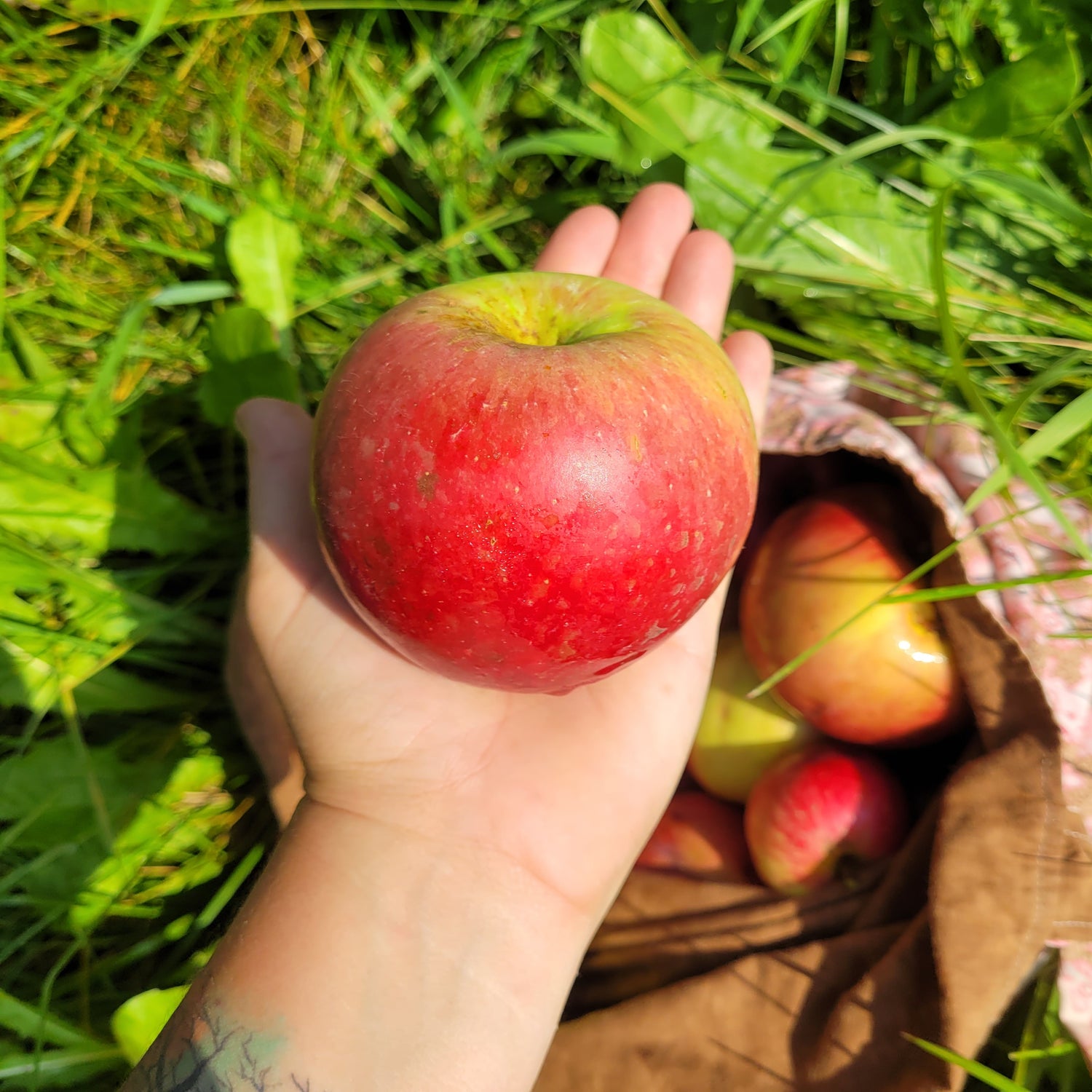
History: Wealthy apples were created by horticulturalist Peter Gideon after spending years trying to breed an apple variety that could survive Minnesota's harsh winters. With the very last of his money, he purchased seeds and scions in 1868 in one final attempt and was able to produce the Wealthy apple which he named after his wife, Wealthy Gideon. He gave scions away freely and Wealthy became one of the top five apples grown in the US.
Why We Grow It: A medium to large sized apple, Wealthy makes splendid applesauce, but is also very good for fresh eating with a balanced sweet-tart crunch. The tree is scab resistant and cold hardy, makes an excellent pollinator for other apples, and is well-suited for organic orchards.

History: Westfield Seek-No-Further was discovered in Westfield, Massachusets in the 1700s. Its flavour is reminiscent of popular fresh eating apples in England which is probably why this apple was so popular among English colonizers. It was the most popular fresh eating apple in New England during the 1800s.
Why We Grow It: Historically a favourite eating apple, Westfield-Seek-No-Further's sharp, nutty flavour is as unique as its quaint name! It now has potential as an addition to cider blends.

History: White Jersey is another English cider apple whose origins are a little obscure. It was popular in the Somerset area of England during the 1800s where it was first recorded in 1895. It is still grown in modern cider orchards in the UK today.
Why We Grow It: Although it has been deemed an apple with 'average quality juice,' White Jersey is still worth checking out if you are interested in cider making. It does well in the Great Lakes area and it compensates for its average juice quality with good productivity and a tendency to start bearing fruit early.
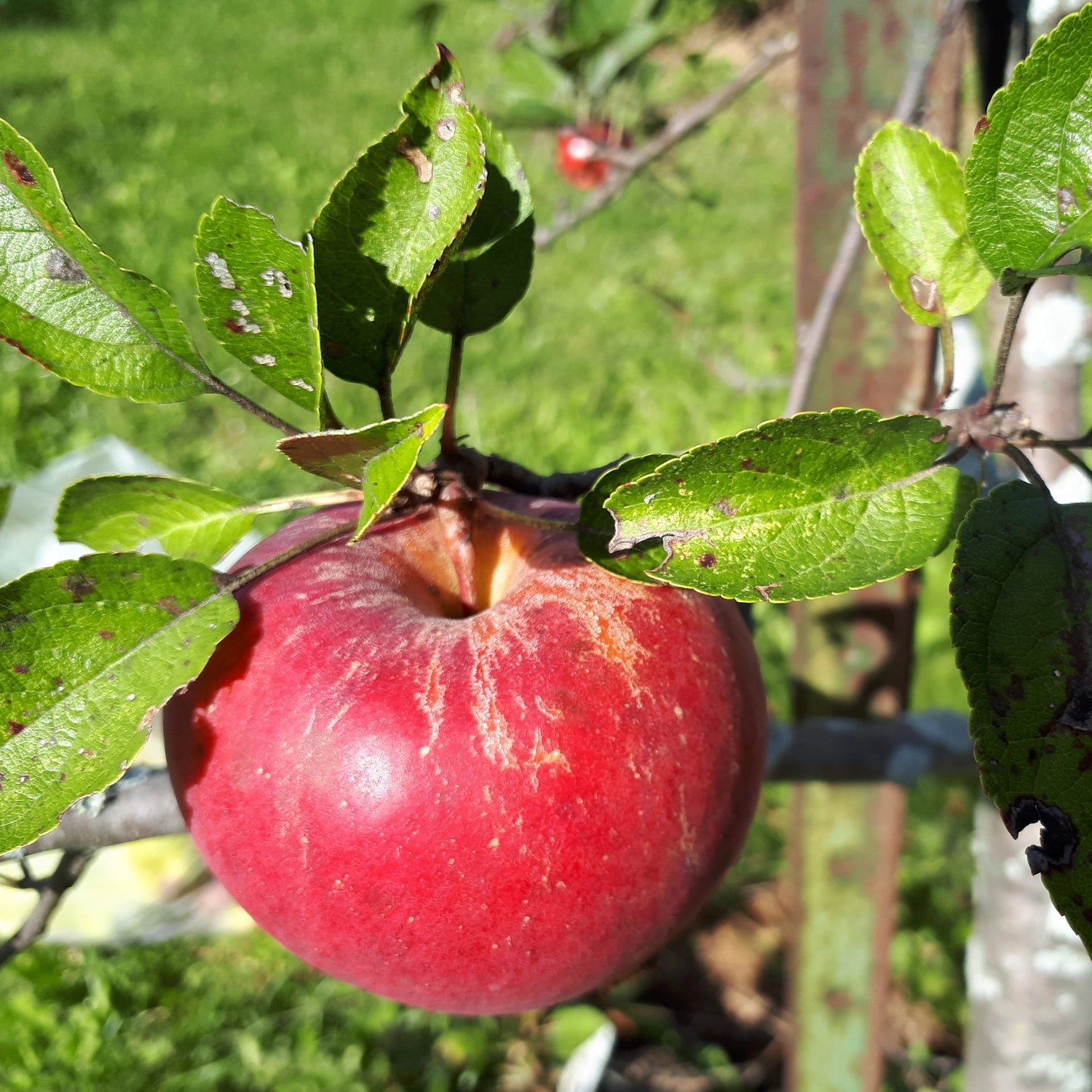
History: Winesap's origins are unclear but it is believed to have originated from New Jersey pre-1800s where it was popular for making cider. It is first mentioned in a couple of books on apples in the early 1800s. Winesap was popular in the US until the 1950s due to its good keeping ability but the advent of better storage technology allowed better tasting apple varieties to eclipse it. It is still quit popular with backyard orchardists.
Why We Grow It: Winesap's all-purpose nature helps to explain why it hasn't faded into total obscurity like some other varieties. The medium-large red and yellow skinned fruit is good for cooking and making cider. It has sweet flesh with some tang or 'winey' flavour that is also decent for fresh eating. On top of that, the tree is productive, very resistant to fireblight, and the fruit stores well.
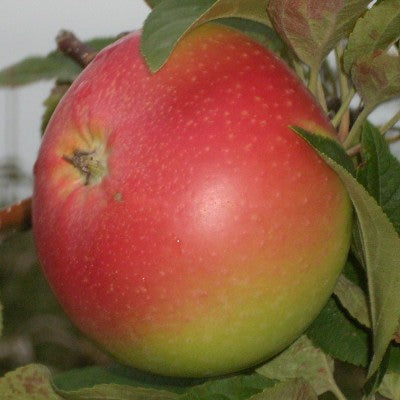
History: Winter Banana originated on David Flory's farm in Indiana around 1876. It was named Winter Banana due to the apparently banana-like aroma it gives off when ripe. It is also named Flory Banana or Flory Apple after David Flory. Winter Banana was grown on the west coast and gained some popularity in England and Germany. The thin skin of this variety is easily bruised which prevented it from being a commercial variety but it is still commonly found in gardens and farmer's markets.
Why We Grow It: This all-purpose apple is extremely attractive with pale yellow skin and a pinkish-red blush. The banana-like aroma is accompanied by sweet flesh with an acid tang. The flavour improves in storage and the apples can be kept all winter.
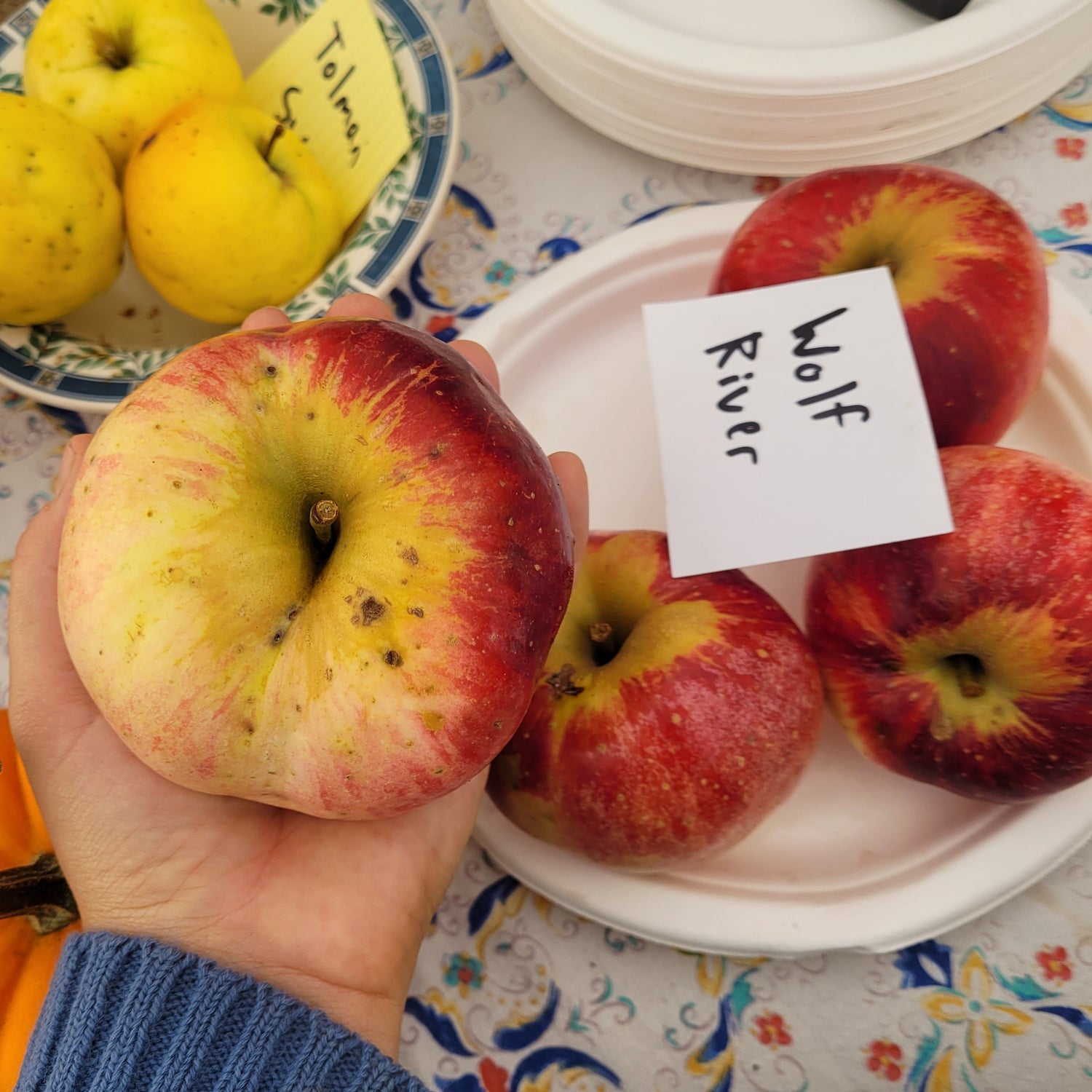
History: Wolf River was raised from seed by Quebec lumberman William Springer in the latter half of the 19th century. When Springer and his family were moving by wagon to Wisconsin, they bought a bushel of Alexander apples along the way. Upon arriving at their new home, he planted the seeds from said apples along the bank of the Wolf River and the Wolf River apple grew from there. This variety has since garnered a reputation as a good cooking apple and for the incredible size of its fruit.
Why We Grow It: First and foremost, Wolf River is legendary for the huge size of its fruit. The apples can weigh a pound or more and there are stories of pies being made from a single apple. The fruit, green with red blush and stripes, has a sweet and tart flavour that is good for cooking and it holds its shape well when cooked. The tree itself is hardy and relatively disease resistant as well.


History: Woolbrook Pippin originated in 1903 at Woolbrook Nursery in the UK. It was discovered by J.H. Stevens and Son. It is a Cox's Orange Pippin seedling and received an Award of Merit from the Royal Horticultural Society in 1929.
Why We Grow It: Woolbrook Pippin produces a greenish apple overlaid with bright red stripes that is excellent for fresh eating. The fruit is firm, crisp, and juicy with a sweet, aromatic flavour balanced by a bit of tartness. This is a great choice for fans of Cox's Orange Pippin!
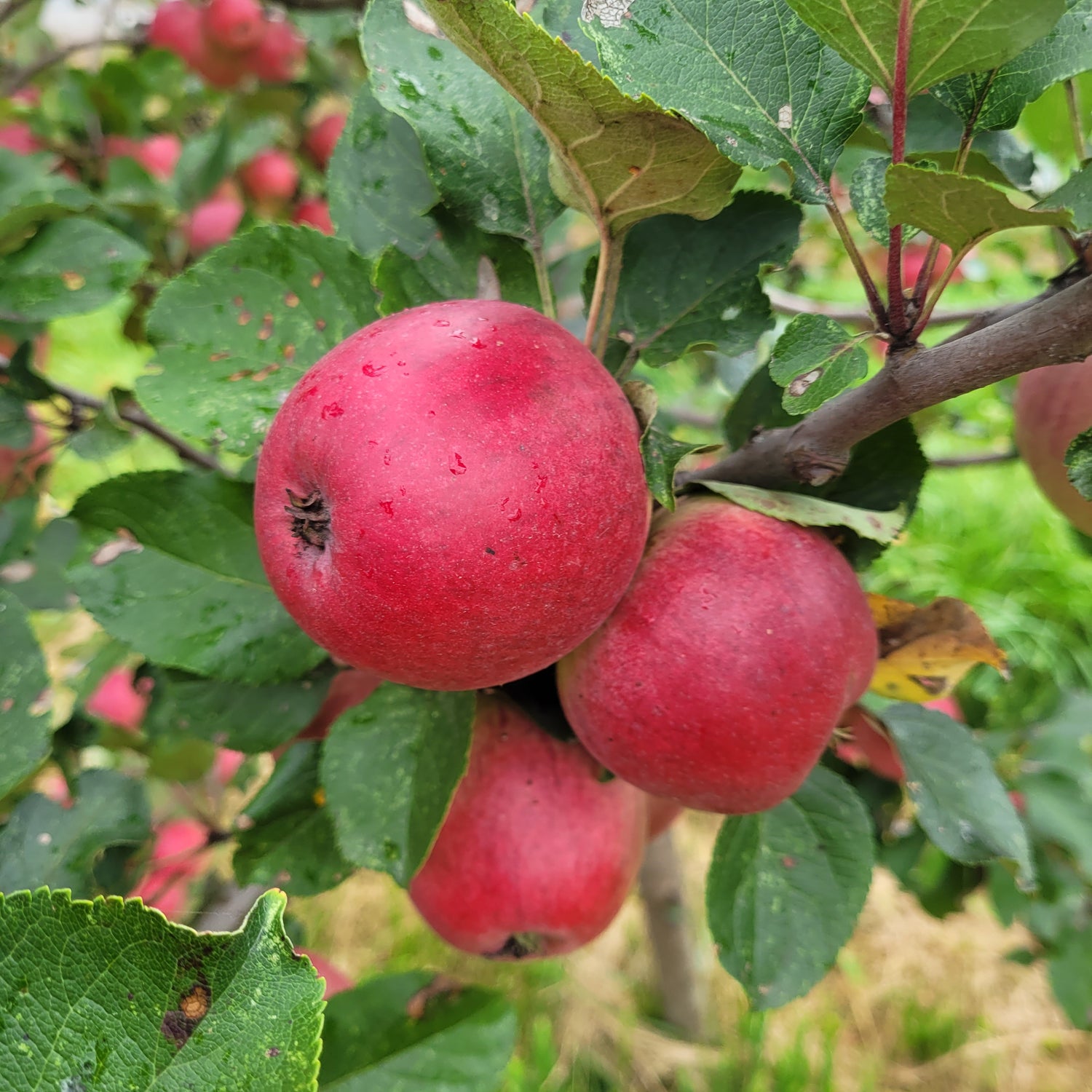
History: Yarlington Mill was discovered growing in the wild by a Mr. Bartlett. He discovered it in 1898 near a mill in the English village of Yarlington, hence the name 'Yarlington Mill.' It was further propagated and made popular by the grower Harry Masters (who also grew Harry Masters Jersey). This variety is still commonly planted in cider orchards in England.
Why We Grow It: This is an excellent cider apple for our climate. It produces a medium bittersweet juice with good flavour. The tree is hardy and vigorous but tends to bear biennially so it requires attentive thinning.

History: Generally just known as Gravenstein, it is unknown when or where exactly these apples came from but they were imported from France to Denmark in the 1600s by Count Frederik the Younger and planted at the summer residence of the Danish royal family, Gråsten Palace. As a result the variety was named Gråsten (Danish for graystone) which translates to Gravenstein in German. This apple has been popular in Canada since the 1820s, particularly in Nova Scotia, and provided the dried apples and applesauce for American soldiers during WW2. In 2005 it was declared the national apple of Denmark.
Why We Grow It: Yellow Gravenstein's excellence as a fresh eating and cooking apple makes it easy to see why it is grown in so many different countries, even if the tree is slow to bear fruit and is prone to many common fruit tree diseases (although we haven't had much issues growing it here). It has a great sweet/tart flavour and is crunchy and juicy. The fruit is a nice yellow with red striping.
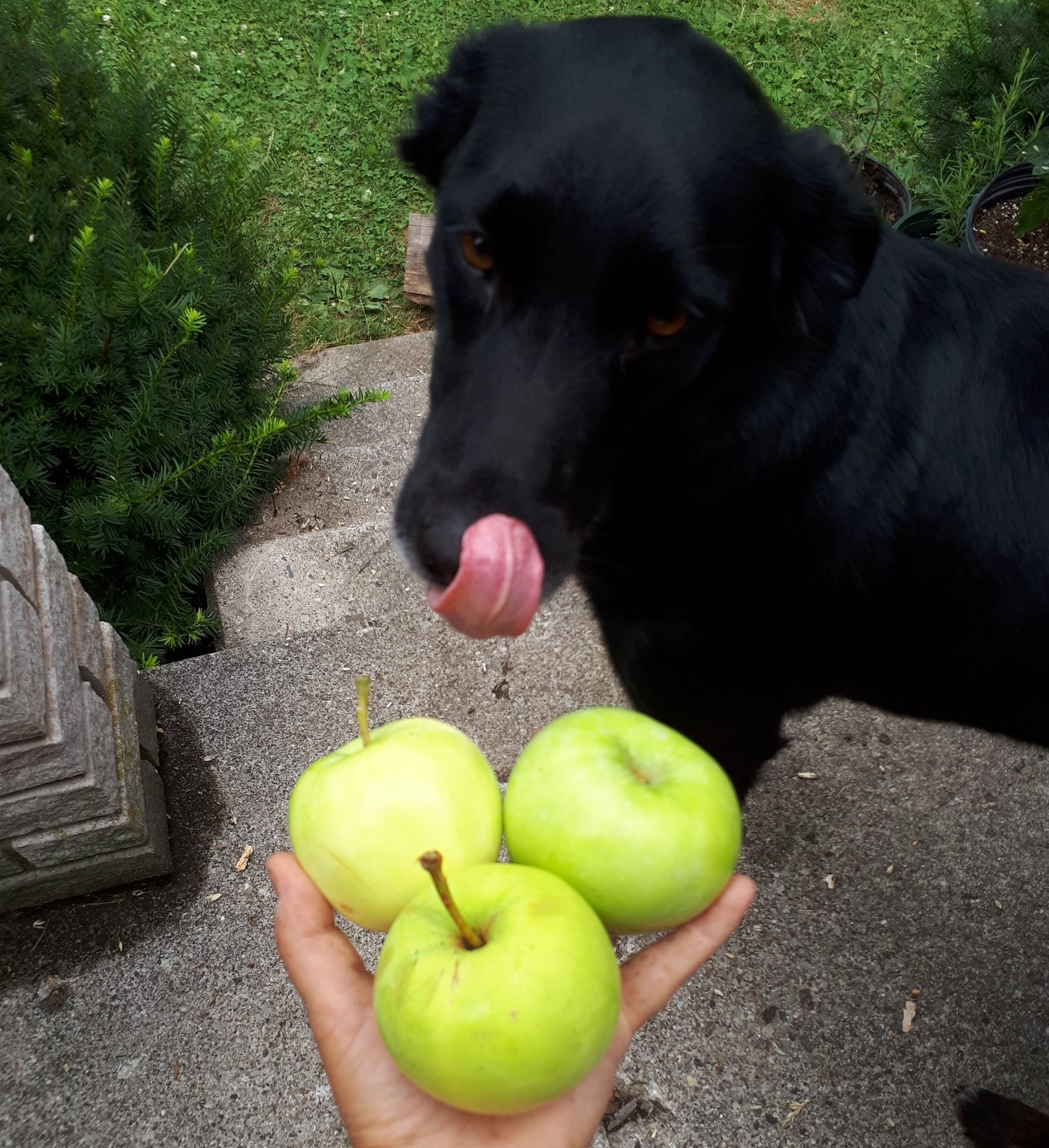
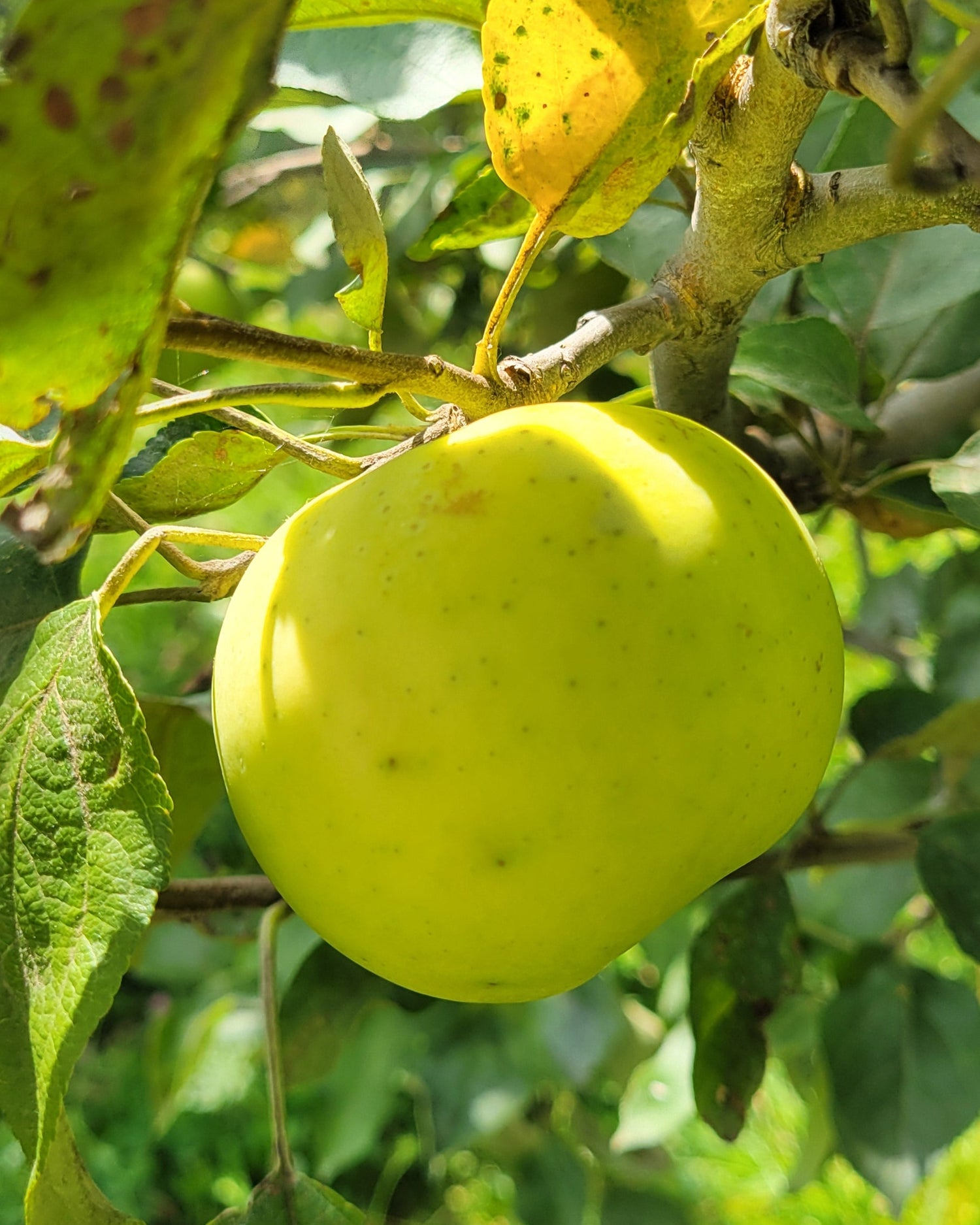
History: Yellow Transparent (aka White Transparent and Glass Apple) originated as a chance seedling in a nursery in Riga, Latvia around 1850. At the time Latvia was part of the Russian Empire so this variety is often considered Russian. Due to its early ripening and cold hardiness, this variety was widely grown in Europe, especially northern countries, where it is still grown today. It was imported to the US in the 1870s as part of an effort to import cold hardy Russian species that could potentially survive in states with harsher winters and became quite popular.
Why We Grow It: This classic early apple deserves a home in every home orchard. The fruit features pale yellow skin that almost looks transparent and white flesh with a sharp, sweet flavour. It can be eaten fresh but also makes a great applesauce. Like many early ripening apples, the fruit does not last long.

History: York Imperial was discovered as a seedling tree growing on the farm of John Kline in Pennsylvania. Nurseryman Jonathan Jessop, of Springwood Farm in York, Pennsylvania, began propagating the variety in 1820 after witnessing schoolboys digging through the leaves around the base of the tree in spring and retrieving apples there were in great condition despite spending all winter on the ground. In an age without refrigeration, Jessop knew this variety had excellent commercial potential. It was initially named Jonathan's Fine Winter for its excellent storage properties but was later renamed York Imperial after horticulturalist Andrew Jackson Downing called it the 'imperial of keepers,' again referencing its storability and the location of Jessop's farm. It quickly became popular and remains one of few heritage apples that are still commonly grown in the US today.
Why We Grow It: York Imperial produces a rather lop-sided fruit with yellow skin and red striping. It is crisp and juicy with a lovely sweet, honeyed flavour that is hard to turn down. The fruit is truly all-purpose, also being great for cooking, baking, jelly, juice, drying, and cider and generally storing quite well. While not the fastest growing tree and with a tendency to start producing fruit a little later than other varieties, York Imperial is an exercise in patience that is well worth the wait.