Cherry Trees

Cherry Trees
Whether you're dreaming of juicy summer cherries straight from your backyard or want to add ornamental beauty to your garden, cherry trees are a rewarding addition!
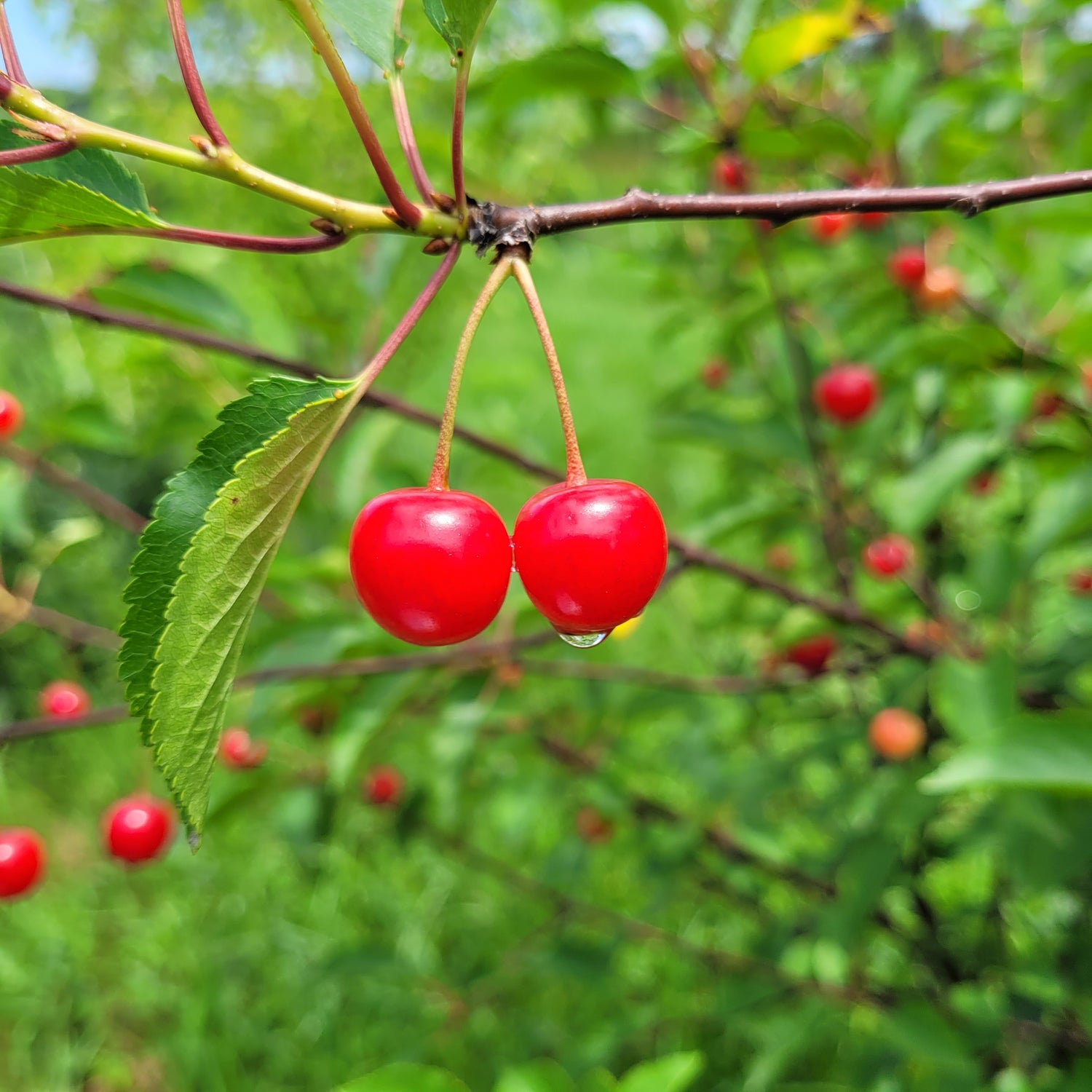
Both sweet cherries (Prunus avium) and sour cherries (Prunus cerasus) have unique flavors, uses, and growth requirements. Look for sweet cherries if you enjoy a sweet treat straight off the tree and check out our sour cherries if you are seeking a cold-hardy tree (or dwarf bush) with fruit that is great for baking.
Sweet cherries and sour cherries do not cross-pollinate.
We offer flat-rate shipping across Canada* on all our Cheery Trees, as well as a wide selection of other trees and plants. Shop quality heritage fruit trees and hard to find plants delivered conveniently to your door!
32 products
Sort by:
32 products
32 products
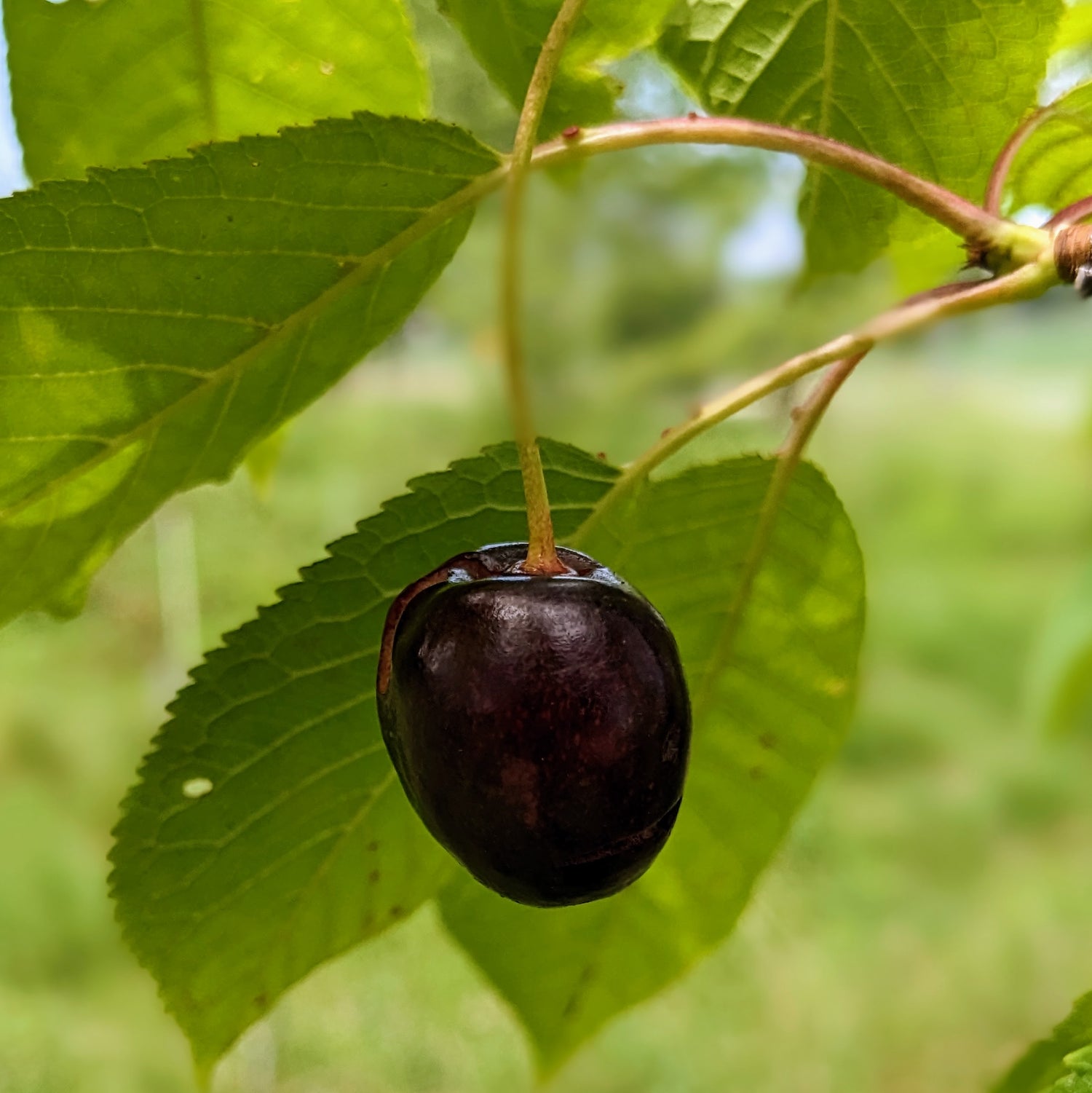
History: This heirloom sweet cherry originates from Arkona, Ontario where it was developed and grown by Ed Richter.
Why We Grow It: As an Ontario bred and raised sweet cherry, Richter cherries are well-suited to growing in our local conditions. We were fortunate to acquire this variety just before the removal of some very old Richter trees.
Species: Prunus avium
History: These seedlings are grown from seeds from Sandra Rose sweet cherries sourced in Ontario. Sandra Rose was developed at the Summerland Research and Development Centre in BC.
Why We Grow It: Seedling fruit trees are a great way to add some diversity and mystery to your garden or orchard! Sandra Rose, the parent variety, produces large dark cherries with excellent flavour.
Please Note: Since sweet cherries tend to stay true to type more than apples, these seedlings will likely bear a strong resemblance to their parent variety. However, any specific information listed on this page should be taken with a grain of salt as there may be some variation from the parent tree.
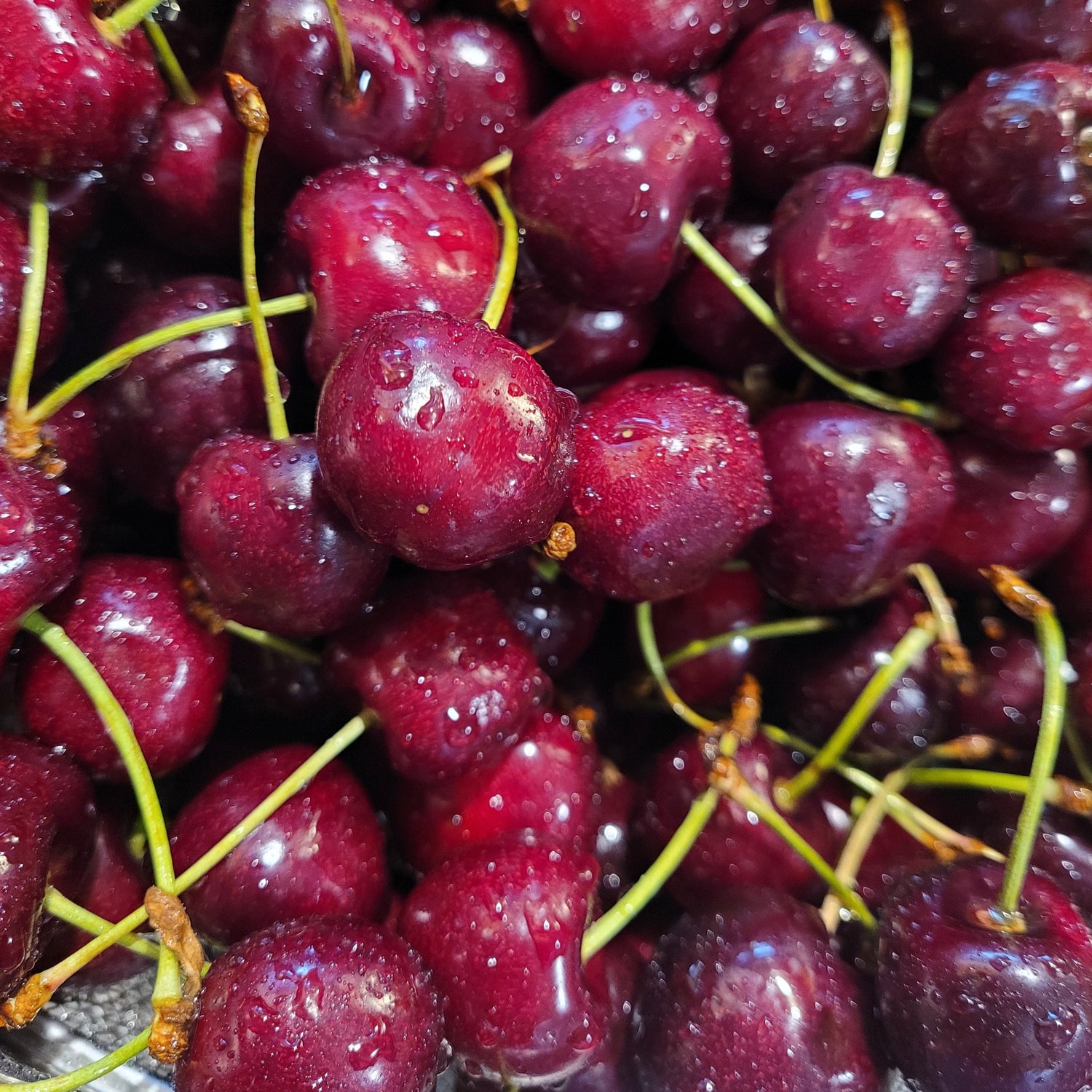
History: Lapins (aka Cherokee) was developed at the Summerland Research Station in British Columbia by Latvian agronomist Karlis Lapins, an important figure in the development of self-pollinating sweet cherry varieties. He created Lapins by crossing Stella and Van sweet cherries, and although the variety was released in 1983 after he retired, it was named in his honour. The variety was also awarded the Royal Horticultural Society's Award of Garden Merit. Although quite popular when it was first released, Lapins have since been supplanted by other cherry varieties due to their popularity and its inconsistent quality when shipped.
Why We Grow It: These lovely deep purple cherries are quite similar to Bing. They have a pleasant, mild flavour and can be used for fresh eating, cooking, and canning. The fruit is resistant to cracking and the tree grows well and begins bearing fruit a little earlier than other varieties.
History: Skeena was developed at the Summerland Research and Development Centre in British Columbia in 1976 as part of an initiative to create a high quality cherry that ripens later in the season than other varieties. It is a cross between several self-pollinating varieties and was introduced in 2000.
Why We Grow It: These dark red cherries are often considered an improvement over Lapins with their larger size, good firmness, and general ease of harvest due to the spreading way the tree grows. The flavour is sweet with a touch of acidity. The tree itself grows vigorously and tends to start bearing fruit at a young age.
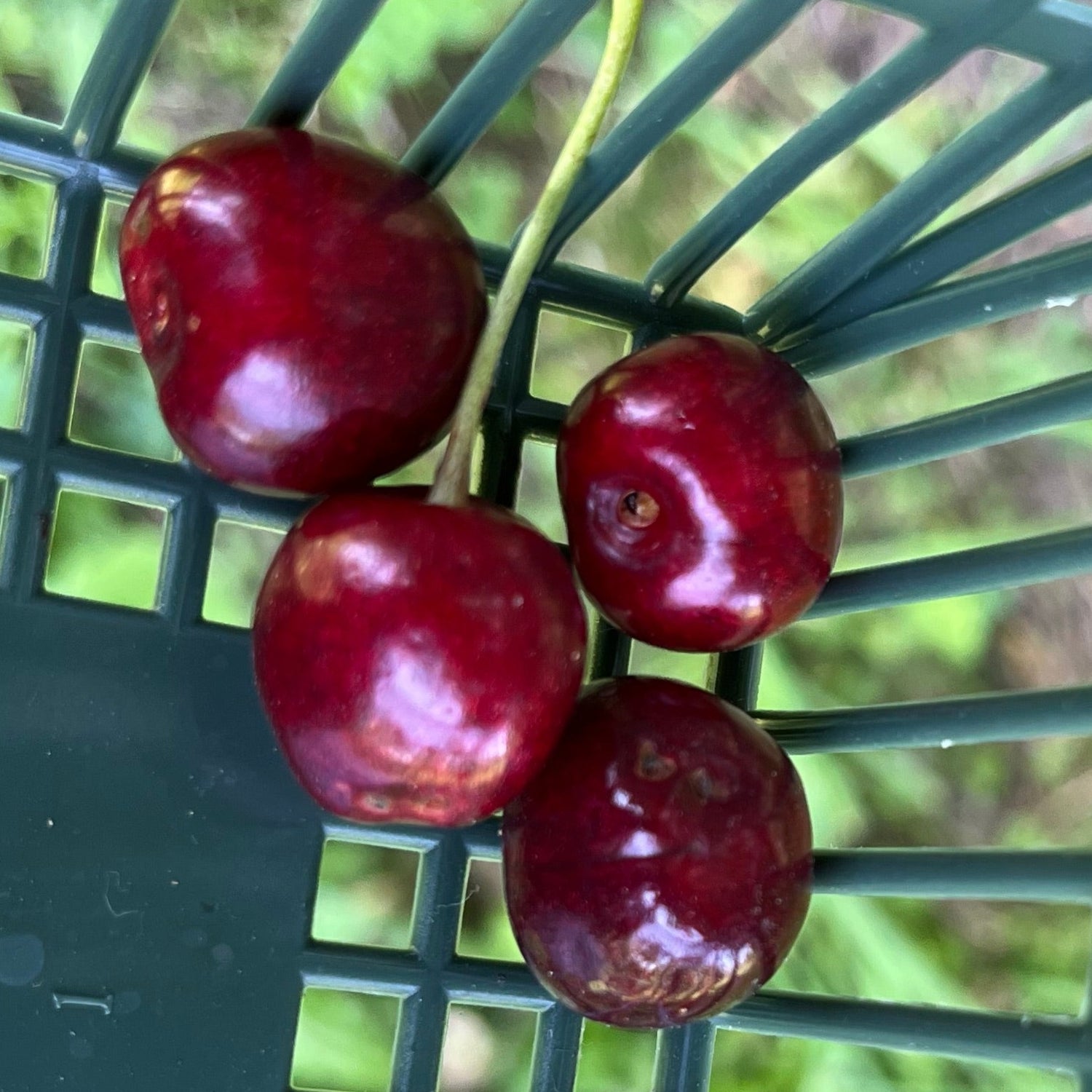
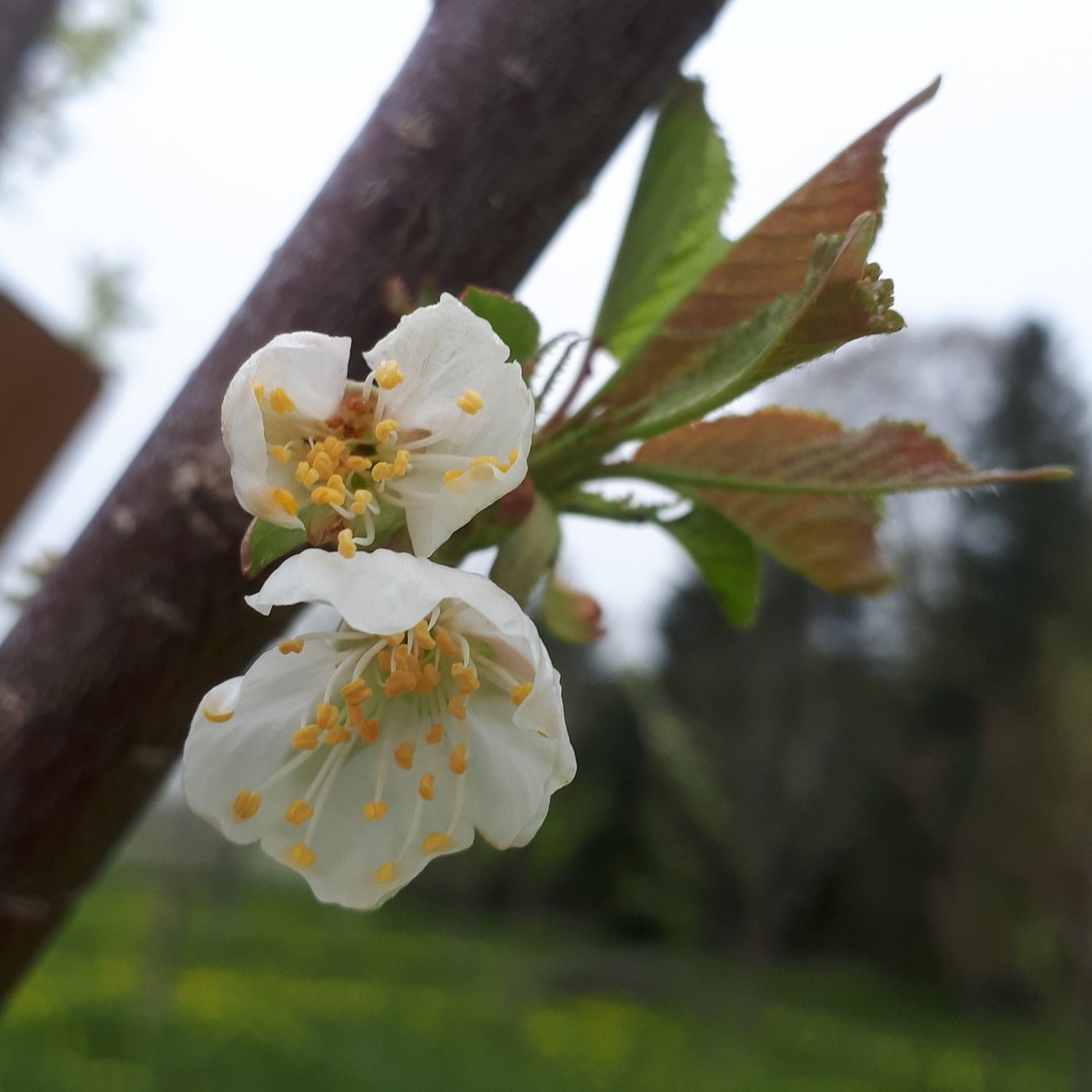
History: Viva originated in 1935 as a possible hybrid of Hedelfingen and Victor.
Why We Grow It: Viva produces medium-sized, dark red cherries with good flavour. They are suitable for many uses including fresh eating, cooking, and preserving. They are one of the first cherry varieties to ripen, creating a pleasant start to the cherry season.
Species: Prunus avium
History: These seedlings are grown from Hedelfingen seeds from sweet cherries sourced in Ontario. First discovered in Germany in 1850, Hedelfingen has become a popular variety in Ontario.
Why We Grow It: Seedling fruit trees are a great way to add some diversity and mystery to your garden or orchard! The parent variety, Hedelfingen, is well-regarded due to its great flavour and later bloom time which makes it more tolerant of late spring frosts.
Please Note: Since sweet cherries tend to stay true to type more than apples, these seedlings will likely bear a strong resemblance to their parent variety. However, any specific information listed on this page should be taken with a grain of salt as there may be some variation from the parent tree.
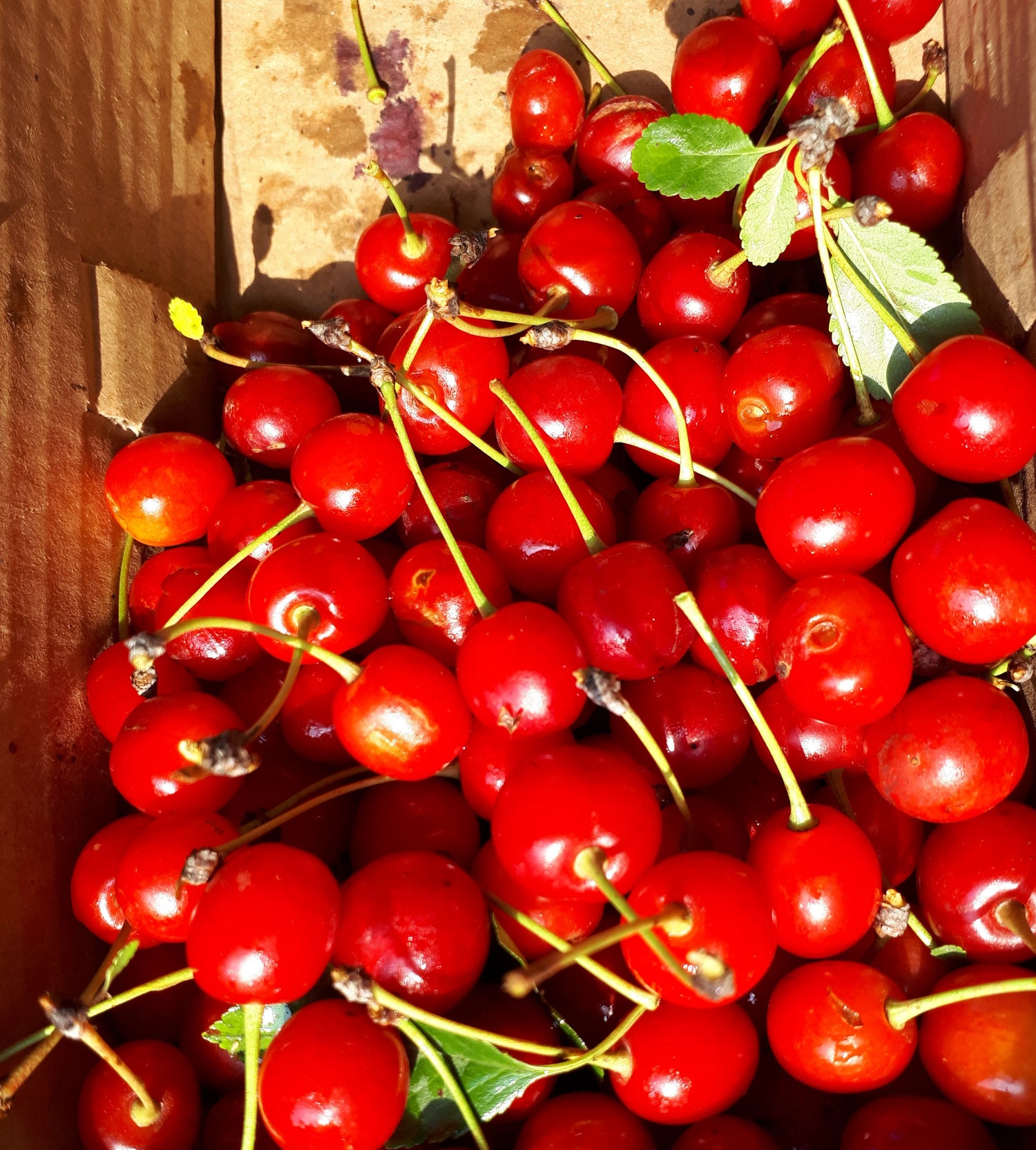
Species: Prunus cerasus
History: These Meteor seedlings are grown from seeds we've collected here at Silver Creek Nursery from our own trees! Meteor was introduced from the University of Minnesota in 1952.
Why We Grow It: Seedling fruit trees are a great way to add some diversity and mystery to your garden or orchard! The parent variety, Meteor, is a reliable, hardy variety that is great for pies. They naturally have a more compact growth habit. For a full description, see our Meteor page here.
Please Note: Since sour cherries tend to stay true to type more than apples, these seedlings will likely bear a strong resemblance to their parent variety. However, any specific information listed on this page should be taken with a grain of salt as there may be some variation from the parent tree.
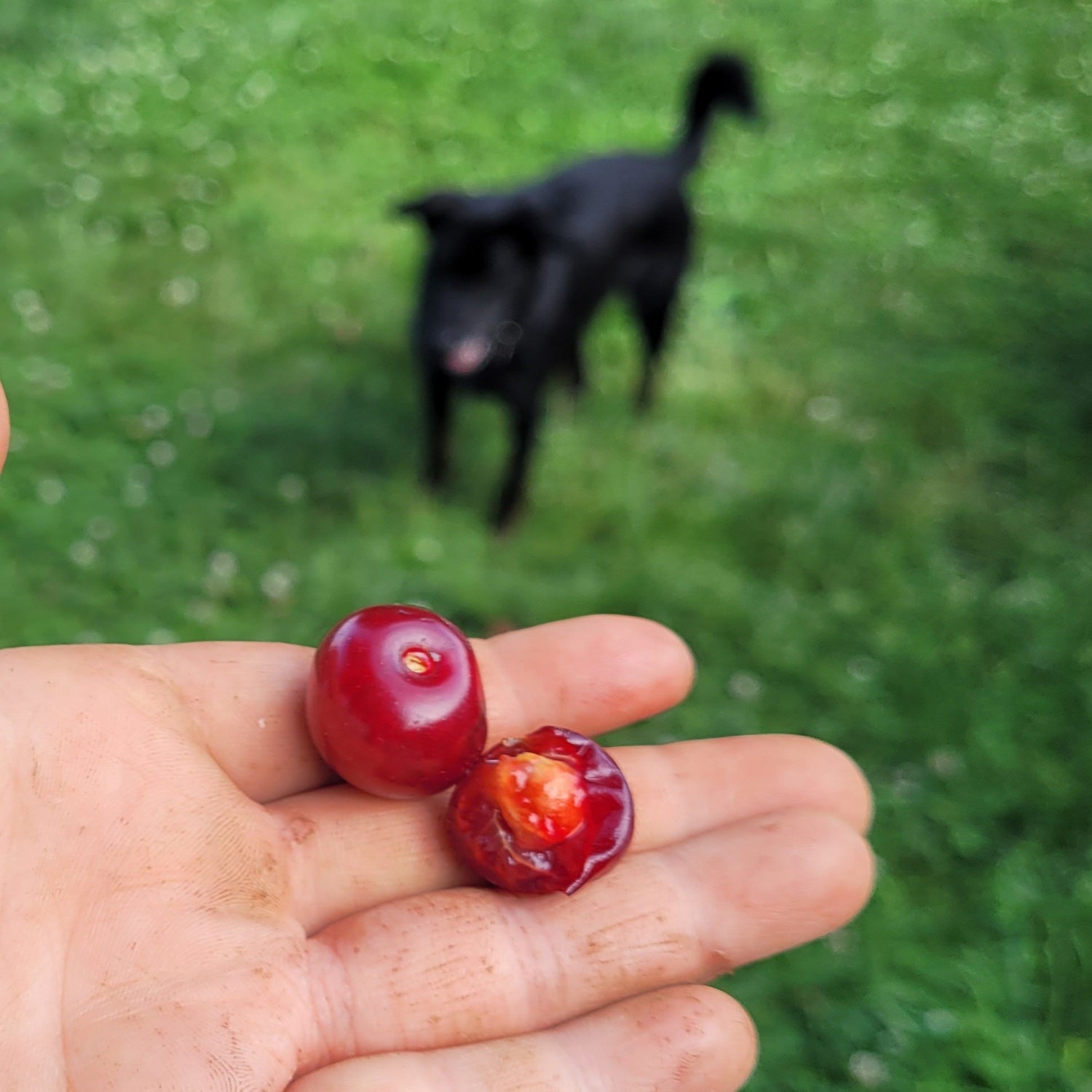
Species: Prunus cerasus
History: These sour cherry seedlings are grown from Juliet seeds we've collected here at Silver Creek Nursery from our own trees! Juliet, is one of the members of the Romance Series released in 2004 from the University of Saskatchewan.
Why We Grow It: Seedling fruit trees are a great way to add some diversity and mystery to your garden or orchard! The parent variety, Juliet, has a sweet/tart flavour that some enjoy for fresh eating and is great for processing. A naturally dwarfing and bush-like variety. For a full description, see our Juliet page here.
Please Note: Since sour cherries tend to stay true to type more than apples, these seedlings will likely bear a strong resemblance to their parent variety. However, any specific information listed on this page should be taken with a grain of salt as there may be some variation from the parent tree.

History: Érdi Bõtermõ is a Hungarian variety of sour cherry that is a cross between Pangy and Nady Angol. It was bred by the Hungarian Research Institute for Fruitgrowing and Ornamentals and remains popular in Europe. It was brought back to the US by Michigan State University biologist Pr. Amy Iezzoni who is researching and breeding new sour cherry cultivars. It was given the name "Danube" in North America, named after the river that flows through Hungary, since it was considered easier to pronounce and spell.
Why We Grow It: Érdi Bõtermõ is unique in that it has a surprisingly sweet flavour compared to other sour cherries, making them suitable for fresh eating along with baking and preserving. It ripens early and produces large fruit that are deep red with firm red flesh.

History: Porthos was developed by Bob Bors at the University of Saskatchewan. It was selected for its large fruit and unusually sweet flavour. A member of the Musketeer Series, Porthos was released in 2022 as part of the university's 100 Years of Horticulture Celebrations.
Why We Grow It: Porthos produces large, deep red fruits that are quite sweet for sour cherries! This is a versatile variety that is great for fresh eating, baking, cooking, freezing, and making wine.
Check our our blog post with some tasty sour cherry recipes!

History: Athos was developed by the University of Saskatchewan and was first bred in 1992 as a cross between Kerr's Easy Pick and Cacanski Rubin. It was selected from among 2500 seedlings for its productivity, winter hardiness, extent of suckering, ease of fruit removal, and fruit quality. Part of the Musketeer Series, Athos was released in 2022 as part of the university's 100 Years of Horticulture Celebrations.
Why We Grow It: Athos produces burgundy red cherries that have a more balanced sweet/tart flavour compared to some of the other sour cherries. This makes them more desirable for fresh eating but they are still good for typical sour cherry uses like baking. The bush has more of a spreading growth habit which gives it some additional visual appeal as an ornamental plant.
Check our our blog post with some tasty sour cherry recipes!

History: Cutie Pie was developed at the University of Saskatchewan using Mongolian cherry material donated by plant breeder Les Kerr who first created the dwarf sour cherry bushes. It was selected for its compact size, good flavour, and extreme cold hardiness and released as part of the university's 100 Years of Horticulture Celebrations in 2021.
Why We Grow It: Cutie Pie is a compact plant, even compared to the other dwarf sour cherry bushes. Only reaching about 4ft tall once mature, this is a great option for those with limited space. The small, red cherries have a more balanced sweet/tart flavour so they are great for eating fresh and using in baking or cooking! It is a reliable and productive variety.
Check our our blog post with some tasty sour cherry recipes!

History: Valentine was developed at the University of Saskatchewan and released in 2002 as part of the Romance series. Valentine stands out amongst the Romance series as having the reddest fruit and the highest vigour.
Why We Grow It: Valentine produces tart bright red cherries that are great for drying due to their colour. They are also excellent for baking, especially if you love cherry pie! If you prefer a sour flavour, pick the cherries as soon as they turn red on the bush. Otherwise, wait a week or so until the colour deepens and they will be a bit sweeter. Valentine gets taller than some of the other dwarf sour cherry bushes but has higher overall yields as a result.
Check our our blog post with some tasty sour cherry recipes!

History: Big Red was developed by Bob Bors at the University of Saskatchewan. It was one of several varieties an American company further evaluated in the US and selected as the best amongst them. Chosen for its notable cold hardiness, large size, and unique shape along with its good flavour, Big Red is sold under the name Wowza! in the US. The variety is still considered experimental since the original tree was accidentally destroyed prematurely.
Why We Grow It: Along with having good flavour, Big Red is most notable for its large size: the fruit can be twice as big as other dwarf sour cherries! The fruit is also uniquely elongated with a lobed end, giving it an appearance akin to Red Delicious apples. In trials at the University of Saskatchewan, the variety suffered no winterkill so it appears to be extremely cold hardy even in comparison to other dwarf sour cherries. The only downside to this variety is that it has lower yields than other varieties, perhaps as a tradeoff for its other traits.
Check our our blog post with some tasty sour cherry recipes!

Note: Our Evans sour cherries are grown from cuttings so they will be smaller and bushier than the grafted and seedling sour cherries we offer. Please see 'Size at Purchase' below for more details!
History: Evans (aka Bali) was originally grown by a Mrs. Borward living near Fort Saskatchewan, Alberta. This was quite notable since, at the time, it was believed that it was impossible to grow any cherry trees in the prairies! She had been growing the cherries since the early 1920s and the cold hardy tree was eventually brought to the attention of horticulturalist Dr. Ieuan Evans by a friend. In 1976, her garden was slated for destruction due to the pending construction of a federal prison so she invited Dr. Evans to take suckers to propagate the tree. He gave the suckers out to a wide circle of friends and acquaintances who were all impressed and the variety was dubbed 'Evans' in his honour by another Alberta Agriculture horticulturalist. Dr. Evans tried to bring the variety to the attention of local nurseries who turned it down, refusing to believe cherries would grow in the cold prairie climate. Eventually, it was picked up by nurseries and Evans became the number one selling cherry tree in North America.
Why We Grow It: Evans produces bright red cherries that are excellent for pies, jellies, jams, and juice. This naturally dwarfing variety only reaches about 12-14ft tall compared to to a full-size tree which can reach up to 25ft. Evans tends to grow as more of a bush but can be pruned to maintain a tree form. It produces a profusion of white blooms in the spring which makes it quite attractive as an ornamental plant as well.
Check our our blog post with some tasty sour cherry recipes!
Collections
Prunus avium
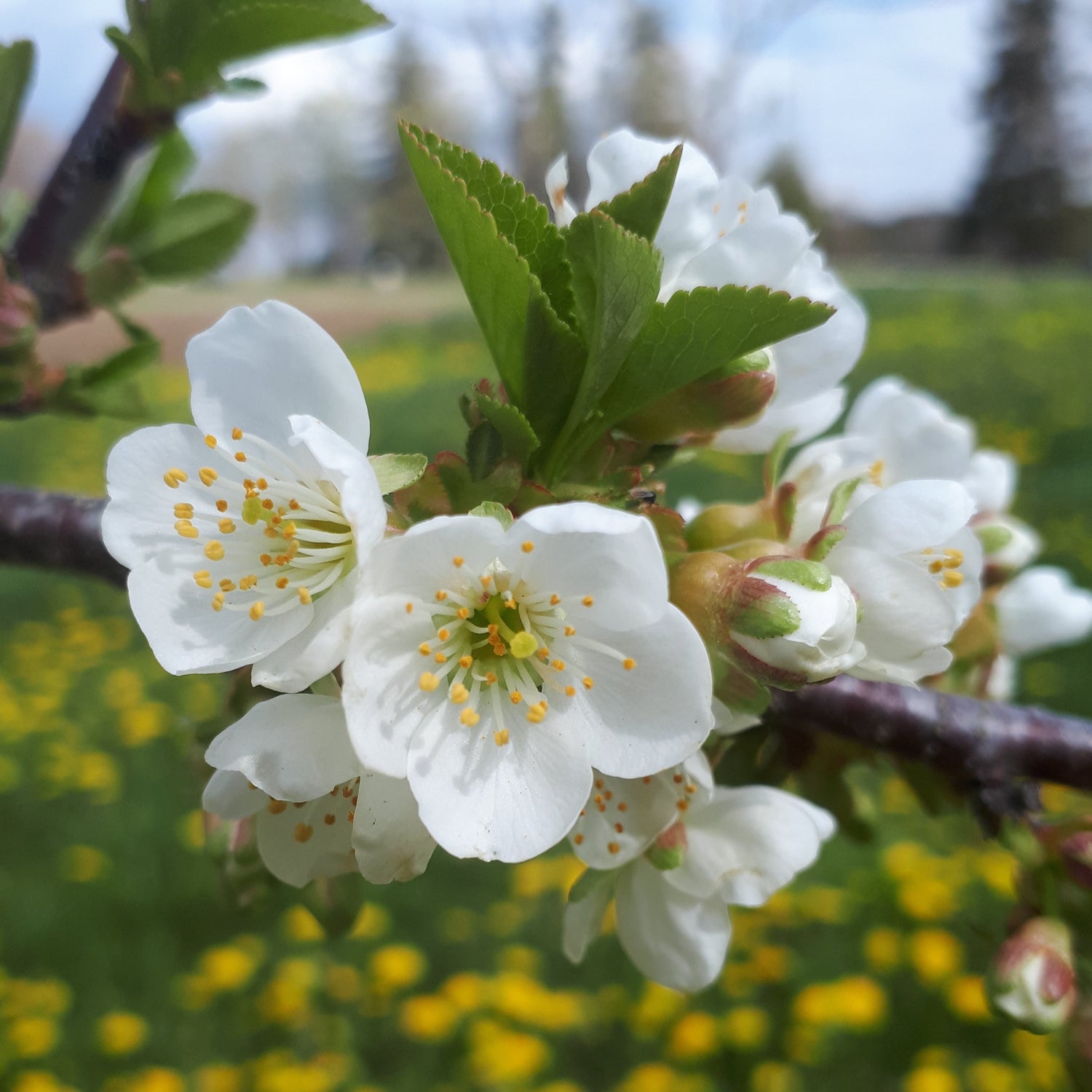
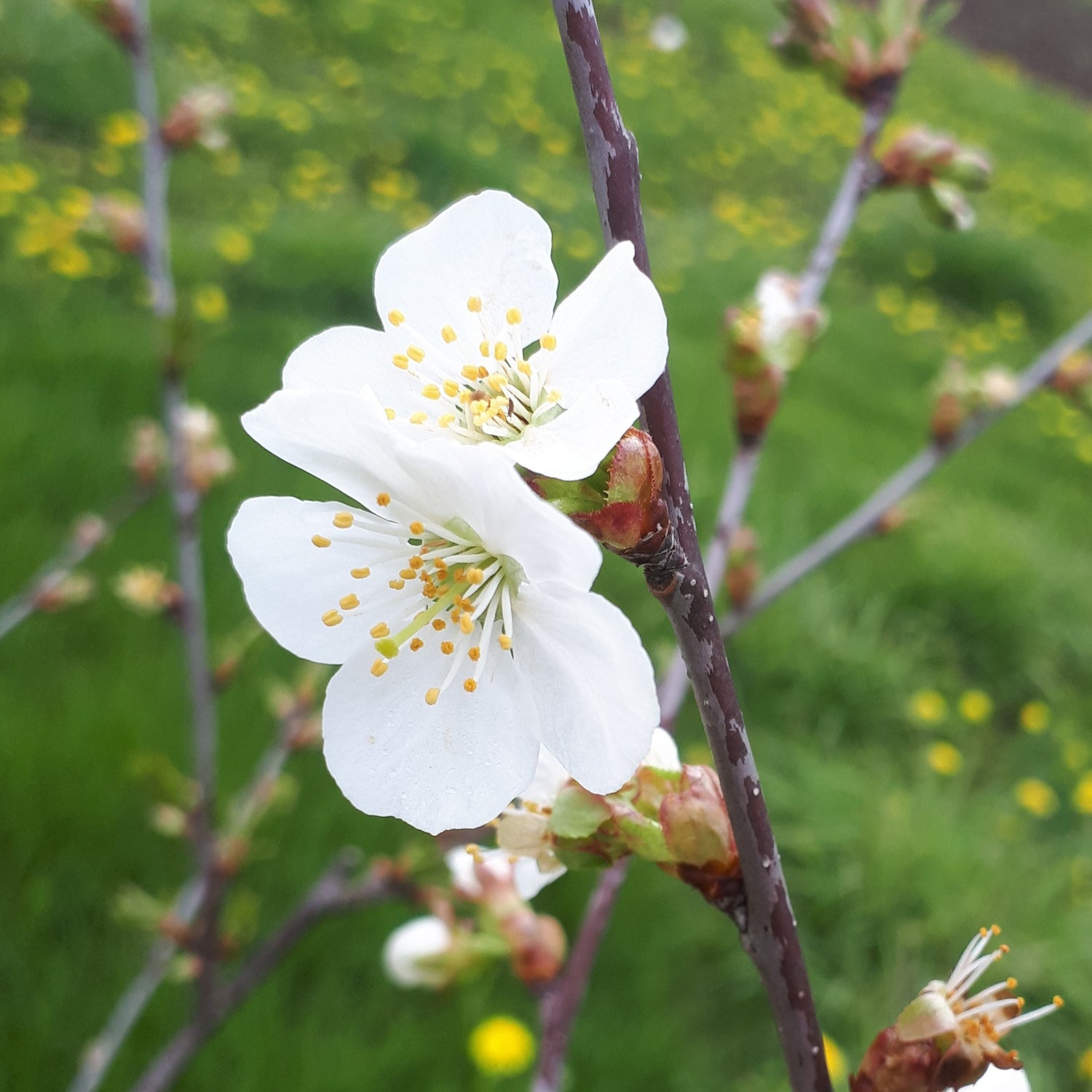
Sweet cherries provide lovely sweet treats that are best enjoyed right off the tree! These tall trees are also quite attractive in spring when covered in a profusion of lovely white flowers.
Some sweet cherries are self-pollinating and some need two different varieties for pollination - we have noted which is which in the variety descriptions. Sweet cherries and sour cherries do not pollinate each other.