Products
846 products
Sort by:
846 products
846 products

History: Prairifire (sometimes spelled Prairiefire or Prairie Fire) was created by DF Dayton at the University of Illinois and released in 1982. It is a hybrid of several Malus species which gives it excellent disease resistance along with a striking visual appearance. Prairifire remains a popular ornamental variety today!
Why We Grow It: This striking crabapple boasts a profusion of reddish pink blooms in the spring, reddish leaves, and lovely red fruit in the fall. Along with its ornamental appeal, Prairifire is also quite disease resistant, a great pollination partner for other apple trees, and a source of food for wildlife.
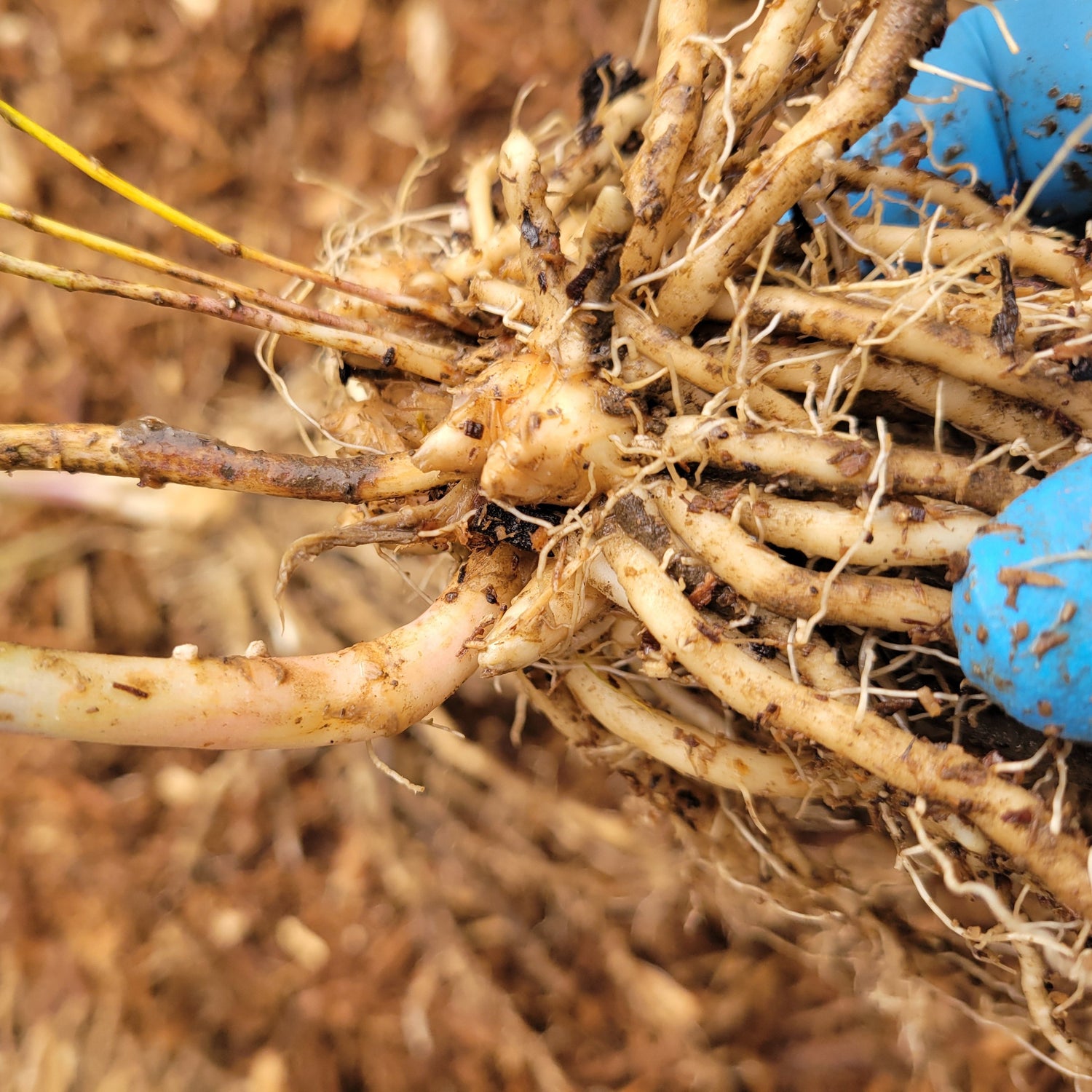
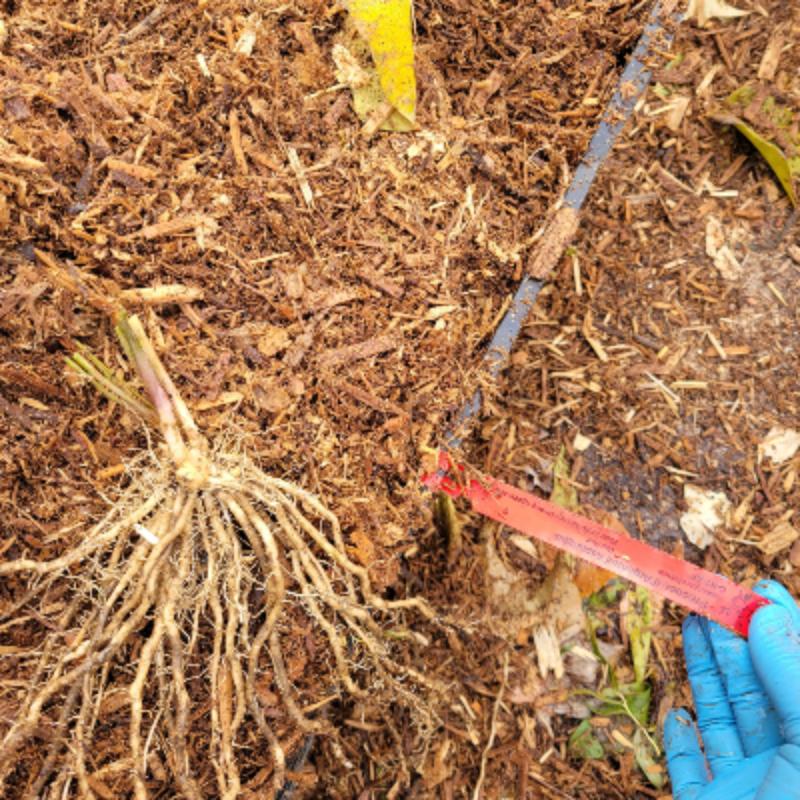
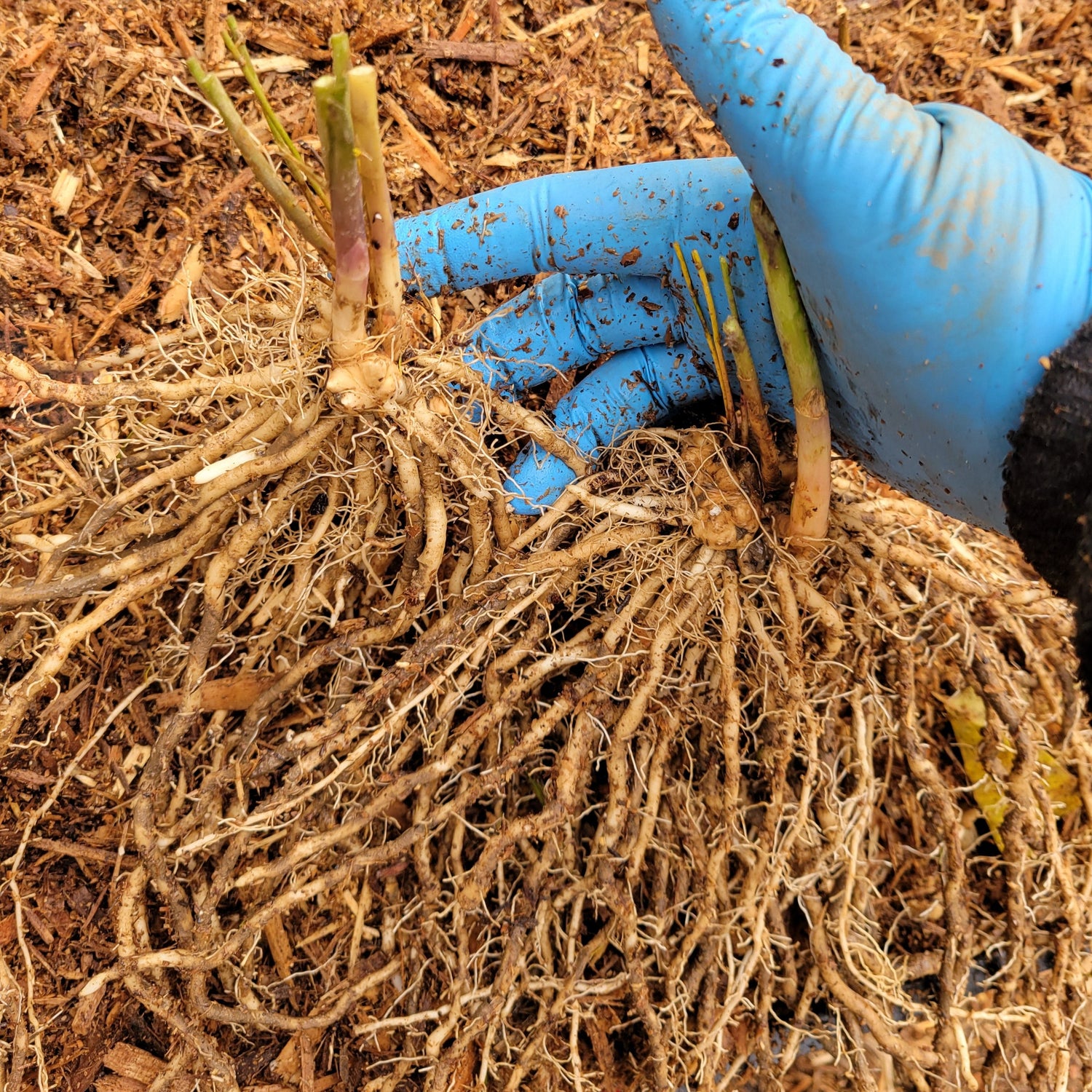
Species: Asparagus officinalis
History: The parent of these seedlings, Precoce d'Argenteuil (translated from French as 'early Argenteuil'), is an heirloom French variety that has been grown since either the 1700s or 1800s depending on the source. It was first listed in 1885 and is a selection from the Giant Dutch Purple variety of asparagus, along with the middle and late Argenteuil varieties which were all likely named after the commune in Paris. It is still commonly used in French dishes to this day. The variety is also sometimes called White Gold if grown without exposure to light, causing the plants to remain white. These seedlings may vary from their parents but should bear similar traits!
Why We Grow It: We love offering seedlings as a way to add some diversity to the plants being grown! The parent variety Precoce d'Argenteuil may not be as productive as modern varieties, but its excellent flavour more than makes up for it! Living up to its name, this variety produces thick shoots quite early in the season as well.


History: President plum was first raised by Thomas Rivers at Rivers Nursery in England where he introduced it in 1901. They became quite popular due to their excellent performance as a fresh eating and cooking plum, as well as their late ripening time which means they are available when many other plums are no longer in season. They remain popular in the UK and United States.
Why We Grow It: This European variety is a great way to extend the plum season. The large, oval fruit has dark blue skin and yellow-orange flesh with a pleasant flavour. It is good for fresh eating and cooking. The tree is vigorous and produces heavy crops.
History: President plum was first raised by Thomas Rivers at Rivers Nursery in England where he introduced it in 1901. They became quite popular due to their excellent performance as a fresh eating and cooking plum, as well as their late ripening time which means they are available when many other plums are no longer in season. They remain popular in the UK and United States.
Why We Grow It: This European variety is a great way to extend the plum season. The large, oval fruit has dark blue skin and yellow-orange flesh with a pleasant flavour. It is good for fresh eating and cooking. The tree is vigorous and produces heavy crops.


History: Prima is one the apples developed from the collaborative PRI disease-resistant breeding program run by Purdue University, Rutgers University, and the University of Illinois. It was introduced in 1958 but unfortunately is no longer fully scab resistant due to the fungus evolving to overcome the resistance since then.
Why We Grow It: Another great apple for organic production and excellent for the backyard or farmer’s market sales! This apple is sweet, juicy, and flavourful and boasts good disease resistance..


History: Prima is one the apples developed from the collaborative PRI disease-resistant breeding program run by Purdue University, Rutgers University, and the University of Illinois. It was introduced in 1958 but unfortunately is no longer fully scab resistant due to the fungus evolving to overcome the resistance since then.
Why We Grow It: Another great apple for organic production and excellent for the backyard or farmer’s market sales! This apple is sweet, juicy, and flavourful and boasts good disease resistance..

Why We Grow It: Another successful introduction from the PRI breeding program, Priscilla boasts resistance to most common apple diseases including fireblight and scab. The fruit is also quite attractive with a deep red blush over yellow skin with a sweet and subacid flavour.


History: Priscilla is the second apple variety developed through the collaborative PRI disease-resistant breeding program run by Purdue University, Rutgers University, and the University of Illinois. It was planted in 1962 and has a complex heritage that includes Starking Delicious, McIntosh, Golden Delicious, and Rome Beauty. It was introduced in 1972 and named 'Priscilla' after Priscilla Hovde, the wife of the seventh president of Purdue University as it happened to fit the 'pri' naming scheme for the varieties developed through the program.
Why We Grow It: Another successful introduction from the PRI breeding program, Priscilla boasts resistance to most common apple diseases including fireblight and scab. The fruit is also quite attractive with a deep red blush over yellow skin with a sweet and subacid flavour.
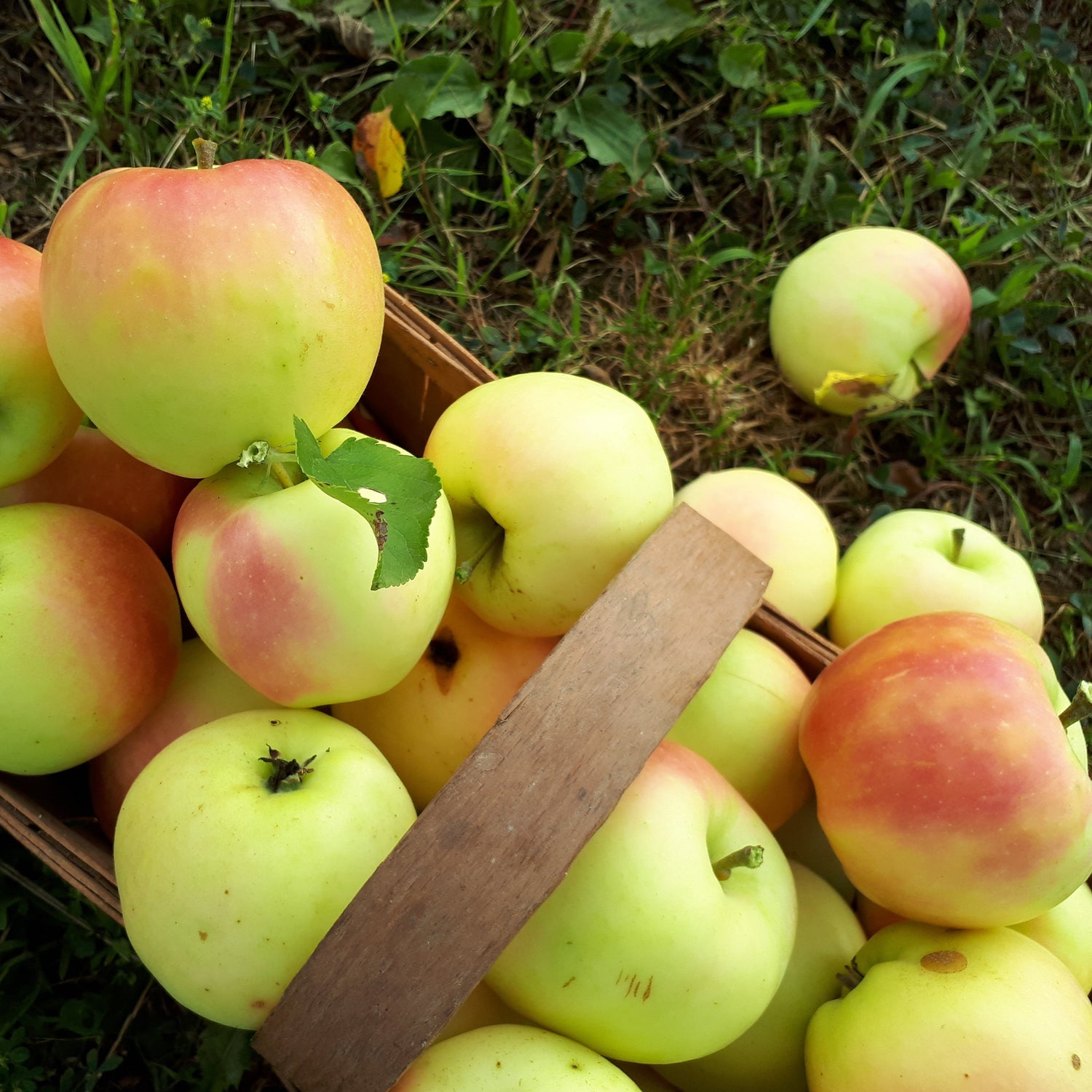
History: Pristine is another variety that was developed through the collaborative PRI disease-resistant breeding program run by Purdue University, Rutgers University, and the University of Illinois. It was introduced in 1994.
Why We Grow It: The program was successful with this apple which boasts a decent disease resistance, and performs very well in our orchard. The fruit is an attractive yellow-gold colour with a pink blush where the sun hits it, and the flesh is dense and white. It has a refreshing, sharp flavour and is good for fresh eating if you enjoy a good tart apple! Unlike many early season apples, it has a higher sugar content and stores decently well.

Species: Actinidia arguta
History: Prolific was created by the USDA and was formerly known as '119-40B.'
Why We Grow It: Prolific stands out amongst its peers for several reasons! First off, it is a self-pollinating variety which means you do not need to plant a second male plant with Prolific in order to get fruit. Second, the medium fruit sports a unique red blush. And last but not least, the vine itself tends to stay more compact than some other varieties, making it a good option for those with limited space or who want an easier plant to manage.

Species: Hippophae rhamnoides
History: Aside from its Russian origins, it is difficult to determine more about Prorachnaya sea buckthorn in English.
Why We Grow It: This Russian variety boasts heavy crops of large berries with a high oil content. Even better, this variety has relatively few thorns which makes picking said berries that much easier for the grower.


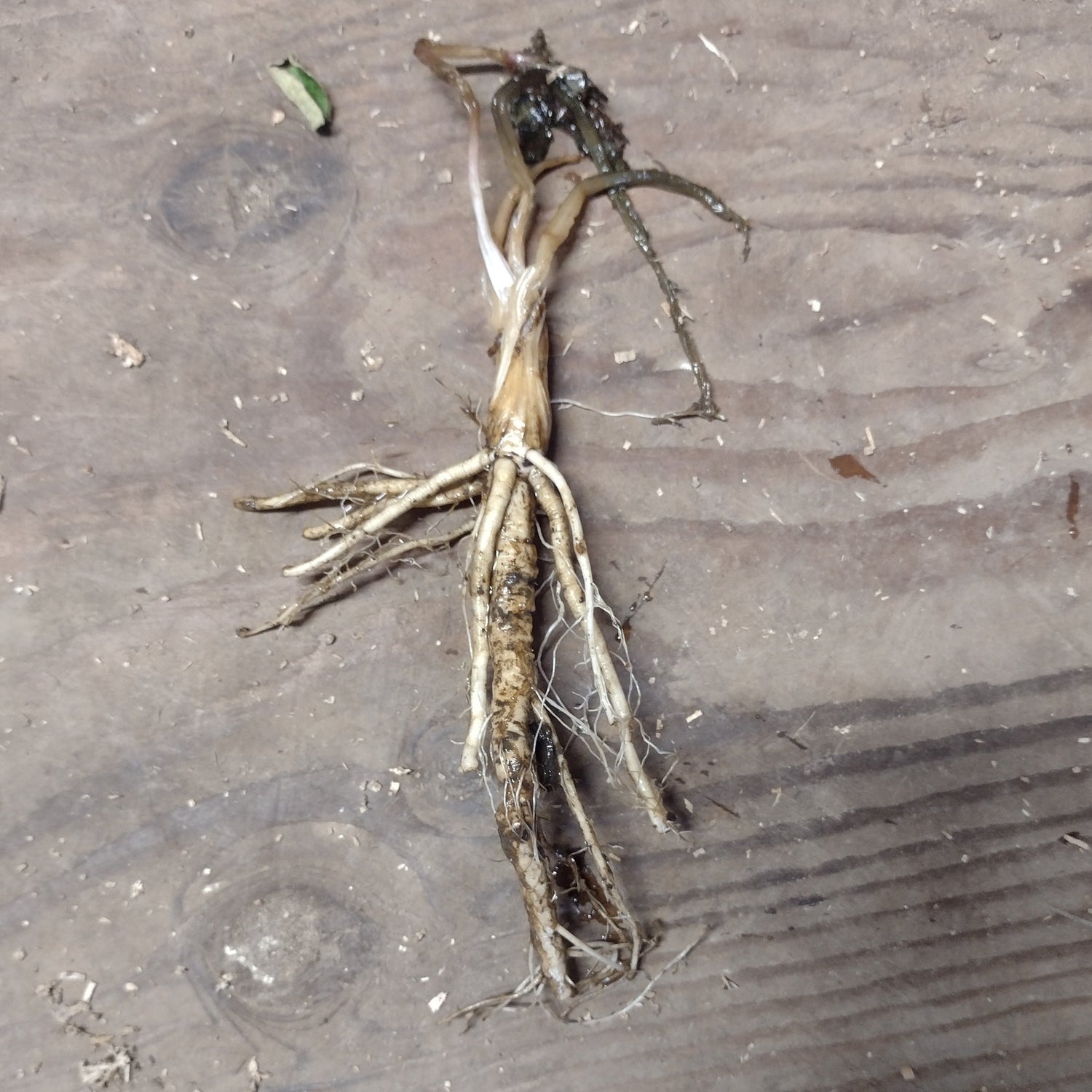
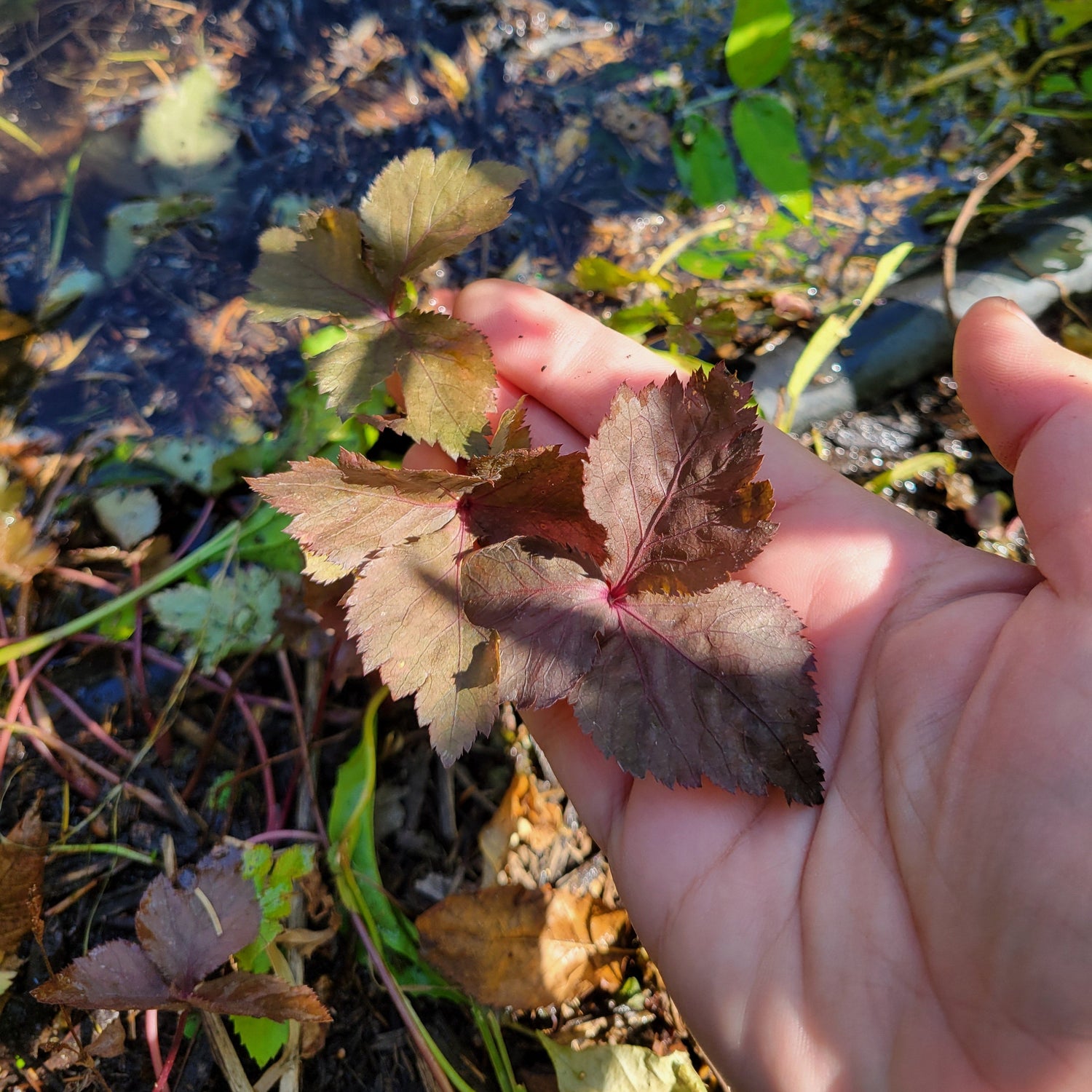
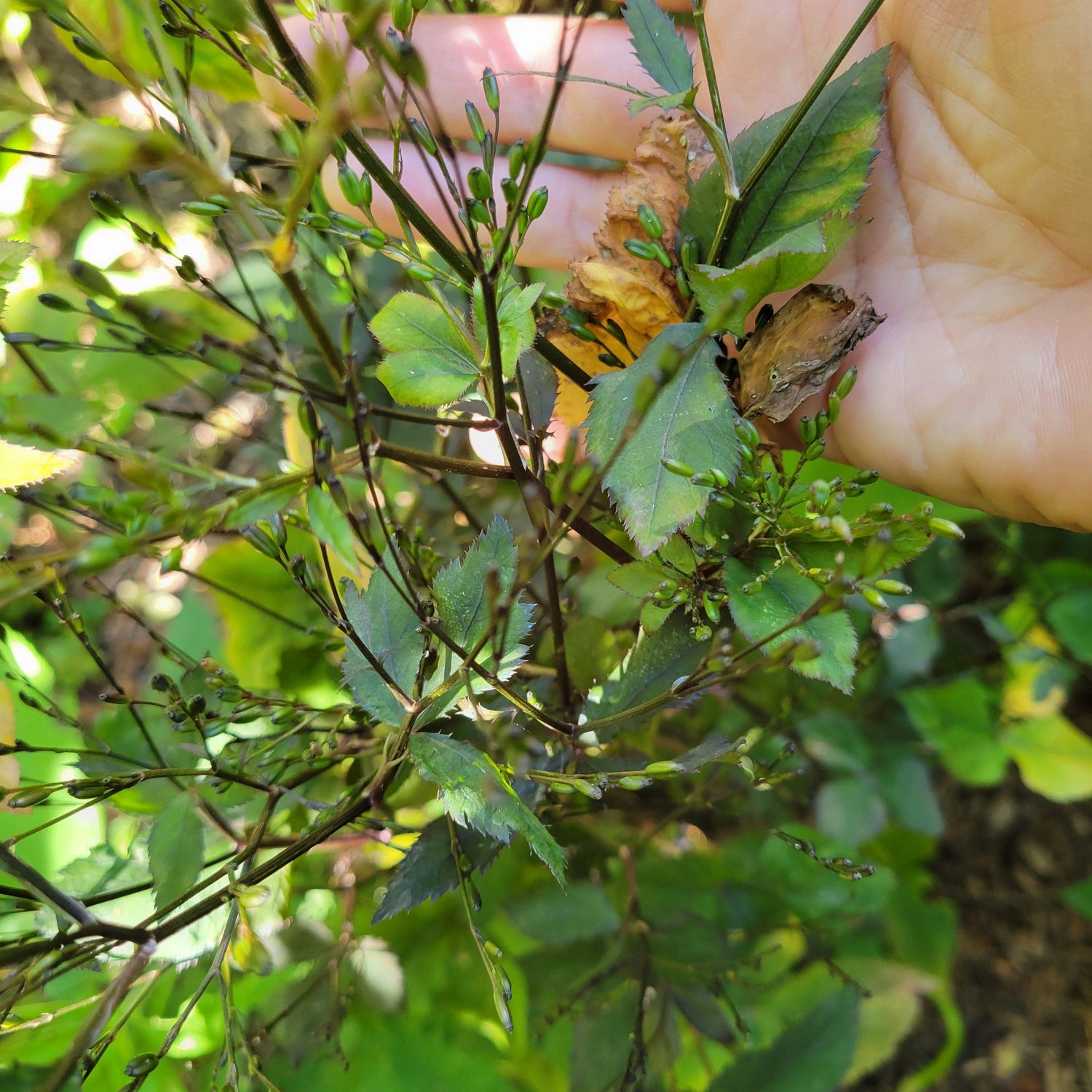
Species: Cryptotaenia japonica
History: Mitsuba is native to Japan, China, and Korea where it is used as a garnish, seasoning, and as a root vegetable. Mitsuba translates from Japanese as 'three leaves', referring to the way the plant grows leaves in groups of three. In Japan, it is also traditionally used at weddings where the stems of the plant are tied in knots to bring luck and symbolize the lasting relationship. It is also used in Japanese flower arrangement.
Why We Grow It: Mitsuba has a light, refreshing, vegetal flavour that is reminiscent of parsley and celery. It is also high in calcium and vitamin C. This variety boasts attractive purplish foliage (more green in shade and purple in full sun, see photos) and produces small, pinkish-white star-shaped flowers which add a nice ornamental touch to the garden.

Why We Grow It: Purple Passion produces a large apple with reddish-purple skin and crimson flesh. The flavour is quite sharp, making it better suited for cooking and especially cider. This juicy apple can be pressed into a crimson cider that is visually quite appealing. The tree also boasts attractive pink blossoms and red-tinged foliage, making it a nice ornamental tree as well.

Species: Salix sp, most likely Salix discolor
History: Pussy willows are native to North America, Europe, and Asia and are culturally significant in all three continents. They are a New Years decoration in China and Iran and have been used in various sects of Christianity for purposes such as replacing palm fronds as a decoration for Palm Sunday in Europe and America where palms do not grow.
Why We Grow It: A fluffy signifier of spring, these cute willows are also a great early pollen source for bees and have medicinal uses.
Photo by Huckleberry Hives.


Love to cook with cast iron? These quilted handle covers easily slip over the skillet handle for easy, safe use to protect your hands. No more oopsies if you forget to grab a hot mat before you grab the hot pan! Leave it on the pan until ready to launder, then remove and throw in with regular wash.
If you're like me, you have various sizes of cast iron skillets in your kitchen... so; here are the two handle cover sizes that work well for me and are available, ready to ship!
The smaller handle cover shown is made specifically for mini skillets. This is a new product I'm offering because it's nice to have a handle cover that isn't so big and gawky on those little pans! For reference, my mini skillet (shown) measures about 6 inches across the pan. Approximate max handle size that will fit is about 1 3/4" wide x 3 1/2" long.
The larger handle cover is shown on my 10-inch skillet. There is ample width to slip over thicker handles if necessary. Approximate usable space inside this larger handle cover is about 2 1/2" wide x 4 1/2" long.
Made with InsulBright thermal batting. Not microwave or oven safe. Not flameproof but can be safely left on the handle while cooking on a stove top. They will shrink slightly on the first laundering, as the fabrics have never been washed, and then they will relax a bit with use.
This is a wonderful idea for a small kitchen gift, stocking stuffer, hostess gift, etc.
The last photo shows my original skillet handle covers listed here.


Love to cook with cast iron? These quilted handle covers easily slip over the skillet handle for easy, safe use to protect your hands. No more oopsies if you forget to grab a hot mat before you grab the hot pan! Leave it on the pan until ready to launder, then remove and throw in with regular wash.
There are two sizes available, made for a large cast iron skillet and a mini skillet respectively.
Large size is about 14 cm long with a generous 4 cm opening to slip over the handle.
Small size is about 10 cm long with a 3 cm opening to slip over the handle.
Made with Insul Bright thermal batting. Not microwave or oven safe. Not flameproof but can safely be left on the handle while cooking on a stove top or cook top.
This is a wonderful idea for a small kitchen gift, stocking stuffer, hostess gift, etc.


This striking quilted pillow features the traditional patchwork quilt block called 'hens and chicks'. The country red and teal fabrics mirror the colours in the floral border fabric, for a pretty, coordinating finish. A lovely floral toss cushion for the living room or bedroom!
Pillow Covers are a great way to change your decorating and give your room a whole new personality!
Our pillow fronts are all quilted for a unique, plush look.
Switching out your covers is quick and easy with our overlapping back. Easy care, in with regular wash.
Sized for a 16 inch (41 cm) square pillow form. You will have the option to purchase the cover only or include the form.
When you choose to purchase the form also, you will receive a polyester filled, individually compressed form, in the appropriate size. The compression simply allows for less bulk when shipping. They will inflate instantly, once you open the bag.
Last photo shows this one together with another coordinating pillow, listed separately here: https://mommabearsquilts.ca/products/patchwork-pillow-quilted-throw-cushion-22073


Whether you're headed for a lovely picnic or a summer farmer's market, this sturdy tote has you covered. A unique gift idea that will keep giving each time it is used.
Product details:
- handmade, one of a kind, using high quality fabrics
- fully quilted for a soft structured feel
- sturdy and durable with inner foam padding that makes the bag stand up even when empty
- inner zippered pocket easily holds a cell phone and more
- inner lining features two elastic bottle holders on one side and a single elastic compartment on the other for a small cutting board or other container.
- pretty cotton webbing handles are comfortable for carrying over the shoulder or by hand
- easy care, can be thrown in with regular laundry.
- bag sits about 37 cm high, 28 cm wide and 16 cm deep
There are two totes, each with different patchwork pattern on the outside. You also have the option of adding the small cutting board. All other items shown are not included.


Use these cute zippered pouches for so many things! Great for makeup, travel toiletries, electronics, personal products, sewing and craft supplies, even baby care products in the diaper bag! The list is endless! Super cute gift idea, from kids to adults. Who doesn't love a special pouch to stash their stuff?!
Convenient claw clip on small size allows it to be attached to the larger one.
This listing is for a set of the black and white bags shown in the first photos, one of each size.
Large bag measures about 9 x 5 inches (23 x 13 cm)
Small bag measures about 4 inches square (10 cm)
Each bag is unique and made in limited quantities. They have a 'handmade' label, are made with quality cotton fabrics, and has a 'mommabearsquilts.ca' tag inside for future reference.
Easy care, you can spot clean or even throw in the laundry when necessary. Best practice is to put them inside a mesh lingerie bag before laundering. Slight shrinkage will occur the first time as fabrics have never been washed. Air dry to minimize this effect.
Quilting is done by freemotion, which is a hand guided machine stitching technique, not computer. This means that your quilt will always be one of a kind, as the artistry of the stitching is unique to each piece.
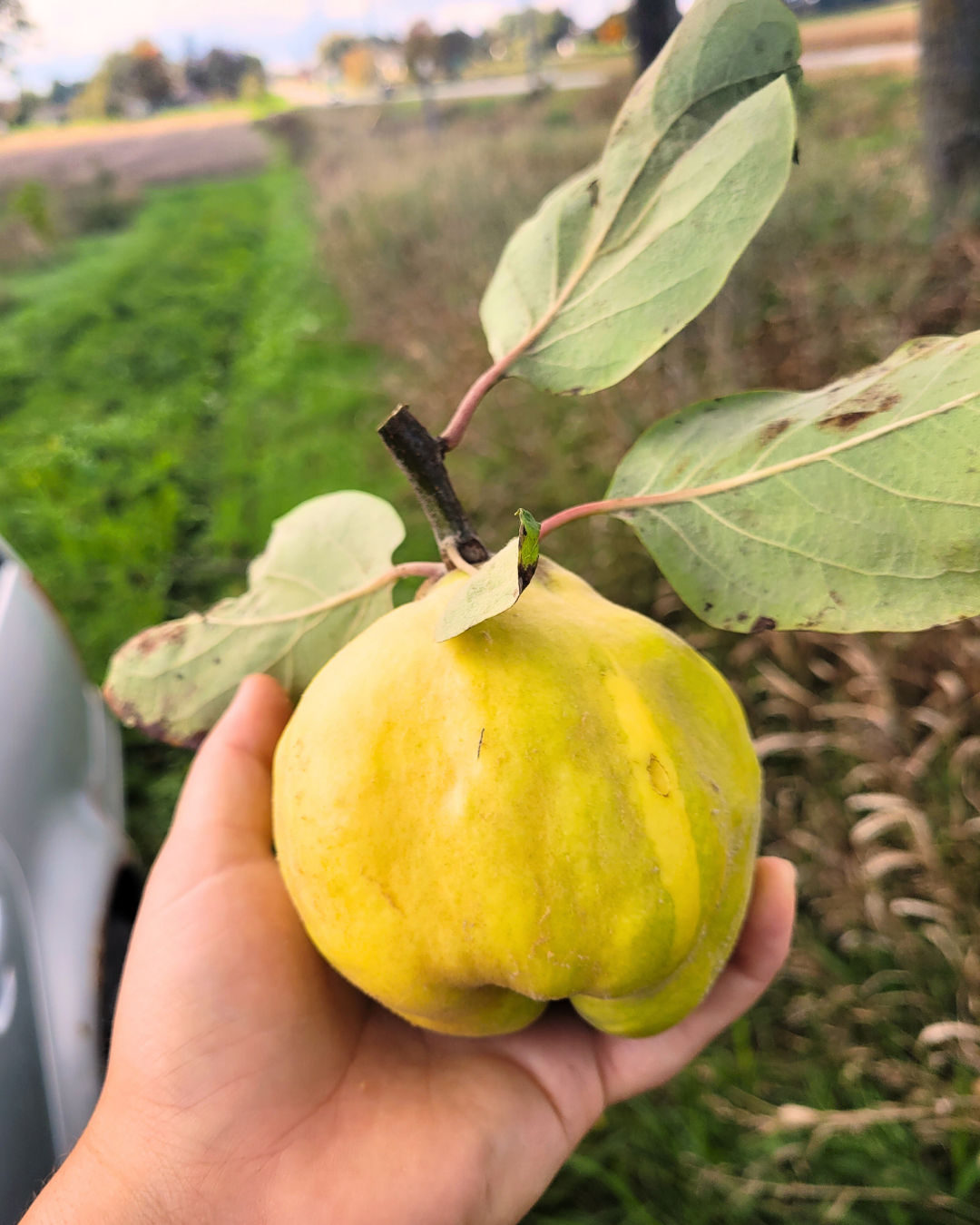
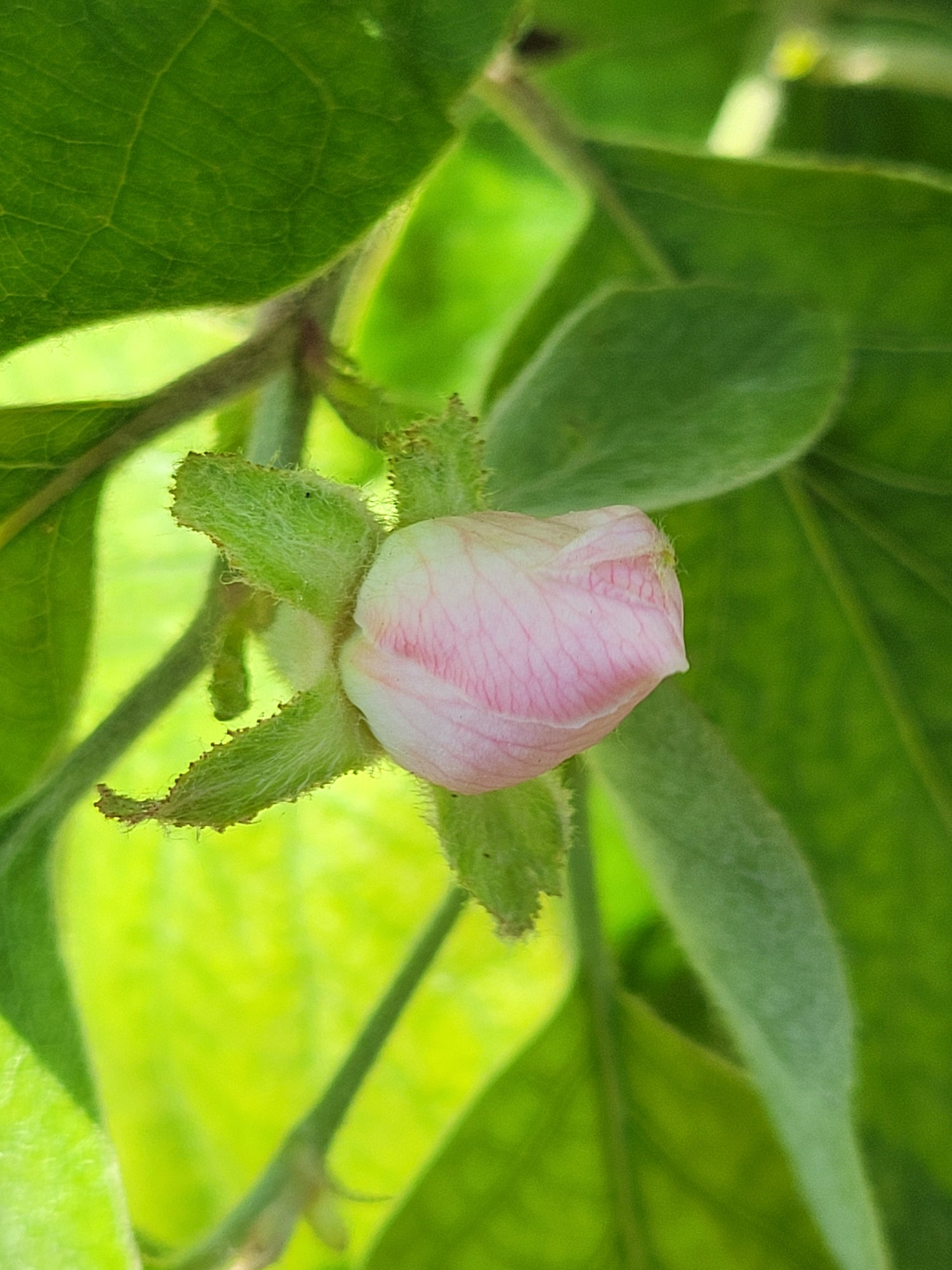
History: The history of Quince of Portugal is largely unknown aside from the fact that it was introduced to England in the early 1600s.
Why We Grow It: This quince is often considered to have the best flavour of all quinces. On top of that, the impressive fruits of this variety can weigh up to 1 lb and are juicier than most other cultivars. When ripe, this quince cooks to a lovely crimson coloured puree. It is best to store the fruit indoors for a couple weeks before eating it.
History: The history of Quince of Portugal is largely unknown aside from the fact that it was introduced to England in the early 1600s.
Why We Grow It: This quince is often considered to have the best flavour of all quinces. On top of that, the impressive fruits of this variety can weigh up to 1 lb and are juicier than most other cultivars. When ripe, this quince cooks to a lovely crimson coloured puree. It is best to store the fruit indoors for a couple weeks before eating it.
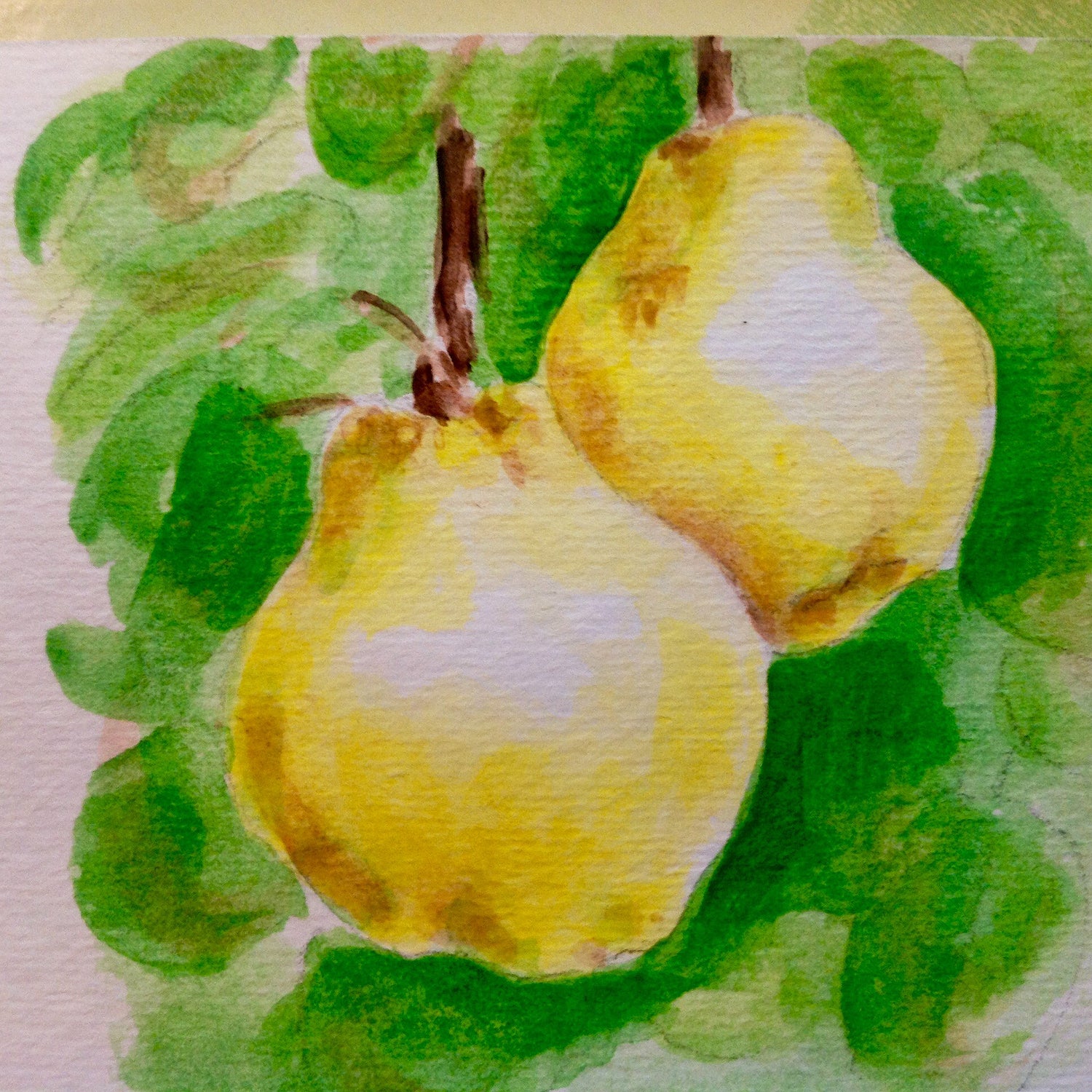
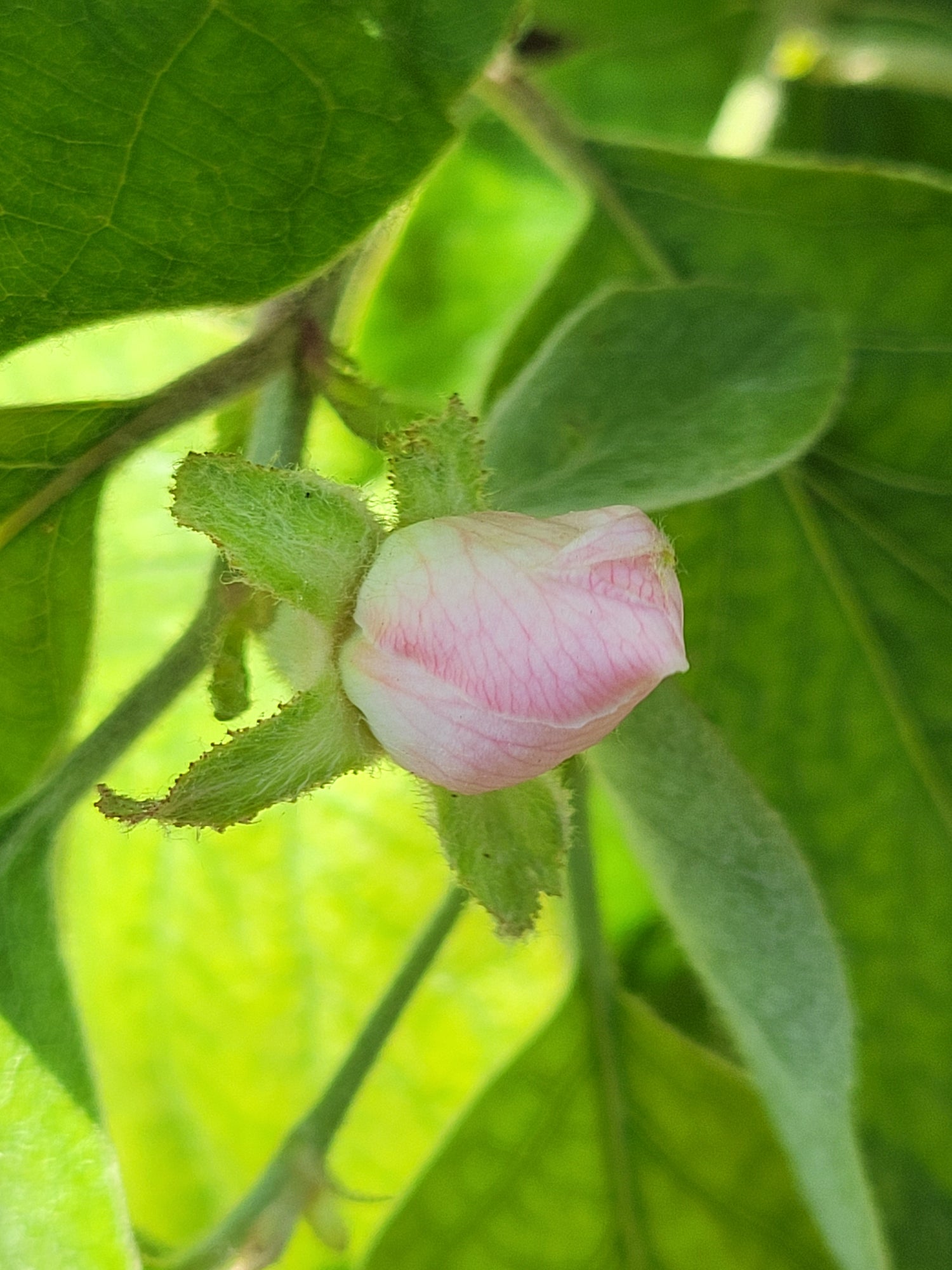
Species: Cydonia oblonga
History: The seedlings were sprouted from seeds sourced from Ontario.
Why We Grow It: By growing quince from seeds in our area, we hope these seedlings will be a little more cold hardy. Like all quince, the fruit from your seedlings are best used for cooking, baking, and preserving since the intense, tart flavour is a bit much when eaten fresh.
We have seedlings of the following varieties:
- Ernie's Favourite - A favourite from a homestead in Mt. Pleasant that has produced fruit for decades. It performs well in our climate.
- Quince Seedling - The seedlings were sprouted from seeds sourced from an old mother tree on a local farm. The previous owners have enjoyed the fruit for generations, proving that this is a nice, reliable variety.
History: Rainier sweet cherries were created by Harold Fogle at the Washington State University research center in 1952 and released in 1960. They were named after Mount Rainier, the tallest mountain in the state. Due to their delicate nature, Rainier cherries tend to be a bit more expensive than other commercial varieties.
Why We Grow It: Rainier are delicious yellow-skinned, yellow-fleshed sweet cherries. Some say they are the best tasting of all yellow cherries, and perhaps the best tasting cherry in general. Along with being great for fresh eating, they are also suitable for uses such as canning.


This honey is pure, unadulterated goodness from my hives. I (Jodi, the beekeeper) harvest honey with care each season when the bees have enough extra to share. Each season the local terroir influences the flavours captured in my jars of liquid gold, although often there are similar flowers and farmers crops, such as alfalfa, clovers, sunflowers, and more that the bees visit every year.
This year I took a small harvest at the end of July and a final harvest at the end of August. The honey from the 2nd harvest had a small amount of basswood honey which I kept separate! Basswood honey has a unique flavour that can be described as waxy, buttery, metallic, and sometimes minty, depending on your palate. I find it to be a bit metallic with buttery/waxy notes that sometimes reminds me of buttery popcorn, and it's one of my absolute favourite Ontario honeys.
The rest of the season's harvest is a delicious summer blossom/wildflower honey.
- I harvest my honey with a no-heat process. It is cold extracted and then I bottle it up before it has a chance to crystallize.
- When freshly harvested (usually late July or August) this honey is in its liquid state and will slowly crystallize over time.
- Depending on the time of year ordered, it may come to you crystallized (my favourite as it's easier to scoop out!), partially crystallized, or liquid. You can always return honey to it's liquid state with a hot water bath, repeating and stirring to help dissolve crystals if needed. I used to re-heat jars to keep them liquid, but I'd rather sell pure raw honey and will only be doing it upon request.
- Natural crystallization is sometimes fine-grained and can be quite similar to creamed honey, but without the manual labour (or machine) that is typically used to create creamed honey.
Why does honey crystallize? Honey is made by the bees, who collect nectar from flowers. The nectar is naturally about 80% water and sugars, most of which are sucrose. The bees use their own special enzymes to break down the sucrose into fructose and glucose - the same types of sugars found in apples and other fruits and vegetables. This helps make honey a naturally healthy sweetener because our bodies recognize it quickly and both fructose and glucose are smaller sized molecules of sugar which our bodies can digest easily. But where does the crystallization come in? Right here: Glucose naturally prefers to form a crystalline structure, so over time it separates and builds itself into crystals within your jar of honey!
There is nothing wrong with honey that has gotten crystallized and it is perfectly safe to eat. However, if you prefer it liquid, you can gently heat your honey to cause the glucose' crystalline structure to dissolve back into a liquid state. Over-heating honey can destroy healthy enzymes, so it is recommended to heat no hotter than your hand can stand. My go-to method is to boil water in a kettle or saucepan, remove from heat, and place my jar into it. Allow to cool, stir and repeat if your jar is quite crystallized.

NOTICE: This tree was originally listed as a Maxine pear but upon fruiting we realized there had been a mix-up in the trees we received. Through genetic testing and our own observations, we are pretty sure the trees are actually Red Clapp's but cannot be 100% certain at this time.
History: Red Clapp's Favourite, also known as Kalle Red, is a sport of Clapp's Favourite that was discovered in the 1950s in an orchard in Missouri. Clapp's Favourite normally produces green pears but when this bright red fruit emerged on one branch instead, the mutation was further propagated for its attractive deep red colour.
Why We Grow It: In a strange twist in the fruit tree world, we received these pears by accident when we had ordered in what we thought was scionwood for Maxine pears. When the taste and colour of the pears told us otherwise, we realized there had been a mix-up at some point and our mother tree is most likely a Red Clapp's Favourite based on the fruit and genetic testing. Despite the confusion, we have come to love this all-purpose, flavourful pear which is also noted for its profusion of beautiful white blossoms in spring and its heavy crops.
History: Red Gravenstein is a sport/mutation of the original Gravenstein/Yellow Gravenstein that is a striking bright red. Some say it is also sweeter than the original.
Why We Grow It: With attractive red skin, this is a lovely sport of the original Gravenstein. It is a good quality and sweet early apple that is excellent for home orchards.

History: Red Gravenstein is a sport/mutation of the original Gravenstein/Yellow Gravenstein that is a striking bright red. Some say it is also sweeter than the original.
Why We Grow It: With attractive red skin, this is a lovely sport of the original Gravenstein. It is a good quality and sweet early apple that is excellent for home orchards.