Products
846 products
Sort by:
846 products
846 products


Brighten up your kitchen with a pop of warm, nostalgic color! Our Crimson Harvest mini scrappy crazy quilt apples are crafted from a charming blend of warm red, cream, and rustic print cotton scraps. Each pieced apple features an ecru muslin center detail with a hand-stitched apple outline and delicate appliqué apple seeds for a true heritage feel.
Finished with a rustic "Handmade with Love" wooden button (medium size only) secure on a sturdy loop, these versatile quilted pieces easily hang as cozy kitchen wall decor when not in use. The small size apple does not have a button as the hanging loop is sewn in the seam.
Sold as a Giftable 2-Piece Set:
- Small (Mug Rug): 7.5 " sq. Perfect for your morning coffee cup or tea mug.
- Medium (Hot Mat / Trivet): 10" sq. Ideal for hot dishes, teapots, and warm bake bowls.
Key Features:
- Handcrafted using traditional crazy quilt techniques.
- Ecru muslin center with delicate hand-stitched detailing and appliquéd seeds.
- Functional hanging loop anchored with a "Handmade with Love" wooden button (medium size only).
- Quilted for durability and heat resistance. All sizes have an extra thermal layer.
- Beautifully packaged and ready for gift-giving—ideal for home cooks, bakers, and country home lovers!
- Easy care instruction included.
- Prewashed, preshrunk, colourfast


Brighten up your kitchen with a pop of warm, nostalgic color! Our Crimson Harvest mini scrappy crazy quilt apples are crafted from a charming blend of warm red, cream, and rustic print cotton scraps. Each pieced apple features an ecru muslin center detail with a hand-stitched apple outline and delicate appliqué apple seeds for a true heritage feel.
Finished with a rustic "Handmade with Love" wooden button (medium size only) secure on a sturdy loop, these versatile quilted pieces easily hang as cozy kitchen wall decor when not in use. Small size apple does not have a button, hanging loop is sewn in the seam.
Sold as a Giftable 2-Piece Set:
- Small (Mug Rug): 7.5 " sq. Perfect for your morning coffee cup or tea mug.
- Medium (Hot Mat / Trivet): 10" sq. Ideal for hot dishes, teapots, and warm bake bowls.
Key Features:
- Handcrafted using traditional crazy quilt techniques.
- Ecru muslin center with delicate hand-stitched detailing and appliquéd seeds.
- Functional hanging loop anchored with a "Handmade with Love" wooden button (medium size only).
- Quilted for durability and heat resistance. All sizes have an extra thermal layer.
- Beautifully packaged and ready for gift-giving—ideal for home cooks, bakers, and country home lovers!
- Easy care instruction included.
- Prewashed, preshrunk, colourfast


Brighten up your kitchen with a pop of warm, nostalgic color! Our Crimson Harvest mini scrappy crazy quilt apples are crafted from a charming blend of warm red, cream, and rustic print cotton scraps. Each pieced apple features an ecru muslin center detail with a hand-stitched apple outline and delicate appliqué apple seeds for a true heritage feel.
Finished with a rustic "Handmade with Love" wooden button (medium and large size only) secure on a sturdy loop, these versatile quilted pieces easily hang as cozy kitchen wall decor when not in use. Small size apple does not have a button, hanging loop is sewn in the seam.
Sold as a Giftable 3-Piece Set:
- Small (Mug Rug): 7.5 " sq. Perfect for your morning coffee cup or tea mug.
- Medium (Hot Mat / Trivet): 10" sq. Ideal for hot dishes, teapots, and warm bake bowls.
- Large (Placemat / Centerpiece): 11" sq. Adds charming rustic warmth as a table placemat or centerpiece mat.
Key Features:
- Handcrafted using traditional crazy quilt techniques.
- Ecru muslin center with delicate hand-stitched detailing and appliquéd seeds.
- Functional hanging loop anchored with a "Handmade with Love" wooden button.
- Quilted for durability and heat resistance. All sizes have an extra thermal layer.
- Beautifully packaged and ready for gift-giving—ideal for home cooks, bakers, and country home lovers!
- Easy care instruction included.
- Prewashed, preshrunk, colourfast

History: Red Spy is a red sport of Northern Spy that was discovered in New York in 1895. It has many of the same qualities of Northern Spy but is generally larger and redder.
Why We Grow It: Like Northern Spy, Red Spy apples are juicy with a balanced sweet-tart honeyed flavour. Unlike the original, they boast a brighter red exterior and the fruit tends to be a little larger. They do tend to bruise easily due to their thin skin. To make up for that, they are known for making wonderful pies. The trees are cold hardy and vigorous.

History: Redfree is one of the apples developed under the collaborative PRI disease-resistant breeding program run by Purdue University, Rutgers University, and the University of Illinois. It was bred in 1966 and officially introduce to the public in 1980.
Why We Grow It: Redfree apples are great for fresh eating with a pleasant, mildly sweet flavour and softer yet crisp flesh. The fruit does not ripen all at once, allowing a longer eating season. As its name would suggest, it has decent resistance to several common apple diseases.

History: Redfree is one of the apples developed under the collaborative PRI disease-resistant breeding program run by Purdue University, Rutgers University, and the University of Illinois. It was bred in 1966 and officially introduce to the public in 1980.
Why We Grow It: Redfree apples are great for fresh eating with a pleasant, mildly sweet flavour and softer yet crisp flesh. The fruit does not ripen all at once, allowing a longer eating season. As its name would suggest, it has decent resistance to several common apple diseases.
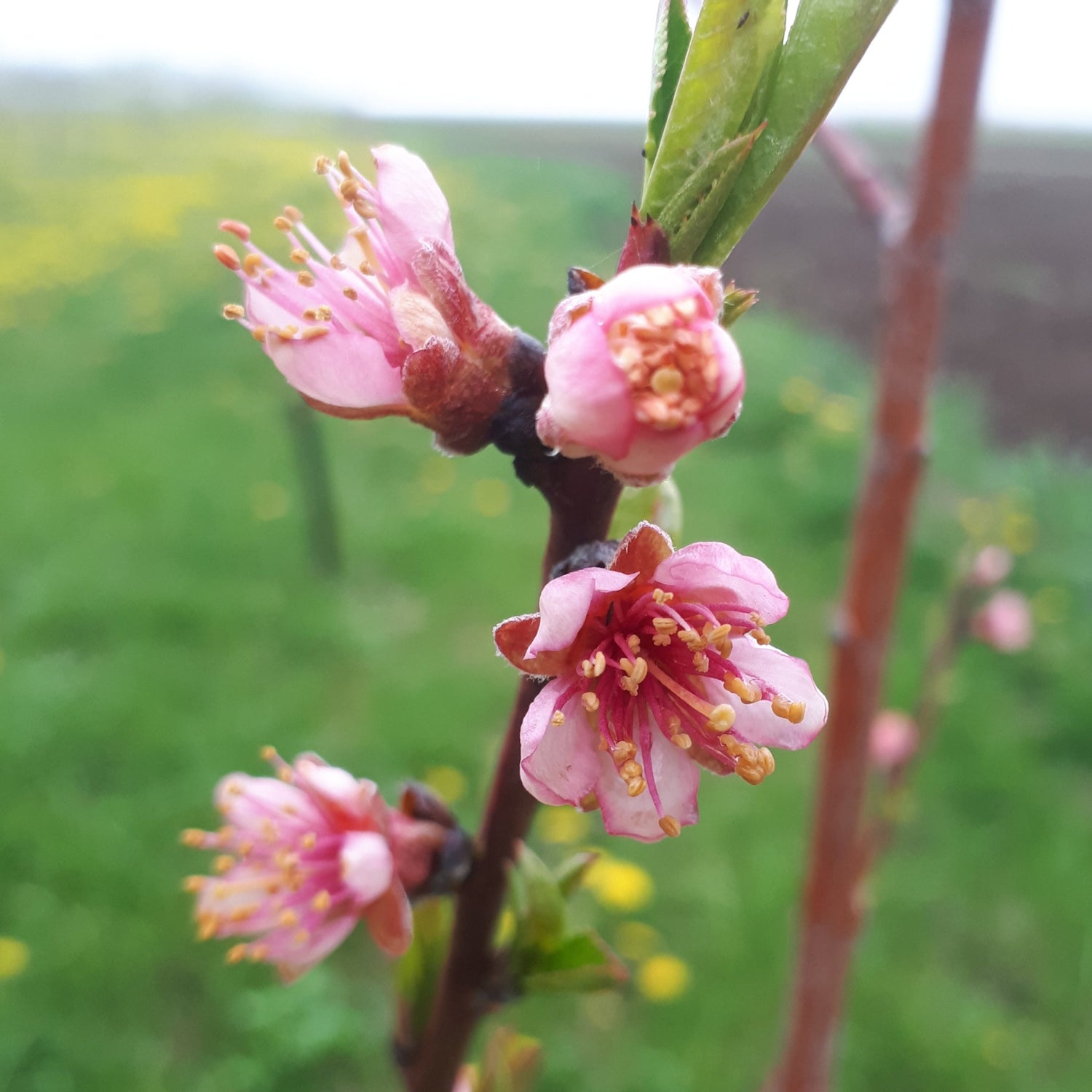
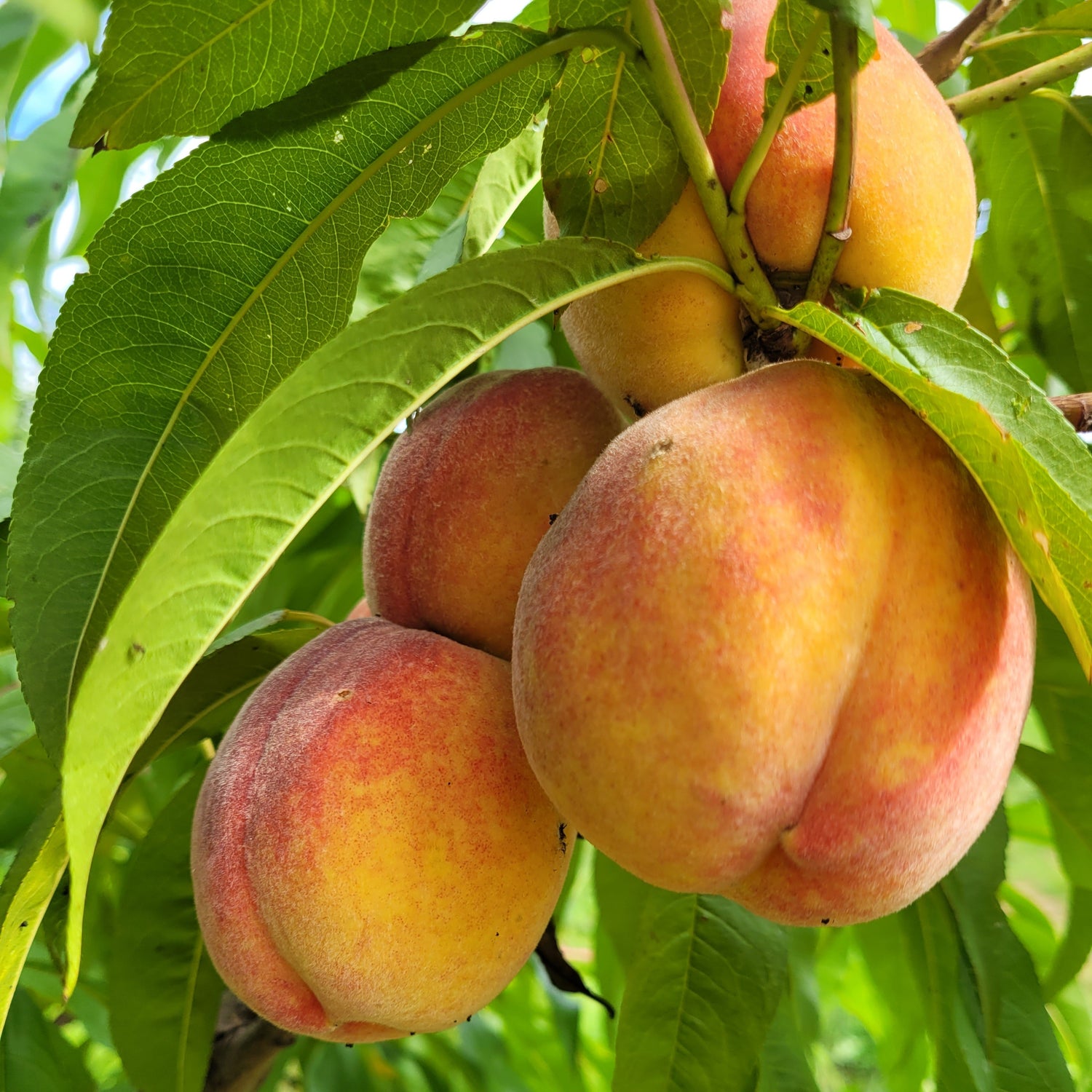
History: Redhaven peaches were created at Michigan State University's South Haven Research Center as part of the Haven series which began in 1924. Redhaven in particular was developed in the 1930s and released in the 1940s, making it the first commercial red-skinned peach variety. It is now one of the most commonly grown peaches in the world.
Why We Grow It: Redhaven is the most popular peach in North America, its sweet fruit being great for just about anything. The fruit is attractive, juicy, and flavourful and is slow to brown. The flesh does not turn brown when cut as quickly as other varieties. To ensure you can enjoy this great peach as much as possible, the tree begins bearing fruit at a young age, bears heavy crops, and the fruit ripens over a prolonged period of time which requires multiple harvests.
History: Redhaven peaches were created at Michigan State University's South Haven Research Center as part of the Haven series which began in 1924. Redhaven in particular was developed in the 1930s and released in the 1940s, making it the first commercial red-skinned peach variety. It is now one of the most commonly grown peaches in the world.
Why We Grow It: Redhaven is the most popular peach in North America, its sweet fruit being great for just about anything. The fruit is attractive, juicy, and flavourful and is slow to brown. The flesh does not turn brown when cut as quickly as other varieties. To ensure you can enjoy this great peach as much as possible, the tree begins bearing fruit at a young age, bears heavy crops, and the fruit ripens over a prolonged period of time which requires multiple harvests.
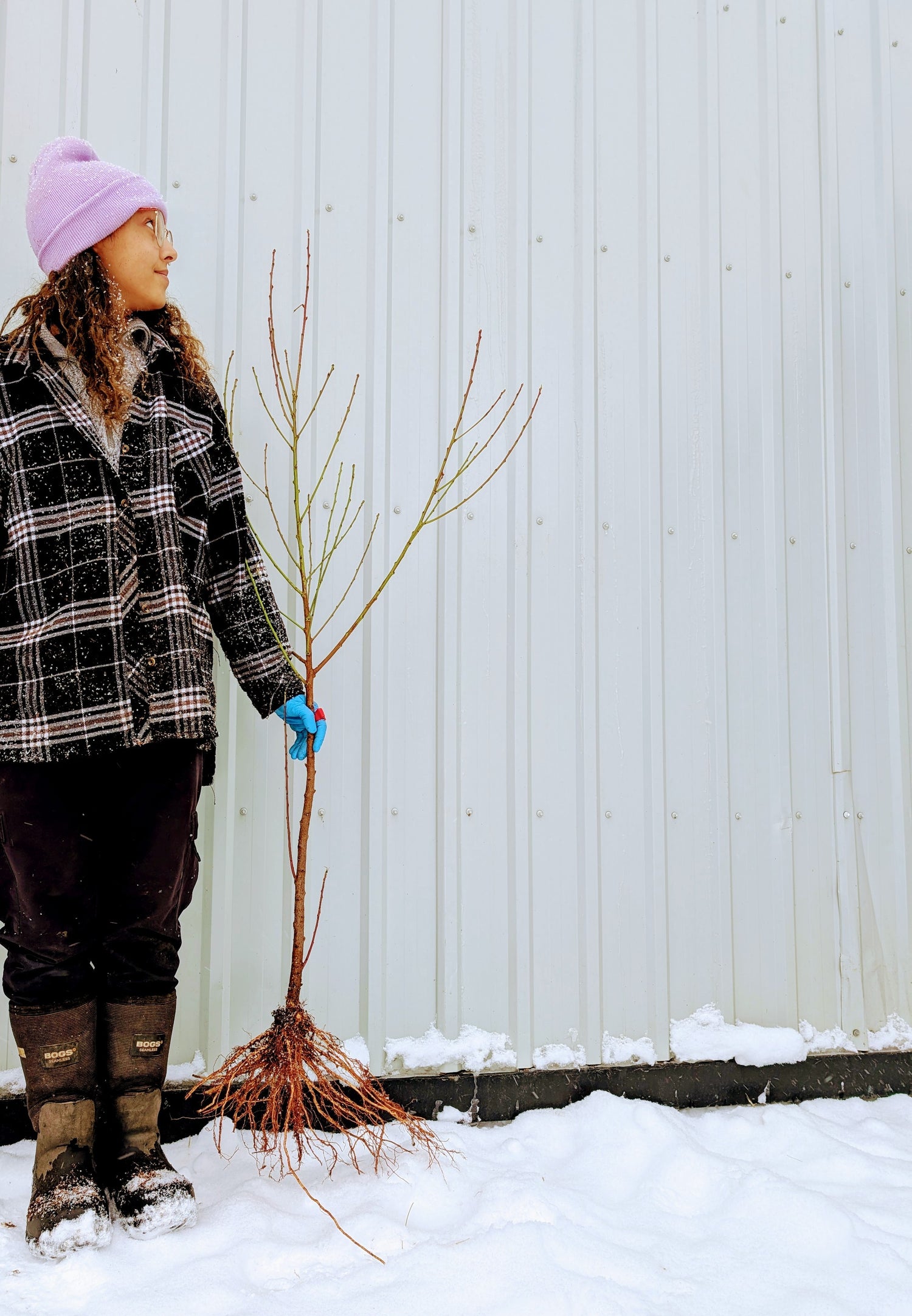
Species: Prunus persica
History: These seedlings are grown from Redhaven peach seeds collected from mother trees growing in Ontario. Redhaven was released from Michigan State University in the 1940s and has remained one of the most popular peach varieties in the world.
Why We Grow It: Seedling fruit trees are a great way to add some diversity and mystery to your garden or orchard! We expect that seedling peaches will be even hardier trees than their parents! Redhaven has a stellar reputation due to its excellent flavour and attractive red skin. See our Redhaven product page here for more information.
Please Note: Since peaches tend to stay true to type more than apples, these seedlings will likely bear a strong resemblance to their parent variety. However, any specific information listed on this page should be taken with a grain of salt as there may be some variation from the parent tree.
History: Redhaven peaches were created at Michigan State University's South Haven Research Center as part of the Haven series which began in 1924. Redhaven in particular was developed in the 1930s and released in the 1940s, making it the first commercial red-skinned peach variety. It is now one of the most commonly grown peaches in the world.
Why We Grow It: Redhaven is the most popular peach in North America, its sweet fruit being great for just about anything. The fruit is attractive, juicy, and flavourful and is slow to brown. The flesh does not turn brown when cut as quickly as other varieties. To ensure you can enjoy this great peach as much as possible, the tree begins bearing fruit at a young age, bears heavy crops, and the fruit ripens over a prolonged period of time which requires multiple harvests.
Bare Root Peach Trees
We are very pleased to be able to offer peach trees to our customers. They are both challenging and rewarding plants to grow. However, due to the unique challenges of growing peach trees, and the increased care required for their success, we regrettably cannot offer our standard 90 day guarantee on peaches. Please inspect your peach trees to your satisfaction when you pick them up at the nursery, or immediately upon arrival if they are shipped. For shipped trees, make your claim within 7 days of receipt of the trees. After 7 days of receipt, you will have been deemed to have accepted the trees in as-is condition.

History: Little is known about this variety aside from that it originated in the Brittany region of France in the 1800s. The variety is held in high esteem as a traditional French cider variety. Translated from French, its name means 'Queen of Apples.'
Why We Grow It: Reine des Pommes produces a bold, fragrant flavoured bittersweet cider that is quite unique. It is good both as a single-variety cider and in blends. The tree is fairly vigorous and produces good crops.
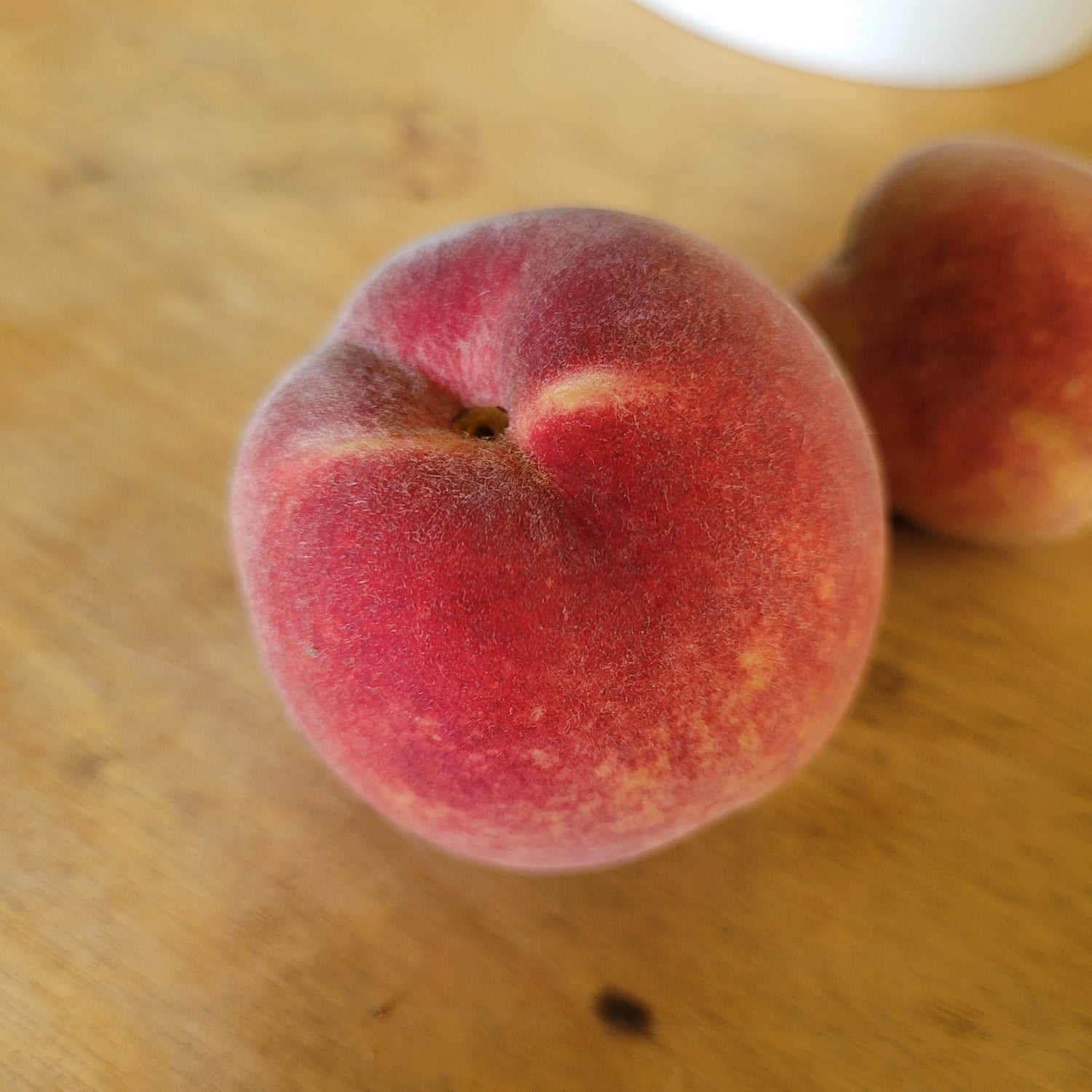
History: Reliance peaches were developed in a breeding program at the Agricultural
Extension Station in New Hampshire, where it was grown from seed in 1956. In 1961, the Reliance seedling got its first trial by fire, or ice in this case, as a severe cold spell dropped temperatures to -32°C. That summer only Reliance produced fruit and it was clear that this was a cold hardy winner. This tenacious peach was released in 1964.
Why We Grow It: Reliance is a very hardy variety that can still fruit after a winter low of -32°C, perfect for Canadian growers. The fruit is medium-sized, the skin is a dull red colour over yellow, and the flesh is bright yellow with freestone pit. It also tastes great and the fruit can be eaten fresh or used in baking and preserves.
Species: Prunus persica
History: These seedlings are grown from Reliance peach seeds collected from mother trees growing in Ontario. Reliance peaches were developed in a breeding program at the Agricultural Extension Station in New Hampshire and released in 1964.
Why We Grow It: Seedling fruit trees are a great way to add some diversity and mystery to your garden or orchard! We expect that seedling peaches will be even hardier trees than their parents! The parent variety, Reliance, is a cold hardy variety perfect for Canadian growers. The fruit tastes great and can be eaten fresh or used in baking and preserves.
Please Note: Since peaches tend to stay true to type more than apples, these seedlings will likely bear a strong resemblance to their parent variety. However, any specific information listed on this page should be taken with a grain of salt as there may be some variation from the parent tree.
History: Reliance peaches were developed in a breeding program at the Agricultural
Extension Station in New Hampshire, where it was grown from seed in 1956. In 1961, the Reliance seedling got its first trial by fire, or ice in this case, as a severe cold spell dropped temperatures to -32°C. That summer only Reliance produced fruit and it was clear that this was a cold hardy winner. This tenacious peach was released in 1964.
Why We Grow It: Reliance is a very hardy variety that can still fruit after a winter low of -32°C, perfect for Canadian growers. The fruit is medium-sized, the skin is a dull red colour over yellow, and the flesh is bright yellow with freestone pit. It also tastes great and the fruit can be eaten fresh or used in baking and preserves.
Bare Root Peach Trees
We are very pleased to be able to offer peach trees to our customers. They are both challenging and rewarding plants to grow. However, due to the unique challenges of growing peach trees, and the increased care required for their success, we regrettably cannot offer our standard 90 day guarantee on peaches. Please inspect your peach trees to your satisfaction when you pick them up at the nursery, or immediately upon arrival if they are shipped. For shipped trees, make your claim within 7 days of receipt of the trees. After 7 days of receipt, you will have been deemed to have accepted the trees in as-is condition.

History: Rescue was developed at Agriculture and Agri-food Canada's Scott Research Station in Scott, Saskatchewan and was released in 1933. It is an open-pollinated seedling of Blushed Calville.
Why We Grow It: Although the fruit is on the smaller side and doesn't keep well, Rescue has a good sweet-tart flavour that is good for fresh eating and is also good for cooking and preserves. This cold hardy applecrab is an excellent pollination partner for other apple trees.
History: Rhode Island Greening emerged around 1650 where it was grown from seed by a Mr. Green near Green's End, Rhode Island. Mr. Green owned a tavern and often gave scions from the original tree to his customers, although the tree eventually died from the demand for scionwood. The name was originally the descriptive 'Green's Inn apple from Rhode Island' and later shortened to 'Rhode Island Greening.'* This apple was commonly grown in New York and is still quite common today.
*Fun fact: The Ontario ghost town Unopark got its name in a similar way. It was originally founded by Richard Parker, Mouse's ancestor, and the name is a shortened version of 'You know the Parkers?'
Why We Grow It: This apple's long-lasting popularity is due to its reputation as perhaps the definitive American pie-making apple. The large, dark-green apple is too tart to be eaten fresh but is great in pies and holds its shape well when cooked. It also produces nicely in our test orchard, producing large, blemish-free fruit despite it's generally poor disease resistance.

History: Rhode Island Greening emerged around 1650 where it was grown from seed by a Mr. Green near Green's End, Rhode Island. Mr. Green owned a tavern and often gave scions from the original tree to his customers, although the tree eventually died from the demand for scionwood. The name was originally the descriptive 'Green's Inn apple from Rhode Island' and later shortened to 'Rhode Island Greening.'* This apple was commonly grown in New York and is still quite common today.
*Fun fact: The Ontario ghost town Unopark got its name in a similar way. It was originally founded by Richard Parker, Mouse's ancestor, and the name is a shortened version of 'You know the Parkers?'
Why We Grow It: This apple's long-lasting popularity is due to its reputation as perhaps the definitive American pie-making apple. The large, dark-green apple is too tart to be eaten fresh but is great in pies and holds its shape well when cooked. It also produces nicely in our test orchard, producing large, blemish-free fruit despite it's generally poor disease resistance.
History: This heirloom sweet cherry originates from Arkona, Ontario where it was developed and grown by Ed Richter.
Why We Grow It: As an Ontario bred and raised sweet cherry, Richter cherries are well-suited to growing in our local conditions. We were fortunate to acquire this variety just before the removal of some very old Richter trees.
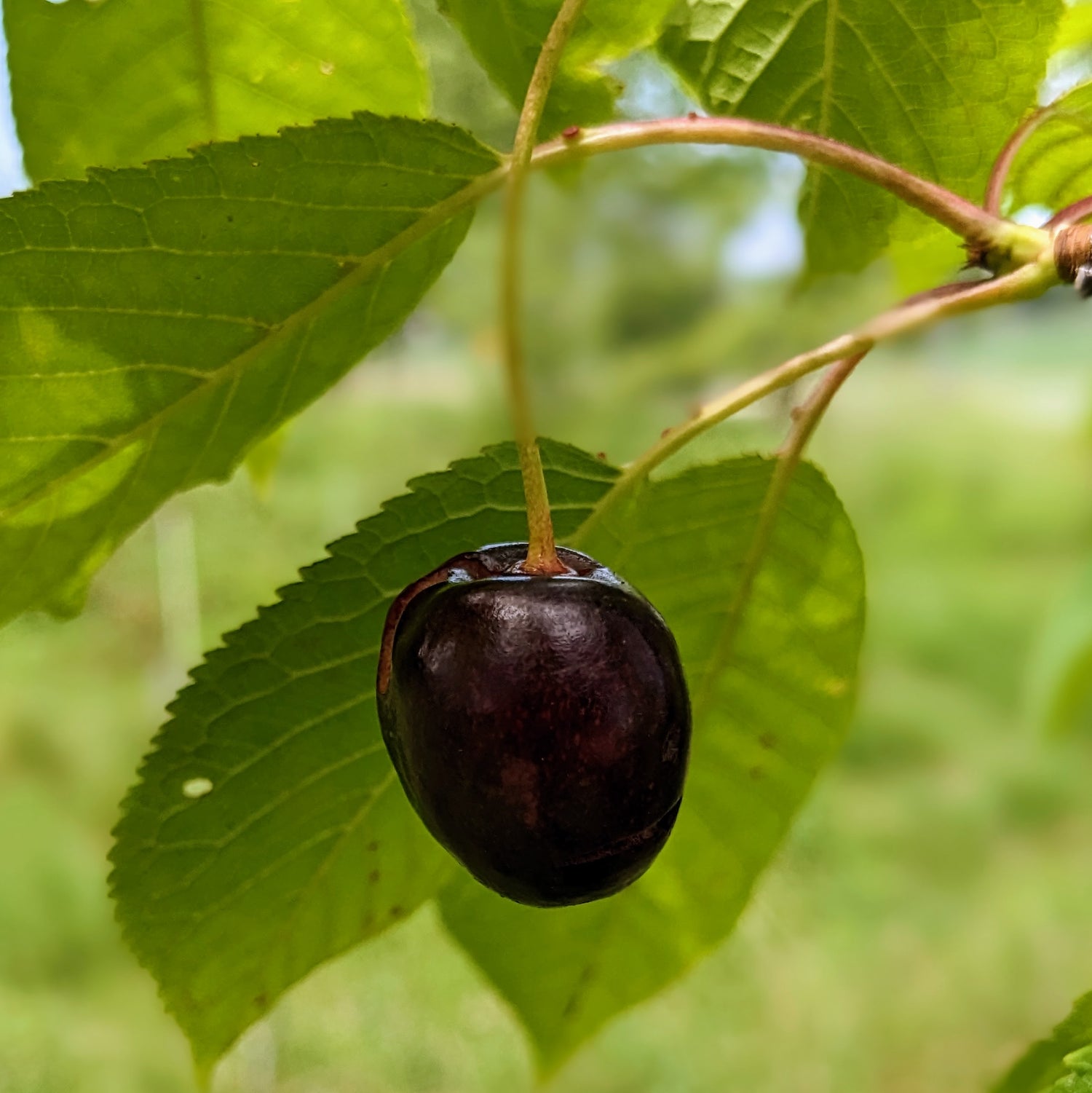
History: This heirloom sweet cherry originates from Arkona, Ontario where it was developed and grown by Ed Richter.
Why We Grow It: As an Ontario bred and raised sweet cherry, Richter cherries are well-suited to growing in our local conditions. We were fortunate to acquire this variety just before the removal of some very old Richter trees.

History: In 1817 Joel Gillet accidentally received Rome Beauty as a seedling in a shipment of nursery trees. His son planted the seedling along the Ohio River in Rome Township. When it began producing lovely red apples, Gillet's cousin started a nursery to propagate and promote it. Originally named Gillet's Seedling, the name was later changed to Rome Beauty in 1832 to honour the township. The original tree collapsed in the 1850s due to bank erosion but the variety still remains popular in the United States today.
Why We Grow It: The fruit is deep red, large, and slightly conical with cream coloured flesh. It has a mild flavour compared to something with more character like a russet, though still an excellent snacking apple. It makes a good cooking apple too since it keeps its shape when cooked. It also stores exceptionally well, lasting all winter long.

History: In 1817 Joel Gillet accidentally received Rome Beauty as a seedling in a shipment of nursery trees. His son planted the seedling along the Ohio River in Rome Township. When it began producing lovely red apples, Gillet's cousin started a nursery to propagate and promote it. Originally named Gillet's Seedling, the name was later changed to Rome Beauty in 1832 to honour the township. The original tree collapsed in the 1850s due to bank erosion but the variety still remains popular in the United States today.
Why We Grow It: The fruit is deep red, large, and slightly conical with cream coloured flesh. It has a mild flavour compared to something with more character like a russet, though still an excellent snacking apple. It makes a good cooking apple too since it keeps its shape when cooked. It also stores exceptionally well, lasting all winter long. Tip-bearing.
History: Romeo dwarf sour cherries are one of several dwarf sour cherries developed and released by the University of Saskatchewan with the goal of creating sour cherries that were cold hardy, shorter in stature, and produced good quality fruit. This initiative began in the 1940s and Romeo was released as part of the Romance series in 2004.
Why We Grow It: Romeo boasts very dark red fruit that has a nice sweet-tart flavour and plenty of juiciness. It has a high flesh to pit ratio, making each cherry just that much more enticing. Although the bush only reaches 7-8ft at maturity, it still yields around 25lb of fruit per plant.
Check our our blog post with some tasty sour cherry recipes!


Root Rescue is a certified organic mycorrhizal inoculant designed to set your plants up with a symbiotic relationship that will provide benefits such as establishing new roots more easily, improving nutrient uptake, and increasing disease resistance. This company has been working with the University of Guelph since 2009 to create this cocktail of 18 species of fungi. This inoculant is suitable for any transplanting a variety of plants including hardwoods and softwoods, bushes, flowers, veggies, etc.
Please Note: If you are using Root Rescue along with adding phosphorous via fertilizers such as bone meal or soft rock phosphate, reduce the application rate of the phosphorous source by 1/4-1/2. Too much phosphorous will negatively impact the mycorrhizal fungi, potentially slowing or even preventing your plants from forming a relationship with these incredible fungi.


Species: Crataegus chrysocarpa syn. C. rotundifolia
History: Round-Leaved Hawthorn (aka Fireberry Hawthorn) is native to much of Canada and the US. The berries are a source of food for various birds and rodents. Traditionally, the leaves, haws (berries), and flowers have been used as a heart medicine.
Why We Grow It: Round-Leaved Hawthorns are a great wildlife plant and make a lovely ornamental shrub as well. Although not great for eating fresh, the bright red haws can be used to make jam or jelly and can be made into tea along with the leaves and/or flowers. This adaptable, hardy shrub can tolerate a wide range of conditions.

History: Rouville apples were created by R.L. Granger and G.L. Rouselle in 1962 at the Agriculture and Agri-food Canada research centre located in St.-Jean-sur-Richelieu, Quebec. The variety was introduced in 1983.
Why We Grow It: This lovely Quebec cider apple has a wonderful bitter-sweetness that is great for fresh eating and juicing and sauce. It is resistant to scab and has grown very well in our test orchard.
History: Rouville apples were created by R.L. Granger and G.L. Rouselle in 1962 at the Agriculture and Agri-food Canada research centre located in St.-Jean-sur-Richelieu, Quebec. The variety was introduced in 1983.
Why We Grow It: This lovely Quebec cider apple has a wonderful bitter-sweetness that is great for fresh eating and juicing and sauce. It is resistant to scab and has grown very well in our test orchard.
History: Rouville apples were created by R.L. Granger and G.L. Rouselle in 1962 at the Agriculture and Agri-food Canada research centre located in St.-Jean-sur-Richelieu, Quebec. The variety was introduced in 1983.
Why We Grow It: This lovely Quebec cider apple has a wonderful bitter-sweetness that is great for fresh eating and juicing and sauce. It is resistant to scab and has grown very well in our test orchard.
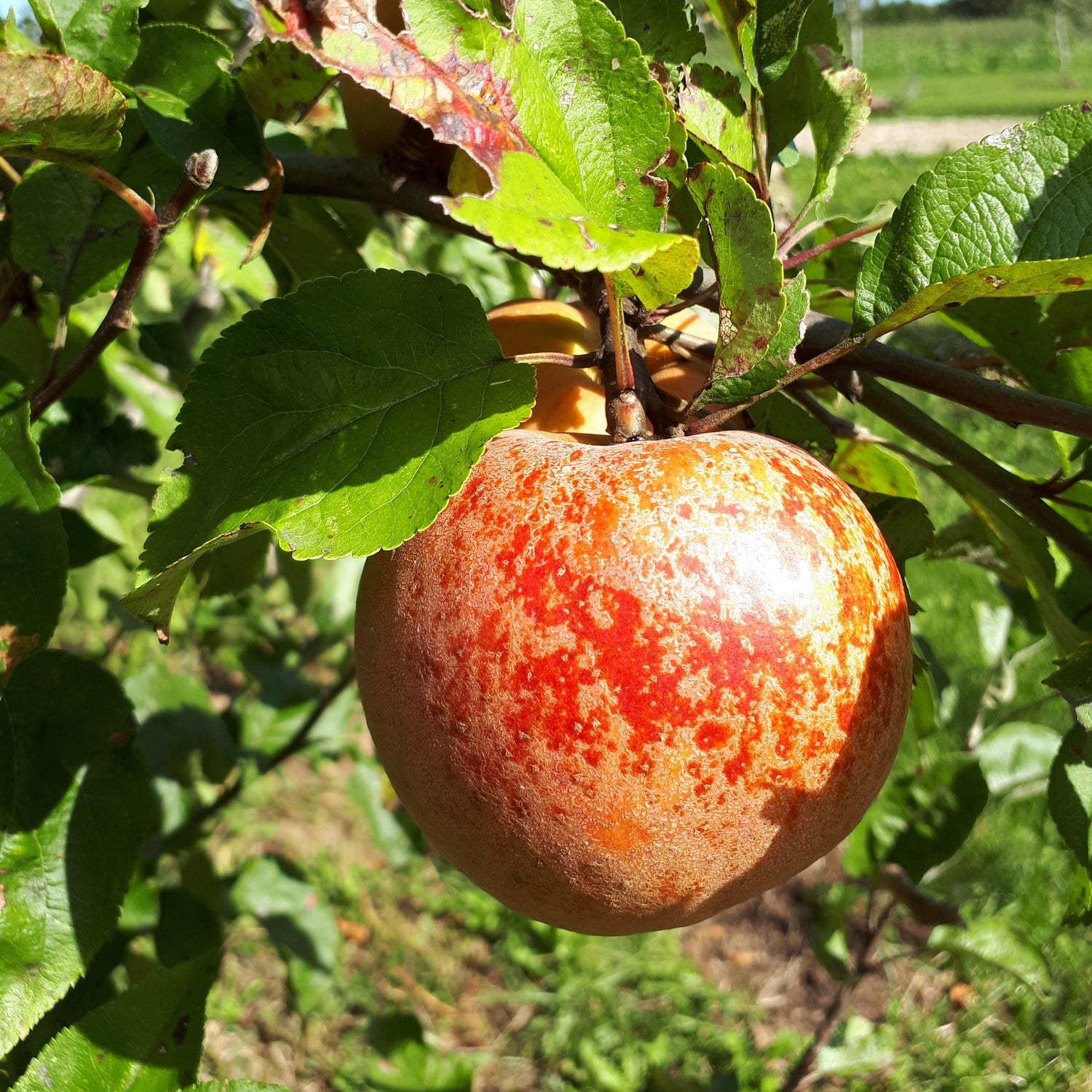
History: Roxbury Russet is the oldest American apple still under cultivation. It was discovered around 1650 in Roxbury, near Boston. These apples were well-known for their long keeping ability and qualities for cider making. They were grown by Thomas Jefferson at Monticello and are even referenced in one of Nathanial Hawthorne's novels. Due to the russet skin, these apples have never achieved true commercial success but they can still be commonly found in American farmer's markets.
Why We Grow It: Aside from its historic roots, Roxbury Russet is an excellent all-around apple that can be eaten fresh, used in cooking, and made into a great cider. It has a nice flavour that is sweet and sharp. This variety is also a good choice for organic orchards.

History: Royal Gala is a natural sport (mutation) of the Gala apple that was patented by Stark Bro's Nurseries in 1977. It boasts a deeper red colouring than the original Gala which makes it more visually appealing. In New Zealand, where the Gala apple originated, it has been almost entirely replaced by the Royal Gala in commercial growing operations.
Why We Grow It: Like the Gala apple, Royal Gala is popular for a reason. It is juicy and crisp with a sweet flavour and the fruit stores quite well.
History: Royal Gala is a natural sport (mutation) of the Gala apple that was patented by Stark Bro's Nurseries in 1977. It boasts a deeper red colouring than the original Gala which makes it more visually appealing. In New Zealand, where the Gala apple originated, it has been almost entirely replaced by the Royal Gala in commercial growing operations.
Why We Grow It: Like the Gala apple, Royal Gala is popular for a reason. It is juicy and crisp with a sweet flavour and the fruit stores quite well.