Scionwood

Scionwood
For those looking to graft heritage and unique trees, we are happy to provide scionwood directly from our orchards! Every year we get tons of requests for rootstock and scionwood. While our main business is in the finished product (grafted fruit trees), we also like to support those wishing to learn the grafting process for themselves. We can attest that it is a very enjoyable (and rather addictive) pastime!
ORDERING SCIONWOOD: Scionwood orders generally open in December and must be placed by the end of February. We require a minimum 25% deposit upfront.
If you are interested in scionwood but the sale season has ended, we are happy to add you to our request list for the following spring! Just send us a list of the varieties and quantities you are interested in and we will add you to our list.
SHIPPING/PICKING UP SCIONWOOD: We generally recommend that customers receive their scionwood orders by mid-April at the latest to ensure it arrives dormant, but can hold it longer if customers accept the risk that the scionwood may start breaking dormancy.
Due to the nature of nature, sometimes scions begin budding out early and we want to ensure you receive dormant scionwood that you will have time to graft with. If you need to hold your scionwood dormant until May, you will need to decide how you will do that. It is relatively simple, and you can learn more about storing scionwood at home here. If you are picking up your scion order, we recommend doing so ASAP after you receive your pickup notification via email.
For those new to the grafting process, we also offer the following resources:
- Our annual in-person Apple Grafting Workshop!
-
Fruit Tree Grafting for Everyone, a handy grafting guide co-authored by Steph who owns Silver Creek Nursery!


Sort by:
184 products
184 products
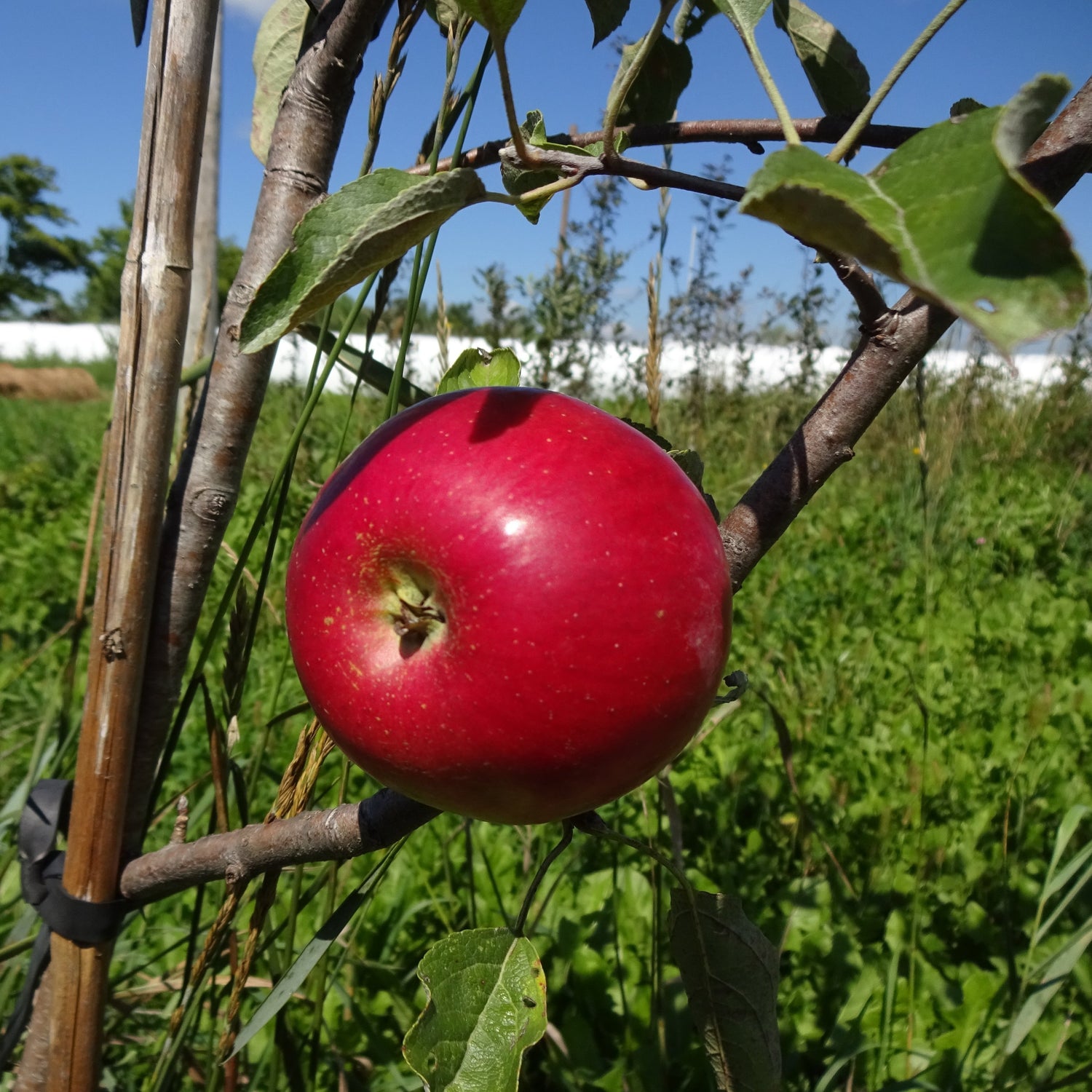
History: Akane was developed in Japan in 1937 at the Morioka Experimental Station. It is one of several kinds of produce created to better feed citizens and troops during WW2. The name 'akane' literally translates from Japanese as 'deep red.'
Why We Grow It: This crisp, sweet apple is great for fresh eating and has bright red skin. It tends to begin bearing at a young age and is relatively diseases resistant.
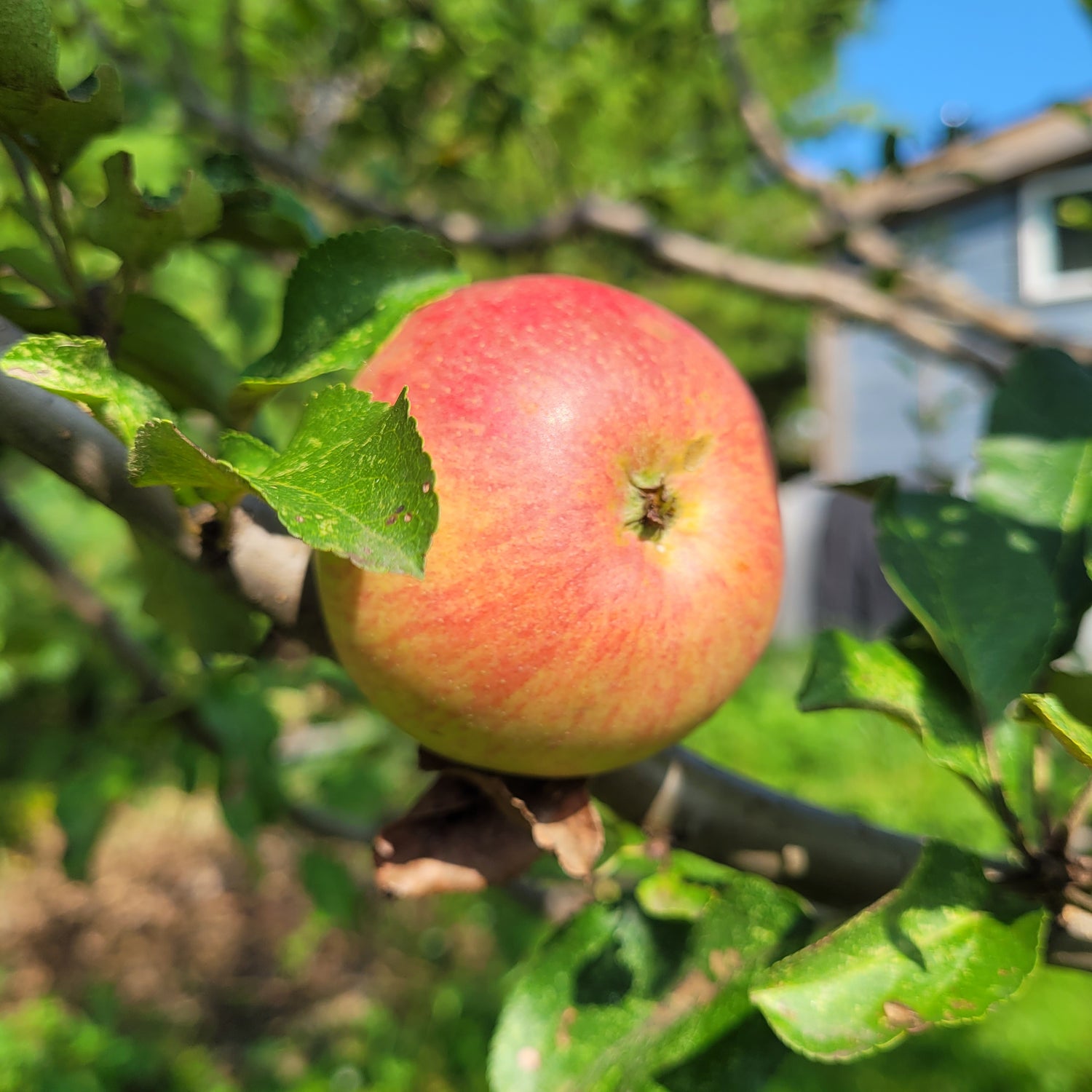
History: Alkmene, aka Early Windsor, was developed by M. Schmidt and H. Murawski at the Kaiser-Wilhelm-Institut für Züchtungsforschung in Müncheberg, Germany in the 1930s.* It was named after Hercules' mother Alcmene. After the chaos of WW2, it took about 30 years for Alkmene to be introduced to the rest of the world. It was released in 1962 and given the name Early Windsor for better marketability. It remains a popular apple in Europe today.
Why We Grow It: Alkmene produces a medium-sized crisp, juicy apple that has yellow skin overlaid with red stripes. The aromatic fruit is known for its rich flavour that is both honeyed and notably sharp. The tree is known to be quite a heavy cropper!
*While the Kaiser Wilhelm Institute was heavily involved with the Nazis during WW2, at the time of Alkmene's development the institute's president was Max Planck, a scientist who staunchly defended his Jewish colleagues. The institute was renamed in his honour following WW2. That is to say, we're not selling a Nazi apple.
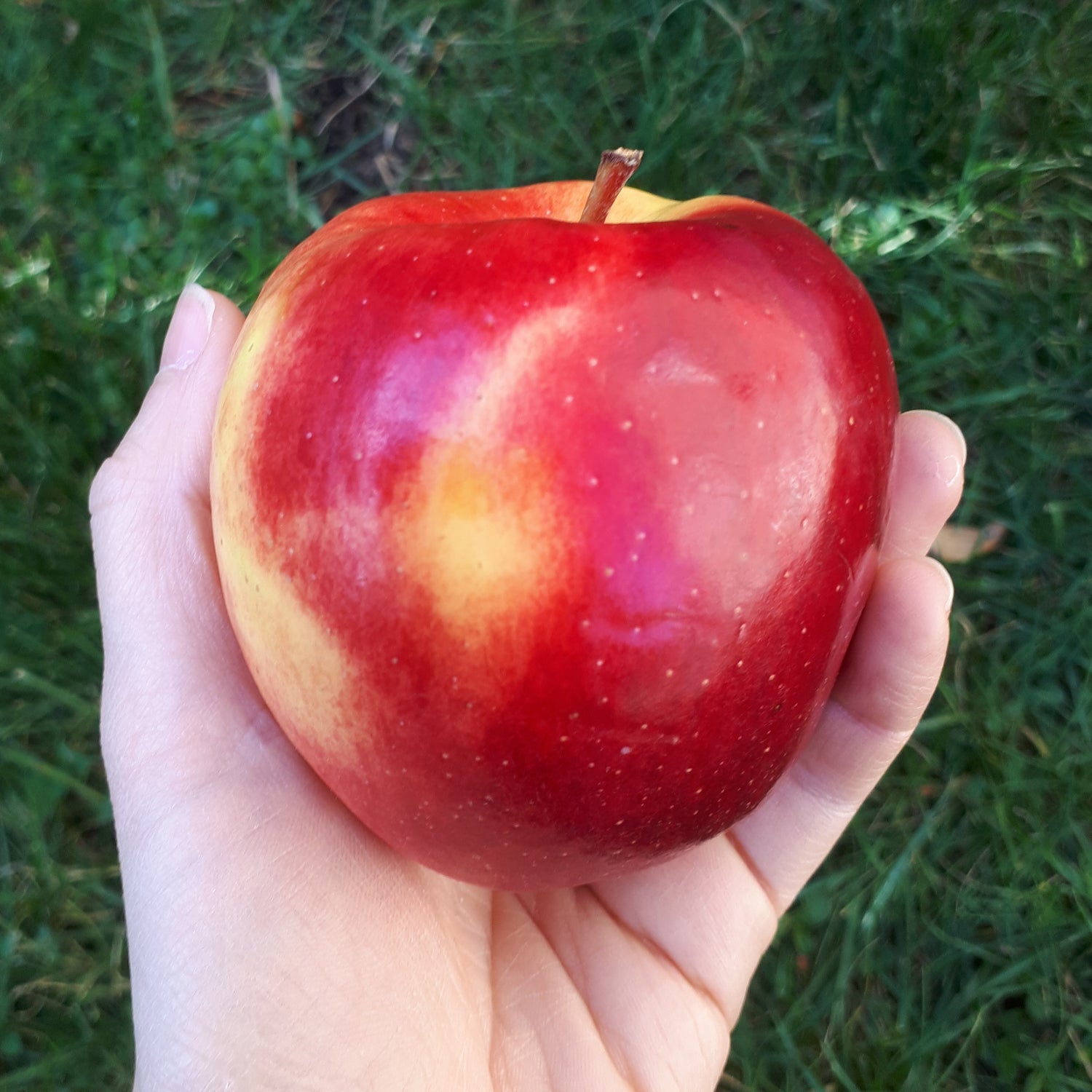
History: A chance seedling discovered in the 1980s in BC, this tender, aromatic, honeyed apple has been a hit ever since!
Why We Grow It: This delicious apple is very popular in the fresh eating market in Canada, thanks to its attractive bi-colour skin and slow browning qualities. It produces a medium-large fruit and is a good cropper.
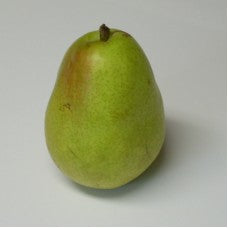
History: Anjou is an older variety of pear that likely originated in France or Belgium in the mid-1800s. They were originally called 'Nec Plus Meuris' but at some point adopted the name Anjou (or d'Anjou or Beurre d'Anjou) after the French region when introduced to England or the US. Anjou pears are still quite popular and are one of the most commonly grown pears in the United States.
Why We Grow It: Anjou is a popular pear due to its good eating quality and flavour. The skin is greenish yellow, and the flesh is firm and sports a hint of yellow. The fruit keeps well and the tree is vigorous and hardy.
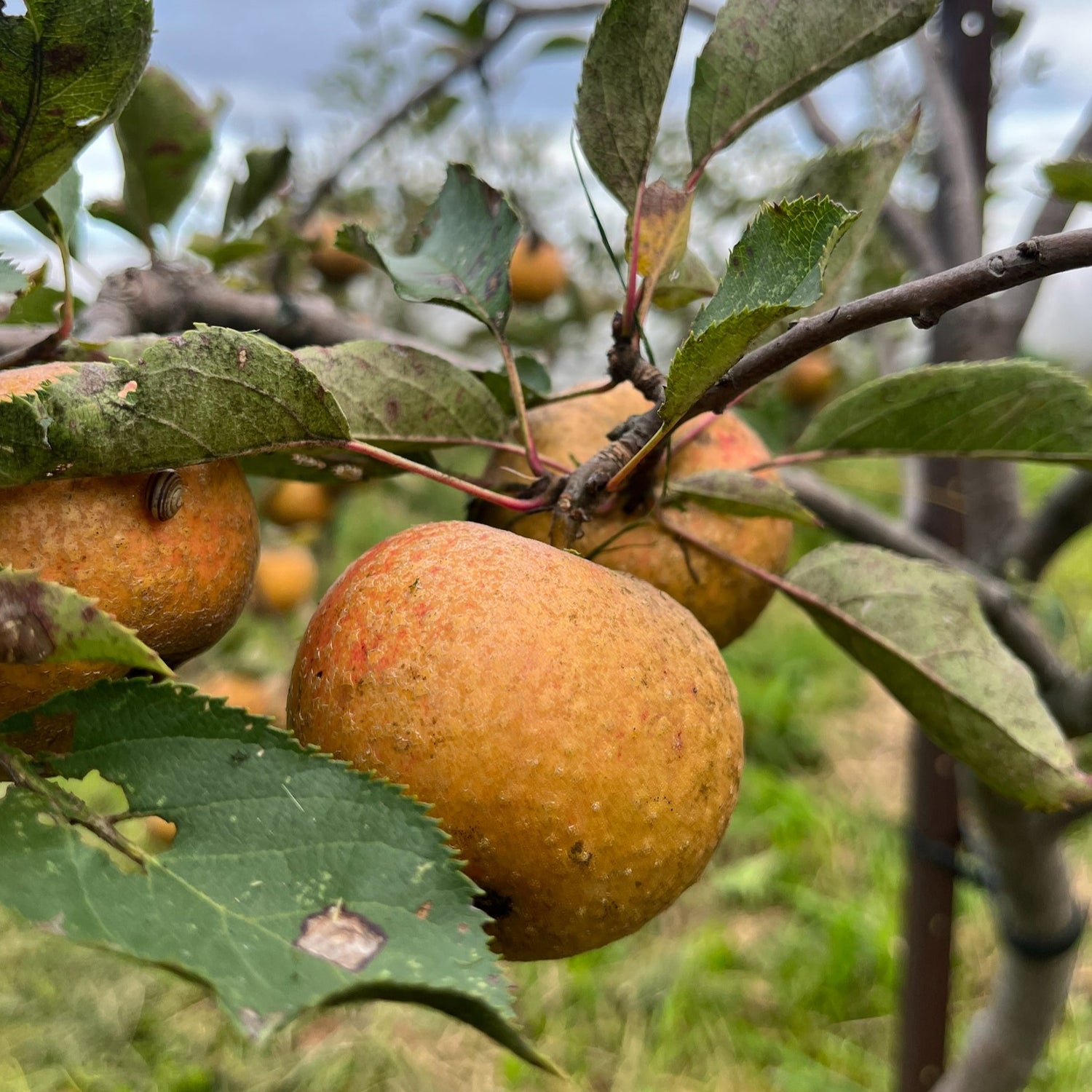
History: This unique apple, orangey-yellow-red undertones with russet over top, originated in the UK in the 1700s and has remained popular for over two centuries. There is some debate whether it was raised by a Dr. Ashmead or a lawyer named William Ashmead.
Why We Grow It: This Old World English apple has stuck with us thanks to it's unique flavour: nutty with notes of pear and spice. Fantastic fresh off the tree, and also in cider blends, Ashmead's Kernel mixes well with Cox's Orange Pippin.
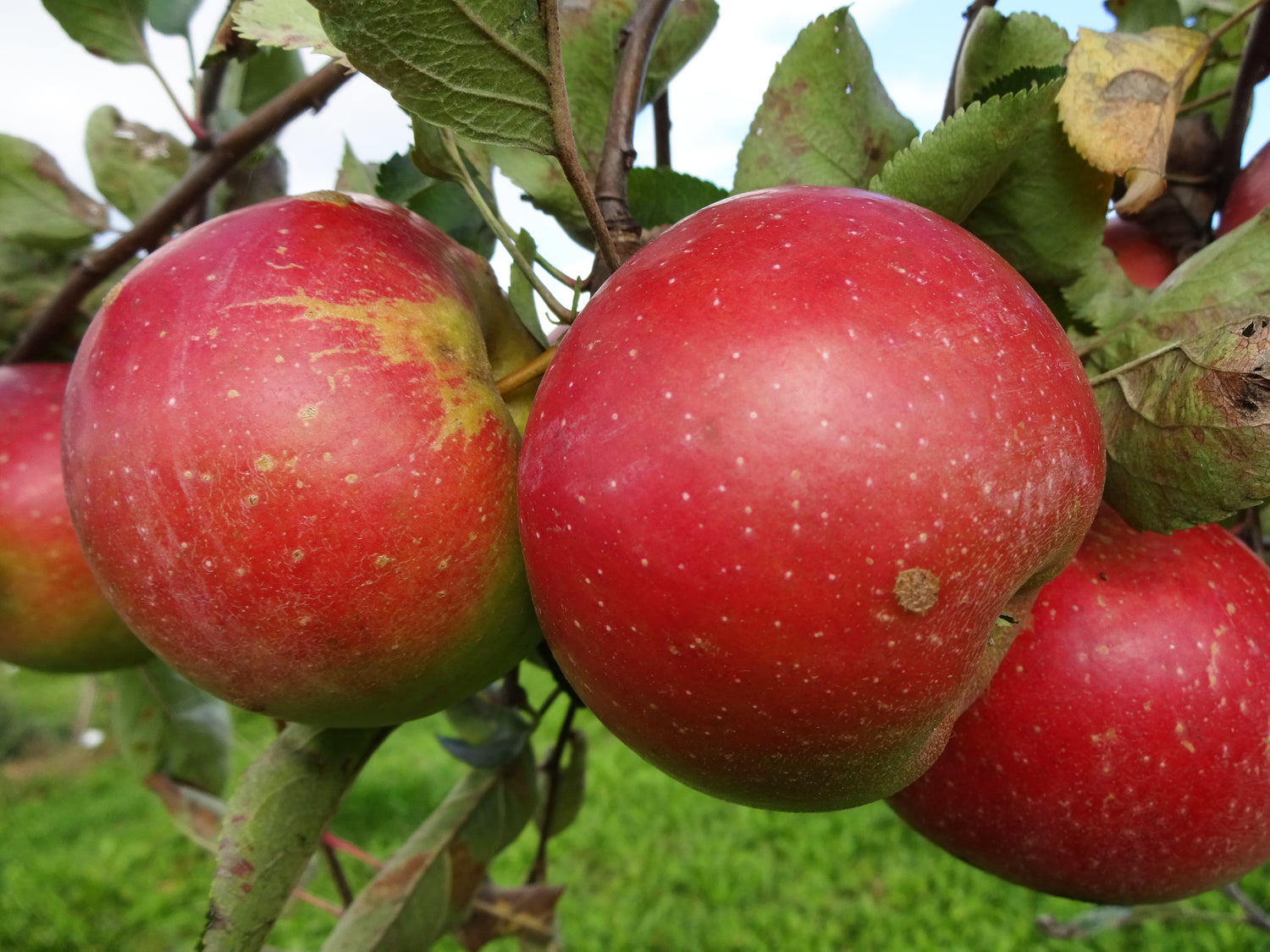
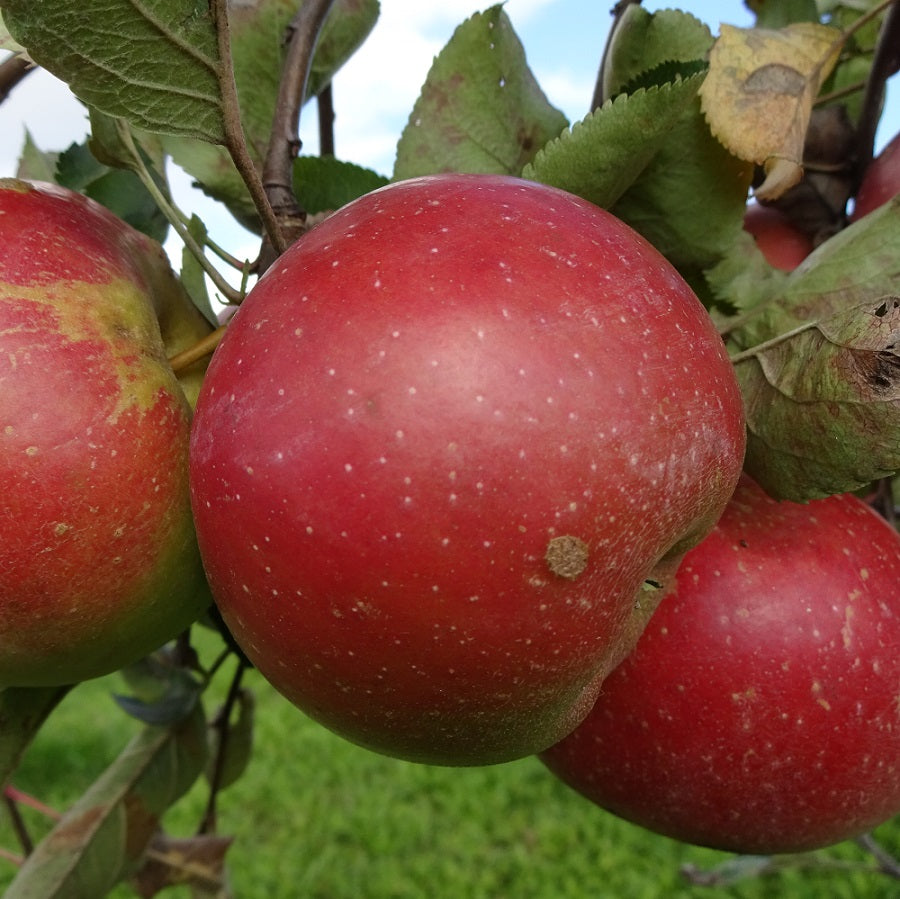
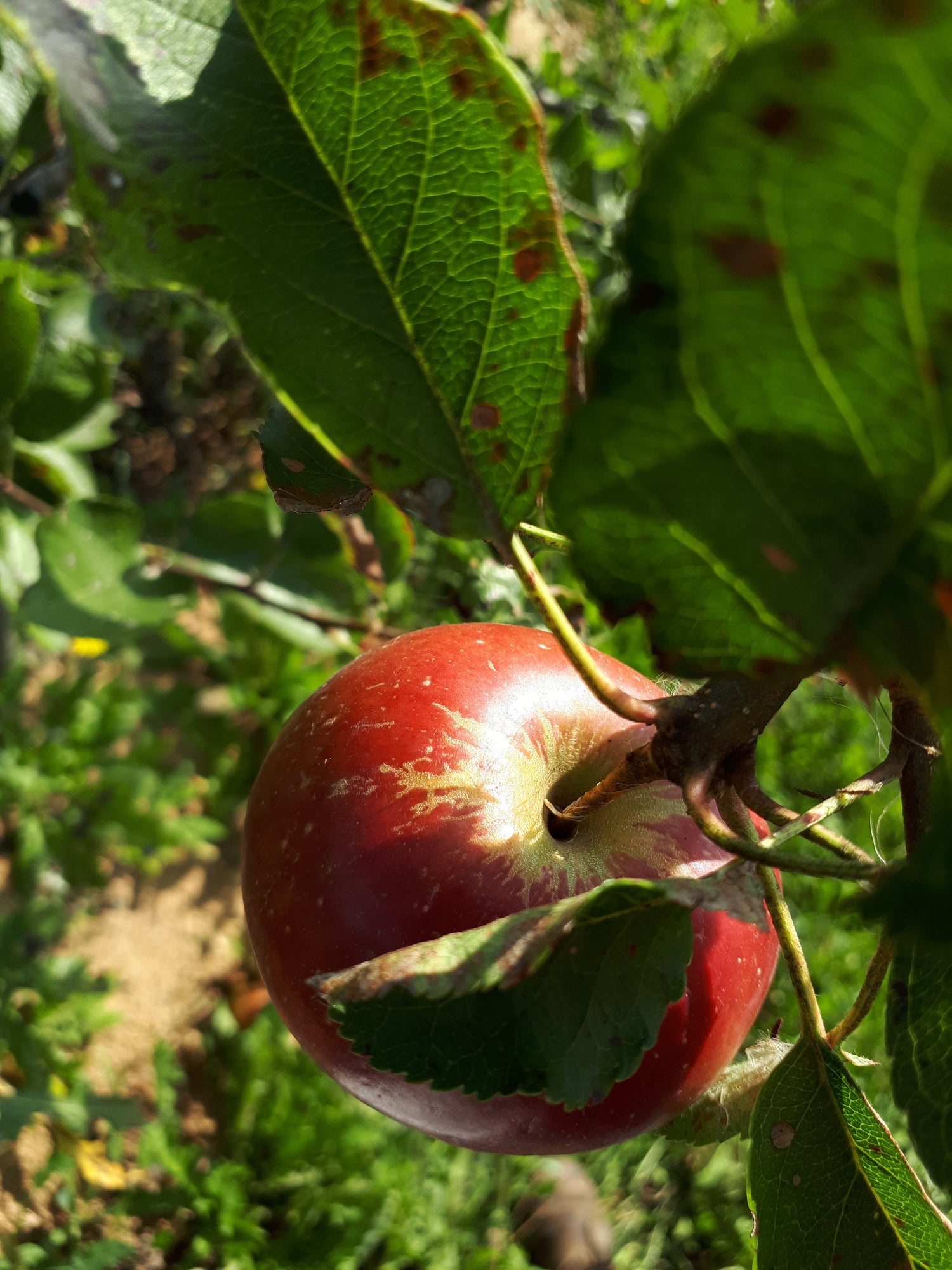
History: This classic American cooking apple was discovered by chance around 1740 in Massachusetts. It was eventually brought to the attention of a Col. Baldwin, after whom the variety was later named, who helped to spread it further. By 1850 this was one of the most commonly grown apples in the US, although its popularity began to decline by the 1900s, exacerbated by a terrible winter in 1934 that wiped out a significant number of trees. Despite this, Baldwin is making a bit of a comeback and a monument to this apple still stands in Wilmington, Massachusetts, around where it was discovered.
Why We Grow It: Baldwin apples produce large, greenish-yellow and maroon fruit with firm, sweet flesh that maintains its shape and crispness when cooked. The fruit produced in our test orchard has been attractive and blemish-free.
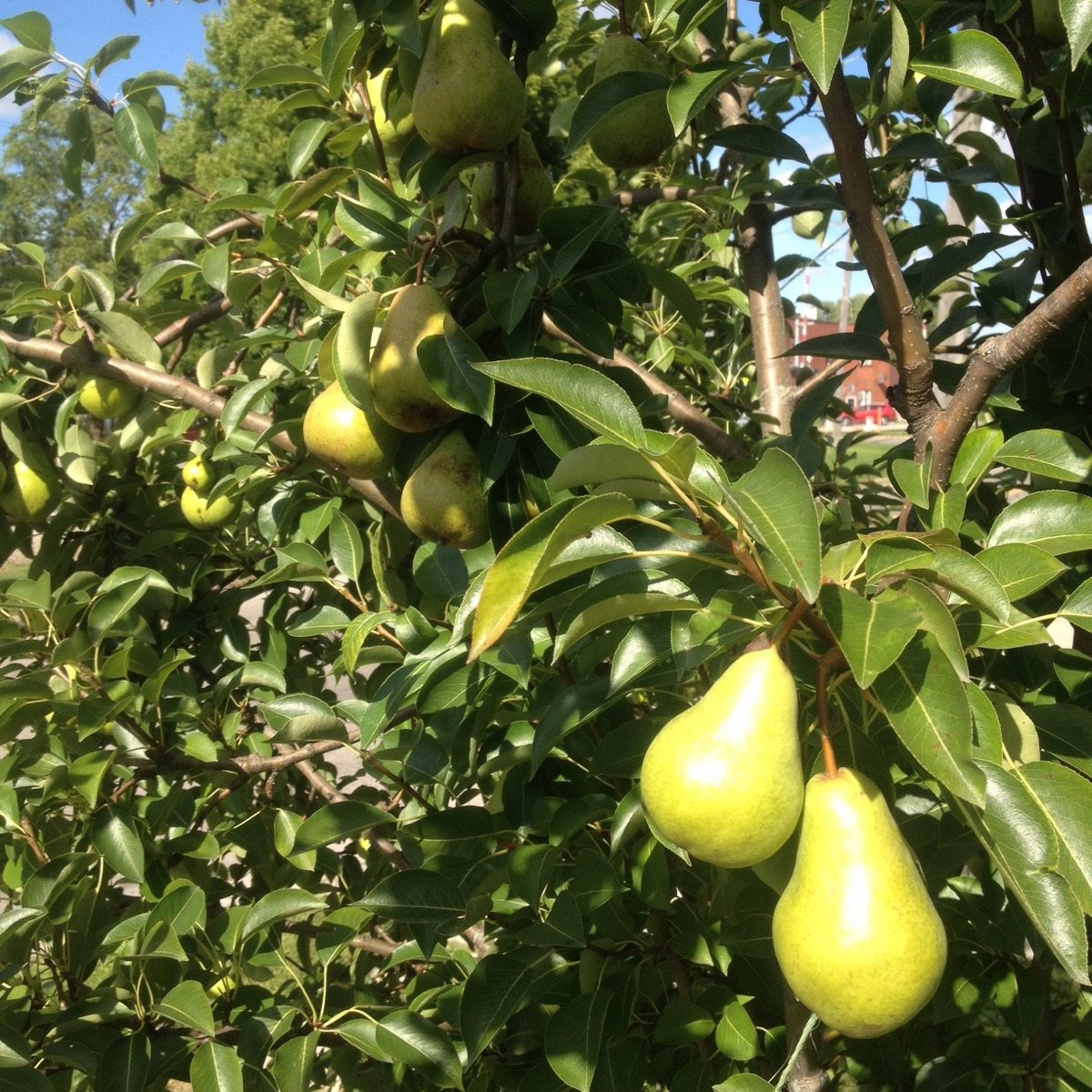
History: Bartlett pear, better known as William's Bon Chretien (translated from French as William's Good Christian) or William's pear in Europe, has a long history with unknown origins. What we do know is that in 1483 King Louis XI summoned holy man Francis of Paola to his deathbed and Francis offered the king a pear seed from his birthplace of Calabria in Italy. The name 'Good Christian' was given to the pear as a result. In 1799, this variety was brought to Roxbury, Massachusetts where it was planted and eventually renamed 'Bartlett' by Enoch Bartlett who was unaware of its origins. The mistake was not realized until 1828, by which time "Bartlett" pears were already popular in North America and the mistake could not be undone.
Why We Grow It: Bartlett is the most commonly grown pear in North America and with good reason. Not only is it productive and easy to grow, but it produces large yellow fruit with a delectable flavour.
Note: We graft our Dwarf Bartletts with an Old Home interstem to maintain compatibility between Province Quince rootstock and Bartlett.
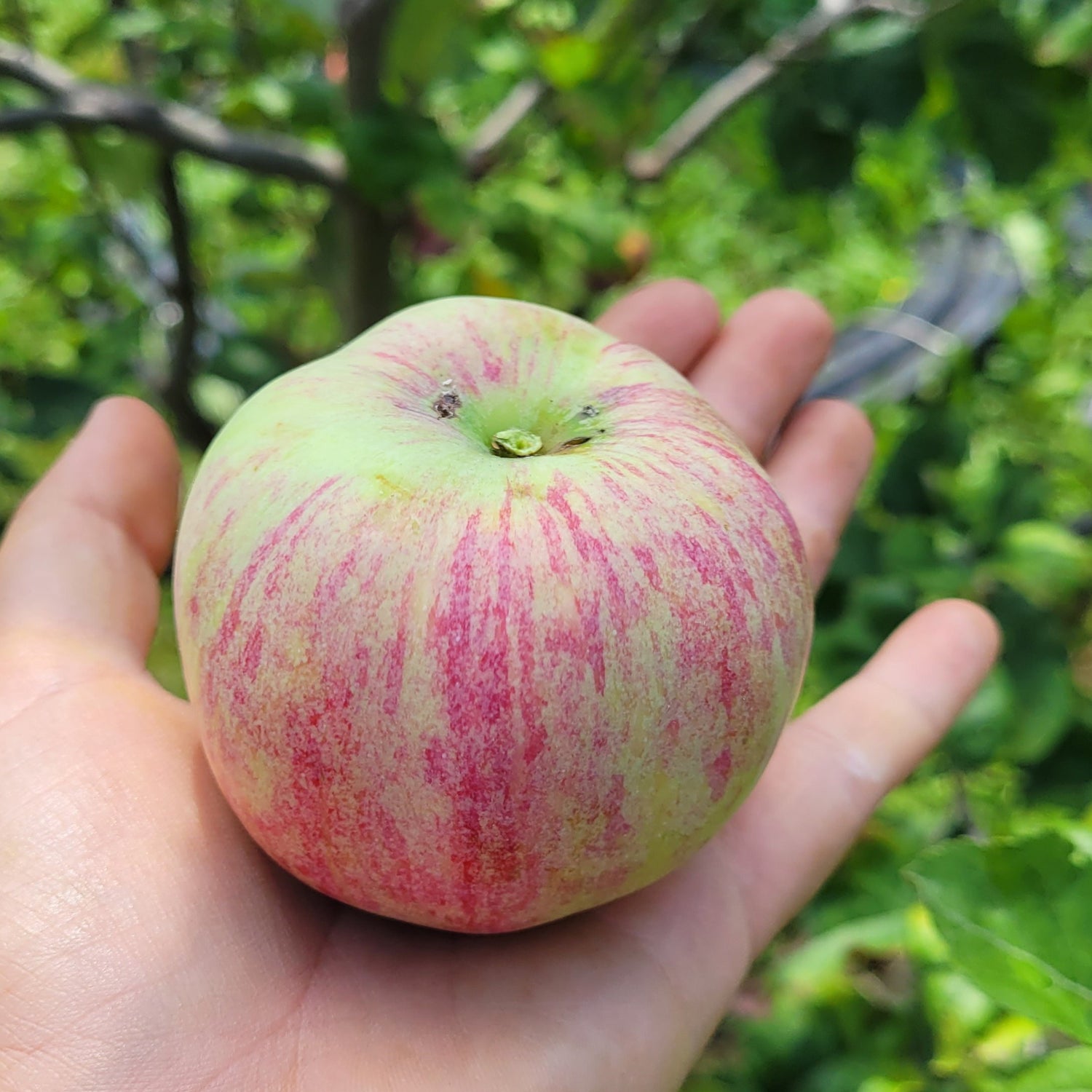
History: This cold-hardy apple was developed in the prairies and is for growing in colder, northern areas.
Why We Grow It: This unique apple produces a yellow fruit with red stripes. It is a rather uncommon variety and is great for sauce. It has begun producing reliably in our test orchard the last few years, and always has a bountiful crop.


History: Once one of the most popular commercial apples in the United States, Ben Davis apple trees were planted across the continent following its discovery around 1800. Due to its firm fruit and excellent keeping qualities, this apple was extremely easy to transport over longer distances which led to its popularity. Once storage and transportation improved, this apple was slowly replaced with better tasting varieties and it is now a relatively rare find. It's also a parent to Cortland.
Why We Grow It: The mellow, sub-acidic, mildly aromatic red fruit is not quite as flavourful as some apples but it stores exceptionally well, lasting into spring. Flavour improves in storage, like many heritage apples. The trees are reliable and heavy croppers, earning them the nickname of 'mortgage-lifters' when they were grown commercially.
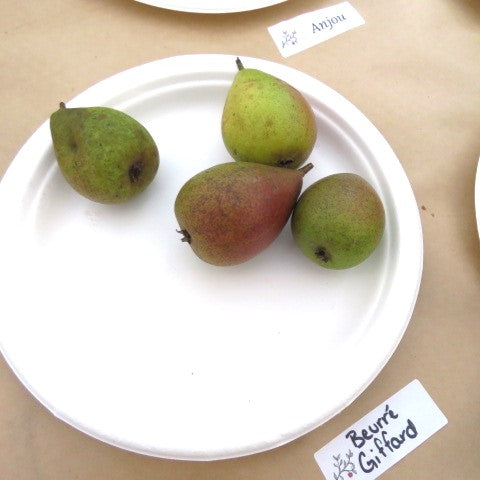
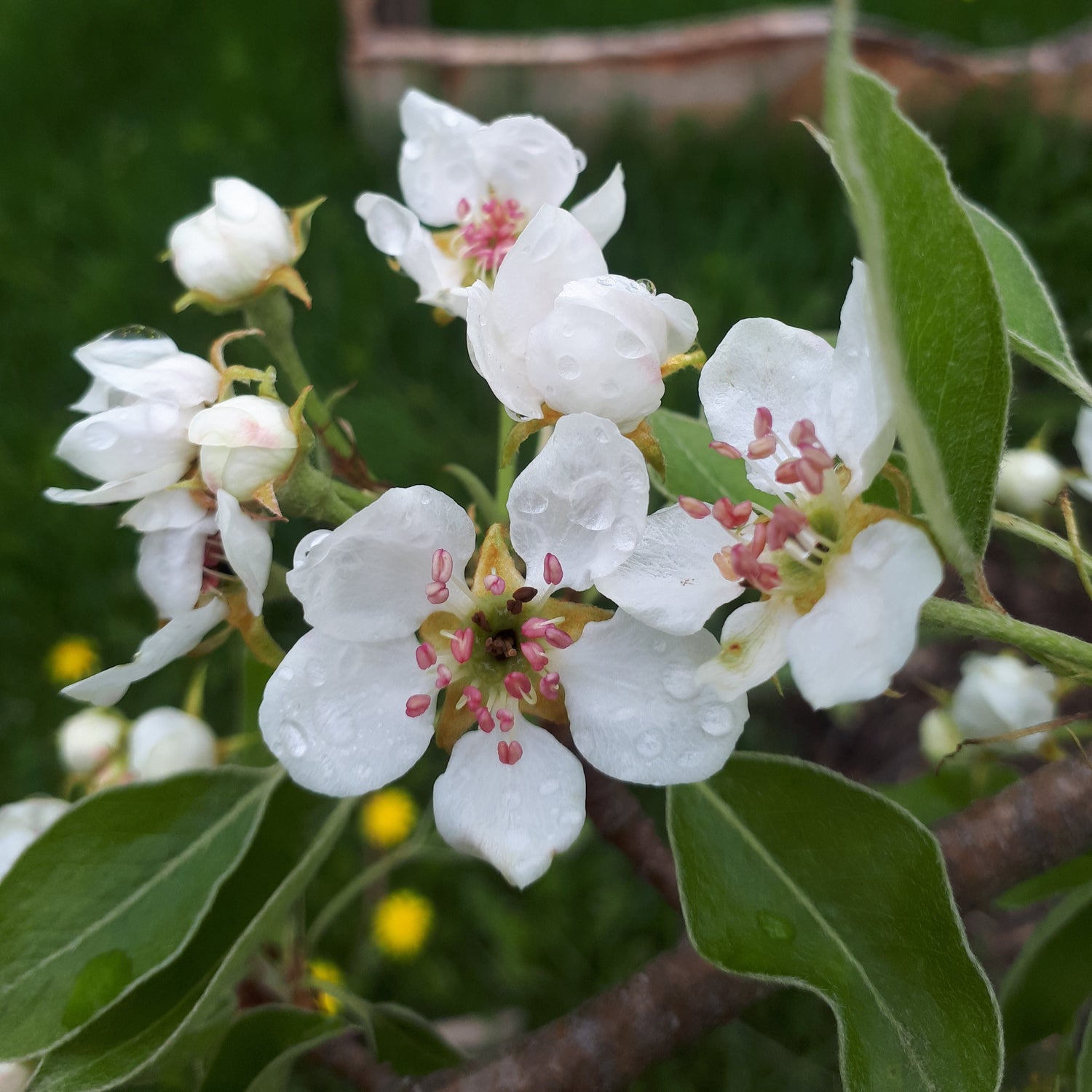
History: Beurré Giffard was discovered as a chance seedling by Nicolas Giffard in 1825 in France. "Beurré" translates from French as "butter-like," referring to the smooth, juicy flesh that was typical of pears developed at this time in France and Belgium. It was later introduced to the United States in 1850.
Why We Grow It: This French heirloom pear is one of the earliest ripening pears we offer. Its sweet, melting yet crisp flesh is similar to Bartlett with an excellent flavour.
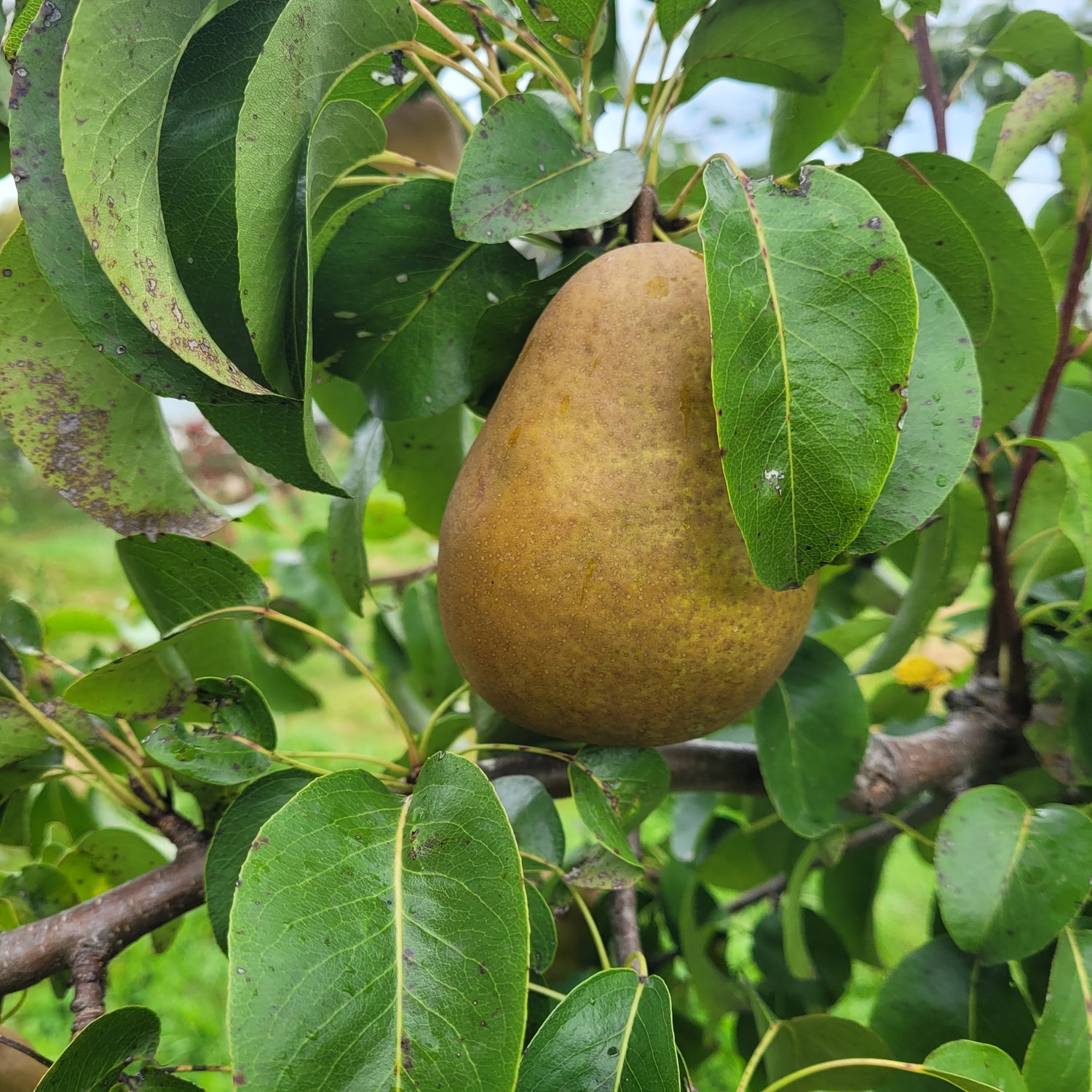
History: Beurré Hardy was cultivated in France around 1820 by a Monsieur Bonnet and was named after Julien Alexandre Hardy, the director of the Luxembourg Gardens located in Paris. "Beurré" translates from French as "butter-like," referring to the smooth, juicy flesh that was typical of pears developed at this time in France and Belgium. It is considered a classic French fresh-eating pear and remains popular to this day.
Why We Grow It: Beurré Hardy produces a sweet, aromatic pear with white/pinkish flesh that has a hint of rosewater. It grows quickly but can take a while to start fruiting, although once it does it produces reliably heavy crops when grown in warm areas. Its blooms are tolerant of late spring frosts although it isn't always a very reliable pollination partner.

History: The history of Blenheim Orange is a bit muddled depending on your source. We know it was discovered by George Kempster (either a baker, a tailor, or a basket weaver depending on who you ask!) in England in 1740 and it was originally named Kempster's Pippin. Some say he found it as a seedling growing along a wall of Blenheim Palace while others claim he grew it in his garden located near Blenheim, England. It was later renamed to Blenheim Orange in the early 1800s, likely when it was sold commercially through nurseries. This variety has many other names, including: Beauty of Dumbleton, Blooming Orange, and Northwitch Blenheim. The tree itself is also known for its sturdy wood and it was at one time popularly used to make railway cogs.
Why We Grow It: These large, somewhat flat apples feature orangey-red stripes over yellow skin with some russet. The fruit is good for fresh eating with a nutty taste and is quite nice when paired with cheese. It is also great for cooking and makes a stiff purée. The tree is highly vigorous but can be slow to come into production, although it has heavy crops once it does.

History: Bonne Louise de Jersey originated from Avranches in Normandy, France in the 1780s. It was originally known as Bonne Louise d'Avranches until it was taken to Jersey in the Channel Islands. As it grew in popularity in the UK, it was given the name Bonne Louise de Jersey instead.
Why We Grow It: Bonne Louise de Jersey is a rich, buttery pear that produces a juicy, red blushed fruit. In spring, this pear is also adorned with a profusion of notably attractive blossoms, adding a nice touch to any landscape. Although the tree is less vigorous than some other pears, this makes it suitable for potting and espalier.
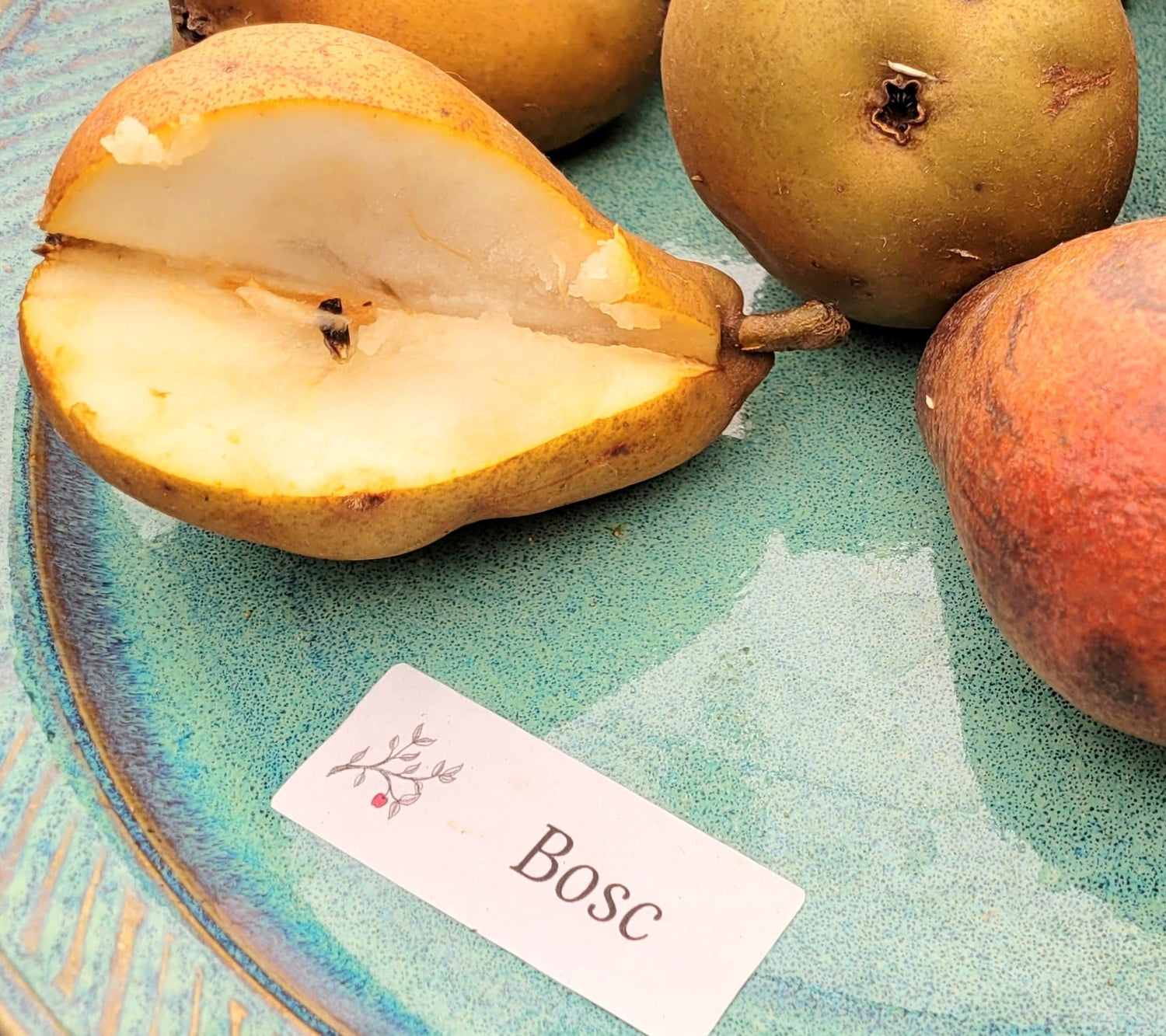
History: Bosc pears have an unclear history, either originating from Belgium or France. Some say that an M. Bosc in Belgium grew it from seed around 1807 while others believe it was found as an old tree in France in the 1830s and named after horticulturalist Louis Bosc. Bosc's alternate names 'Beurre Bosc' refer to its buttery texture and 'Calebasse Bosc' refers to its gourd-like shape. Regardless of its origins, Bosc has remained popular and is grown in numerous countries around the world.
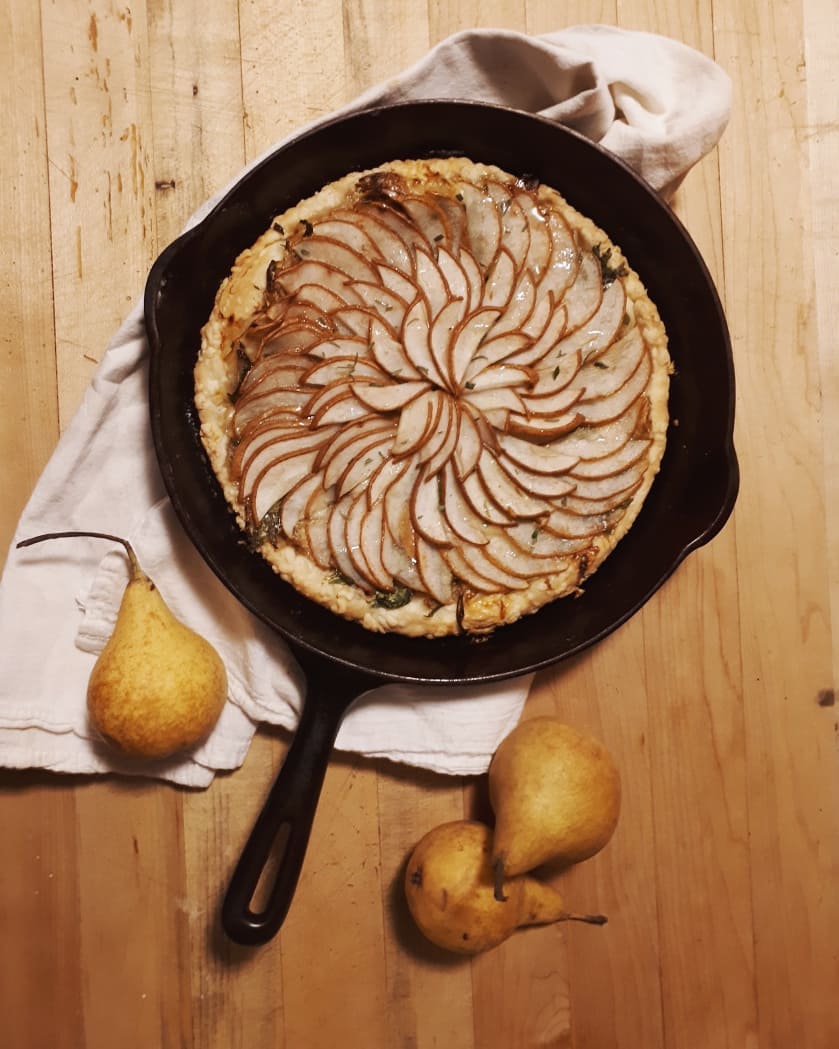
Why We Grow It: Bosc pears are long and slender with golden brown russetted skin. The flesh is of high quality, very sweet, and the pears store much better than most varieties. They can also be used to make a lovely tart, with a sprinkle of thyme for a savory delight!

History: Discovered in New Zealand by farmer O. Moran in 1952, Braeburn took the world by a storm, becoming one of the most popular commercial apples in the United States and parenting many modern cultivars such as Jazz and Sweetie.
Why We Grow It: Its winning sweet-tart flavour wrapped in an attractive orangey-red skin makes it an excellent fresh eating apple. It is firm and holds its shape well when cooked, and keeps about 4 months. This variety is fairly disease susceptible, meaning it is better for the experienced natural grower or conventional orchards. It is moderately vigorous and a heavy cropper.
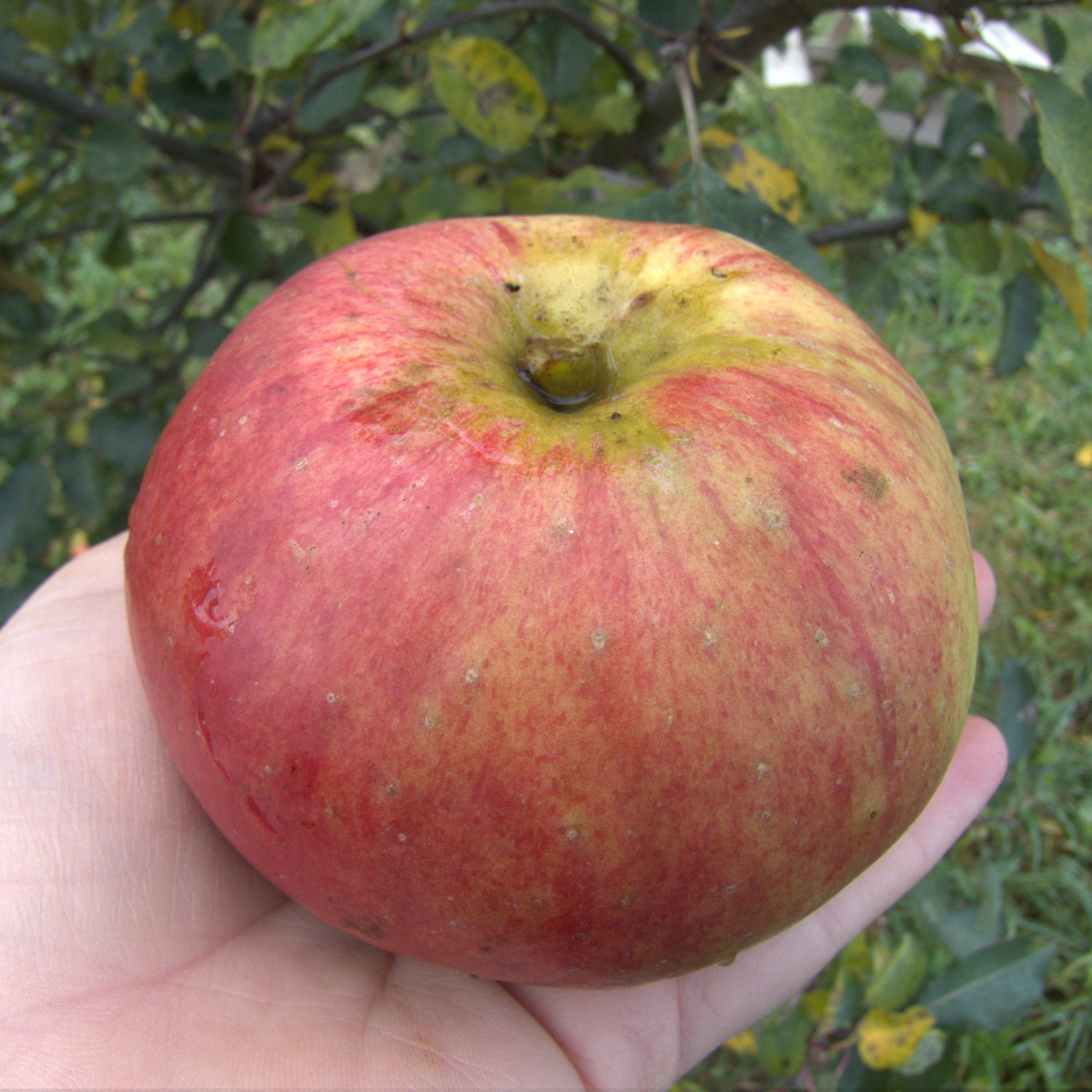
History: Bramley's Seedling was first planted in the UK in 1809 by Mary Ann Brailsford-Trump and was later named after the butcher who bought the property. Long considered the definitive British cooking apple, Bramley's Seedling is celebrated with its own festival, a plaque, and a commemorative window that was installed on its 200th anniversary. The original tree is still growing where it was planted over 210 years ago.
Why We Grow It: With its strong flavour and acidity, this apple is hard to beat when used for cooking, although the fruit doesn't hold its shape as well as other varieties. The fruit is large, greenish-yellow with orange flush and broad red stripes and store all winter. The trees are quite hardy and heavy croppers.

History: Brettacher Sämling (sämling meaning seedling in German) originated as a chance seedling on a farm in Brettach, Germany in the early 1900s. It is possibly a descendent of the French cooking apple, Lebel. It is known for its excellent storage qualities and is still grown commonly in parts of Germany.
Why We Grow It: Brettacher Sämling produces large, juicy apples with a sweet-tart fruity flavour that has a hint of spice. The apples, green with a red blush, are best enjoyed after being stored for two months. They are fairly versatile, also considered suitable for sauce and juice/cider. Compared to other apple trees, this variety is relatively low maintenance and only requires a hard prune every two to three years.

History: Brown's Apple was discovered in Devon, UK, in the early 1900s and is considered a traditional English cider apple. It remains quite popular in the area.
Why We Grow It: This traditional variety boasts cold-hardiness and a resistance to scab. It is great for making cider thanks to being simultaneously high in both acid and sugar, an uncommon feature in most apples. Brown's Apple presses to a fragrant, vintage quality juice.


History: Bulmer's Norman was imported from Normandy, France to England in the early 1900s by the cider making company H.P. Bulmer. This variety didn't even have a name when it arrived but quickly grew in popularity for use in making cider. This apple has since fallen out of the limelight and is primarily used for grafting other varieties onto its sturdy trunk.
Why We Grow It: Although less popular these days, this variety boasts vigorous growth, decent disease resistance, and a surprising tolerance for cold. This conical, green apple produces a bittersweet juice and is high in tannins.


History: This apple was developed in New York in 1974. It has never achieved major popularity but remains a curiosity due to the deep red colour of its skin which causes the flesh inside to become stained pink.
Why We Grow It: Along with its visual appeal, this apple boasts a sweet, sub-acidic flavour that makes it suitable for both fresh eating and making cider. Although these apples don't store well, the fruit hangs onto the tree for three weeks which helps to keep it available a little longer.
Picture of Burgundy apples on the tree courtesy of Shannon McInnis
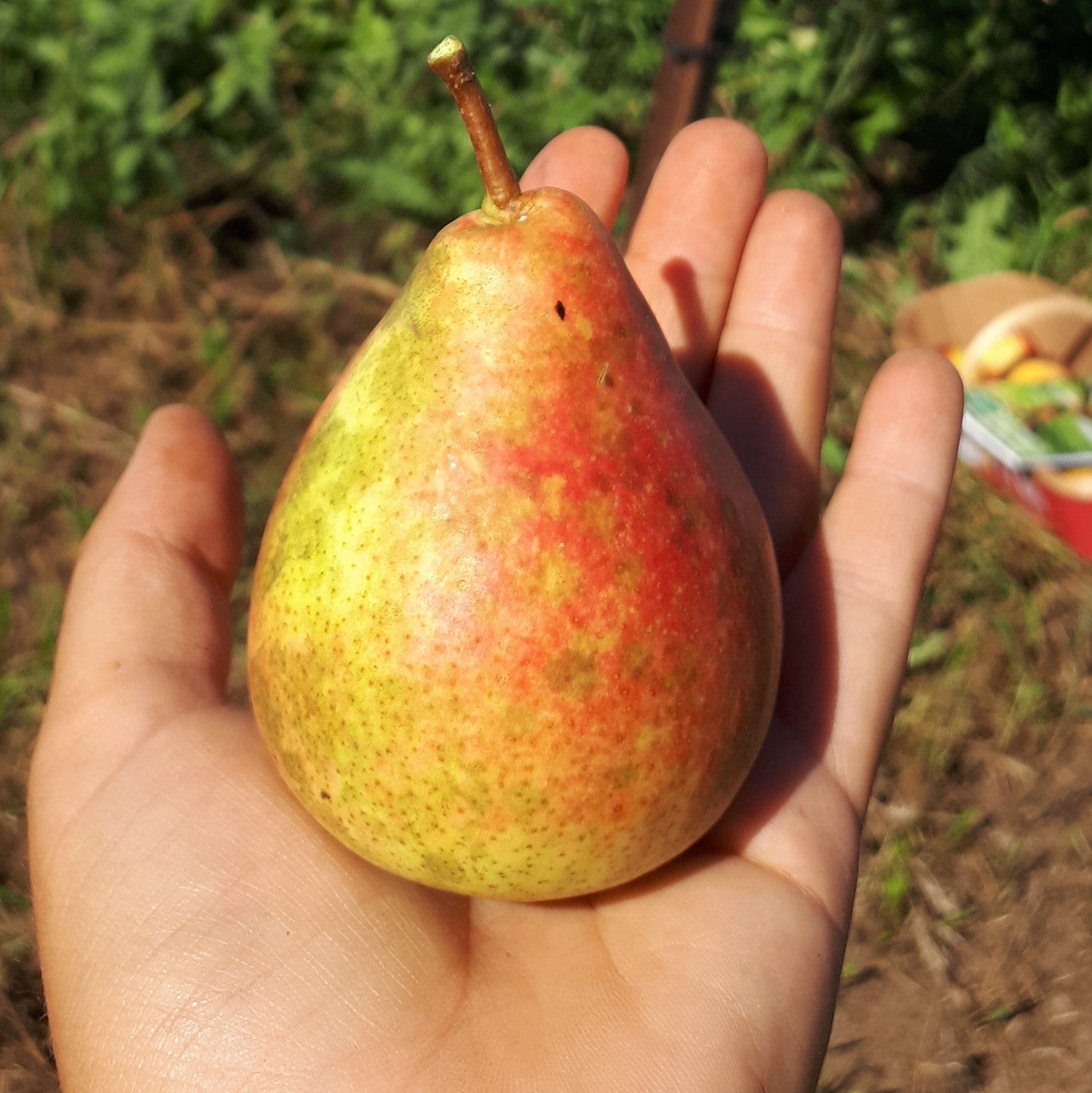
History: Butirra Precoce Morettini was bred as a cross between Coscia and Bartlett in 1956 by A. Morettini as part of an Italian breeding program. It is mainly grown in Italy, Spain, and Portugal.
Why We Grow It: This is an excellent early ripening pear that is sweet and juicy, with crunchy medium-fine grained flesh which mellows in storage to a delectable buttery texture. It has mild floral notes, with just the right amount of sweetness. The tree produces reliable and heavy crops of yellow fruit with a vibrant red flush that store decently well.
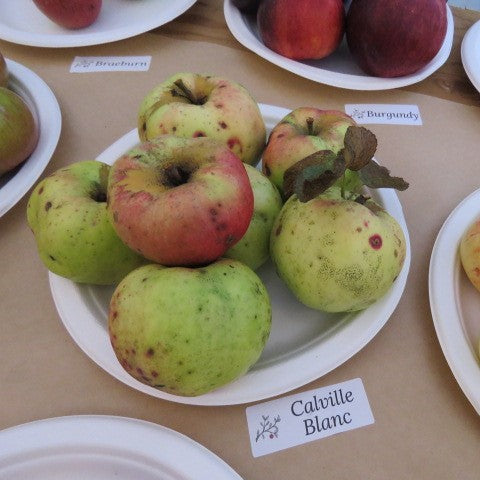
History: Calville Blanc d'Hiver was discovered in France and first documented in 1598. It spread to other countries and was even grown by Thomas Jefferson in Monticello.
Why We Grow It: Known for its rather misshapen and lumpy appearance and the odd red splotches on its green skin, this apples exterior belies a strong, sweet-sharp flavour that makes it great for fresh eating, cooking, and cider. Some claim it rivals Bramley's Seedling as one of the best cooking apples with the added benefit that, unlike Bramley's, it holds its shape when baked or cooked. It is also boasts a high Vitamin C content.


History: Canadian Harmony peaches were developed at the Harrow Research and Development Centre in Ontario and released in 1968.
Why We Grow It: In our quest to bring the most cold-hardy peaches to our Canadian growers (you!), we added yet another excellent peach variety to the line-up. With large, freestone fruit of good quality, Canadian Harmony is hard to turn down. It is a great all-around peach that is good for eating, baking, and preserving; just about anything you can do with a peach. It is less suitable for big growers because of soft flesh, but well-suited for the backyard, yielding juicy, flavourful fruit with good sweetness.
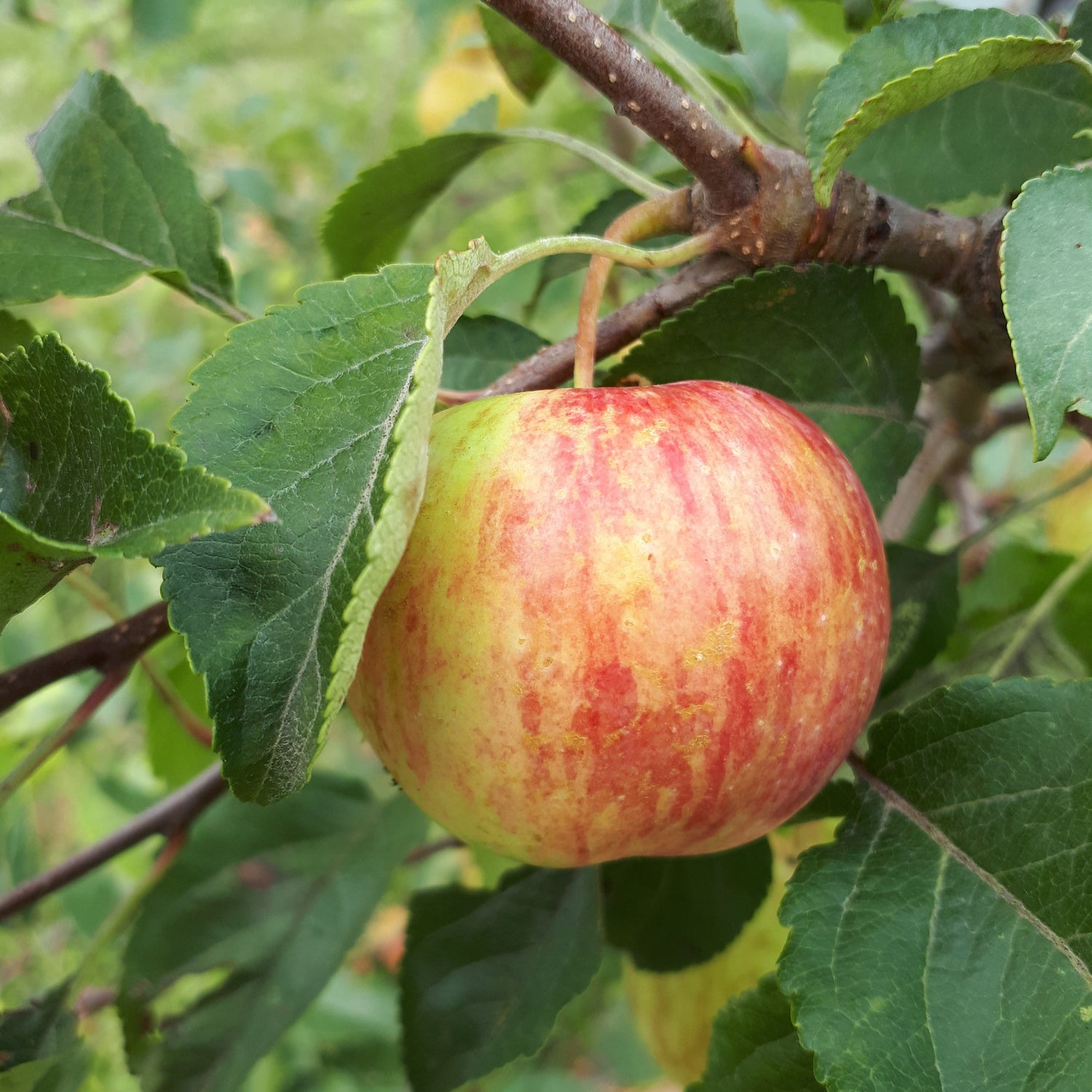
History: Chestnut crabapples were bred at the University of Minnesota in 1949. They are one of about thirty varieties that have been produced by the university's breeding program since it started in 1888.
Why We Grow It: The rosy-red Chestnut crabapple produces fruit that is unusually large for a crabapple with a nutty taste. Unlike other crabapples, it is sweet enough to eat fresh and can be used in cider while still being good for traditional crabapple recipes such as making jellies.

History: Chisel Jersey is believed to have originated in Martock, England in the 1800s. It spread little outside the immediate area for about a century but during the mid-1900s this apple became quite popular in commercial cider orchards. It has, however, lost some of that renown today despite being an excellent cider apple.
Why We Grow It: With small, green fruit featuring a striped red flush, this bittersweet cider apple is highly recommended in England as well as in Canada. It is high in tannins and sugars but low in malic acid and makes a great cider apple.
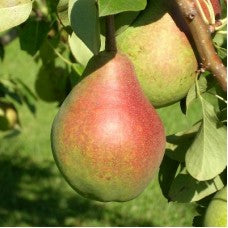
History: Clapp's Favourite Pear originates from Massachusetts where Thaddeus Clapp discovered it as a chance seedling on his property in the 1850s. It was introduced commercially in the 1860s and continues to be grown in the UK and US today.
Why We Grow It: This old variety is hardy and regularly bears excellent medium-large fruit that are yellow with pink blush. They have good flavour but need to be enjoyed rather quickly since the fruit doesn't store long. The fruit needs to be picked about 10 days before completely ripe and allowed to ripen off the tree.

History: The Close apple was developed in 1938 in Virginia at the US Department of Agriculture Arlington Experimental Farm. It was bred by C.P. Close after whom it was named.
Why We Grow It: This early season apple is large with a pink blush. Its sharp, juicy flavour is complimented with softer flesh, making it great for creating a flavourful sauce. They are considered 'very hardy' in Martin Crawford's Directory of Apples, but we haven't tested this cultivar outside of our zone.

History: Cocomerina (aka Blood Pear) is an ancient Italian variety that is so old its origins are shrouded in mystery. Today, this rare variety is only grown in the Apennine area of Romagna and Tuscany in Italy. There is some renewed interest in Cocomerina due to its unique red flesh, hence the reason it was named after the Italian word for 'watermelon': 'cocomero.'
Why We Grow It: We are never one to turn down a unique heritage pear, especially a red-fleshed one at that! These small, round pears are a sweet and aromatic treat. Although the fruit does not keep long, they are also excellent for making jams and liquors. The trees themselves offer some unique ornamental value as the young leaves sport a unique reddish tinge.
Note: We currently do not know if we have the early or late ripening variant as our trees are too young to have produced fruit.
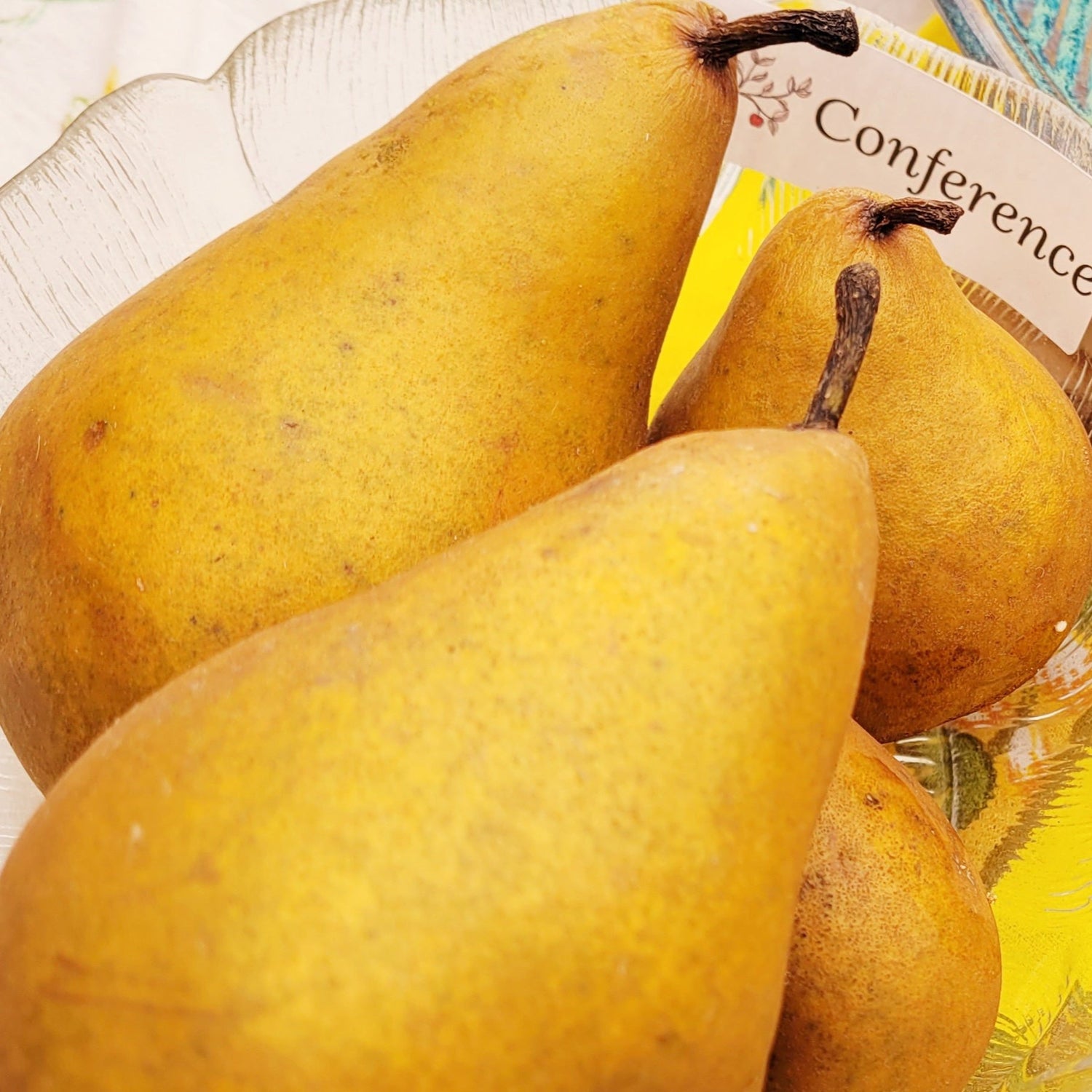
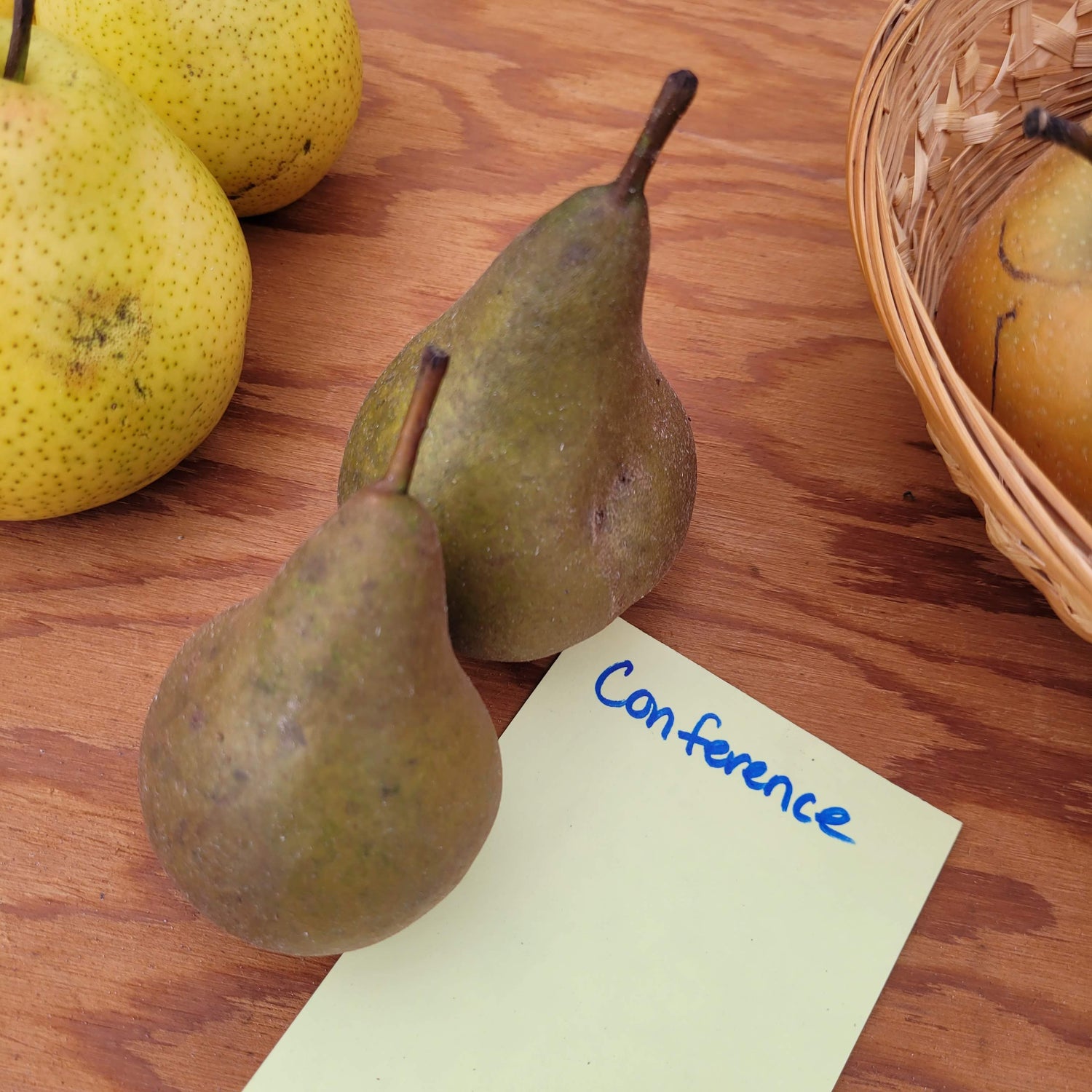
History: Conference pears were found growing in the nursery of Thomas Francis River in the UK in 1884. The following year, he introduced the variety at the National British Pear Conference in London where it won fist place, solidifying its reputation and earning its name. Conference pears continue to be grown in several European countries today where it remains very popular.
Why We Grow It: This old variety has remained popular due to its pleasant and sweet flavour. It can be eaten right off the tree and will keep for a couple months. The fruit itself has an elongated neck, giving it a rather odd appearance.

History: Contender was developed at the North Carolina Agricultural Experiment Station and released in 1988. It is one of several peaches developed by the station with the goal of creating late-blooming varieties that are better able to avoid spring frosts
Why We Grow It: Contender is a good-quality cold hardy peach. It produces large, freestone peaches with a sweet flavour that are great for eating fresh off the tree. The fruit is firm and slow to brown, also making it an excellent option for canning and freezing.