Scionwood

Scionwood
For those looking to graft heritage and unique trees, we are happy to provide scionwood directly from our orchards! Every year we get tons of requests for rootstock and scionwood. While our main business is in the finished product (grafted fruit trees), we also like to support those wishing to learn the grafting process for themselves. We can attest that it is a very enjoyable (and rather addictive) pastime!
ORDERING SCIONWOOD: Scionwood orders generally open in December and must be placed by the end of February. We require a minimum 25% deposit upfront.
If you are interested in scionwood but the sale season has ended, we are happy to add you to our request list for the following spring! Just send us a list of the varieties and quantities you are interested in and we will add you to our list.
SHIPPING/PICKING UP SCIONWOOD: We generally recommend that customers receive their scionwood orders by mid-April at the latest to ensure it arrives dormant, but can hold it longer if customers accept the risk that the scionwood may start breaking dormancy.
Due to the nature of nature, sometimes scions begin budding out early and we want to ensure you receive dormant scionwood that you will have time to graft with. If you need to hold your scionwood dormant until May, you will need to decide how you will do that. It is relatively simple, and you can learn more about storing scionwood at home here. If you are picking up your scion order, we recommend doing so ASAP after you receive your pickup notification via email.
For those new to the grafting process, we also offer the following resources:
- Our annual in-person Apple Grafting Workshop!
-
Fruit Tree Grafting for Everyone, a handy grafting guide co-authored by Steph who owns Silver Creek Nursery!


184 products
Sort by:
184 products
184 products
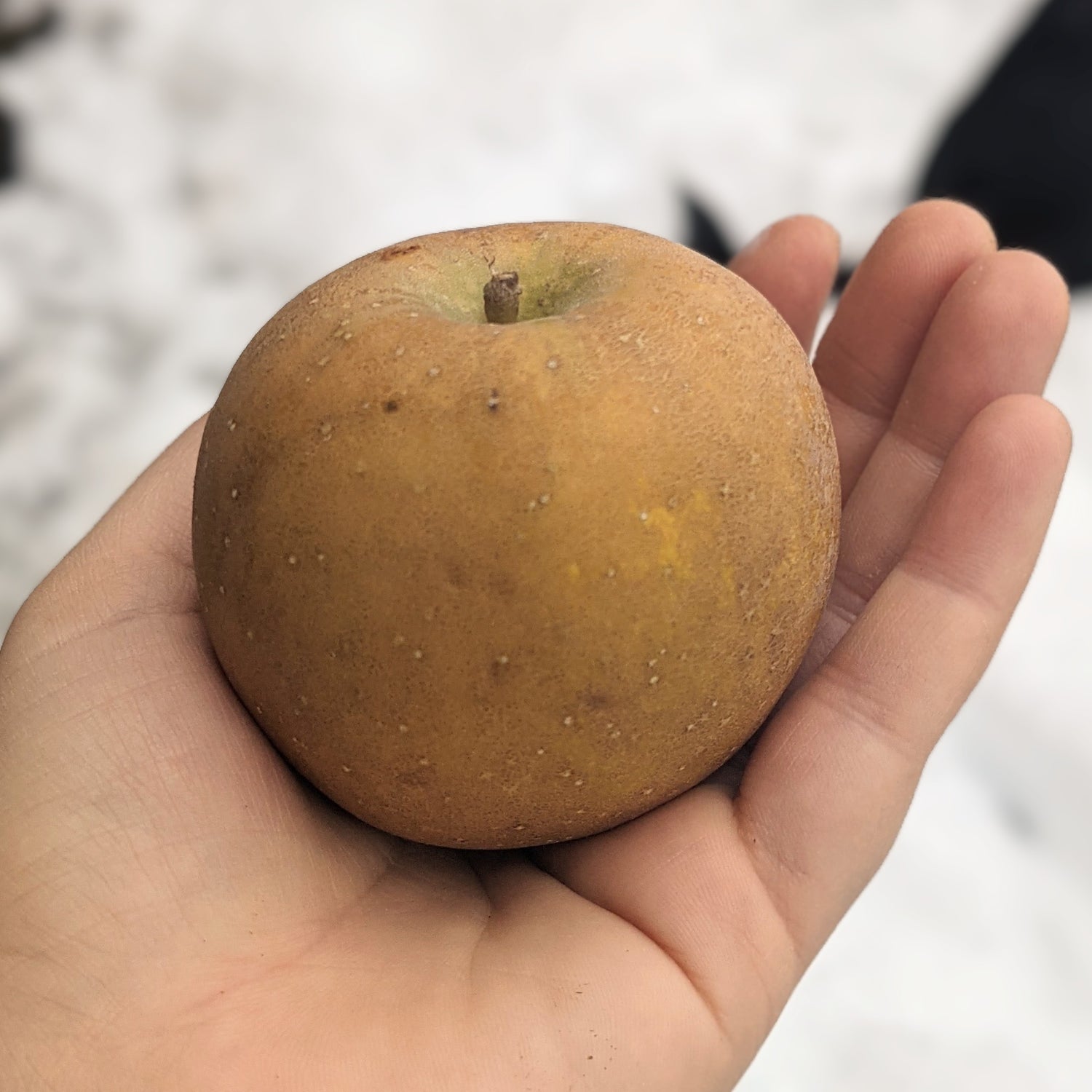
History: The origins of Golden Russet are unclear, but we know it was discovered in New York in the first half of the 1800s. It may have come from the seedling of an English russet variety and could have Ashmead's Kernel parentage. It was grown commercially for some time before falling out of favour, although it has regained some popularity recently due to its strengths in cider production.
Why We Grow It: With both lots of sweetness and acidity, Golden Russet is one of our favourites for fresh eating. The flavourful juice from these apples is also great for making cider. The thick russetted skin discourages insect damage and it is resistant to scab, canker, and powdery mildew. Its tip-bearing habit gives these hardy trees a wispy appearance.
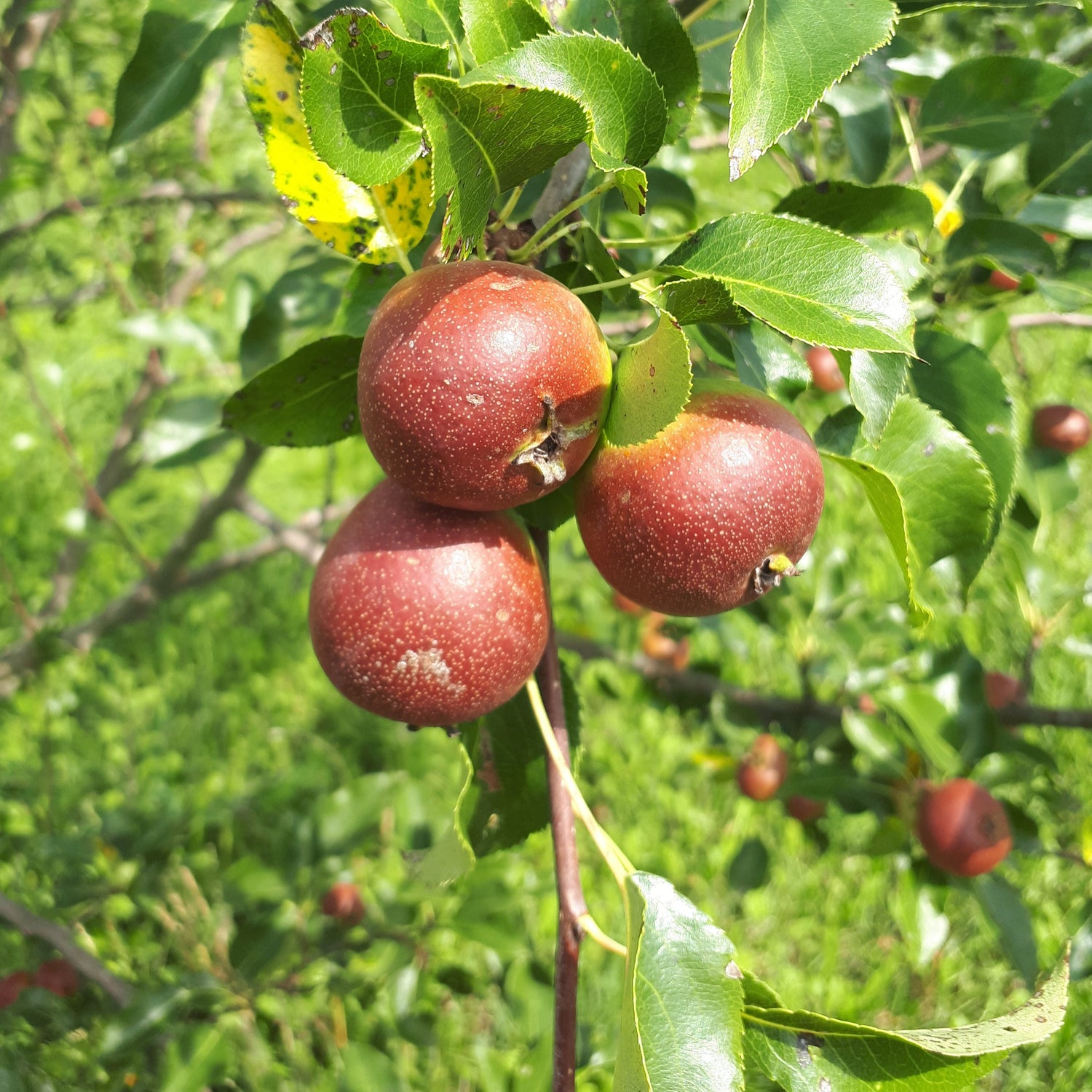
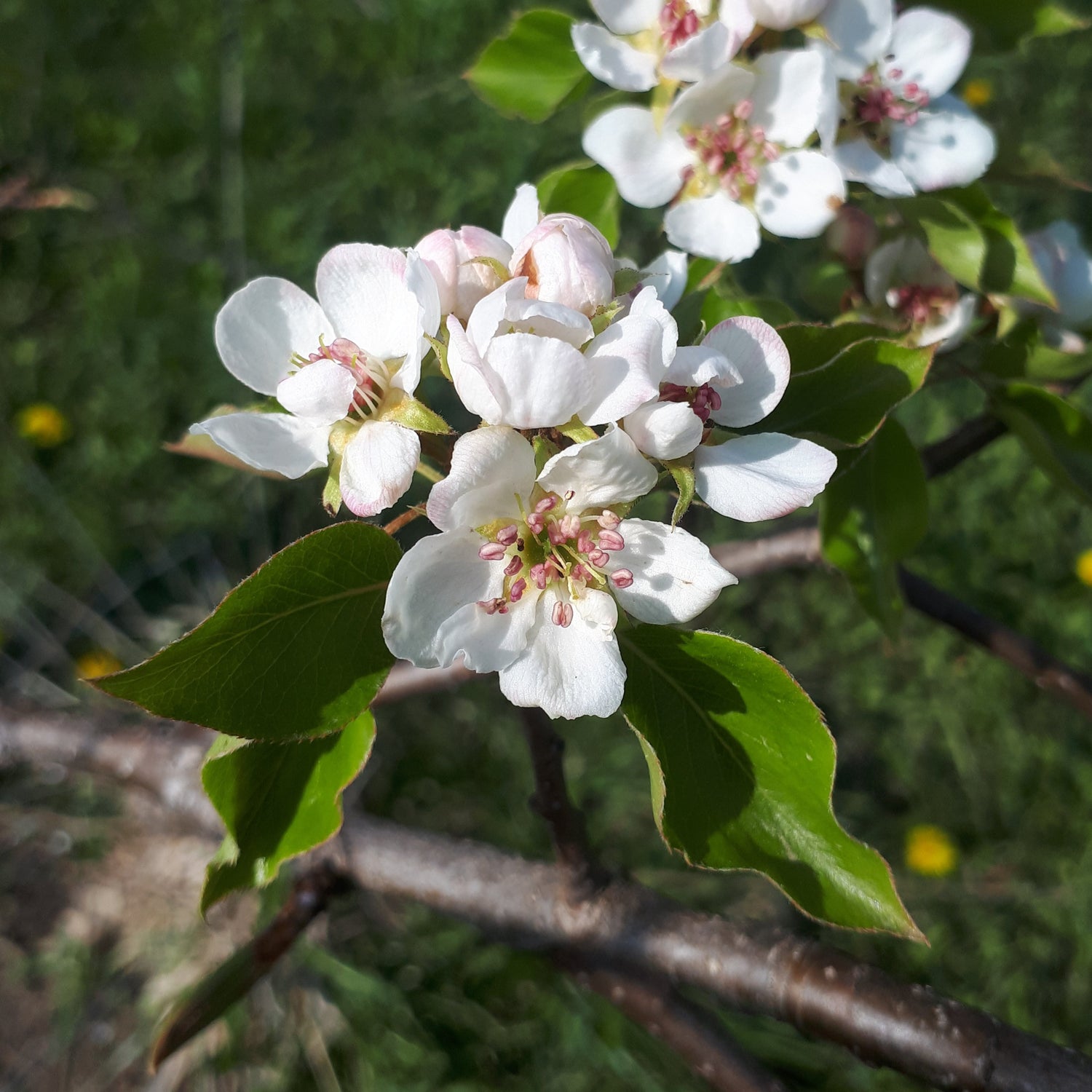
History: Golden Spice was developed by the University of Minnesota and introduced in 1949. It has Ussurian pear (Pyrus ussuriensis) heritage, a separate species from standard European pears (Pyrus communis).
Why We Grow It: Golden Spice is a Ussurian variety with excellent cold-hardiness. The fruit is small and yellow with a sweet, spicy flavour. It is resistant to fireblight.
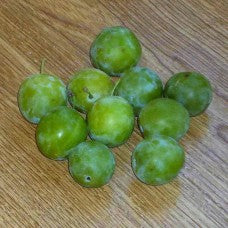
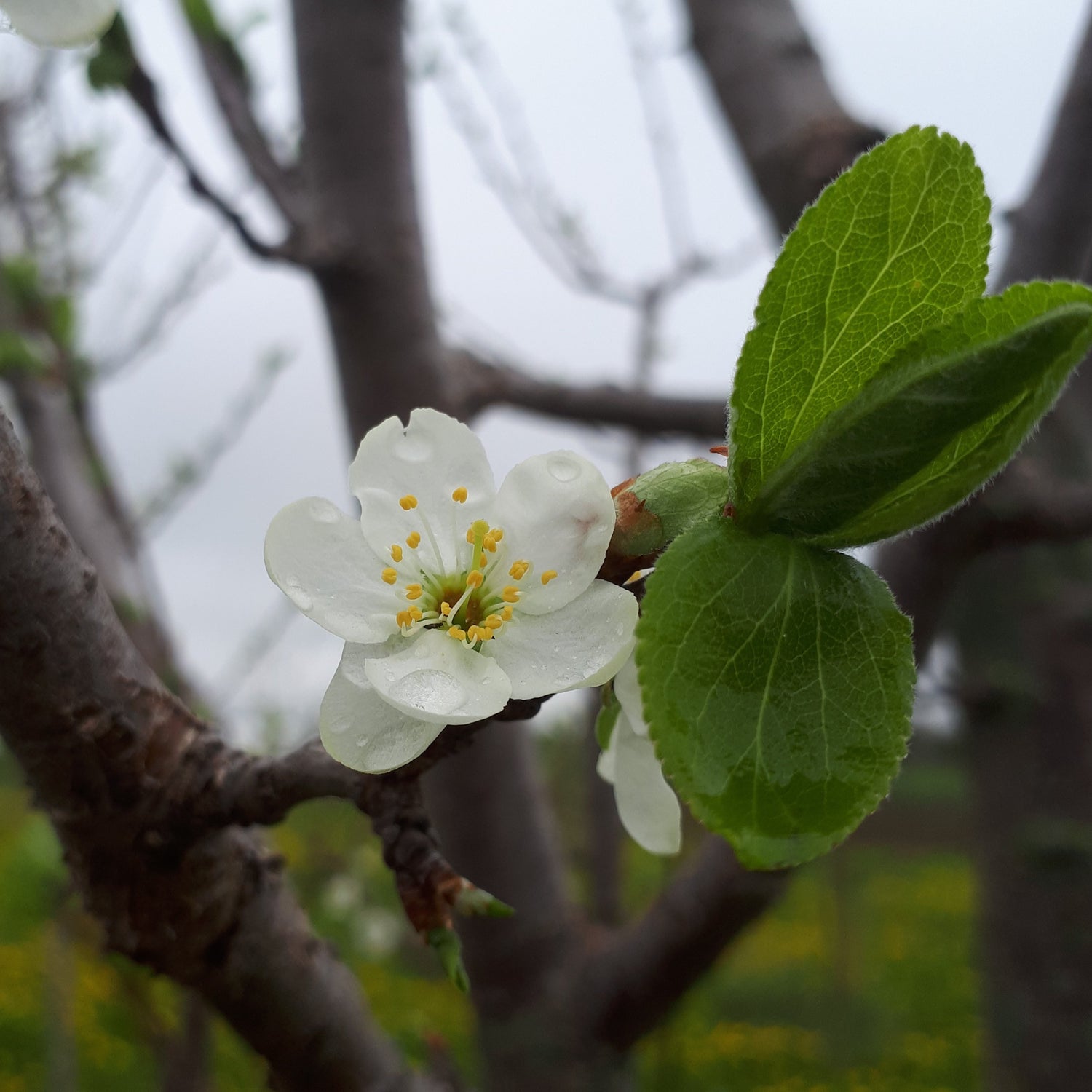
History: Greengage plums are a European variety that originated in Iran, although it is unclear exactly how old they are. They were introduced to England via France in 1724 by Sir William Gage, after whom they were named in English when the French labels were supposedly lost in transit. These sweet plums were later brought to North American colonies where they were grown by prominent figures such as George Washington and Thomas Jefferson. Although they have since fallen out of favour in North America, they are still quite popular in western Europe and occasionally referenced in pop culture. Greengage plums are the namesake of The Greengage Summer, a 1958 novel and subsequent 1961 film, and are mentioned in a Monty Python sketch.
Why We Grow It: It is a shame this plum's popularity declined in North America since it is considered a high-quality dessert fruit, possibly even the best dessert plum. Their bright green flesh is incredibly sweet and can also be used for cooking and preserving. Greengage plum trees tend to have a compact growth habit, great for anyone without a lot of space.

History: Greensleeves was bred as a cross between James Grieve and Golden Delicious by Dr. Frank Alston at the East Malling Research Station in the UK in 1966. In 1981 it received the Royal Horticulture Society Award of Merit and was released the year after.
Why We Grow It: These round, golden apples have a nice sweet/tart flavour that mellows out with maturity. They are great for making juice or cider as well as fresh eating. The tree has low vigour so it naturally stays more compact, a useful feature if you don't have a lot of space.
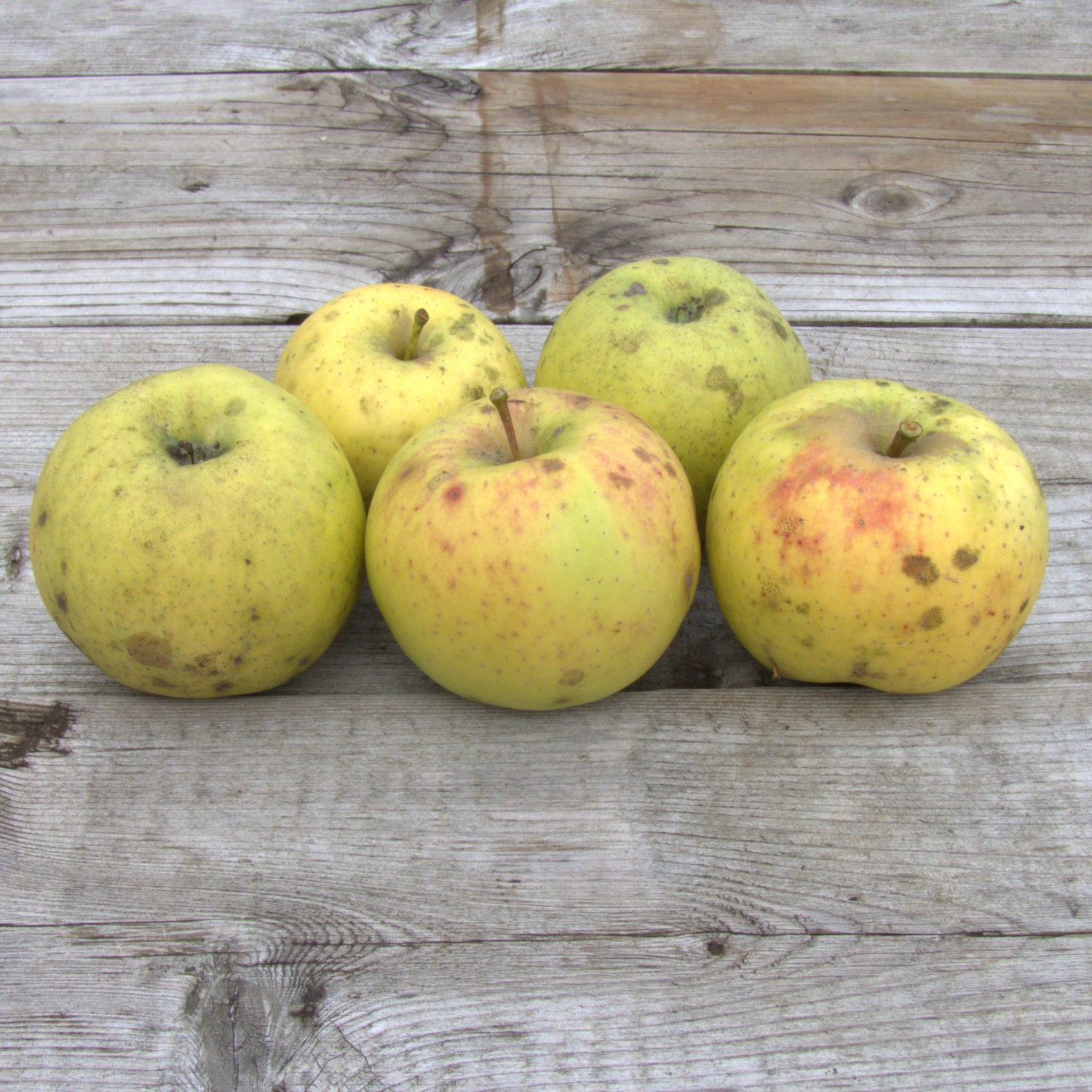
History: Grimes Golden was discovered on the Grimes farm in what is now West Virginia in 1832. Local legend claims that it grew from a seed planted by John Chapman, better known as Johnny Appleseed. After its discovery, it was widely planted up until the 1930s when it became supplanted by more popular varieties such as its (likely) descendant, Golden Delicious.
Why We Grow It: Although less popular now than Golden Delicious, many claim that Grimes Golden has a superior flavour: sweeter and with a hint of spice. The fruit is great for fresh eating and making cider, and it stores quite well. The tree is moderately resistant to fire blight and mildew.
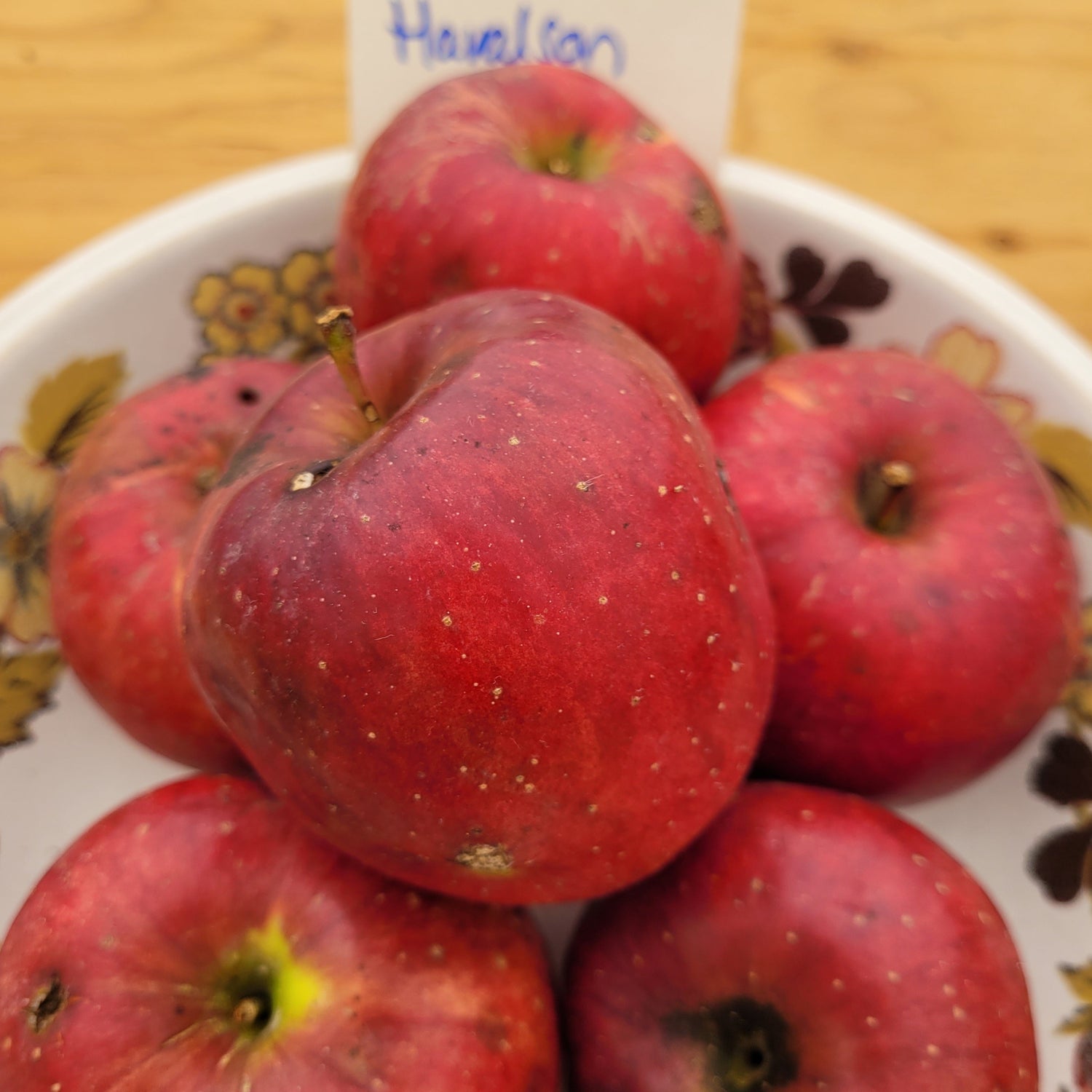
History: Haralson apples were developed at the University of Minnesota in 1922 and named after Charles Haralson who was superintendent of the university's fruit breeding farm. It is one of almost 30 apple varieties the university has developed in its breeding program since it began in 1888.
Why We Grow It: The skin of this variety is striped red with russet dots and the flesh is white, juicy, and of pleasant albeit mild flavour. Haralson boasts excellent cold hardiness and general disease resistance.
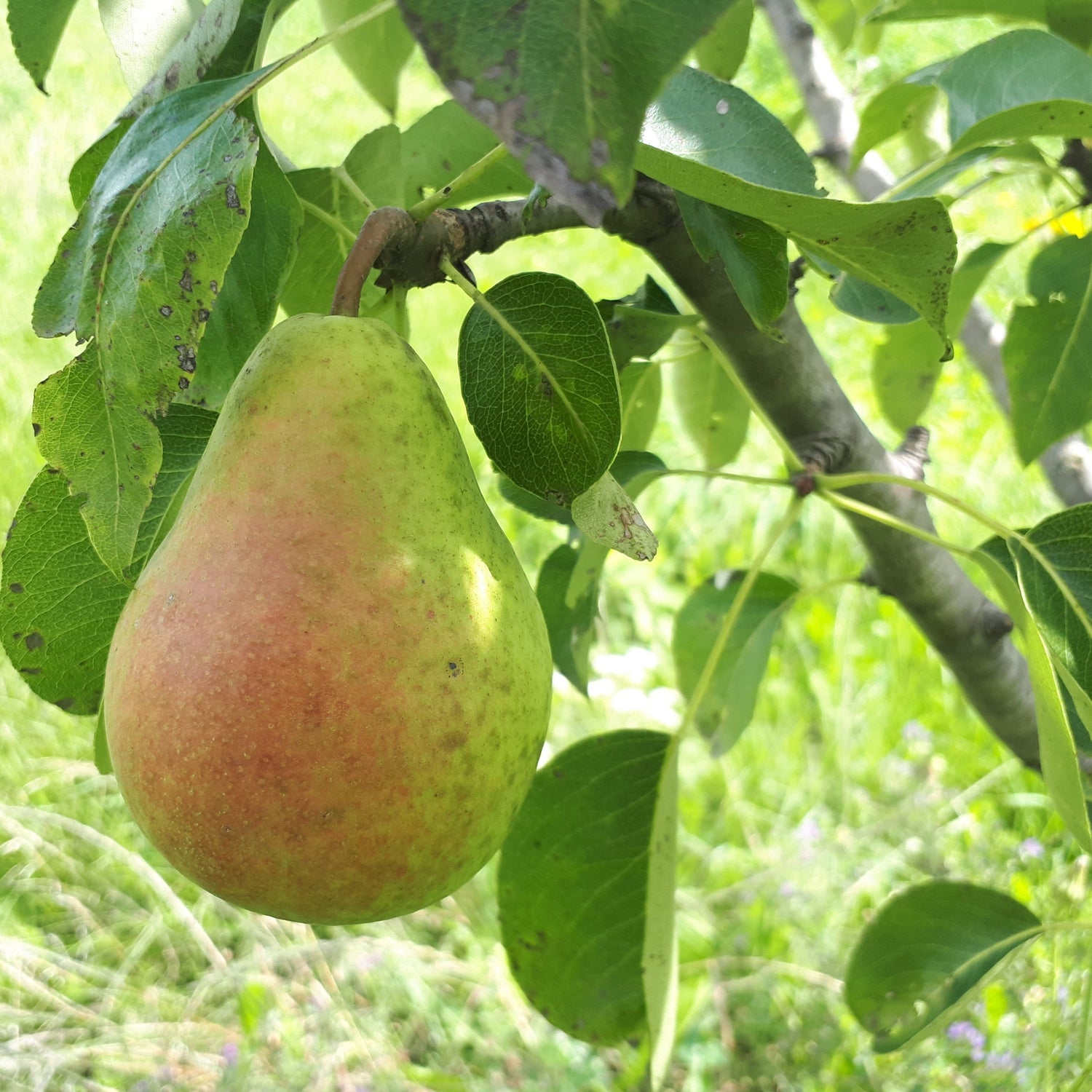
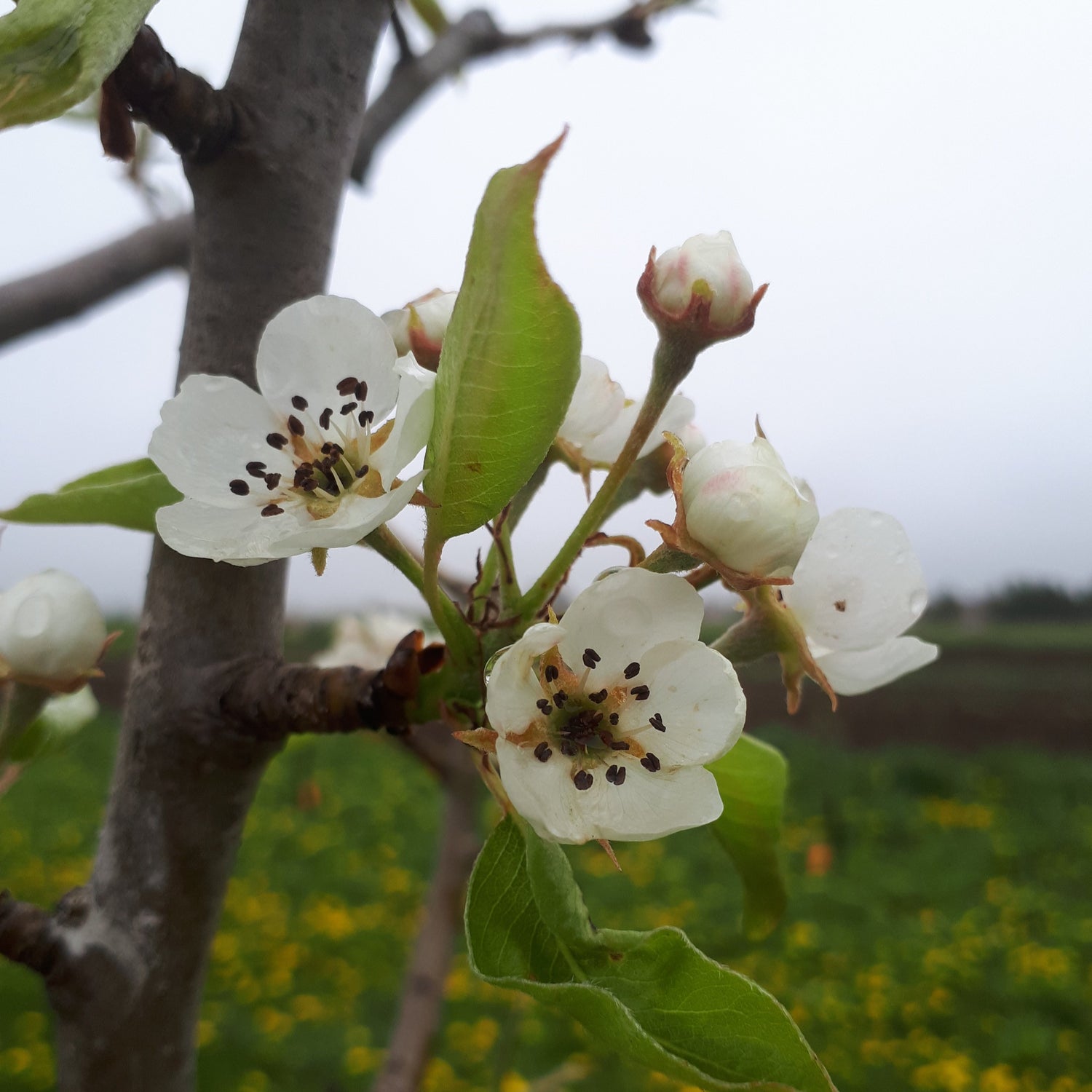
History: Harrow Delight, as the name suggests, was introduced from the pear breeding program at the Harrow Research and Development Center in Ontario in 1981. It is a cross between Bartlett and Purdue 80-51, making it a sibling to Harrow Sweet.
Why We Grow It: Harrow Delight pears are green with red blush when mature. They have sweet, juicy flesh and keep about a month. The tree boasts resistance to both fireblight and scab, making it a good option for anyone looking for a more disease resistant pear variety.


History: Harrow Diamond is one of the cold hardy peach varieties to come out of the Harrow Research and Development Center in Ontario. It was introduced in 1984.
Why We Grow It: This Canadian variety is one of the most cold hardy available and is one of the first to ripen in Ontario. The fruit is medium in size, mostly freestone but flesh does cling some to the pit, and of good flavour. Like Redhaven, it is non-browning, and it holds its shape well for canning or cooking.
History: Hendre Huffcap was first recorded in England either in 1923 or 1963. The confusion stems from whether it and another variety called Lumberskull, which was recorded first in 1923, are actually the same variety. Hendre Huffcap remains a popular perry pear in England.
Why We Grow It: This popular English perry pear has endured due to the high quality juice it produces which is great on its own and in blends. The tree bears heavily and reliably, although some thinning is recommended since the branches can break under the weight of its own crops.
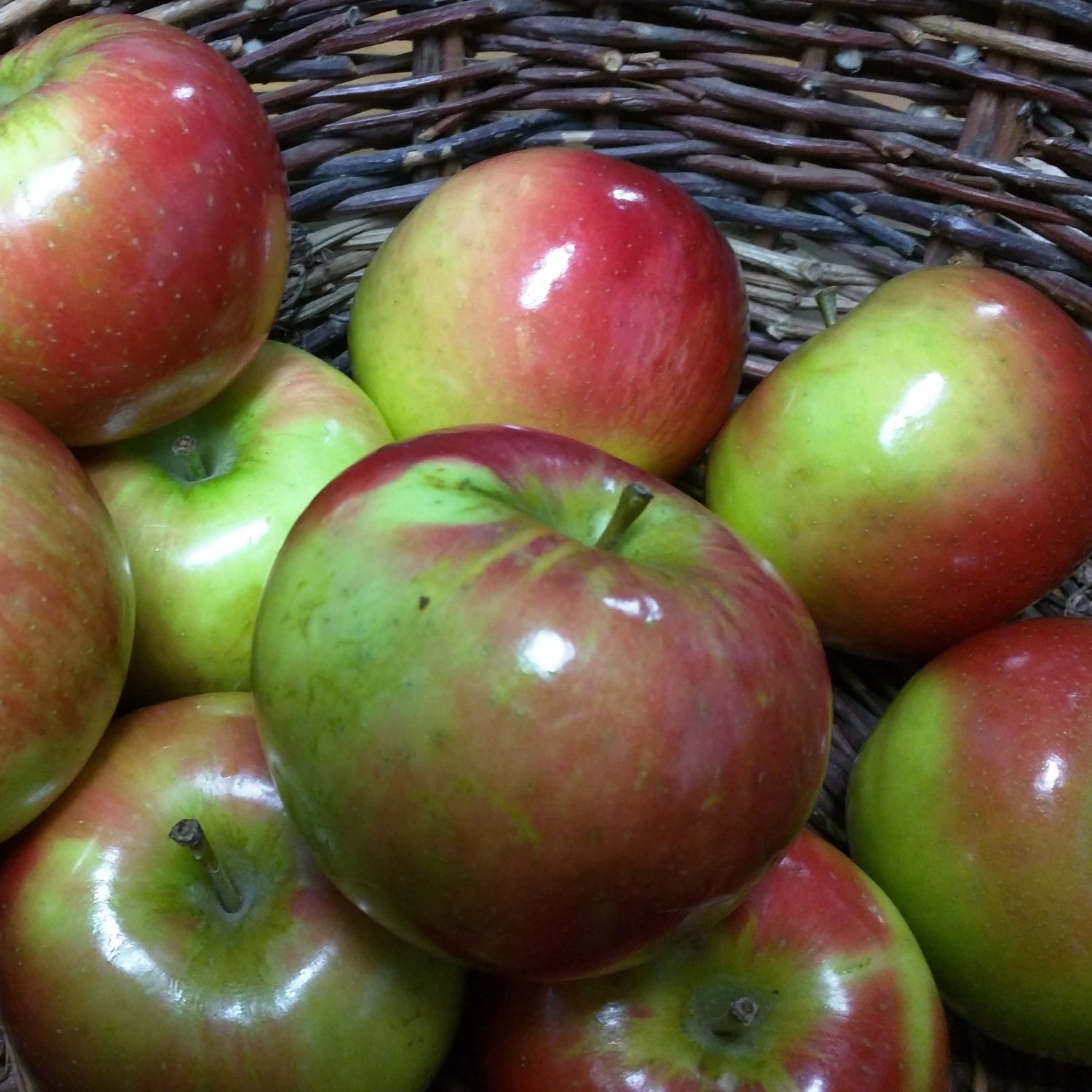
History: Honeycrisp apples were developed by the University of Minnesota in the 1960s and released in 1991. It is one of almost thirty varieties created by the university's breeding program since it began in 1888. The excellent flavour of Honeycrisp has allowed it to become one of the most popular apples in North America and in 2006 it became the state fruit of Minnesota.
Why We Grow It: Honeycrisp is popular for a reason. The apples are large and attractive with good flavour under favourable growing conditions. However, they are not an apple for beginner growers due to issues with some diseases especially in storage, but with diligent care you can produce these crunchy sweet apples in your own backyard/orchard.

History: Honeygold apples were developed by the University of Minnesota and introduced in 1970. It is one of nearly 30 varieties that have been developed by the university's breeding program since it began in 1888. This apple is a cross between Golden Delicious and Haralson, designed to combine the taste of the former with the cold hardiness of the latter. Honeygold is also famous for being mistakenly identified as one of the parents of Honeycrisp, although that has since been rectified.
Why We Grow It: With the sweet taste and appealing look of Golden Delicious but the cold hardiness of Haralson, this is an excellent apple for anyone living in colder hardiness zones. It is great for fresh eating as well as making pies and applesauce. The tree is also somewhat scab resistant.
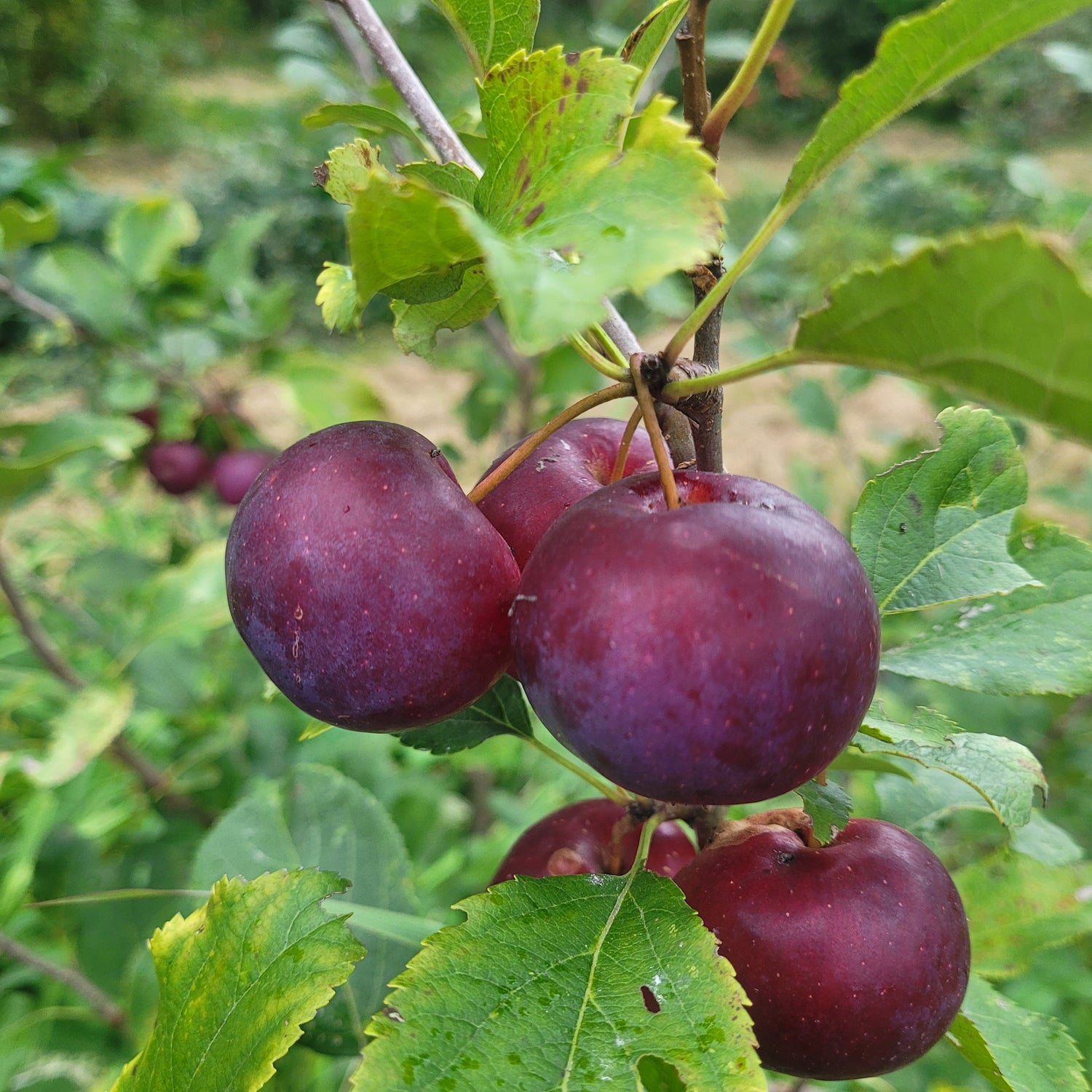
History: The exact origins of Hyslop are unclear but it was discovered sometime in the early 1800s around Boston by the Hyslop family who helped develop the area. This apple was popular for over a century but in recent years has fallen into obscurity.
Why We Grow It: Although definitely not recommended for fresh eating, Hyslop crabapples have a sub-acid, astringent flavour and are great in cider blends. They are also known as being one of the best apples for jellies. The tree is quite attractive with blue tinged blossoms in the spring and brilliant red/purple fruit in the fall.

History: Idared apples were developed at the University of Idaho Agricultural Experiment Station in 1942. Although its flavour is generally considered average, its excellent storage qualities have made it one of the most popular apple varieties in North America.
Why We Grow It: Idared's best quality is its ability to easily last six months when stored in a fridge, potentially until June under optimal storage conditions. The flesh tends to be softer and is white with some tinges of green. The flavour is described as sprightly, moderately acidic, and tangy, and this apple boasts a high Vitamin C content. It is great for baking and making applesauce. The tree's naturally somewhat smaller size makes Idared easier to prune and train.

Species: Morus rubra x M. alba
History: Illinois Everbearing was discovered in Illinois, US by the Wabash River and is a natural cross between red mulberries (M. rubra) and white mulberries (M. alba). It was discovered by Peter Glaser in 1947 and likely selected for its excellent fruit quality and everbearing nature. Named for its State of origin and long harvest window, Illinois Everbearing was released in 1958 by Burgess Seed and Plant Co. in Michigan and has since become one of the most popular mulberries in North America.
Why We Grow It: Illinois Everbearing produces large, almost seedless mulberries with an excellent flavour. They are great for eating fresh, baking, or making into jams. Better yet, these excellent mulberries ripen from July into September, providing a wide window to enjoy these tasty treats. The tree itself is hardy and vigorous but is relatively easy to keep pruned to a smaller size.

History: Jonagold, a cross between Golden Delicious and Jonathan, was developed in 1953 at the New York State Agricultural Experiment Station at Cornell University. With its large size and sweet flavour, it has become one of the most popular apples in North America and is especially popular in Belgium.
Why We Grow It: The fruit is attractive with a red blush over yellow skin. It has a pleasant sweet-sour flavour that makes it a great multi-purpose apple.

History: Jonathan has an interesting history since there are two potential origins. One story says that Rachel Higley collected apple seeds from the local cider mill which she later grew on her new property in Ohio in 1796. She named one of the new varieties Jonathan after a young boy who often visited her orchard. The second, and more likely story, is that it was grown by farmer Philip Rick in the 1820s in New York. Originally named Rick, the apple was renamed Jonathan after the man who brought it to the attention of the Albany Horticultural Society.
Why We Grow It: These cheery red apples are crisp, juicy, and sweet. They are good for fresh eating as well as turning into pies and sauce. The fruit also stores quite well, lasting until January/February under optimal conditions.
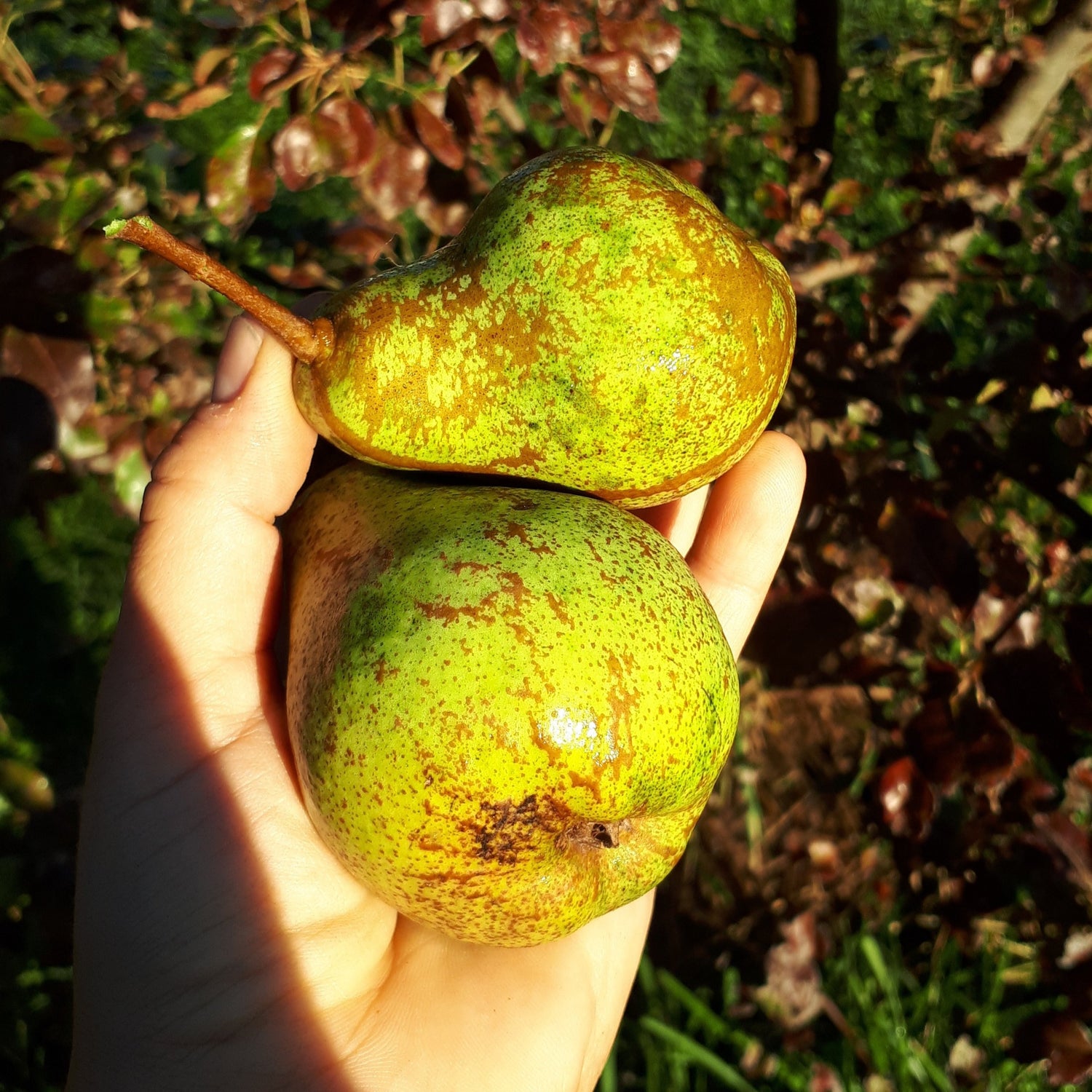
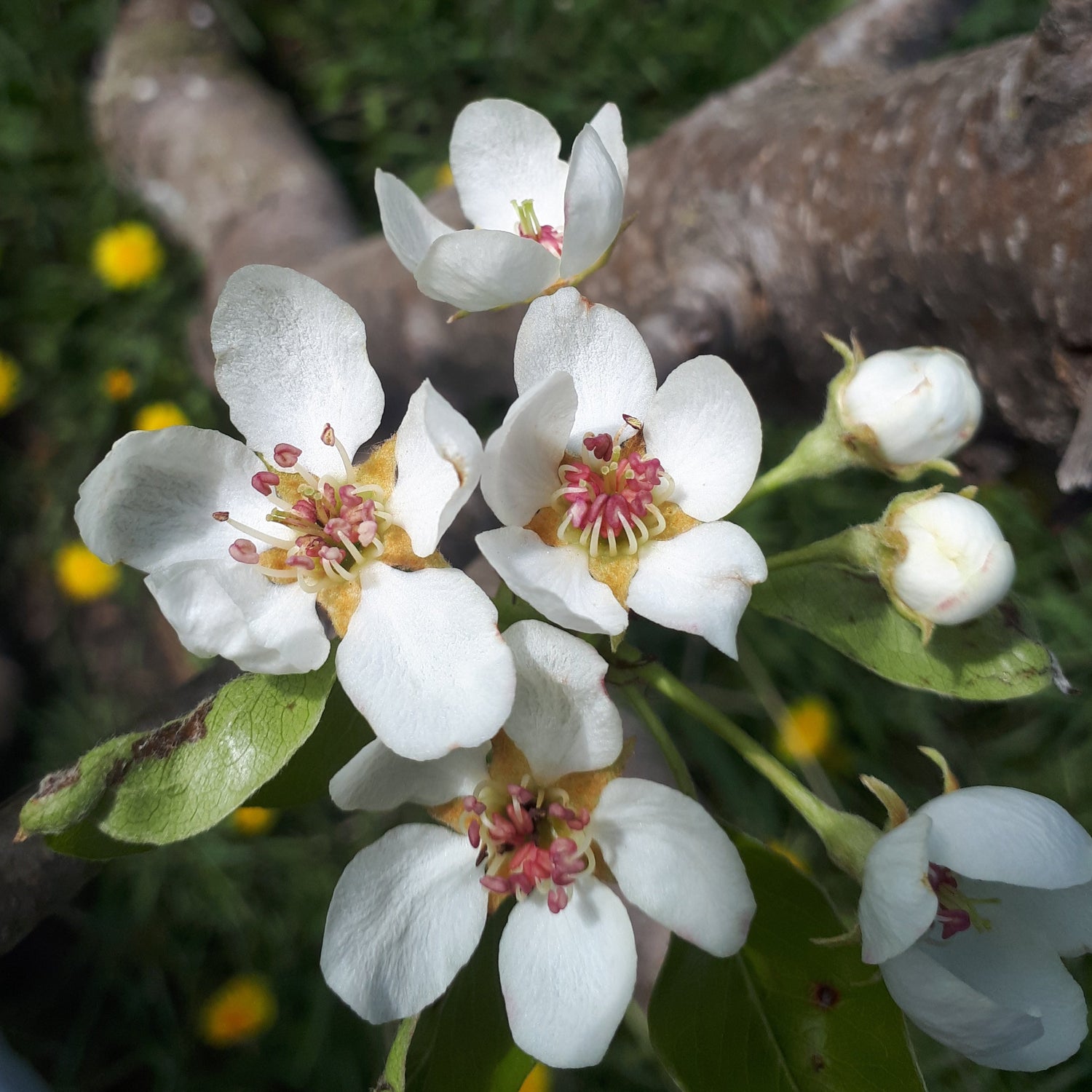
History: Jules d'Airoles was first discovered by Leon Leclerc in Laval, France, in 1836. It was named after Jules de Liron d'Airoles, a notable French horticulturalist and pomologist. Confusingly, this pear shares its name with a Belgian variety grown about twenty years later by François-Xavier Grégoire-Nélis.
Why We Grow It: This pear develops in storage to a wonderful treat: very sweet and a touch tangy, semi-fine juicy flesh, with pleasant tannic notes depending on the terroir. Smooth, thick green skin with a lovely rose blush where the sun touches the fruit.

History: Kandil Sinap* originated in the early 1800s around the Black Sea, although it is debated whether it originally came from the Crimean Peninsula in the Ukraine or the Sinop Peninsula in Turkey. It was at one time commonly exported into Russia.
*There are different thoughts on what Kandil Sinap translates to, some say it is 'candle of Sinop,' others 'sweet apple of Sinap,' and it translates directly from Turkish as 'oil lamp'
Why We Grow It: Kandil Sinap's most prominent feature is the odd shape of the fruit, strangely oblong and conical, almost resembling a candle in appearance. The odd green fruit have a sweet, sprightly flavour and are quite aromatic, although they do bruise easily. The tree naturally stays smaller but produces heavy crops and is great for backyard orchards.


History: Karneval (translated from Czech as 'Carnival') was developed at the Institute of Experimental Botany in Prague in the Czech Republic by Dr. Jaroslav Tupý. It is a cross between Vanda and Cripps Pink. It was released in 2011 and like many other modern apples, boasts a sweeter flavour and good disease resistance. However, the main reason this apple was likely selected and given its fun name was for the bright red striped that adorn it.
Why We Grow It: Karneval is medium sized apple that is sweet, juicy and just a little tart and aromatic. However, this apple is best known for its unique appearance: yellow skin with distinct red stripes that would make it feel at home at the circus. Great flavour, striking visual appeal, good storage capabilities, and good disease resistance make this apple an excellent choice for any grower.

Why We Grow It: These large, red apples boast a high acid content along with high sugars and a strong fruity flavour, making them excellent cooking apples. Like other English cooking apples, it breaks down when cooked.
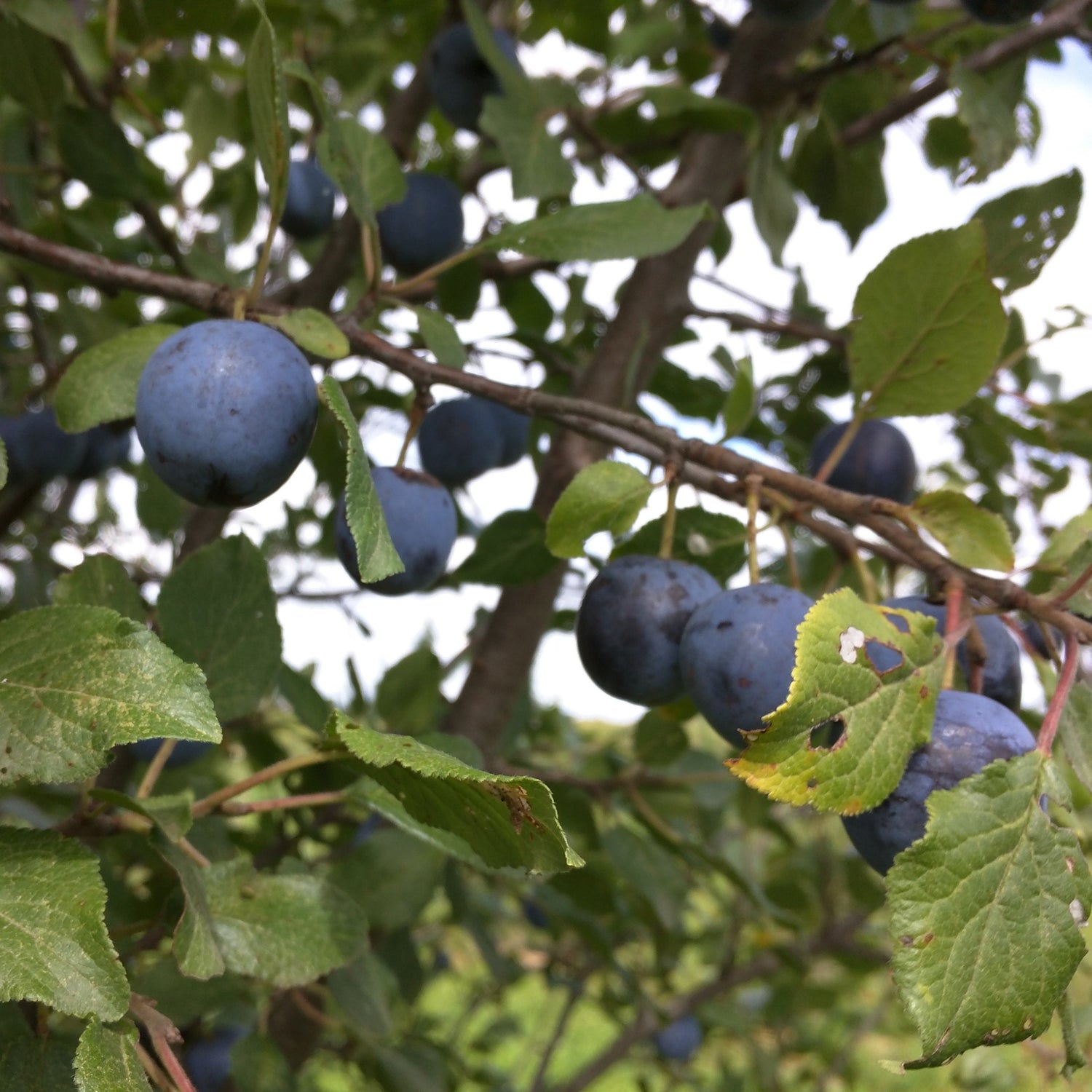
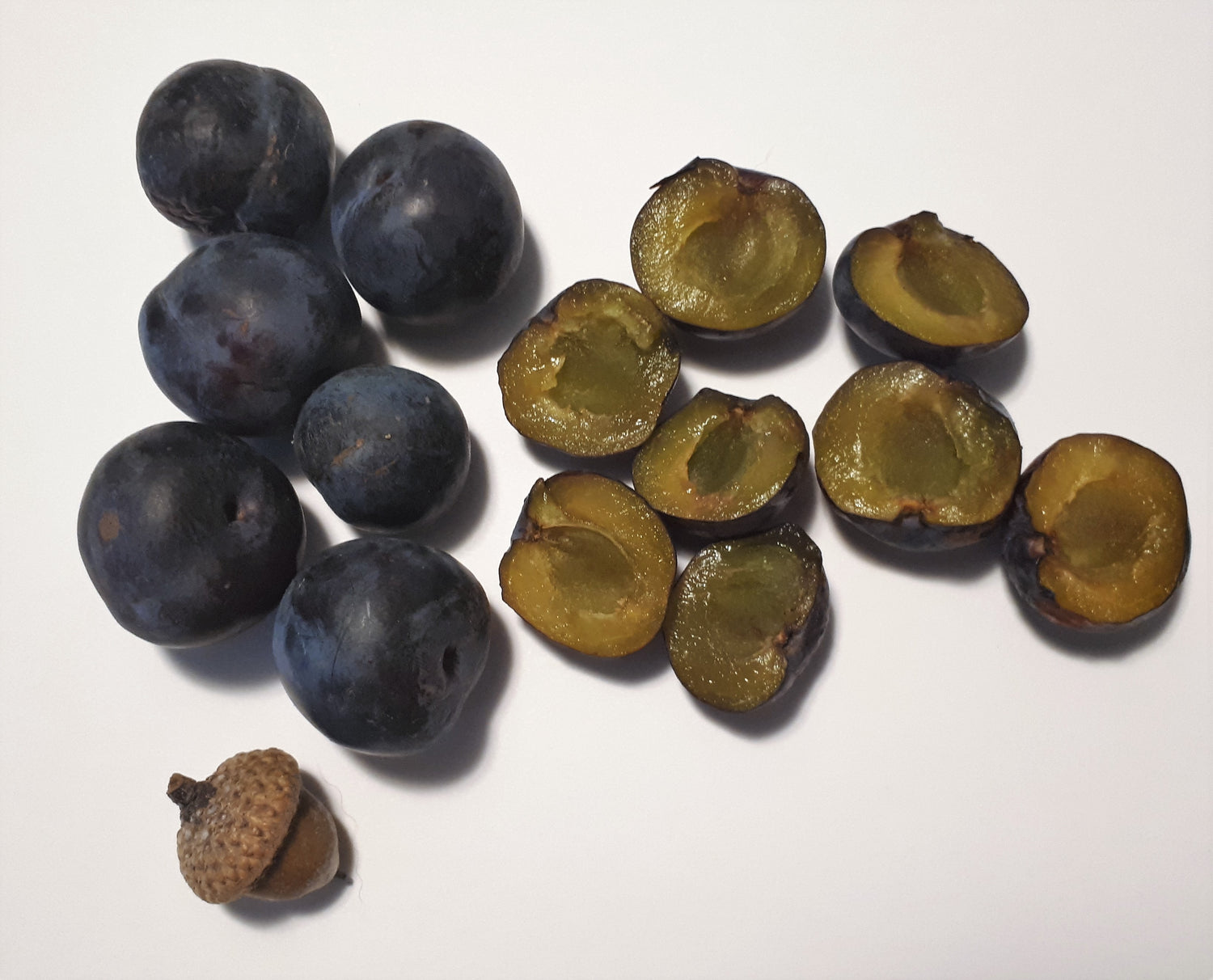
History: Little is known about this particular variety aside from that it's a Damson plum that originated in Sweden. 'Krikon' is the Swedish word for 'damson.'
Why We Grow It: Although its history is a bit of a mystery, we can certainly tell you that this is the best plum variety for very cold regions. It produces small round deep purple fruit that are good for cooking, preserving, and making jam. The flesh has a spicy, sweet flavour although some do not find it that great for fresh eating. Compared to regular Damson's Krikon Damson is a bit smaller, and more flavourful.

History: Lady apples are one of, if not the oldest, apple varieties in existence with a verifiable history. It is said to have originated in the Brittany region of France before 1628 and was grown during the reign of King Louis XIII. This apple goes by several other names as well. It is also known as Api or Pomme d'Api, named after the Forest of Api in France where it is believed this apple may have been discovered. This particular name is similar to Appia, an apple variety popular in Ancient Rome, which some believe is the same apple as Lady. Lady apples are also known as Christmas apples due to their use in adorning Christmas wreaths and trees.
Why We Grow It: It's hard not to be interested in an apple with such a long history as this one. The fruit is small but attractive: red flushed over yellow. The crisp, sweet fruit maintains its good quality all winter in storage.
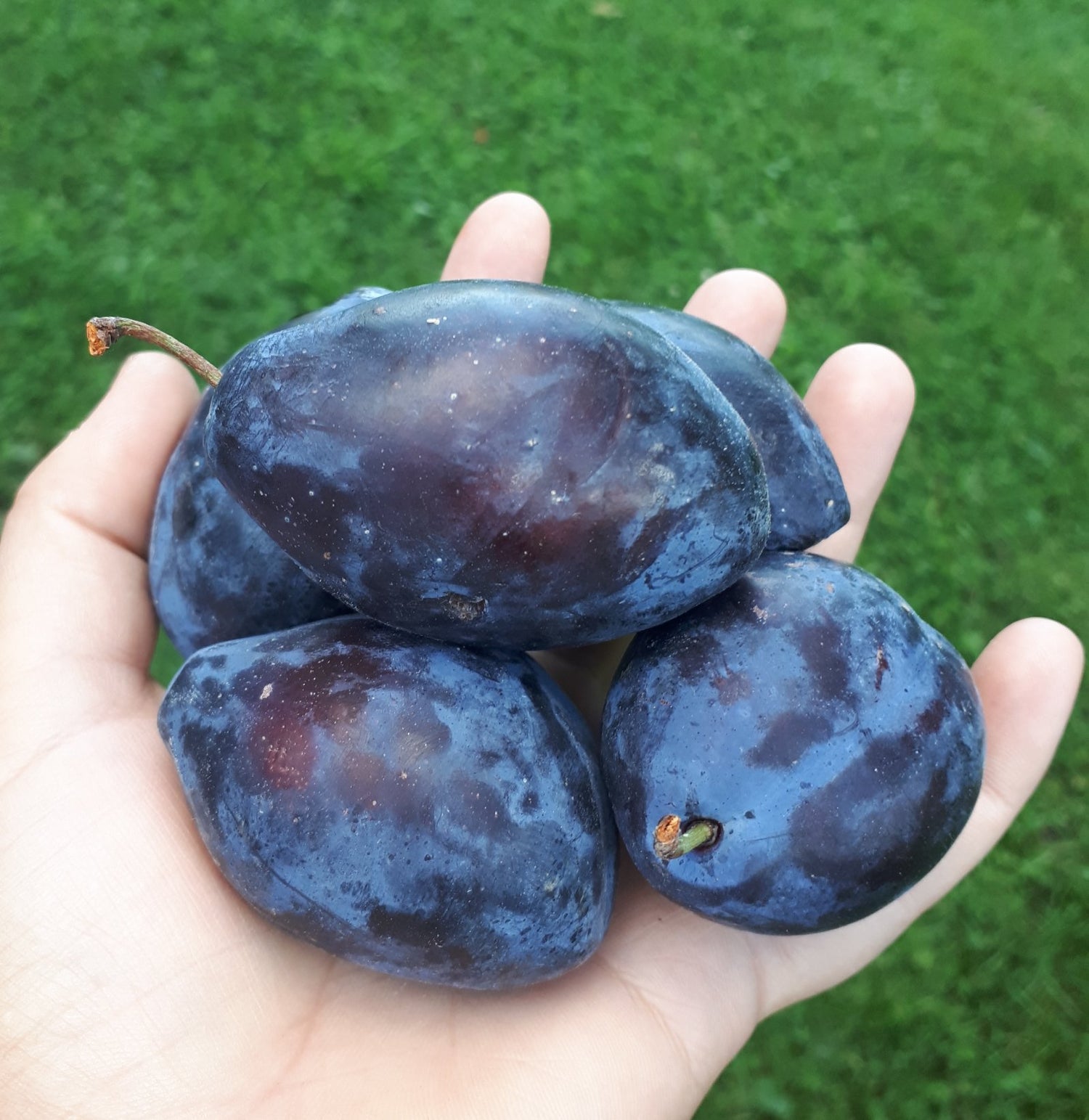
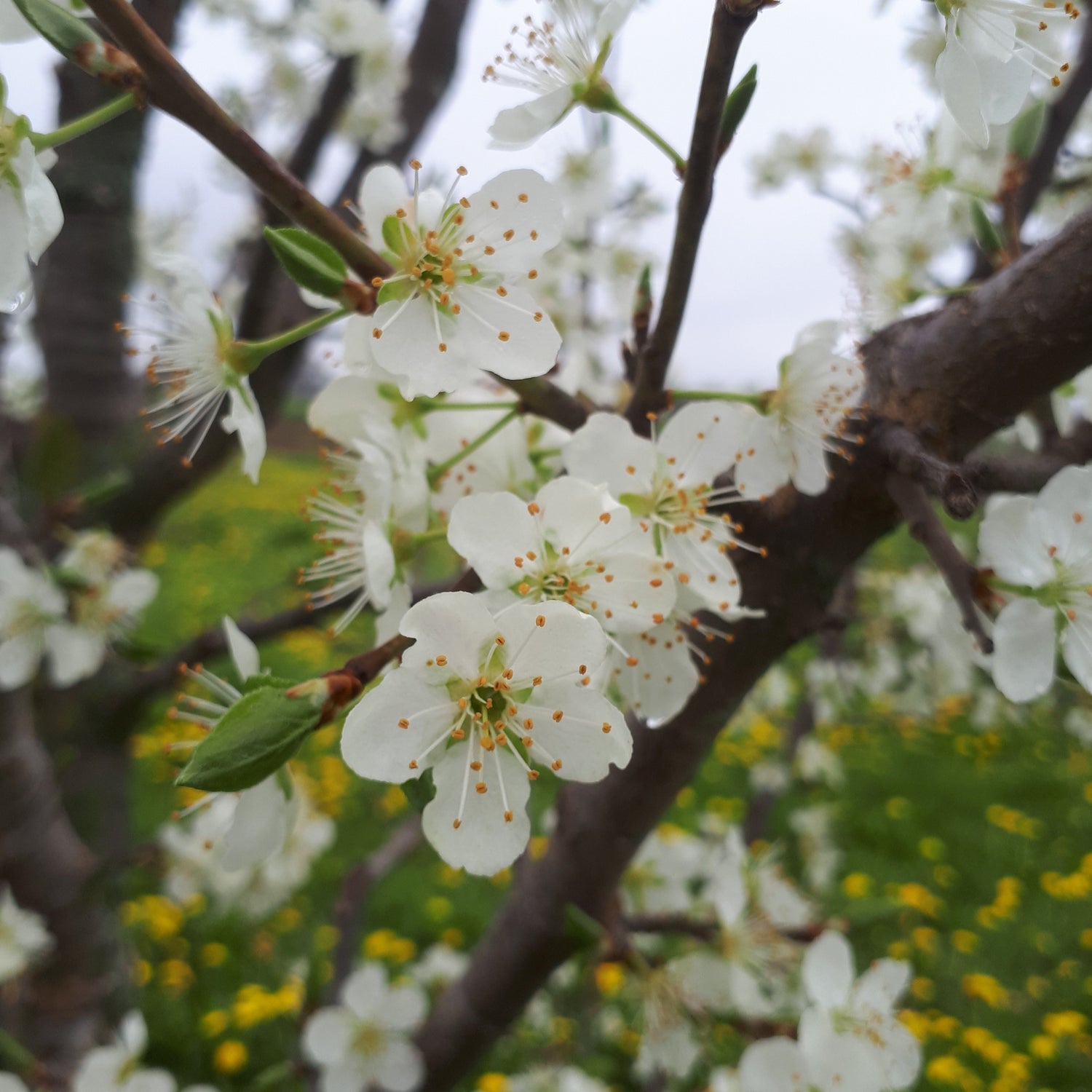
History: Late Italian plums originated in the coastal Mediterranean areas of Italy, although little is known about their history aside from that. They are still grown in Europe and North America today.
Why We Grow It: This European variety produces a large-sized blue plum with sweet yellow flesh. It is an all-purpose plum that is excellent for drying and great eaten fresh, canned, or incorporated into baking, desserts, or salads.

History: Lodi is a cross between Yellow Transparent and Montgomery Sweet created at the New York Agricultural Experiment Station in Geneva, NY, and released in 1924. Although it is not suitable for commercial production due to its poor keeping qualities and tendency for the flesh to crack in storage, it is still commonly grown by homeowners in the southern US today.
Why We Grow It: If you're looking for an early apple to get started on making applesauce, Lodi is the way to go! These large yellow-green apples are ready to harvest by the end of July and do not bruise as easily as their Yellow Transparent parent.
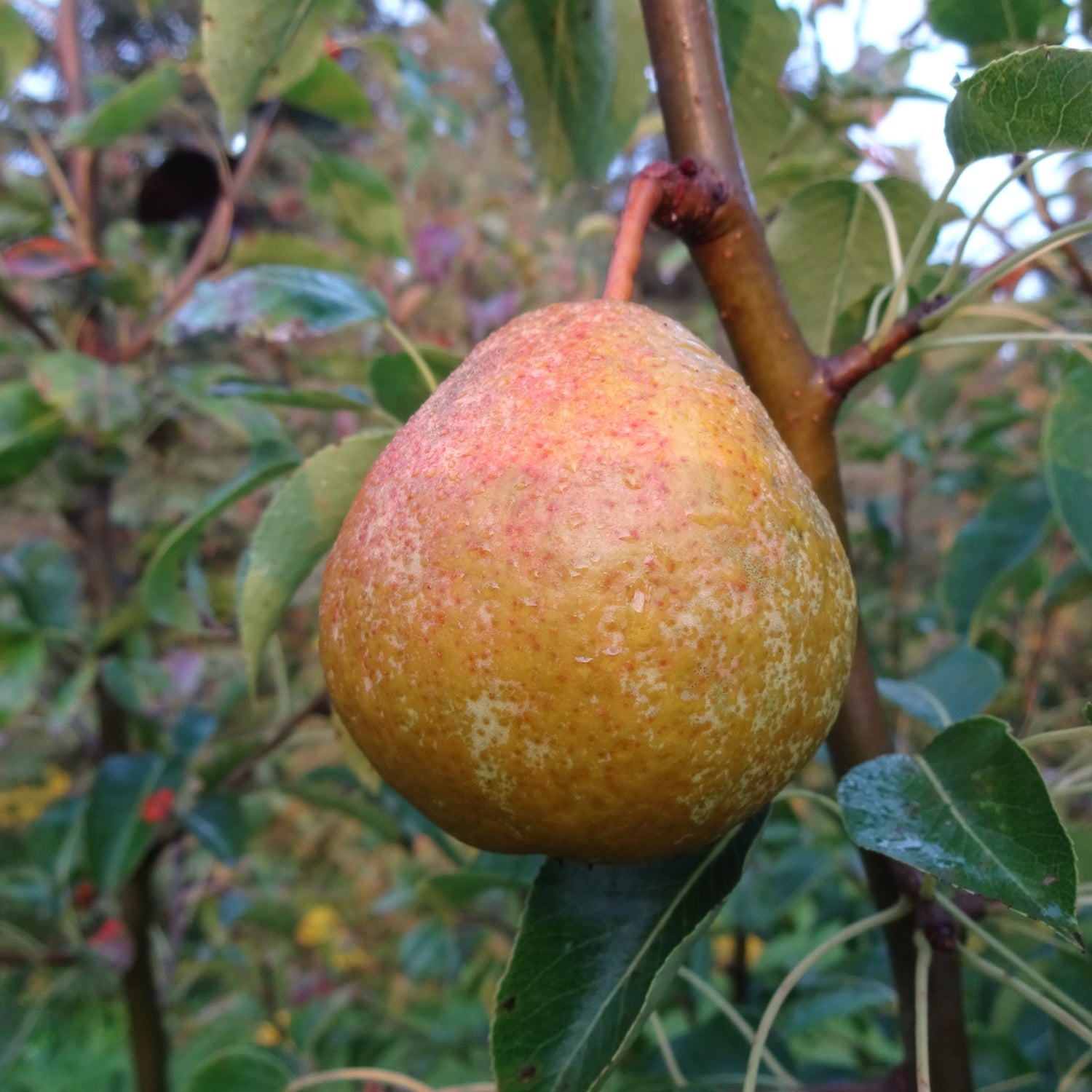
History: Luscious was developed at South Dakota State University as a cross between Ewark and South Dakota 31 in 1954. This goal was to create trees suitable for areas like the Northern Great Plains. Luscious was introduced in 1973, likely selected for its cold-hardiness and excellent flavour.
Why We Grow It: Luscious produces small to medium yellow fruits with an attractive red blush. The fruit is quite sweet, great for fresh eating and cooking/baking! This is an excellent option for fans of Bartlett who are looking for a versatile and cold hardy variety! Luscious also has value as an ornamental tree, producing white blooms and glossy green leaves that turn a nice red in the fall.

History: Maiden's Blush was first described in New Jersey in 1817 although it had already been popular in Philadelphia markets for some time. It likely originated around New Jersey in the late 1700s. Maiden's Blush continued to be commonly grown in the southern US through the early 1800s.
Why We Grow It: Maiden's Blush's uniqueness is still worthy of attention today, its flavour being an interesting mix of citrus-like acidity and sweetness that stand out among other apples. While it is good for fresh eating, particularly after a few weeks off the tree, it is most well known for cooking, baking, and drying due to its non-browning qualities.

Species: Hippohae rhamnoides
History: This scionwood is collected from one of our male mother plants. This may come from any of the male varieties we offer!
Why We Grow It: Male sea buckthorn plants are vigorous and strong pollinators. Although they do not produce berries, they are also useful as fodder, ornamentally, and as erosion control. Sea Buckthorn also have nodules on their roots which help fix nitrogen into the ground, and are a common plant in permaculture orchards for this natural 'fertilizer' effect on plants in their vicinity.


Species: Malus baccata var. mandshurica or M. mandshurica depending on which taxonomist you ask!
History: Manchurian crabapples are native to China, eastern Russia, Japan, and North Korea where they have been used for rootstock and bonsai. It is quite attractive as an ornamental tree so has spread to Europe and North America as well. Thanks to its excellent cold-hardiness, it is often used in experiments to breed and graft more cold hardy apple varieties.
Why We Grow It: Manchurian crabapples are most commonly grown for their ornamental qualities, boasting large numbers of white flowers in the spring. The small, tart fruits produced by Manchurian crabapples are often a bit intense for eating, but do well in cider and jelly! If you don't want to eat them, they are also great for feeding wildlife.
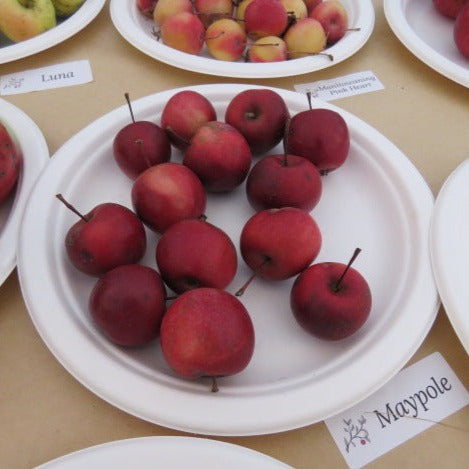
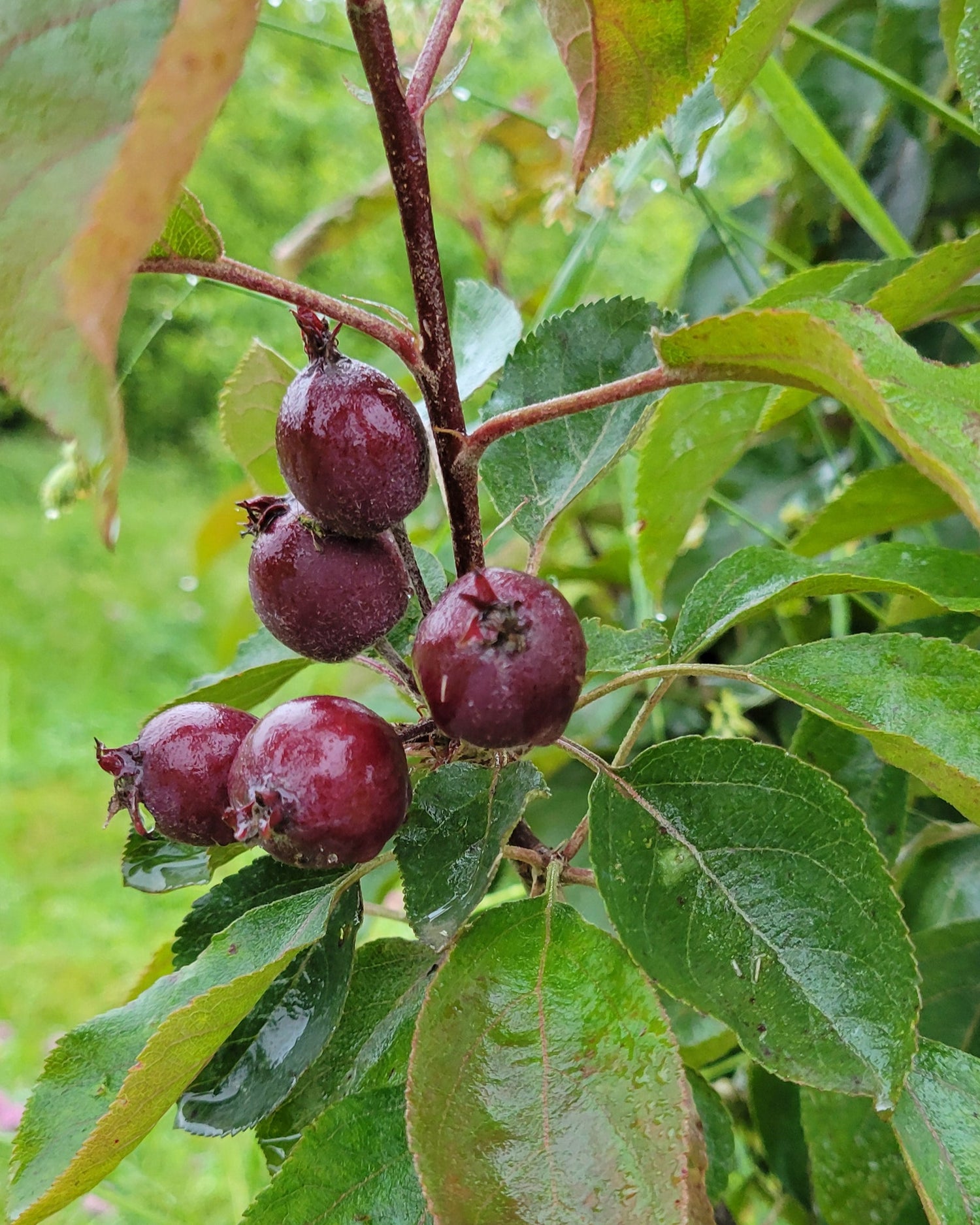
History: Maypole was developed in 1976 by Plant Breeding International at the East Malling Research Station in the UK as a cross between Wijcik Spur McIntosh and Baskatong. Wijcik Spur McIntosh originated as a mutation discovered on a McIntosh tree in 1962 in the Wijcik Orchards in British Columbia, the branch growing oddly straight with little branching. Several varieties were deliberately bred to have this mutation and now Maypole, released in 1986, is one of six columnar varieties developed at the station. This series of trees is known as Ballerina in the UK but due to that name being unavailable in the US, they are known as Colonnade in North America.
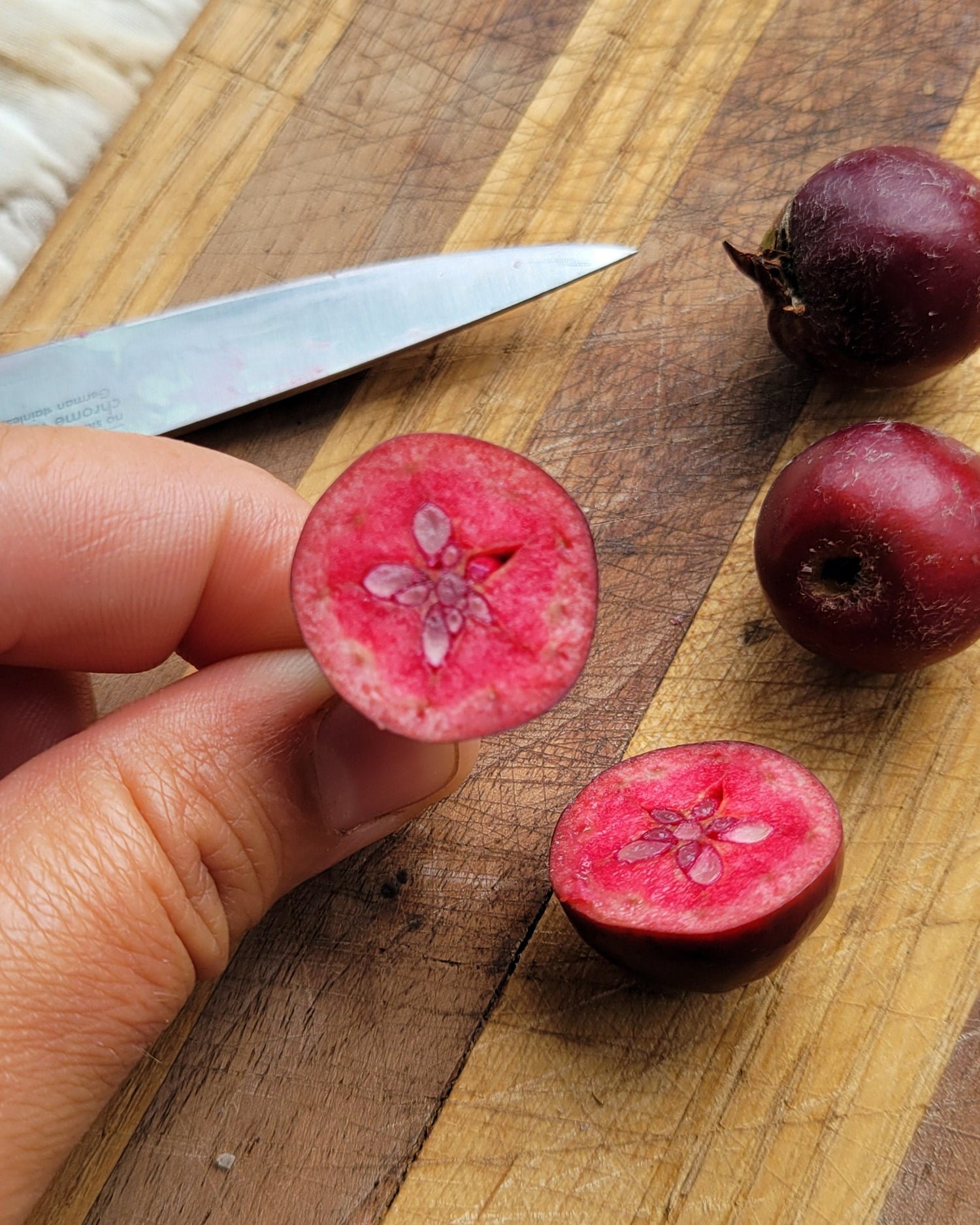
Why We Grow It: Not only is Maypole unique as a columnar apple, this crabapple also boasts lovely red flesh, bronze coloured leaves, and pretty pink blossoms in the spring. This makes it overall a lovely ornamental tree to have, whether planted in the yard or in a pot. The fruit is also excellent for jelly, apple butter, and cider, adding a red hue to each. It can also be eaten fresh although it tends to be quite acidic with a touch of sweetness.

History: John McIntosh planted several apple seedlings upon settling in Dundela, Ontario. From these, he discovered the famous McIntosh apple as a seedling in his orchard. The family began selling the fruit and grafted McIntosh trees in 1835 and in 1870 it entered commercial production. By the 1900s it was one of the most popular apples in northeastern North America, although its popularity waned over time as varieties such as Gala were introduced. Nonetheless, McIntosh apples still remain some of the most popular in North America. The original tree died in 1906 after being damaged by a house fire and a commemorative plaque marks where it stood. The apple has since been named Canada's national fruit. The Macintosh line of Apple computers was also named after this variety.
Why We Grow It: For fans of Canadian heritage apples in particular, this one is hard to beat. To the best of our knowledge, this is the original strain of McIntosh. Aside from its storied past, McIntosh apples boast soft, slightly tart flesh with high Vitamin C content. It is excellent for fresh eating and making applesauce.