Scionwood

Scionwood
For those looking to graft heritage and unique trees, we are happy to provide scionwood directly from our orchards! Every year we get tons of requests for rootstock and scionwood. While our main business is in the finished product (grafted fruit trees), we also like to support those wishing to learn the grafting process for themselves. We can attest that it is a very enjoyable (and rather addictive) pastime!
ORDERING SCIONWOOD: Scionwood orders generally open in December and must be placed by the end of February. We require a minimum 25% deposit upfront.
If you are interested in scionwood but the sale season has ended, we are happy to add you to our request list for the following spring! Just send us a list of the varieties and quantities you are interested in and we will add you to our list.
SHIPPING/PICKING UP SCIONWOOD: We generally recommend that customers receive their scionwood orders by mid-April at the latest to ensure it arrives dormant, but can hold it longer if customers accept the risk that the scionwood may start breaking dormancy.
Due to the nature of nature, sometimes scions begin budding out early and we want to ensure you receive dormant scionwood that you will have time to graft with. If you need to hold your scionwood dormant until May, you will need to decide how you will do that. It is relatively simple, and you can learn more about storing scionwood at home here. If you are picking up your scion order, we recommend doing so ASAP after you receive your pickup notification via email.
For those new to the grafting process, we also offer the following resources:
- Our annual in-person Apple Grafting Workshop!
-
Fruit Tree Grafting for Everyone, a handy grafting guide co-authored by Steph who owns Silver Creek Nursery!


Sort by:
184 products
184 products
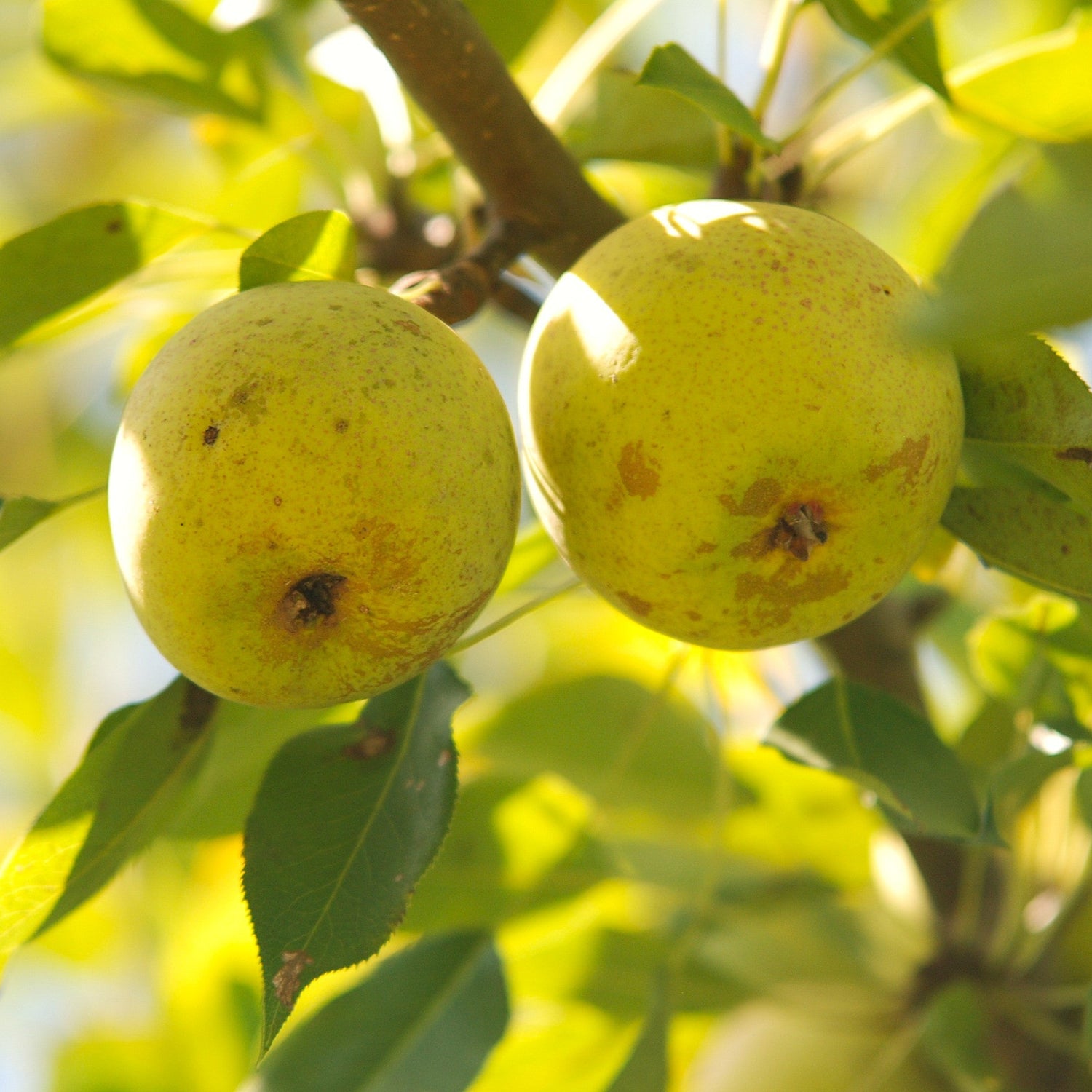
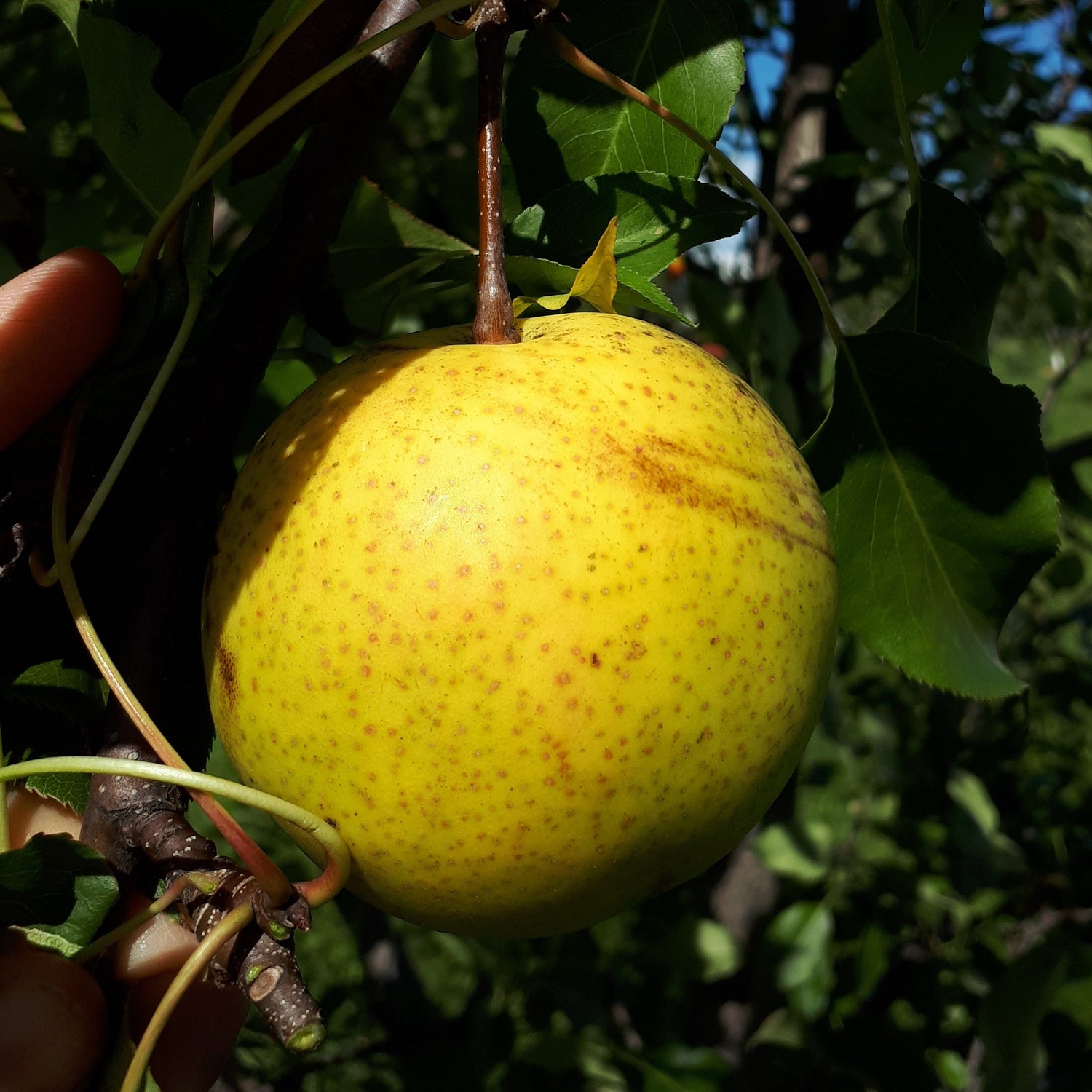
History: Ping Guo Li (translated from Mandarin as 'apple pear') was developed by Jilin Sheng in China and likely named for its round, apple-like shape. While its exact age is unknown, this pear is considered to be an old variety.
Why We Grow It: This Asian pear is nothing but sweet and juicy melting goodness! Its flavour is quite sweet and is comparable to that of a European pear. So far it has performed very well in our test orchard and displays good cold-hardiness.


History: Not to be confused with Pink Lady, Pink Pearl was developed by breeder Albert Etter who had the goal of creating red-fleshed apple varieties from seedlings of Surprise, a red-flashed variety. In 1940, he partnered with the California Nursery Company to bring some of these varieties to the public. Pink Pearl was selected as the best amongst his seedlings and released in 1945.
Why We Grow It: One of Steph's favourites! Pink Pearl is a delicious apple that is crisp with a pronounced unique fruity flavour and a nice blend of sweetness and sharpness. Its yellow-pink skin conceals a bright pink interior that is stunning to see compared to the white-ish flesh of most apples. It is great fresh or for applesauce, and it is relatively slow browning- it can be cut and bagged in the fridge the night before with very little change in colour the next day. Their pink colour adds a unique visual appeal to baked goods as well, such as with the gooseberry and Pink Pearl tarts Steph made pictured here!
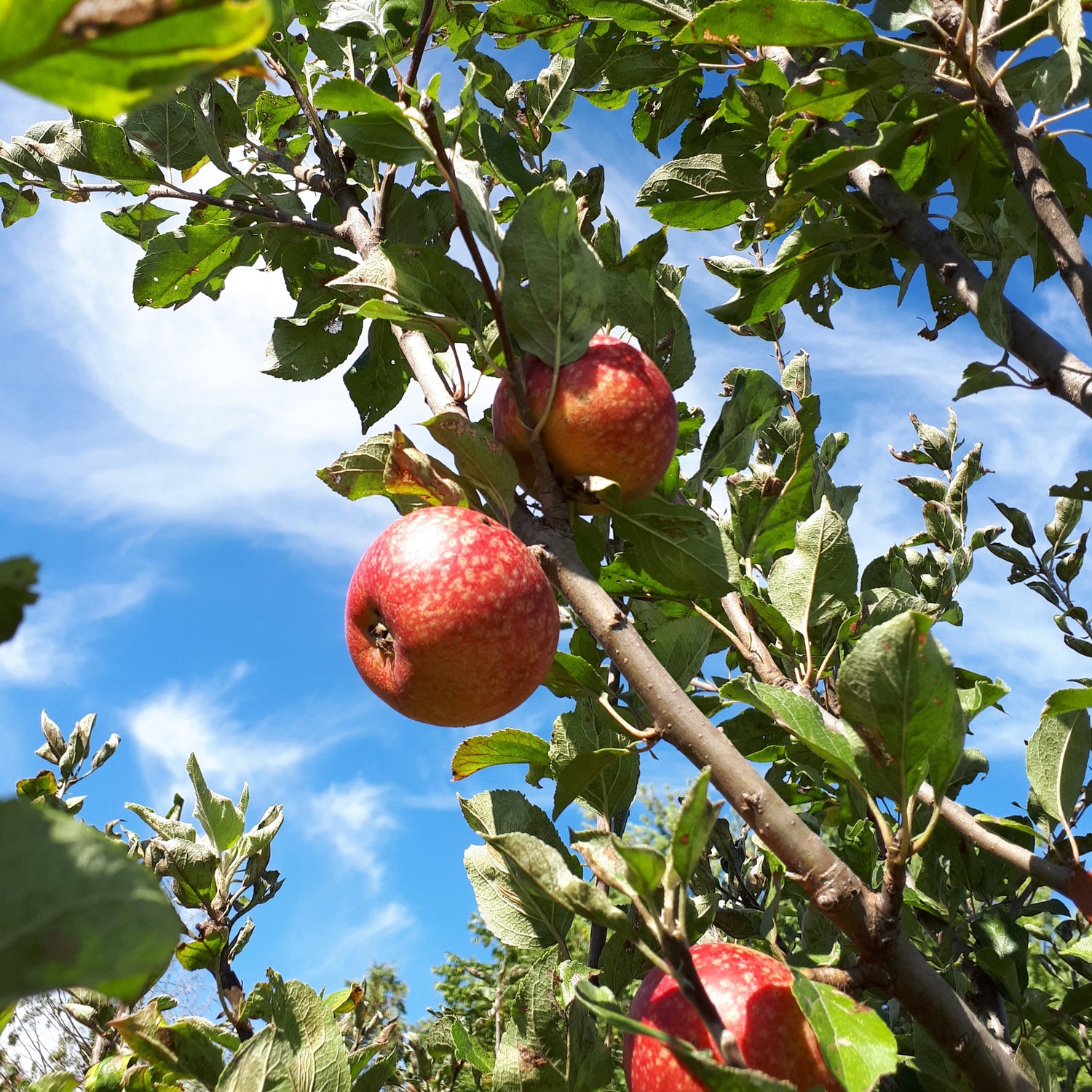
History: Porter's Perfection originated in Somerset in the UK some time in the 1800s. It became extremely popular in England although its popularity began to wane following the 1910s. It is still grown today but not as commonly as it once was. It shows promising results in the North American climate, unlike some other European cider cultivars.
Why We Grow It: This English cider apple produces a medium bittersharp cider. It has done well in different studies in Ontario with the Vineland Research Station with regards to juice composition, disease resistance and overall performance. The tree is a heavy cropper and grows vigorously.


History: President plum was first raised by Thomas Rivers at Rivers Nursery in England where he introduced it in 1901. They became quite popular due to their excellent performance as a fresh eating and cooking plum, as well as their late ripening time which means they are available when many other plums are no longer in season. They remain popular in the UK and United States.
Why We Grow It: This European variety is a great way to extend the plum season. The large, oval fruit has dark blue skin and yellow-orange flesh with a pleasant flavour. It is good for fresh eating and cooking. The tree is vigorous and produces heavy crops.


History: Prima is one the apples developed from the collaborative PRI disease-resistant breeding program run by Purdue University, Rutgers University, and the University of Illinois. It was introduced in 1958 but unfortunately is no longer fully scab resistant due to the fungus evolving to overcome the resistance since then.
Why We Grow It: Another great apple for organic production and excellent for the backyard or farmer’s market sales! This apple is sweet, juicy, and flavourful and boasts good disease resistance..

Why We Grow It: Another successful introduction from the PRI breeding program, Priscilla boasts resistance to most common apple diseases including fireblight and scab. The fruit is also quite attractive with a deep red blush over yellow skin with a sweet and subacid flavour.
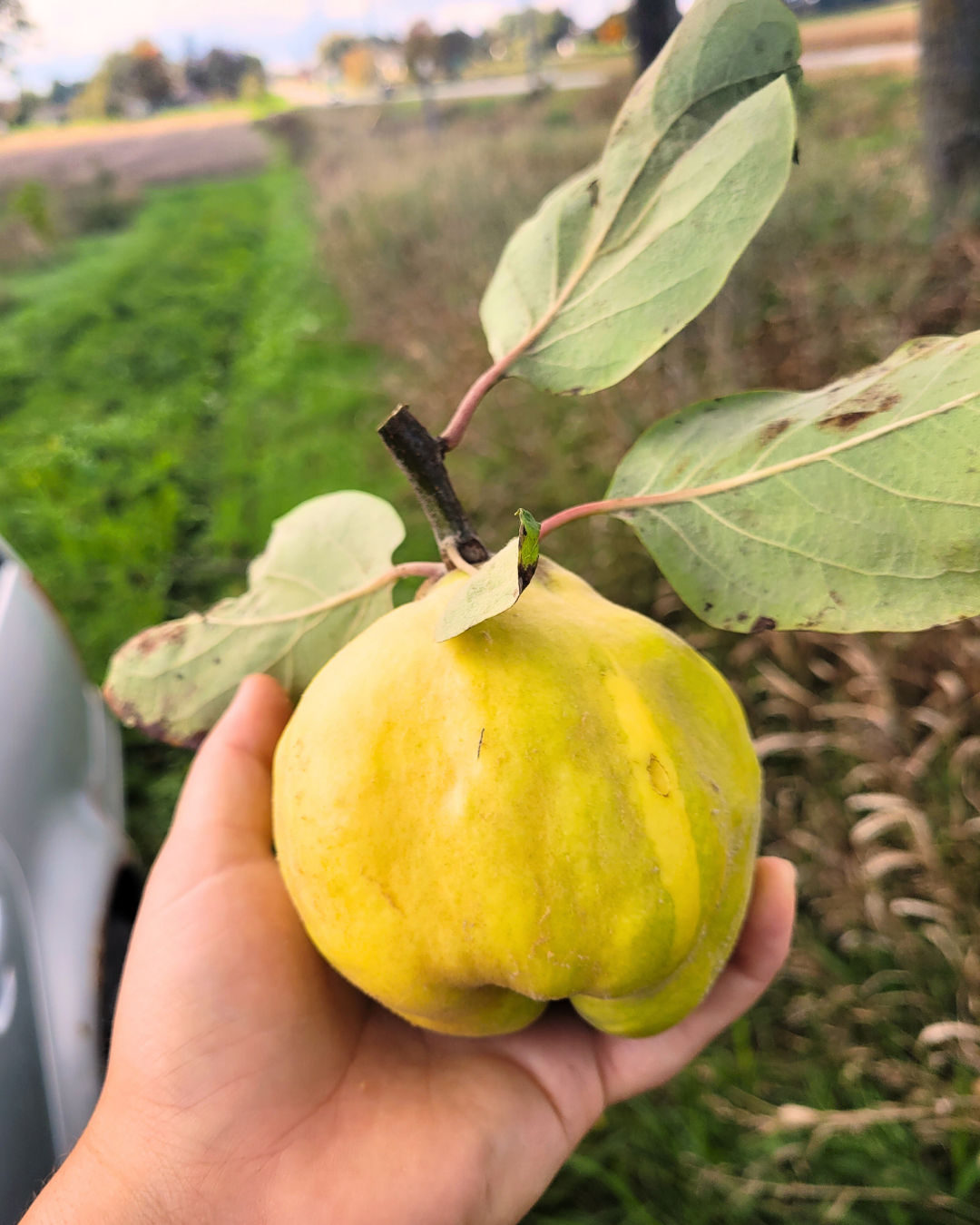
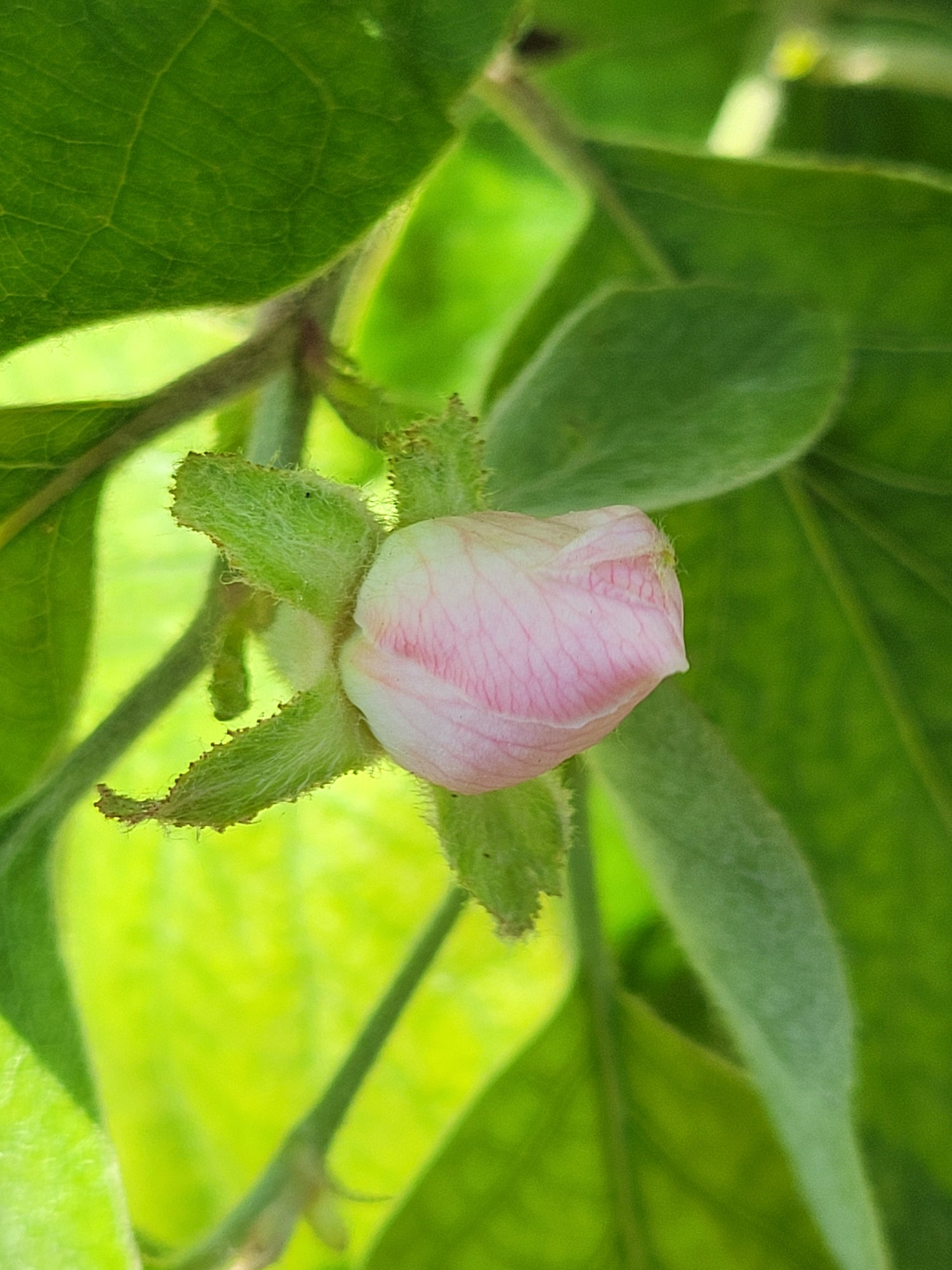
History: The history of Quince of Portugal is largely unknown aside from the fact that it was introduced to England in the early 1600s.
Why We Grow It: This quince is often considered to have the best flavour of all quinces. On top of that, the impressive fruits of this variety can weigh up to 1 lb and are juicier than most other cultivars. When ripe, this quince cooks to a lovely crimson coloured puree. It is best to store the fruit indoors for a couple weeks before eating it.

NOTICE: This tree was originally listed as a Maxine pear but upon fruiting we realized there had been a mix-up in the trees we received. Through genetic testing and our own observations, we are pretty sure the trees are actually Red Clapp's but cannot be 100% certain at this time.
History: Red Clapp's Favourite, also known as Kalle Red, is a sport of Clapp's Favourite that was discovered in the 1950s in an orchard in Missouri. Clapp's Favourite normally produces green pears but when this bright red fruit emerged on one branch instead, the mutation was further propagated for its attractive deep red colour.
Why We Grow It: In a strange twist in the fruit tree world, we received these pears by accident when we had ordered in what we thought was scionwood for Maxine pears. When the taste and colour of the pears told us otherwise, we realized there had been a mix-up at some point and our mother tree is most likely a Red Clapp's Favourite based on the fruit and genetic testing. Despite the confusion, we have come to love this all-purpose, flavourful pear which is also noted for its profusion of beautiful white blossoms in spring and its heavy crops.

History: Red Gravenstein is a sport/mutation of the original Gravenstein/Yellow Gravenstein that is a striking bright red. Some say it is also sweeter than the original.
Why We Grow It: With attractive red skin, this is a lovely sport of the original Gravenstein. It is a good quality and sweet early apple that is excellent for home orchards.

History: Red Spy is a red sport of Northern Spy that was discovered in New York in 1895. It has many of the same qualities of Northern Spy but is generally larger and redder.
Why We Grow It: Like Northern Spy, Red Spy apples are juicy with a balanced sweet-tart honeyed flavour. Unlike the original, they boast a brighter red exterior and the fruit tends to be a little larger. They do tend to bruise easily due to their thin skin. To make up for that, they are known for making wonderful pies. The trees are cold hardy and vigorous.

History: Redfree is one of the apples developed under the collaborative PRI disease-resistant breeding program run by Purdue University, Rutgers University, and the University of Illinois. It was bred in 1966 and officially introduce to the public in 1980.
Why We Grow It: Redfree apples are great for fresh eating with a pleasant, mildly sweet flavour and softer yet crisp flesh. The fruit does not ripen all at once, allowing a longer eating season. As its name would suggest, it has decent resistance to several common apple diseases.
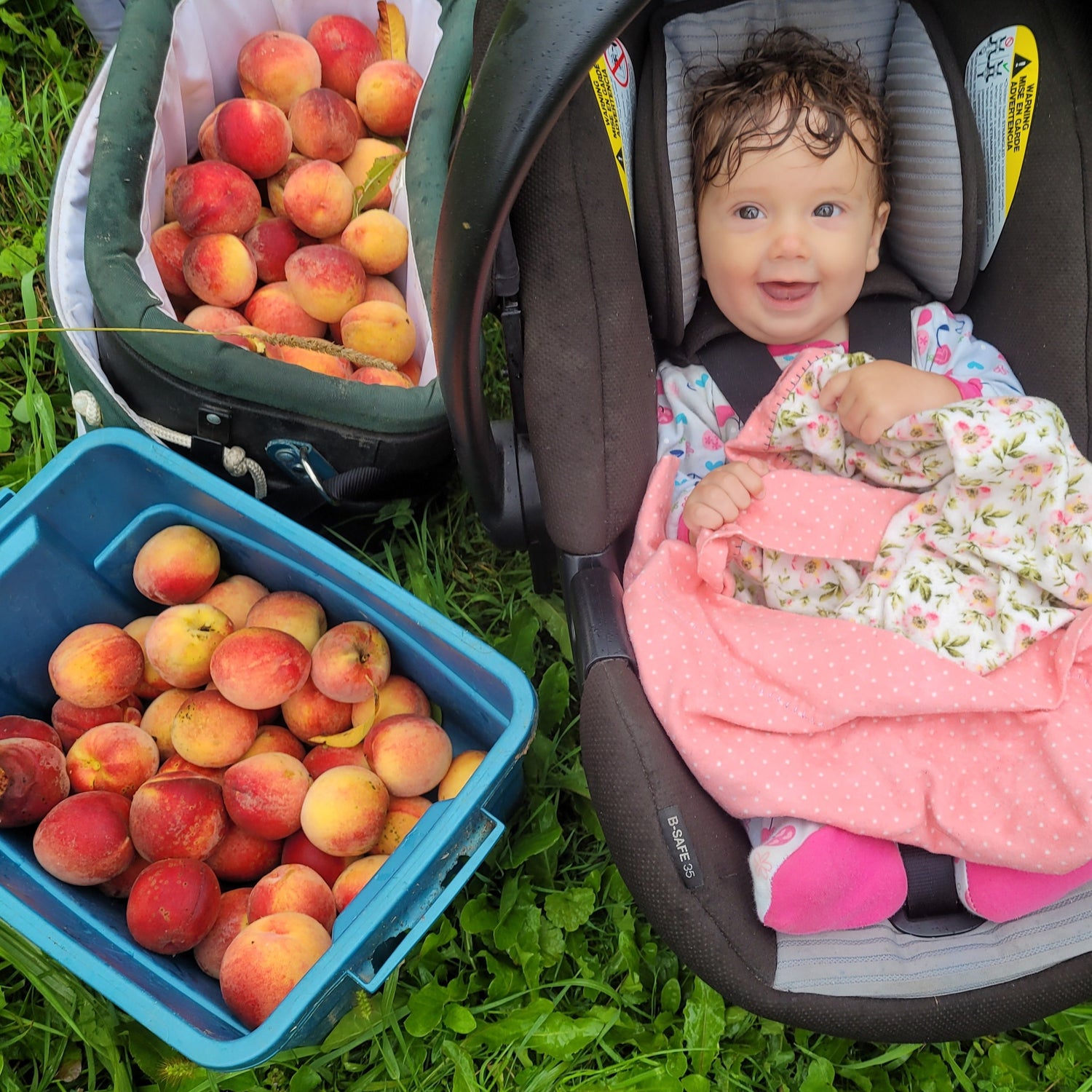
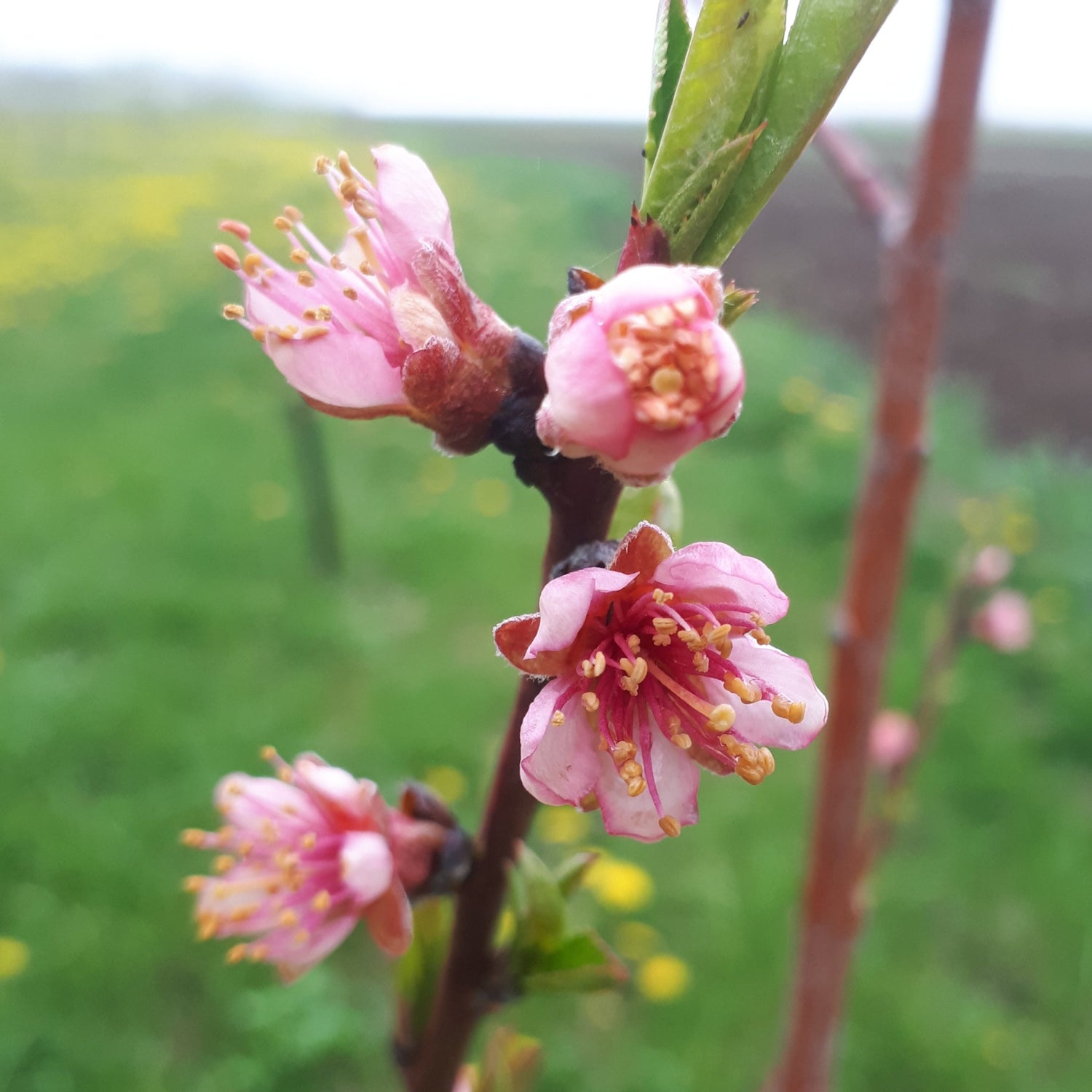
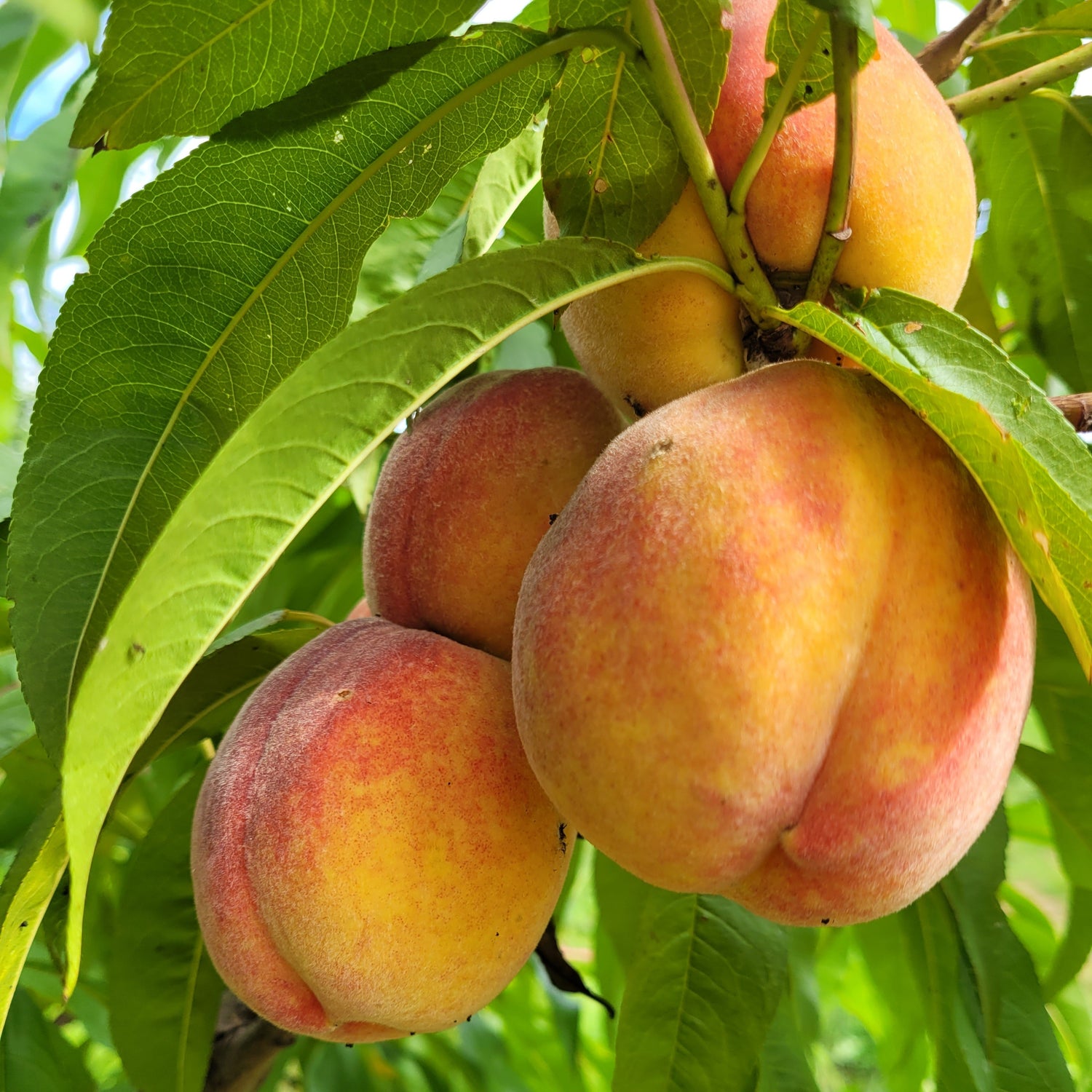
History: Redhaven peaches were created at Michigan State University's South Haven Research Center as part of the Haven series which began in 1924. Redhaven in particular was developed in the 1930s and released in the 1940s, making it the first commercial red-skinned peach variety. It is now one of the most commonly grown peaches in the world.
Why We Grow It: Redhaven is the most popular peach in North America, its sweet fruit being great for just about anything. The fruit is attractive, juicy, and flavourful and is slow to brown. The flesh does not turn brown when cut as quickly as other varieties. To ensure you can enjoy this great peach as much as possible, the tree begins bearing fruit at a young age, bears heavy crops, and the fruit ripens over a prolonged period of time which requires multiple harvests.
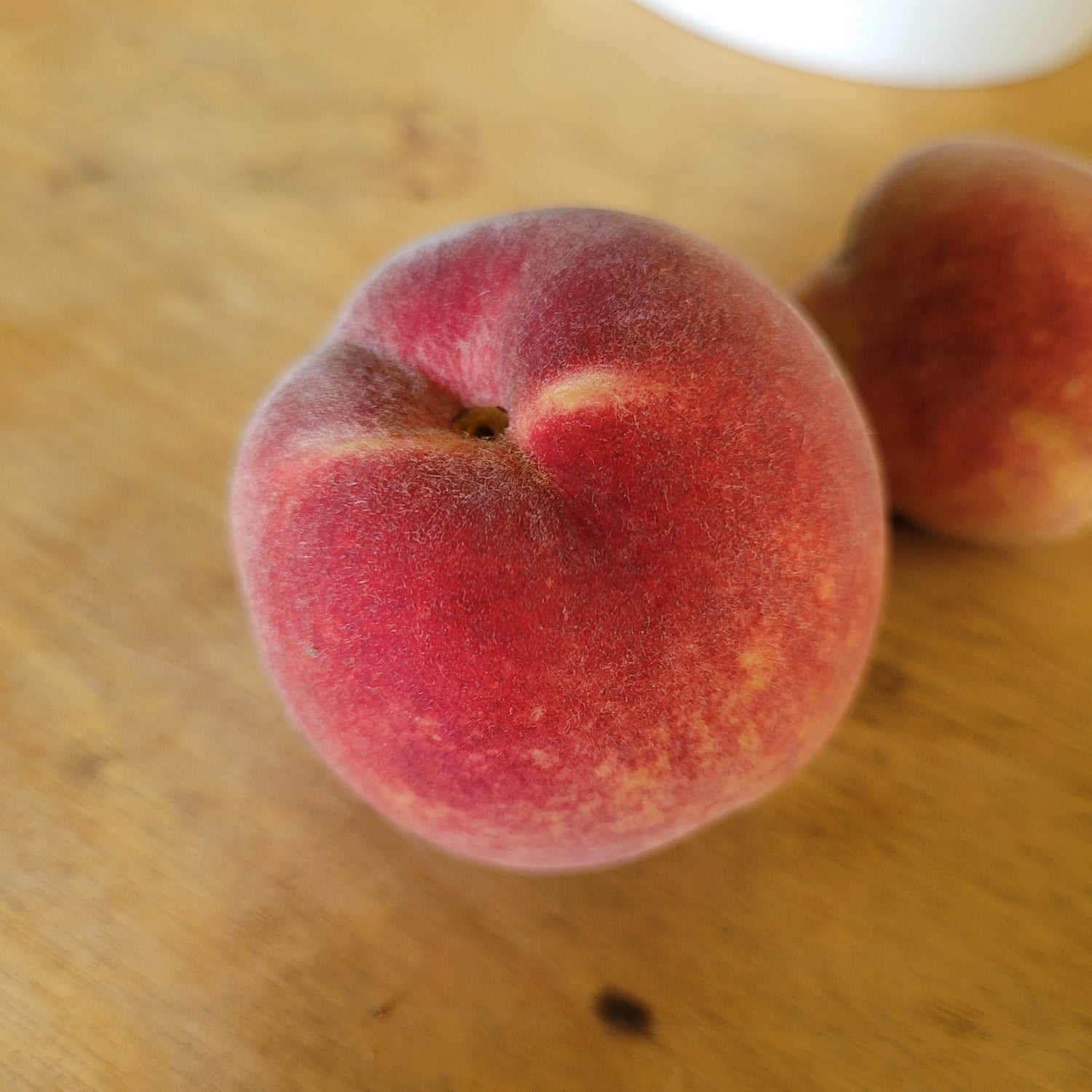
History: Reliance peaches were developed in a breeding program at the Agricultural
Extension Station in New Hampshire, where it was grown from seed in 1956. In 1961, the Reliance seedling got its first trial by fire, or ice in this case, as a severe cold spell dropped temperatures to -32°C. That summer only Reliance produced fruit and it was clear that this was a cold hardy winner. This tenacious peach was released in 1964.
Why We Grow It: Reliance is a very hardy variety that can still fruit after a winter low of -32°C, perfect for Canadian growers. The fruit is medium-sized, the skin is a dull red colour over yellow, and the flesh is bright yellow with freestone pit. It also tastes great and the fruit can be eaten fresh or used in baking and preserves.

History: Rhode Island Greening emerged around 1650 where it was grown from seed by a Mr. Green near Green's End, Rhode Island. Mr. Green owned a tavern and often gave scions from the original tree to his customers, although the tree eventually died from the demand for scionwood. The name was originally the descriptive 'Green's Inn apple from Rhode Island' and later shortened to 'Rhode Island Greening.'* This apple was commonly grown in New York and is still quite common today.
*Fun fact: The Ontario ghost town Unopark got its name in a similar way. It was originally founded by Richard Parker, Mouse's ancestor, and the name is a shortened version of 'You know the Parkers?'
Why We Grow It: This apple's long-lasting popularity is due to its reputation as perhaps the definitive American pie-making apple. The large, dark-green apple is too tart to be eaten fresh but is great in pies and holds its shape well when cooked. It also produces nicely in our test orchard, producing large, blemish-free fruit despite it's generally poor disease resistance.
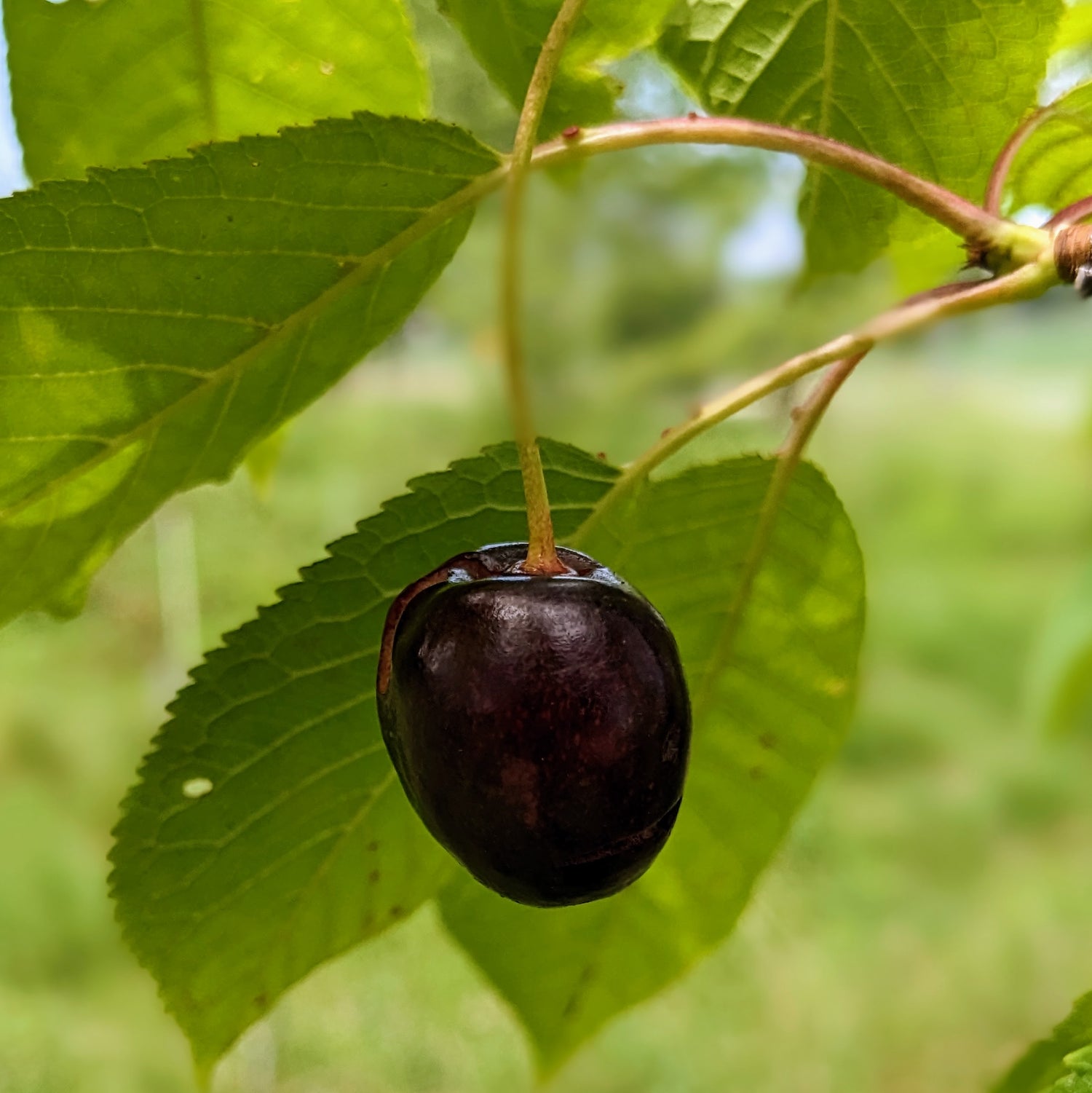
History: This heirloom sweet cherry originates from Arkona, Ontario where it was developed and grown by Ed Richter.
Why We Grow It: As an Ontario bred and raised sweet cherry, Richter cherries are well-suited to growing in our local conditions. We were fortunate to acquire this variety just before the removal of some very old Richter trees.

History: In 1817 Joel Gillet accidentally received Rome Beauty as a seedling in a shipment of nursery trees. His son planted the seedling along the Ohio River in Rome Township. When it began producing lovely red apples, Gillet's cousin started a nursery to propagate and promote it. Originally named Gillet's Seedling, the name was later changed to Rome Beauty in 1832 to honour the township. The original tree collapsed in the 1850s due to bank erosion but the variety still remains popular in the United States today.
Why We Grow It: The fruit is deep red, large, and slightly conical with cream coloured flesh. It has a mild flavour compared to something with more character like a russet, though still an excellent snacking apple. It makes a good cooking apple too since it keeps its shape when cooked. It also stores exceptionally well, lasting all winter long.

History: Rouville apples were created by R.L. Granger and G.L. Rouselle in 1962 at the Agriculture and Agri-food Canada research centre located in St.-Jean-sur-Richelieu, Quebec. The variety was introduced in 1983.
Why We Grow It: This lovely Quebec cider apple has a wonderful bitter-sweetness that is great for fresh eating and juicing and sauce. It is resistant to scab and has grown very well in our test orchard.

History: Royal Gala is a natural sport (mutation) of the Gala apple that was patented by Stark Bro's Nurseries in 1977. It boasts a deeper red colouring than the original Gala which makes it more visually appealing. In New Zealand, where the Gala apple originated, it has been almost entirely replaced by the Royal Gala in commercial growing operations.
Why We Grow It: Like the Gala apple, Royal Gala is popular for a reason. It is juicy and crisp with a sweet flavour and the fruit stores quite well.

Why We Grow It: Scarlet Vivian is quite similar to Dolgo although a little larger. For those who like very tart apples, this is an excellent one for fresh eating! The flavour is rich and complex, but balanced enough that it is quite enjoyable. However, Scarlet Vivian is best made into a jelly where its red colouration really shines. It may also have potential in cider blends. Based on Ken's observations, the tree appears to be relatively free of pest and disease issues.
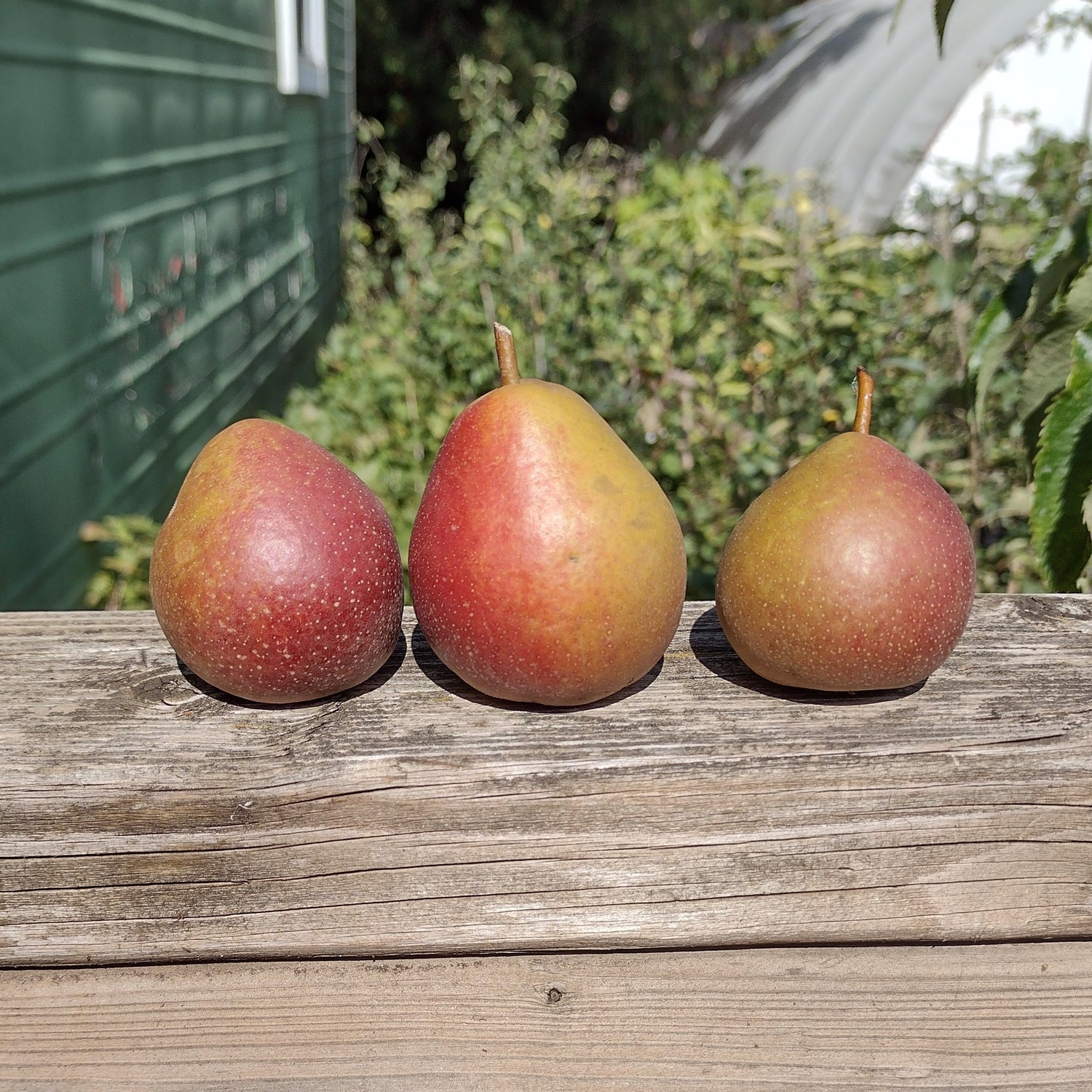
History: The history of the Seckel pear is somewhat contentious. It was said to have been named after a Mr. Seckel who discovered the variety growing as a sapling near Philadelphia in the late 1700s or early 1800s. Some say it is the only commercial American pear since it was thought to have been a wild seedling but others believe the tree sprouted from a seed left by German immigrants. Either way, this lovely little pear is still grown on a small scale across the States as a specialty fruit.
Why We Grow It: Although it is small in size, this heirloom is popular for eating fresh due to its high quality flavour. The skin is ruddy green with a pronounced red blush and the flesh is very sweet with a spicy flavour, which is why it's sometimes called 'Sugar Pear.' Aside from being excellent for fresh eating, this pear is great canned, pickled, and spiced. As an added bonus, the tree is resistant to fireblight.
Customer Suggestion: One of our wonderful customers shared a recipe for Pickled 'Sickle Pears' (aka Seckel) that had been passed down from his great grandmother. We haven't tested it out yet, but Seckel pears, brown sugar, cinnamon, vinegar and cloves, cooked and marinated, then pickled sounds very intriguing! Thanks for sharing David!

History: Sensation Red Bartlett, a sport or mutation of Bartlett, was discovered as a random mutation on a Bartlett tree growing in Australia in the 1930s. Thanks to its unique red skin and sweeter taste, it was eventually introduced commercially around 1960. It is most commonly grown in Australia and New Zealand.
Why We Grow It: A sport of Bartlett, this pear has the best features of its predecessor but boasts a higher sugar content and cheery red skin. For anyone who is a fan of Bartlett pears and unique yet delicious varieties, this pear is an excellent choice.
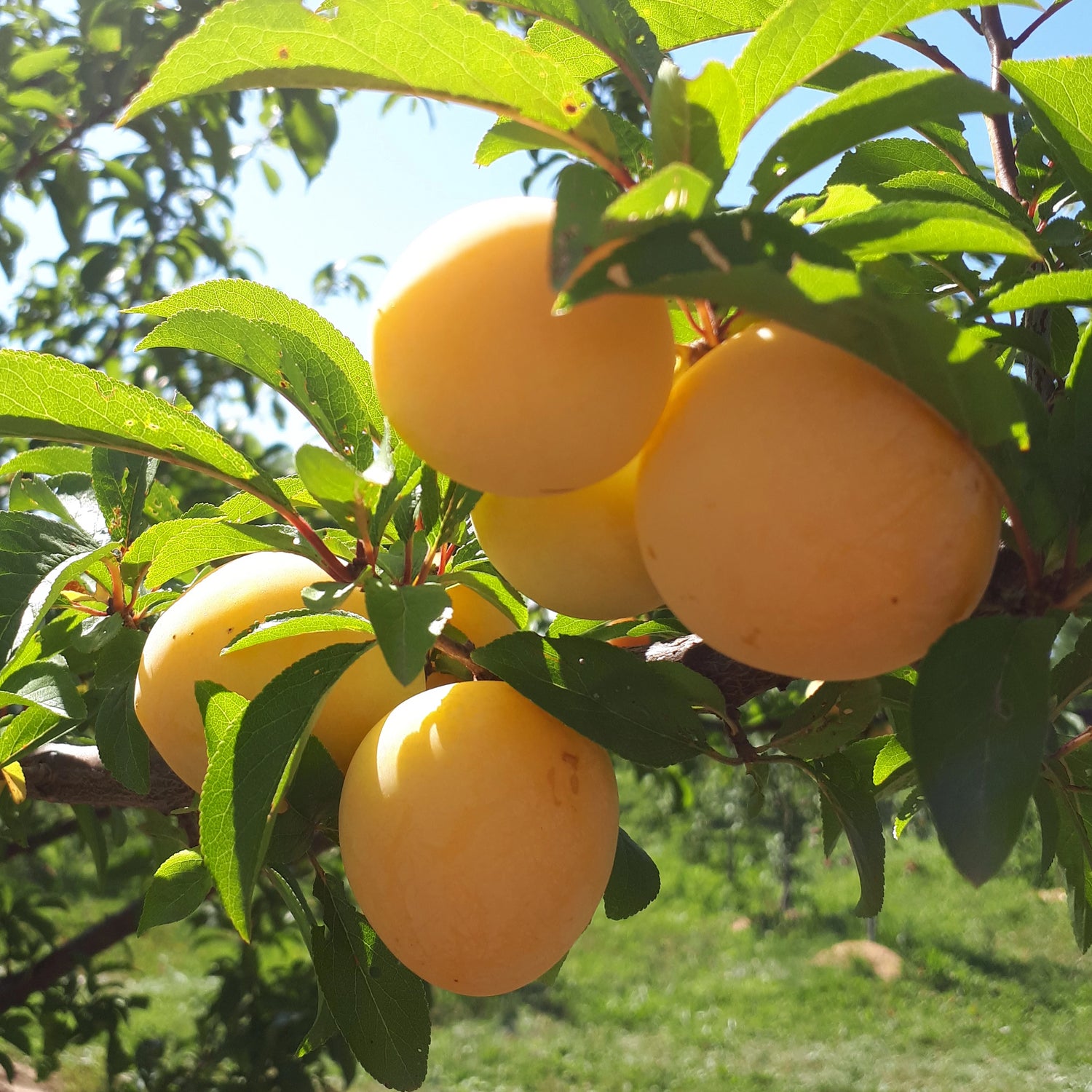
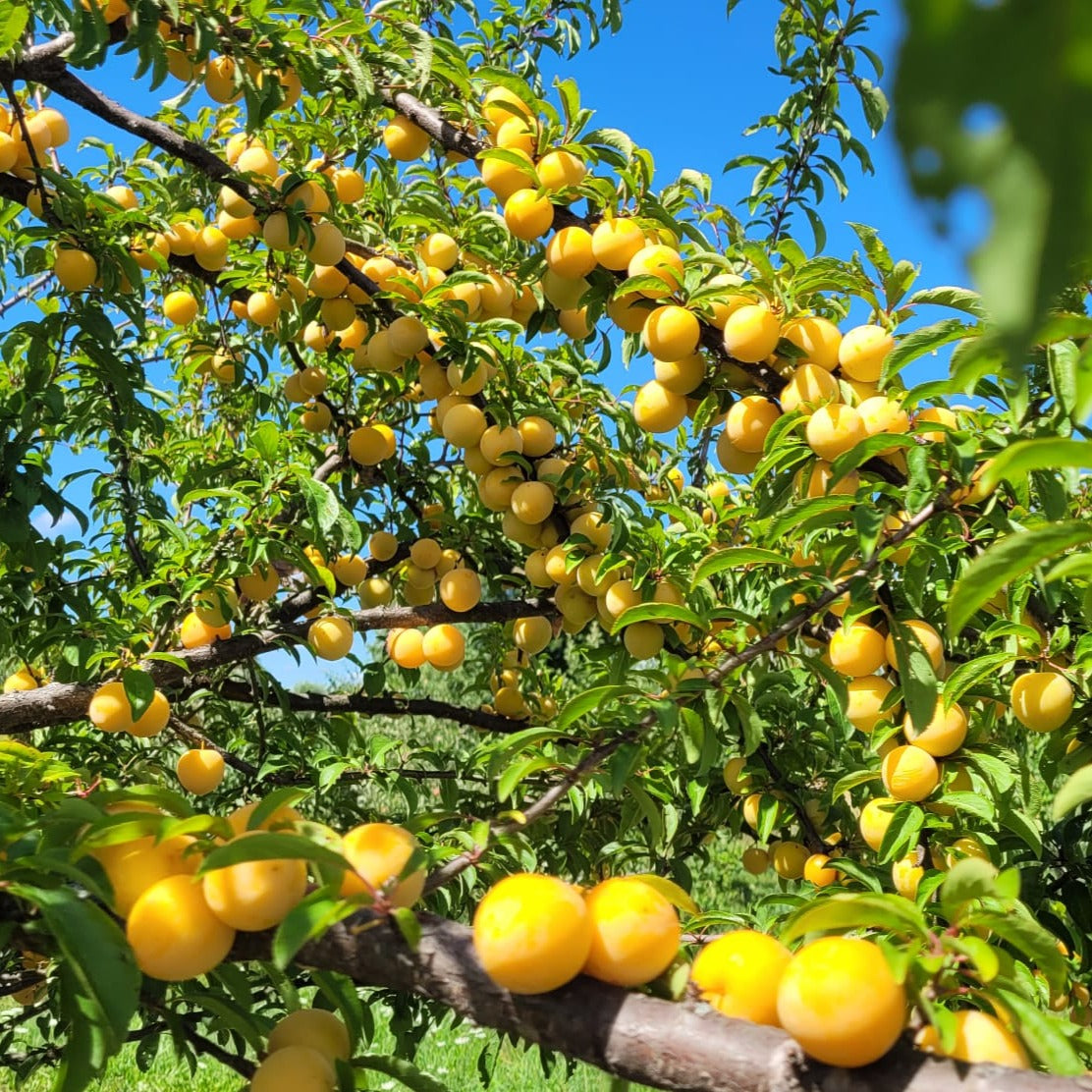
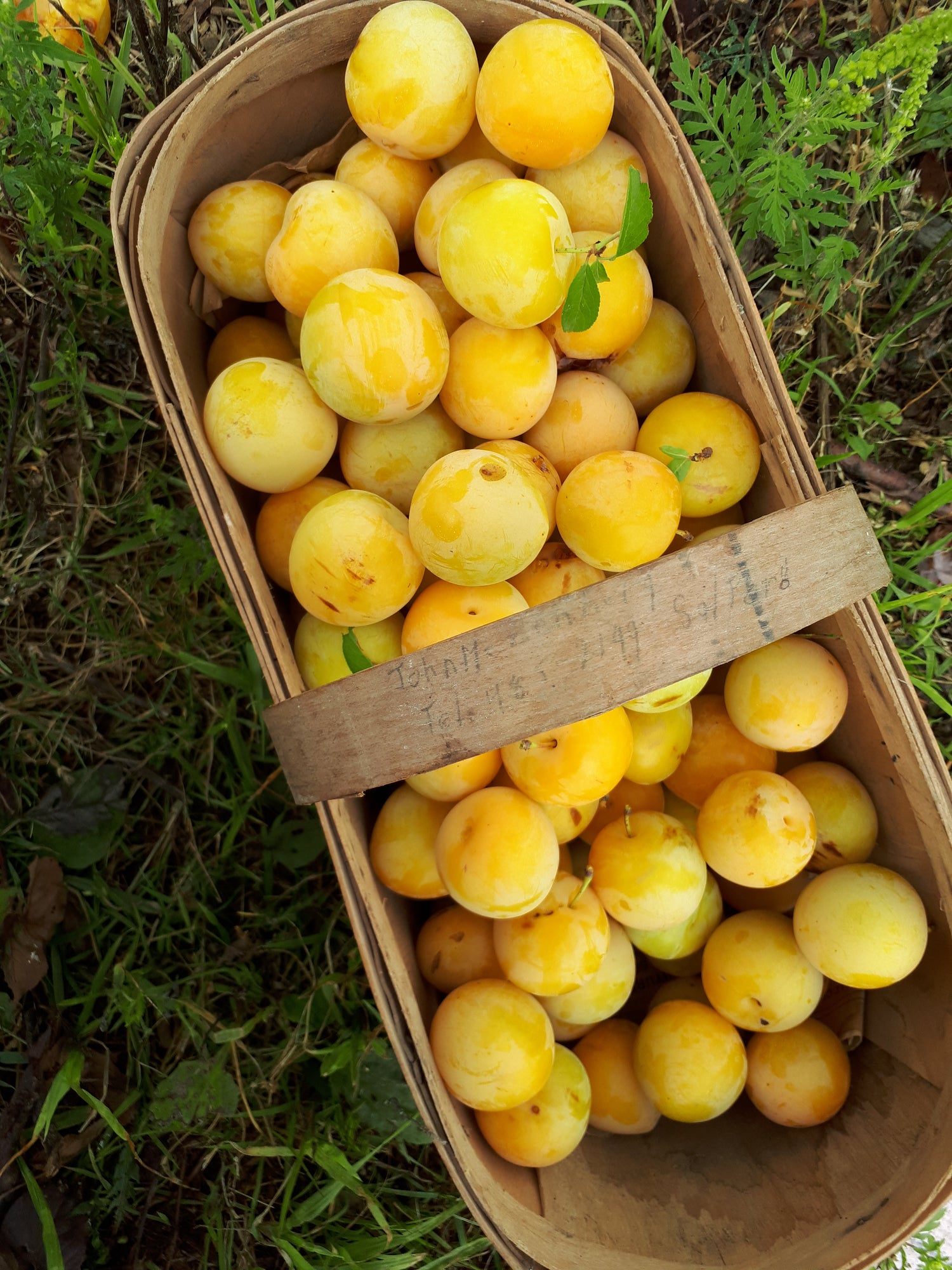
History: Shiro plums (translated from Japanese as 'white') were developed in California and introduced in 1899. They were bred by horticulturalist Luther Burbank who is renowned for his extensive experimentation with creating new plum varieties. Shiro plums are most commonly grown in the United States and Canada.
Why We Grow It: This early Japanese clingstone variety has yellow skin and flesh that is juicy and sweet. The fruit keeps longer than most plums, lasting two to four weeks, and the tree is known for its compact growth and heavy crops.

History: Shizuka (translated as "quiet" or "calm") was created at the Aomori Apple Experiment Station in Japan in the 1930s. It is a cross between Golden Delicious and Indo, the same parentage as its sister apple Mutsu.
Why We Grow It: Although it resembles Mutsu with its large yellow-green fruit, sometimes featuring a reddish-orange blush, Shizuka is sweeter and less acidic. This is an excellent fresh-eating apple for farm gate sales and it also keeps well. It is also great in salads due to its slow browning.

History: In the 1830s in Lancaster County, Pennsylvania, a seedling apple tree grew beside the smokehouse of William Gibbons. Perhaps it sprang from a core that some one had tossed there while they tended the fire. Who knows? What we do know is that the aptly named Smokehouse was commonly grown in the area until its popularity waned as sweeter apple varieties appeared on the market. Still, this variety has stood the test of time due to its great flavour.
Why We Grow It: Traditionally Smokehouse apples are picked a little early and used for baking, but if they're allowed to ripen fully on the tree, some people have described the balanced flavour as being “like drinking fresh-pressed cider!”.
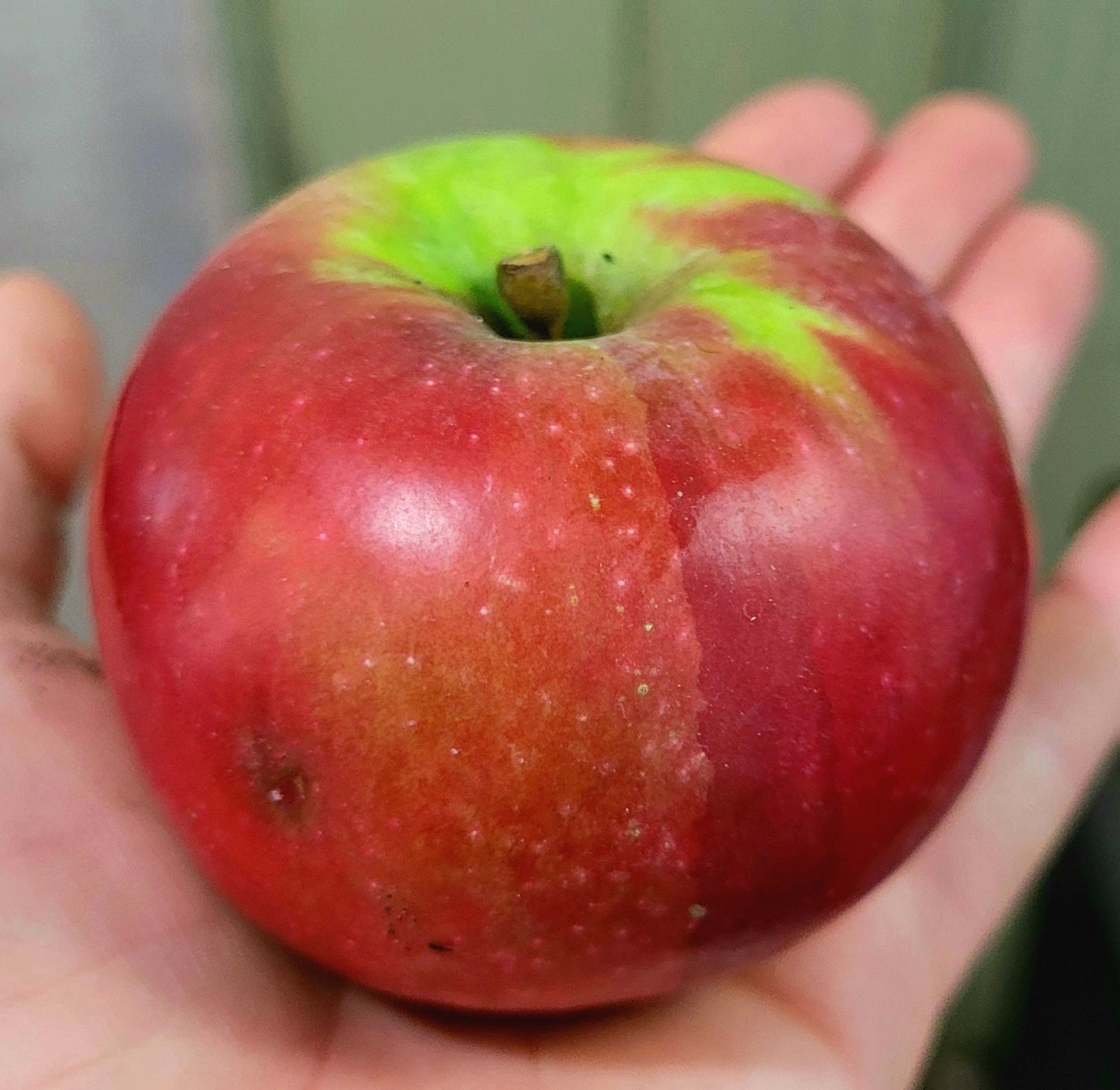
History: Snow, aka Fameuse, apples originated near Lake Champlain in Quebec some time before the 1730s. The exact origin is unclear but this variety is thought to have originated from a seedling or cutting brought from France. From about 1750-1850, this was one of the most commonly grown apples in Quebec until the orchards were almost wiped out in the latter half of the 19th century by disease and failed to regain their popularity. However, these lovely apples may still be with us in their own way as they are one of the potential parents of McIntosh.
Why We Grow It: It is easy to see why Snow apples were once so popular. These apples have a lovely deep red skin with pure white flesh with a sweet strawberry flavour. These trees are also quite cold hardy and produce heavy crops.
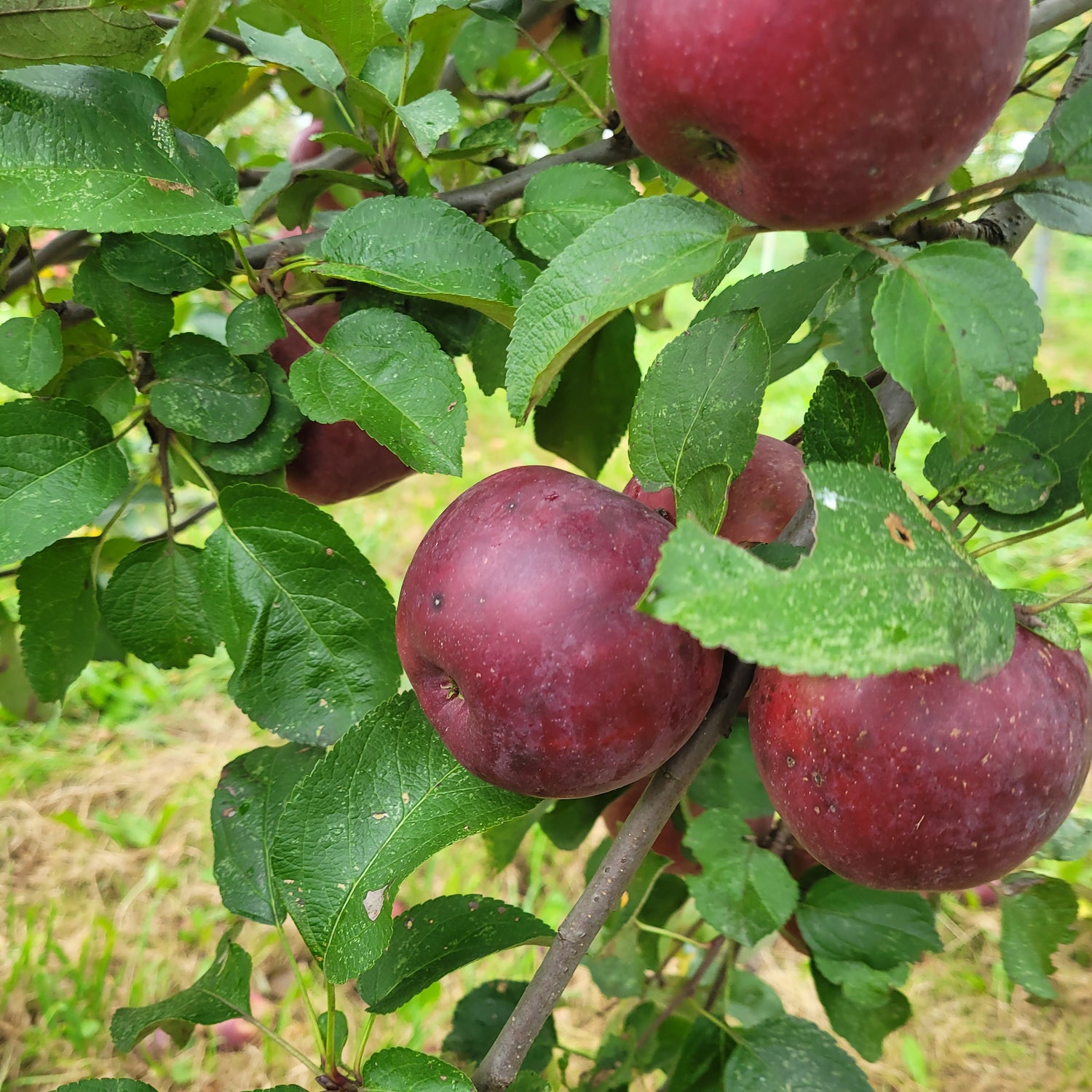
History: Spartan apples are a Canadian variety that was developed at the Pacific Agri-Food Research Centre in Summerland, BC in 1936 by Dr. R.C. Palmer. Of particular interest is the fact that Spartan apples are the first apple variety created by a formal scientific breeding program. They have been popular in North America ever since and are even commonly found in gardens in the UK.
Why We Grow It: This variety is known for its sweet/acid flavour and pleasant crunch, especially when eaten fresh off the tree. They tend to soften rather quickly after they are picked but luckily the fruit hangs on the tree 2-3 weeks after its ripe which helps to extend the optimal time to enjoy this variety. Spartan apples are also known for being relatively easy to grow, having decent disease resistance, heavy crops, and an ability to keep all winter.

History: Spigold (aka Spy Gold) was developed at the New York Agricultural Experiment Station in Geneva, New York and released in 1962. It is a cross between Red Spy and Golden Delicious that has remained somewhat popular in North America.
Why We Grow It: Spigold marries the best qualities of Golden Delicious and Red Spy. It produces very large apples that are crisp and juicy with a honeyed sweet/tart flavour. These large apples are excellent for fresh eating, making applesauce, baking into pies, and making into cider. They also store quite well and some say the flavour actually improves in storage.

History: The St. Lawrence apple was discovered in the Montreal area as a seedling of a Snow apple, the most popular variety in Quebec at the time. By 1835, these apples were commonly grown in the area where they were popular for fresh eating and cooking but have since faded into obscurity.
Why We Grow It: Although less popular now, these apples are still good for eating and baking. The boldly striped red skin also makes the fruit very attractive. The tree bears good crops each year and is relatively hardy.
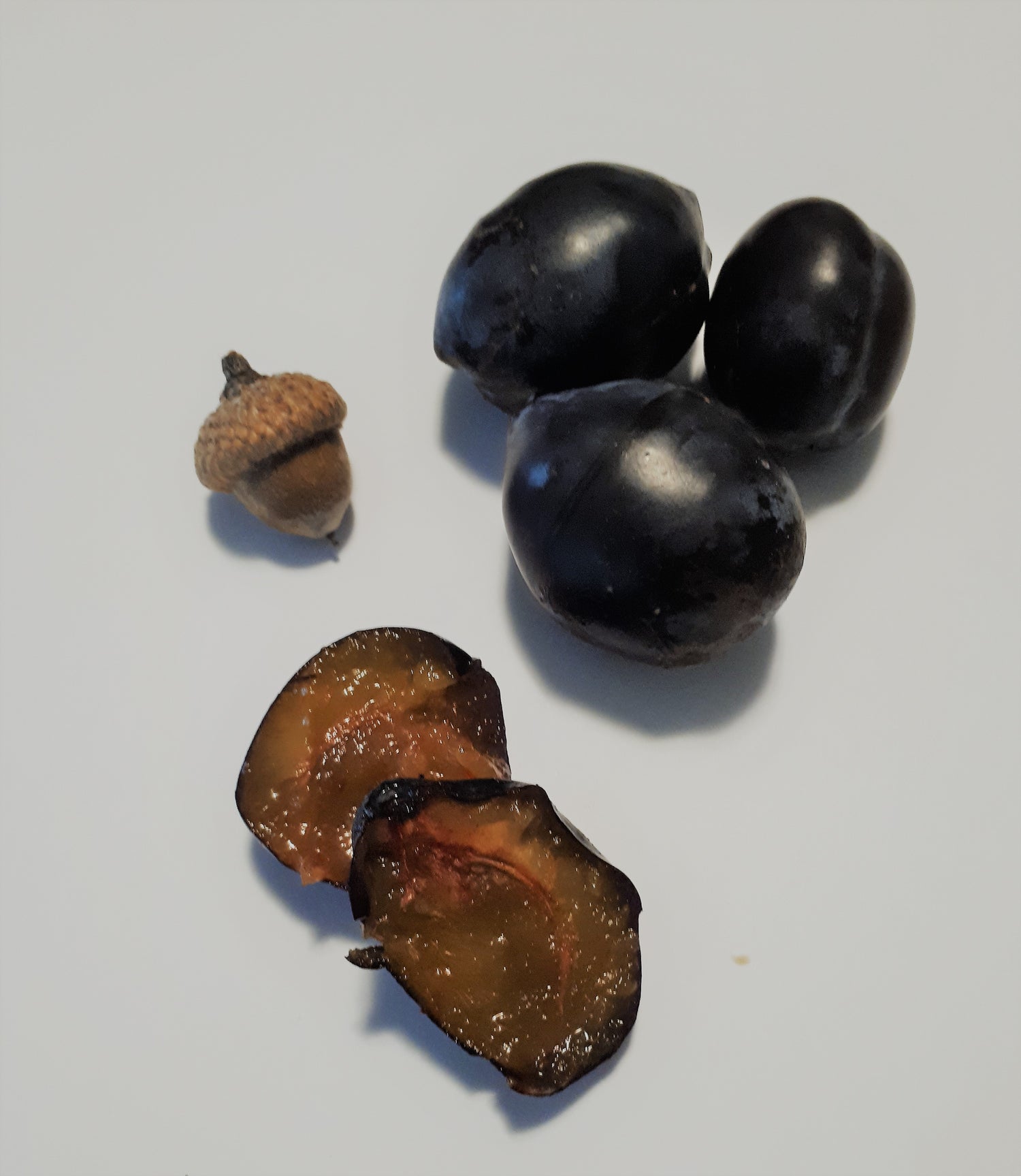
History: Stanley plum was developed in Geneva, New York by Cornell University and released in 1962.
Why We Grow It: This freestone European plum has deep purple skin and meaty, golden flesh, the standard for prunes. It has a sweet juicy flavour and is great for fresh eating, canning, and drying. The tree produces heavy, reliable crops.

History: Strawberry Pippin is another variety whose history we know little about. All we know is that it likely originated in England where it was first recorded in 1874. The 'pippin' in its name indicates that it was grown from seed by chance.
Why We Grow It: While we may not know much about its past, we do know why we are happy to grow it! Strawberry Pippin has an attractive red striped fruit which is quite firm and sweet. Its excellent flavour is best enjoyed picked fresh right off the tree. In our experience, Strawberry Pippin does well with minimal care, and is an excellent choice for the backyard.