Scionwood

Scionwood
For those looking to graft heritage and unique trees, we are happy to provide scionwood directly from our orchards! Every year we get tons of requests for rootstock and scionwood. While our main business is in the finished product (grafted fruit trees), we also like to support those wishing to learn the grafting process for themselves. We can attest that it is a very enjoyable (and rather addictive) pastime!
ORDERING SCIONWOOD: Scionwood orders generally open in December and must be placed by the end of February. We require a minimum 25% deposit upfront.
If you are interested in scionwood but the sale season has ended, we are happy to add you to our request list for the following spring! Just send us a list of the varieties and quantities you are interested in and we will add you to our list.
SHIPPING/PICKING UP SCIONWOOD: We generally recommend that customers receive their scionwood orders by mid-April at the latest to ensure it arrives dormant, but can hold it longer if customers accept the risk that the scionwood may start breaking dormancy.
Due to the nature of nature, sometimes scions begin budding out early and we want to ensure you receive dormant scionwood that you will have time to graft with. If you need to hold your scionwood dormant until May, you will need to decide how you will do that. It is relatively simple, and you can learn more about storing scionwood at home here. If you are picking up your scion order, we recommend doing so ASAP after you receive your pickup notification via email.
For those new to the grafting process, we also offer the following resources:
- Our annual in-person Apple Grafting Workshop!
-
Fruit Tree Grafting for Everyone, a handy grafting guide co-authored by Steph who owns Silver Creek Nursery!


Sort by:
184 products
184 products

History: Cooke's Jumbo originated as a random mutation of an existing quince variety in an orchard in Dinuba, California. It was brought to the attention of the L.E. Cooke Company, for which it was later named, and introduced commercially in 1972.
Why We Grow It: The fruit produced by Cooke’s Jumbo are exceptionally large with greenish-yellow skin and firm white flesh. They are not generally eaten raw, but rather used for baking, jellies, or candied. This is one of the hardiest varieties of quince available.
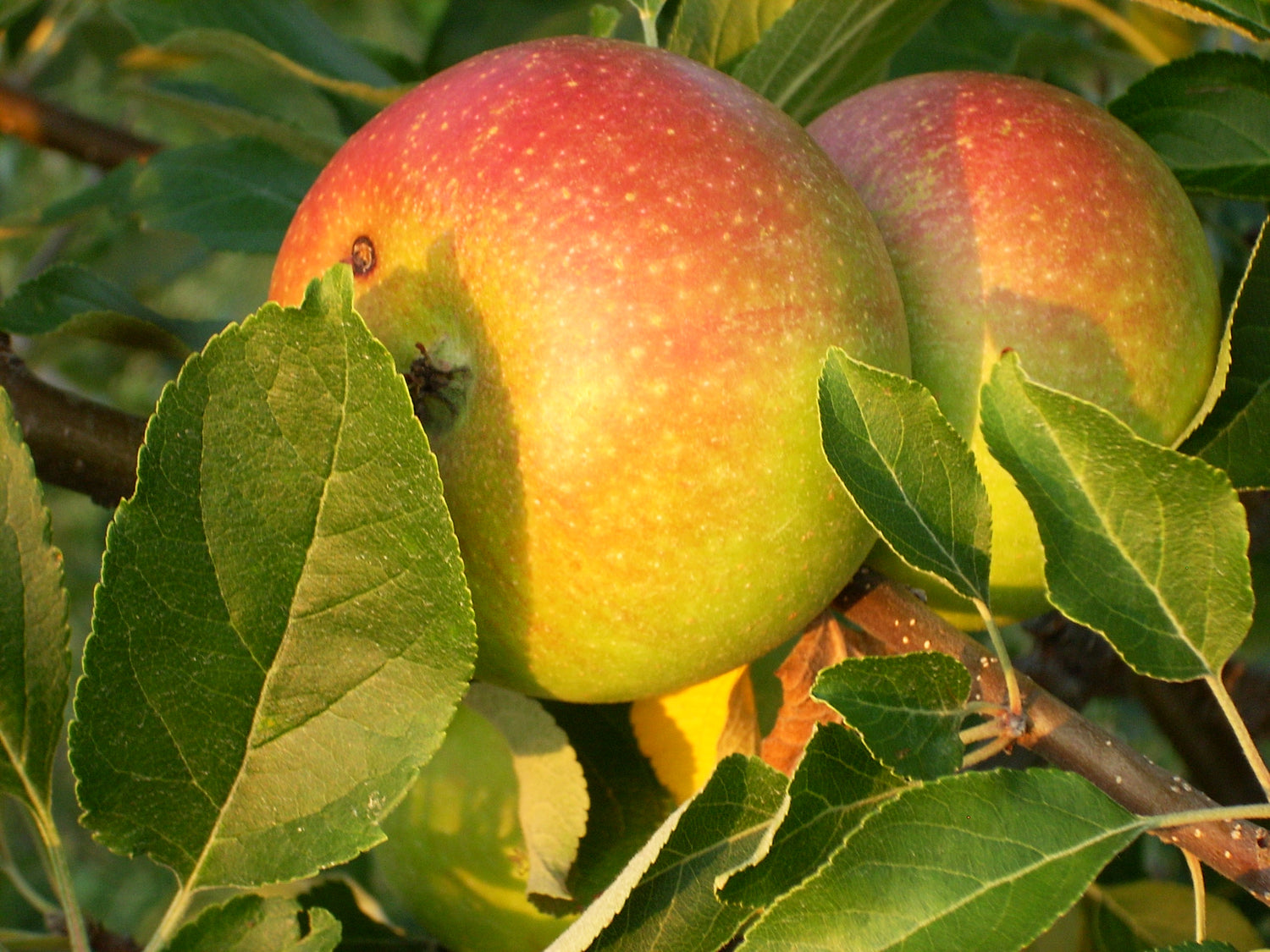
History: Cox's Orange Pippin was first grown in England in 1830 and was named after the retired brewer and horticulturalist who first bred it, Richard Cox. Its excellent flavour has earned it a spot as one of the best fresh eating apples in England where it has remained popular ever since. In fact, it still accounts for over 50% of fresh eating apples grown in the UK today. Despite its reputation, it is seldom grown commercially in North America due to its precocious nature and susceptibility to many common apple diseases.
Why We Grow It: This apple's reputation is hard to ignore with its sweet, subtle, aromatic flavour and attractive orange-red skin. Not only is it good for fresh eating, it is also popular in cider blends.
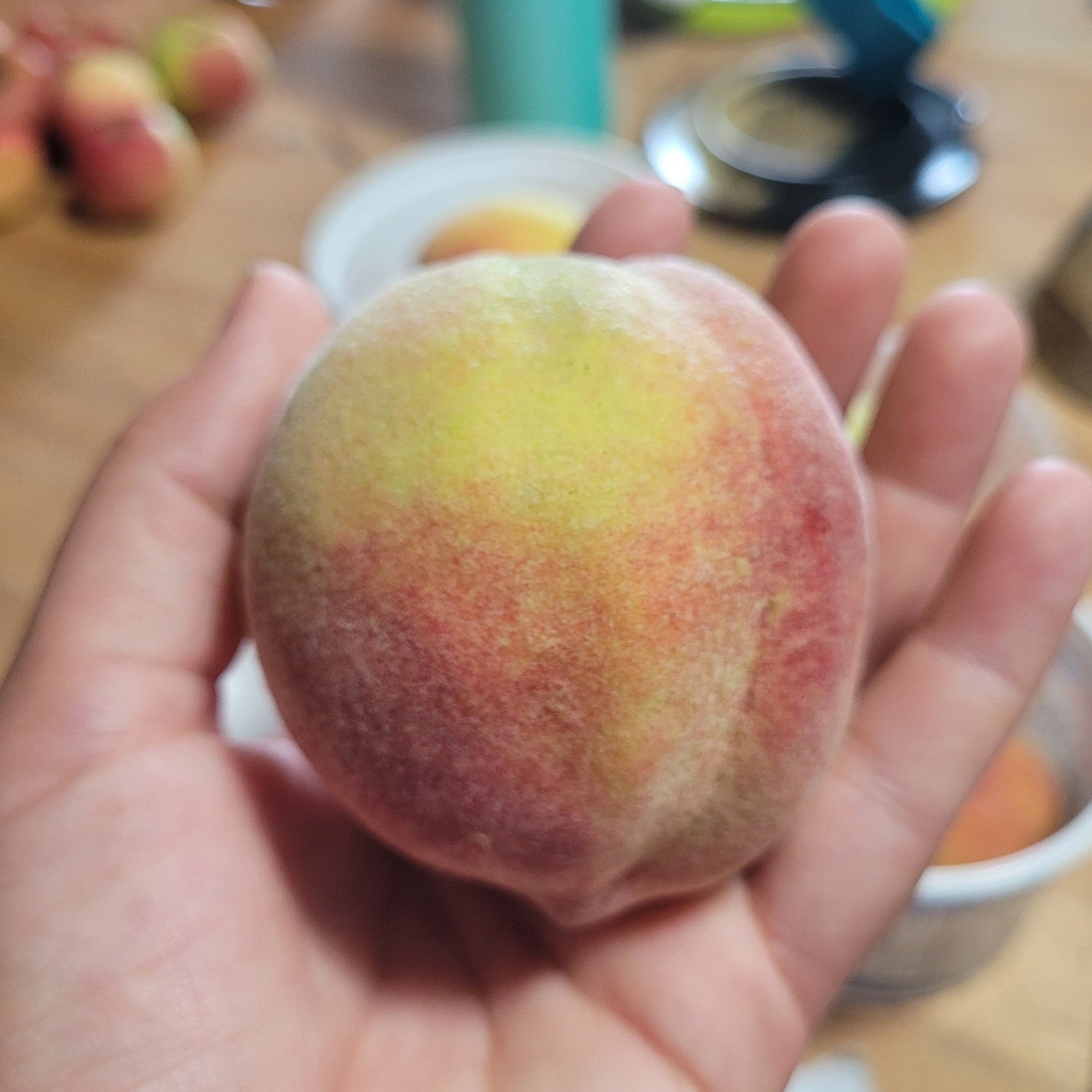
History: Crimson Rocket originated at the Appalachian Fruit Research Station in West Virginia as part of a breeding program to create columnar peach trees with good fruit quality. It was selected in 1996 for further testing and and patented in 2004.
Why We Grow It: Crimson Rocket is unique for its columnar growth, forming a narrow tree ideal for those with limited planting space! It produces freestone yellow peaches with a red blush with the perfect balance of sweet and tart, making it an excellent variety for fresh eating.
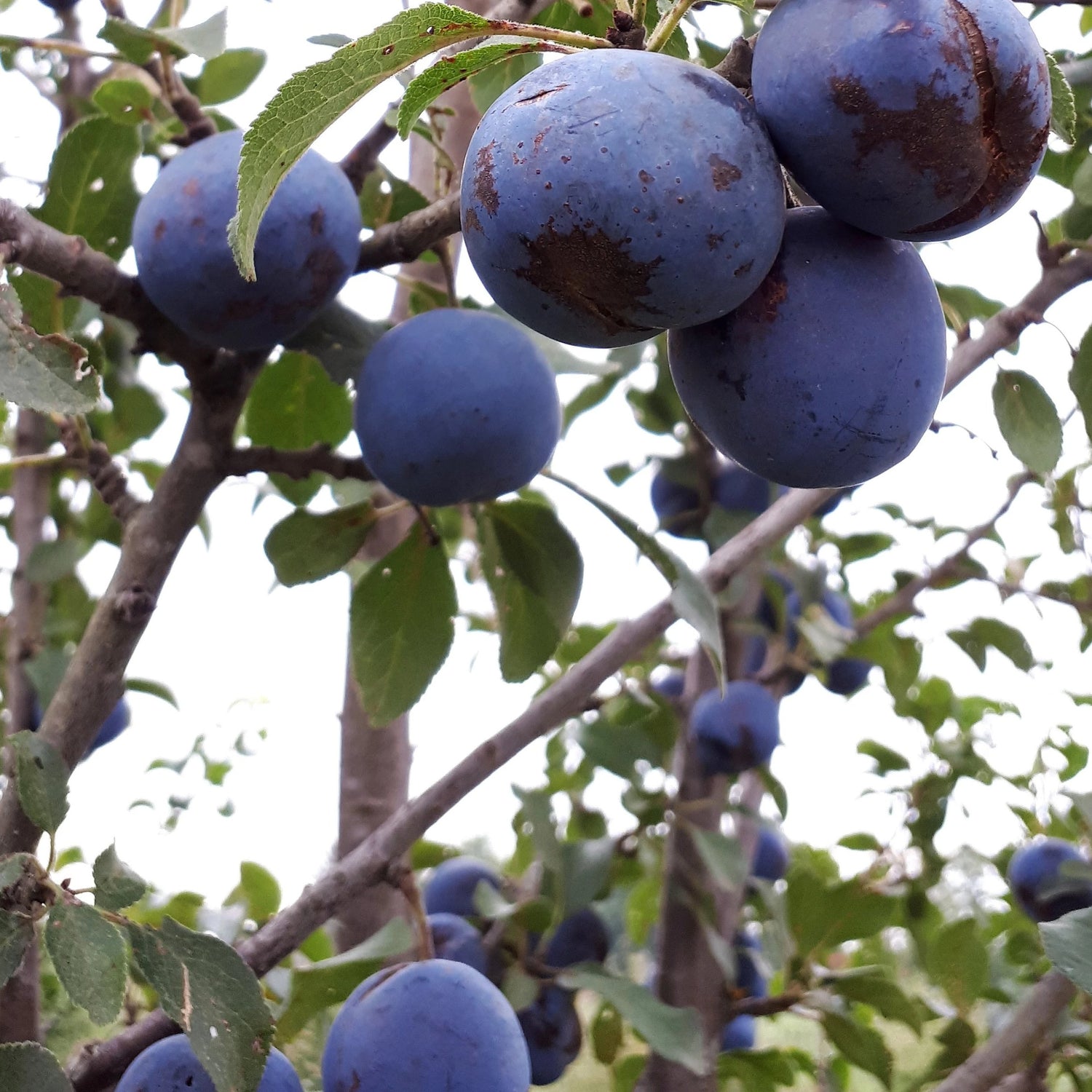
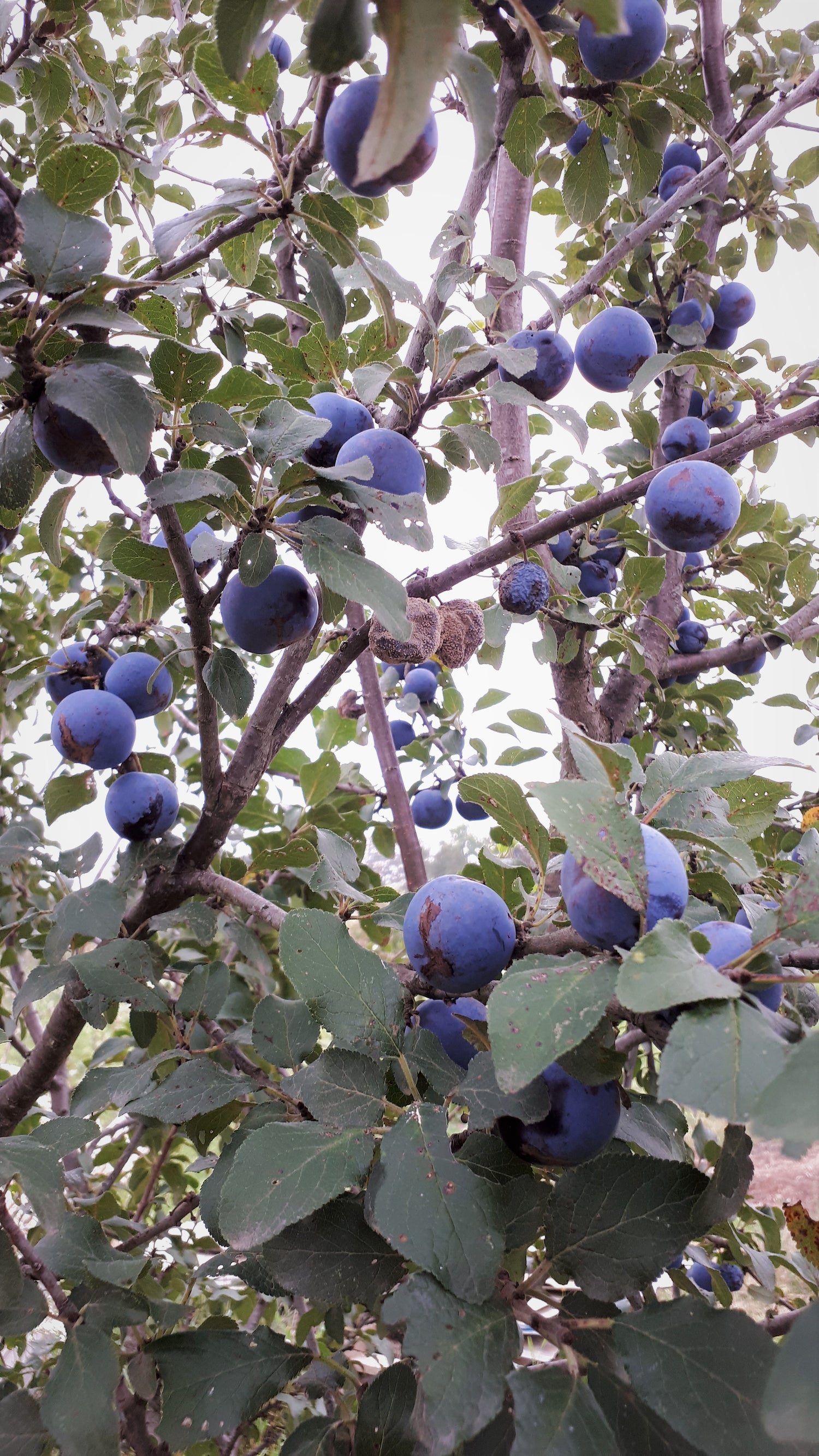
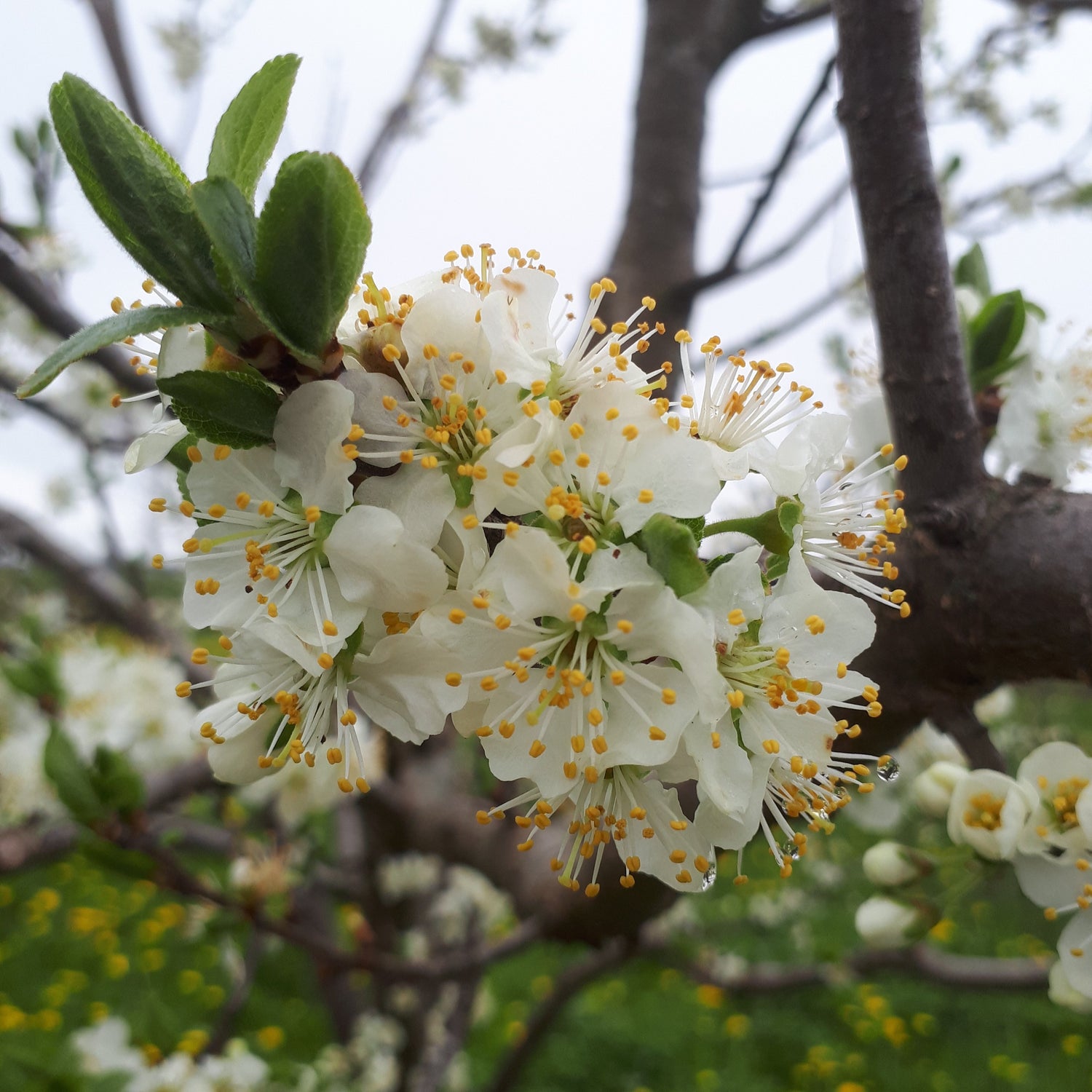
History: This European plum has contentious origins, making it difficult to determine if it is very old or extremely old. The name 'damson' stems from the Latin 'damascenum' meaning 'plum of Damascus.' As the name implies, some believe this plum may have come from the ancient city of Damascus and was brought to England by the Romans, making this plum thousands of years old. While this theory has been highly contested, there is ample evidence to prove that Damson plums have been grown in England for hundreds of years. It was introduced to the US in 1800 and was a a favourite due to its adaptability to its new home.
Why We Grow It: Damson produces small round clingstone fruit with a deep blue/purple skin and spicy yellow flesh. They are sweet enough to eat but also have some astringency which makes them less palatable than other varieties. However, they are superb for cooking, preserving, and making jam. The tree blooms late which allows it to avoid early frosts and this variety is self-fertile.
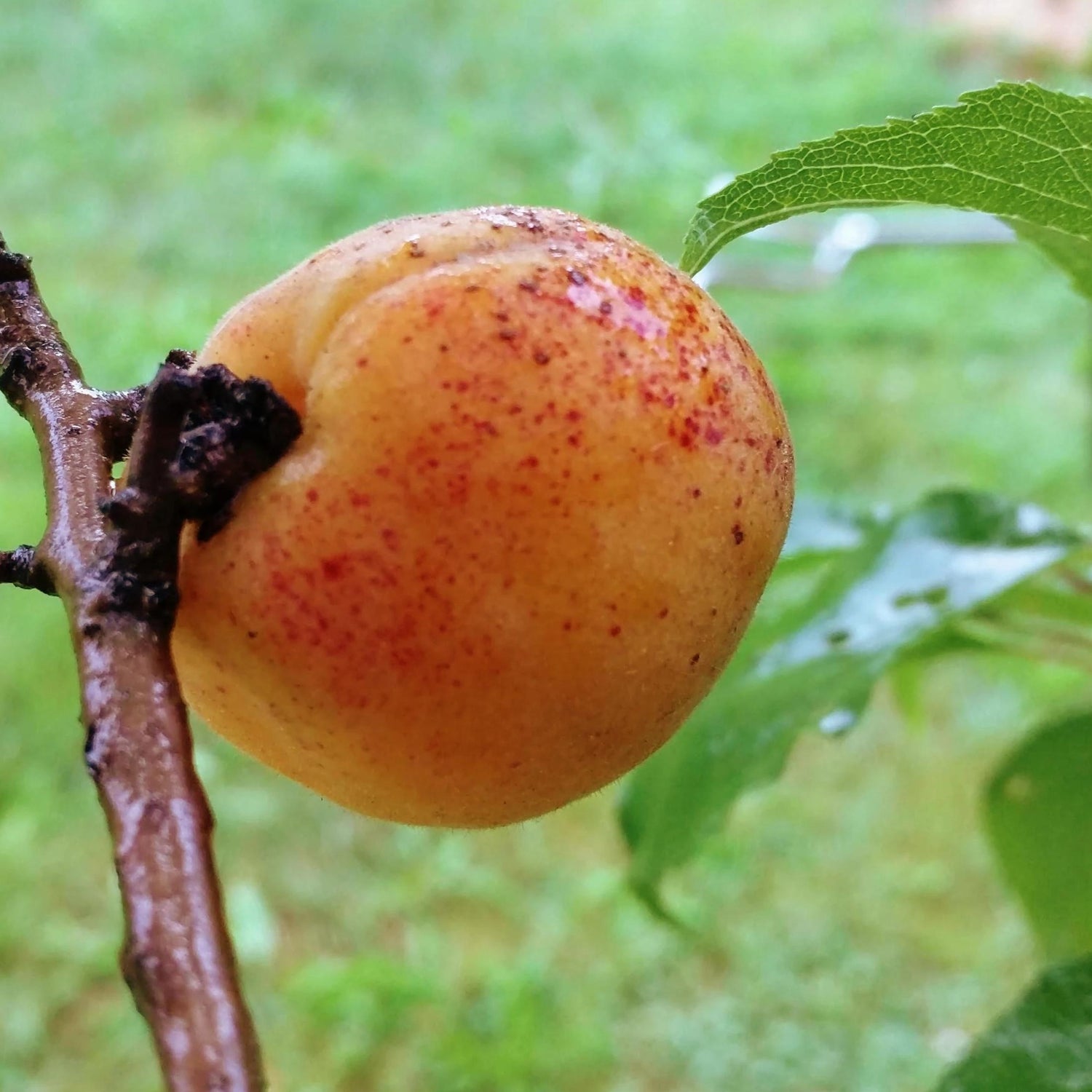
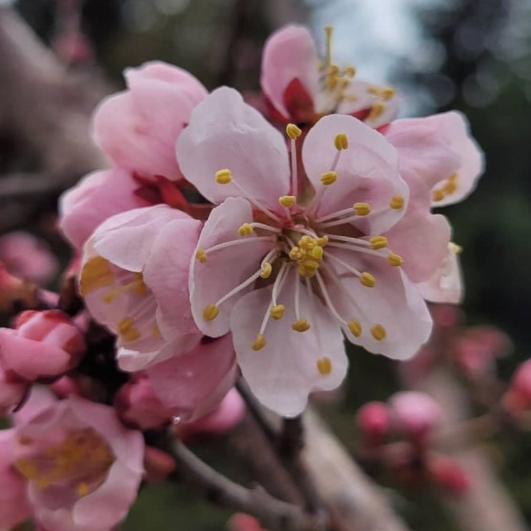
History: Debbie's Gold was introduced by Aubins Nursery in Manitoba in 1980.
Why We Grow It: Debbie's Gold is a relatively new but promising apricot variety for us. It is very cold hardy and late blooming, which improves the chance of a crop in our climate. It produces small fruit with a rich apricot flavour with spicy notes.

History: Diva was developed at Agriculture and Agri-Food Canada's St-Jean-sur-Richelieu Research Centre in Quebec by Shahrokh Khanizadeh. It was first bred in 1971 and underwent vigorous testing for fruit quality, cold hardiness, and disease resistance until its release in 2009. It is considered the first scab resistant apple released specifically for northern fresh eating and cider markets!
Why We Grow It: Diva doesn't disappoint after its many years of testing. This crisp apple boasts and excellent sweet flavour with some tartness and it is great for fresh eating, adding to salads and charcuterie boards, cider, and pies. It has done well in our orchard, producing reliable crops with few disease issues.
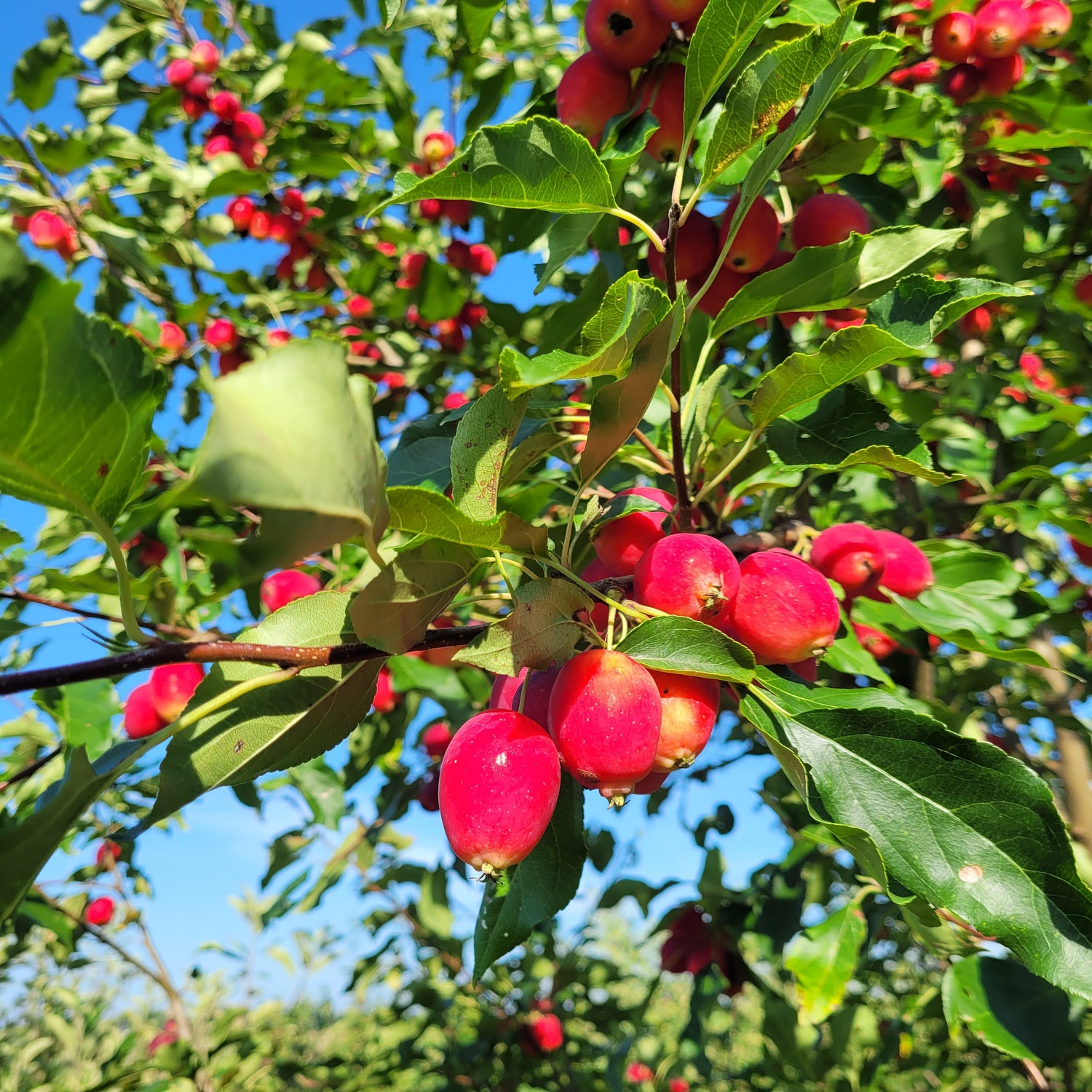
History: Dolgo crabapples originated in Russia and due to the slightly elongated shape of the fruit were named 'dolgo' which means 'long.' They were brought to the United States by N. E. Hansen around 1897.
Why We Grow It: Dolgo is a classic crabapple with a vibrant flavour, very tangy and delicious right off the tree in the heat of summer- as refreshing as lemonade! The bright red fruits are about the size of small plums. These apples are excellent for making jelly or as a unique addition to a cider blend. Along with being exceptionally cold hardy, the trees themselves are quite pretty and are often planted ornamentally.

History: Domaine apples originated in France some time before the 1900s. In the Pays d'Auge region in Normandy, Domaine is one of the 13 cultivars prized for making hard cider (included in that 13 are Fréquin Rouge and Noël des Champs, which we also have available). This apple was brought to the United States in 1949 but remains relatively unknown outside of its country of origin.
Why We Grow It: This bittersweet cider apple is high in tannins, low in acidity, and has a medium amount of sugar. Although not great for single-variety ciders, it can be an excellent addition when used in cider blends.

For the most up-to-date information see Claude Jolicoeur's website here!
History: Douce de Charlevoix (translated from French as 'sweet Charlevoix') was discovered by Claude Jolicoeur in a Quebecois village in the county of Charlevoix in the 1990s. He has since dubbed it a 'first class early cider apple' and in 2015 a cider blend using 40% Douce de Charlevoix won a bronze medal at the GLINTCAP competition.
Why We Grow It: This apple is quite attractive with orange-red stripes across green skin and makes an excellent juice with a notable bitter taste. In general this apple has medium tannins, some sweetness, and very little acidity. The tree itself is also quite vigorous and hardy.
History: Doyenné du Comice was obtained from a garden in Angers in the 1840s as a sapling. In 1848 it bore its first pears which were quickly noted for their excellent flavour. Throughout the 1850s this variety reached other countries such as the UK and US, and in 1894 it was deemed "the best pear in the world" by the London Horticultural Journal. Whether or not it lives up to that much praise, it is still commonly grown, particularly in France.
Why We Grow It: It is certainly enticing to grow and eat what is considered one of the finest dessert pears. The fruit is medium in size with pale yellow skin and juicy, pale yellow flesh. It needs to ripen off the tree for about one month.


History: Duchess of Oldenburg, or Duchess as we like to call it, originated in the 1700s in Russia. It spread to other countries where it became popular, especially in Victorian England. Its popularity was so great that at one point it was used as a reference cultivar when evaluating other varieties of apples. It is also likely the parent of several other varieties such as Northern Spy.
Why We Grow It: Duchess boasts an attractive fruit that is striped and mottled red over light green. Although these apples don't store well, the flesh is soft and is excellent for pies and applesauce. The trees themselves are quite hardy and disease resistant.
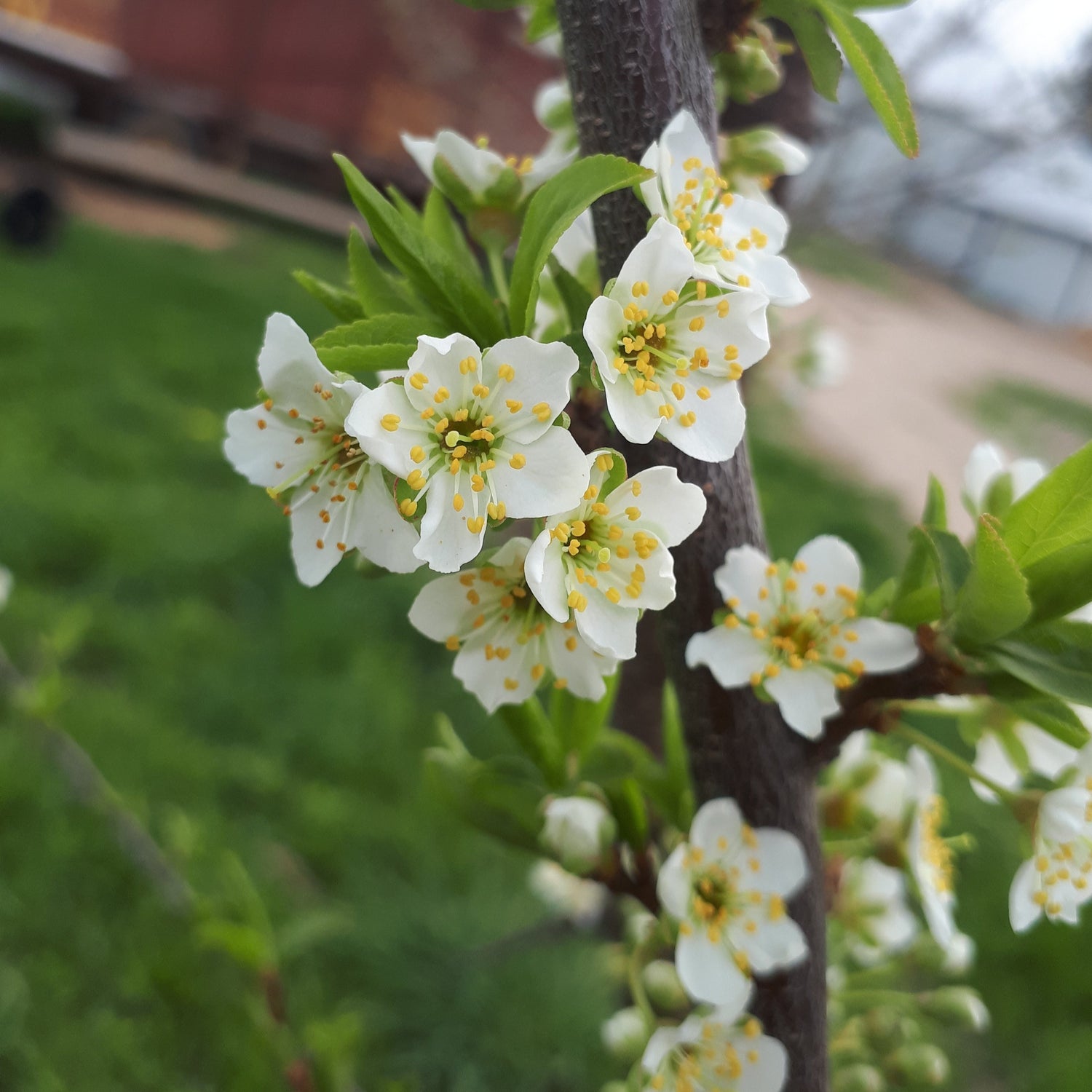
History: Early Golden originated in Fonthill, Ontario where it was discovered as a chance seedling. It has since become the most popular yellow plum in Ontario. Despite its Canadian origin, this is actually a Japanese plum.
Why We Grow It: Early Golden is a very popular Japanese freestone plum. The medium-sized fruit is very sweet with tangy yellow skin that gets a cheery red blush where the sun hits it. Medium-sized. The tree is vigorous and has a low susceptibility to black knot, although it requires careful thinning or else it will tend to bear crops every other year.

History: Eden™ was developed at Agriculture and Agri-Food Canada's Horticultural Research an Development Centre in St-Jean-sur-Richelieu, Quebec by Shahrokh Khanizadeh. The cross between Linda and Jonamac was made in 1971 and the resulting variety was released in 1985 due to its disease resistance and slow browning.
Why We Grow It: Eden™ produces medium to large crisp apples that boast a sweet, aromatic quality with some tartness. They are great for fresh eating and making cider. The fruit is also resistant to bruising and browning, making them an excellent candidate for drying and making into apple chips.
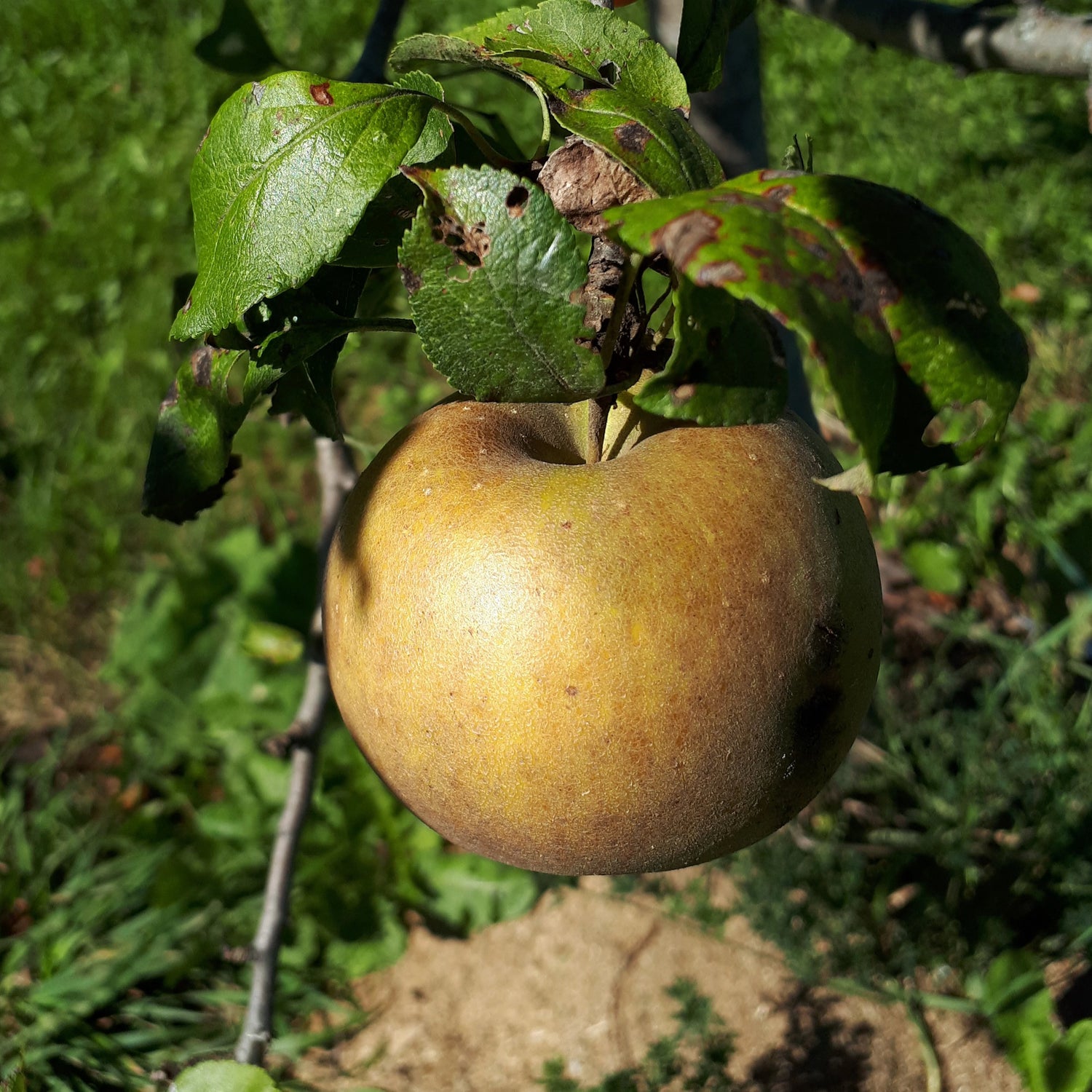
History: Egremont Russet first emerged in Britain in the early 1870s and has remained popular ever since. Even today, it is the third most common apple grown commercially in England.
Why We Grow It: Although the russet, a thick rough skin, coating this apple can be an acquired taste, there is a reason this apple has remained so popular. The fruit itself is an attractive gold dotted with yellow and it has an excellent sweet, nutty flavour. They are delicious fresh, when used for cooking, and in ciders. The trees are known for producing good, regular crops.

History: Elstar apples were developed in the Netherlands in the 1950s and are a cross between Golden Delicious and Ingrid Marie. This excellent combination has created what is considered one of the best Golden Delicious offspring. Fittingly, it has since become quite popular in continental Europe. Despite being introduced to the US in 1972, it has not attained the same level of popularity in North America.
Why We Grow It: Elstar is a flavourful variety, fine for fresh eating or sauce with its crisp, juicy flesh; very little acidity. The skin is distinctive, sporting a orangey-red marbled appearance.

History: Érdi Bõtermõ is a Hungarian variety of sour cherry that is a cross between Pangy and Nady Angol. It was bred by the Hungarian Research Institute for Fruitgrowing and Ornamentals and remains popular in Europe. It was brought back to the US by Michigan State University biologist Pr. Amy Iezzoni who is researching and breeding new sour cherry cultivars. It was given the name "Danube" in North America, named after the river that flows through Hungary, since it was considered easier to pronounce and spell.
Why We Grow It: Érdi Bõtermõ is unique in that it has a surprisingly sweet flavour compared to other sour cherries, making them suitable for fresh eating along with baking and preserving. It ripens early and produces large fruit that are deep red with firm red flesh.
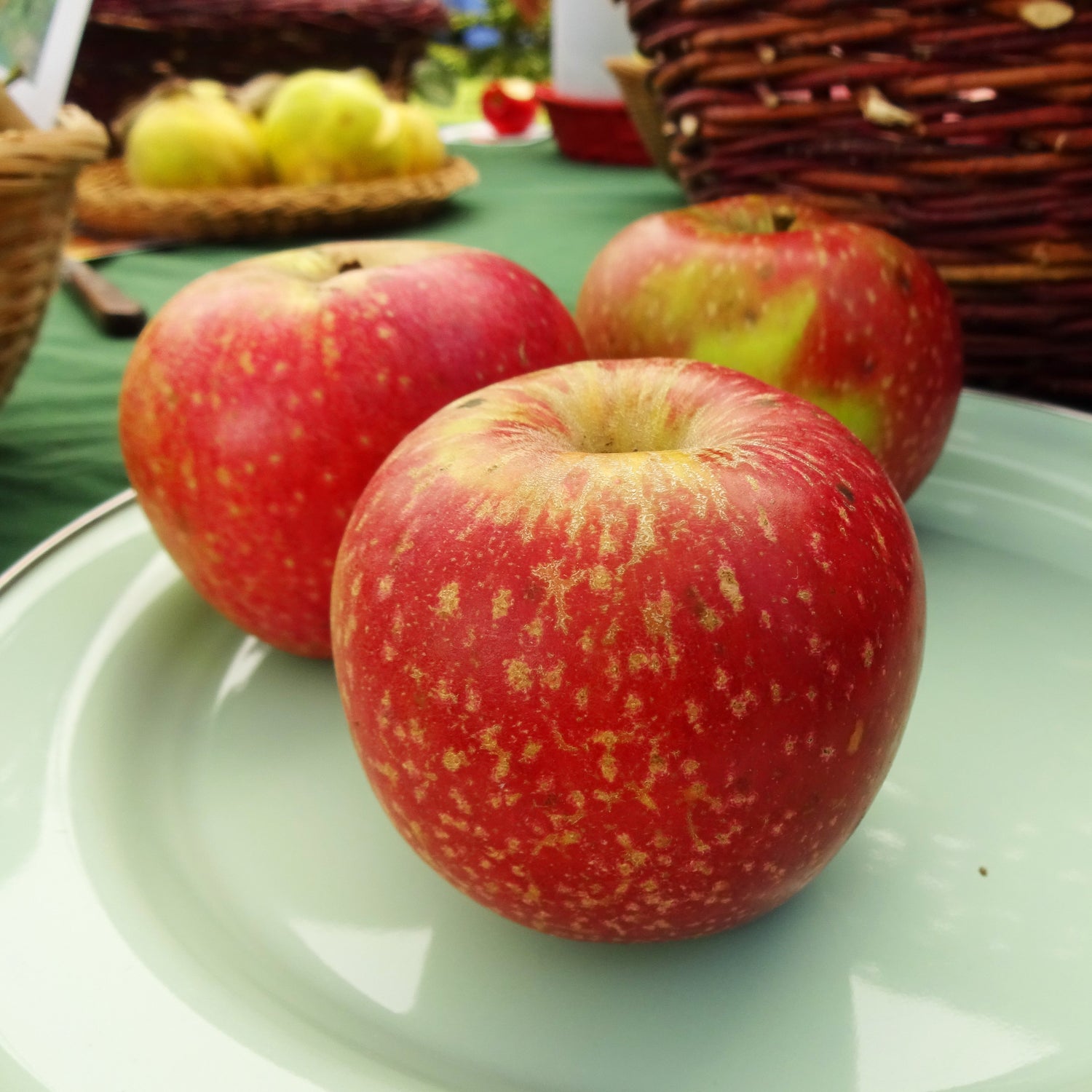
History: Esopus Spitzenberg was discovered near Esopus, New York in the early 1700s. Its main claim to fame is its supposed designation as Thomas Jefferson's favourite apple, a claim supported by the numerous Esopus Spitzenberg trees he had planted at his plantation Monticello. This apple was very popular in the US in the 1800s, considered one of the best for fresh eating, valuable for cooking, and a nice addition to cider blends.
Why We Grow It: The flavour of this particular variety is complex with high acid content, considered by many to be a high quality fresh-eating apple. This is helped by the attractive medium sized fruit which sports bright red skin. This variety keeps, with good flavour, until March. Despite being susceptible to just about every common apple disease, we still believe this apple is worth the extra effort and haven't had much issue growing it here.

History: Fallawater originated in Pennsylvania sometime before 1842, possibly from seeds brought by European colonizers. At one time it was quite popular in the southern United States. This variety has over twenty different names, many of which resemble Fallawater such as Fallenwalder, while others are more fun and unique like Molly Whopper, Green Mountain Pippin, and Prim's Beauty of the West.
Why We Grow It: No matter which name this variety goes by, you can always expect a large, attractive apple with a mildly sweet flavour. Fallawater is an excellent sauce and cooking apple and the fruit stores for a long time.
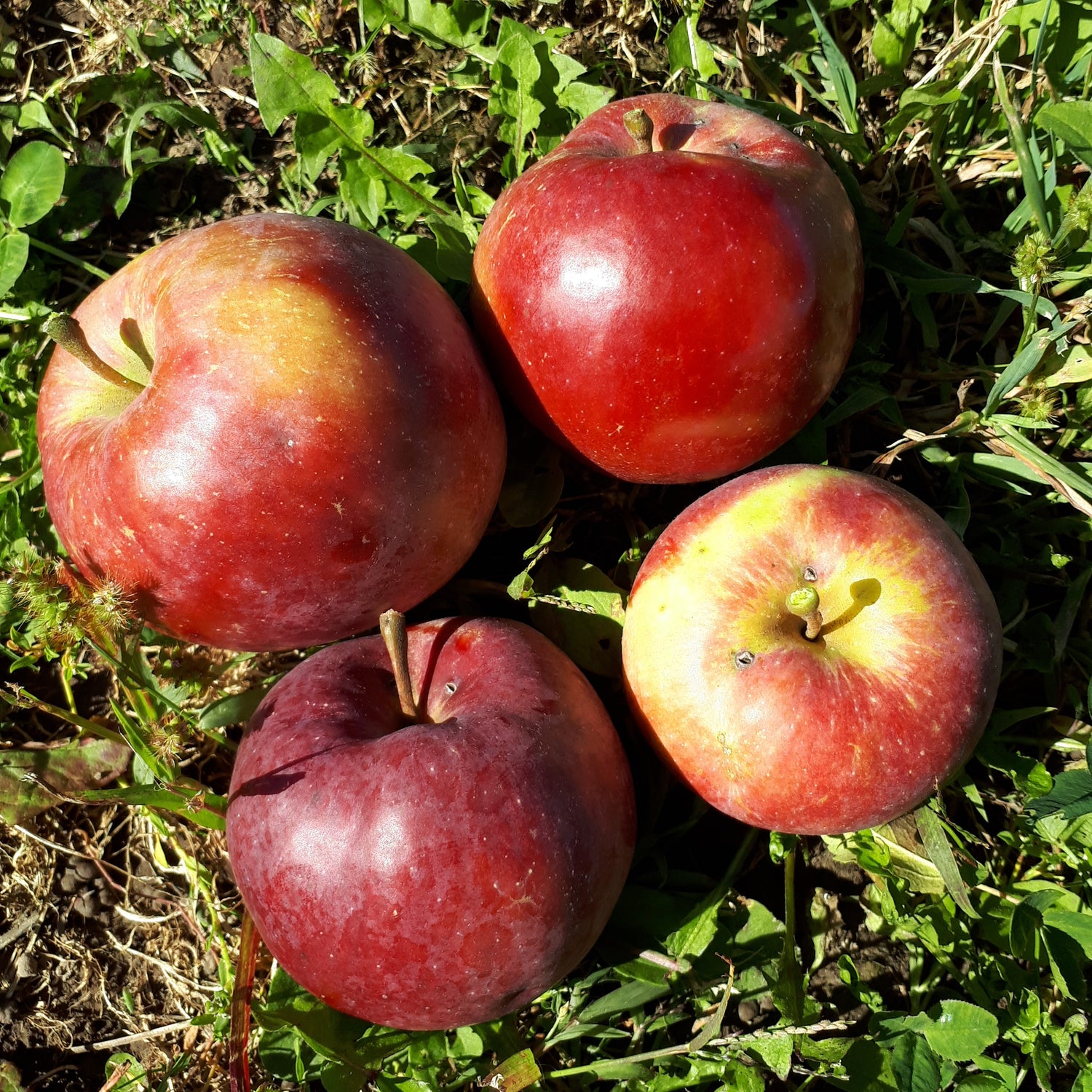
History: Fireside apples originated in 1943 from a breeding program at the Minnesota Agricultural Experiment Station. They are one of nearly 30 varieties that have been introduced by the university's breeding program since it began in 1888.
Why We Grow It: Fireside stands as an icon of toughness in the world of apples, thriving in cold northern areas. But don’t let this image fool you—Fireside has a warm heart! The flesh is amazingly sweet and very juicy.

History: Florina, aka Querina, was developed in France in the 1980s at the Station de Recherches d'Arboriculture Fruitiere. Despite being developed in France, its ancestry is made up of American varieties. Since its introduction it has become quite popular in continental Europe.
Why We Grow It: One of Steph and Mouse's favourites! Florina is a wonderful all-around apple for the backyard offering both rich flavour and easy care. The sweet, crisp fruits it produces are perfect right off the tree but also keep a few months. They are also great for organic production: resistant to scab, fireblight, mildew, and rosy apple aphid.
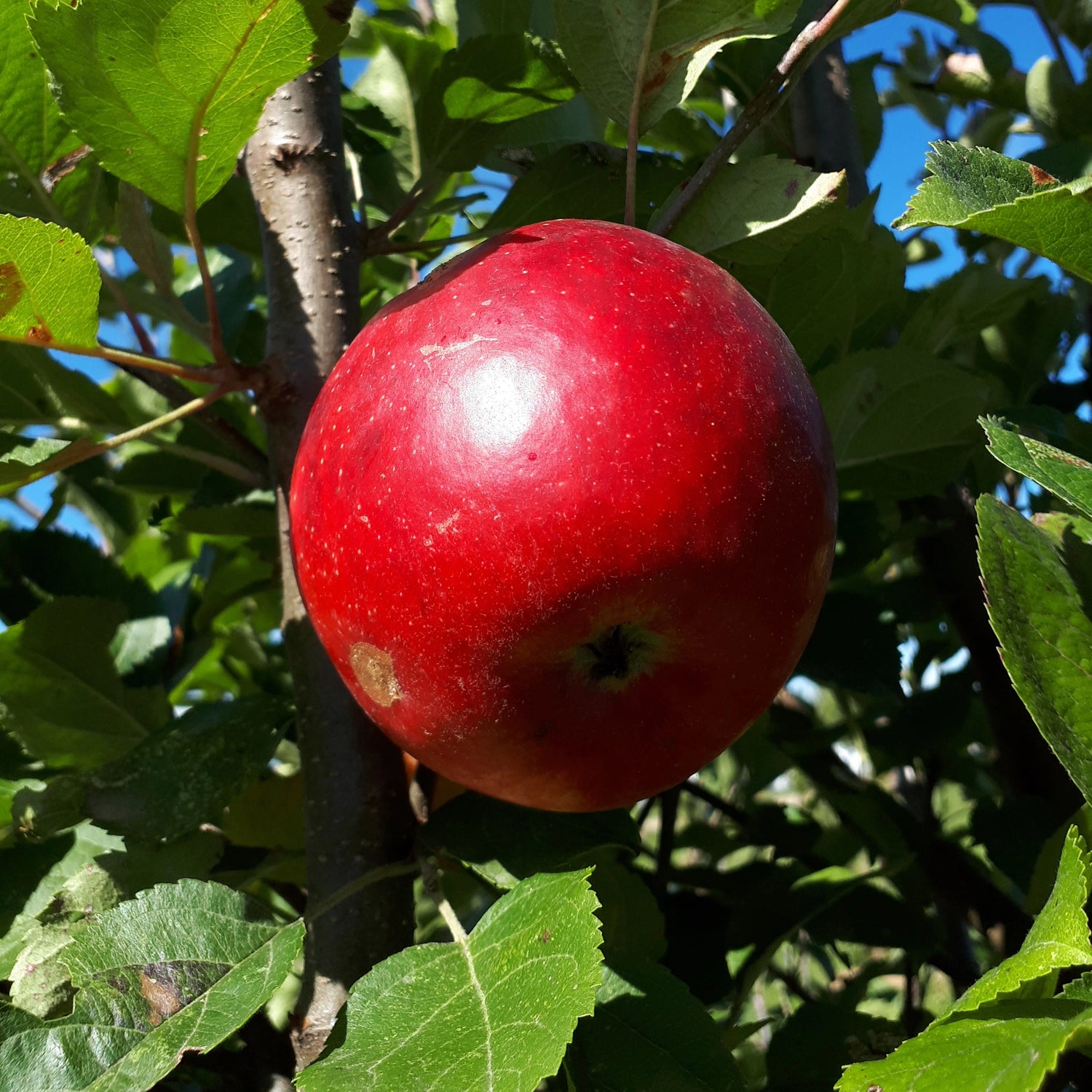
History: Freedom was developed in a breeding program at the New York State Agricultural Experiment Station in Geneva, New York in 1958. The goal was to create an apple that was immune to apple scab, and this particular variety was chosen from 120 other apples that were planted out from seed selected through an intensive breeding program. It was released in 1983 and given the name Freedom to represent its freedom from apple scab.
Why We Grow It: Low maintenance, disease-resistant, vigorous, good flavour, and a good keeper... all in one apple! Freedom is the perfect variety for growing organically, for pick-your-owns, backyards, and community orchards. Large red skinned apple, similar to McIntosh in flavour with sweet, subacidic, sprightly flavour and juicy white flesh. Crunchy, fine grained flesh.


History: Fresco, also known by the brand name Wellant®, was developed through a fruit breeding collaboration between Inova Fruit and the Applied Plant Research at the Wageningen University and Research Center in the Netherlands. The goal was to create an apple variety that better aligned with changing consumer tastes. It was bred in the late 1900s and named Fresco during the years it underwent various tests before being released in 2004 under the brand name Wellant®. It is primarily grown and sold in Europe.
Why We Grow It: Fresco produces a large, deep red fruit that is crunchy with a strong flavour high in both sweetness and tartness. It is excellent for fresh eating and can be used in baking and cooking as well. An excellent multi-purpose apple!

Why We Grow It: Along with the great sweet flavour and juiciness of the original, Fuji BC #2 also boasts redder skin, making it more appealing for those who prefer red apples.
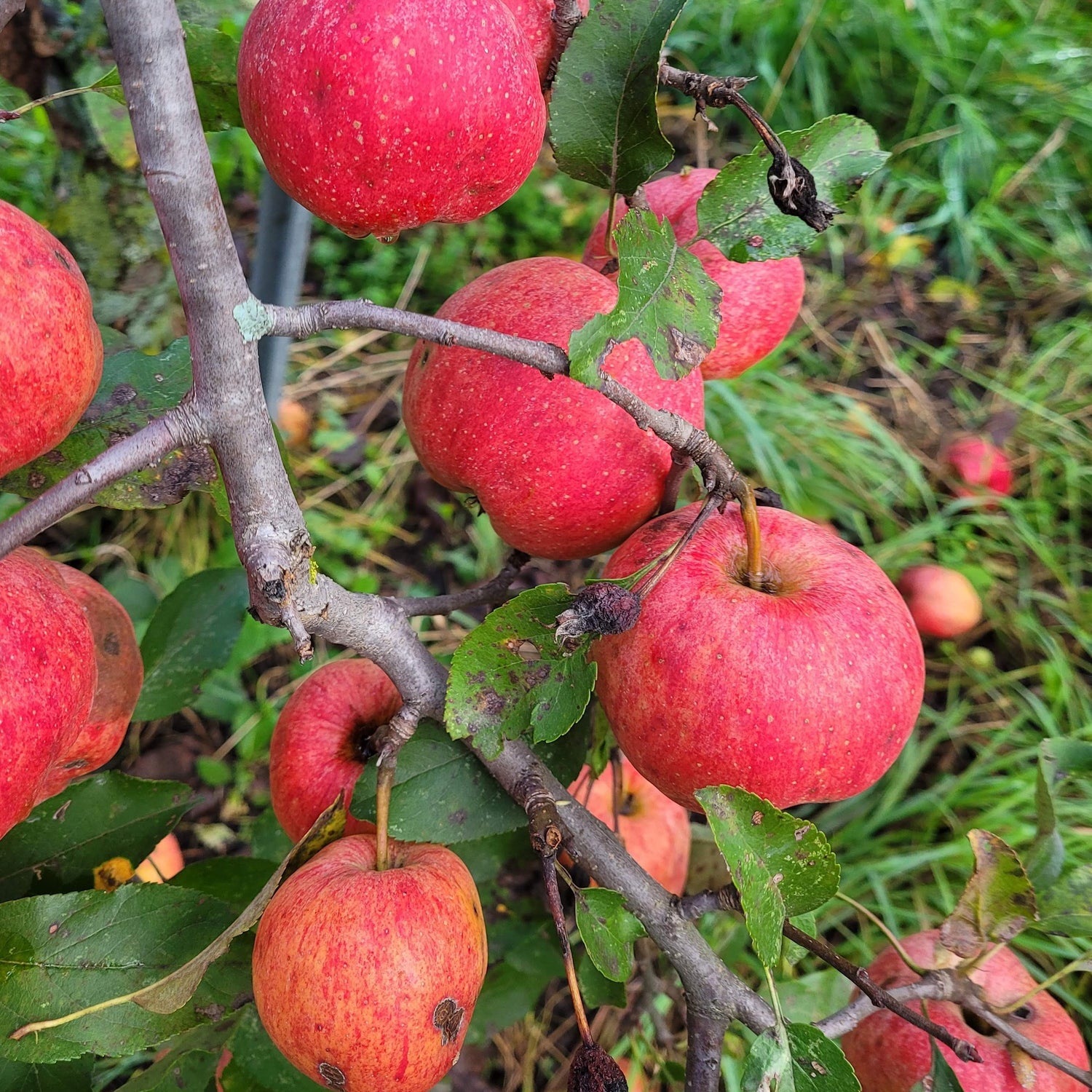
History: Gala apples are one of several varieties created by J.H. Kidd in New Zealand as part of his project to cross Cox's Orange Pippin with American varieties in the 1930s. He definitely succeeded with the Gala apple which has since become one of the most popular apple varieties worldwide and a mainstay in grocery stores.
Why We Grow It: This apple earned its popularity with its amazing flavour, especially when eaten fresh off the tree. Although many sports with a deeper red colour have been introduced and marketed as Gala, they often come at a compromise to flavour so we offer you the original Gala with full sweet crunchiness.

History: Galarina™ originated in France at the Fruit and Ornamental Plant Breeding Unit of the Institut National de la Recherche Agronomique in Angers as a cross between Gala and Florina (hence its name) in 1985. It was then sent to Quebec for further evaluation by Shahrokh Khanizadeh at Agriculture and Agri-Food Canada's station in St-Jean-sur-Richelieu and released by the Quebec Apple Breeding Program.
Why We Grow It: Galarina™ produces an apple on the smaller side that bears a strong resemblance to Gala. Unlike Gala, it boasts excellent disease resistance, better cold hardiness, slower browning, and improved storage capabilities. This little apple is an excellent choice for anyone who would prefer if Gala apples were a little more hardy!
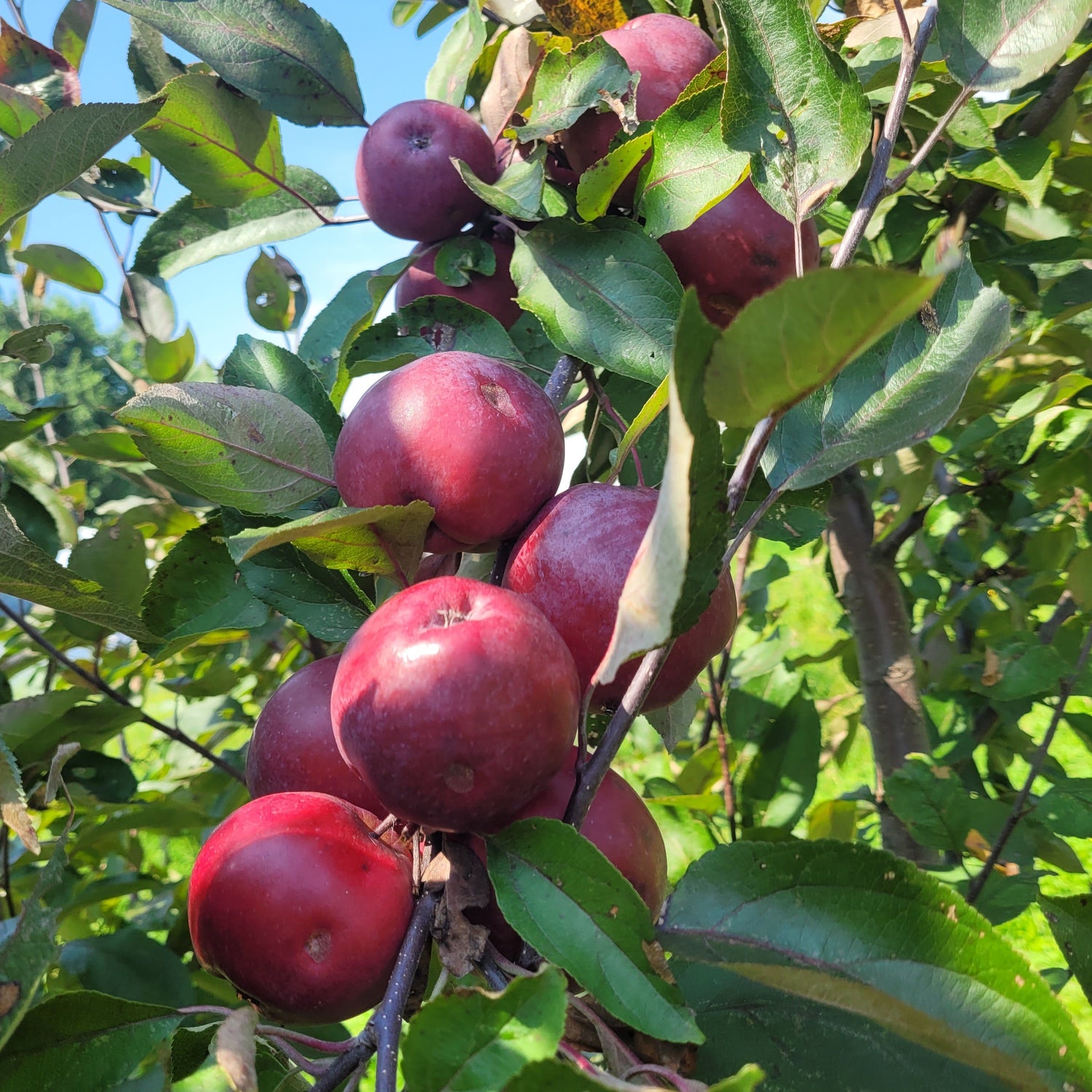
History: The Geneva crabapple was developed in the 1930s in collaboration with the Ottawa Experimental Farm and the New York State Agricultural Research Station based in Ottawa. The creation of this crabapple was head by Isabella Preston who specialized in creating cold-hardy ornamental plants.
Why We Grow It: This attractive crabapple has deep maroon flesh. The tree itself is quite visually appealing, sporting red leaves and bright pink flowers in the spring. The taste is reminiscent of rhubarb and is suitable for cooking as well. As it is a low sugar/high acid juice, it is best blended with another high sugar variety for cider. It also adds a nice red hue to blends.
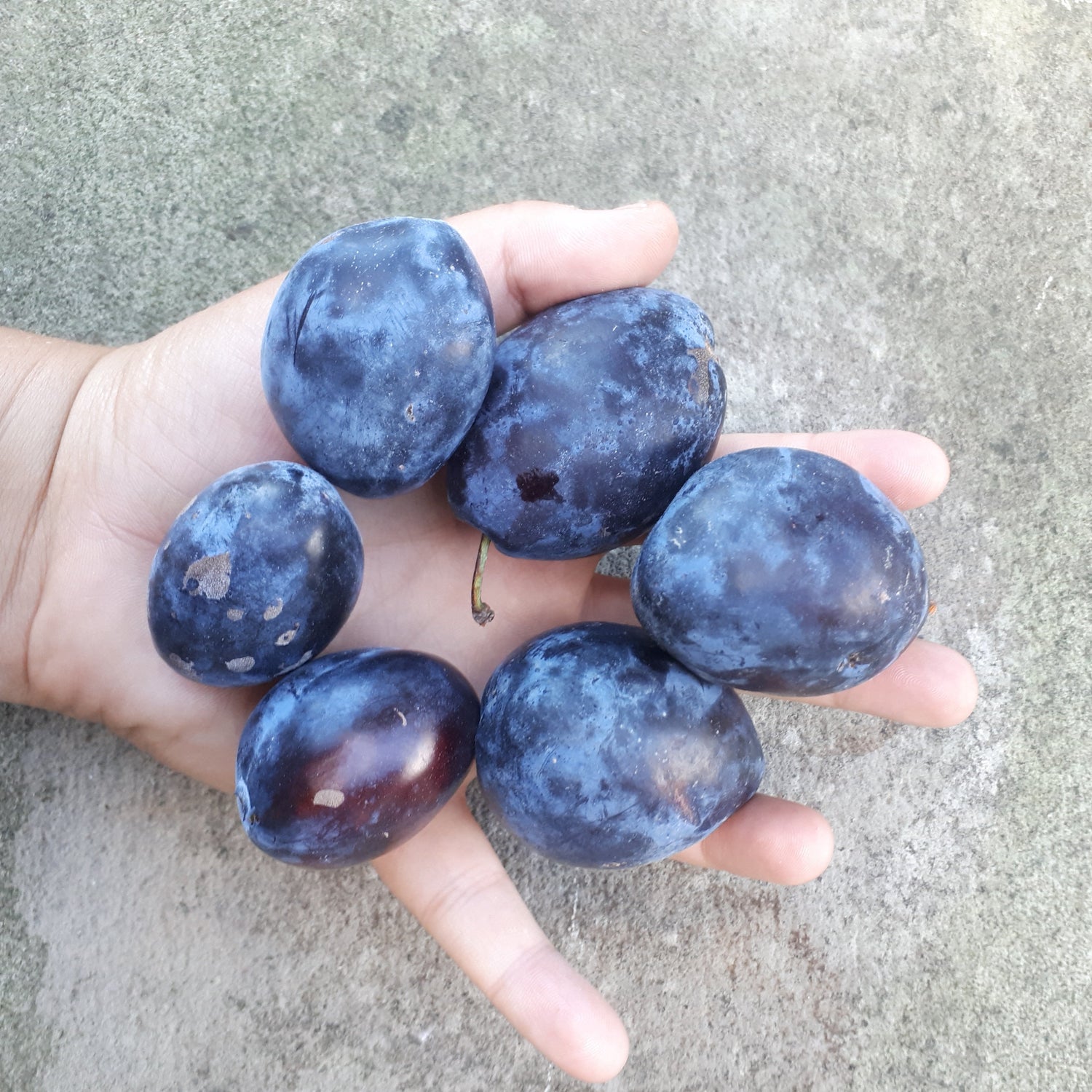
History: German plums are a European variety characteristic of the kind grown in central Europe. Although not much is known about its history, it is believed this variety is at least a couple centuries old.
Why We Grow It: A juicy, freestone plum with an aromatic, sweet flavour. They are great for fresh eating and due to their drier than average nature, are great for baking into traditional German plum desserts. They keep for 2-4 weeks refrigerated, providing ample time to enjoy them fresh or find that perfect recipe.
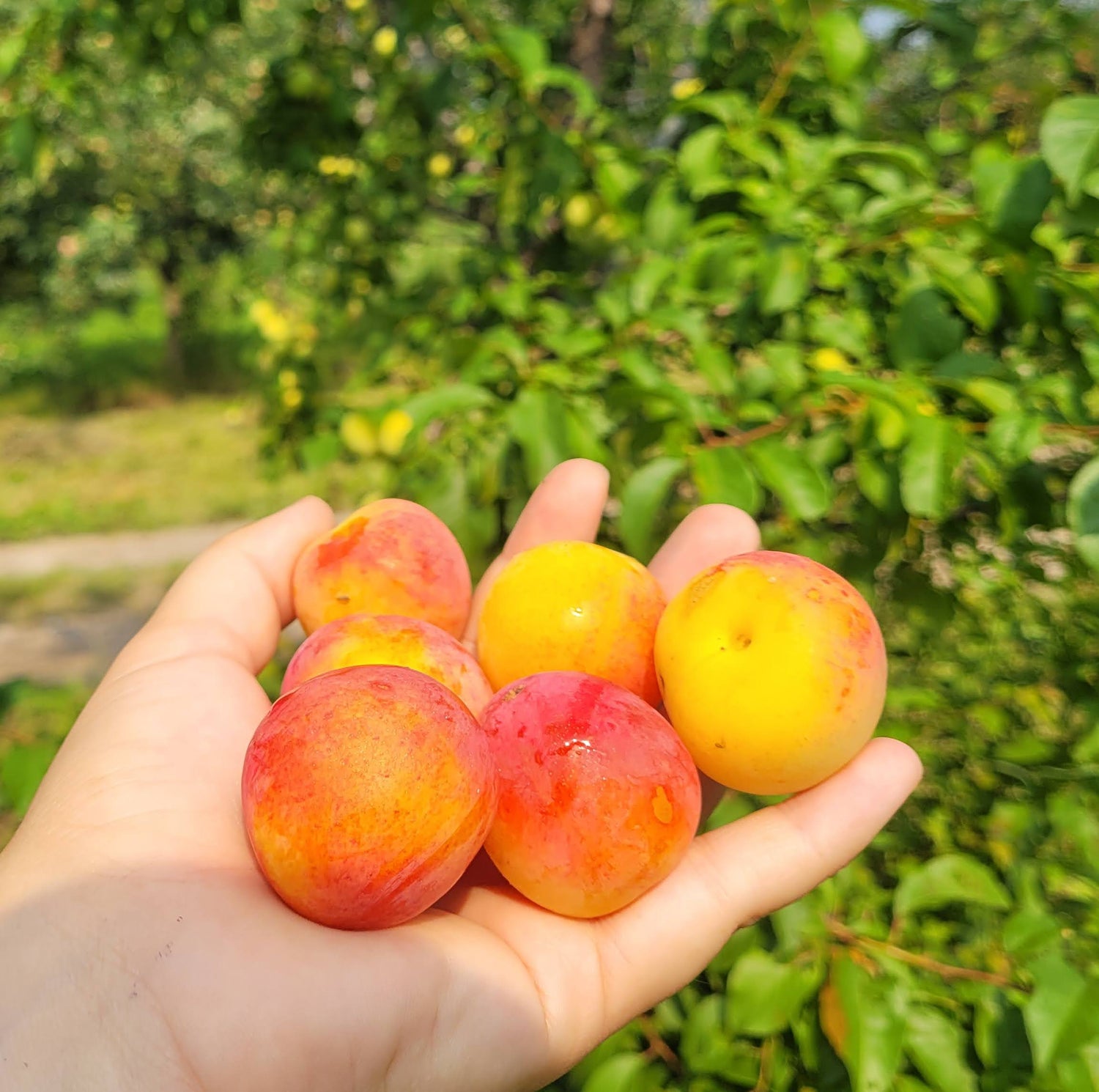
The photo of the plums in hand compares 4 larger Italian plums on the upper right, to 2 smaller German plums on the lower left.
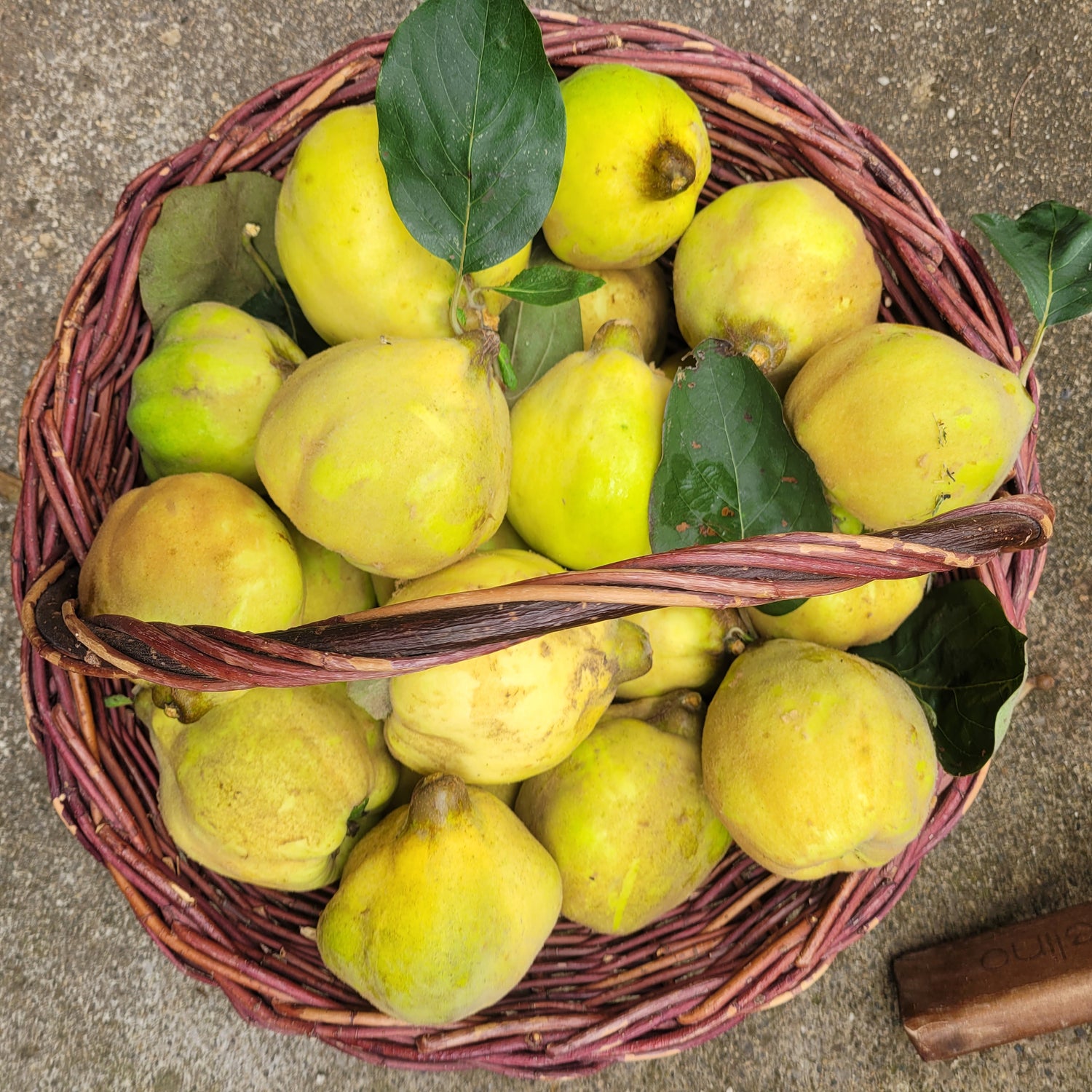
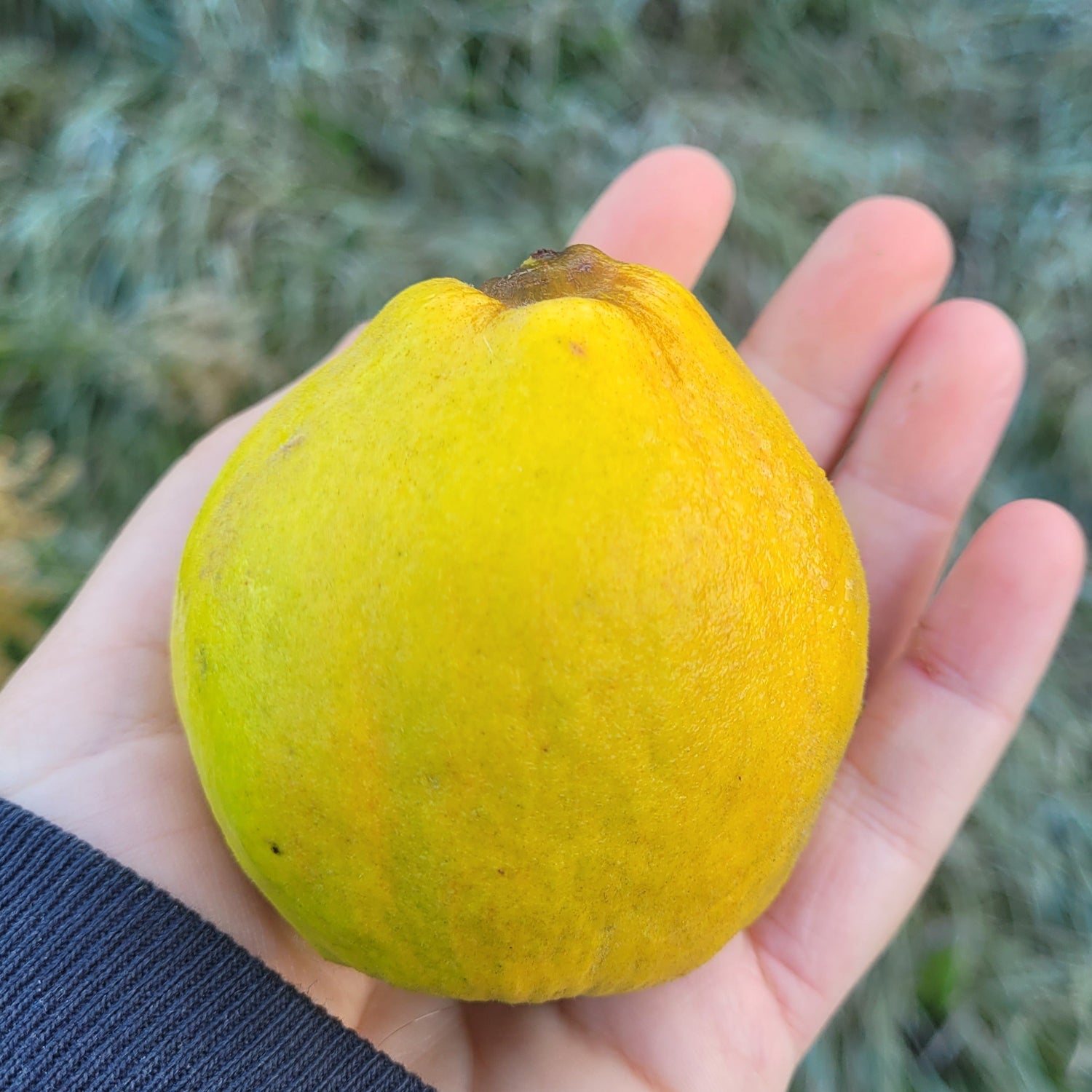
History: Little is known about the history of Giant of Zagreb aside from the fact that it originated in the former country of Yugoslavia. Its country of origin suggests it was developed some time in the 20th century since the nation only lasted from 1918-1992. It was named for Zagreb, a major Yugoslavian city that is now the capital of Croatia.
Why We Grow It: The fruit of Giant of Zagreb are large with greenish-yellow skin and firm white flesh. The flavour is mild for a quince, although this isn't saying much. For those who have never tasted quince, it is a sour-raspberry flavoured experience not soon forgotten. As the flavour profile suggests, it is best used in baking, jellies, sauces (quince sauce or added to apple sauce), or candied. This is one of the hardiest varieties of quince available.
History: Golden Delicious was discovered by chance on a family farm in West Virginia and sold in 1914 to the Stark Brothers Nurseries. It has since become one of the most popular apples in North America. Since 1972, Clay County, where the apple was found, has hosted an annual Golden Delicious Festival and in 1995 it was declared the state fruit of West Virginia. Golden Delicious is also the parent of many varieties, including prominent ones such as Ambrosia and Gala.
Why We Grow It: It is easy to see why this apple is so popular with its attractive golden yellow skin and sweet, crisp cream-coloured flesh. Golden Delicious is a favourite for fresh eating, sauce, and apple butter. On top of that, it is resistant to scab, powdery mildew, and fire blight.

History: Golden Nugget was created more or less by accident when Golden Russet and Cox's Orange Pippin were crossed at the Kentville Agricultural Station in Nova Scotia in 1932. Despite being an accident, once researchers realized how flavourful this variety was they continued to raise it and eventually released it in 1964. Although a delicious apple, its small size prevented it from attaining true commercial success.
Why We Grow It: It is prized for its incredible flavour which is super sweet and tangy like a pineapple. Along with being great for fresh eating, it is also suited for cider. The tree itself boasts decent disease resistance.