Cider Apple Trees

Cider Apple Trees
Malus domestica
While sweet apples are available in abundance, sharps (high in acid) and bitters (high in tannin) are more difficult to come by. Whether you make cider on a large scale, or just need a few trees for the backyard, you will find a great selection here of both old and new varieties, particularly sharps and bitters. Please phone for wholesale pricing on large orders.
English Cider Apple Classification
|
Flavour |
Acidity (g/L malic acid) |
Tannins (g/L tannic acid) |
|
Sharp |
over 4.5 |
less than 2 |
|
Bittersharp |
over 4.5 |
over 2 |
|
Bittersweet |
less than 4.5 |
over 2 |
|
Sweet |
less than 4.5 |
less than 2 |
Sort by:
6 of 87 products
6 of 87 products
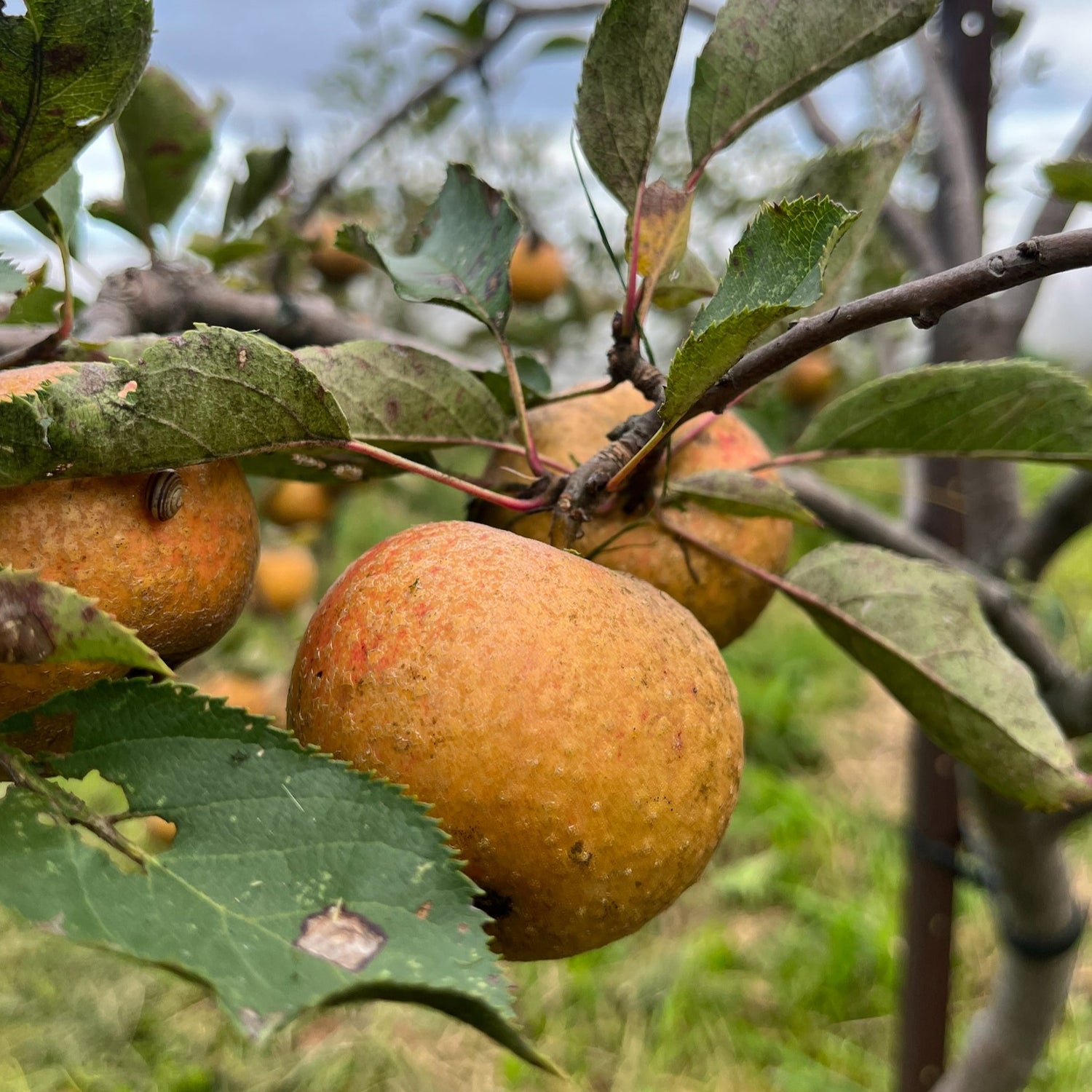
History: This unique apple, orangey-yellow-red undertones with russet over top, originated in the UK in the 1700s and has remained popular for over two centuries. There is some debate whether it was raised by a Dr. Ashmead or a lawyer named William Ashmead.
Why We Grow It: This Old World English apple has stuck with us thanks to it's unique flavour: nutty with notes of pear and spice. Fantastic fresh off the tree, and also in cider blends, Ashmead's Kernel mixes well with Cox's Orange Pippin.

History: The history of Blenheim Orange is a bit muddled depending on your source. We know it was discovered by George Kempster (either a baker, a tailor, or a basket weaver depending on who you ask!) in England in 1740 and it was originally named Kempster's Pippin. Some say he found it as a seedling growing along a wall of Blenheim Palace while others claim he grew it in his garden located near Blenheim, England. It was later renamed to Blenheim Orange in the early 1800s, likely when it was sold commercially through nurseries. This variety has many other names, including: Beauty of Dumbleton, Blooming Orange, and Northwitch Blenheim. The tree itself is also known for its sturdy wood and it was at one time popularly used to make railway cogs.
Why We Grow It: These large, somewhat flat apples feature orangey-red stripes over yellow skin with some russet. The fruit is good for fresh eating with a nutty taste and is quite nice when paired with cheese. It is also great for cooking and makes a stiff purée. The tree is highly vigorous but can be slow to come into production, although it has heavy crops once it does.
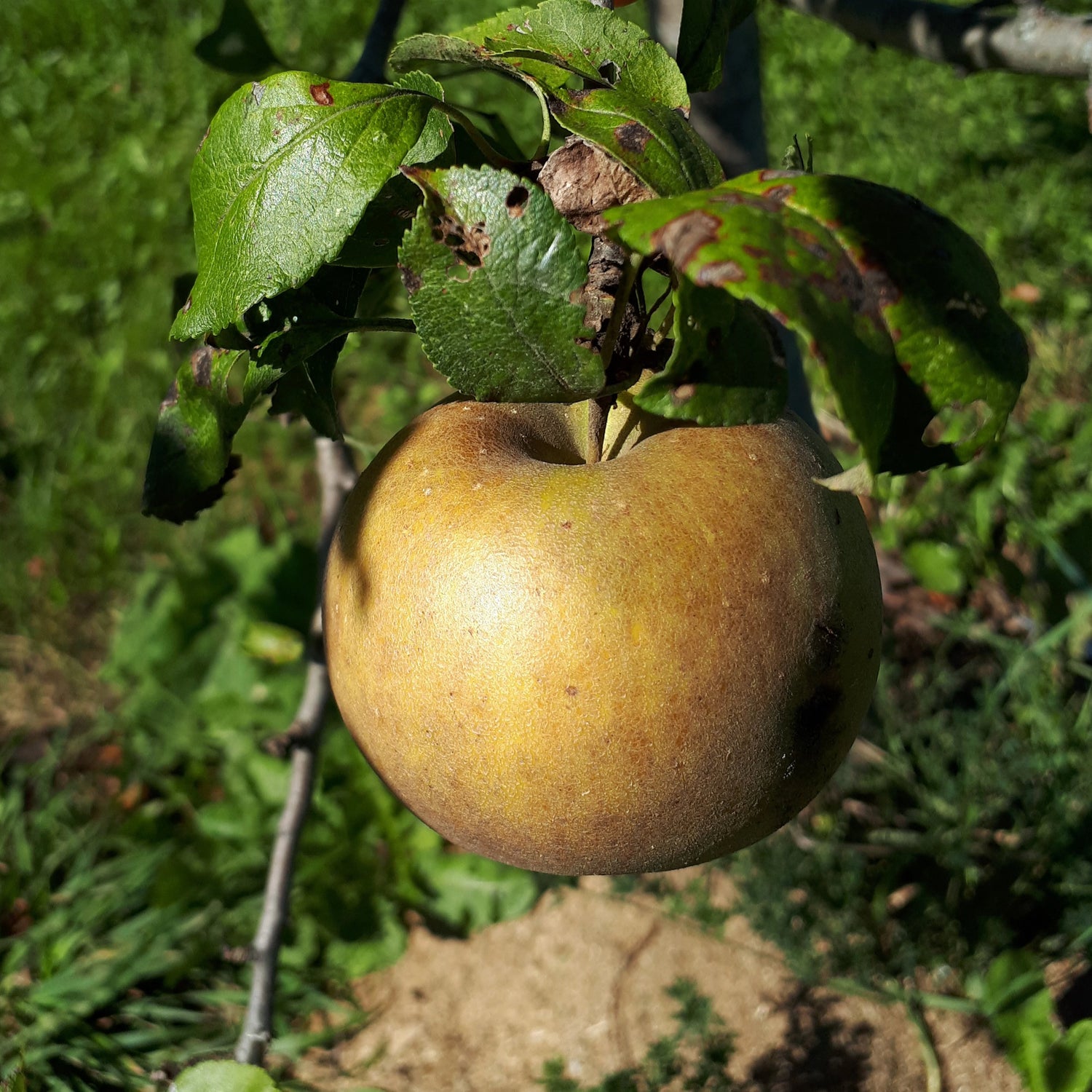


History: Egremont Russet first emerged in Britain in the early 1870s and has remained popular ever since. Even today, it is the third most common apple grown commercially in England.
Why We Grow It: Although the russet, a thick rough skin, coating this apple can be an acquired taste, there is a reason this apple has remained so popular. The fruit itself is an attractive gold dotted with yellow and it has an excellent sweet, nutty flavour. They are delicious fresh, when used for cooking, and in ciders. The trees are known for producing good, regular crops.
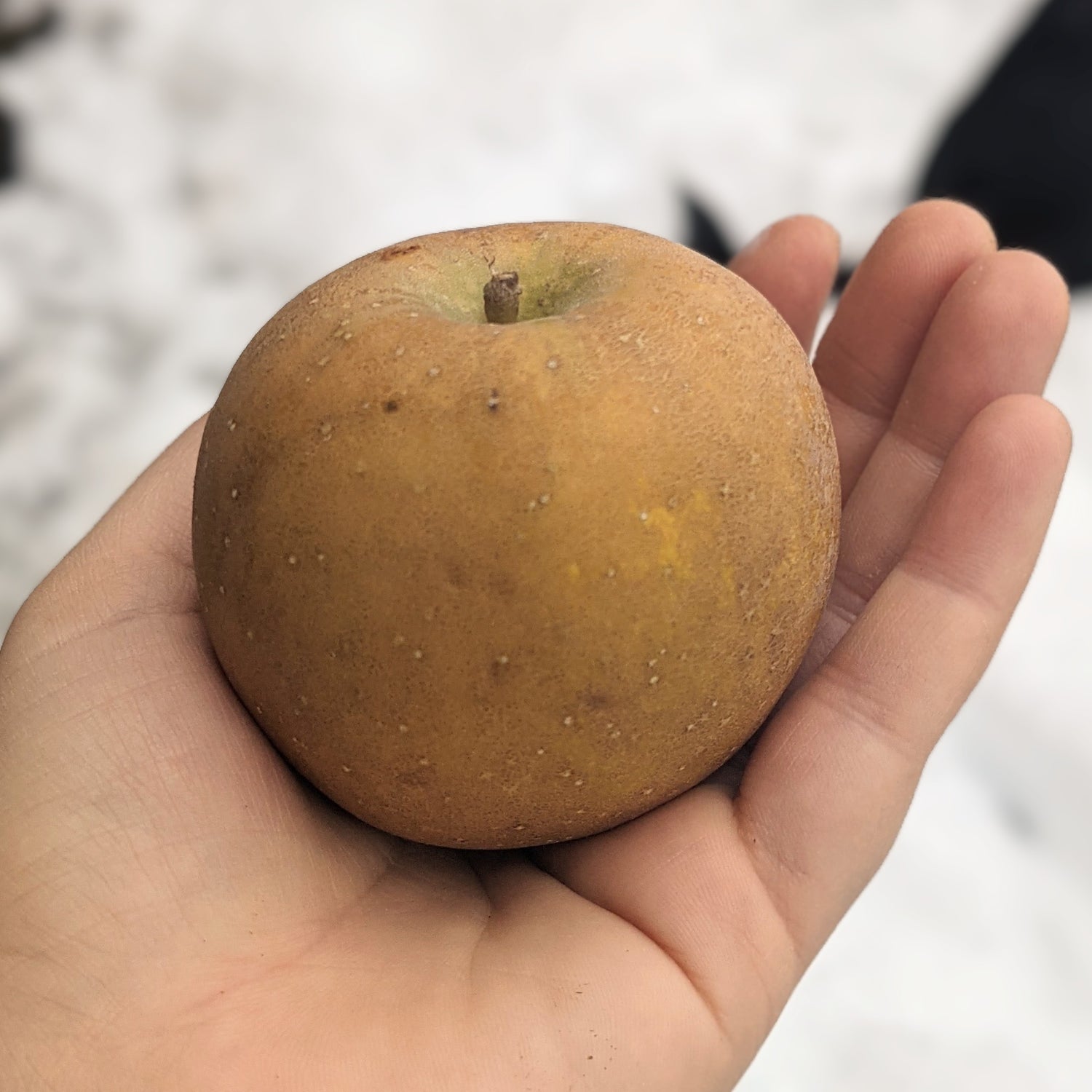
History: The origins of Golden Russet are unclear, but we know it was discovered in New York in the first half of the 1800s. It may have come from the seedling of an English russet variety and could have Ashmead's Kernel parentage. It was grown commercially for some time before falling out of favour, although it has regained some popularity recently due to its strengths in cider production.
Why We Grow It: With both lots of sweetness and acidity, Golden Russet is one of our favourites for fresh eating. The flavourful juice from these apples is also great for making cider. The thick russetted skin discourages insect damage and it is resistant to scab, canker, and powdery mildew. Its tip-bearing habit gives these hardy trees a wispy appearance.

History: Nonpareil originated in France although no one is sure quite how old it is or what its exact origins are. We do know that it was brought over to England sometime in the 1500s where it gained more popularity due to its pear-drop flavour. It can still be found at markets, farmgate sales, and in gardens in England to this day and is believed to be the ancestor of the popular European variety Ashmead's Kernel.
Why We Grow It: Nonpareil is not much to look at with its dull yellow-green russet skin but it packs a flavourful punch: sweet-sharp with notes of pear-drops. The fruits hangs onto the tree well and stores for several months. It is mainly used for fresh eating but can be added to cider blends as well. The tree is naturally more compact and has moderate vigour.

History: Brown Snout was discovered on a farm in the UK in the mid-1800s. Its name comes from the brown russet around its calyx. H.P. Bulmer, a cider-making company, further propagated and spread this apple in the UK where it is still used today.
Why We Grow It: This medium bittersweet cider apple has small, uniquely coloured fruit that are sweet, slightly astringent, medium-tannin, and have low acidity.