Plum Trees
Plum Trees
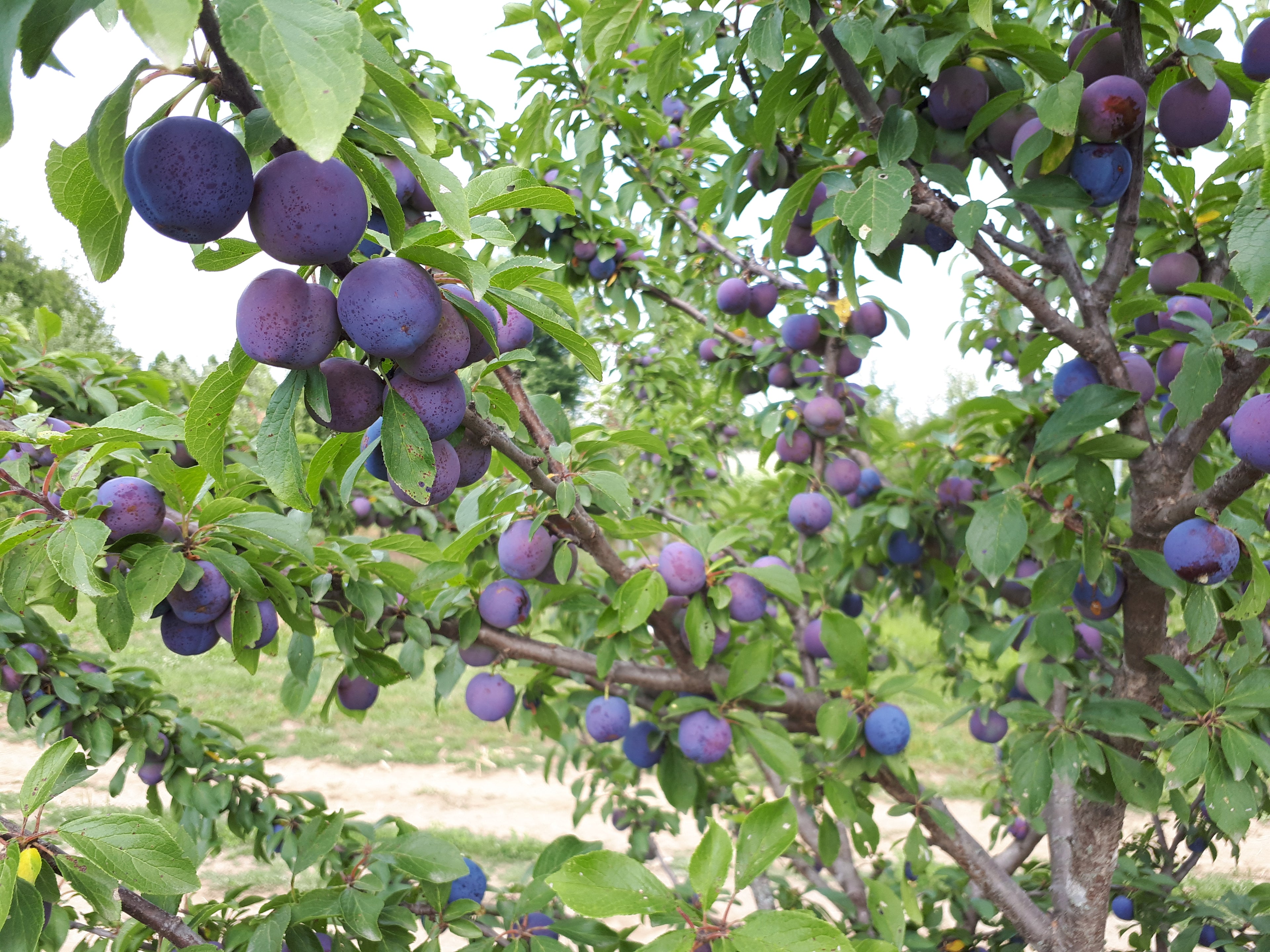
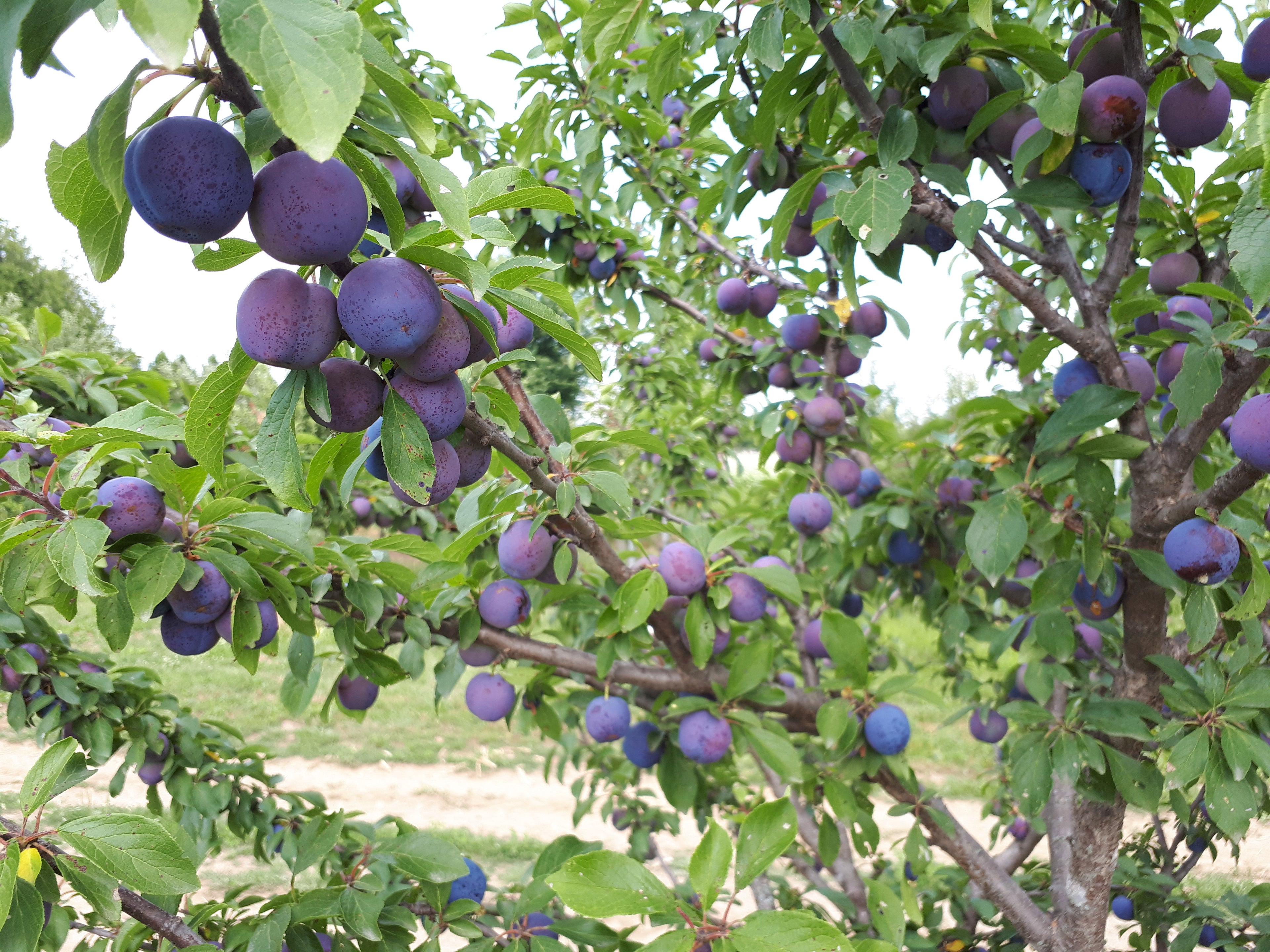
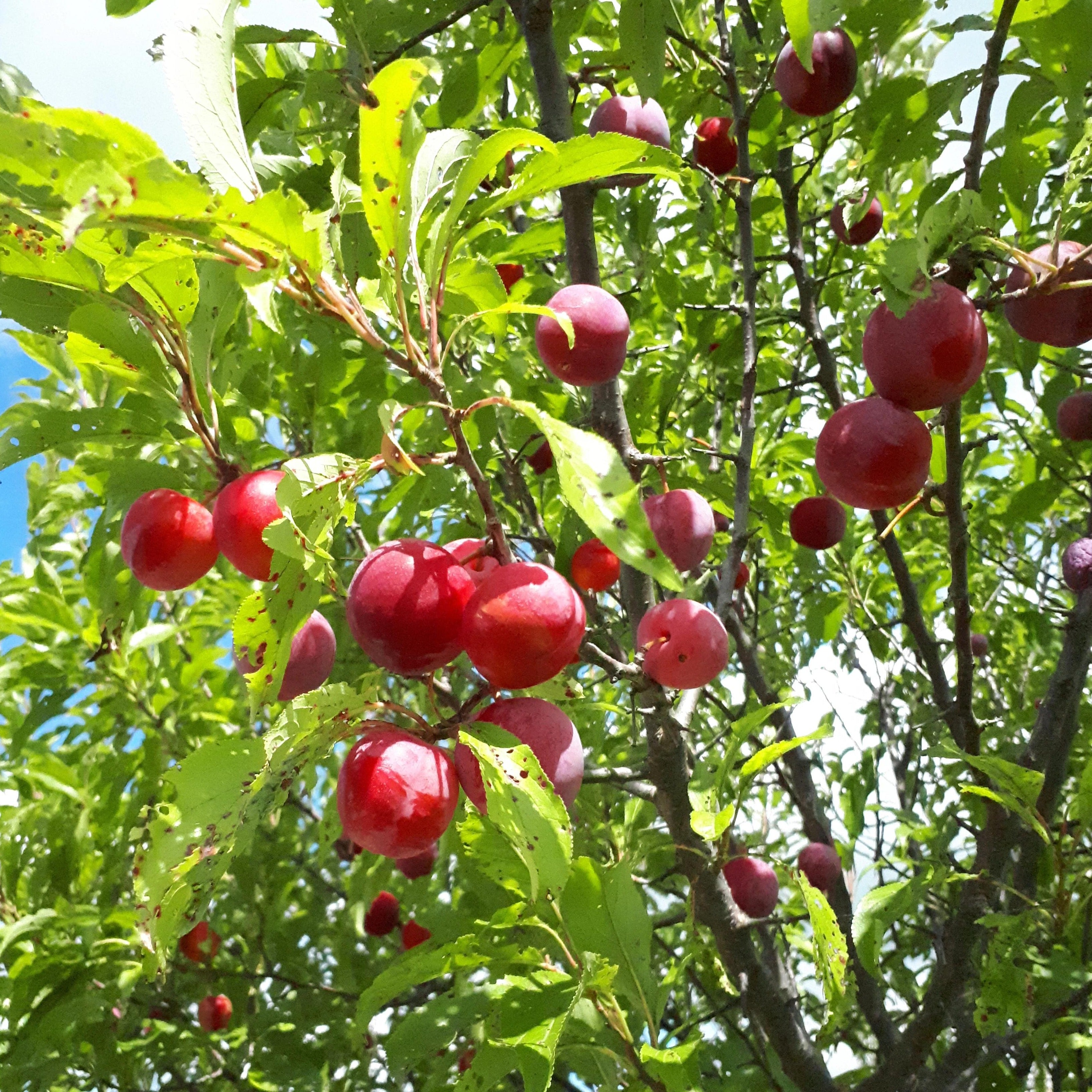
Looking to grow your own fresh, juicy plums? We offer a wide selection of plum trees for sale in Canada, specially selected for cold-hardiness, disease resistance, and exceptional flavour. Whether you're an experienced grower or planting your first fruit tree, we make it easy to find the right plum tree variety for your Canadian garden or orchard.
Why Buy Plum Trees From Us?
-
Canadian-grown and cold-hardy: Our plum trees thrive in Zones 3 to 6, perfect for most regions across Canada.
-
Self-pollinating and cross-pollinating options: Choose from European, Japanese, and hybrid plum varieties.
-
Fresh, high-quality stock: Shipped at the right time for planting in your region.
Popular Plum Tree Varieties:
-
Mount Royal – A self-pollinating European plum, excellent for fresh eating and preserves.
-
Toka – A cold-hardy hybrid with sweet fruit that tastes like bubblegum!
-
Brookgold – Bred in Alberta, early-ripening and ideal for Prairie climates.
Order Your Plum Trees Online in Canada
We deliver across Canada, including Ontario, Quebec, Alberta, and the Prairies. All trees are shipped bareroot, and come with detailed planting instructions.
Sort by:
11 of 23 products
11 of 23 products
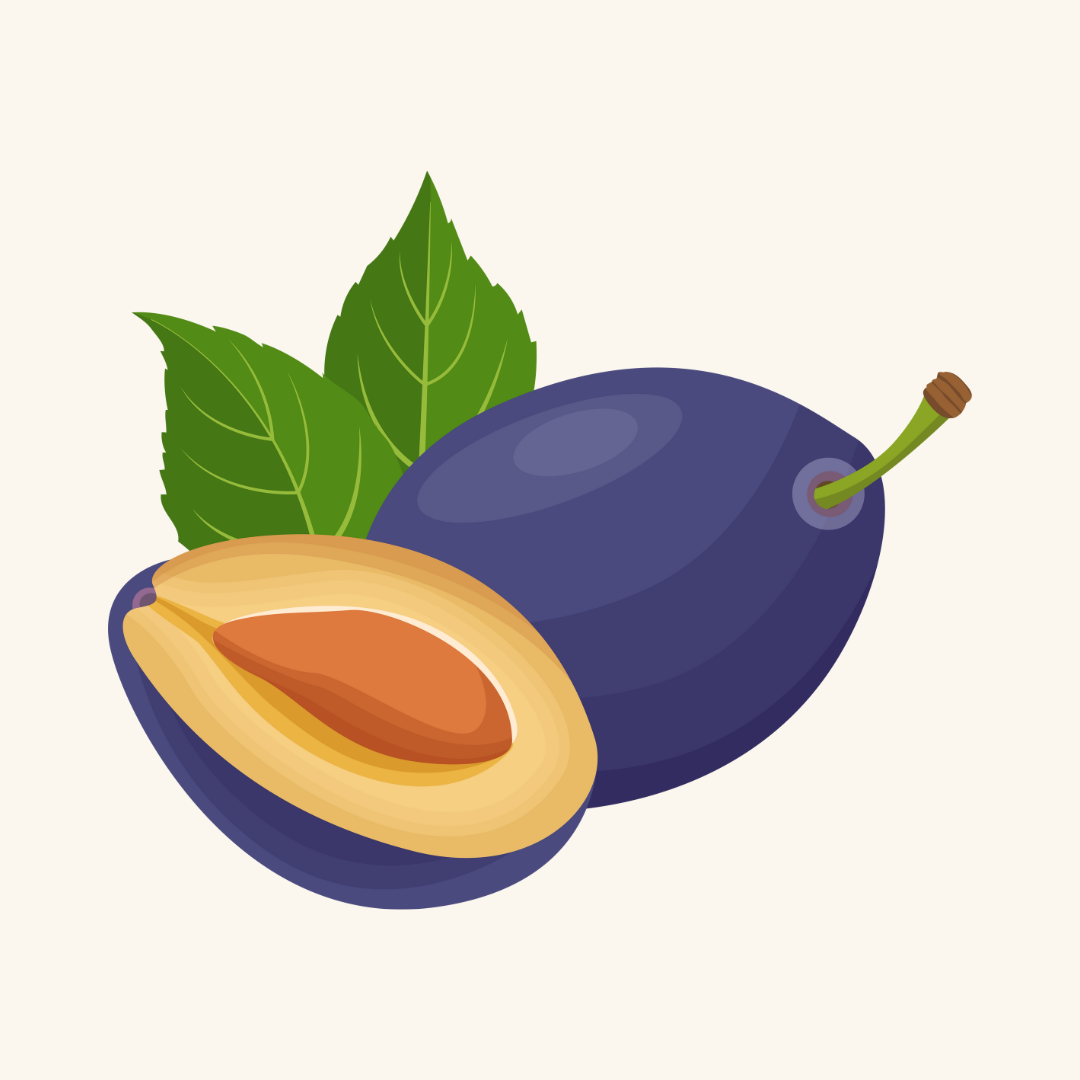
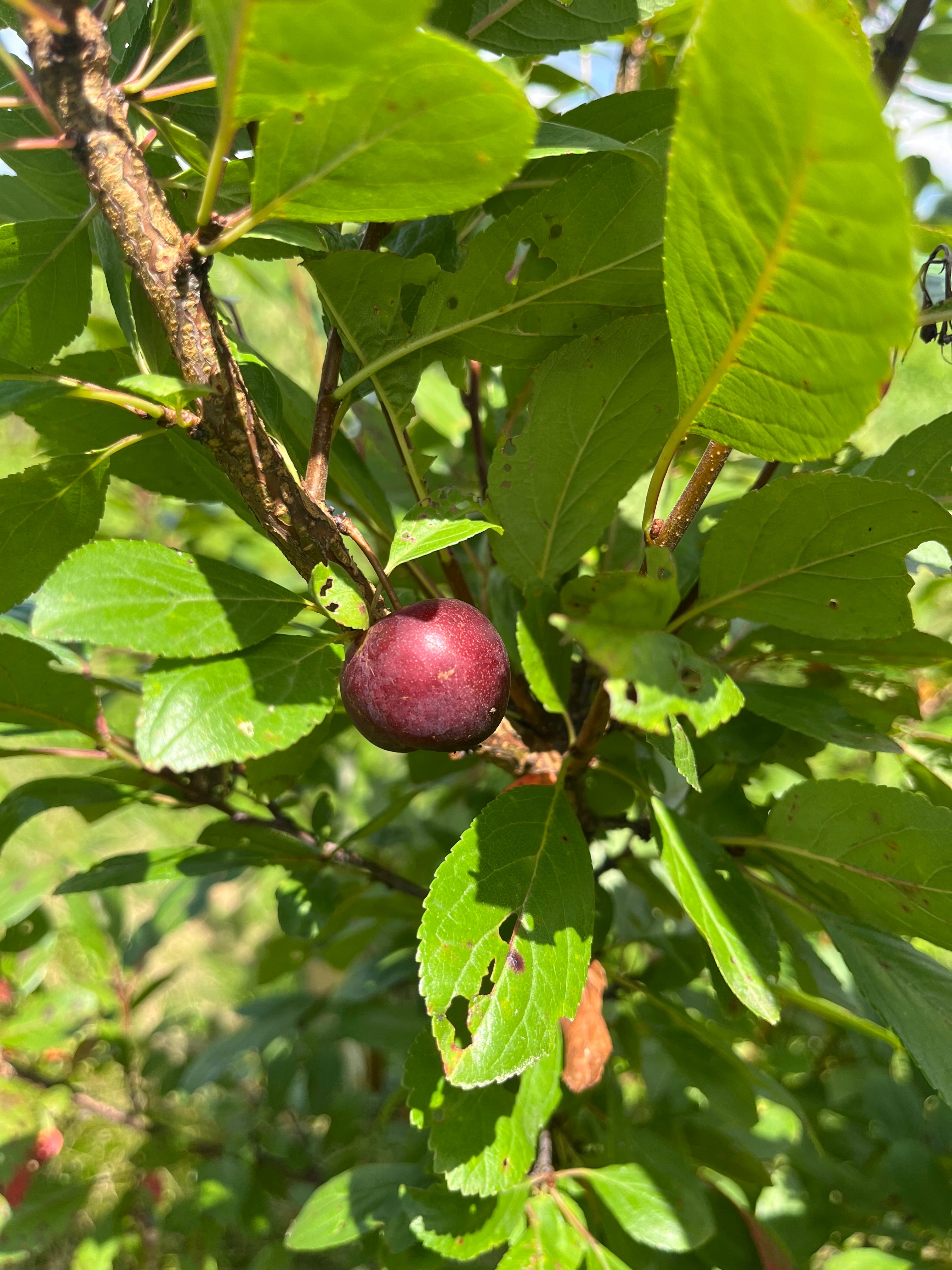
History: Despite once being the most commonly planted commercial plum tree in New York, Bradshaw's origins are quite hazy. It is uncertain whether the variety even originated in Europe or the US. It was named in 1846 by C.M. Hovey who wrote about it in his "Magazine of Horticulture," naming the variety "Bradshaw" after an E.E. Bradshaw who had exhibited excellent specimens of the fruit for several years. Bradshaw has since been eclipsed by other plum varieties.
Why We Grow It: Bradshaw produces relatively large purplish-red plums of good quality. The flavour is pleasantly sweet and the variety is good for fresh eating and likely cooking and processing like other European plums. It is semi-clingstone. The tree is self-fertile, productive, and quite hardy, although it can be slow to start bearing fruit.
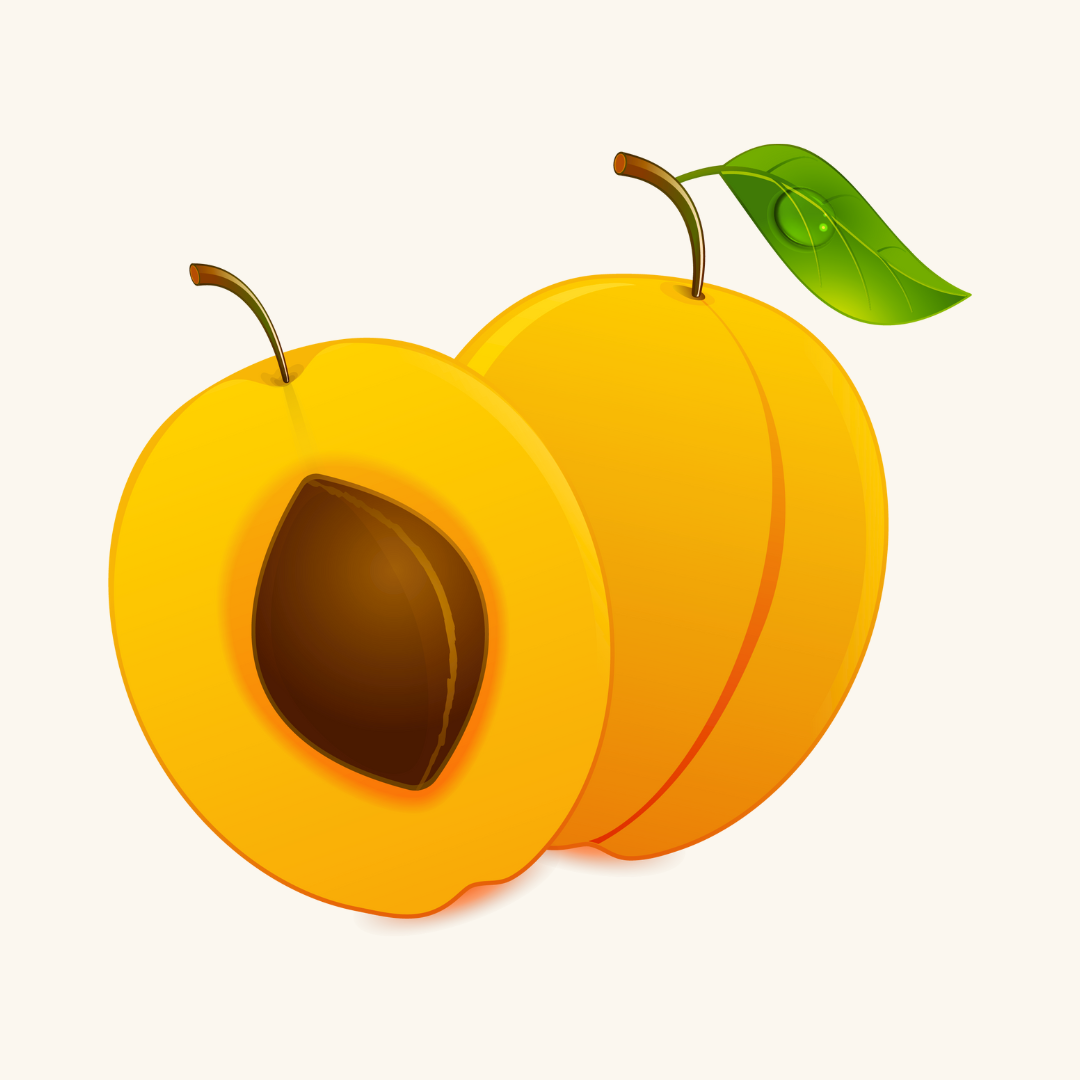
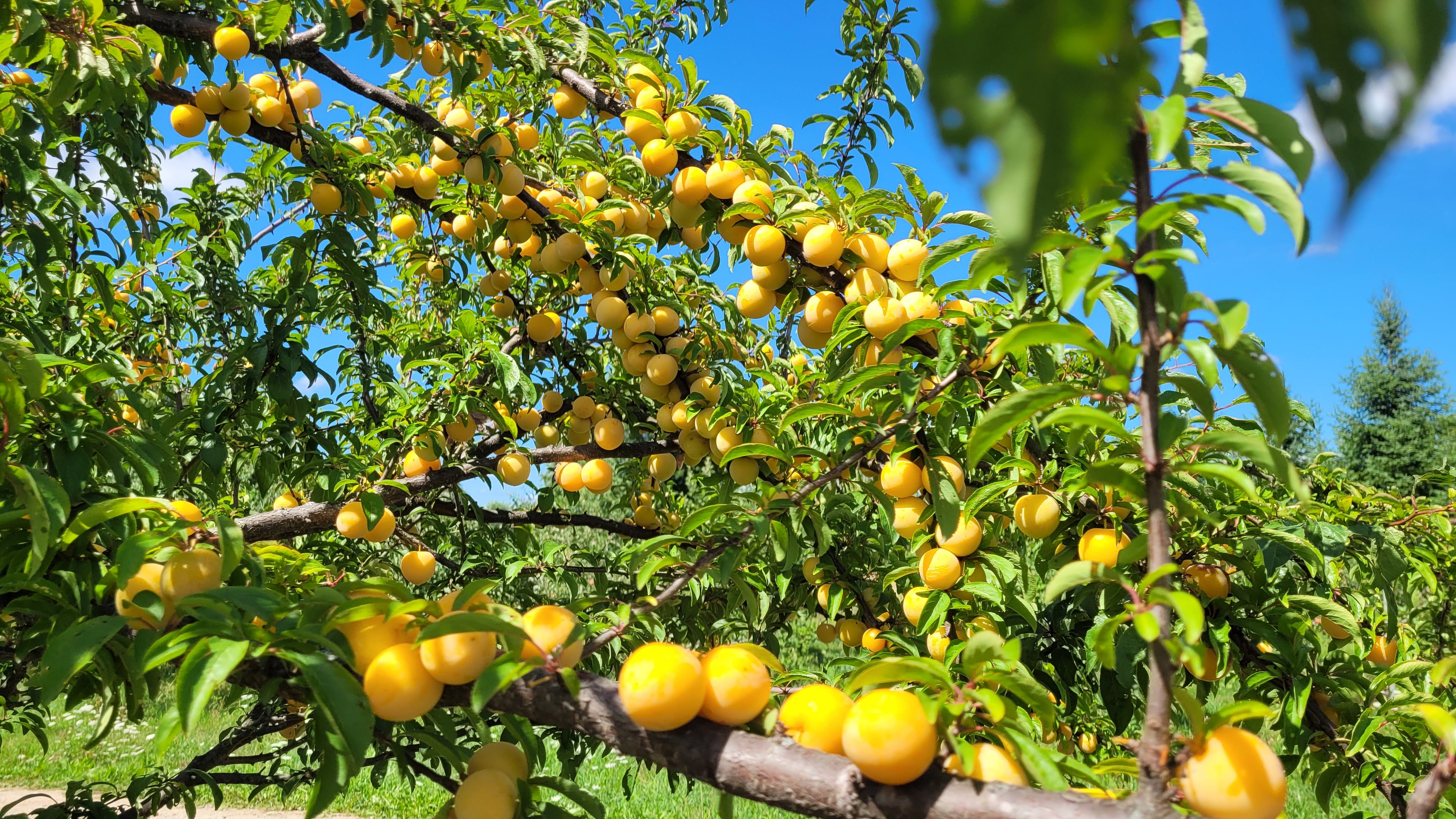
History: Brookgold was developed at the Crop Diversification Centre South in Brooks, Alberta and was named for the town and its golden colour. It was introduced in 1979.
Why We Grow It: Brookgold, like other fruit varieties developed in the prairies, is very cold hardy! Although there is sometimes a trade-off between cold hardiness and fruit quality, this variety still produces small yellow freestone plums that are very sweet, making them great for fresh eating and good for canning and preserving.
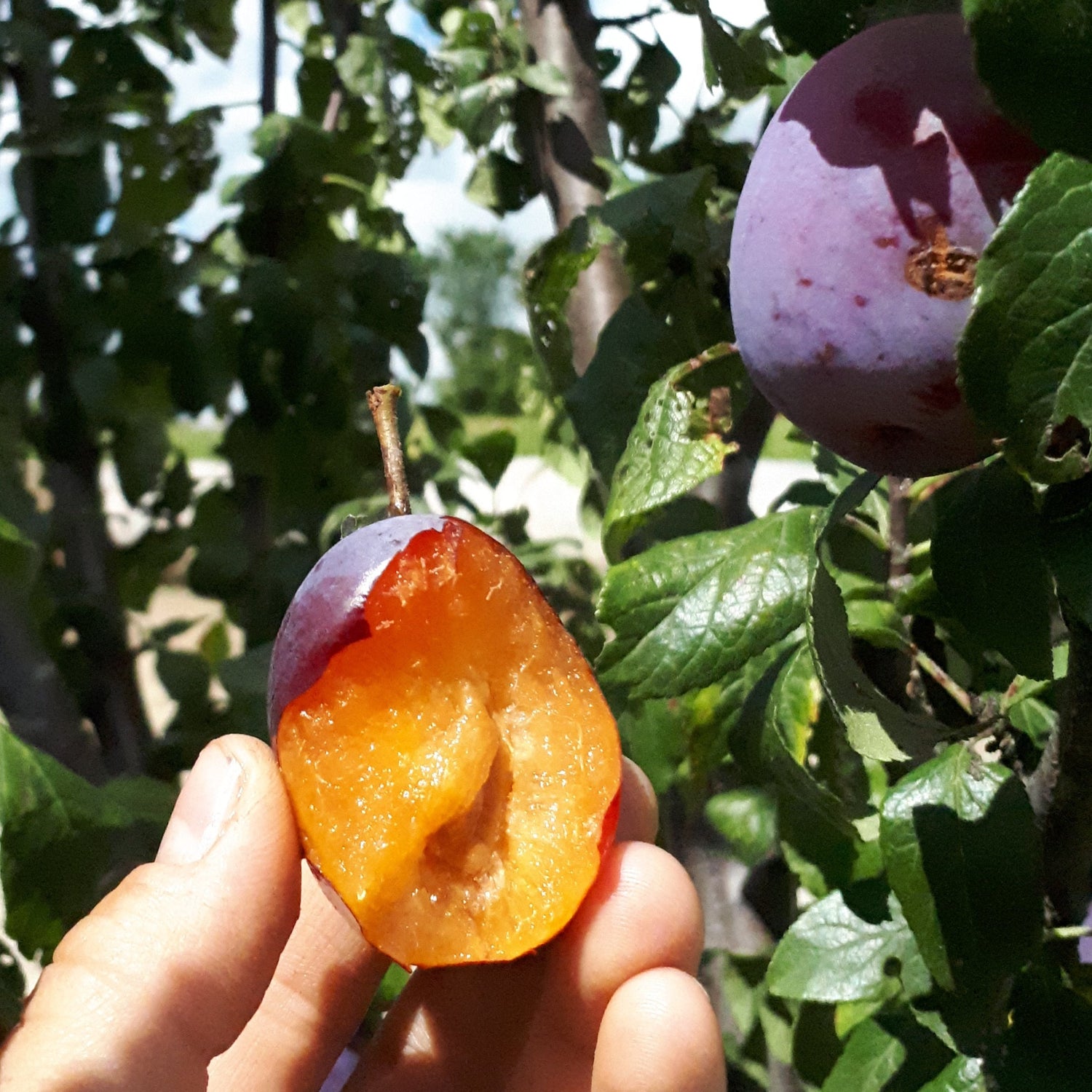
History: Waneta is a hybrid of Japanese plums (Prunus salicina) and American plums (Prunus americana) developed at the South Dakota Experimental Station by NE Hansen and introduced in 1913. It was developed at a time when hybrid plums were more important as a commercial crop. It was named after a Yanktonai man who played a prominent role in the War of 1812 and later became chief.
Why We Grow It: Waneta is a juicy and sweet clingstone plum with tart red skin. The flesh is a yellowish colour. The tree naturally stays a little smaller and has good crops, paired with decent cold hardiness.
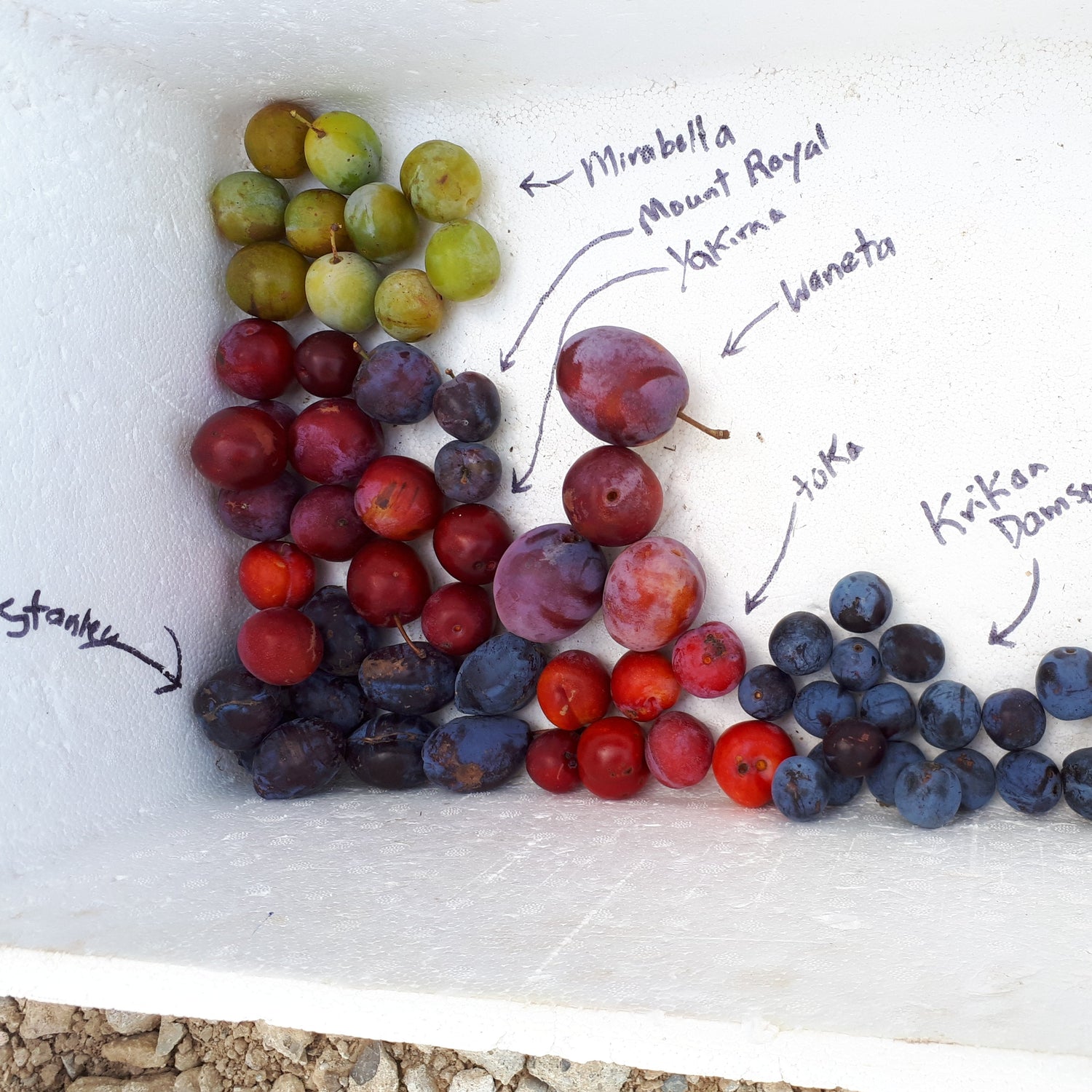
History: The origins and history of this variety are unknown based on our current research.
Why We Grow It: This variety produces a medium-sized freestone plum with purple-pink skin and yellow flesh that is sweet and juicy. It is one of the hardiest European plums around, making it a good choice for our colder climate!
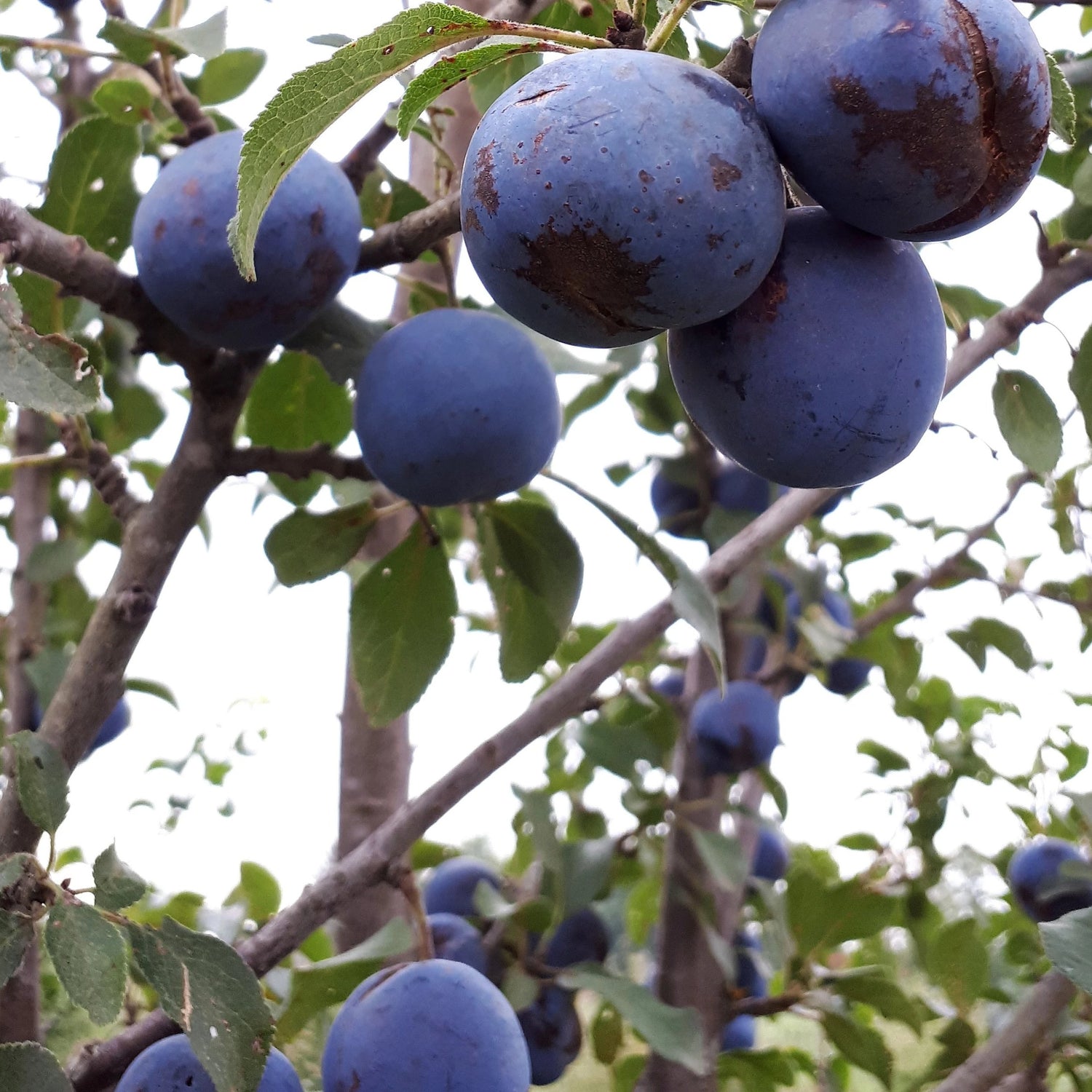
Species: Prunus sp
History: These seedlings are grown from Damson plum seeds collected from our orchard. Damson is a plum that may stem from antiquity!
Why We Grow It: Seedling fruit trees are a great way to add some diversity and mystery to your garden or orchard! The parent variety, Damson, produces small blue fruit that are sweet and a little spiced. They are suitable for fresh eating and great for jams, preserves, etc. For a more detailed description, see the Damson page on our website here.
Please Note: Since plums tend to stay true to type more than apples, these seedlings will likely bear a strong resemblance to their parent variety. However, any specific information listed on this page should be taken with a grain of salt as there may be some variation from the parent tree.
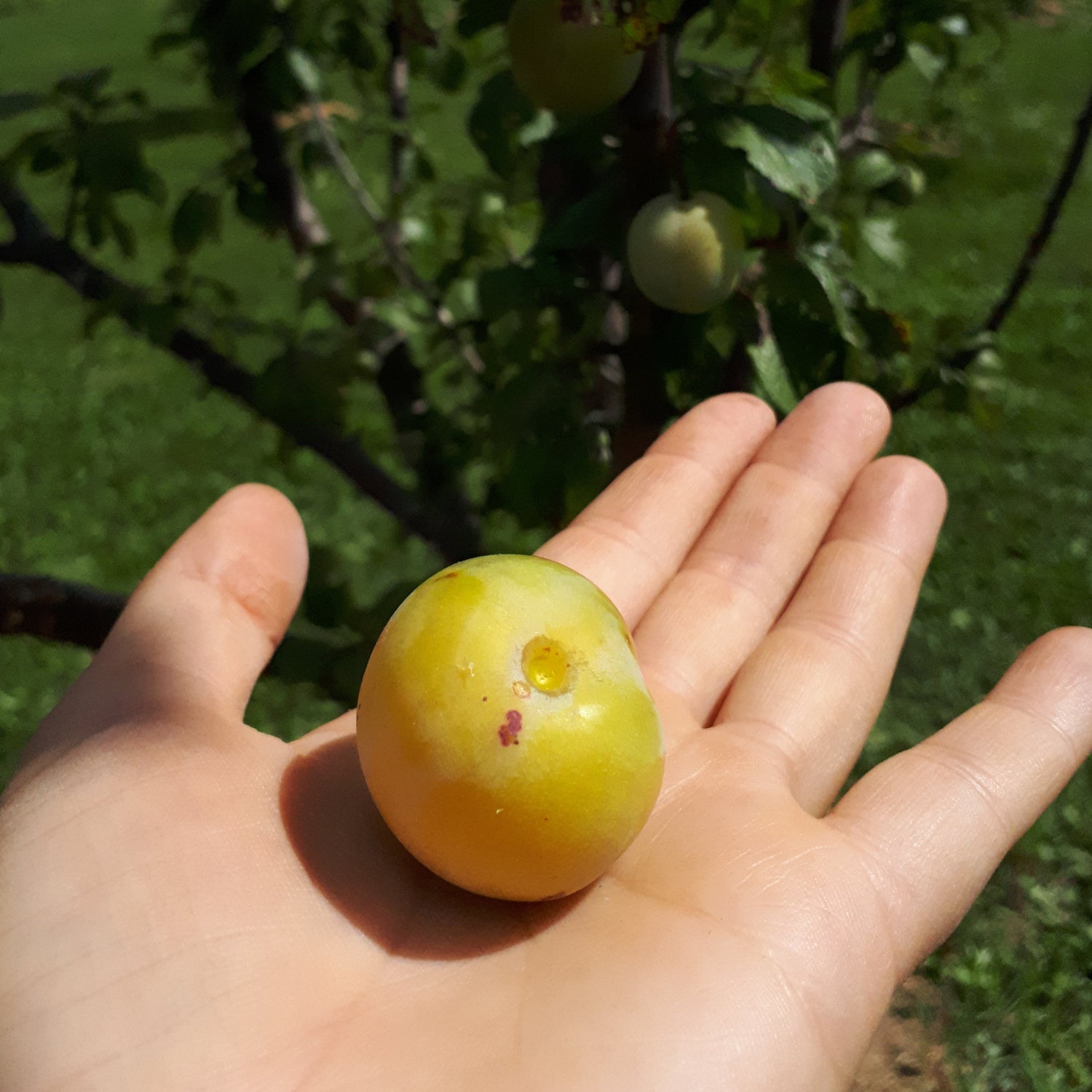
Species: Prunus sp
History: These seedlings are grown from Mirabelle plum seeds collected from our orchard. Mirabelle has been grown in Europe for a long time and remains popular there, especially in France.
Why We Grow It: Seedling fruit trees are a great way to add some diversity and mystery to your garden or orchard! The parent variety, Mirabelle, is super sweet and flavourful. For a more detailed description, see the Mirabelle plum page on our website here.
Please Note: Since plums tend to stay true to type more than apples, these seedlings will likely bear a strong resemblance to their parent variety. However, any specific information listed on this page should be taken with a grain of salt as there may be some variation from the parent tree.
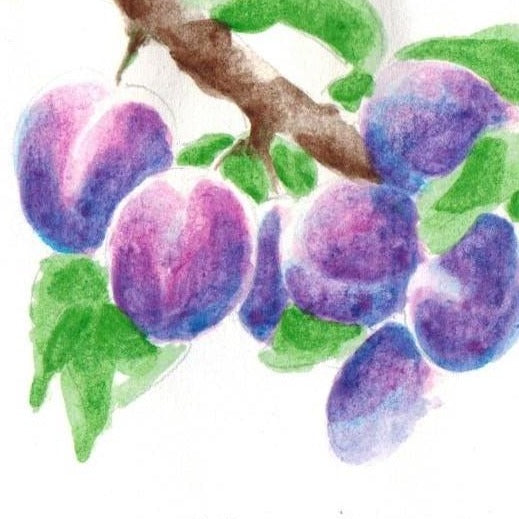
Species: Prunus sp
History: These seedlings are grown from plum seeds collected from our orchard. We missed labelling this particular batch, but we know their parents are a blue prune plum similar to German and Late Italian plums.
Why We Grow It: Seedling fruit trees are a great way to add some diversity and mystery to your garden or orchard! The seedling of a classic prune plume like German or Late Italian, these plums will be good for fresh eating but great for baking, drying, etc.
Please Note: Since plums tend to stay true to type more than apples, these seedlings will likely bear a strong resemblance to their parent variety. However, any specific information listed on this page should be taken with a grain of salt as there may be some variation from the parent tree.
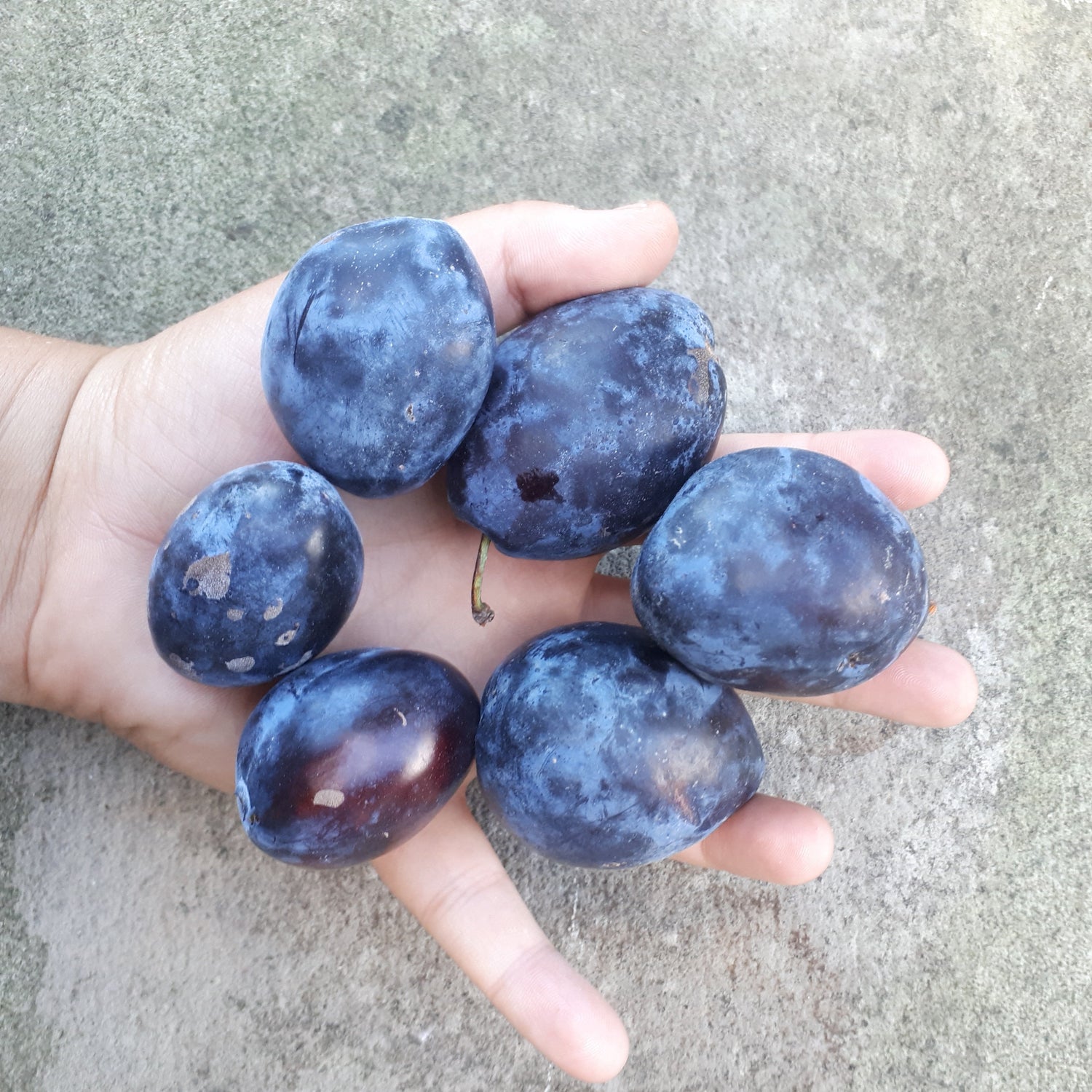
Species: Prunus sp
History: These seedlings are grown from German plum seeds collected from our orchard. Likely a few centuries old, German plums are a classic prune style plum that are great for traditional German desserts.
Why We Grow It: Seedling fruit trees are a great way to add some diversity and mystery to your garden or orchard! The parent of this variety, German plum, is sweet and aromatic. It is good for eating fresh and great for drying or baking. For a more detailed description, see the German plum page on our website here.
Please Note: Since plums tend to stay true to type more than apples, these seedlings will likely bear a strong resemblance to their parent variety. However, any specific information listed on this page should be taken with a grain of salt as there may be some variation from the parent tree.
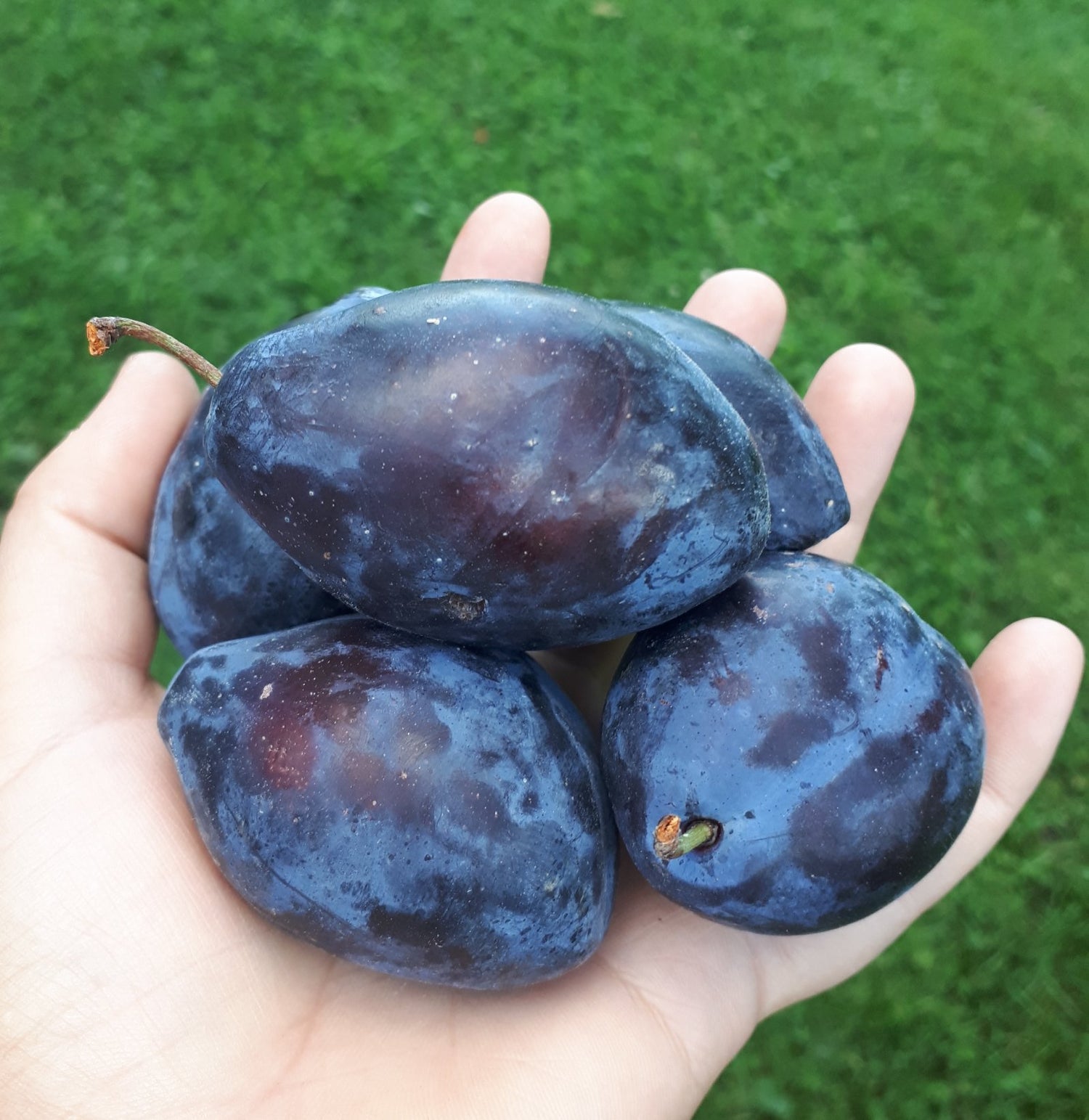
Species: Prunus sp
History: These seedlings are grown from Late Italian plum seeds collected from our orchard. Late Italian is a traditional prune variety and is still commonly grown in Europe and North America today.
Why We Grow It: Seedling fruit trees are a great way to add some diversity and mystery to your garden or orchard! The parent variety, Late Italian, produces an all-purpose plum that is excellent for drying and great eaten fresh, canned, or incorporated into baking, desserts, or salads. For a more detailed description, see the Late Italian page on our website here.
Please Note: Since plums tend to stay true to type more than apples, these seedlings will likely bear a strong resemblance to their parent variety. However, any specific information listed on this page should be taken with a grain of salt as there may be some variation from the parent tree.
Species: Prunus sp
History: These seedlings are grown from Lombard plum seeds. The parent variety, Lombard, originated in the US in the 1800s.
Why We Grow It: Seedling fruit trees are a great way to add some diversity and mystery to your garden or orchard! Lombard is decent for fresh eating and good for canning and cooking.
Please Note: Since plums tend to stay true to type more than apples, these seedlings will likely bear a strong resemblance to their parent variety. However, any specific information listed on this page should be taken with a grain of salt as there may be some variation from the parent tree.
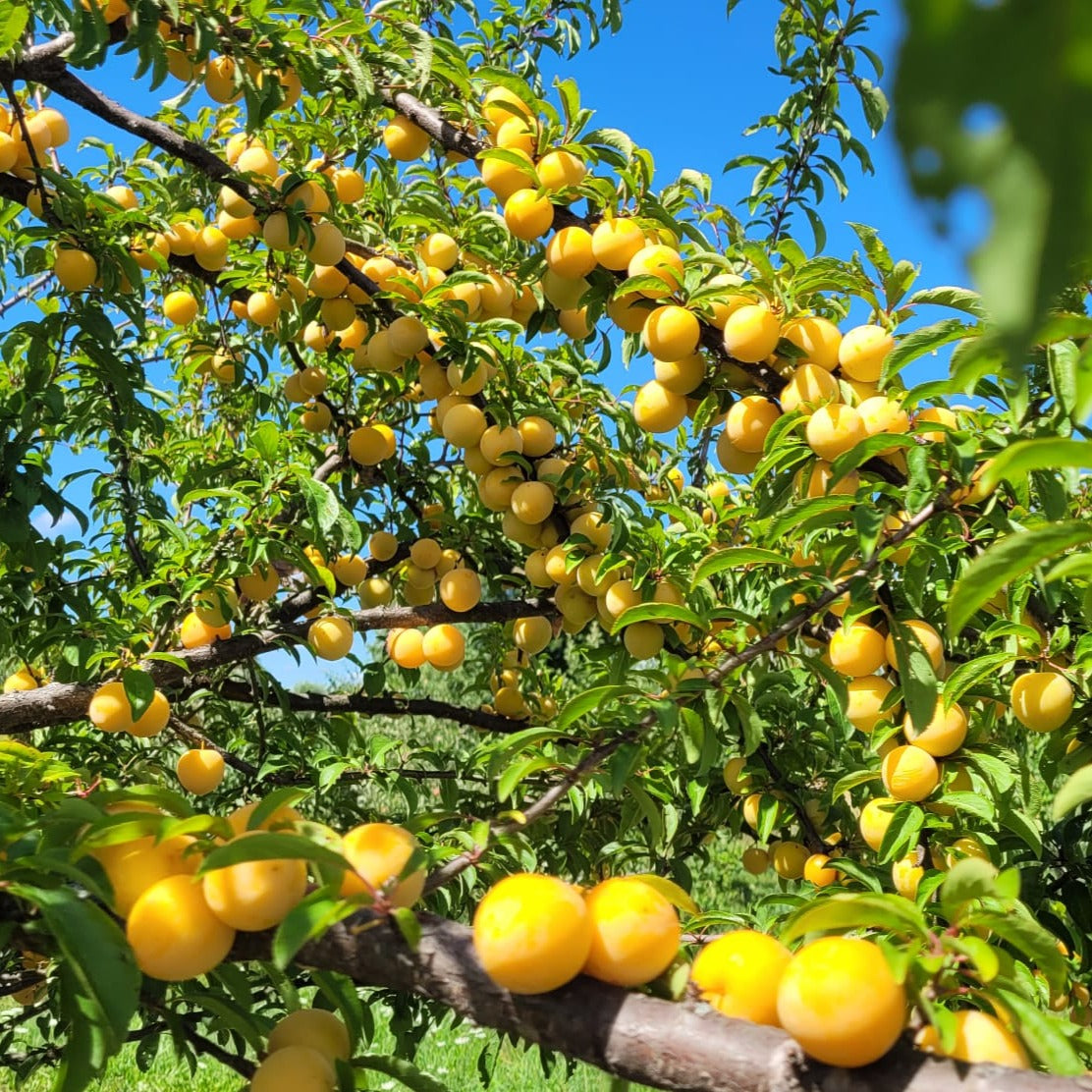
Species: Prunus sp
History: These seedlings are grown from Shiro plum seeds collected from our orchard and a Niagara orchard. Shiro plums (translated from Japanese as 'white') were developed in California and introduced in 1899.
Why We Grow It: Seedling fruit trees are a great way to add some diversity and mystery to your garden or orchard! The parent variety, Shiro, has yellow skin and flesh that is juicy and sweet.
Please Note: Since plums tend to stay true to type more than apples, these seedlings will likely bear a strong resemblance to their parent variety. However, any specific information listed on this page should be taken with a grain of salt as there may be some variation from the parent tree.