Rootstock & Scionwood
Rootstock & Scionwood
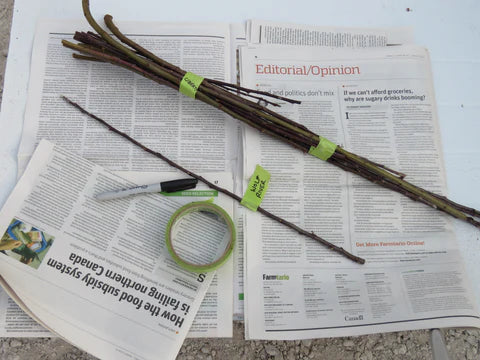
Every year we get tons of requests for rootstock and scionwood. While our main business is in the finished product (grafted fruit trees), we also like to support those wishing to learn the grafting process for themselves. We can attest that it is a very enjoyable (and rather addictive) pastime!
Rootstock - Rootstock can be pre-ordered for Spring 2026! If you are interested in rootstock for Spring 2027; please contact us directly to be added to our waitlist.
Scionwood - Scionwood sales have closed for Spring 2026; please contact us directly if you are interested in being added to our Spring 2027 waitlist. Scionwood orders are generally open from December until the end of February and should be shipped out/picked up by mid-April.
For those new to the grafting process, we also offer the following resources:
- Our annual in-person Apple Grafting Workshop!
-
Fruit Tree Grafting for Everyone, a handy grafting guide co-authored by Steph who owns Silver Creek Nursery!
Sort by:
221 products
221 products
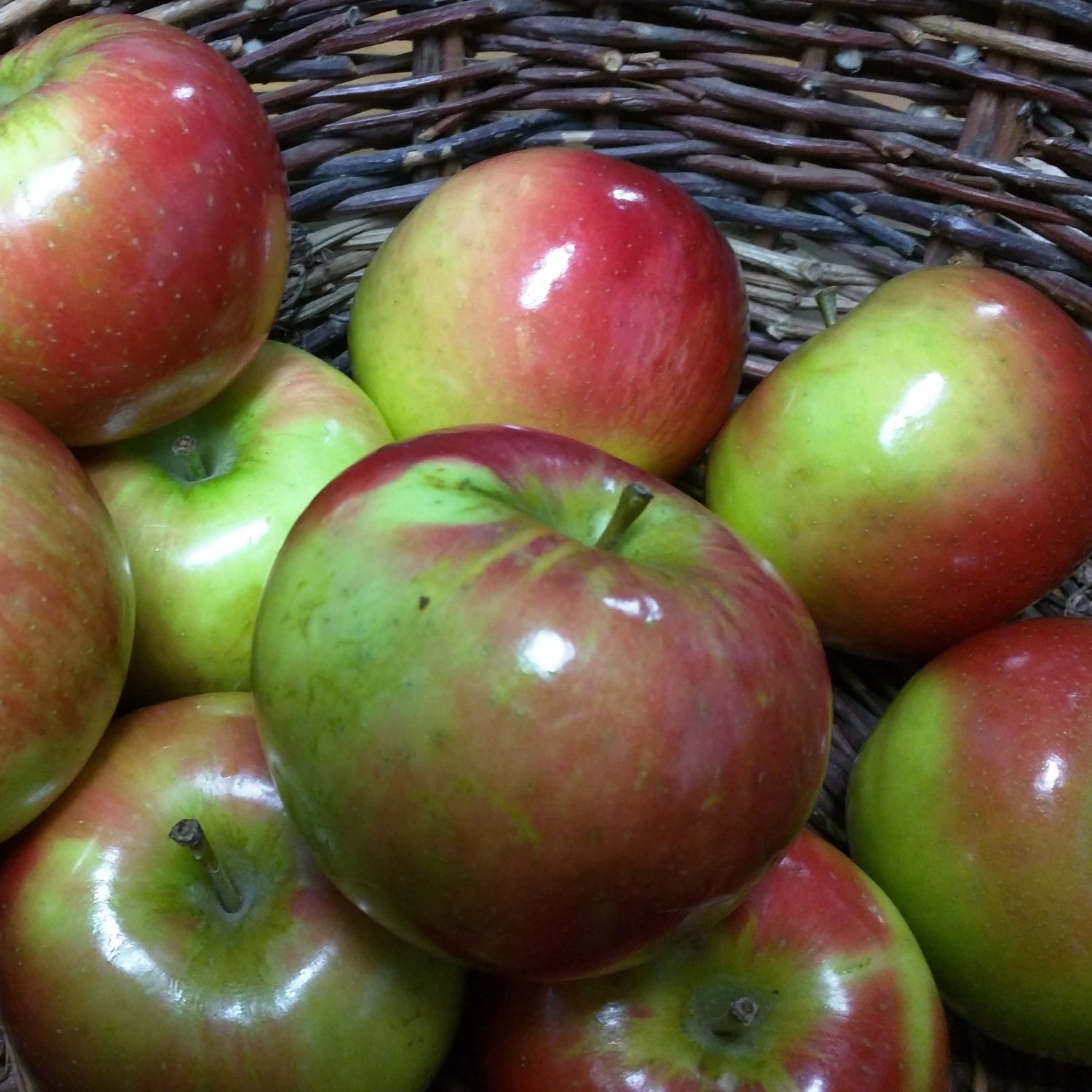
History: Honeycrisp apples were developed by the University of Minnesota in the 1960s and released in 1991. It is one of almost thirty varieties created by the university's breeding program since it began in 1888. The excellent flavour of Honeycrisp has allowed it to become one of the most popular apples in North America and in 2006 it became the state fruit of Minnesota.
Why We Grow It: Honeycrisp is popular for a reason. The apples are large and attractive with good flavour under favourable growing conditions. However, they are not an apple for beginner growers due to issues with some diseases especially in storage, but with diligent care you can produce these crunchy sweet apples in your own backyard/orchard.

Species: Hippohae rhamnoides
History: This scionwood is collected from one of our male mother plants. This may come from any of the male varieties we offer!
Why We Grow It: Male sea buckthorn plants are vigorous and strong pollinators. Although they do not produce berries, they are also useful as fodder, ornamentally, and as erosion control. Sea Buckthorn also have nodules on their roots which help fix nitrogen into the ground, and are a common plant in permaculture orchards for this natural 'fertilizer' effect on plants in their vicinity.
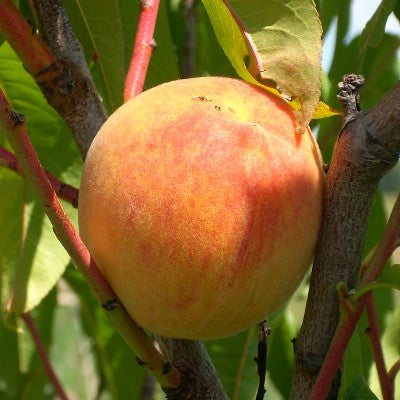
Species: Prunus persica
History: This scionwood is harvested from peach seedlings grown from peach seeds from the very trees we have in our orchards! The parents will be a mix of the Harrow Diamond, Redhaven, Reliance, Veteran, and seedling peaches from True Root Nursery.
Why We Grow It: Peach seedlings tend to stay fairly true to type so odds are you're going to get a pretty solid peach tree once they mature and it is hoped that growing them from seed here will make them a littler hardier! For those who prefer the certainty that comes with getting a named variety, these trees would also be great for grafting as rootstock, feeding wildlife, or planting along a fence line.
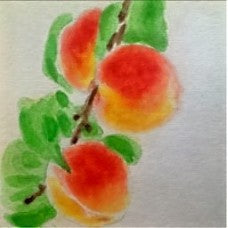
History: White Lady was created by Zaiger Genetics in California as part of their fruit breeding enterprise. It was selected for its unique white flesh, reddish skin, and overall excellent fruit quality. The variety was introduced in 1986.
Why We Grow It: White Lady is a unique variety featuring red blush over white skin and firm, white flesh. This freestone peach has quite low acidity giving it a very sweet flavour and it is great for fresh eating, canning, preserving, and baking. The tree itself is adaptable and the blossoms tolerate unpredictable spring weather better than most.
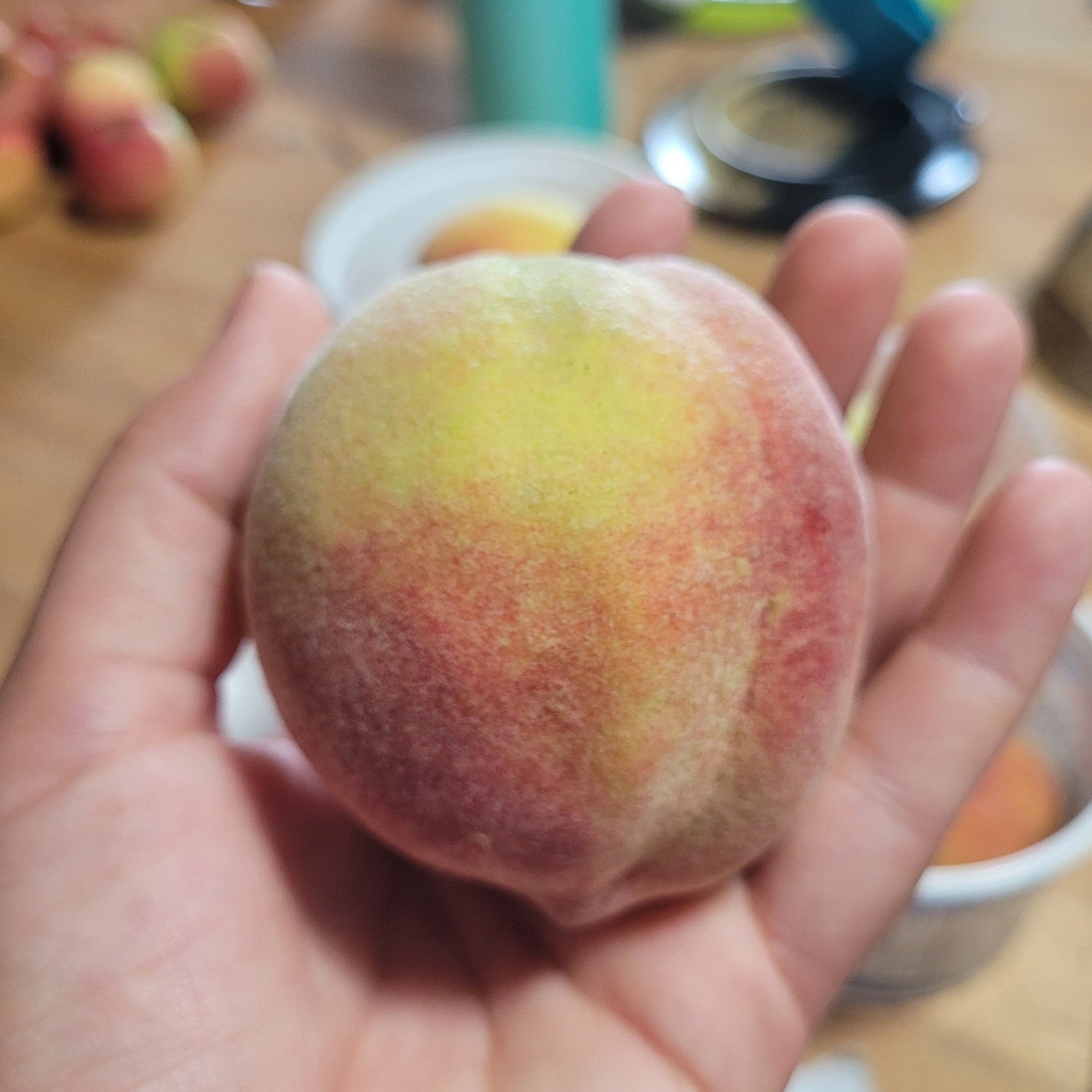
History: Crimson Rocket originated at the Appalachian Fruit Research Station in West Virginia as part of a breeding program to create columnar peach trees with good fruit quality. It was selected in 1996 for further testing and and patented in 2004.
Why We Grow It: Crimson Rocket is unique for its columnar growth, forming a narrow tree ideal for those with limited planting space! It produces freestone yellow peaches with a red blush with the perfect balance of sweet and tart, making it an excellent variety for fresh eating.

History: Contender was developed at the North Carolina Agricultural Experiment Station and released in 1988. It is one of several peaches developed by the station with the goal of creating late-blooming varieties that are better able to avoid spring frosts
Why We Grow It: Contender is a good-quality cold hardy peach. It produces large, freestone peaches with a sweet flavour that are great for eating fresh off the tree. The fruit is firm and slow to brown, also making it an excellent option for canning and freezing.
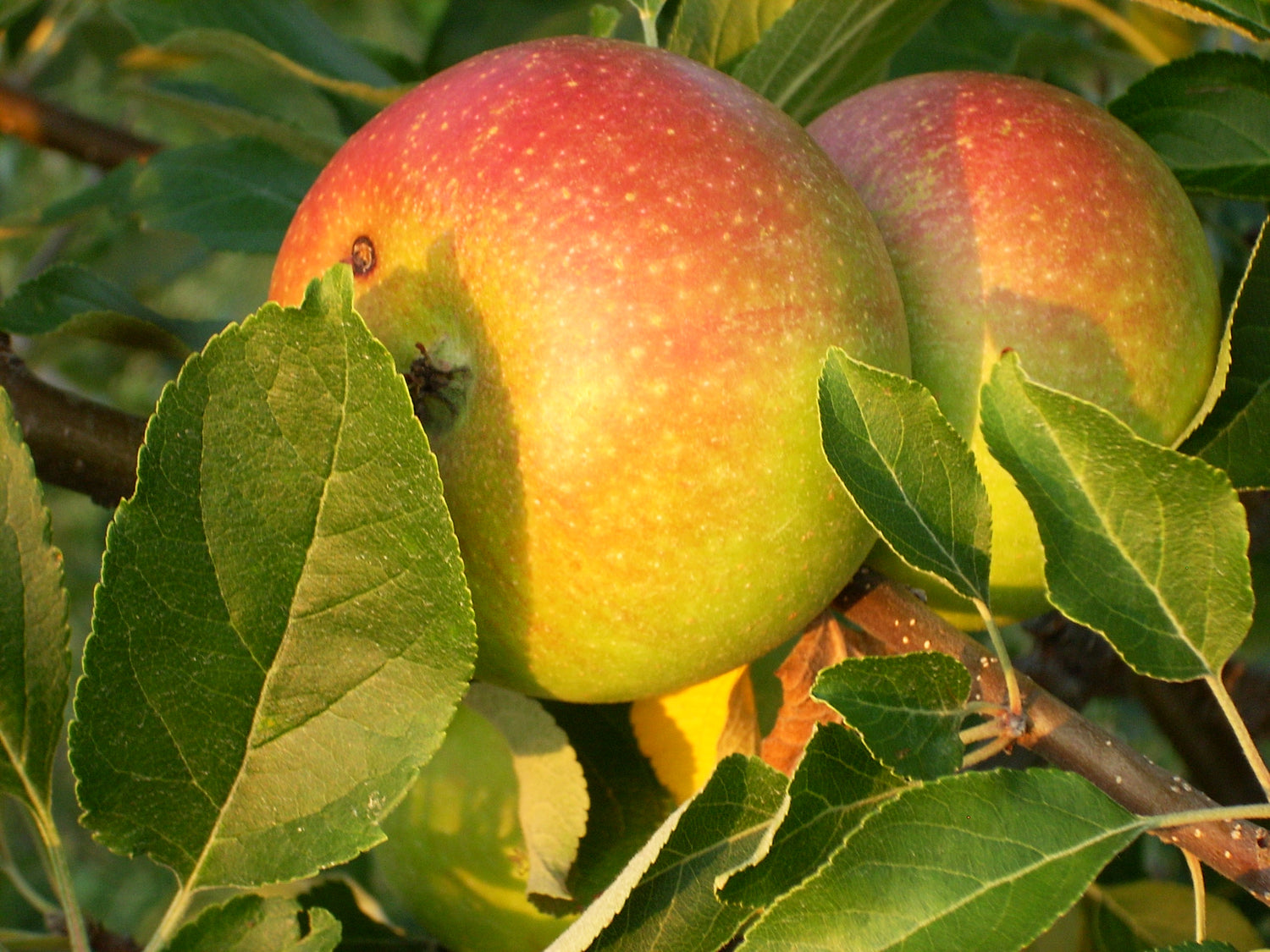
History: Cox's Orange Pippin was first grown in England in 1830 and was named after the retired brewer and horticulturalist who first bred it, Richard Cox. Its excellent flavour has earned it a spot as one of the best fresh eating apples in England where it has remained popular ever since. In fact, it still accounts for over 50% of fresh eating apples grown in the UK today. Despite its reputation, it is seldom grown commercially in North America due to its precocious nature and susceptibility to many common apple diseases.
Why We Grow It: This apple's reputation is hard to ignore with its sweet, subtle, aromatic flavour and attractive orange-red skin. Not only is it good for fresh eating, it is also popular in cider blends.

History: Cocomerina (aka Blood Pear) is an ancient Italian variety that is so old its origins are shrouded in mystery. Today, this rare variety is only grown in the Apennine area of Romagna and Tuscany in Italy. There is some renewed interest in Cocomerina due to its unique red flesh, hence the reason it was named after the Italian word for 'watermelon': 'cocomero.'
Why We Grow It: We are never one to turn down a unique heritage pear, especially a red-fleshed one at that! These small, round pears are a sweet and aromatic treat. Although the fruit does not keep long, they are also excellent for making jams and liquors. The trees themselves offer some unique ornamental value as the young leaves sport a unique reddish tinge.
Note: We currently do not know if we have the early or late ripening variant as our trees are too young to have produced fruit.

History: The 'Old Home' pear (Pyrus communis) is an Illinois-native cultivar discovered in the early 20th century, renowned for its exceptional fire blight resistance and widely used in developing the common OHxF (Old Home x Farmingdale) rootstock series. Identified by F.E. Reimer around 1915, it became a staple in North American pear production for grafting.
Why We Grow It: Old Home is a great option for interstem grafting between dwarf rootstocks such as Provence Quince, which are incompatible with some pears, such as Bartlett.
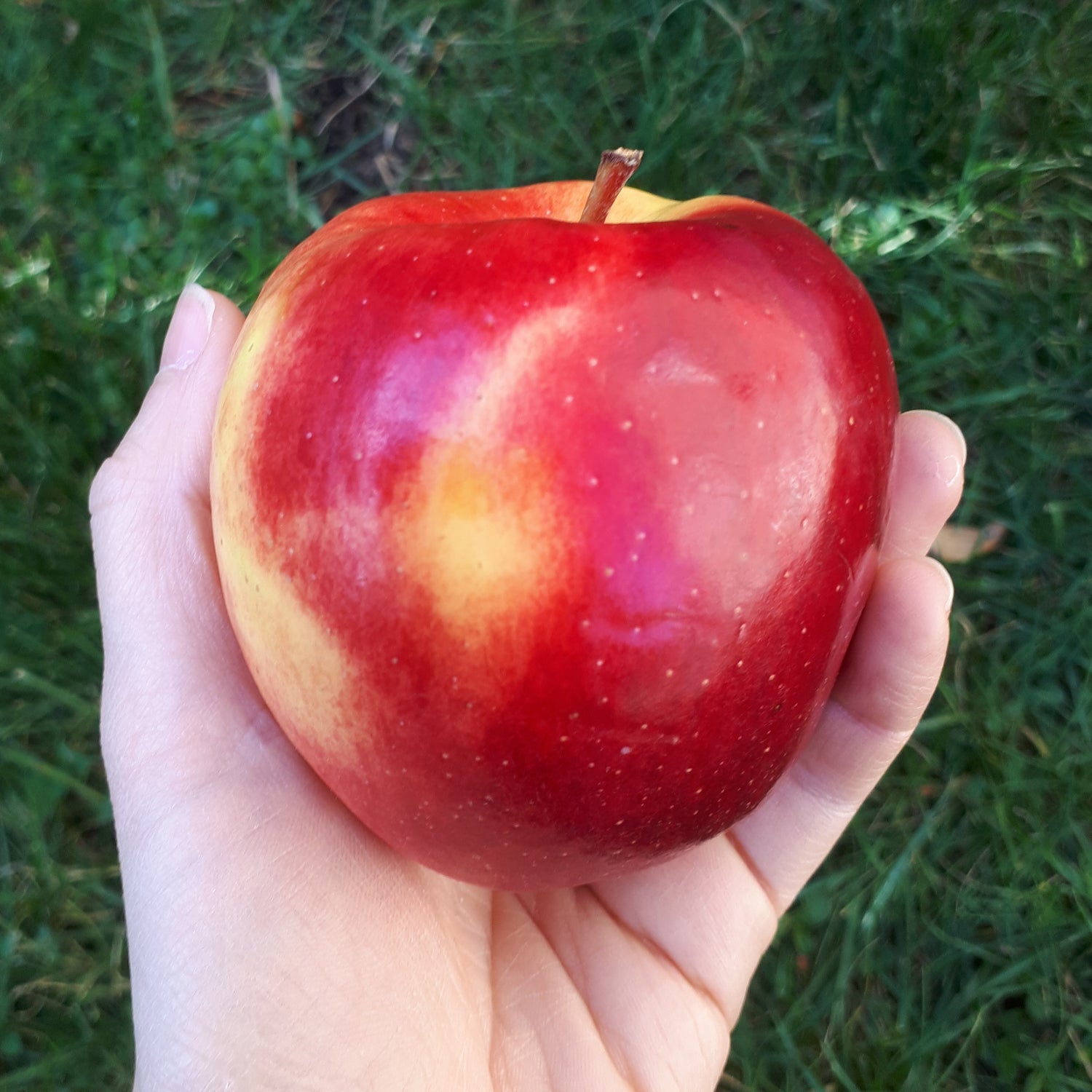
History: A chance seedling discovered in the 1980s in BC, this tender, aromatic, honeyed apple has been a hit ever since!
Why We Grow It: This delicious apple is very popular in the fresh eating market in Canada, thanks to its attractive bi-colour skin and slow browning qualities. It produces a medium-large fruit and is a good cropper.
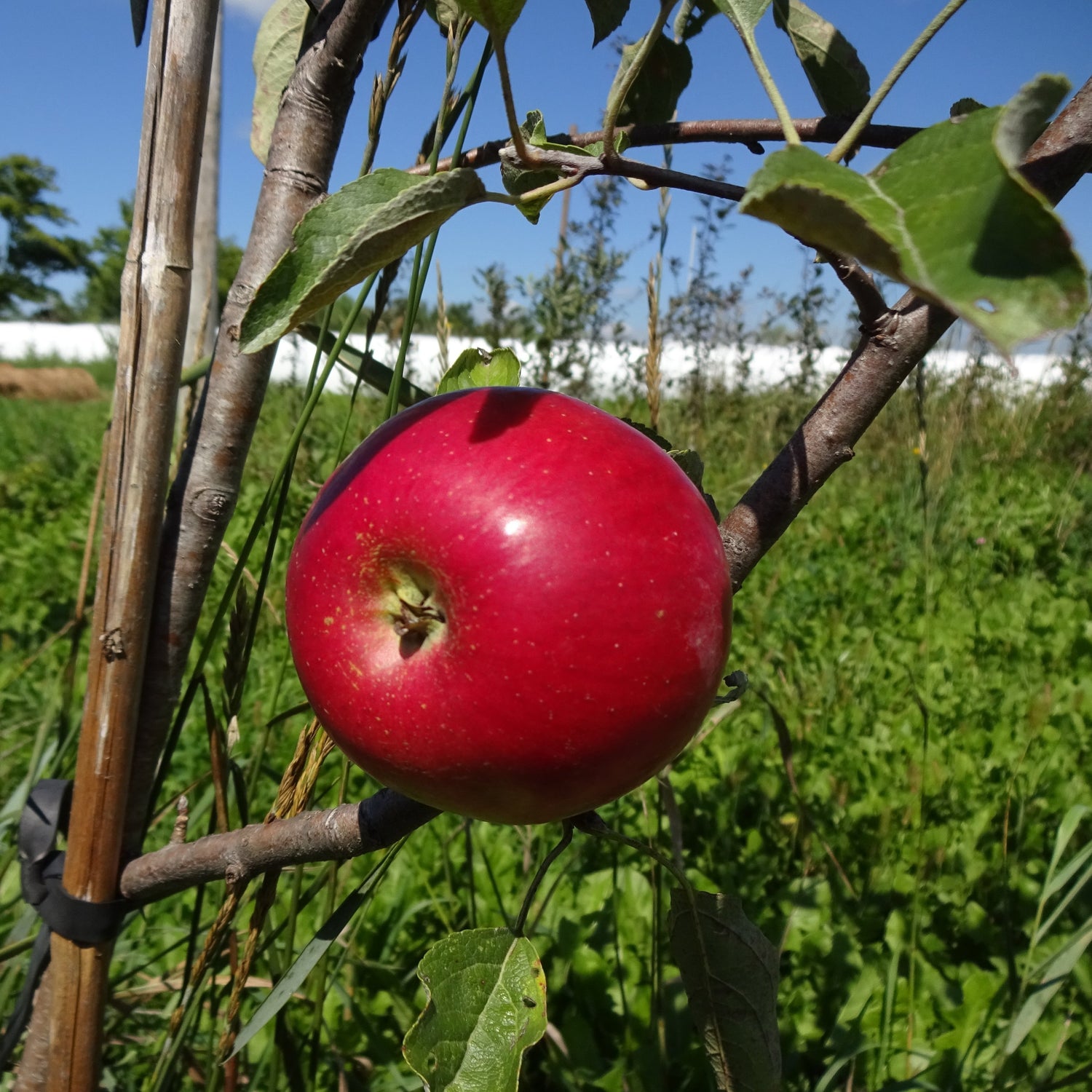
History: Akane was developed in Japan in 1937 at the Morioka Experimental Station. It is one of several kinds of produce created to better feed citizens and troops during WW2. The name 'akane' literally translates from Japanese as 'deep red.'
Why We Grow It: This crisp, sweet apple is great for fresh eating and has bright red skin. It tends to begin bearing at a young age and is relatively diseases resistant.


History: Bulmer's Norman was imported from Normandy, France to England in the early 1900s by the cider making company H.P. Bulmer. This variety didn't even have a name when it arrived but quickly grew in popularity for use in making cider. This apple has since fallen out of the limelight and is primarily used for grafting other varieties onto its sturdy trunk.
Why We Grow It: Although less popular these days, this variety boasts vigorous growth, decent disease resistance, and a surprising tolerance for cold. This conical, green apple produces a bittersweet juice and is high in tannins.

History: Diva was developed at Agriculture and Agri-Food Canada's St-Jean-sur-Richelieu Research Centre in Quebec by Shahrokh Khanizadeh. It was first bred in 1971 and underwent vigorous testing for fruit quality, cold hardiness, and disease resistance until its release in 2009. It is considered the first scab resistant apple released specifically for northern fresh eating and cider markets!
Why We Grow It: Diva doesn't disappoint after its many years of testing. This crisp apple boasts and excellent sweet flavour with some tartness and it is great for fresh eating, adding to salads and charcuterie boards, cider, and pies. It has done well in our orchard, producing reliable crops with few disease issues.
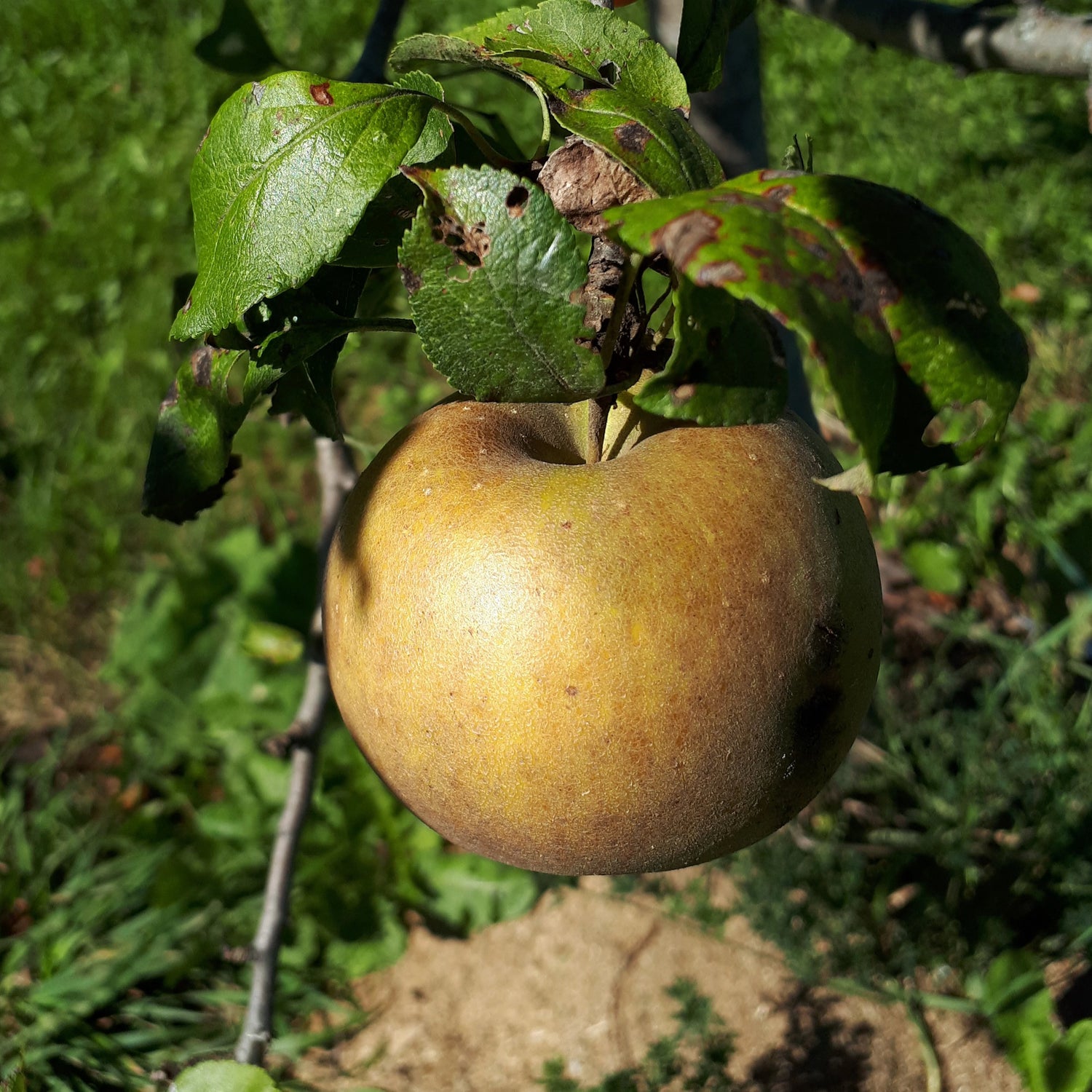
History: Egremont Russet first emerged in Britain in the early 1870s and has remained popular ever since. Even today, it is the third most common apple grown commercially in England.
Why We Grow It: Although the russet, a thick rough skin, coating this apple can be an acquired taste, there is a reason this apple has remained so popular. The fruit itself is an attractive gold dotted with yellow and it has an excellent sweet, nutty flavour. They are delicious fresh, when used for cooking, and in ciders. The trees are known for producing good, regular crops.

History: Florina, aka Querina, was developed in France in the 1980s at the Station de Recherches d'Arboriculture Fruitiere. Despite being developed in France, its ancestry is made up of American varieties. Since its introduction it has become quite popular in continental Europe.
Why We Grow It: One of Steph and Mouse's favourites! Florina is a wonderful all-around apple for the backyard offering both rich flavour and easy care. The sweet, crisp fruits it produces are perfect right off the tree but also keep a few months. They are also great for organic production: resistant to scab, fireblight, mildew, and rosy apple aphid.
History: Golden Delicious was discovered by chance on a family farm in West Virginia and sold in 1914 to the Stark Brothers Nurseries. It has since become one of the most popular apples in North America. Since 1972, Clay County, where the apple was found, has hosted an annual Golden Delicious Festival and in 1995 it was declared the state fruit of West Virginia. Golden Delicious is also the parent of many varieties, including prominent ones such as Ambrosia and Gala.
Why We Grow It: It is easy to see why this apple is so popular with its attractive golden yellow skin and sweet, crisp cream-coloured flesh. Golden Delicious is a favourite for fresh eating, sauce, and apple butter. On top of that, it is resistant to scab, powdery mildew, and fire blight.
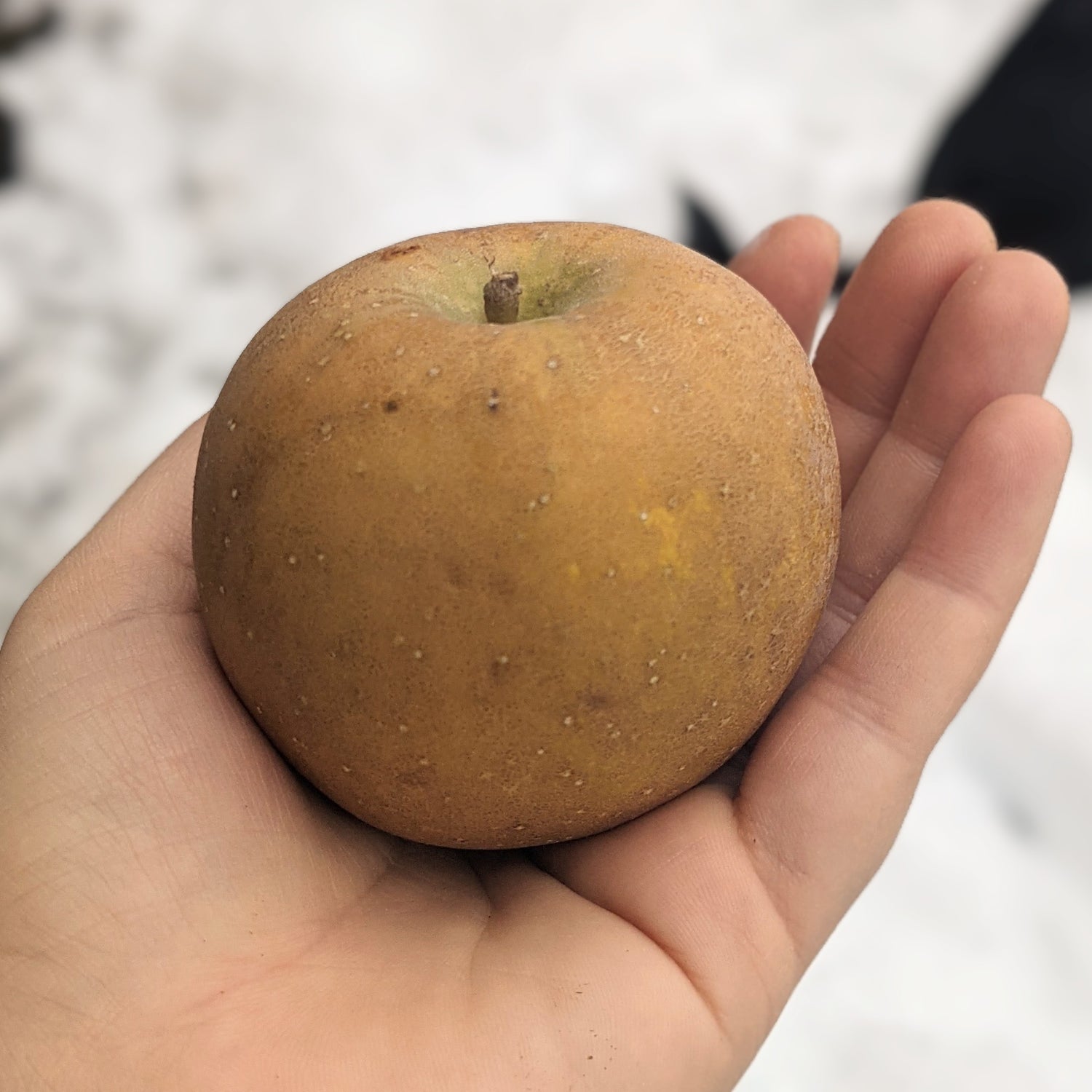
History: The origins of Golden Russet are unclear, but we know it was discovered in New York in the first half of the 1800s. It may have come from the seedling of an English russet variety and could have Ashmead's Kernel parentage. It was grown commercially for some time before falling out of favour, although it has regained some popularity recently due to its strengths in cider production.
Why We Grow It: With both lots of sweetness and acidity, Golden Russet is one of our favourites for fresh eating. The flavourful juice from these apples is also great for making cider. The thick russetted skin discourages insect damage and it is resistant to scab, canker, and powdery mildew. Its tip-bearing habit gives these hardy trees a wispy appearance.


History: Not to be confused with Pink Lady, Pink Pearl was developed by breeder Albert Etter who had the goal of creating red-fleshed apple varieties from seedlings of Surprise, a red-flashed variety. In 1940, he partnered with the California Nursery Company to bring some of these varieties to the public. Pink Pearl was selected as the best amongst his seedlings and released in 1945.
Why We Grow It: One of Steph's favourites! Pink Pearl is a delicious apple that is crisp with a pronounced unique fruity flavour and a nice blend of sweetness and sharpness. Its yellow-pink skin conceals a bright pink interior that is stunning to see compared to the white-ish flesh of most apples. It is great fresh or for applesauce, and it is relatively slow browning- it can be cut and bagged in the fridge the night before with very little change in colour the next day. Their pink colour adds a unique visual appeal to baked goods as well, such as with the gooseberry and Pink Pearl tarts Steph made pictured here!
History: Porter's Perfection originated in Somerset in the UK some time in the 1800s. It became extremely popular in England although its popularity began to wane following the 1910s. It is still grown today but not as commonly as it once was. It shows promising results in the North American climate, unlike some other European cider cultivars.
Why We Grow It: This English cider apple produces a medium bittersharp cider. It has done well in different studies in Ontario with the Vineland Research Station with regards to juice composition, disease resistance and overall performance. The tree is a heavy cropper and grows vigorously.

History: Rouville apples were created by R.L. Granger and G.L. Rouselle in 1962 at the Agriculture and Agri-food Canada research centre located in St.-Jean-sur-Richelieu, Quebec. The variety was introduced in 1983.
Why We Grow It: This lovely Quebec cider apple has a wonderful bitter-sweetness that is great for fresh eating and juicing and sauce. It is resistant to scab and has grown very well in our test orchard.

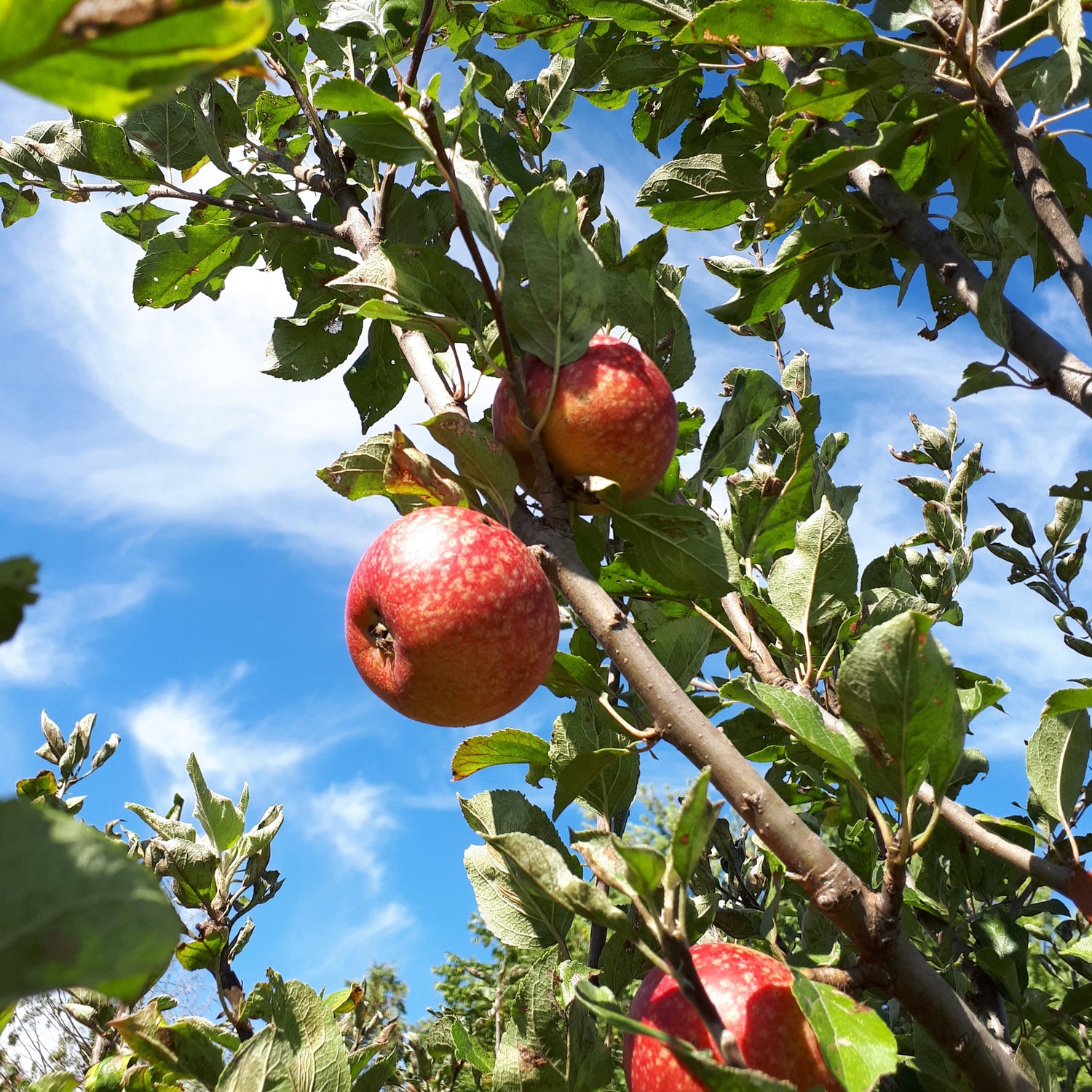
History: In the 1830s in Lancaster County, Pennsylvania, a seedling apple tree grew beside the smokehouse of William Gibbons. Perhaps it sprang from a core that some one had tossed there while they tended the fire. Who knows? What we do know is that the aptly named Smokehouse was commonly grown in the area until its popularity waned as sweeter apple varieties appeared on the market. Still, this variety has stood the test of time due to its great flavour.
Why We Grow It: Traditionally Smokehouse apples are picked a little early and used for baking, but if they're allowed to ripen fully on the tree, some people have described the balanced flavour as being “like drinking fresh-pressed cider!”.
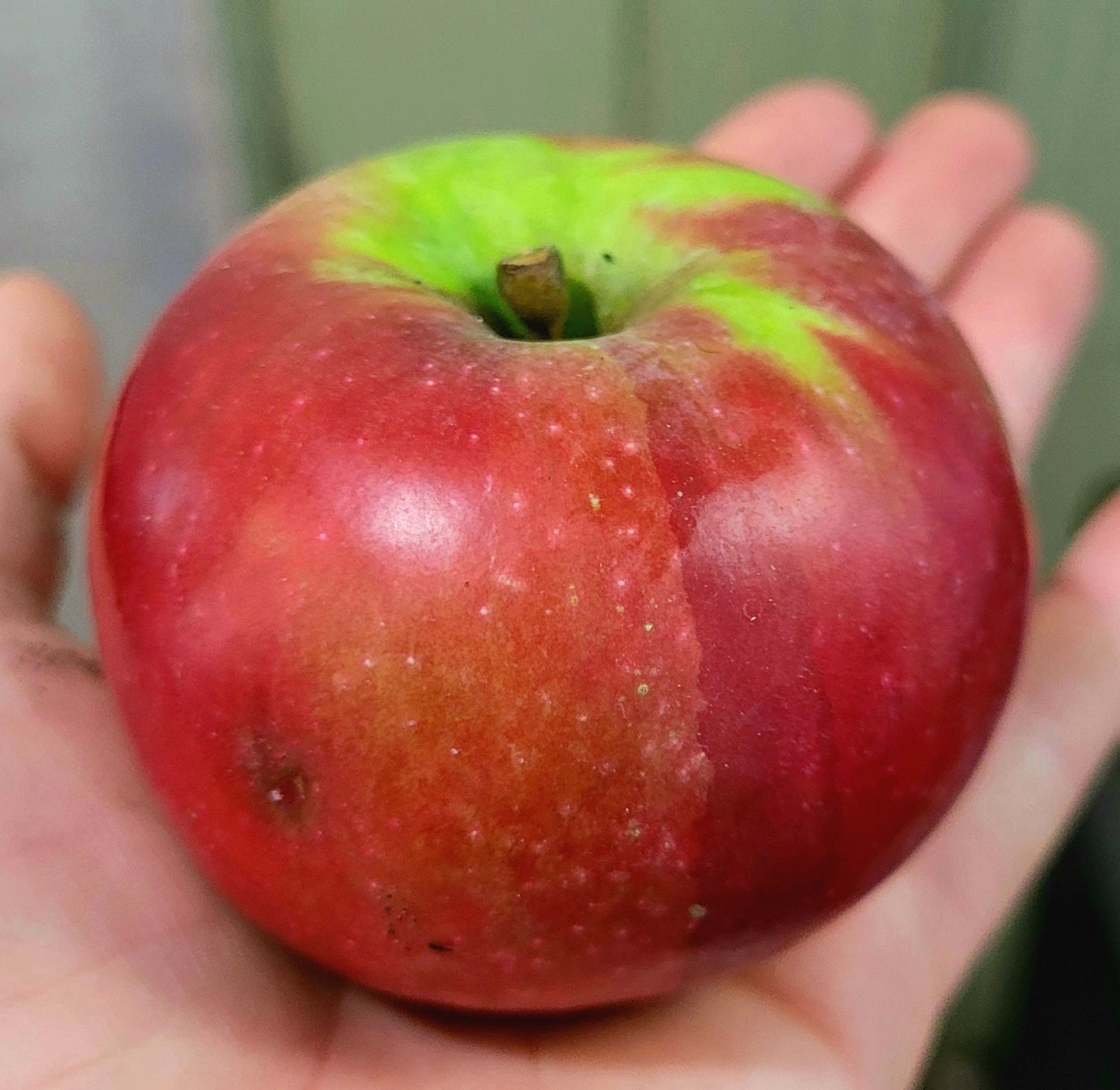
History: Snow, aka Fameuse, apples originated near Lake Champlain in Quebec some time before the 1730s. The exact origin is unclear but this variety is thought to have originated from a seedling or cutting brought from France. From about 1750-1850, this was one of the most commonly grown apples in Quebec until the orchards were almost wiped out in the latter half of the 19th century by disease and failed to regain their popularity. However, these lovely apples may still be with us in their own way as they are one of the potential parents of McIntosh.
Why We Grow It: It is easy to see why Snow apples were once so popular. These apples have a lovely deep red skin with pure white flesh with a sweet strawberry flavour. These trees are also quite cold hardy and produce heavy crops.
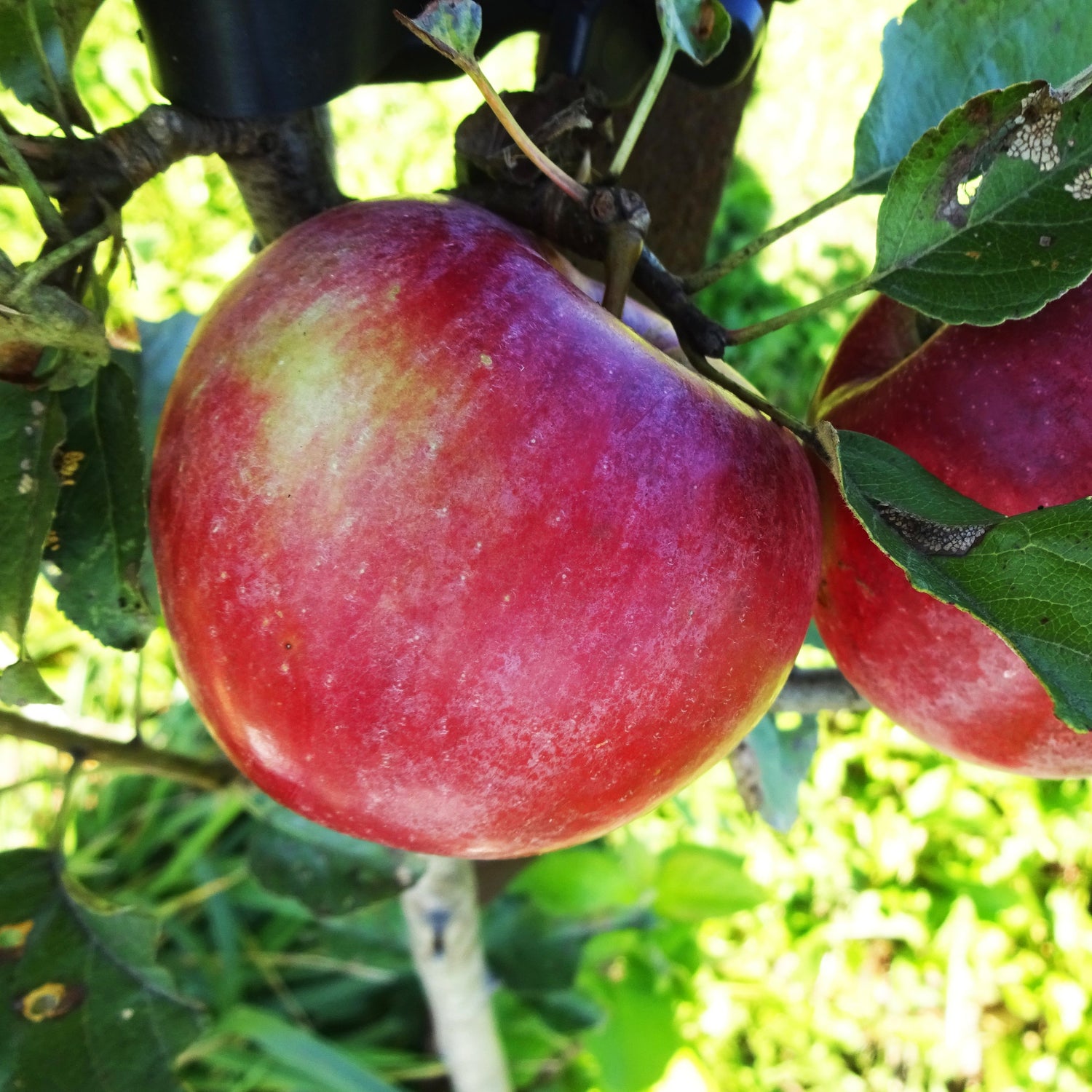
History: Sweet Sixteen was developed by the University of Minnesota and introduced in 1977. It is one of nearly thirty varieties released by the university since its breeding program began in 1888.
Why We Grow It: Some apples taste better when grown in colder climates, and Sweet Sixteen is one of them. For a fresh-eating apple, this is a favourite. Sweet Sixteen provides that crisp first bite that so many people love in an apple, and the pure white flesh will not disappoint for flavour with a very unique, distinct honeyed flavour. Its cold-hardiness and general disease-resistance (tolerant of scab and cedar rust) make it winner for the grower too.
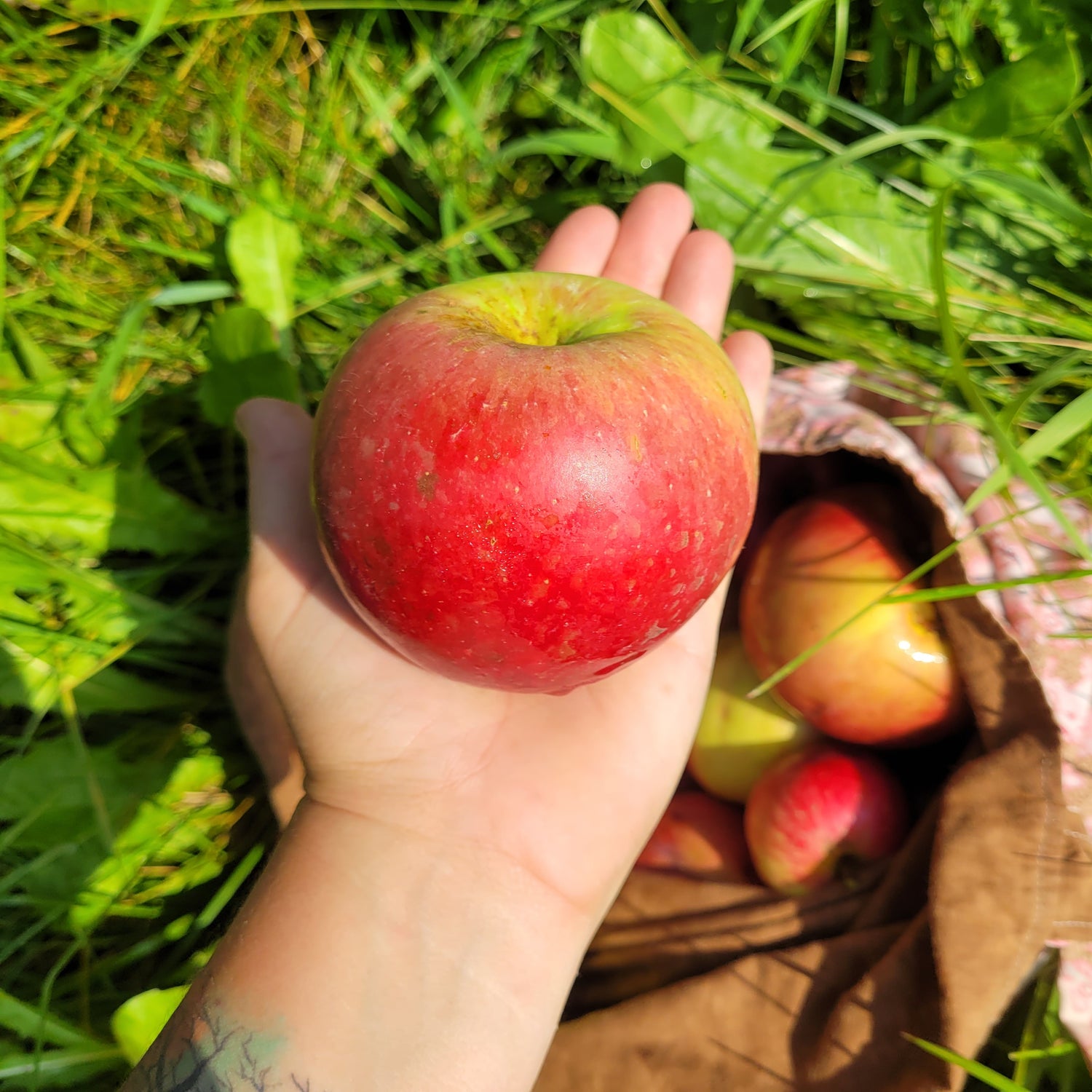
History: Wealthy apples were created by horticulturalist Peter Gideon after spending years trying to breed an apple variety that could survive Minnesota's harsh winters. With the very last of his money, he purchased seeds and scions in 1868 in one final attempt and was able to produce the Wealthy apple which he named after his wife, Wealthy Gideon. He gave scions away freely and Wealthy became one of the top five apples grown in the US.
Why We Grow It: A medium to large sized apple, Wealthy makes splendid applesauce, but is also very good for fresh eating with a balanced sweet-tart crunch. The tree is scab resistant and cold hardy, makes an excellent pollinator for other apples, and is well-suited for organic orchards.
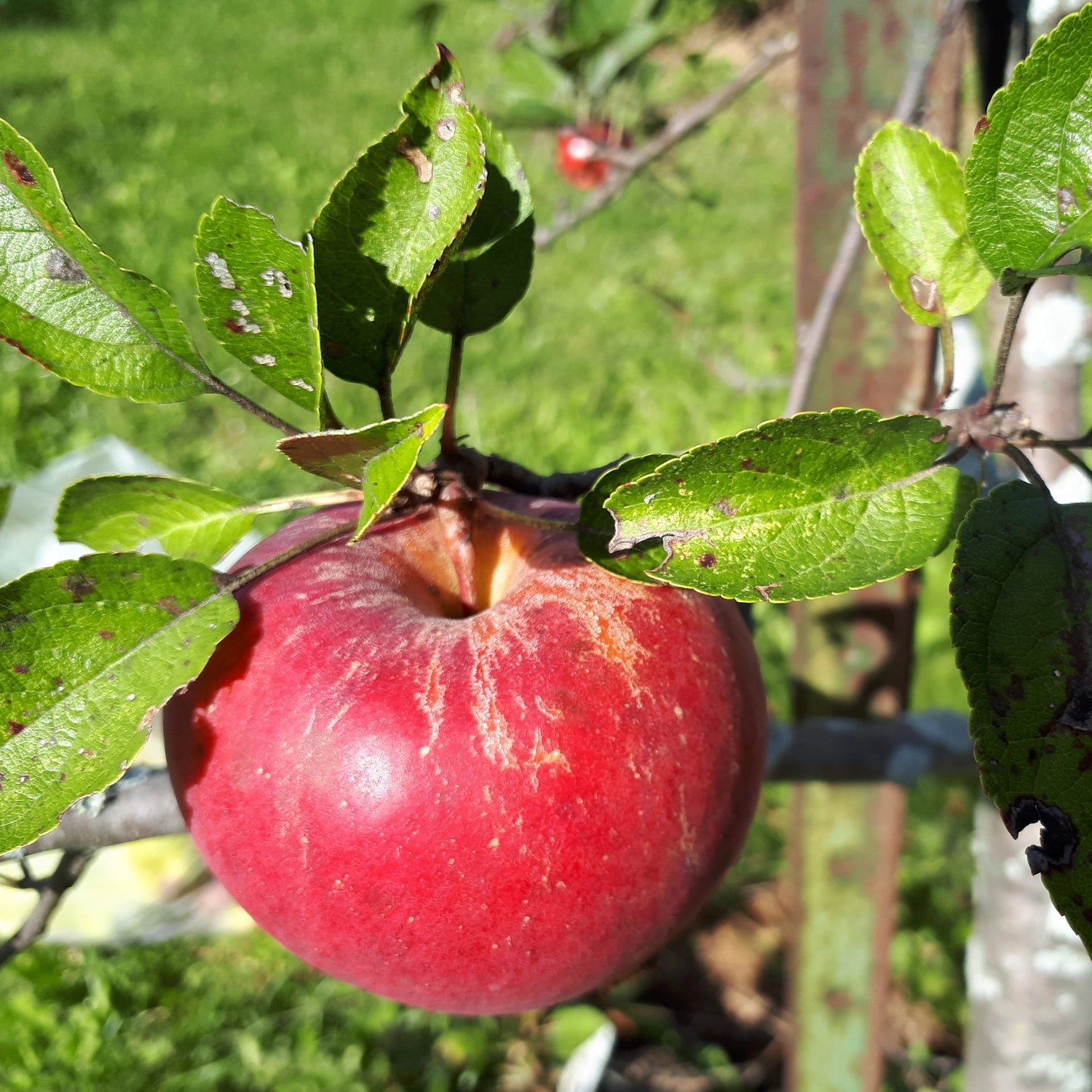
History: Winesap's origins are unclear but it is believed to have originated from New Jersey pre-1800s where it was popular for making cider. It is first mentioned in a couple of books on apples in the early 1800s. Winesap was popular in the US until the 1950s due to its good keeping ability but the advent of better storage technology allowed better tasting apple varieties to eclipse it. It is still quit popular with backyard orchardists.
Why We Grow It: Winesap's all-purpose nature helps to explain why it hasn't faded into total obscurity like some other varieties. The medium-large red and yellow skinned fruit is good for cooking and making cider. It has sweet flesh with some tang or 'winey' flavour that is also decent for fresh eating. On top of that, the tree is productive, very resistant to fireblight, and the fruit stores well.
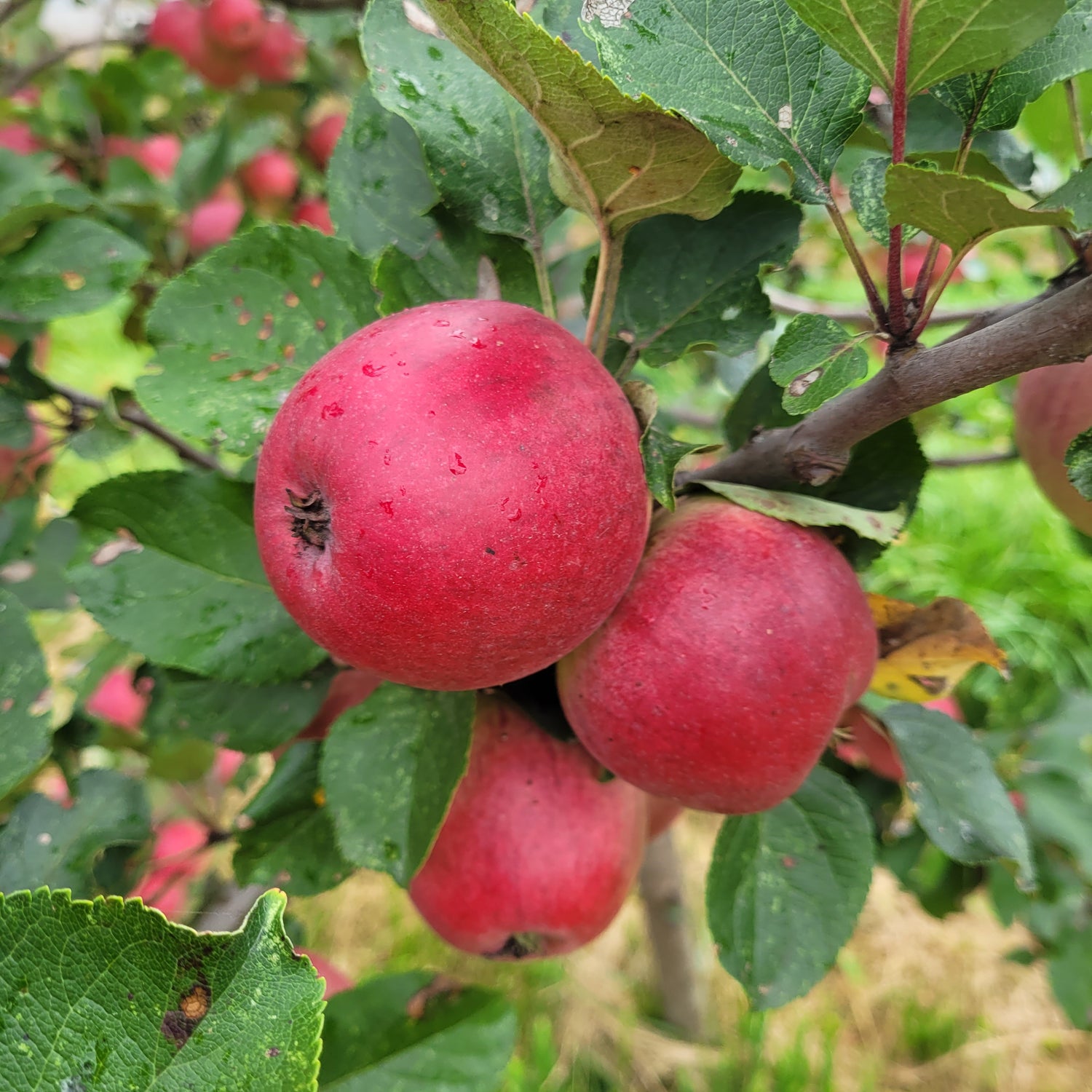
History: Yarlington Mill was discovered growing in the wild by a Mr. Bartlett. He discovered it in 1898 near a mill in the English village of Yarlington, hence the name 'Yarlington Mill.' It was further propagated and made popular by the grower Harry Masters (who also grew Harry Masters Jersey). This variety is still commonly planted in cider orchards in England.
Why We Grow It: This is an excellent cider apple for our climate. It produces a medium bittersweet juice with good flavour. The tree is hardy and vigorous but tends to bear biennially so it requires attentive thinning.
History: Contender was developed at the North Carolina Agricultural Experiment Station and released in 1988. It is one of several peaches developed by the station with the goal of creating late-blooming varieties that are better able to avoid spring frosts
Why We Grow It: Contender is a good-quality cold hardy peach. It produces large, freestone peaches with a sweet flavour that are great for eating fresh off the tree. The fruit is firm and slow to brown, also making it an excellent option for canning and freezing.
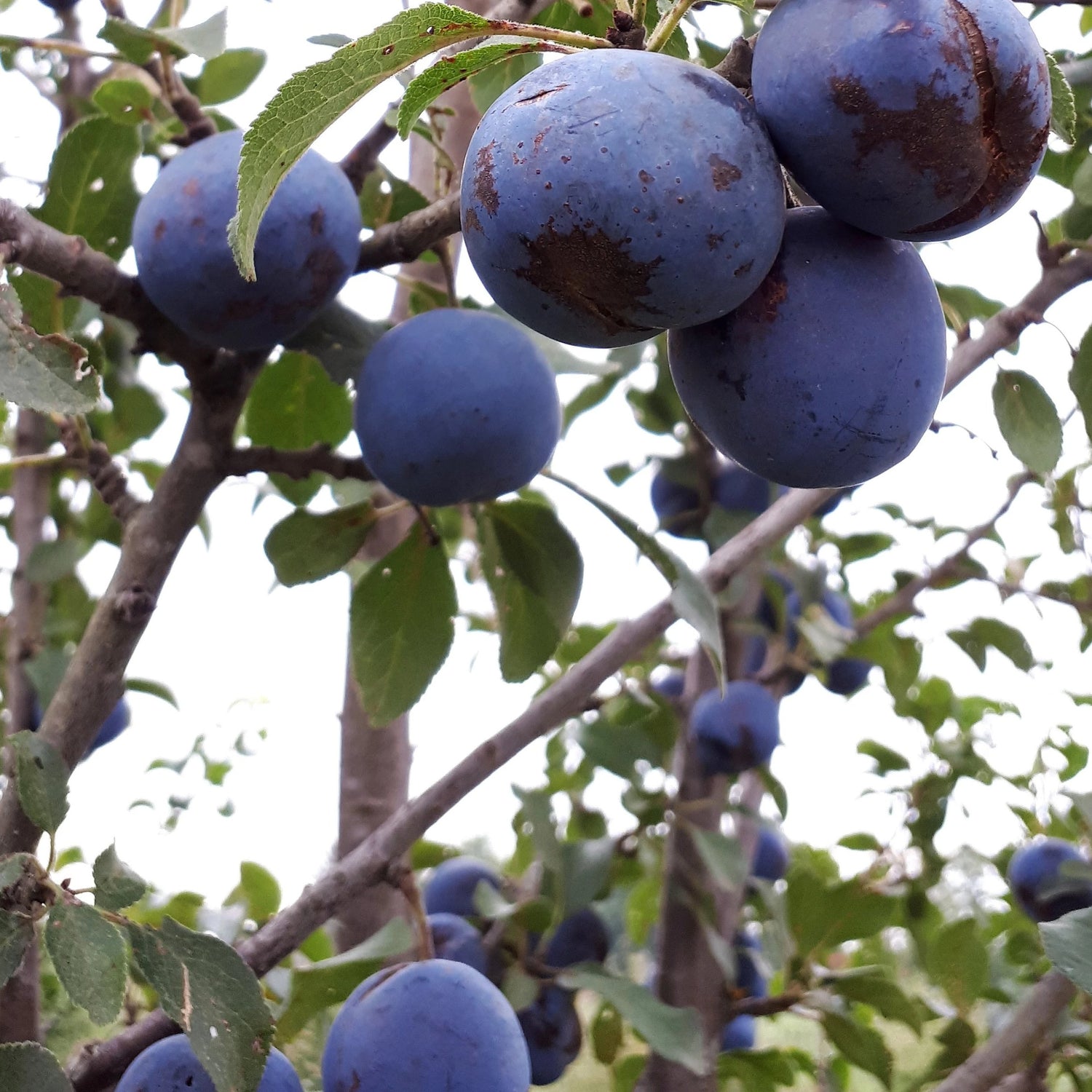
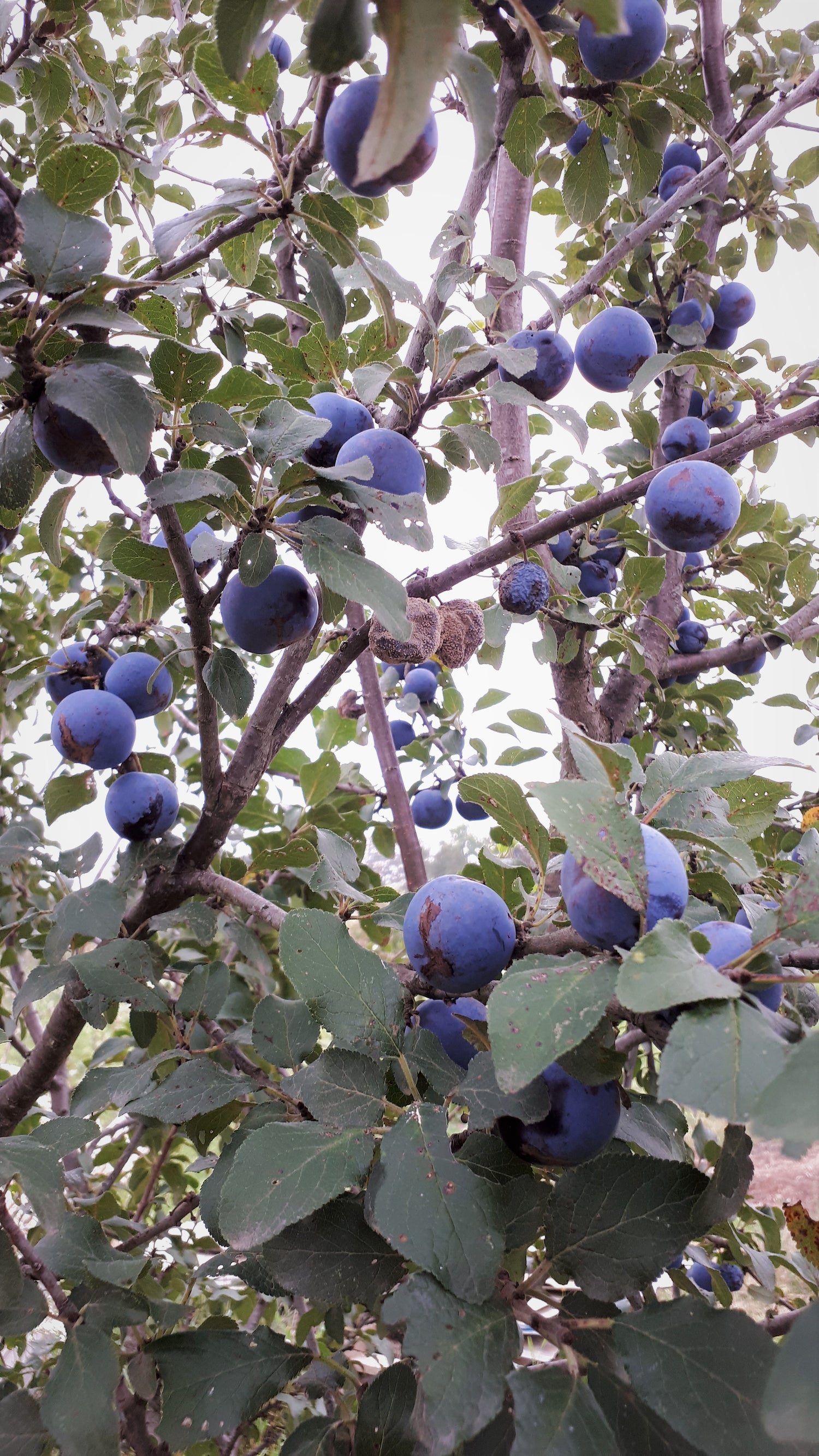
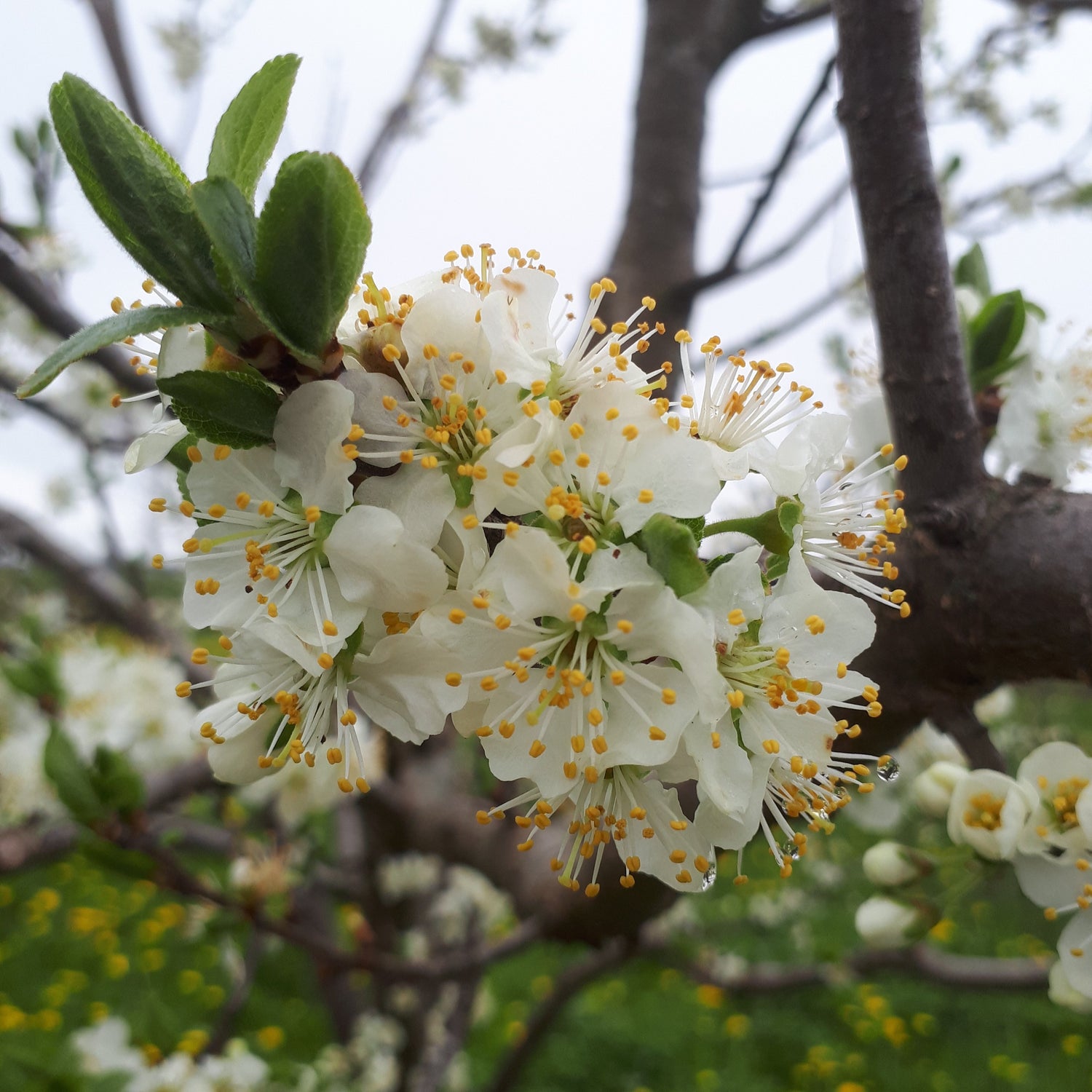
History: This European plum has contentious origins, making it difficult to determine if it is very old or extremely old. The name 'damson' stems from the Latin 'damascenum' meaning 'plum of Damascus.' As the name implies, some believe this plum may have come from the ancient city of Damascus and was brought to England by the Romans, making this plum thousands of years old. While this theory has been highly contested, there is ample evidence to prove that Damson plums have been grown in England for hundreds of years. It was introduced to the US in 1800 and was a a favourite due to its adaptability to its new home.
Why We Grow It: Damson produces small round clingstone fruit with a deep blue/purple skin and spicy yellow flesh. They are sweet enough to eat but also have some astringency which makes them less palatable than other varieties. However, they are superb for cooking, preserving, and making jam. The tree blooms late which allows it to avoid early frosts and this variety is self-fertile.
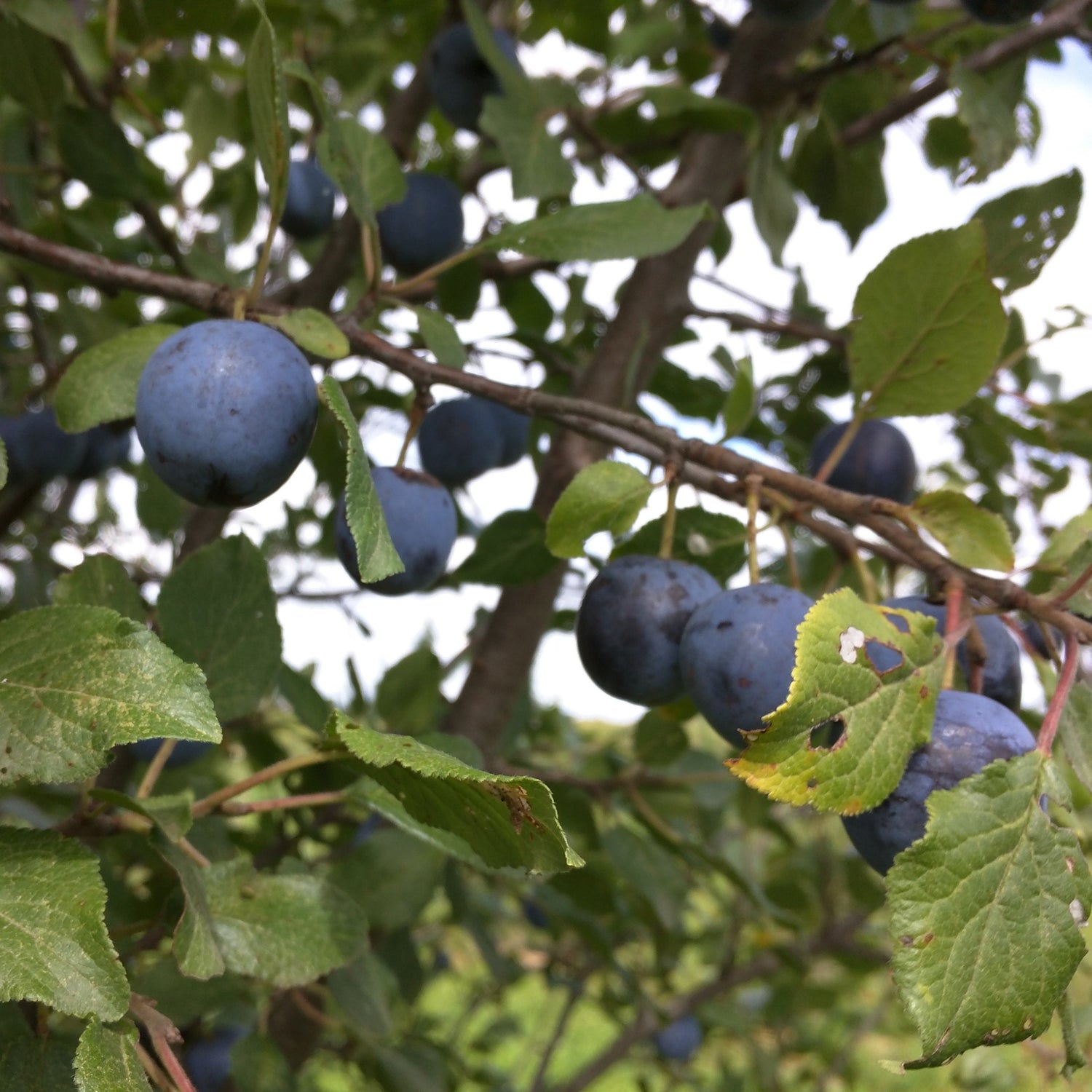
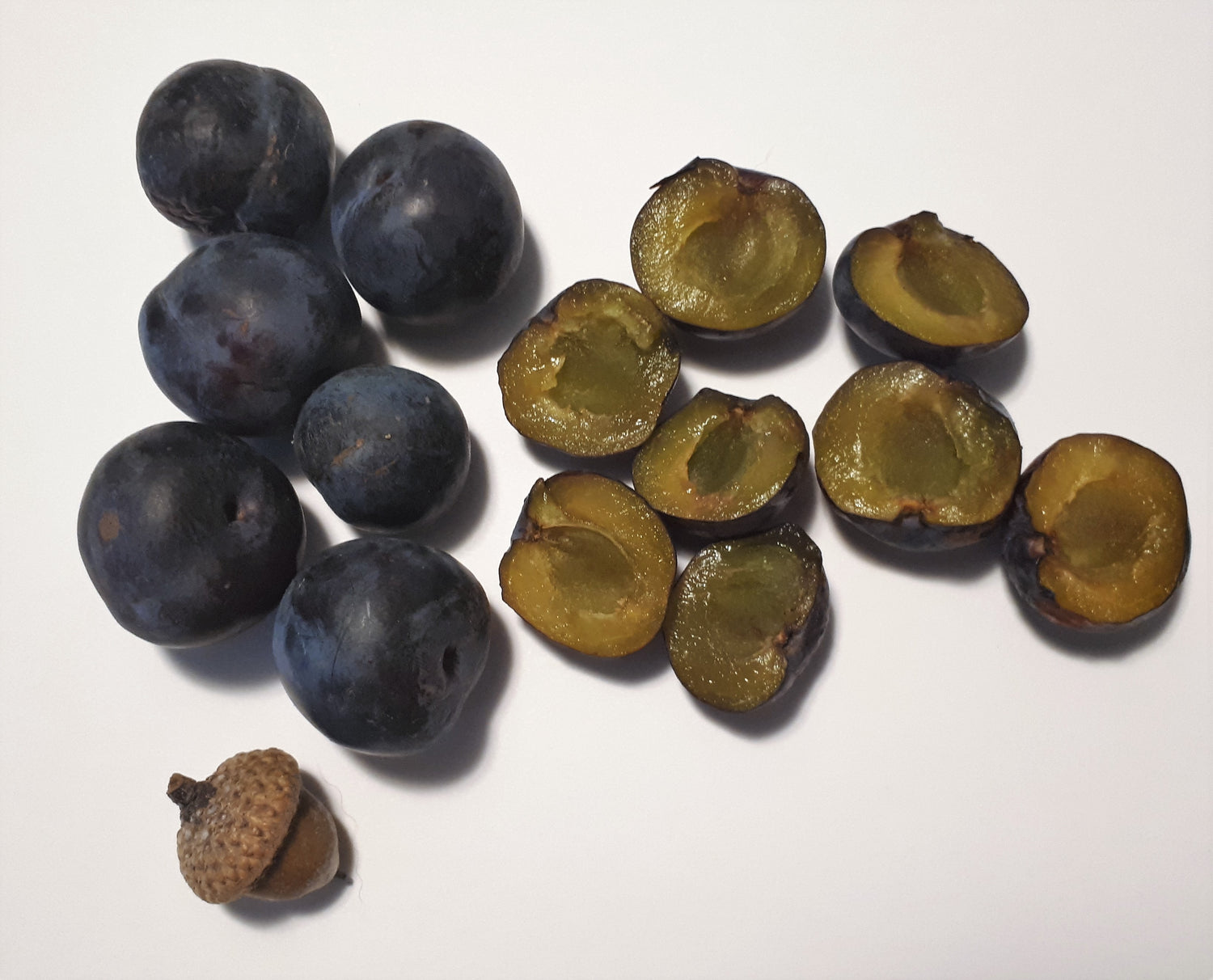
History: Little is known about this particular variety aside from that it's a Damson plum that originated in Sweden. 'Krikon' is the Swedish word for 'damson.'
Why We Grow It: Although its history is a bit of a mystery, we can certainly tell you that this is the best plum variety for very cold regions. It produces small round deep purple fruit that are good for cooking, preserving, and making jam. The flesh has a spicy, sweet flavour although some do not find it that great for fresh eating. Compared to regular Damson's Krikon Damson is a bit smaller, and more flavourful.


History: Harrow Diamond is one of the cold hardy peach varieties to come out of the Harrow Research and Development Center in Ontario. It was introduced in 1984.
Why We Grow It: This Canadian variety is one of the most cold hardy available and is one of the first to ripen in Ontario. The fruit is medium in size, mostly freestone but flesh does cling some to the pit, and of good flavour. Like Redhaven, it is non-browning, and it holds its shape well for canning or cooking.