Canning & Preserving Favourites
This is certainly a broad topic, as there are so many ways to preserve the harvest, we would argue every plant belongs here! From fruit sauce and leathers to jams, jelly, freezing, fermenting, canning, dehydrating and powdering, there are many characteristics to look for, which makes this collection quite large!
Events
13
Aug
26
Sep
09
Oct
Oct 09, 2026 @ 16:00 -
Oct 10, 2026 @ 12:00
Sort by:
163 products
163 products
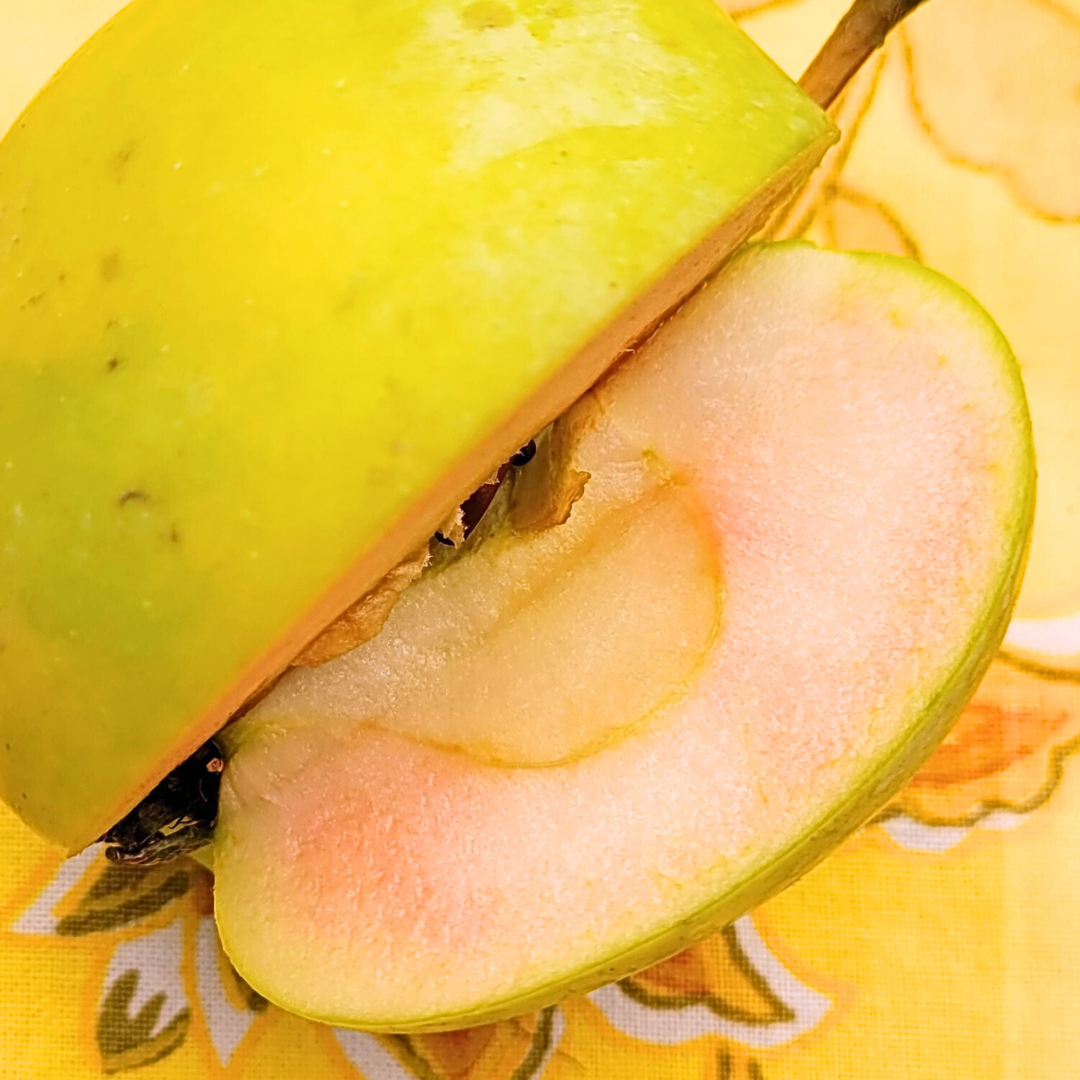
History: Airlie's Red Flesh originated on the farm of Lucky and Audrey Newell in Airlie, Oregon who sold the property in the 1960s. Two decades later in the 1980s, a Louis Kimzey was walking through the old orchard, bit into an apple from the tree, and was amazed at its stunning pink flesh. This was also known as Newell-Kimzey to reference those who found it and Airlie's Red Flesh as a reference to its place of origin and pink flesh. It also goes under a separate brand name.
Why We Grow It: This small, slightly conical apple has yellow skin that belies a bright pink interior that whitens near the core. Not only is it pretty, the fruit has a very sweet flavour with some mild astringency and the flesh is slow to brown. Along with the attractive fruit, the tree boasts bright pink blossoms that gives it an extra ornamental appeal.

Species: Prunus americana
History: American plums are native from Saskatchewan to Quebec and down to Florida. They are a food source for many species. Indigenous peoples living in the tree's range have planted stands of them. The Cheyenne use the branches in the Sun Dance and the Navajo use the roots to produce a red dye. American plums have also been planted as ornamental plants, windbreaks, and for erosion control.
Why We Grow It: American plums produce small, firm, red plums that are sweet and tangy. They are good for fresh eating but shine when used in jellies and preserves. These cold hardy, adaptable trees produce a profusion of lovely white blooms which are great for pollinating hybrid plum varieties. They sucker heavily and produce thick stands, making them excellent for windbreaks and erosion control.

Species: Actinidia arguta
History: Anna (aka Ananasnaya or Michurin's Pineapple) was created by Soviet plant breeder I.V. Michurin likely in the late 1800s or early 1900s. He created Anna, along with many other varieties, with the goal of breeding high-yielding plants of better quality that are more cold hardy. The flavour is reminiscent of pineapple so he named it Ananasnaya after the genus Ananas (which includes pineapples) and 'naya', a feminine suffix in Russian. Shortened to 'Anna' in North America, this variety remains commercially popular for its easy growth and propagation and reliable crops.
Why We Grow It: Anna produces kiwis with a distinct red blush (with enough sun exposure) that are sweet with a little tartness. The flavour is tropical with hints of pineapple and citrus. These vigorous vines require a trellis or other support to climb across. Make sure you have a suitable support in place, a mature plant can produce over 50lb of fruit in one season!
Species: Rubus sp.
History: Anne is the product of quite the combined efforts between the University of Maryland, Rutgers University, Virginia Polytechnic Institute and State University, Southern Piedmont Agricultural Research and Education Center, and University of Wisconsin. Through their cooperative breeding program, the cross that created Anne was originally made in 1989 and the variety was released in the 1990s. It remains one of the more popular yellow raspberries today.
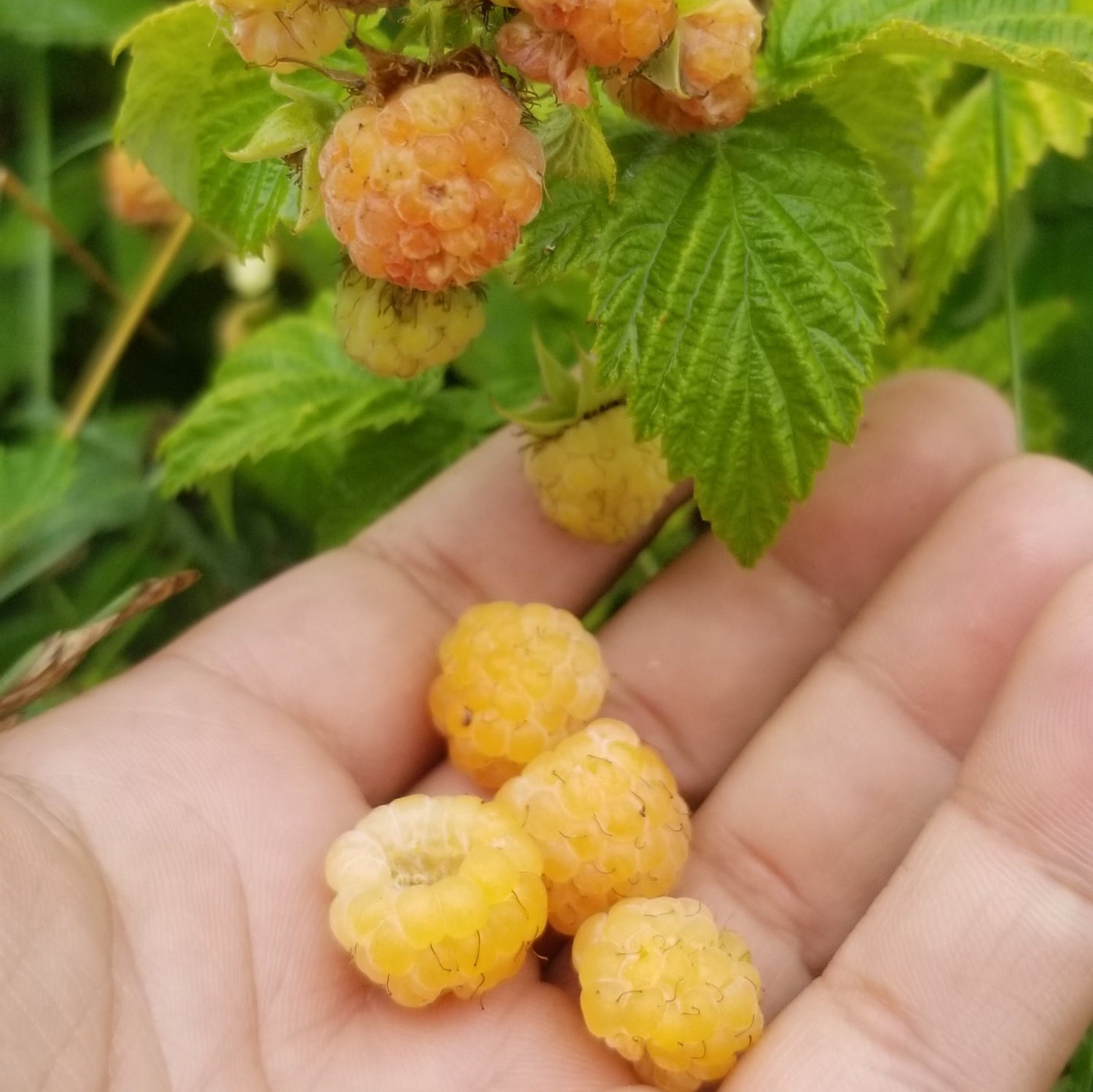
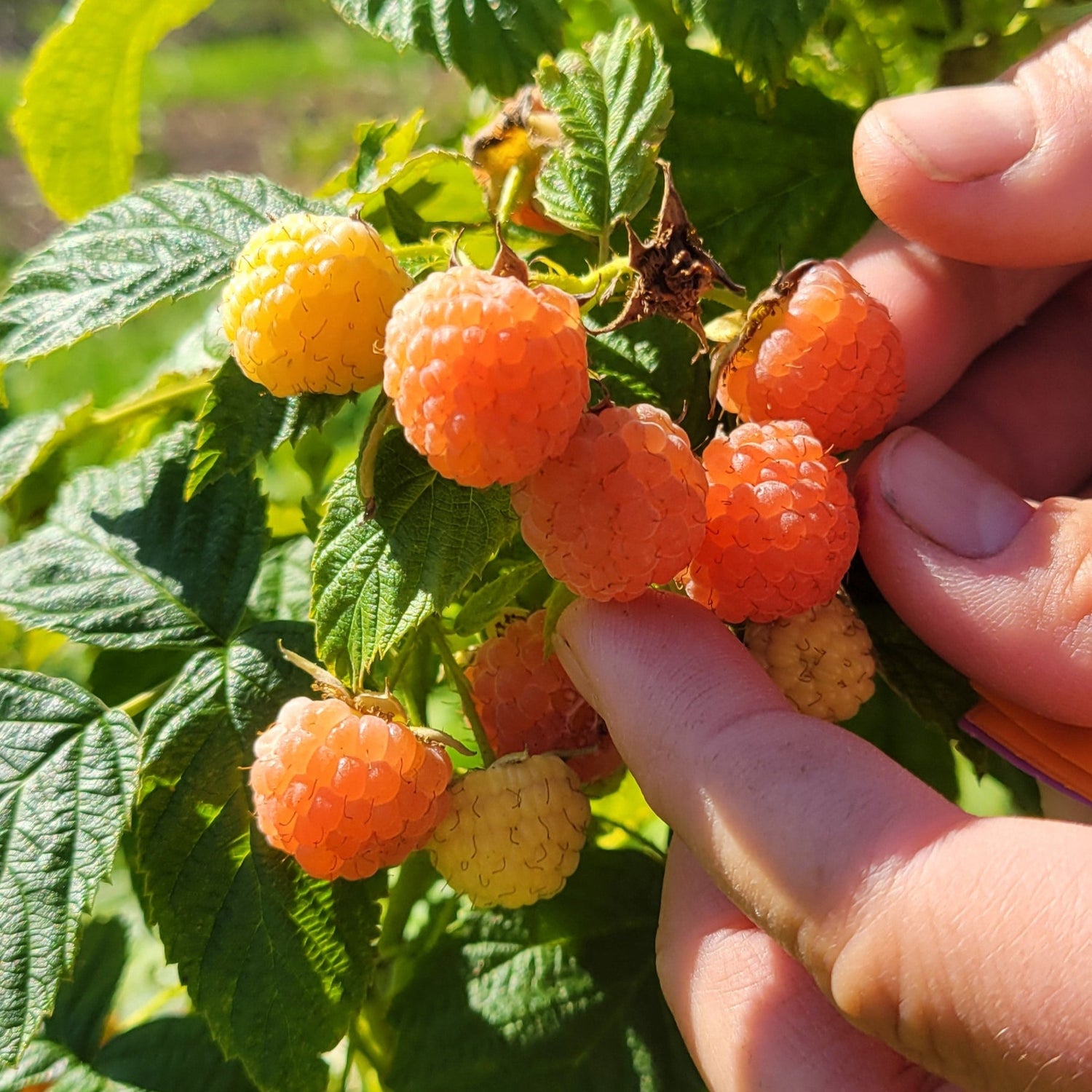
Why We Grow It: Anne produces large, firm raspberries that are quite sweet with a flavour some liken to apricots or bananas. Most uniquely: the berries are yellow, turning a warm orangey-yellow at their ripest! The berries are good for eating fresh, baking, freezing, or adding to salads and their yellow colour helps them to stand out. This is an everbearing variety so you can cut down the canes in the winter for a large fall crop, or enjoy a more spread out crop from August to September. Anne also sports relatively few thorns, making harvesting a little easier.
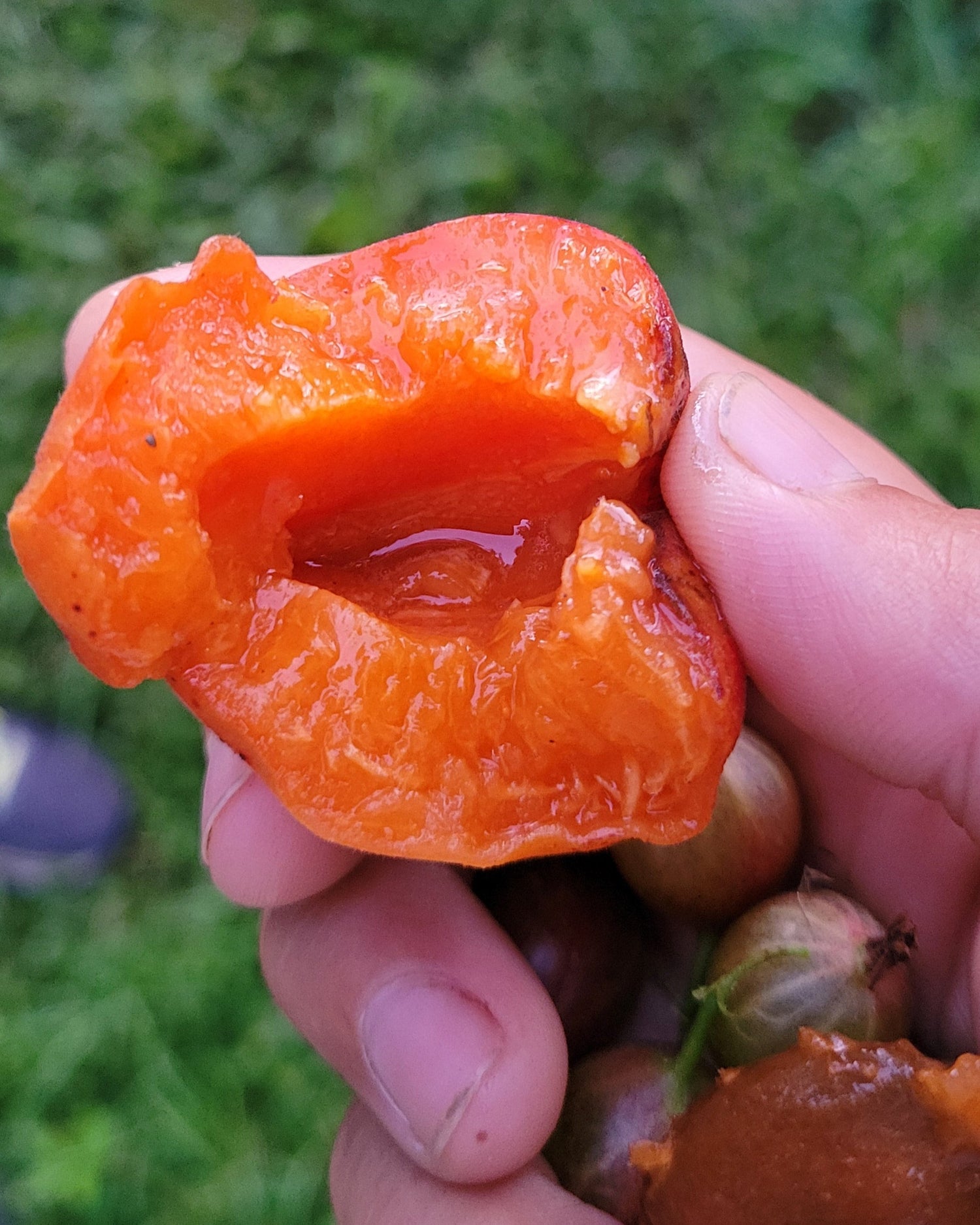
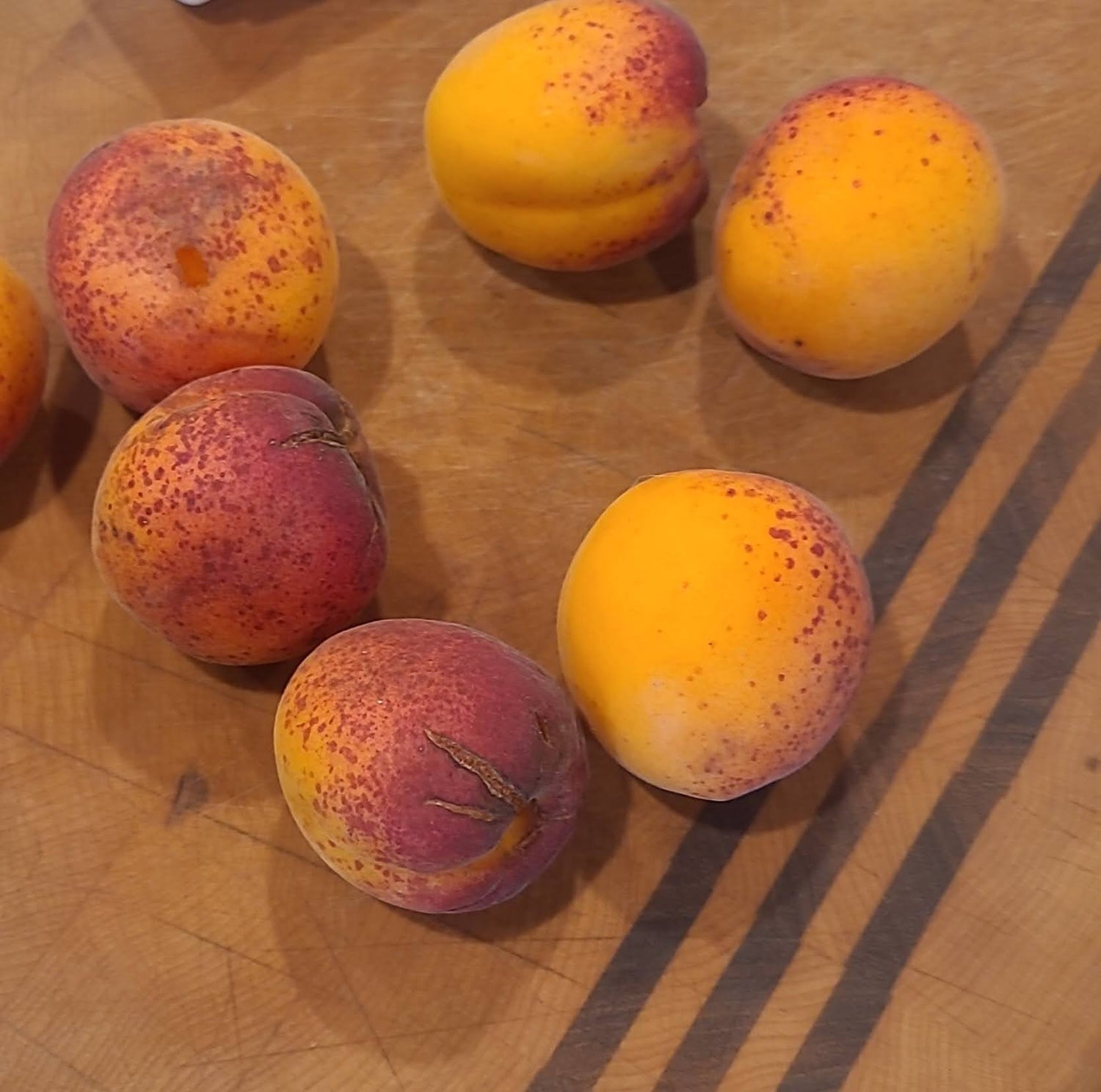
Species: Prunus armeniaca
History: These seedlings are grown from local Ontario apricot seeds we collected.
Why We Grow It: We are always happy to promote greater biodiversity and growing your own seedlings is a great way to get something unique! Apricots tend to stay fairly true to type so odds are the resulting fruit will be good for fresh eating. After seven years or so, the first of our seedlings have fruited and the fruit is excellent!
If you prefer the certainty of named varieties, these seedlings would also be good for feeding wildlife or planting along fence lines.
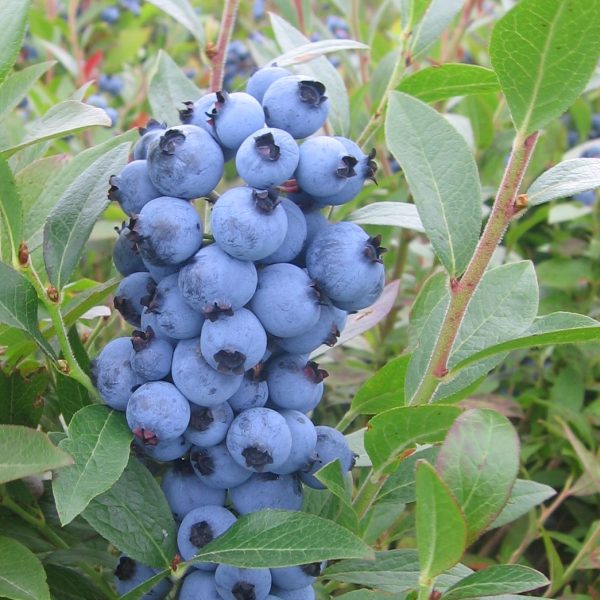
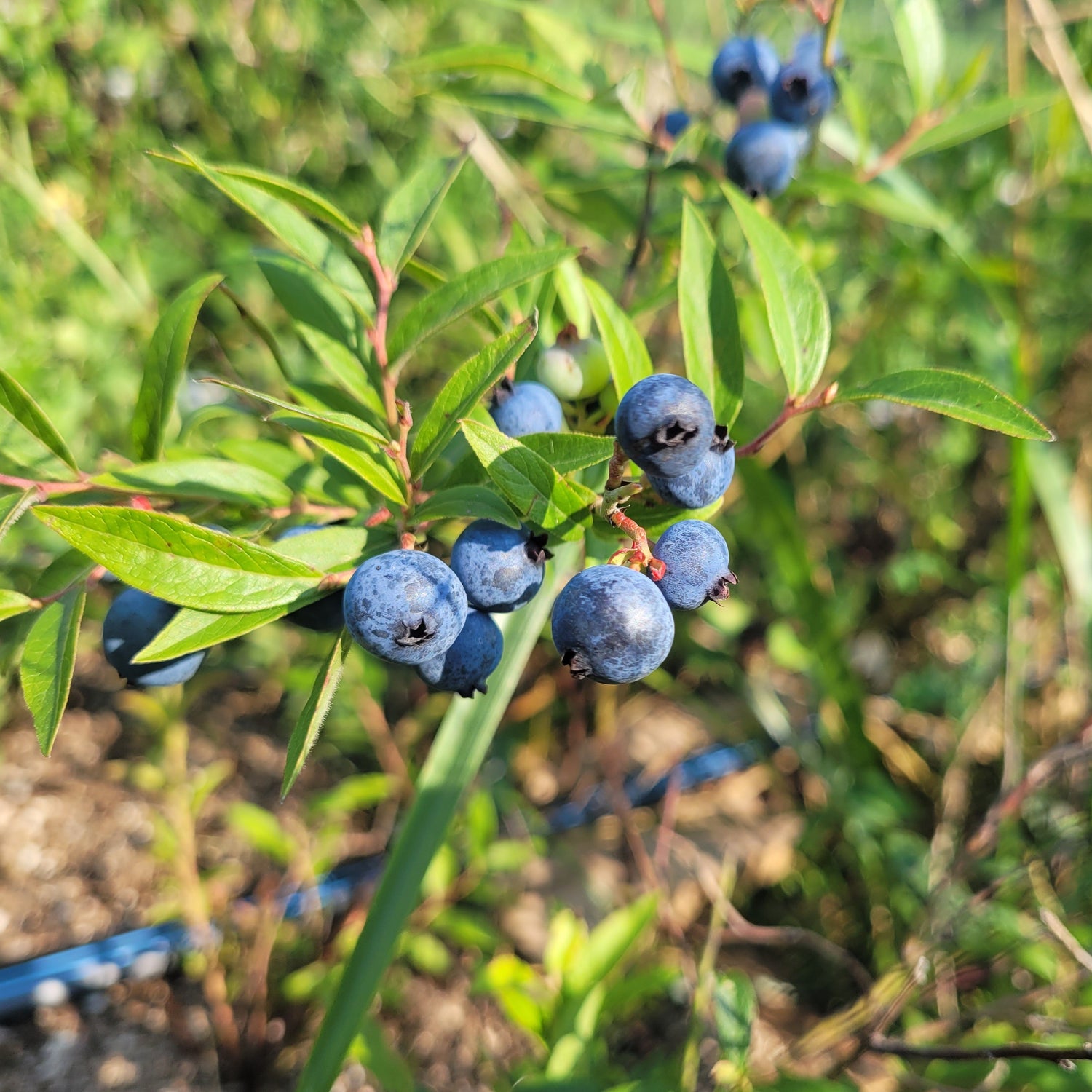
Species: Vaccinium angustifolium
History: BB4 lowbush blueberry was discovered growing wild in a bush near a tissue culture lab near the small municipality of L'Ascension-de-Notre-Seigneur in the Saguenay-Lac-Saint-Jean region of Quebec. Impressed with the quality and flavour, the lab decided to propagate these wild blueberries.
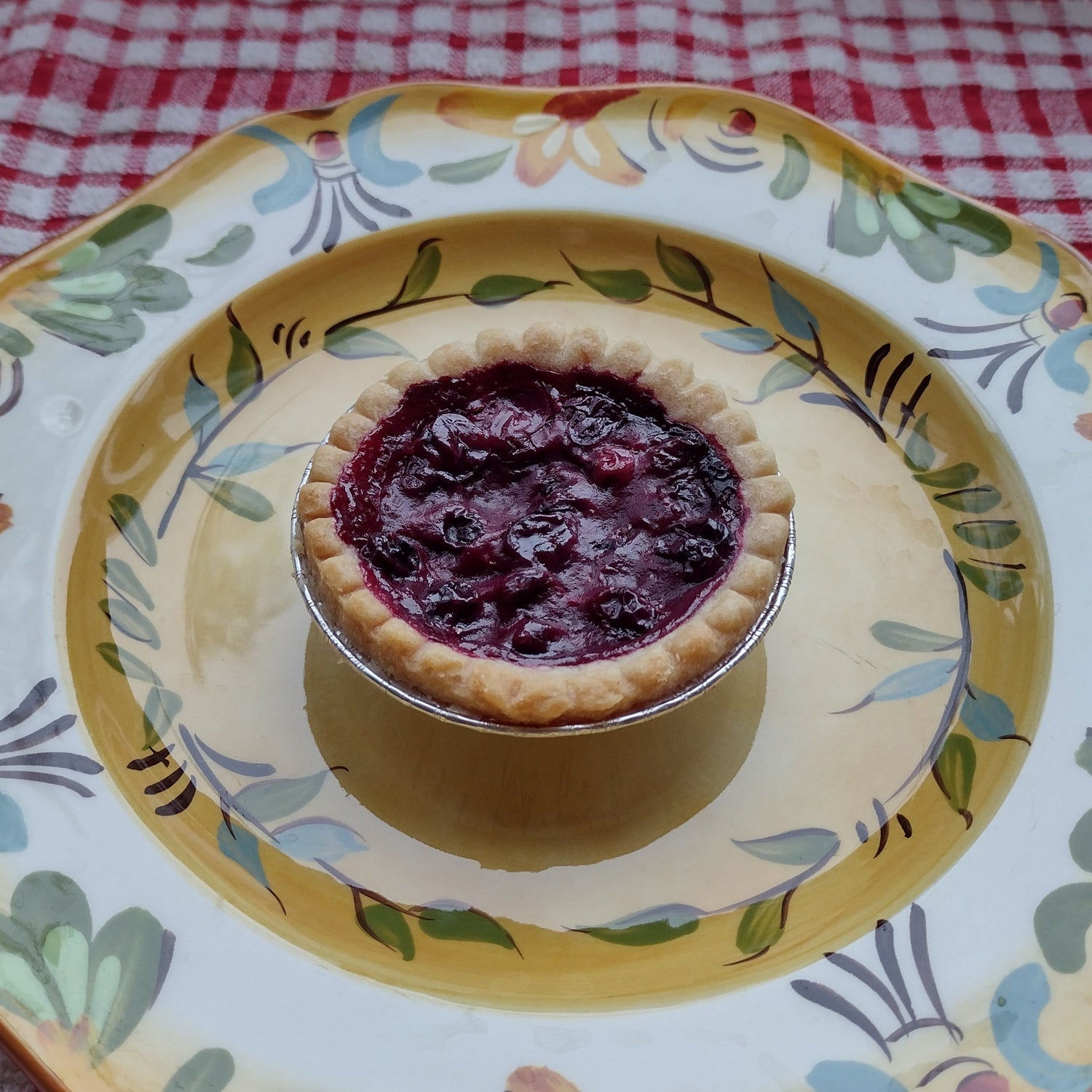
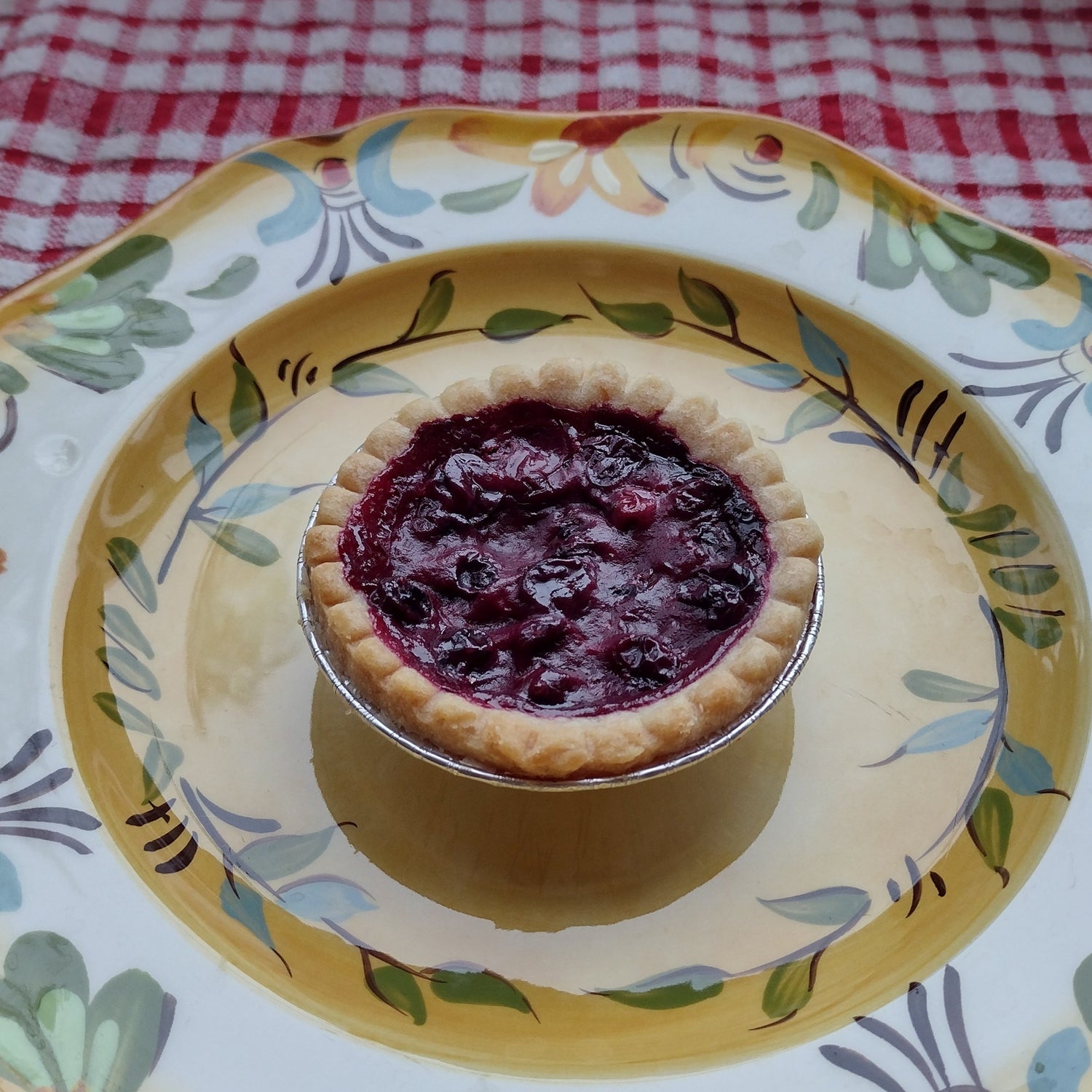
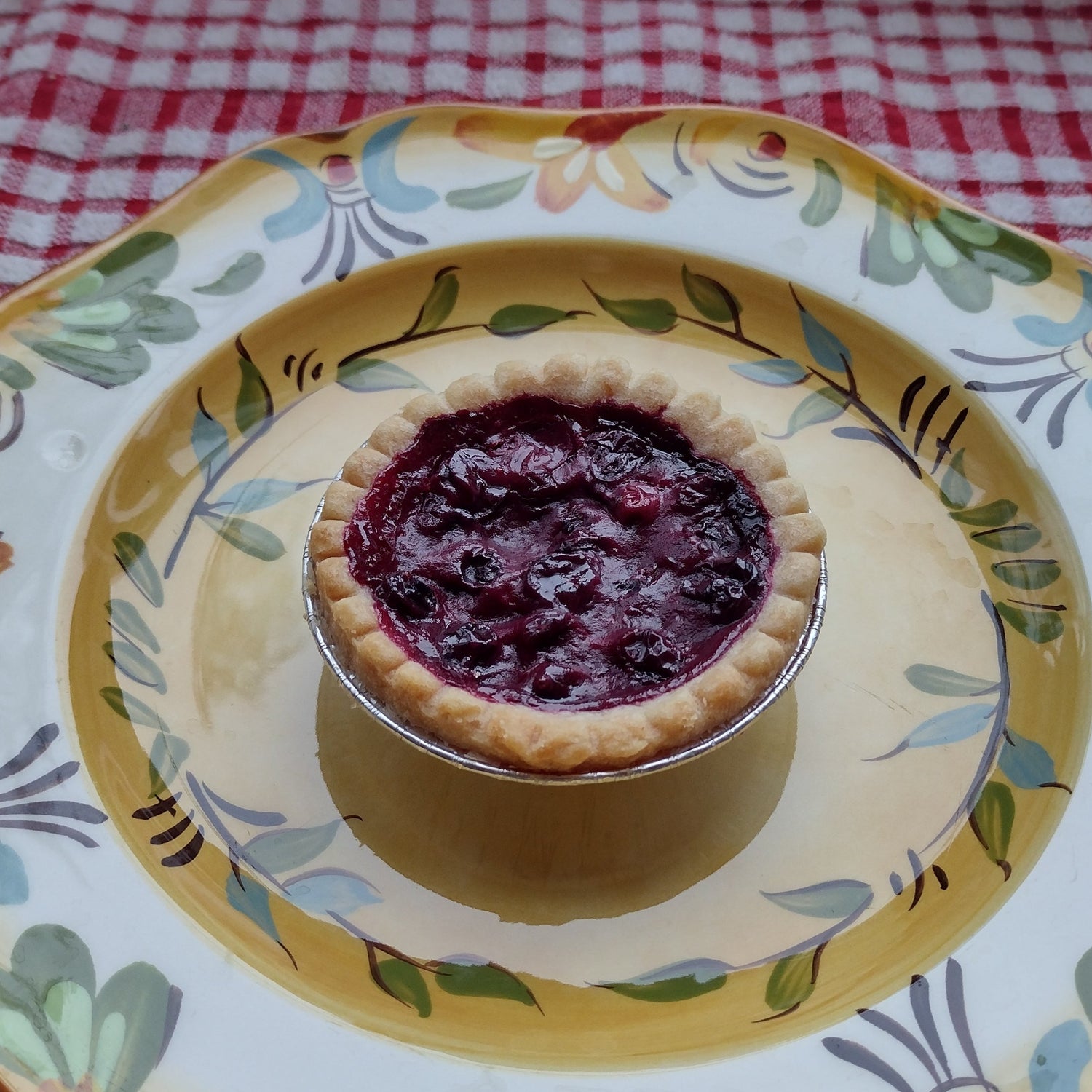
Why We Grow It: BB4 produces medium to large powder-blue berries, with a tasty, sweet flavour. The berries grow in nice clusters, making picking easy. Blueberries are great for baking, for example Steph made some wonderful black currant and blueberry tarts that are pictured here!
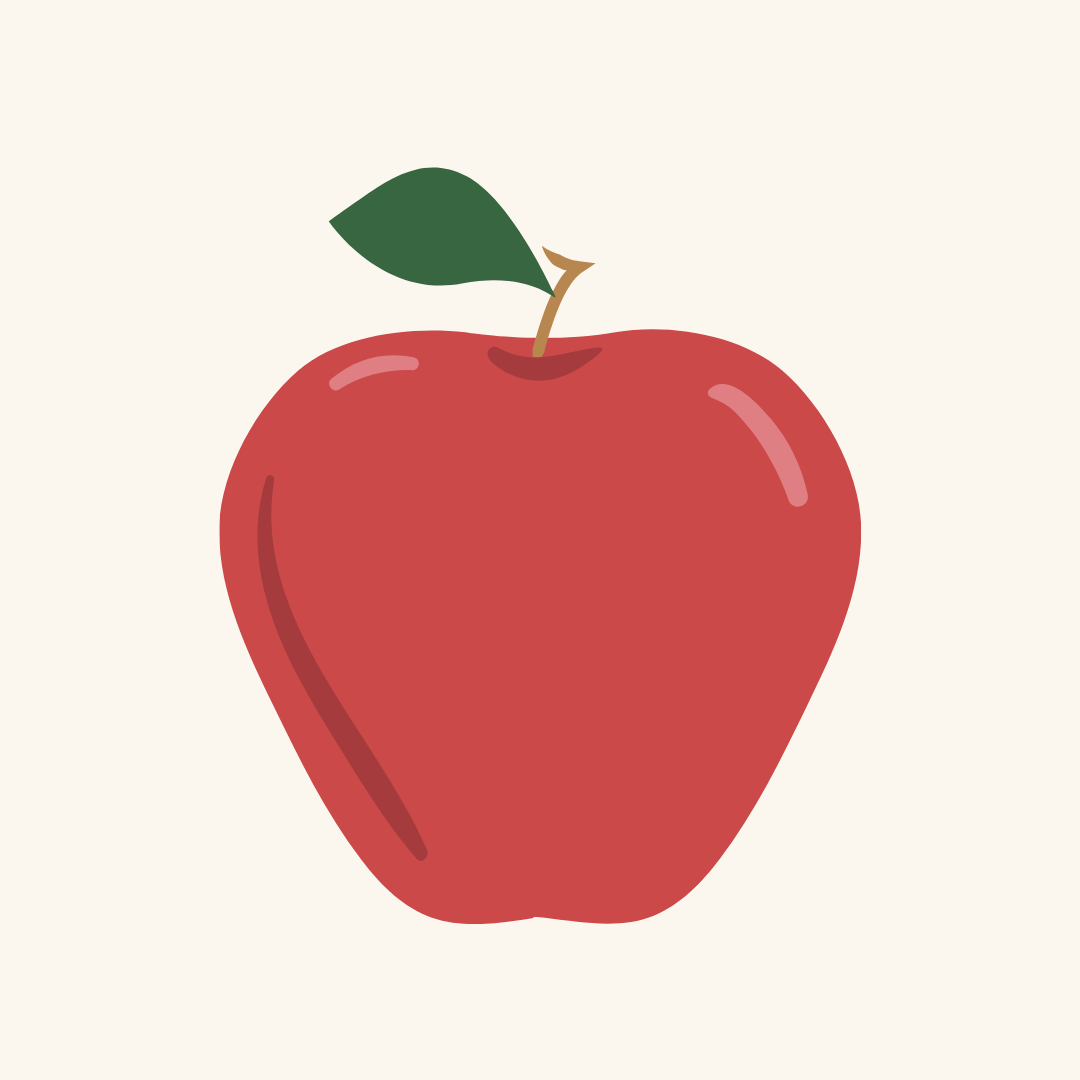
History: Arkansas Black originated, as its name implies, in Arkansas sometime in the mid to late 1800s although there are conflicting opinions on who exactly discovered it. Some say John Crawford developed it in the 1840s, others believe DeKalb Holt developed it at his brother's nursery in the 1870s, and another account claims John Braithwaite found it growing in his orchard. Regardless, this unique looking apple eventually became the most popular apple in the state until a bad codling moth infestation followed by the Great Depression devastated commercial orchards. Despite this heavy blow, it is still a popular apple in backyards and small-scale orchards.
Why We Grow It: Arkansas Black produces a unique fruit that is a dark purplish-red that at times almost looks black. Fresh off the tree the fruit is hard and fairly acidic, but it softens and sweetens in storage and develops a more pronounced spiced flavour. It is good for pies, sauce, and cider and the fruit stores quite well! The tree itself is fairly disease resistant as well.

History: Athos was developed by the University of Saskatchewan and was first bred in 1992 as a cross between Kerr's Easy Pick and Cacanski Rubin. It was selected from among 2500 seedlings for its productivity, winter hardiness, extent of suckering, ease of fruit removal, and fruit quality. Part of the Musketeer Series, Athos was released in 2022 as part of the university's 100 Years of Horticulture Celebrations.
Why We Grow It: Athos produces burgundy red cherries that have a more balanced sweet/tart flavour compared to some of the other sour cherries. This makes them more desirable for fresh eating but they are still good for typical sour cherry uses like baking. The bush has more of a spreading growth habit which gives it some additional visual appeal as an ornamental plant.
Check our our blog post with some tasty sour cherry recipes!
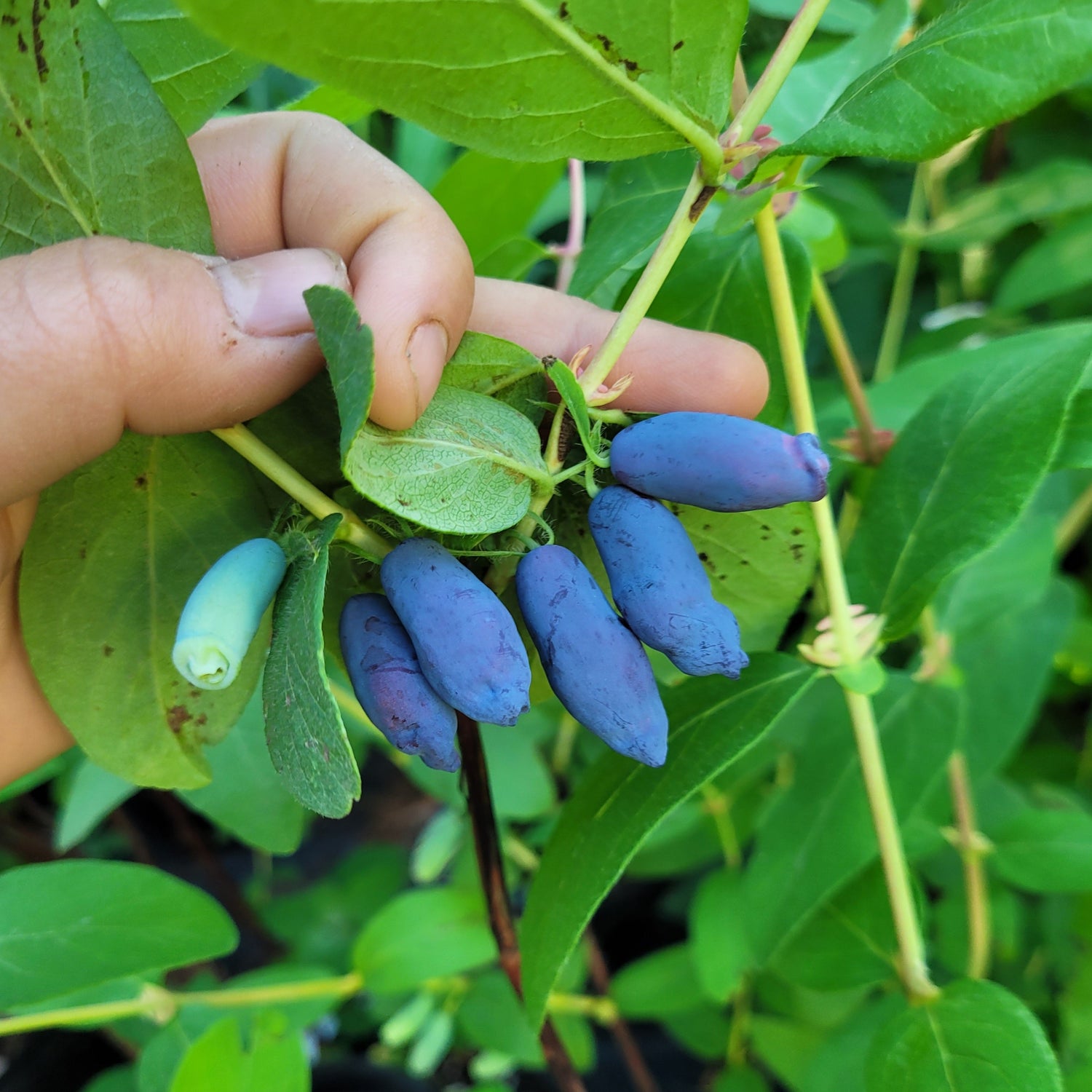
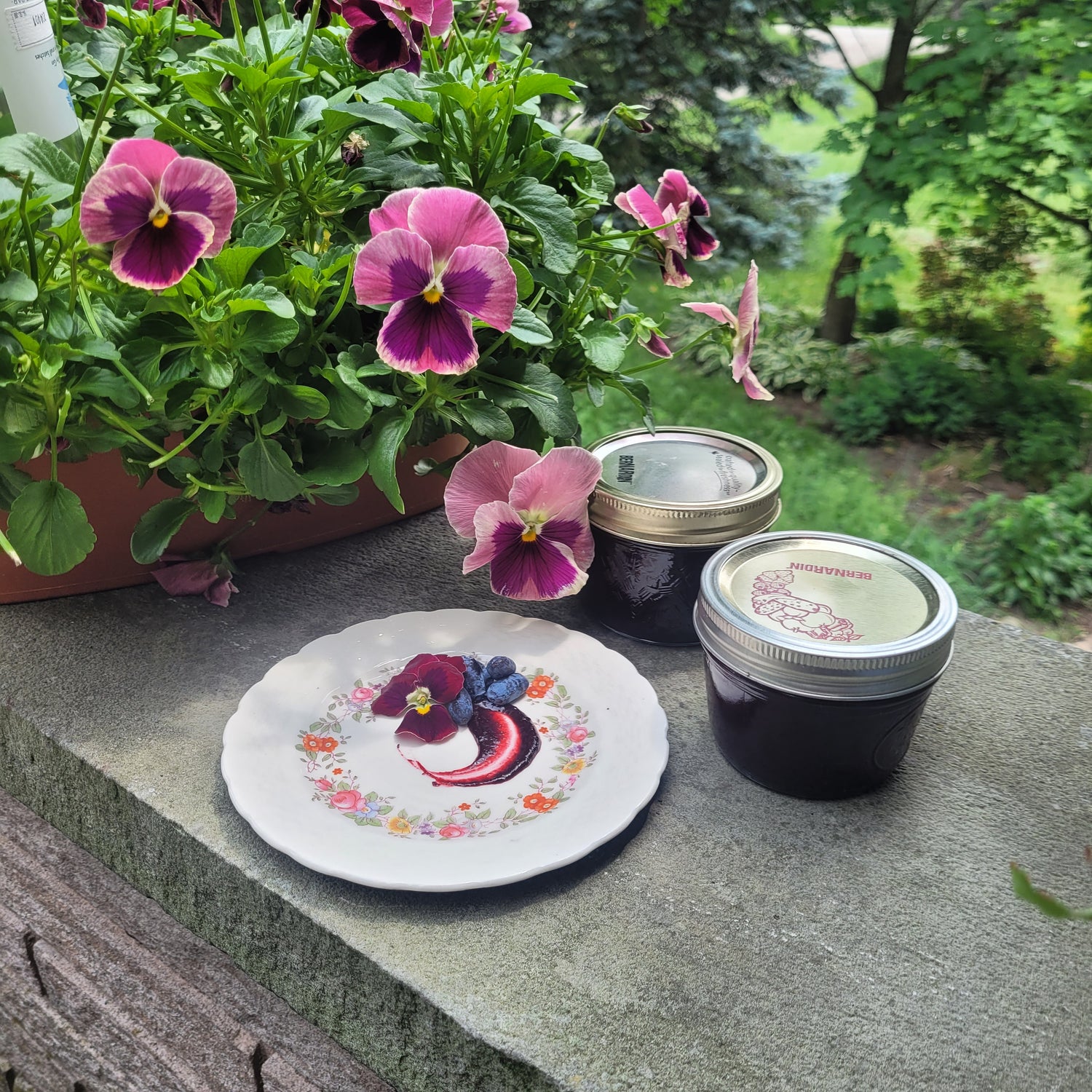
Species: Lonicera caerulea
History: Aurora haskap was developed at the University of Saskatchewan. After a decade of breeding and trials, it was released in 2012. It was originally selected as a pollinator for Borealis haskap but its superior flavour and greater productivity compared to other varieties quickly made it more popular.
Why We Grow It: A sweetly flavoured favourite! Aurora tastes like a cross between a raspberry and a blueberry, with a satisfying chewy texture. The deep blue fruit are 3 cm long and juicy. Allow to sit out a few days after picking for optimally sweet fruit.
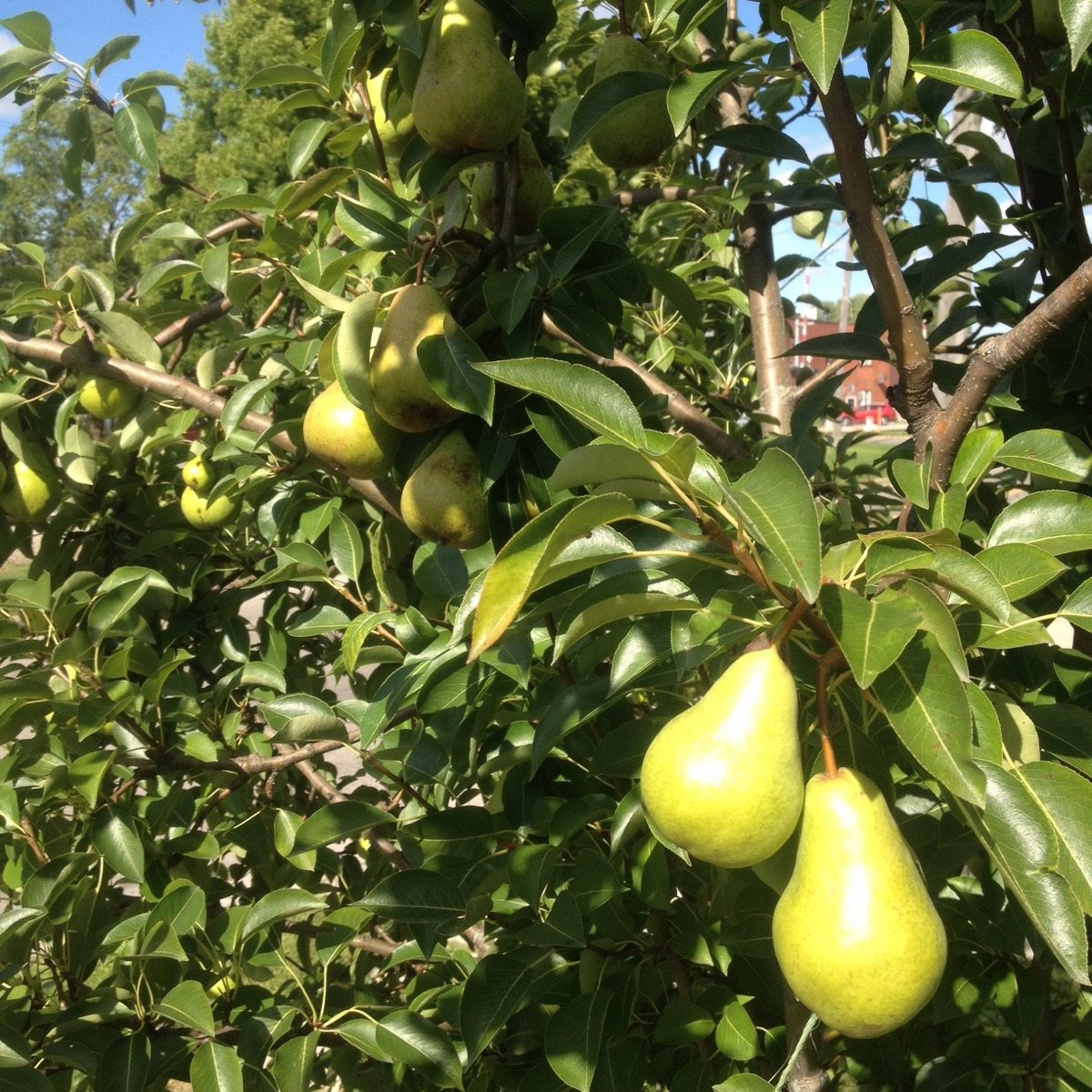
History: Bartlett pear, better known as William's Bon Chretien (translated from French as William's Good Christian) or William's pear in Europe, has a long history with unknown origins. What we do know is that in 1483 King Louis XI summoned holy man Francis of Paola to his deathbed and Francis offered the king a pear seed from his birthplace of Calabria in Italy. The name 'Good Christian' was given to the pear as a result. In 1799, this variety was brought to Roxbury, Massachusetts where it was planted and eventually renamed 'Bartlett' by Enoch Bartlett who was unaware of its origins. The mistake was not realized until 1828, by which time "Bartlett" pears were already popular in North America and the mistake could not be undone.
Why We Grow It: Bartlett is the most commonly grown pear in North America and with good reason. Not only is it productive and easy to grow, but it produces large yellow fruit with a delectable flavour.
Note: We graft our Dwarf Bartletts with an Old Home interstem to maintain compatibility between Province Quince rootstock and Bartlett.
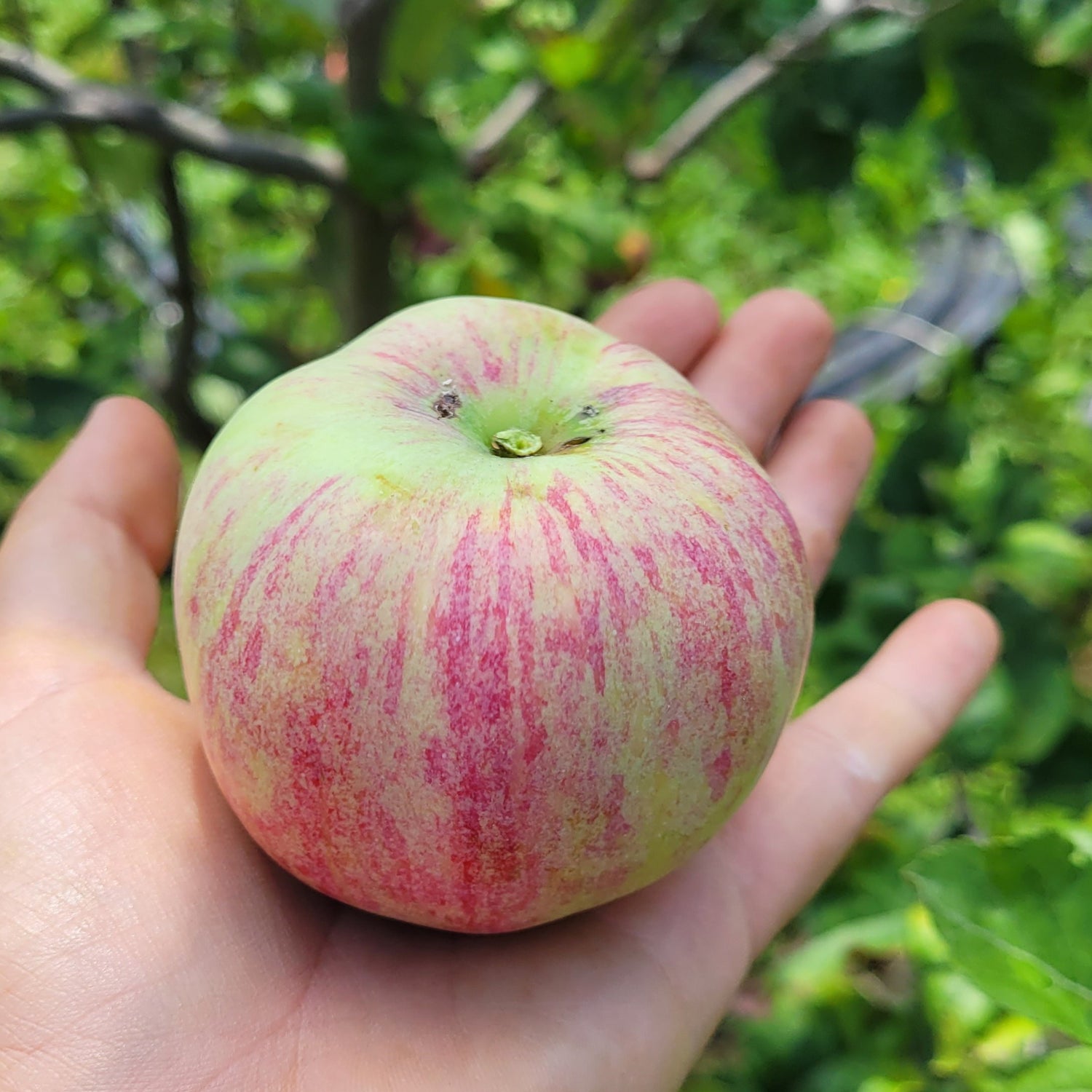
History: This cold-hardy apple was developed in the prairies and is for growing in colder, northern areas.
Why We Grow It: This unique apple produces a yellow fruit with red stripes. It is a rather uncommon variety and is great for sauce. It has begun producing reliably in our test orchard the last few years, and always has a bountiful crop.

History: Big Red was developed by Bob Bors at the University of Saskatchewan. It was one of several varieties an American company further evaluated in the US and selected as the best amongst them. Chosen for its notable cold hardiness, large size, and unique shape along with its good flavour, Big Red is sold under the name Wowza! in the US. The variety is still considered experimental since the original tree was accidentally destroyed prematurely.
Why We Grow It: Along with having good flavour, Big Red is most notable for its large size: the fruit can be twice as big as other dwarf sour cherries! The fruit is also uniquely elongated with a lobed end, giving it an appearance akin to Red Delicious apples. In trials at the University of Saskatchewan, the variety suffered no winterkill so it appears to be extremely cold hardy even in comparison to other dwarf sour cherries. The only downside to this variety is that it has lower yields than other varieties, perhaps as a tradeoff for its other traits.
Check our our blog post with some tasty sour cherry recipes!
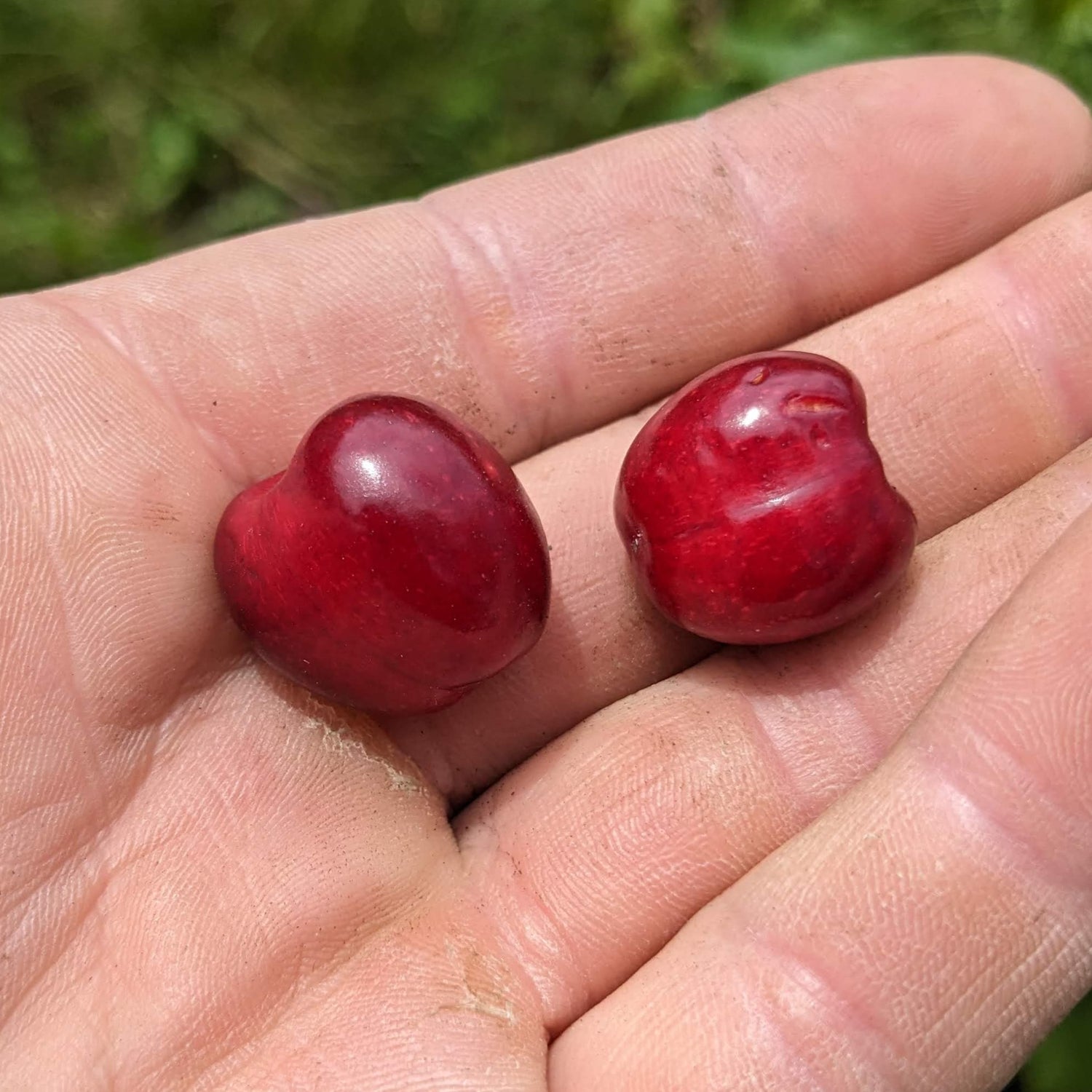
History: Bing sweet cherries originated near Salem, Oregon in 1875 as a cross between Black Republican and another sweet cherry variety. It was named after Ah Bing who worked as a nursery foreman for Seth Lewelling, the person who made Bing cherries into the top variety in the US. It is uncertain if Ah Bing himself developed the variety or if Lewelling simply named it after him as thanks for the 35 years he worked for him.
Why We Grow It: There are many reasons why this classic black sweet cherry has become the most commonly grown cherry in the US and the standard by which all other sweet cherries are measured. It produces large heart-shaped fruit with meaty purple-red flesh that is juicy and sweet. It has a semi-cling stone that is easy to remove, making it great for fresh eating and preserves. The tree is a heavy cropper, producing bountiful amounts of these lovely sweet cherries.

2026/2027 Staff Favourite
Black Velvet is Wayne's favourite this year! He has been waiting a while to select this variety as his personal favourite: "Black Velvet was what I had hoped to choose as my staff favourite last year, but we didn’t have any to sell! This year we do, and it’s my favourite of our gooseberries - I find it’s a little sweeter and more flavourful; really great for fresh eating.”
All Staff Favourites are 20% off. The Staff Favourite Discount cannot be combined with other quantity discounts.
Species: Ribes uva-crispa x Ribes divaricatum
History: There appears to be little information on the origin of Black Velvet. It is a hybrid between the European gooseberry (R. uva-crispa) and the closely related worcesterberry (R. divaricatum), a plant native to North America. As a result of its mixed parentage, Black Velvet has unique characteristics such as dark-skinned fruit, excellent disease resistance, and notable cold hardiness.
Why We Grow It: Black Velvet produces large numbers of dark reddish-purple berries with an excellent, fruity flavour that isn't too tart. It is great for fresh eating as well as making jams and jellies. This is an easy to grow plant with good cold hardiness and disease resistance.
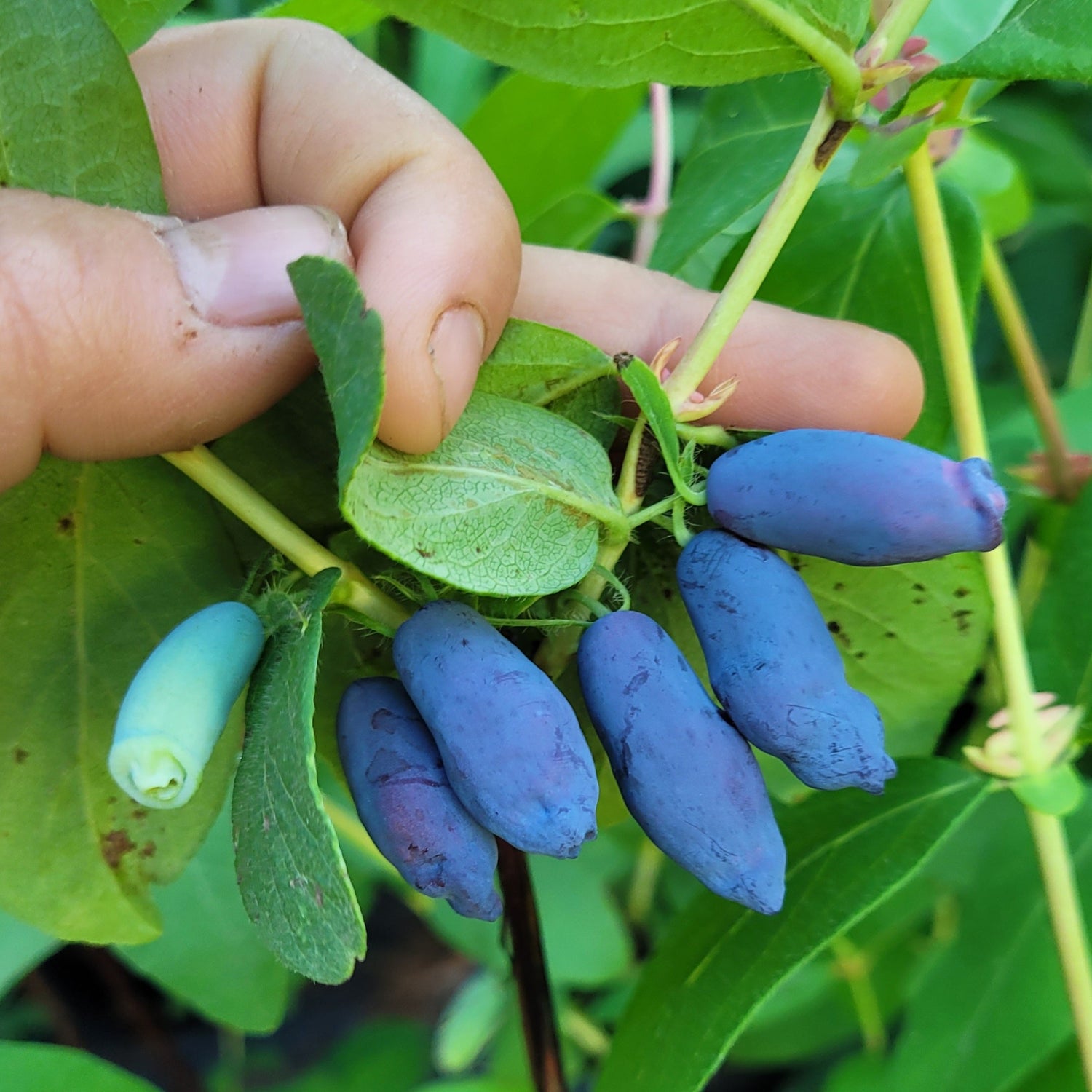
Species: Lonicera caerulea
History: Blue Banana was developed by Lidia Stuart of Berries Unlimited, potentially bred from Russian varieties or a cross between Russian and Japanese varieties. The variety is named for the unique shape of the berries and was likely selected for their large size and sweet flavour.
Why We Grow It: Blue Banana is exceptionally sweet compared to other haskap varieties and the flavour has been described as 'smoked strawberry.' These large, sweet berries are good for fresh eating along with cooking, baking, preserving, etc! The bush itself grows quickly and is relatively disease resistant.
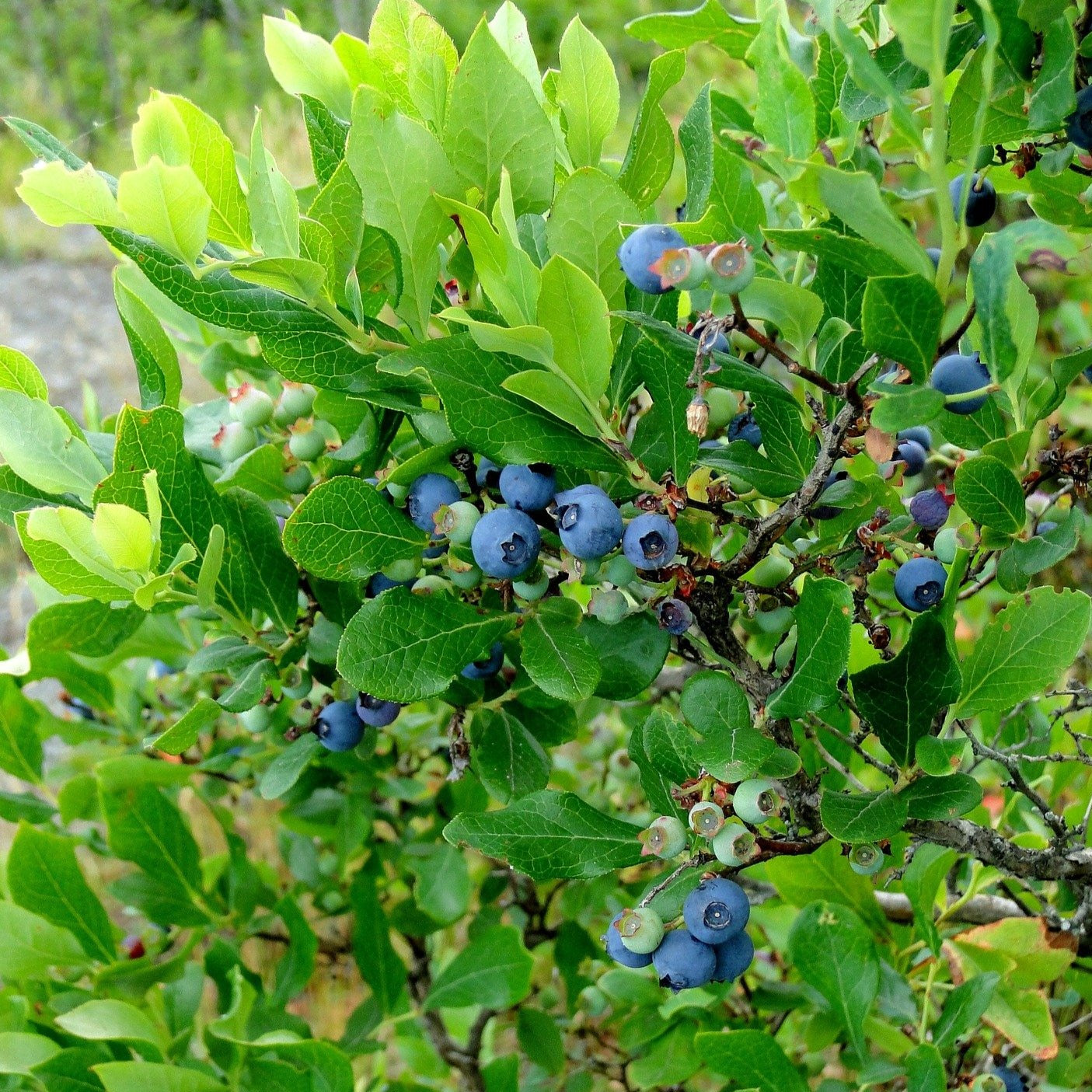
Species: Vaccinium corymbosum
History: Blueray higbush blueberry was introduced in 1941, although there is little other information on its origins. It may have originated in New Jersey where blueberry cultivation began.
Why We Grow It: Blueray produces an abundant crop of very large berries with good flavour. This cold hardy variety is great for home growers! Blueberries are great for baking, for example Steph made some wonderful black currant and blueberry tarts that are pictured here!
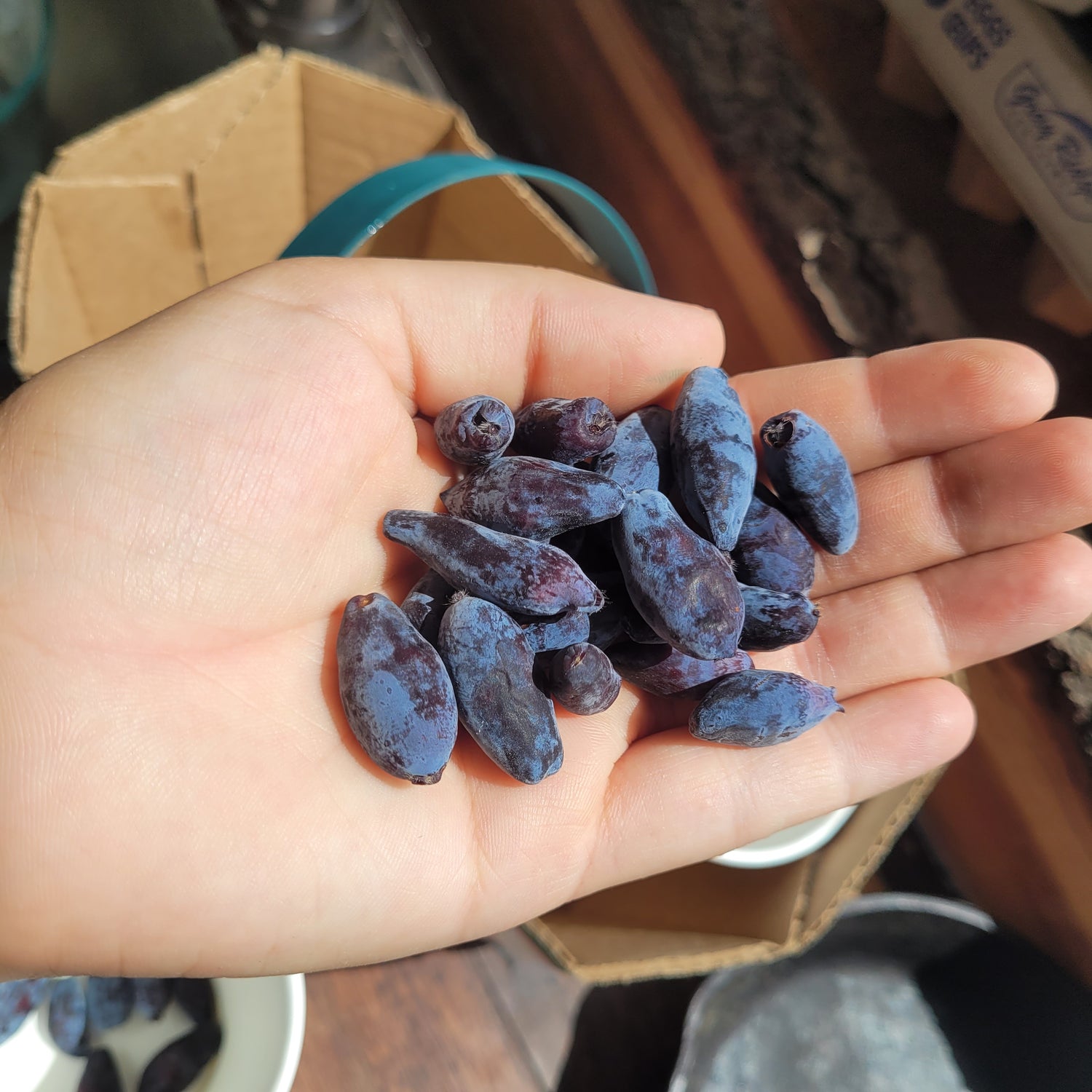
Species: Lonicera caerulea
History: Boreal Beast was developed by Bob Bors at the University of Saskatchewan as part of the Boreal series of haskaps. The goal of the Boreal series is to cross haskaps from Russia, Japan, and the Kuril Islands to create superior cultivars with the best qualities of all three strains. Boreal Beast was rated very highly for flavour in the breeding program. Named after Beauty and the Beast, Boreal Beast was intended to be the pollination partner for Boreal Beauty but in practice it has been found that their pollination times don't quite overlap.
Why We Grow It: Boreal Beast is noted for its excellent flavour with a great aroma and pleasant aftertaste. The shrub itself is quite vigorous and sturdy, and produces good-sized crops of delicious medium-sized berries.
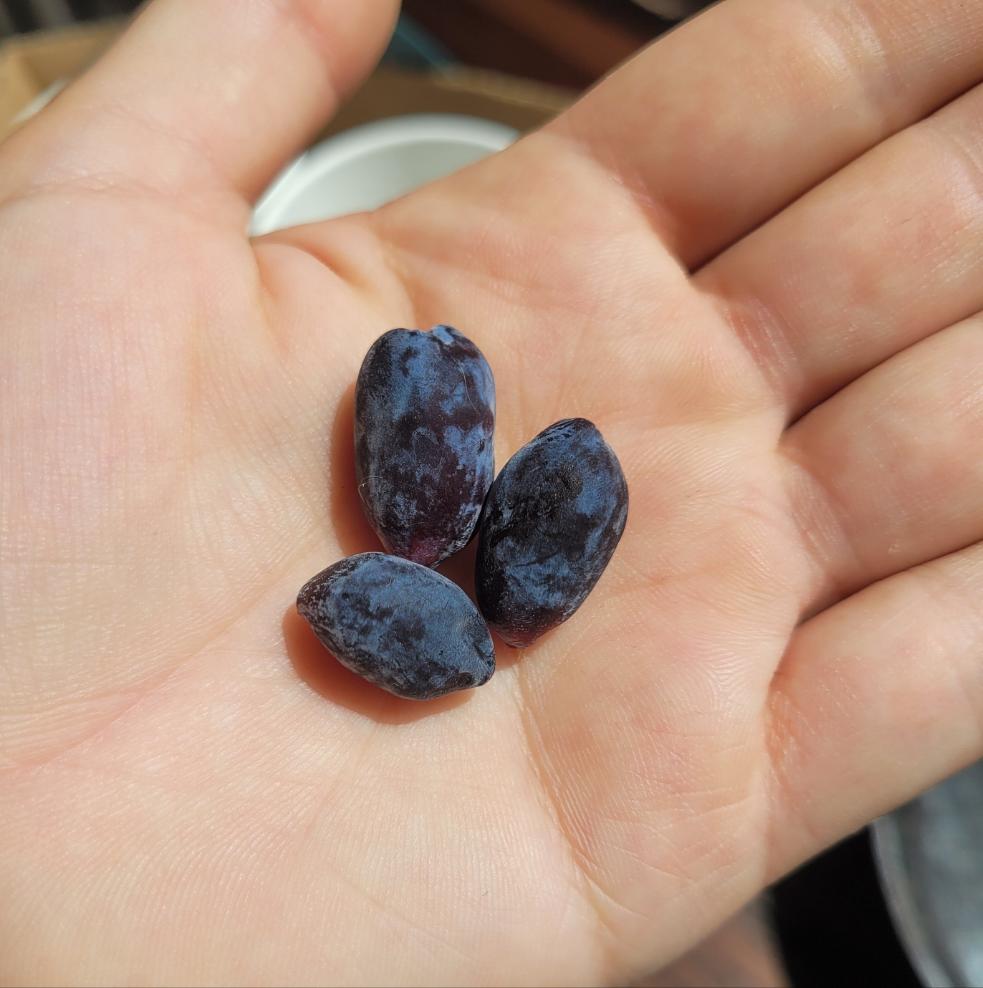
Species: Lonicera caerulea
History: Boreal Beauty haskap is part of the Boreal series of haskaps developed by Bob Bors at the University of Saskatchewan. The goal of the Boreal series is to cross haskaps from Russia, Japan, and the Kuril Islands to create superior cultivars with the best qualities of all three strains. Boreal Beauty was released in early 2017, chosen for its large size, firmness, and good flavour. Its name, a reference to Beauty and the Beast, was meant to be a handy way to remember that Boreal Beast is the recommended for pollination partner for this variety, but in practice unfortunately the two don't overlap quite enough for pollination to be optimal.
Why We Grow It: Boreal Beauty sports large berries that are more oval-shaped and firm than other haskaps while maintaining with good flavour. This variety could show promise for mechanical harvesting. It is also quite vigorous and produces heavy crops.
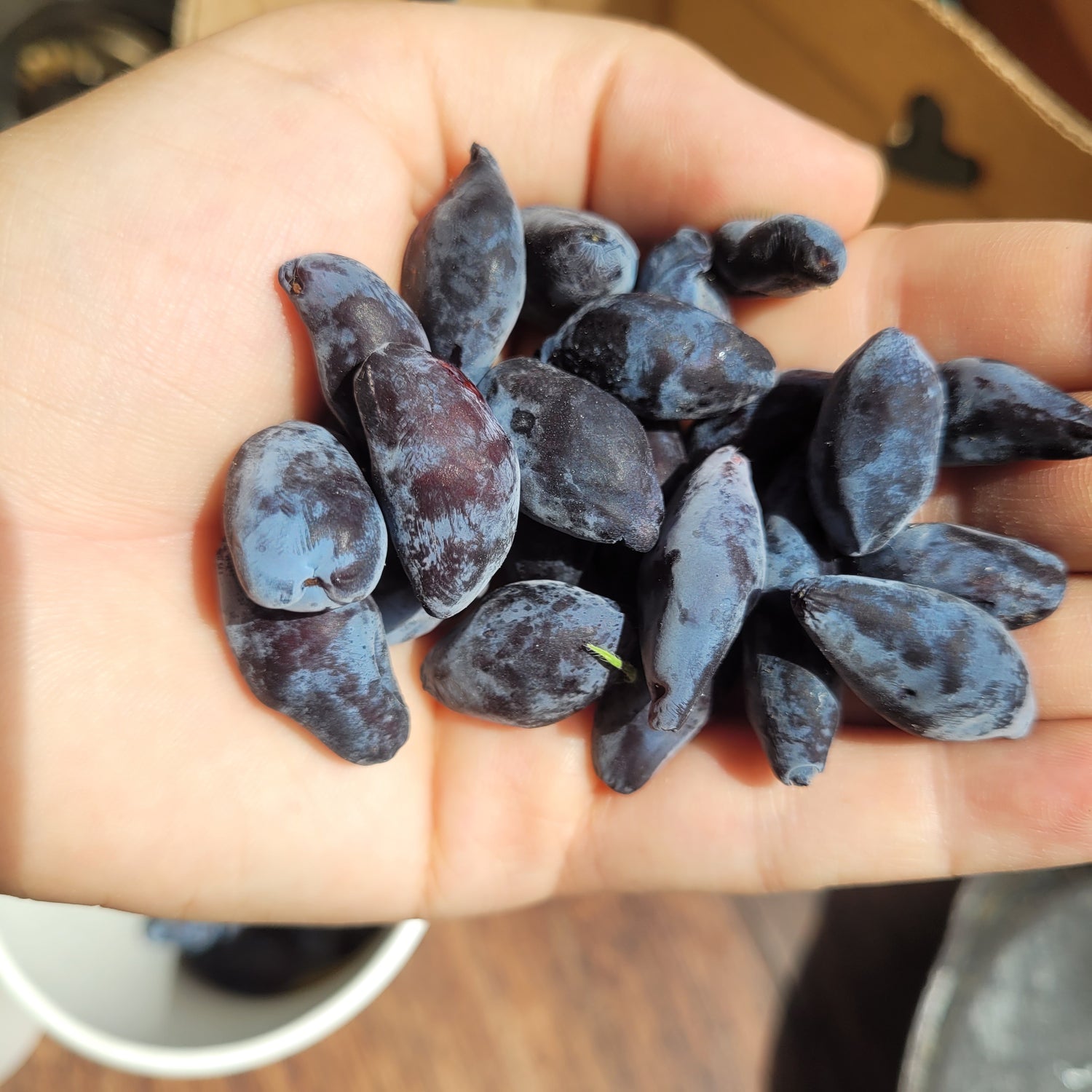
Species: Lonicera caerulea
History: Boreal Blizzard was developed by Bob Bors at the University of Saskatchewan as part of the Boreal series of haskaps. The goal of the Boreal series is to cross haskaps from Russia, Japan, and the Kuril Islands to create superior cultivars with the best qualities of all three strains. While Boreal Blizzard is only a cross between Russian and Japanese varieties, it has produced some of the largest berries the breeding program has seen while boasting good flavour!
Why We Grow It: Boreal Blizzard produces exceptionally large berries that are meaty and sweet. This heavy cropper is ideal for U-pick operations and small farms where the larger berries make them more suitable for hand-picking.
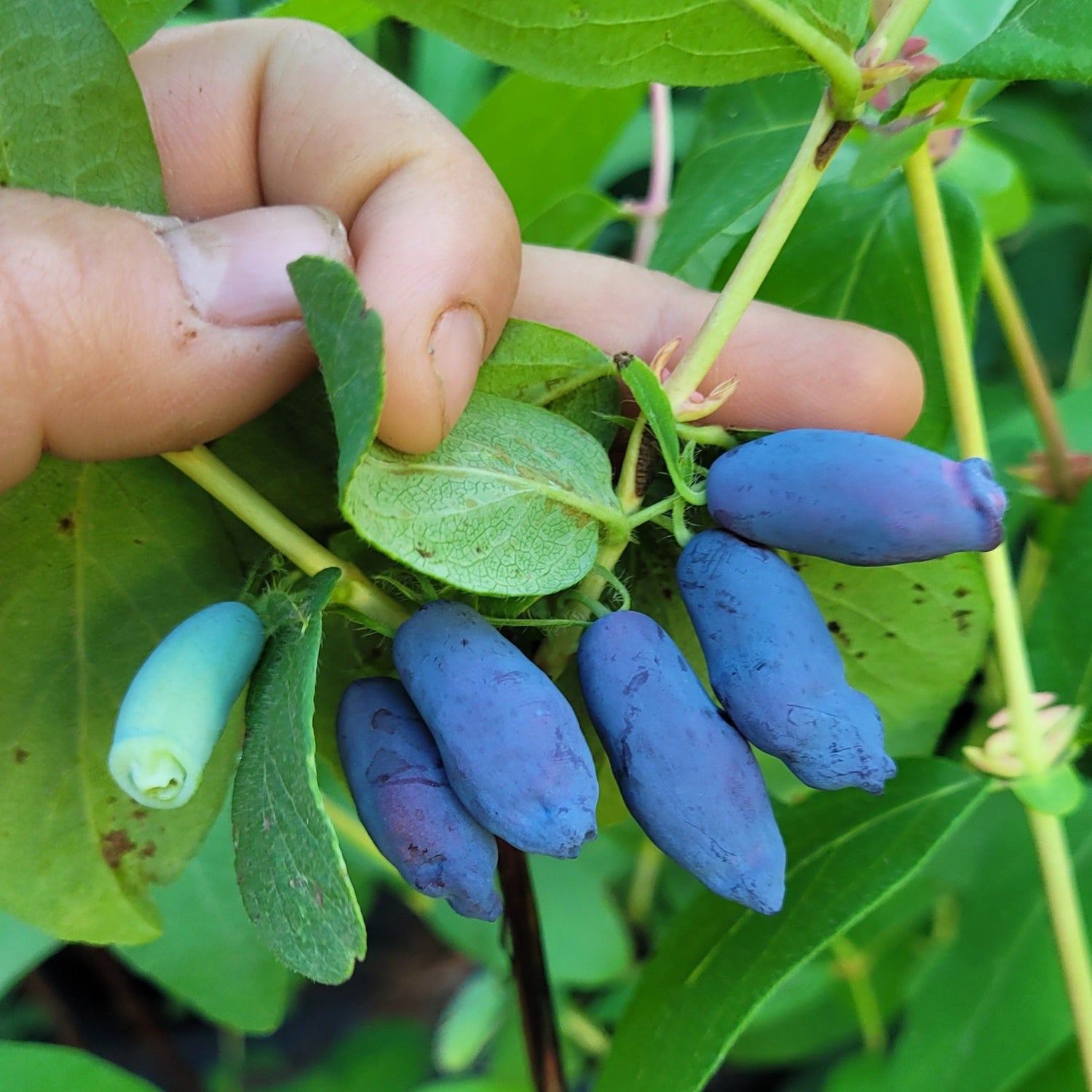
Species: Lonicera caerulea
History: Borealis was created by Bob Bors at the University of Saskatchewan and was released in 2007, likely being selected for its large fruit, good flavour, and resistance to powdery mildew.
Why We Grow It: Borealis produces large, round berries with an excellent flavour, albeit less sweet than more modern haskap varieties. The berries are excellent for baking although they are a bit softer and need to be handled more delicately when being picked. The bush itself is a little more compact than other varieties and is very resistant to powdery mildew.
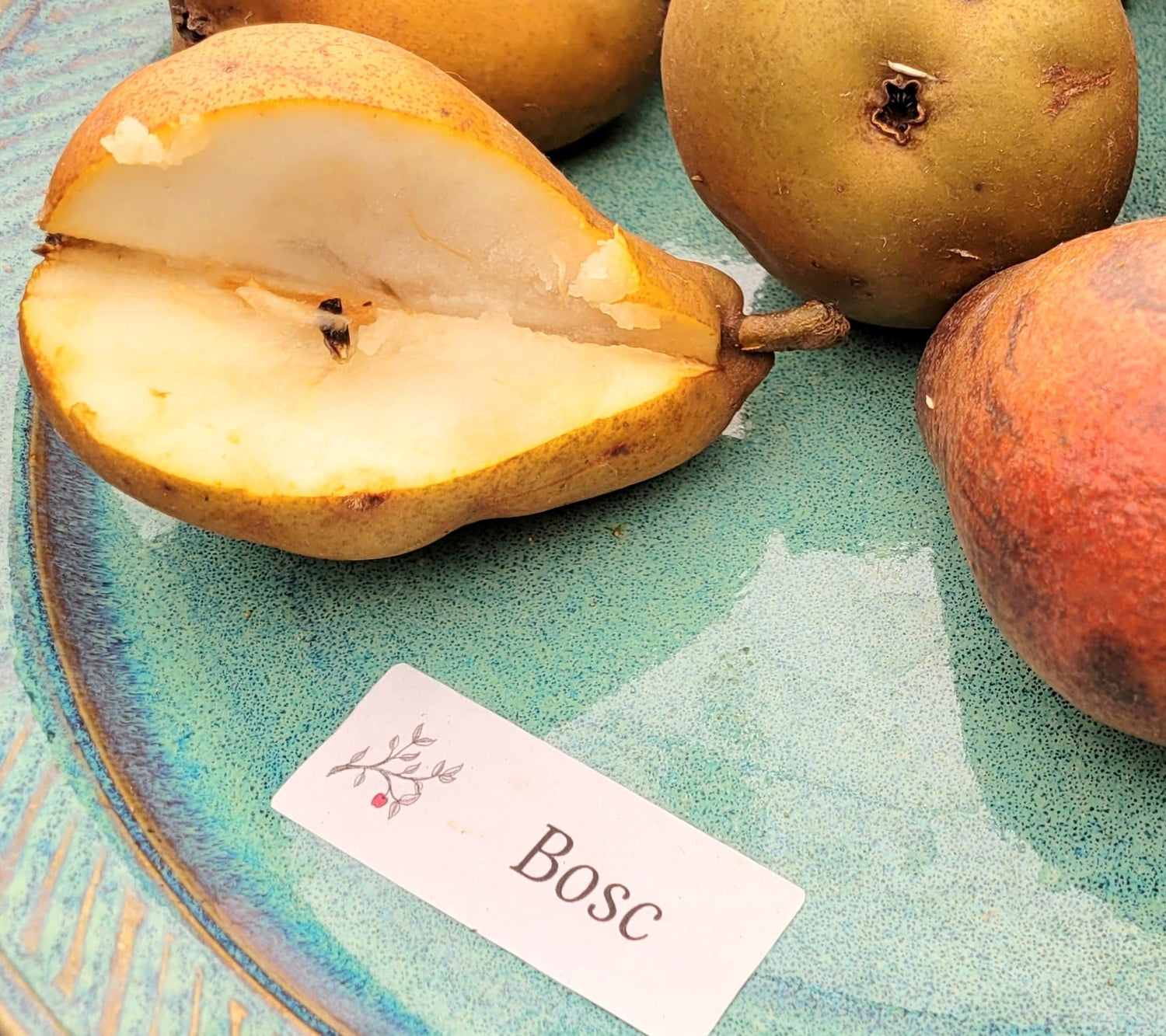
History: Bosc pears have an unclear history, either originating from Belgium or France. Some say that an M. Bosc in Belgium grew it from seed around 1807 while others believe it was found as an old tree in France in the 1830s and named after horticulturalist Louis Bosc. Bosc's alternate names 'Beurre Bosc' refer to its buttery texture and 'Calebasse Bosc' refers to its gourd-like shape. Regardless of its origins, Bosc has remained popular and is grown in numerous countries around the world.
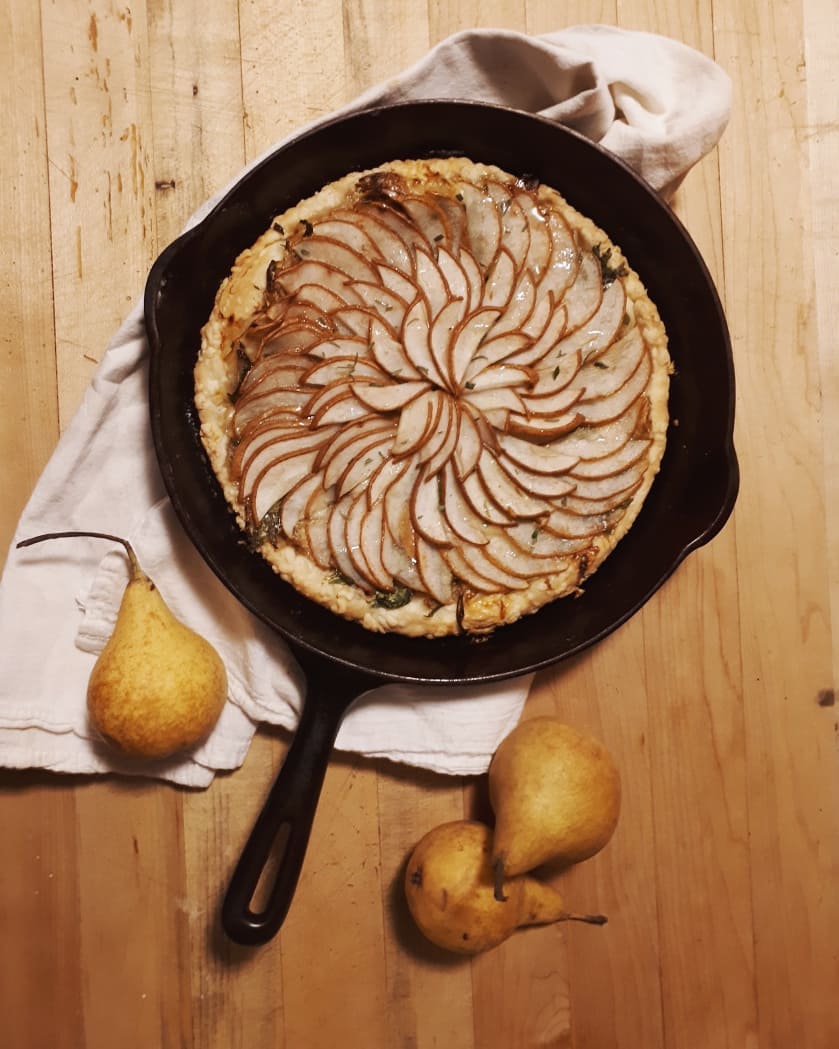
Why We Grow It: Bosc pears are long and slender with golden brown russetted skin. The flesh is of high quality, very sweet, and the pears store much better than most varieties. They can also be used to make a lovely tart, with a sprinkle of thyme for a savory delight!
History: Despite once being the most commonly planted commercial plum tree in New York, Bradshaw's origins are quite hazy. It is uncertain whether the variety even originated in Europe or the US. It was named in 1846 by C.M. Hovey who wrote about it in his "Magazine of Horticulture," naming the variety "Bradshaw" after an E.E. Bradshaw who had exhibited excellent specimens of the fruit for several years. Bradshaw has since been eclipsed by other plum varieties.
Why We Grow It: Bradshaw produces relatively large purplish-red plums of good quality. The flavour is pleasantly sweet and the variety is good for fresh eating and likely cooking and processing like other European plums. It is semi-clingstone. The tree is self-fertile, productive, and quite hardy, although it can be slow to start bearing fruit.
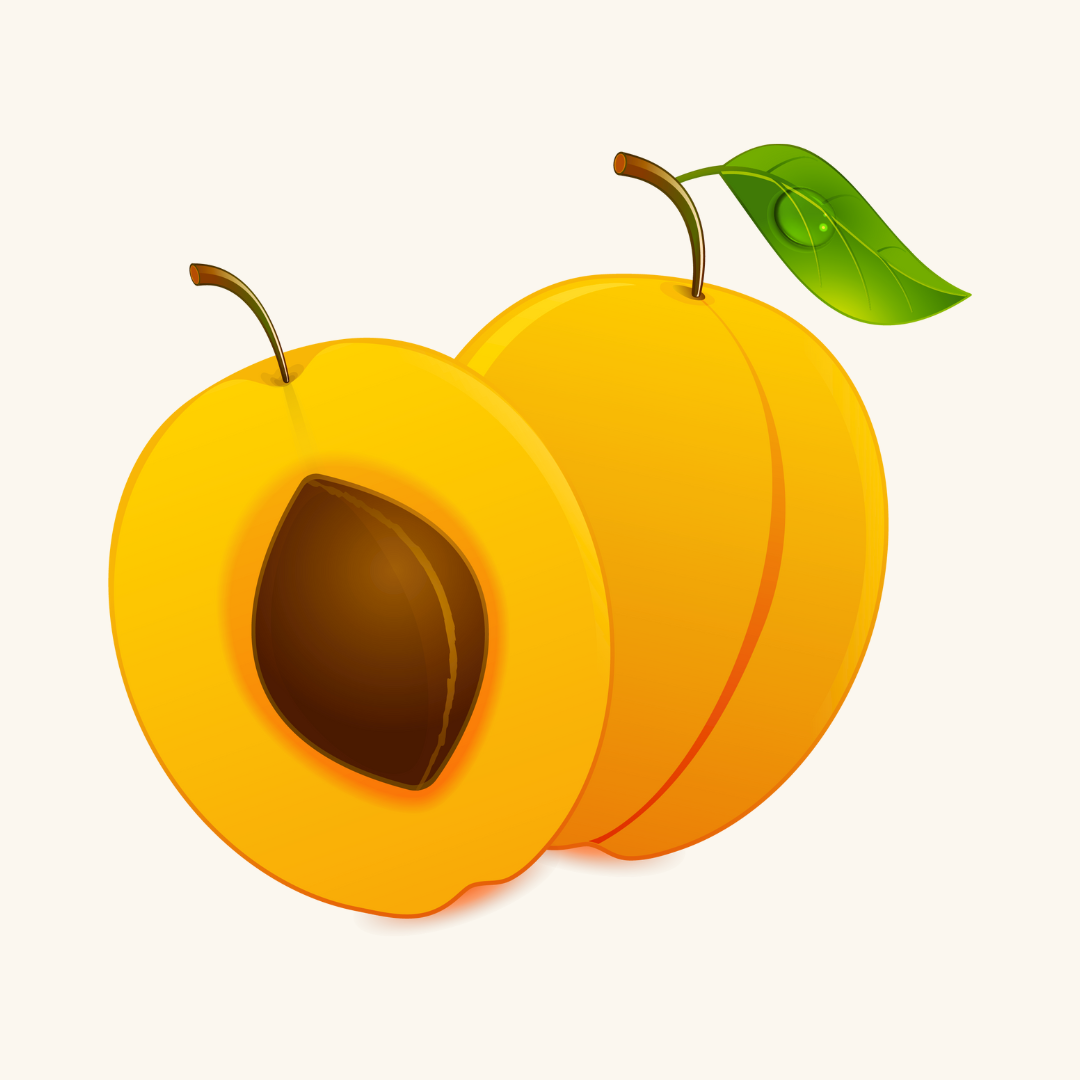
History: Brookgold was developed at the Crop Diversification Centre South in Brooks, Alberta and was named for the town and its golden colour. It was introduced in 1979.
Why We Grow It: Brookgold, like other fruit varieties developed in the prairies, is very cold hardy! Although there is sometimes a trade-off between cold hardiness and fruit quality, this variety still produces small yellow freestone plums that are very sweet, making them great for fresh eating and good for canning and preserving.
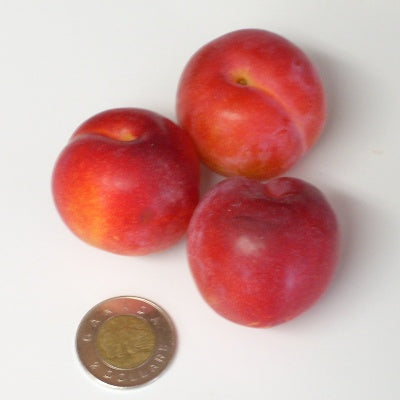
History: Burbank plums were introduced to the West by Luther Burbank, "The Wizard of Horticulture." He grew them from Japanese seedlings he received in 1885 and the variety was named after him, so, somewhat confusingly, they are actually a Japanese plum despite the English name. The variety was introduced commercially in 1897.
Why We Grow It: Burbank plums are lovely with colours ranging from yellow skin and red blush to a dark purplish red. These clingstone plums have good flavour and firm flesh, great for fresh eating, canning, or making into jelly.
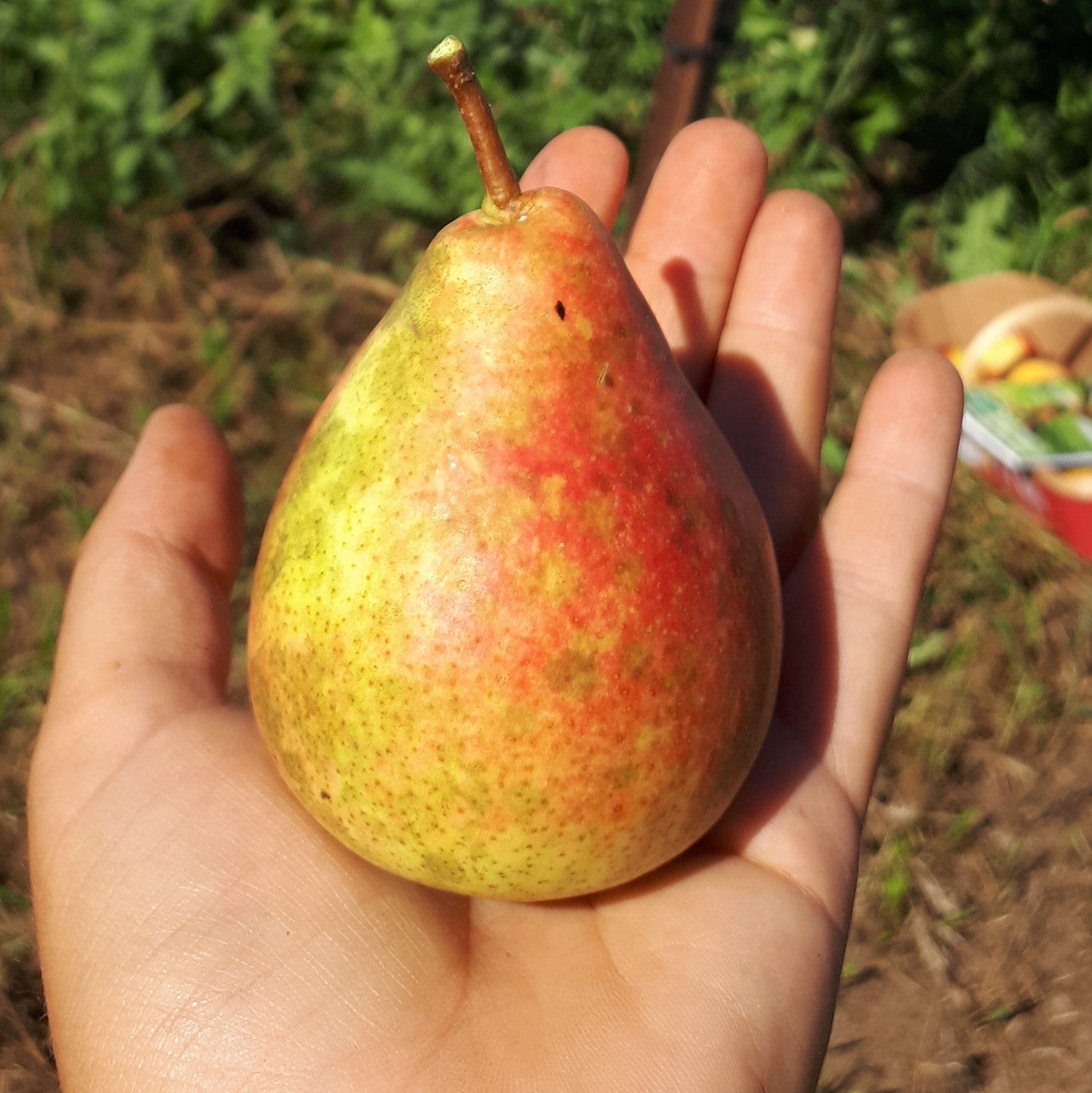
History: Butirra Precoce Morettini was bred as a cross between Coscia and Bartlett in 1956 by A. Morettini as part of an Italian breeding program. It is mainly grown in Italy, Spain, and Portugal.
Why We Grow It: This is an excellent early ripening pear that is sweet and juicy, with crunchy medium-fine grained flesh which mellows in storage to a delectable buttery texture. It has mild floral notes, with just the right amount of sweetness. The tree produces reliable and heavy crops of yellow fruit with a vibrant red flush that store decently well.

Species: Prunus nigra
History: Canada plums are native to from Nova Scotia to Manitoba and south to Iowa with scattered populations as far west as Alberta. The fruit is traditionally eaten by indigenous peoples in its range and it was also eaten by early European colonizers. Canada plums have been used in fruit tree breeding programs due to their cold hardiness and the ease with which they hybridize with Japanese plums. Some hybrid plums with Canada plum heritage include Pembina, Superior, and Patterson Pride.
Why We Grow It: Canada plums produce small, red fruits. The skin is astringent but the flesh is quite sweet with a nice tang. They are fine for fresh eating but are best in preserves. These flowery trees make great pollination partners for other Canada plums, American plums, and hybrid plums due to their early bloom period and long bloom window. For those looking for a stunning display of spring blooms, Canada plum is a great choice!


History: Canadian Harmony peaches were developed at the Harrow Research and Development Centre in Ontario and released in 1968.
Why We Grow It: In our quest to bring the most cold-hardy peaches to our Canadian growers (you!), we added yet another excellent peach variety to the line-up. With large, freestone fruit of good quality, Canadian Harmony is hard to turn down. It is a great all-around peach that is good for eating, baking, and preserving; just about anything you can do with a peach. It is less suitable for big growers because of soft flesh, but well-suited for the backyard, yielding juicy, flavourful fruit with good sweetness.
Bare Root Peach Trees
We are very pleased to be able to offer peach trees to our customers. They are both challenging and rewarding plants to grow. However, due to the unique challenges of growing peach trees, and the increased care required for their success, we regrettably cannot offer our standard 90 day guarantee on peaches. Please inspect your peach trees to your satisfaction when you pick them up at the nursery, or immediately upon arrival if they are shipped. For shipped trees, make your claim within 7 days of receipt of the trees. After 7 days of receipt, you will have been deemed to have accepted the trees in as-is condition.

Species: Vitis sp. (hybrid)
History: Canadice is a cross between Bath and Himrod that was first bred in 1954 at the New York State Agricultural Experiment Station in Geneva, New York. Selected for its seedless nature and cold hardiness, it was released in 1977. The variety was named for Canadice Lake, one of the nearby Finger Lakes.
Why We Grow It: Canadice produces seedless red grapes that are sweet with a hint of spice. The fruit is best known for fresh-eating but it can also be used for jellies, juice and wine. Although this is one of the more cold hardy varieties of seedless grape, it may still suffer winter injury in a particularly cold year.
Species: Vaccinium corymbosum
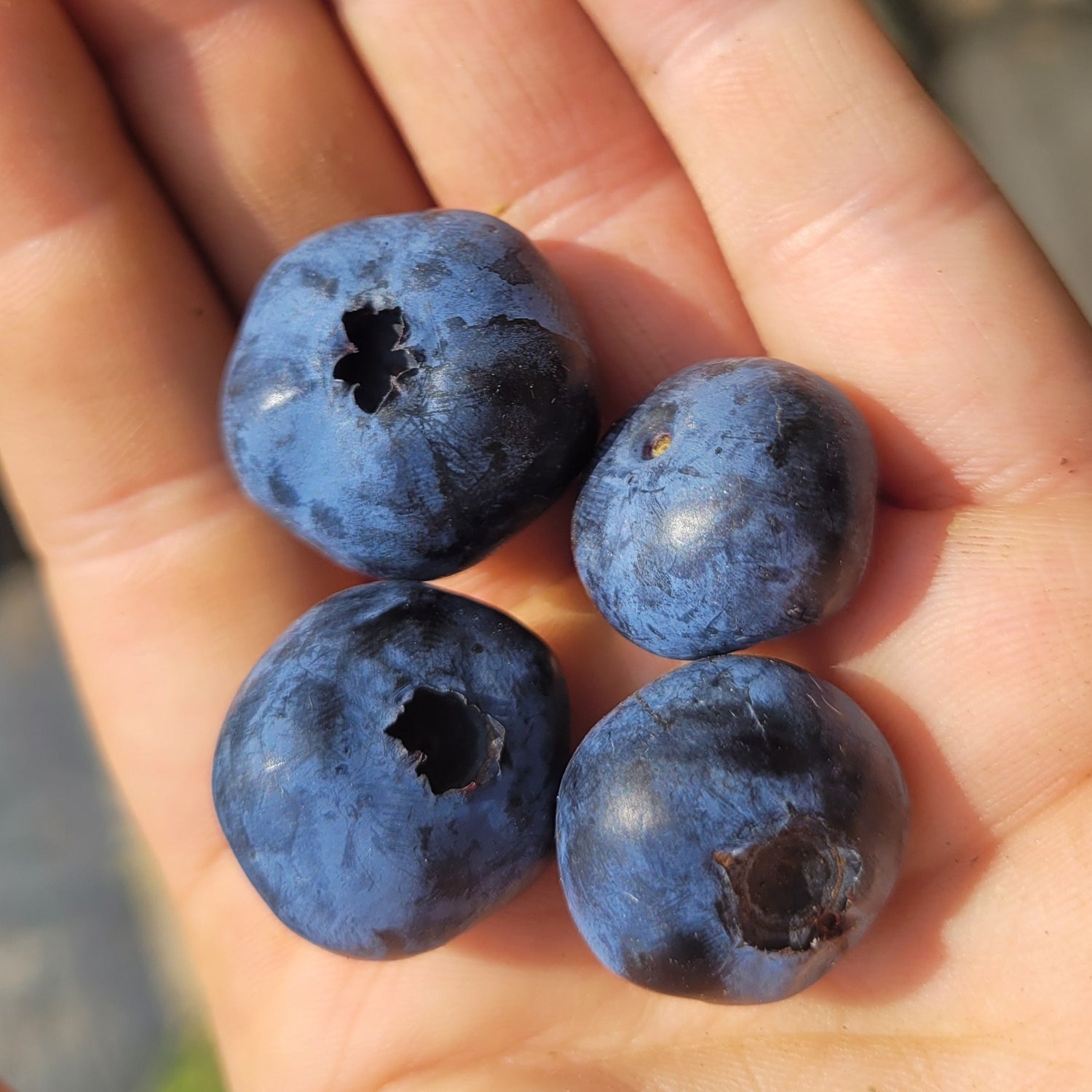
History: Chandler higbush blueberry was introduced in 1995. It originated in Corvallis, Oregon where it was developed by the United States Department of Agriculture's Agricultural Research Service agency's (USDA-ARS) Blueberry Breeding Program.
Why We Grow It: Chandler produces the largest blueberries in the commercial industry, and plenty of them! They are sweet and juicy despite their size and can be harvested over a long period of time. Blueberries are great for baking, for example Steph made some wonderful black currant and blueberry tarts that are pictured here!
Species: Actinidia arguta
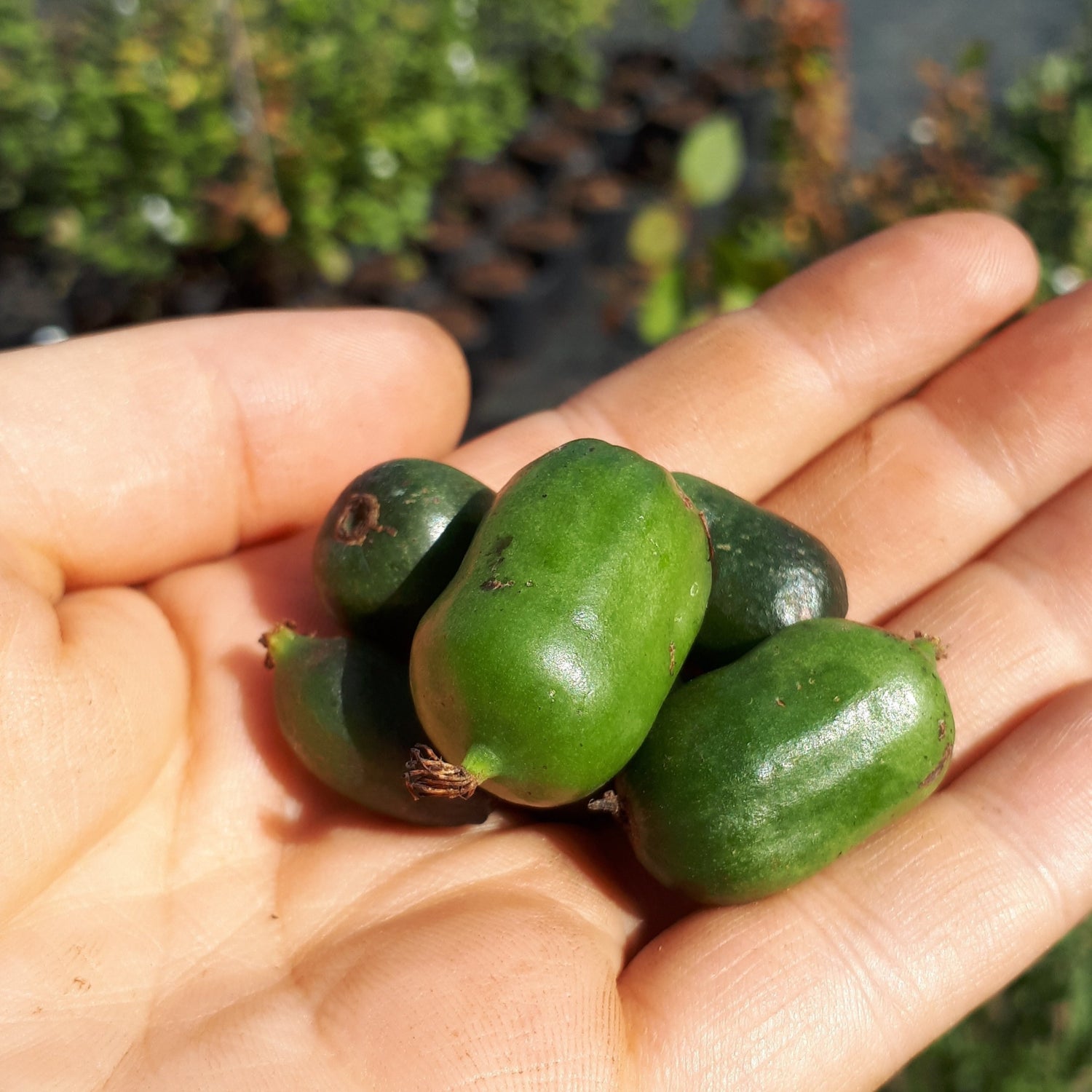
History: Changbai Giant kiwis were discovered by the Changbai Mountain Research Institute of the Chinese Academy of Agriculture near the North Korean border. The variety was likely collected and propagated due to its unusual round shape and excellent flavour. Named for the Changbai Mountains where it was discovered, its name translates literally from Mandarin as 'perpetually white.' It is also named for the exceptionally large fruit it produces.
Why We Grow It: Aside from its interesting origins, Changbai Giant also boasts unusually shaped kiwis compared to other varieties: round like an apple rather than more oblong like other hardy kiwis. The fruit is also very sweet and the plant itself is a little hardier than some other varieties. Like other female varieties, it can produce a large crop of fruits and it is recommended that the vine be grown on a trellis or other kind of support.