45% Off ~ LAST OF THE UNPLUCKED GEMS
This is your final chance to get your hands on these varieties and items that have 20 or less in stock.
We’re clearing out the last remaining pieces from a few of our most popular varieties - once these are gone, they’re gone for good. In some cases, we won’t be restocking these products next year, making this a rare opportunity to grab something you may not see again.
Right now, you can take advantage of 45% off, but quantities are extremely limited (some with only 3 left). While we do have more sales planned, these specific varieties will not be coming back, so this is truly your last shot.
If you’ve had your eye on one of these items, now’s the time to act. Waiting could mean missing out entirely.
Why this sale matters:
-
Final inventory—only a few left in each variety
-
Up to 45% off heirloom varieties for Canadian climates while supplies last
-
Many items won’t return next season
-
Future sales won’t include this inventory
Once they sell out, they won’t be restocked. Shop now before these last items disappear.
Sort by:
75 products
75 products
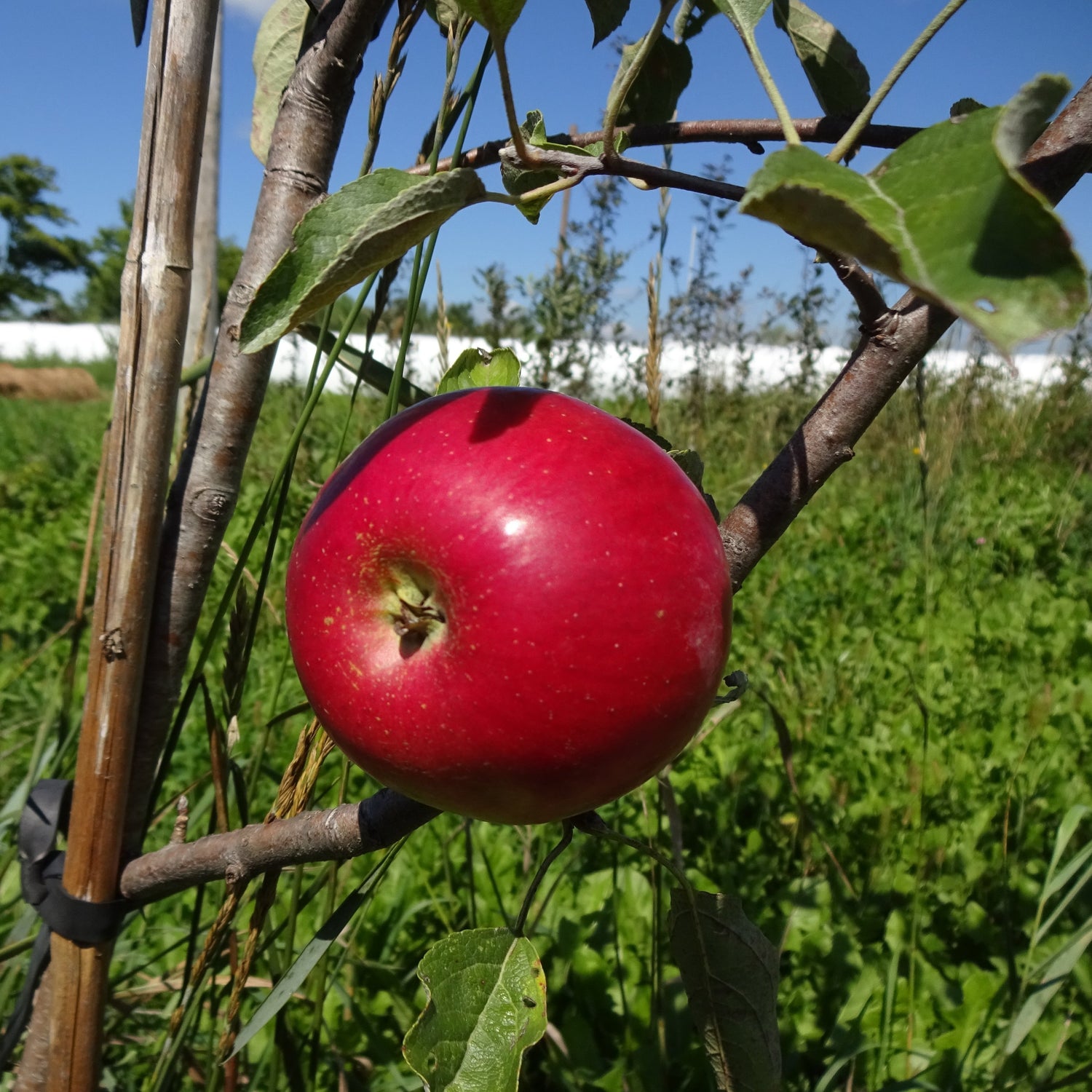
History: Akane was developed in Japan in 1937 at the Morioka Experimental Station. It is one of several kinds of produce created to better feed citizens and troops during WW2. The name 'akane' literally translates from Japanese as 'deep red.'
Why We Grow It: This crisp, sweet apple is great for fresh eating and has bright red skin. It tends to begin bearing at a young age and is relatively diseases resistant.
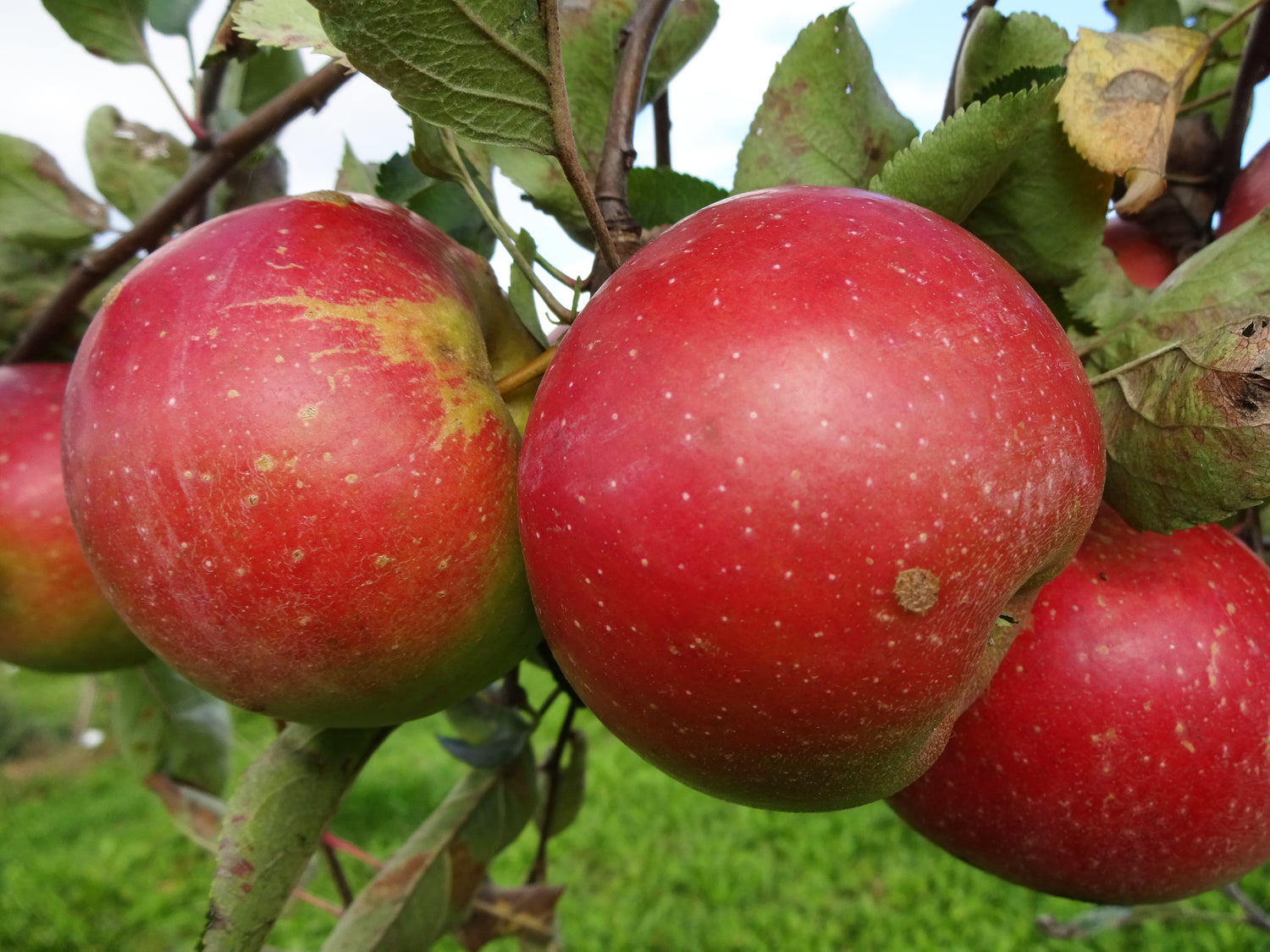
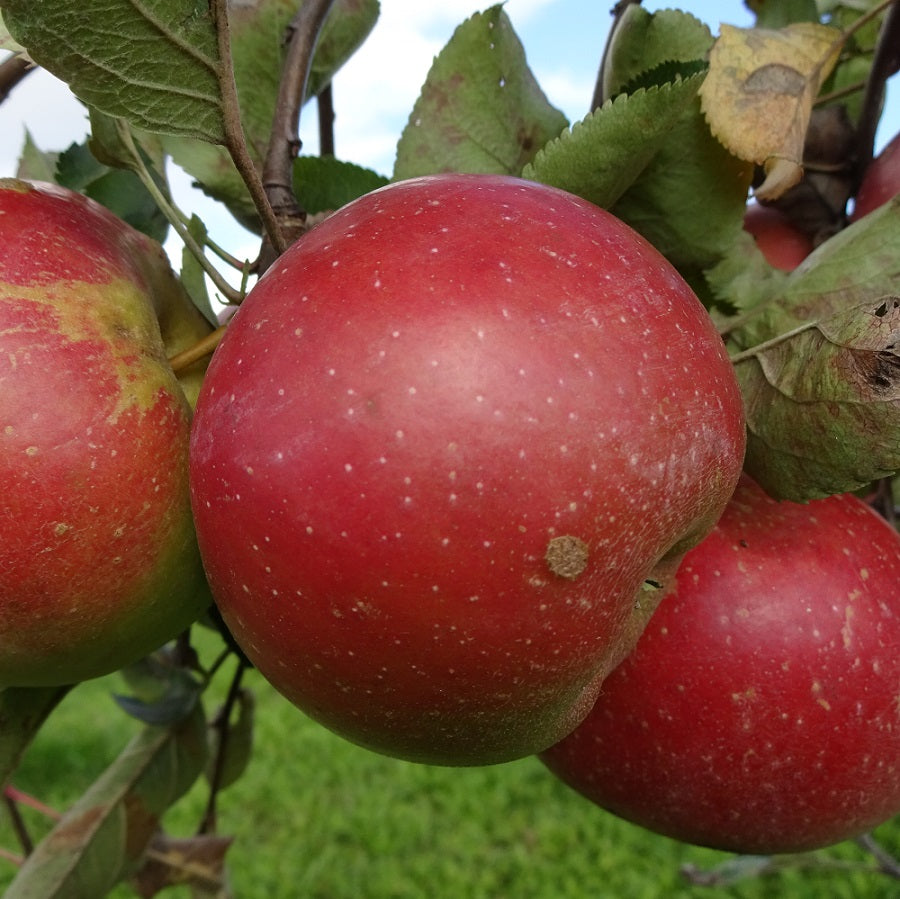
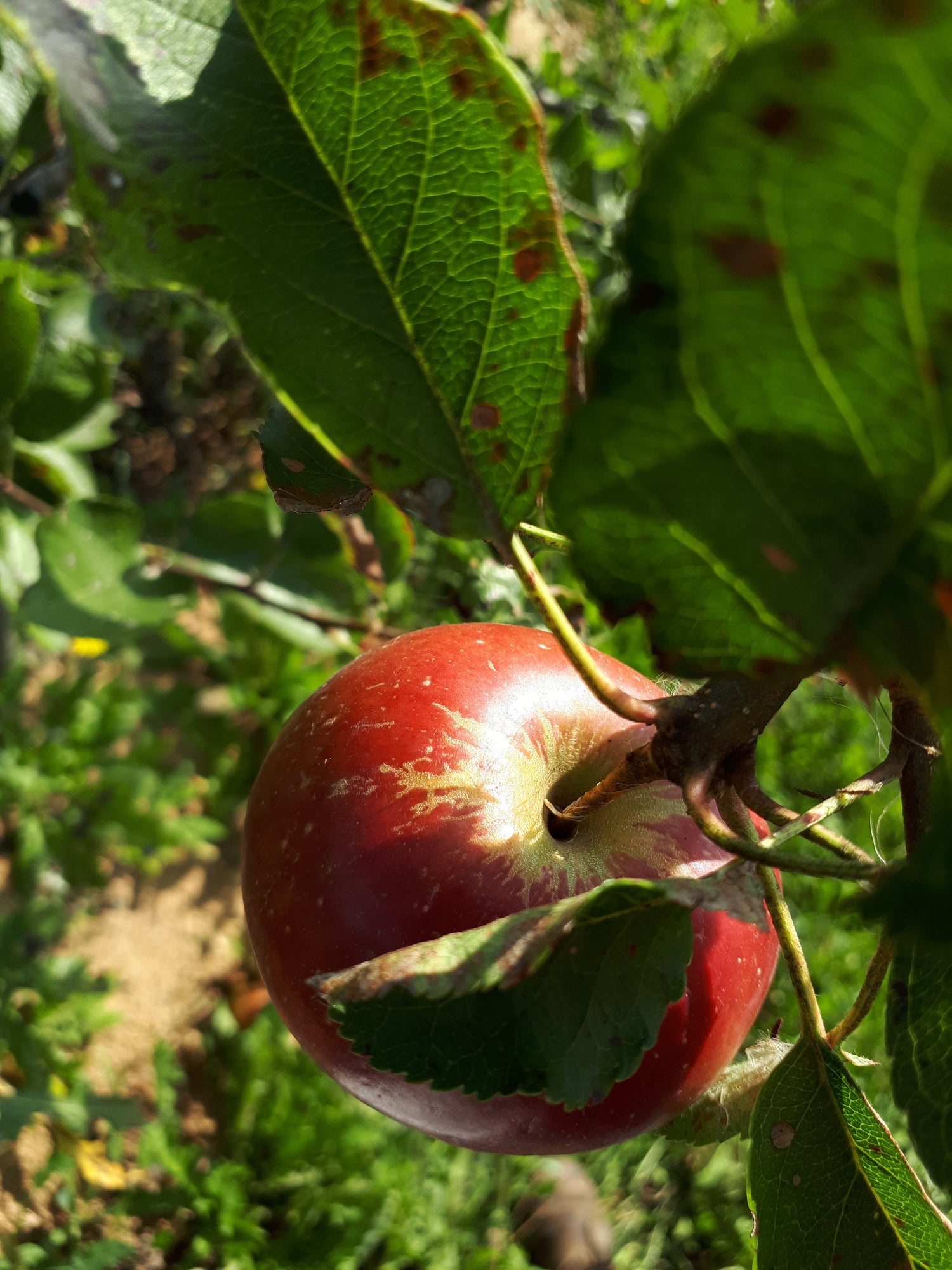
History: This classic American cooking apple was discovered by chance around 1740 in Massachusetts. It was eventually brought to the attention of a Col. Baldwin, after whom the variety was later named, who helped to spread it further. By 1850 this was one of the most commonly grown apples in the US, although its popularity began to decline by the 1900s, exacerbated by a terrible winter in 1934 that wiped out a significant number of trees. Despite this, Baldwin is making a bit of a comeback and a monument to this apple still stands in Wilmington, Massachusetts, around where it was discovered.
Why We Grow It: Baldwin apples produce large, greenish-yellow and maroon fruit with firm, sweet flesh that maintains its shape and crispness when cooked. The fruit produced in our test orchard has been attractive and blemish-free.
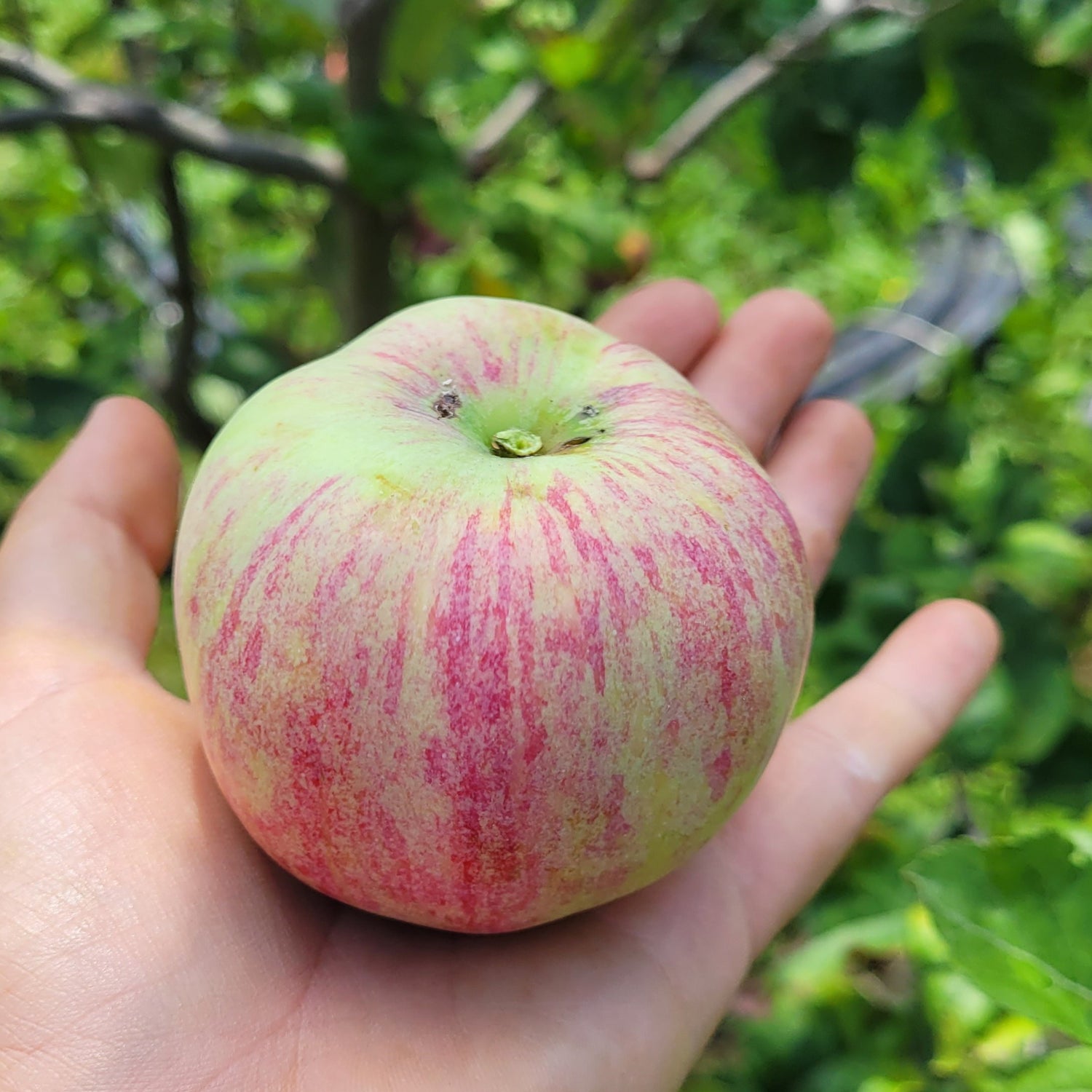
History: This cold-hardy apple was developed in the prairies and is for growing in colder, northern areas.
Why We Grow It: This unique apple produces a yellow fruit with red stripes. It is a rather uncommon variety and is great for sauce. It has begun producing reliably in our test orchard the last few years, and always has a bountiful crop.

History: Bedan des Parts is a French cider apple from Normandy that originated in the 1800s. It is still a popular cider apple in the area today.
Why We Grow It: The continuing popularity of this apple is due to the good quality bittersweet juice it produces that blends well with other varieties. Although a late bloomer, it is quite a heavy cropper.

History: A traditional French cider apple grown in Normandy, it is one of the varieties approved by the Appellation d'Origine Contrôlée for use in cider production in the region.
Why We Grow It: This apple produces an aromatic, bittersweet juice that can be used in cider and apple brandy. Although it only bears fruit every other year, it produces a considerable crop in a single season. It is also a great pollinator for other varieties due to its long blooming time.

History: Discovered in New Zealand by farmer O. Moran in 1952, Braeburn took the world by a storm, becoming one of the most popular commercial apples in the United States and parenting many modern cultivars such as Jazz and Sweetie.
Why We Grow It: Its winning sweet-tart flavour wrapped in an attractive orangey-red skin makes it an excellent fresh eating apple. It is firm and holds its shape well when cooked, and keeps about 4 months. This variety is fairly disease susceptible, meaning it is better for the experienced natural grower or conventional orchards. It is moderately vigorous and a heavy cropper.

History: Brettacher Sämling (sämling meaning seedling in German) originated as a chance seedling on a farm in Brettach, Germany in the early 1900s. It is possibly a descendent of the French cooking apple, Lebel. It is known for its excellent storage qualities and is still grown commonly in parts of Germany.
Why We Grow It: Brettacher Sämling produces large, juicy apples with a sweet-tart fruity flavour that has a hint of spice. The apples, green with a red blush, are best enjoyed after being stored for two months. They are fairly versatile, also considered suitable for sauce and juice/cider. Compared to other apple trees, this variety is relatively low maintenance and only requires a hard prune every two to three years.

History: Brown Snout was discovered on a farm in the UK in the mid-1800s. Its name comes from the brown russet around its calyx. H.P. Bulmer, a cider-making company, further propagated and spread this apple in the UK where it is still used today.
Why We Grow It: This medium bittersweet cider apple has small, uniquely coloured fruit that are sweet, slightly astringent, medium-tannin, and have low acidity.

History: This vintage quality cider apple is believed to have originated near Martock in England. This apple is so old it's not entirely certain when exactly it was first discovered, with estimates ranging from the 11th to 14th century.
Why We Grow It: This lesser-known apple is bitter with high acid, featuring a fruity flavour with a bitter aftertaste that is great when made into cider on its own or when mixed into a cider blend.

Why We Grow It: The saying 'big things come in small packages' holds true for Chinook. Although the fruit is on the smaller side, it boasts a lovely red skin, excellent sweet-tart flavour, a nice aroma, and crisp and juicy flesh. Fans of this variety will be happy to hear that the fruit can be enjoyed well through the winter, it is an excellent keeper and can last 6-7 months in storage. On top of that the tree grows fairly vigorously, starts bearing fruit at a young age, and produces heavy crops (although thinning will be required).

Coppice Agroforestry is a richly illustrated, comprehensive guide to resprout silviculture – managing trees and shrubs by coppicing, pollarding, shredding, and pleaching – for a continuous supply of small diameter polewood for products from firewood to fine furniture. Contextualizing resprout silviculture historically, ecologically, and economically, Coppice Agroforestry is a decade in the making, encyclopedic in scope, and written by the hand of a woodsman. Coppice Agroforestry is a deep dive into this ancient practice, blending it with modern science, systems thinking, and tools to land it firmly in the 21st century.

Species: Salix babylonica 'Tortuosa' syn. S. matsudana
History: Corkscrew willows are a variant of the Chinese Willow which are native to parts of northern China. Willow trees have been cultivated for millennia in Asia and this variety was likely selected for its unique twisting branches.
Why We Grow It: Corkscrew willows are an attractive ornamental tree year-round, sporting delicate leaves most of the year and then fully displaying their twisted branches and trunks once they have dropped their leaves. The flowers they produce in the spring are attractive to a variety of pollinators. Just be mindful of where you plant the trees, the vigorous roots can be a problem near buildings and pipes!

History: Delbarestivale was developed by Delbard, a nursery in France, in the 1950s. Likely named as a portmanteau of 'Delbard' and 'estivale' (translated from French as 'summer') due to its early ripening time, this variety goes by many other names including Delcorf, Monidel, Dalili, and Ambassy. It was bred in an attempt to create an improved version of Golden Delicious. Although not quite as popular as Golden Delicious, it is still grown commercially in parts of France and England and the Royal Horticultural Society awarded it the Award of Garden Merit in 1998.
Why We Grow It: This French apple is very sweet but balanced nicely with a sharp flavour. The flesh is aromatic and crisp and the skin is a lovely, stripey bi-colour with reddish streaks overlaying green. The apples store quite well for an early-ripening variety, although they do tend to bruise easily.

Why We Grow It: Discovery is a slightly sweet apple with noticeable acidity, and under optimal conditions it can have a strawberry flavour. Like many early apples, it is great for sauce. The fruit is on the smaller side and has a flatter shape with greenish-yellow skin overlaid with a bright red blush. The red can sometimes stain the cream-coloured flesh inside, providing some visual appeal. The tree boasts some resistance to scab and although it can take a while to start bearing fruit, once it does it bears quite reliably.

History: Domaine apples originated in France some time before the 1900s. In the Pays d'Auge region in Normandy, Domaine is one of the 13 cultivars prized for making hard cider (included in that 13 are Fréquin Rouge and Noël des Champs, which we also have available). This apple was brought to the United States in 1949 but remains relatively unknown outside of its country of origin.
Why We Grow It: This bittersweet cider apple is high in tannins, low in acidity, and contains a moderate amount of sugar. Although not great for single-variety ciders, it can be an excellent addition when used in cider blends.

For the most up-to-date information see Claude Jolicoeur's website here!
History: Douce de Charlevoix (translated from French as 'sweet Charlevoix') was discovered by Claude Jolicoeur in a Quebecois village in the county of Charlevoix in the 1990s. He has since dubbed it a 'first class early cider apple' and in 2015 a cider blend using 40% Douce de Charlevoix won a bronze medal at the GLINTCAP competition.
Why We Grow It: This apple is quite attractive with orange-red stripes across green skin and makes an excellent juice with a notable bitter taste. In general this apple has medium tannins, some sweetness, and very little acidity. The tree itself is also quite vigorous and hardy.

History: The exact origin of Ellis Bitter is unknown but it is believed to have originated on the farm of a Mr. Ellis in the 1800s in England. It was planted commercially, particularly by growers under contract with the cider-making company H.P. Bulmer. Unlike some older cider varieties, Ellis Bitter still remains relatively common today.
Why We Grow It: Ellis Bitter is an old English cider apple, with good disease resistance, vigour, and production. This variety produces a high quality medium-bittersweet juice with soft, astringent tannins that are suited for blends. It is notable for its early ripening time compared to many cider apples, and therefore adds nicely to an orchard to extend the season. This cultivar has produced very well in the Ontario climate according to trials at the Vineland Research Station.
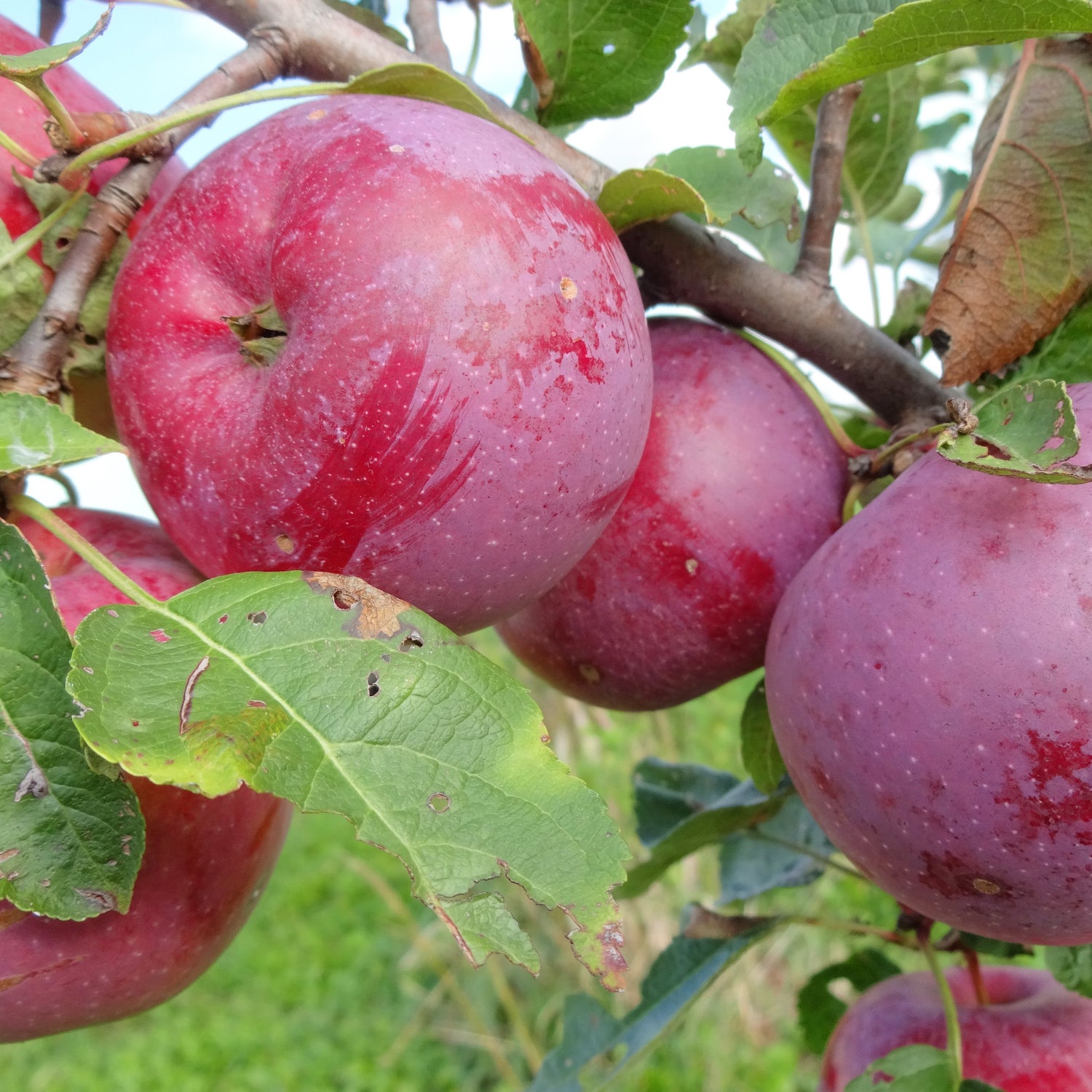
History: The creation and selection of Empire apples was a lot more intense compared to the chance origins of some of our older varieties. In 1945, scientists from the Cornell University New York State Agricultural Experiment Station collected thousands of seeds from the orchard of fruit nutritionist Lester C. Anderson. For years these seeds were grown and tested until Empire emerged as the best apple from amongst its siblings. It was released to the public in 1966 and has since become one of the top ten most popular apples in North America.
Why We Grow It: Empire is an excellent general-purpose apple for the Great Lakes area. The attractive green and red fruit is crisp and sweet and keeps well into the winter. The trees crop heavily and reliably, and the fruit is resistant to bruising, making life easier for the grower. They are also resistant to fireblight and cedar apple rust.
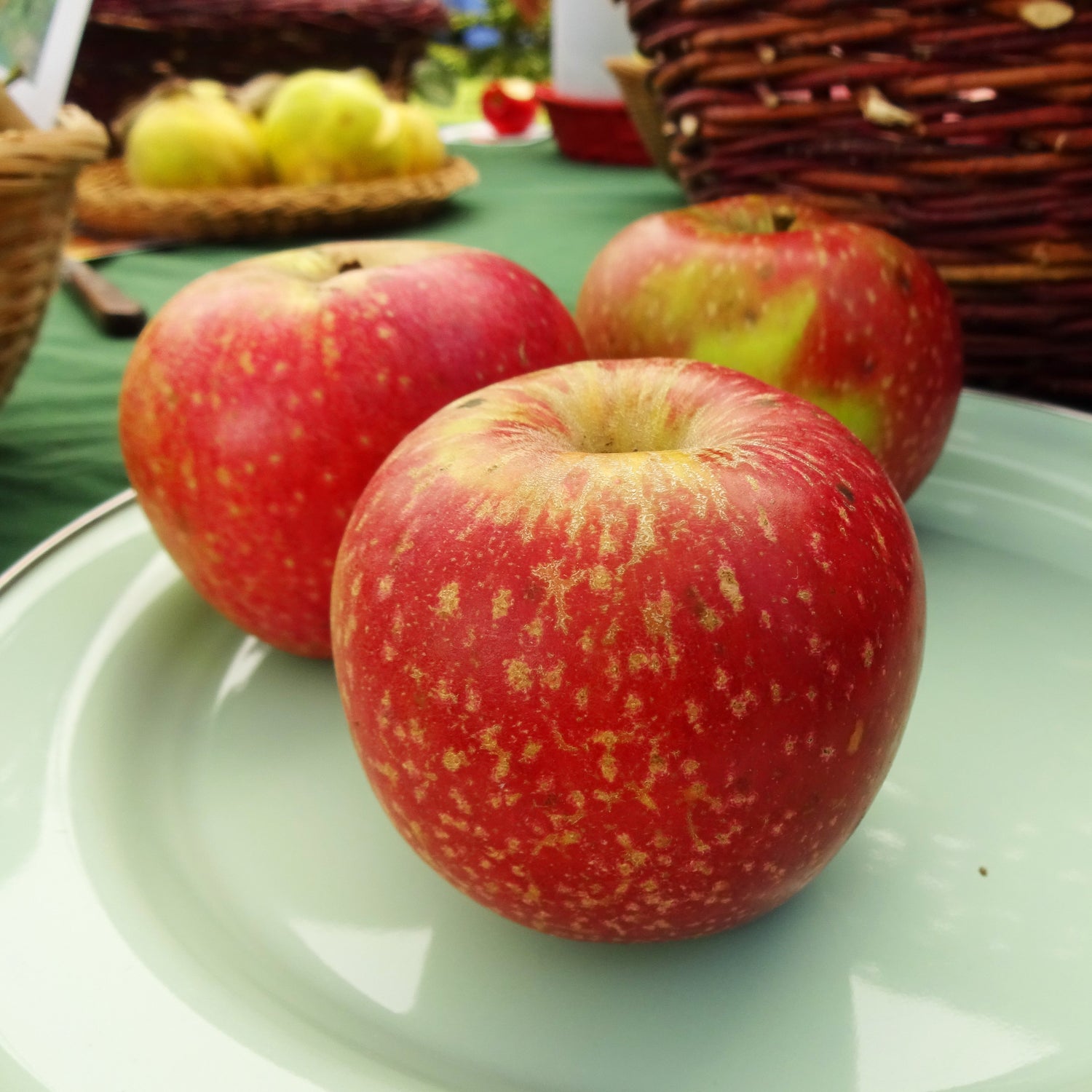
History: Esopus Spitzenberg was discovered near Esopus, New York in the early 1700s. Its main claim to fame is its supposed designation as Thomas Jefferson's favourite apple, a claim supported by the numerous Esopus Spitzenberg trees he had planted at his plantation Monticello. This apple was very popular in the US in the 1800s, considered one of the best for fresh eating, valuable for cooking, and a nice addition to cider blends.
Why We Grow It: The flavour of this particular variety is complex with high acid content, considered by many to be a high quality fresh-eating apple. This is helped by the attractive medium sized fruit which sports bright red skin. This variety keeps, with good flavour, until March. Despite being susceptible to just about every common apple disease, we still believe this apple is worth the extra effort and haven't had much issue growing it here.
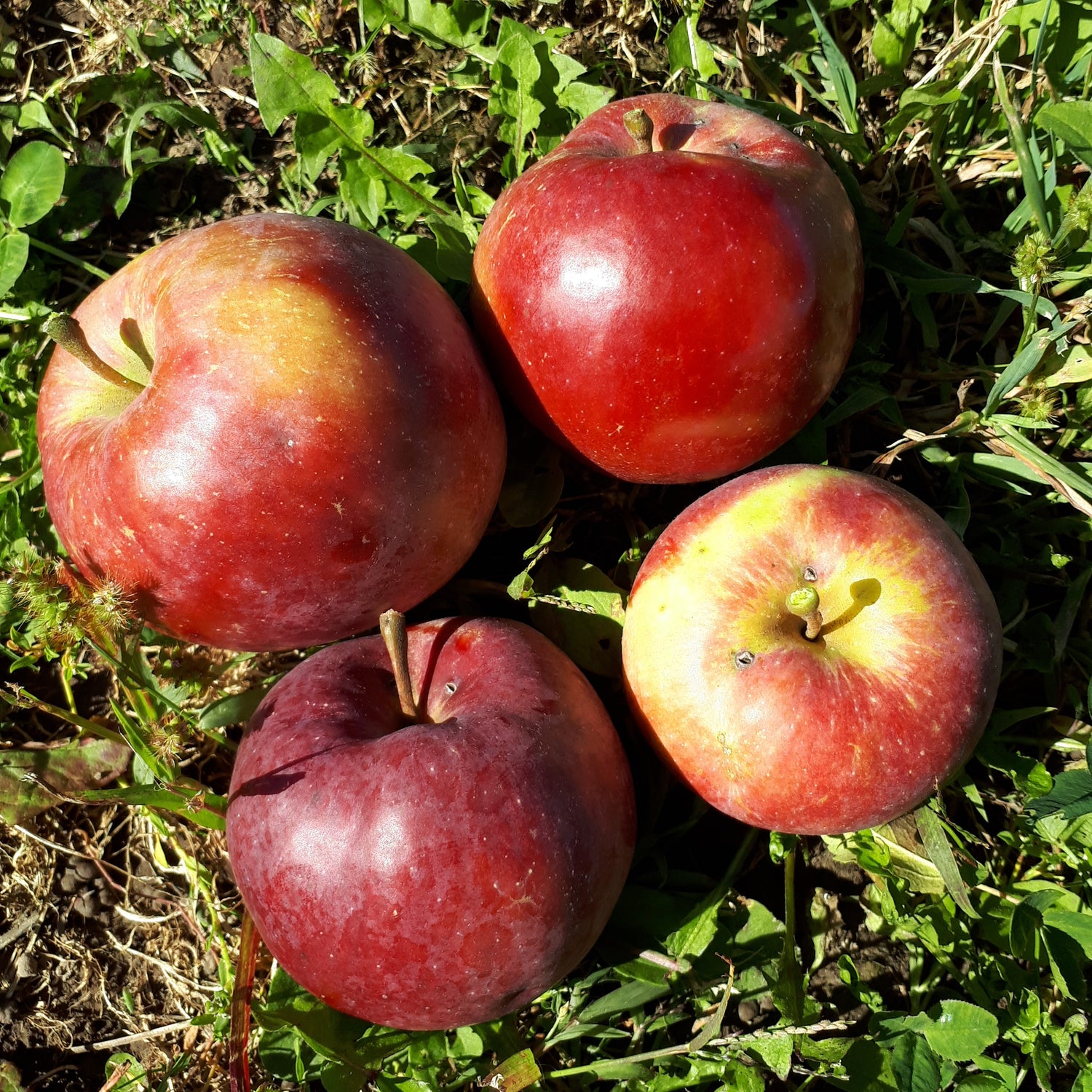
History: Fireside apples originated in 1943 from a breeding program at the Minnesota Agricultural Experiment Station. They are one of nearly 30 varieties that have been introduced by the university's breeding program since it began in 1888.
Why We Grow It: Fireside stands as an icon of toughness in the world of apples, thriving in cold northern areas. But don’t let this image fool you—Fireside has a warm heart! The flesh is amazingly sweet and very juicy.
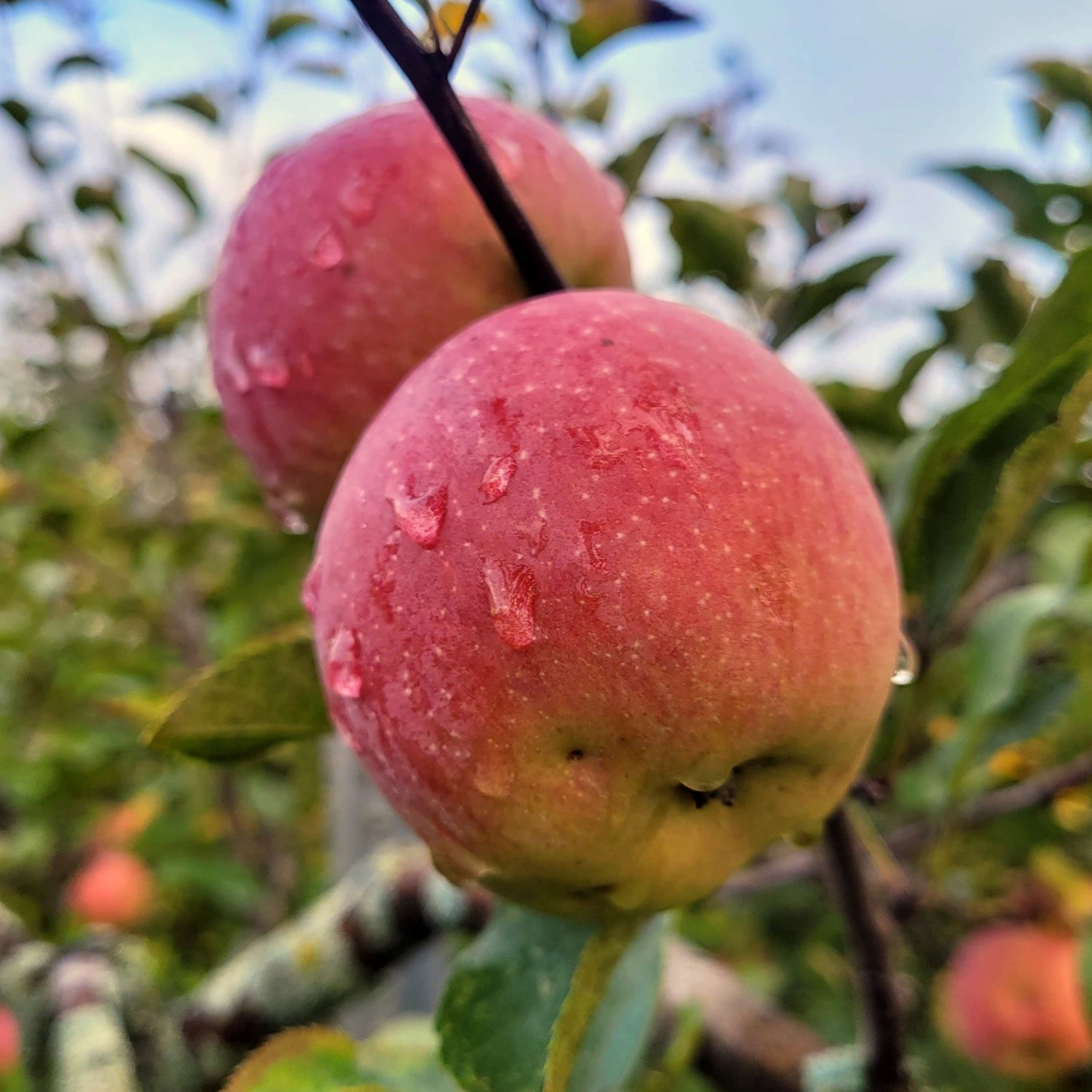
History: Fuji apples were developed at the Tohoku Research Station in Japan in the 1930s and released commercially in 1962. It was named after Fujisaki, the town where it was created. Despite being created in Japan, this apple is actually a mix of two American varieties. Its excellent flavour and attractive appearance has made it one of the most popular apples varieties in the world. It is commonly grown in the US, Japan, and China.
Why We Grow It: Its crisp, very juicy, sweet flesh makes Fuji a very popular variety. It also stores well, lasting about three months. To the best of our knowledge, this is the original strain.
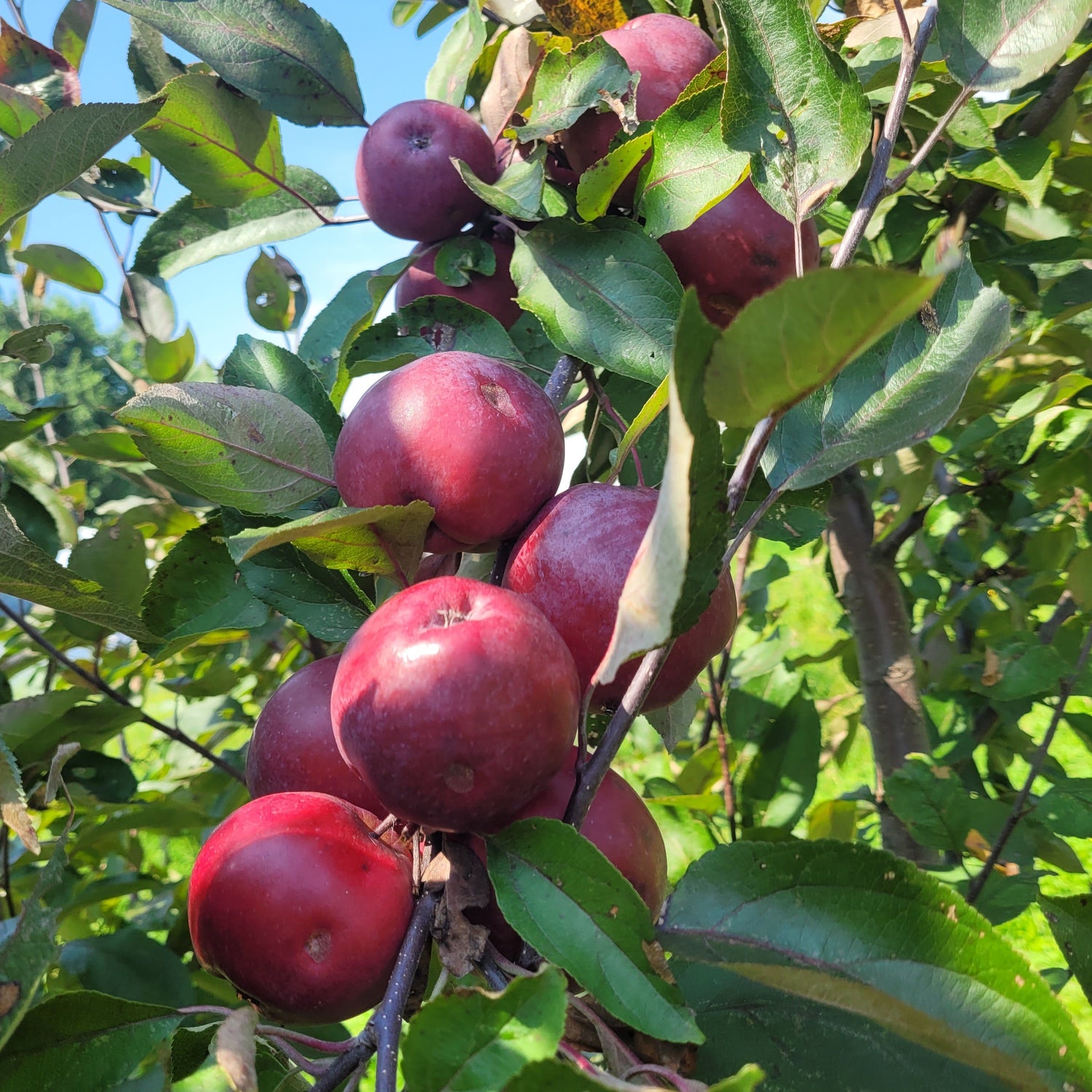
History: The Geneva crabapple was developed in the 1930s in collaboration with the Ottawa Experimental Farm and the New York State Agricultural Research Station based in Ottawa. The creation of this crabapple was head by Isabella Preston who specialized in creating cold-hardy ornamental plants.
Why We Grow It: This attractive crabapple has deep maroon flesh. The tree itself is quite visually appealing, sporting red leaves and bright pink flowers in the spring. The taste is reminiscent of rhubarb and is suitable for cooking as well. As it is a low sugar/high acid juice, it is best blended with another high sugar variety for cider. It also adds a nice red hue to blends.

History: Glowing Heart was bred in Toronto by Fred Jansen, one of the founders of the North American Fruit Explorers (NAFEX). This unique apple is still in its early years.
Why We Grow It: This variety has a unique pink and white flesh and is quite acidic. One bite will make you pucker! Although not the best option for fresh eating, this apple creates an aromatic jelly with rich flavour and can be used in ciders as well. It does well in organic orchards.

History: Goldrush was bred specifically for scab resistance as part of the collaborative PRI disease-resistant breeding program run by Purdue University, Rutgers University, and the University of Illinois. It was developed in the 1970s and released in 1994. This variety has a complex heritage of Golden Delicious mixed with a cross of several other varieties for their disease resistance.
Why We Grow It: This is arguably the best scab-resistant variety released from the PRI Breeding Program as far as flavour is concerned. The dense, crisp flesh of this yellow apple is full of sugars and flavour. It is distinctly spicy and tart at first but mellows the longer it is in storage. The fruit stores exceptionally well. This truly multi-purpose apple is also great for drying and, unusually for a modern variety, is good in hard cider.


Species: Morus sp
History: Grandpa Harold mulberries are named in memory of Steph's grandfather, whose property houses the mulberry tree we collected these cuttings from. The tree came from Steph's father, who collected mulberry seeds from a tree near Hawkesville and gave one of the resulting seedlings to Grandpa Harold. The tree has provided ample fruit for years and now delights Grandpa Harold's great-grandchildren. The cuttings were taken out of sentimental value as the property where it is growing may be sold in the future.
Why We Grow It: Overall Grandpa Harold is a fairly standard mulberry, producing delightfully sweet berries that are great for fresh eating and baking, but its special sentimental value makes it taste that much sweeter.


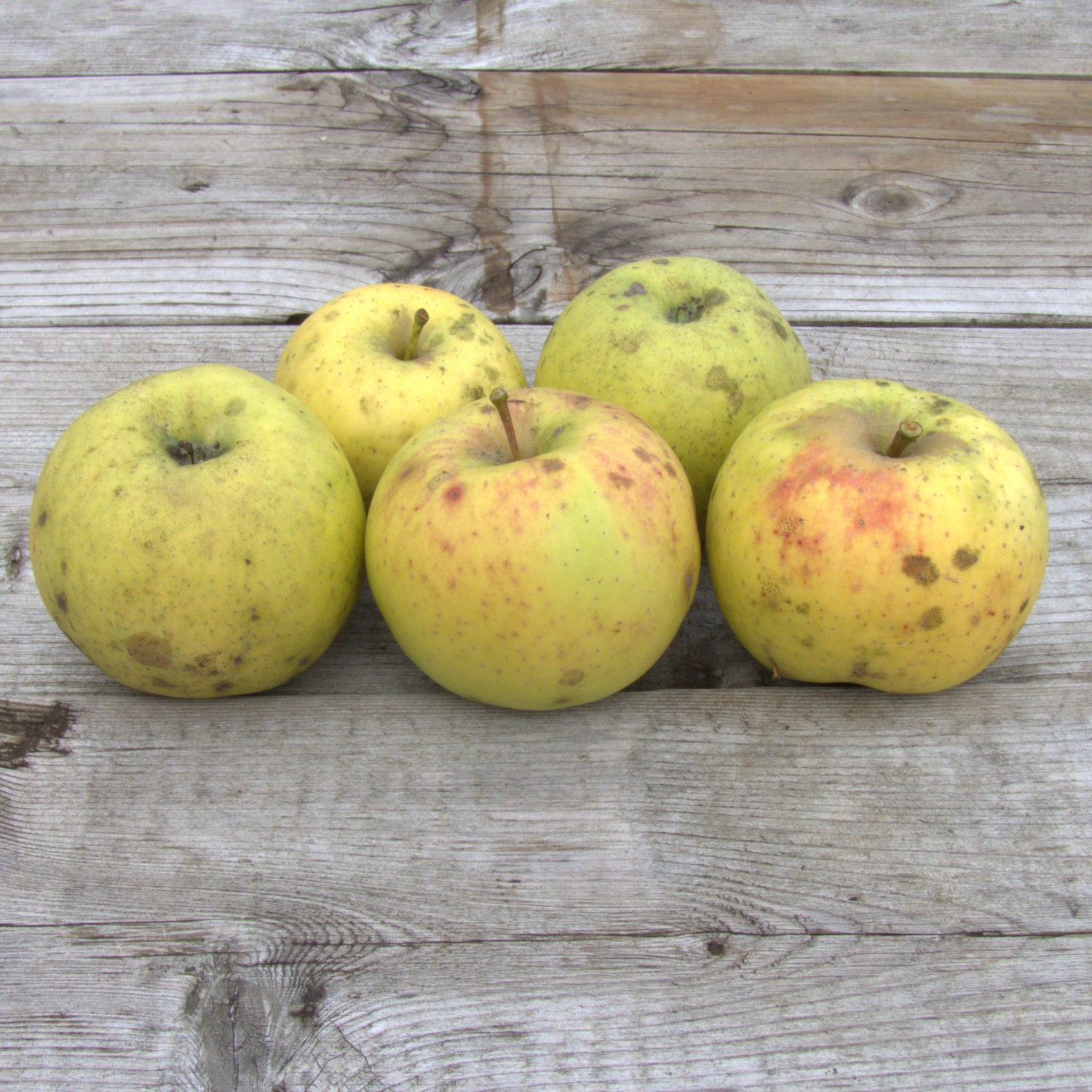
History: Grimes Golden was discovered on the Grimes farm in what is now West Virginia in 1832. Local legend claims that it grew from a seed planted by John Chapman, better known as Johnny Appleseed. After its discovery, it was widely planted up until the 1930s when it became supplanted by more popular varieties such as its (likely) descendant, Golden Delicious.
Why We Grow It: Although less popular now than Golden Delicious, many claim that Grimes Golden has a superior flavour: sweeter and with a hint of spice. The fruit is great for fresh eating and making cider, and it stores quite well. The tree is moderately resistant to fire blight and mildew.

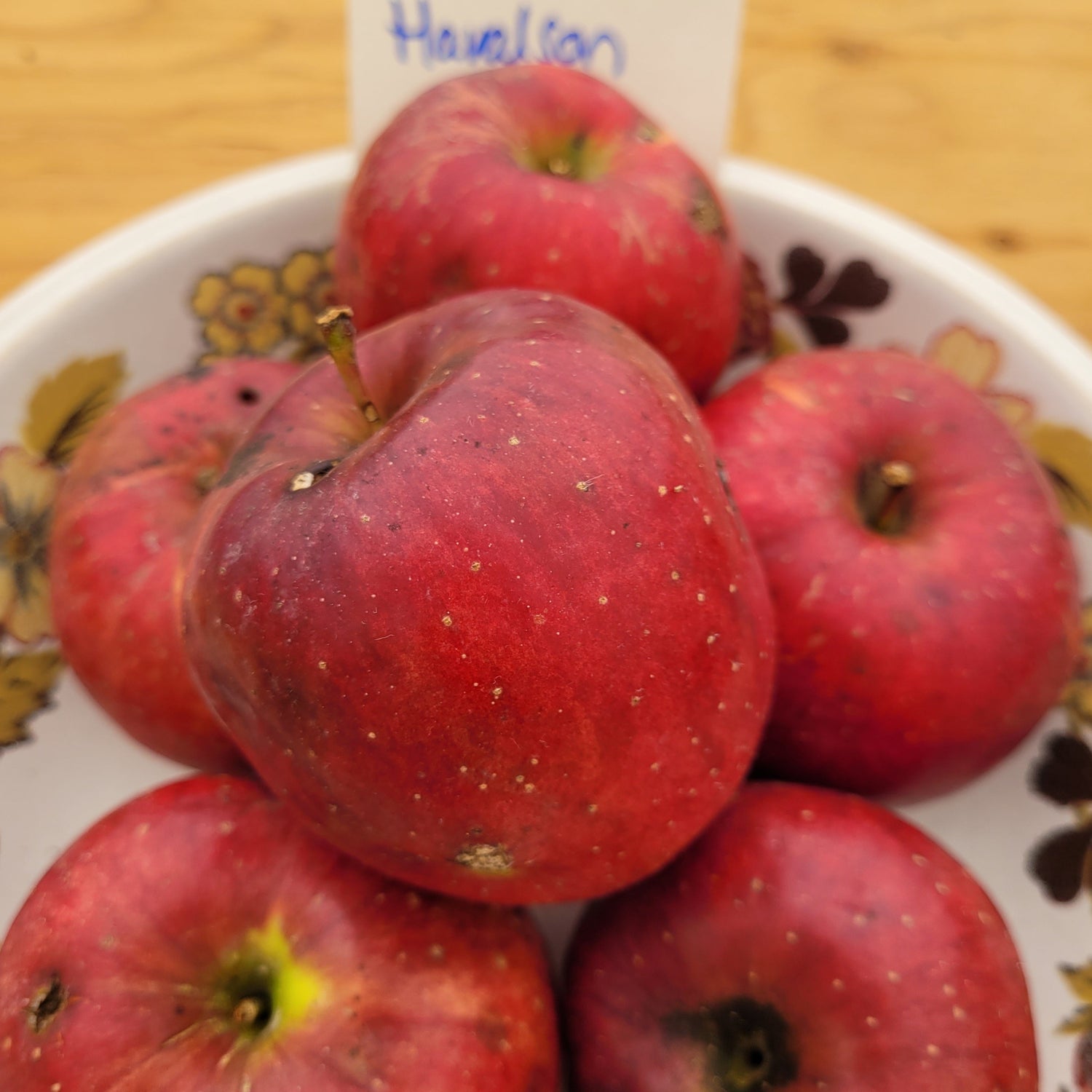
History: Haralson apples were developed at the University of Minnesota in 1922 and named after Charles Haralson who was superintendent of the university's fruit breeding farm. It is one of almost 30 apple varieties the university has developed in its breeding program since it began in 1888.
Why We Grow It: The skin of this variety is striped red with russet dots and the flesh is white, juicy, and of pleasant albeit mild flavour. Haralson boasts excellent cold hardiness and general disease resistance.

History: Hewe's Virginia (aka Hughes' Virginia or Virginia) was discovered in Virginia in 1817 although the first trees discovered were thought to be around 100 years old. It is believed that Hewe's Virginia is a cross between a European apple and a North American crabapple. It became quite popular for its excellence as a cider apple and was favoured by Thomas Jefferson who devoted an entire block of his orchard at Monticello to just Hewe's Virginia. This variety was widely planted in the 18th and 19th centuries but waned as interest in cider-making declined. Luckily, it stuck around with us due to its usage as rootstock and pollinizers for other varieties. With the growing popularity of cider in the US, however, Hewe's Virginia is making a strong comeback as people are once again realizing its potential.
Why We Grow It: This hardy, vigorous tree produces a good number of crabapples that are excellent for cider. It is easy to see why this variety was so popular back in the day and is making a resurgence now, the bittersharp juice is great on its own and in blends. Hewe's Virginia is also great for making jelly!
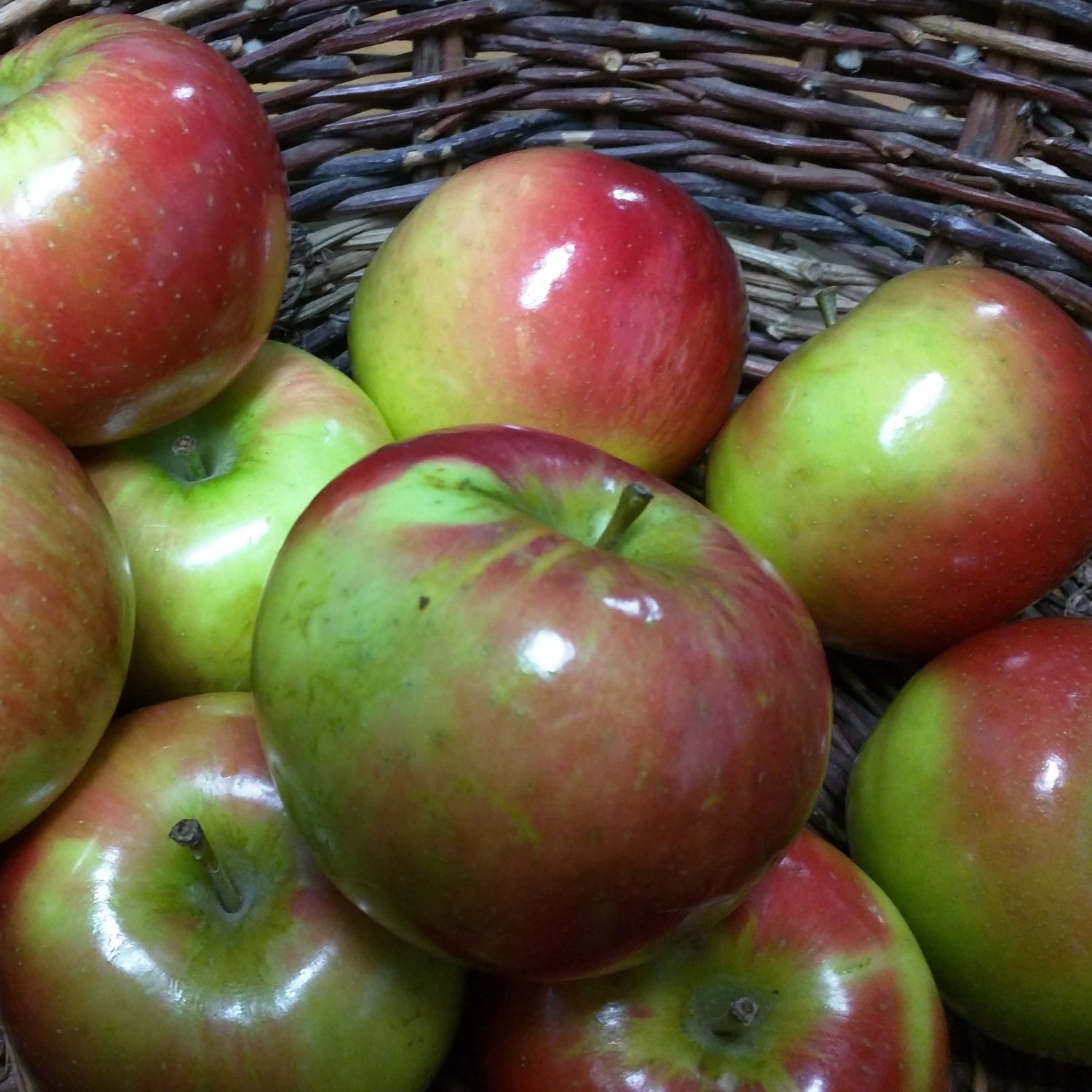
History: Honeycrisp apples were developed by the University of Minnesota in the 1960s and released in 1991. It is one of almost thirty varieties created by the university's breeding program since it began in 1888. The excellent flavour of Honeycrisp has allowed it to become one of the most popular apples in North America and in 2006 it became the state fruit of Minnesota.
Why We Grow It: Honeycrisp is popular for a reason. The apples are large and attractive with good flavour under favourable growing conditions. However, they are not an apple for beginner growers due to issues with some diseases especially in storage, but with diligent care you can produce these crunchy sweet apples in your own backyard/orchard.


History: Honeygold apples were developed by the University of Minnesota and introduced in 1970. It is one of nearly 30 varieties that have been developed by the university's breeding program since it began in 1888. This apple is a cross between Golden Delicious and Haralson, designed to combine the taste of the former with the cold hardiness of the latter. Honeygold is also famous for being mistakenly identified as one of the parents of Honeycrisp, although that has since been rectified.
Why We Grow It: With the sweet taste and appealing look of Golden Delicious but the cold hardiness of Haralson, this is an excellent apple for anyone living in colder hardiness zones. It is great for fresh eating as well as making pies and applesauce. The tree is also somewhat scab resistant.