Ontario Planting Favourites

Ontario Planting Favourites
Handpicked varieties perfectly suited for Ontario's climate (zones 4-6 only).
These hardy fruit trees, berries, and orchard essentials thrive in Ontario's growing conditions and are ready to plant now for best spring establishment. From cold-hardy apples to productive berry bushes, each variety has been selected for reliable performance in Ontario gardens and orchards.
200 products
Sort by:
200 products
200 products

History: Elstar apples were developed in the Netherlands in the 1950s and are a cross between Golden Delicious and Ingrid Marie. This excellent combination has created what is considered one of the best Golden Delicious offspring. Fittingly, it has since become quite popular in continental Europe. Despite being introduced to the US in 1972, it has not attained the same level of popularity in North America.
Why We Grow It: Elstar is a flavourful variety, fine for fresh eating or sauce with its crisp, juicy flesh; very little acidity. The skin is distinctive, sporting a orangey-red marbled appearance.

History: Domaine apples originated in France some time before the 1900s. In the Pays d'Auge region in Normandy, Domaine is one of the 13 cultivars prized for making hard cider (included in that 13 are Fréquin Rouge and Noël des Champs, which we also have available). This apple was brought to the United States in 1949 but remains relatively unknown outside of its country of origin.
Why We Grow It: This bittersweet cider apple is high in tannins, low in acidity, and contains a moderate amount of sugar. Although not great for single-variety ciders, it can be an excellent addition when used in cider blends.
History: Cortland apples were first bred in 1898 by Cornell University in New York and introduced in 1915. Since then, they have become one of the top fifteen apples in the US and Canada, although the majority are still grown relatively close to the university where they originated. Cortland Nova Red is a redder sport of the original Cortland apple, making a more attractive fruit for those who value red apples.
Why We Grow It: Cortland is a sweet apple with crisp, juicy flesh. It is great for applesauce or drying as the flesh is slow to brown. The fruit keeps until Christmas under home storage conditions although the crispness and flavour does fade over time. This variety crops well annually and makes a good pollinator for others. The redder skin on this sport is quite attractive!

History: Chisel Jersey is believed to have originated in Martock, England in the 1800s. It spread little outside the immediate area for about a century but during the mid-1900s this apple became quite popular in commercial cider orchards. It has, however, lost some of that renown today despite being an excellent cider apple.
Why We Grow It: With small, green fruit featuring a striped red flush, this bittersweet cider apple is highly recommended in England as well as in Canada. It is high in tannins and sugars but low in malic acid and makes a great cider apple.
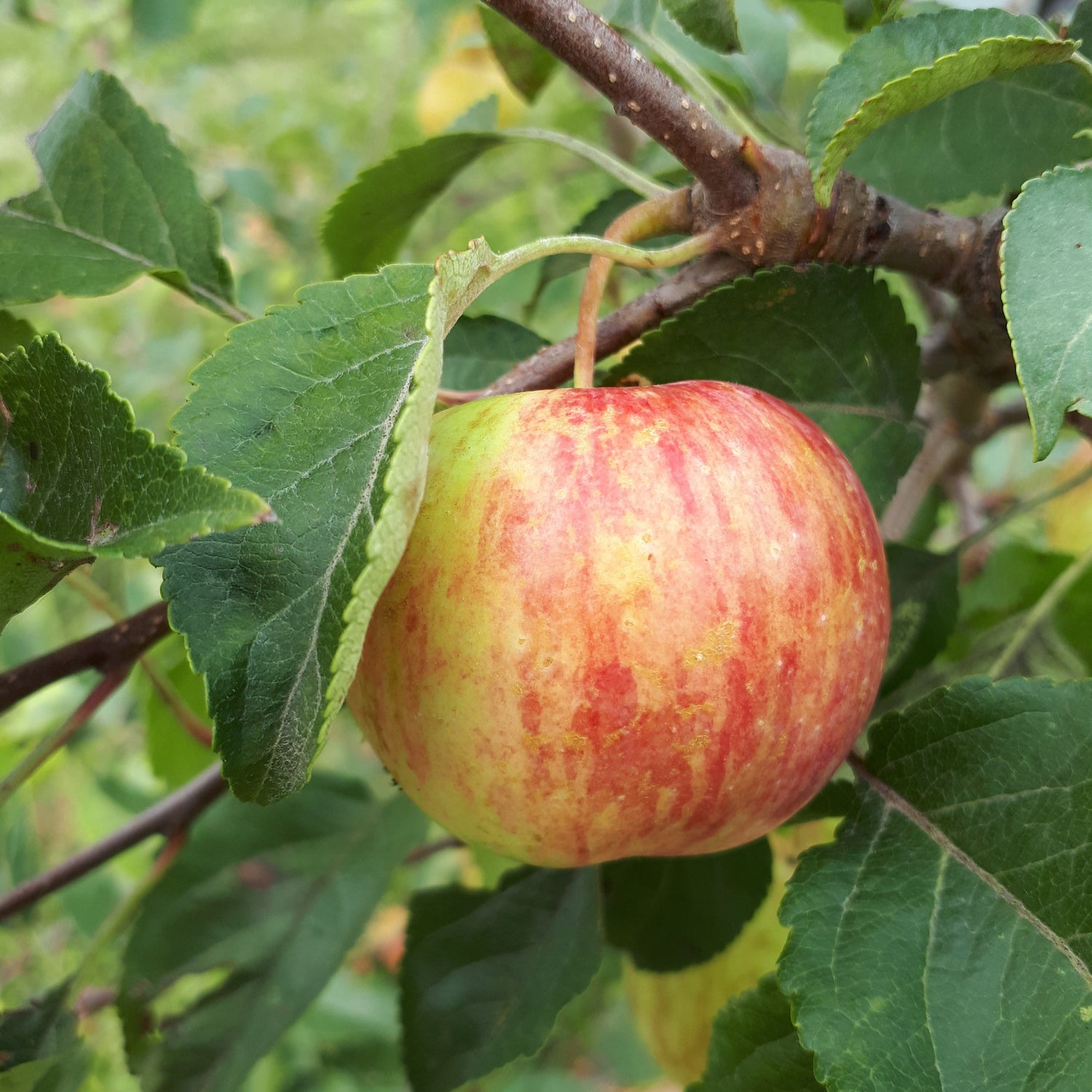
2026/2027 Staff Favourite
Chestnut is Steph's favourite this year! When reflecting on it, Steph said, “Every year I seem to discover a new (old) apple to marvel over, and most recently, Chestnut has stolen my heart. An unassuming little fruit with a unique netting of russet over its cheery yellow-blushing-red skin. Bite in and enjoy the classic nutty, sweet-tart russet taste with crunchy dense flesh at least a month before most other russets are ripe. In sum, an excellent early season russet worthy of any orchard.”
All Staff Favourites are 20% off. The Staff Favourite Discount cannot be combined with other quantity discounts.
History: Chestnut crabapples were bred at the University of Minnesota in 1949. They are one of about thirty varieties that have been produced by the university's breeding program since it started in 1888.
Why We Grow It: The rosy-red Chestnut crabapple produces fruit that is unusually large for a crabapple with a nutty taste. Unlike other crabapples, it is sweet enough to eat fresh and can be used in cider while still being good for traditional crabapple recipes such as making jellies.

History: This vintage quality cider apple is believed to have originated near Martock in England. This apple is so old it's not entirely certain when exactly it was first discovered, with estimates ranging from the 11th to 14th century.
Why We Grow It: This lesser-known apple is bitter with high acid, featuring a fruity flavour with a bitter aftertaste that is great when made into cider on its own or when mixed into a cider blend.


History: This apple was developed in New York in 1974. It has never achieved major popularity but remains a curiosity due to the deep red colour of its skin which causes the flesh inside to become stained pink.
Why We Grow It: Along with its visual appeal, this apple boasts a sweet, sub-acidic flavour that makes it suitable for both fresh eating and making cider. Although these apples don't store well, the fruit hangs onto the tree for three weeks which helps to keep it available a little longer.
Picture of Burgundy apples on the tree courtesy of Shannon McInnis


History: Bulmer's Norman was imported from Normandy, France to England in the early 1900s by the cider making company H.P. Bulmer. This variety didn't even have a name when it arrived but quickly grew in popularity for use in making cider. This apple has since fallen out of the limelight and is primarily used for grafting other varieties onto its sturdy trunk.
Why We Grow It: Although less popular these days, this variety boasts vigorous growth, decent disease resistance, and a surprising tolerance for cold. This conical, green apple produces a bittersweet juice and is high in tannins.

History: Brown's Apple was discovered in Devon, UK, in the early 1900s and is considered a traditional English cider apple. It remains quite popular in the area.
Why We Grow It: This traditional variety boasts cold-hardiness and a resistance to scab. It is great for making cider thanks to being simultaneously high in both acid and sugar, an uncommon feature in most apples. Brown's Apple presses to a fragrant, vintage quality juice.

History: Brown Snout was discovered on a farm in the UK in the mid-1800s. Its name comes from the brown russet around its calyx. H.P. Bulmer, a cider-making company, further propagated and spread this apple in the UK where it is still used today.
Why We Grow It: This medium bittersweet cider apple has small, uniquely coloured fruit that are sweet, slightly astringent, medium-tannin, and have low acidity.

History: A traditional French cider apple grown in Normandy, it is one of the varieties approved by the Appellation d'Origine Contrôlée for use in cider production in the region.
Why We Grow It: This apple produces an aromatic, bittersweet juice that can be used in cider and apple brandy. Although it only bears fruit every other year, it produces a considerable crop in a single season. It is also a great pollinator for other varieties due to its long blooming time.
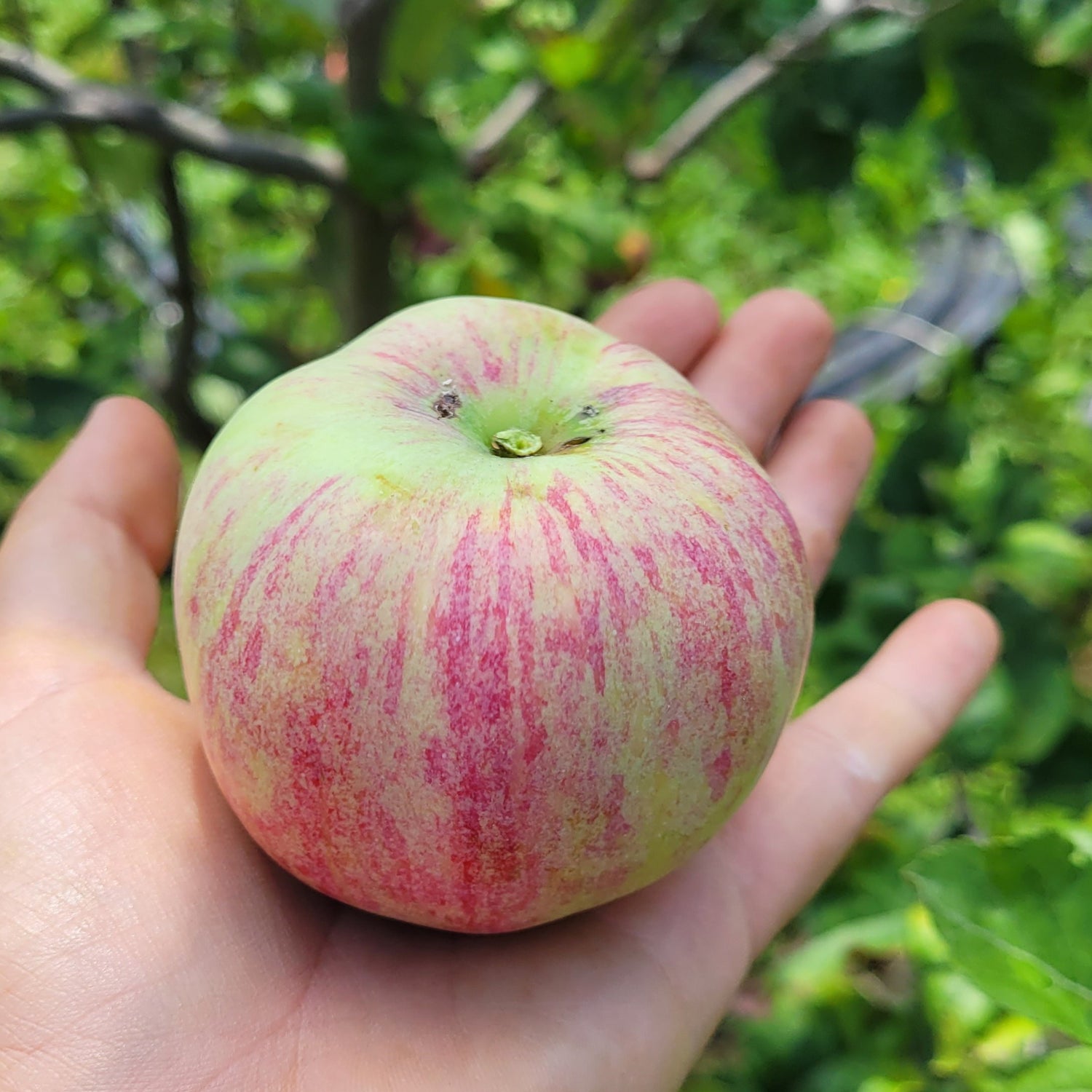
History: This cold-hardy apple was developed in the prairies and is for growing in colder, northern areas.
Why We Grow It: This unique apple produces a yellow fruit with red stripes. It is a rather uncommon variety and is great for sauce. It has begun producing reliably in our test orchard the last few years, and always has a bountiful crop.
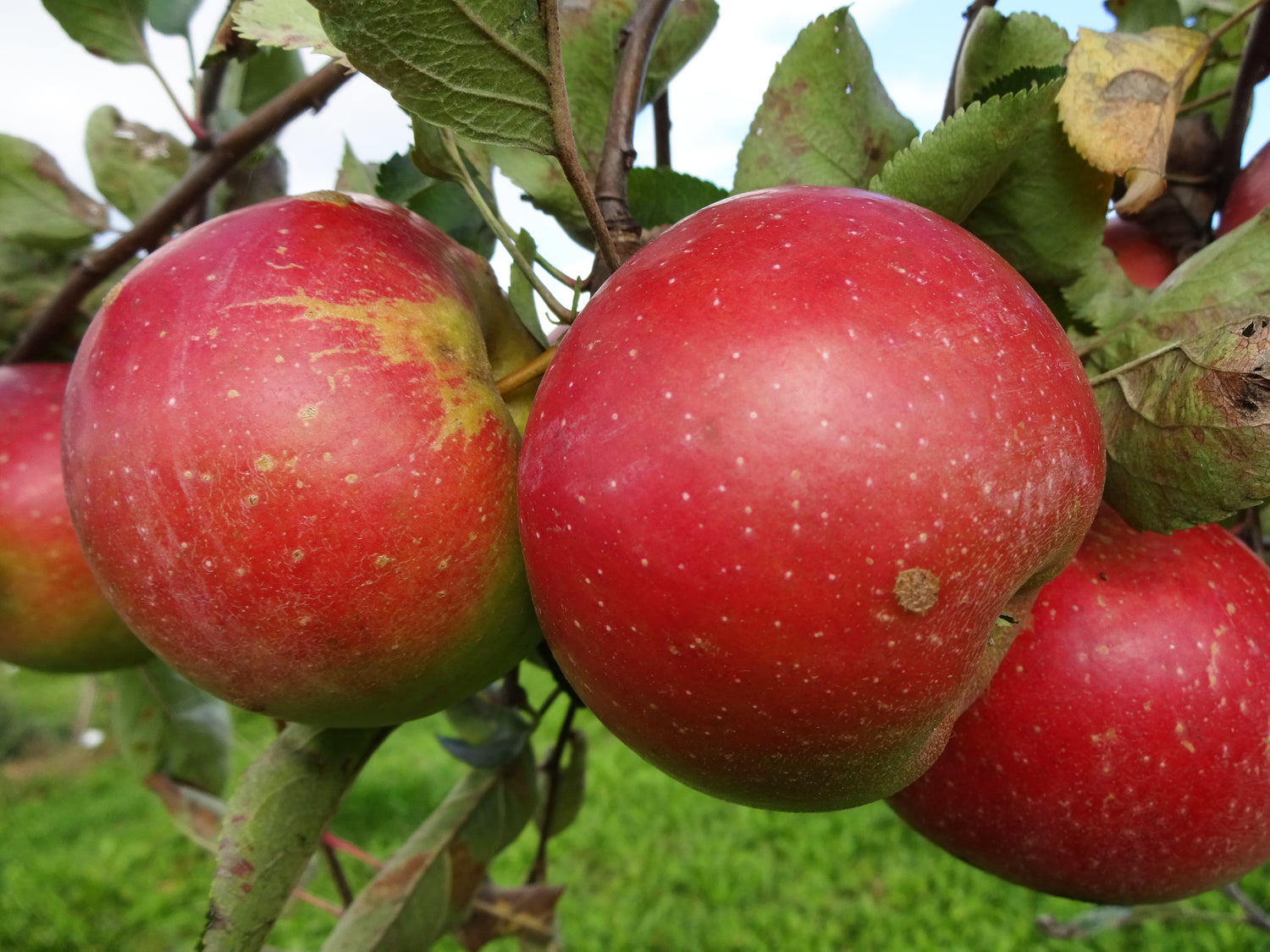
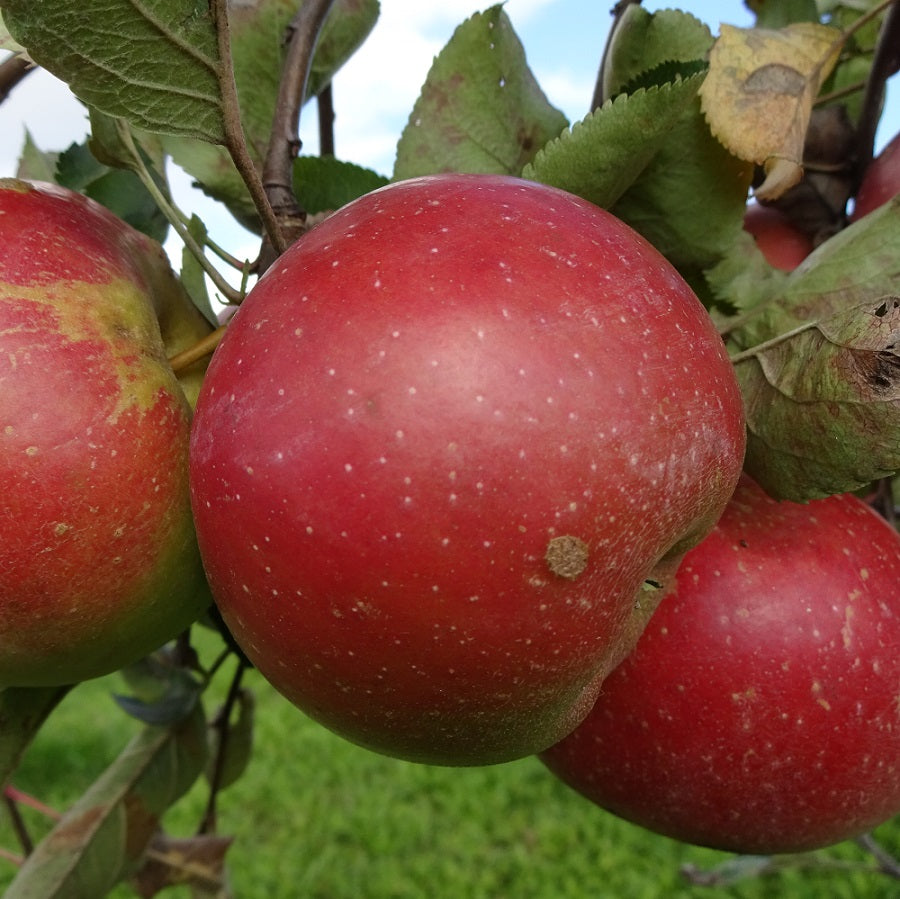
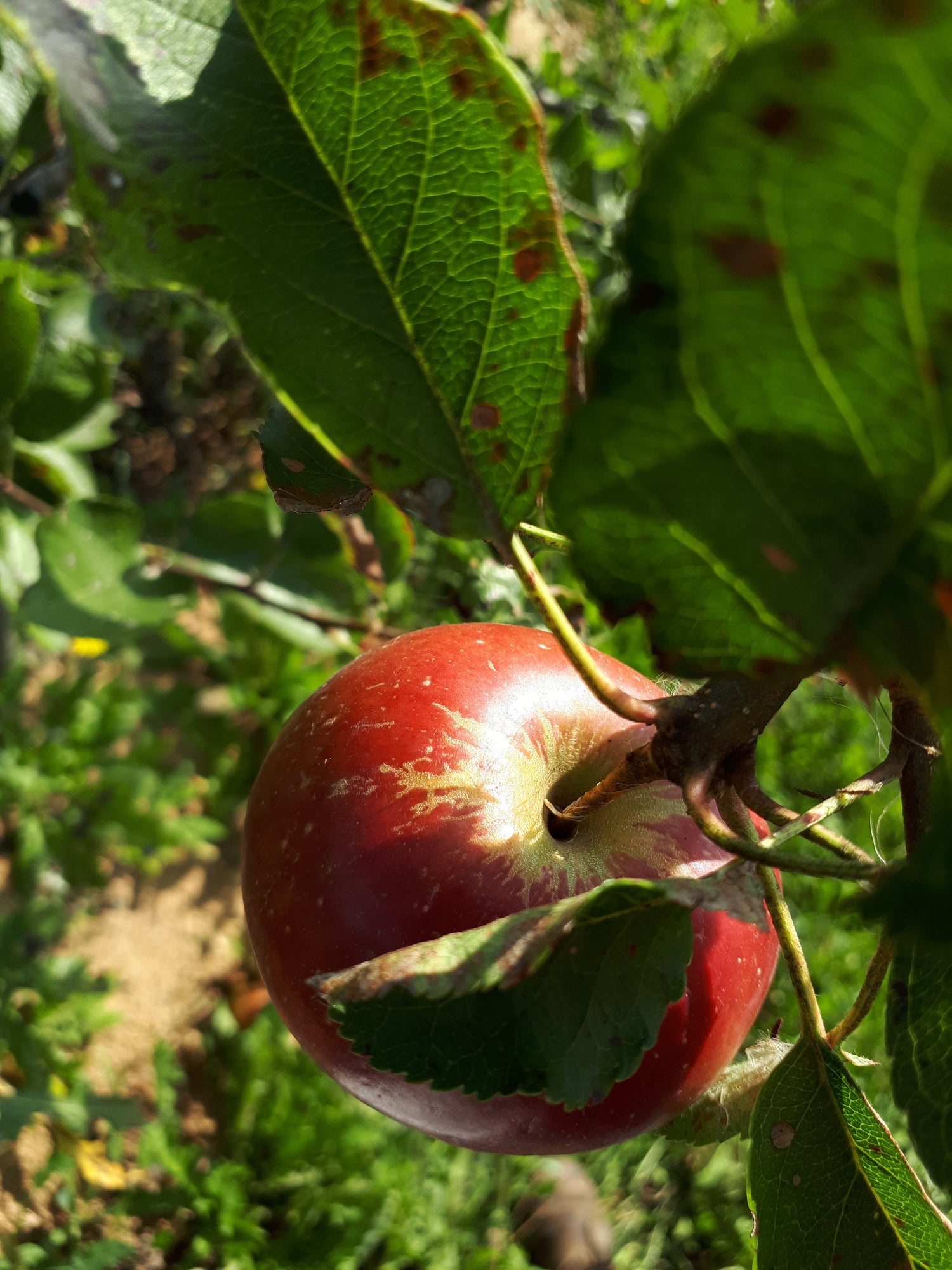
History: This classic American cooking apple was discovered by chance around 1740 in Massachusetts. It was eventually brought to the attention of a Col. Baldwin, after whom the variety was later named, who helped to spread it further. By 1850 this was one of the most commonly grown apples in the US, although its popularity began to decline by the 1900s, exacerbated by a terrible winter in 1934 that wiped out a significant number of trees. Despite this, Baldwin is making a bit of a comeback and a monument to this apple still stands in Wilmington, Massachusetts, around where it was discovered.
Why We Grow It: Baldwin apples produce large, greenish-yellow and maroon fruit with firm, sweet flesh that maintains its shape and crispness when cooked. The fruit produced in our test orchard has been attractive and blemish-free.
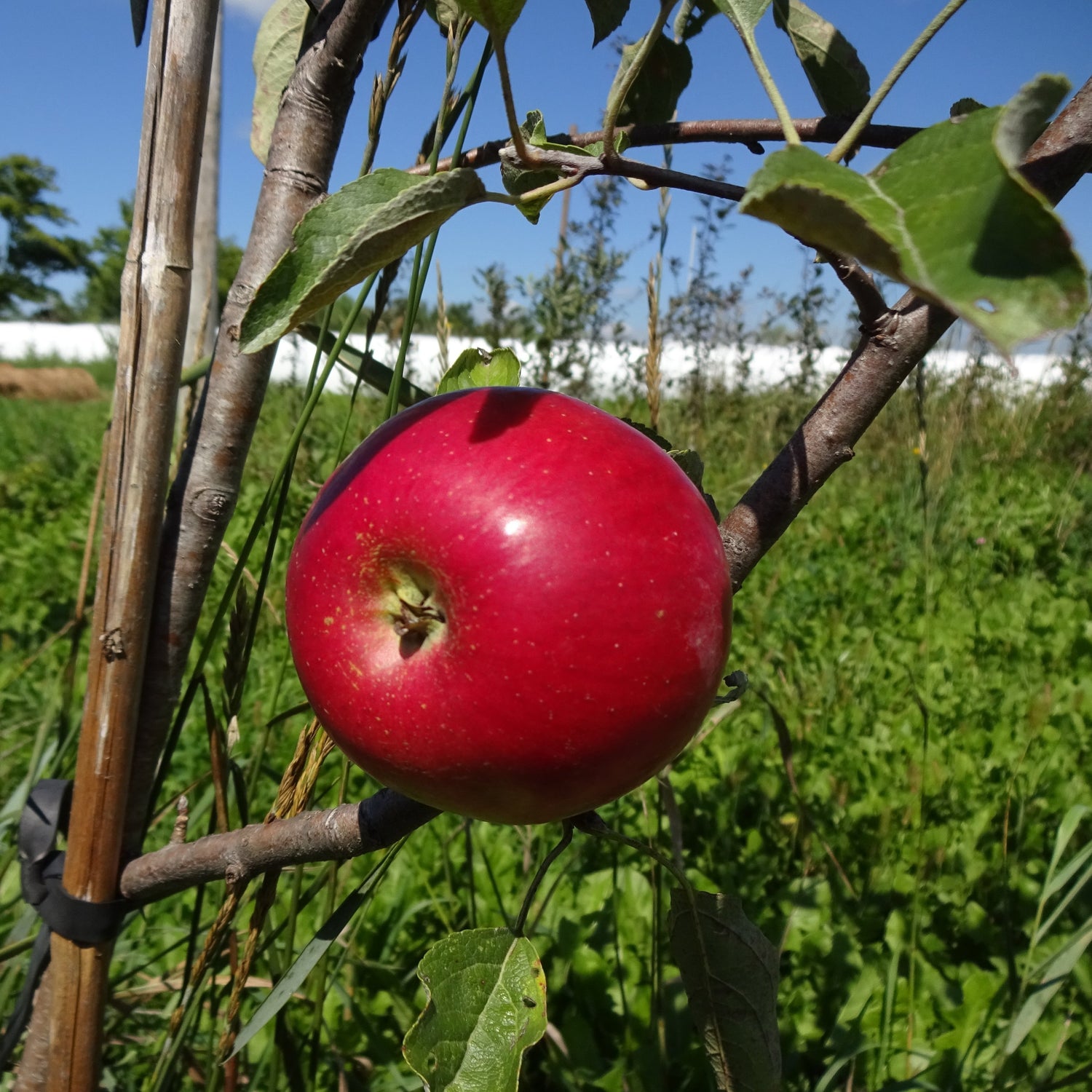
Why We Grow It: This crisp, sweet apple is great for fresh eating and has bright red skin. It tends to begin bearing at a young age and is relatively diseases resistant.
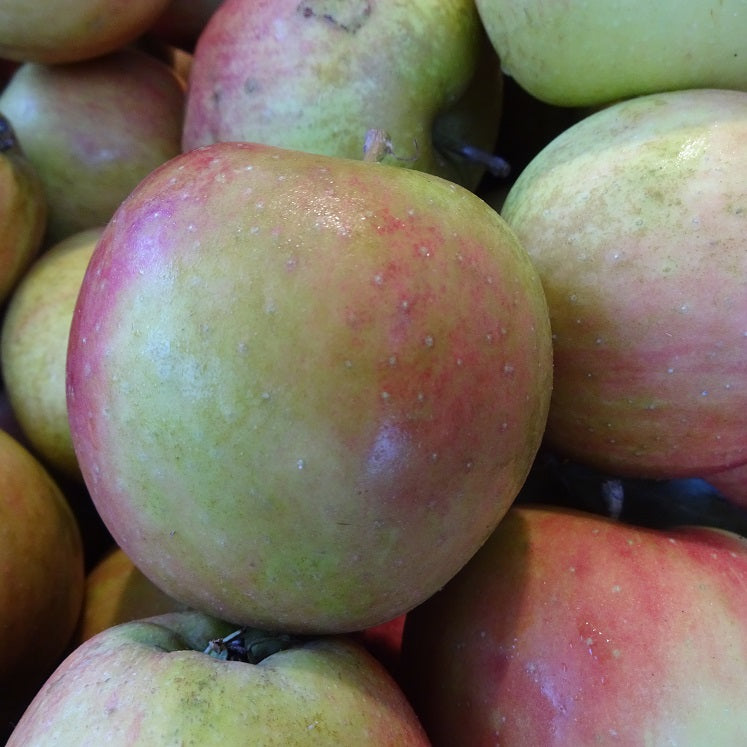
History: This apple was discovered as a chance seedling in 1856 in Boskoop, Netherlands where it has remained popular ever since.
Why We Grow It: Here's one for those of us who love some sharpness in an apple. With its sharp taste and large, greenish-red fruit, this apple is still popular at farmer's markets throughout Europe for both fresh eating and cooking (keeps its shape). It has value as a sharp in hard cider blends as well.


History: Once one of the most popular commercial apples in the United States, Ben Davis apple trees were planted across the continent following its discovery around 1800. Due to its firm fruit and excellent keeping qualities, this apple was extremely easy to transport over longer distances which led to its popularity. Once storage and transportation improved, this apple was slowly replaced with better tasting varieties and it is now a relatively rare find. It's also a parent to Cortland.
Why We Grow It: The mellow, sub-acidic, mildly aromatic red fruit is not quite as flavourful as some apples but it stores exceptionally well, lasting into spring. Flavour improves in storage, like many heritage apples. The trees are reliable and heavy croppers, earning them the nickname of 'mortgage-lifters' when they were grown commercially.

Volcanophos Rock Dust – Mineral-Rich Soil Amendment for Planting Fruit Trees
We like this product because:
Volcanophos rock dust adds phosphorus and trace minerals to soil—ideal for planting fruit trees, boosting root growth, and improving long-term fertility.
Key Benefits:
-
Natural phosphorus source for root growth and fruiting
-
Rich in trace minerals and rare earth elements
-
Enhances soil biology and nutrient availability
-
Ideal for planting fruit trees and orchard establishment
-
Micronized for faster breakdown and improved efficiency
-
Approved for organic use
Volcanophos is a carbonatite/phosphate igneous rock that comes from the Kapuskasing area in Ontario. The unique thing about this mineral is that it is the only igneous rock available in North America that contains apatite, which is a phosphorus source. In addition to this, the igneous base to this deposit means that it contains a profuse range of trace minerals and rare earth elements, which sedimentary rocks generally lack.
This material is micronized. This makes for a more costly product, as the material, which initially comes in a sand like texture, is then ground down into a fine powder. However, this greatly increases surface area of the rock dust, which in turn allows the biology in the soil to more readily access to the material. This results in it being broken down more rapidly.
As with all rock dusts, it is best mixed with a compost or peat carbon source in order to facilitate the breakdown into bio available forms. Therefore this is an excellent material to add to your compost piles at a rate of approx. 10% by volume.
This product is approved for organic use.
Application
VolcanoPhos is typically applied at a rate of 300 to 500 lbs per acre each year until optimal phosphorus levels are reached. In a soil mix, use at a rate of approx 1/2 cup per cubic foot of mix.
A certified agronomist should be consulted with regards to Volcanophos and its application rates specific to your needs.
Equivalency Measurement - 6 cups/2kg

CropSil® is a silicon-based plant nutrient in a Monosilicic Acid form that acts as a bioregulator in the dynamics of plant cell growth, metabolism, and enzyme production. Extensive scientific research and field trials have proven Monosilicic Acid strengthens plants cell walls, increases vigor and improves resistance to stress, resulting in better rooting and crop quality. It interacts positively with other nutrients like macro and micro-nutrients and trace elements enhancing their agronomic performance and efficiency. It also enhances plant processes such as hydration and chlorophyl production.
CropSil as a plant process enhancer gives your plant more of what it’s looking for!
CropSil® works as a transport agent bringing nutrients from the root zone to the rest of the plant.
CropSil® also increases uptake of available CO2 and H2O enhancing the metabolism of plant nutrients.
- Optimizes input performance such as fertilizers and biostimulants
- Increases bio-mass of plant’s branch, stem and roots
- Improved ripening, higher brix and nutritional value with a longer shelf-life
- 100% biologically available and highly beneficial to all plants
- Easy to use as a foliar spray or irrigation additive
- Can be mixed with chemical, biostimulants, fertilizers and micro-nutrients
- Suitable for seedlings with starter, sapling transplanting treatments
CropSil® is stabilized silicic acid used to supercharge your spray medium. By adding a small amount of CropSil® to your water, you can improve the performance of watering and foliar spraying your crops. CropSil® also optimizes all other inputs in a tank mix allowing for a reduction in the usage of chemical inputs. With a super charged solution, plants build stronger cell walls, larger more erect leaves with increased chlorophyll production and increased root mass that will optimize the improved uptake of nutrients, leading to more natural vigor and an increased resistance to stress. Therefore, the need for copious amounts of fertility and protective chemical inputs that also damage and toxify our soils is greatly reduced. Thus, enabling plants and crops to grow in a more natural way to produce healthier, productive and sustainable outcomes.
Bio-available mono-silicic acid Si(OH)4 the only form of silicon (Si) utilized by plants
Silicon is the second most abundant element on earth and can be found in all soil. The belief is that plants are unable to use silicon in its most common form and are still able to grow to maturity without the use of silicon (Si). Silicon is not considered to be essential to a plant’s growth and is not recognized as a primary nutrient for plants like NPK. However, the truth is that silicon does play very important roles in the growth cycle of all plants (vigor, production, stress resistance, etc.) as is being researched and discovered by academia. Studies have shown that silicon has a positive influence on uptake and vascular transport of micro-nutrients as well as improving the mechanical strength (structure) of the plant. Helping plants to resist stress and improve growth. Natural weathering process turns a very small portion of silicon into plant available silicon (PAS), known as Monosilicic Acid (MSA) or Orthosilicic Acid (OSA) the only form of silicon utilized by plants. However, silicic acid is very unstable and in a soil environment rapidly binds to itself (polymerizes), quickly becoming once again unavailable to plants and leading to silicon deficiency and plant stress. What research has shown is when stablized into a mono-silicic acid form and introduced to plants it can have very profound affects on many plant processes. In particular cell growth, nutrient transportation, hydration and chlorophyl production.

Wool Pellets Soil Conditioner - Bethel Farm
Wool pellets are a natural, eco-friendly soil conditioner that improves moisture retention, promotes healthy plant growth, and reduces the need for chemical fertilizers. They help repel pests, regulate temperature, and break down over time to enhance soil health—making them a sustainable choice for any garden or house plant.
Key Benefits:
-
- Improves moisture retention around roots
- Reduces transplant shock
- Encourages deeper, stronger root systems
- Provides slow-release nitrogen over time
- Fully natural, biodegradable, and soil-building
To learn more about Bethel Farm (Julie raises happy sheep and produces quality lamb): visit Bethel Farm website.
To learn more about how to use pellets: visit Gezellige Farm website.

Gypsum is a common hydrated calcium sulfate mineral. One of its benefits comes from its ability to break up heavy, compacted clay soils, as it can effectively change the soil structure of soils that have been compacted due to flooding, over cropping and heavy traffic. It has the ability to penetrate the millions of fine clay particles in heavy or hardpan type soils and loosen the soil structure. This process then creates air and moisture spaces that eventually loosen and break-up the soil structure. The only problem is that this doesn't happen overnight, it takes yearly applications, over about a three-year period to get the job done. For most home gardeners however, reducing compaction and improving aeration is better accomplished by the application of an organic mulch in nearly any landscape.
Gypsum is neutral and does not change the soil pH, thus making it useful for adding calcium without moving your ph of the soil. However it is also valuable for reducing excess sodium in soils. Excess sodium can interfere with nutrient as well as water uptake in the plants.
Lime and gypsum are not equal. Lime is calcium carbonate, while gypsum is calcium sulfate. Gypsum will add calcium to your soil without moving the ph while lime will move your ph upwards. As gypsum is more soluble than lime, it's calcium will become available more quickly to your plants. Careful however, as excess calcium levels in your soil can tie up the magnesium uptake, even when the magnesium levels are high.
Application
In calcium deficient soils, use at a rate of 1 pound for 10 sq ft of soil surface 1-3 times a year.
This is a very high grade gypsum that we bring in because it is a consistent fine grind, and consequently excellent for drip irrigation.
Equivalency Measurement - 7 cups/2kg
Owen adds "Hey so I got some of your gypsum in and just did some testing. at 1 tbsp per 5 gal that works out to about 3 grams per Gal. The EC was about 1.0. for flush this ratio would work fine I'd even go as low as 2 g per Gal.
For just an addition of calcium into your feed I'd say even 1 gram per gallon. I'm going to come back to you around end of May and see how my flush does.
This is just a reference for anyone coming to you guys using rockwool and possibly needed some suggestions this may help them out."