Ontario Planting Favourites

Ontario Planting Favourites
Handpicked varieties perfectly suited for Ontario's climate (zones 4-6 only).
These hardy fruit trees, berries, and orchard essentials thrive in Ontario's growing conditions and are ready to plant now for best spring establishment. From cold-hardy apples to productive berry bushes, each variety has been selected for reliable performance in Ontario gardens and orchards.
Events
13
Aug
26
Sep
09
Oct
Oct 09, 2026 @ 16:00 -
Oct 10, 2026 @ 12:00
Sort by:
200 products
200 products

History: Westfield Seek-No-Further was discovered in Westfield, Massachusets in the 1700s. Its flavour is reminiscent of popular fresh eating apples in England which is probably why this apple was so popular among English colonizers. It was the most popular fresh eating apple in New England during the 1800s.
Why We Grow It: Historically a favourite eating apple, Westfield-Seek-No-Further's sharp, nutty flavour is as unique as its quaint name! It now has potential as an addition to cider blends.
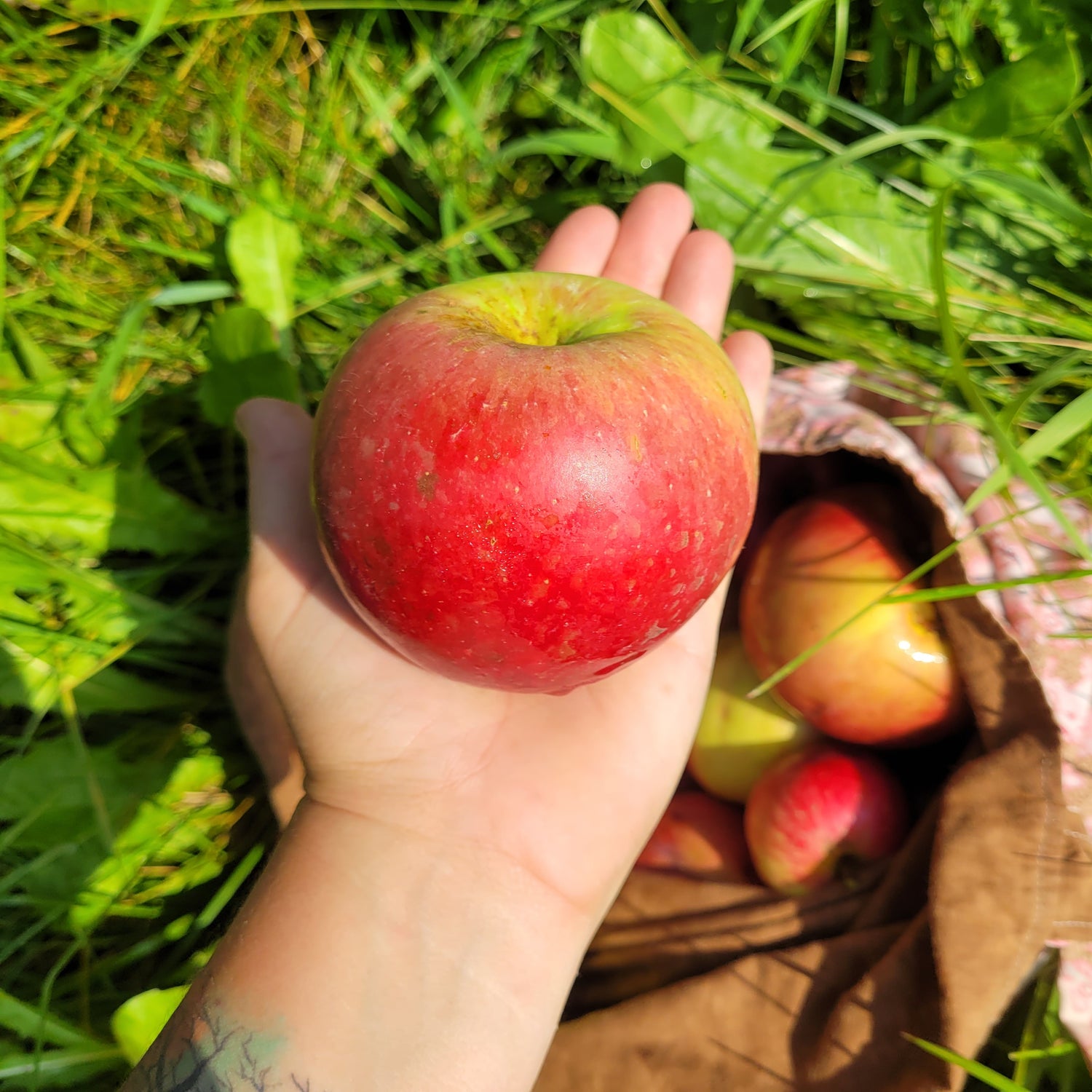
History: Wealthy apples were created by horticulturalist Peter Gideon after spending years trying to breed an apple variety that could survive Minnesota's harsh winters. With the very last of his money, he purchased seeds and scions in 1868 in one final attempt and was able to produce the Wealthy apple which he named after his wife, Wealthy Gideon. He gave scions away freely and Wealthy became one of the top five apples grown in the US.
Why We Grow It: A medium to large sized apple, Wealthy makes splendid applesauce, but is also very good for fresh eating with a balanced sweet-tart crunch. The tree is scab resistant and cold hardy, makes an excellent pollinator for other apples, and is well-suited for organic orchards.
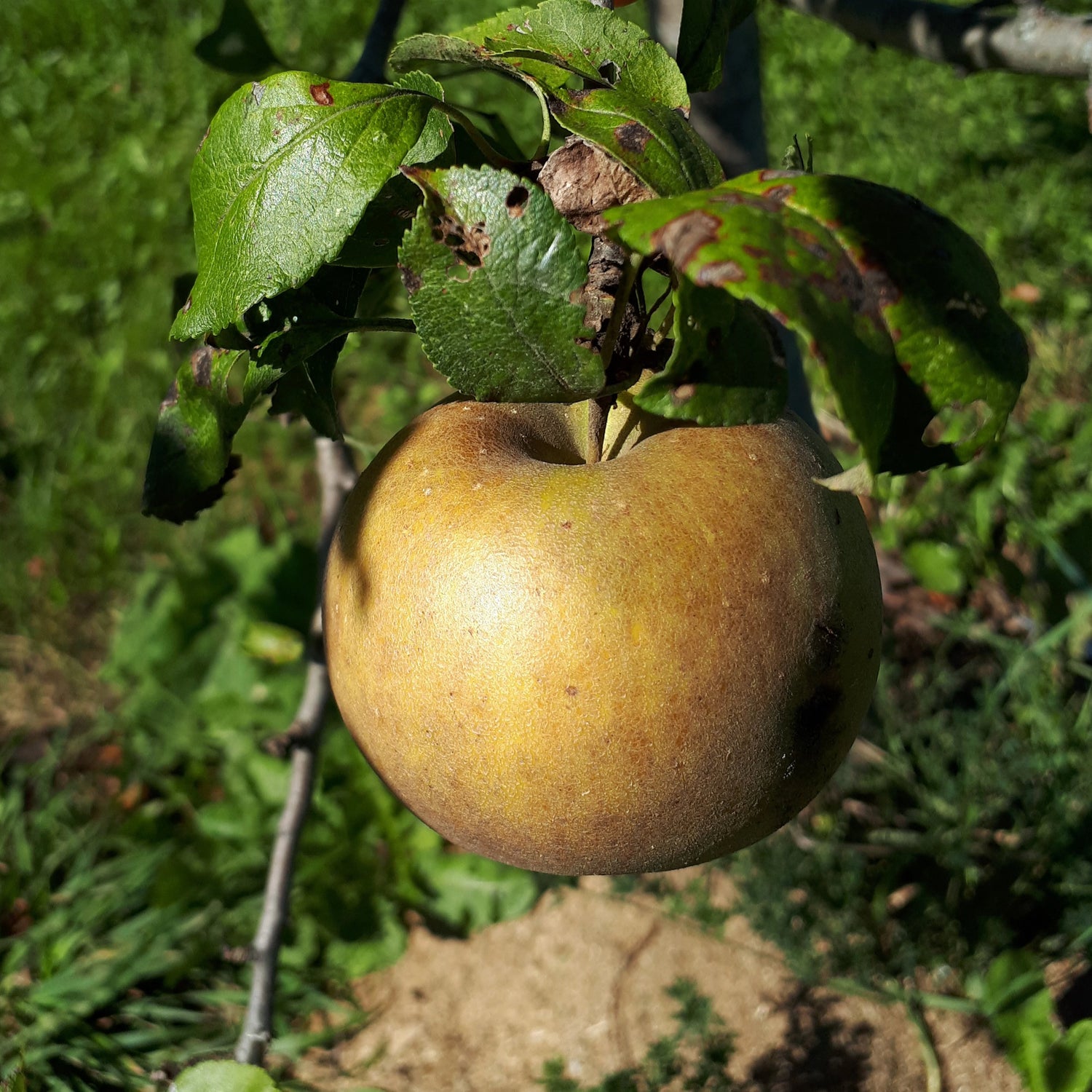


History: Egremont Russet first emerged in Britain in the early 1870s and has remained popular ever since. Even today, it is the third most common apple grown commercially in England.
Why We Grow It: Although the russet, a thick rough skin, coating this apple can be an acquired taste, there is a reason this apple has remained so popular. The fruit itself is an attractive gold dotted with yellow and it has an excellent sweet, nutty flavour. They are delicious fresh, when used for cooking, and in ciders. The trees are known for producing good, regular crops.

History: Wagener apples come from a seed that was planted by George Wheeler in the Finger Lakes area of New York in 1791. In 1796, Abraham Wagener purchased Wheeler's property and planted the seedling on his own property in Penn Yan village where the tree was known for producing attractive, tasty fruit in abundance every year. The variety was named after Wagener and became popular for its excellent storage qualities.
Why We Grow It: Wagener is ideal for the self-sufficient homesteader who values a late keeper, lasting until April in an ordinary cold cellar. When first picked they have a sharp, acidic taste and are great for cooking. In storage, they mellow to an excellent sweet, crisp apple that is perfect for fresh eating.

History: Vista Bella was created at Rutgers University in New Jersey in the 1950s and released in 1974. Although its poor keeping ability prevents it from being a commercial success, this early ripening variety is still a nice way to herald in the apple harvest season every year.
Why We Grow It: Vista Bella is the first red apple of the season. The flavour and texture are of better quality than other early apples, making Vista Bella an excellent choice for early farmer’s market sales and roadside stands. The flesh is crisp and juicy, although it softens quickly and, like other early apples, does not keep long.
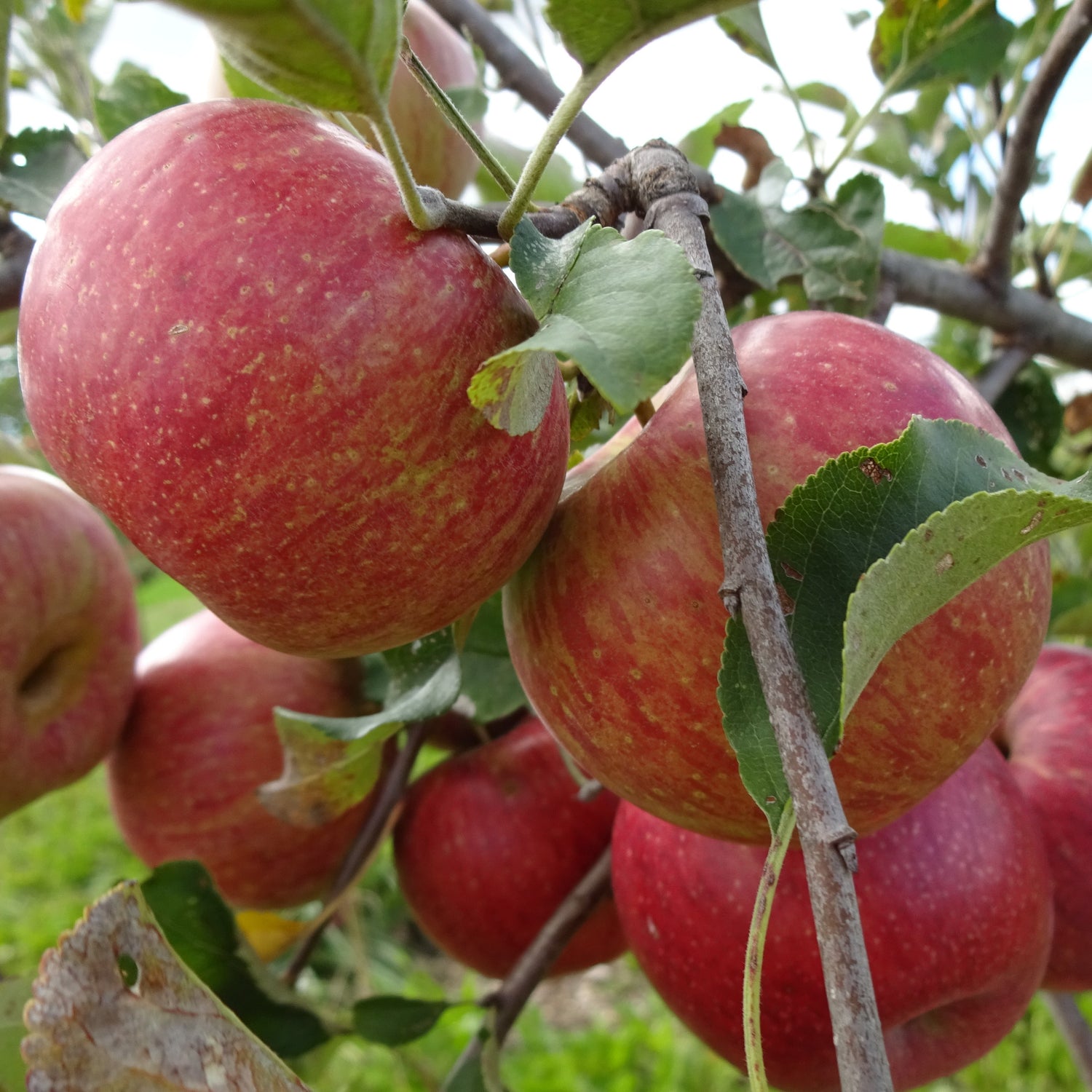
History: Tsugaru is another apple that was created at the Aomori Apple Experiment Station in Japan and released in 1975. It was likely named after Tsugaru, a nearby city, or the Tsugaru samurai clan that controlled the area during the Edo period. This variety is quite popular in Japan and represents the sweetness that is coveted among Japanese apple fans.
Why We Grow It: If you love sweet apples, you need to give Tsugaru a try. It has a very mild flavour with virtually no acid. It is performing very well in our test orchard, providing an abundance of nice clean fruit. It is one of Steph's favourites.

History: Tremlett's Geneva Bitter (aka Geneva Tremlett's Bitter) come from a tree that was believed to be Tremlett's Bitter, an English cider variety. It was imported to Geneva, New York from England in the 1960s but at some point there was a mix-up and the mistake was only uncovered after many American growers had received scions from the erroneous tree.
Why We Grow It: Although this isn't the traditional bittersweet cider apple popular in England, Tremlett's Geneva Bitter still produces a good quality bittershap cider. Some say it is even better than the original!


History: Little is known about the origin of this heritage apple, but Tolman Sweet has been highly valued since its discovery. It is uncertain whether it came from Massachusetts or New York in the 18th or 19th century but it was first recorded in 1822. This hardy tree was used as a source of rootstock at one time.
Why We Grow It: Tolman Sweet is a great all-purpose apple. The fruit are medium-sized with yellow skin, and have a distinctly sweet, dry flesh. They are nice for fresh eating but can also be used in baking, drying, and pickling. Their unusually low acid content helps to reduce acidity in both sweet and hard cider.

History: Sweet Coppin originated in Devon, England, in the early 1700s. It was grow on a relatively large scale in the 1800s before its popularity waned, although it has since made a comeback and is grown around the world.
Why We Grow It: While this old English cider apple has a very good but mild flavour that is suitable for fresh eating, it is most well known for its cider qualities. It produces a full sweet cider of vintage quality

History: Strawberry Pippin is another variety whose history we know little about. All we know is that it likely originated in England where it was first recorded in 1874. The 'pippin' in its name indicates that it was grown from seed by chance.
Why We Grow It: While we may not know much about its past, we do know why we are happy to grow it! Strawberry Pippin has an attractive red striped fruit which is quite firm and sweet. Its excellent flavour is best enjoyed picked fresh right off the tree. In our experience, Strawberry Pippin does well with minimal care, and is an excellent choice for the backyard.

History: This English cider apple originated in and was named after Rodney Stoke, a small village in Somerset, England. It was discovered around 1920 and has been popular in England since.
Why We Grow It: Stoke Red produces a great bittersharp juice that is well-regarded for cider making. As an added bonus, it is a heavy cropper and resistant to scab.

History: Not to be confused with Stembridge Cluster, Stembridge Jersey was introduced in Somerset, England, in the 1950s. To this day it remains a popular variety in UK cider orchards.
Why We Grow It: The good-quality bittersweet juice produced by this variety explains why it is still popular in the UK. Although Stembridge Jersey suffers from a tendency to only produce fruit every other year, it does produce good crops in those alternate years and is relatively disease resistant.


FELCO 910+ Holster - Leather w. Belt Loop & Clip
This genuine leather holster keeps your FELCO pruning shears and the FELCO 903 sharpener (both sold separately), close at hand to cover every eventuality of your pruning day.
As you maintain your shears in premium condition, you can be confident of keeping them that way once stored in this rugged holster.
Combined with an easy belt attachment by loop or clip, this rugged design only improves with age as it moulds to your tool while keeping it protected and ready for action. The convenience of your FELCO 910+ holster is that it keeps your FELCO pruning shears and sharpening stone right at you side ensuring your shears are protected and their cutting edge is easily maintained.
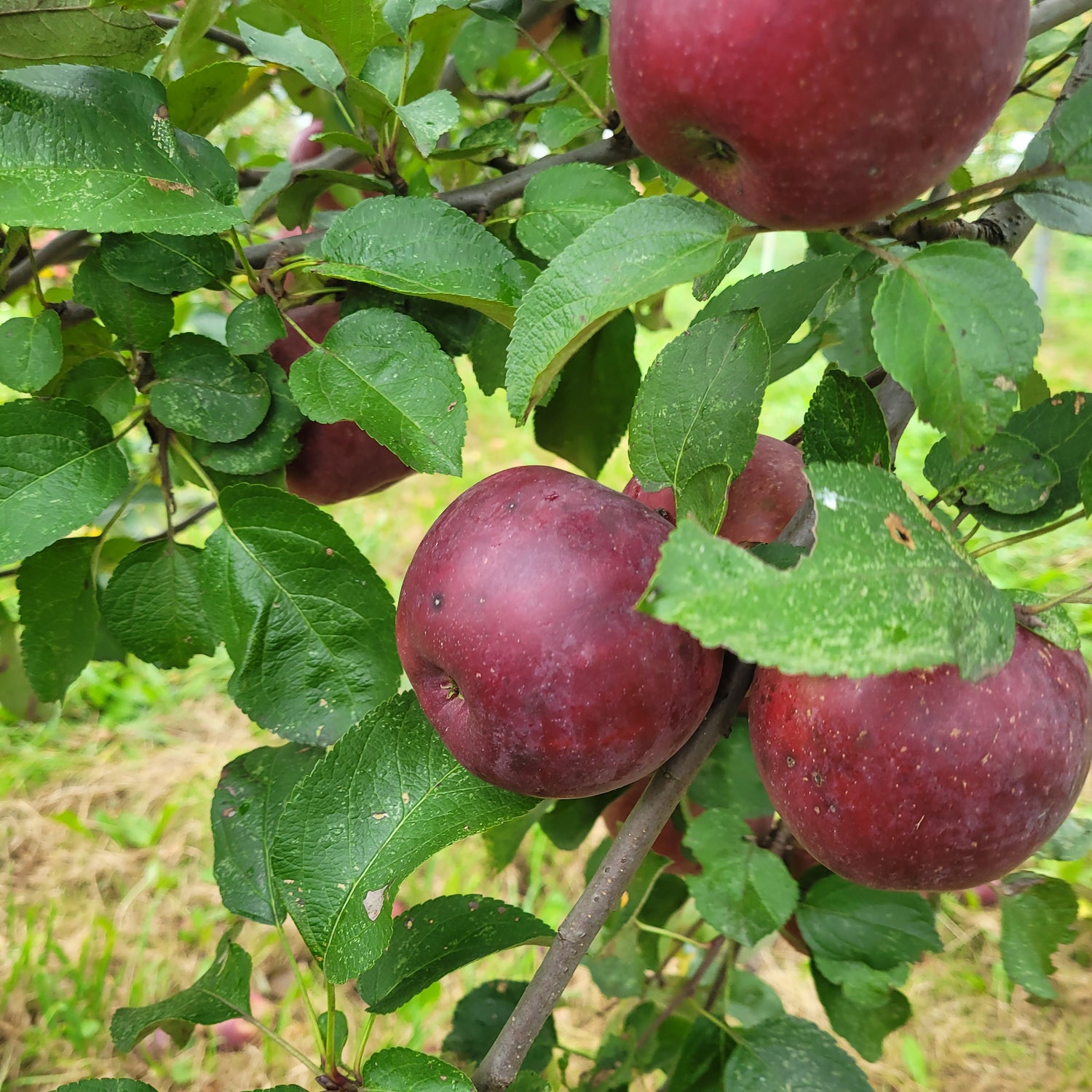
History: Spartan apples are a Canadian variety that was developed at the Pacific Agri-Food Research Centre in Summerland, BC in 1936 by Dr. R.C. Palmer. Of particular interest is the fact that Spartan apples are the first apple variety created by a formal scientific breeding program. They have been popular in North America ever since and are even commonly found in gardens in the UK.
Why We Grow It: This variety is known for its sweet/acid flavour and pleasant crunch, especially when eaten fresh off the tree. They tend to soften rather quickly after they are picked but luckily the fruit hangs on the tree 2-3 weeks after its ripe which helps to extend the optimal time to enjoy this variety. Spartan apples are also known for being relatively easy to grow, having decent disease resistance, heavy crops, and an ability to keep all winter.
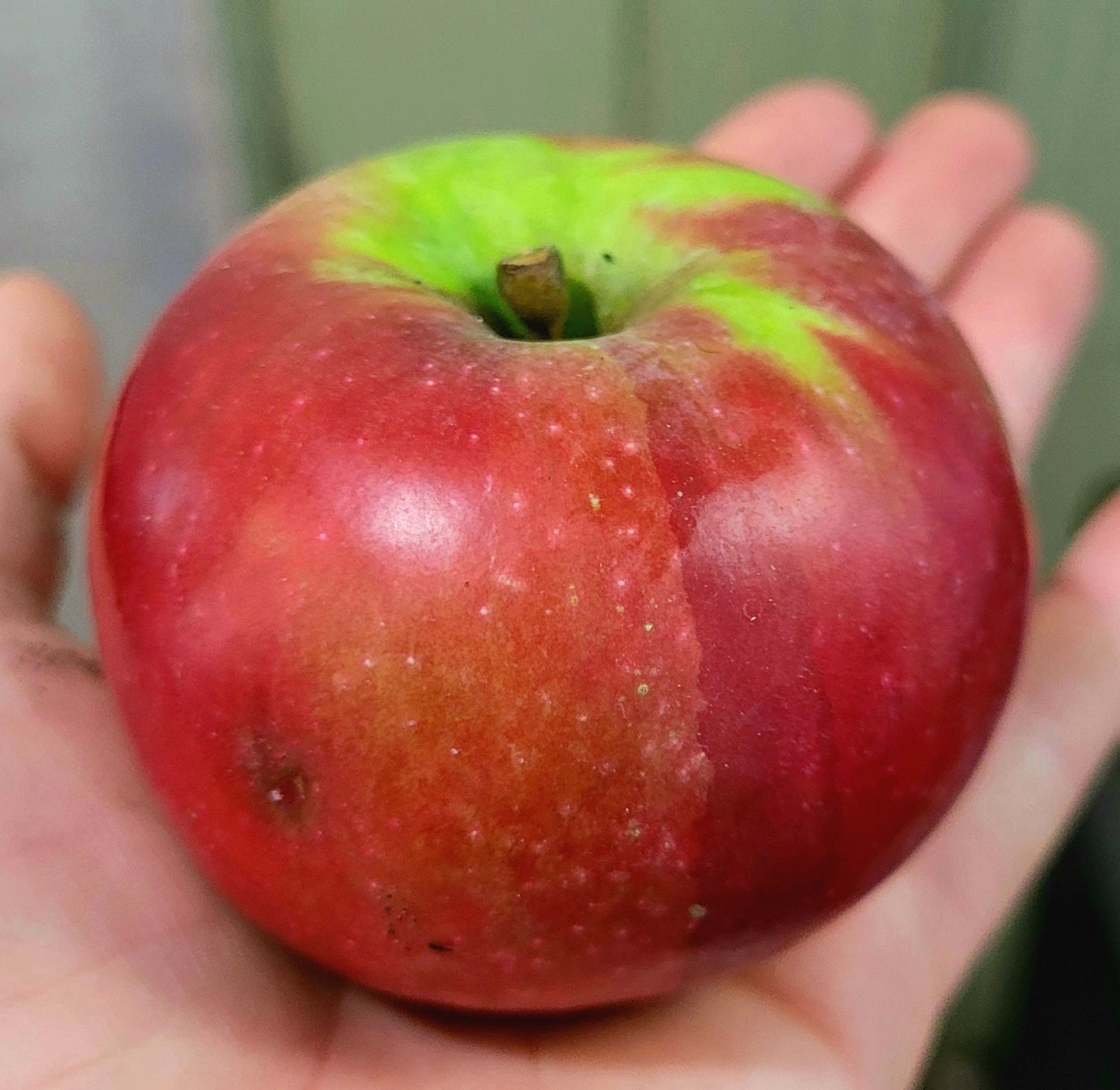
2026/2027 Staff Favourite
Snow is Mouse's favourite this year! In their eyes, “Snow is a standout Canadian heritage variety! This cold hardy apple is named for its snow-white flesh and it has a distinctively sweet flavour. For fans of Canadian and/or heritage apples, Snow apples are often a favourite!”
All Staff Favourites are 20% off. The Staff Favourite Discount cannot be combined with other quantity discounts.
History: Snow, aka Fameuse, apples originated near Lake Champlain in Quebec some time before the 1730s. The exact origin is unclear but this variety is thought to have originated from a seedling or cutting brought from France. From about 1750-1850, this was one of the most commonly grown apples in Quebec until the orchards were almost wiped out in the latter half of the 19th century by disease and failed to regain their popularity. However, these lovely apples may still be with us in their own way as they are one of the potential parents of McIntosh.
Why We Grow It: It is easy to see why Snow apples were once so popular. These apples have a lovely deep red skin with pure white flesh with a sweet strawberry flavour. These trees are also quite cold hardy and produce heavy crops.

History: In the 1830s in Lancaster County, Pennsylvania, a seedling apple tree grew beside the smokehouse of William Gibbons. Perhaps it sprang from a core that some one had tossed there while they tended the fire. Who knows? What we do know is that the aptly named Smokehouse was commonly grown in the area until its popularity waned as sweeter apple varieties appeared on the market. Still, this variety has stood the test of time due to its great flavour.
Why We Grow It: Traditionally Smokehouse apples are picked a little early and used for baking, but if they're allowed to ripen fully on the tree, some people have described the balanced flavour as being “like drinking fresh-pressed cider!”.

History: Shizuka (translated as "quiet" or "calm") was created at the Aomori Apple Experiment Station in Japan in the 1930s. It is a cross between Golden Delicious and Indo, the same parentage as its sister apple Mutsu.
Why We Grow It: Although it resembles Mutsu with its large yellow-green fruit, sometimes featuring a reddish-orange blush, Shizuka is sweeter and less acidic. This is an excellent fresh-eating apple for farm gate sales and it also keeps well. It is also great in salads due to its slow browning.


History: Shamrock apples were raised by K. Lapins at the Pacific Agri-Food Research Centre in 1970 and released in 1986.
Why We Grow It: This is a Canadian apple for all you Granny Smith lovers! Although a bit sweeter than Granny Smith, Shamrock apples still have some tartness and are hardy enough to survive in Canadian climates. They even resemble Granny Smith with their light green skin and white flesh.
Photos courtesy of Shannon McInnis!

History: The St. Lawrence apple was discovered in the Montreal area as a seedling of a Snow apple, the most popular variety in Quebec at the time. By 1835, these apples were commonly grown in the area where they were popular for fresh eating and cooking but have since faded into obscurity.
Why We Grow It: Although less popular now, these apples are still good for eating and baking. The boldly striped red skin also makes the fruit very attractive. The tree bears good crops each year and is relatively hardy.
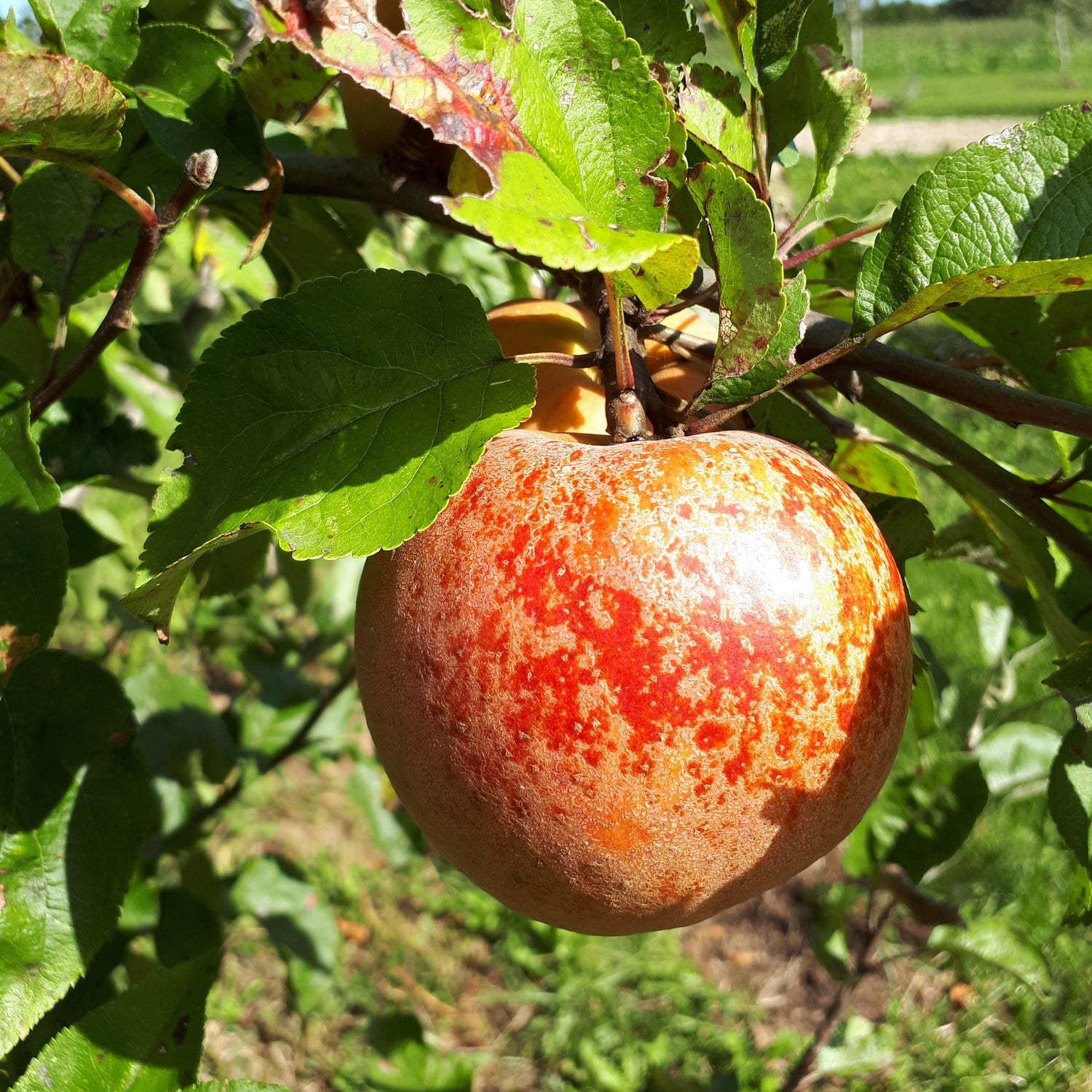
History: Roxbury Russet is the oldest American apple still under cultivation. It was discovered around 1650 in Roxbury, near Boston. These apples were well-known for their long keeping ability and qualities for cider making. They were grown by Thomas Jefferson at Monticello and are even referenced in one of Nathanial Hawthorne's novels. Due to the russet skin, these apples have never achieved true commercial success but they can still be commonly found in American farmer's markets.
Why We Grow It: Aside from its historic roots, Roxbury Russet is an excellent all-around apple that can be eaten fresh, used in cooking, and made into a great cider. It has a nice flavour that is sweet and sharp. This variety is also a good choice for organic orchards.

History: In 1817 Joel Gillet accidentally received Rome Beauty as a seedling in a shipment of nursery trees. His son planted the seedling along the Ohio River in Rome Township. When it began producing lovely red apples, Gillet's cousin started a nursery to propagate and promote it. Originally named Gillet's Seedling, the name was later changed to Rome Beauty in 1832 to honour the township. The original tree collapsed in the 1850s due to bank erosion but the variety still remains popular in the United States today.
Why We Grow It: The fruit is deep red, large, and slightly conical with cream coloured flesh. It has a mild flavour compared to something with more character like a russet, though still an excellent snacking apple. It makes a good cooking apple too since it keeps its shape when cooked. It also stores exceptionally well, lasting all winter long. Tip-bearing.

History: Rhode Island Greening emerged around 1650 where it was grown from seed by a Mr. Green near Green's End, Rhode Island. Mr. Green owned a tavern and often gave scions from the original tree to his customers, although the tree eventually died from the demand for scionwood. The name was originally the descriptive 'Green's Inn apple from Rhode Island' and later shortened to 'Rhode Island Greening.'* This apple was commonly grown in New York and is still quite common today.
*Fun fact: The Ontario ghost town Unopark got its name in a similar way. It was originally founded by Richard Parker, Mouse's ancestor, and the name is a shortened version of 'You know the Parkers?'
Why We Grow It: This apple's long-lasting popularity is due to its reputation as perhaps the definitive American pie-making apple. The large, dark-green apple is too tart to be eaten fresh but is great in pies and holds its shape well when cooked. It also produces nicely in our test orchard, producing large, blemish-free fruit despite it's generally poor disease resistance.

History: Redfree is one of the apples developed under the collaborative PRI disease-resistant breeding program run by Purdue University, Rutgers University, and the University of Illinois. It was bred in 1966 and officially introduce to the public in 1980.
Why We Grow It: Redfree apples are great for fresh eating with a pleasant, mildly sweet flavour and softer yet crisp flesh. The fruit does not ripen all at once, allowing a longer eating season. As its name would suggest, it has decent resistance to several common apple diseases.

History: Red Gravenstein is a sport/mutation of the original Gravenstein/Yellow Gravenstein that is a striking bright red. Some say it is also sweeter than the original.
Why We Grow It: With attractive red skin, this is a lovely sport of the original Gravenstein. It is a good quality and sweet early apple that is excellent for home orchards.
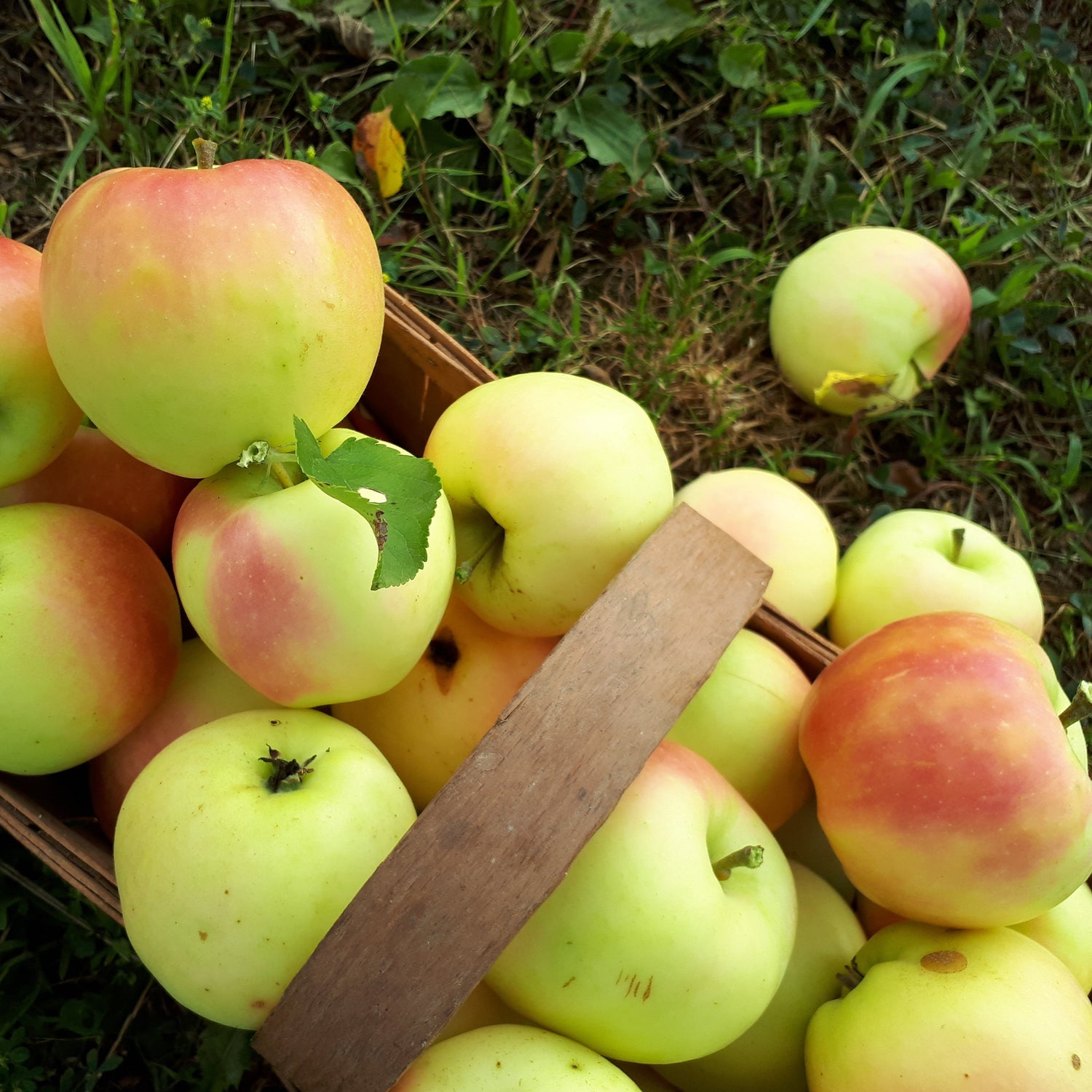
History: Pristine is another variety that was developed through the collaborative PRI disease-resistant breeding program run by Purdue University, Rutgers University, and the University of Illinois. It was introduced in 1994.
Why We Grow It: The program was successful with this apple which boasts a decent disease resistance, and performs very well in our orchard. The fruit is an attractive yellow-gold colour with a pink blush where the sun hits it, and the flesh is dense and white. It has a refreshing, sharp flavour and is good for fresh eating if you enjoy a good tart apple! Unlike many early season apples, it has a higher sugar content and stores decently well.


History: Prima is one the apples developed from the collaborative PRI disease-resistant breeding program run by Purdue University, Rutgers University, and the University of Illinois. It was introduced in 1958 but unfortunately is no longer fully scab resistant due to the fungus evolving to overcome the resistance since then.
Why We Grow It: Another great apple for organic production and excellent for the backyard or farmer’s market sales! This apple is sweet, juicy, and flavourful and boasts good disease resistance..

History: Paula Red (sometimes written Paulared) was discovered in Michigan in 1960 by Lewis Arends near a ravine where apples were dumped. It was one of several wild apple seedlings that had sprouted up from the discarded seeds. Likely pleased by its attractive red skin and flavour, Arends named it 'Paula Red' in honour of his wife Pauline. It is a cross between Duchess and McIntosh.
Why We Grow It: Paula Red produces medium to large red apples with small yellow/green patches that are juicy and firm with a nice sweet/tart flavour. The flavour has strong vinous and strawberry notes. It is also slower to brown. This early-ripening variety tends to soften relatively quickly which means it does not store very long, but it is great for making applesauce. The tree produces heavy crops although tends to bear every other year as a result.
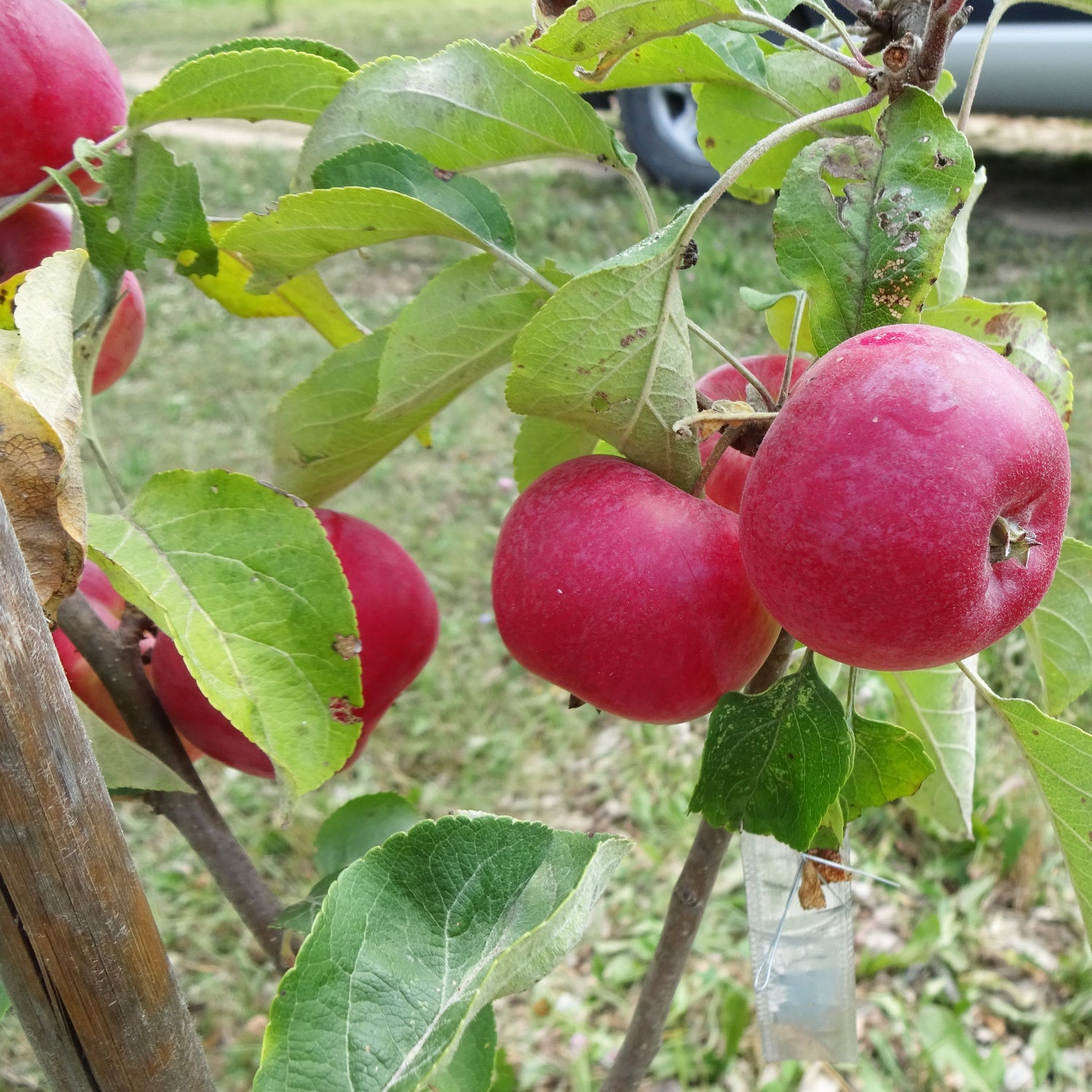
History: Parkland apples were variety created at the Morden Research and Development Centre in Manitoba and released in 1979. Like other varieties developed there, Parkland was designed to withstand the harsh prairie winters and is especially cold hardy. It has become the most commonly grown apple in Alaska after it was brought over in 1985 in an effort to determine which Canadian varieties could survive in the northern state.
Why We Grow It: Parkland is a very satisfying early season apple - sweet and crunchy. It's excellent snacking or applesauce although the fruit is small (about 2" diameter) with creamy flesh and red skin. The tree is quite hardy.
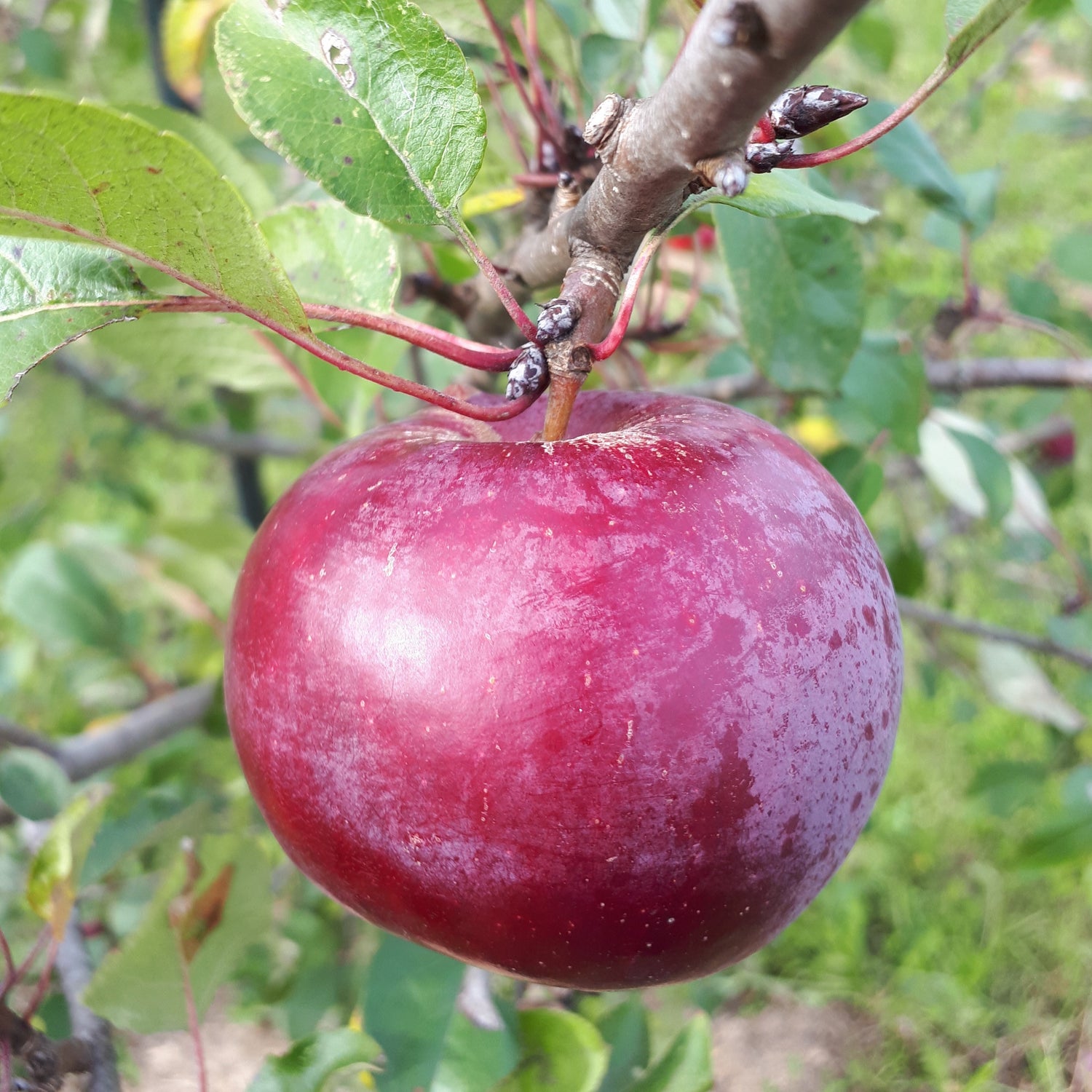
History: Novamac apples were developed at the AAFC Kentville Research and Development Centre in Nova Scotia and introduced in 1978.
Why We Grow It: Novamac is a variety that definitely deserved more attention. They are generally disease resistant and have proven to be very easy to grow in our test orchard where they are performing well. This apple has a nice vibrant tang but also lots of sweetness and notes of berry. The flesh is firmer than its namesake McIntosh, which it is descended from.
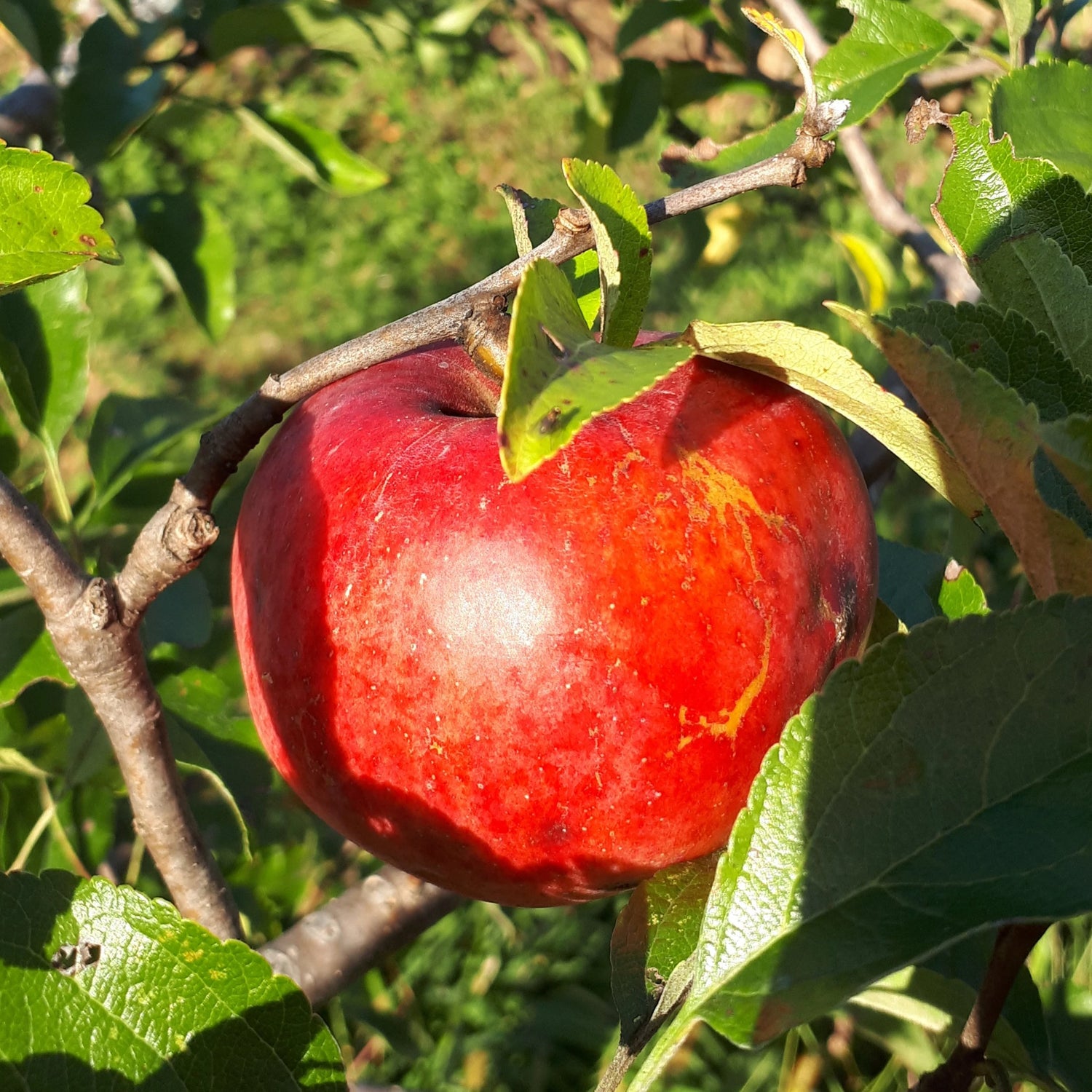
History: Nova Easygro was developed at the AAFC Kentville Research and Development Station in Nova Scotia and introduced in 1971.
Why We Grow It: Living up to its name, Nova Easygro is hard to beat if you're looking for a low-maintenance backyard tree or a clear winner for organic orchards. This variety is resistant to numerous common apple diseases and tastes great. The flavour is pleasant and sweet and the flesh is firm and white with the perfect texture, earning this apple favourable reviews at our tasting event.