Ontario Planting Favourites

Ontario Planting Favourites
Handpicked varieties perfectly suited for Ontario's climate (zones 4-6 only).
These hardy fruit trees, berries, and orchard essentials thrive in Ontario's growing conditions and are ready to plant now for best spring establishment. From cold-hardy apples to productive berry bushes, each variety has been selected for reliable performance in Ontario gardens and orchards.
Events
13
Aug
26
Sep
09
Oct
Oct 09, 2026 @ 16:00 -
Oct 10, 2026 @ 12:00
Sort by:
200 products
200 products
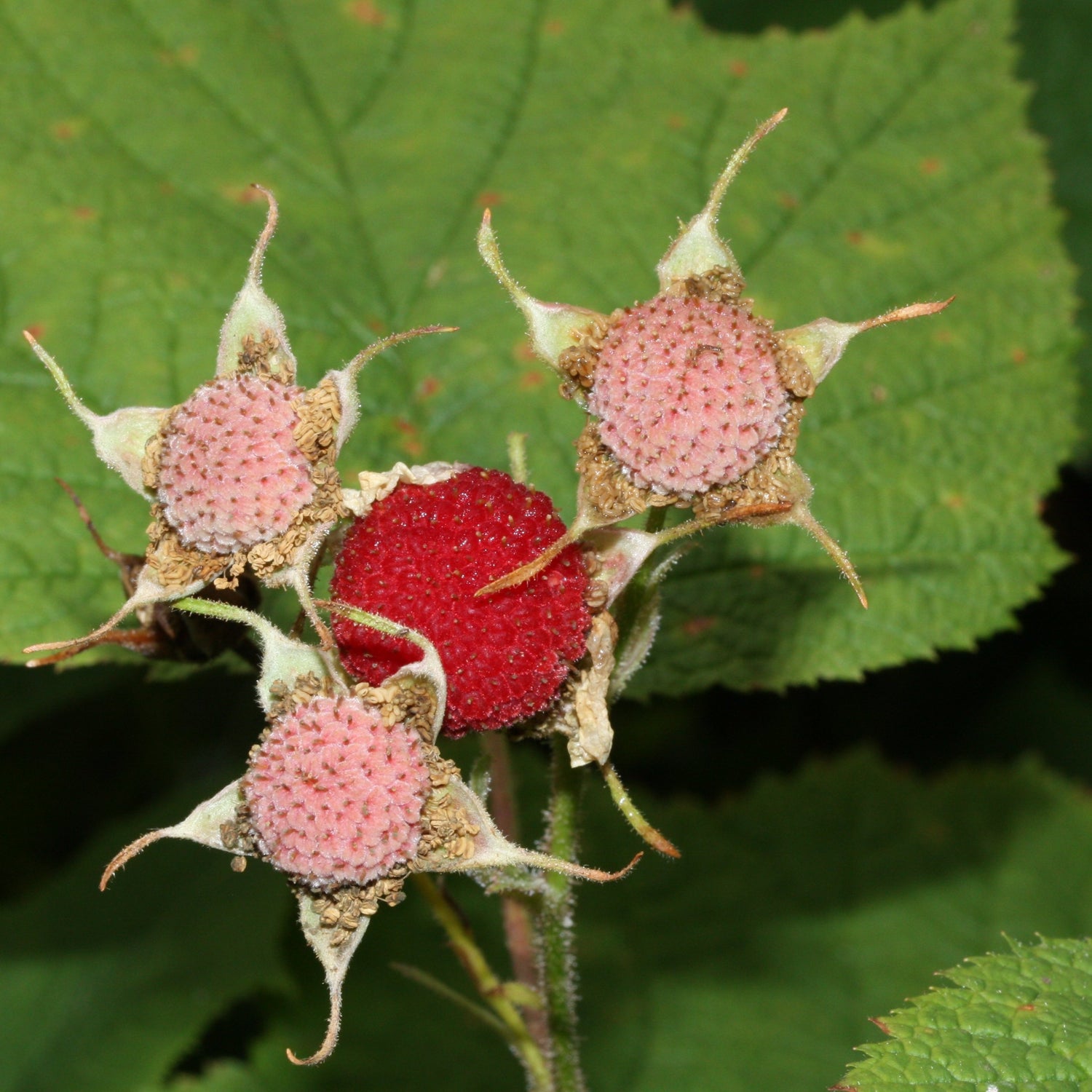
Species: Rubus parviflorus
History: Thimbleberries are a native plant closely related to raspberries and blackberries. Cultivated for edible, ornamental, and ecological reasons today, they have also historically been used by indigenous peoples as a source of food and medicine.
Why We Grow It: This is an excellent under-story plant that produces smaller, flatter berries than cultivated raspberries, but with a delicious sweet-tart flavour. Apparently young shoots can be harvested in spring, lightly peeled, and then boiled for an asparagus-like 'vegetable'- we haven't tried this yet, but would love to hear from you if you have! The thornless bush grows up to 7 feet tall, though can be kept smaller with pruning/trellising/tying down. The fruit grows best on 2-3 year old canes unlike raspberries, which makes this an ideal plant for living fences.

History: Discovered in New Zealand by farmer O. Moran in 1952, Braeburn took the world by a storm, becoming one of the most popular commercial apples in the United States and parenting many modern cultivars such as Jazz and Sweetie.
Why We Grow It: Its winning sweet-tart flavour wrapped in an attractive orangey-red skin makes it an excellent fresh eating apple. It is firm and holds its shape well when cooked, and keeps about 4 months. This variety is fairly disease susceptible, meaning it is better for the experienced natural grower or conventional orchards. It is moderately vigorous and a heavy cropper.
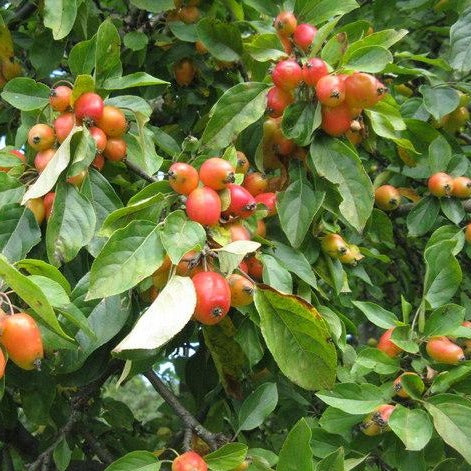
History: John Downie was raised by Edward Holmes, a nursery worker in England, in the 1870s. The variety was named after another nursery worker and friend of Holmes, John Downie. John Downie crabapples remain one of the most popular of the English crabapples.
Why We Grow It: This crabapple sports bright orangey-red fruit, often used to create some of the best jelly around. With its sweet-tart flavour, this crabapple can be pressed into a cheery orange juice that is a great addition to cider blends.

History: Fallawater originated in Pennsylvania sometime before 1842, possibly from seeds brought by European colonizers. At one time it was quite popular in the southern United States. This variety has over twenty different names, many of which resemble Fallawater such as Fallenwalder, while others are more fun and unique like Molly Whopper, Green Mountain Pippin, and Prim's Beauty of the West.
Why We Grow It: No matter which name this variety goes by, you can always expect a large, attractive apple with a mildly sweet flavour. Fallawater is an excellent sauce and cooking apple and the fruit stores for a long time.

For the most up-to-date information see Claude Jolicoeur's website here!
History: Douce de Charlevoix (translated from French as 'sweet Charlevoix') was discovered by Claude Jolicoeur in a Quebecois village in the county of Charlevoix in the 1990s. He has since dubbed it a 'first class early cider apple' and in 2015 a cider blend using 40% Douce de Charlevoix won a bronze medal at the GLINTCAP competition.
Why We Grow It: This apple is quite attractive with orange-red stripes across green skin and makes an excellent juice with a notable bitter taste. In general this apple has medium tannins, some sweetness, and very little acidity. The tree itself is also quite vigorous and hardy.

History: Glowing Heart was bred in Toronto by Fred Jansen, one of the founders of the North American Fruit Explorers (NAFEX). This unique apple is still in its early years.
Why We Grow It: This variety has a unique pink and white flesh and is quite acidic. One bite will make you pucker! Although not the best option for fresh eating, this apple creates an aromatic jelly with rich flavour and can be used in ciders as well. It does well in organic orchards.
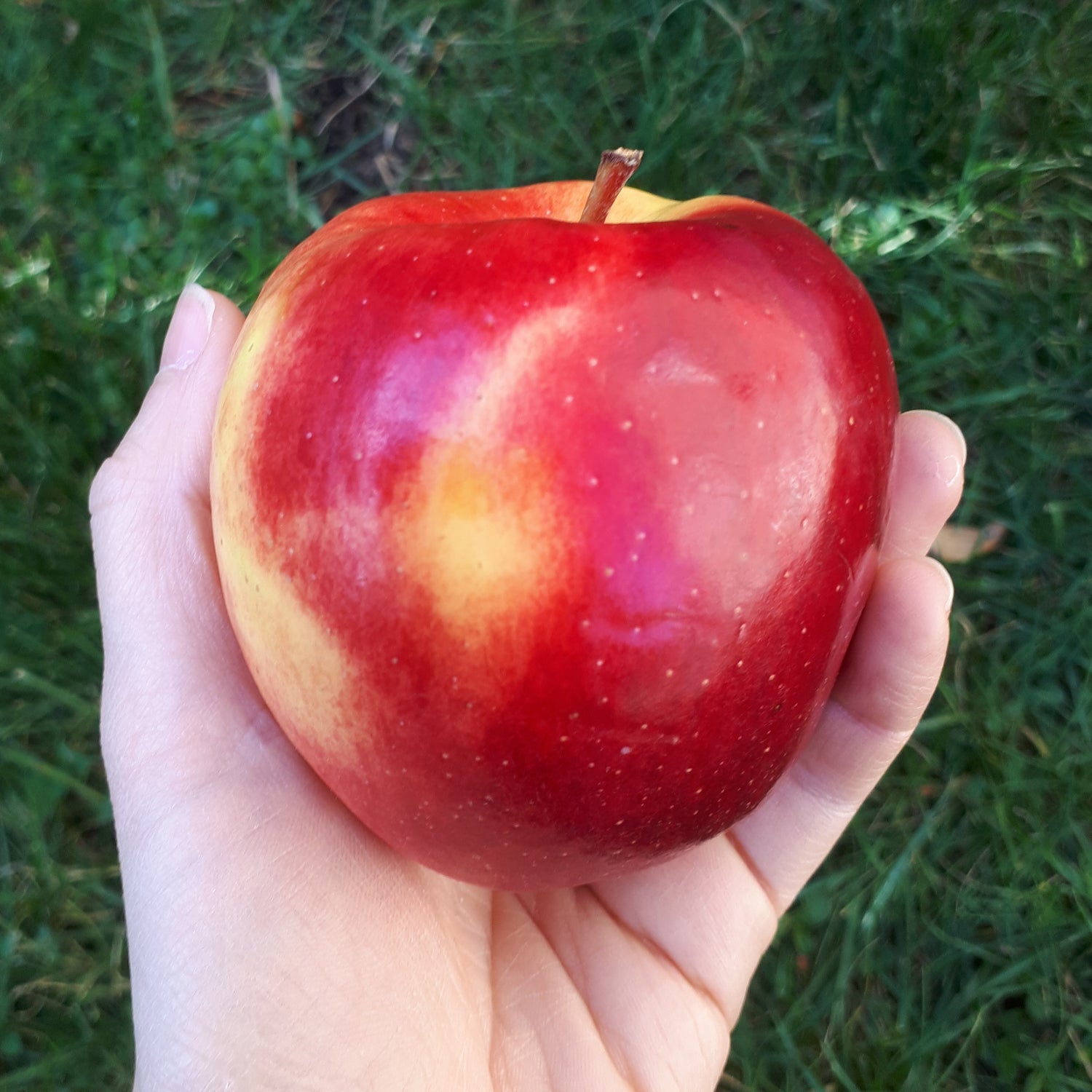
History: A chance seedling discovered in the 1980s in BC, this tender, aromatic, honeyed apple has been a hit ever since!
Why We Grow It: This delicious apple is very popular in the fresh eating market in Canada, thanks to its attractive bi-colour skin and slow browning qualities. It produces a medium-large fruit and is a good cropper.

TM-7 contains a blend of seven micronutrients as well as concentrated humic and fulvic acid. It can be used to stimulate microbial activity, increase nutrient uptake, and reduce nutrient leaching. It improves soil structure, builds plant immunity, and promotes growth and increased yields.
Derived from: Boron, cobalt sulfate, copper sulfate, ferrous sulfate, manganese sulfate, sodium molybdenate, zinc sulfate and chelated with humic and fulvic acids derived from fresh water cretaceous humate deposits.
Application: Can be used for seed activation and soil or foliar applications
Soil, container, or foliar application: 0.75-1.25g/gal
Field application: 2-4 pounds per acre every 3-6 weeks
Soil: Good for all soil types including containers and hydroponics

Why We Grow It: Discovery is a slightly sweet apple with noticeable acidity, and under optimal conditions it can have a strawberry flavour. Like many early apples, it is great for sauce. The fruit is on the smaller side and has a flatter shape with greenish-yellow skin overlaid with a bright red blush. The red can sometimes stain the cream-coloured flesh inside, providing some visual appeal. The tree boasts some resistance to scab and although it can take a while to start bearing fruit, once it does it bears quite reliably.

Why We Grow It: Pinova produces lovely yellow fruit with pink to red blush and some striping. It is very flavourful with plenty of sweetness and complexity and a strong floral aroma. This crisp, juicy apple is great for fresh eating, produces bountiful crops, and stores exceptionally well. The tree is also resistant to scab and late spring frosts!
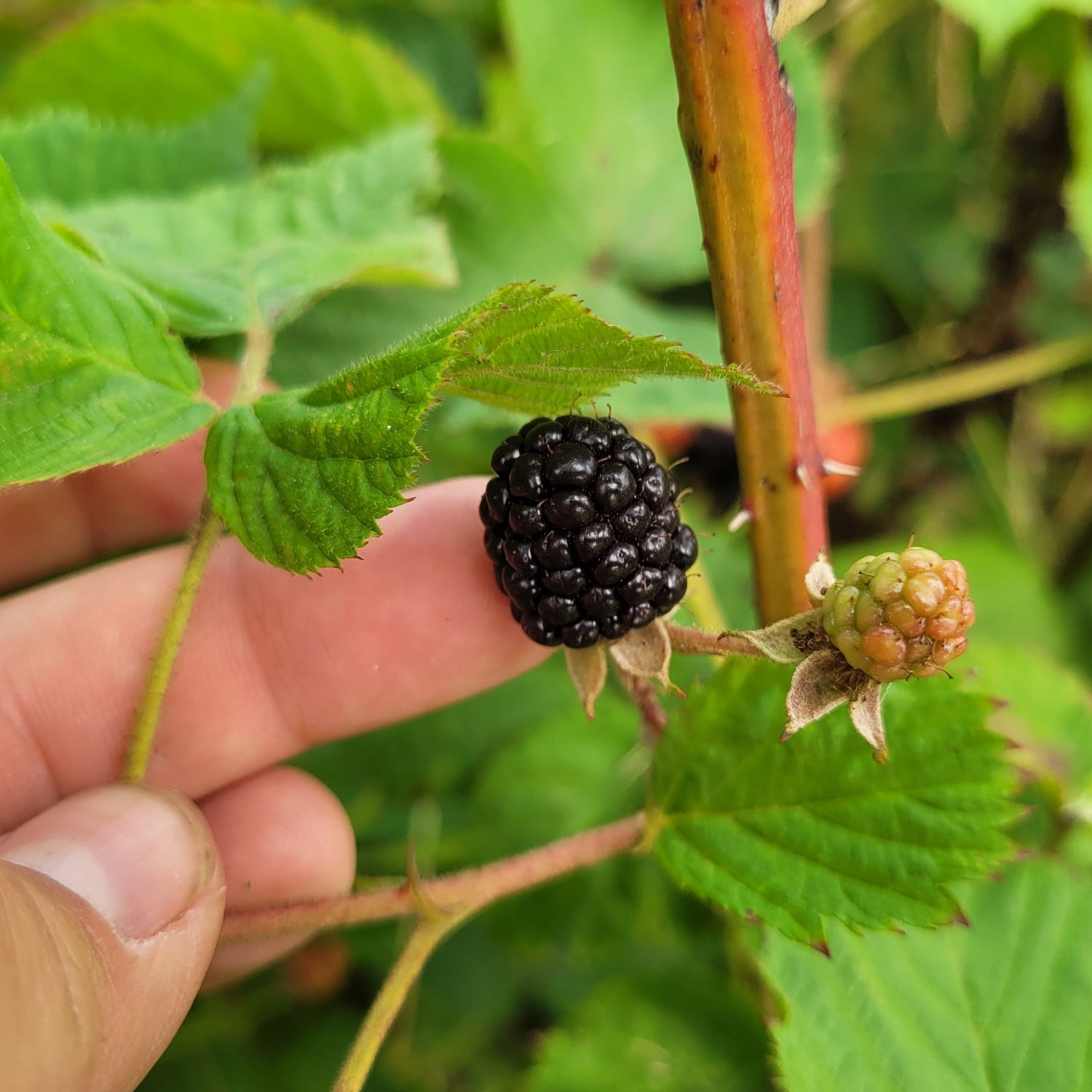
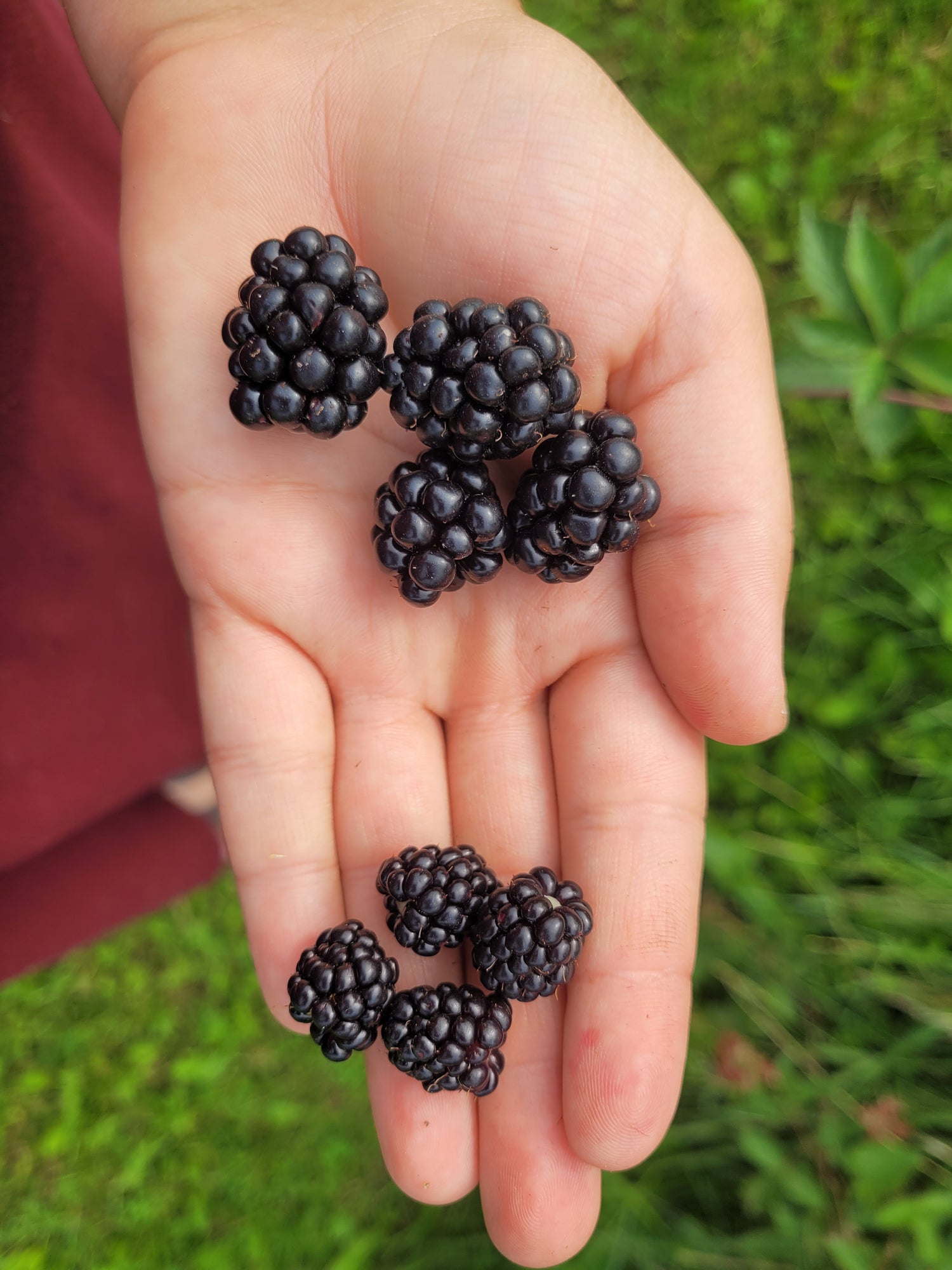
Species: Rubus sp.
History: Illini Hardy was developed as a cold hardy variety by the University of Illinois and released in 1988. It is a cross between Chester Thornless and NY 95.
Why We Grow It: This variety produces very large and abundant berries late in the summer. The dark berries are sweet with some tartness, resembling the flavour of wild blackberries. Its cold hardy nature makes it hard to turn down for Canadian growers.
Pictured on the left: top: Chester, bottom: Illini Hardy


Species: Gymnocladus dioicus
History: Kentucky Coffeetrees are native to the southernmost parts of Ontario and the midwestern United States. Despite its fairly large range, it is relatively rare today likely due to evolutionary anachronism. It is believed Kentucky Coffeetrees co-evolved with megafauna that are now extinct, so previously beneficial traits like the thick leathery pod around its seeds now hinder seed dispersal. Indigenous peoples have used the tree as a source of food by roasting the seeds and making a coffee-like drink, and the seeds have also been used as pieces in games and to make jewellery. Nowadays, the tree is planted ornamentally in urban areas.
Why We Grow It: This nitrogen-fixing, Carolinian tree produces seeds that may be roasted and used as a coffee substitute, but be aware the raw seeds are toxic! This tree boasts the largest leaves of any native tree, and it's considered a threatened species.
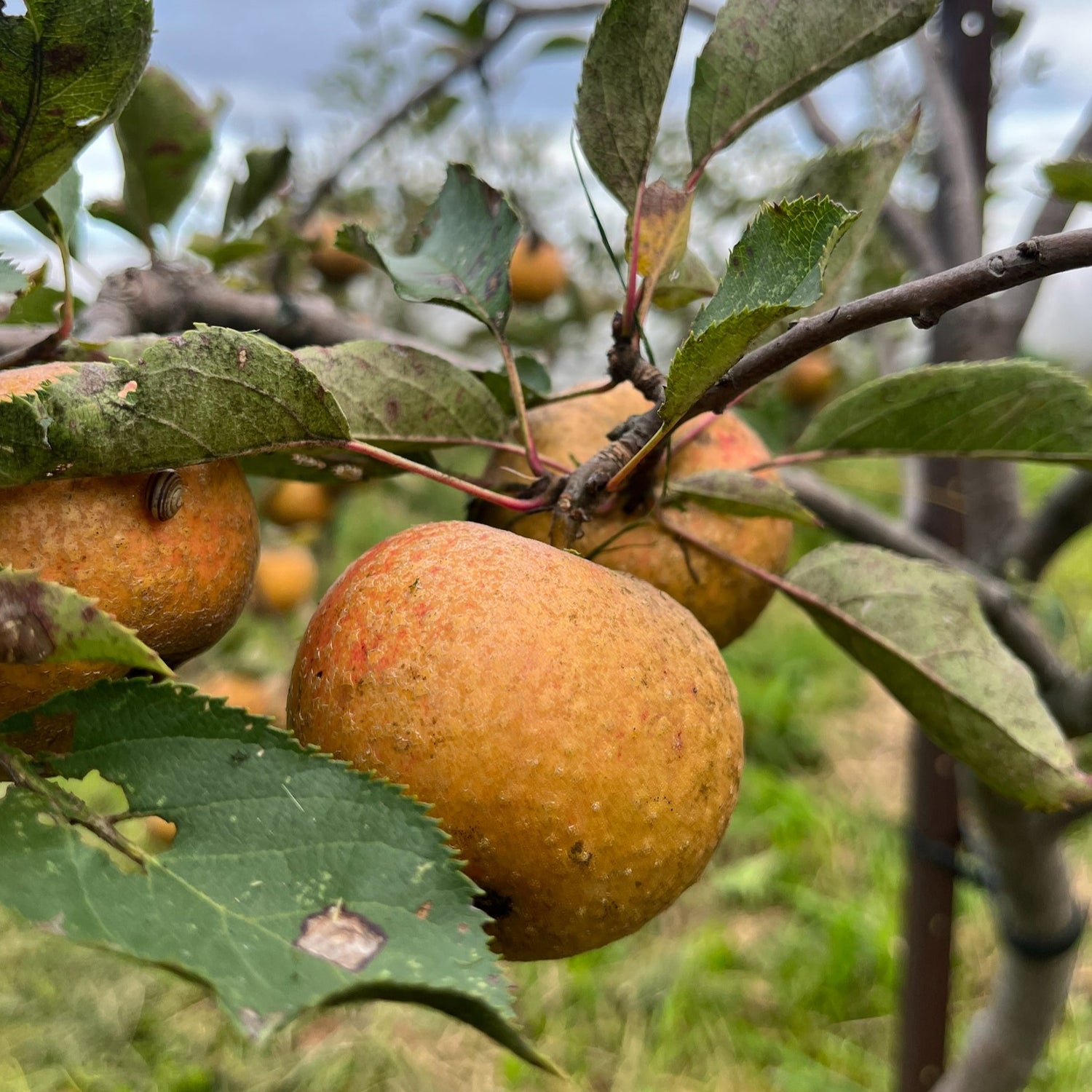
History: This unique apple, orangey-yellow-red undertones with russet over top, originated in the UK in the 1700s and has remained popular for over two centuries. There is some debate whether it was raised by a Dr. Ashmead or a lawyer named William Ashmead.
Why We Grow It: This Old World English apple has stuck with us thanks to it's unique flavour: nutty with notes of pear and spice. Fantastic fresh off the tree, and also in cider blends, Ashmead's Kernel mixes well with Cox's Orange Pippin.

History: Bedan des Parts is a French cider apple from Normandy that originated in the 1800s. It is still a popular cider apple in the area today.
Why We Grow It: The continuing popularity of this apple is due to the good quality bittersweet juice it produces that blends well with other varieties. Although a late bloomer, it is quite a heavy cropper.
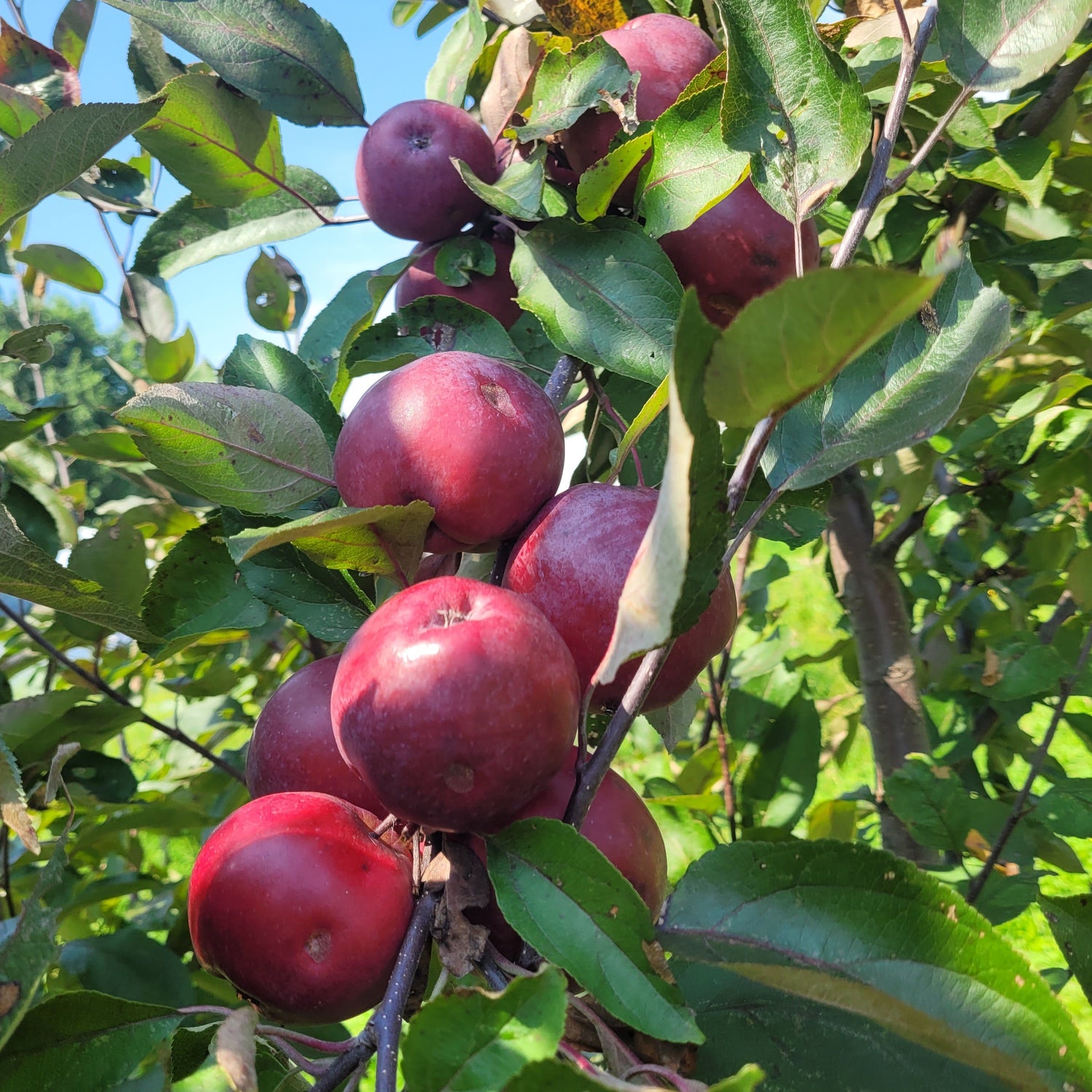
History: The Geneva crabapple was developed in the 1930s in collaboration with the Ottawa Experimental Farm and the New York State Agricultural Research Station based in Ottawa. The creation of this crabapple was head by Isabella Preston who specialized in creating cold-hardy ornamental plants.
Why We Grow It: This attractive crabapple has deep maroon flesh. The tree itself is quite visually appealing, sporting red leaves and bright pink flowers in the spring. The taste is reminiscent of rhubarb and is suitable for cooking as well. As it is a low sugar/high acid juice, it is best blended with another high sugar variety for cider. It also adds a nice red hue to blends.

History: Royal Gala is a natural sport (mutation) of the Gala apple that was patented by Stark Bro's Nurseries in 1977. It boasts a deeper red colouring than the original Gala which makes it more visually appealing. In New Zealand, where the Gala apple originated, it has been almost entirely replaced by the Royal Gala in commercial growing operations.
Why We Grow It: Like the Gala apple, Royal Gala is popular for a reason. It is juicy and crisp with a sweet flavour and the fruit stores quite well.

History: Golden Nugget was created more or less by accident when Golden Russet and Cox's Orange Pippin were crossed at the Kentville Agricultural Station in Nova Scotia in 1932. Despite being an accident, once researchers realized how flavourful this variety was they continued to raise it and eventually released it in 1964. Although a delicious apple, its small size prevented it from attaining true commercial success.
Why We Grow It: It is prized for its incredible flavour which is super sweet and tangy like a pineapple. Along with being great for fresh eating, it is also suited for cider. The tree itself boasts decent disease resistance.


The high oil content of a fish hydrolysate is known to benefit the development of soil mycorrhizae, which are excellent in themselves at breaking down organic soil matter and releasing the valuable nutrients into the soil.
We use this in our orchard for all trees (both in our experimental orchard and nursery stock) as part of our holistic spray system. You can download the holistic spray recipe here.
Fish Hydrolysate, in its simplest form, is ground up fish transformed into a liquid, by means of a cold process, where the breakdown of molecular bonds occurs through various biological and enzymatic processes. This breaks down the smaller pcs of fish body- bones, cartilage and meat- into a nutrient rich soup that also contains a high concentration of valuable fish oil.
Fish hydrolysate is different from fish emulsion. The latter is also made from ground up fish waste. However this is commonly done under a heated process, where the fish meal and more importantly, the fish oil are then removed and sold separately. This makes fish emulsion a less desirable product for soil and plant health than fish hydrolysate.
The fish used for the production of our fish hydrolysate are wild fish waste from the cold waters of the Pacific West Coast.
This product is approved for organic use.

History: Goldrush was bred specifically for scab resistance as part of the collaborative PRI disease-resistant breeding program run by Purdue University, Rutgers University, and the University of Illinois. It was developed in the 1970s and released in 1994. This variety has a complex heritage of Golden Delicious mixed with a cross of several other varieties for their disease resistance.
Why We Grow It: This is arguably the best scab-resistant variety released from the PRI Breeding Program as far as flavour is concerned. The dense, crisp flesh of this yellow apple is full of sugars and flavour. It is distinctly spicy and tart at first but mellows the longer it is in storage. The fruit stores exceptionally well. This truly multi-purpose apple is also great for drying and, unusually for a modern variety, is good in hard cider.
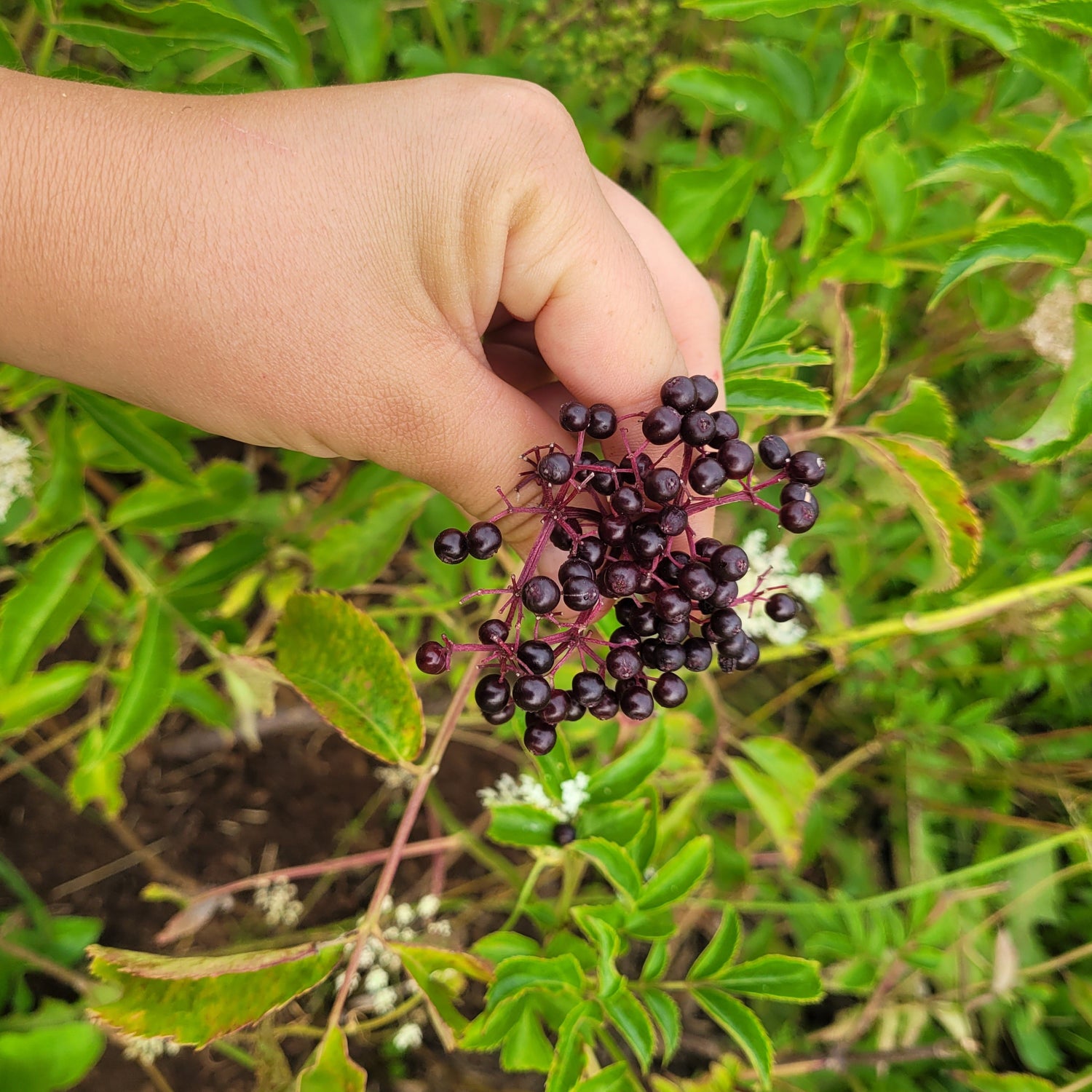
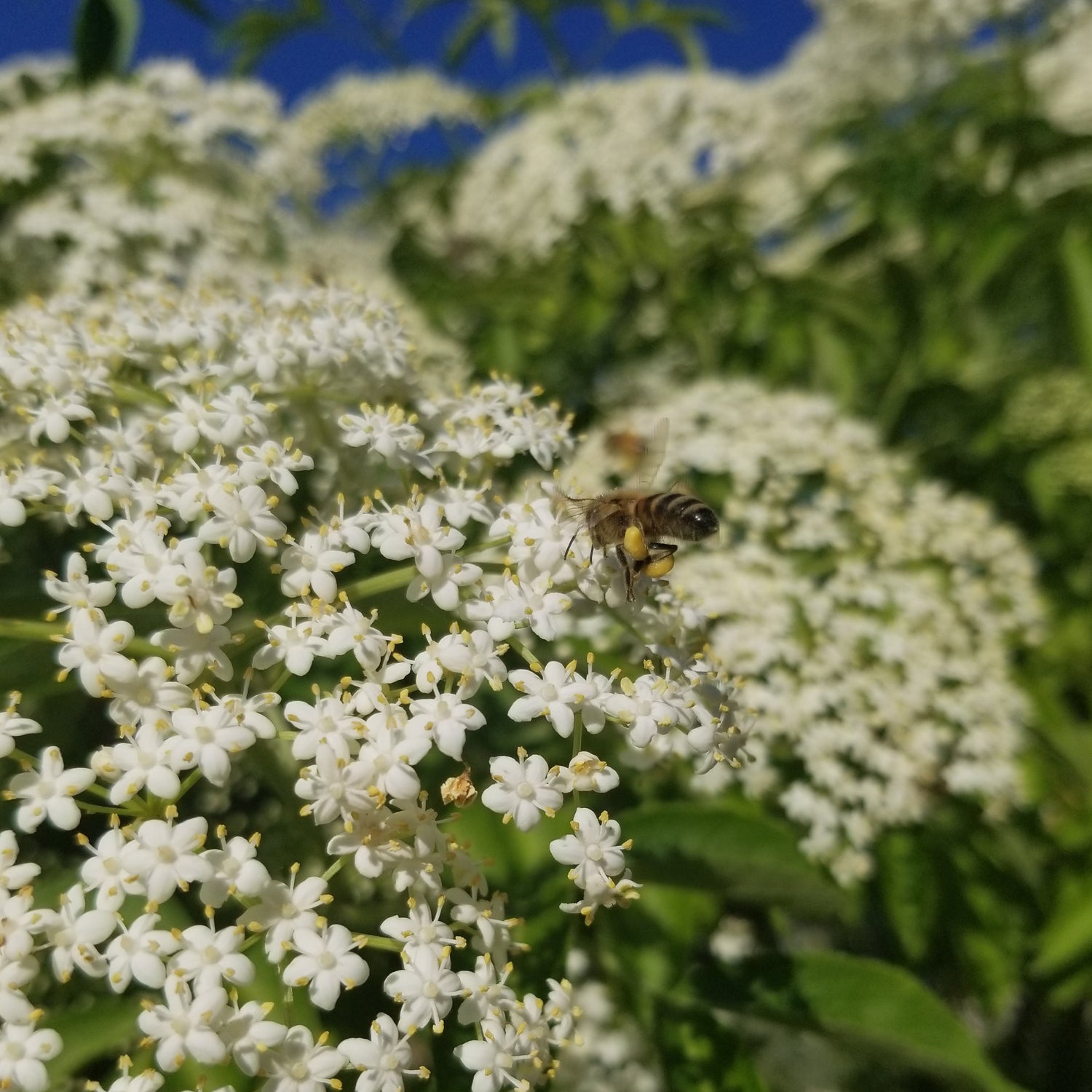
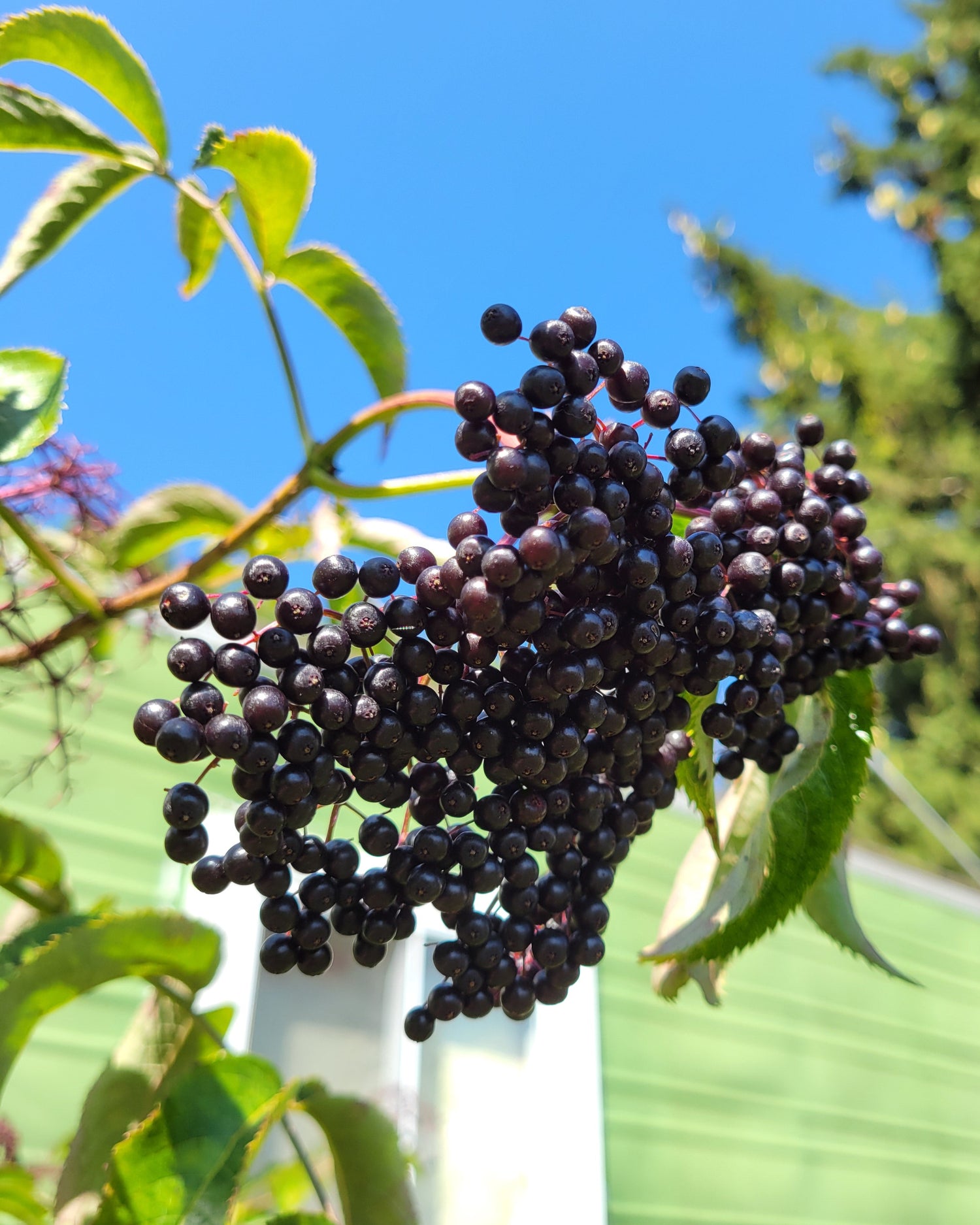
Species: Sambucus canadensis
History: Scotia was developed at the Kentville AAFC Research and Development Centre in Nova Scotia. It is a seedling of another variety, Adams 2, and was released by the research station in 1960, alongside the variety Nova. It is grown commercially in Canada.
Why We Grow It: Scotia elderberries ripen early in the season and have the highest sugar content of any named cultivar- though also some of the smallest berries. They are great for a variety of uses such as making juice and wine, baked goods, and even tinctures. Eating the raw elderberries can cause adverse reactions so it is recommended that you cook them first!


Root Rescue is a certified organic mycorrhizal inoculant designed to set your plants up with a symbiotic relationship that will provide benefits such as establishing new roots more easily, improving nutrient uptake, and increasing disease resistance. This company has been working with the University of Guelph since 2009 to create this cocktail of 18 species of fungi. This inoculant is suitable for any transplanting a variety of plants including hardwoods and softwoods, bushes, flowers, veggies, etc.
Please Note: If you are using Root Rescue along with adding phosphorous via fertilizers such as bone meal or soft rock phosphate, reduce the application rate of the phosphorous source by 1/4-1/2. Too much phosphorous will negatively impact the mycorrhizal fungi, potentially slowing or even preventing your plants from forming a relationship with these incredible fungi.

History: The exact origin of Ellis Bitter is unknown but it is believed to have originated on the farm of a Mr. Ellis in the 1800s in England. It was planted commercially, particularly by growers under contract with the cider-making company H.P. Bulmer. Unlike some older cider varieties, Ellis Bitter still remains relatively common today.
Why We Grow It: Ellis Bitter is an old English cider apple, with good disease resistance, vigour, and production. This variety produces a high quality medium-bittersweet juice with soft, astringent tannins that are suited for blends. It is notable for its early ripening time compared to many cider apples, and therefore adds nicely to an orchard to extend the season. This cultivar has produced very well in the Ontario climate according to trials at the Vineland Research Station.
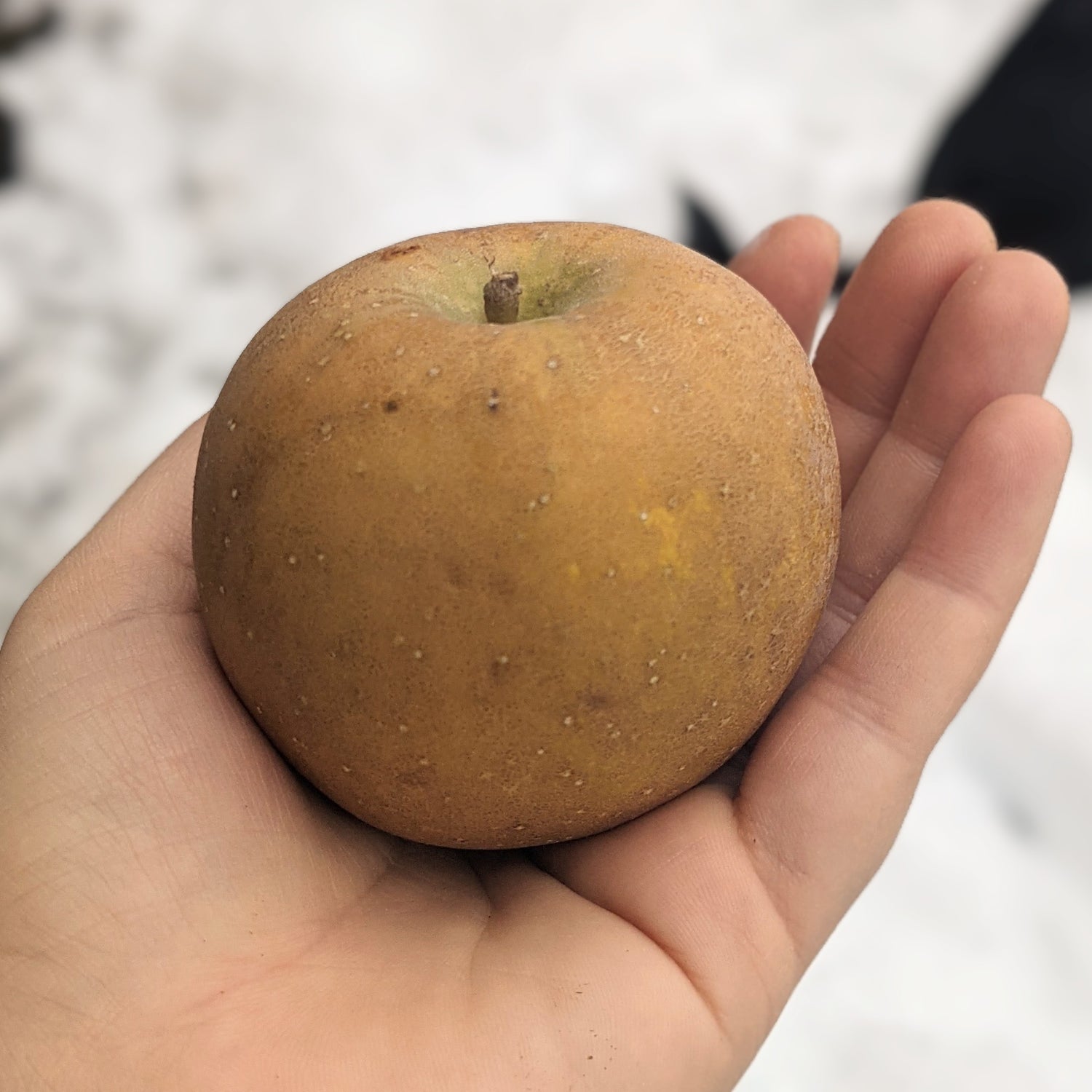
History: The origins of Golden Russet are unclear, but we know it was discovered in New York in the first half of the 1800s. It may have come from the seedling of an English russet variety and could have Ashmead's Kernel parentage. It was grown commercially for some time before falling out of favour, although it has regained some popularity recently due to its strengths in cider production.
Why We Grow It: With both lots of sweetness and acidity, Golden Russet is one of our favourites for fresh eating. The flavourful juice from these apples is also great for making cider. The thick russetted skin discourages insect damage and it is resistant to scab, canker, and powdery mildew. Its tip-bearing habit gives these hardy trees a wispy appearance.


As an organic slow-release fertilizer, bone meal is primarily used as a source of phosphorus and protein. Phosphorus promotes early growth, root formation and fruit development in trees, shrubs and other garden plants.
Contents: 4-10-0, bovine source
Size: Bagged in 2.2lb/1kg or 4.4lb/2kg bag
Application: Application rates depend on your soil type, but the general rate is 10lb per 100 square feet, or about 1/4-1/3 cup per tree mixed into the soil when planting; one 1kg bag has enough product for planting ~10-12 bareroot trees. DO NOT apply directly to the tree itself, apply it to the soil around the tree.
- Please Note: If you are adding phosphorous to your soil via fertilizers such as bone meal or soft rock phosphate and also using the Root Rescue mycorrhizal inoculant, reduce the application rate of the phosphorous source by 1/4-1/2. Too much phosphorous will negatively impact the mycorrhizal fungi, potentially slowing or even preventing your plants from forming a relationship with these incredible fungi.
Soil: Bone meal is best suited for slightly acidic soils (below pH 7) for the bone meal to be most available to the plants.
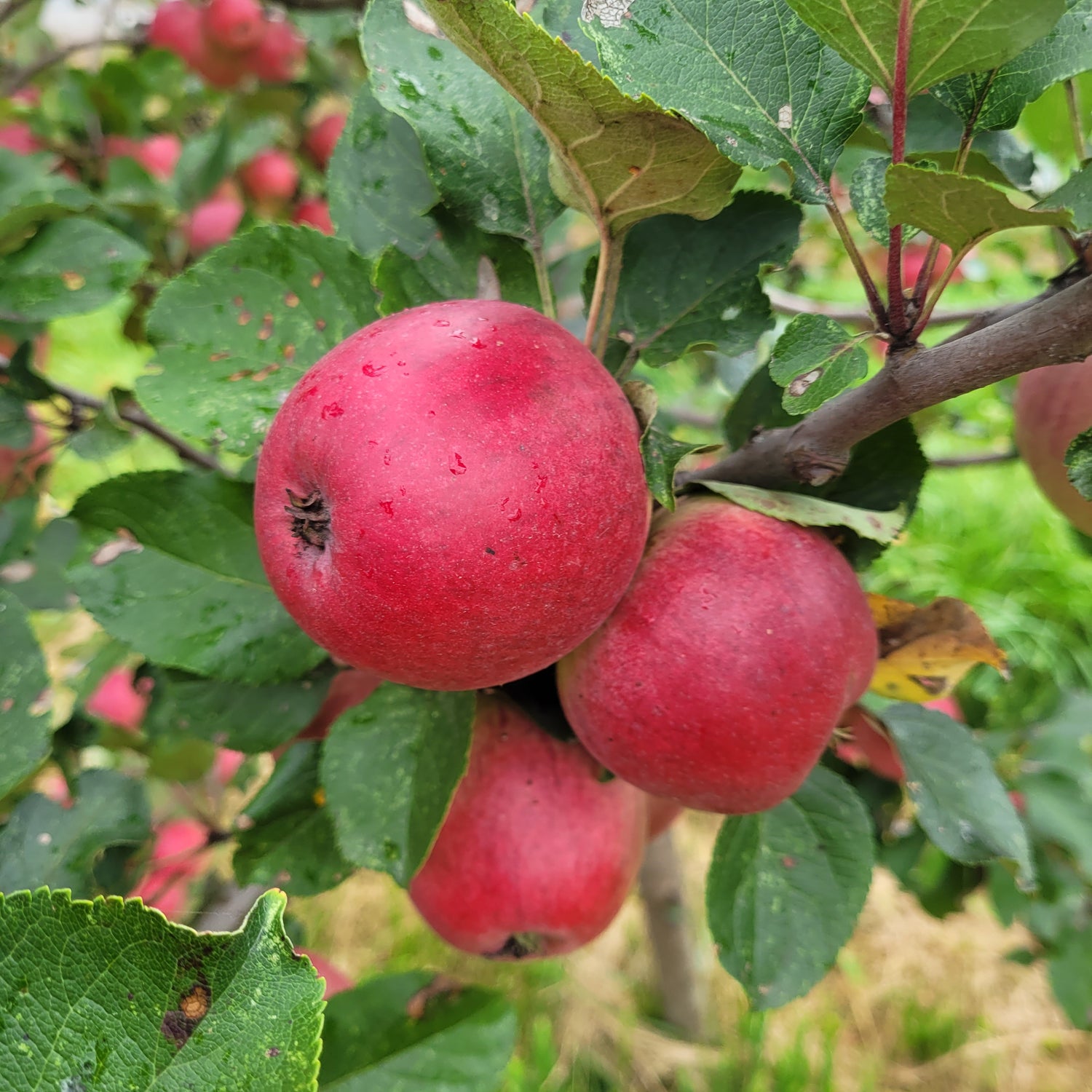
History: Yarlington Mill was discovered growing in the wild by a Mr. Bartlett. He discovered it in 1898 near a mill in the English village of Yarlington, hence the name 'Yarlington Mill.' It was further propagated and made popular by the grower Harry Masters (who also grew Harry Masters Jersey). This variety is still commonly planted in cider orchards in England.
Why We Grow It: This is an excellent cider apple for our climate. It produces a medium bittersweet juice with good flavour. The tree is hardy and vigorous but tends to bear biennially so it requires attentive thinning.


History: Wolf River was raised from seed by Quebec lumberman William Springer in the latter half of the 19th century. When Springer and his family were moving by wagon to Wisconsin, they bought a bushel of Alexander apples along the way. Upon arriving at their new home, he planted the seeds from said apples along the bank of the Wolf River and the Wolf River apple grew from there. This variety has since garnered a reputation as a good cooking apple and for the incredible size of its fruit.
Why We Grow It: First and foremost, Wolf River is legendary for the huge size of its fruit. The apples can weigh a pound or more and there are stories of pies being made from a single apple. The fruit, green with red blush and stripes, has a sweet and tart flavour that is good for cooking and it holds its shape well when cooked. The tree itself is hardy and relatively disease resistant as well.


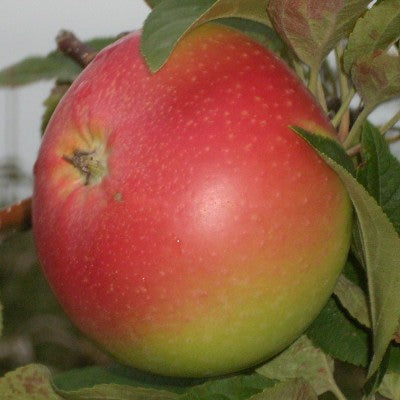
History: Winter Banana originated on David Flory's farm in Indiana around 1876. It was named Winter Banana due to the apparently banana-like aroma it gives off when ripe. It is also named Flory Banana or Flory Apple after David Flory. Winter Banana was grown on the west coast and gained some popularity in England and Germany. The thin skin of this variety is easily bruised which prevented it from being a commercial variety but it is still commonly found in gardens and farmer's markets.
Why We Grow It: This all-purpose apple is extremely attractive with pale yellow skin and a pinkish-red blush. The banana-like aroma is accompanied by sweet flesh with an acid tang. The flavour improves in storage and the apples can be kept all winter.
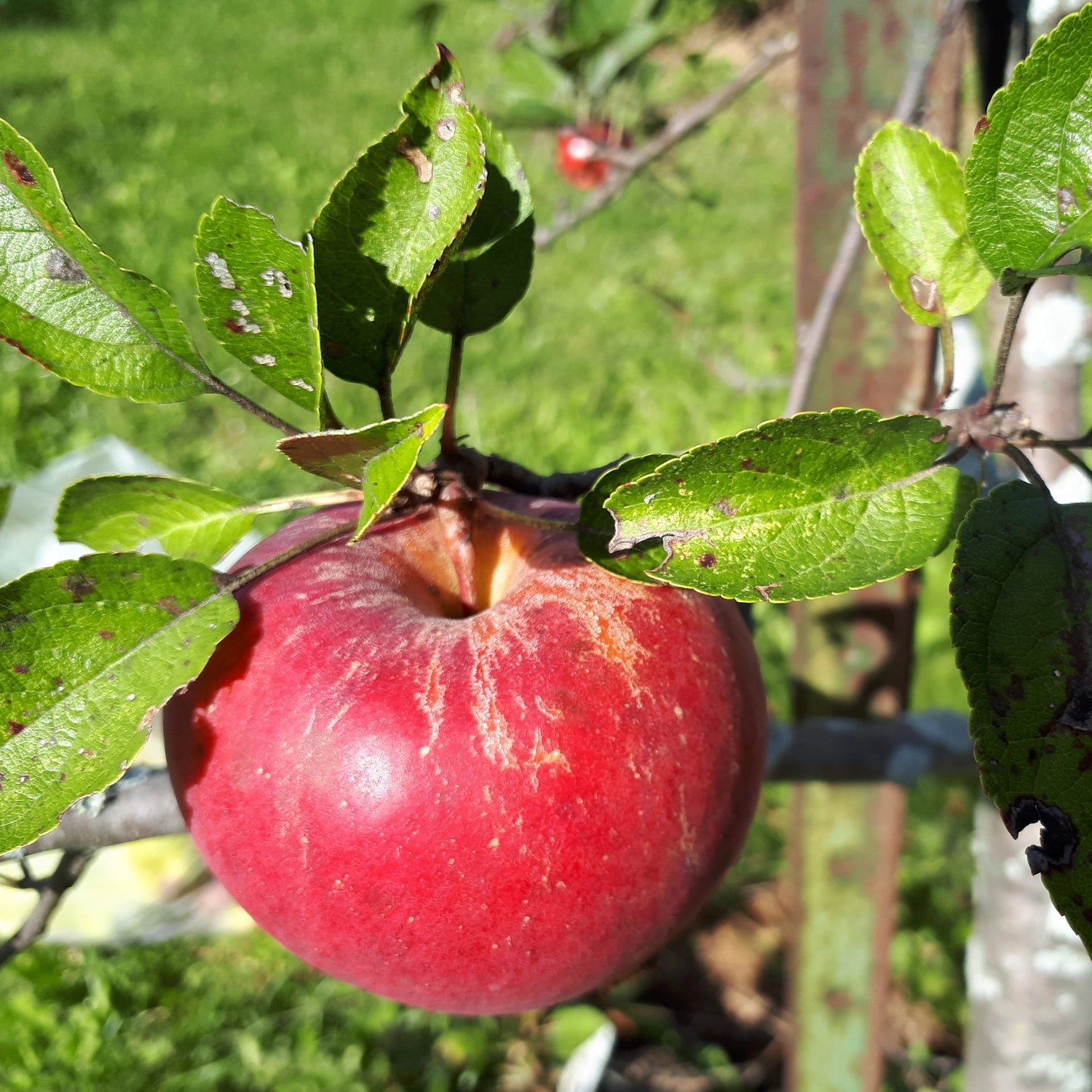
History: Winesap's origins are unclear but it is believed to have originated from New Jersey pre-1800s where it was popular for making cider. It is first mentioned in a couple of books on apples in the early 1800s. Winesap was popular in the US until the 1950s due to its good keeping ability but the advent of better storage technology allowed better tasting apple varieties to eclipse it. It is still quit popular with backyard orchardists.
Why We Grow It: Winesap's all-purpose nature helps to explain why it hasn't faded into total obscurity like some other varieties. The medium-large red and yellow skinned fruit is good for cooking and making cider. It has sweet flesh with some tang or 'winey' flavour that is also decent for fresh eating. On top of that, the tree is productive, very resistant to fireblight, and the fruit stores well.

History: White Jersey is another English cider apple whose origins are a little obscure. It was popular in the Somerset area of England during the 1800s where it was first recorded in 1895. It is still grown in modern cider orchards in the UK today.
Why We Grow It: Although it has been deemed an apple with 'average quality juice,' White Jersey is still worth checking out if you are interested in cider making. It does well in the Great Lakes area and it compensates for its average juice quality with good productivity and a tendency to start bearing fruit early.
History: Westland apples were developed at the Alberta Special Crops and Horticultural Research Centre in Brooks, Alberta and introduced in 1979.
Why We Grow It: This medium sized pie apple is cold hardy, excellent for the prairies and northern regions. The fruit is large and a pale yellow-ish green with red flush and stripes.