Ontario Planting Favourites

Ontario Planting Favourites
Handpicked varieties perfectly suited for Ontario's climate (zones 4-6 only).
These hardy fruit trees, berries, and orchard essentials thrive in Ontario's growing conditions and are ready to plant now for best spring establishment. From cold-hardy apples to productive berry bushes, each variety has been selected for reliable performance in Ontario gardens and orchards.
200 products
Sort by:
200 products
200 products

History: Golden Sentinel was developed at the Pacific Agri-Food Research Centre in Summerland, BC. It was first bred in 1986 as part of a breeding program to create high quality columnar apples. It underwent further testing until 1997, after which it was eventually released.
Why We Grow It: Golden Sentinel is wonderful for a variety of reasons! It produces attractive, large yellow apples with a sweet flavour reminiscent of Golden Delicious. The fruit can be eaten fresh or used for baking. Its columnar growth habit means it stays quite thin, making it a great option for container growing and/or those with limited space. This variety is also quite disease resistant.


Terra Biosa is a dynamic, microbial soil inoculant. It is categorized as a Biological Compost Aid for the cultivation and stimulation of soil productivity and plant health. This all-natural and organic product is useful in orchards, vineyards, gardens, and compost by providing the following benefits:
- Stimulates plants metabolism
- Enhances yield as well as quality of fruit and produce
- Improves resistance to fungal infestations
- Improves soil quality by restoring micro-organisms in the soil
We use this in our orchard for all trees (both in our experimental orchard and nursery stock) as the effective microbe component of our holistic spray system. You can download the holistic spray recipe here.
Recommended Application Rates:
Soil: Mix 1 tsp of Terra Biosa per 40 sq. ft. (4 m2) in your water and apply while irrigating. Apply every two weeks for best result.
Foliar care and feeding: Mix 1 tsp. of Terra Biosa per 1L of fresh (preferably structured) water and apply using a spray bottle. Remember to mist leaves on both sides.

Working with Nature to Build Soil Health
Healthy soil means thriving plants. Yet untangling the soil food web and optimizing your soil health is beyond most gardeners, many of whom lack an in-depth knowledge of the soil ecosystem.
Soil Science for Gardeners is an accessible, science-based guide to understanding soil fertility and, in particular, the rhizosphere – the thin layer of liquid and soil surrounding plant roots, so vital to plant health.
Robert Pavlis, a gardener for over four decades, debunks common soil myths, explores the rhizosphere, and provides a personalized soil fertility improvement program in this three-part popular science guidebook. Coverage includes:
- Soil biology and chemistry and how plants and soil interact
- Common soil health problems, including analyzing soil's fertility and plant nutrients
- The creation of a personalized plan for improving your soil fertility, including setting priorities and goals in a cost-effective, realistic time frame.
- Creating the optimal conditions for nature to do the heavy lifting of building soil fertility
Written for the home gardener, market gardener, and micro-farmer, Soil Science for Gardeners is packed with information to help you grow thriving plants.
Publisher: New Society Publishers
Pub. Date: 2020-04-07
ISBN: 9780865719309
Format: Paperback - 224 pages
Size: 6" x 9" (w x h)
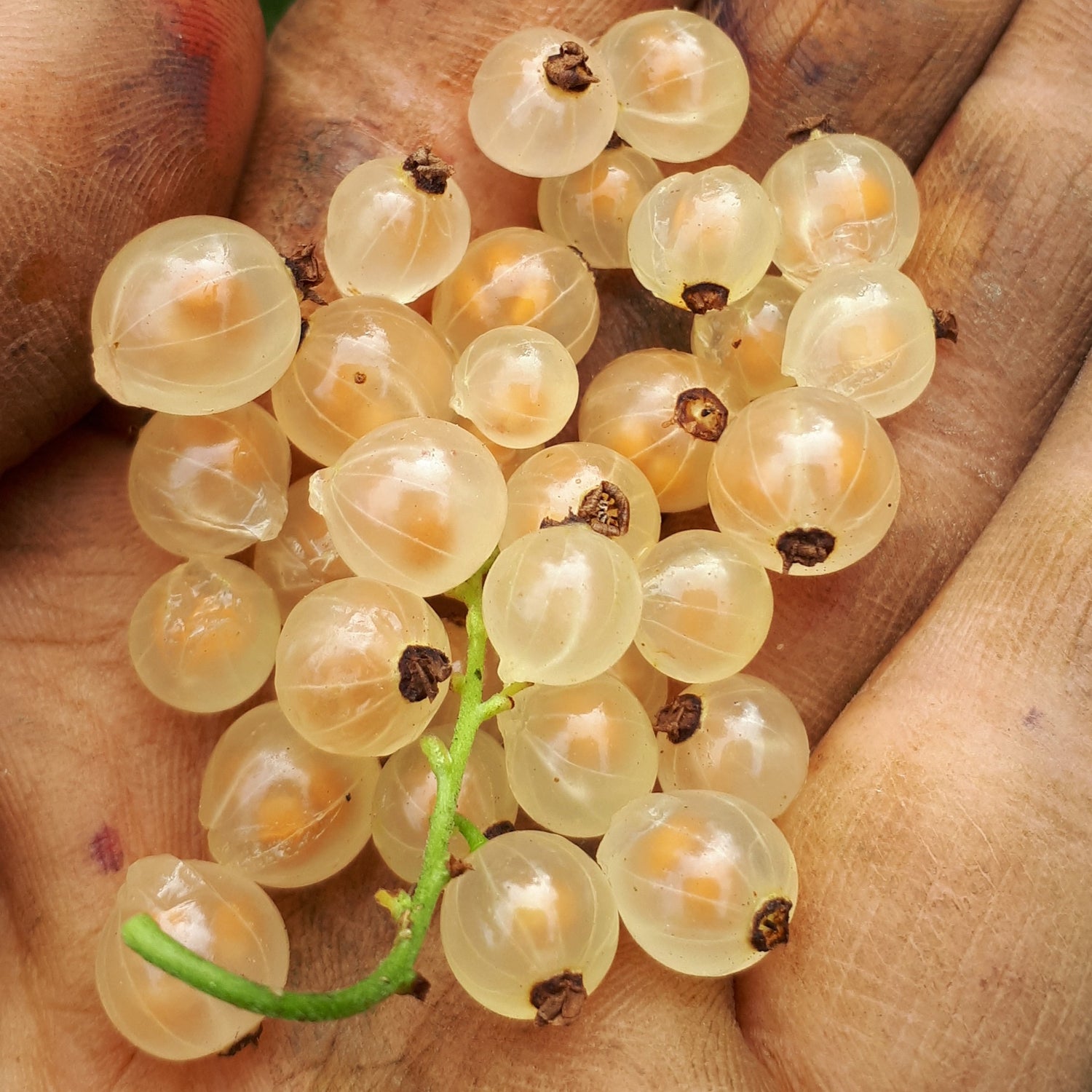
Species: Ribes rubrum
History: Developed in Holland, White Pearl currants, like all white currants, are actually an albino mutation of red currants. This variety has been popular in Europe for quite some time, although aside from its place of origin it appears there is little information on how it came to be.
Why We Grow It: These delicate translucent berries are white with a pinkish-gold hue, making them delightful to see growing in the garden. They have sweet and mild flavour that is slightly floral. The plant itself is quite cold hardy and bears prolific crops.

Species: Salix babylonica 'Tortuosa' syn. S. matsudana
History: Corkscrew willows are a variant of the Chinese Willow which are native to parts of northern China. Willow trees have been cultivated for millennia in Asia and this variety was likely selected for its unique twisting branches.
Why We Grow It: Corkscrew willows are an attractive ornamental tree year-round, sporting delicate leaves most of the year and then fully displaying their twisted branches and trunks once they have dropped their leaves. The flowers they produce in the spring are attractive to a variety of pollinators. Just be mindful of where you plant the trees, the vigorous roots can be a problem near buildings and pipes!


Why We Grow It: Although it failed to take off commercially, Silken is an excellent early fresh-eating apple. It is attractive with pale yellow skin sometimes with a faint pinkish blush. The fruit has crisp, juicy flesh that is quite sweet with a little bit of acidity. The tree grows quickly and tends to start bearing fruit at a young age.


History: Not to be confused with Pink Lady, Pink Pearl was developed by breeder Albert Etter who had the goal of creating red-fleshed apple varieties from seedlings of Surprise, a red-flashed variety. In 1940, he partnered with the California Nursery Company to bring some of these varieties to the public. Pink Pearl was selected as the best amongst his seedlings and released in 1945.
Why We Grow It: One of Steph's favourites! Pink Pearl is a delicious apple that is crisp with a pronounced unique fruity flavour and a nice blend of sweetness and sharpness. Its yellow-pink skin conceals a bright pink interior that is stunning to see compared to the white-ish flesh of most apples. It is great fresh or for applesauce, and it is relatively slow browning- it can be cut and bagged in the fridge the night before with very little change in colour the next day. Their pink colour adds a unique visual appeal to baked goods as well, such as with the gooseberry and Pink Pearl tarts Steph made pictured here!


FELCO 6 (Right-handed)
An excellent all-round choice, these compact, high-performance pruning shears / secateurs provide outstanding reach and cutting power.
The FELCO 6 combines exceptional ergonomics with a comfort in use which enables the highest cut quality every time, regardless of your hand size.
Every feature of the FELCO 6 contributes to their supreme comfort across the full range of pruning tasks. Pick them up and the compact, lightweight feel is combined the sturdy cutting power that comes from blades constructed from high quality hardened steel.
The one piece forged aluminum handle only adds to their intrinsic robust functionality. The angled cutting head creates a natural extension of the hand for even greater ergonomic comfort, while rubber shock absorbers deliver a soft closing action that protects the wrist against strain. The micro-metric setting mechanism allows for easy adjustment of the cutting head for that scalpel-like precision which exemplifies every FELCO pruning tool and makes them so indispensable.
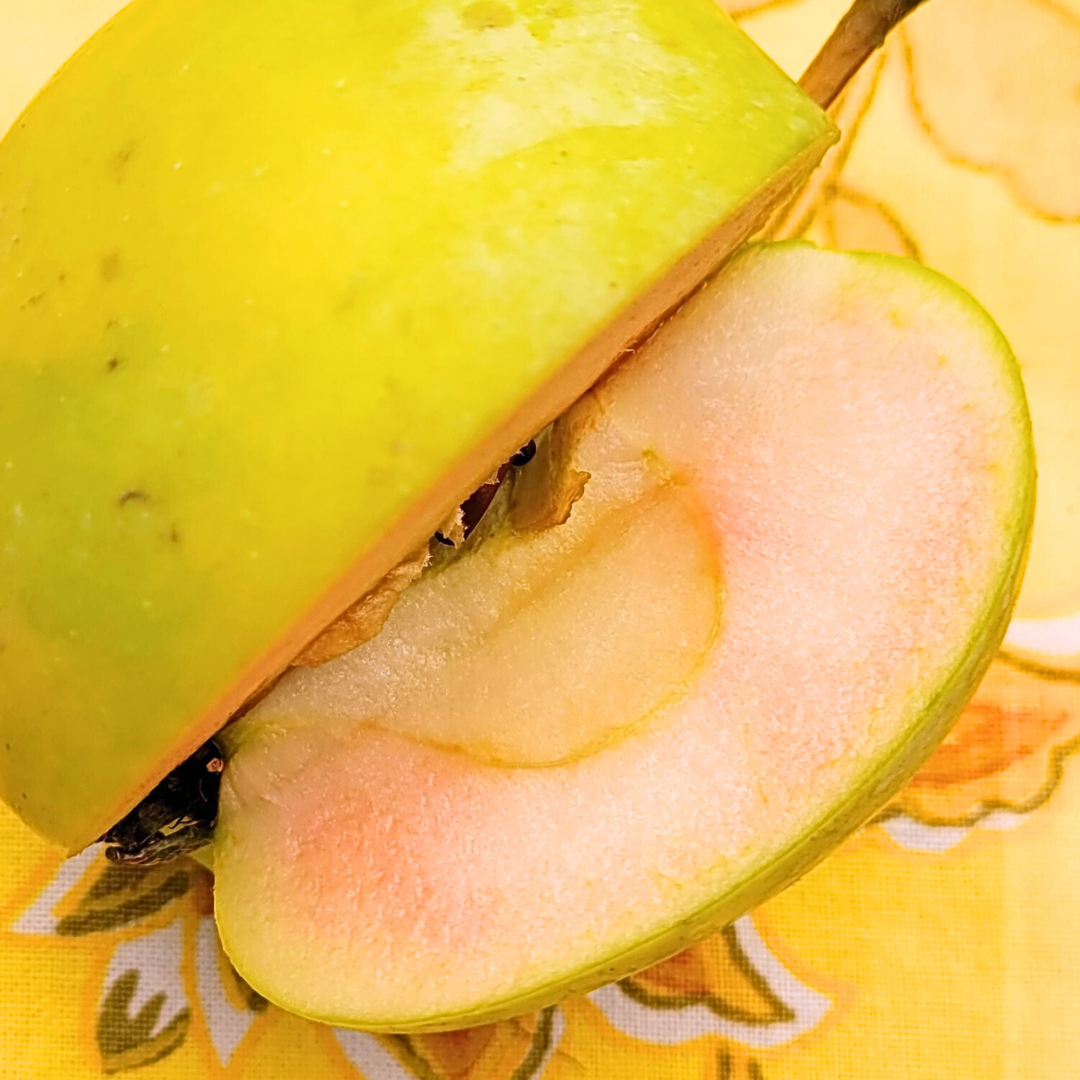
History: Airlie's Red Flesh originated on the farm of Lucky and Audrey Newell in Airlie, Oregon who sold the property in the 1960s. Two decades later in the 1980s, a Louis Kimzey was walking through the old orchard, bit into an apple from the tree, and was amazed at its stunning pink flesh. This was also known as Newell-Kimzey to reference those who found it and Airlie's Red Flesh as a reference to its place of origin and pink flesh. It also goes under a separate brand name.
Why We Grow It: This small, slightly conical apple has yellow skin that belies a bright pink interior that whitens near the core. Not only is it pretty, the fruit has a very sweet flavour with some mild astringency and the flesh is slow to brown. Along with the attractive fruit, the tree boasts bright pink blossoms that gives it an extra ornamental appeal.
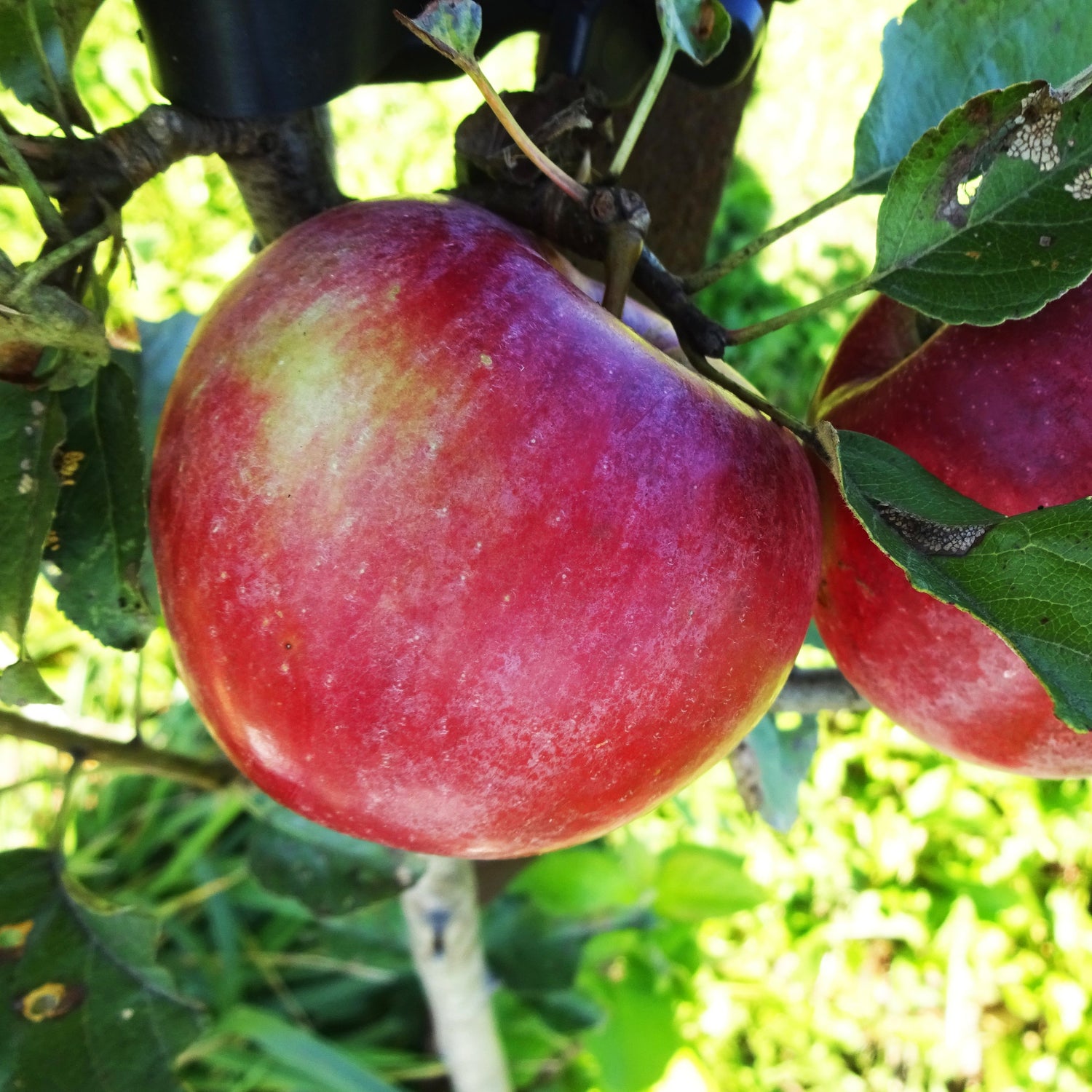
History: Sweet Sixteen was developed by the University of Minnesota and introduced in 1977. It is one of nearly thirty varieties released by the university since its breeding program began in 1888.
Why We Grow It: Some apples taste better when grown in colder climates, and Sweet Sixteen is one of them. For a fresh-eating apple, this is a favourite. Sweet Sixteen provides that crisp first bite that so many people love in an apple, and the pure white flesh will not disappoint for flavour with a very unique, distinct honeyed flavour. Its cold-hardiness and general disease-resistance (tolerant of scab and cedar rust) make it winner for the grower too.
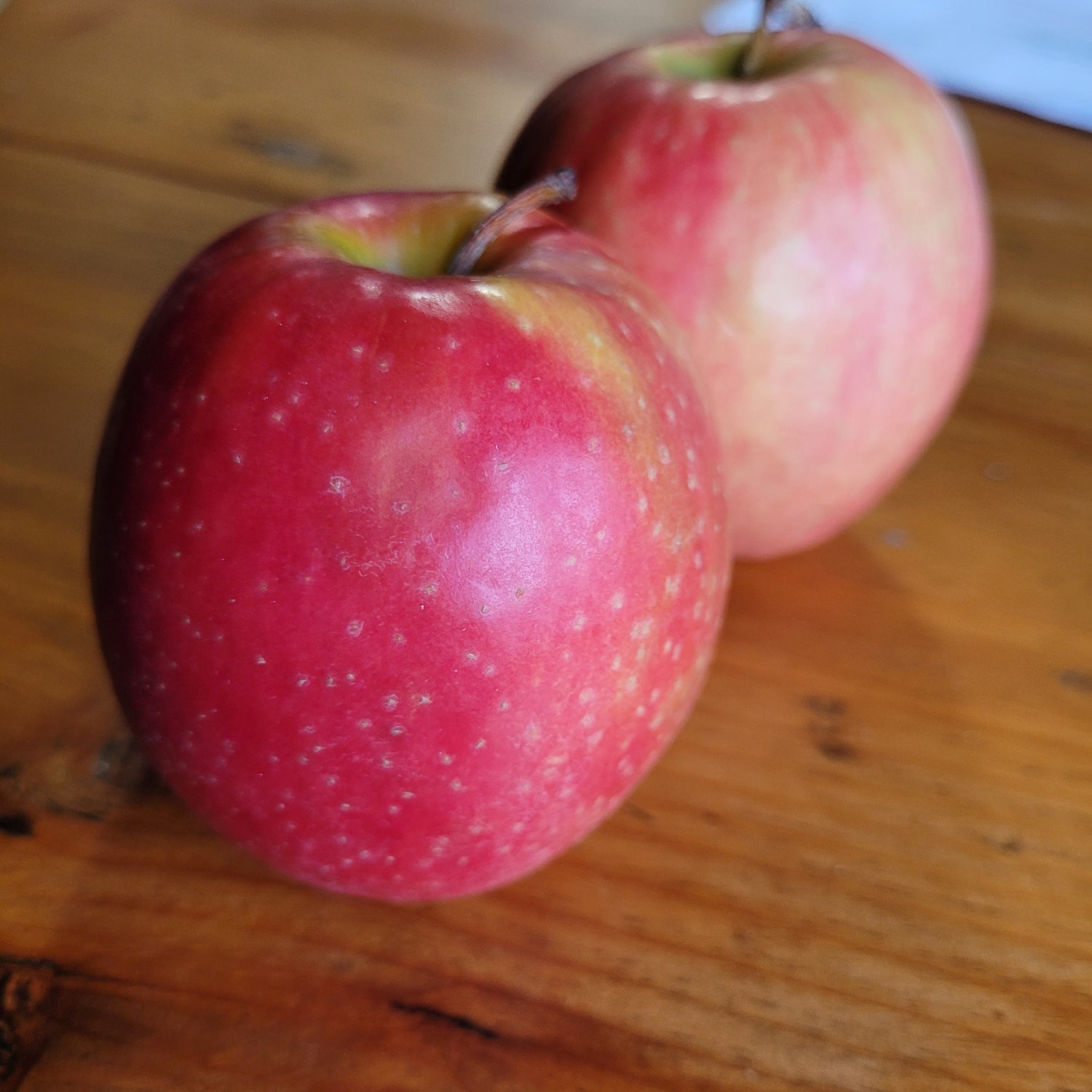
History: Cripps Pink was developed by John Cripps at the Western Australia Department of Agriculture in 1973 as a cross between Lady Williams (an Australian variety) and Golden Delicious. The successful result was introduced to the market in 1985. In just ten years, Cripps Pink became an extremely popular variety and over a million trees were planted in Australia alone. This variety remains popular in many countries around the world. This apple is also known as Pink Lady which is its brand name when the fruit meets very strict criteria for quality.
Why We Grow It: Cripps Pink has a refreshing honeyed sweet-tart flavour that makes it great for fresh eating, baking, and cider. The lovely fruit, yellow with a pinkish-red blush, is slow to brown and also stores exceptionally well.


History: Mindemoya was discovered growing along the shores of Lake Mindemoya on Manitoulin Island along with Mindemoya Maroon. Wayne Kuntze happened upon these trees in 2020 while vacationing with his family. The good size and pinkish striping on the fruit caught his eye, and the sweet flavour sealed the deal! Now in 2023, we are happy to introduce this variety to the world!
Why We Grow It: Always on the search for new varieties, we are happy to grow and offer something that Wayne discovered! Mindemoya is an attractive whitish apple with pinkish-red stripes. It has a pleasantly sweet flavour and plenty of juice, along with a soft texture that may make it good for applesauce along with fresh eating.
This is a brand new variety and we're still learning about it! For any avid apple growers who decide to plant these out, feel free to keep us updated on how it grows, what you use the fruit for, etc, so we can provide as much information as possible!

Why We Grow It: It is hard to turn down an apple that sounds as wonderful as Sundance! It is crisp and juicy with a spicy, citric flavour. Along with being great for fresh eating, the fruit also holds its shape well when baked. As an added bonus, this variety is resistant to many common apple diseases and stores quite well so you'll have plenty of high quality apples to easily last you through the winter.
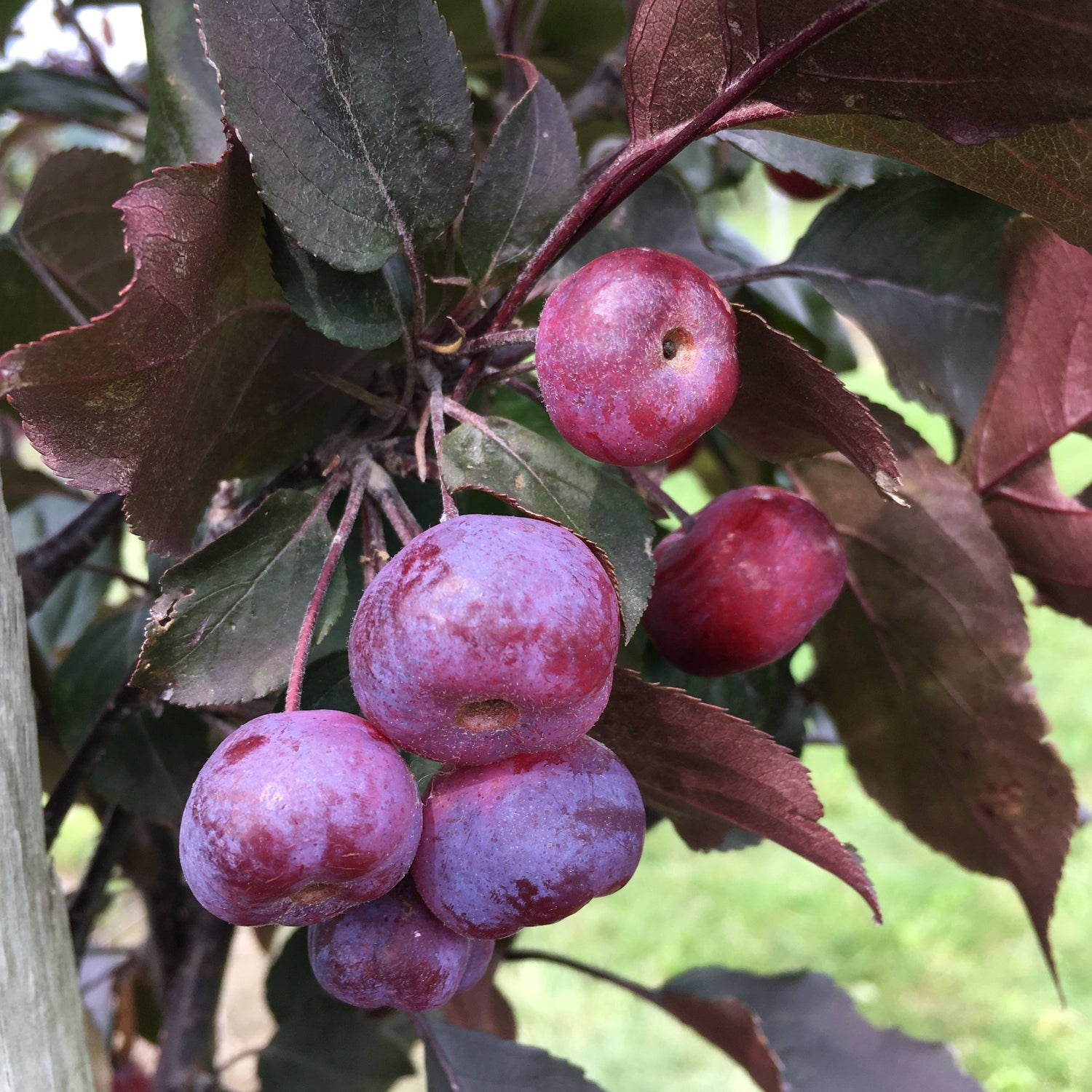
History: Thunderchild is a crabapple that was developed by Percy Wright, a prairie plant breeder in Saskatoon, Saskatchewan. Although it is unknown when exactly Thunderchild was created, it likely came about in the 1900s and can still be seen as a common ornamental tree in the area.
Why We Grow It: Thunderchild makes for a lovely ornamental tree with a profusion of pink blossoms in the spring and deep red foliage. The tiny dark red fruits it produces can be used in cider blends and to make jellies with a gorgeous orange hue. The tree is quite cold hardy and generally disease resistant.
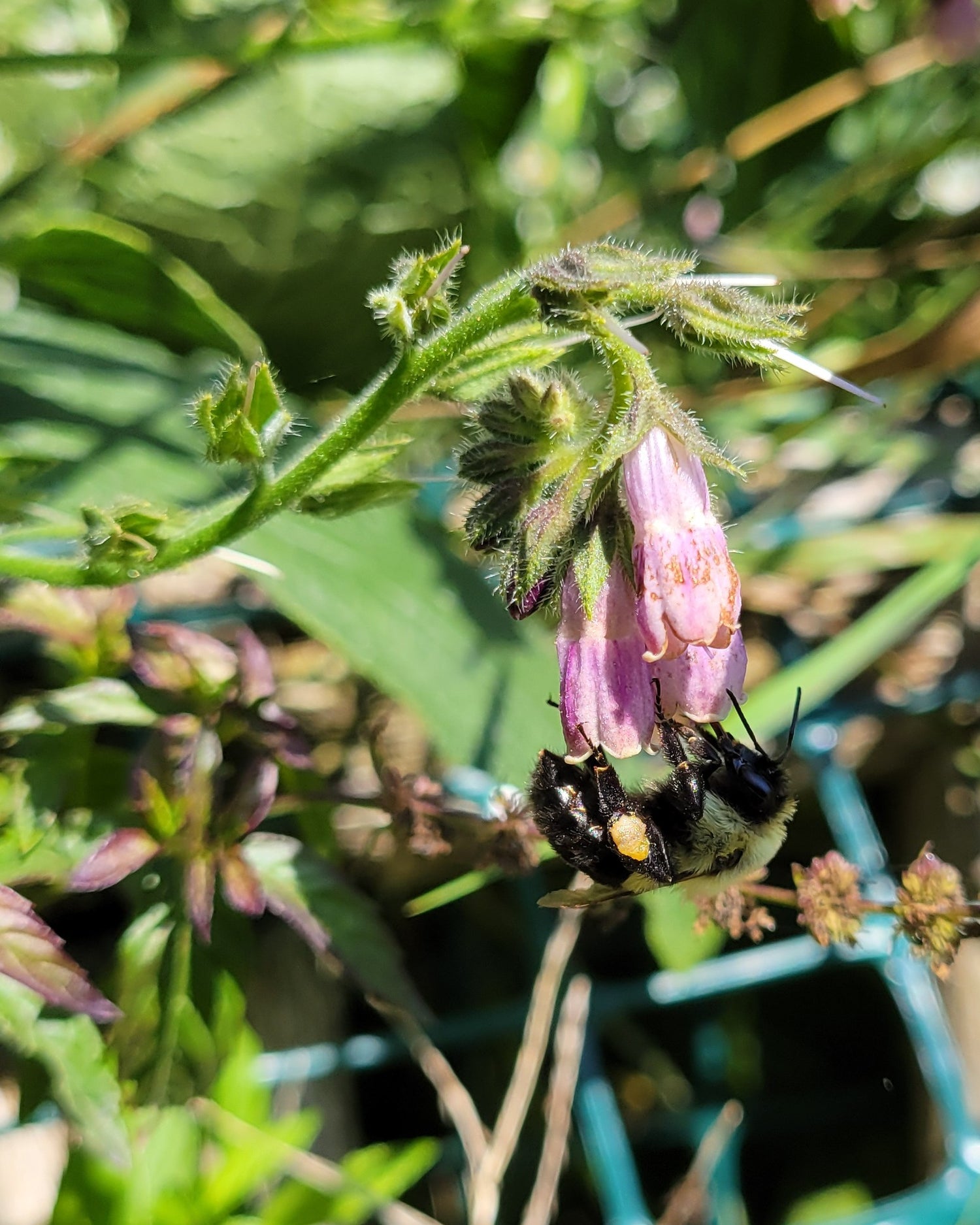
2026/2027 Staff Favourite
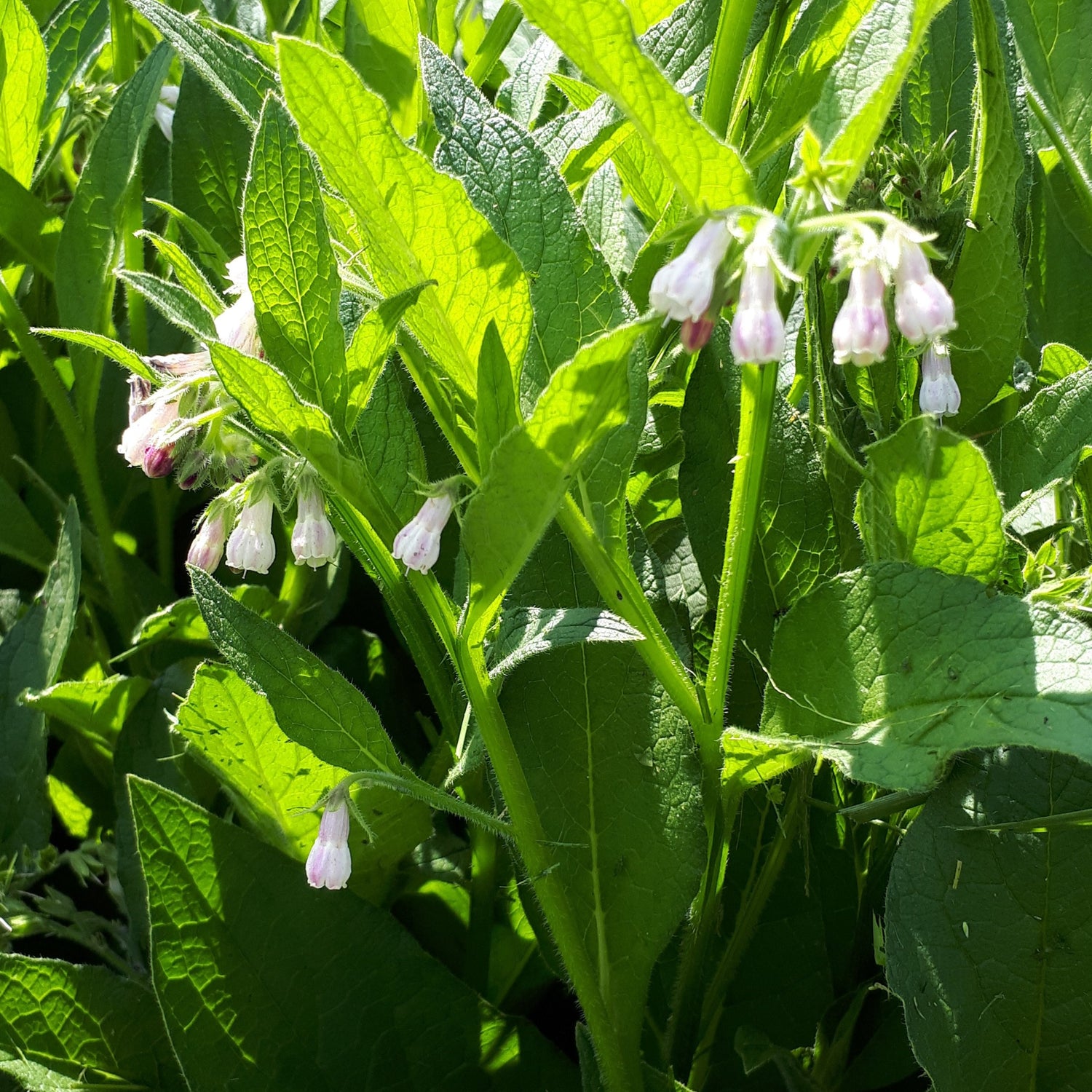
Comfrey is Jodi's favourite this year! As Jodi says, “I love watching my honeybees and various bumblebees visiting comfrey flowers. Not only does this plant support pollinators, it can be used to create living mulch (plant it 3-4’ away from a tree) and compost teas, and has herbal/medicinal uses too. Our comfrey does not spread by seed, so the patch is easy to contain.”
All Staff Favourites are 20% off. The Staff Favourite Discount cannot be combined with other quantity discounts.
Species: Symphytum sp.
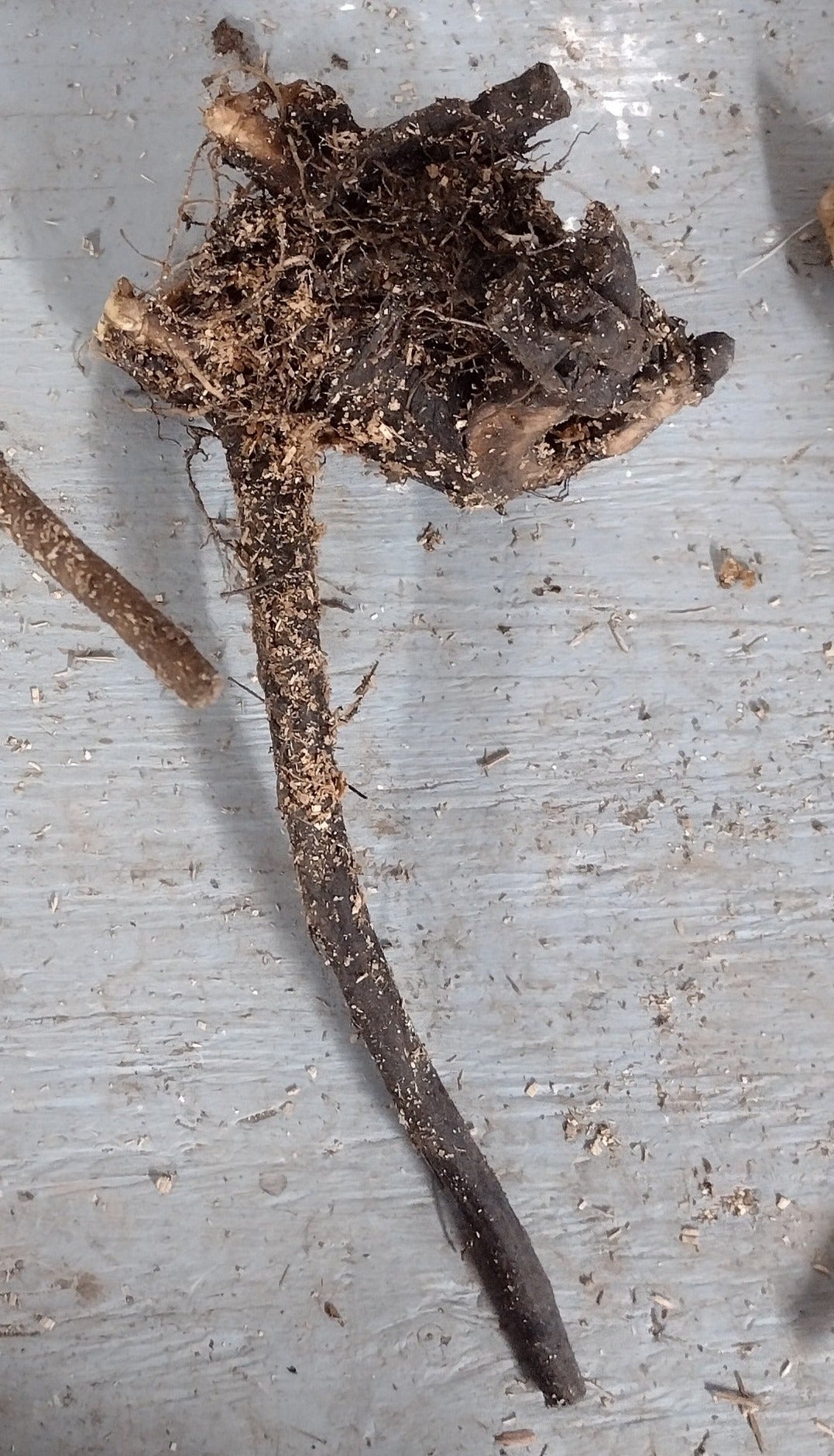
History: Comfrey plants are native to various continents around the world including Europe, Asia, and North America. Common names such as boneset and knitbone and its genus name referencing the Greek 'symphis' meaning 'growing together of bones' indicates it may have been used medicinally for mending bones. Comfrey is now popular as a permaculture plant. Our comfrey comes from a patch that has been on the property we rent for years and years, so we unfortunately do not know what variety it is. As far as we can tell, it does not spread via seed.
Why We Grow It: This classic permaculture plant grows incredibly deep tap roots, mining rich nutrients from deep below the soil surface. It's a living mulch that 'molts' 3-4 times each season. It's used in traditional medicine and creates a healthful compost tea full of calcium and potassium. It grows up to 70 cm tall, before molting down, and spreads slowly over the years. As an added benefit, both honey bees and bumble bees love visiting the blossoms too! While we do not know what variety our comfrey is, it does not appear to spread via seed.

History: Ginger Gold has quite the dramatic origin. In 1969 Hurricane Camille hit Virginia and brought awful floods, devastating the orchards of Clyde and Frances "Ginger" Harvey. As Clyde Harvey went to save the few remaining trees in his Winesap orchard, he discovered a mysterious seedling that produced yellow apples instead of red. Genetic testing showed it was a seedling of Golden Delicious, Albermarle Pippin, and an unknown third variety. Clyde named the variety after his wife and it was introduced commercially in 1982. Since then, it has become a commercially popular early variety! In 2007, the Virginia General Assembly proposed a bill to make Ginger Gold the official state apple, although this bill was sadly tabled.
Why We Grow It: It is easy to see why this such a popular early apple! Ginger Gold produces lovely bright yellow apples that sometimes sport a red blush. These medium-large apples have are firm and juicy with a pleasant sweet flavour that has a nice tart finish. The fruit is slow to brown which makes them even better for fresh-eating along with drying. For fans of feeding wildlife, Ginger Gold apples are known to hang onto the tree well after they are ripe.


Species: Corylus heterophylla, C. americana, or C. heterophylla x C. americana
History: These hazelnut seedlings are grown from seed sourced from an open-pollinated, mixed hazelnut orchard at Grimo Nut Nursery. Since the orchard is open-pollinated, the resulting seedlings may be Asian hazelnuts, American hazelnuts, or hybrids of the two!
Why We Grow It: With such random cross-pollination, each seedling has the chance to be quite unique! Regardless of what you get, they will produce nuts that are excellent for a variety of uses!
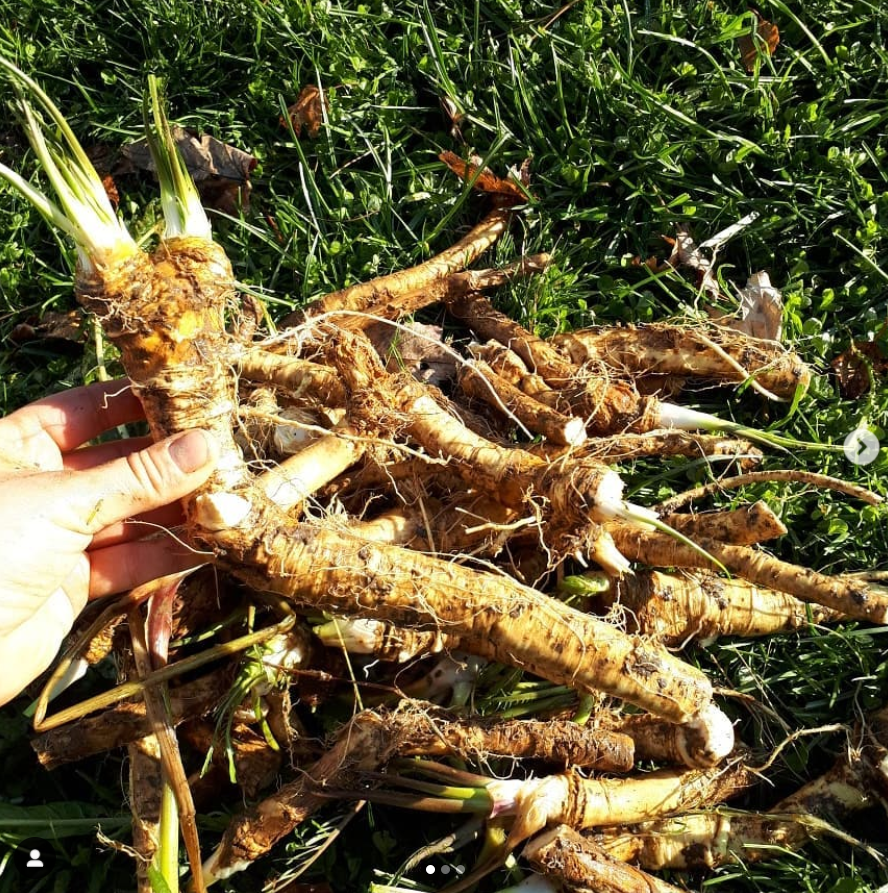
Species: Armoracia rusticana
History: Horseradish originated somewhere in the Mediterranean and has been well known since ancient history, appearing in writings from Ancient Greece, Ancient Rome, and the Renaissance. It has historically been used for both culinary and medicinal purposes in Europe and was introduced to North America by European colonizers where indigenous peoples also adopted it for medicinal use. Today, horseradish is commonly grown around the world and used in cooking or to make sauces. An enzyme in horseradish also has applications in molecular biology and biochemistry!
Why We Grow it: Horseradish is a root vegetable with a distinctly pungent and sharp taste. As a result, it is most often used in cooking and making sauces/condiments. It is a hardy vegetable and has a tendency to spread through the garden so extra care should be taken to keep it contained when planting it.
History: Whitney crabapples were grown from seed by nurseryman A.R. Whitney around 1865 at Whitney Nursery in Illinois, US. It became popular for its excellent cold hardiness and productivity and in the 1900s the state of Montana recommended it as one of the best crabapple varieties to grow.
Why We Grow It: These large (for a crabapple) yellow and red apples boast a sweet-sharp flavour with some astringency and juicy, crispy flesh. They are a truly multipurpose fruit and can be eaten fresh (if you like some astringency to your apple) or used for cooking, sauce, cider, and jelly. The trees are very cold hardy and boast good disease resistance as well.


History: Generally just known as Gravenstein, it is unknown when or where exactly these apples came from but they were imported from France to Denmark in the 1600s by Count Frederik the Younger and planted at the summer residence of the Danish royal family, Gråsten Palace. As a result the variety was named Gråsten (Danish for graystone) which translates to Gravenstein in German. This apple has been popular in Canada since the 1820s, particularly in Nova Scotia, and provided the dried apples and applesauce for American soldiers during WW2. In 2005 it was declared the national apple of Denmark.
Why We Grow It: Yellow Gravenstein's excellence as a fresh eating and cooking apple makes it easy to see why it is grown in so many different countries, even if the tree is slow to bear fruit and is prone to many common fruit tree diseases (although we haven't had much issues growing it here). It has a great sweet/tart flavour and is crunchy and juicy. The fruit is a nice yellow with red striping.

Why We Grow It: It is easy to see why growers were so eager to overlook Viking's scab susceptibility, its flavour providing a sweet-tart taste with notes of rose and lychee. It is an excellent all-purpose apple that can be used for cooking, baking, sauce, and cider. Its great flavour and utility is matched by its attractive appearance, the large fruit featuring dark red skin bordering on maroon. However, it does bruise easily and brown quickly and only stores for about a month at most.

History: Sekai Ichi (translated literally from Japanese as 'world number one,' more accurately meaning 'best in the world') was bred at the Prefectural Experiment Station in Aomori, Japan in 1930 and released in 1974. It is a cross between Red Delicious and Golden Delicious. This variety is quite highly regarded in Japan where a single apple can sell for as much as $25 each. Each apple is hand pollinated, washed in honey, and hand-stamped while being inspected to ensure its quality.
Why We Grow It: Although we don't get quite that fancy here, Sekai Ichi is nonetheless a great apple if you enjoy sweet, crunchy, apples with no acidity, as is common with Japanese varieties. It is red over greenish skin and very large with an average circumference of 30-45cm and average weight of 2lb. The tree itself is very vigorous although slow to start bearing fruit with a tendency towards biennial bearing.

Why We Grow It: Melrose produces a flattish apple that has greenish skin overlaid with a bright red flush. It is firm, juicy, and sweet with a more acidic flavour that improves after a little while in storage. It is great for both fresh eating and cooking and can be stored for several months. The tree itself starts to bear at a young age and produces heavy crops, although it has a tendency to bear fruit every other year.

Why We Grow It: Along with the great sweet flavour and juiciness of the original, Fuji BC #2 also boasts redder skin, making it more appealing for those who prefer red apples.

Why We Grow It: The saying 'big things come in small packages' holds true for Chinook. Although the fruit is on the smaller side, it boasts a lovely red skin, excellent sweet-tart flavour, a nice aroma, and crisp and juicy flesh. Fans of this variety will be happy to hear that the fruit can be enjoyed well through the winter, it is an excellent keeper and can last 6-7 months in storage. On top of that the tree grows fairly vigorously, starts bearing fruit at a young age, and produces heavy crops (although thinning will be required).


History: True Root Pippin was discovered on Steph's dad Gary Roth on the family farm in 2022. He happened to come across a large apple tree, a chance seedling, covered in fruit growing along the fenceline and decided to sample them. Pleased by the quality of the apples, we later decided to propagate this lucky find and make these apples available to everyone! It was named True Root Pippin in honour of True Root Nursery, Gary Roth's nursery which is located on the property and is the source of our seedlings. We are happy to introduce True Root Pippin for the first time in 2024.
Why We Grow It: We're always on the lookout for exciting new varieties and this one stood out! True Root Pippin is a pleasant green apple with attractive red striping, albeit it is on the smaller side. It has a good sweet flavour balanced with some tartness. It keeps well and produces nice, clean fruit with minimal care.
Since this is a new variety, there is still a lot for us to learn about it! If you grow this variety and have any observations or find any fun uses for the fruit, we'd love to hear from you!

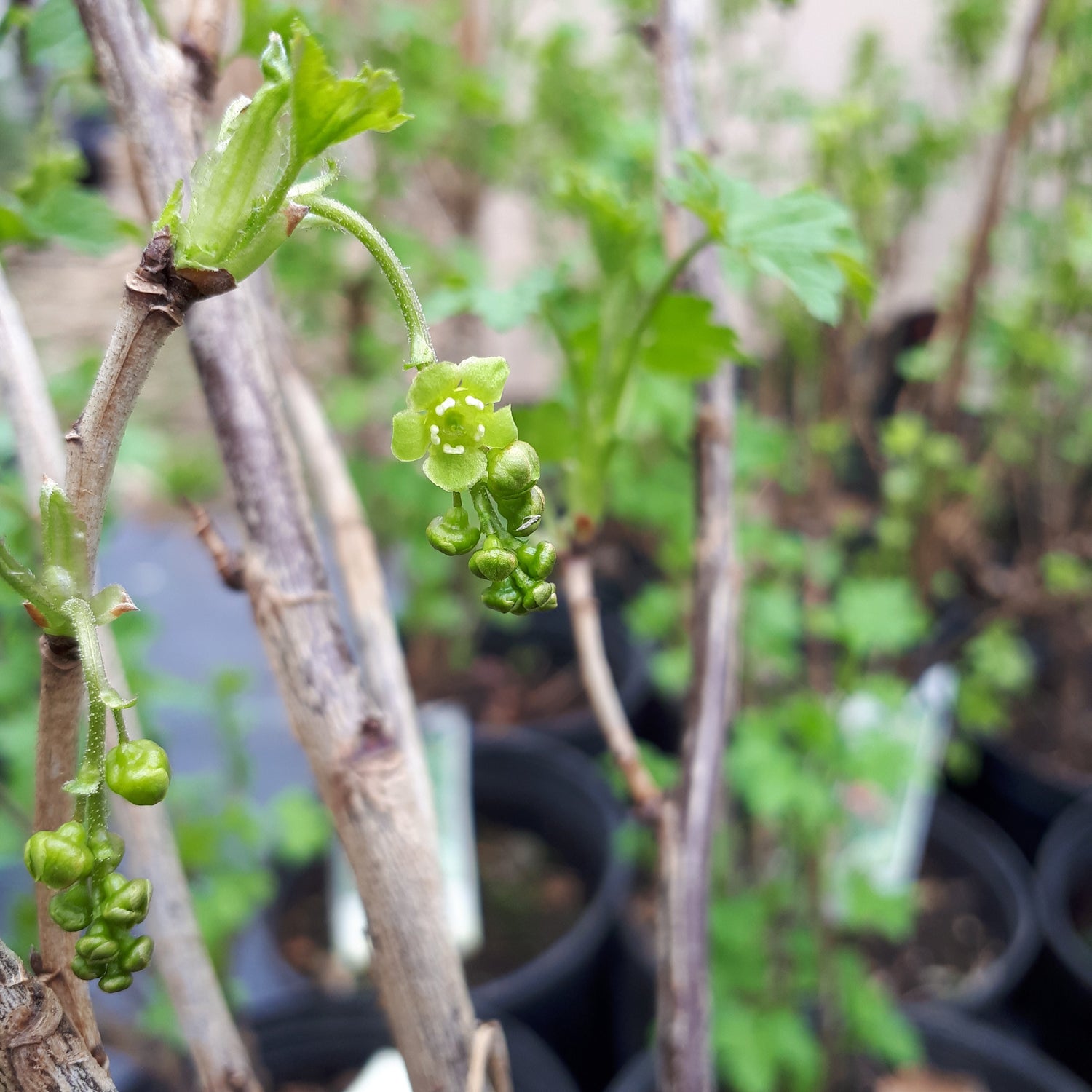
Species: Ribes nigrum
History: This black currant is a family classic that was grown by Ken's great-grandmother.
Why We Grow It: Grandma Ethel produces large fruit with a slightly stronger flavour than Titania and an unusual sweetness for a currant. The berries make a very tasty juice - the recipe can be found further below!
A note on the "Grandma" Series: Inspired by this modest currants' success here at the nursery, we decided to curate our own repertoire of family favourites! Check out our tried-n-true gooseberries, rhubarb and raspberries.


History: Fresco, also known by the brand name Wellant®, was developed through a fruit breeding collaboration between Inova Fruit and the Applied Plant Research at the Wageningen University and Research Center in the Netherlands. The goal was to create an apple variety that better aligned with changing consumer tastes. It was bred in the late 1900s and named Fresco during the years it underwent various tests before being released in 2004 under the brand name Wellant®. It is primarily grown and sold in Europe.
Why We Grow It: Fresco produces a large, deep red fruit that is crunchy with a strong flavour high in both sweetness and tartness. It is excellent for fresh eating and can be used in baking and cooking as well. An excellent multi-purpose apple!


History: Priscilla is the second apple variety developed through the collaborative PRI disease-resistant breeding program run by Purdue University, Rutgers University, and the University of Illinois. It was planted in 1962 and has a complex heritage that includes Starking Delicious, McIntosh, Golden Delicious, and Rome Beauty. It was introduced in 1972 and named 'Priscilla' after Priscilla Hovde, the wife of the seventh president of Purdue University as it happened to fit the 'pri' naming scheme for the varieties developed through the program.
Why We Grow It: Another successful introduction from the PRI breeding program, Priscilla boasts resistance to most common apple diseases including fireblight and scab. The fruit is also quite attractive with a deep red blush over yellow skin with a sweet and subacid flavour.

History: Miki* Life was bred in Hirosaki City, Japan in 1981 by Seiichi Kudo and patented in 1996. It is a cross between two popular Japanese varieties: Tsugaru and Senshu.
*without knowing how the name is written in Japanese, it is difficult to say what 'miki' translates to but it could be 'beautiful tree'
Why We Grow It: Like many other Japanese varieties, Miki Life is a lovely red apple that is all sweetness with no acidity. These juicy apples can also be used to help bulk up cider and add alcohol by adding more sugars.