Rootstock & Scionwood
Rootstock & Scionwood
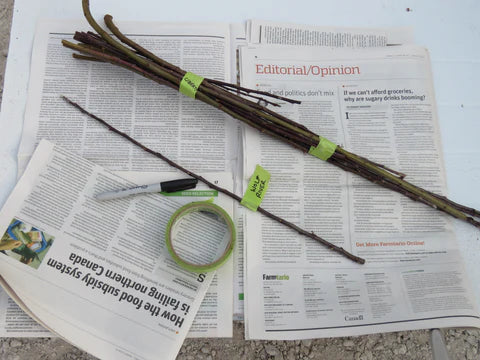
Every year we get tons of requests for rootstock and scionwood. While our main business is in the finished product (grafted fruit trees), we also like to support those wishing to learn the grafting process for themselves. We can attest that it is a very enjoyable (and rather addictive) pastime!
Rootstock - We are accepting pre-orders for rootstock for Spring 2027! If you are interested in requesting rootstock for Spring 2028 please contact us directly to be added to our waitlist.
Scionwood - Please contact us directly if you are interested in being added to our Spring 2027 waitlist. Scionwood orders are generally open from December until the end of February and should be shipped out/picked up by mid-April.
For those new to the grafting process, we also offer the following resources:
- Our annual in-person Apple Grafting Workshop!
-
Fruit Tree Grafting for Everyone, a handy grafting guide co-authored by Steph who owns Silver Creek Nursery!
239 products
Sort by:
239 products
239 products

History: Honeygold apples were developed by the University of Minnesota and introduced in 1970. It is one of nearly 30 varieties that have been developed by the university's breeding program since it began in 1888. This apple is a cross between Golden Delicious and Haralson, designed to combine the taste of the former with the cold hardiness of the latter. Honeygold is also famous for being mistakenly identified as one of the parents of Honeycrisp, although that has since been rectified.
Why We Grow It: With the sweet taste and appealing look of Golden Delicious but the cold hardiness of Haralson, this is an excellent apple for anyone living in colder hardiness zones. It is great for fresh eating as well as making pies and applesauce. The tree is also somewhat scab resistant.
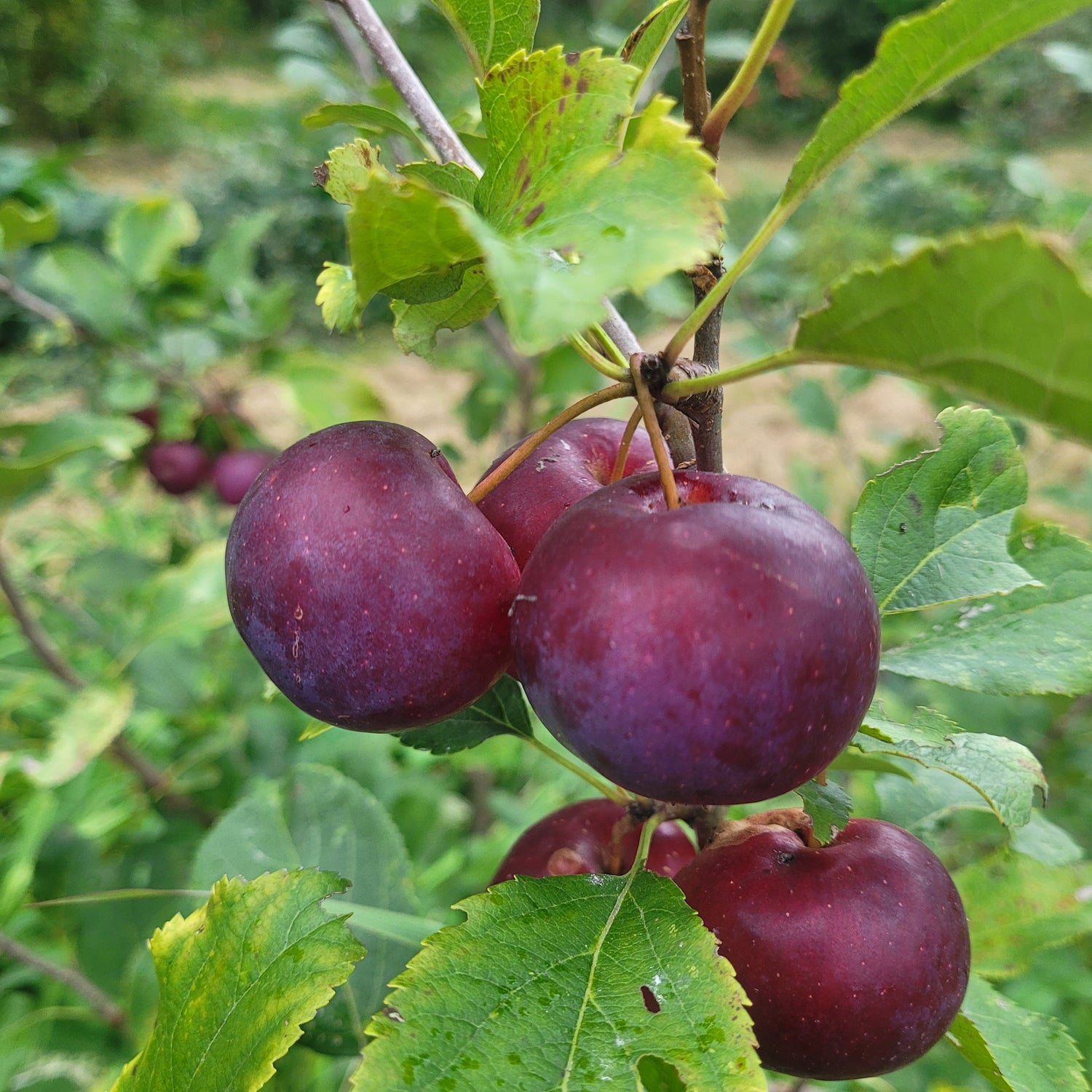
History: The exact origins of Hyslop are unclear but it was discovered sometime in the early 1800s around Boston by the Hyslop family who helped develop the area. This apple was popular for over a century but in recent years has fallen into obscurity.
Why We Grow It: Although definitely not recommended for fresh eating, Hyslop crabapples have a sub-acid, astringent flavour and are great in cider blends. They are also known as being one of the best apples for jellies. The tree is quite attractive with blue tinged blossoms in the spring and brilliant red/purple fruit in the fall.

History: Idared apples were developed at the University of Idaho Agricultural Experiment Station in 1942. Although its flavour is generally considered average, its excellent storage qualities have made it one of the most popular apple varieties in North America.
Why We Grow It: Idared's best quality is its ability to easily last six months when stored in a fridge, potentially until June under optimal storage conditions. The flesh tends to be softer and is white with some tinges of green. The flavour is described as sprightly, moderately acidic, and tangy, and this apple boasts a high Vitamin C content. It is great for baking and making applesauce. The tree's naturally somewhat smaller size makes Idared easier to prune and train.

Species: Morus rubra x M. alba
History: Illinois Everbearing was discovered in Illinois, US by the Wabash River and is a natural cross between red mulberries (M. rubra) and white mulberries (M. alba). It was discovered by Peter Glaser in 1947 and likely selected for its excellent fruit quality and everbearing nature. Named for its State of origin and long harvest window, Illinois Everbearing was released in 1958 by Burgess Seed and Plant Co. in Michigan and has since become one of the most popular mulberries in North America.
Why We Grow It: Illinois Everbearing produces large, almost seedless mulberries with an excellent flavour. They are great for eating fresh, baking, or making into jams. Better yet, these excellent mulberries ripen from July into September, providing a wide window to enjoy these tasty treats. The tree itself is hardy and vigorous but is relatively easy to keep pruned to a smaller size.

History: Jonagold, a cross between Golden Delicious and Jonathan, was developed in 1953 at the New York State Agricultural Experiment Station at Cornell University. With its large size and sweet flavour, it has become one of the most popular apples in North America and is especially popular in Belgium.
Why We Grow It: The fruit is attractive with a red blush over yellow skin. It has a pleasant sweet-sour flavour that makes it a great multi-purpose apple.

History: Jonathan has an interesting history since there are two potential origins. One story says that Rachel Higley collected apple seeds from the local cider mill which she later grew on her new property in Ohio in 1796. She named one of the new varieties Jonathan after a young boy who often visited her orchard. The second, and more likely story, is that it was grown by farmer Philip Rick in the 1820s in New York. Originally named Rick, the apple was renamed Jonathan after the man who brought it to the attention of the Albany Horticultural Society.
Why We Grow It: These cheery red apples are crisp, juicy, and sweet. They are good for fresh eating as well as turning into pies and sauce. The fruit also stores quite well, lasting until January/February under optimal conditions.
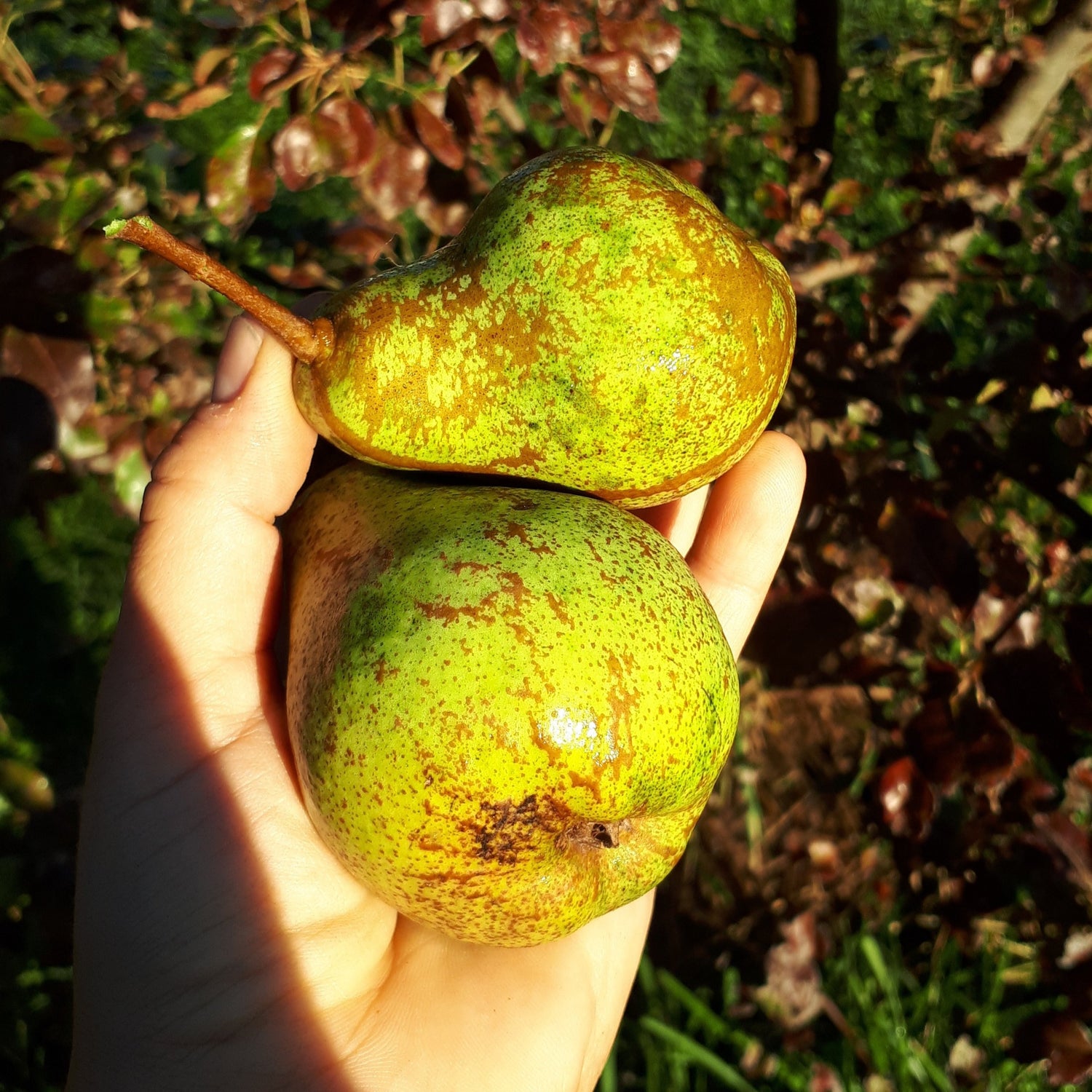
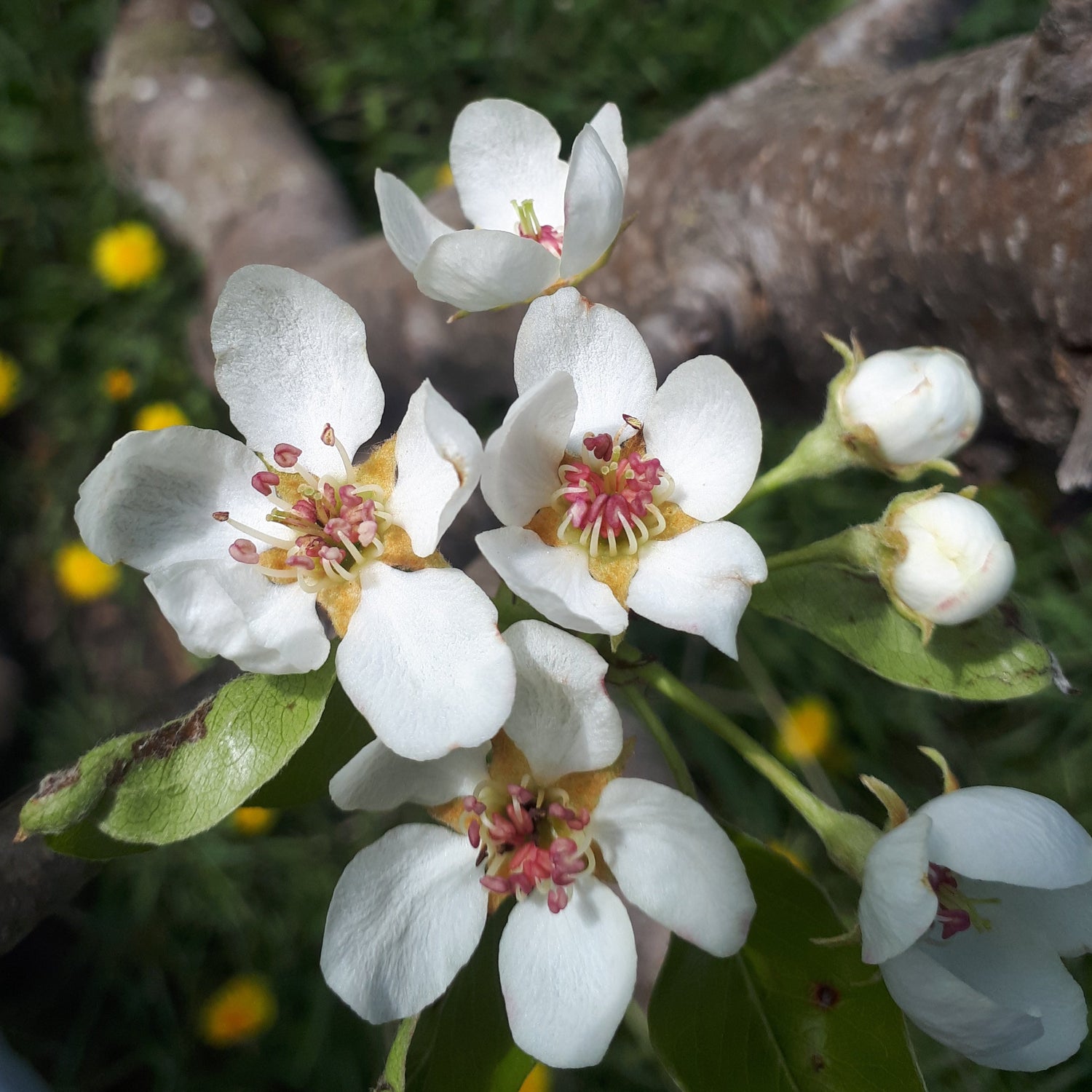
History: Jules d'Airoles was first discovered by Leon Leclerc in Laval, France, in 1836. It was named after Jules de Liron d'Airoles, a notable French horticulturalist and pomologist. Confusingly, this pear shares its name with a Belgian variety grown about twenty years later by François-Xavier Grégoire-Nélis.
Why We Grow It: This pear develops in storage to a wonderful treat: very sweet and a touch tangy, semi-fine juicy flesh, with pleasant tannic notes depending on the terroir. Smooth, thick green skin with a lovely rose blush where the sun touches the fruit.

History: Kandil Sinap* originated in the early 1800s around the Black Sea, although it is debated whether it originally came from the Crimean Peninsula in the Ukraine or the Sinop Peninsula in Turkey. It was at one time commonly exported into Russia.
*There are different thoughts on what Kandil Sinap translates to, some say it is 'candle of Sinop,' others 'sweet apple of Sinap,' and it translates directly from Turkish as 'oil lamp'
Why We Grow It: Kandil Sinap's most prominent feature is the odd shape of the fruit, strangely oblong and conical, almost resembling a candle in appearance. The odd green fruit have a sweet, sprightly flavour and are quite aromatic, although they do bruise easily. The tree naturally stays smaller but produces heavy crops and is great for backyard orchards.

History: York Imperial was discovered as a seedling tree growing on the farm of John Kline in Pennsylvania. Nurseryman Jonathan Jessop, of Springwood Farm in York, Pennsylvania, began propagating the variety in 1820 after witnessing schoolboys digging through the leaves around the base of the tree in spring and retrieving apples there were in great condition despite spending all winter on the ground. In an age without refrigeration, Jessop knew this variety had excellent commercial potential. It was initially named Jonathan's Fine Winter for its excellent storage properties but was later renamed York Imperial after horticulturalist Andrew Jackson Downing called it the 'imperial of keepers,' again referencing its storability and the location of Jessop's farm. It quickly became popular and remains one of few heritage apples that are still commonly grown in the US today.
Why We Grow It: York Imperial produces a rather lop-sided fruit with yellow skin and red striping. It is crisp and juicy with a lovely sweet, honeyed flavour that is hard to turn down. The fruit is truly all-purpose, also being great for cooking, baking, jelly, juice, drying, and cider and generally storing quite well. While not the fastest growing tree and with a tendency to start producing fruit a little later than other varieties, York Imperial is an exercise in patience that is well worth the wait.


History: Karneval (translated from Czech as 'Carnival') was developed at the Institute of Experimental Botany in Prague in the Czech Republic by Dr. Jaroslav Tupý. It is a cross between Vanda and Cripps Pink. It was released in 2011 and like many other modern apples, boasts a sweeter flavour and good disease resistance. However, the main reason this apple was likely selected and given its fun name was for the bright red striped that adorn it.
Why We Grow It: Karneval is medium sized apple that is sweet, juicy and just a little tart and aromatic. However, this apple is best known for its unique appearance: yellow skin with distinct red stripes that would make it feel at home at the circus. Great flavour, striking visual appeal, good storage capabilities, and good disease resistance make this apple an excellent choice for any grower.

Why We Grow It: These large, red apples boast a high acid content along with high sugars and a strong fruity flavour, making them excellent cooking apples. Like other English cooking apples, it breaks down when cooked.
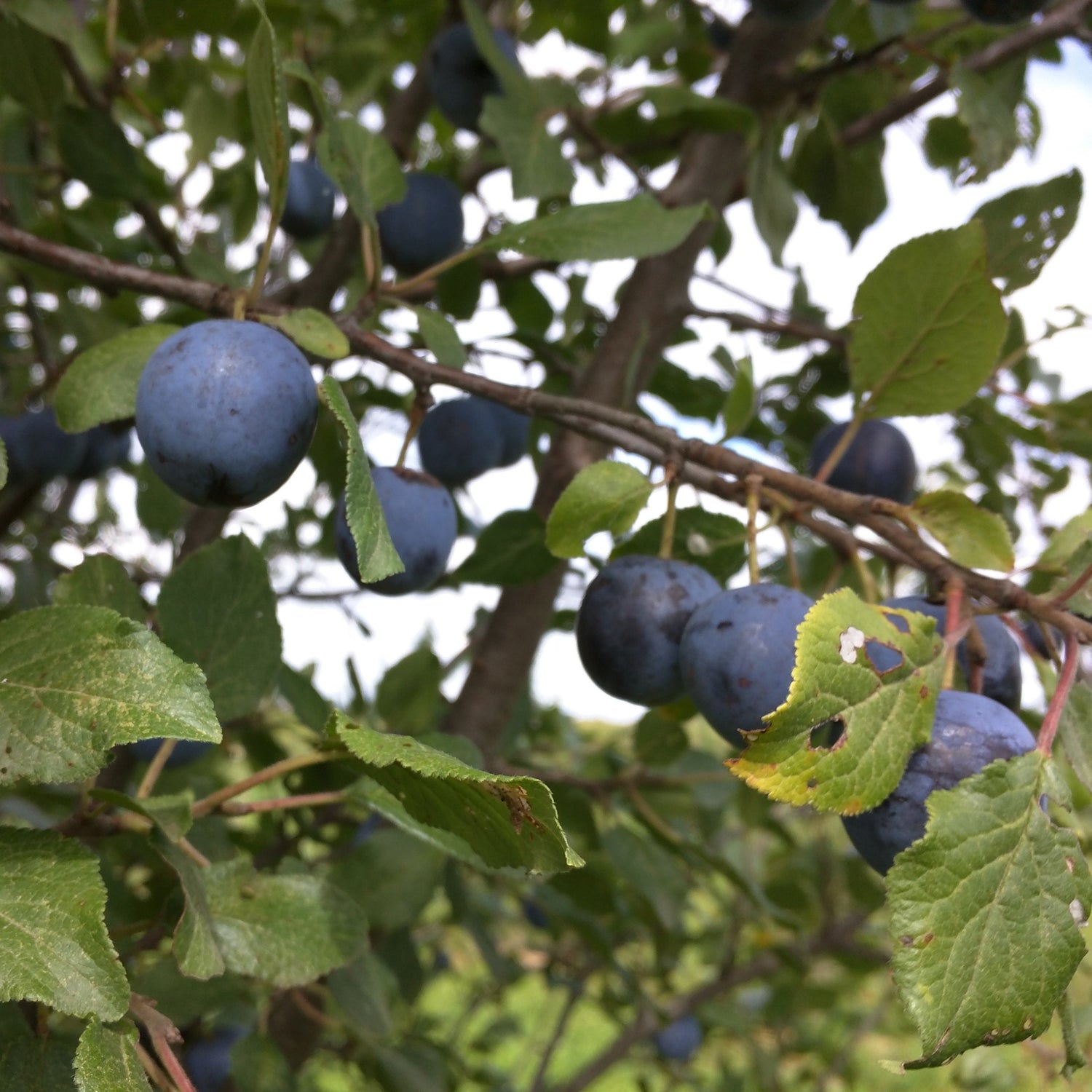
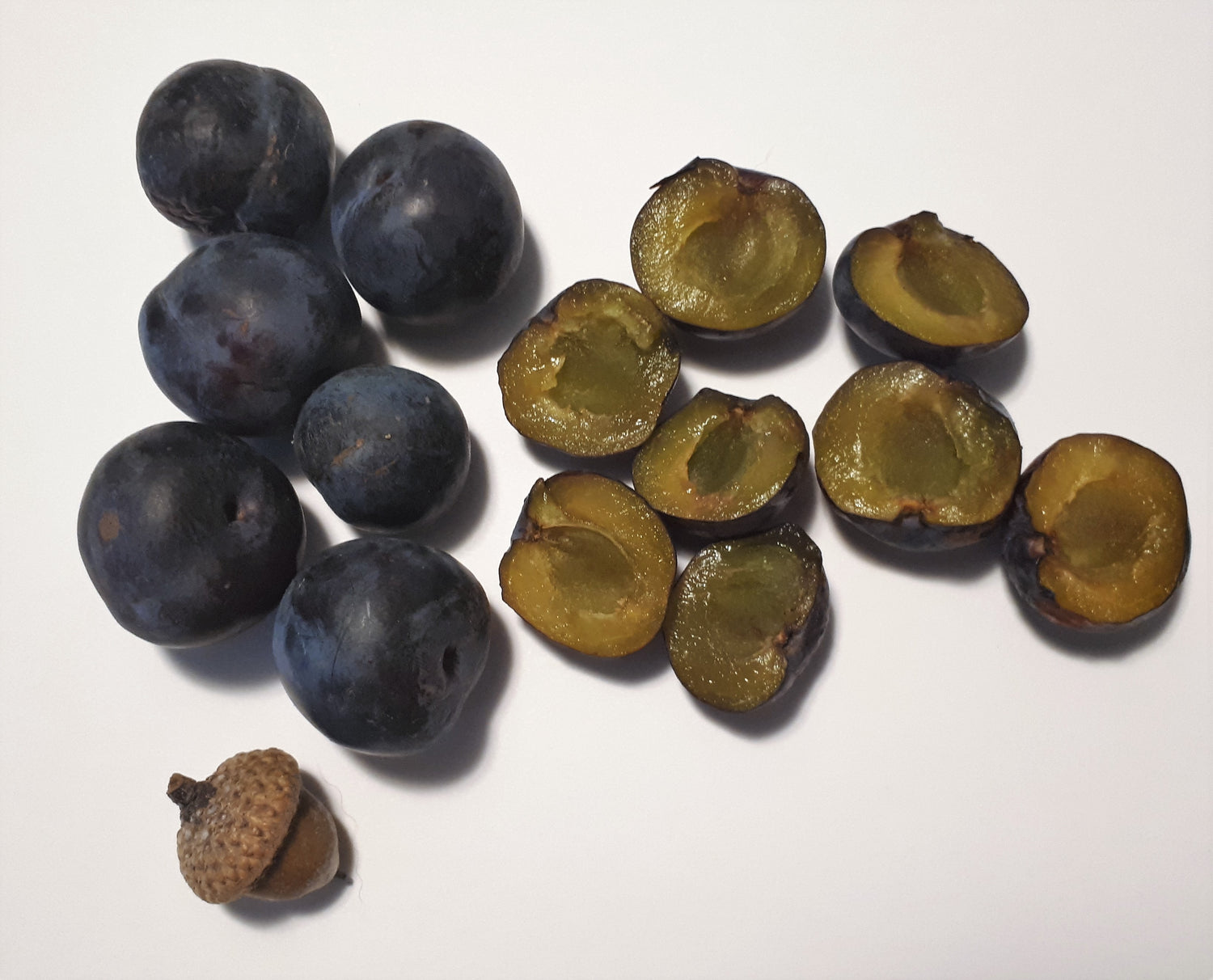
History: Little is known about this particular variety aside from that it's a Damson plum that originated in Sweden. 'Krikon' is the Swedish word for 'damson.'
Why We Grow It: Although its history is a bit of a mystery, we can certainly tell you that this is the best plum variety for very cold regions. It produces small round deep purple fruit that are good for cooking, preserving, and making jam. The flesh has a spicy, sweet flavour although some do not find it that great for fresh eating. Compared to regular Damson's Krikon Damson is a bit smaller, and more flavourful.
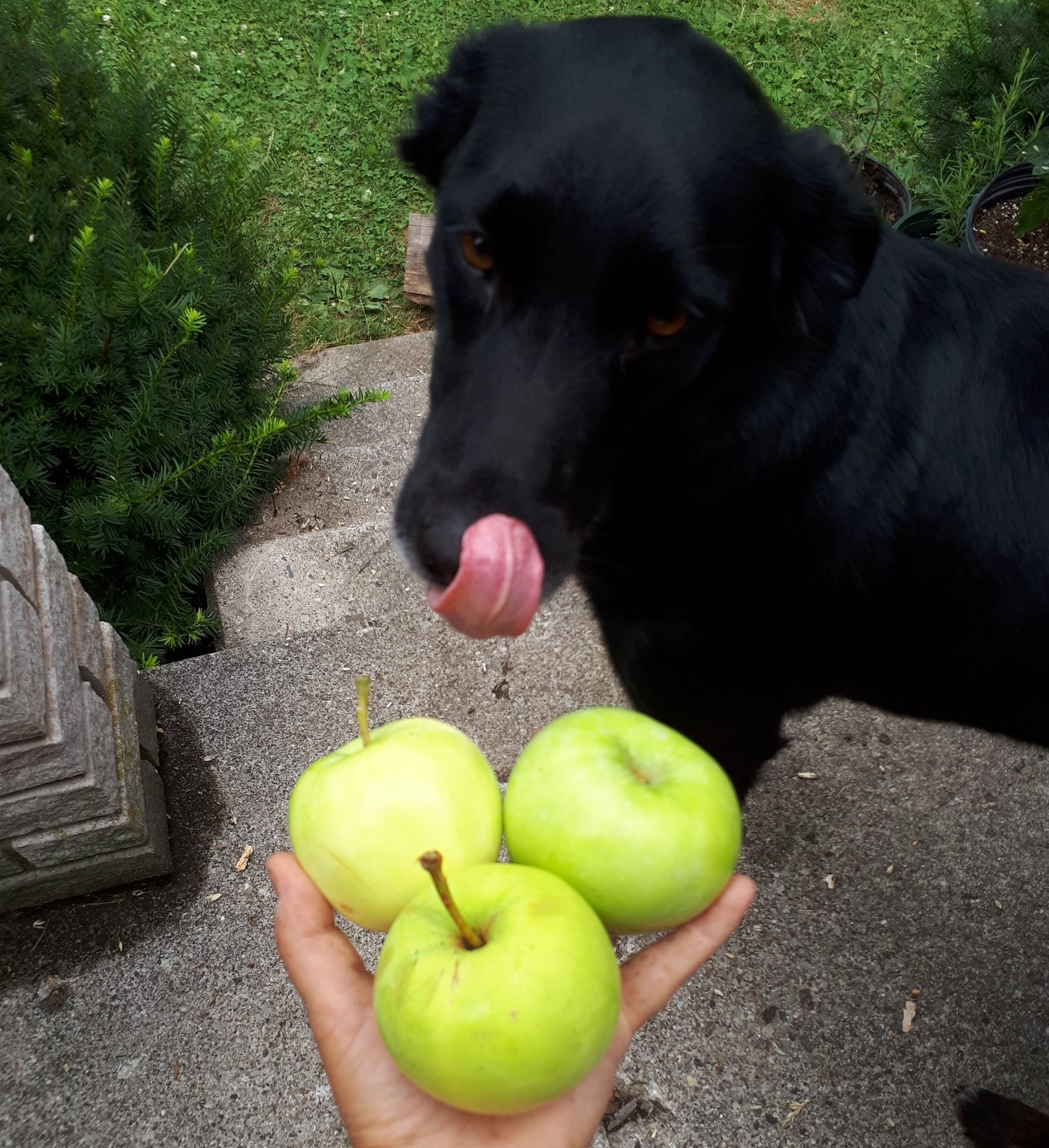
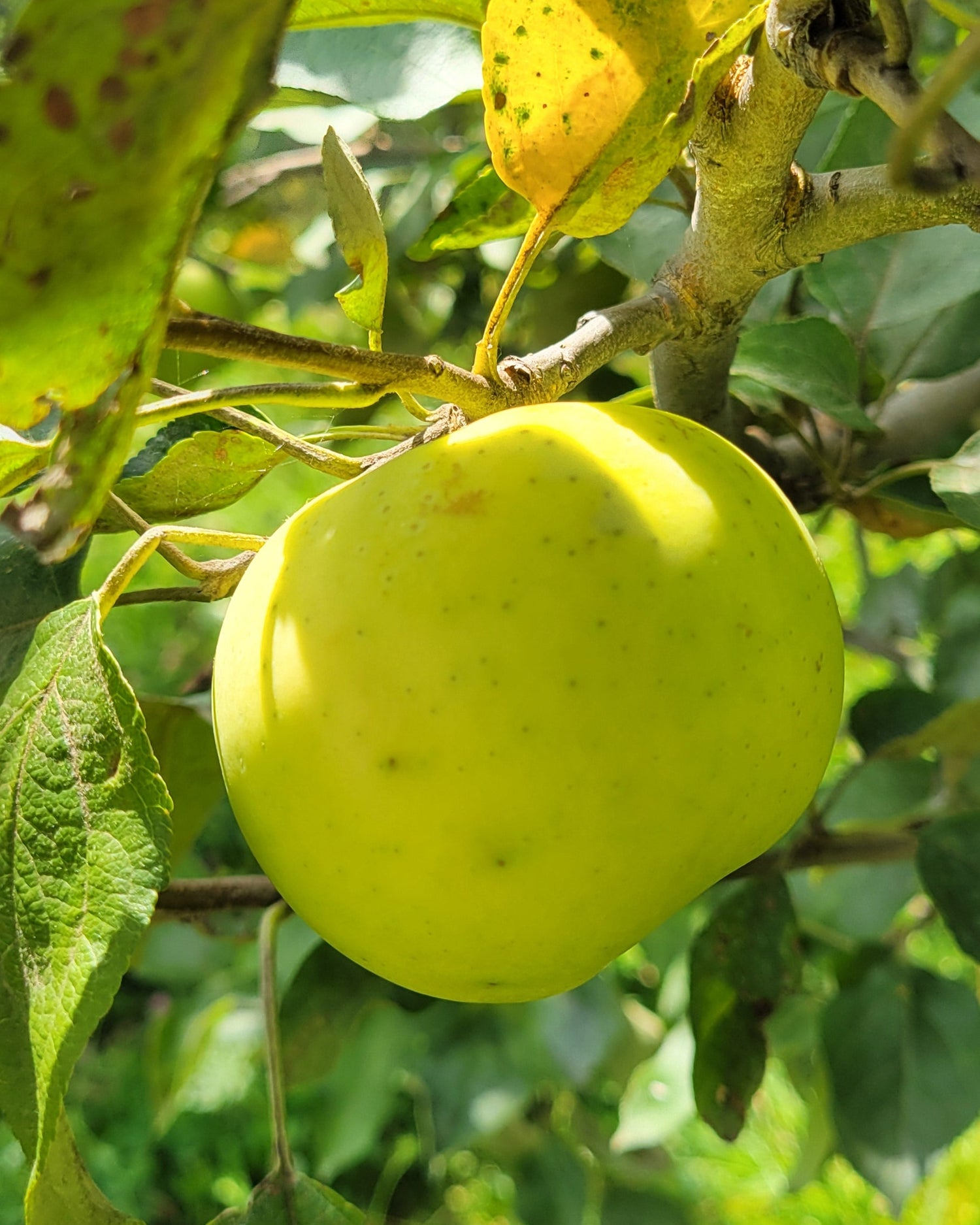
History: Yellow Transparent (aka White Transparent and Glass Apple) originated as a chance seedling in a nursery in Riga, Latvia around 1850. At the time Latvia was part of the Russian Empire so this variety is often considered Russian. Due to its early ripening and cold hardiness, this variety was widely grown in Europe, especially northern countries, where it is still grown today. It was imported to the US in the 1870s as part of an effort to import cold hardy Russian species that could potentially survive in states with harsher winters and became quite popular.
Why We Grow It: This classic early apple deserves a home in every home orchard. The fruit features pale yellow skin that almost looks transparent and white flesh with a sharp, sweet flavour. It can be eaten fresh but also makes a great applesauce. Like many early ripening apples, the fruit does not last long.

History: Lady apples are one of, if not the oldest, apple varieties in existence with a verifiable history. It is said to have originated in the Brittany region of France before 1628 and was grown during the reign of King Louis XIII. This apple goes by several other names as well. It is also known as Api or Pomme d'Api, named after the Forest of Api in France where it is believed this apple may have been discovered. This particular name is similar to Appia, an apple variety popular in Ancient Rome, which some believe is the same apple as Lady. Lady apples are also known as Christmas apples due to their use in adorning Christmas wreaths and trees.
Why We Grow It: It's hard not to be interested in an apple with such a long history as this one. The fruit is small but attractive: red flushed over yellow. The crisp, sweet fruit maintains its good quality all winter in storage.

History: Generally just known as Gravenstein, it is unknown when or where exactly these apples came from but they were imported from France to Denmark in the 1600s by Count Frederik the Younger and planted at the summer residence of the Danish royal family, Gråsten Palace. As a result the variety was named Gråsten (Danish for graystone) which translates to Gravenstein in German. This apple has been popular in Canada since the 1820s, particularly in Nova Scotia, and provided the dried apples and applesauce for American soldiers during WW2. In 2005 it was declared the national apple of Denmark.
Why We Grow It: Yellow Gravenstein's excellence as a fresh eating and cooking apple makes it easy to see why it is grown in so many different countries, even if the tree is slow to bear fruit and is prone to many common fruit tree diseases (although we haven't had much issues growing it here). It has a great sweet/tart flavour and is crunchy and juicy. The fruit is a nice yellow with red striping.
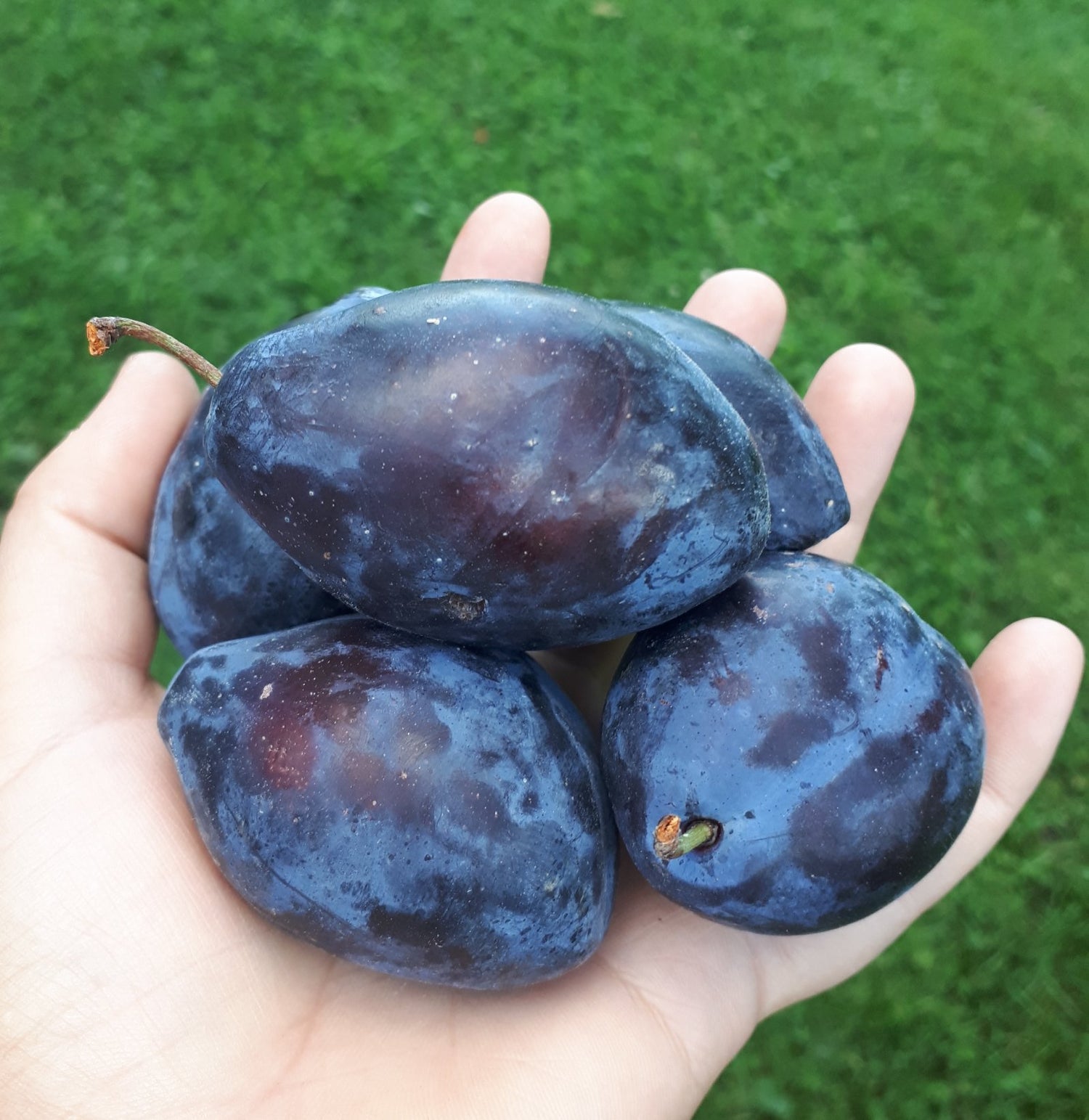
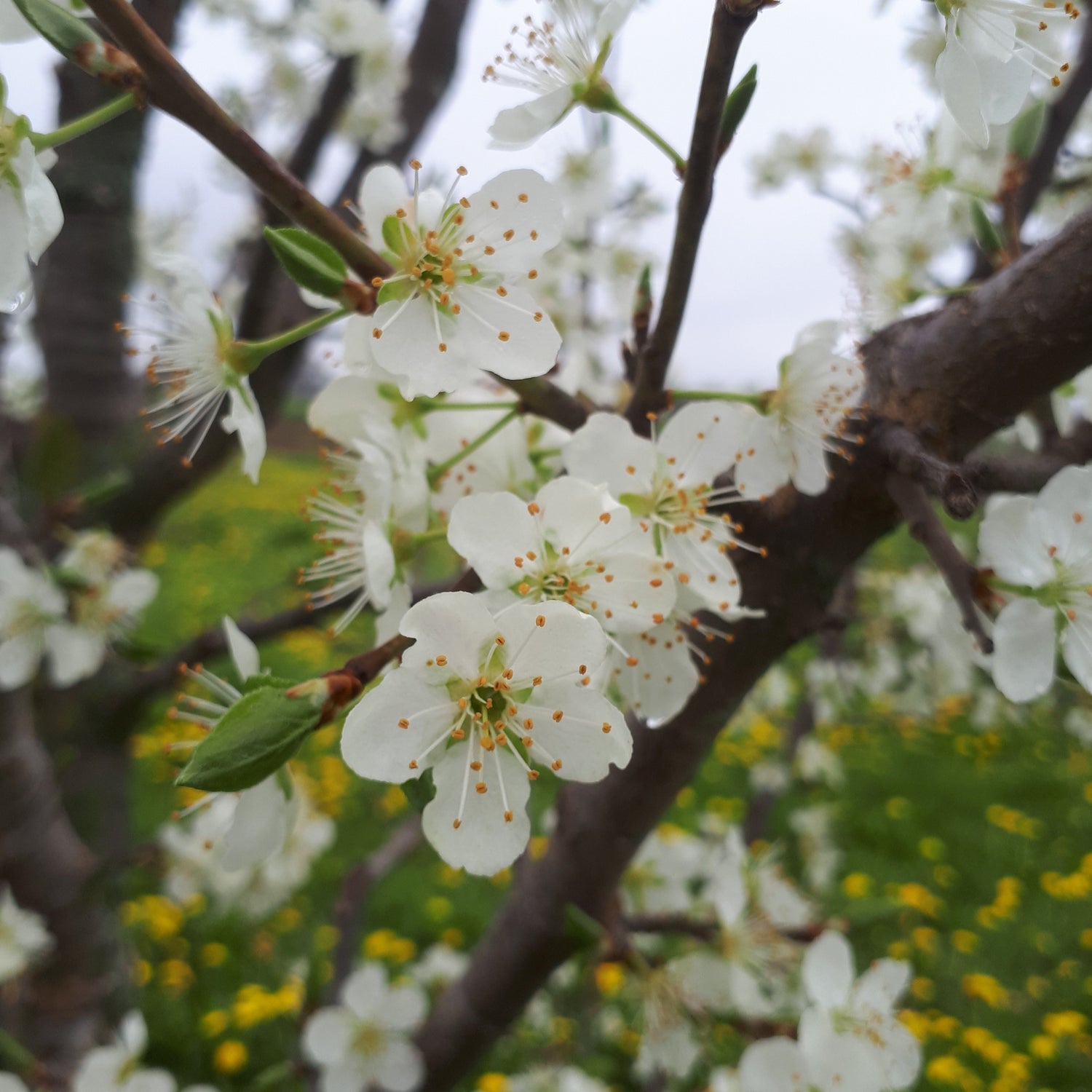
History: Late Italian plums originated in the coastal Mediterranean areas of Italy, although little is known about their history aside from that. They are still grown in Europe and North America today.
Why We Grow It: This European variety produces a large-sized blue plum with sweet yellow flesh. It is an all-purpose plum that is excellent for drying and great eaten fresh, canned, or incorporated into baking, desserts, or salads.
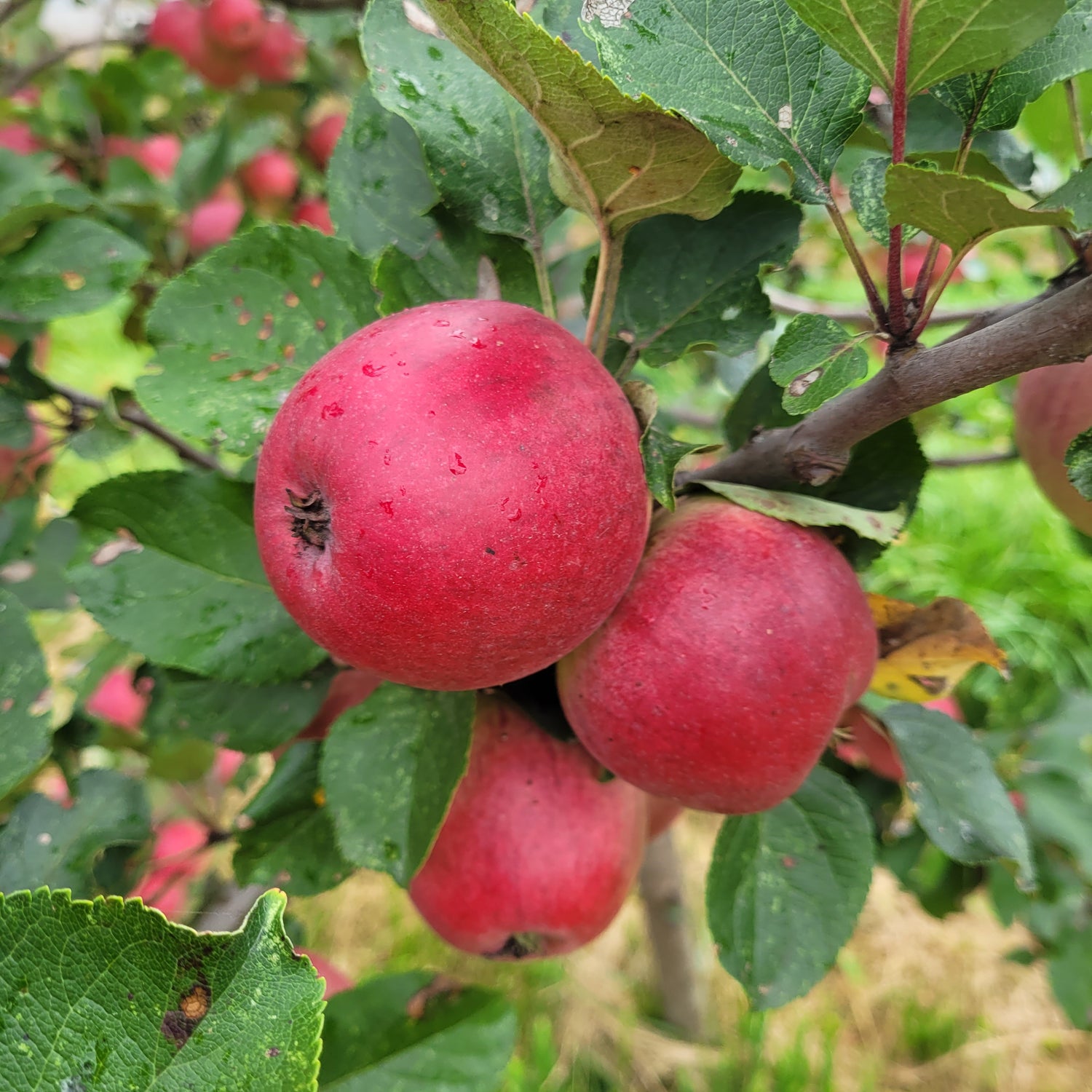
History: Yarlington Mill was discovered growing in the wild by a Mr. Bartlett. He discovered it in 1898 near a mill in the English village of Yarlington, hence the name 'Yarlington Mill.' It was further propagated and made popular by the grower Harry Masters (who also grew Harry Masters Jersey). This variety is still commonly planted in cider orchards in England.
Why We Grow It: This is an excellent cider apple for our climate. It produces a medium bittersweet juice with good flavour. The tree is hardy and vigorous but tends to bear biennially so it requires attentive thinning.

History: Lodi is a cross between Yellow Transparent and Montgomery Sweet created at the New York Agricultural Experiment Station in Geneva, NY, and released in 1924. Although it is not suitable for commercial production due to its poor keeping qualities and tendency for the flesh to crack in storage, it is still commonly grown by homeowners in the southern US today.
Why We Grow It: If you're looking for an early apple to get started on making applesauce, Lodi is the way to go! These large yellow-green apples are ready to harvest by the end of July and do not bruise as easily as their Yellow Transparent parent.
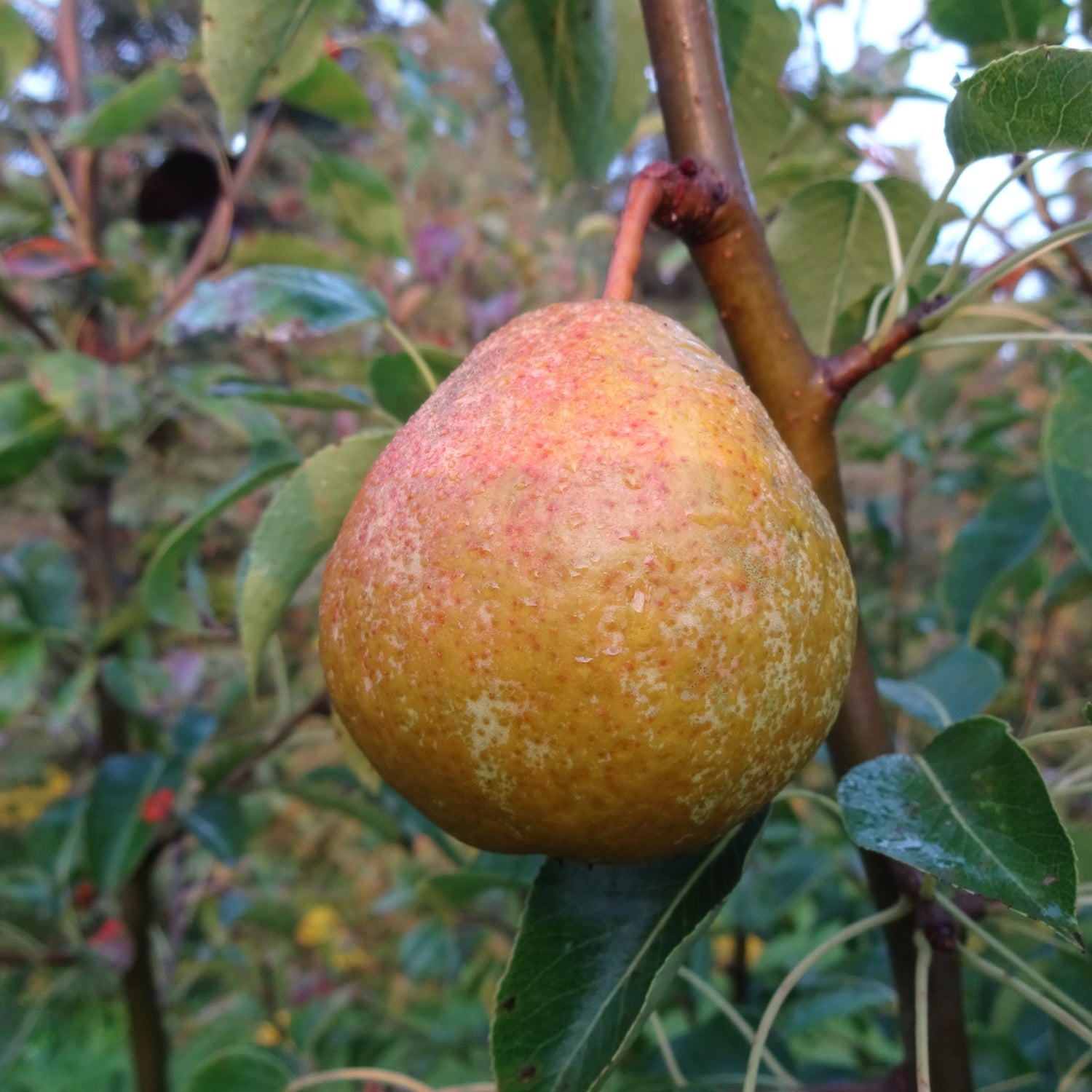
History: Luscious was developed at South Dakota State University as a cross between Ewark and South Dakota 31 in 1954. This goal was to create trees suitable for areas like the Northern Great Plains. Luscious was introduced in 1973, likely selected for its cold-hardiness and excellent flavour.
Why We Grow It: Luscious produces small to medium yellow fruits with an attractive red blush. The fruit is quite sweet, great for fresh eating and cooking/baking! This is an excellent option for fans of Bartlett who are looking for a versatile and cold hardy variety! Luscious also has value as an ornamental tree, producing white blooms and glossy green leaves that turn a nice red in the fall.
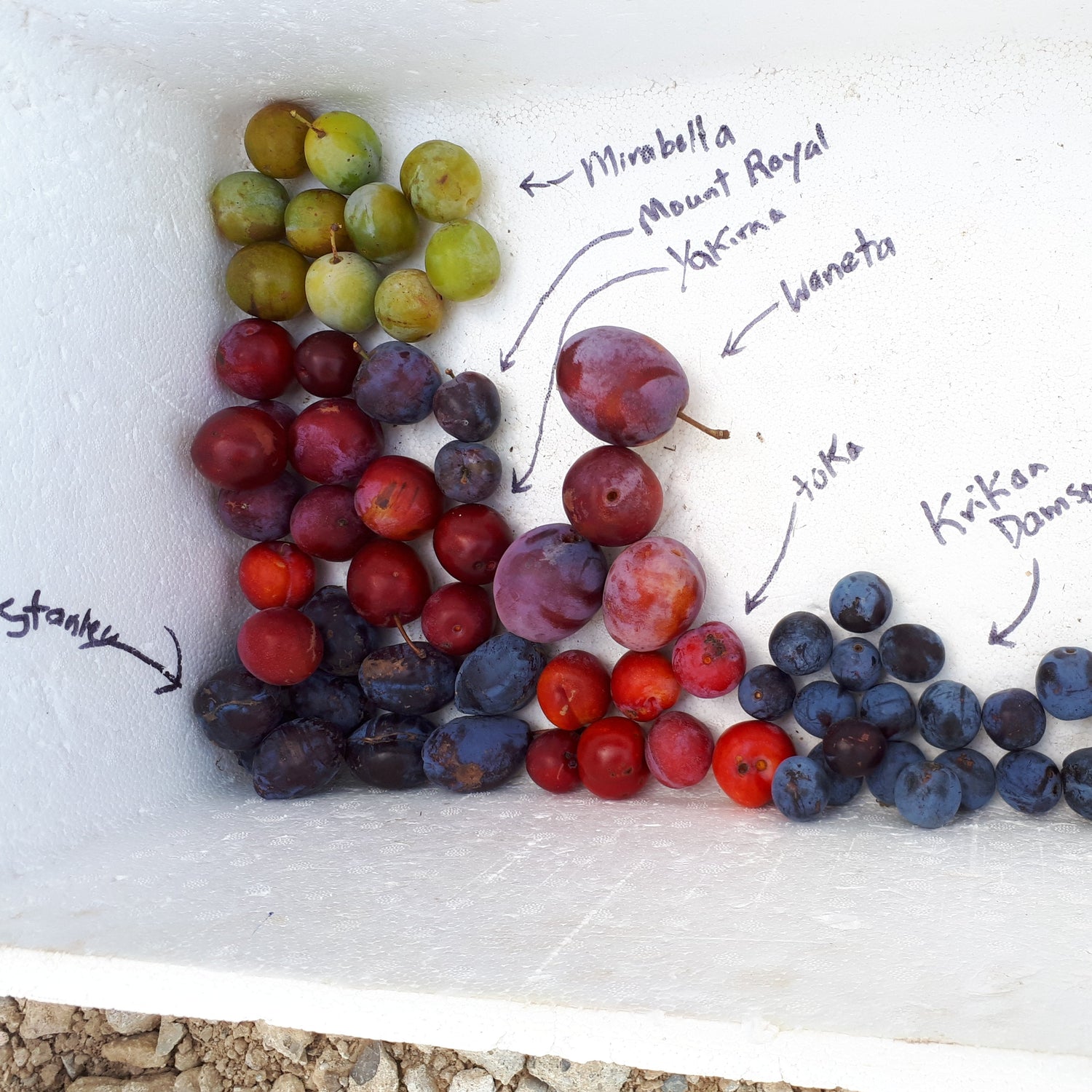
History: The origins and history of this variety are unknown based on our current research.
Why We Grow It: This variety produces a medium-sized freestone plum with purple-pink skin and yellow flesh that is sweet and juicy. It is one of the hardiest European plums around, making it a good choice for our colder climate!

History: Maiden's Blush was first described in New Jersey in 1817 although it had already been popular in Philadelphia markets for some time. It likely originated around New Jersey in the late 1700s. Maiden's Blush continued to be commonly grown in the southern US through the early 1800s.
Why We Grow It: Maiden's Blush's uniqueness is still worthy of attention today, its flavour being an interesting mix of citrus-like acidity and sweetness that stand out among other apples. While it is good for fresh eating, particularly after a few weeks off the tree, it is most well known for cooking, baking, and drying due to its non-browning qualities.


History: Woolbrook Pippin originated in 1903 at Woolbrook Nursery in the UK. It was discovered by J.H. Stevens and Son. It is a Cox's Orange Pippin seedling and received an Award of Merit from the Royal Horticultural Society in 1929.
Why We Grow It: Woolbrook Pippin produces a greenish apple overlaid with bright red stripes that is excellent for fresh eating. The fruit is firm, crisp, and juicy with a sweet, aromatic flavour balanced by a bit of tartness. This is a great choice for fans of Cox's Orange Pippin!
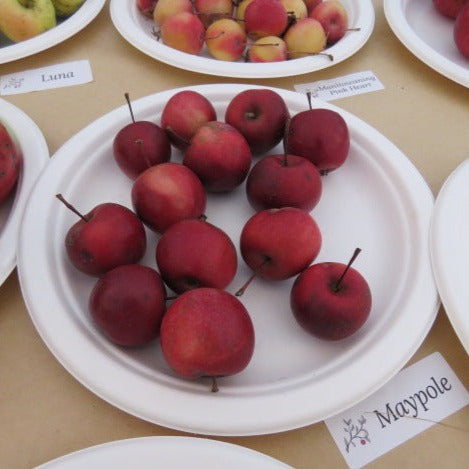
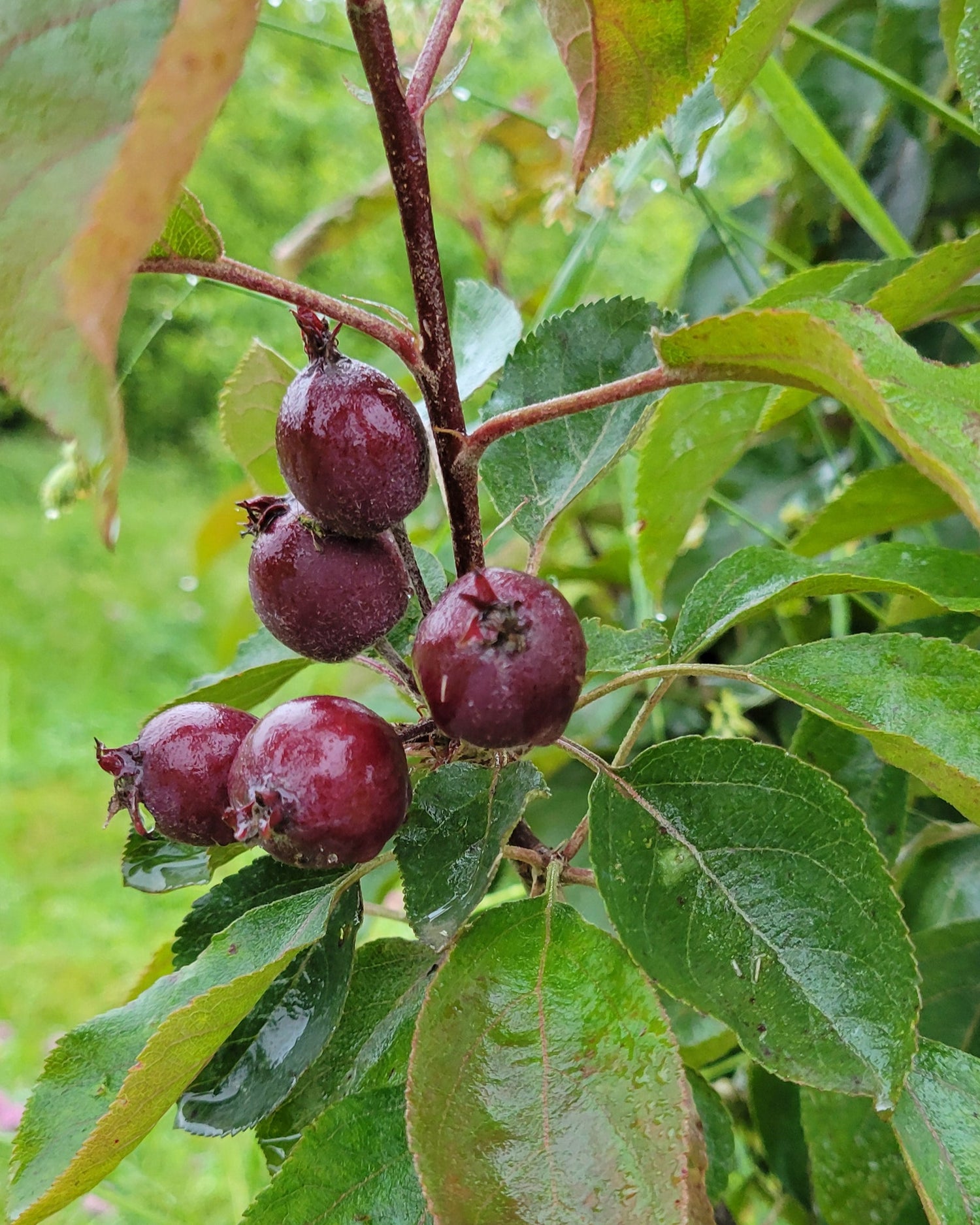
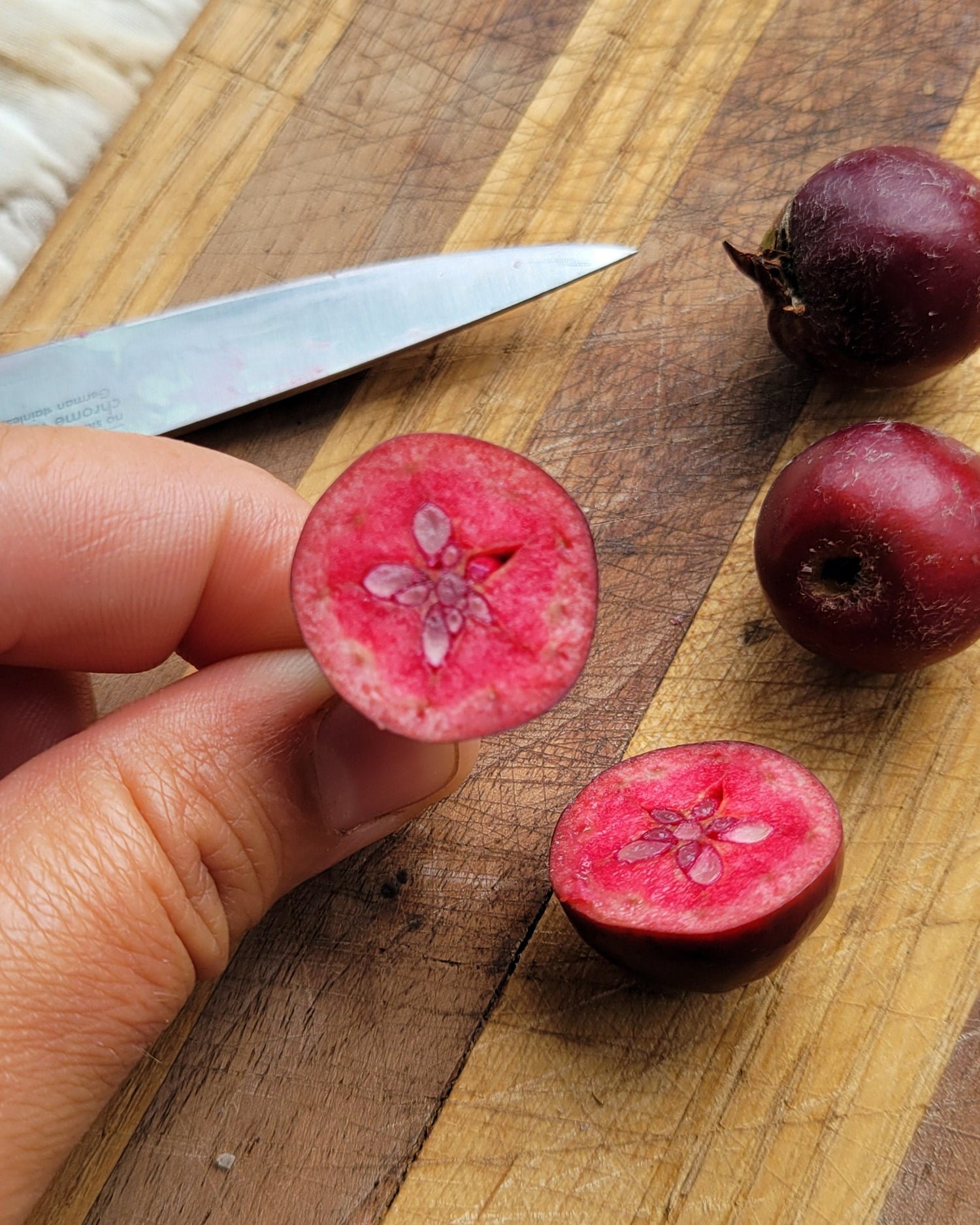
History: Maypole was developed in 1976 by Plant Breeding International at the East Malling Research Station in the UK as a cross between Wijcik Spur McIntosh and Baskatong. Wijcik Spur McIntosh originated as a mutation discovered on a McIntosh tree in 1962 in the Wijcik Orchards in British Columbia, the branch growing oddly straight with little branching. Several varieties were deliberately bred to have this mutation and now Maypole, released in 1986, is one of six columnar varieties developed at the station. This series of trees is known as Ballerina in the UK but due to that name being unavailable in the US, they are known as Colonnade in North America.
Why We Grow It: Not only is Maypole unique as a columnar apple, this crabapple also boasts lovely red flesh, bronze coloured leaves, and pretty pink blossoms in the spring. This makes it overall a lovely ornamental tree to have, whether planted in the yard or in a pot. The fruit is also excellent for jelly, apple butter, and cider, adding a red hue to each. It can also be eaten fresh although it tends to be quite acidic with a touch of sweetness.
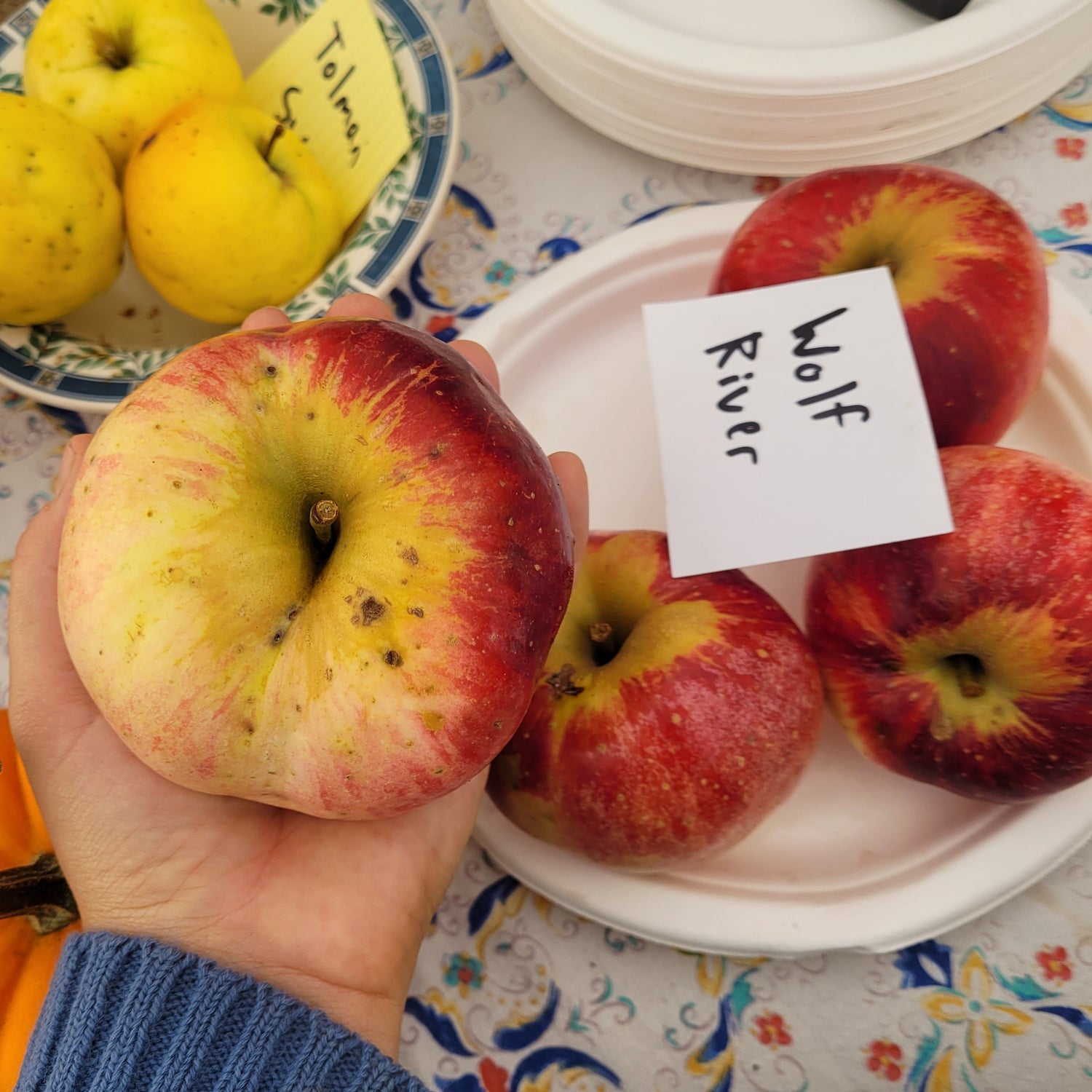
History: Wolf River was raised from seed by Quebec lumberman William Springer in the latter half of the 19th century. When Springer and his family were moving by wagon to Wisconsin, they bought a bushel of Alexander apples along the way. Upon arriving at their new home, he planted the seeds from said apples along the bank of the Wolf River and the Wolf River apple grew from there. This variety has since garnered a reputation as a good cooking apple and for the incredible size of its fruit.
Why We Grow It: First and foremost, Wolf River is legendary for the huge size of its fruit. The apples can weigh a pound or more and there are stories of pies being made from a single apple. The fruit, green with red blush and stripes, has a sweet and tart flavour that is good for cooking and it holds its shape well when cooked. The tree itself is hardy and relatively disease resistant as well.

History: John McIntosh planted several apple seedlings upon settling in Dundela, Ontario. From these, he discovered the famous McIntosh apple as a seedling in his orchard. The family began selling the fruit and grafted McIntosh trees in 1835 and in 1870 it entered commercial production. By the 1900s it was one of the most popular apples in northeastern North America, although its popularity waned over time as varieties such as Gala were introduced. Nonetheless, McIntosh apples still remain some of the most popular in North America. The original tree died in 1906 after being damaged by a house fire and a commemorative plaque marks where it stood. The apple has since been named Canada's national fruit. The Macintosh line of Apple computers was also named after this variety.
Why We Grow It: For fans of Canadian heritage apples in particular, this one is hard to beat. To the best of our knowledge, this is the original strain of McIntosh. Aside from its storied past, McIntosh apples boast soft, slightly tart flesh with high Vitamin C content. It is excellent for fresh eating and making applesauce.

History: Medaille d'Or was raised from a seed by Monsieur Goddard in Rouen, France. In 1873 the apple was awarded a gold medal by the Societe Centrale D’Horticulture de Departement de la Seine Inferieure and in 1884 was brought to England by the Woolhope Naturalist's Field Club where it became established as a classic English cider apple.
Why We Grow It: It is easy to see why this apple was popular in both France and England with its yellow-gold skin and excellent cider qualities. This apple produces a fruity juice with high alcohol content and is very high in tannins. It makes a great single-variety cider.
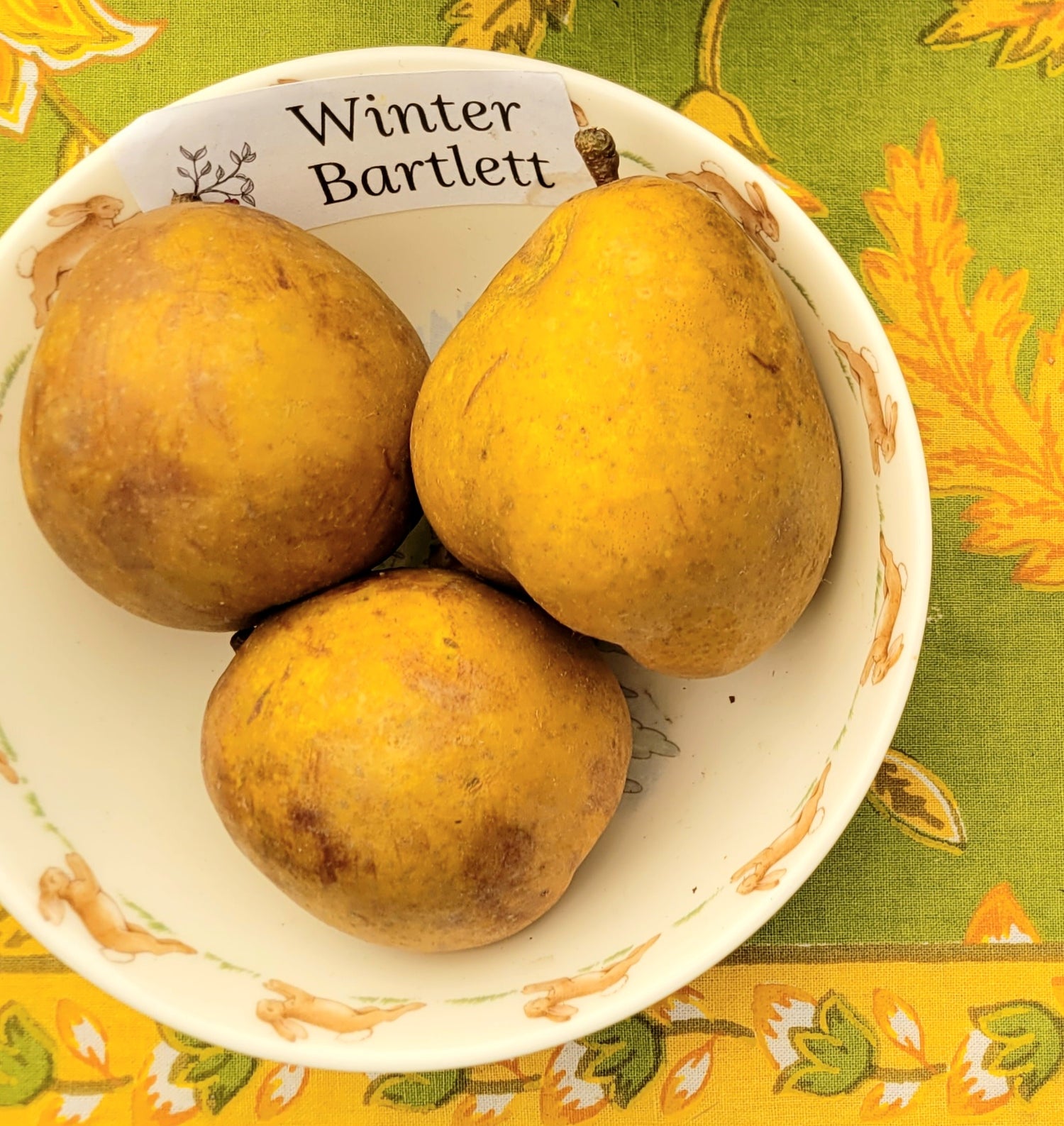
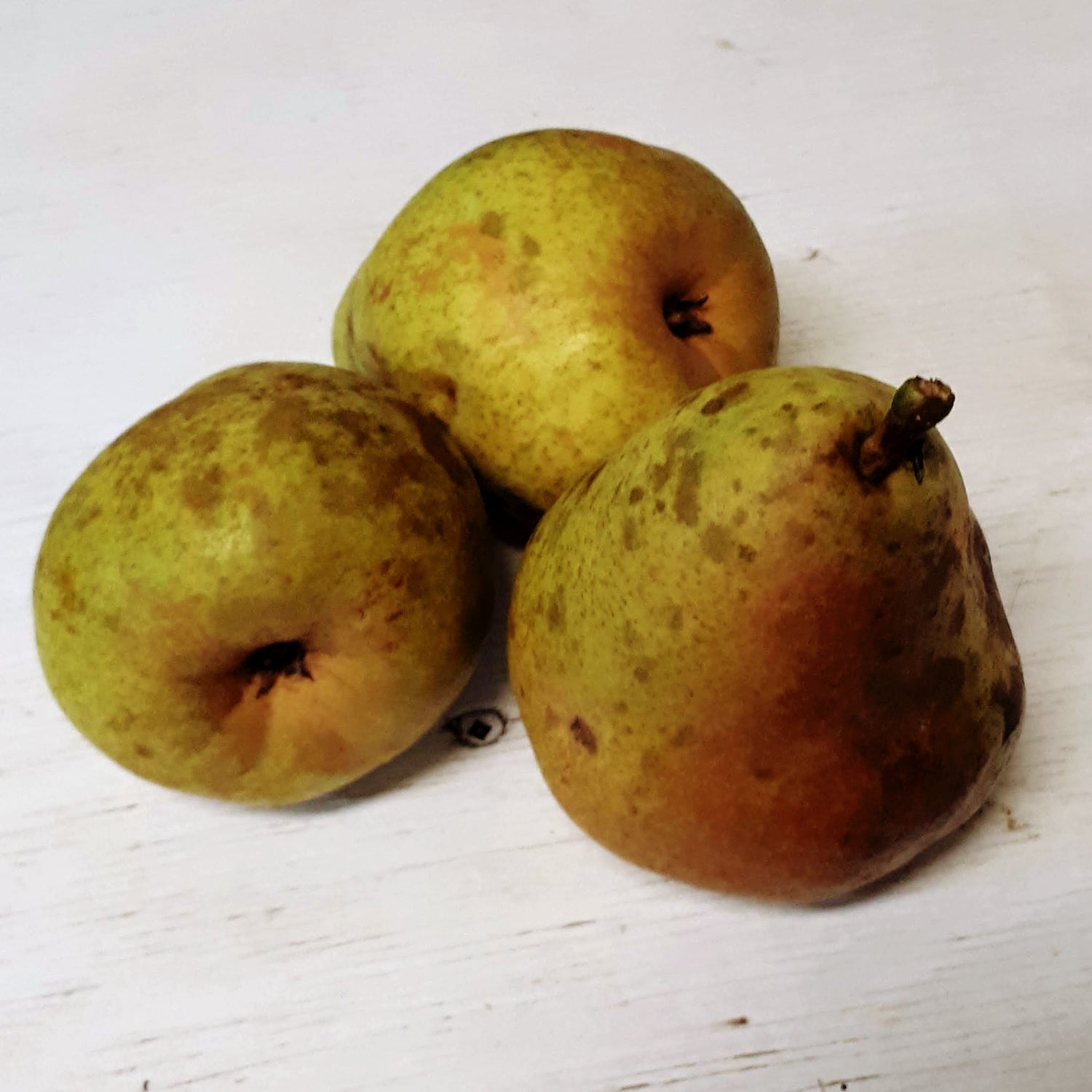
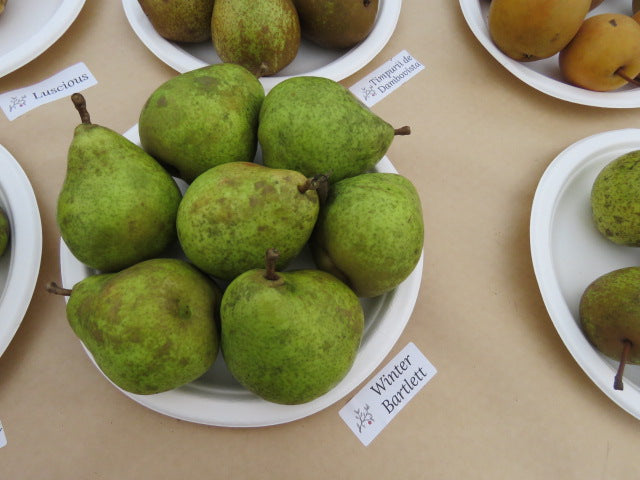
History: Winter Bartlett pears originated on the western coast of the United States, likely in Eugene, Oregon. They were introduced by D.W. Coolidge in 1880 but it is believed the variety may have existed for some time before that. It earned its name from it's resemblance to the Bartlett pear in taste and shape and it's designation as a winter pear.
Why We Grow It: As opposed to summer pears which are meant to be eaten shortly after picking, winter pears are supposed to be allowed to ripen for months in cold storage and enjoyed during later seasons. It is worth the wait for this variety, which produces a medium to large fruit with golden-yellow skin covered in patches and dots of russet and red streaks. It has a sweet and slightly subacidic flavour paired with firm, coarse, juicy white flesh. It is also great for cooking.

History: Meigetsu is an Asian pear that originated in Japan. The word 'meigetsu' roughly translates to 'beautiful moon' or 'grand moon.' Its name could also be a shortened version of 'Chushu no Meigetsu,' the Japanese name for the harvest moon in September.
Why We Grow It: Meigetsu Asian pears are pleasantly sweet with the flavour and aroma being compared to pineapples, watermelon, and butterscotch. The flesh is somewhat softer than other Asian pears, making the texture more akin to that of European pears.
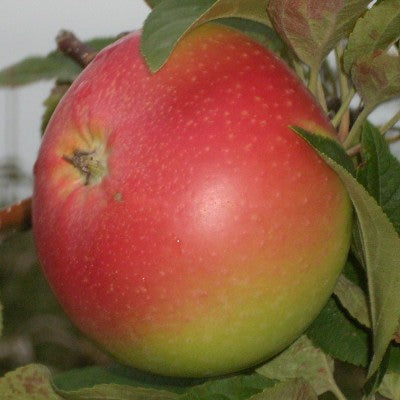
History: Winter Banana originated on David Flory's farm in Indiana around 1876. It was named Winter Banana due to the apparently banana-like aroma it gives off when ripe. It is also named Flory Banana or Flory Apple after David Flory. Winter Banana was grown on the west coast and gained some popularity in England and Germany. The thin skin of this variety is easily bruised which prevented it from being a commercial variety but it is still commonly found in gardens and farmer's markets.
Why We Grow It: This all-purpose apple is extremely attractive with pale yellow skin and a pinkish-red blush. The banana-like aroma is accompanied by sweet flesh with an acid tang. The flavour improves in storage and the apples can be kept all winter.
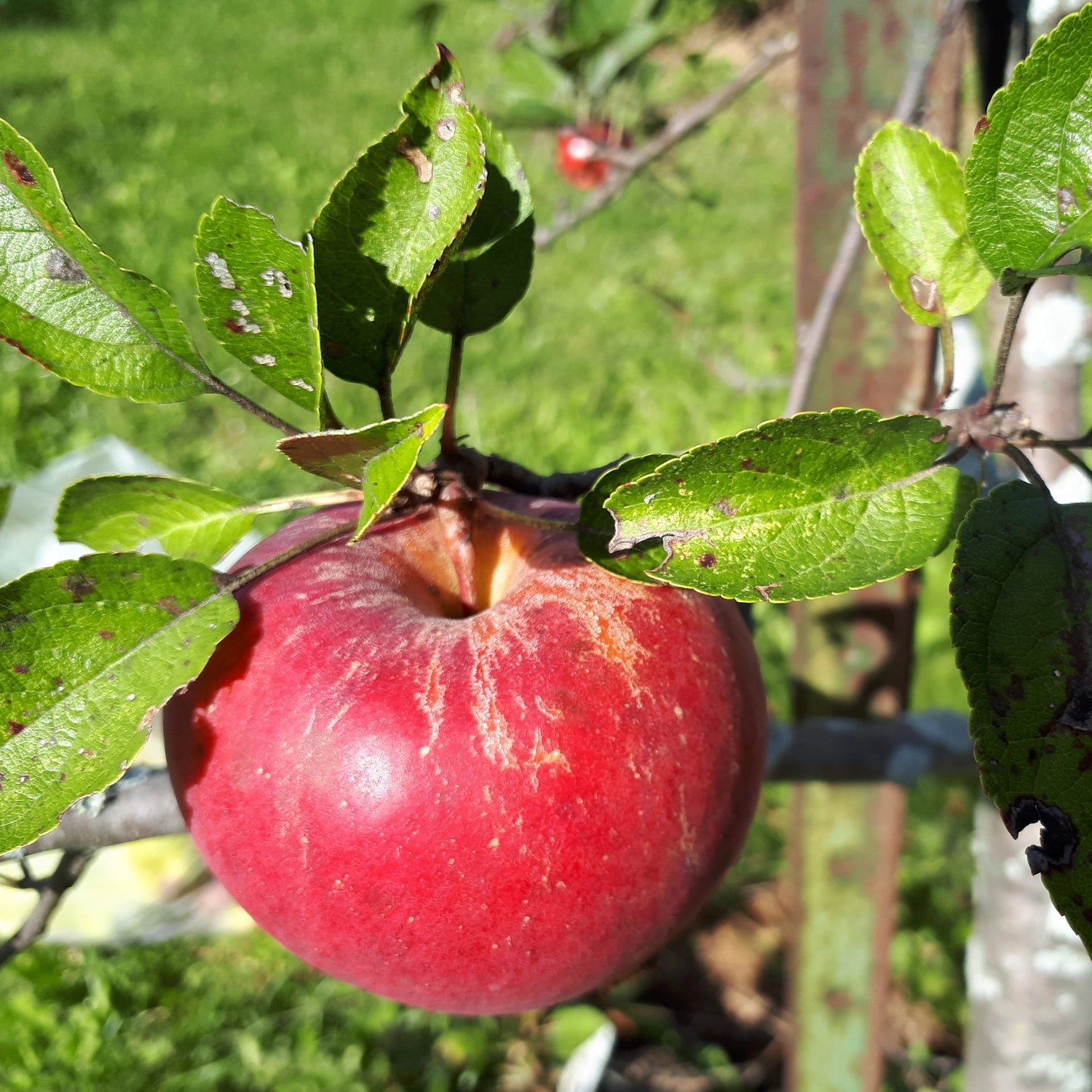
History: Winesap's origins are unclear but it is believed to have originated from New Jersey pre-1800s where it was popular for making cider. It is first mentioned in a couple of books on apples in the early 1800s. Winesap was popular in the US until the 1950s due to its good keeping ability but the advent of better storage technology allowed better tasting apple varieties to eclipse it. It is still quit popular with backyard orchardists.
Why We Grow It: Winesap's all-purpose nature helps to explain why it hasn't faded into total obscurity like some other varieties. The medium-large red and yellow skinned fruit is good for cooking and making cider. It has sweet flesh with some tang or 'winey' flavour that is also decent for fresh eating. On top of that, the tree is productive, very resistant to fireblight, and the fruit stores well.