Rootstock & Scionwood
Rootstock & Scionwood
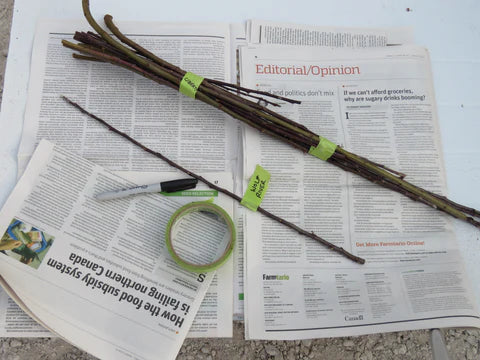
Every year we get tons of requests for rootstock and scionwood. While our main business is in the finished product (grafted fruit trees), we also like to support those wishing to learn the grafting process for themselves. We can attest that it is a very enjoyable (and rather addictive) pastime!
Rootstock - Rootstock can be pre-ordered for Spring 2026! If you are interested in rootstock for Spring 2027; please contact us directly to be added to our waitlist.
Scionwood - Scionwood sales have closed for Spring 2026; please contact us directly if you are interested in being added to our Spring 2027 waitlist. Scionwood orders are generally open from December until the end of February and should be shipped out/picked up by mid-April.
For those new to the grafting process, we also offer the following resources:
- Our annual in-person Apple Grafting Workshop!
-
Fruit Tree Grafting for Everyone, a handy grafting guide co-authored by Steph who owns Silver Creek Nursery!
Sort by:
221 products
221 products

History: John McIntosh planted several apple seedlings upon settling in Dundela, Ontario. From these, he discovered the famous McIntosh apple as a seedling in his orchard. The family began selling the fruit and grafted McIntosh trees in 1835 and in 1870 it entered commercial production. By the 1900s it was one of the most popular apples in northeastern North America, although its popularity waned over time as varieties such as Gala were introduced. Nonetheless, McIntosh apples still remain some of the most popular in North America. The original tree died in 1906 after being damaged by a house fire and a commemorative plaque marks where it stood. The apple has since been named Canada's national fruit. The Macintosh line of Apple computers was also named after this variety.
Why We Grow It: For fans of Canadian heritage apples in particular, this one is hard to beat. To the best of our knowledge, this is the original strain of McIntosh. Aside from its storied past, McIntosh apples boast soft, slightly tart flesh with high Vitamin C content. It is excellent for fresh eating and making applesauce.

History: Medaille d'Or was raised from a seed by Monsieur Goddard in Rouen, France. In 1873 the apple was awarded a gold medal by the Societe Centrale D’Horticulture de Departement de la Seine Inferieure and in 1884 was brought to England by the Woolhope Naturalist's Field Club where it became established as a classic English cider apple.
Why We Grow It: It is easy to see why this apple was popular in both France and England with its yellow-gold skin and excellent cider qualities. This apple produces a fruity juice with high alcohol content and is very high in tannins. It makes a great single-variety cider.
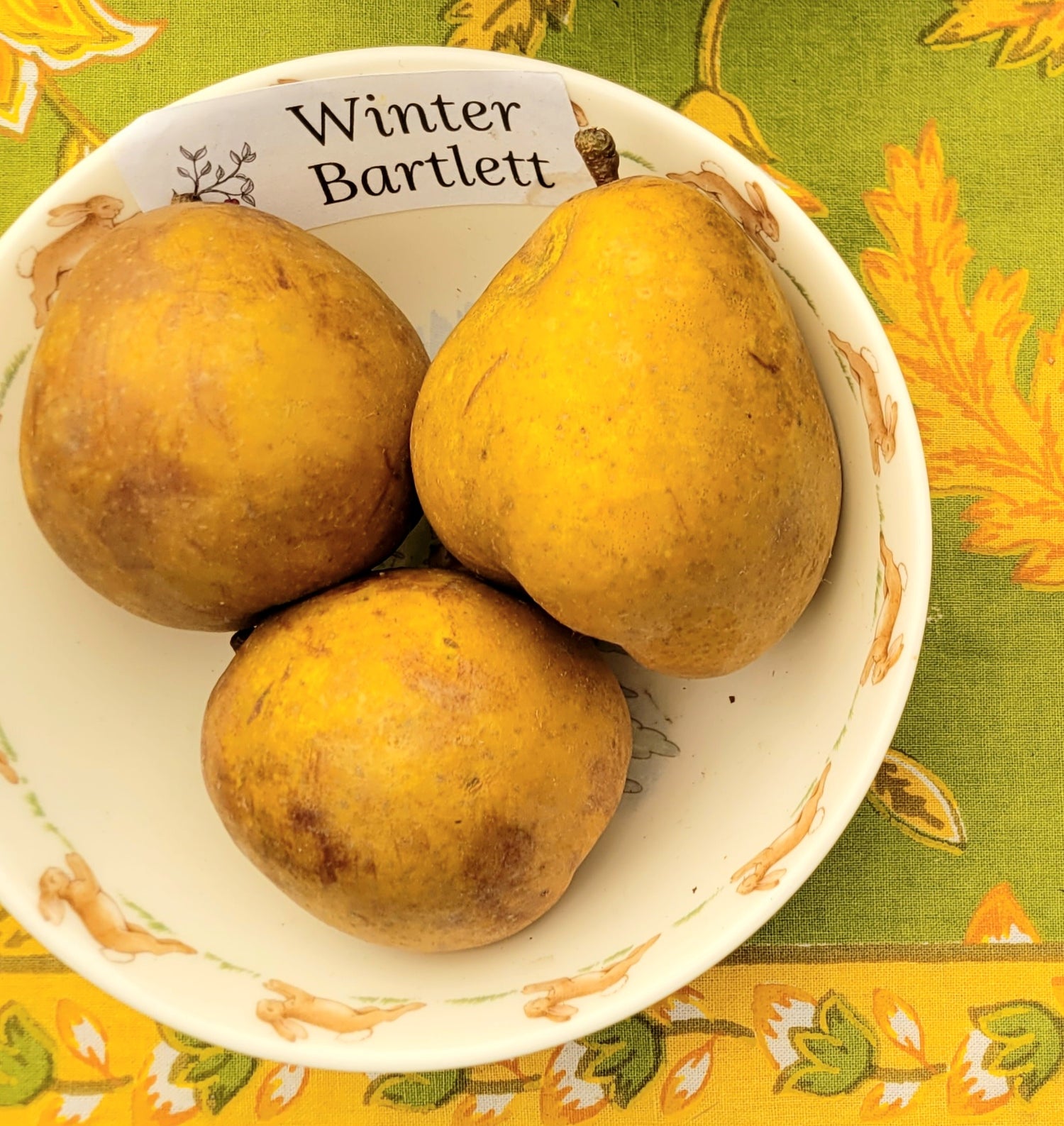
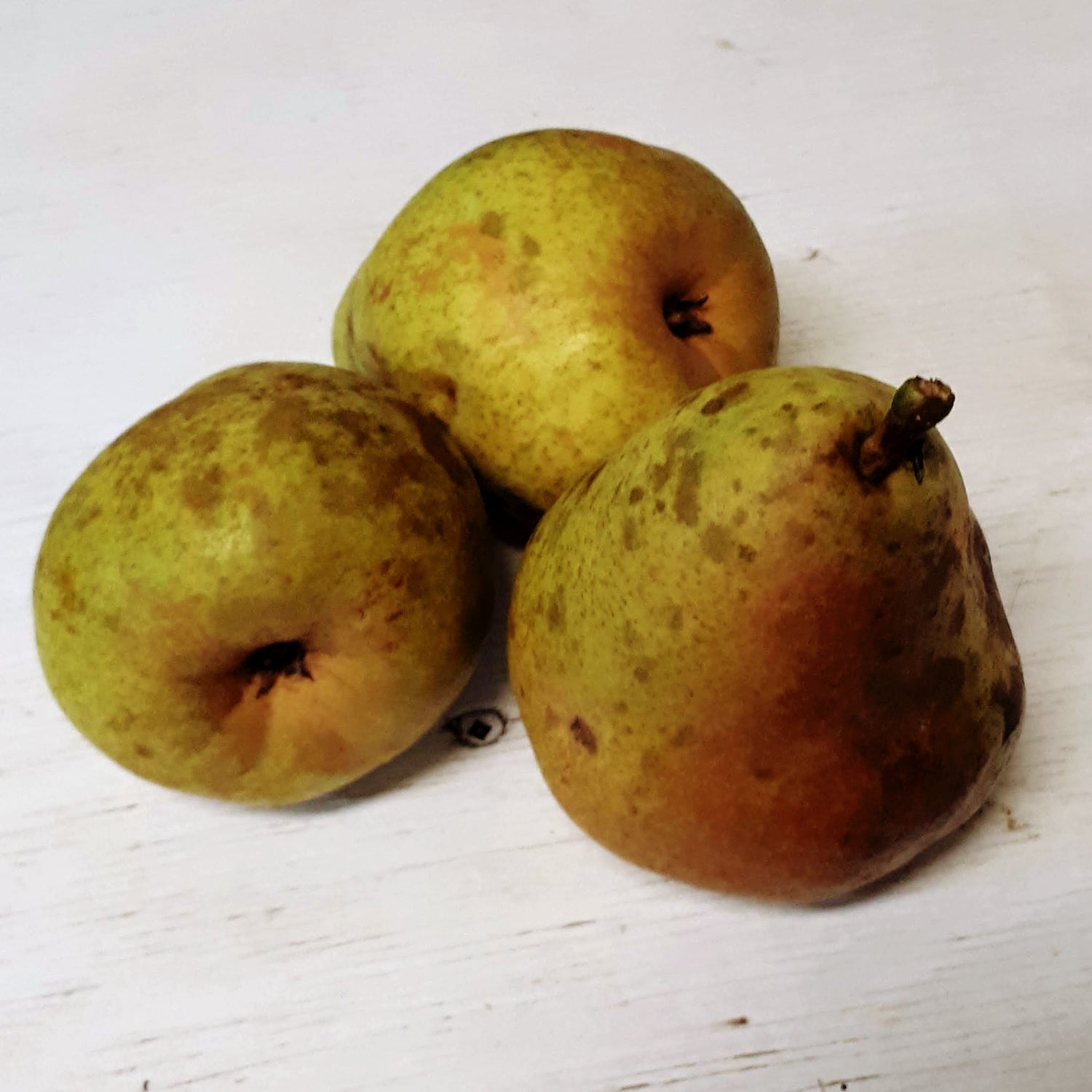
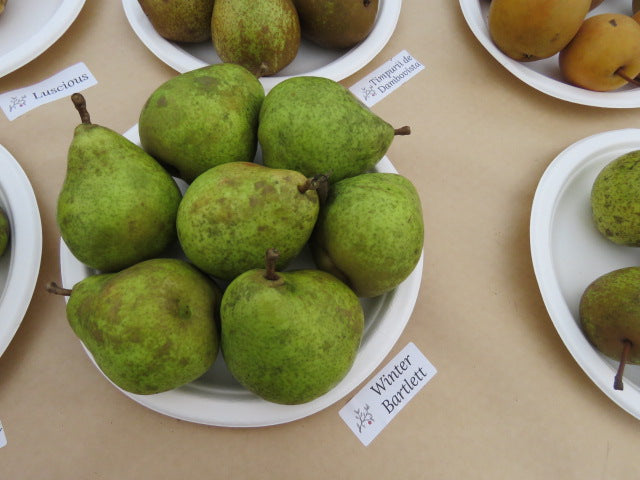
History: Winter Bartlett pears originated on the western coast of the United States, likely in Eugene, Oregon. They were introduced by D.W. Coolidge in 1880 but it is believed the variety may have existed for some time before that. It earned its name from it's resemblance to the Bartlett pear in taste and shape and it's designation as a winter pear.
Why We Grow It: As opposed to summer pears which are meant to be eaten shortly after picking, winter pears are supposed to be allowed to ripen for months in cold storage and enjoyed during later seasons. It is worth the wait for this variety, which produces a medium to large fruit with golden-yellow skin covered in patches and dots of russet and red streaks. It has a sweet and slightly subacidic flavour paired with firm, coarse, juicy white flesh. It is also great for cooking.

History: Meigetsu is an Asian pear that originated in Japan. The word 'meigetsu' roughly translates to 'beautiful moon' or 'grand moon.' Its name could also be a shortened version of 'Chushu no Meigetsu,' the Japanese name for the harvest moon in September.
Why We Grow It: Meigetsu Asian pears are pleasantly sweet with the flavour and aroma being compared to pineapples, watermelon, and butterscotch. The flesh is somewhat softer than other Asian pears, making the texture more akin to that of European pears.
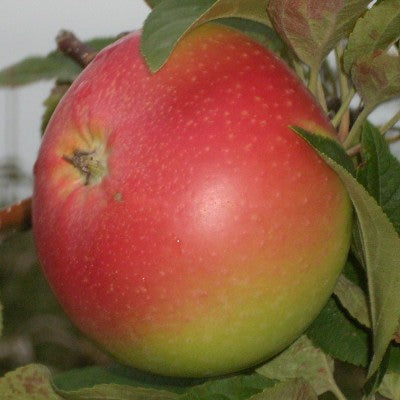
History: Winter Banana originated on David Flory's farm in Indiana around 1876. It was named Winter Banana due to the apparently banana-like aroma it gives off when ripe. It is also named Flory Banana or Flory Apple after David Flory. Winter Banana was grown on the west coast and gained some popularity in England and Germany. The thin skin of this variety is easily bruised which prevented it from being a commercial variety but it is still commonly found in gardens and farmer's markets.
Why We Grow It: This all-purpose apple is extremely attractive with pale yellow skin and a pinkish-red blush. The banana-like aroma is accompanied by sweet flesh with an acid tang. The flavour improves in storage and the apples can be kept all winter.
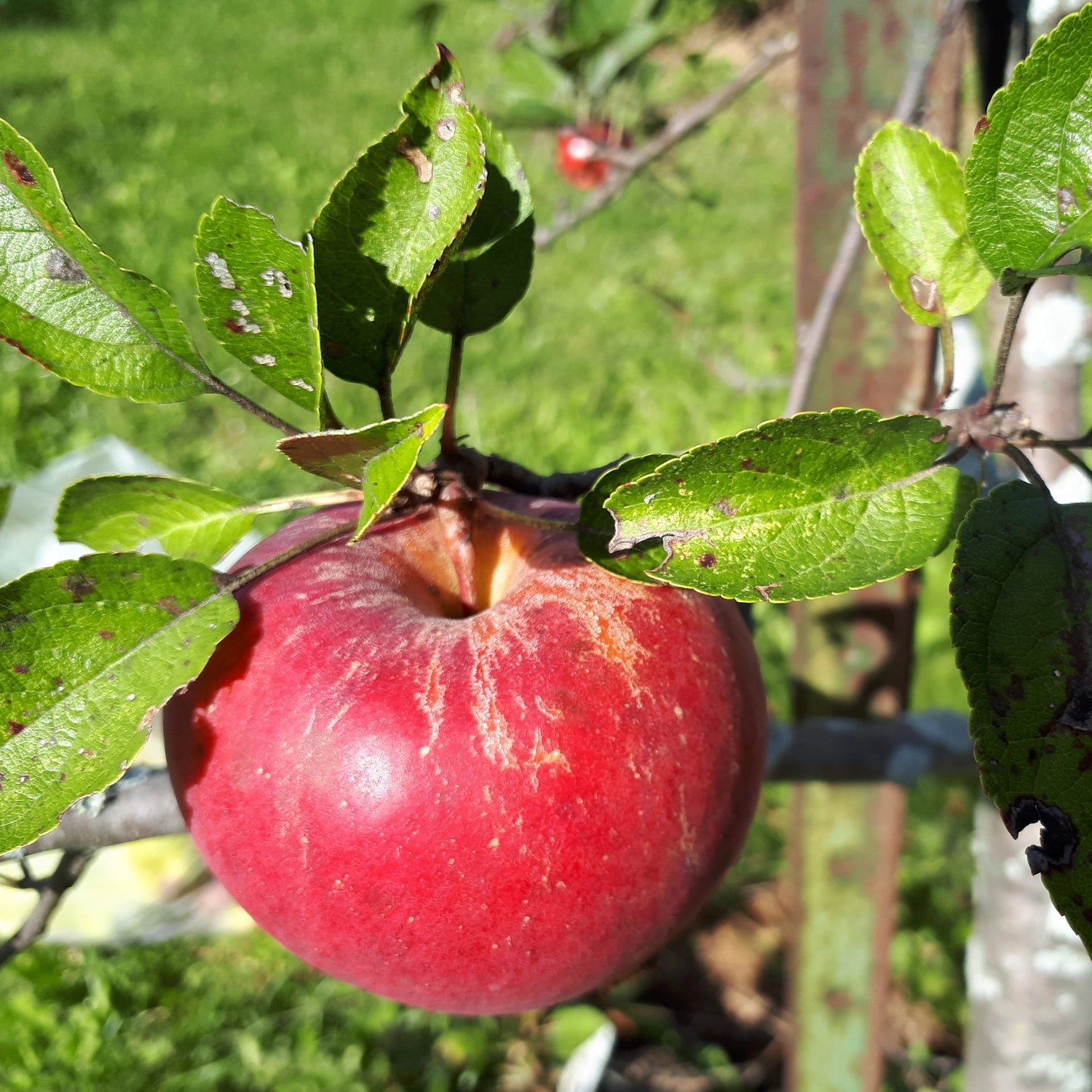
History: Winesap's origins are unclear but it is believed to have originated from New Jersey pre-1800s where it was popular for making cider. It is first mentioned in a couple of books on apples in the early 1800s. Winesap was popular in the US until the 1950s due to its good keeping ability but the advent of better storage technology allowed better tasting apple varieties to eclipse it. It is still quit popular with backyard orchardists.
Why We Grow It: Winesap's all-purpose nature helps to explain why it hasn't faded into total obscurity like some other varieties. The medium-large red and yellow skinned fruit is good for cooking and making cider. It has sweet flesh with some tang or 'winey' flavour that is also decent for fresh eating. On top of that, the tree is productive, very resistant to fireblight, and the fruit stores well.

History: Melba was developed by W.T. Macoun at the Central Experimental Farm in Ottawa in 1898. In 1924 it was released commercially and three years later received the Silver Wilder Medal from the American Pomological Society.
Why We Grow It: Melba is a lovely early market apple or backyard tree for making applesauce! The fruit is yellow with crimson flush and the crisp, white skin has a very sweet flavour.

Why We Grow It: Melrose produces a flattish apple that has greenish skin overlaid with a bright red flush. It is firm, juicy, and sweet with a more acidic flavour that improves after a little while in storage. It is great for both fresh eating and cooking and can be stored for several months. The tree itself starts to bear at a young age and produces heavy crops, although it has a tendency to bear fruit every other year.


History: Windsor sweet cherries originated on the farm of James Dougall in the 1800s and were introduced in 1871. His farm was located in Windsor, Ontario and the variety was named after the area.
Why We Grow It: Windsor produces large bright red fruit with firm, flavourful flesh. Along with being great for fresh eating, it is one of the very best for canning.
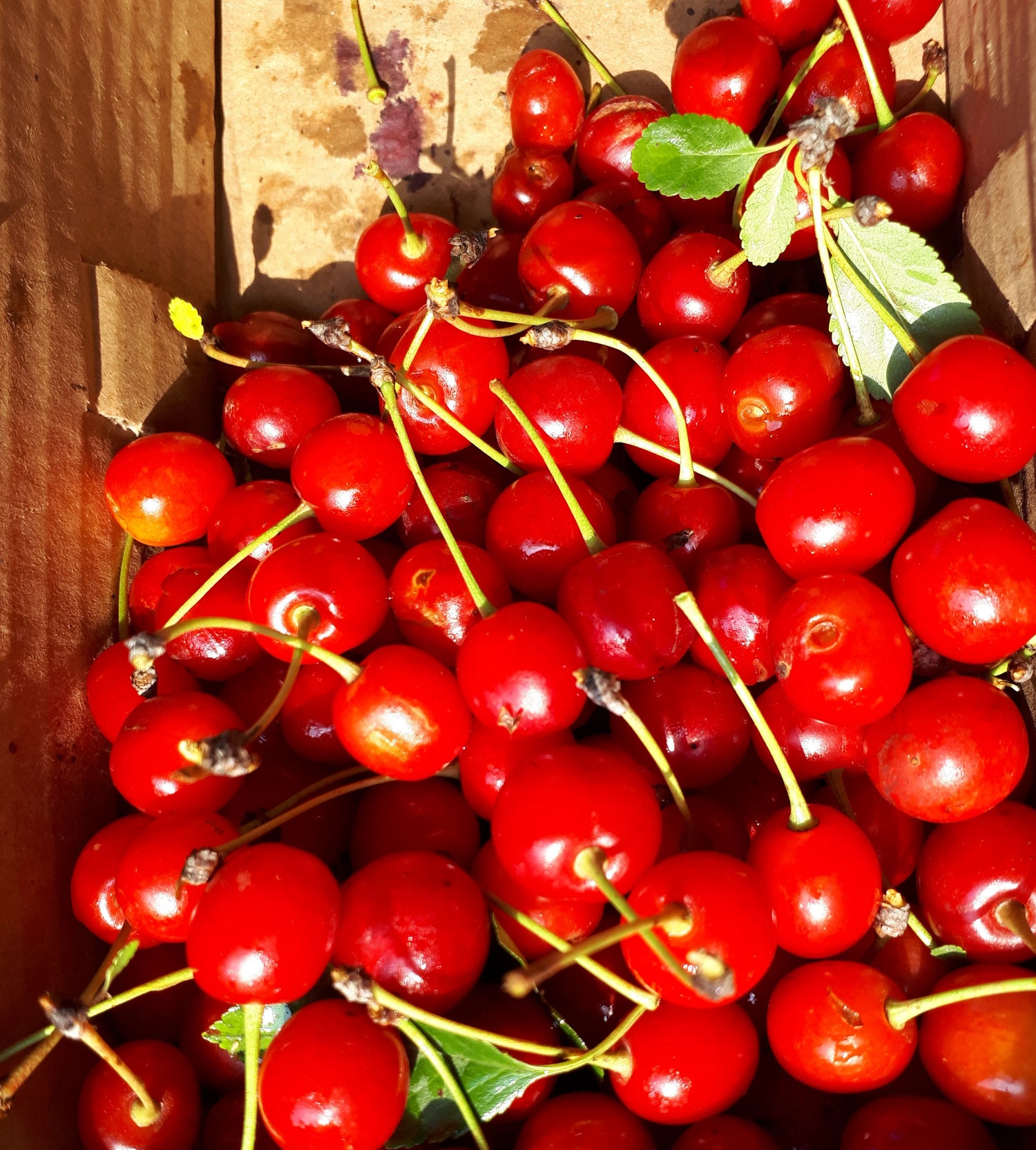
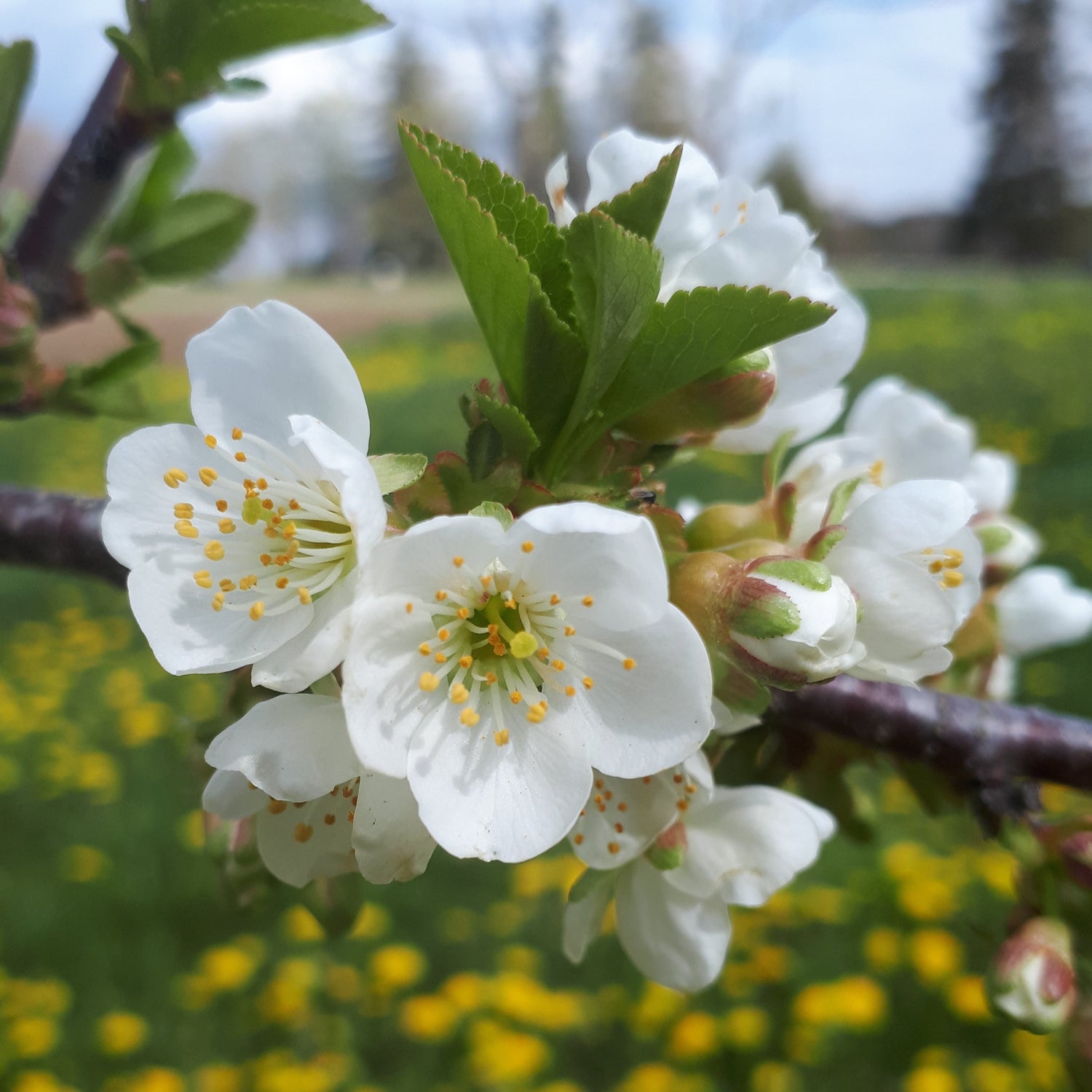
History: Meteor sour cherries were introduced by the University of Minnesota in 1952 as part of an effort to breed more cold hardy varieties.
Why We Grow It: Winter hardiness, reliable cropping, and a resistance to leaf spot make Meteor a good choice for the backyard. The fruit is bright red with yellow flesh. Meteor is classified as an amarelle type sour cherry, similar to Montmorency. It is excellent for making pie.
Check our our blog post with some tasty sour cherry recipes!

History: White Jersey is another English cider apple whose origins are a little obscure. It was popular in the Somerset area of England during the 1800s where it was first recorded in 1895. It is still grown in modern cider orchards in the UK today.
Why We Grow It: Although it has been deemed an apple with 'average quality juice,' White Jersey is still worth checking out if you are interested in cider making. It does well in the Great Lakes area and it compensates for its average juice quality with good productivity and a tendency to start bearing fruit early.

History: Michelin was raised by a French nurseryman in Normandy where it first bore fruit in 1872. It was named after pomologist Henri Michelin who studied cider varieties. In 1884 the Woolhope Field Naturalist's Club brought Michelin along with Medaille d'Or back to England where it became one of the most commonly planted cider varieties by the 1900s.
Why We Grow It: These juicy apples produce good quantities of bittersweet juice that make a nice addition to cider blends. The trees start producing fruit at a young age and have large, reliable crops. They have preformed well in recent studies at the Vineland Research station in our Canadian growing conditions.

History: Westfield Seek-No-Further was discovered in Westfield, Massachusets in the 1700s. Its flavour is reminiscent of popular fresh eating apples in England which is probably why this apple was so popular among English colonizers. It was the most popular fresh eating apple in New England during the 1800s.
Why We Grow It: Historically a favourite eating apple, Westfield-Seek-No-Further's sharp, nutty flavour is as unique as its quaint name! It now has potential as an addition to cider blends.
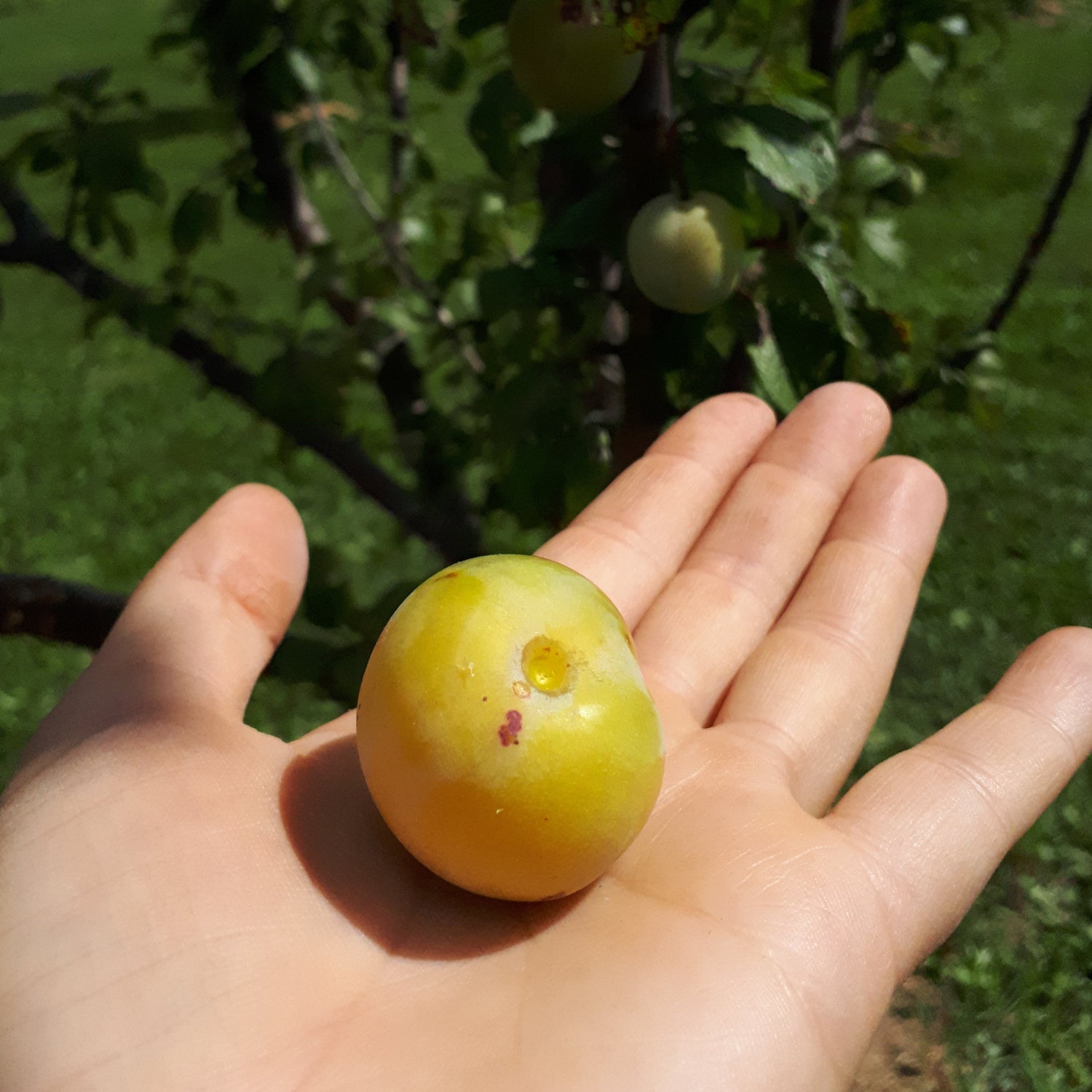
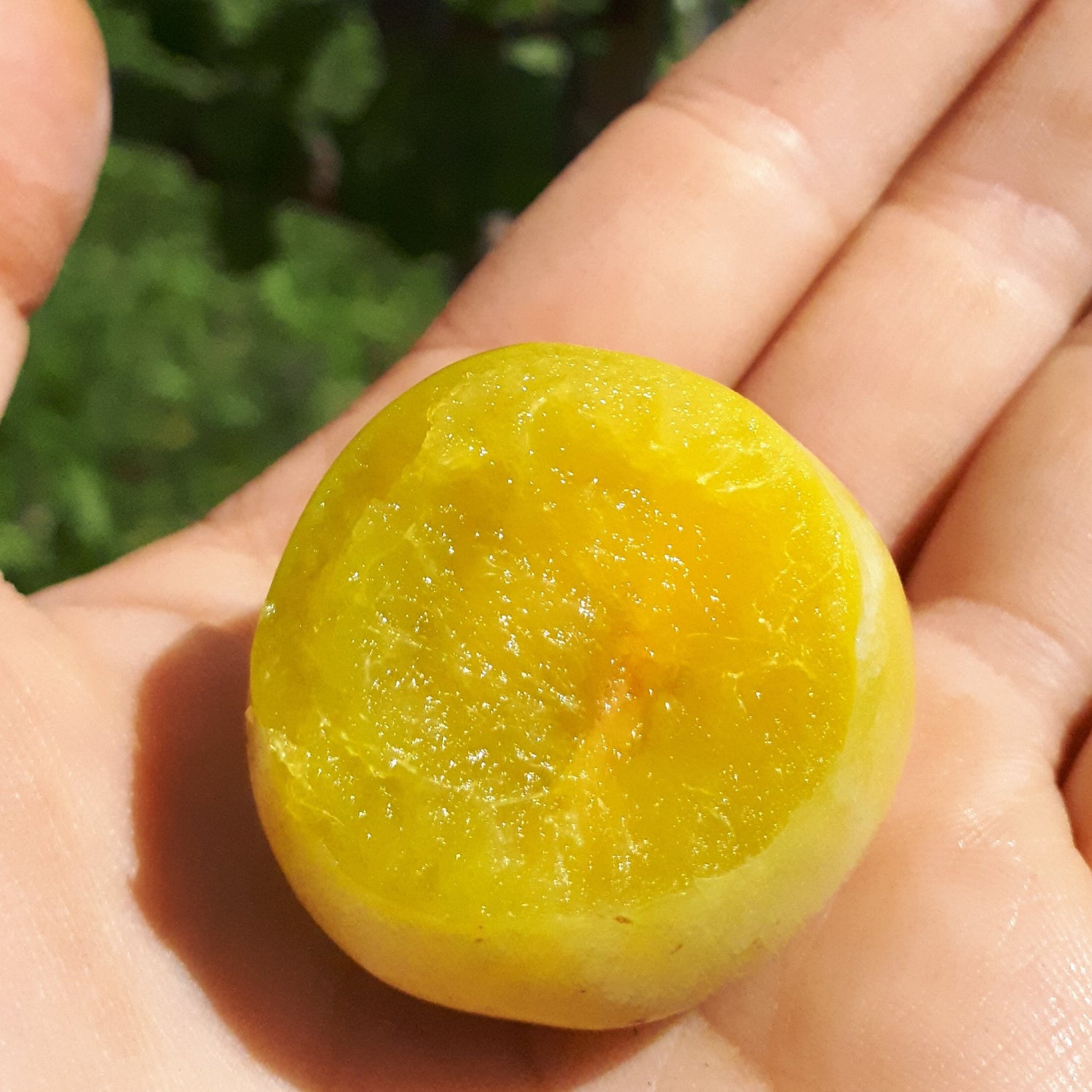
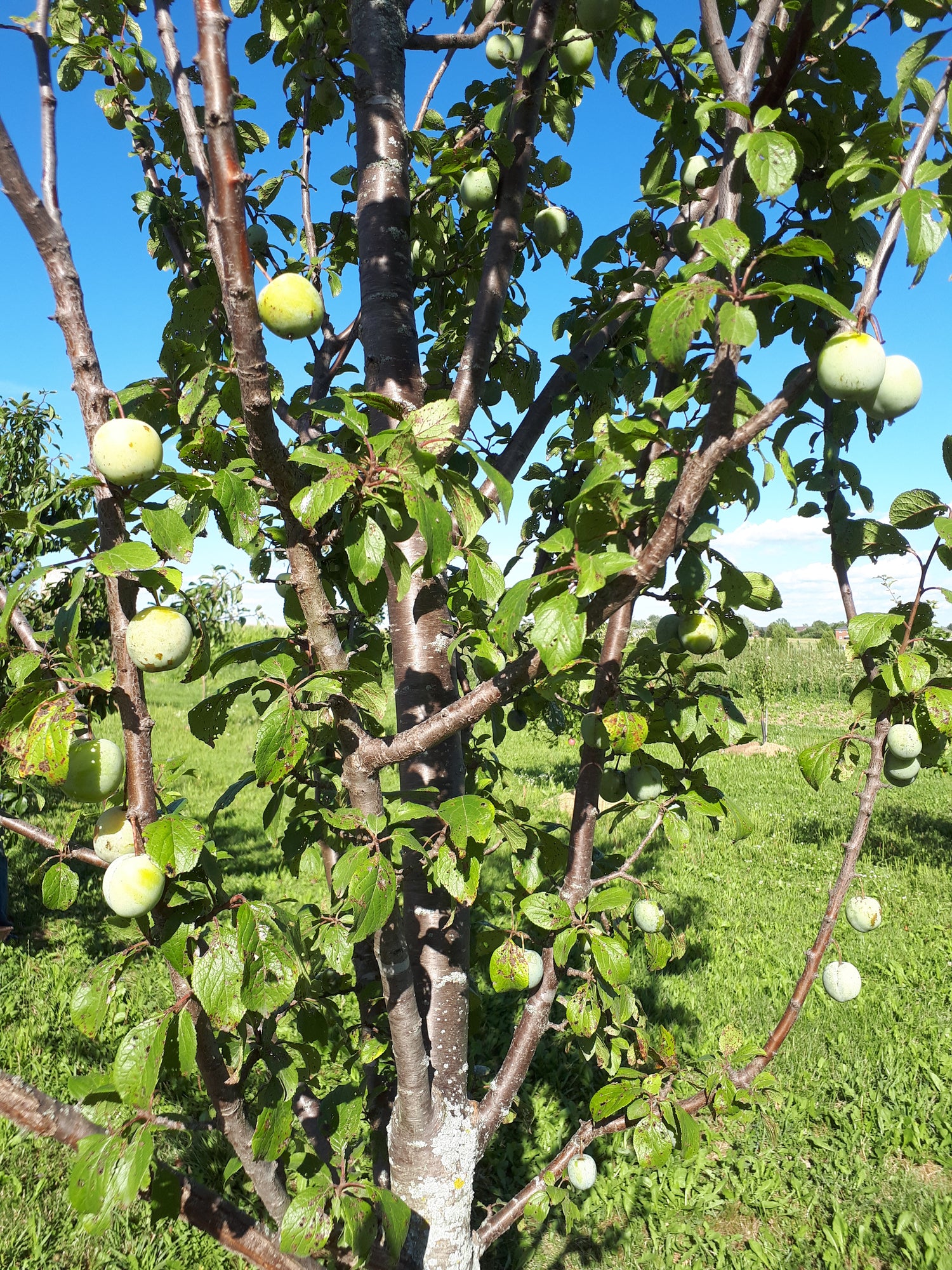
History: Likely cultivated from a wild plum growing in Asia, Mirabelle plums are a specialty of the Lorraine region in France where they are still primarily grown today. They are very popular in Europe and the French city of Metz has an annual Mirabelle Festival that spans two weeks. In 2006, the French city of Nancy created the world's longest Mirabelle tart which measured over 200m in length.
Why We Grow It: It's no why wonder that this European plum is so popular. Mirabelle plums are super sweet and flavourful with soft juicy flesh. The medium-sized yellow fruit is exquisite as a dessert plum, but can also be used in jams, chutneys and schnapps.


History: Fresco, also known by the brand name Wellant®, was developed through a fruit breeding collaboration between Inova Fruit and the Applied Plant Research at the Wageningen University and Research Center in the Netherlands. The goal was to create an apple variety that better aligned with changing consumer tastes. It was bred in the late 1900s and named Fresco during the years it underwent various tests before being released in 2004 under the brand name Wellant®. It is primarily grown and sold in Europe.
Why We Grow It: Fresco produces a large, deep red fruit that is crunchy with a strong flavour high in both sweetness and tartness. It is excellent for fresh eating and can be used in baking and cooking as well. An excellent multi-purpose apple!
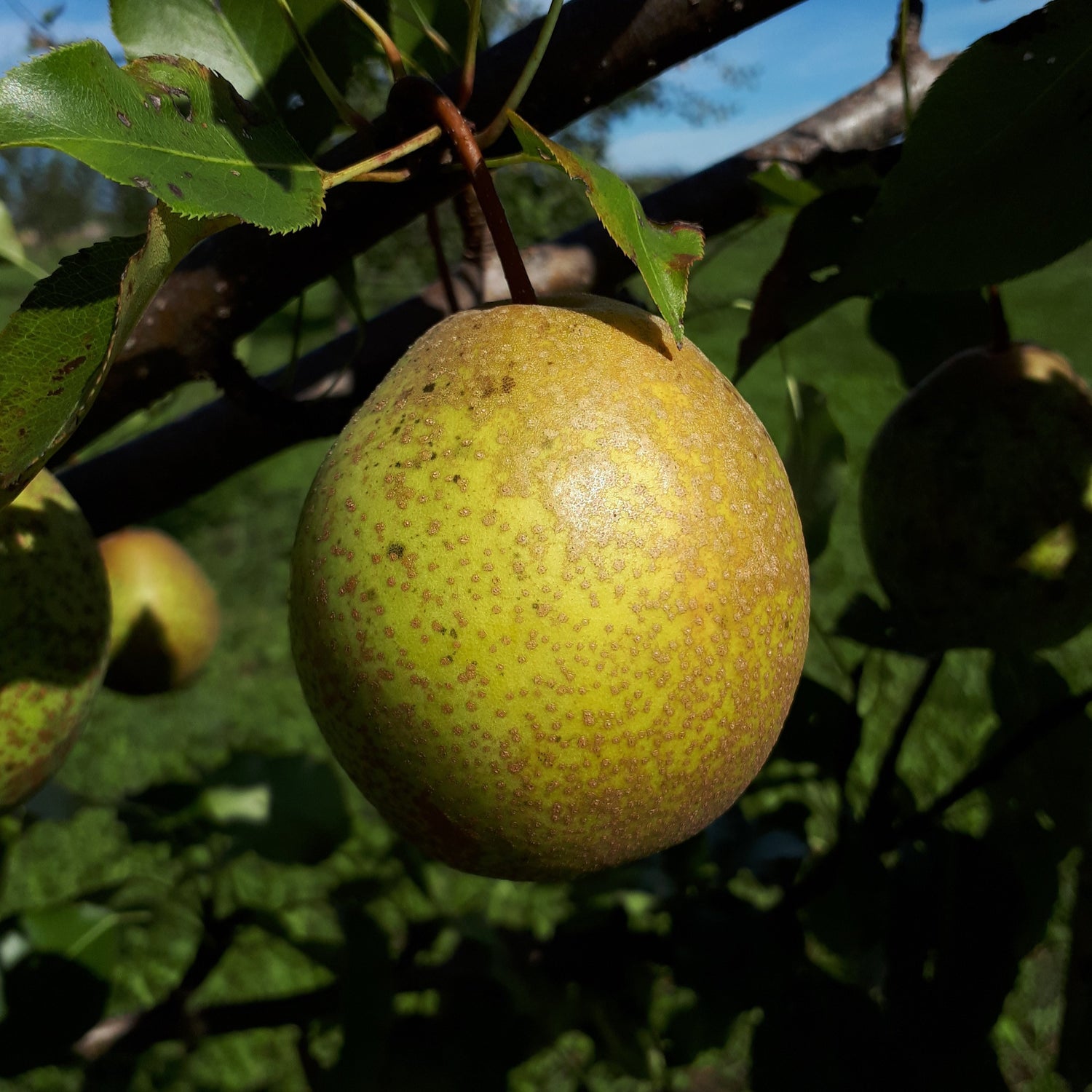
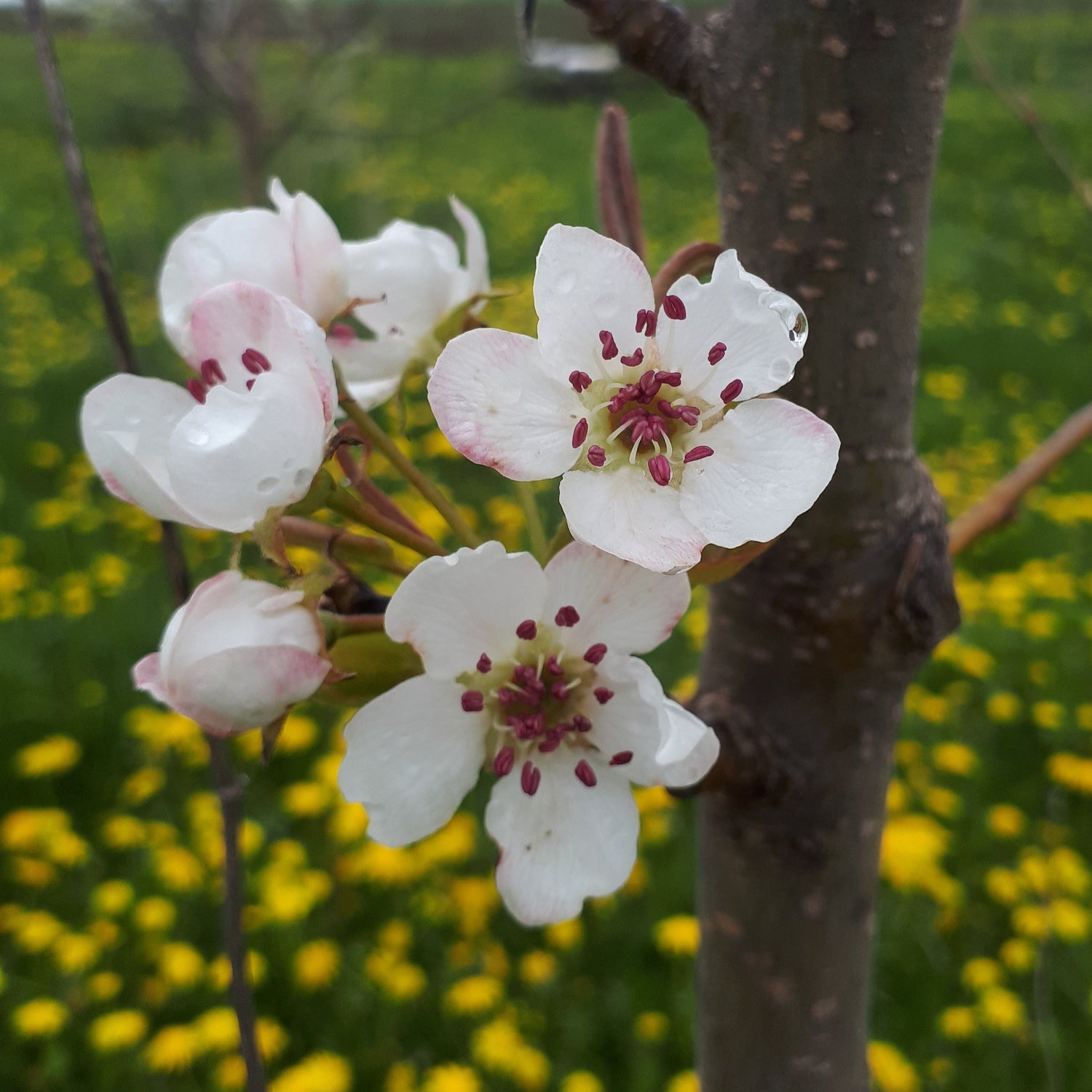
History: Mishirasu is an Asian pear from Japan.
Why We Grow It: Mishirasu is a popular variety since the fruit are extra large with a sweet, mild flavour and a nice crunch. The skin is brown and russeted, and the fruit have a roundish shape that is reminiscent of European pears.
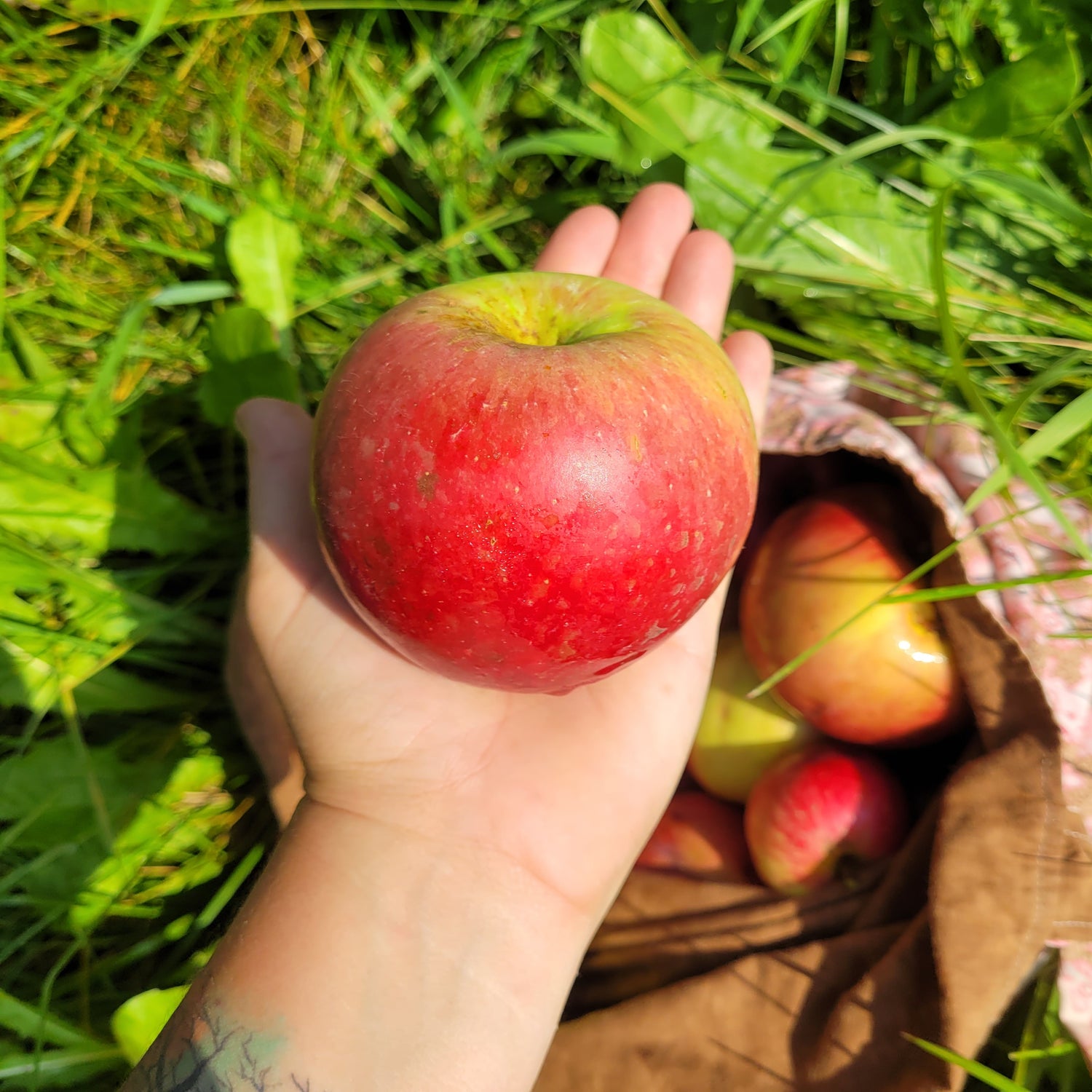
History: Wealthy apples were created by horticulturalist Peter Gideon after spending years trying to breed an apple variety that could survive Minnesota's harsh winters. With the very last of his money, he purchased seeds and scions in 1868 in one final attempt and was able to produce the Wealthy apple which he named after his wife, Wealthy Gideon. He gave scions away freely and Wealthy became one of the top five apples grown in the US.
Why We Grow It: A medium to large sized apple, Wealthy makes splendid applesauce, but is also very good for fresh eating with a balanced sweet-tart crunch. The tree is scab resistant and cold hardy, makes an excellent pollinator for other apples, and is well-suited for organic orchards.
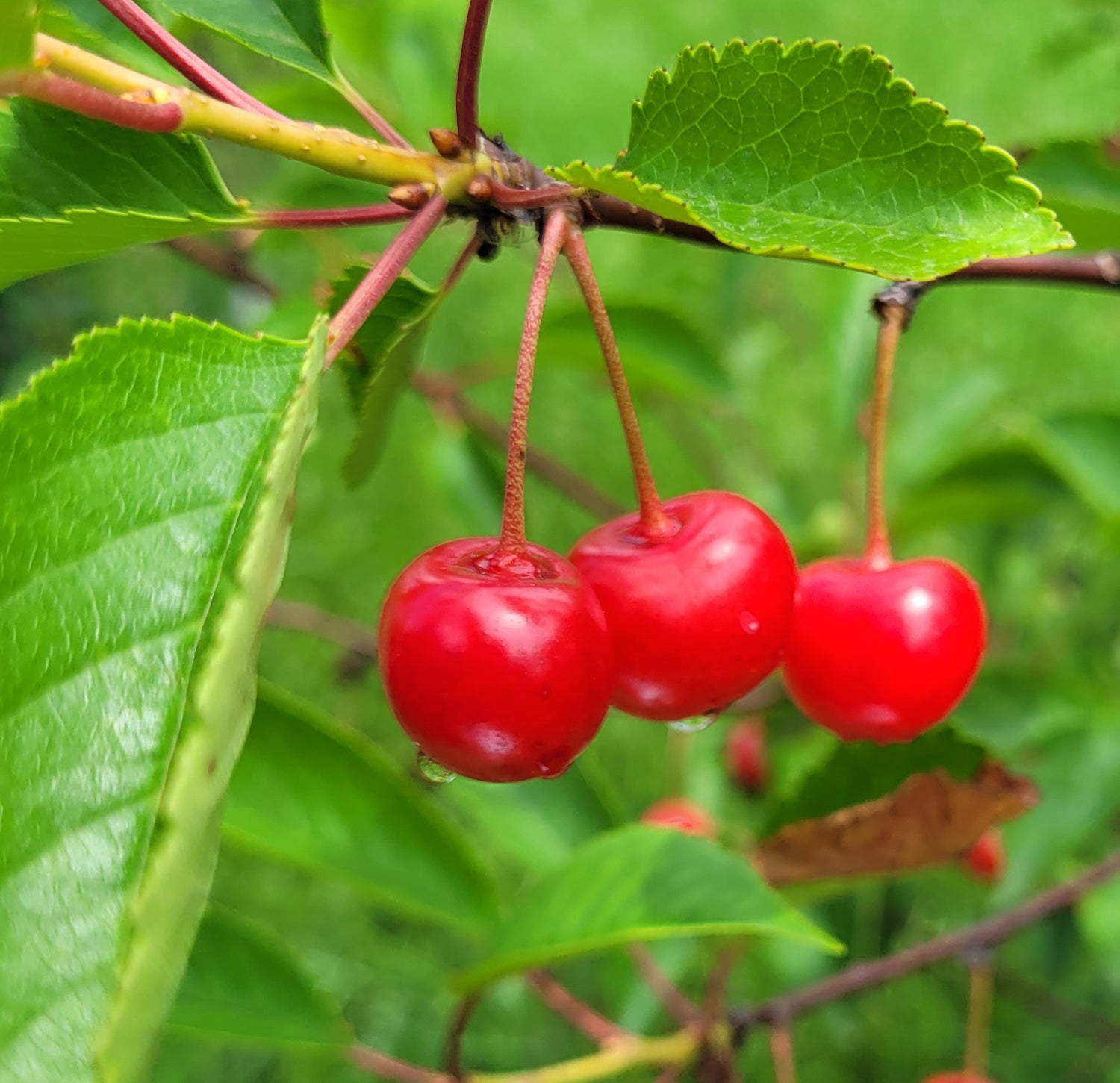
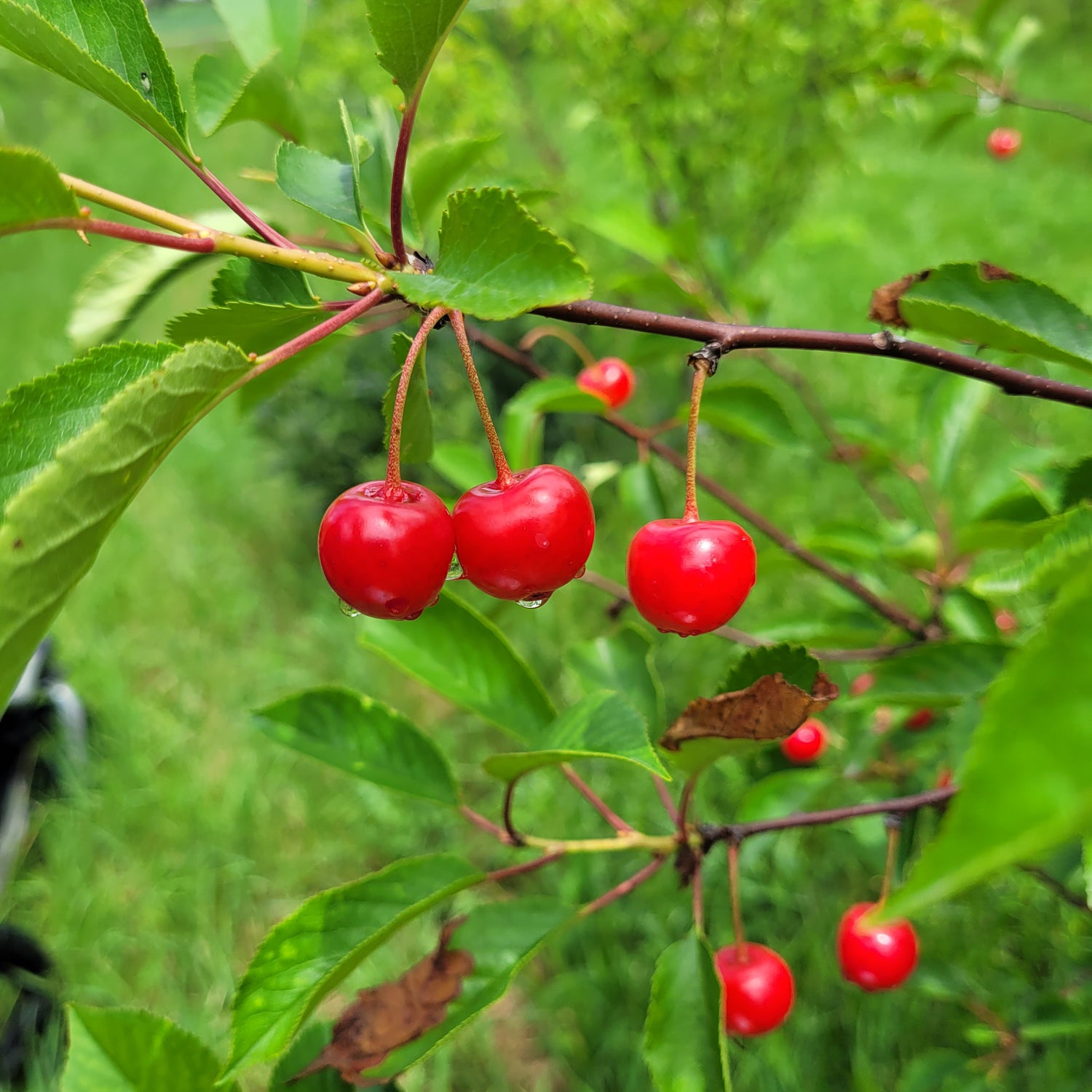
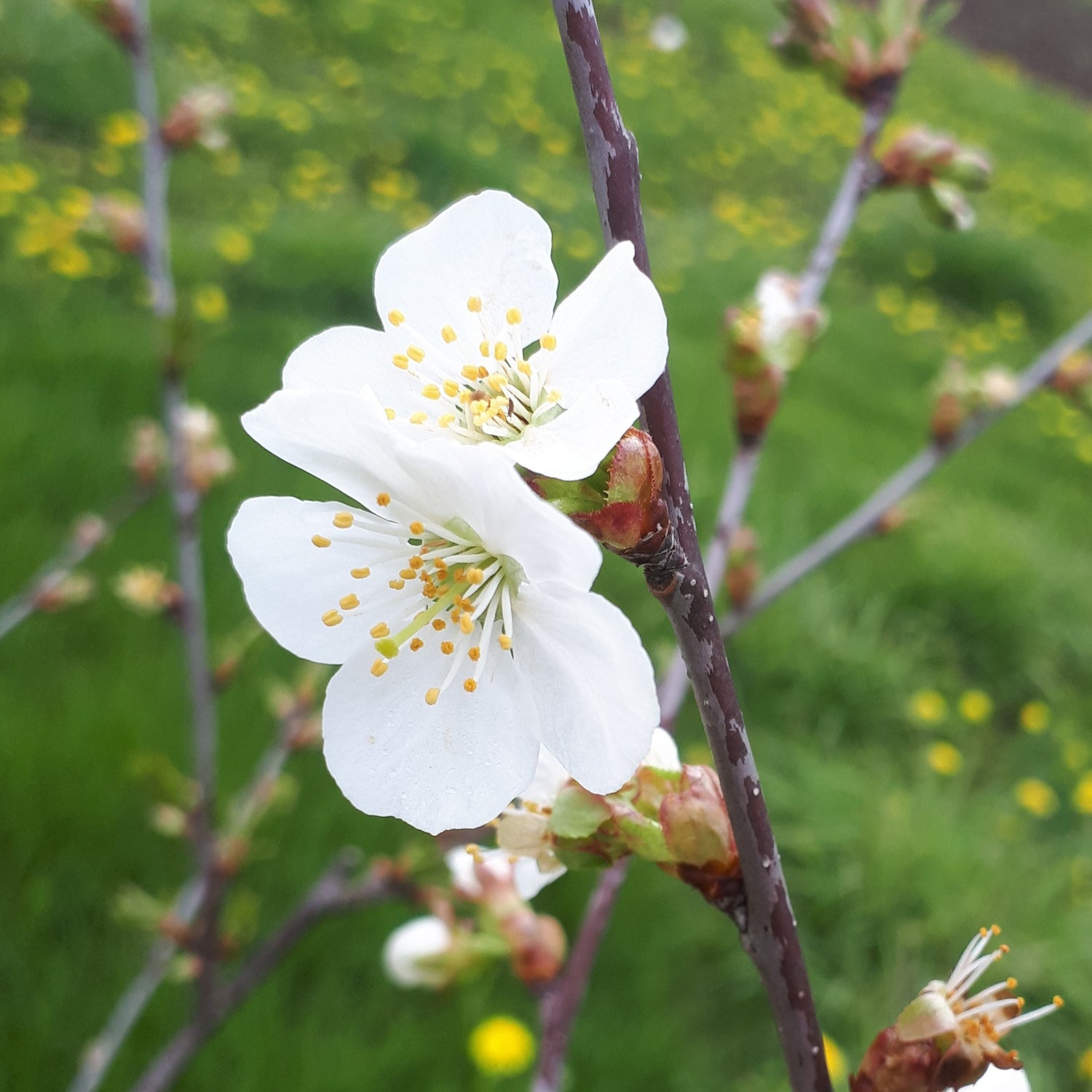
History: Montmorency sour cherries date back over 400 years, originating in the Montmorency Valley in France. From there they spread to England and eventually to North America where they are the most commonly grown sour cherry by far. Products that contain sour cherries are almost guaranteed to use this variety.
Why We Grow It: It's hard to ignore such a classic and beloved sour cherry. Montmorency produces bright red cherries that are perfect for making cherry pie, preserves, and jams. Montmorency is an amarelle cherry.
Check our our blog post with some tasty sour cherry recipes!
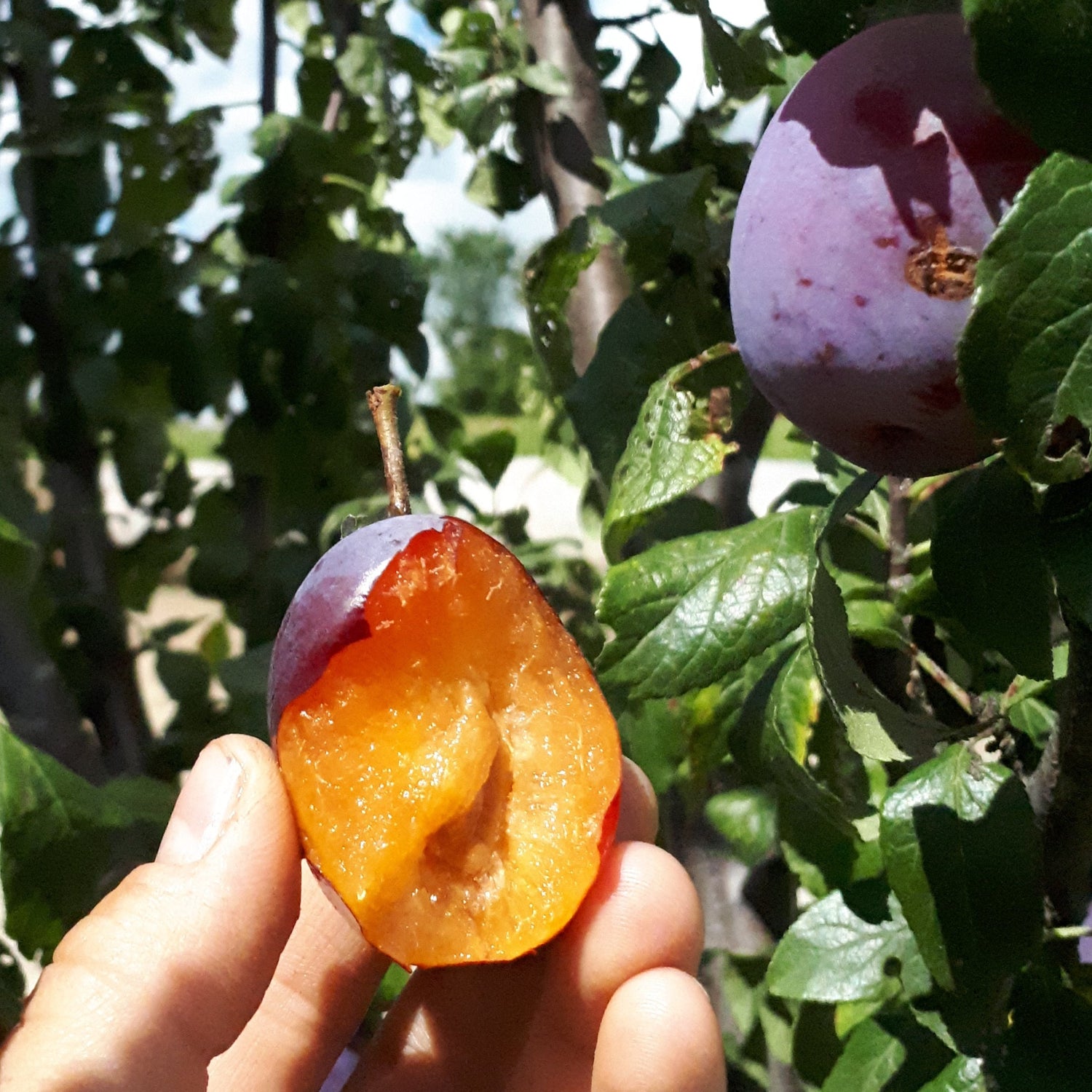
History: Waneta is a hybrid of Japanese plums (Prunus salicina) and American plums (Prunus americana) developed at the South Dakota Experimental Station by NE Hansen and introduced in 1913. It was developed at a time when hybrid plums were more important as a commercial crop. It was named after a Yanktonai man who played a prominent role in the War of 1812 and later became chief.
Why We Grow It: Waneta is a juicy and sweet clingstone plum with tart red skin. The flesh is a yellowish colour. The tree naturally stays a little smaller and has good crops, paired with decent cold hardiness.

History: Mother was first officially introduced to the world in an 1844 edition of the "Magazine of Horticulture." We know it came from General Stephen Gardner's farm in Massachusetts in the US but do not know any other details about its origins. It faded from popularity in the US during the 1900s but remained popular in the UK.
Why We Grow It: Mother produces medium-sized apples with yellow skin that turn deep red where exposed to the sun. This crisp, juicy apple is sweet with hints of pear and vanilla making it an excellent choice for fresh eating. It is also a popular option for baking pies! The fruit stores well, the blooms are tolerant of late spring frosts, and the tree tends to start producing at a young age. It is also susceptible to several common apple diseases, but we believe its other qualities outshine that fact.

History: Wagener apples come from a seed that was planted by George Wheeler in the Finger Lakes area of New York in 1791. In 1796, Abraham Wagener purchased Wheeler's property and planted the seedling on his own property in Penn Yan village where the tree was known for producing attractive, tasty fruit in abundance every year. The variety was named after Wagener and became popular for its excellent storage qualities.
Why We Grow It: Wagener is ideal for the self-sufficient homesteader who values a late keeper, lasting until April in an ordinary cold cellar. When first picked they have a sharp, acidic taste and are great for cooking. In storage, they mellow to an excellent sweet, crisp apple that is perfect for fresh eating.
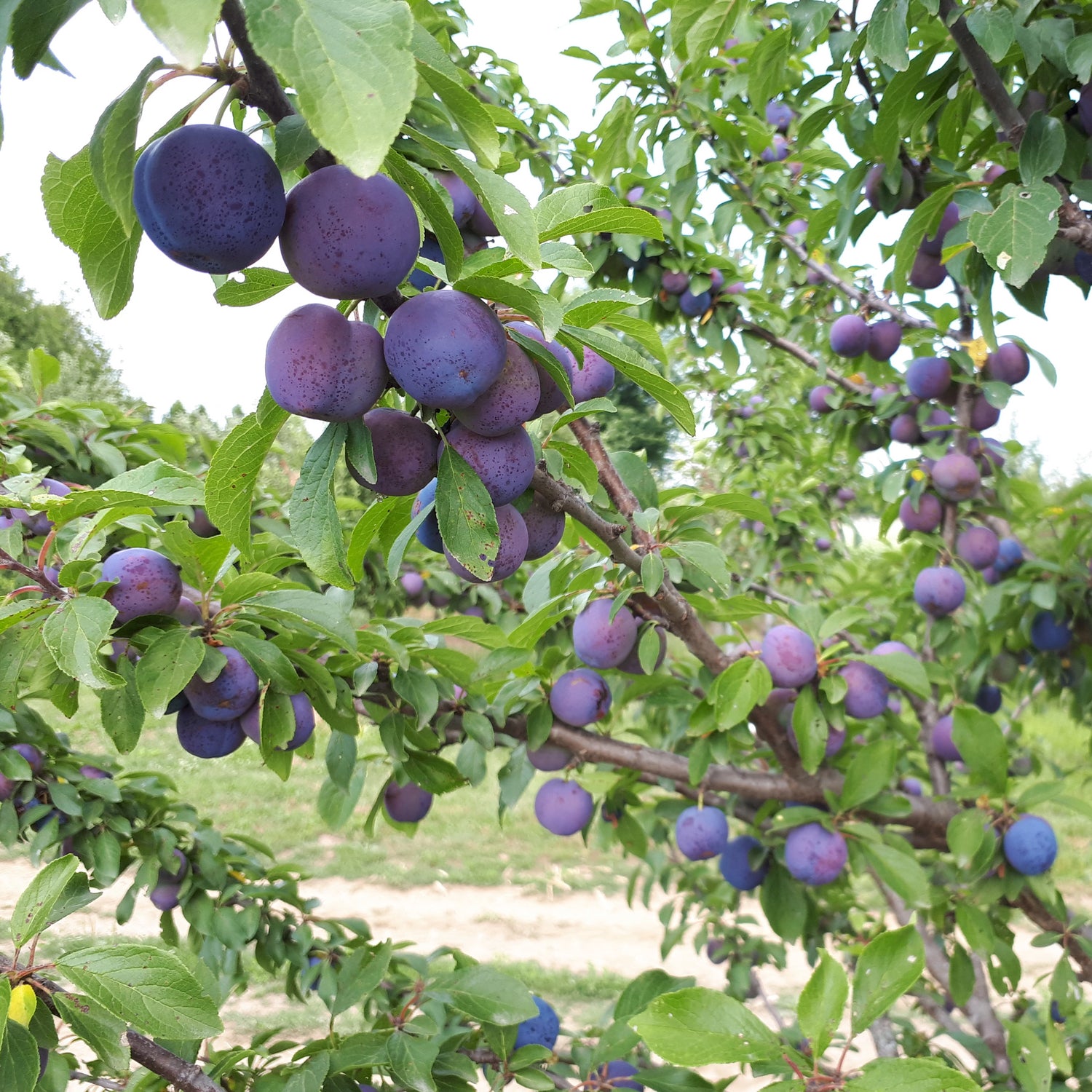
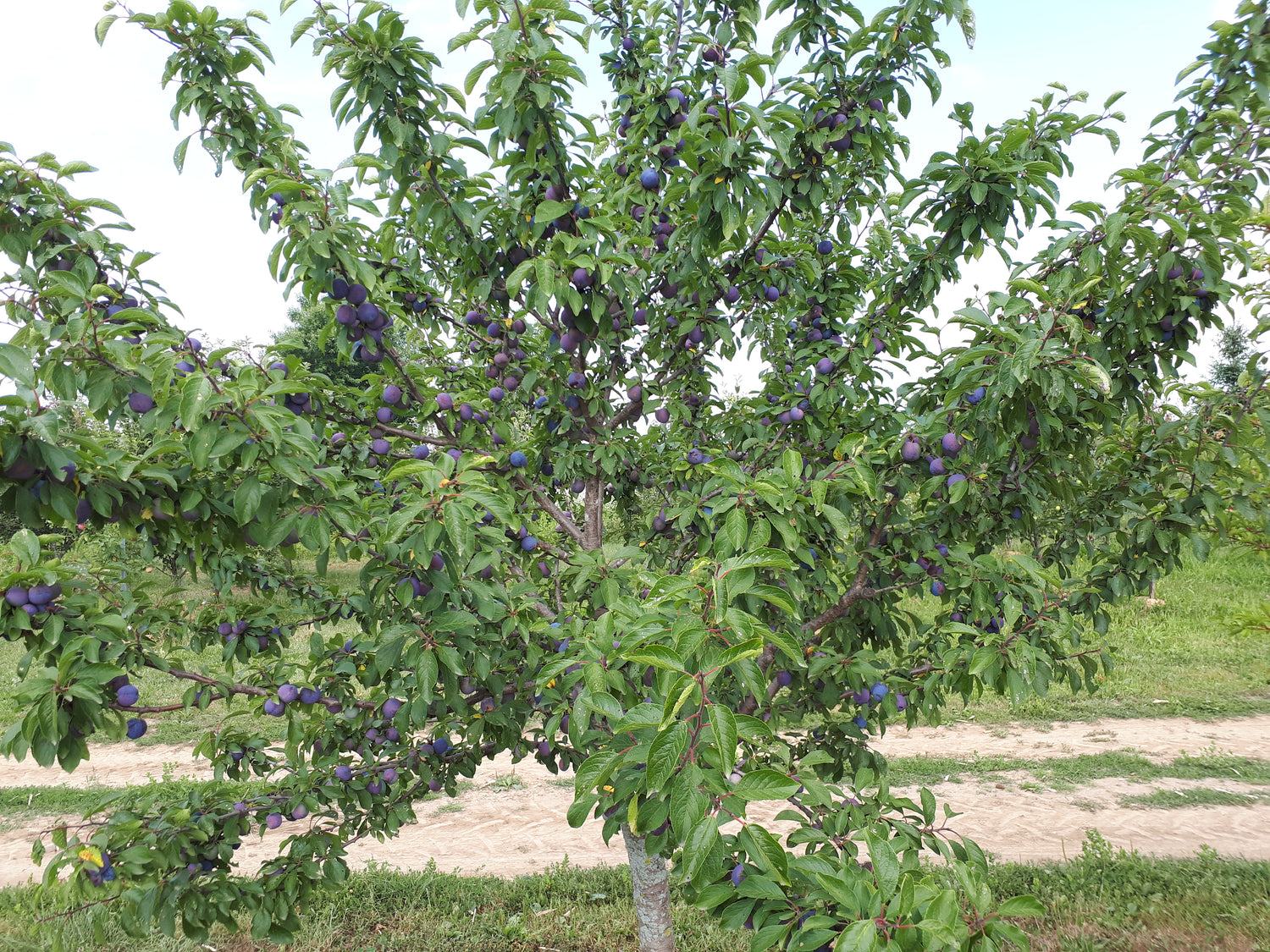
History: As the name suggests, Mount Royal plums originated in the Montreal area where it was either found by French colonizers as a wild chance seedling or intentionally bred by Jesuit missionaries and French colonizers using plums brought over from Europe. Either way, the result is a lovely plum hardy enough to survive Canadian winters.
Why We Grow It: This European plum is a Canadian classic of excellent flavour and good cold-hardiness. The fruit is blue-skinned with jammy yellow flesh that is both sweet and spicy. The tree produces heavy crops.

History: Little is known about Muscadet de Dieppe aside from the fact it originated near the port of Dieppe in Normandy, France. It was commonly grown in the area since 1750 at least.
Why We Grow It: Considering this French cider variety was popular in an area known for its cider, this makes for a classic cider apple. The juice is bittersweet and aromatic which is excellent in both single-variety ciders and cider blends.
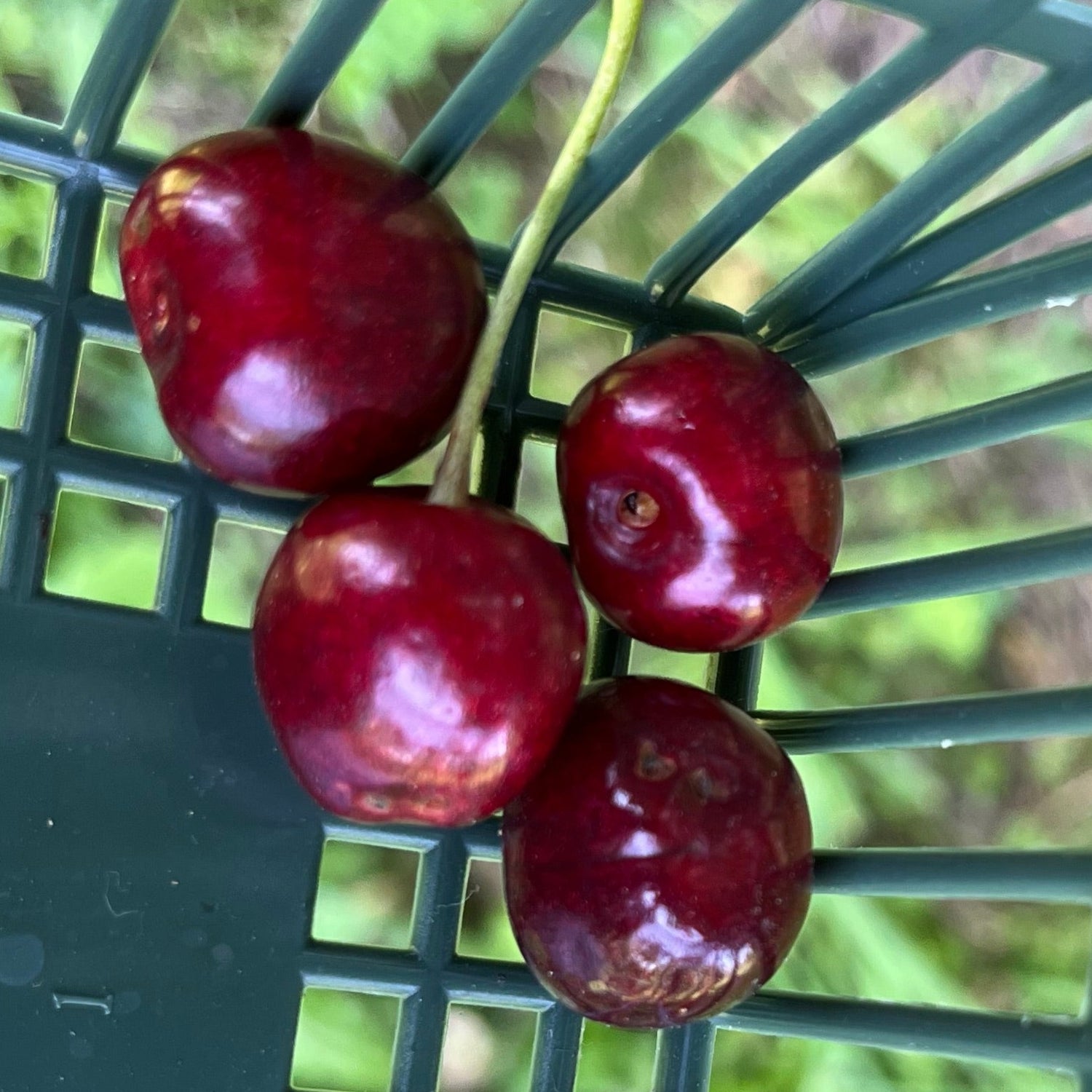
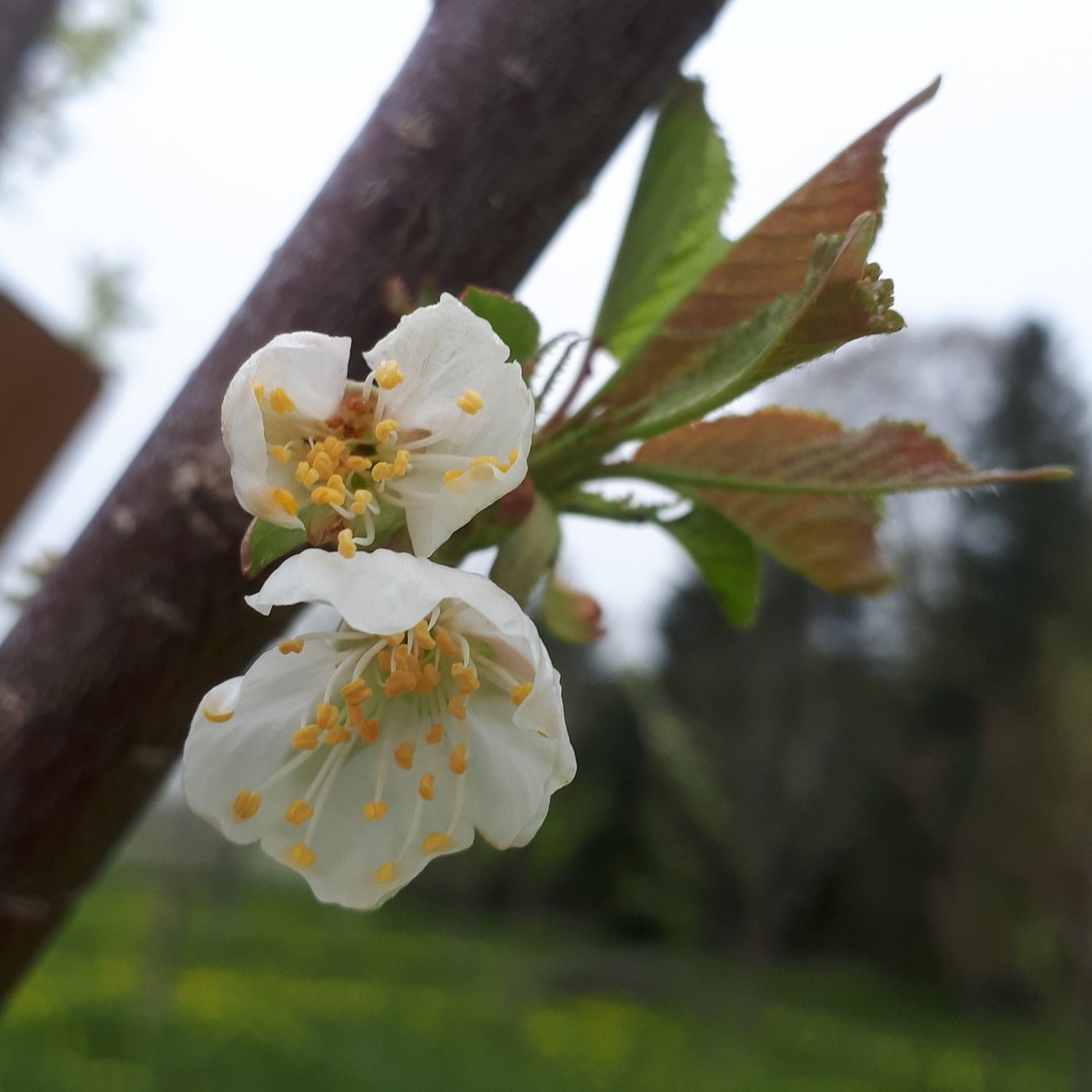
History: Viva originated in 1935 as a possible hybrid of Hedelfingen and Victor.
Why We Grow It: Viva produces medium-sized, dark red cherries with good flavour. They are suitable for many uses including fresh eating, cooking, and preserving. They are one of the first cherry varieties to ripen, creating a pleasant start to the cherry season.
History: Mutsu apples (aka Crispin) were developed in the 1930s at the Aomori Apple Experiment Station in Japan as a cross between Golden Delicious and Indo apples, the same parentage as its sister apple Shizuka. This variety was named after Mutsu Province which was the previous name for the area where it was grown and released in 1949.
Why We Grow It: Mutsu apples have a lot going for them. They have a delicious sweet-tart flavour which is great for fresh eating and the golden yellow skin is quite attractive. The fruit itself is very large and keeps its shaped when cooked, making it an excellent choice for baking. The apples even store well, lasting all winter.

History: Vista Bella was created at Rutgers University in New Jersey in the 1950s and released in 1974. Although its poor keeping ability prevents it from being a commercial success, this early ripening variety is still a nice way to herald in the apple harvest season every year.
Why We Grow It: Vista Bella is the first red apple of the season. The flavour and texture are of better quality than other early apples, making Vista Bella an excellent choice for early farmer’s market sales and roadside stands. The flesh is crisp and juicy, although it softens quickly and, like other early apples, does not keep long.

History: Veteran peaches were developed in Vineland, Ontario and released in 1928.
Why We Grow It: Very hardy and of Canadian origin, Veteran is perhaps the most cold-hardy peach we offer. The freestone fruit is large with yellow flesh and an easy-to-peel skin. Although it has slightly mealy flesh, it boasts an excellent flavour and makes a great pie! This is the best preforming peach in our test orchard.

History: Also known as Albemarle Pippin. This apple was discovered as a chance seedling (aka a pippin) in the village of Newtown in New York sometime in the late 1600s or early 1700s. It was commonly grown in colonial America, even earning praise from both George Washington and Thomas Jefferson. In 1838, the American minister to Great Britain gave some to Queen Victoria who loved the apples so much she removed tariffs on the variety and they became an important export until the tariffs were reinstated during WW2.
Why We Grow It: Newtown Pippin's popularity can be ascribed to its unique ‘rich pineapple flavour’ which it develops under optimum growing conditions. So far it has been performing well in our test orchard with good vigour and we have had no issues with diseases despite the tree's general susceptibility.
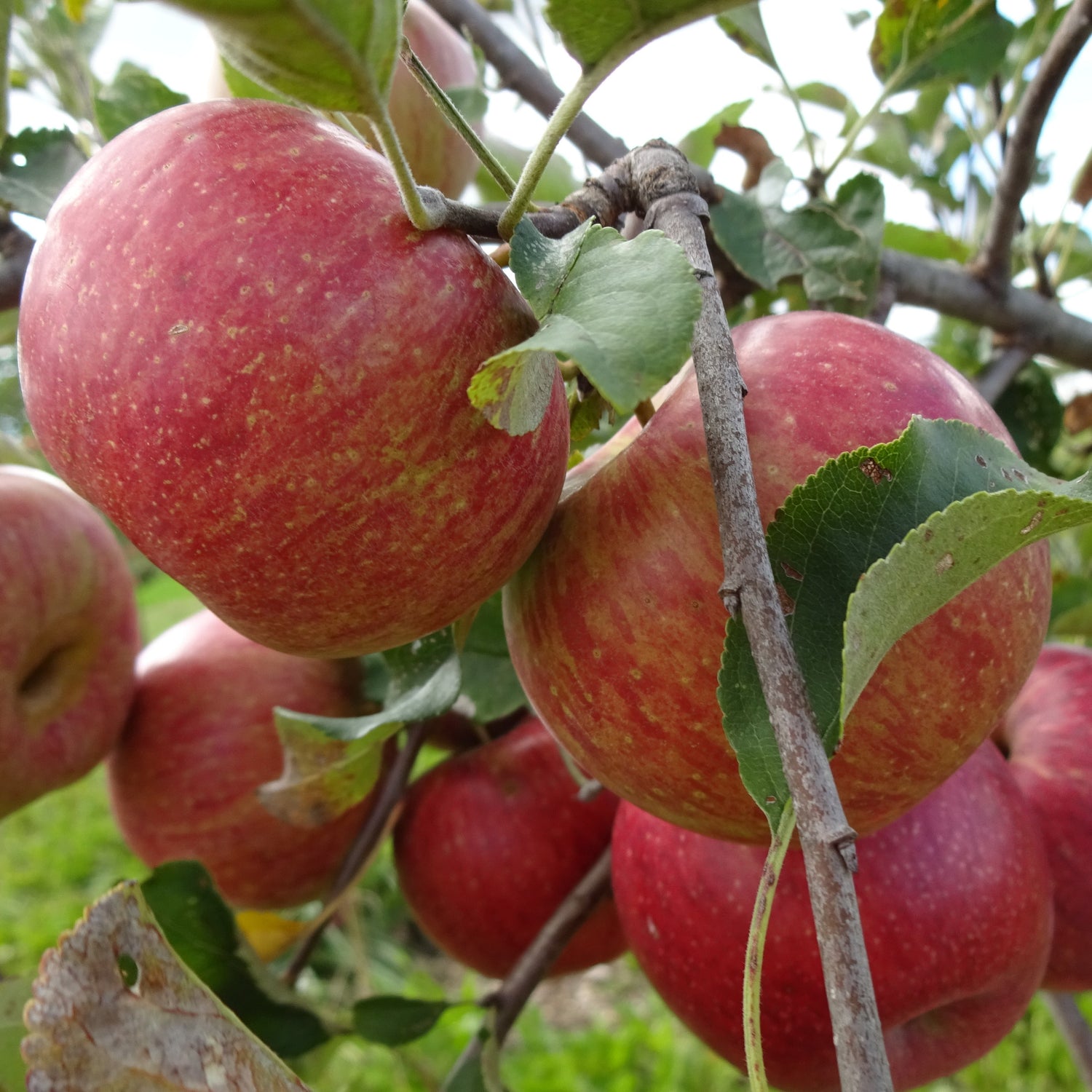
History: Tsugaru is another apple that was created at the Aomori Apple Experiment Station in Japan and released in 1975. It was likely named after Tsugaru, a nearby city, or the Tsugaru samurai clan that controlled the area during the Edo period. This variety is quite popular in Japan and represents the sweetness that is coveted among Japanese apple fans.
Why We Grow It: If you love sweet apples, you need to give Tsugaru a try. It has a very mild flavour with virtually no acid. It is performing very well in our test orchard, providing an abundance of nice clean fruit. It is one of Steph's favourites.

History: The Niitaka Asian pear was developed in Japan as a cross between Amanogawa and Imamuraaki Asian pears in 1915 and was released in 1927.
Why We Grow It: Niitaka is a popular Japanese variety with large orange-brown fruit that is round and speckled. The flavour is sweet and mild.