Apple Trees

Apple Trees
Apples have been a staple of the human diet since ancient times. Their varied shapes, sizes, colours, and tastes provide fruit that is beautiful to the eyes and pleasing to the palate in many forms—fresh, baked, stewed, dried, and in cider, sauce and jelly. When planning to plant apple trees, remember that to ensure pollination and fruit set, two different varieties are required. For example, Idared and Golden Russet trees will pollinate each other, but two Idared trees will not. Some varieties, called triploids, have sterile pollen and cannot pollinate other trees. A third variety is then required to ensure pollination of all trees.
Sort by:
23 of 173 products
23 of 173 products
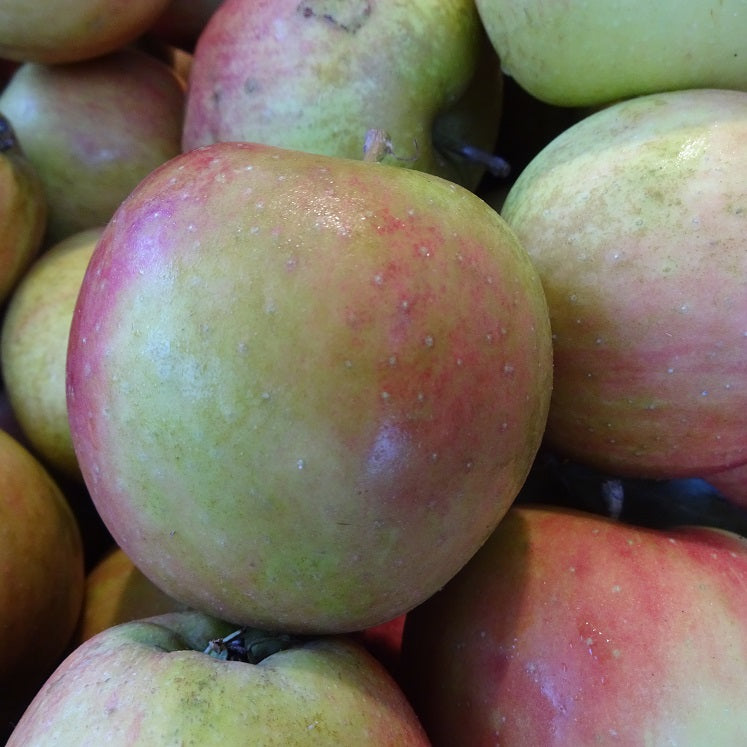
History: This apple was discovered as a chance seedling in 1856 in Boskoop, Netherlands where it has remained popular ever since.
Why We Grow It: Here's one for those of us who love some sharpness in an apple. With its sharp taste and large, greenish-red fruit, this apple is still popular at farmer's markets throughout Europe for both fresh eating and cooking (keeps its shape). It has value as a sharp in hard cider blends as well.


History: Once one of the most popular commercial apples in the United States, Ben Davis apple trees were planted across the continent following its discovery around 1800. Due to its firm fruit and excellent keeping qualities, this apple was extremely easy to transport over longer distances which led to its popularity. Once storage and transportation improved, this apple was slowly replaced with better tasting varieties and it is now a relatively rare find. It's also a parent to Cortland.
Why We Grow It: The mellow, sub-acidic, mildly aromatic red fruit is not quite as flavourful as some apples but it stores exceptionally well, lasting into spring. Flavour improves in storage, like many heritage apples. The trees are reliable and heavy croppers, earning them the nickname of 'mortgage-lifters' when they were grown commercially.
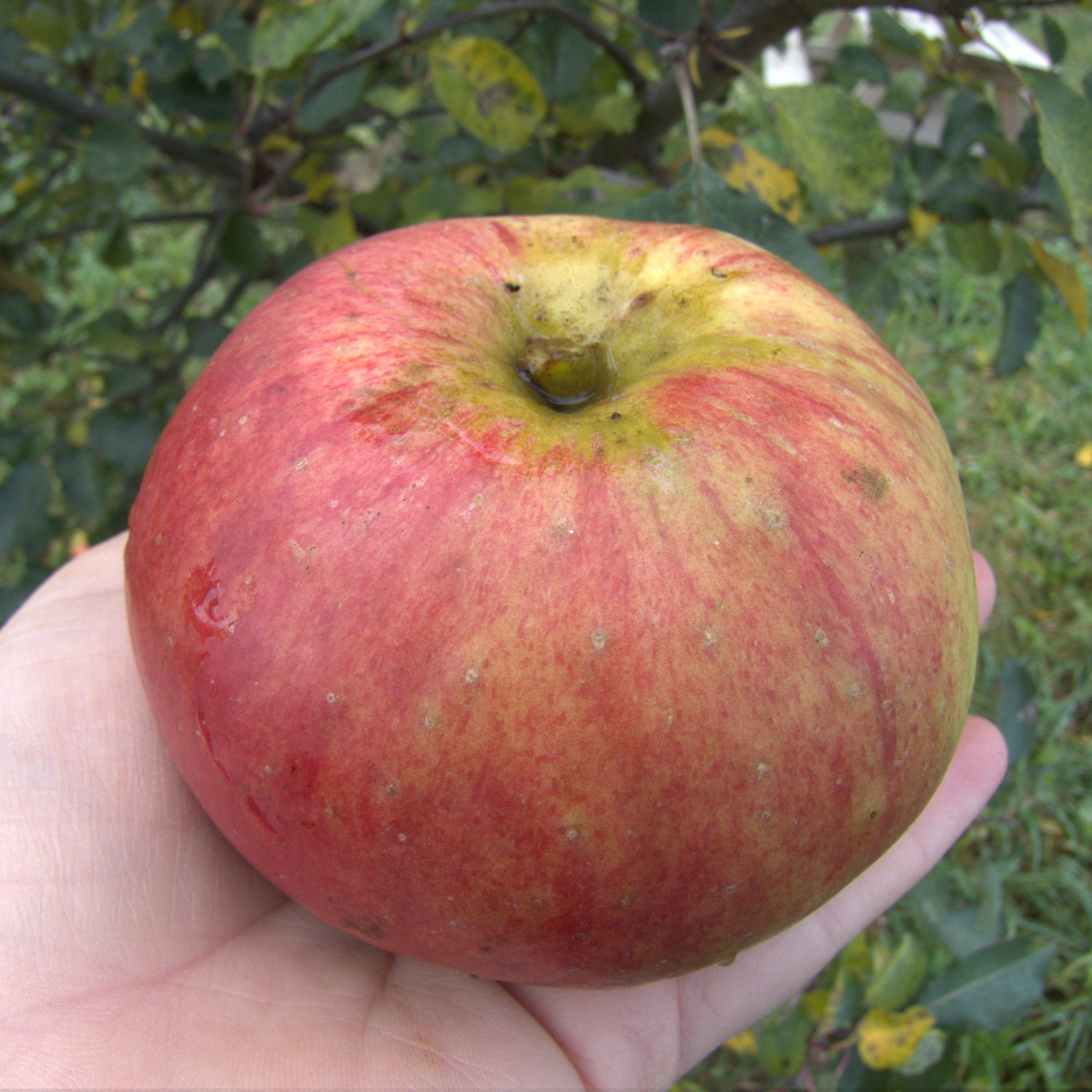
History: Bramley's Seedling was first planted in the UK in 1809 by Mary Ann Brailsford-Trump and was later named after the butcher who bought the property. Long considered the definitive British cooking apple, Bramley's Seedling is celebrated with its own festival, a plaque, and a commemorative window that was installed on its 200th anniversary. The original tree is still growing where it was planted over 210 years ago.
Why We Grow It: With its strong flavour and acidity, this apple is hard to beat when used for cooking, although the fruit doesn't hold its shape as well as other varieties. The fruit is large, greenish-yellow with orange flush and broad red stripes and store all winter. The trees are quite hardy and heavy croppers.

History: Brettacher Sämling (sämling meaning seedling in German) originated as a chance seedling on a farm in Brettach, Germany in the early 1900s. It is possibly a descendent of the French cooking apple, Lebel. It is known for its excellent storage qualities and is still grown commonly in parts of Germany.
Why We Grow It: Brettacher Sämling produces large, juicy apples with a sweet-tart fruity flavour that has a hint of spice. The apples, green with a red blush, are best enjoyed after being stored for two months. They are fairly versatile, also considered suitable for sauce and juice/cider. Compared to other apple trees, this variety is relatively low maintenance and only requires a hard prune every two to three years.

Why We Grow It: These apples feature red blush over green skin and have a rather flattened appearance. They have an intense pineapple flavour that is a pleasant mix of sweet and sharp, and are also crisp, juicy, and high in Vitamin C. As one can imagine, they are great for fresh eating but can also be used for cooking. The tree is vigorous and produces good crops, but does tend to bear fruit biennially. It is also one of more particular trees, being more sensitive to late frosts and drought conditions.

Why We Grow It: Along with the great sweet flavour and juiciness of the original, Fuji BC #2 also boasts redder skin, making it more appealing for those who prefer red apples.

History: Kandil Sinap* originated in the early 1800s around the Black Sea, although it is debated whether it originally came from the Crimean Peninsula in the Ukraine or the Sinop Peninsula in Turkey. It was at one time commonly exported into Russia.
*There are different thoughts on what Kandil Sinap translates to, some say it is 'candle of Sinop,' others 'sweet apple of Sinap,' and it translates directly from Turkish as 'oil lamp'
Why We Grow It: Kandil Sinap's most prominent feature is the odd shape of the fruit, strangely oblong and conical, almost resembling a candle in appearance. The odd green fruit have a sweet, sprightly flavour and are quite aromatic, although they do bruise easily. The tree naturally stays smaller but produces heavy crops and is great for backyard orchards.

History: Lady apples are one of, if not the oldest, apple varieties in existence with a verifiable history. It is said to have originated in the Brittany region of France before 1628 and was grown during the reign of King Louis XIII. This apple goes by several other names as well. It is also known as Api or Pomme d'Api, named after the Forest of Api in France where it is believed this apple may have been discovered. This particular name is similar to Appia, an apple variety popular in Ancient Rome, which some believe is the same apple as Lady. Lady apples are also known as Christmas apples due to their use in adorning Christmas wreaths and trees.
Why We Grow It: It's hard not to be interested in an apple with such a long history as this one. The fruit is small but attractive: red flushed over yellow. The crisp, sweet fruit maintains its good quality all winter in storage.

History: Lodi is a cross between Yellow Transparent and Montgomery Sweet created at the New York Agricultural Experiment Station in Geneva, NY, and released in 1924. Although it is not suitable for commercial production due to its poor keeping qualities and tendency for the flesh to crack in storage, it is still commonly grown by homeowners in the southern US today.
Why We Grow It: If you're looking for an early apple to get started on making applesauce, Lodi is the way to go! These large yellow-green apples are ready to harvest by the end of July and do not bruise as easily as their Yellow Transparent parent.

History: Melba was developed by W.T. Macoun at the Central Experimental Farm in Ottawa in 1898. In 1924 it was released commercially and three years later received the Silver Wilder Medal from the American Pomological Society.
Why We Grow It: Melba is a lovely early market apple or backyard tree for making applesauce! The fruit is yellow with crimson flush and the crisp, white skin has a very sweet flavour.

History: Michelin was raised by a French nurseryman in Normandy where it first bore fruit in 1872. It was named after pomologist Henri Michelin who studied cider varieties. In 1884 the Woolhope Field Naturalist's Club brought Michelin along with Medaille d'Or back to England where it became one of the most commonly planted cider varieties by the 1900s.
Why We Grow It: These juicy apples produce good quantities of bittersweet juice that make a nice addition to cider blends. The trees start producing fruit at a young age and have large, reliable crops. They have preformed well in recent studies at the Vineland Research station in our Canadian growing conditions.

History: Little is known about Muscadet de Dieppe aside from the fact it originated near the port of Dieppe in Normandy, France. It was commonly grown in the area since 1750 at least.
Why We Grow It: Considering this French cider variety was popular in an area known for its cider, this makes for a classic cider apple. The juice is bittersweet and aromatic which is excellent in both single-variety ciders and cider blends.
History: Mutsu apples (aka Crispin) were developed in the 1930s at the Aomori Apple Experiment Station in Japan as a cross between Golden Delicious and Indo apples, the same parentage as its sister apple Shizuka. This variety was named after Mutsu Province which was the previous name for the area where it was grown and released in 1949.
Why We Grow It: Mutsu apples have a lot going for them. They have a delicious sweet-tart flavour which is great for fresh eating and the golden yellow skin is quite attractive. The fruit itself is very large and keeps its shaped when cooked, making it an excellent choice for baking. The apples even store well, lasting all winter.

History: Also known as Albemarle Pippin. This apple was discovered as a chance seedling (aka a pippin) in the village of Newtown in New York sometime in the late 1600s or early 1700s. It was commonly grown in colonial America, even earning praise from both George Washington and Thomas Jefferson. In 1838, the American minister to Great Britain gave some to Queen Victoria who loved the apples so much she removed tariffs on the variety and they became an important export until the tariffs were reinstated during WW2.
Why We Grow It: Newtown Pippin's popularity can be ascribed to its unique ‘rich pineapple flavour’ which it develops under optimum growing conditions. So far it has been performing well in our test orchard with good vigour and we have had no issues with diseases despite the tree's general susceptibility.

History: Nonpareil originated in France although no one is sure quite how old it is or what its exact origins are. We do know that it was brought over to England sometime in the 1500s where it gained more popularity due to its pear-drop flavour. It can still be found at markets, farmgate sales, and in gardens in England to this day and is believed to be the ancestor of the popular European variety Ashmead's Kernel.
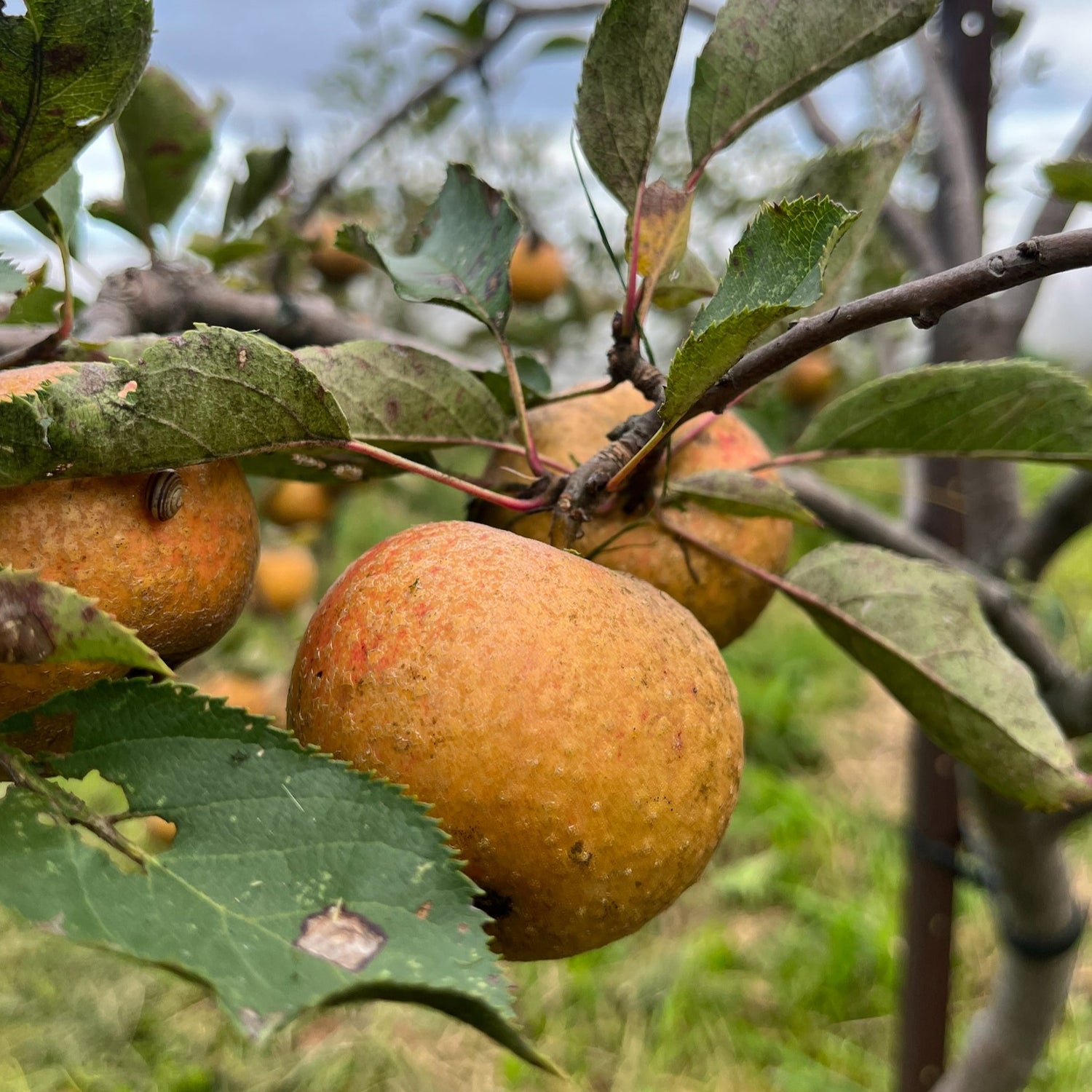
Why We Grow It: Nonpareil is not much to look at with its dull yellow-green russet skin but it packs a flavourful punch: sweet-sharp with notes of pear-drops. The fruits hangs onto the tree well and stores for several months. It is mainly used for fresh eating but can be added to cider blends as well. The tree is naturally more compact and has moderate vigour.
History: Norhey comes from the Morden Research Station, Agriculture Canada. It was created by Dr. C. R. Ure in the 60's to survive the harsh prairie winters. It was introduced in 1975.
Why We Grow It: It seems Dr. Ure was successful since this is about the hardiest apple we've come across. The fruit has green skin that turns yellow after picking. It's fair for fresh eating, good for cooking and juicing with sweet, sub acid flavours and creamy crisp flesh. The tree has consistent, heavy crops.

History: Rhode Island Greening emerged around 1650 where it was grown from seed by a Mr. Green near Green's End, Rhode Island. Mr. Green owned a tavern and often gave scions from the original tree to his customers, although the tree eventually died from the demand for scionwood. The name was originally the descriptive 'Green's Inn apple from Rhode Island' and later shortened to 'Rhode Island Greening.'* This apple was commonly grown in New York and is still quite common today.
*Fun fact: The Ontario ghost town Unopark got its name in a similar way. It was originally founded by Richard Parker, Mouse's ancestor, and the name is a shortened version of 'You know the Parkers?'
Why We Grow It: This apple's long-lasting popularity is due to its reputation as perhaps the definitive American pie-making apple. The large, dark-green apple is too tart to be eaten fresh but is great in pies and holds its shape well when cooked. It also produces nicely in our test orchard, producing large, blemish-free fruit despite it's generally poor disease resistance.
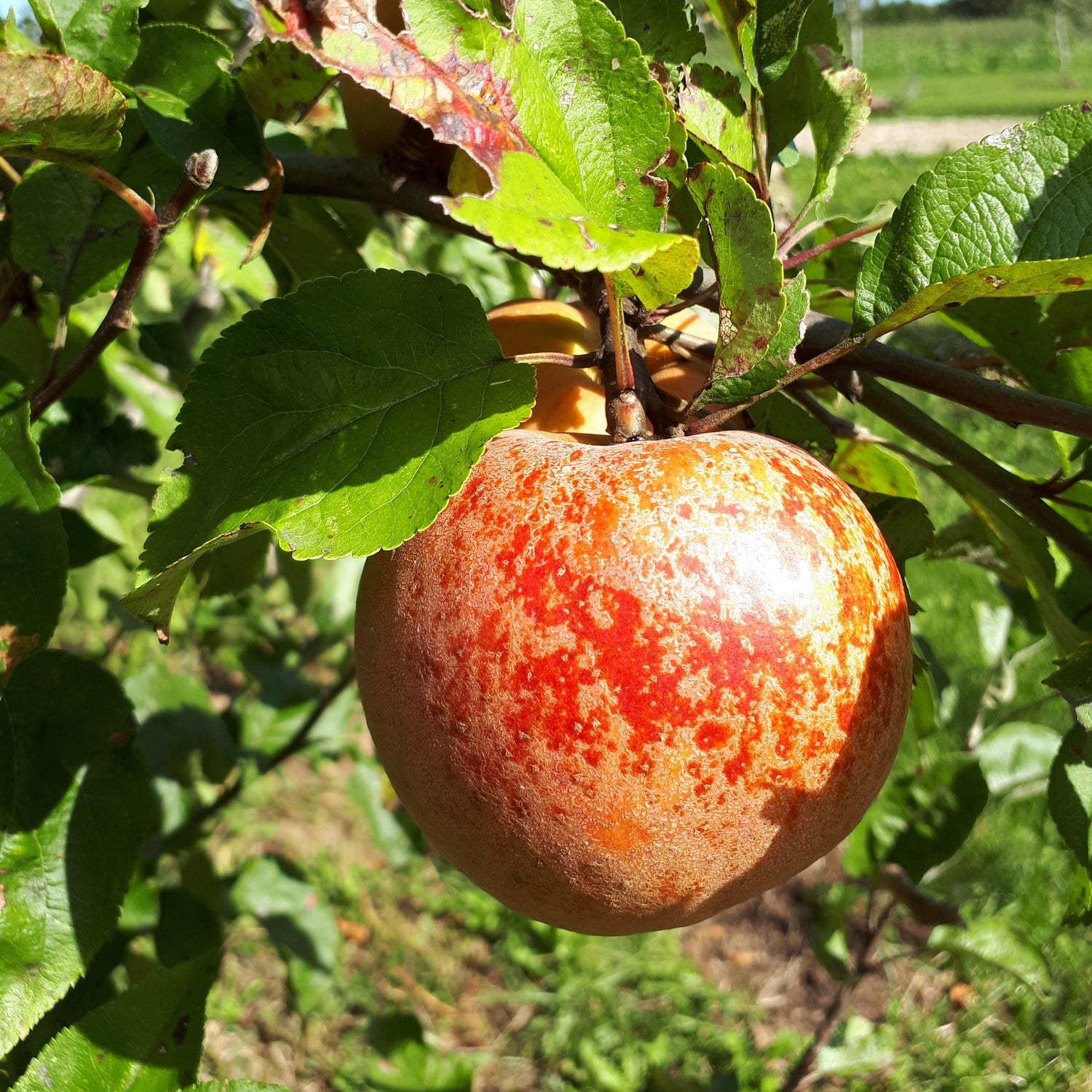
History: Roxbury Russet is the oldest American apple still under cultivation. It was discovered around 1650 in Roxbury, near Boston. These apples were well-known for their long keeping ability and qualities for cider making. They were grown by Thomas Jefferson at Monticello and are even referenced in one of Nathanial Hawthorne's novels. Due to the russet skin, these apples have never achieved true commercial success but they can still be commonly found in American farmer's markets.
Why We Grow It: Aside from its historic roots, Roxbury Russet is an excellent all-around apple that can be eaten fresh, used in cooking, and made into a great cider. It has a nice flavour that is sweet and sharp. This variety is also a good choice for organic orchards.

History: Sekai Ichi (translated literally from Japanese as 'world number one,' more accurately meaning 'best in the world') was bred at the Prefectural Experiment Station in Aomori, Japan in 1930 and released in 1974. It is a cross between Red Delicious and Golden Delicious. This variety is quite highly regarded in Japan where a single apple can sell for as much as $25 each. Each apple is hand pollinated, washed in honey, and hand-stamped while being inspected to ensure its quality.
Why We Grow It: Although we don't get quite that fancy here, Sekai Ichi is nonetheless a great apple if you enjoy sweet, crunchy, apples with no acidity, as is common with Japanese varieties. It is red over greenish skin and very large with an average circumference of 30-45cm and average weight of 2lb. The tree itself is very vigorous although slow to start bearing fruit with a tendency towards biennial bearing.


History: Shamrock apples were raised by K. Lapins at the Pacific Agri-Food Research Centre in 1970 and released in 1986.
Why We Grow It: This is a Canadian apple for all you Granny Smith lovers! Although a bit sweeter than Granny Smith, Shamrock apples still have some tartness and are hardy enough to survive in Canadian climates. They even resemble Granny Smith with their light green skin and white flesh.
Photos courtesy of Shannon McInnis!

History: Shizuka (translated as "quiet" or "calm") was created at the Aomori Apple Experiment Station in Japan in the 1930s. It is a cross between Golden Delicious and Indo, the same parentage as its sister apple Mutsu.
Why We Grow It: Although it resembles Mutsu with its large yellow-green fruit, sometimes featuring a reddish-orange blush, Shizuka is sweeter and less acidic. This is an excellent fresh-eating apple for farm gate sales and it also keeps well. It is also great in salads due to its slow browning.


2025/2026 Staff Favourite
Tolman Sweet Apples are Mouse's favourite this year! In their opinion Tolman Sweet apples are “a lovely green apple with a very unique sweetness! A must-try for anyone interested in exploring the full range of apple flavours!”
All Staff Favourites are 20% off. The Staff Favourite Discount cannot be combined with other quantity discounts.
History: Little is known about the origin of this heritage apple, but Tolman Sweet has been highly valued since its discovery. It is uncertain whether it came from Massachusetts or New York in the 18th or 19th century but it was first recorded in 1822. This hardy tree was used as a source of rootstock at one time.
Why We Grow It: Tolman Sweet is a great all-purpose apple. The fruit are medium-sized with yellow skin, and have a distinctly sweet, dry flesh. They are nice for fresh eating but can also be used in baking, drying, and pickling. Their unusually low acid content helps to reduce acidity in both sweet and hard cider.

History: Brown Snout was discovered on a farm in the UK in the mid-1800s. Its name comes from the brown russet around its calyx. H.P. Bulmer, a cider-making company, further propagated and spread this apple in the UK where it is still used today.
Why We Grow It: This medium bittersweet cider apple has small, uniquely coloured fruit that are sweet, slightly astringent, medium-tannin, and have low acidity.
Collections
Malus domestica
While sweet apples are available in abundance, sharps (high in acid) and bitters (high in tannin) are more difficult to come by. Whether you make cider on a large scale, or just need a few trees for the backyard, you will find a great selection here of both old and new varieties, particularly sharps and bitters. Please phone for wholesale pricing on large orders.
English Cider Apple Classification
|
Flavour |
Acidity (g/L malic acid) |
Tannins (g/L tannic acid) |
|
Sharp |
over 4.5 |
less than 2 |
|
Bittersharp |
over 4.5 |
over 2 |
|
Bittersweet |
less than 4.5 |
over 2 |
|
Sweet |
less than 4.5 |
less than 2 |