Apple Trees

Apple Trees
Apples have been a staple of the human diet since ancient times. Their varied shapes, sizes, colours, and tastes provide fruit that is beautiful to the eyes and pleasing to the palate in many forms—fresh, baked, stewed, dried, and in cider, sauce and jelly. When planning to plant apple trees, remember that to ensure pollination and fruit set, two different varieties are required. For example, Idared and Golden Russet trees will pollinate each other, but two Idared trees will not. Some varieties, called triploids, have sterile pollen and cannot pollinate other trees. A third variety is then required to ensure pollination of all trees.
Sort by:
25 of 172 products
25 of 172 products
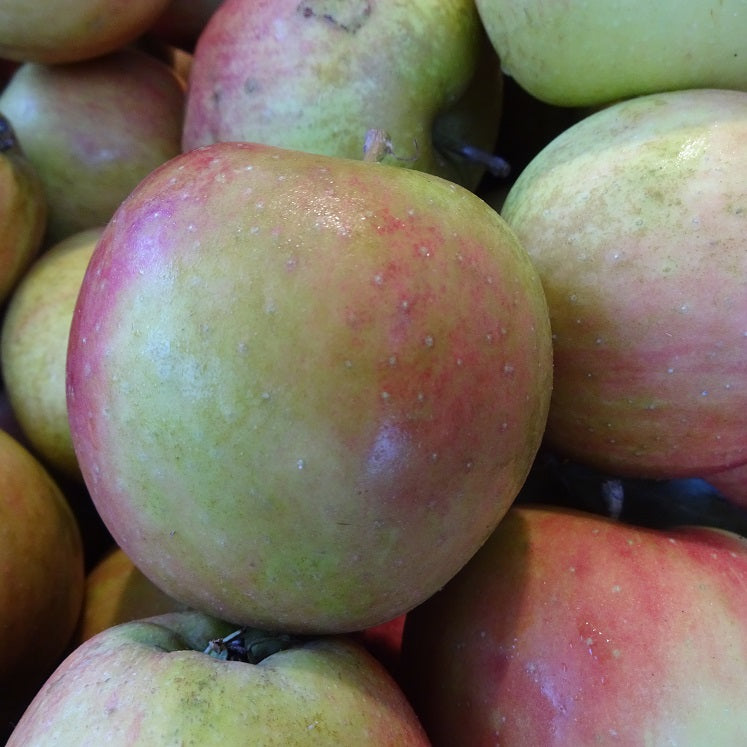
History: This apple was discovered as a chance seedling in 1856 in Boskoop, Netherlands where it has remained popular ever since.
Why We Grow It: Here's one for those of us who love some sharpness in an apple. With its sharp taste and large, greenish-red fruit, this apple is still popular at farmer's markets throughout Europe for both fresh eating and cooking (keeps its shape). It has value as a sharp in hard cider blends as well.


History: Once one of the most popular commercial apples in the United States, Ben Davis apple trees were planted across the continent following its discovery around 1800. Due to its firm fruit and excellent keeping qualities, this apple was extremely easy to transport over longer distances which led to its popularity. Once storage and transportation improved, this apple was slowly replaced with better tasting varieties and it is now a relatively rare find. It's also a parent to Cortland.
Why We Grow It: The mellow, sub-acidic, mildly aromatic red fruit is not quite as flavourful as some apples but it stores exceptionally well, lasting into spring. Flavour improves in storage, like many heritage apples. The trees are reliable and heavy croppers, earning them the nickname of 'mortgage-lifters' when they were grown commercially.

History: Brown's Apple was discovered in Devon, UK, in the early 1900s and is considered a traditional English cider apple. It remains quite popular in the area.
Why We Grow It: This traditional variety boasts cold-hardiness and a resistance to scab. It is great for making cider thanks to being simultaneously high in both acid and sugar, an uncommon feature in most apples. Brown's Apple presses to a fragrant, vintage quality juice.


History: This apple was developed in New York in 1974. It has never achieved major popularity but remains a curiosity due to the deep red colour of its skin which causes the flesh inside to become stained pink.
Why We Grow It: Along with its visual appeal, this apple boasts a sweet, sub-acidic flavour that makes it suitable for both fresh eating and making cider. Although these apples don't store well, the fruit hangs onto the tree for three weeks which helps to keep it available a little longer.
Picture of Burgundy apples on the tree courtesy of Shannon McInnis
History: Cortland apples were first bred in 1898 by Cornell University in New York and introduced in 1915. Since then, they have become one of the top fifteen apples in the US and Canada, although the majority are still grown relatively close to the university where they originated. Cortland Nova Red is a redder sport of the original Cortland apple, making a more attractive fruit for those who value red apples.
Why We Grow It: Cortland is a sweet apple with crisp, juicy flesh. It is great for applesauce or drying as the flesh is slow to brown. The fruit keeps until Christmas under home storage conditions although the crispness and flavour does fade over time. This variety crops well annually and makes a good pollinator for others. The redder skin on this sport is quite attractive!


History: Duchess of Oldenburg, or Duchess as we like to call it, originated in the 1700s in Russia. It spread to other countries where it became popular, especially in Victorian England. Its popularity was so great that at one point it was used as a reference cultivar when evaluating other varieties of apples. It is also likely the parent of several other varieties such as Northern Spy.
Why We Grow It: Duchess boasts an attractive fruit that is striped and mottled red over light green. Although these apples don't store well, the flesh is soft and is excellent for pies and applesauce. The trees themselves are quite hardy and disease resistant.

History: Fallawater originated in Pennsylvania sometime before 1842, possibly from seeds brought by European colonizers. At one time it was quite popular in the southern United States. This variety has over twenty different names, many of which resemble Fallawater such as Fallenwalder, while others are more fun and unique like Molly Whopper, Green Mountain Pippin, and Prim's Beauty of the West.
Why We Grow It: No matter which name this variety goes by, you can always expect a large, attractive apple with a mildly sweet flavour. Fallawater is an excellent sauce and cooking apple and the fruit stores for a long time.
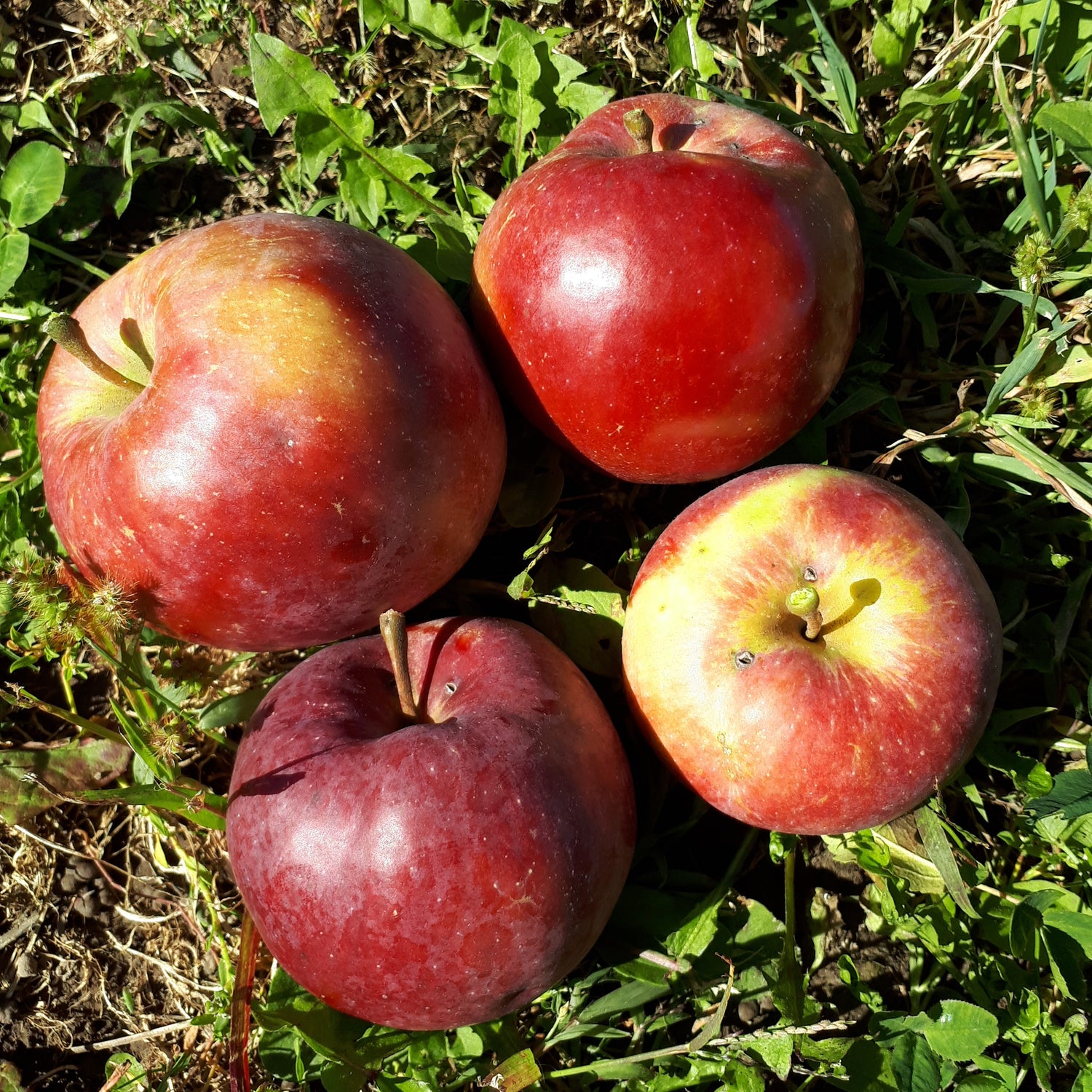
History: Fireside apples originated in 1943 from a breeding program at the Minnesota Agricultural Experiment Station. They are one of nearly 30 varieties that have been introduced by the university's breeding program since it began in 1888.
Why We Grow It: Fireside stands as an icon of toughness in the world of apples, thriving in cold northern areas. But don’t let this image fool you—Fireside has a warm heart! The flesh is amazingly sweet and very juicy.

History: Honeygold apples were developed by the University of Minnesota and introduced in 1970. It is one of nearly 30 varieties that have been developed by the university's breeding program since it began in 1888. This apple is a cross between Golden Delicious and Haralson, designed to combine the taste of the former with the cold hardiness of the latter. Honeygold is also famous for being mistakenly identified as one of the parents of Honeycrisp, although that has since been rectified.
Why We Grow It: With the sweet taste and appealing look of Golden Delicious but the cold hardiness of Haralson, this is an excellent apple for anyone living in colder hardiness zones. It is great for fresh eating as well as making pies and applesauce. The tree is also somewhat scab resistant.

History: Idared apples were developed at the University of Idaho Agricultural Experiment Station in 1942. Although its flavour is generally considered average, its excellent storage qualities have made it one of the most popular apple varieties in North America.
Why We Grow It: Idared's best quality is its ability to easily last six months when stored in a fridge, potentially until June under optimal storage conditions. The flesh tends to be softer and is white with some tinges of green. The flavour is described as sprightly, moderately acidic, and tangy, and this apple boasts a high Vitamin C content. It is great for baking and making applesauce. The tree's naturally somewhat smaller size makes Idared easier to prune and train.

History: This McIntosh type apple was developed in New Jersey at the Rutgers Agricultural Experiment Station in 1956. It was released commercially in 1971.
Why We Grow It: For McIntosh lovers this is a great apple to grow since it ripens before actual McIntosh apples. It is a bit more tart than McIntosh which makes it great for cooking, baking, and applesauce. It is recommended to use a thickener when baking pies since the flesh cooks down quickly. This tree is also a good cropper.
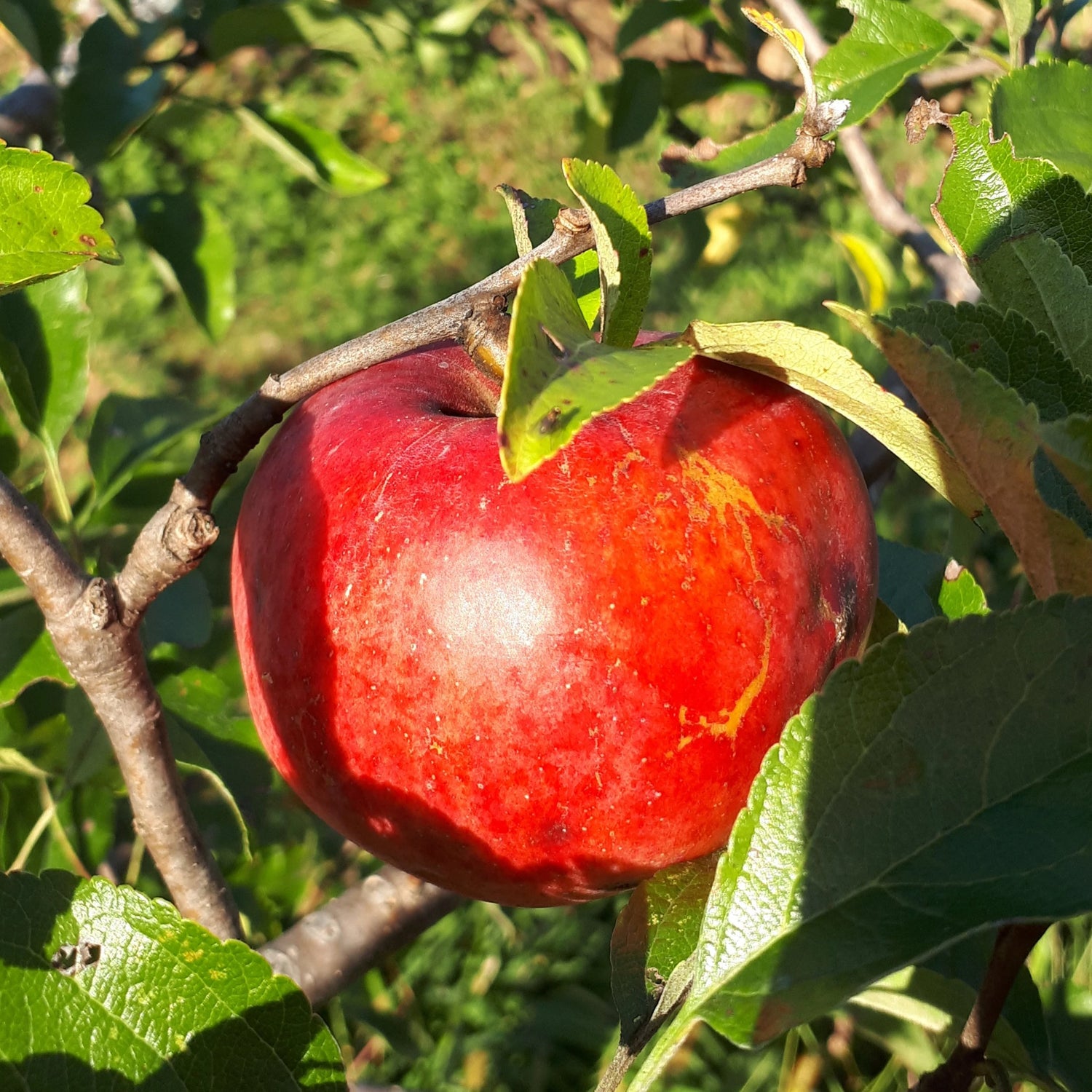
History: Nova Easygro was developed at the AAFC Kentville Research and Development Station in Nova Scotia and introduced in 1971.
Why We Grow It: Living up to its name, Nova Easygro is hard to beat if you're looking for a low-maintenance backyard tree or a clear winner for organic orchards. This variety is resistant to numerous common apple diseases and tastes great. The flavour is pleasant and sweet and the flesh is firm and white with the perfect texture, earning this apple favourable reviews at our tasting event.
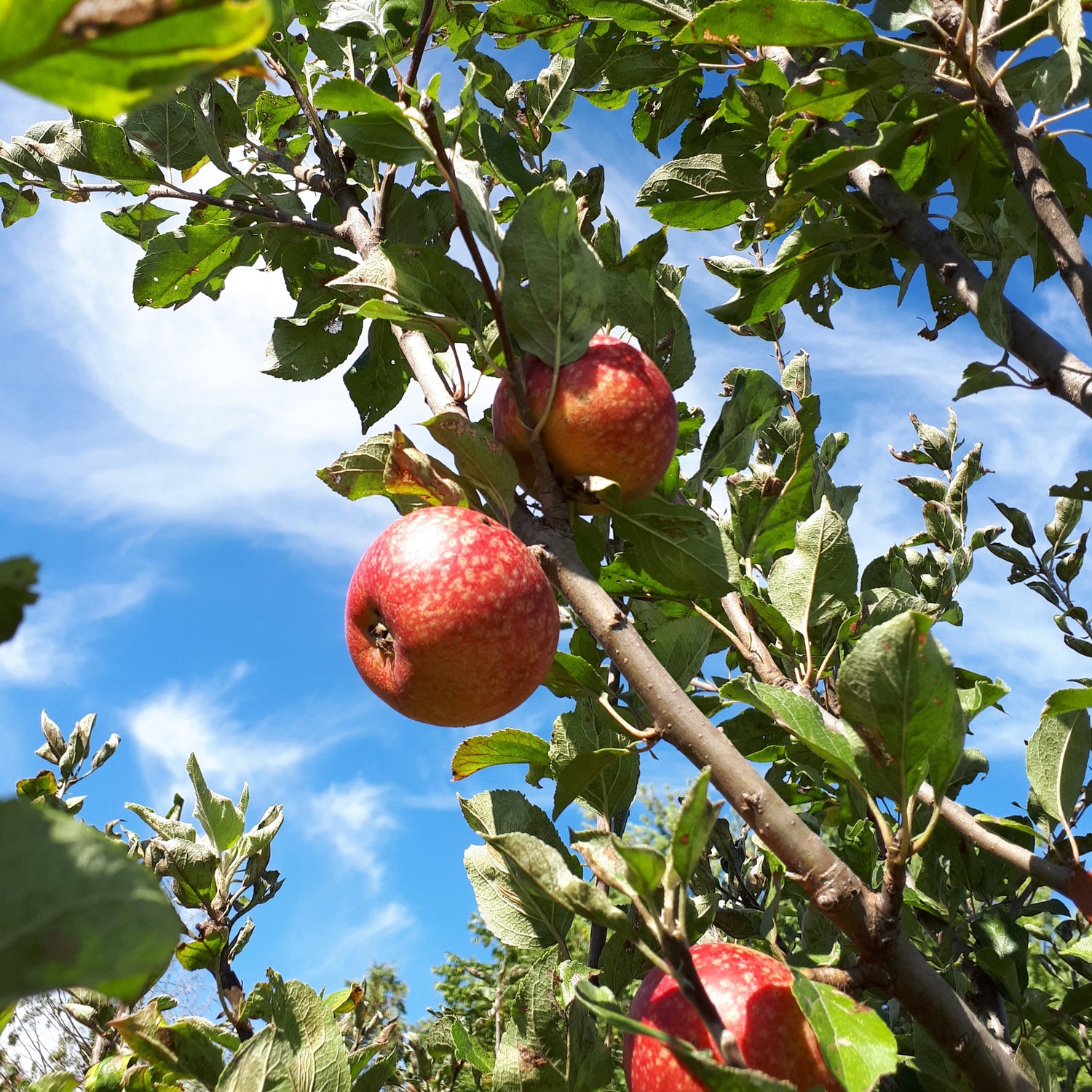
History: Porter's Perfection originated in Somerset in the UK some time in the 1800s. It became extremely popular in England although its popularity began to wane following the 1910s. It is still grown today but not as commonly as it once was. It shows promising results in the North American climate, unlike some other European cider cultivars.
Why We Grow It: This English cider apple produces a medium bittersharp cider. It has done well in different studies in Ontario with the Vineland Research Station with regards to juice composition, disease resistance and overall performance. The tree is a heavy cropper and grows vigorously.

Why We Grow It: Purple Passion produces a large apple with reddish-purple skin and crimson flesh. The flavour is quite sharp, making it better suited for cooking and especially cider. This juicy apple can be pressed into a crimson cider that is visually quite appealing. The tree also boasts attractive pink blossoms and red-tinged foliage, making it a nice ornamental tree as well.

History: In the 1830s in Lancaster County, Pennsylvania, a seedling apple tree grew beside the smokehouse of William Gibbons. Perhaps it sprang from a core that some one had tossed there while they tended the fire. Who knows? What we do know is that the aptly named Smokehouse was commonly grown in the area until its popularity waned as sweeter apple varieties appeared on the market. Still, this variety has stood the test of time due to its great flavour.
Why We Grow It: Traditionally Smokehouse apples are picked a little early and used for baking, but if they're allowed to ripen fully on the tree, some people have described the balanced flavour as being “like drinking fresh-pressed cider!”.
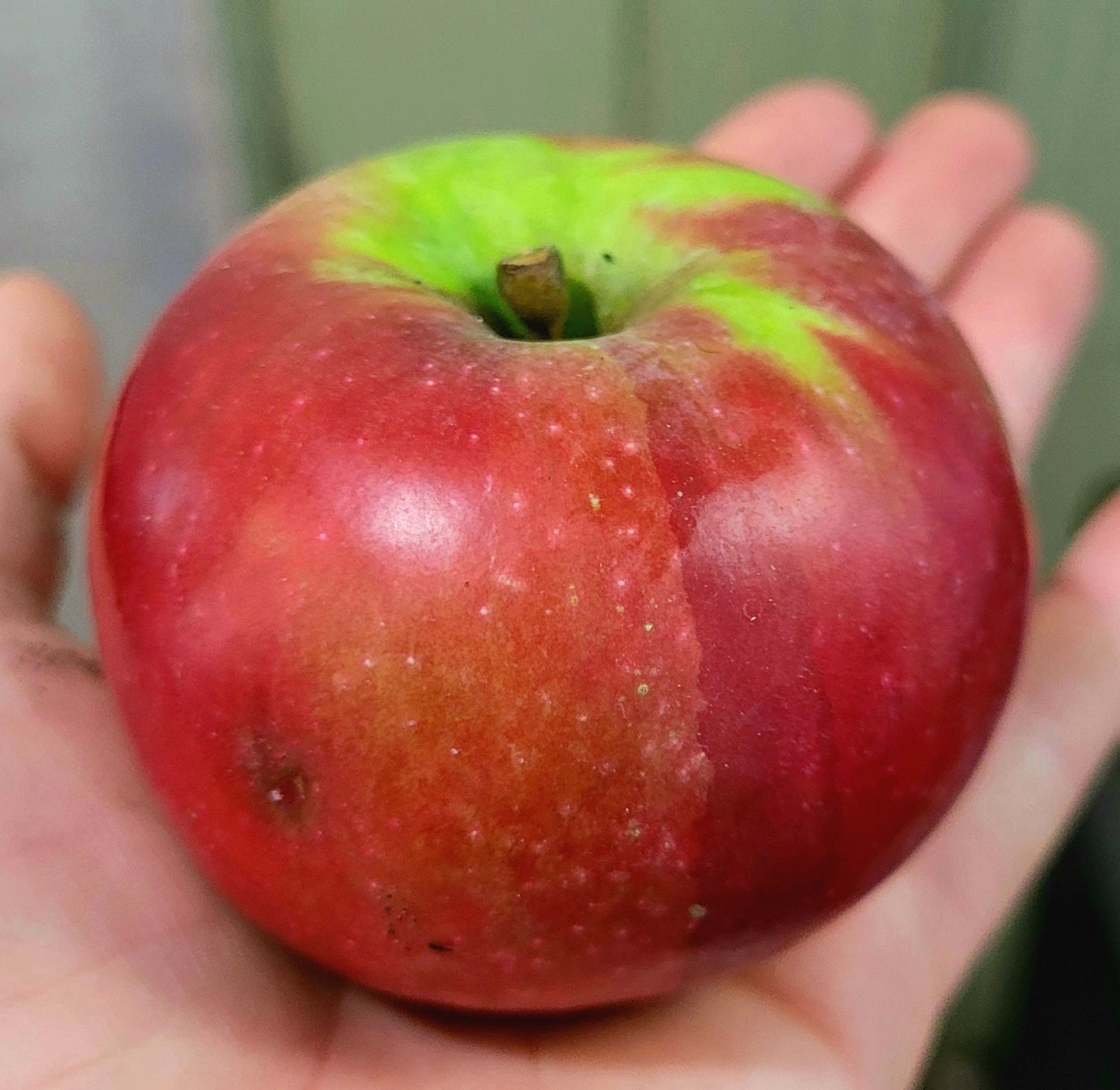
History: Snow, aka Fameuse, apples originated near Lake Champlain in Quebec some time before the 1730s. The exact origin is unclear but this variety is thought to have originated from a seedling or cutting brought from France. From about 1750-1850, this was one of the most commonly grown apples in Quebec until the orchards were almost wiped out in the latter half of the 19th century by disease and failed to regain their popularity. However, these lovely apples may still be with us in their own way as they are one of the potential parents of McIntosh.
Why We Grow It: It is easy to see why Snow apples were once so popular. These apples have a lovely deep red skin with pure white flesh with a sweet strawberry flavour. These trees are also quite cold hardy and produce heavy crops.
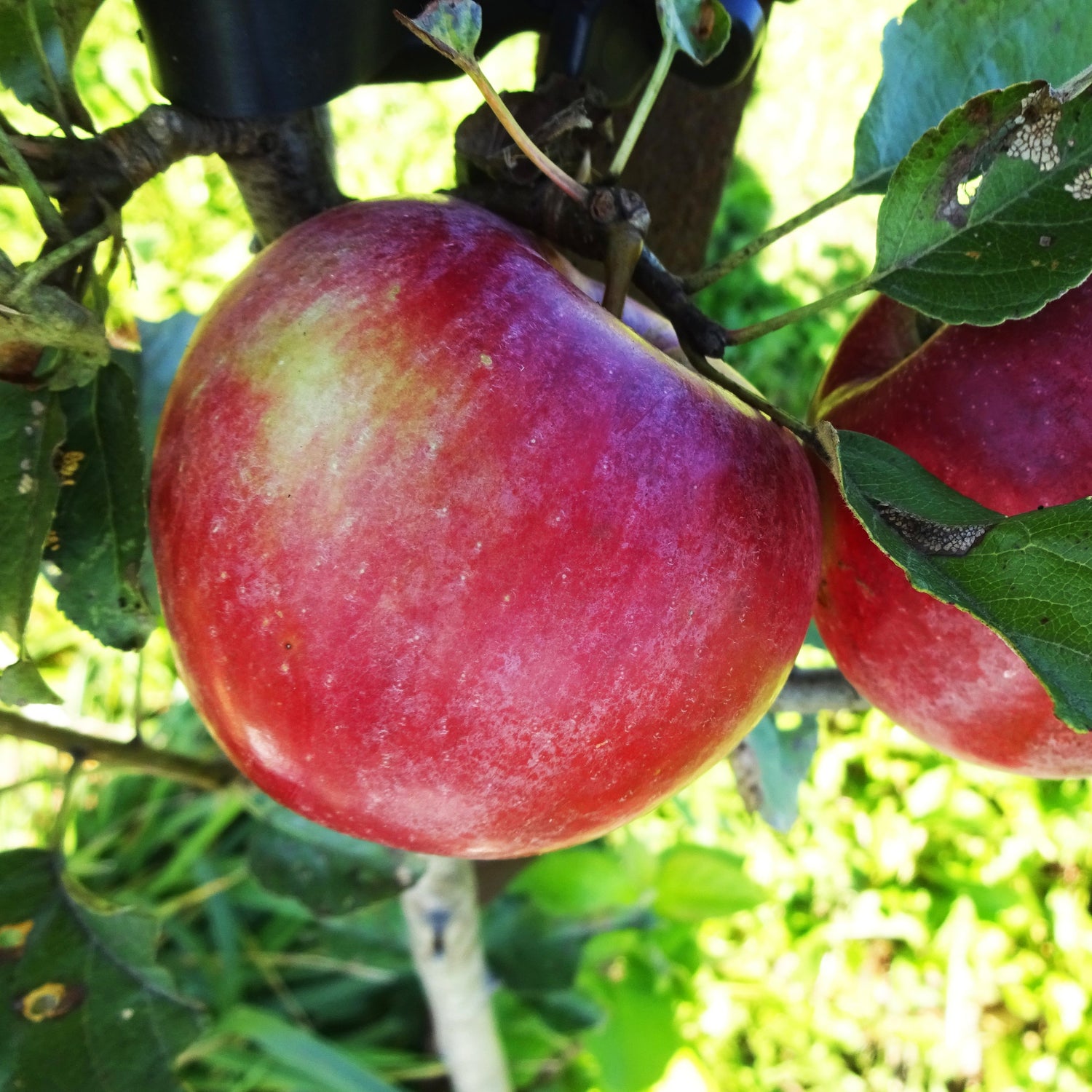
History: Sweet Sixteen was developed by the University of Minnesota and introduced in 1977. It is one of nearly thirty varieties released by the university since its breeding program began in 1888.
Why We Grow It: Some apples taste better when grown in colder climates, and Sweet Sixteen is one of them. For a fresh-eating apple, this is a favourite. Sweet Sixteen provides that crisp first bite that so many people love in an apple, and the pure white flesh will not disappoint for flavour with a very unique, distinct honeyed flavour. Its cold-hardiness and general disease-resistance (tolerant of scab and cedar rust) make it winner for the grower too.
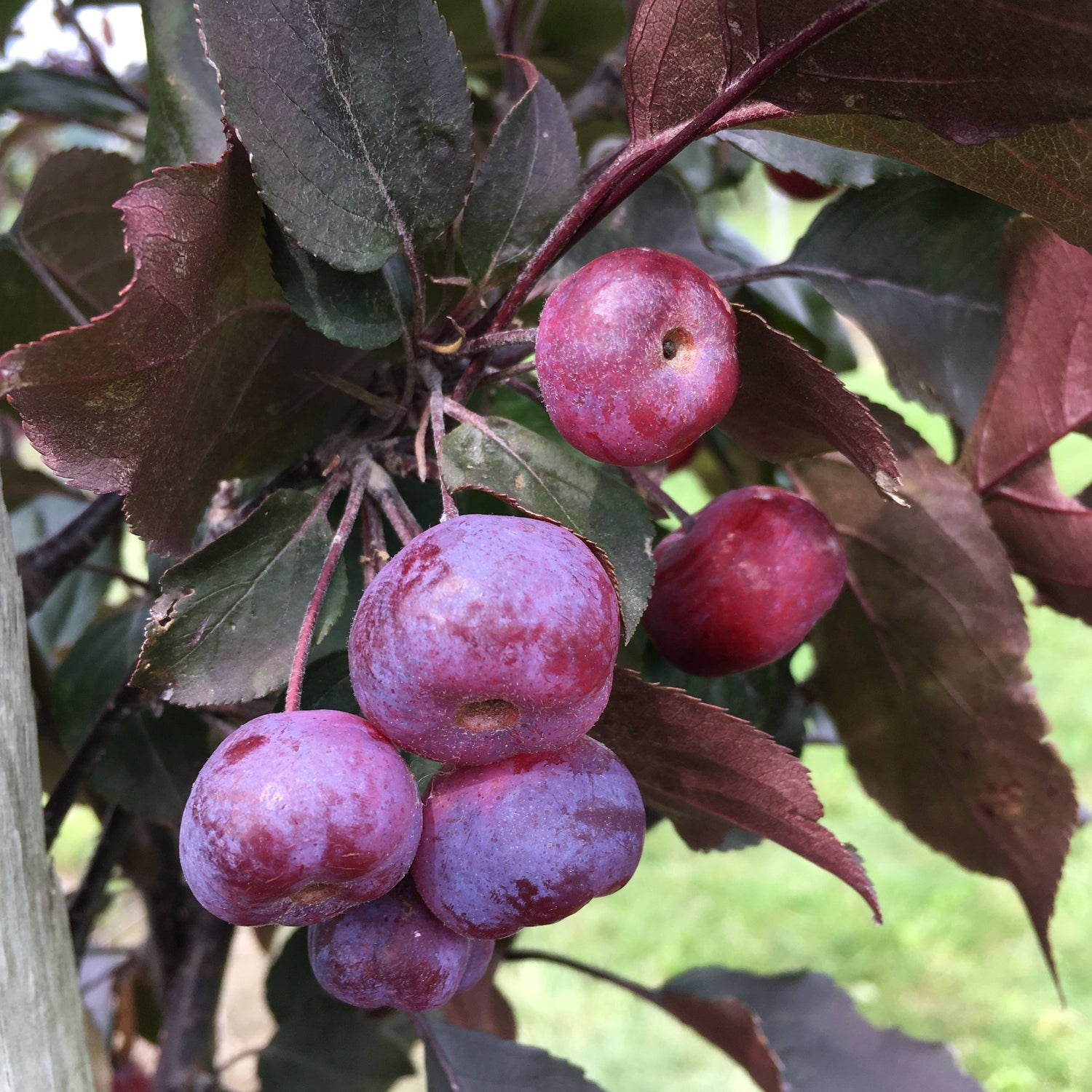
History: Thunderchild is a crabapple that was developed by Percy Wright, a prairie plant breeder in Saskatoon, Saskatchewan. Although it is unknown when exactly Thunderchild was created, it likely came about in the 1900s and can still be seen as a common ornamental tree in the area.
Why We Grow It: Thunderchild makes for a lovely ornamental tree with a profusion of pink blossoms in the spring and deep red foliage. The tiny dark red fruits it produces can be used in cider blends and to make jellies with a gorgeous orange hue. The tree is quite cold hardy and generally disease resistant.

Why We Grow It: It is easy to see why growers were so eager to overlook Viking's scab susceptibility, its flavour providing a sweet-tart taste with notes of rose and lychee. It is an excellent all-purpose apple that can be used for cooking, baking, sauce, and cider. Its great flavour and utility is matched by its attractive appearance, the large fruit featuring dark red skin bordering on maroon. However, it does bruise easily and brown quickly and only stores for about a month at most.
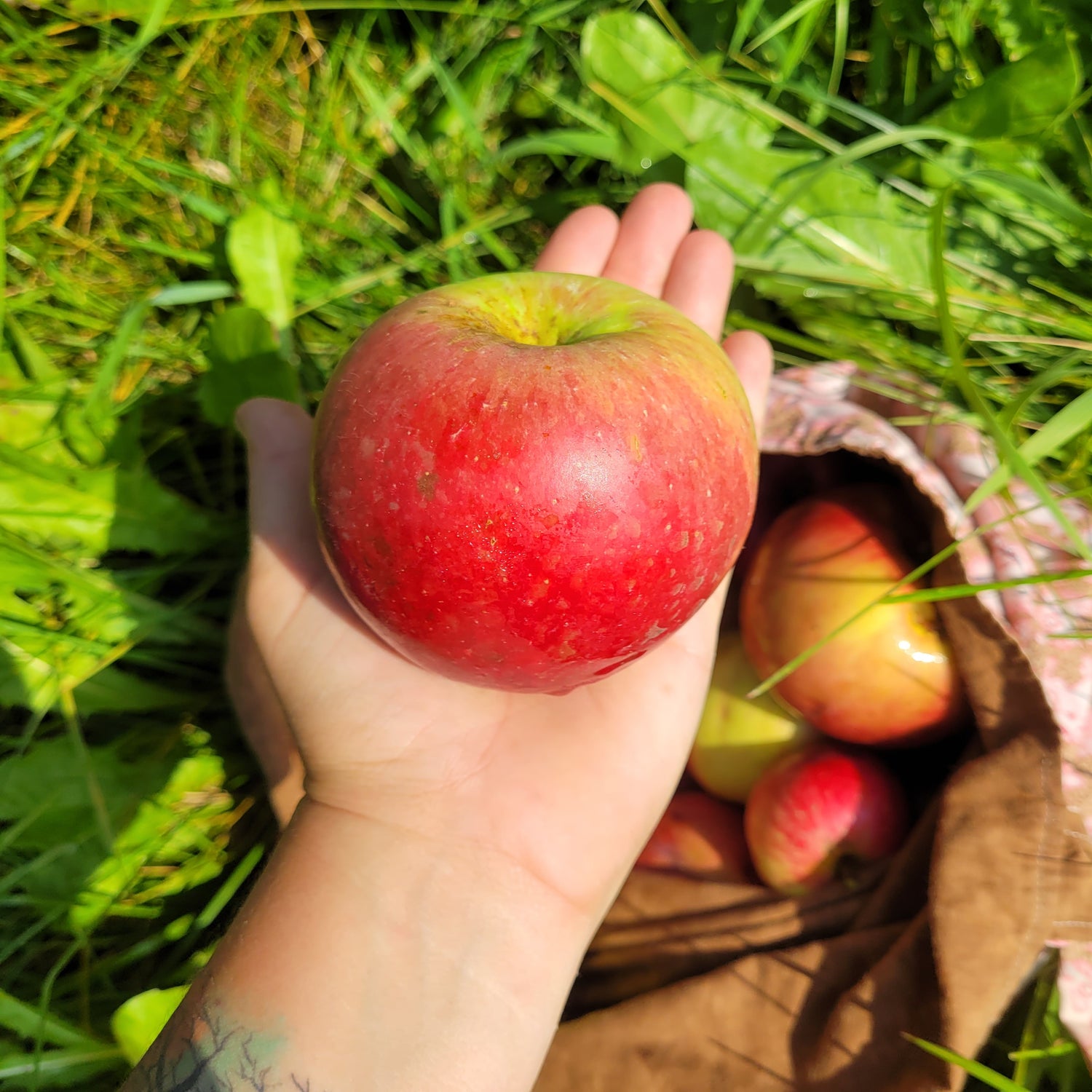
History: Wealthy apples were created by horticulturalist Peter Gideon after spending years trying to breed an apple variety that could survive Minnesota's harsh winters. With the very last of his money, he purchased seeds and scions in 1868 in one final attempt and was able to produce the Wealthy apple which he named after his wife, Wealthy Gideon. He gave scions away freely and Wealthy became one of the top five apples grown in the US.
Why We Grow It: A medium to large sized apple, Wealthy makes splendid applesauce, but is also very good for fresh eating with a balanced sweet-tart crunch. The tree is scab resistant and cold hardy, makes an excellent pollinator for other apples, and is well-suited for organic orchards.
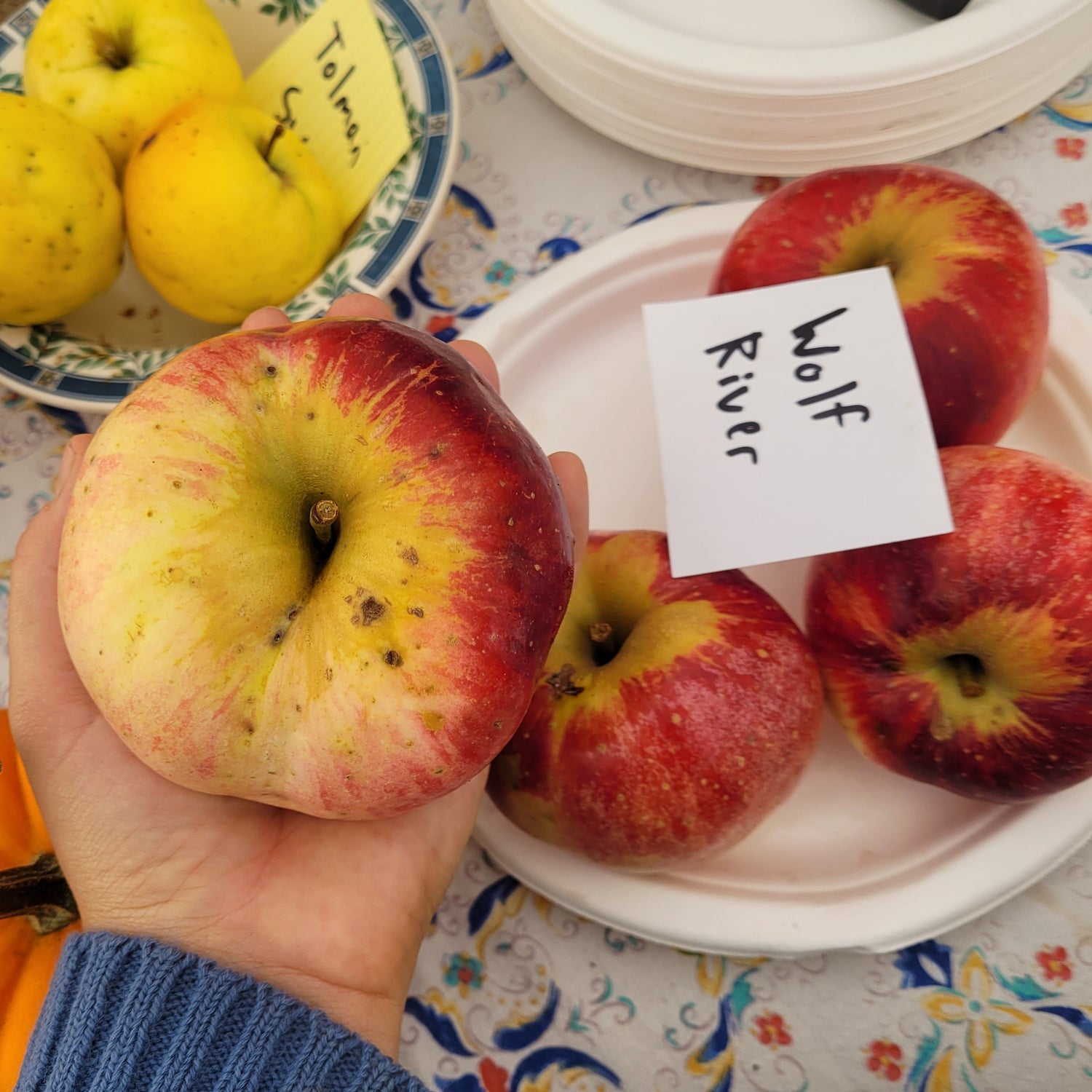
History: Wolf River was raised from seed by Quebec lumberman William Springer in the latter half of the 19th century. When Springer and his family were moving by wagon to Wisconsin, they bought a bushel of Alexander apples along the way. Upon arriving at their new home, he planted the seeds from said apples along the bank of the Wolf River and the Wolf River apple grew from there. This variety has since garnered a reputation as a good cooking apple and for the incredible size of its fruit.
Why We Grow It: First and foremost, Wolf River is legendary for the huge size of its fruit. The apples can weigh a pound or more and there are stories of pies being made from a single apple. The fruit, green with red blush and stripes, has a sweet and tart flavour that is good for cooking and it holds its shape well when cooked. The tree itself is hardy and relatively disease resistant as well.

History: Generally just known as Gravenstein, it is unknown when or where exactly these apples came from but they were imported from France to Denmark in the 1600s by Count Frederik the Younger and planted at the summer residence of the Danish royal family, Gråsten Palace. As a result the variety was named Gråsten (Danish for graystone) which translates to Gravenstein in German. This apple has been popular in Canada since the 1820s, particularly in Nova Scotia, and provided the dried apples and applesauce for American soldiers during WW2. In 2005 it was declared the national apple of Denmark.
Why We Grow It: Yellow Gravenstein's excellence as a fresh eating and cooking apple makes it easy to see why it is grown in so many different countries, even if the tree is slow to bear fruit and is prone to many common fruit tree diseases (although we haven't had much issues growing it here). It has a great sweet/tart flavour and is crunchy and juicy. The fruit is a nice yellow with red striping.
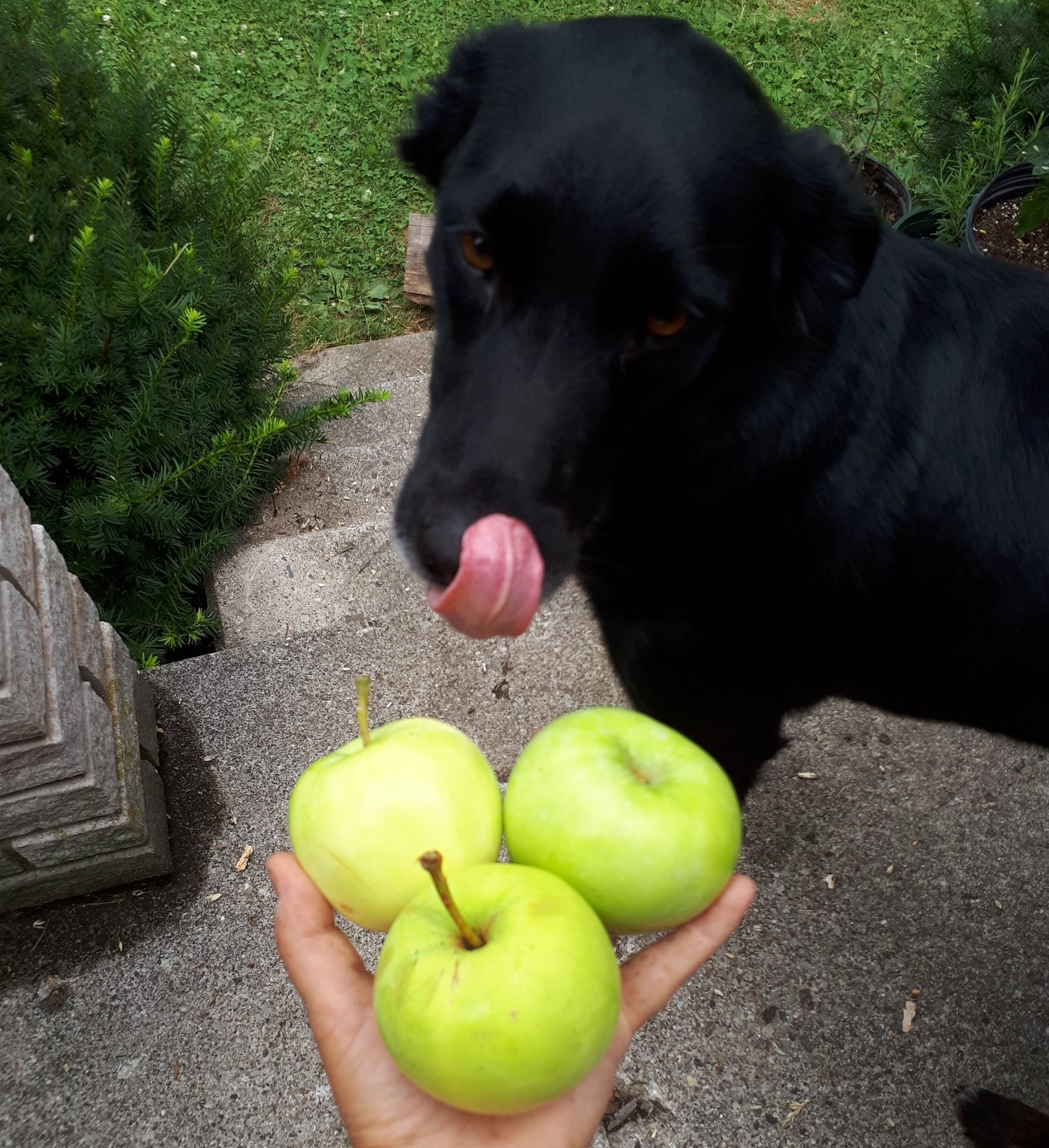
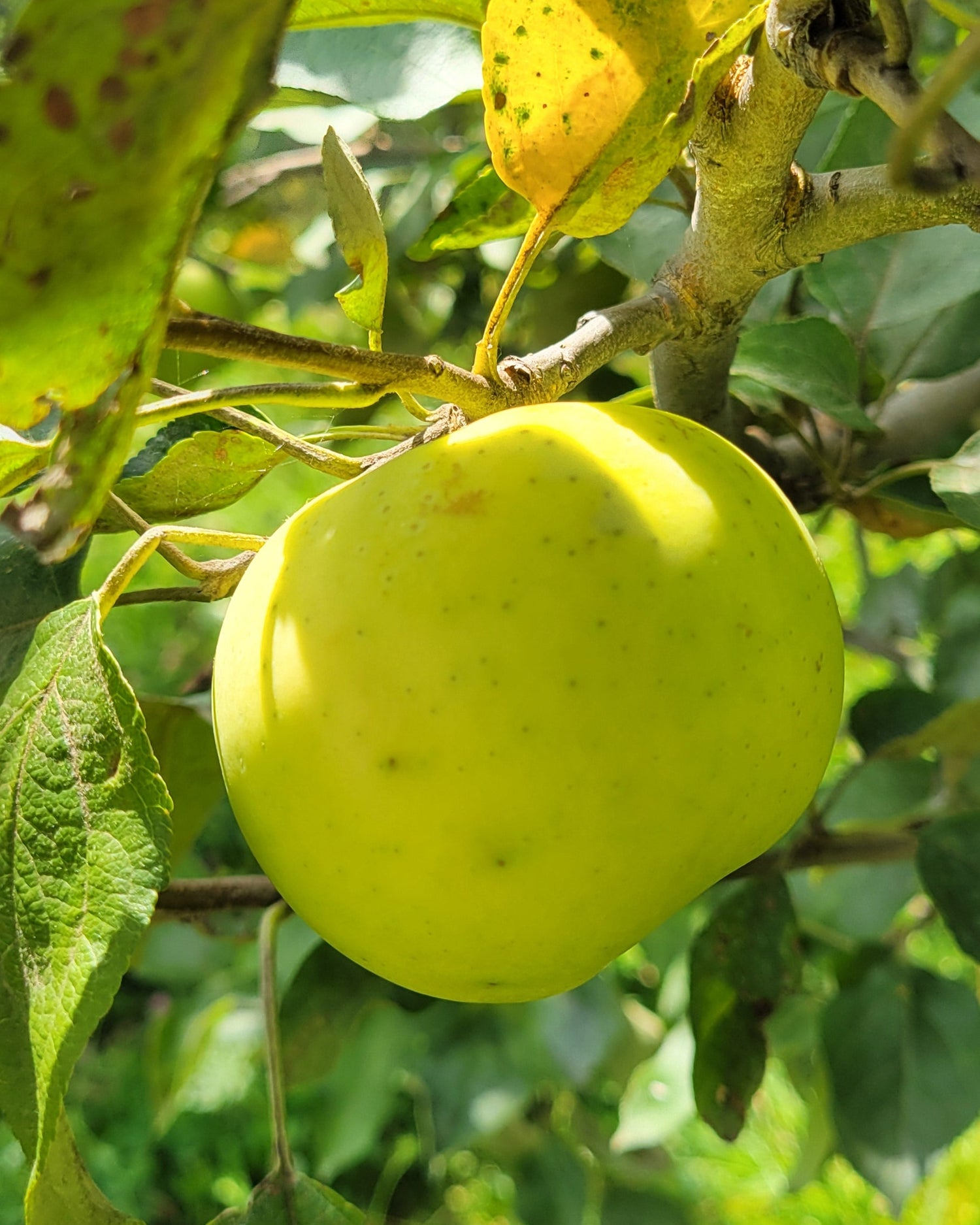
History: Yellow Transparent (aka White Transparent and Glass Apple) originated as a chance seedling in a nursery in Riga, Latvia around 1850. At the time Latvia was part of the Russian Empire so this variety is often considered Russian. Due to its early ripening and cold hardiness, this variety was widely grown in Europe, especially northern countries, where it is still grown today. It was imported to the US in the 1870s as part of an effort to import cold hardy Russian species that could potentially survive in states with harsher winters and became quite popular.
Why We Grow It: This classic early apple deserves a home in every home orchard. The fruit features pale yellow skin that almost looks transparent and white flesh with a sharp, sweet flavour. It can be eaten fresh but also makes a great applesauce. Like many early ripening apples, the fruit does not last long.


History: Cortland apples were first bred in 1898 by Cornell University in New York and introduced in 1915. Since then, they have become one of the top fifteen apples in the US and Canada, although the majority are still grown relatively close to the university where they originated. While there are different versions of Cortland available with features such as redder skin, we are happy to offer the original!
Why We Grow It: Especially with older, popular varieties, we are always happy to offer what is, to the best of our knowledge, the original strain. Cortland is a sweet apple with crisp, juicy flesh. It is great for applesauce or drying as the flesh is slow to brown. The fruit keeps until Christmas under home storage conditions although the crispness and flavour does fade over time. This variety crops well annually and makes a good pollinator for others.

History: Goodland was developed at the Morden Research Station in Manitoba as part of an effort to breed cold hardy apples for the prairies. It is a seedling of Patten Greening that was selected in 1925 and the variety was introduced commercially in 1955.
Why We Grow It: The cold hardy Goodland produces a medium to large yellow apple with red striping. This crisp, juicy apple has sweet/tart flavour that is great for fresh eating, cooking, and sauce. Unlike most early ripening varieties, Goodland will store well for several months.
Collections
Malus domestica
While sweet apples are available in abundance, sharps (high in acid) and bitters (high in tannin) are more difficult to come by. Whether you make cider on a large scale, or just need a few trees for the backyard, you will find a great selection here of both old and new varieties, particularly sharps and bitters. Please phone for wholesale pricing on large orders.
English Cider Apple Classification
|
Flavour |
Acidity (g/L malic acid) |
Tannins (g/L tannic acid) |
|
Sharp |
over 4.5 |
less than 2 |
|
Bittersharp |
over 4.5 |
over 2 |
|
Bittersweet |
less than 4.5 |
over 2 |
|
Sweet |
less than 4.5 |
less than 2 |