Cider Apple Trees

Cider Apple Trees
Malus domestica
While sweet apples are available in abundance, sharps (high in acid) and bitters (high in tannin) are more difficult to come by. Whether you make cider on a large scale, or just need a few trees for the backyard, you will find a great selection here of both old and new varieties, particularly sharps and bitters. Please phone for wholesale pricing on large orders.
English Cider Apple Classification
|
Flavour |
Acidity (g/L malic acid) |
Tannins (g/L tannic acid) |
|
Sharp |
over 4.5 |
less than 2 |
|
Bittersharp |
over 4.5 |
over 2 |
|
Bittersweet |
less than 4.5 |
over 2 |
|
Sweet |
less than 4.5 |
less than 2 |
Sort by:
12 of 87 products
12 of 87 products

History: Bedan des Parts is a French cider apple from Normandy that originated in the 1800s. It is still a popular cider apple in the area today.
Why We Grow It: The continuing popularity of this apple is due to the good quality bittersweet juice it produces that blends well with other varieties. Although a late bloomer, it is quite a heavy cropper.


History: Bulmer's Norman was imported from Normandy, France to England in the early 1900s by the cider making company H.P. Bulmer. This variety didn't even have a name when it arrived but quickly grew in popularity for use in making cider. This apple has since fallen out of the limelight and is primarily used for grafting other varieties onto its sturdy trunk.
Why We Grow It: Although less popular these days, this variety boasts vigorous growth, decent disease resistance, and a surprising tolerance for cold. This conical, green apple produces a bittersweet juice and is high in tannins.
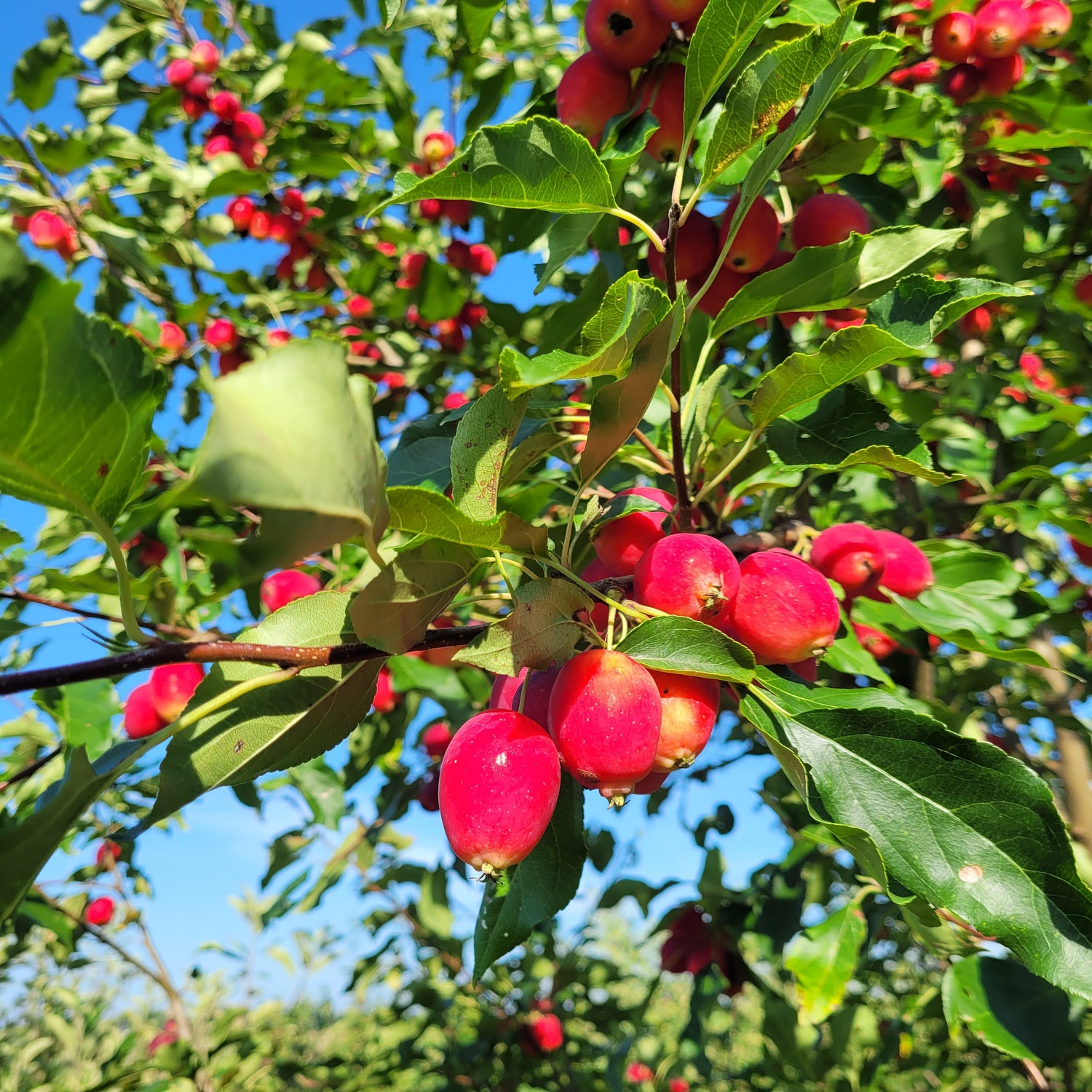
History: Dolgo is a variety of Siberian crabapple (Malus baccata) that originated in Russia. Due to the slightly elongated shape of the fruit, this variety was named 'dolgo' which means 'long' in Russian. They were brought to the United States by N. E. Hansen around 1897.
Why We Grow It: Dolgo is a classic crabapple with a vibrant flavour, very tangy and delicious right off the tree in the heat of summer- as refreshing as lemonade! The bright red fruits are about the size of small plums. These apples are excellent for making jelly or as a unique addition to a cider blend. Along with being exceptionally cold hardy, the trees themselves are quite pretty and are often planted ornamentally.

History: Domaine apples originated in France some time before the 1900s. In the Pays d'Auge region in Normandy, Domaine is one of the 13 cultivars prized for making hard cider (included in that 13 are Fréquin Rouge and Noël des Champs, which we also have available). This apple was brought to the United States in 1949 but remains relatively unknown outside of its country of origin.
Why We Grow It: This bittersweet cider apple is high in tannins, low in acidity, and contains a moderate amount of sugar. Although not great for single-variety ciders, it can be an excellent addition when used in cider blends.

History: Goldrush was bred specifically for scab resistance as part of the collaborative PRI disease-resistant breeding program run by Purdue University, Rutgers University, and the University of Illinois. It was developed in the 1970s and released in 1994. This variety has a complex heritage of Golden Delicious mixed with a cross of several other varieties for their disease resistance.
Why We Grow It: This is arguably the best scab-resistant variety released from the PRI Breeding Program as far as flavour is concerned. The dense, crisp flesh of this yellow apple is full of sugars and flavour. It is distinctly spicy and tart at first but mellows the longer it is in storage. The fruit stores exceptionally well. This truly multi-purpose apple is also great for drying and, unusually for a modern variety, is good in hard cider.


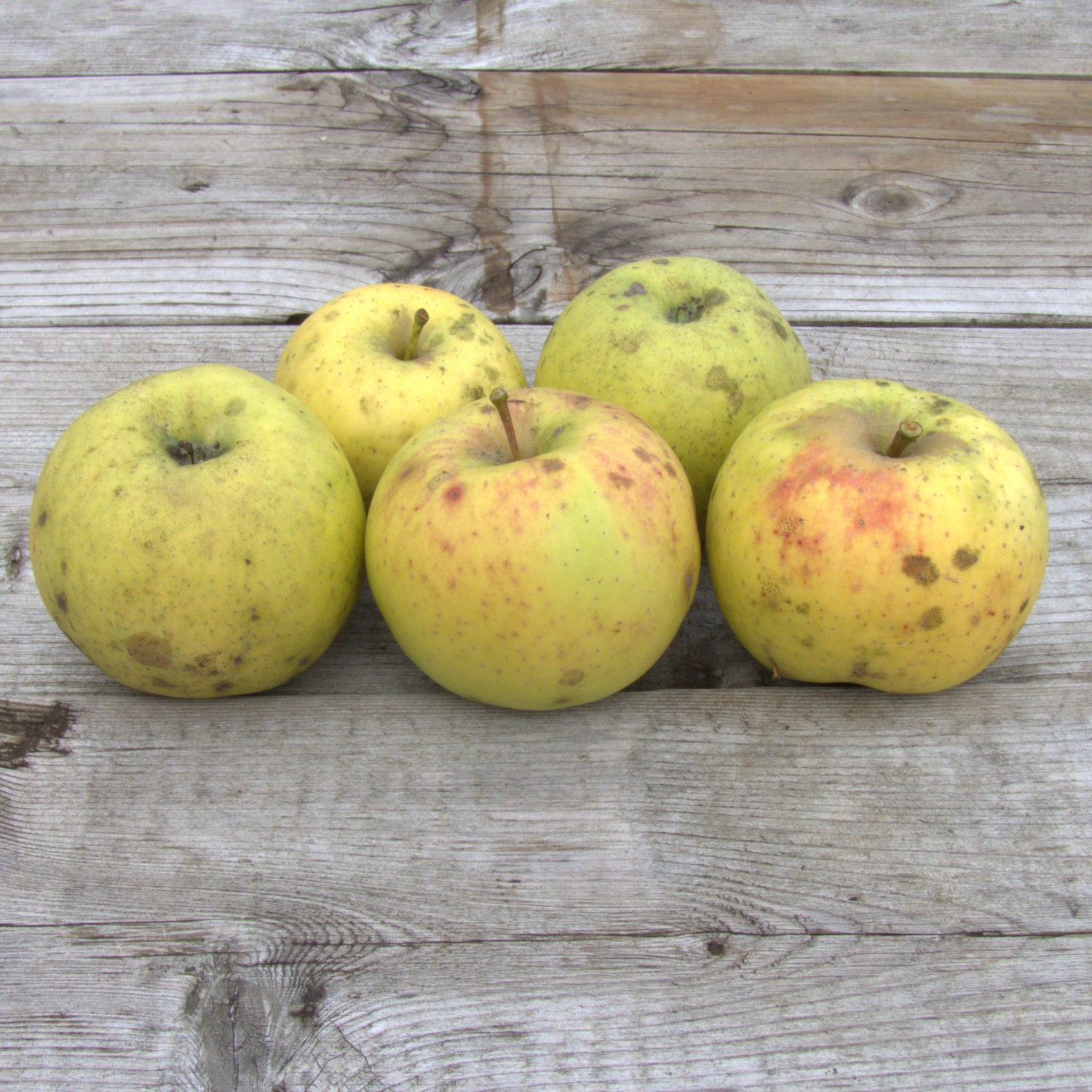
History: Grimes Golden was discovered on the Grimes farm in what is now West Virginia in 1832. Local legend claims that it grew from a seed planted by John Chapman, better known as Johnny Appleseed. After its discovery, it was widely planted up until the 1930s when it became supplanted by more popular varieties such as its (likely) descendant, Golden Delicious.
Why We Grow It: Although less popular now than Golden Delicious, many claim that Grimes Golden has a superior flavour: sweeter and with a hint of spice. The fruit is great for fresh eating and making cider, and it stores quite well. The tree is moderately resistant to fire blight and mildew.

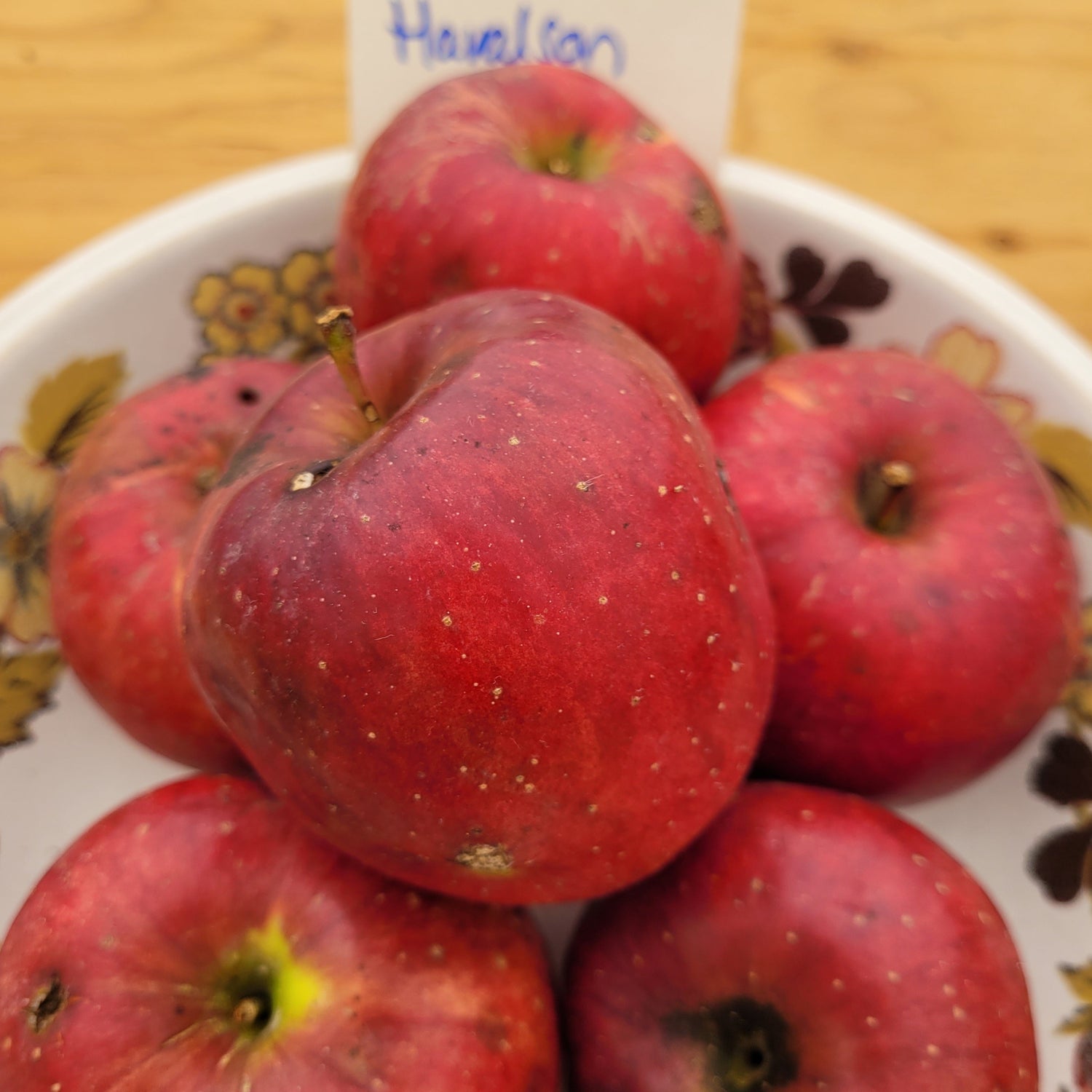
History: Haralson apples were developed at the University of Minnesota in 1922 and named after Charles Haralson who was superintendent of the university's fruit breeding farm. It is one of almost 30 apple varieties the university has developed in its breeding program since it began in 1888.
Why We Grow It: The skin of this variety is striped red with russet dots and the flesh is white, juicy, and of pleasant albeit mild flavour. Haralson boasts excellent cold hardiness and general disease resistance.


History: Liberty was developed by the New York State Agricultural Experiment Station in Geneva, NY, in 1955 and released in 1978. It is a cross between Macoun and a Japanese crabapple (Malus floribunda), bred in hopes of achieving the disease resistance of the Japanese crabapple.
Why We Grow It: The creators of Liberty were highly successful in their goal, creating one of the most disease-resistant varieties. Liberty is a favourite for organic production as a result. The fruit is bright red with sweet, creamy flesh and it stores well.

History: John McIntosh planted several apple seedlings upon settling in Dundela, Ontario. From these, he discovered the famous McIntosh apple as a seedling in his orchard. The family began selling the fruit and grafted McIntosh trees in 1835 and in 1870 it entered commercial production. By the 1900s it was one of the most popular apples in northeastern North America, although its popularity waned over time as varieties such as Gala were introduced. Nonetheless, McIntosh apples still remain some of the most popular in North America. The original tree died in 1906 after being damaged by a house fire and a commemorative plaque marks where it stood. The apple has since been named Canada's national fruit. The Macintosh line of Apple computers was also named after this variety.
Why We Grow It: For fans of Canadian heritage apples in particular, this one is hard to beat. To the best of our knowledge, this is the original strain of McIntosh. Aside from its storied past, McIntosh apples boast soft, slightly tart flesh with high Vitamin C content. It is excellent for fresh eating and making applesauce.
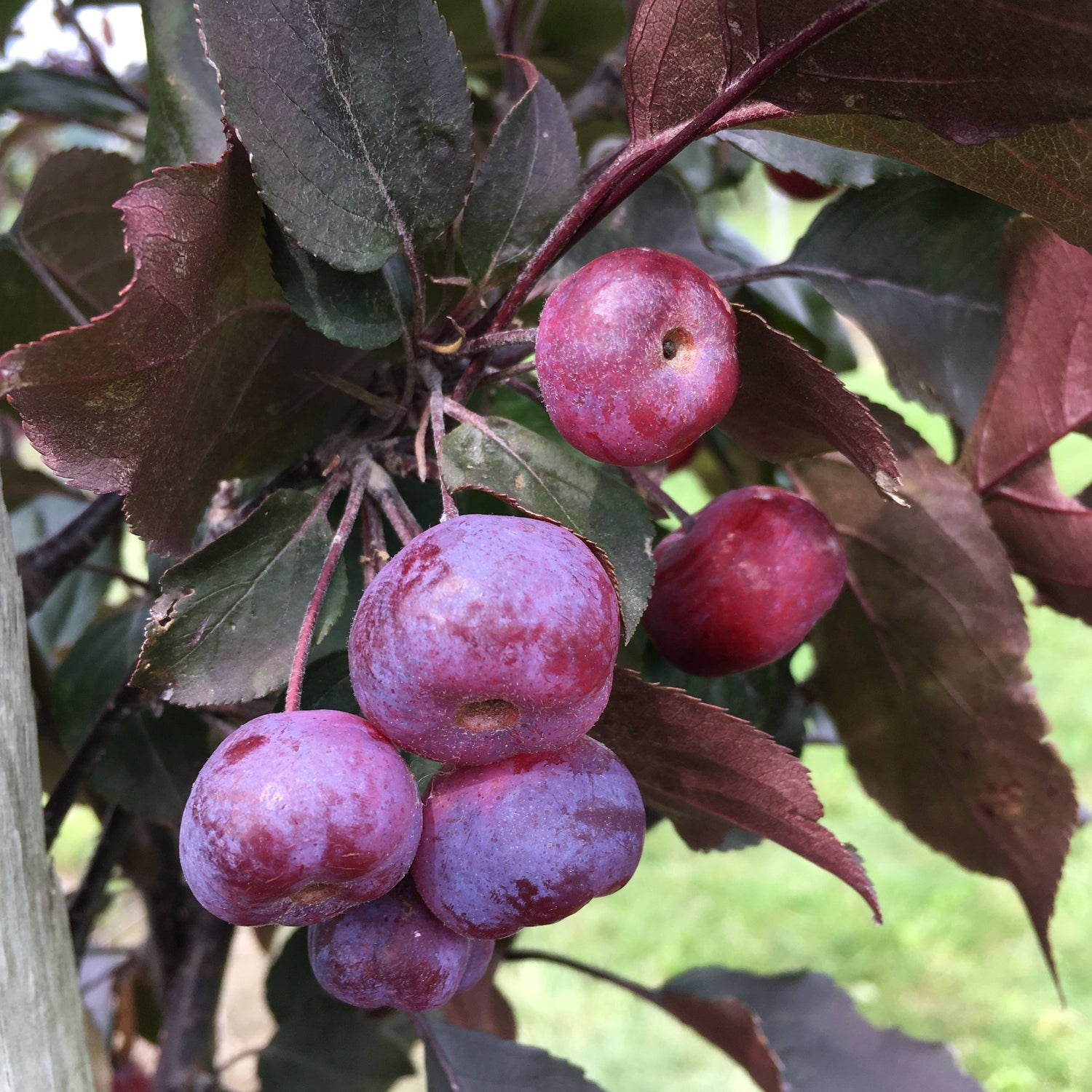
History: Thunderchild is a crabapple that was developed by Percy Wright, a prairie plant breeder in Saskatoon, Saskatchewan. Although it is unknown when exactly Thunderchild was created, it likely came about in the 1900s and can still be seen as a common ornamental tree in the area.
Why We Grow It: Thunderchild makes for a lovely ornamental tree with a profusion of pink blossoms in the spring and deep red foliage. The tiny dark red fruits it produces can be used in cider blends and to make jellies with a gorgeous orange hue. The tree is quite cold hardy and generally disease resistant.
History: Whitney crabapples were grown from seed by nurseryman A.R. Whitney around 1865 at Whitney Nursery in Illinois, US. It became popular for its excellent cold hardiness and productivity and in the 1900s the state of Montana recommended it as one of the best crabapple varieties to grow.
Why We Grow It: These large (for a crabapple) yellow and red apples boast a sweet-sharp flavour with some astringency and juicy, crispy flesh. They are a truly multipurpose fruit and can be eaten fresh (if you like some astringency to your apple) or used for cooking, sauce, cider, and jelly. The trees are very cold hardy and boast good disease resistance as well.
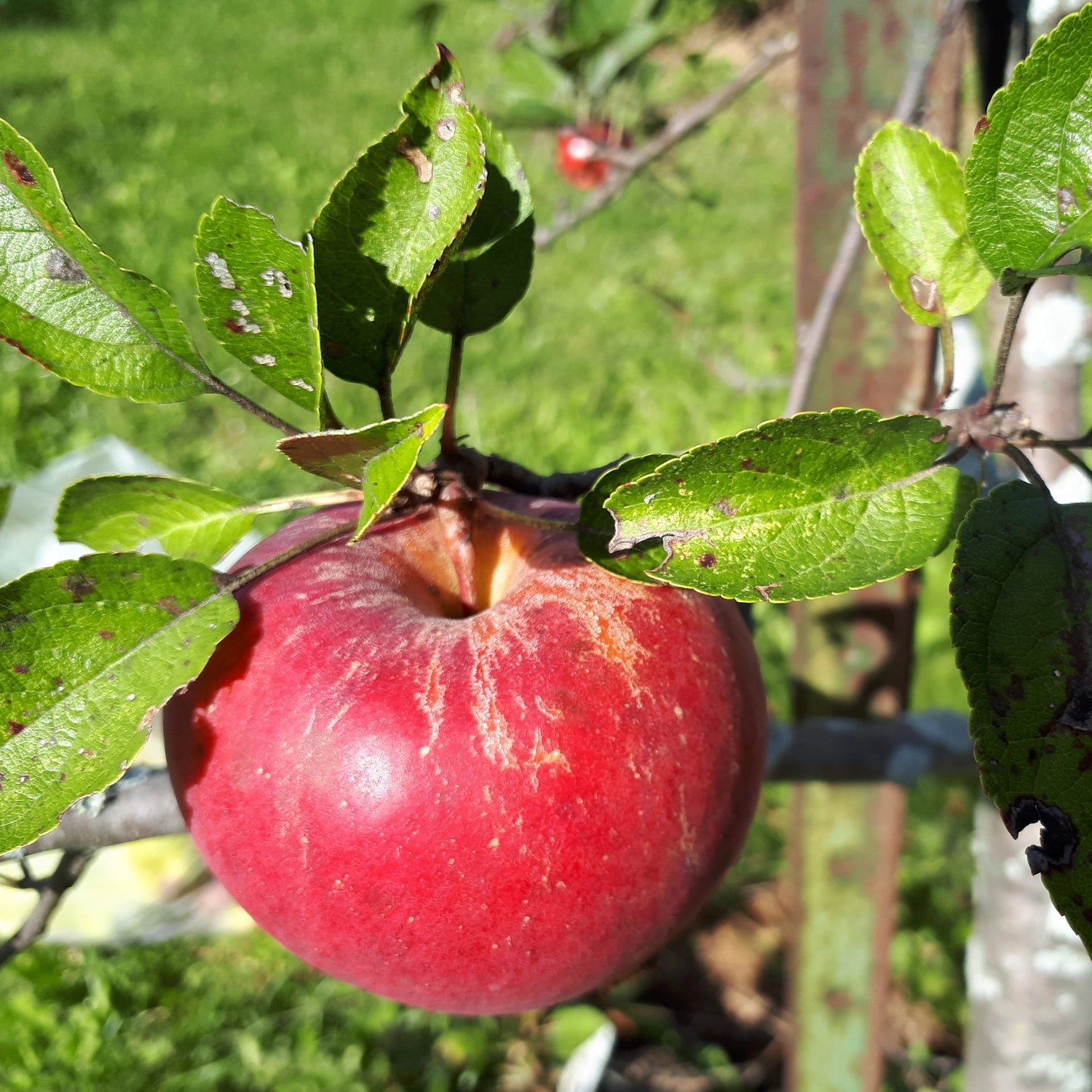
History: Winesap's origins are unclear but it is believed to have originated from New Jersey pre-1800s where it was popular for making cider. It is first mentioned in a couple of books on apples in the early 1800s. Winesap was popular in the US until the 1950s due to its good keeping ability but the advent of better storage technology allowed better tasting apple varieties to eclipse it. It is still quit popular with backyard orchardists.
Why We Grow It: Winesap's all-purpose nature helps to explain why it hasn't faded into total obscurity like some other varieties. The medium-large red and yellow skinned fruit is good for cooking and making cider. It has sweet flesh with some tang or 'winey' flavour that is also decent for fresh eating. On top of that, the tree is productive, very resistant to fireblight, and the fruit stores well.