All Fruit Trees

All Fruit Trees
Looking for bareroot fruit trees Canada? We offer a wide variety of bareroot fruit trees including apples, apricots, pears, plums, cherries, quince, and peaches that are grown for the Canadian climate & we deliver cold-hardy fruit trees right to your door!
We also offer fruit trees for small gardens, heritage apples Ontario and you can filter all our fruit trees by hardiness zones. Search trees by collection or peruse all the varieties we carry below! We offer flat rate shipping across Canada.




320 products
Sort by:
320 products
320 products


Why We Grow It: Although it failed to take off commercially, Silken is an excellent early fresh-eating apple. It is attractive with pale yellow skin sometimes with a faint pinkish blush. The fruit has crisp, juicy flesh that is quite sweet with a little bit of acidity. The tree grows quickly and tends to start bearing fruit at a young age.
History: Skeena was developed at the Summerland Research and Development Centre in British Columbia in 1976 as part of an initiative to create a high quality cherry that ripens later in the season than other varieties. It is a cross between several self-pollinating varieties and was introduced in 2000.
Why We Grow It: These dark red cherries are often considered an improvement over Lapins with their larger size, good firmness, and general ease of harvest due to the spreading way the tree grows. The flavour is sweet with a touch of acidity. The tree itself grows vigorously and tends to start bearing fruit at a young age.

History: In the 1830s in Lancaster County, Pennsylvania, a seedling apple tree grew beside the smokehouse of William Gibbons. Perhaps it sprang from a core that some one had tossed there while they tended the fire. Who knows? What we do know is that the aptly named Smokehouse was commonly grown in the area until its popularity waned as sweeter apple varieties appeared on the market. Still, this variety has stood the test of time due to its great flavour.
Why We Grow It: Traditionally Smokehouse apples are picked a little early and used for baking, but if they're allowed to ripen fully on the tree, some people have described the balanced flavour as being “like drinking fresh-pressed cider!”.
2026/2027 Staff Favourite
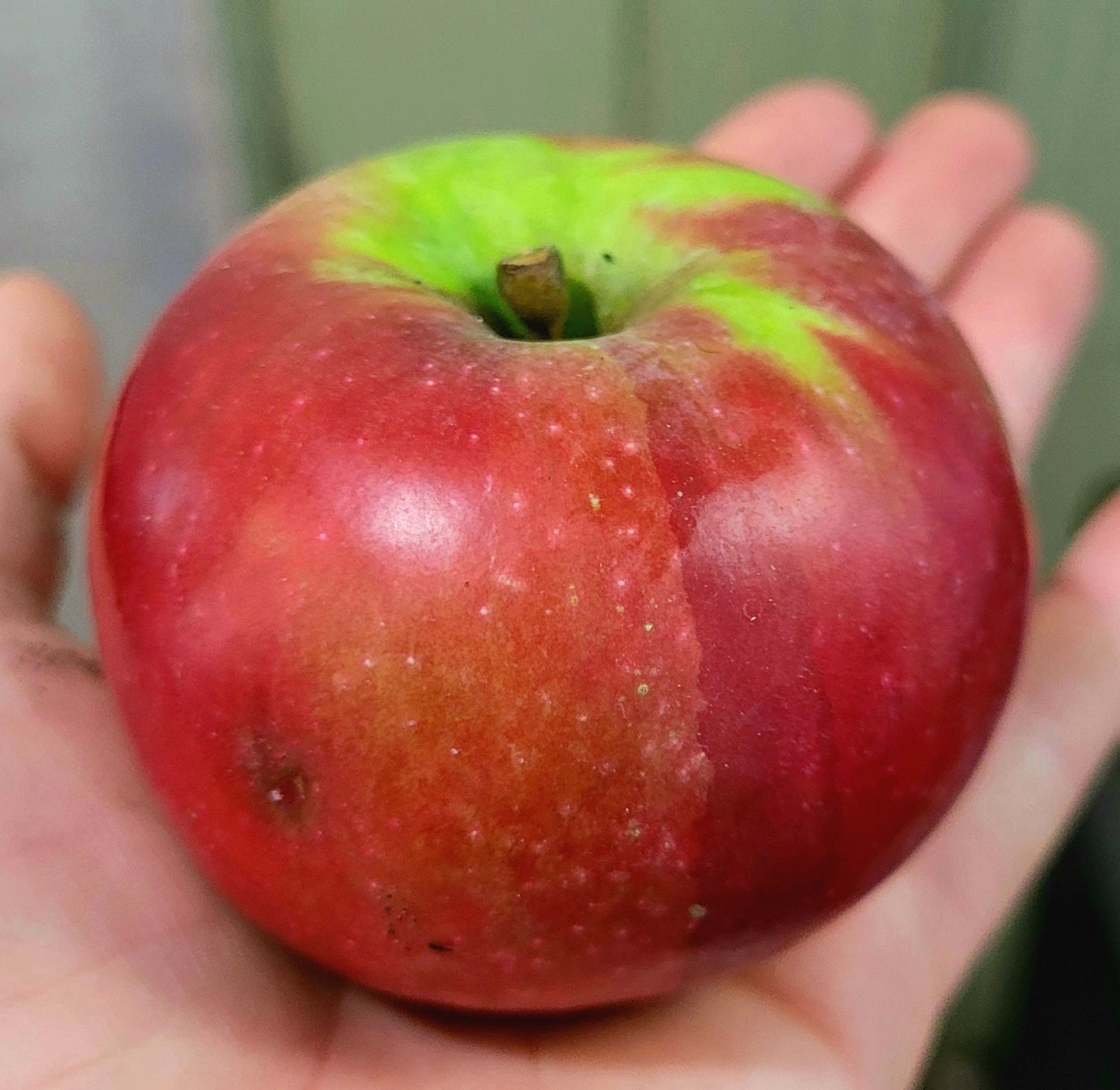
Snow is Mouse's favourite this year! In their eyes, “Snow is a standout Canadian heritage variety! This cold hardy apple is named for its snow-white flesh and it has a distinctively sweet flavour. For fans of Canadian and/or heritage apples, Snow apples are often a favourite!”
All Staff Favourites are 20% off. The Staff Favourite Discount cannot be combined with other quantity discounts.
History: Snow, aka Fameuse, apples originated near Lake Champlain in Quebec some time before the 1730s. The exact origin is unclear but this variety is thought to have originated from a seedling or cutting brought from France. From about 1750-1850, this was one of the most commonly grown apples in Quebec until the orchards were almost wiped out in the latter half of the 19th century by disease and failed to regain their popularity. However, these lovely apples may still be with us in their own way as they are one of the potential parents of McIntosh.
Why We Grow It: It is easy to see why Snow apples were once so popular. These apples have a lovely deep red skin with pure white flesh with a sweet strawberry flavour. These trees are also quite cold hardy and produce heavy crops.

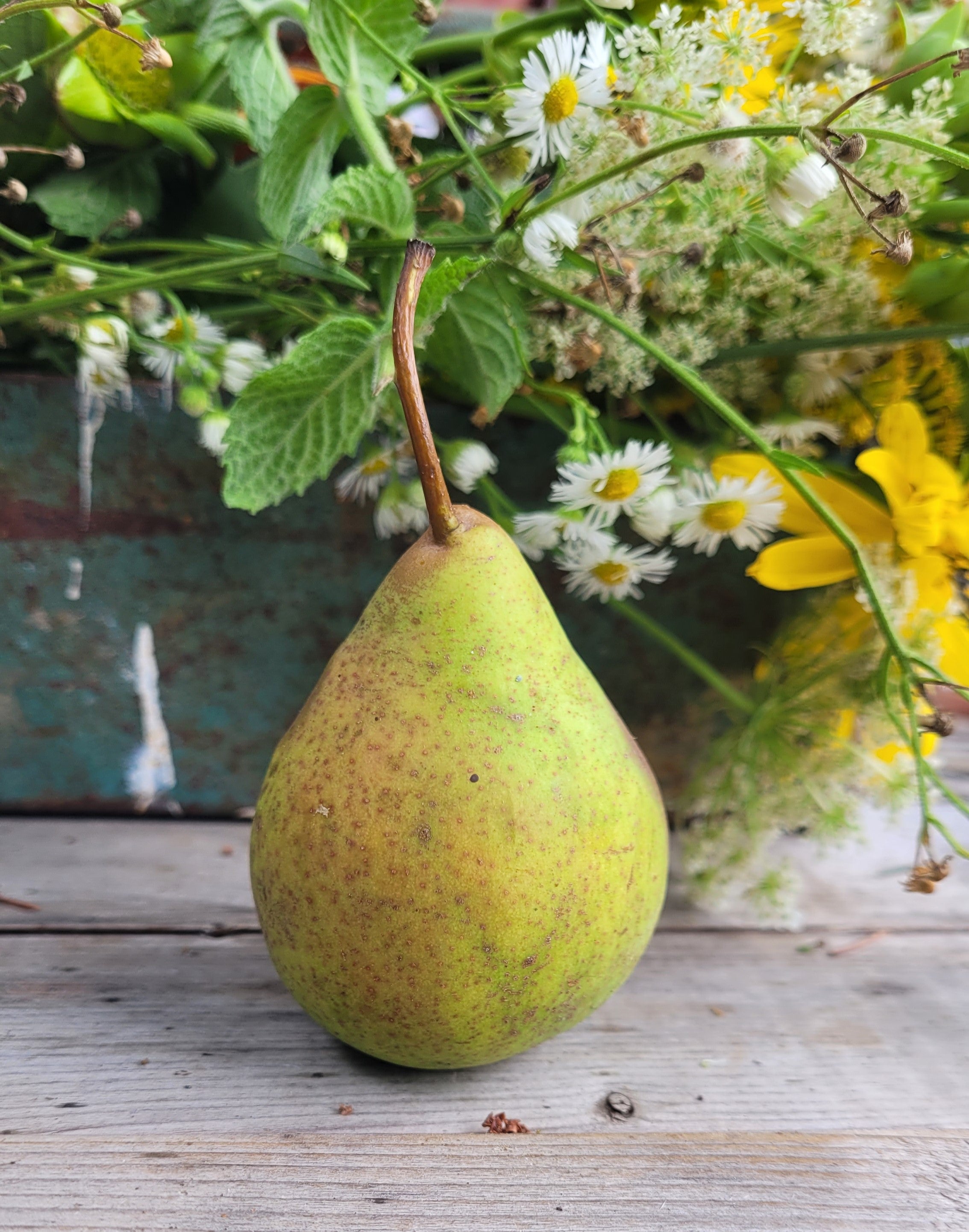
History: So Sweet has a so obscure history. It is apparently an older variety that was discovered growing along the banks of the St Lawrence river. It is quite possible that a pear core was tossed from a passing boat and it either landed on the shore or washed up where a seed eventually grew into the lovely pear tree we have today.
Why We Grow It: So Sweet produces small, unusually round green pears that, as the name suggests, are just oh so sweet! The fruit is great for fresh eating and can be made into jams or preserves which is fortunate since it only keeps about a month. The tree itself is self-pollinating, extremely cold hardy, starts bearing fruit at a young age, and is very productive. Overall, a great pear to have around!

History: Somerset Redstreak originated in Somerset, England in the early 1900s. This cider apple is still widely planted in the UK.
Why We Grow It: These attractive apples, yellow with red blush and striping, create a nice bittersweet juice with no sharpness.
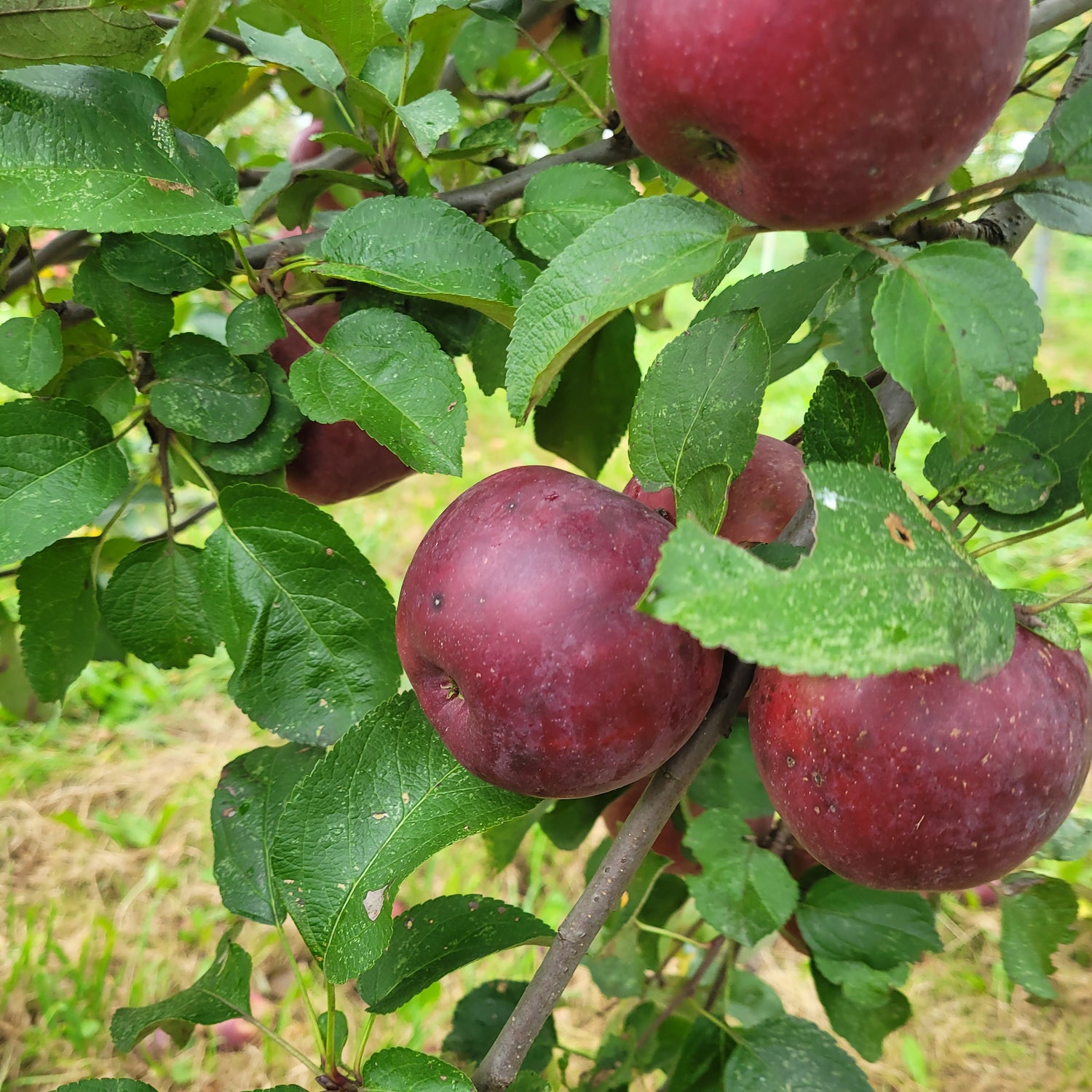
History: Spartan apples are a Canadian variety that was developed at the Pacific Agri-Food Research Centre in Summerland, BC in 1936 by Dr. R.C. Palmer. Of particular interest is the fact that Spartan apples are the first apple variety created by a formal scientific breeding program. They have been popular in North America ever since and are even commonly found in gardens in the UK.
Why We Grow It: This variety is known for its sweet/acid flavour and pleasant crunch, especially when eaten fresh off the tree. They tend to soften rather quickly after they are picked but luckily the fruit hangs on the tree 2-3 weeks after its ripe which helps to extend the optimal time to enjoy this variety. Spartan apples are also known for being relatively easy to grow, having decent disease resistance, heavy crops, and an ability to keep all winter.

History: Spigold (aka Spy Gold) was developed at the New York Agricultural Experiment Station in Geneva, New York and released in 1962. It is a cross between Red Spy and Golden Delicious that has remained somewhat popular in North America.
Why We Grow It: Spigold marries the best qualities of Golden Delicious and Red Spy. It produces very large apples that are crisp and juicy with a honeyed sweet/tart flavour. These large apples are excellent for fresh eating, making applesauce, baking into pies, and making into cider. They also store quite well and some say the flavour actually improves in storage.

History: The St. Lawrence apple was discovered in the Montreal area as a seedling of a Snow apple, the most popular variety in Quebec at the time. By 1835, these apples were commonly grown in the area where they were popular for fresh eating and cooking but have since faded into obscurity.
Why We Grow It: Although less popular now, these apples are still good for eating and baking. The boldly striped red skin also makes the fruit very attractive. The tree bears good crops each year and is relatively hardy.
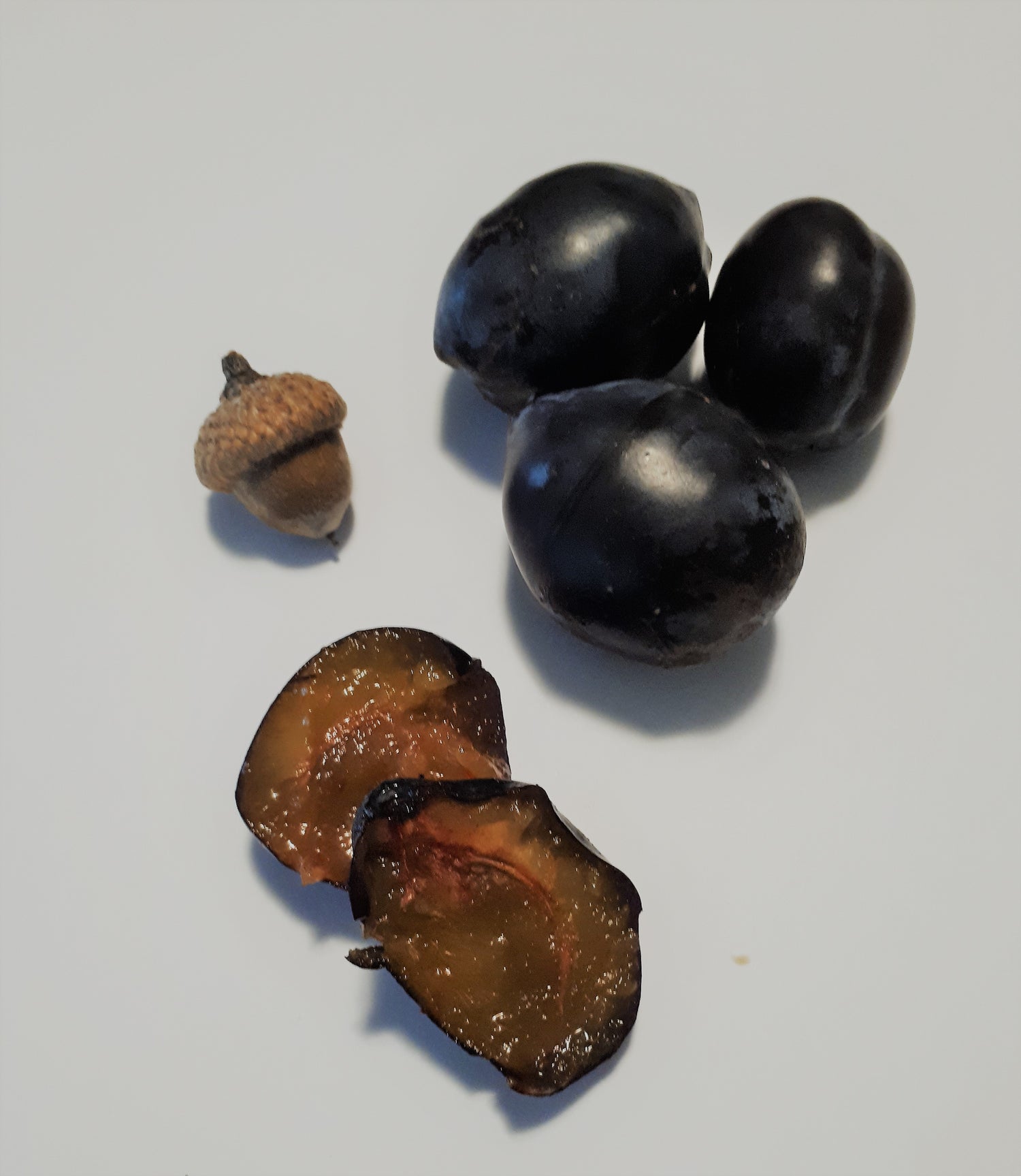
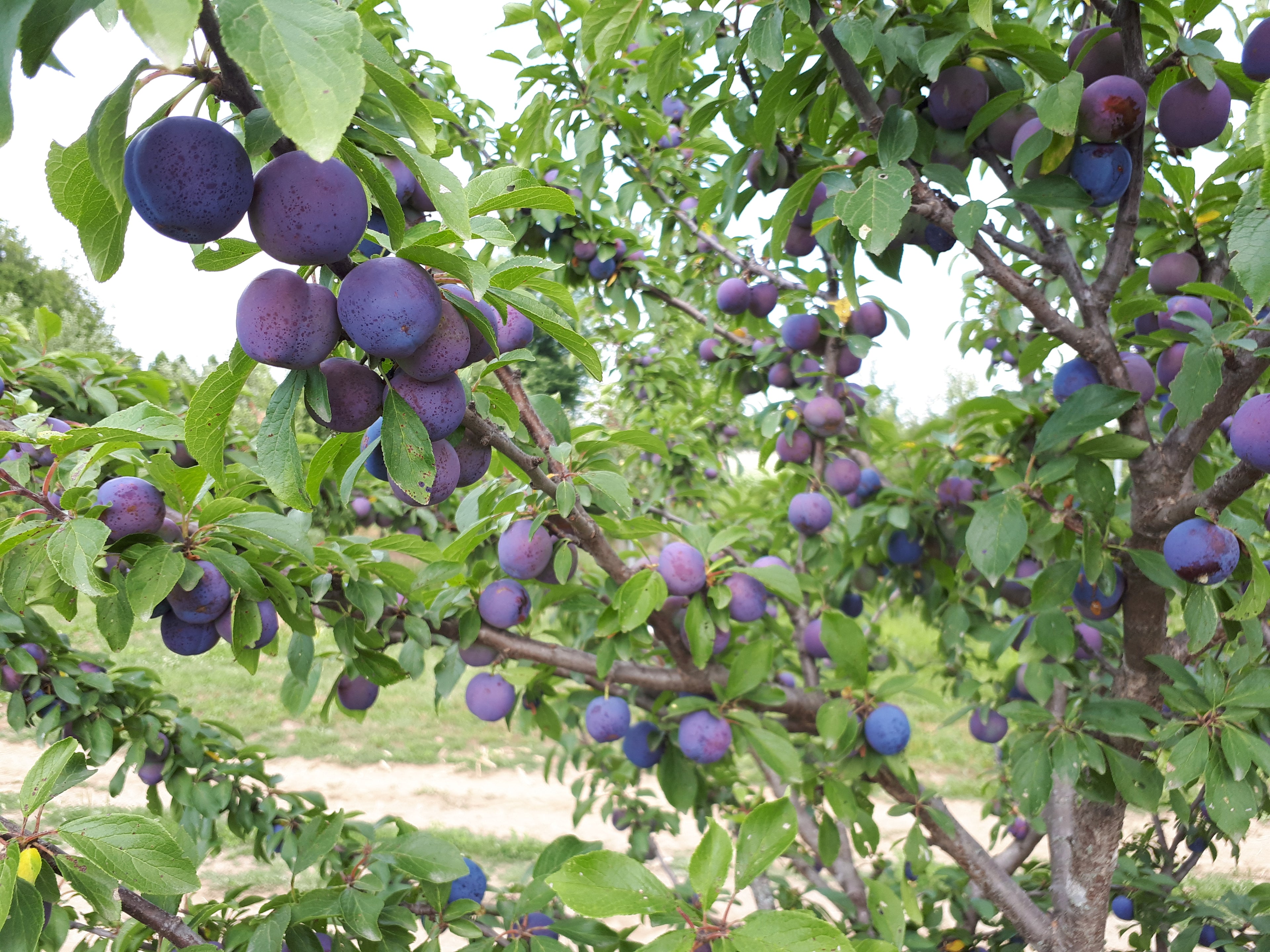
History: Stanley plum was developed in Geneva, New York by Cornell University and released in 1962.
Why We Grow It: This freestone European plum has deep purple skin and meaty, golden flesh, the standard for prunes. It has a sweet juicy flavour and is great for fresh eating, canning, and drying. The tree produces heavy, reliable crops.
History: Stella sweet cherries were developed by the Summerland Research and Development Centre in British Columbia in 1956 by K.O. Lapins, after whom Lapins cherries are named. These cherries were named and released in 1968, becoming the first named variety of self-pollinating sweet cherries. They have since become very popular, especially in the UK, and have been awarded the Royal Horticultural Society's Award of Garden Merit.
Why We Grow It: The Royal Horticultural Society was right to commend Stella. These large cherries have skin that is shiny yet extremely dark red, creating a feast for the eyes as well as the mouth! The flesh is medium firm and has a lovely sweet flavour, great for fresh eating as well as canning. Stella is self-pollinating and makes an excellent pollinator for other varieties.

History: Not to be confused with Stembridge Cluster, Stembridge Jersey was introduced in Somerset, England, in the 1950s. To this day it remains a popular variety in UK cider orchards.
Why We Grow It: The good-quality bittersweet juice produced by this variety explains why it is still popular in the UK. Although Stembridge Jersey suffers from a tendency to only produce fruit every other year, it does produce good crops in those alternate years and is relatively disease resistant.

History: This English cider apple originated in and was named after Rodney Stoke, a small village in Somerset, England. It was discovered around 1920 and has been popular in England since.
Why We Grow It: Stoke Red produces a great bittersharp juice that is well-regarded for cider making. As an added bonus, it is a heavy cropper and resistant to scab.

History: Strawberry Pippin is another variety whose history we know little about. All we know is that it likely originated in England where it was first recorded in 1874. The 'pippin' in its name indicates that it was grown from seed by chance.
Why We Grow It: While we may not know much about its past, we do know why we are happy to grow it! Strawberry Pippin has an attractive red striped fruit which is quite firm and sweet. Its excellent flavour is best enjoyed picked fresh right off the tree. In our experience, Strawberry Pippin does well with minimal care, and is an excellent choice for the backyard.


History: Summer Rambo was first described in 1535 in France where it is known as Rambour d'Ete, named for its early ripening and the village of Rambures. It arrived in colonial America where it was called Summer Rambour which became Summer Rambo sometime before the 1850s. Its short shelf life means it never reached commercial success but it is a popular early apple at u-pick orchards and farmers' markets.
Why We Grow It: Summer Rambo produces oblong apples that are green with a red blush that ripen relatively early in the summer. This crisp, aromatic apple has a wine-like flavour that is good for fresh eating, cider, and sauce. Although it does not store well, it is a delightful summer treat!
Showing 270/320
Next