apple qty discount




181 products
Sort by:
181 products
181 products

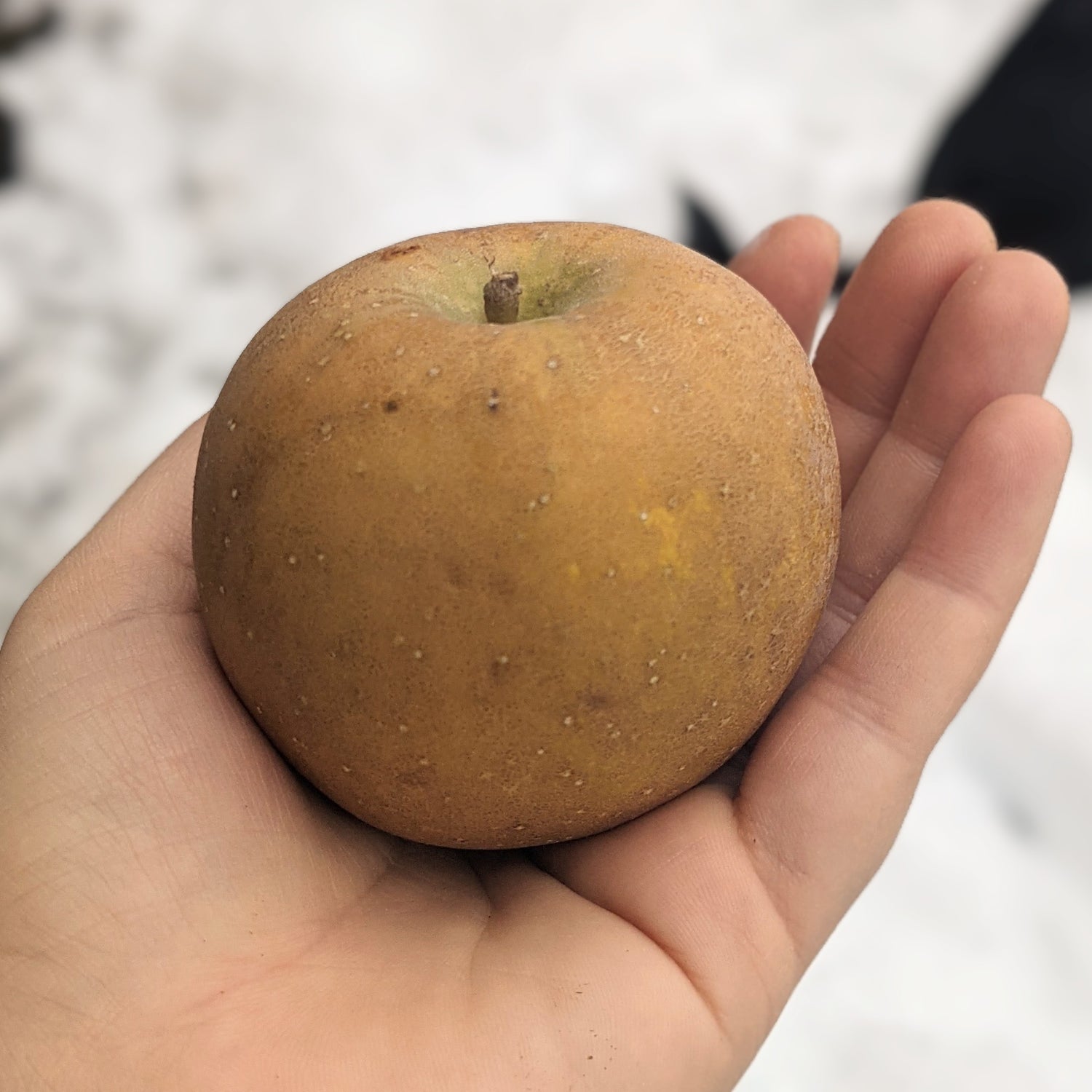
History: The origins of Golden Russet are unclear, but we know it was discovered in New York in the first half of the 1800s. It may have come from the seedling of an English russet variety and could have Ashmead's Kernel parentage. It was grown commercially for some time before falling out of favour, although it has regained some popularity recently due to its strengths in cider production.
Why We Grow It: With both lots of sweetness and acidity, Golden Russet is one of our favourites for fresh eating. The flavourful juice from these apples is also great for making cider. The thick russetted skin discourages insect damage and it is resistant to scab, canker, and powdery mildew. Its tip-bearing habit gives these hardy trees a wispy appearance.
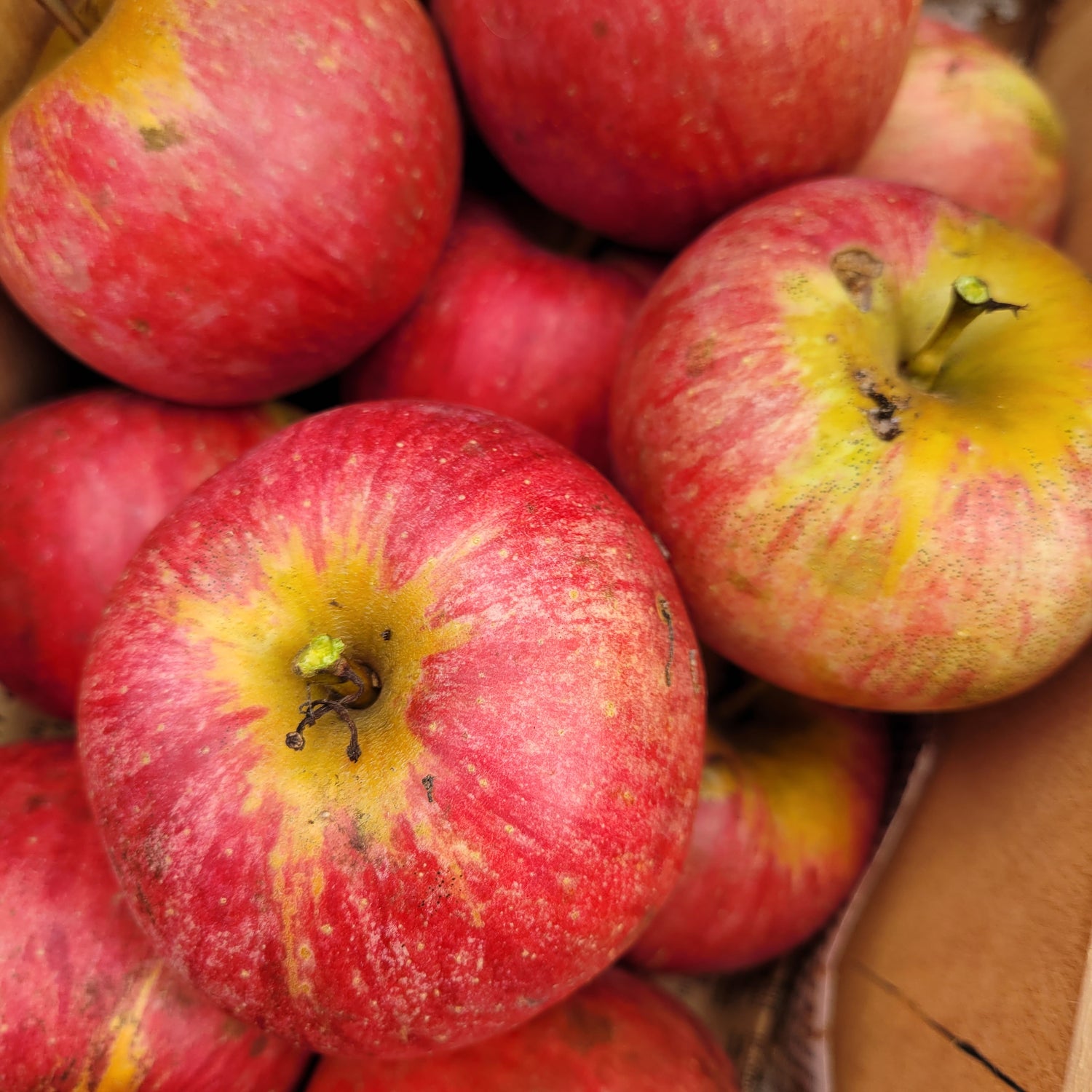
History: Northern Spy was first discovered in New York around 1800. It tends to be irregularly shaped and bruises easily, so it is not a popular commercial apple but it is still commonly grown in certain regions in the States today. It is featured in several poems and in 1953 a box of Northern Spy apples was sent to Senator Joseph McCarthy by the Toronto Globe and Mail during his infamous hunt for 'communist spies.'
Why We Grow It: Northern Spy apples are juicy with a balanced sweet-tart honeyed flavour, although they do tend to bruise easily due to their thin skin. To make up for that, they are known for making wonderful pies. The trees are cold hardy and vigorous.
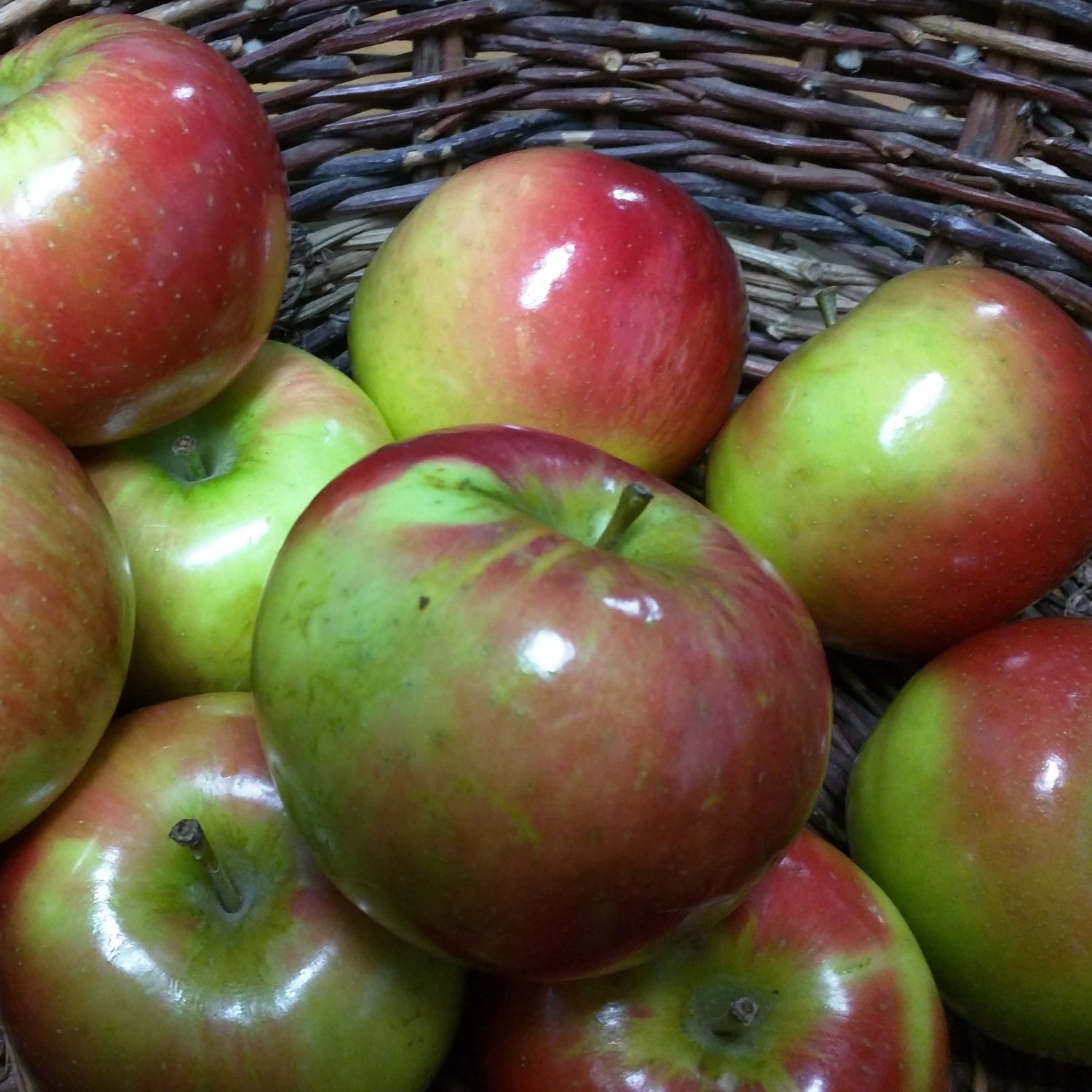
History: Honeycrisp apples were developed by the University of Minnesota in the 1960s and released in 1991. It is one of almost thirty varieties created by the university's breeding program since it began in 1888. The excellent flavour of Honeycrisp has allowed it to become one of the most popular apples in North America and in 2006 it became the state fruit of Minnesota.
Why We Grow It: Honeycrisp is popular for a reason. The apples are large and attractive with good flavour under favourable growing conditions. However, they are not an apple for beginner growers due to issues with some diseases especially in storage, but with diligent care you can produce these crunchy sweet apples in your own backyard/orchard.
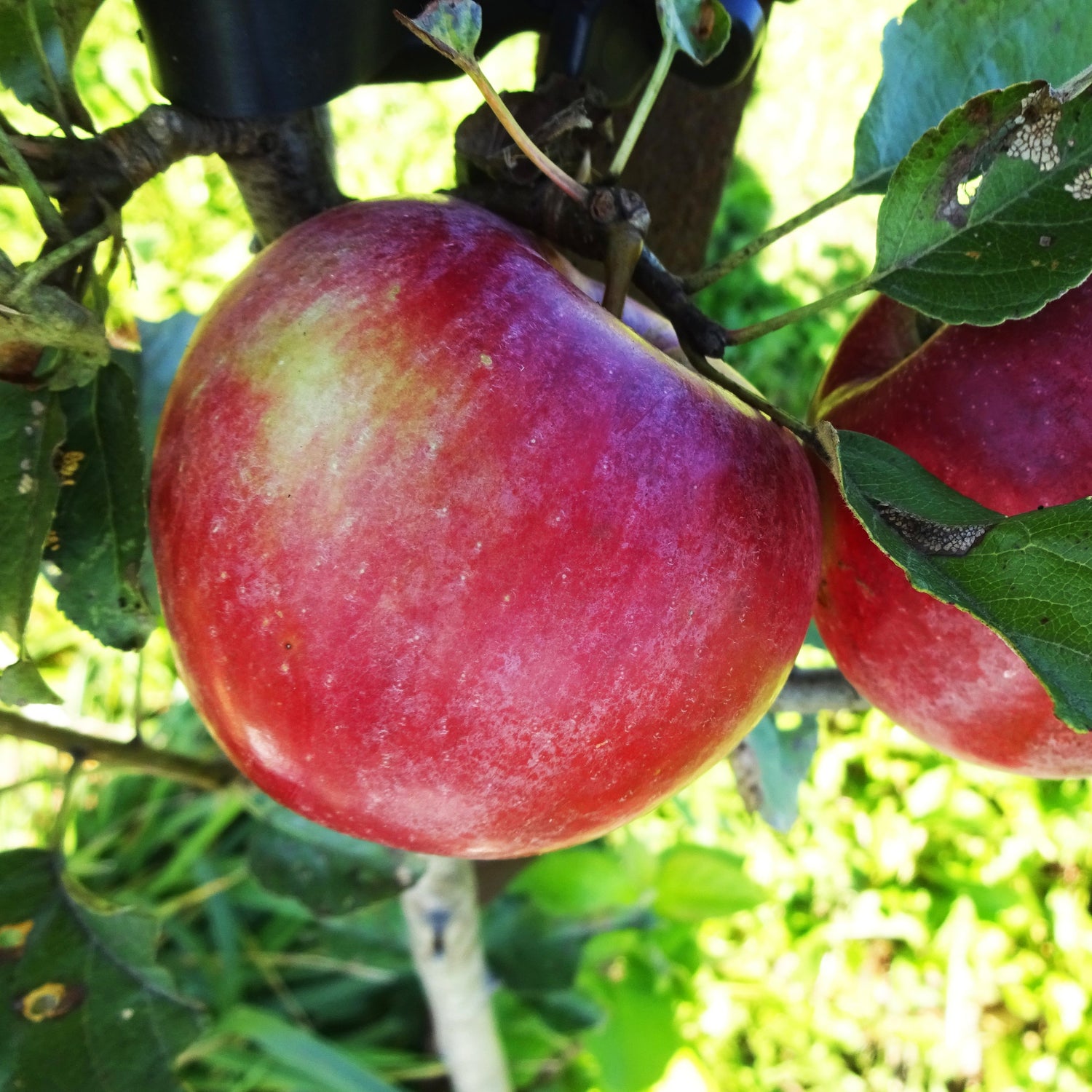
History: Sweet Sixteen was developed by the University of Minnesota and introduced in 1977. It is one of nearly thirty varieties released by the university since its breeding program began in 1888.
Why We Grow It: Some apples taste better when grown in colder climates, and Sweet Sixteen is one of them. For a fresh-eating apple, this is a favourite. Sweet Sixteen provides that crisp first bite that so many people love in an apple, and the pure white flesh will not disappoint for flavour with a very unique, distinct honeyed flavour. Its cold-hardiness and general disease-resistance (tolerant of scab and cedar rust) make it winner for the grower too.
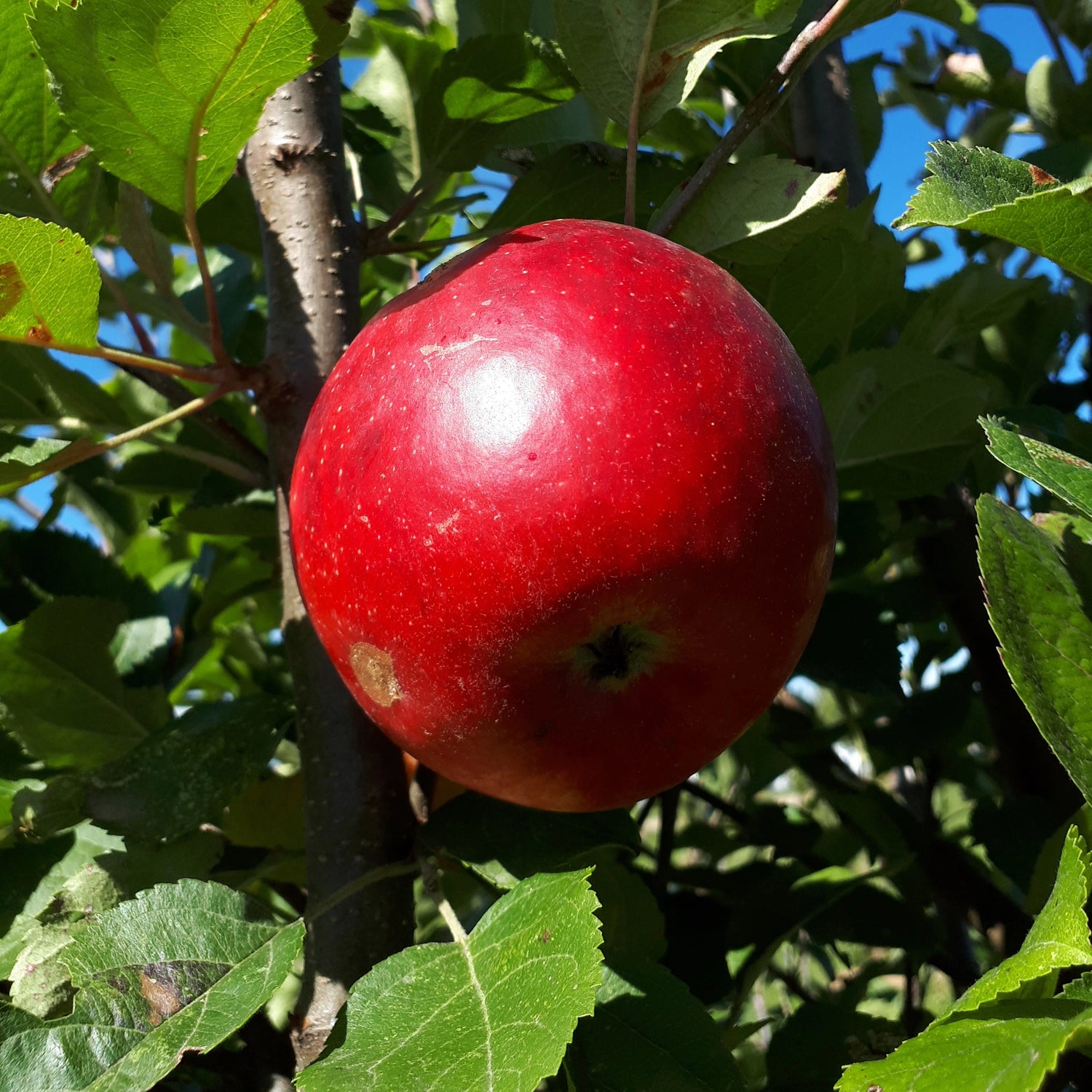
History: Freedom was developed in a breeding program at the New York State Agricultural Experiment Station in Geneva, New York in 1958. The goal was to create an apple that was immune to apple scab, and this particular variety was chosen from 120 other apples that were planted out from seed selected through an intensive breeding program. It was released in 1983 and given the name Freedom to represent its freedom from apple scab.
Why We Grow It: Low maintenance, disease-resistant, vigorous, good flavour, and a good keeper... all in one apple! Freedom is the perfect variety for growing organically, for pick-your-owns, backyards, and community orchards. Large red skinned apple, similar to McIntosh in flavour with sweet, subacidic, sprightly flavour and juicy white flesh. Crunchy, fine grained flesh.
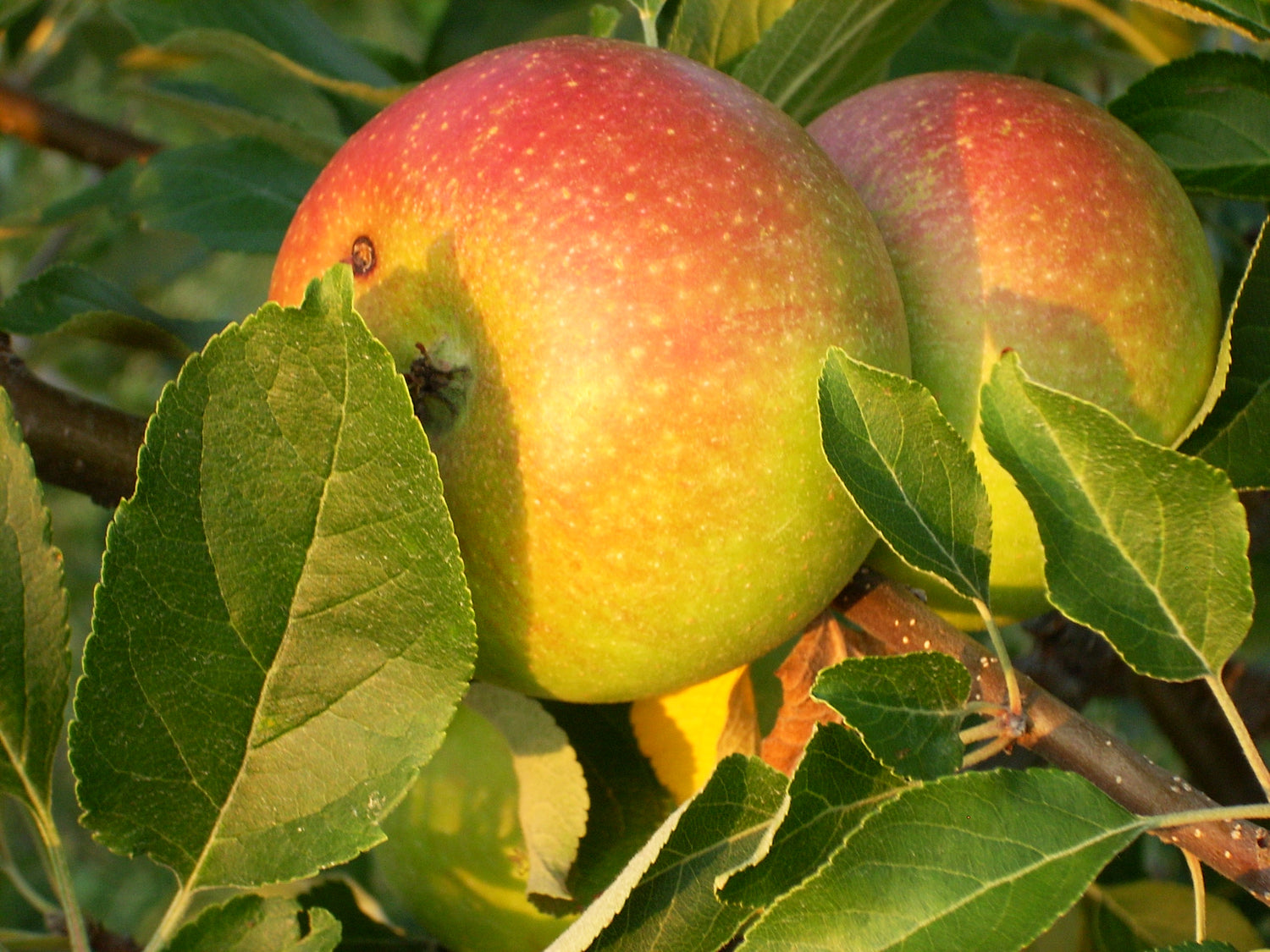
History: Cox's Orange Pippin was first grown in England in 1830 and was named after the retired brewer and horticulturalist who first bred it, Richard Cox. Its excellent flavour has earned it a spot as one of the best fresh eating apples in England where it has remained popular ever since. In fact, it still accounts for over 50% of fresh eating apples grown in the UK today. Despite its reputation, it is seldom grown commercially in North America due to its precocious nature and susceptibility to many common apple diseases.
Why We Grow It: This apple's reputation is hard to ignore with its sweet, subtle, aromatic flavour and attractive orange-red skin. Not only is it good for fresh eating, it is also popular in cider blends.
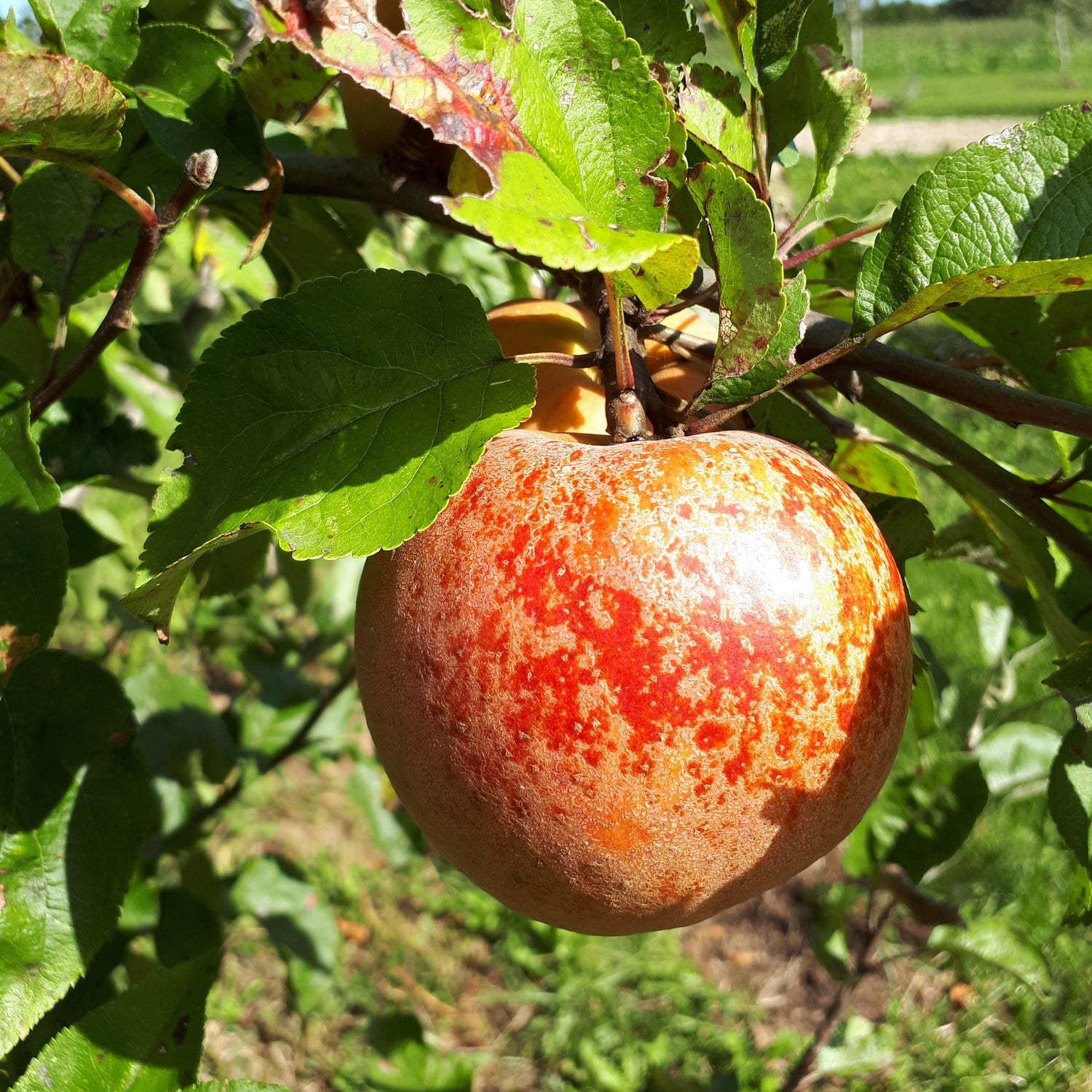
History: Roxbury Russet is the oldest American apple still under cultivation. It was discovered around 1650 in Roxbury, near Boston. These apples were well-known for their long keeping ability and qualities for cider making. They were grown by Thomas Jefferson at Monticello and are even referenced in one of Nathanial Hawthorne's novels. Due to the russet skin, these apples have never achieved true commercial success but they can still be commonly found in American farmer's markets.
Why We Grow It: Aside from its historic roots, Roxbury Russet is an excellent all-around apple that can be eaten fresh, used in cooking, and made into a great cider. It has a nice flavour that is sweet and sharp. This variety is also a good choice for organic orchards.


History: Liberty was developed by the New York State Agricultural Experiment Station in Geneva, NY, in 1955 and released in 1978. It is a cross between Macoun and a Japanese crabapple (Malus floribunda), bred in hopes of achieving the disease resistance of the Japanese crabapple.
Why We Grow It: The creators of Liberty were highly successful in their goal, creating one of the most disease-resistant varieties. Liberty is a favourite for organic production as a result. The fruit is bright red with sweet, creamy flesh and it stores well.
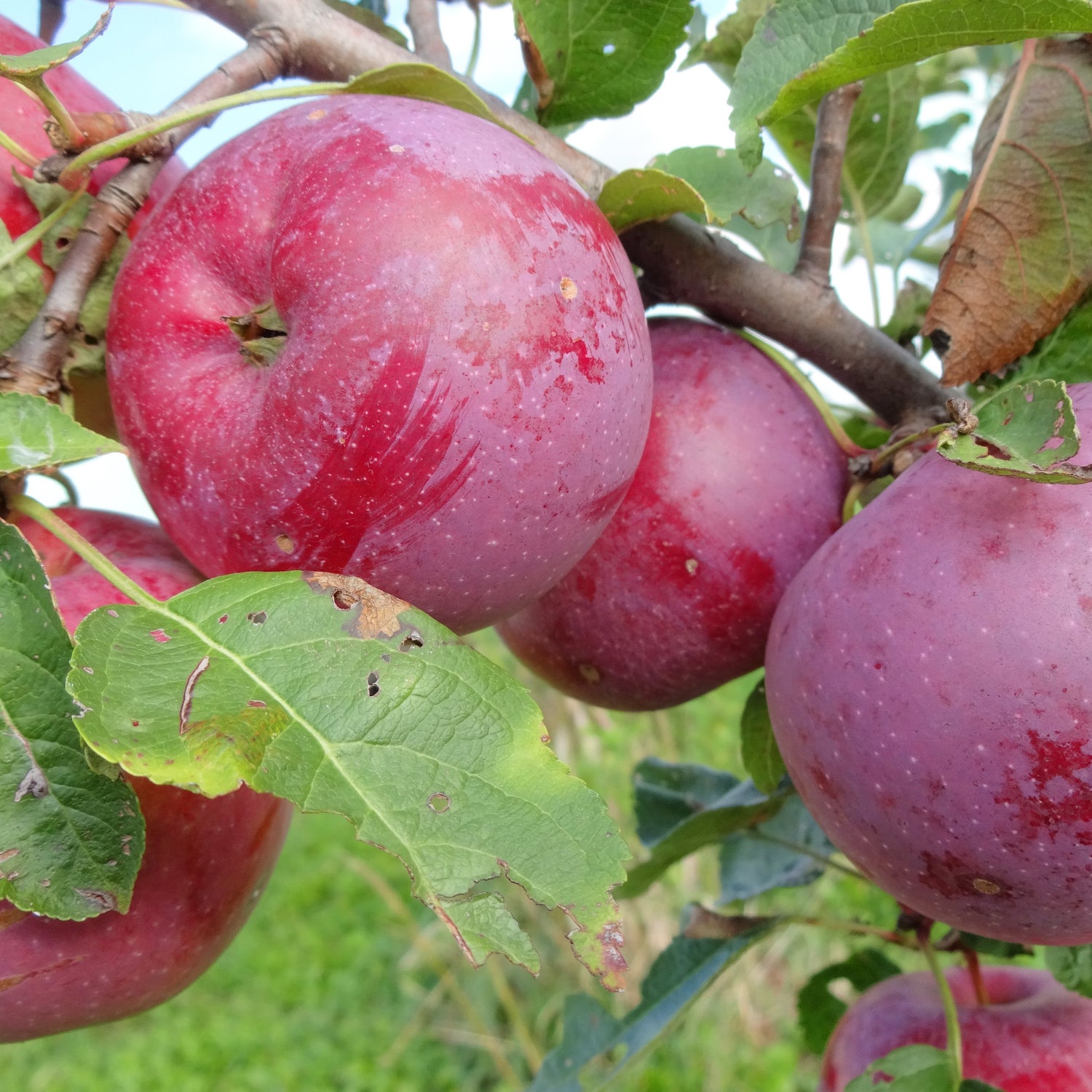
History: The creation and selection of Empire apples was a lot more intense compared to the chance origins of some of our older varieties. In 1945, scientists from the Cornell University New York State Agricultural Experiment Station collected thousands of seeds from the orchard of fruit nutritionist Lester C. Anderson. For years these seeds were grown and tested until Empire emerged as the best apple from amongst its siblings. It was released to the public in 1966 and has since become one of the top ten most popular apples in North America.
Why We Grow It: Empire is an excellent general-purpose apple for the Great Lakes area. The attractive green and red fruit is crisp and sweet and keeps well into the winter. The trees crop heavily and reliably, and the fruit is resistant to bruising, making life easier for the grower. They are also resistant to fireblight and cedar apple rust.


History: Not to be confused with Pink Lady, Pink Pearl was developed by breeder Albert Etter who had the goal of creating red-fleshed apple varieties from seedlings of Surprise, a red-flashed variety. In 1940, he partnered with the California Nursery Company to bring some of these varieties to the public. Pink Pearl was selected as the best amongst his seedlings and released in 1945.
Why We Grow It: One of Steph's favourites! Pink Pearl is a delicious apple that is crisp with a pronounced unique fruity flavour and a nice blend of sweetness and sharpness. Its yellow-pink skin conceals a bright pink interior that is stunning to see compared to the white-ish flesh of most apples. It is great fresh or for applesauce, and it is relatively slow browning- it can be cut and bagged in the fridge the night before with very little change in colour the next day. Their pink colour adds a unique visual appeal to baked goods as well, such as with the gooseberry and Pink Pearl tarts Steph made pictured here!
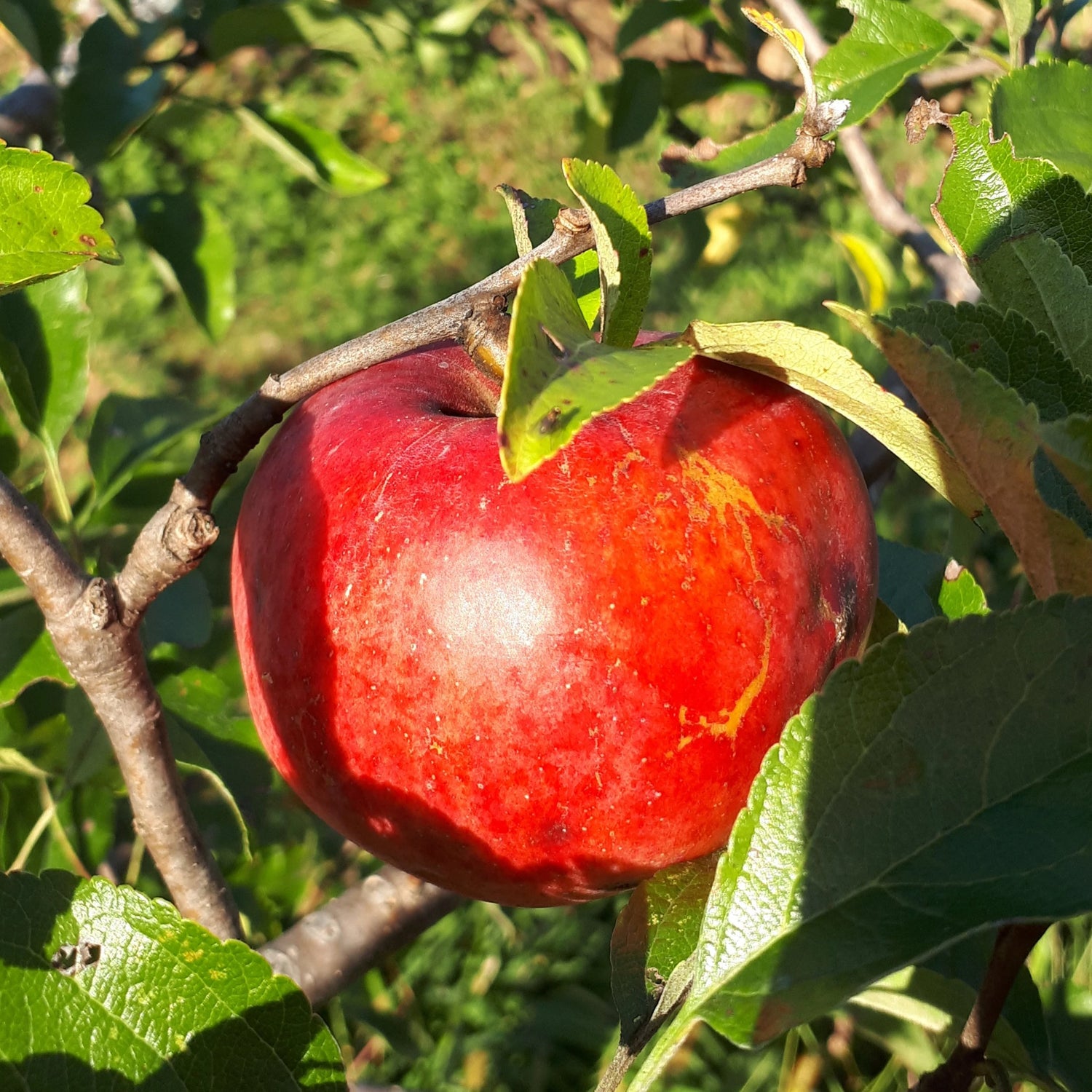
History: Nova Easygro was developed at the AAFC Kentville Research and Development Station in Nova Scotia and introduced in 1971.
Why We Grow It: Living up to its name, Nova Easygro is hard to beat if you're looking for a low-maintenance backyard tree or a clear winner for organic orchards. This variety is resistant to numerous common apple diseases and tastes great. The flavour is pleasant and sweet and the flesh is firm and white with the perfect texture, earning this apple favourable reviews at our tasting event.
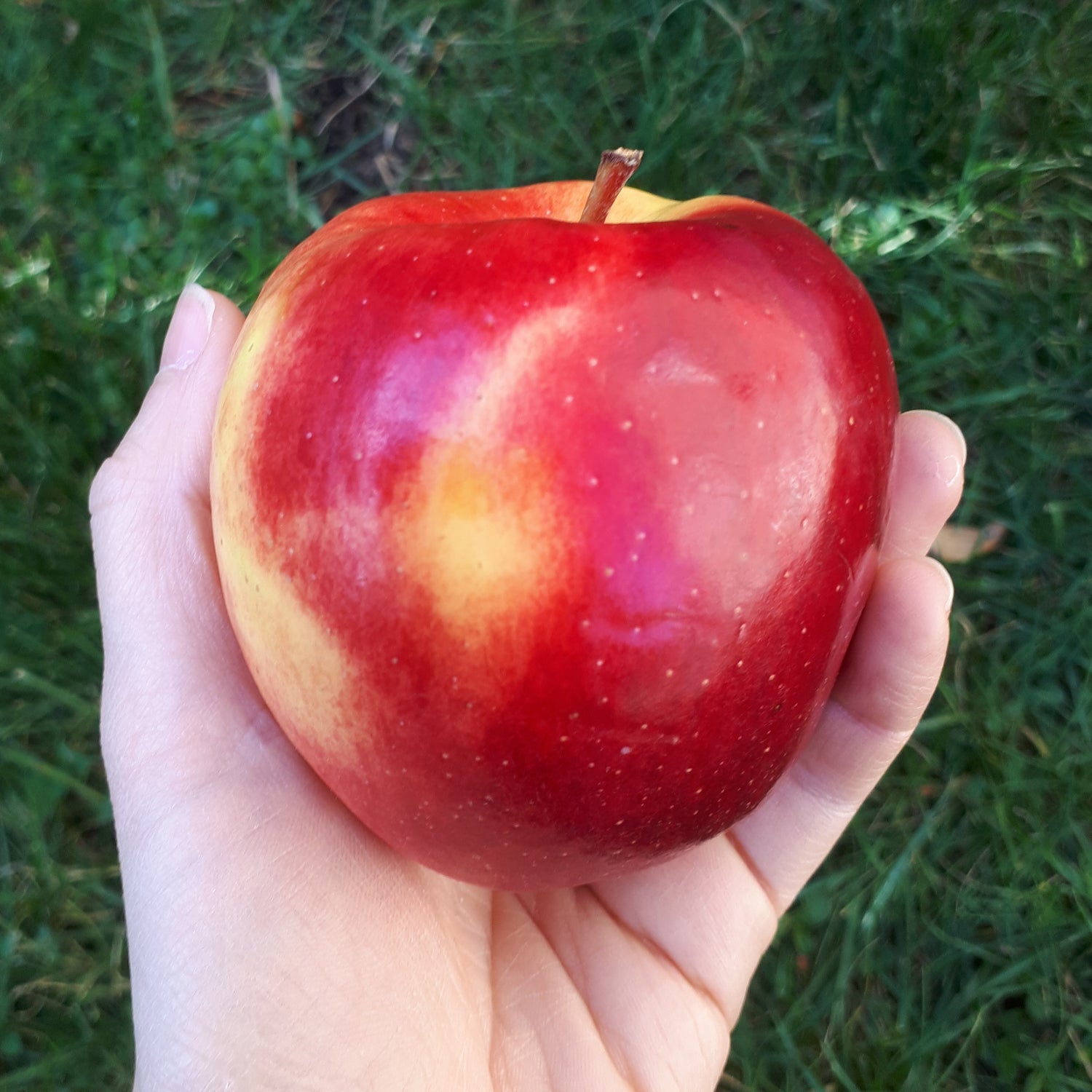
History: A chance seedling discovered in the 1980s in BC, this tender, aromatic, honeyed apple has been a hit ever since!
Why We Grow It: This delicious apple is very popular in the fresh eating market in Canada, thanks to its attractive bi-colour skin and slow browning qualities. It produces a medium-large fruit and is a good cropper.
History: Cortland apples were first bred in 1898 by Cornell University in New York and introduced in 1915. Since then, they have become one of the top fifteen apples in the US and Canada, although the majority are still grown relatively close to the university where they originated. Cortland Nova Red is a redder sport of the original Cortland apple, making a more attractive fruit for those who value red apples.
Why We Grow It: Cortland is a sweet apple with crisp, juicy flesh. It is great for applesauce or drying as the flesh is slow to brown. The fruit keeps until Christmas under home storage conditions although the crispness and flavour does fade over time. This variety crops well annually and makes a good pollinator for others. The redder skin on this sport is quite attractive!
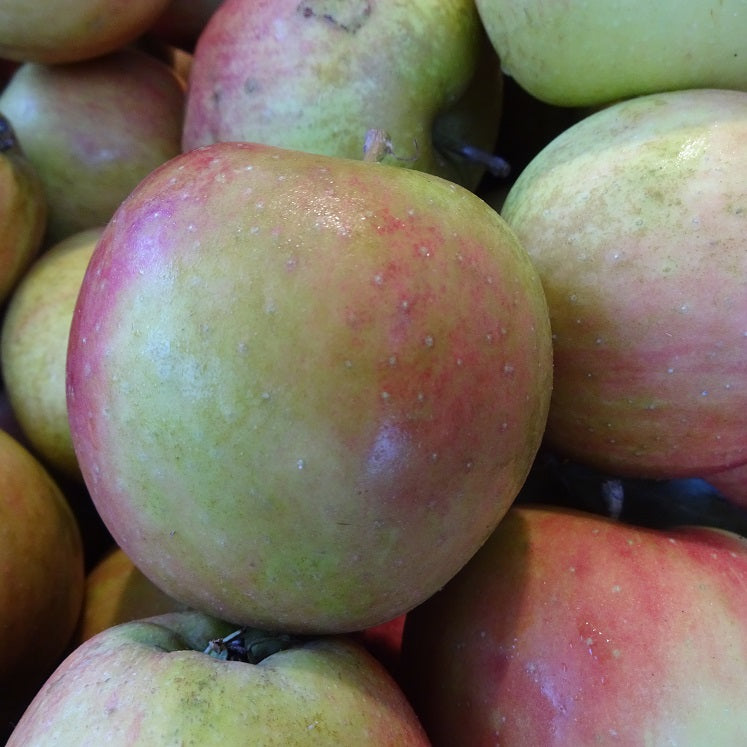
History: This apple was discovered as a chance seedling in 1856 in Boskoop, Netherlands where it has remained popular ever since.
Why We Grow It: Here's one for those of us who love some sharpness in an apple. With its sharp taste and large, greenish-red fruit, this apple is still popular at farmer's markets throughout Europe for both fresh eating and cooking (keeps its shape). It has value as a sharp in hard cider blends as well.
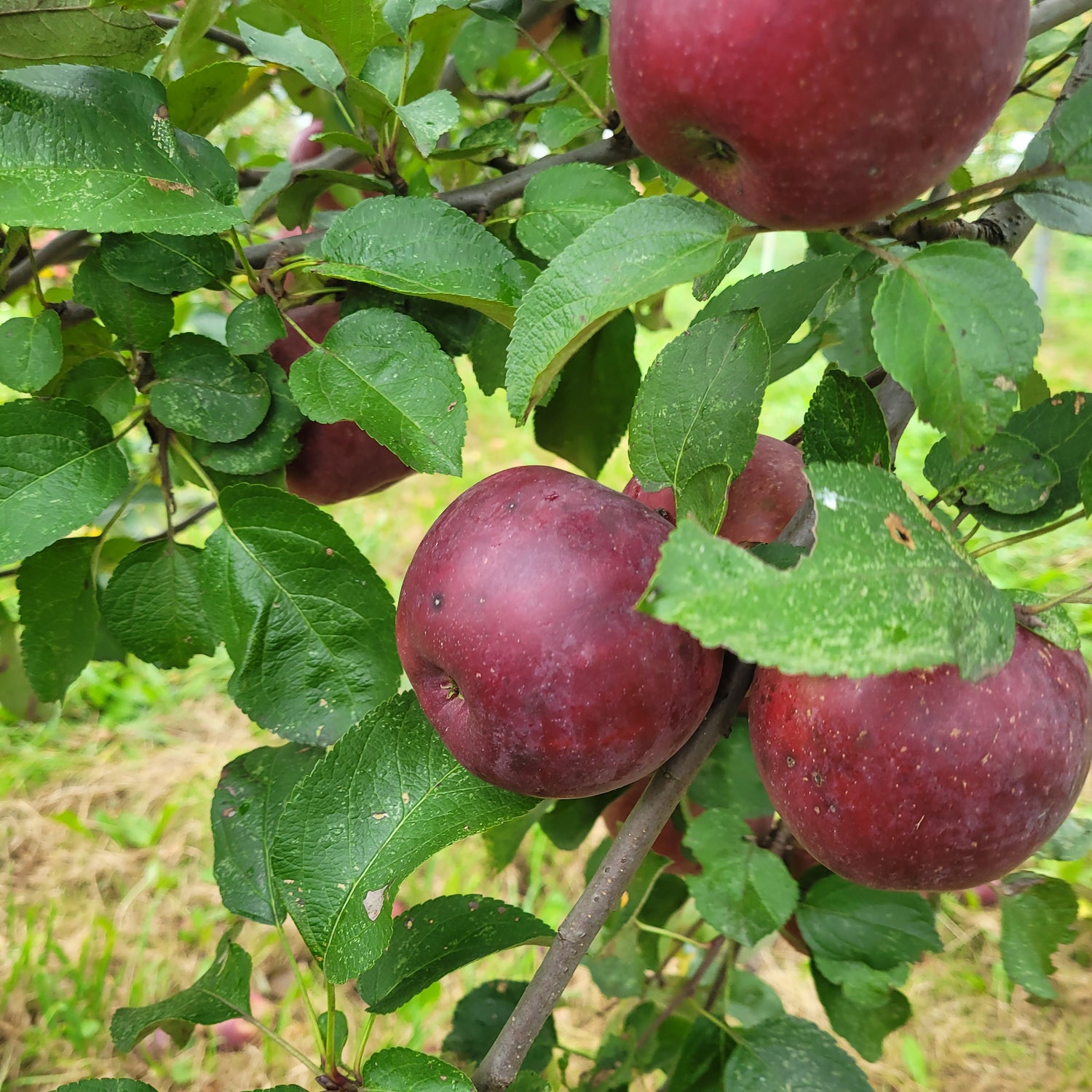
History: Spartan apples are a Canadian variety that was developed at the Pacific Agri-Food Research Centre in Summerland, BC in 1936 by Dr. R.C. Palmer. Of particular interest is the fact that Spartan apples are the first apple variety created by a formal scientific breeding program. They have been popular in North America ever since and are even commonly found in gardens in the UK.
Why We Grow It: This variety is known for its sweet/acid flavour and pleasant crunch, especially when eaten fresh off the tree. They tend to soften rather quickly after they are picked but luckily the fruit hangs on the tree 2-3 weeks after its ripe which helps to extend the optimal time to enjoy this variety. Spartan apples are also known for being relatively easy to grow, having decent disease resistance, heavy crops, and an ability to keep all winter.
Showing 15/181
Next