apple qty discount




181 products
Sort by:
181 products
181 products
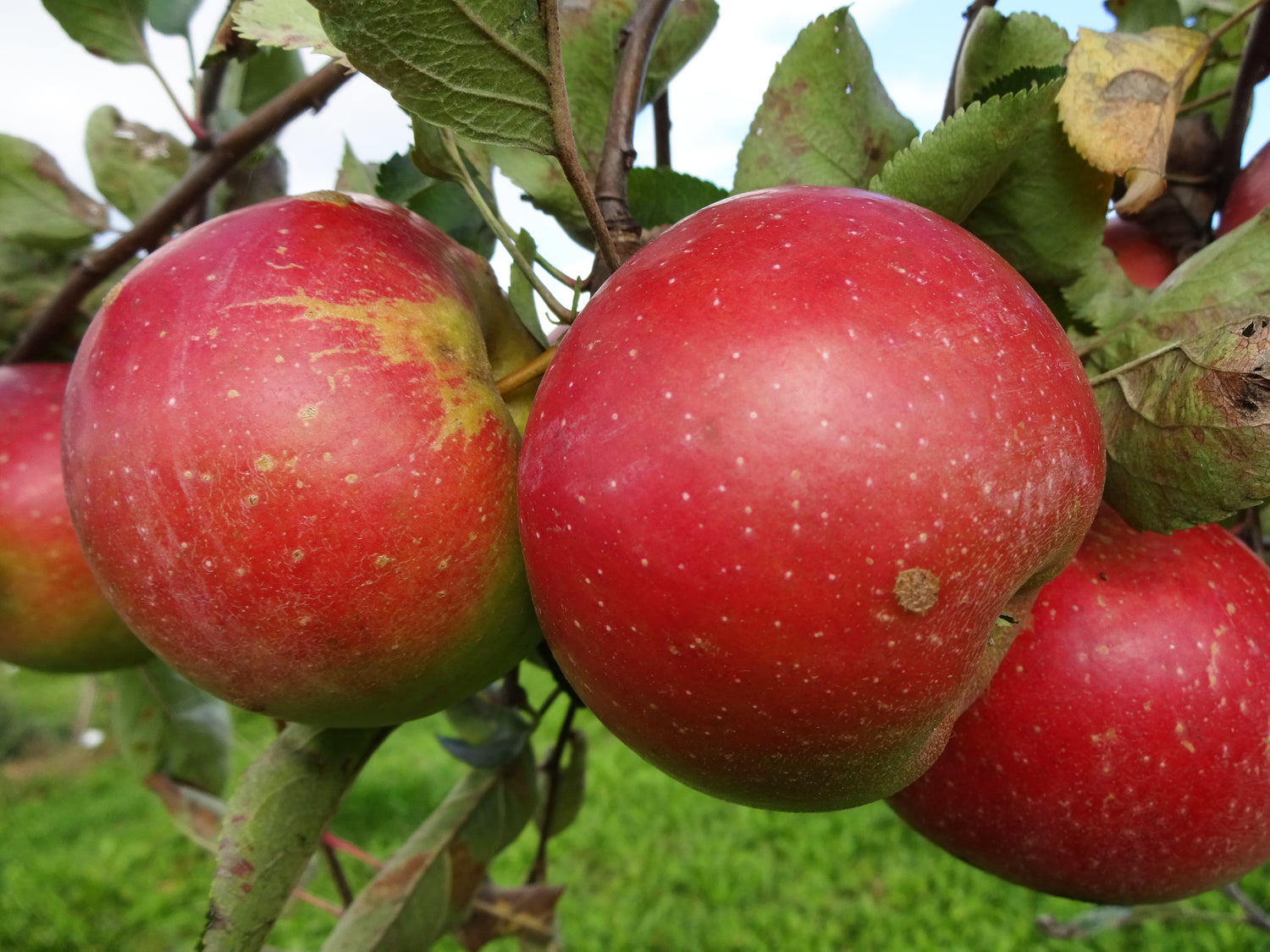
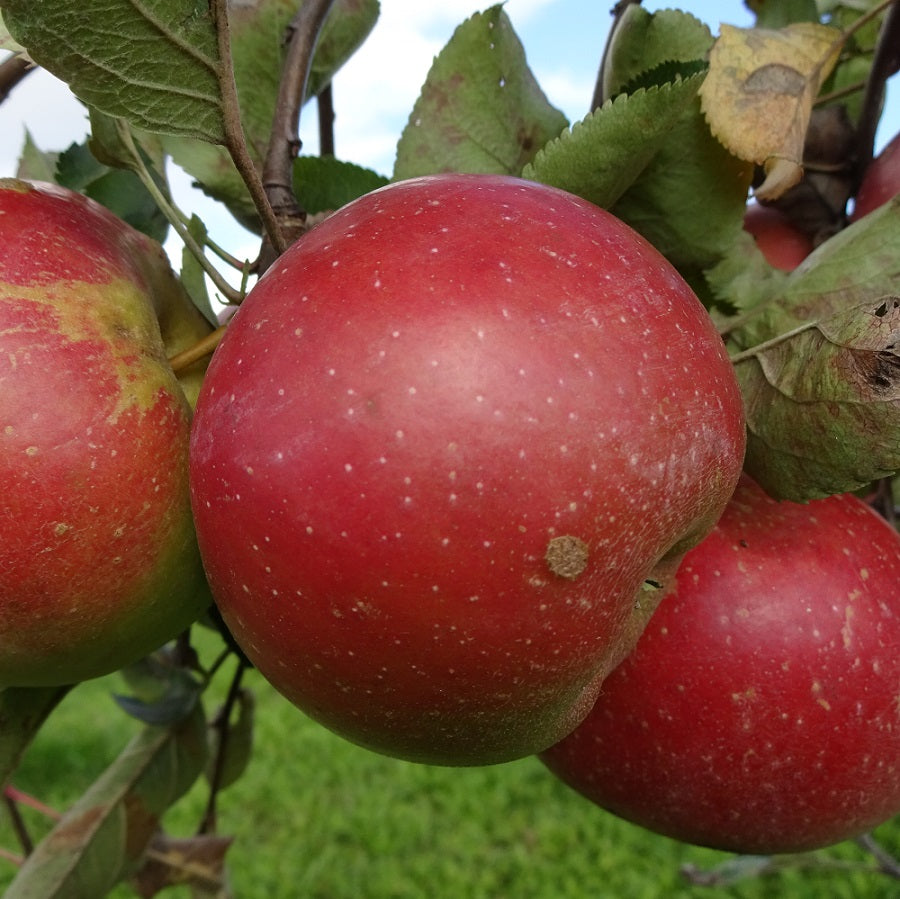
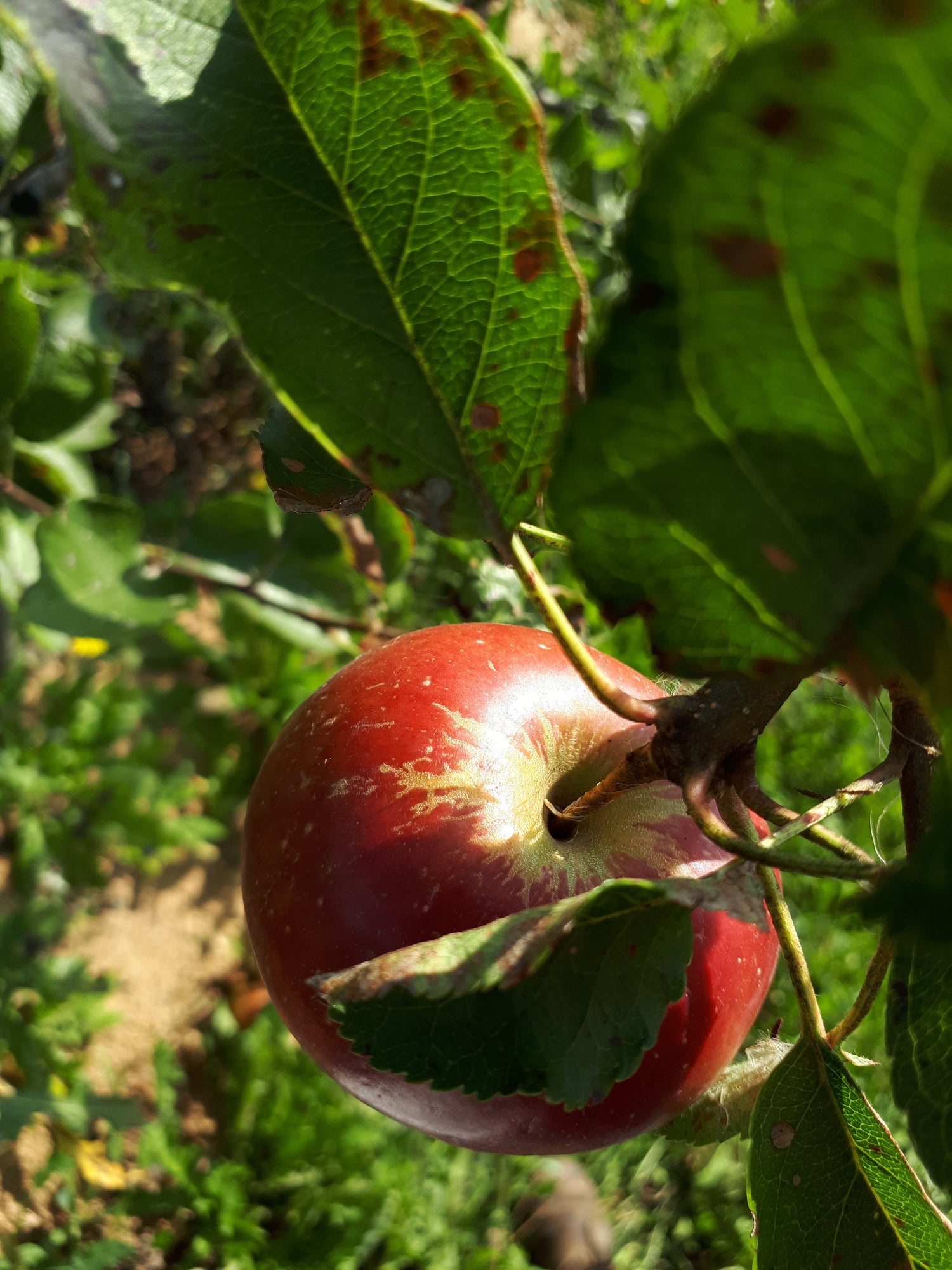
History: This classic American cooking apple was discovered by chance around 1740 in Massachusetts. It was eventually brought to the attention of a Col. Baldwin, after whom the variety was later named, who helped to spread it further. By 1850 this was one of the most commonly grown apples in the US, although its popularity began to decline by the 1900s, exacerbated by a terrible winter in 1934 that wiped out a significant number of trees. Despite this, Baldwin is making a bit of a comeback and a monument to this apple still stands in Wilmington, Massachusetts, around where it was discovered.
Why We Grow It: Baldwin apples produce large, greenish-yellow and maroon fruit with firm, sweet flesh that maintains its shape and crispness when cooked. The fruit produced in our test orchard has been attractive and blemish-free.
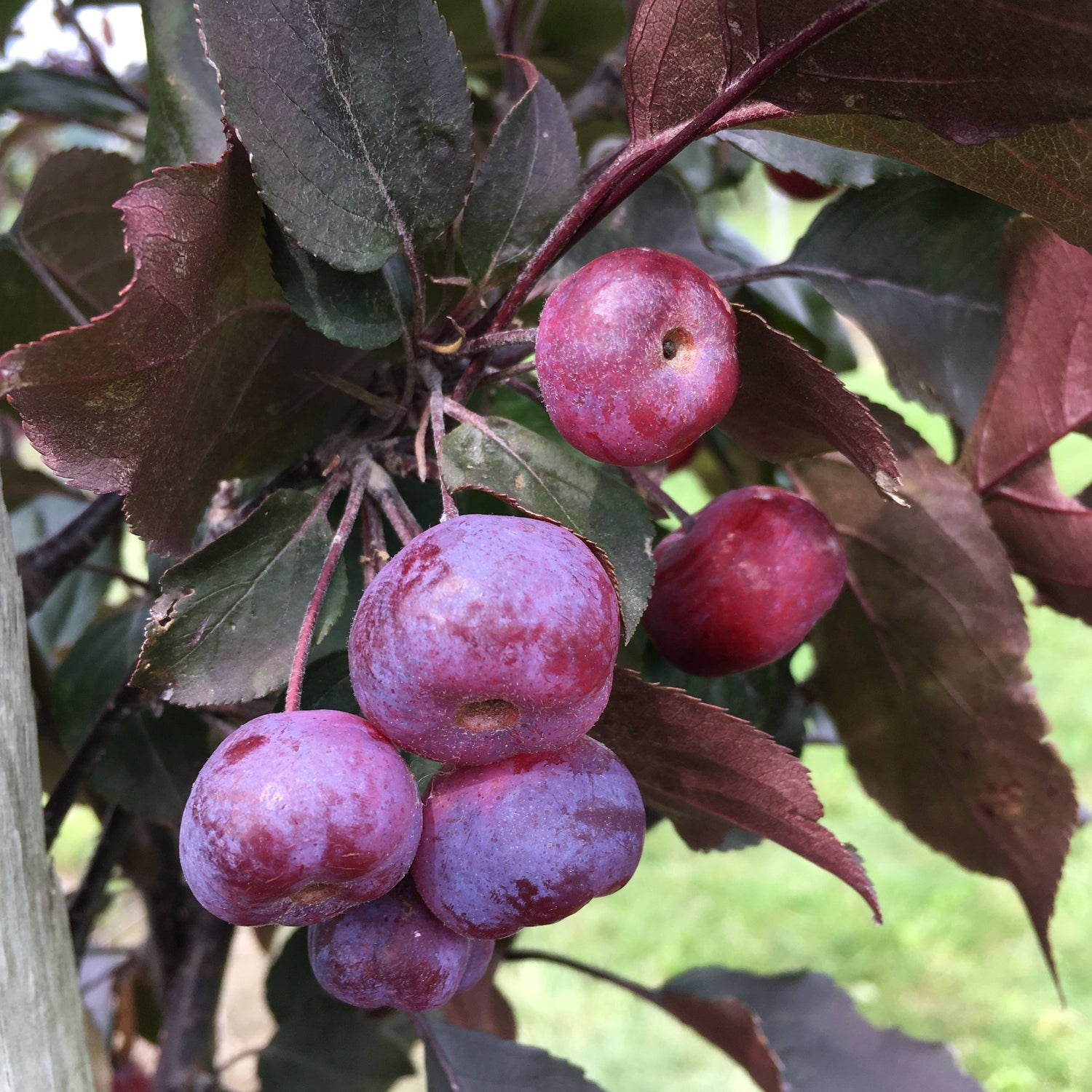
History: Thunderchild is a crabapple that was developed by Percy Wright, a prairie plant breeder in Saskatoon, Saskatchewan. Although it is unknown when exactly Thunderchild was created, it likely came about in the 1900s and can still be seen as a common ornamental tree in the area.
Why We Grow It: Thunderchild makes for a lovely ornamental tree with a profusion of pink blossoms in the spring and deep red foliage. The tiny dark red fruits it produces can be used in cider blends and to make jellies with a gorgeous orange hue. The tree is quite cold hardy and generally disease resistant.


History: Duchess of Oldenburg, or Duchess as we like to call it, originated in the 1700s in Russia. It spread to other countries where it became popular, especially in Victorian England. Its popularity was so great that at one point it was used as a reference cultivar when evaluating other varieties of apples. It is also likely the parent of several other varieties such as Northern Spy.
Why We Grow It: Duchess boasts an attractive fruit that is striped and mottled red over light green. Although these apples don't store well, the flesh is soft and is excellent for pies and applesauce. The trees themselves are quite hardy and disease resistant.


History: Honeygold apples were developed by the University of Minnesota and introduced in 1970. It is one of nearly 30 varieties that have been developed by the university's breeding program since it began in 1888. This apple is a cross between Golden Delicious and Haralson, designed to combine the taste of the former with the cold hardiness of the latter. Honeygold is also famous for being mistakenly identified as one of the parents of Honeycrisp, although that has since been rectified.
Why We Grow It: With the sweet taste and appealing look of Golden Delicious but the cold hardiness of Haralson, this is an excellent apple for anyone living in colder hardiness zones. It is great for fresh eating as well as making pies and applesauce. The tree is also somewhat scab resistant.


History: Once one of the most popular commercial apples in the United States, Ben Davis apple trees were planted across the continent following its discovery around 1800. Due to its firm fruit and excellent keeping qualities, this apple was extremely easy to transport over longer distances which led to its popularity. Once storage and transportation improved, this apple was slowly replaced with better tasting varieties and it is now a relatively rare find. It's also a parent to Cortland.
Why We Grow It: The mellow, sub-acidic, mildly aromatic red fruit is not quite as flavourful as some apples but it stores exceptionally well, lasting into spring. Flavour improves in storage, like many heritage apples. The trees are reliable and heavy croppers, earning them the nickname of 'mortgage-lifters' when they were grown commercially.

History: Lodi is a cross between Yellow Transparent and Montgomery Sweet created at the New York Agricultural Experiment Station in Geneva, NY, and released in 1924. Although it is not suitable for commercial production due to its poor keeping qualities and tendency for the flesh to crack in storage, it is still commonly grown by homeowners in the southern US today.
Why We Grow It: If you're looking for an early apple to get started on making applesauce, Lodi is the way to go! These large yellow-green apples are ready to harvest by the end of July and do not bruise as easily as their Yellow Transparent parent.

History: Goldrush was bred specifically for scab resistance as part of the collaborative PRI disease-resistant breeding program run by Purdue University, Rutgers University, and the University of Illinois. It was developed in the 1970s and released in 1994. This variety has a complex heritage of Golden Delicious mixed with a cross of several other varieties for their disease resistance.
Why We Grow It: This is arguably the best scab-resistant variety released from the PRI Breeding Program as far as flavour is concerned. The dense, crisp flesh of this yellow apple is full of sugars and flavour. It is distinctly spicy and tart at first but mellows the longer it is in storage. The fruit stores exceptionally well. This truly multi-purpose apple is also great for drying and, unusually for a modern variety, is good in hard cider.

History: Golden Nugget was created more or less by accident when Golden Russet and Cox's Orange Pippin were crossed at the Kentville Agricultural Station in Nova Scotia in 1932. Despite being an accident, once researchers realized how flavourful this variety was they continued to raise it and eventually released it in 1964. Although a delicious apple, its small size prevented it from attaining true commercial success.
Why We Grow It: It is prized for its incredible flavour which is super sweet and tangy like a pineapple. Along with being great for fresh eating, it is also suited for cider. The tree itself boasts decent disease resistance.
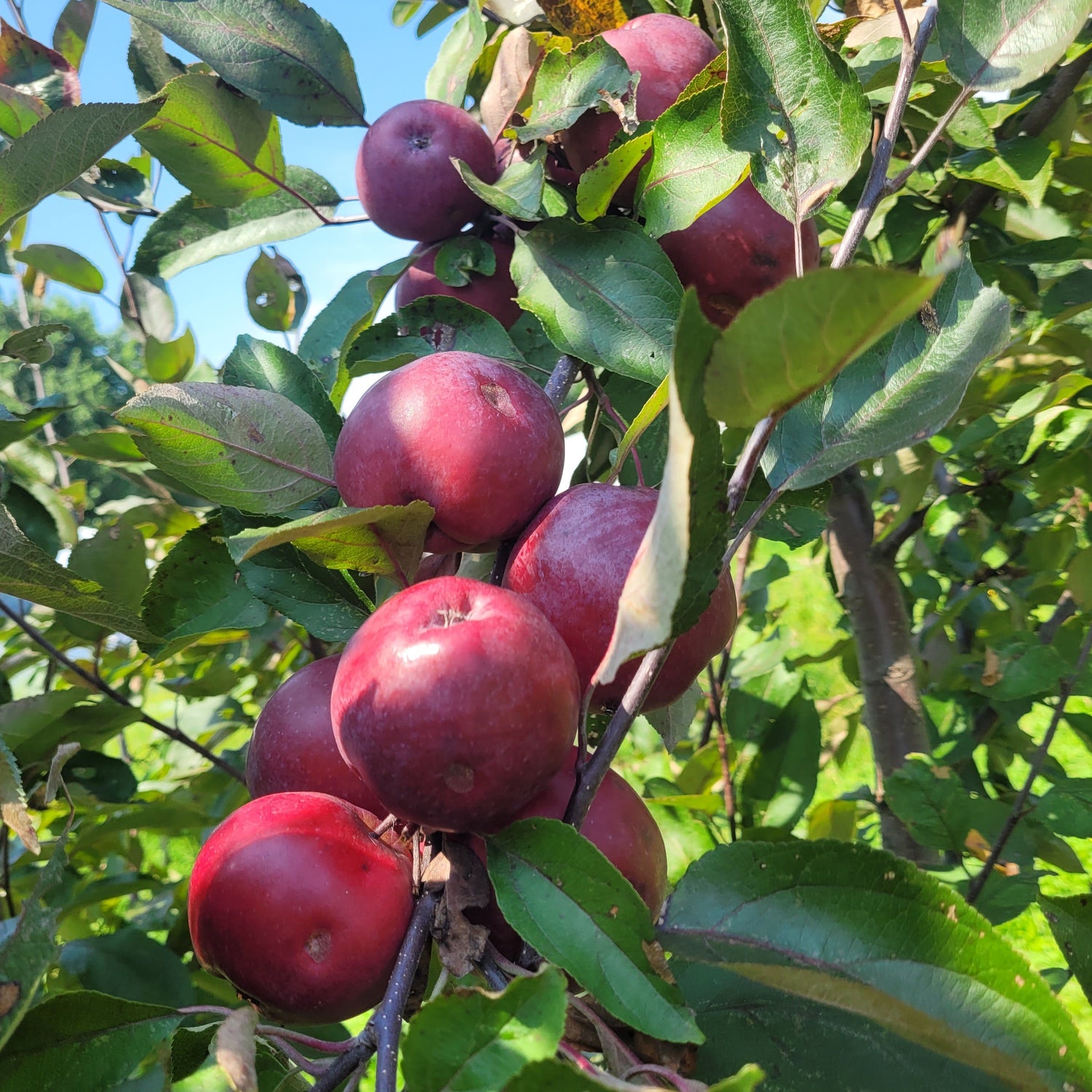
History: The Geneva crabapple was developed in the 1930s in collaboration with the Ottawa Experimental Farm and the New York State Agricultural Research Station based in Ottawa. The creation of this crabapple was head by Isabella Preston who specialized in creating cold-hardy ornamental plants.
Why We Grow It: This attractive crabapple has deep maroon flesh. The tree itself is quite visually appealing, sporting red leaves and bright pink flowers in the spring. The taste is reminiscent of rhubarb and is suitable for cooking as well. As it is a low sugar/high acid juice, it is best blended with another high sugar variety for cider. It also adds a nice red hue to blends.
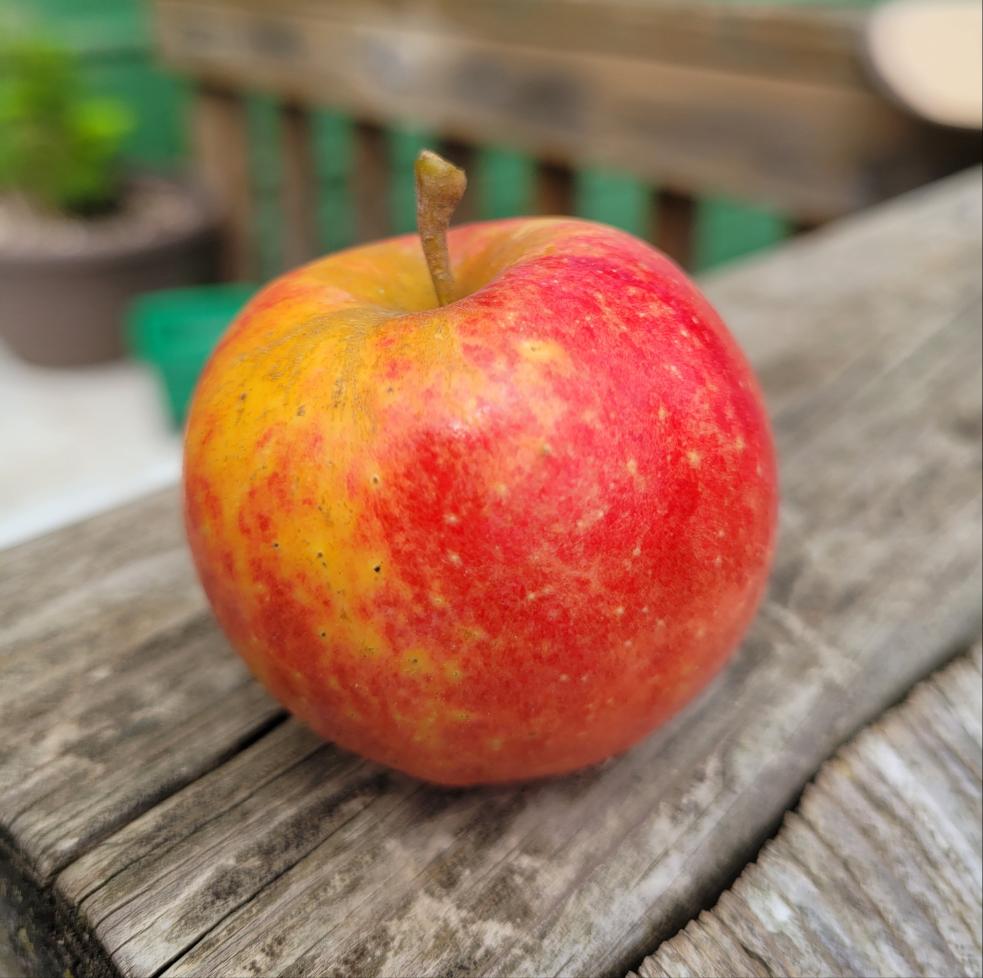
History: Norkent was bred as a cross between Haralson and Rescue at the Morden Research Station. It was one of tens of thousands of seedlings sent across the prairies as part of the Prairie Fruit Breeding Cooperative initiative by Agriculture and Agri-Food Canada in the 1960s. It was planted at the University of Alberta before being moved again to a backyard in Edmonton once the university ran out of space to it grow.
Why We Grow It: This pleasant and aromatic apple is one of the best fresh eating apples for colder climates! The flesh of this red apple is crisp and said to taste like a cross between an apple and pear.

History: Melba was developed by W.T. Macoun at the Central Experimental Farm in Ottawa in 1898. In 1924 it was released commercially and three years later received the Silver Wilder Medal from the American Pomological Society.
Why We Grow It: Melba is a lovely early market apple or backyard tree for making applesauce! The fruit is yellow with crimson flush and the crisp, white skin has a very sweet flavour.

History: Jonathan has an interesting history since there are two potential origins. One story says that Rachel Higley collected apple seeds from the local cider mill which she later grew on her new property in Ohio in 1796. She named one of the new varieties Jonathan after a young boy who often visited her orchard. The second, and more likely story, is that it was grown by farmer Philip Rick in the 1820s in New York. Originally named Rick, the apple was renamed Jonathan after the man who brought it to the attention of the Albany Horticultural Society.
Why We Grow It: These cheery red apples are crisp, juicy, and sweet. They are good for fresh eating as well as turning into pies and sauce. The fruit also stores quite well, lasting until January/February under optimal conditions.

History: Westfield Seek-No-Further was discovered in Westfield, Massachusets in the 1700s. Its flavour is reminiscent of popular fresh eating apples in England which is probably why this apple was so popular among English colonizers. It was the most popular fresh eating apple in New England during the 1800s.
Why We Grow It: Historically a favourite eating apple, Westfield-Seek-No-Further's sharp, nutty flavour is as unique as its quaint name! It now has potential as an addition to cider blends.

History: Rouville apples were created by R.L. Granger and G.L. Rouselle in 1962 at the Agriculture and Agri-food Canada research centre located in St.-Jean-sur-Richelieu, Quebec. The variety was introduced in 1983.
Why We Grow It: This lovely Quebec cider apple has a wonderful bitter-sweetness that is great for fresh eating and juicing and sauce. It is resistant to scab and has grown very well in our test orchard.


History: Prima is one the apples developed from the collaborative PRI disease-resistant breeding program run by Purdue University, Rutgers University, and the University of Illinois. It was introduced in 1958 but unfortunately is no longer fully scab resistant due to the fungus evolving to overcome the resistance since then.
Why We Grow It: Another great apple for organic production and excellent for the backyard or farmer’s market sales! This apple is sweet, juicy, and flavourful and boasts good disease resistance..
Showing 75/181
Next