Plant pre-orders are now open for spring 2027!
🍁We are proudly a Canadian business. Thank you for supporting us! 🍁
-
Grow With Us
-
Apple Trees
-
Cherries
-
Pear
-
Plum
-
Budwood
-
Scionwood
-
Rootstock
-
Collections By Zone
-
Collections by Use
Grow With UsFruit TreesBerries & VinesOther PerennialsPropagation MaterialSpecial CollectionsTree Supplies -
-
Learn With Us
-
Plan Before You Order
-
Basic Ordering Guide
-
Rootstocks & Tree Size
-
Pruning
-
Signs Of Tree Stress
Learn With UsGuide For BeginnersYour New Tree - Planting CareHolistic AftercareGraftingEvents -
About Us
-
New to bareroot plants?
NOW OPEN FOR ORDERS!
All bareroot trees, plants & tubers will ship Spring 2027
Misc. Seedlings (Non-Fruit)

Misc. Seedlings (Non-Fruit)
Let's get a little more diverse! We are happy to see a growing interest in folks growing seedlings! They are an excellent way to increase diversity for both nature and your palate!
Seedlings may share some characteristics with their mother plant but there will be natural variation creating a unique plant with every seed, as unique as the differences between you and me. Remember when planting seedlings it's best to plant a few (2-3) for pollination.
37 products
Sort by:
37 products
37 products
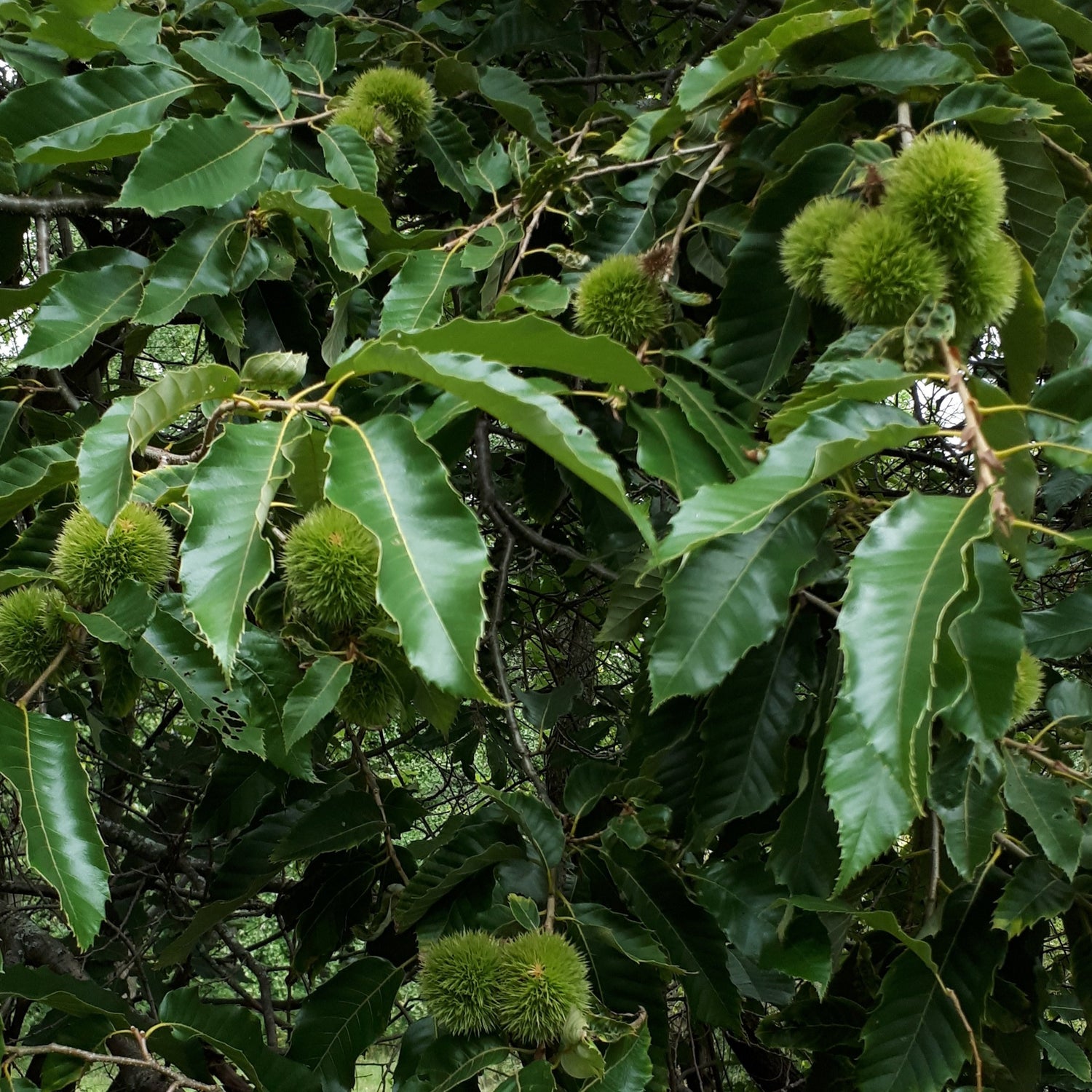
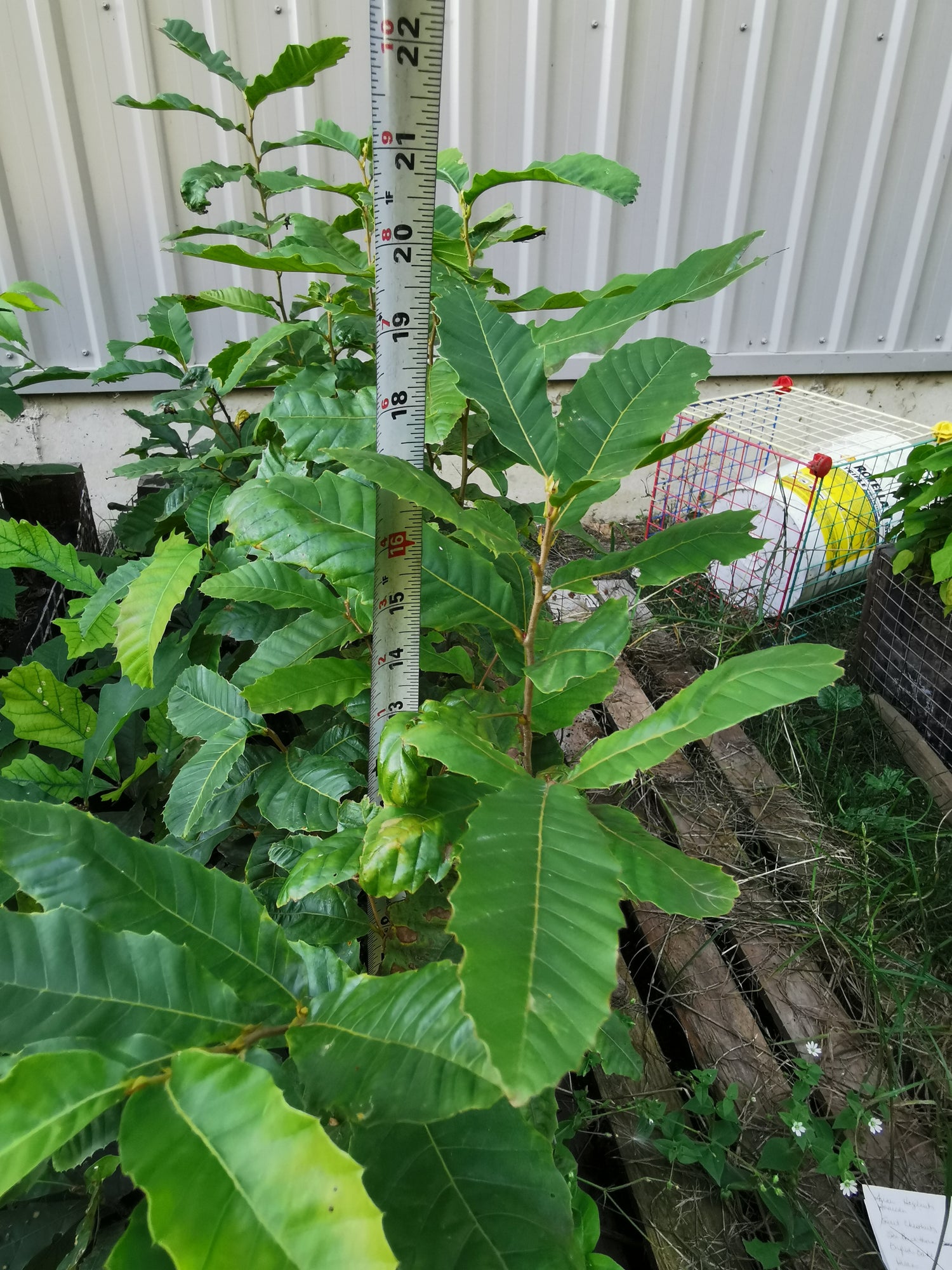
Species: Castanea dentata x mollissima
History: These seedlings are a cross between Chinese chestnuts and American chestnuts grown from seed from Grimo Nut Nursery. As a hybrid of Chinese and American chestnuts, these seedlings have blight resistance along with good cold hardiness.
Why We Grow It: This tree has incredible potential as a truly sustainable food source for humans. High in vitamins and starch, the nuts can be used to make a flour food staple, or pressed for oil to be made into bio fuel. For more inspiration and ideas in growing sweet chestnuts as a crop, we recommend the book Restoration Agriculture: Real-World Permaculture for Farmers by Mark Shepard.

Special Note: We take special care to grade out (remove) any of these seedlings that are showing visible thorns when we dig them in the fall. This increases the likelihood (although we cannot make any guarantees) that you will not have thorns develop on your Thornless Honey Locust Seedling. If you don't mind thorns on your Honey Locust, the ones we grade out are available here at a lower pricepoint.
Species: Gleditsia triacanthos
History: Thanks to its ability to tolerate a host of adverse conditions that would hinder or kill other trees, Honey Locusts have been cultivated for us as ornamental, urban trees. As a result, several thornless varieties have been developed including the mother tree for these seedlings.
Why We Grow It: Honey Locust has many benefits for permaculture and now growers do not need to worry about popping tires with thorns thanks to these thornless trees - though they are seedling so some may develop thorns though most will not; these can be top grafted with a thornless type if needed. Reaching 30 meters tall, this native nitrogen fixing tree benefits many including bees, wildlife, and even humans: we can use the sweet (honey flavoured) pulp inside their pods in baking, tea or for brewing beer. The durable, rot-resistant wood has a variety of uses.


Species: Liriodendron tulipfera
History: Tulip Trees are native to southern Ontario and the eastern United States. The wood of these trees has been used by indigenous peoples to make dugout canoes and to make furniture and cabinets. It is the state tree of Kentucky, Tennessee, and Indiana and George Washington planted some at his home at Mount Vernon in 1758 which are still standing today.
Why We Grow It: These fast growing trees are all around rather wonderful. Their oddly shaped leaves resemble a cartoonish cat head and in the spring and summer the trees bloom with greenish-yellow and orange tulip-like flowers. The flowers and later the seeds they produce are excellent sources of food for various animals.
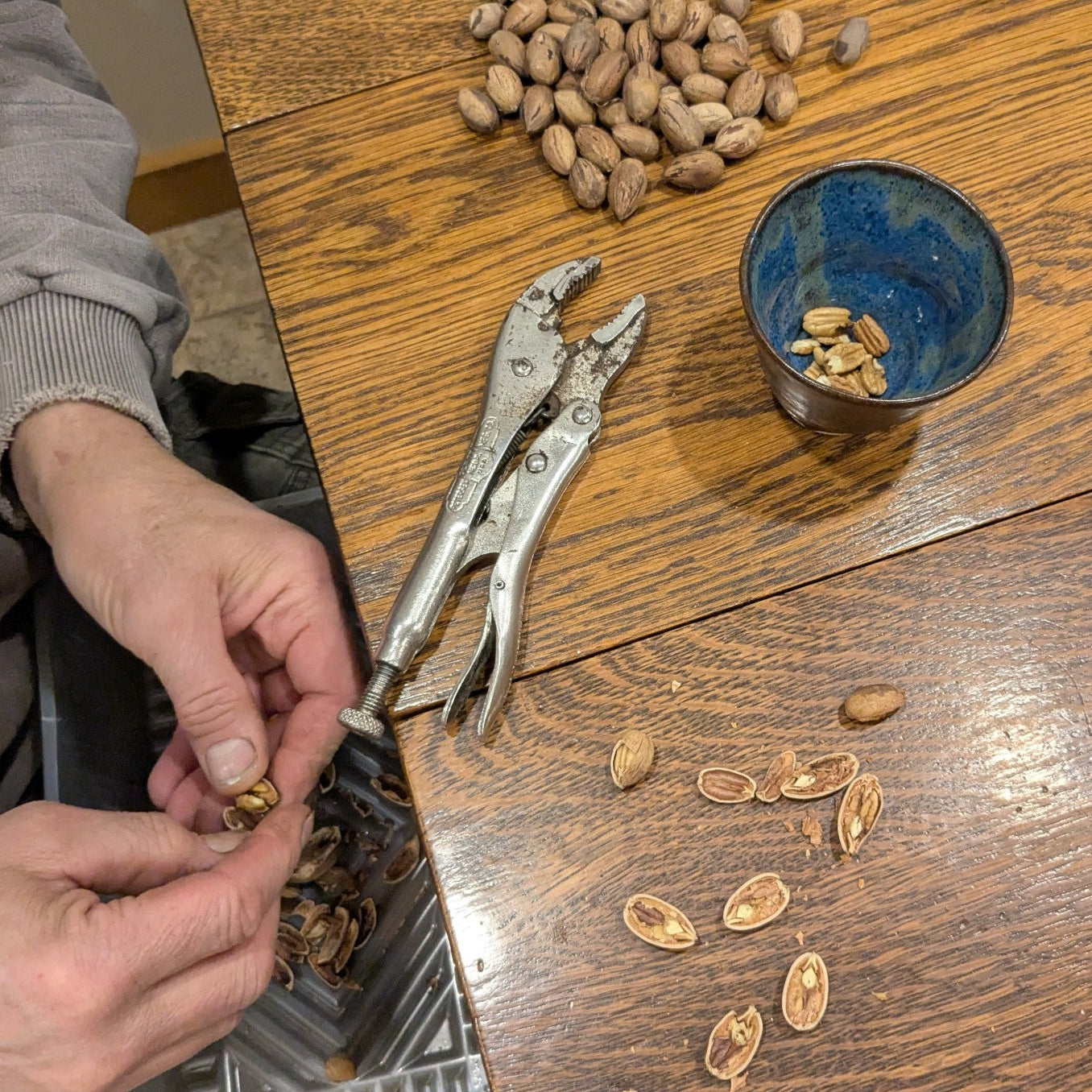
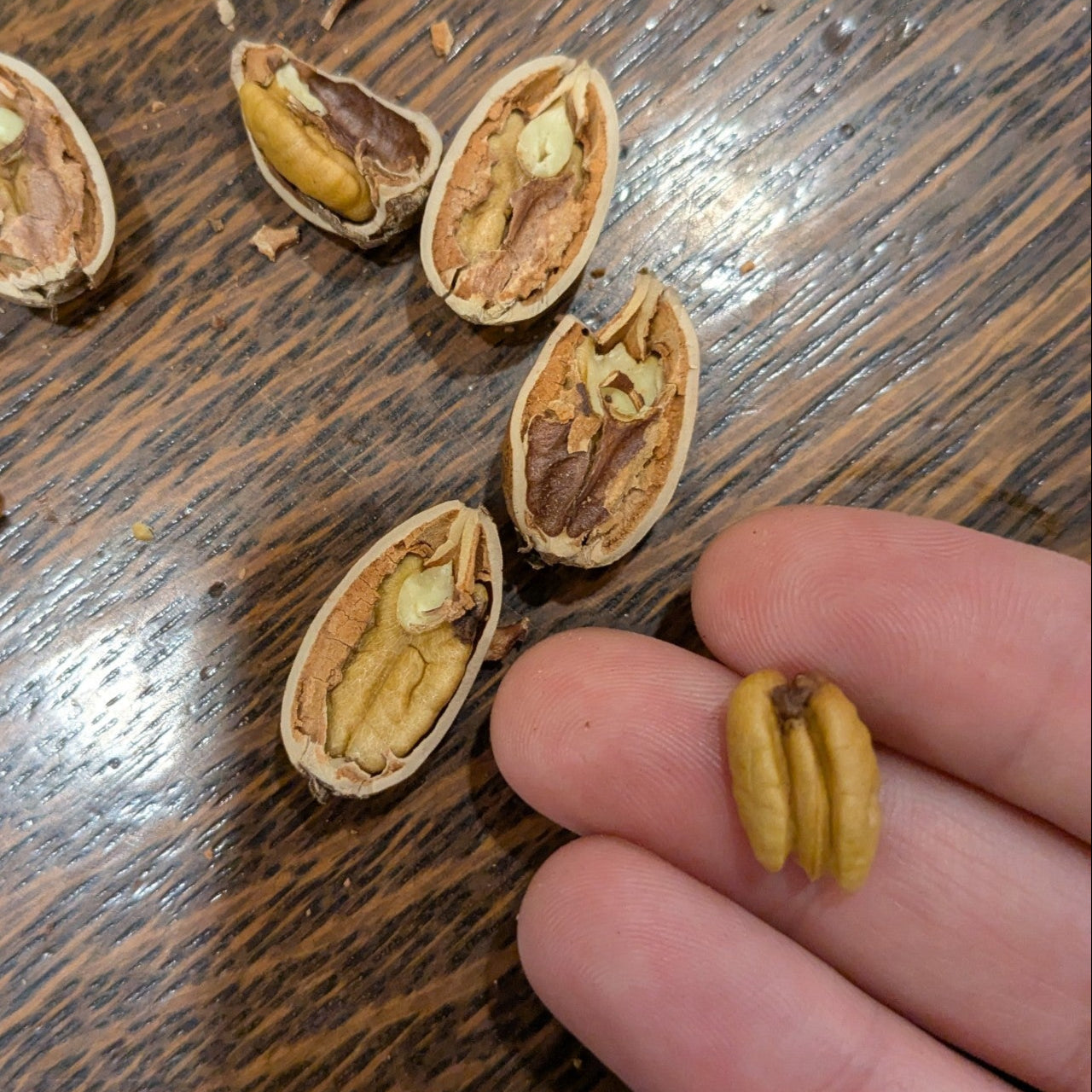
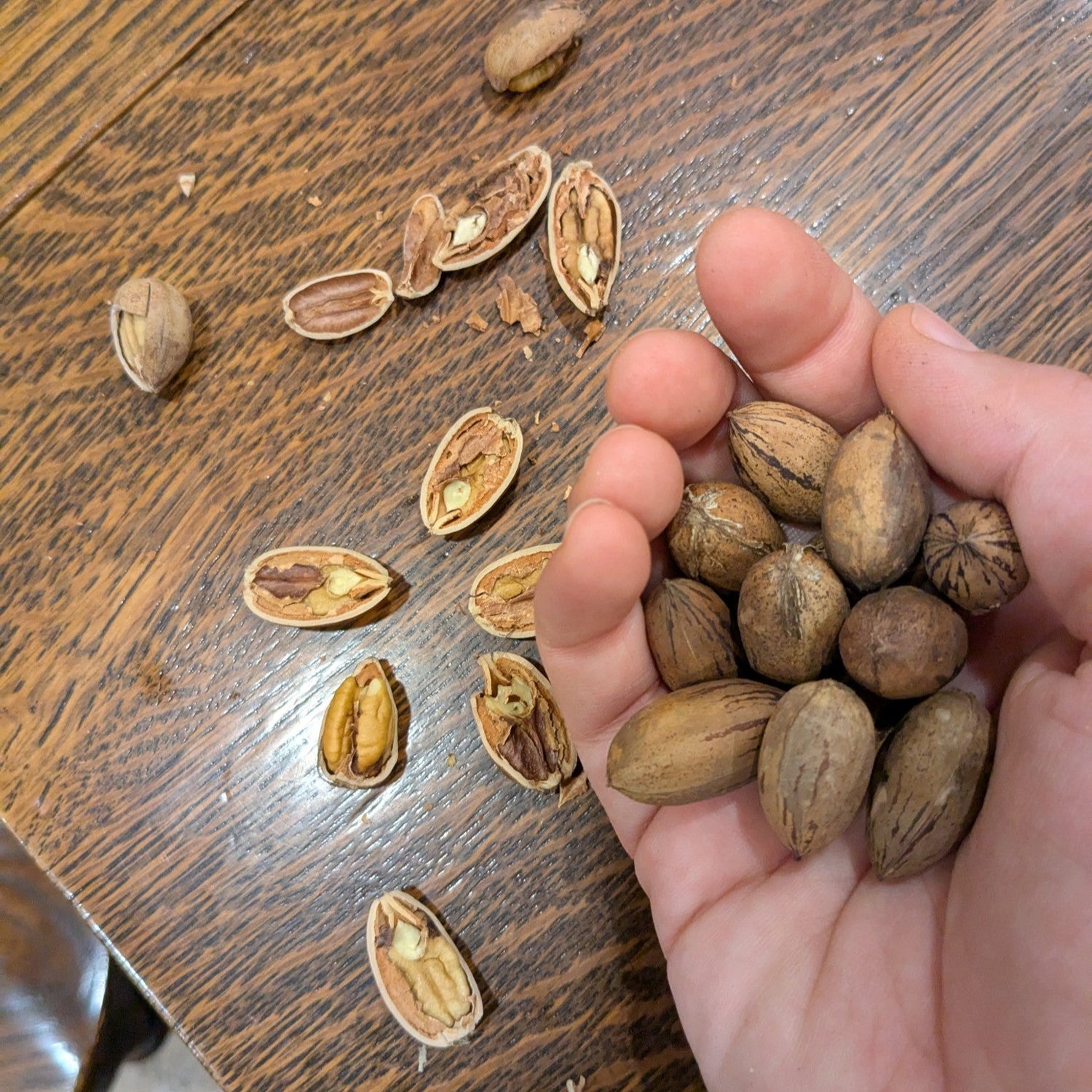
Species: Carya illinoinensis or hybrid. Our seeds are collected from trees that may have been cross-pollinated by closely related species so the resulting seedlings may be hybrids.
History: Pecan enthusiasts John Gordon and Gary Fernald, determined to get pecans to ripen regularly in Ontario, collected nuts and and grafting material from the earliest ripening pecan trees along the northern edge of their range in Iowa and Missouri. These were grown and tested at Grimo Nut Nursery and the best were chosen to form the Ultra Northern pecan strain.
Why We Grow It: Considering the amount of hard work that went into bringing these trees to Ontario, it's hard to turn down the ability to have a pecan tree in your own backyard. Like a regular pecan, the nuts can be used in a variety of ways for cooking and baking, such as the persimmon and pecan cookies Steph made (see pictures)!

Species: Corylus avellana
History: Wepster was created by the Oregon State University hazelnut breeding program with the goal of creating a good variety for the blanched hazelnut market. It was initially bred by Shawn Mehlenbacher and David Smith in 1997. Despite its small nut size, Wepster was selected for its resistance to Eastern Filbert Blight, excellent quality, high productivity, reliable cropping, and fast growth. It was eventually released by the Oregon Agricultural Experiment Station in 2013. The variety was named Wepster in honour of the Wepster family who were quite active in the Oregon hazelnut industry and made important contributions to the breeding program.
Why We Grow It: Wepster boasts many excellent traits including high productivity and reliability, disease resistance, and great kernel quality. Developed for the baking and chocolate industry, it is a great choice for those who love using hazelnuts in the kitchen.
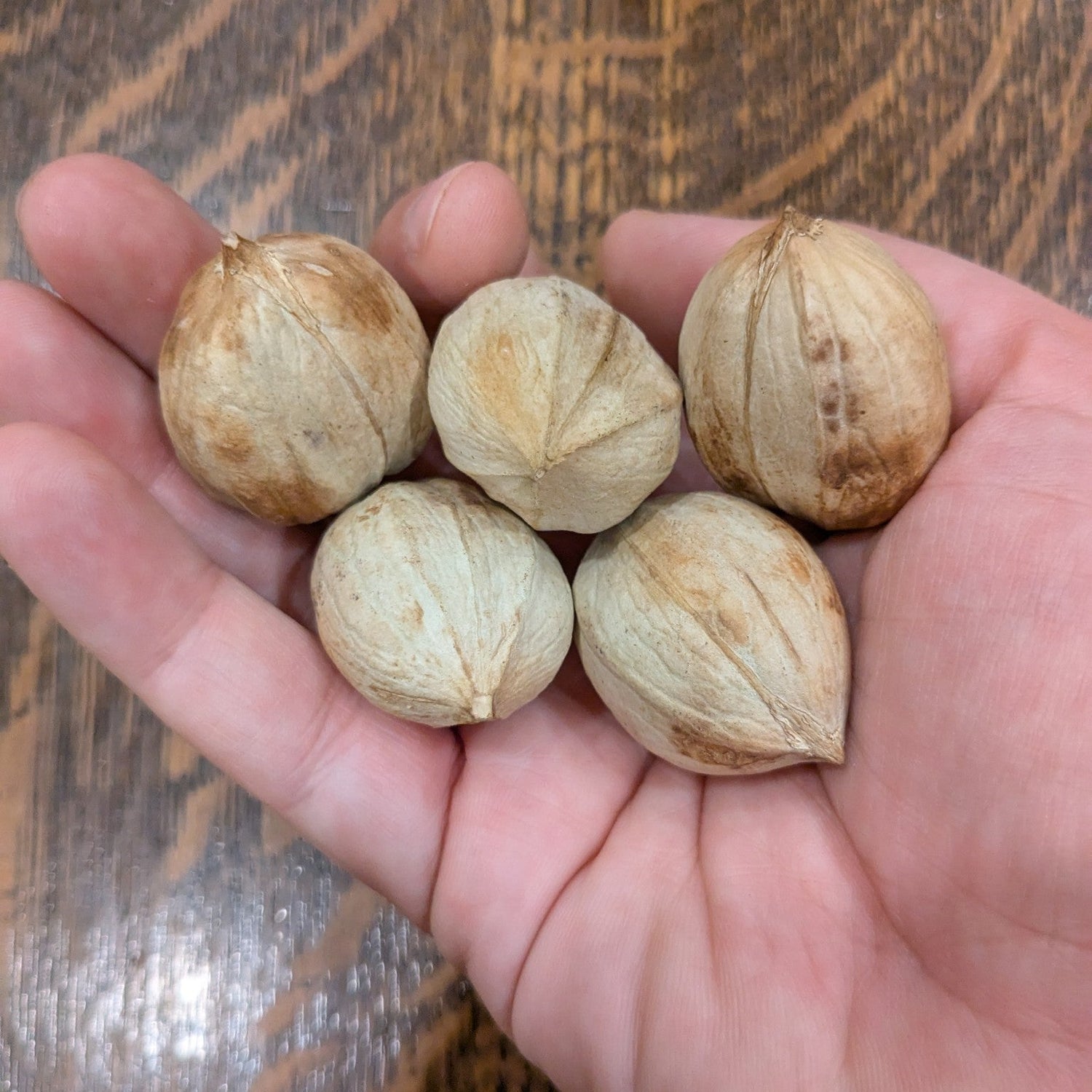
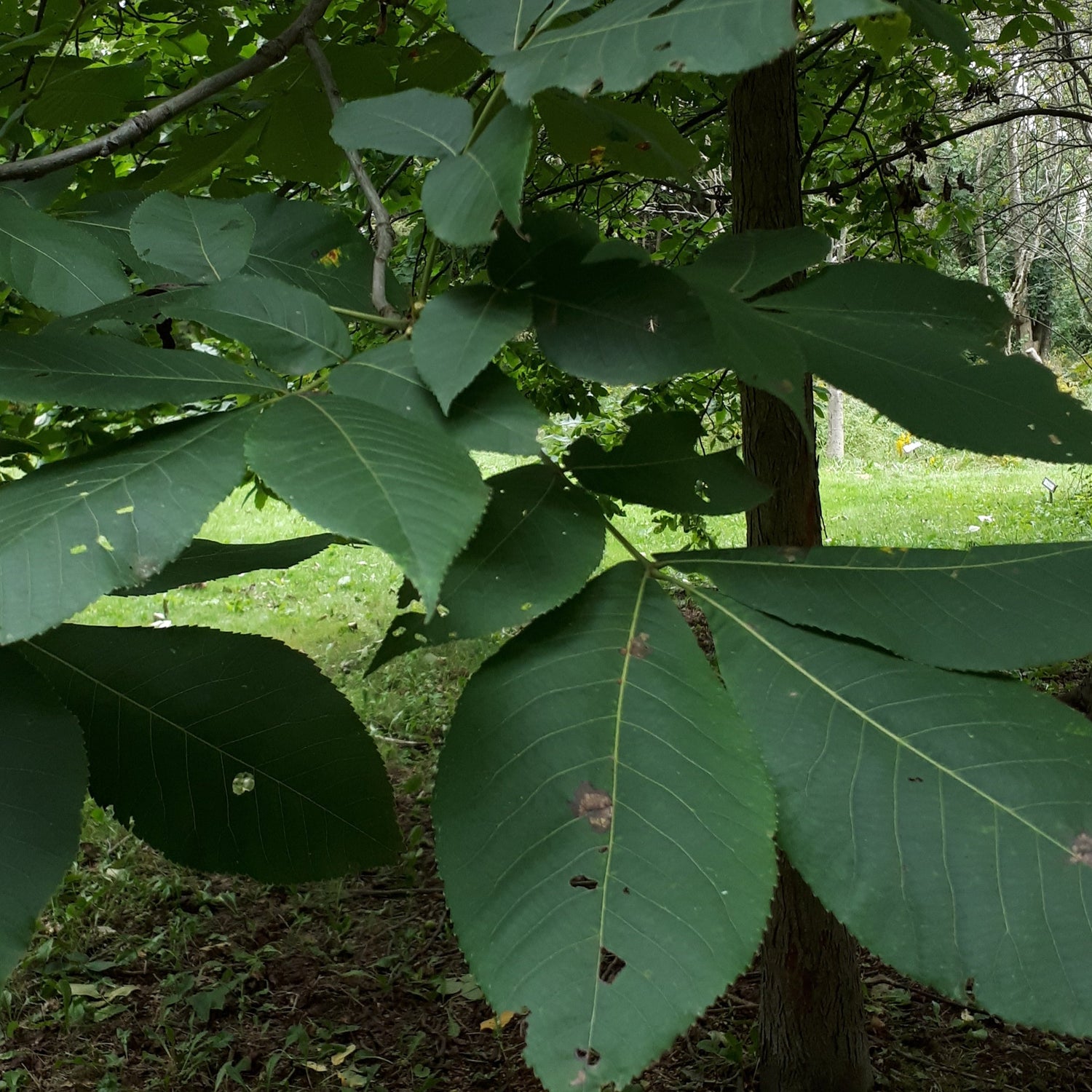
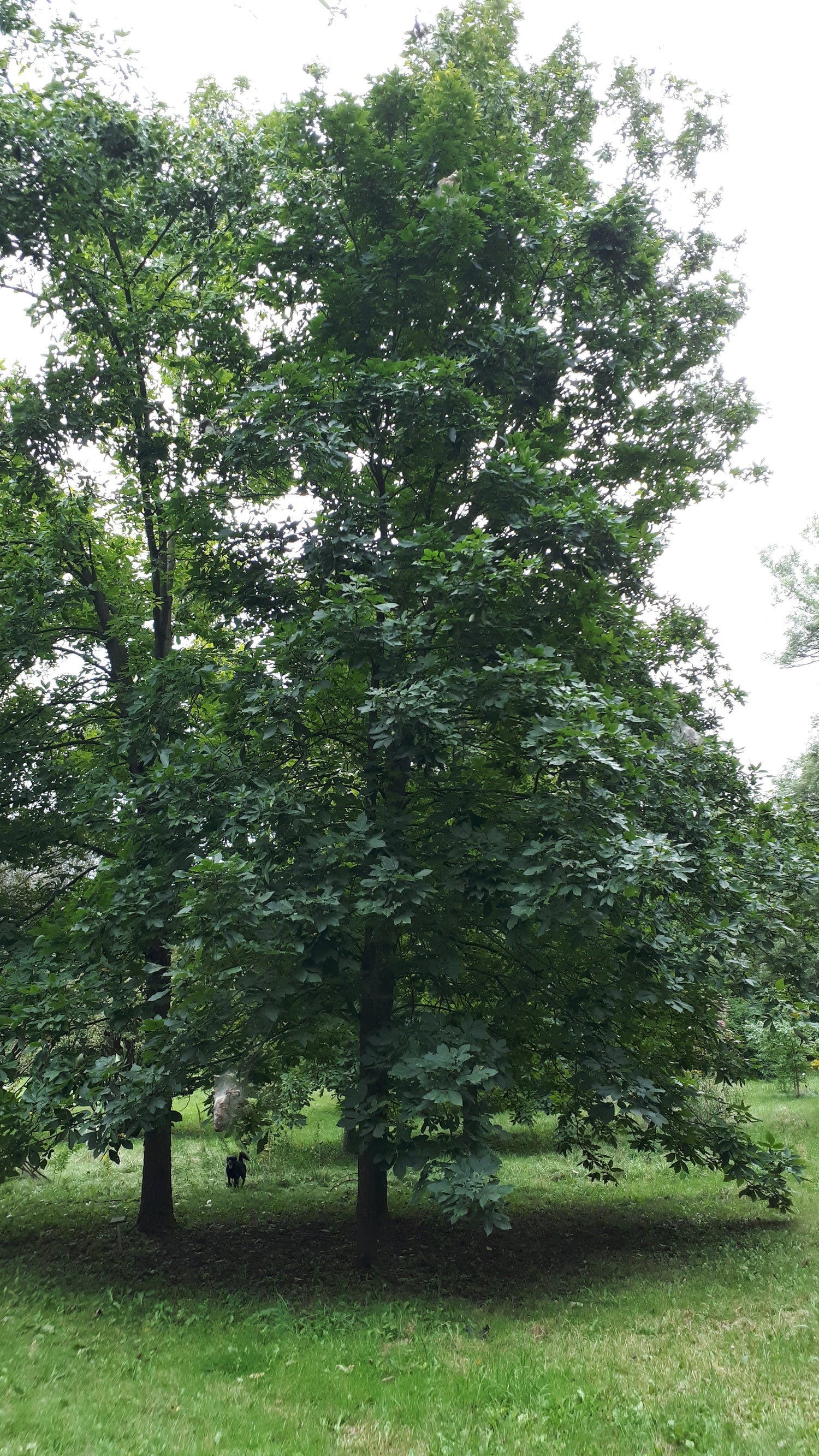
Species: Carya ovata or hybrid. Our seeds are collected from trees that may have been cross-pollinated by closely related species so the resulting seedlings may be hybrids.
History: These are seedlings of Weschke Shagbark Hickories, a variety that was discovered in Iowa by Carl Weschke and named in 1926. It was selected for its excellent flavour.
Why We Grow It: While these seedlings will vary from their parents, the goal is that the excellent qualities of Weschke Shagbark Hickories will be passed along to its offspring! Weshcke Shagbark Hickories are known for having excellent flavour and thin shells that are easier for cracking. For more fascinating nut lore, enjoy this ebook.

Species: Corylus avellana
History: Yamhill was created by the Oregon State University hazelnut breeding program which released it in 2008. It was initially bred by Shawn Mehlenbacher and David Smith in 1990. Despite its small nut size, Yamhill was selected for its resistance to Eastern Filbert Blight, good quality, and high productivity. The variety was named Yamhill after Yamhill County in Oregon where a lot of hazelnut production takes place.
Why We Grow It: Yamhill is a disease-resistant variety that boasts a small but good quality nut that is great for baking (including making chocolate!). The tree is quite productive and also tends to have a more compact growth habit, making it a good option for those with limited space.
Recently viewed products
Need help?
Call Us
519-804-6060
Email Us
sales@silvercreeknursery.caVisit Us
2343 Gerber Road, Wellesley ON N0B 2T0
Call Us
519-804-6060
Email Us
sales@silvercreeknursery.caVisit Us
2343 Gerber Road, Wellesley ON N0B 2T0
Hours
Friday: 9:00am-4:00pm
August til Thanksgiving Fruit Tasting Weekend. Please call in advance if you are unsure or driving from far away!
Call or email to make an appointment if you wish to visit another time.
Friday: 9:00am-4:00pm
August til Thanksgiving Fruit Tasting Weekend. Please call in advance if you are unsure or driving from far away!
Call or email to make an appointment if you wish to visit another time.
Policies
Regretfully, due to CFIA regulations we cannot ship outside of Canada and cannot ship fruit (apple, pears, stone fruits, and quince), or grape vines to BC.
To view our shipping, terms of sale & refund policies, please visit our POLICIES page.
Regretfully, due to CFIA regulations we cannot ship outside of Canada and cannot ship fruit (apple, pears, stone fruits, and quince), or grape vines to BC.
To view our shipping, terms of sale & refund policies, please visit our POLICIES page.