
berry qty discount




79 products
Sort by:
79 products
79 products

Species: Aronia melanocarpa
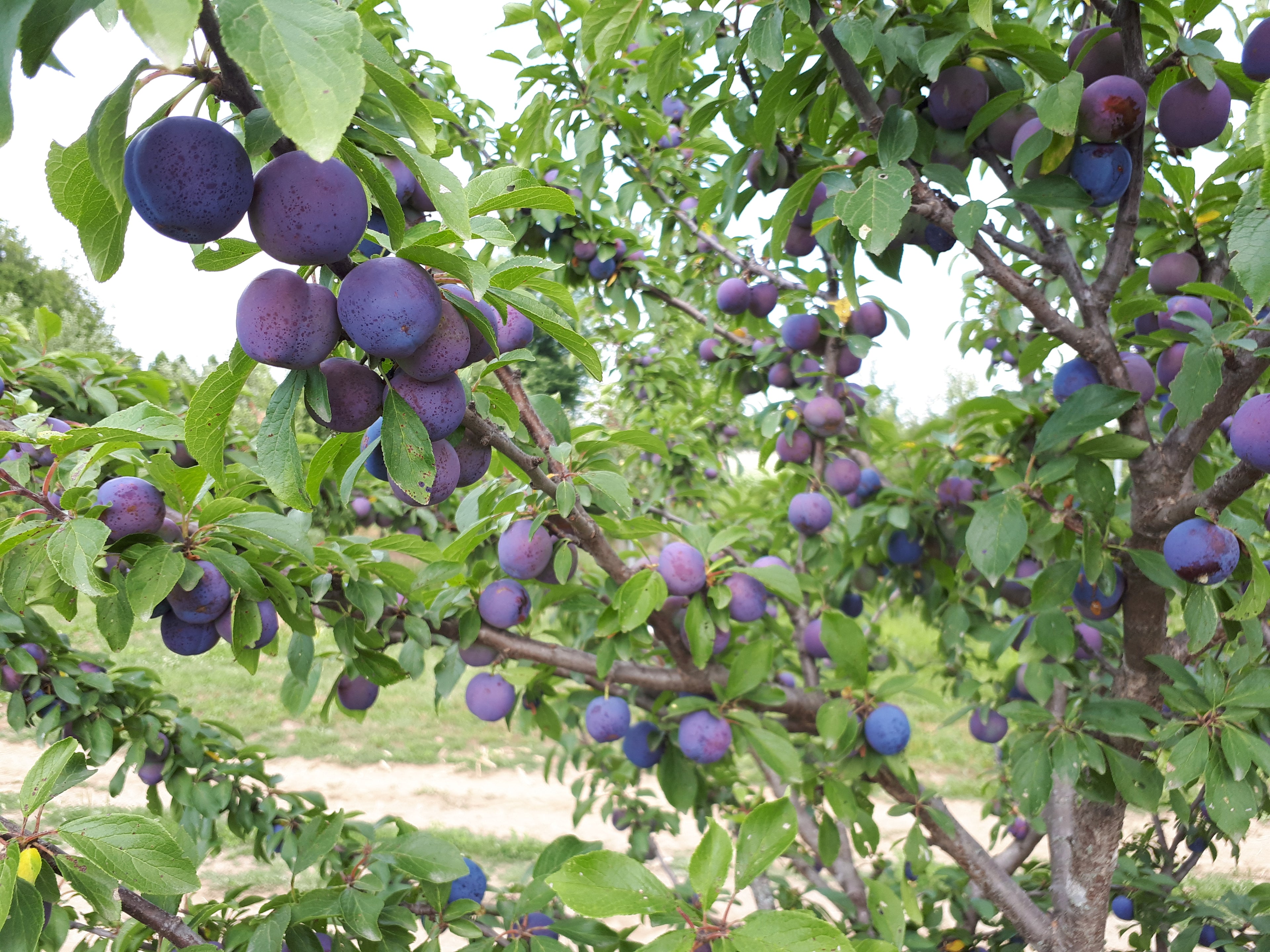
History: Nero was created in Russia by plant breeder Ivan Michurin in either the late 1800s or early 1900s. Likely selected for its large fruit and sweeter flavour, Nero is still used commercially in Russia to this day.
Why We Grow It: Nero produces ample clusters of dark berries that are somewhat sweeter and less astringent than other aronia varieties, making it more favourable for fresh eating. Like other aronia berries, it is ideal for baking, cooking, jellies, etc. While the berries ripen in August, they can hang onto the bush for a couple months and tend to sweeten over time. The plant itself is tough and cold hardy.
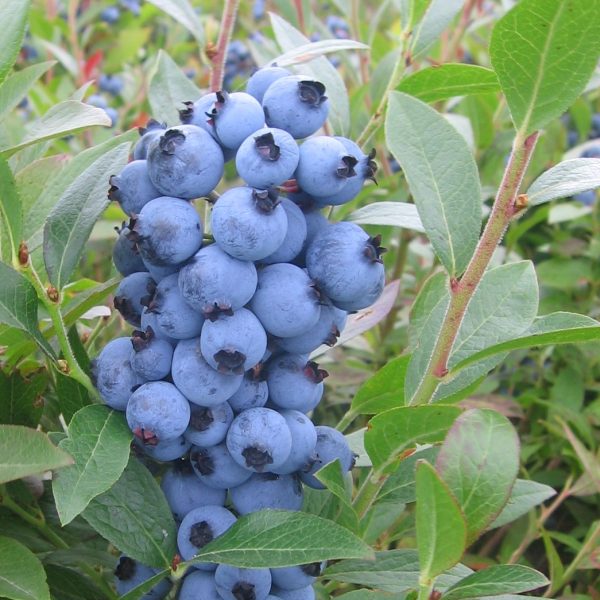
Species: Vaccinium corymbosum x V. angustifolium
History: Northblue was bred by the University of Minnesota as part of a hybrid blueberry breeding program that started in 1967. The goal of the program was to cross highbush and lowbush blueberries in order to create high-quality cold hardy varieties. Of the three varieties initially created in this program, Northblue was noted for having the largest fruit and highest productivity. Northblue was introduced to the public in 1983.
Why We Grow It: Northblue produces nicely sized, firm blueberries that store well. The berries have a good sweet flavour akin to that of wild blueberries and are great for a variety of uses. The compact shrub is quite productive and cold hardy.
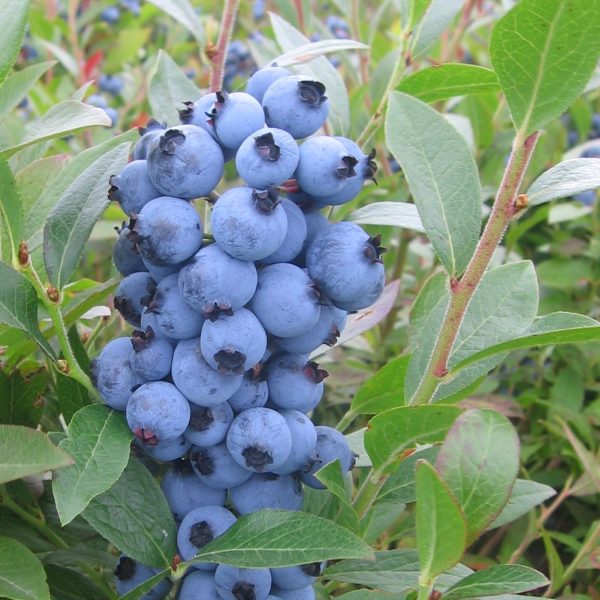
Species: Vaccinium corymbosum x V. angustifolium
History: Northcountry was bred by the University of Minnesota as part of a hybrid blueberry breeding program that started in 1967. The goal of the program was to cross highbush and lowbush blueberries in order to create high-quality cold hardy varieties. Northcountry itself was created in 1968 and was introduced in 1986.
Why We Grow It: Northcountry produces small to medium blueberries with a sweet flavour akin to that of wild blueberries. For those looking to enjoy fresh blueberries as soon as possible each year, this variety is an excellent choice since it ripens quite early. The compact bush is also quite cold hardy and productive!
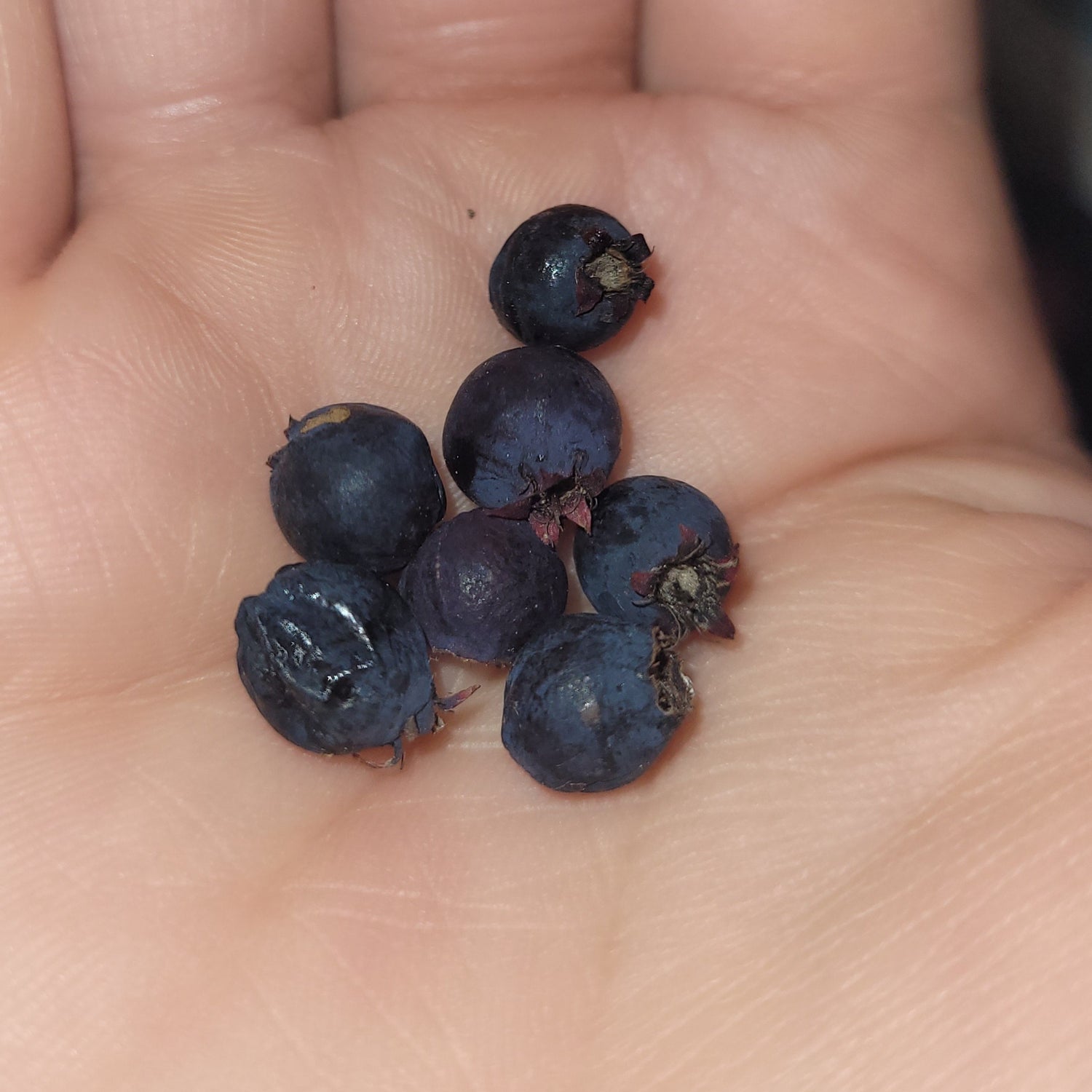
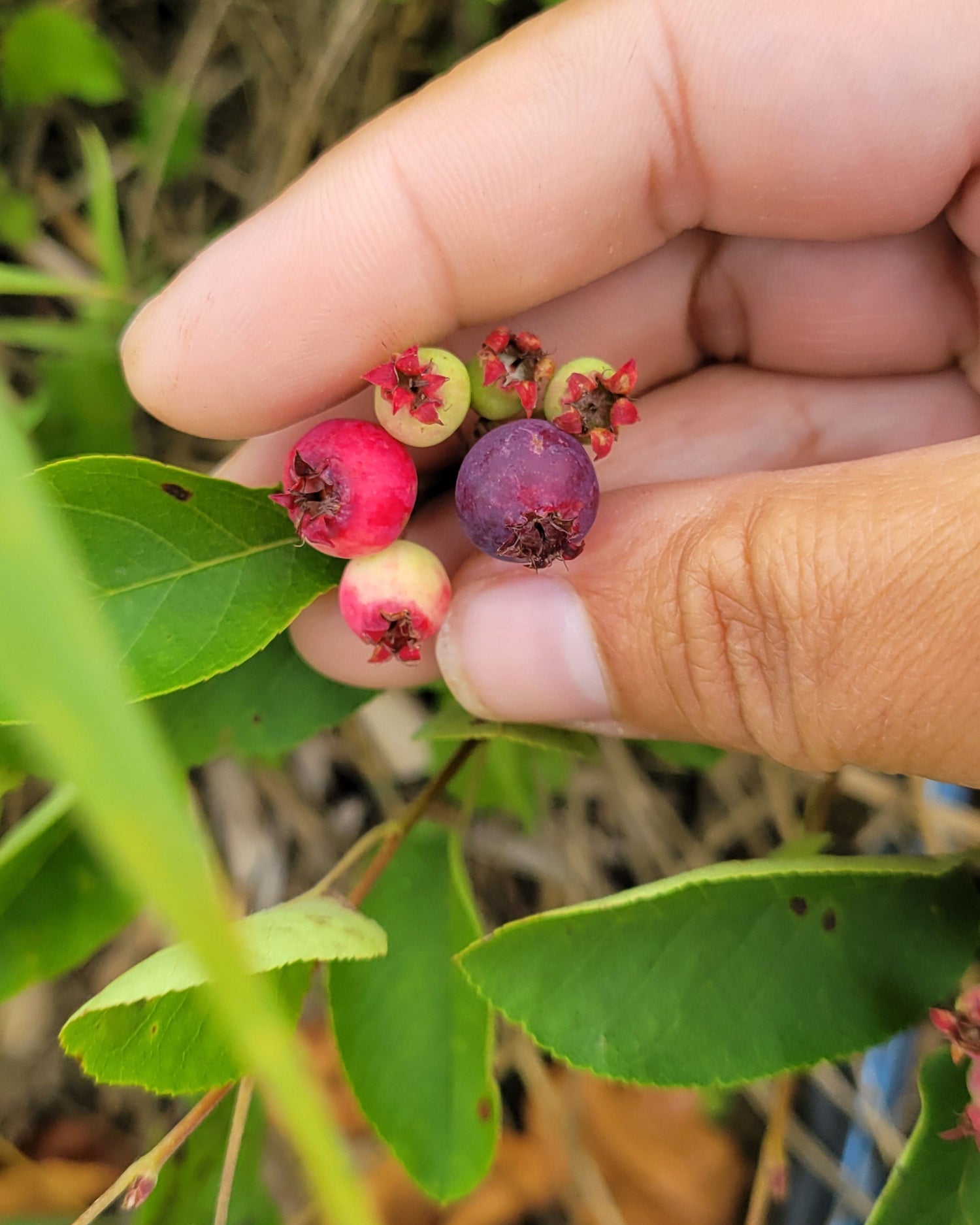
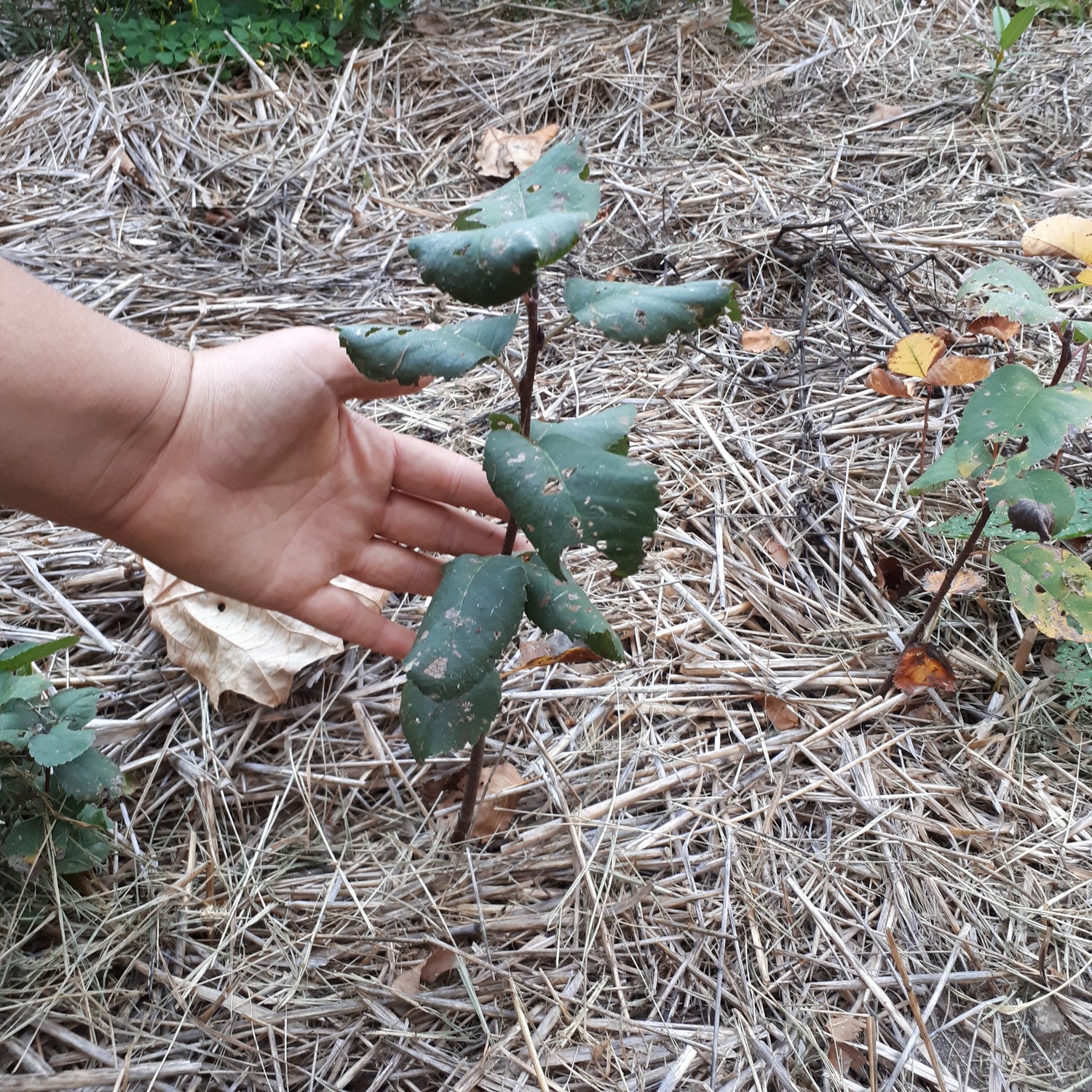
Species: Amelanchier alnifolia (aka Western Serviceberry)
History: Northline was developed by John Wallace at Beaverlodge Nursery in Beaverlodge, Alberta during the 1950s. Selected for its large berries and good flavour, Northline was later introduced in 1960.
Why We Grow It: Northline's large, sweet purpley-blue berries are excellent enjoyed fresh! Northline grows in an upright fashion and reaches about 2.5m tall, this making for an ideal u-pick bush. The fragrant showy flowers add aesthetic charm to the bush, along with the deep green foliage which turns fiery orange in the fall. Saskatoons by nature are slow growing, and while they will bear fruit in 3-5 years, it can take up to 15 years for a full crop.
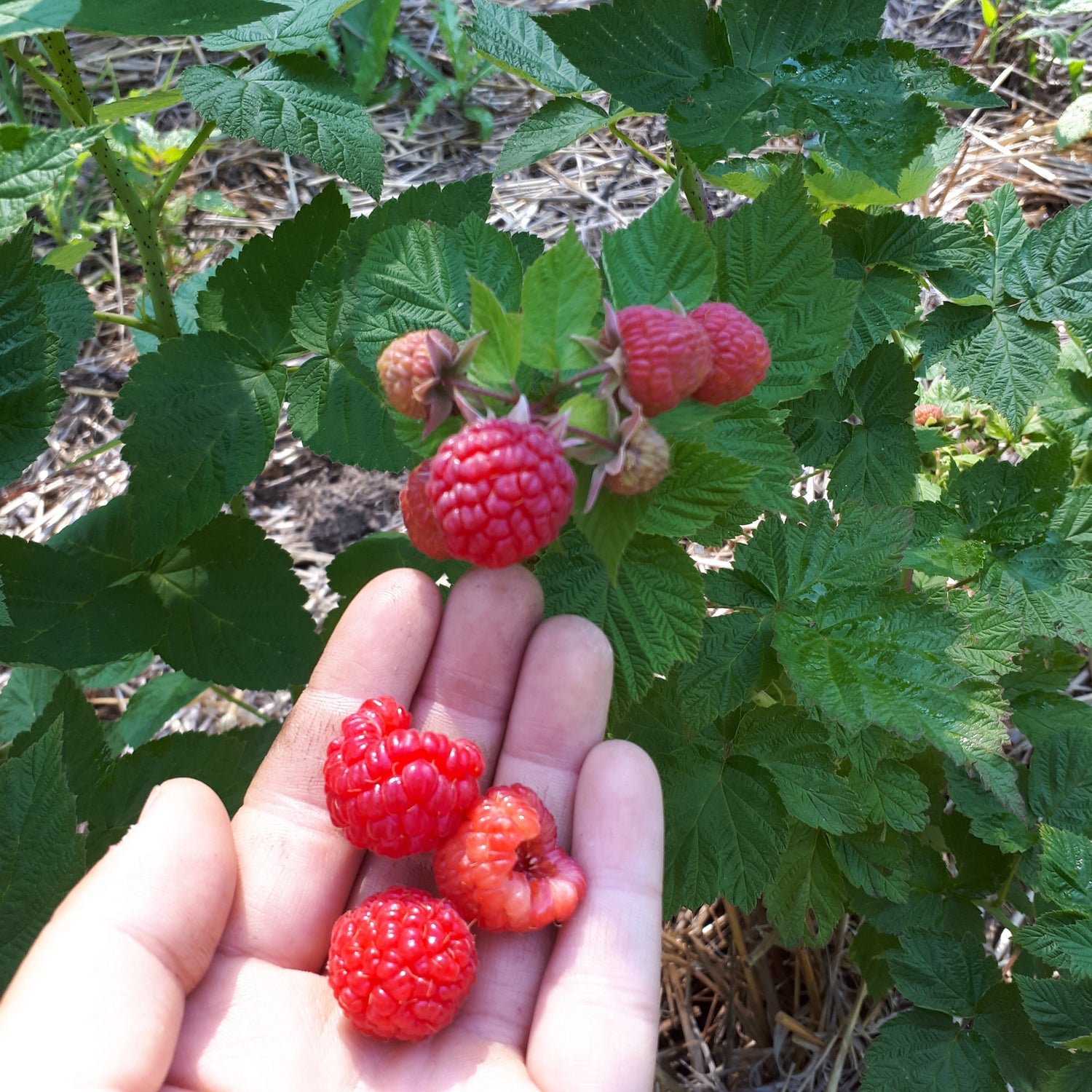
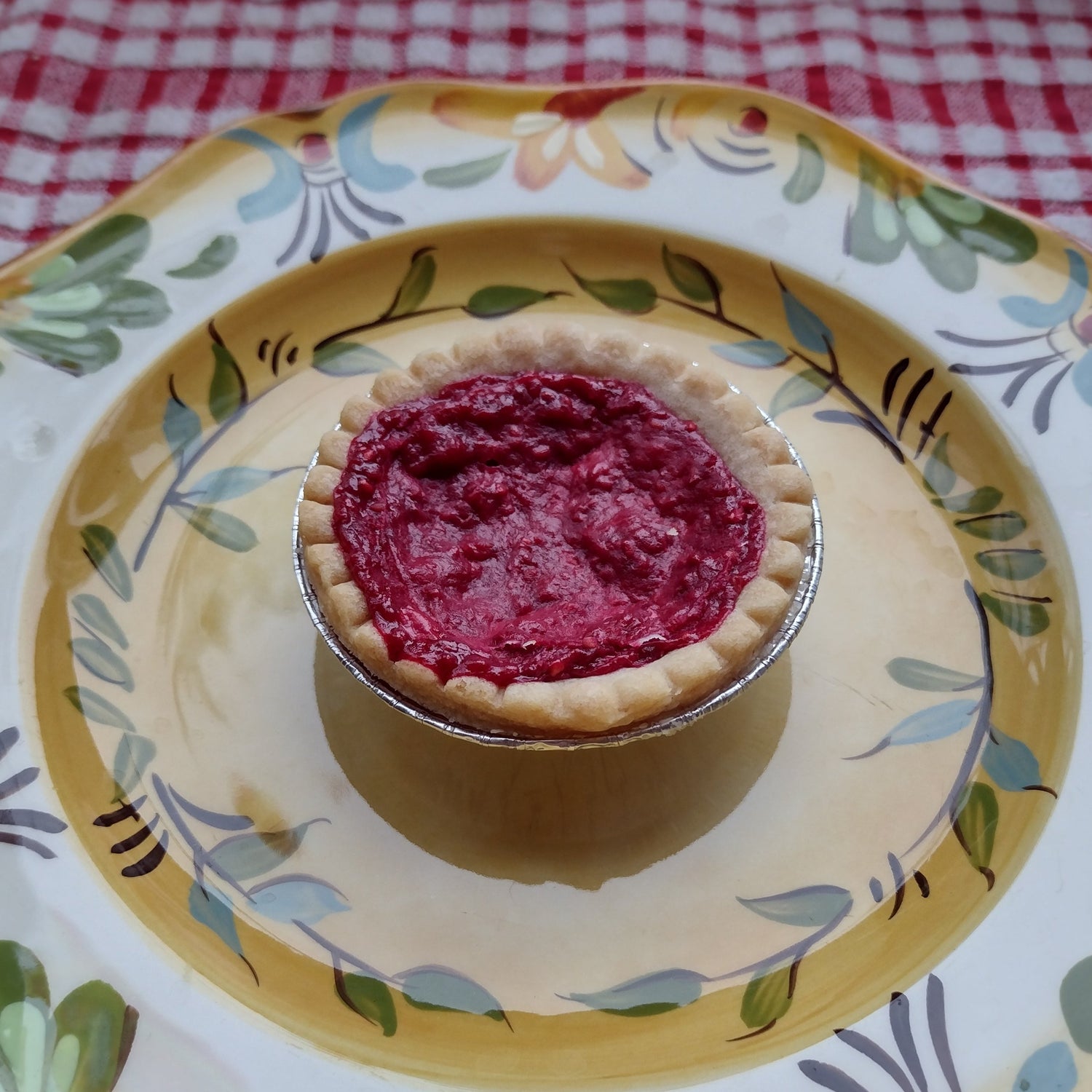
Species: Rubus sp.
History: Nova red raspberries were developed at the AAFC Research and Development Centre in Kentville, Nova Scotia as part of a breeding program. They were bred as a cross between Southland and Boyne raspberries and released in 1981.
Why We Grow It: These nearly thornless canes bear a plentiful yield of bright red, large-sized berries. The finer textured fruit is less crumbly and has a bold flavour. Nova red raspberries are very hardy and are summer-bearing in colder climates and ever-bearing in warmer ones!
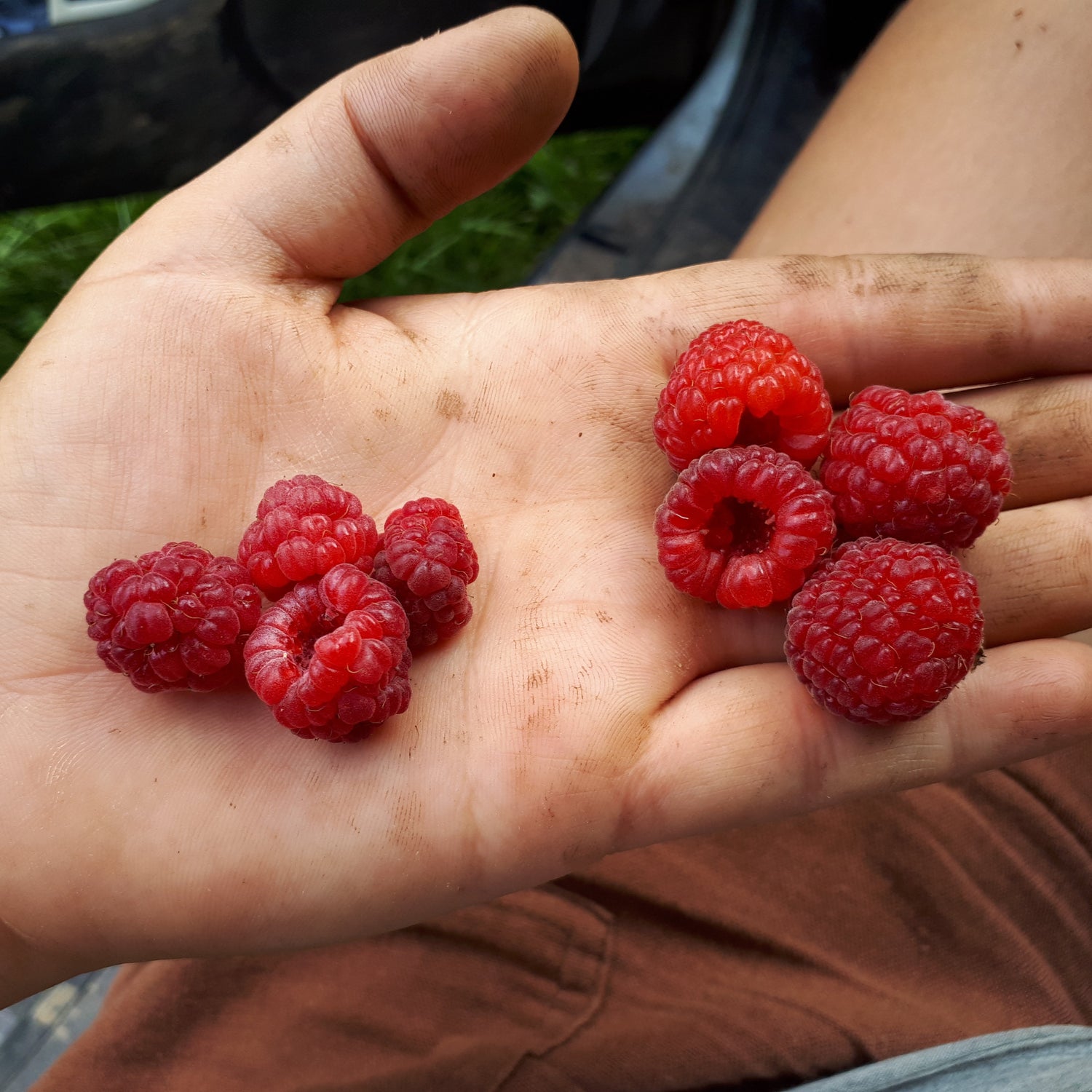
The second product photo shows Nova (right) compared to Heritage (left).
The third photo shows a Heritage and Nova raspberry tart Steph made!


Species: Rubus occidentalis
History: Ohio's Treasure was developed by Dale Stokes and Dr. Harry Schwartz in an effort to create an everbearing black raspberry. The original cross was made in 2006 and the seedling was grown on a raspberry farm in Wilmington, Ohio. Successful in their efforts, the variety was released in 2015.
Why We Grow It: Ohio's Treasure produces medium-sized black raspberries with an excellent sweet flavour. Ohio's Treasure is unique amongst black raspberries in that it is an everbearing variety, producing a main crop through late summer into fall and then another crop on the second year wood in July, around when Jewel ripens. Although not firm enough for largescale commercial shipping, this is an excellent variety for the garden or local market growers who want to extend the black raspberry season.

Species: Actinidia arguta
History: There appears to be little information available on the origin of Opitz. It has likely been propagated for its late bloom time, making it compatible with some female varieties that are not pollinated by earlier blooming male varieties.
Why We Grow It: Opitz is a later blooming male variety that is helpful for pollinating late blooming female Hardy Kiwis like Anna and Chang Bai. It grows vigorously and is known to flower profusely.
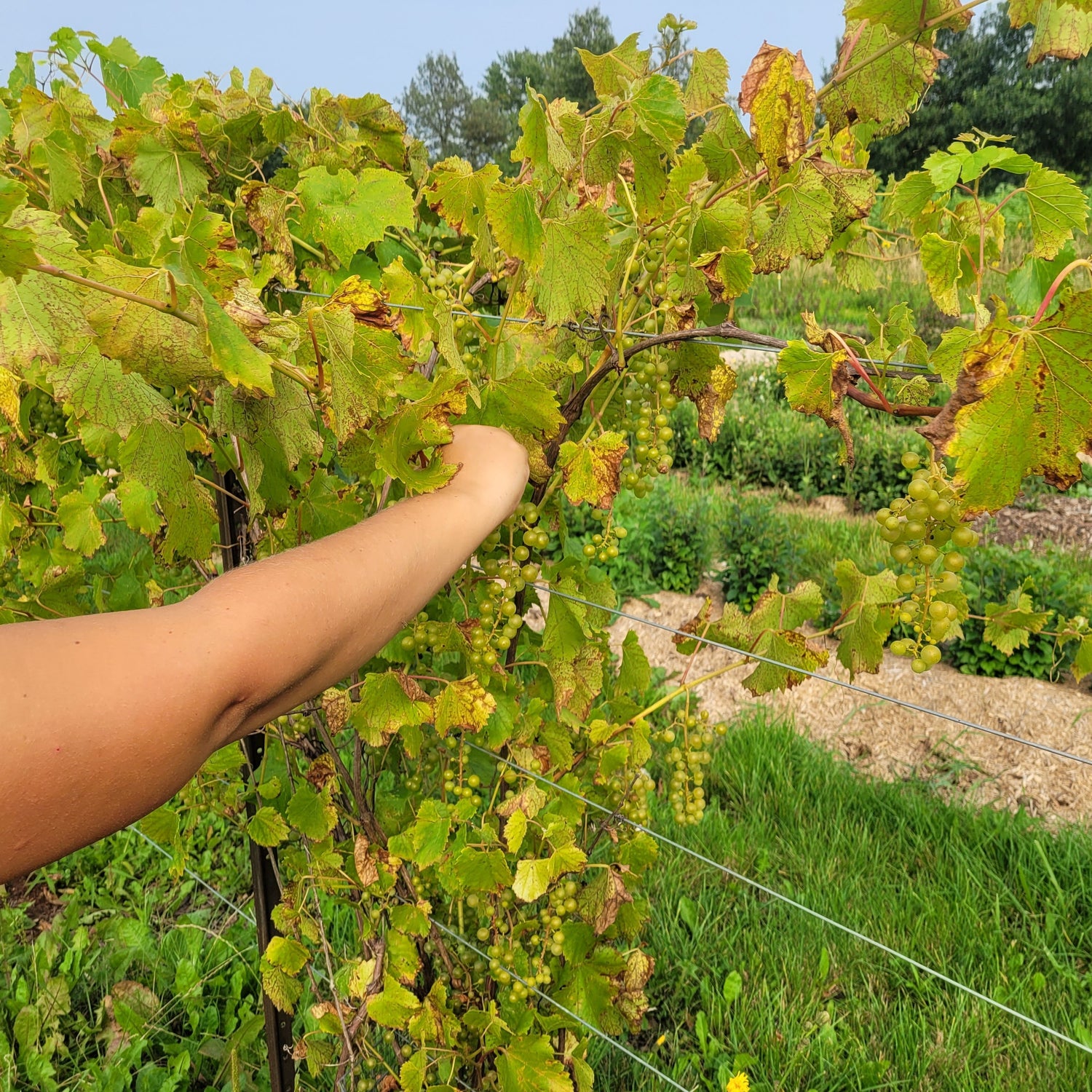
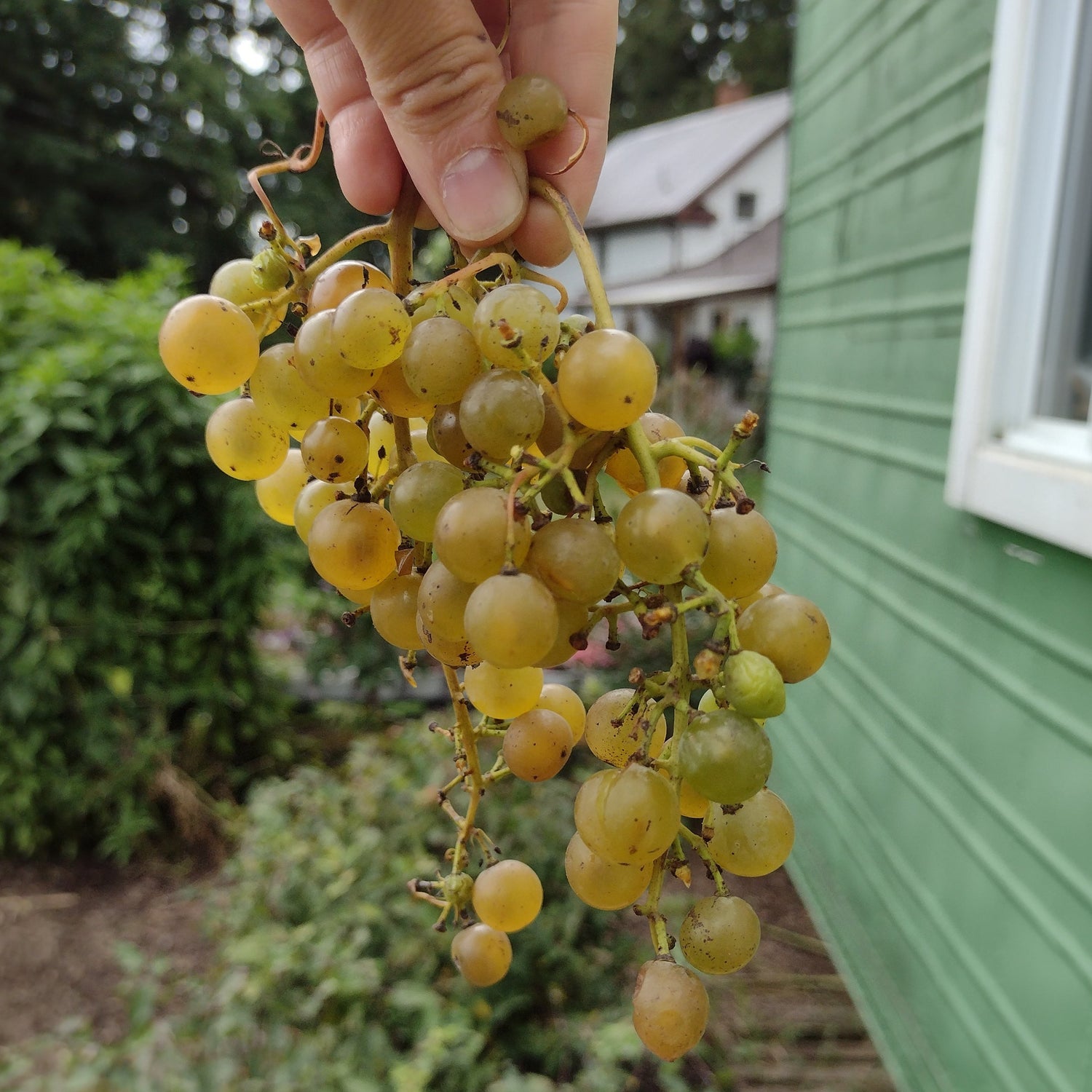
Species: Vitis vinifera x V. rupestris x V. ripraria x V. labrusca
History: Osceola Muscat/ES.8-2-43 was bred by renowned grape breeder Elmer Swenson as part of his effort to mix French and North American grapes to create high-quality varieties that grow well in cooler climates. Osceola Muscat is a cross between four different species: Common grape (Vitis vinifera), Vitis rupestris, Riverbank grape (Vitis riparia) and Fox grape (Vitis labrusca). Swenson bred it on his farm near Osceola, Wisconsin and in 2010 the variety was named after the town. The grape's alternate name, Muscat de Swenson, is named after Swenson himself who passed away in 2004.
Why We Grow It: Osceola Muscat produces loose clusters of seeded, intensely aromatic grapes with notes of peach and apricot. The small-medium, thin skinned fruit is suitable for fresh eating or juice and wine. This is one of the hardiest 'muscat' varieties available and is relatively vigorous.
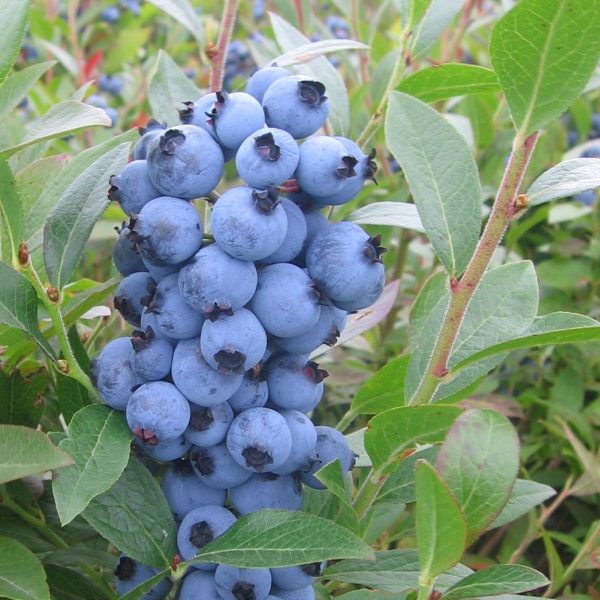
Species: Vaccinium corymbosum
History: Patriot was developed by the USDA and Maine Agriculture Experimental Station where it was first bred in 1954. It was selected for its cold hardiness and resistance to root rot. Patriot was released in 1976 and given its name to mark the 200th anniversary of the signing of the Declaration of Independence.
Why We Grow It: Patriot produces large berries with excellent flavour that are a bit on the softer side. The fruit ripens early in the season and is great for fresh eating, baking, preserving, and freezing! It is more tolerant of the cold and of wet soils than other blueberries and can be grown even in a clay soil.
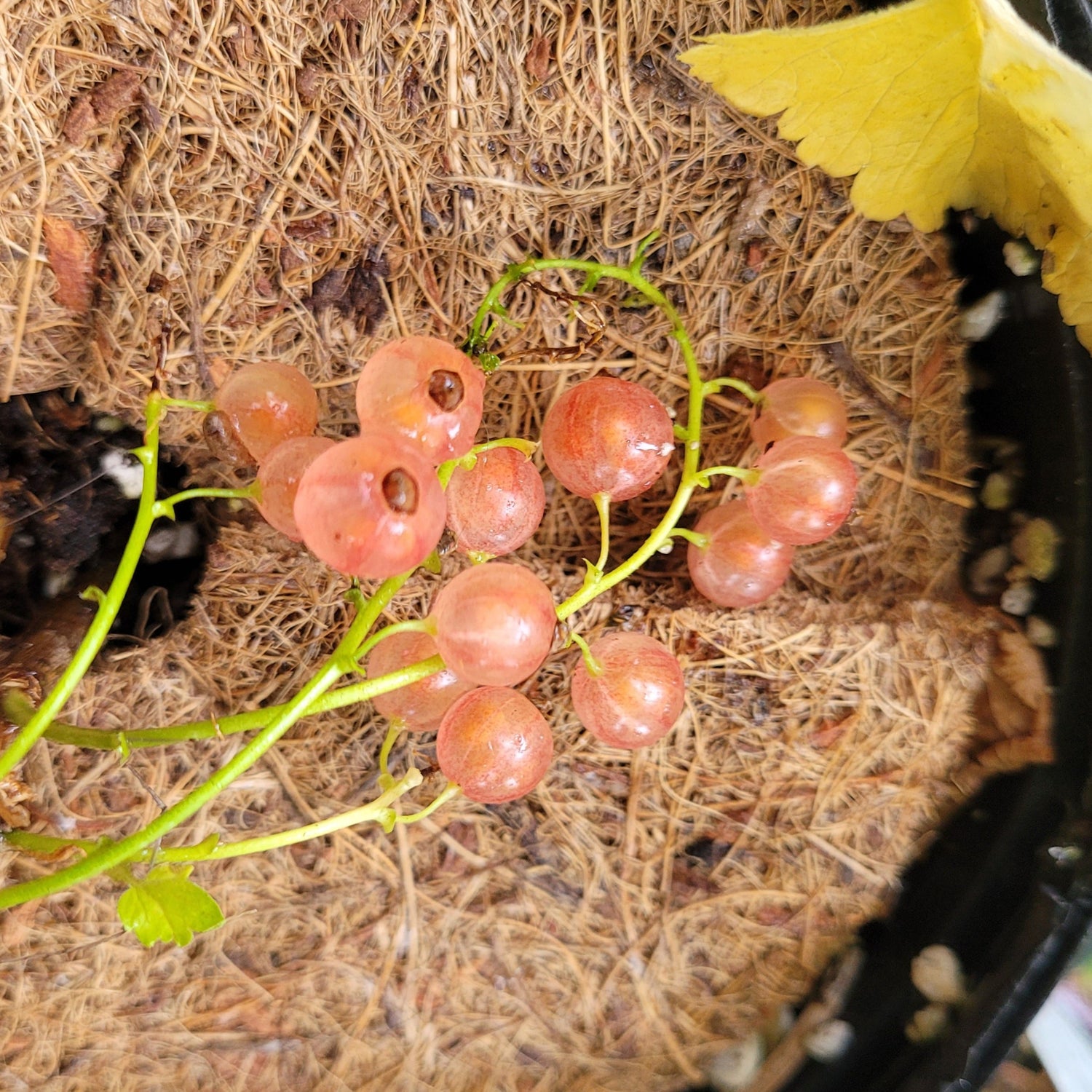
Species: Ribes rubrum
History: Pink Champagne currants are a cross between red and white currants. Although the exact origin is unclear, this variety was listed in the catalogue of William Prince's nursery in New York as early as the 1800s.
Why We Grow It: Considered to be one of the best fresh eating currants, Pink Champagne produces beautiful translucent pink berries that have a sweet, delicate flavour. They are easy to grow and produce numerous clusters of hanging, pink berries.


Species: Ribes uva-crispa x Ribes missouriense
History: Pixwell was developed at the North Dakota Experiment Station in a gooseberry breeding program that began in 1920. A cross between Oregon Champion and Ribes missouriense, the variety was eventually released in 1932. Pixwell was named for it's less thorny nature - as in smaller and less thorns than most gooseberries, especially as it grows older - which makes it easier to pick the berries.
Why We Grow It: Aside from living up to its name, Pixwell produces green berries that turn a lovely shade of pink to deep plummy-purple-red once they are fully ripe - though you can use the green berries for tangy chutneys and the pink stage is nice fresh too. The medium berries have sweet flesh and tart skin, and are great for fresh eating, pies, and preserving.

Species: Hippophae rhamnoides
History: Pollmix sea buckthorn was developed as a series of clones to aid in the pollination of female sea buckthorn plants. It is a German cultivar.
Why We Grow It: Although Pollmix does not produce berries, it is a good option for pollinating female varieties! Aside from that, the attractive silvery green leaves can make this shrub an appealing plant to have in the yard, and it is also good for erosion control or creating windbreaks.

Species: Actinidia arguta
History: Prolific was created by the USDA and was formerly known as '119-40B.'
Why We Grow It: Prolific stands out amongst its peers for several reasons! First off, it is a self-pollinating variety which means you do not need to plant a second male plant with Prolific in order to get fruit. Second, the medium fruit sports a unique red blush. And last but not least, the vine itself tends to stay more compact than some other varieties, making it a good option for those with limited space or who want an easier plant to manage.

Species: Hippophae rhamnoides
History: Aside from its Russian origins, it is difficult to determine more about Prorachnaya sea buckthorn in English.
Why We Grow It: This Russian variety boasts heavy crops of large berries with a high oil content. Even better, this variety has relatively few thorns which makes picking said berries that much easier for the grower.


Species: Hybrid of Rubus idaeobatus and Rubus occidentalis
History: Royalty was bred at the Geneva Experiment Station in Geneva, New York as a cross between red and black raspberries. It was released in 1982 and is the most popular purple raspberry variety on the market for both its productivity and sweetness.
Why We Grow It: Royalty is an excellent summer-bearing variety, producing ample crops of large (some get an inch long!), purple berries that are very sweet. Purple raspberries are a unique hybrid which can be picked while a little unripe and still red for a classic raspberry flavour or when fully ripe and purple for a sweeter taste more akin to black raspberries. Steph is impressed with the quality, flavour, and long harvest window of this variety.
Showing 60/79
Next