All Fruit Trees

All Fruit Trees
Looking for bareroot fruit trees Canada? We offer a wide variety of bareroot fruit trees including apples, apricots, pears, plums, cherries, quince, and peaches that are grown for the Canadian climate & we deliver cold-hardy fruit trees right to your door!
We also offer fruit trees for small gardens, heritage apples Ontario and you can filter all our fruit trees by hardiness zones. Search trees by collection or peruse all the varieties we carry below! We offer flat rate shipping across Canada.




320 products
Sort by:
320 products
320 products
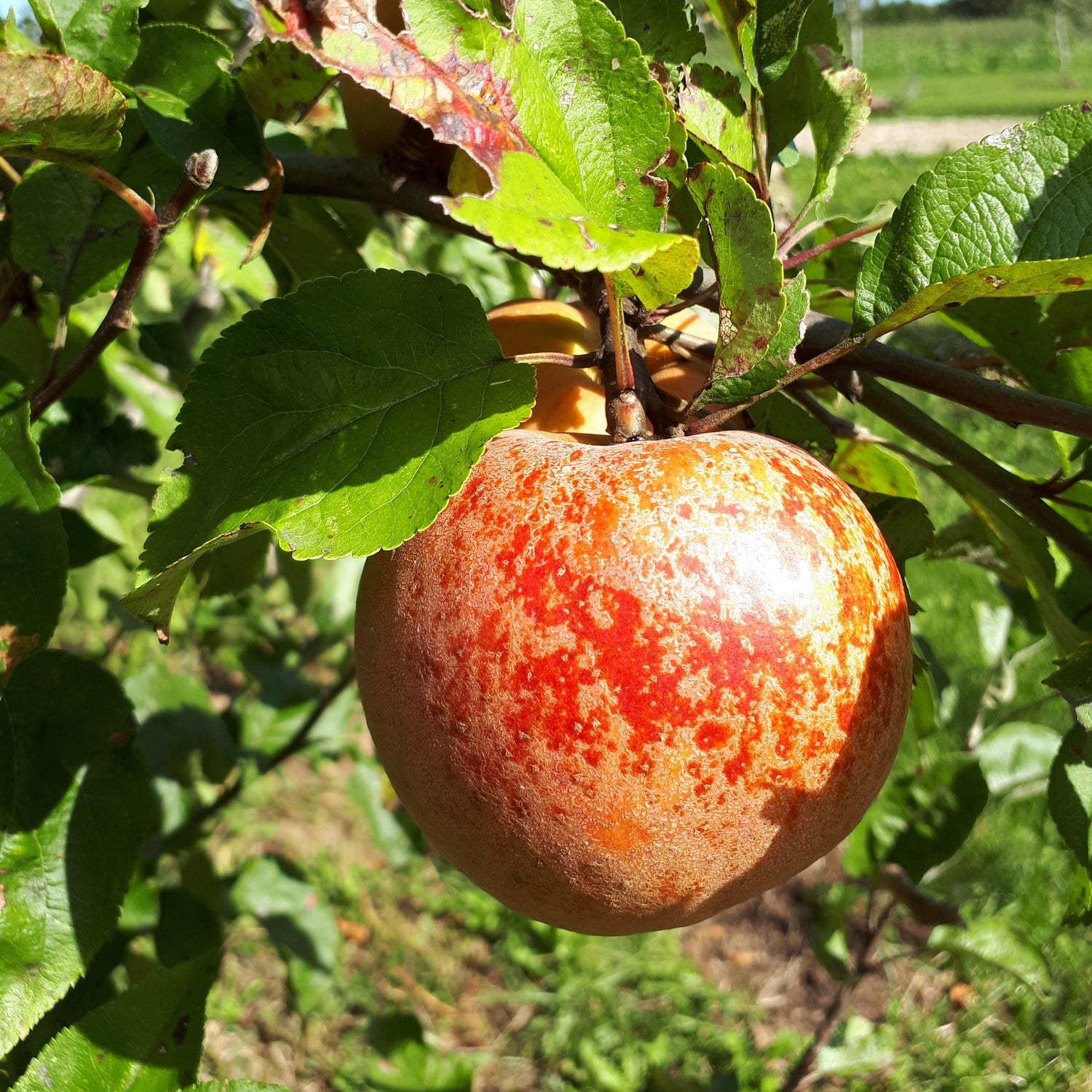
History: Roxbury Russet is the oldest American apple still under cultivation. It was discovered around 1650 in Roxbury, near Boston. These apples were well-known for their long keeping ability and qualities for cider making. They were grown by Thomas Jefferson at Monticello and are even referenced in one of Nathanial Hawthorne's novels. Due to the russet skin, these apples have never achieved true commercial success but they can still be commonly found in American farmer's markets.
Why We Grow It: Aside from its historic roots, Roxbury Russet is an excellent all-around apple that can be eaten fresh, used in cooking, and made into a great cider. It has a nice flavour that is sweet and sharp. This variety is also a good choice for organic orchards.

History: Royal Gala is a natural sport (mutation) of the Gala apple that was patented by Stark Bro's Nurseries in 1977. It boasts a deeper red colouring than the original Gala which makes it more visually appealing. In New Zealand, where the Gala apple originated, it has been almost entirely replaced by the Royal Gala in commercial growing operations.
Why We Grow It: Like the Gala apple, Royal Gala is popular for a reason. It is juicy and crisp with a sweet flavour and the fruit stores quite well.
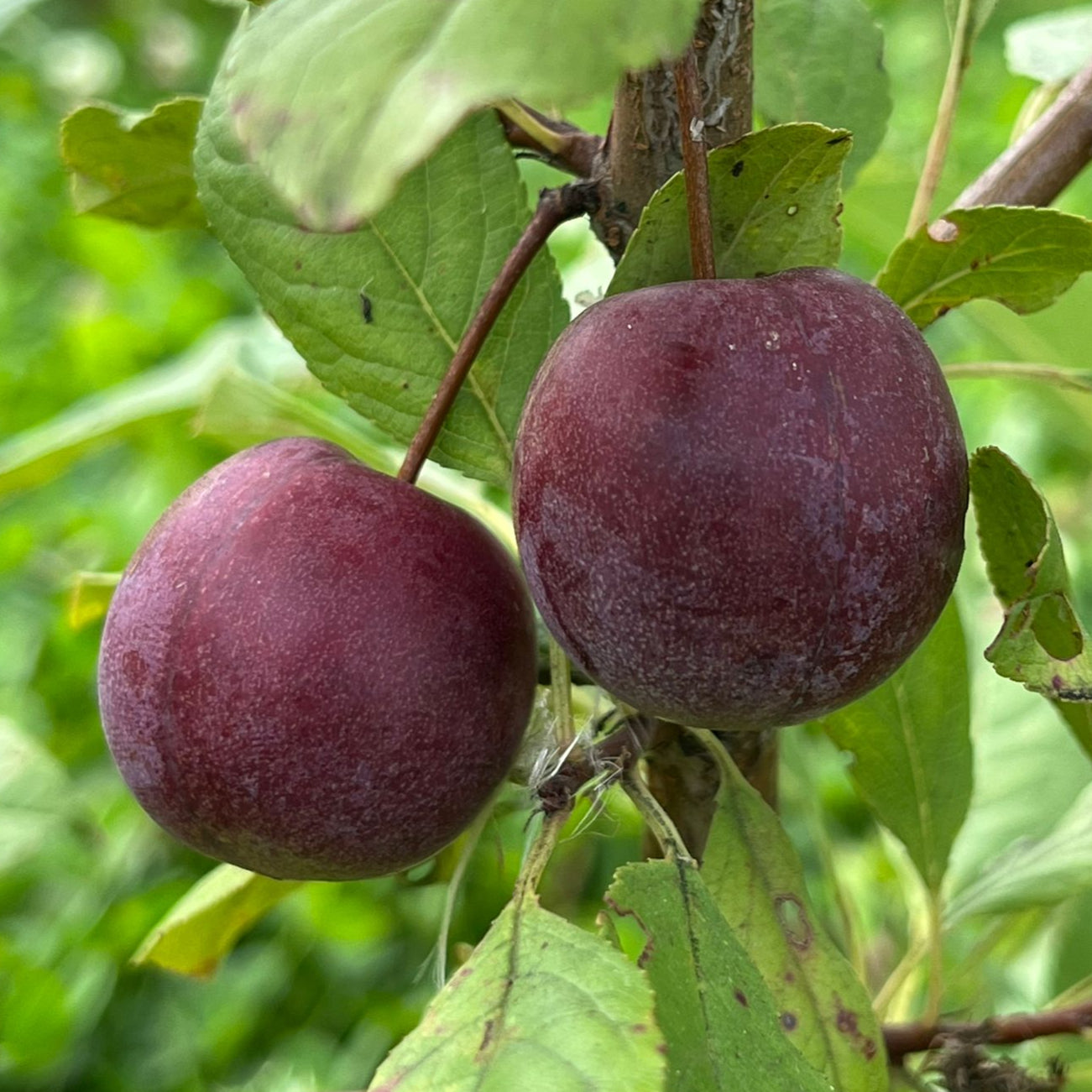
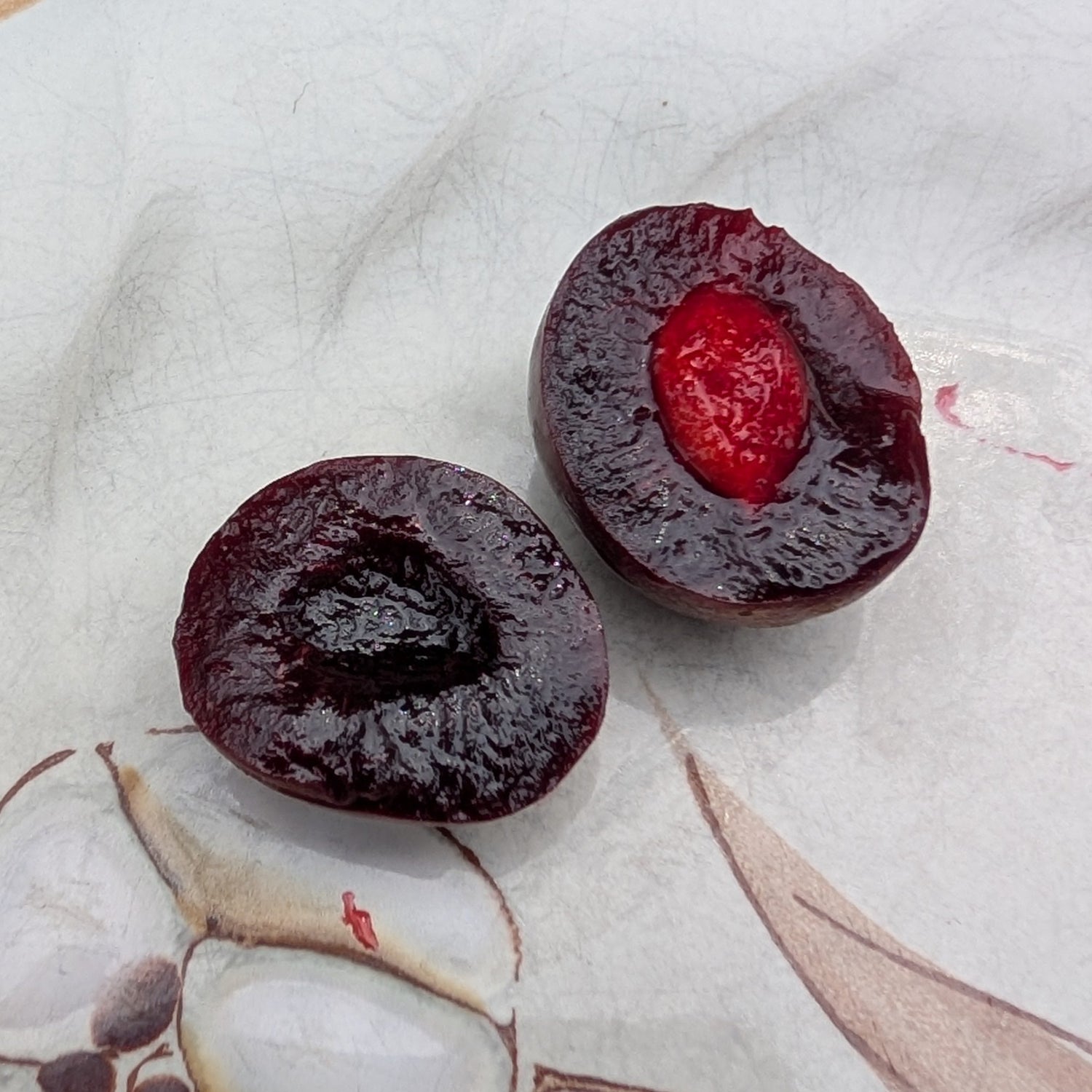
Species: Prunus pumila var. besseyi (Western sandcherry) x P. salicina (Japanese Plum)
History: Sapa (translated as 'black' from Lakota) was developed at the South Dakota Agricultural Experiment Station in the US by renowned plant breeder N. E. Hansen and released in 1908. His goal was to create plants hardy enough to grow in the harsh, northern prairies and was one of the first people to start breeding chums. Hansen had a tendency to name his native plant crosses after words from indigenous cultures of the area, choosing the Lakota word for 'black' in this case due to the dark colour of the fruit.
Why We Grow It: This small, hardy shrub produces purplish fruit with mauve flesh that has a sweet flavour with some tartness. It is good for fresh eating along with a variety of other uses such as cooking, baking, and preserving. It is also quite productive and tends to start bearing fruit at a young age!

History: Scarlet Vivian was originally an urban wild tree found by Wayne in 2018 and has been grown by Silver Creek Nursery's previous owner Ken Roth. It is likely a cross between a crabapple and an apple. We are excited to introduce this new variety in 2023!
Why We Grow It: Scarlet Vivian is quite similar to Dolgo although a little larger. For those who like very tart apples, this is an excellent one for fresh eating! The flavour is rich and complex, but balanced enough that it is quite enjoyable. However, Scarlet Vivian is best made into a jelly where its red colouration really shines. It may also have potential in cider blends. Based on Ken's observations, the tree appears to be relatively free of pest and disease issues.
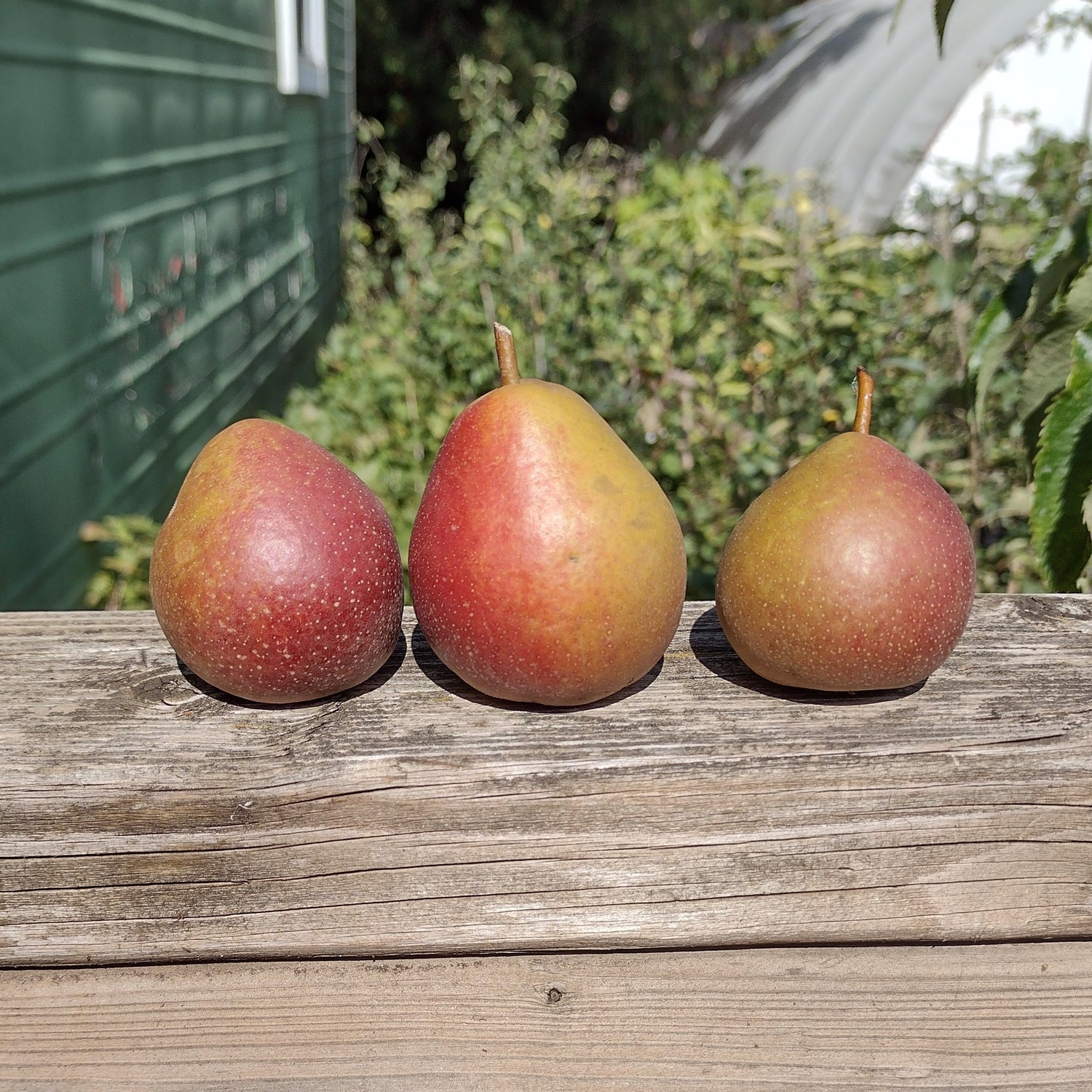
History: The history of the Seckel pear is somewhat contentious. It was said to have been named after a Mr. Seckel who discovered the variety growing as a sapling near Philadelphia in the late 1700s or early 1800s. Some say it is the only commercial American pear since it was thought to have been a wild seedling but others believe the tree sprouted from a seed left by German immigrants. Either way, this lovely little pear is still grown on a small scale across the States as a specialty fruit.
Why We Grow It: Although it is small in size, this heirloom is popular for eating fresh due to its high quality flavour. The skin is ruddy green with a pronounced red blush and the flesh is very sweet with a spicy flavour, which is why it's sometimes called 'Sugar Pear.' Aside from being excellent for fresh eating, this pear is great canned, pickled, and spiced. As an added bonus, the tree is resistant to fireblight.
Customer Suggestion: One of our wonderful customers shared a recipe for Pickled 'Sickle Pears' (aka Seckel) that had been passed down from his great grandmother. We haven't tested it out yet, but Seckel pears, brown sugar, cinnamon, vinegar and cloves, cooked and marinated, then pickled sounds very intriguing! Thanks for sharing David!

History: Sekai Ichi (translated literally from Japanese as 'world number one,' more accurately meaning 'best in the world') was bred at the Prefectural Experiment Station in Aomori, Japan in 1930 and released in 1974. It is a cross between Red Delicious and Golden Delicious. This variety is quite highly regarded in Japan where a single apple can sell for as much as $25 each. Each apple is hand pollinated, washed in honey, and hand-stamped while being inspected to ensure its quality.
Why We Grow It: Although we don't get quite that fancy here, Sekai Ichi is nonetheless a great apple if you enjoy sweet, crunchy, apples with no acidity, as is common with Japanese varieties. It is red over greenish skin and very large with an average circumference of 30-45cm and average weight of 2lb. The tree itself is very vigorous although slow to start bearing fruit with a tendency towards biennial bearing.

History: Little is known about this pear in the Western world aside from the fact it came from China. Seuri is possibly the Japanese version of the Chinese name Se Li (translated as 'red pear' from Mandarin).
Why We Grow It: Seuri Li has yellow-brown skin and the flesh is sweet yet slightly tart with a hint of apricot. It is considered one of the most flavourful of the Asian pears. The tree grows well and has heavy crops.
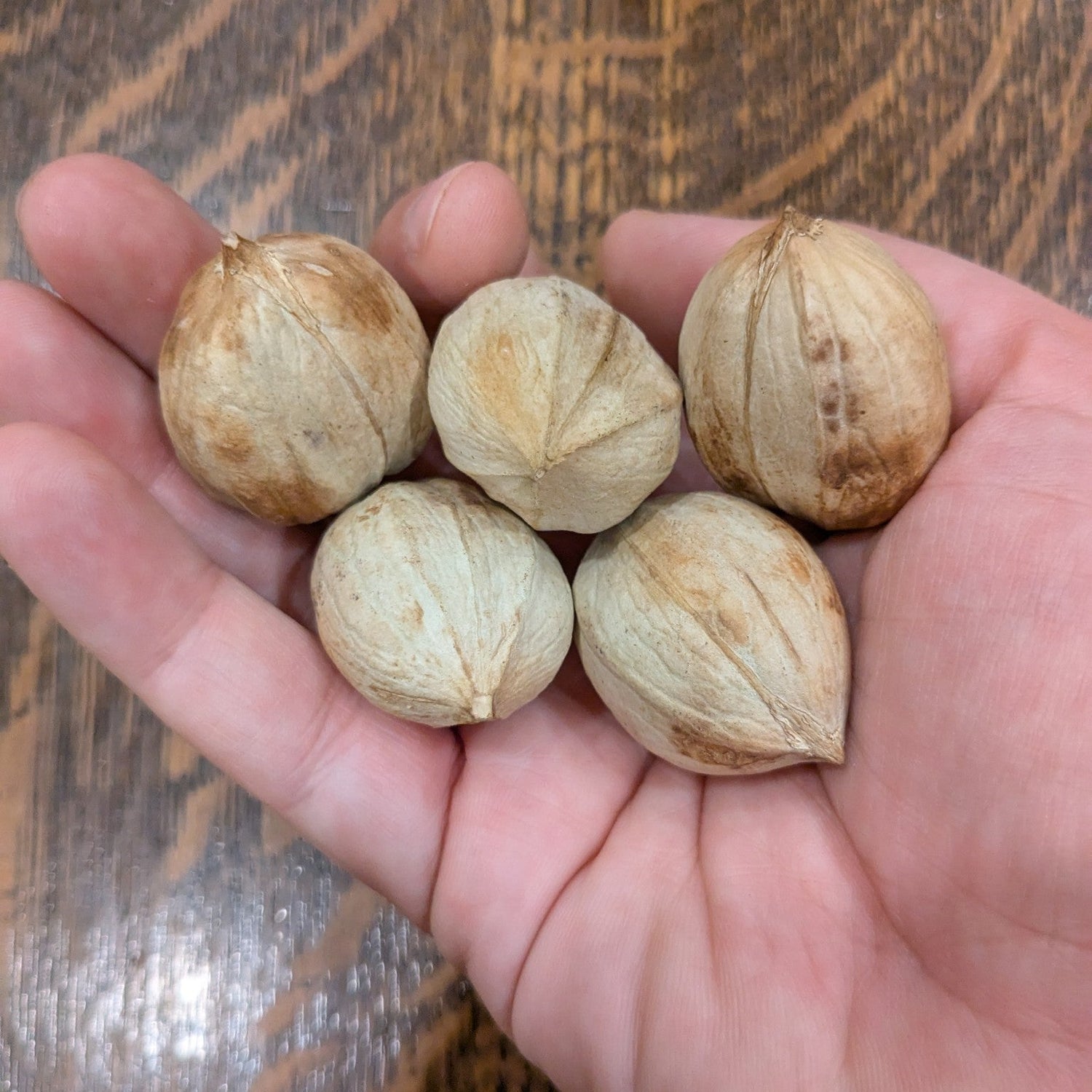
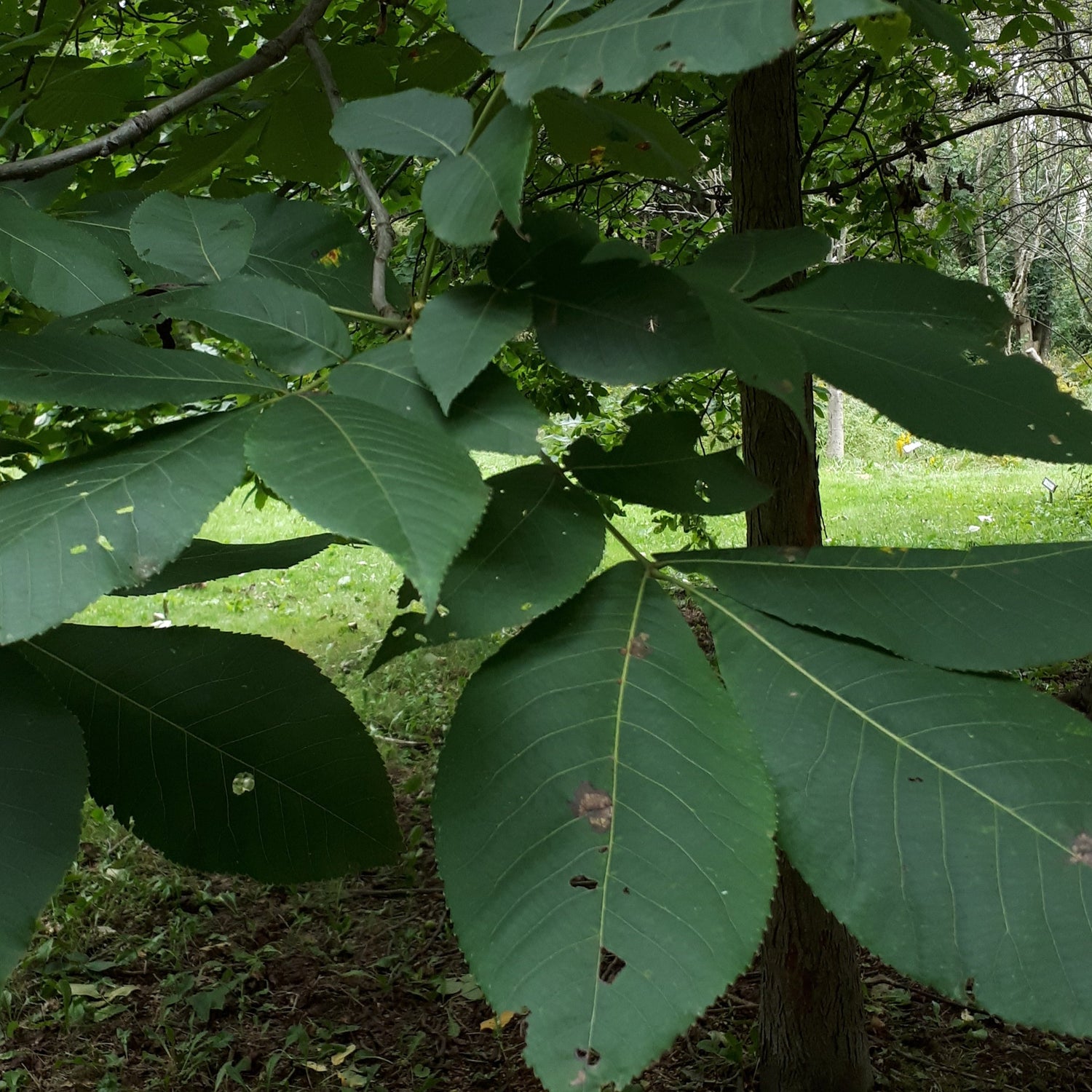
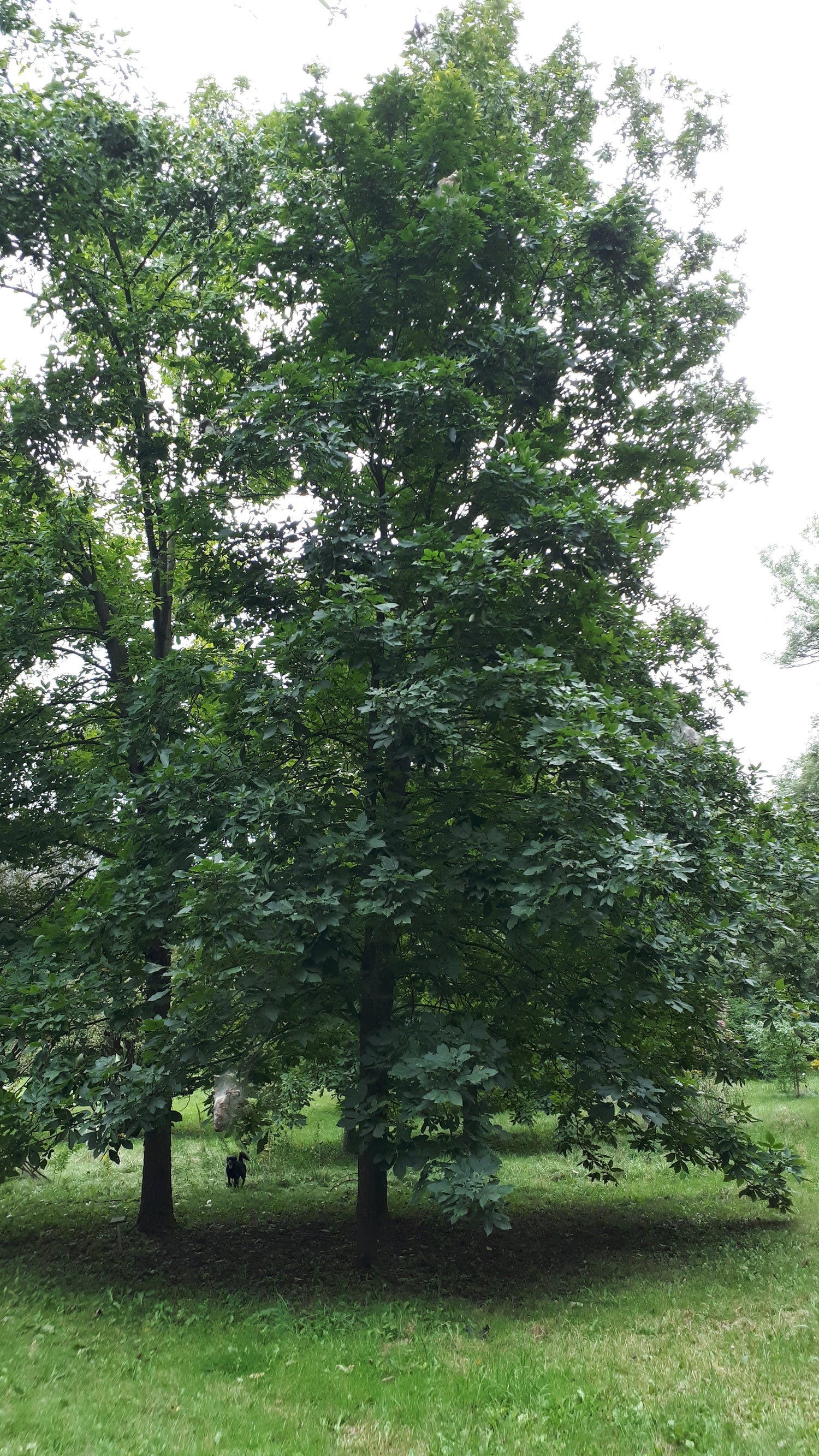
Species: Carya ovata or hybrid. Our seeds are collected from trees that may have been cross-pollinated by closely related species so the resulting seedlings may be hybrids.
History: Shagbark Hickory is native to parts of southern Ontario and much of the eastern United States. Much more common than the Shellbark Hickory, Shagbark Hickory is an important source of food for many species. Indigenous peoples also used the nuts as a food source and made the kernel milk into various dishes, along with using the wood to make bows. The strong wood is also used to make items such as tool handles and drumsticks that require extra durability. Check out this blog post by one of our customers to learn more cool history about these trees.
Why We Grow It: Shagbark Hickory produces an abundant crop of small hickory nuts every year and the sap can also be boiled for a unique flavored syrup (we haven't tried this yet, but would love to hear about it if you have!). The tree gets its name from the unique peeling bark, adding extra visual appeal wherever the tree is planted.


History: Shamrock apples were raised by K. Lapins at the Pacific Agri-Food Research Centre in 1970 and released in 1986.
Why We Grow It: This is a Canadian apple for all you Granny Smith lovers! Although a bit sweeter than Granny Smith, Shamrock apples still have some tartness and are hardy enough to survive in Canadian climates. They even resemble Granny Smith with their light green skin and white flesh.
Photos courtesy of Shannon McInnis!
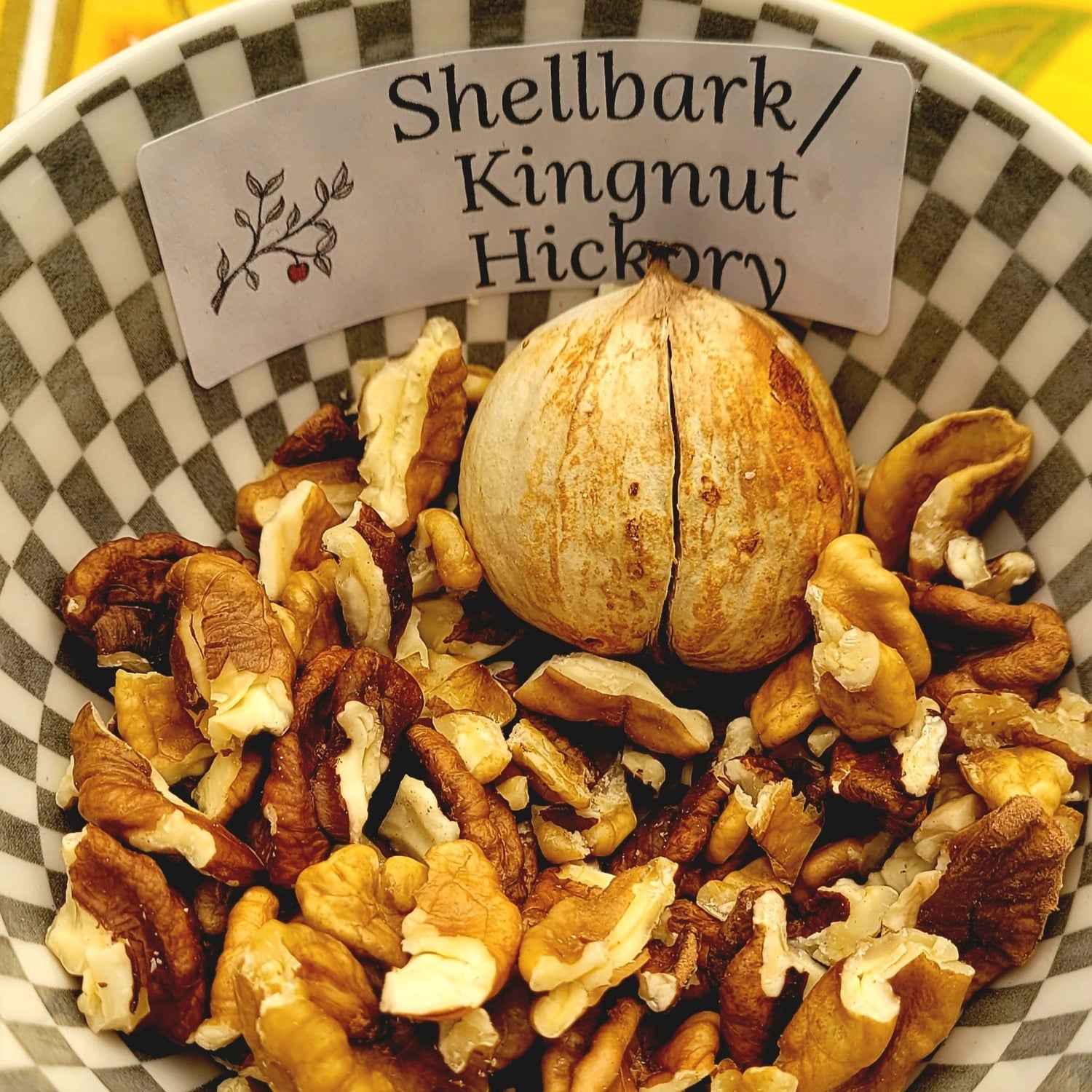
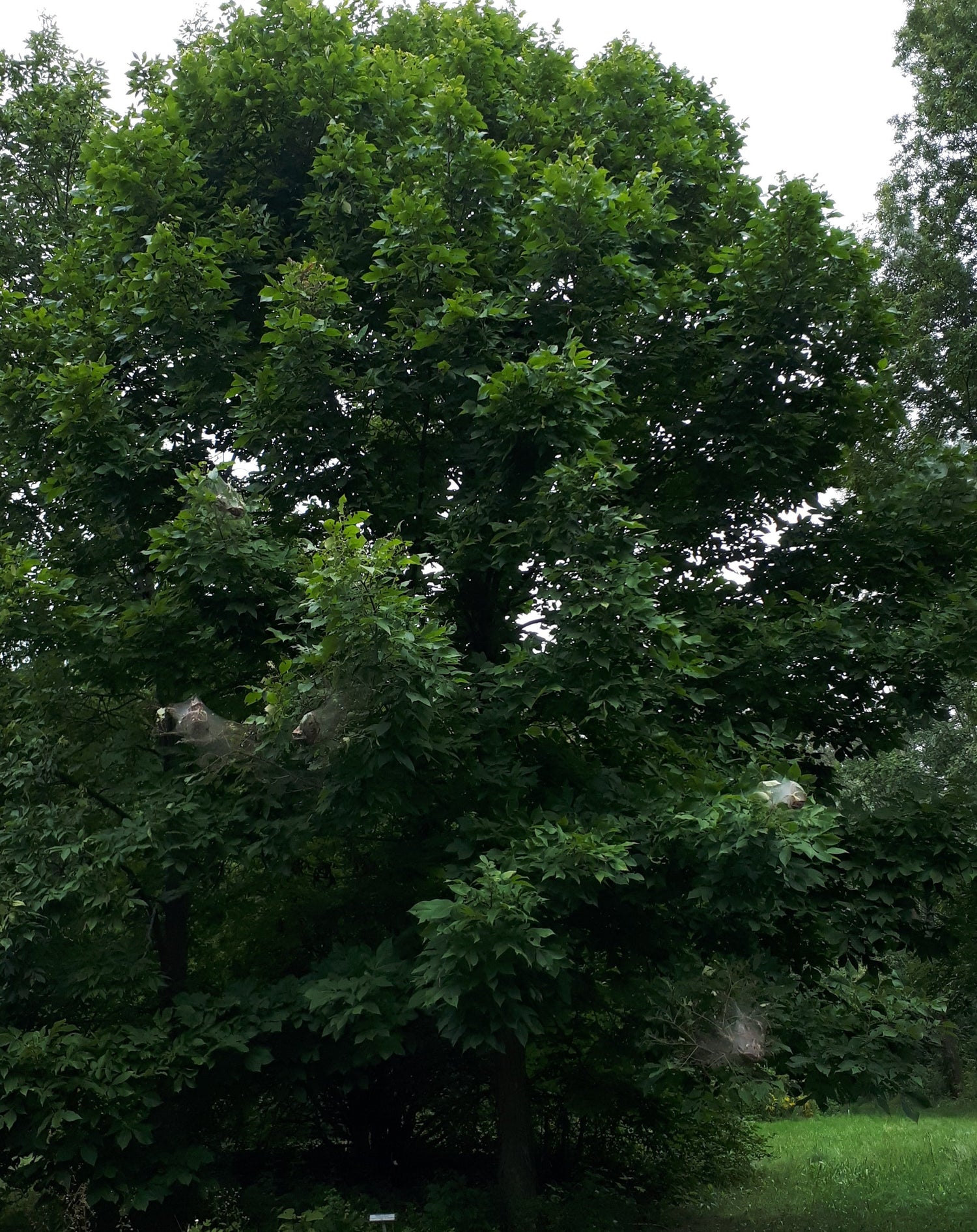
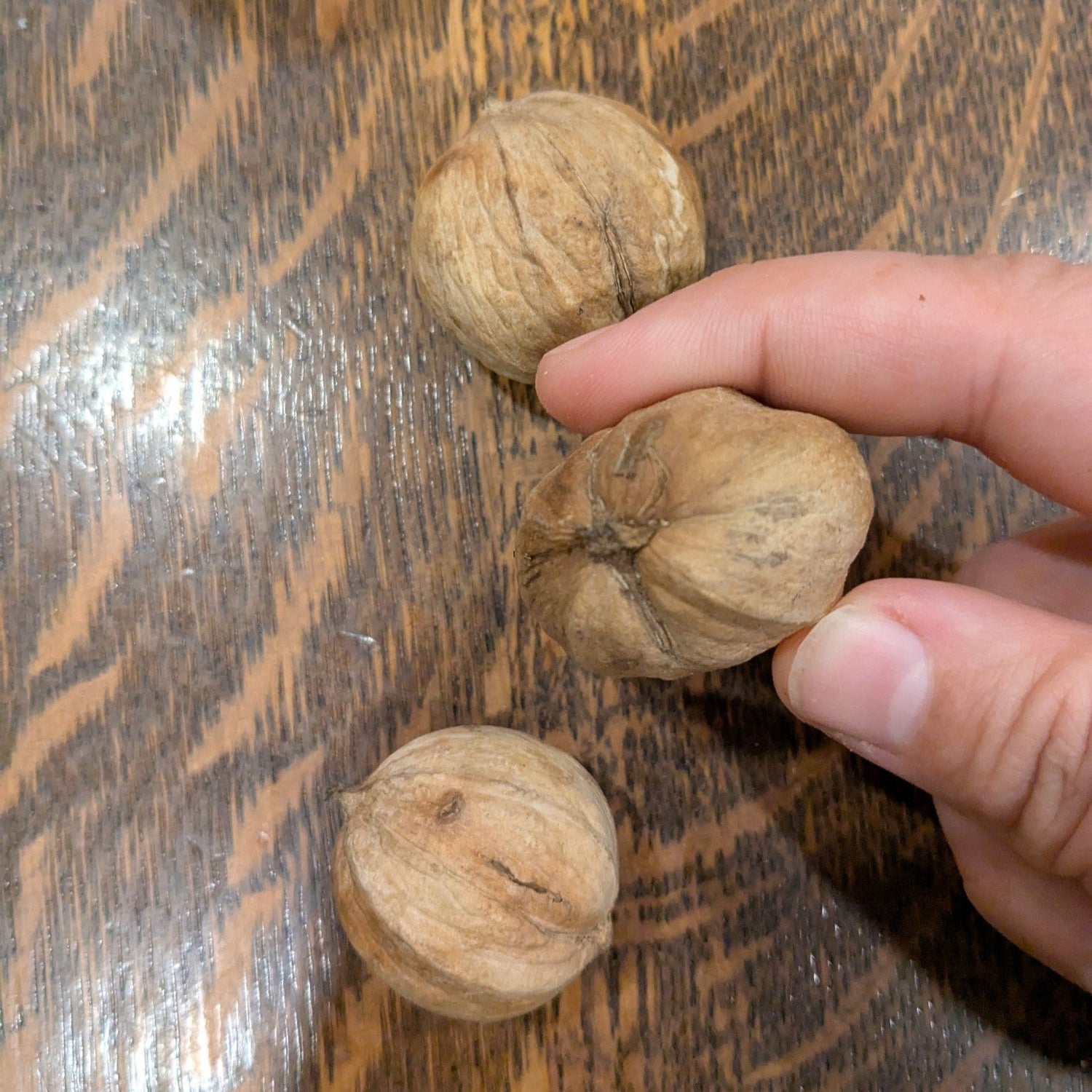
Species: Carya laciniosa or hybrid of C. laciniosa and C. ovata
History: Shellbark Hickory can be found naturally growing in scattered pockets of southern Ontario and parts of the northern and central United States. It is relatively uncommon in its native range due to its poor seed dispersal and human activity has made the tree even more rare. A wide variety of wildlife feeds on the nuts, the largest among the hickories, and there are some plantations although it is not commonly grown commercially as the nuts are quite difficult to crack. The wood, which is hard and strong yet flexible, is used to make furniture and tool handles while the inner bark has been used by indigenous peoples to make items such as baskets and snowshoes. Check out this blog post by one of our customers to learn more cool history about these trees.
Why We Grow It: Although difficult to crack, it is worth the effort to access the sweet nuts which are great eaten raw or baked into pies like pecans. The tree itself is quite attractive with unique bark that looks like it is flaking or peeling in strips once the tree matures.

History: Shinko (translated from Japanese as 'new light') was created in Niigata, Japan as part of a pear breeding program and released in 1941. It is a cross between Nijiseiki and Amanogawa.
Why We Grow It: Shinko produces medium, golden-brown pears that are crisp and sweet with rich flavour. Their taste and texture are both considered excellent! The trees are known for starting to bear at a young age and producing reliable and heavy crops of delicious fruit.

History: Shinseiki (translated from Japanese as 'new century') was developed in Japan and released in the 1940s. It is a cross between Chojuro and Nijiseiki.
Why We Grow It: Shinseiki is known for producing large harvests of round, yellow-green pears with a pleasant crunch early in the season. They have a mild, sweet flavour but can bruise easily due to their high juice content. The fruit hangs onto the tree well and the flavour improves over time.
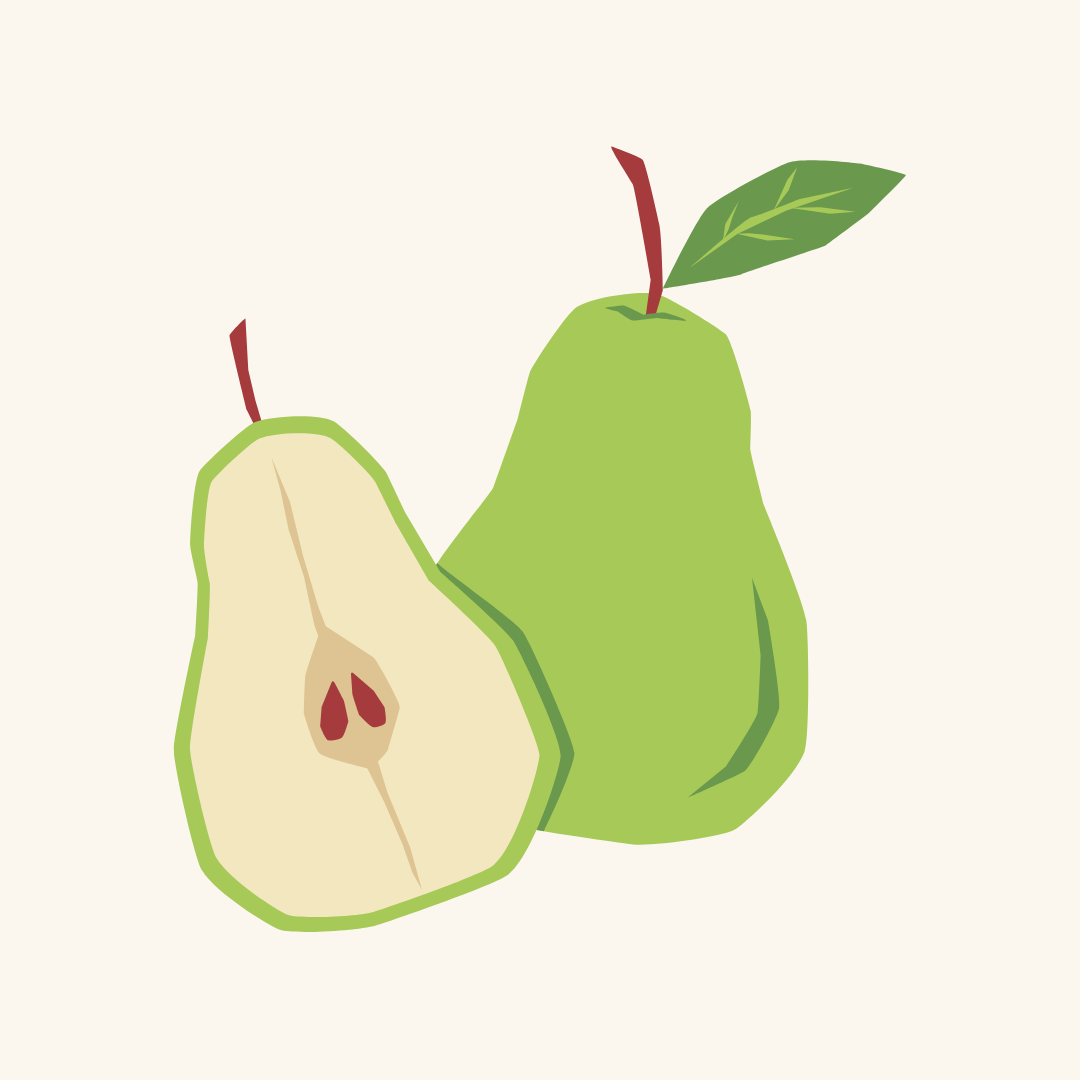
Species: xSorbopyrus irregularis (Pyrus communis x Sorbus aria), also referred to as xSorbopyrus auricularis although this name is no longer correct
History: Shipova is a unique cross between European pears and Common Whitebeam* (Sorbus aria) which readily hybridizes with many other fruiting plants in the rose family. As a surprise hybrid, the history of Shipova is a little foggy. This cross supposedly appeared, or was perhaps planted, at Bollwiller Castle in France in the 1600s and was called Bollwiller Pear. It was cultivated in gardens in the late 1700s and early 1900s. It may have also originated in Yugoslavia and is popular in Eastern Europe today. Shipova was first brought to the US in 1959 and was imported from Yugoslavia. Today, it appears to remain something of a novelty in North America.
Why We Grow It: Shipova is a truly unique fruit tree and it is a shame that it is not grown more commonly. They are quite cold hardy and relatively disease-resistant. The trees produce clusters of small, round fruit that resemble pears. They are dense and crisp with a sweet flavour reminiscent of tropical fruits.
*Many places list Shipova as a cross between European pears and Mountain Ash. More precisely, the genus Sorbus is the Mountain Ash genus and the specific tree that is the parent of Shipova is the species Sorbus aria, commonly known as Common Whitebeam
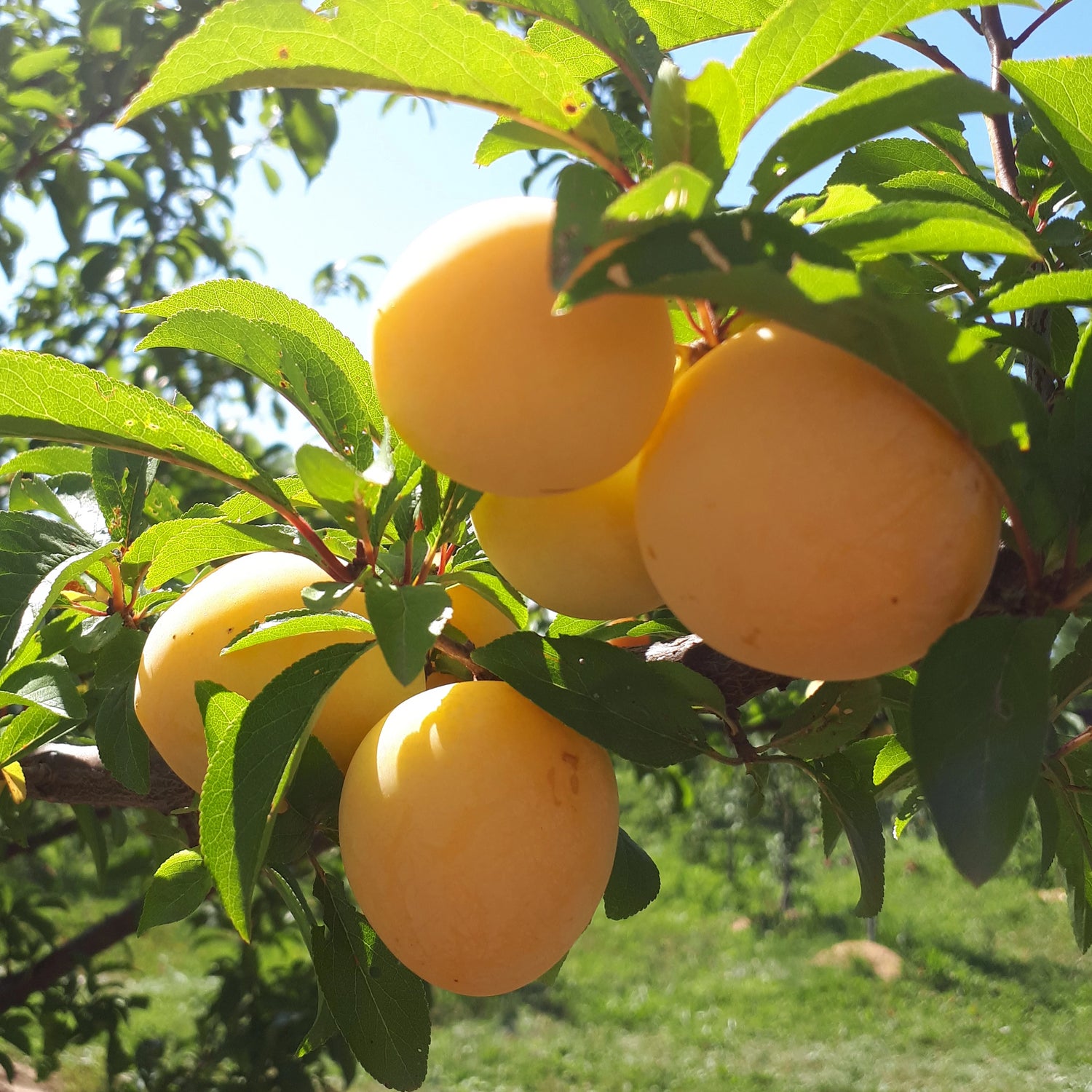
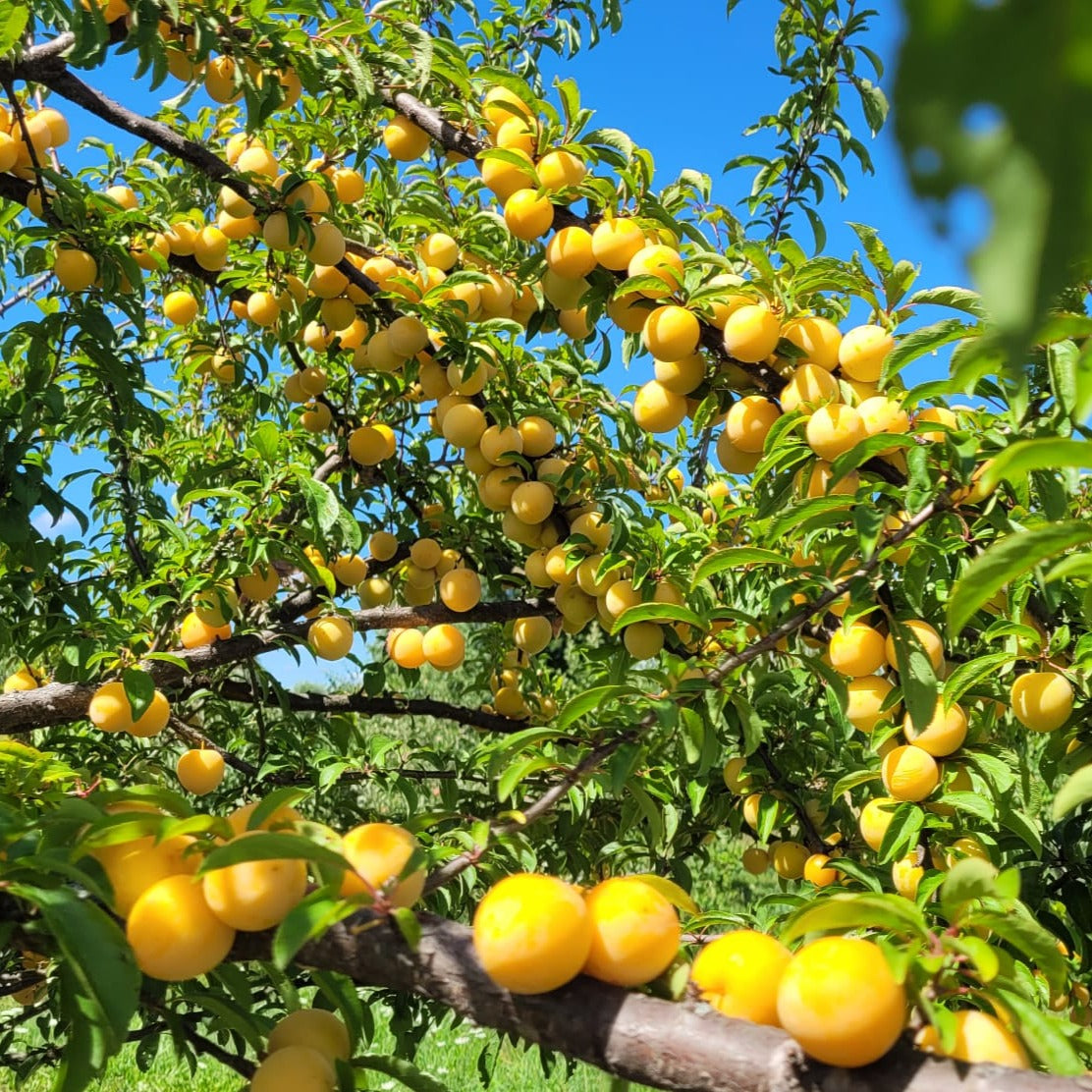
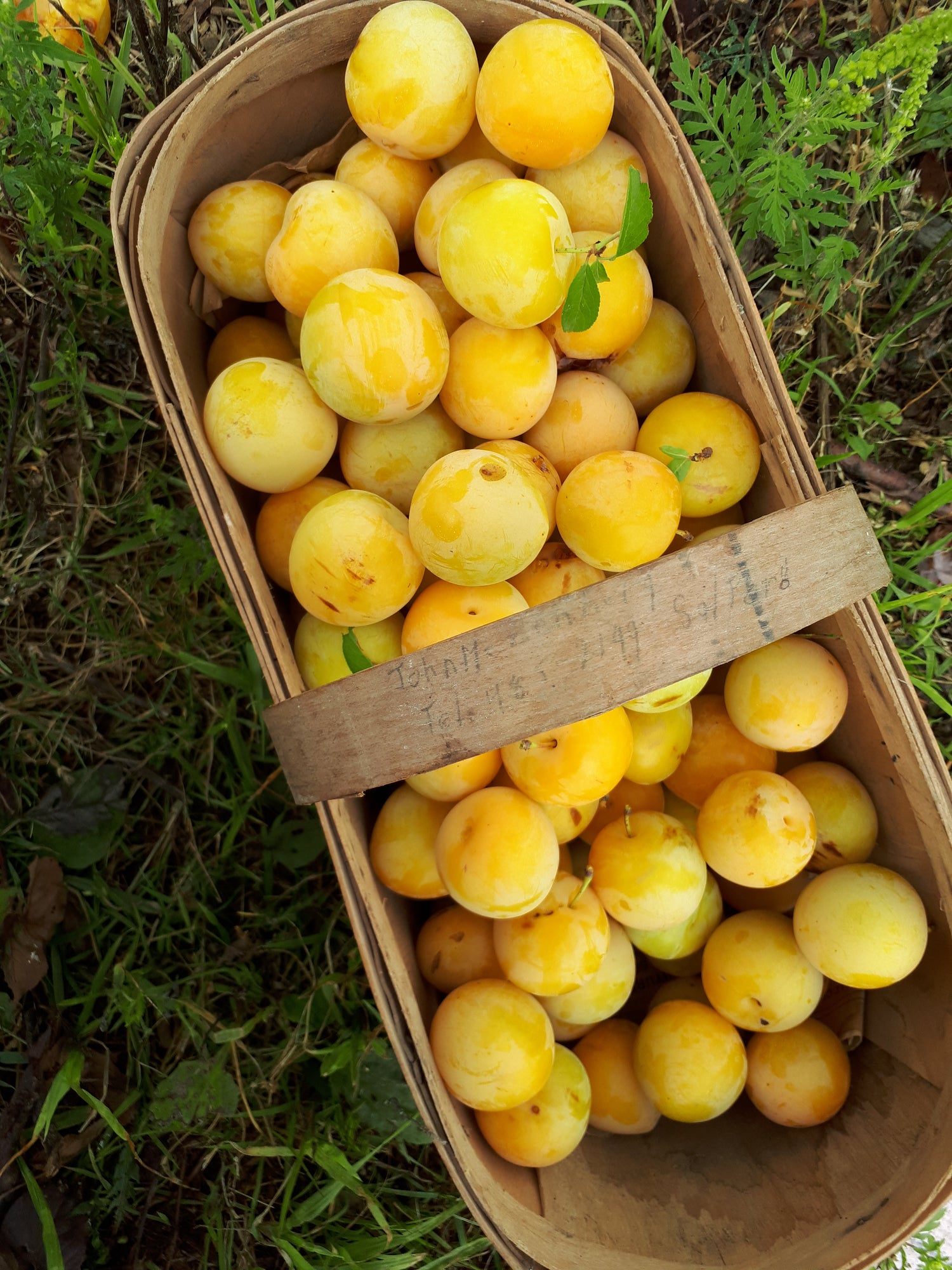
History: Shiro plums (translated from Japanese as 'white') were developed in California and introduced in 1899. They were bred by horticulturalist Luther Burbank who is renowned for his extensive experimentation with creating new plum varieties. Shiro plums are most commonly grown in the United States and Canada.
Why We Grow It: This early Japanese clingstone variety has yellow skin and flesh that is juicy and sweet. The fruit keeps longer than most plums, lasting two to four weeks, and the tree is known for its compact growth and heavy crops.

History: Shizuka (translated as "quiet" or "calm") was created at the Aomori Apple Experiment Station in Japan in the 1930s. It is a cross between Golden Delicious and Indo, the same parentage as its sister apple Mutsu.
Why We Grow It: Although it resembles Mutsu with its large yellow-green fruit, sometimes featuring a reddish-orange blush, Shizuka is sweeter and less acidic. This is an excellent fresh-eating apple for farm gate sales and it also keeps well. It is also great in salads due to its slow browning.
Showing 255/320
Next