All Fruit Trees

All Fruit Trees
Looking for bareroot fruit trees Canada? We offer a wide variety of bareroot fruit trees including apples, apricots, pears, plums, cherries, quince, and peaches that are grown for the Canadian climate & we deliver cold-hardy fruit trees right to your door!
We also offer fruit trees for small gardens, heritage apples Ontario and you can filter all our fruit trees by hardiness zones. Search trees by collection or peruse all the varieties we carry below! We offer flat rate shipping across Canada.




320 products
Sort by:
320 products
320 products


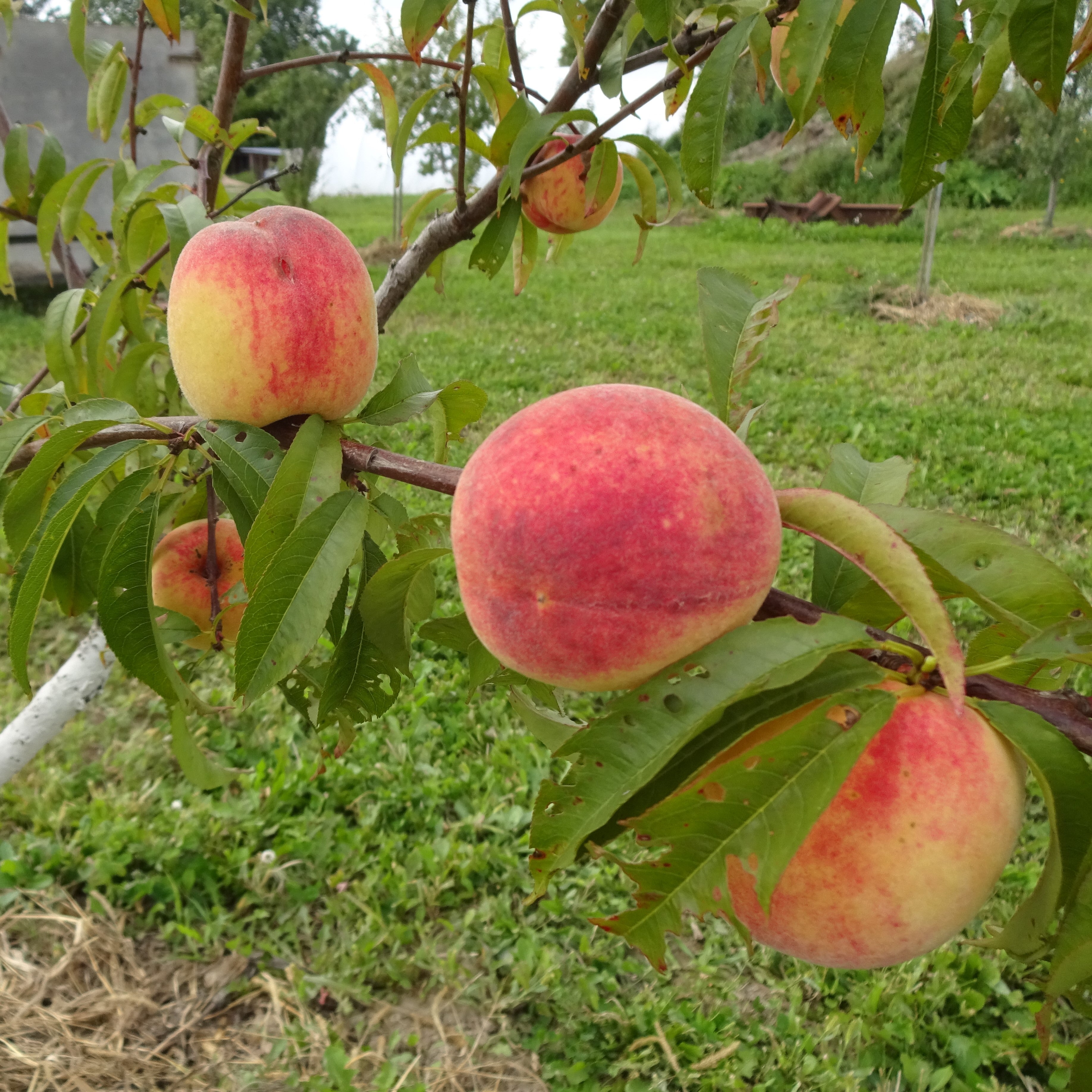
History: Canadian Harmony peaches were developed at the Harrow Research and Development Centre in Ontario and released in 1968.
Why We Grow It: In our quest to bring the most cold-hardy peaches to our Canadian growers (you!), we added yet another excellent peach variety to the line-up. With large, freestone fruit of good quality, Canadian Harmony is hard to turn down. It is a great all-around peach that is good for eating, baking, and preserving; just about anything you can do with a peach. It is less suitable for big growers because of soft flesh, but well-suited for the backyard, yielding juicy, flavourful fruit with good sweetness.
Bare Root Peach Trees
We are very pleased to be able to offer peach trees to our customers. They are both challenging and rewarding plants to grow. However, due to the unique challenges of growing peach trees, and the increased care required for their success, we regrettably cannot offer our standard 90 day guarantee on peaches. Please inspect your peach trees to your satisfaction when you pick them up at the nursery, or immediately upon arrival if they are shipped. For shipped trees, make your claim within 7 days of receipt of the trees. After 7 days of receipt, you will have been deemed to have accepted the trees in as-is condition.

History: This vintage quality cider apple is believed to have originated near Martock in England. This apple is so old it's not entirely certain when exactly it was first discovered, with estimates ranging from the 11th to 14th century.
Why We Grow It: This lesser-known apple is bitter with high acid, featuring a fruity flavour with a bitter aftertaste that is great when made into cider on its own or when mixed into a cider blend.
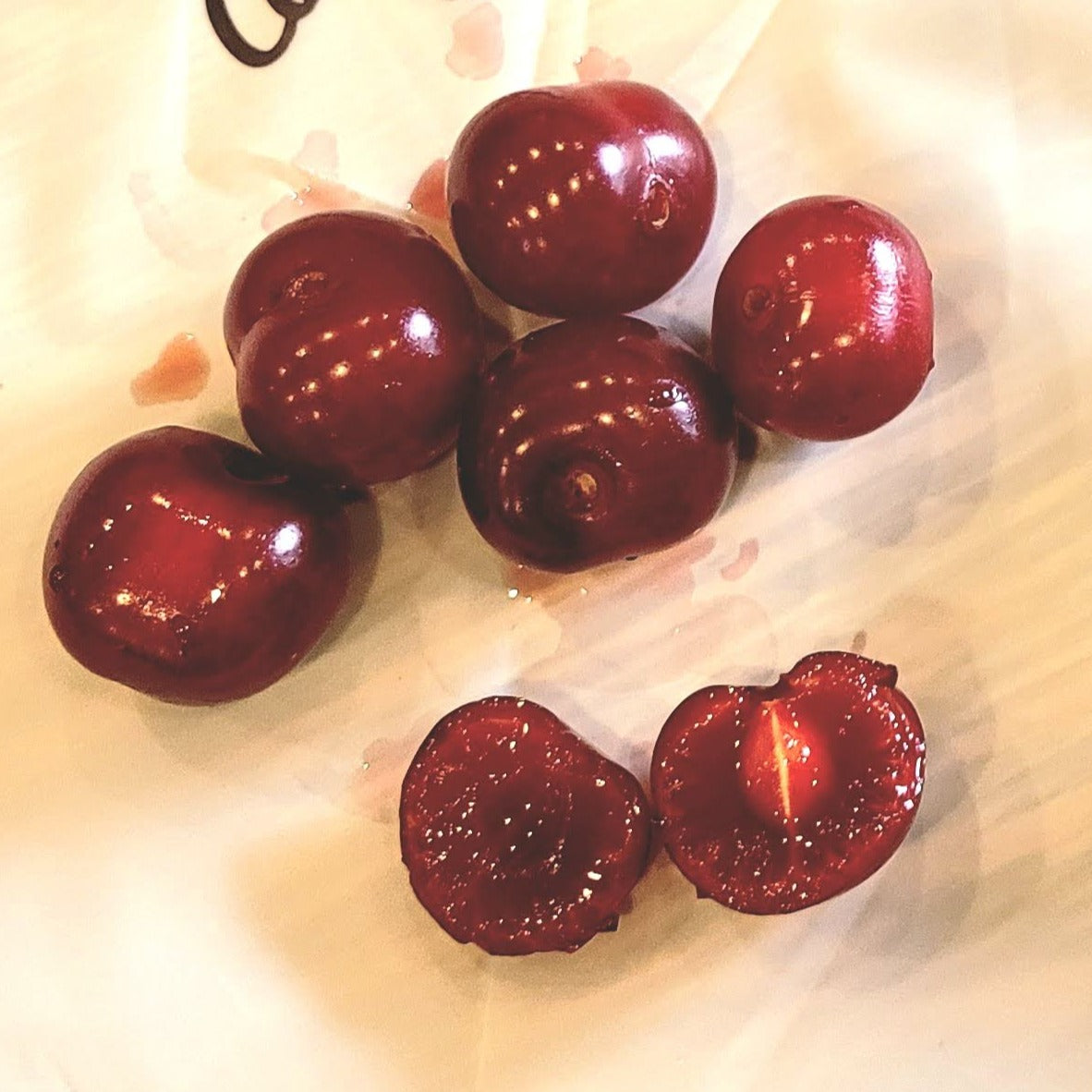
History: Carmine Jewel is one of several dwarf sour cherry shrubs developed at the University of Saskatchewan in an effort to combine cold hardiness, dwarf stature, and good quality fruit into one variety. This effort was started by Dr. Kerr (for whom Kerr applecrabs were named) in the 1940s and Carmine Jewel was released in 1999. It is considered the hardiest of the cherries they developed. Carmine Jewel cherries are now the most commonly grown commercial cherries in the prairies.
Why We Grow It: Carmine Jewel is a notably productive cultivar with small cherries that have a high flesh-to-pit ratio. Thanks to their firm flesh, they are a preferred variety for freezing and drying. The shrub is on the smaller size, reaching 6-7ft once mature, great for anyone who loves cherries but doesn't have a lot of space!
2026/2027 Staff Favourite
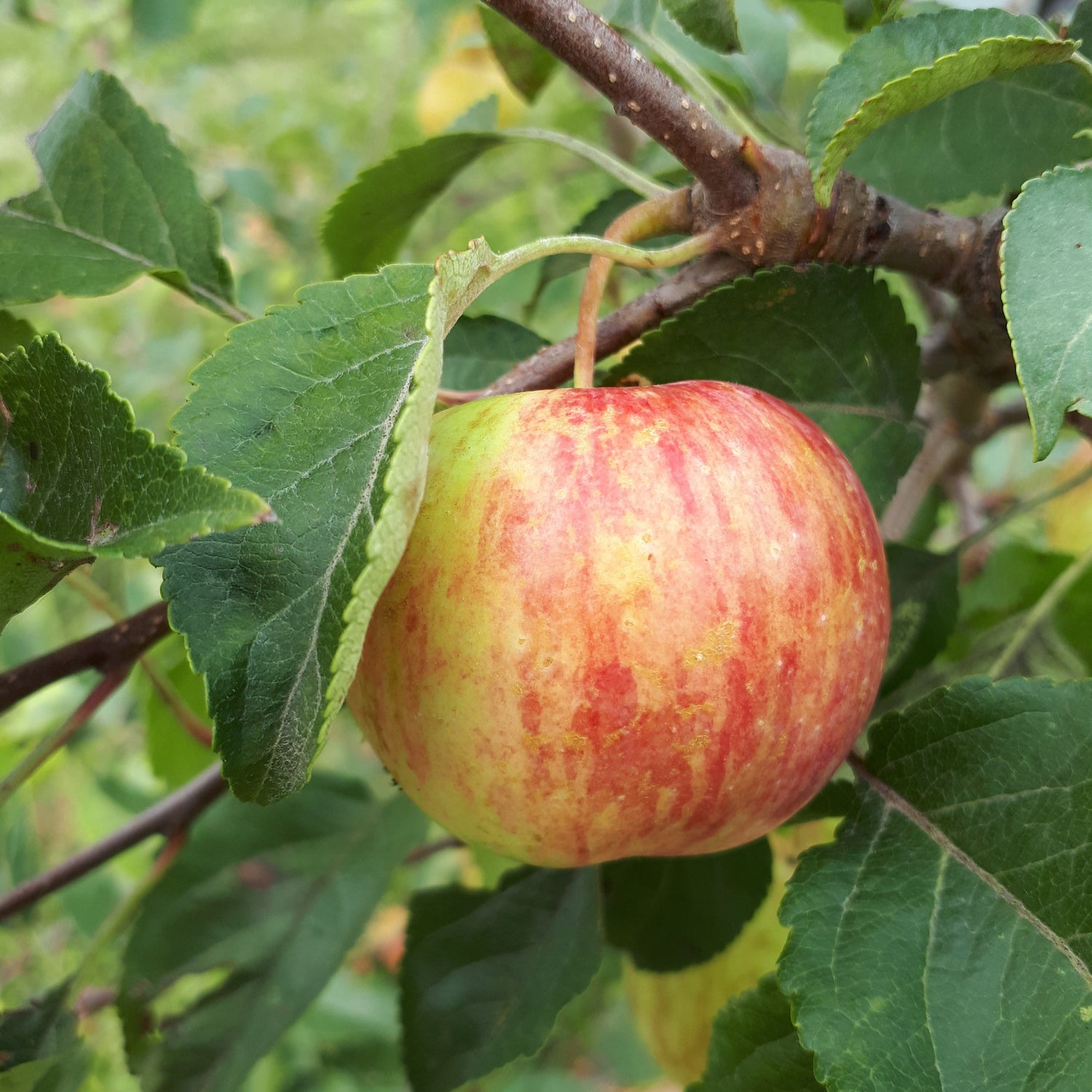
Chestnut is Steph's favourite this year! When reflecting on it, Steph said, “Every year I seem to discover a new (old) apple to marvel over, and most recently, Chestnut has stolen my heart. An unassuming little fruit with a unique netting of russet over its cheery yellow-blushing-red skin. Bite in and enjoy the classic nutty, sweet-tart russet taste with crunchy dense flesh at least a month before most other russets are ripe. In sum, an excellent early season russet worthy of any orchard.”
All Staff Favourites are 20% off. The Staff Favourite Discount cannot be combined with other quantity discounts.
History: Chestnut crabapples were bred at the University of Minnesota in 1949. They are one of about thirty varieties that have been produced by the university's breeding program since it started in 1888.
Why We Grow It: The rosy-red Chestnut crabapple produces fruit that is unusually large for a crabapple with a nutty taste. Unlike other crabapples, it is sweet enough to eat fresh and can be used in cider while still being good for traditional crabapple recipes such as making jellies.


History: Some sources claim this fig hails from 1980's Chicago, however it seems more likely to have originated in Mount Etna, Italy. In any case, due to it's hardy nature it's become one of the most common varieties grown in North America.
Why We Grow It: Chicago Hardy is considered one of the most reliably hardy figs for North America. Add to that their excellent sweet, juicy flavour and it's a no-brainer why these figs have become so popular. Skin is purply-blue-bronze, with soft jammy flesh and a sweet flavour with notes of honey. These figs are medium in size, weighing around 35g.
Photos used with permission from http://planetfig.com/cultivars/fcveng8623.html.

Why We Grow It: The saying 'big things come in small packages' holds true for Chinook. Although the fruit is on the smaller side, it boasts a lovely red skin, excellent sweet-tart flavour, a nice aroma, and crisp and juicy flesh. Fans of this variety will be happy to hear that the fruit can be enjoyed well through the winter, it is an excellent keeper and can last 6-7 months in storage. On top of that the tree grows fairly vigorously, starts bearing fruit at a young age, and produces heavy crops (although thinning will be required).

History: Chisel Jersey is believed to have originated in Martock, England in the 1800s. It spread little outside the immediate area for about a century but during the mid-1900s this apple became quite popular in commercial cider orchards. It has, however, lost some of that renown today despite being an excellent cider apple.
Why We Grow It: With small, green fruit featuring a striped red flush, this bittersweet cider apple is highly recommended in England as well as in Canada. It is high in tannins and sugars but low in malic acid and makes a great cider apple.

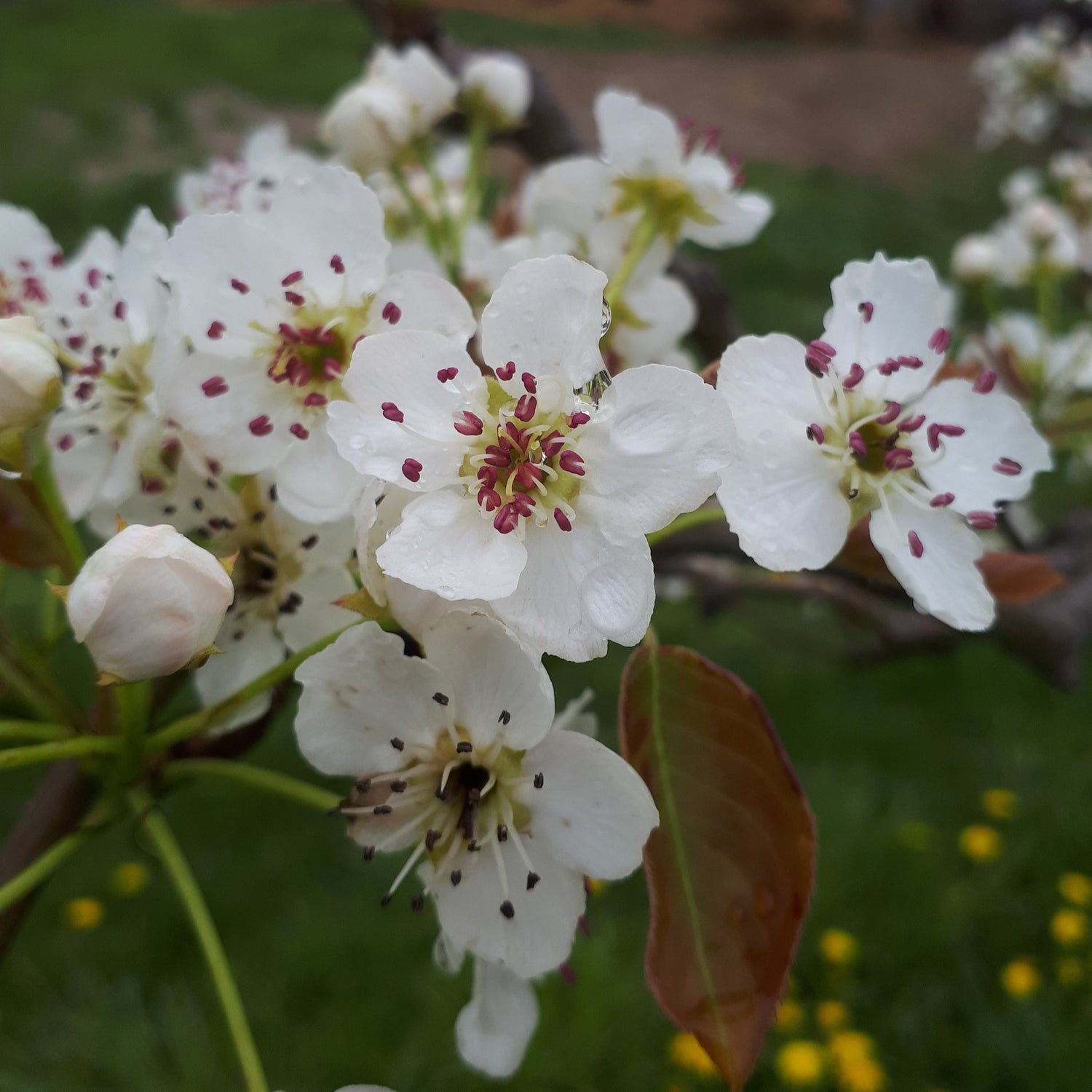
History: Chojuro (translated from Japanese as 'plentiful') was found as a chance seedling in the orchard of Toma Tatsujiro in Japan around 1895. From there it became the most popular pear in Japan until modern varieties began to supplant it in the 1950s. In Kawasaki, the city where Toma's orchard was located, a monument still stands to commemorate his work as a pear breeder. Chojuro is the most popular Asian pear in North America.
Why We Grow It: This popular Japanese heritage variety is hard to turn down. The flattish round fruit has russeted brown skin and can be quite large, and is excellent quality when the fruit is left to ripen into October: the sweet, crisp flesh takes on notes of butterscotch and/or white freezie! We recommend picking it when the colours turns yellow-brown so it will store through winter, otherwise it does not keep if allowed to over-ripen on the tree.


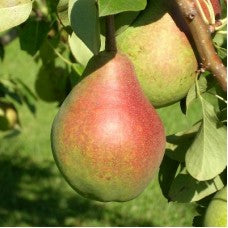
History: Clapp's Favourite Pear originates from Massachusetts where Thaddeus Clapp discovered it as a chance seedling on his property in the 1850s. It was introduced commercially in the 1860s and continues to be grown in the UK and US today.
Why We Grow It: This old variety is hardy and regularly bears excellent medium-large fruit that are yellow with pink blush. They have good flavour but need to be enjoyed rather quickly since the fruit doesn't store long. The fruit needs to be picked about 10 days before completely ripe and allowed to ripen off the tree.
History: Compact Stella was developed at the Brookhaven National Laboratory in New York where dormant Stella scions underwent X-ray irradiation in 1964. This caused a mutation to occur, creating a cherry tree that was smaller in stature when fully grown than regular Stella cherry trees. In 1973 this smaller version of Stella was given the name Compact Stella.
Why We Grow It: Compact Stella sweet cherry trees bear very dark red heart-shaped fruit that is of high quality for fresh eating, and equally well-suited for canning, drying, or freezing. This compact version of the popular Stella sweet cherry is great for anyone with limited space. The typical mature height is 8-10 feet (2.5-3.0m), though they can reach up to 12 feet in optimal growing conditions.
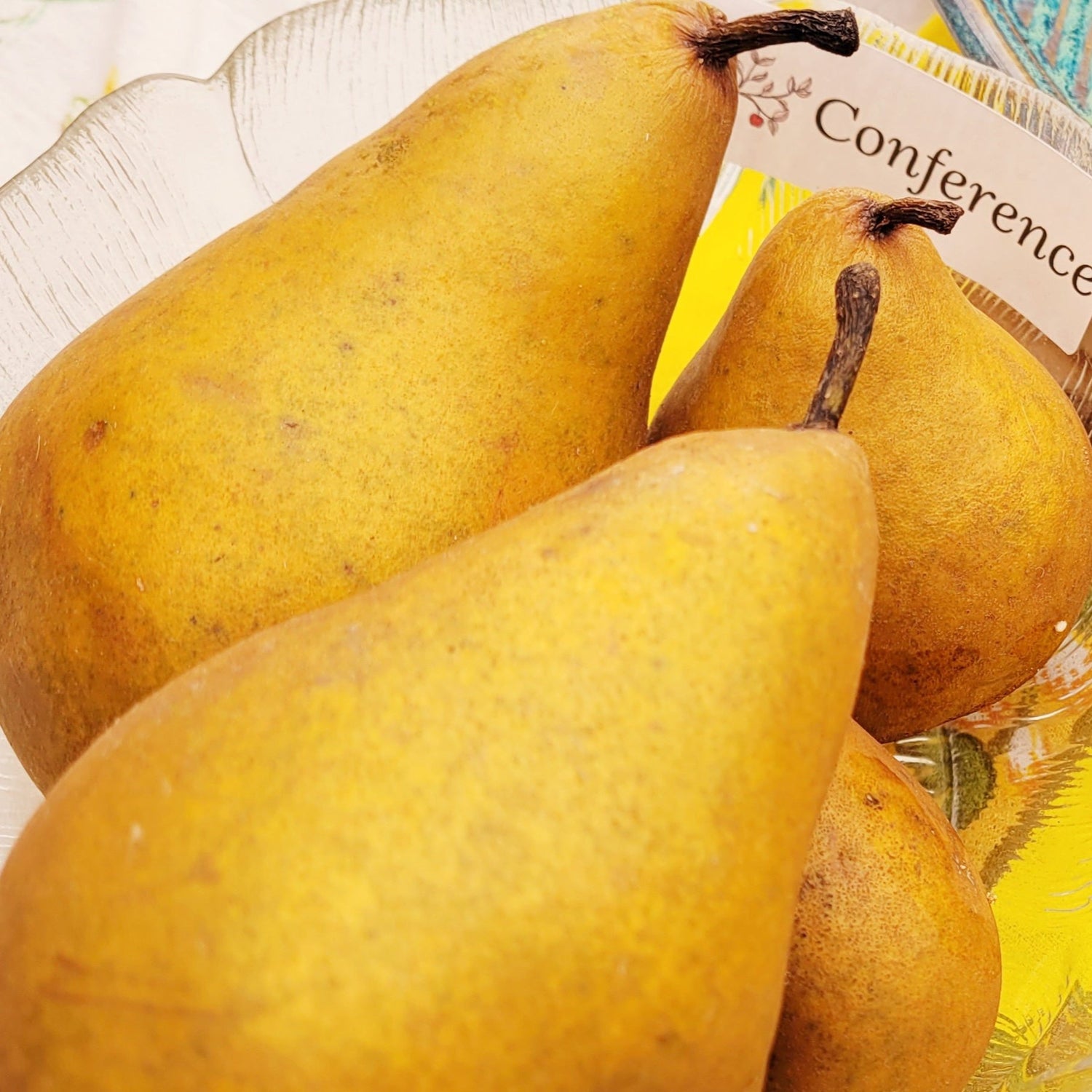
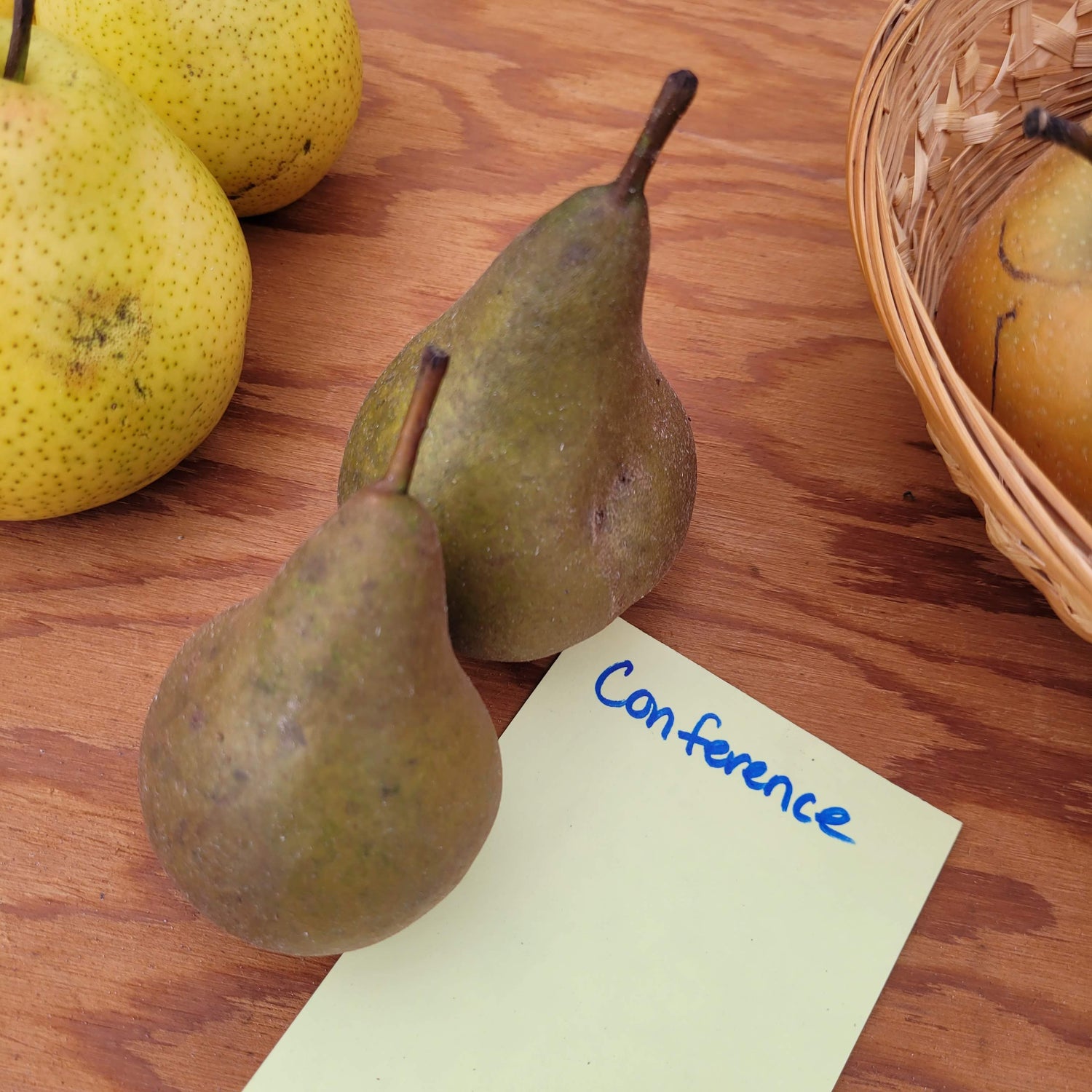
History: Conference pears were found growing in the nursery of Thomas Francis River in the UK in 1884. The following year, he introduced the variety at the National British Pear Conference in London where it won fist place, solidifying its reputation and earning its name. Conference pears continue to be grown in several European countries today where it remains very popular.
Why We Grow It: This old variety has remained popular due to its pleasant and sweet flavour. It can be eaten right off the tree and will keep for a couple months. The fruit itself has an elongated neck, giving it a rather odd appearance.
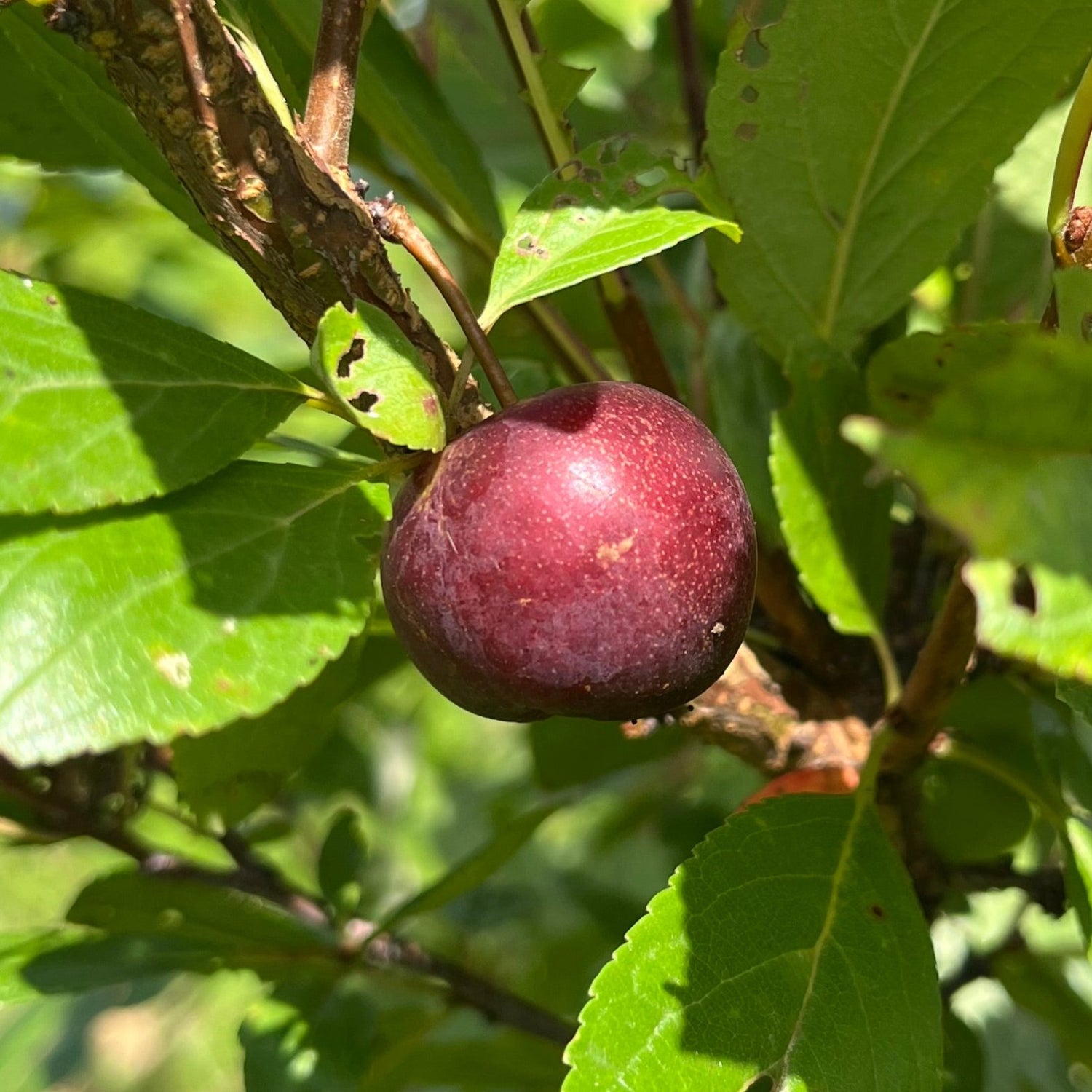
Species: Prunus pumila var. besseyi (Western sandcherry) x P. salicina (Japanese Plum)
History: Convoy was released by Boughen Nurseries in Manitoba in 1941. Like other chums, it was bred to produce a fruit with the hardiness of the western sandcherry but the fruit quality of a Japanese plum. Convoy was likely selected for being sweeter than most other chums.
Why We Grow It: Always on the lookout for unique trees, we are happy to offer chums! Convoy is a hardy shrub that produces a clingstone red fruit with yellow flesh. It has a mild sweet flavour that is good for fresh eating but it can also be used for baking, preserving, and canning. The shrub is generally resistant to plum diseases.

History: Cooke's Jumbo originated as a random mutation of an existing quince variety in an orchard in Dinuba, California. It was brought to the attention of the L.E. Cooke Company, for which it was later named, and introduced commercially in 1972.
Why We Grow It: The fruit produced by Cooke’s Jumbo are exceptionally large with greenish-yellow skin and firm white flesh. They are not generally eaten raw, but rather used for baking, jellies, or candied. This is one of the hardiest varieties of quince available.
History: Cortland apples were first bred in 1898 by Cornell University in New York and introduced in 1915. Since then, they have become one of the top fifteen apples in the US and Canada, although the majority are still grown relatively close to the university where they originated. Cortland Nova Red is a redder sport of the original Cortland apple, making a more attractive fruit for those who value red apples.
Why We Grow It: Cortland is a sweet apple with crisp, juicy flesh. It is great for applesauce or drying as the flesh is slow to brown. The fruit keeps until Christmas under home storage conditions although the crispness and flavour does fade over time. This variety crops well annually and makes a good pollinator for others. The redder skin on this sport is quite attractive!


History: Cortland apples were first bred in 1898 by Cornell University in New York and introduced in 1915. Since then, they have become one of the top fifteen apples in the US and Canada, although the majority are still grown relatively close to the university where they originated. While there are different versions of Cortland available with features such as redder skin, we are happy to offer the original!
Why We Grow It: Especially with older, popular varieties, we are always happy to offer what is, to the best of our knowledge, the original strain. Cortland is a sweet apple with crisp, juicy flesh. It is great for applesauce or drying as the flesh is slow to brown. The fruit keeps until Christmas under home storage conditions although the crispness and flavour does fade over time. This variety crops well annually and makes a good pollinator for others.
Showing 60/320
Next