All Fruit Trees

All Fruit Trees
Looking for bareroot fruit trees Canada? We offer a wide variety of bareroot fruit trees including apples, apricots, pears, plums, cherries, quince, and peaches that are grown for the Canadian climate & we deliver cold-hardy fruit trees right to your door!
We also offer fruit trees for small gardens, heritage apples Ontario and you can filter all our fruit trees by hardiness zones. Search trees by collection or peruse all the varieties we carry below! We offer flat rate shipping across Canada.




320 products
Sort by:
320 products
320 products
History: Doyenné du Comice was obtained from a garden in Angers in the 1840s as a sapling. In 1848 it bore its first pears which were quickly noted for their excellent flavour. Throughout the 1850s this variety reached other countries such as the UK and US, and in 1894 it was deemed "the best pear in the world" by the London Horticultural Journal. Whether or not it lives up to that much praise, it is still commonly grown, particularly in France.
Why We Grow It: It is certainly enticing to grow and eat what is considered one of the finest dessert pears. The fruit is medium in size with pale yellow skin and juicy, pale yellow flesh. It needs to ripen off the tree for about one month.


History: Duchess of Oldenburg, or Duchess as we like to call it, originated in the 1700s in Russia. It spread to other countries where it became popular, especially in Victorian England. Its popularity was so great that at one point it was used as a reference cultivar when evaluating other varieties of apples. It is also likely the parent of several other varieties such as Northern Spy.
Why We Grow It: Duchess boasts an attractive fruit that is striped and mottled red over light green. Although these apples don't store well, the flesh is soft and is excellent for pies and applesauce. The trees themselves are quite hardy and disease resistant.
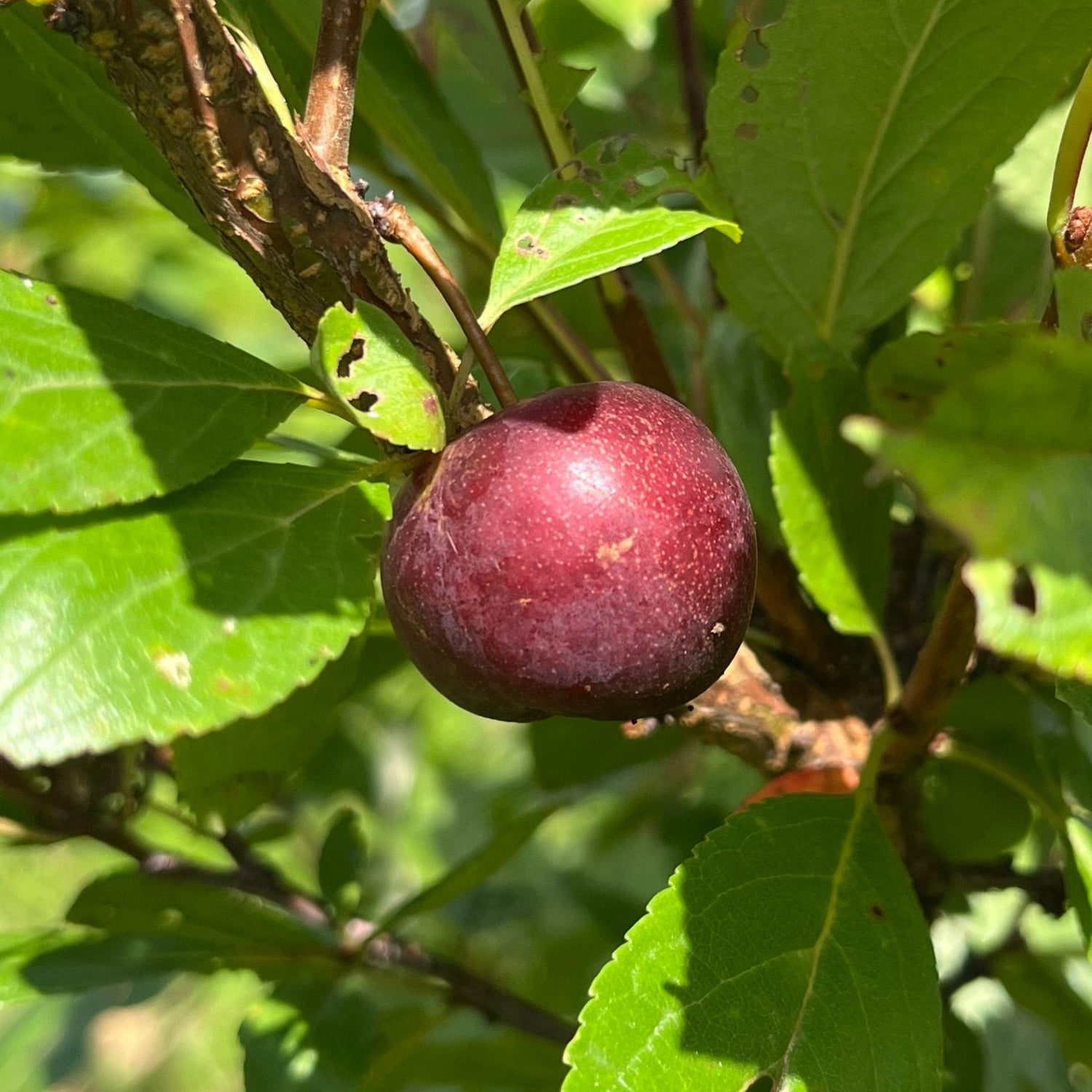
Species: Prunus pumila var. besseyi (Western sandcherry) x P. salicina (Japanese Plum)
History: Dura was developed at the Morden Research Station in Manitoba and was released in 1942.
Why We Grow It: Dura produces small red fruit with sweet mauve flesh. They are good for eating fresh along with cooking/baking, preserving, and juice! This hardy shrub is generally disease resistant and is naturally dwarfing.
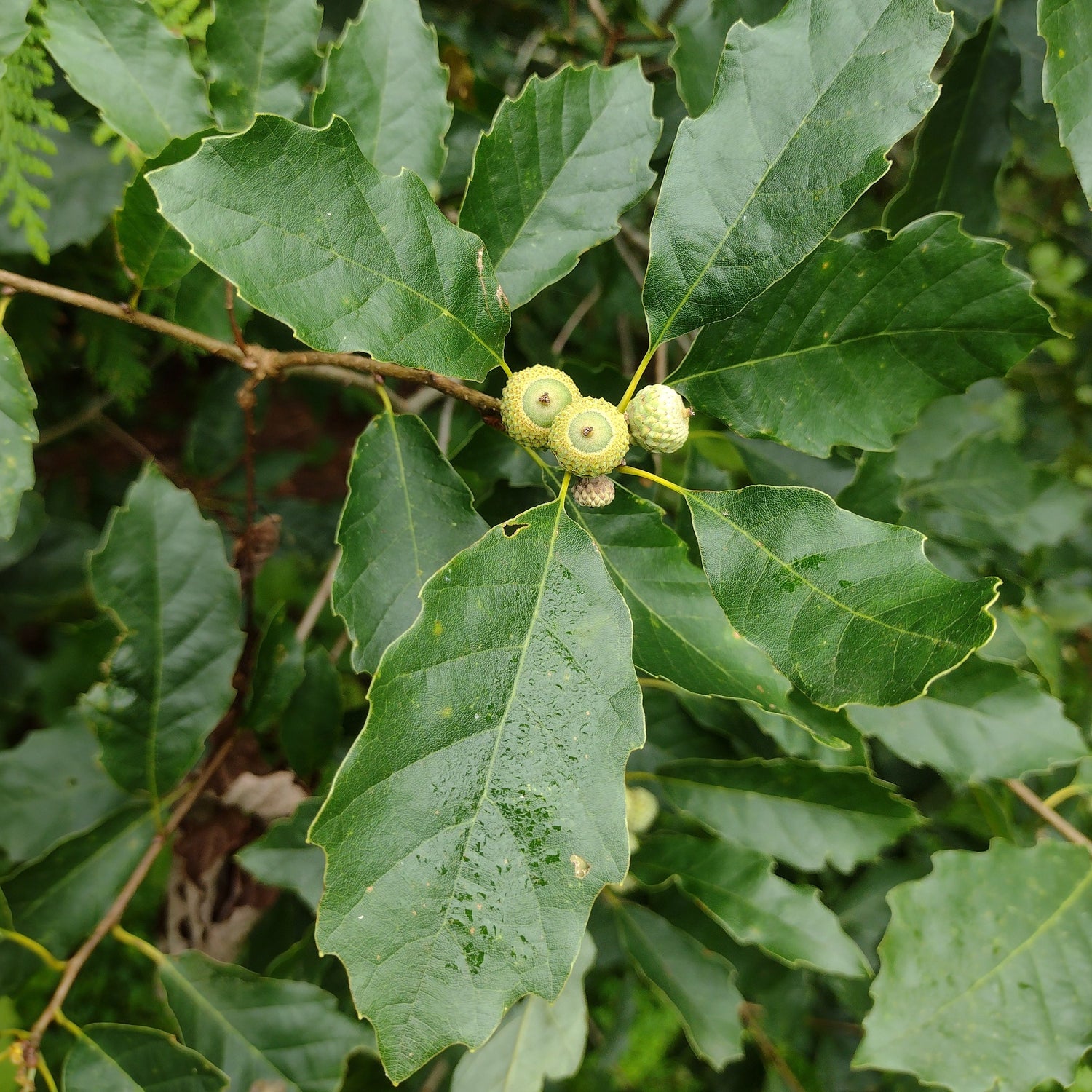
Species: Quercus prinoides or hybrid. Our seeds are collected from trees that may have been cross-pollinated by closely related species so the resulting seedlings may be hybrids.
History: Dwarf Chinquapin Oak (also spelled Chinkapin) is native to southern Ontario and much of the eastern and central United States. It was first described in 1801 by German botanist Karl Ludwig Willdenow but was likely well-known amongst indigenous groups in its range for its edible acorns.
Why We Grow It: Dwarf Chinquapin Oaks are most well known for producing mild sweet acorns that can be eaten raw or processed, making them popular with humans and wildlife alike. They are also quite quick to start producing acorns, only taking 3-5 years where some larger species may take decades.
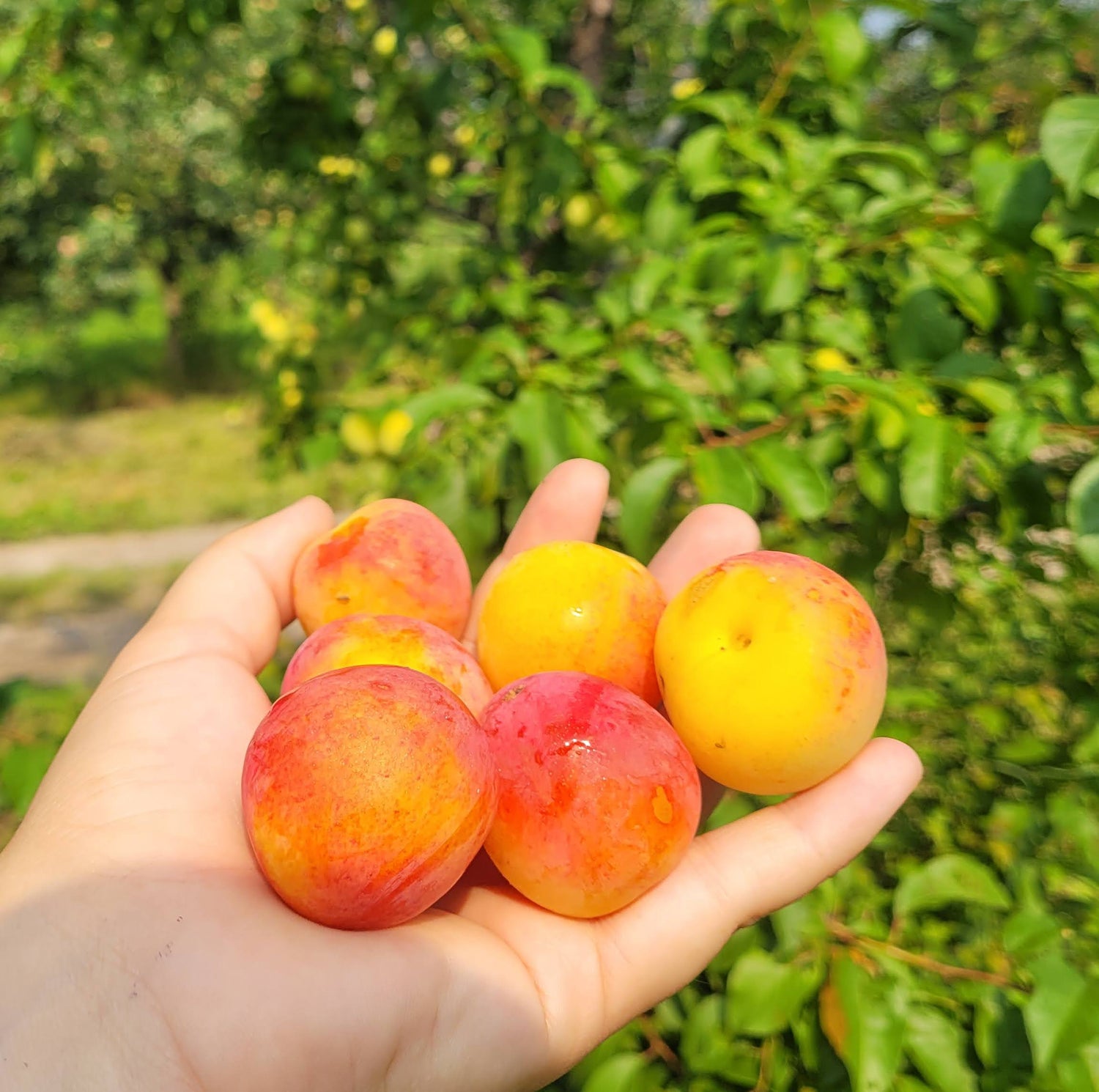
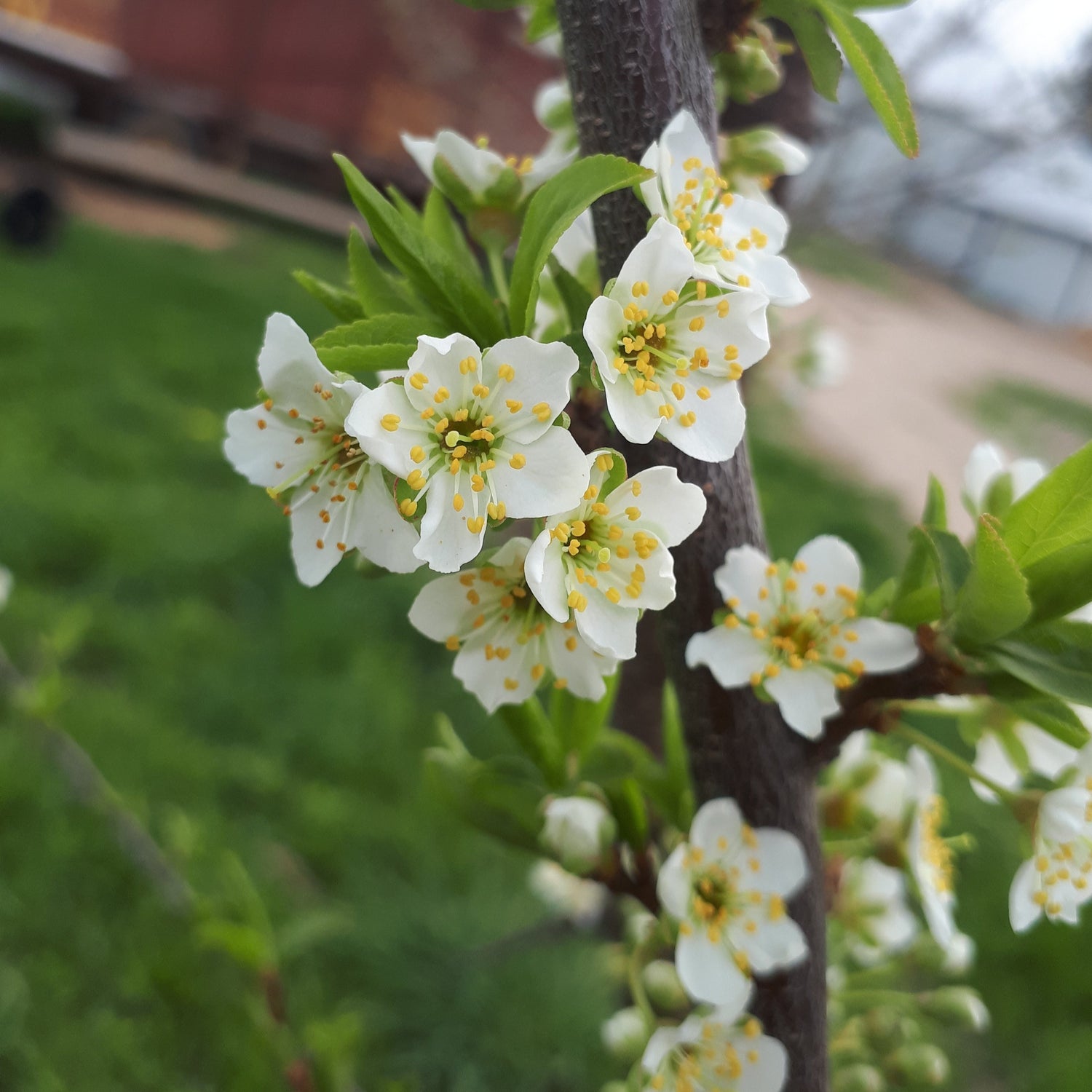
History: Early Golden originated in Fonthill, Ontario where it was discovered as a chance seedling. It has since become the most popular yellow plum in Ontario. Despite its Canadian origin, this is actually a Japanese plum.
Why We Grow It: Early Golden is a very popular Japanese freestone plum. The medium-sized fruit is very sweet with tangy yellow skin that gets a cheery red blush where the sun hits it. Medium-sized. The tree is vigorous and has a low susceptibility to black knot, although it requires careful thinning or else it will tend to bear crops every other year.
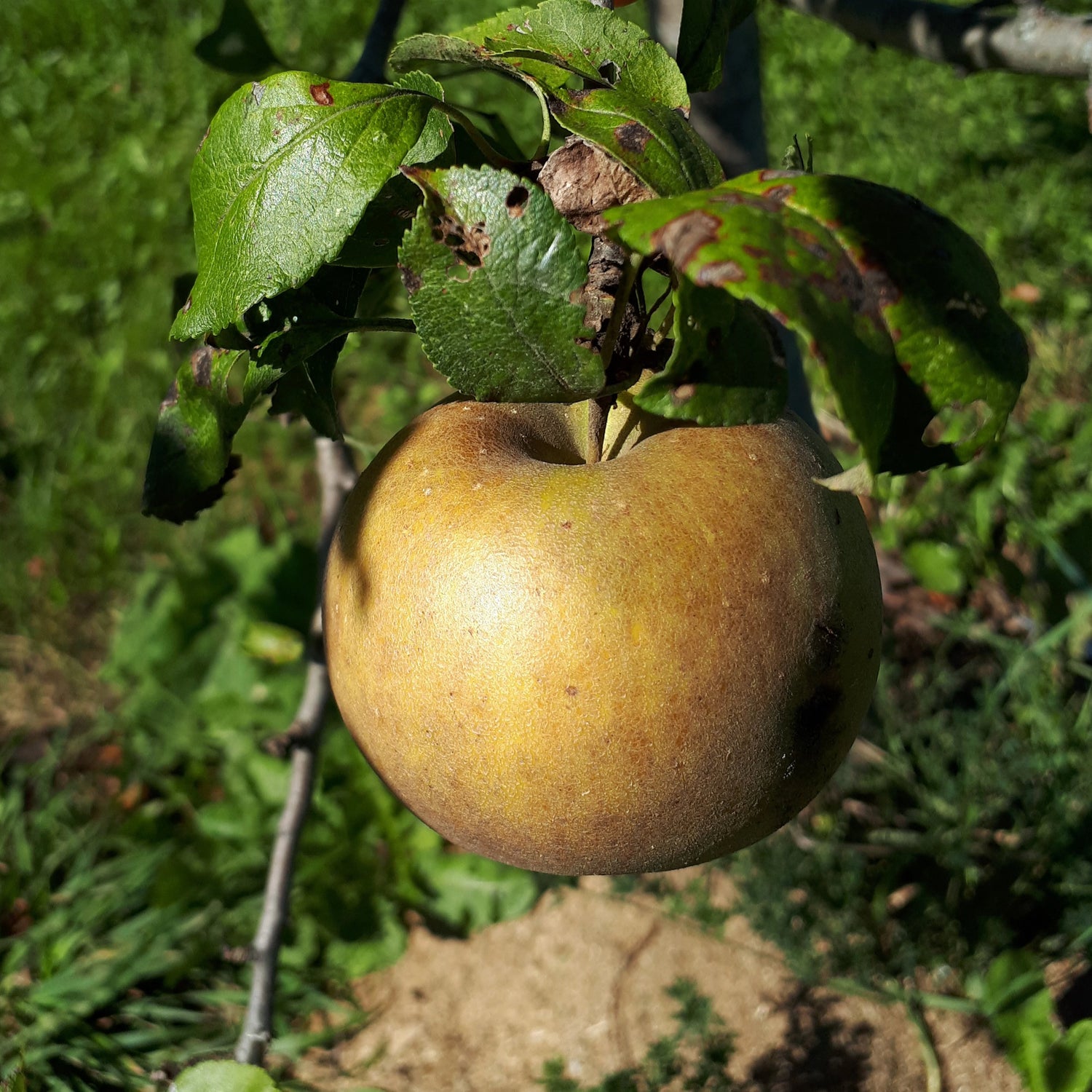


History: Egremont Russet first emerged in Britain in the early 1870s and has remained popular ever since. Even today, it is the third most common apple grown commercially in England.
Why We Grow It: Although the russet, a thick rough skin, coating this apple can be an acquired taste, there is a reason this apple has remained so popular. The fruit itself is an attractive gold dotted with yellow and it has an excellent sweet, nutty flavour. They are delicious fresh, when used for cooking, and in ciders. The trees are known for producing good, regular crops.

History: The exact origin of Ellis Bitter is unknown but it is believed to have originated on the farm of a Mr. Ellis in the 1800s in England. It was planted commercially, particularly by growers under contract with the cider-making company H.P. Bulmer. Unlike some older cider varieties, Ellis Bitter still remains relatively common today.
Why We Grow It: Ellis Bitter is an old English cider apple, with good disease resistance, vigour, and production. This variety produces a high quality medium-bittersweet juice with soft, astringent tannins that are suited for blends. It is notable for its early ripening time compared to many cider apples, and therefore adds nicely to an orchard to extend the season. This cultivar has produced very well in the Ontario climate according to trials at the Vineland Research Station.

History: Elstar apples were developed in the Netherlands in the 1950s and are a cross between Golden Delicious and Ingrid Marie. This excellent combination has created what is considered one of the best Golden Delicious offspring. Fittingly, it has since become quite popular in continental Europe. Despite being introduced to the US in 1972, it has not attained the same level of popularity in North America.
Why We Grow It: Elstar is a flavourful variety, fine for fresh eating or sauce with its crisp, juicy flesh; very little acidity. The skin is distinctive, sporting a orangey-red marbled appearance.
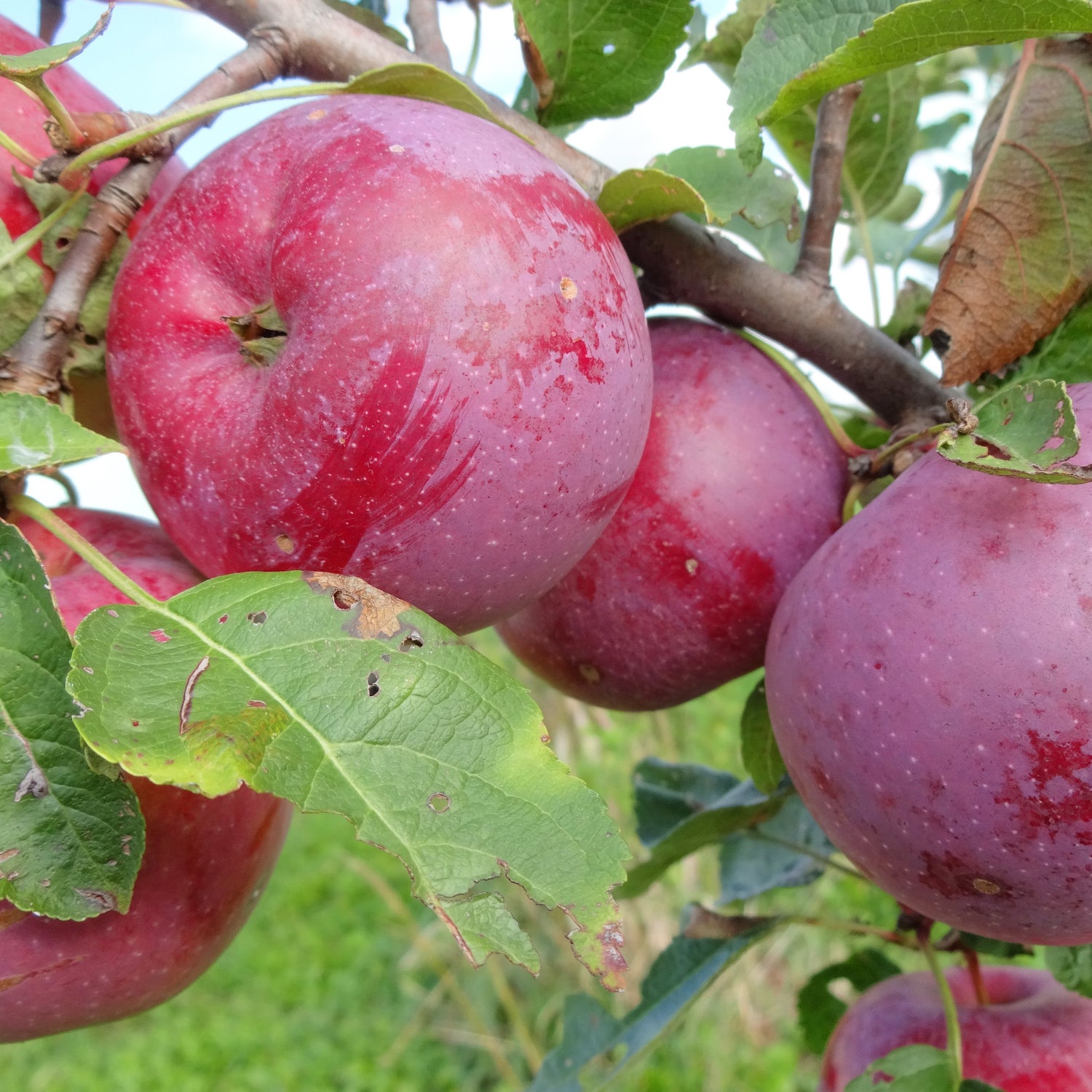
History: The creation and selection of Empire apples was a lot more intense compared to the chance origins of some of our older varieties. In 1945, scientists from the Cornell University New York State Agricultural Experiment Station collected thousands of seeds from the orchard of fruit nutritionist Lester C. Anderson. For years these seeds were grown and tested until Empire emerged as the best apple from amongst its siblings. It was released to the public in 1966 and has since become one of the top ten most popular apples in North America.
Why We Grow It: Empire is an excellent general-purpose apple for the Great Lakes area. The attractive green and red fruit is crisp and sweet and keeps well into the winter. The trees crop heavily and reliably, and the fruit is resistant to bruising, making life easier for the grower. They are also resistant to fireblight and cedar apple rust.
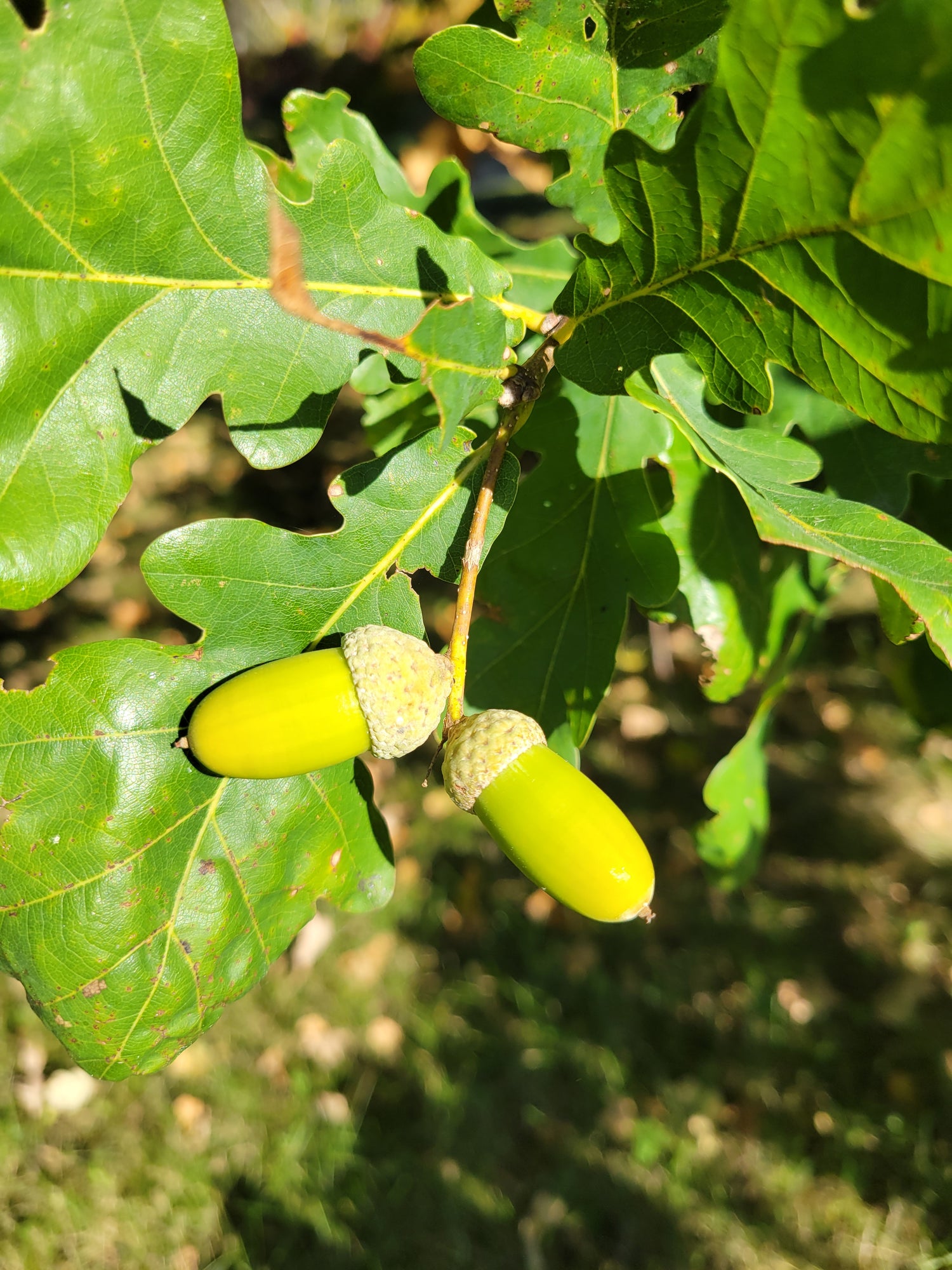
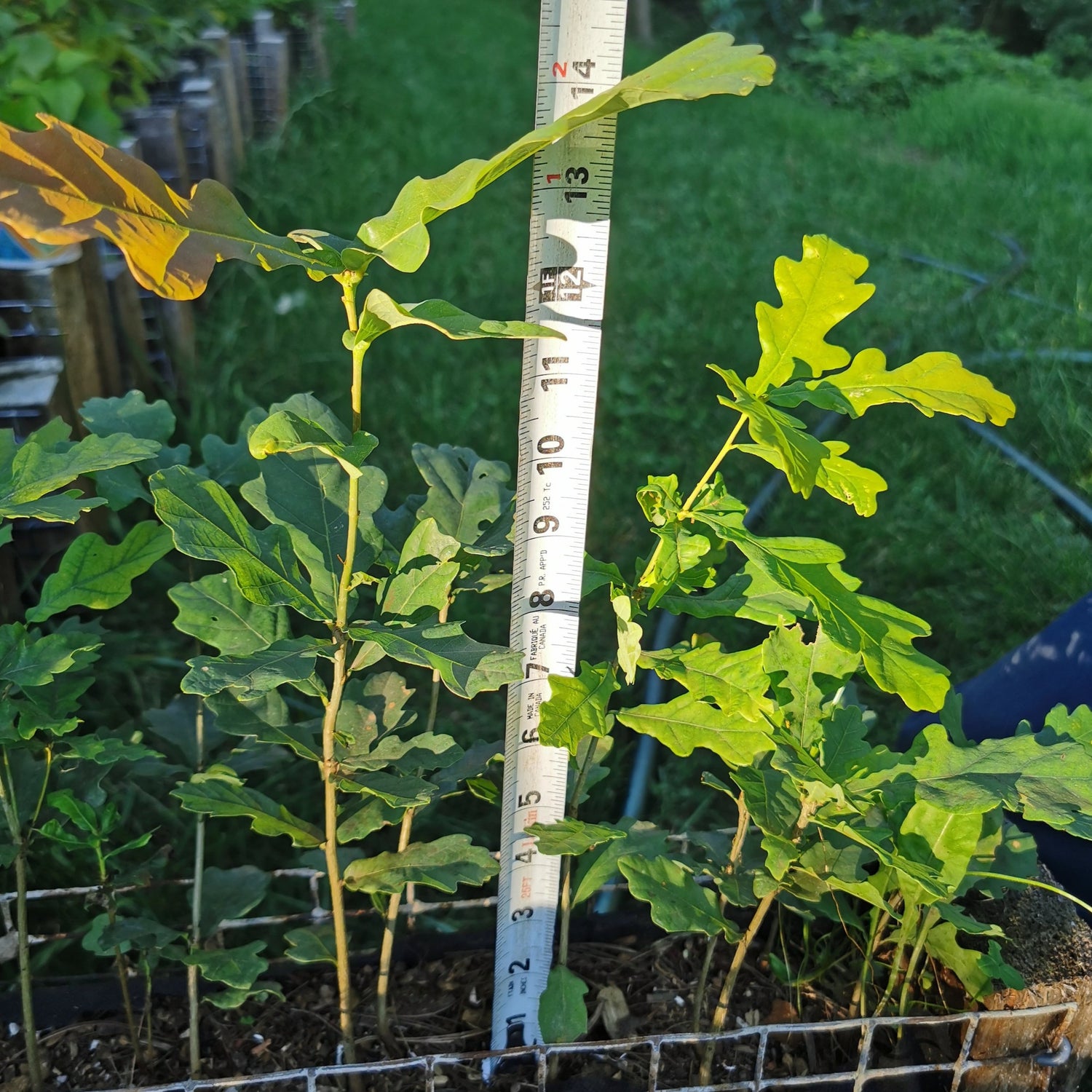
Species: Quercus robur or hybrid. Our seeds are collected from trees that may have been cross-pollinated by closely related species so the resulting seedlings may be hybrids.
History: The English Oak is native to much of Europe where it is culturally significant in many countries. It appears on coats-of-arms, coins, and national emblems, and features prominently in folklore, stories, historical events, and even the legal process in Basque Country. There are numerous examples of exceptionally large and old English Oaks across Europe, such as The Majesty Oak in England with a circumference of 12.2m and the Stelmužė Oak in Lithuania which is believed to be over 1500 years old. The oaks are grown commercially for their durable wood and for ornamental purposes.
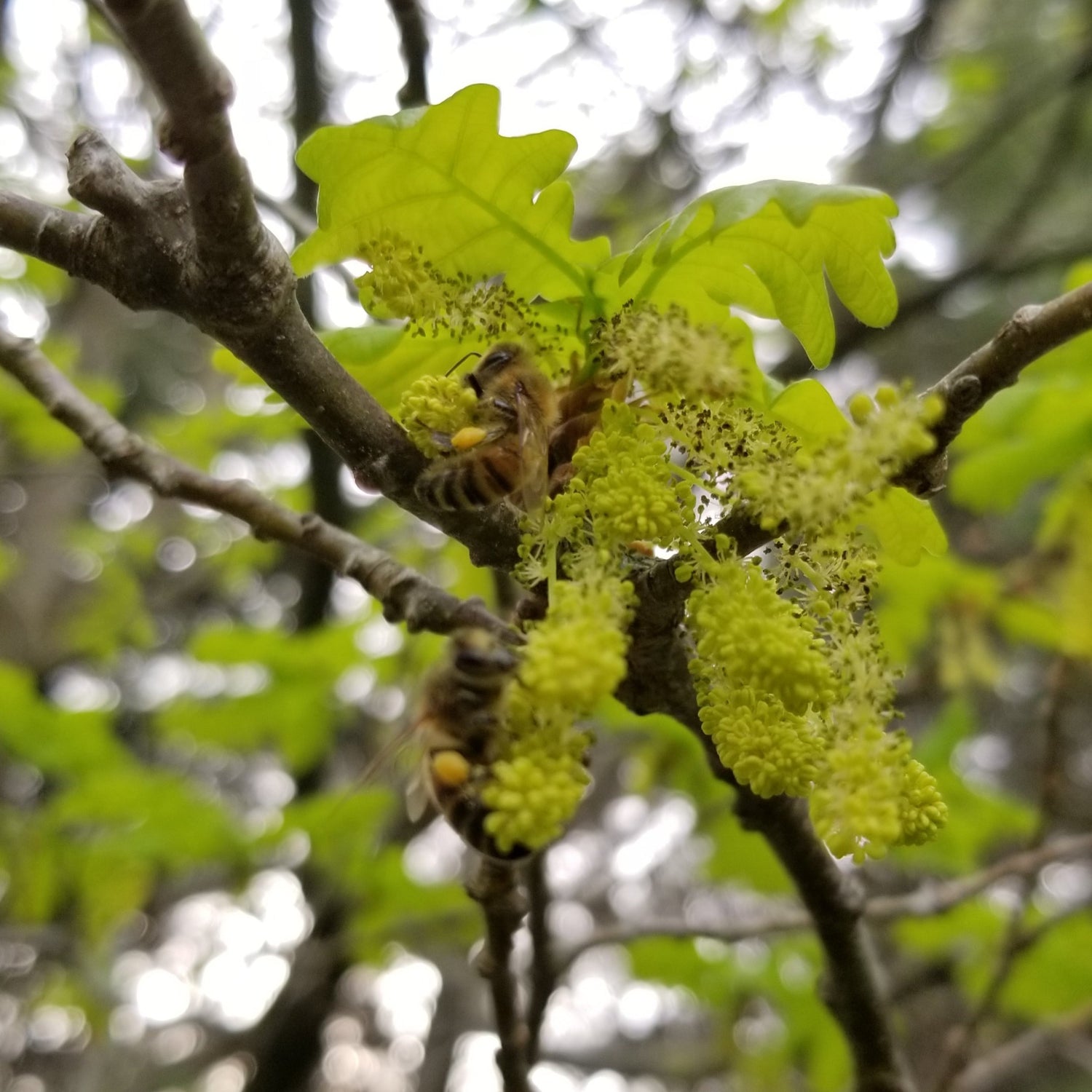
Why We Grow It: The English Oak's acorns are large (2.3-3cm long) and lower in tannins than red oaks, which make them more rewarding after going through the work of cracking and leaching the tannins to use them as a flour/food source. The wood is popular in barrel and cask making thanks to its elastic yet durable strength, and resistance to rot. Very long-lived trees, these majestic beauties can grow up to the ripe old age of 450 years old. It's also one of the few oak species that attracts and supports honey bees as a pollen source!
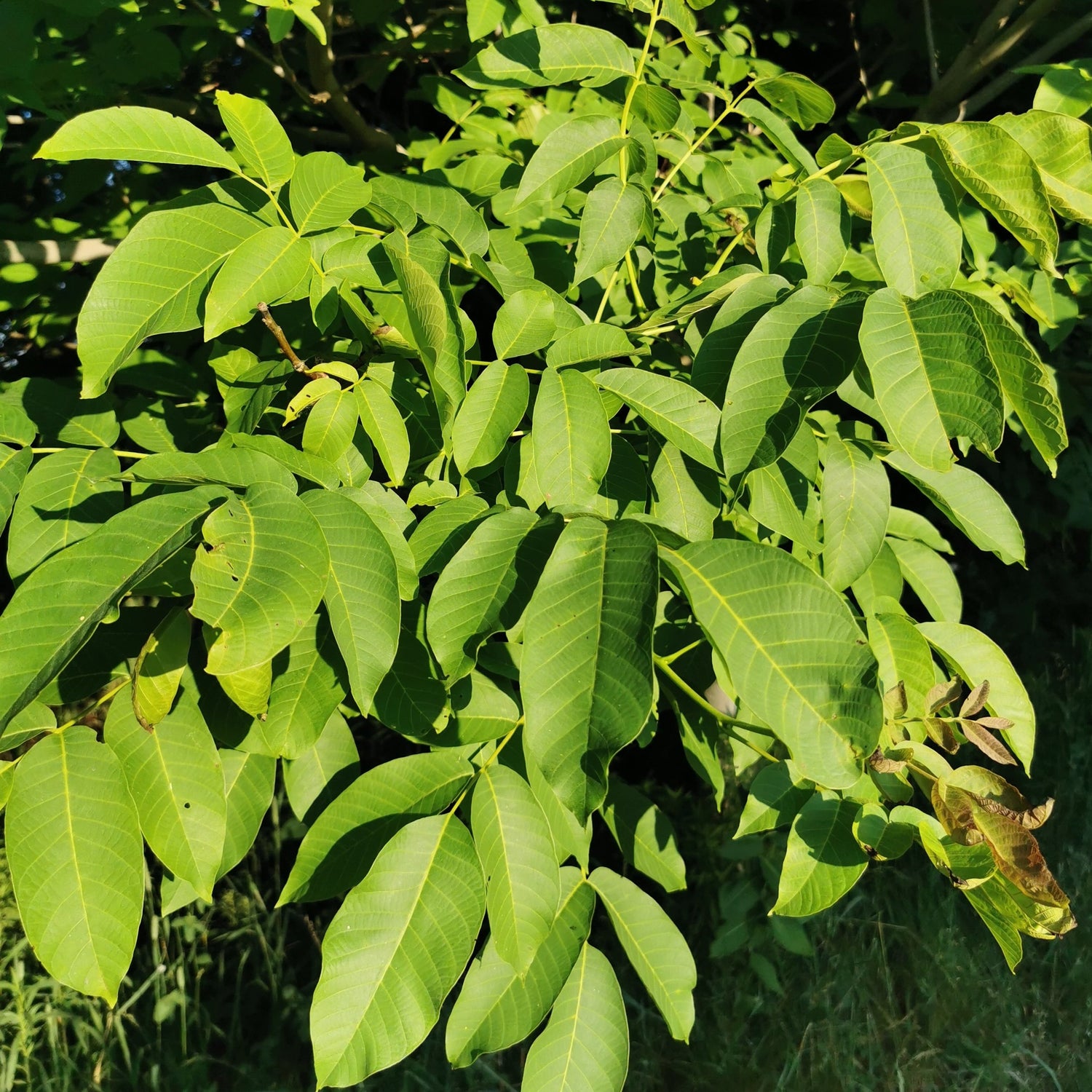
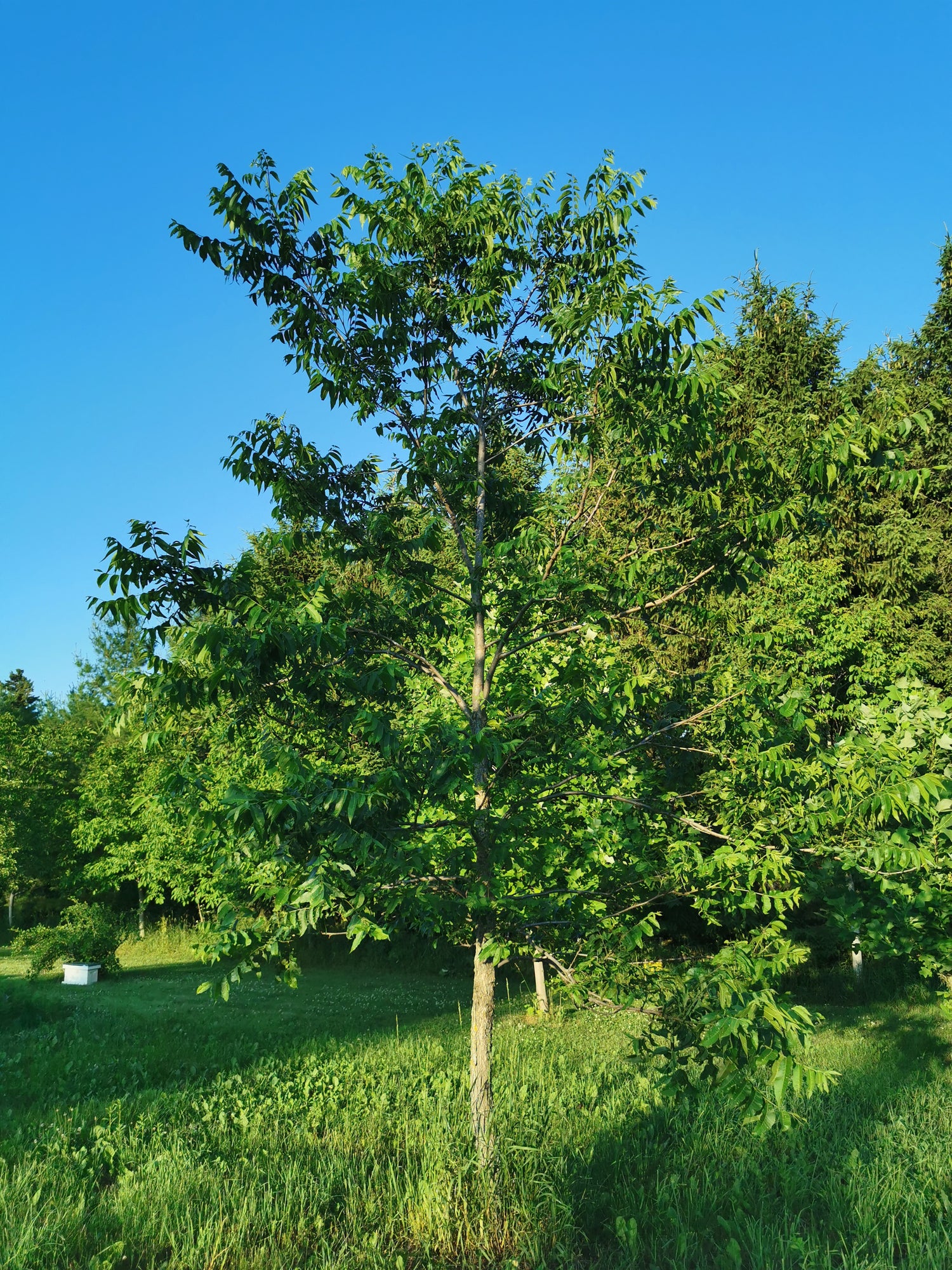
Species: Juglans regia or hybrid. Our seeds are collected from trees that may have been cross-pollinated by closely related species so the resulting seedlings may be hybrids.
History: English Walnut (aka Persian/Carpathian Walnuts) is native from the Balkans to the Himalayas and China. It possibly originated in Iran and over time has been spread across the world by Alexander the Great, the Romans, trade along the Silk Road, and British colonizers. In Italy, there were legends of witches gathering under an old English Walnut tree in Benevento to perform sabbats which in turn has inspired works such as the ballet Il Noce de Benevento. Still commonly grown and cultivated today, China is the main producer of commercial walnuts.
Why We Grow It: Although they aren't native like our other walnut trees, English Walnuts are known for being easier to open than Black Walnuts and remain popular for a reason. Our seedlings come a mother tree near Listowel ON, an extra boon when Ontario grown English Walnuts are said to produce sweeter nuts than those from California! The sap can be boiled to make walnut syrup, which tastes very similar to maple syrup but with notes of caramel and butterscotch. The husks can be used to flavour beer, like hops.
Be mindful of the juglones in the in the roots/nut husks, they are toxic to many other species. They require a buffer of about 50'/30m from the edge of the trees canopy for juglone-sensitive plants. This article from The Garden Hoe has a helpful list of plants that tolerate juglones. However there are recent (2019) studies showing healthy soil high in organic matter and mycorrhizal fungi actually reduce the toxicity of juglones suggesting many plants can grow below juglans species in a healthy ecosystem - it will be interesting to see more study done in this area!

History: AKA Co-op 30, Enterprise is one of the many varieties that was developed through the collaborative PRI disease-resistant breeding program run by Purdue University, Rutgers University, and the University of Illinois. It was introduced in 1993 and has proven to be a very reliable variety. Although its name does not start with 'PRI' like many of the other varieties that came from this program, they still snuck the initials into Enterprise's name.
Why We Grow It: Enterprise produces crisp fruit that it is known for its strong, rich, tart flavour that can be described as spiced. It is a very disease-resistant variety that grows quickly, produces reliable crops, and stores for a long time. They are good for fresh eating although the skin is on the thicker side, and they can be used for cooking, baking, and sauce.

History: Érdi Bõtermõ is a Hungarian variety of sour cherry that is a cross between Pangy and Nady Angol. It was bred by the Hungarian Research Institute for Fruitgrowing and Ornamentals and remains popular in Europe. It was brought back to the US by Michigan State University biologist Pr. Amy Iezzoni who is researching and breeding new sour cherry cultivars. It was given the name "Danube" in North America, named after the river that flows through Hungary, since it was considered easier to pronounce and spell.
Why We Grow It: Érdi Bõtermõ is unique in that it has a surprisingly sweet flavour compared to other sour cherries, making them suitable for fresh eating along with baking and preserving. It ripens early and produces large fruit that are deep red with firm red flesh.
History: Ernie's Favourite was grown as a seedling on a homestead in Mt. Pleasant, ON. It is believed that the seed came from Eastern Europe but it has thrived in our climate for decades and been a family favourite for the original growers. When we asked the farmer what he wanted to call the variety, he requested we name it 'Ernie's Favourite' after his father.
Why We Grow It: Ernie's Favourite produces a medium-sized quince with good flavour. It has dependable crops and does well in our climate - a good, tried-n-true variety!

History: Ernie's Favourite was grown as a seedling on a homestead in Mt. Pleasant, ON. It is believed that the seed came from Eastern Europe but it has thrived in our climate for decades and been a family favourite for the original growers. When we asked the farmer what he wanted to call the variety, he requested we name it 'Ernie's Favourite' after his father.
Why We Grow It: Ernie's Favourite produces a medium-sized quince with good flavour. It has dependable crops and does well in our climate - a good, tried-n-true variety!
Showing 90/320
Next