All Fruit Trees

All Fruit Trees
Looking for bareroot fruit trees Canada? We offer a wide variety of bareroot fruit trees including apples, apricots, pears, plums, cherries, quince, and peaches that are grown for the Canadian climate & we deliver cold-hardy fruit trees right to your door!
We also offer fruit trees for small gardens, heritage apples Ontario and you can filter all our fruit trees by hardiness zones. Search trees by collection or peruse all the varieties we carry below! We offer flat rate shipping across Canada.




320 products
Sort by:
320 products
320 products
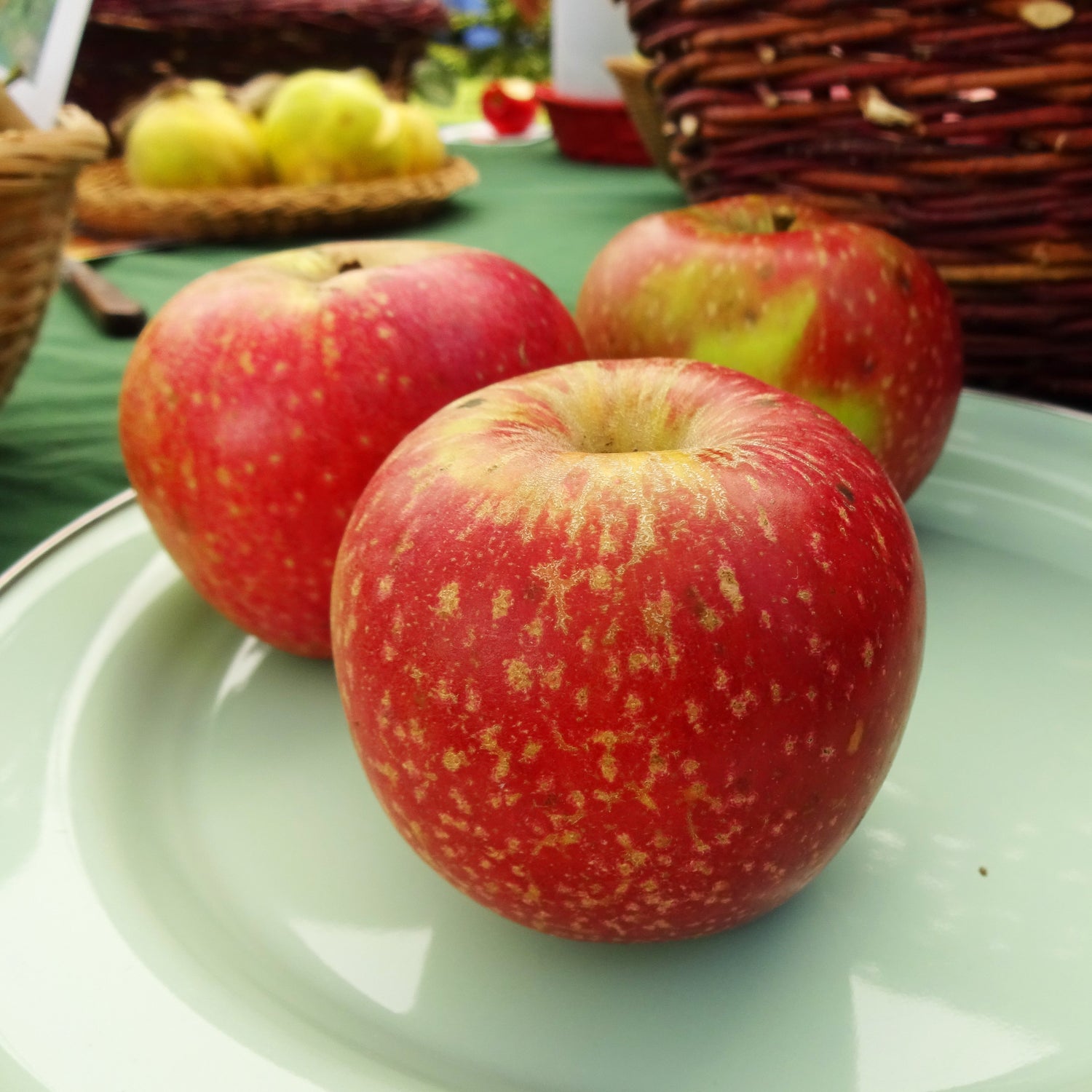
History: Esopus Spitzenberg was discovered near Esopus, New York in the early 1700s. Its main claim to fame is its supposed designation as Thomas Jefferson's favourite apple, a claim supported by the numerous Esopus Spitzenberg trees he had planted at his plantation Monticello. This apple was very popular in the US in the 1800s, considered one of the best for fresh eating, valuable for cooking, and a nice addition to cider blends.
Why We Grow It: The flavour of this particular variety is complex with high acid content, considered by many to be a high quality fresh-eating apple. This is helped by the attractive medium sized fruit which sports bright red skin. This variety keeps, with good flavour, until March. Despite being susceptible to just about every common apple disease, we still believe this apple is worth the extra effort and haven't had much issue growing it here.

Note: Our Evans sour cherries are grown from cuttings so they will be smaller and bushier than the grafted and seedling sour cherries we offer. Please see 'Size at Purchase' below for more details!
History: Evans (aka Bali) was originally grown by a Mrs. Borward living near Fort Saskatchewan, Alberta. This was quite notable since, at the time, it was believed that it was impossible to grow any cherry trees in the prairies! She had been growing the cherries since the early 1920s and the cold hardy tree was eventually brought to the attention of horticulturalist Dr. Ieuan Evans by a friend. In 1976, her garden was slated for destruction due to the pending construction of a federal prison so she invited Dr. Evans to take suckers to propagate the tree. He gave the suckers out to a wide circle of friends and acquaintances who were all impressed and the variety was dubbed 'Evans' in his honour by another Alberta Agriculture horticulturalist. Dr. Evans tried to bring the variety to the attention of local nurseries who turned it down, refusing to believe cherries would grow in the cold prairie climate. Eventually, it was picked up by nurseries and Evans became the number one selling cherry tree in North America.
Why We Grow It: Evans produces bright red cherries that are excellent for pies, jellies, jams, and juice. This naturally dwarfing variety only reaches about 12-14ft tall compared to to a full-size tree which can reach up to 25ft. Evans tends to grow as more of a bush but can be pruned to maintain a tree form. It produces a profusion of white blooms in the spring which makes it quite attractive as an ornamental plant as well.
Check our our blog post with some tasty sour cherry recipes!

History: Fallawater originated in Pennsylvania sometime before 1842, possibly from seeds brought by European colonizers. At one time it was quite popular in the southern United States. This variety has over twenty different names, many of which resemble Fallawater such as Fallenwalder, while others are more fun and unique like Molly Whopper, Green Mountain Pippin, and Prim's Beauty of the West.
Why We Grow It: No matter which name this variety goes by, you can always expect a large, attractive apple with a mildly sweet flavour. Fallawater is an excellent sauce and cooking apple and the fruit stores for a long time.

Our Fence Line Budget Bundle is the perfect option for those looking to plant a large number of fruit trees on a budget! The bundle contains a random mix of twenty of our 50-80cm grade fruit trees. It will primarily consist of apple trees, but you may also receive pear trees and/or stone fruit trees depending on what we have available.
This bundle is great for planting along fence lines, for feeding wildlife, and/or adding some diversity to your orchard!
A few things to note about the Fence Line Budget Bundle:
- Most, if not all, trees in the bundle will be apple trees
- Trees will be a mix of dwarf, semi-dwarf, and/or full-size
- These trees will all be B-Grade (could have minor damage but may not)
- Most trees will be labelled but some may be missing labels
- Trees in this bundle are not covered under our 90 day guarantee
- We do not accept requests for what kinds of trees you will receive

History: Fignomenal originated as a spontaneous mutation on a Chicago Hardy fig. It likely originated in Italy although exact details are uncertain.
Why We Grow It: Fignomenal is a compact and relatively low maintenance variety which makes it ideal for indoor/container growing. It produces an abundant crop of medium-sized figs with deep brown skin and pink flesh that are quite sweet.
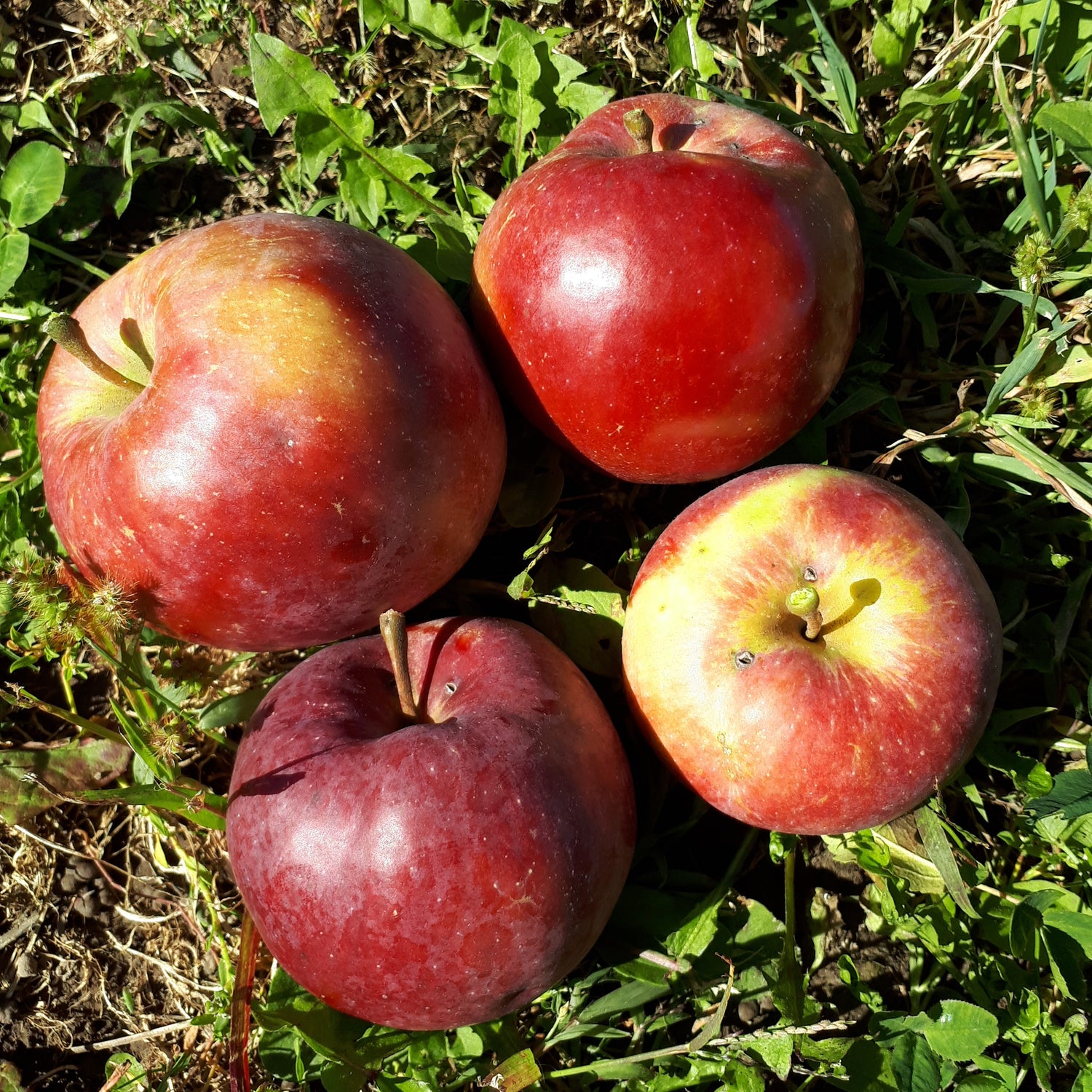
History: Fireside apples originated in 1943 from a breeding program at the Minnesota Agricultural Experiment Station. They are one of nearly 30 varieties that have been introduced by the university's breeding program since it began in 1888.
Why We Grow It: Fireside stands as an icon of toughness in the world of apples, thriving in cold northern areas. But don’t let this image fool you—Fireside has a warm heart! The flesh is amazingly sweet and very juicy.
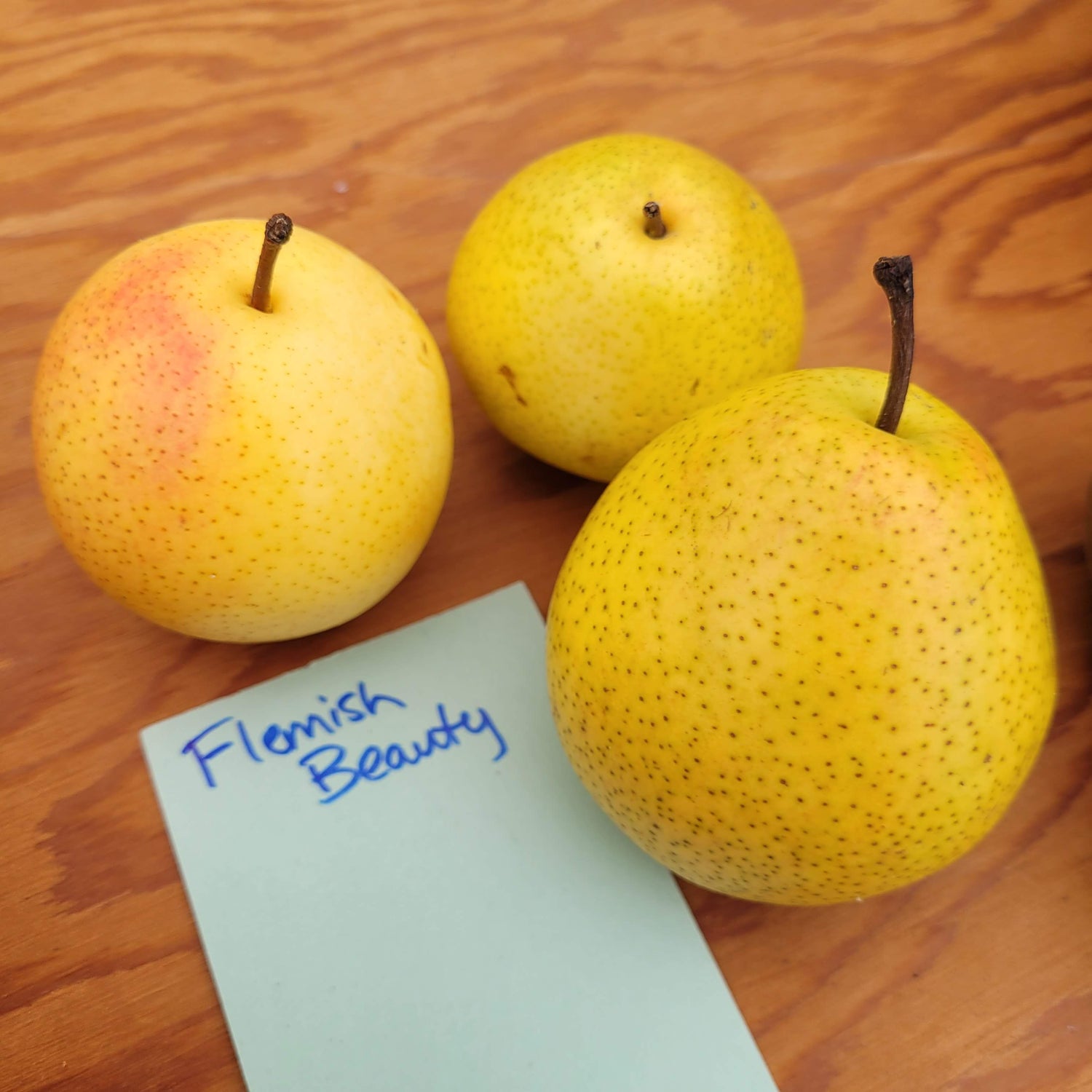
History: Flemish Beauty originated in Belgium in the early 1800s. At one point Flemish Beauty was one of the most common commercial varieties in the US.
Why We Grow It: Flemish Beauty's cold hardiness and good flavour makes this a popular variety. The fruit is large and greenish-yellow without much neck. It is known for being sweet and very juicy, great for fresh eating.


History: Florina, aka Querina, was developed in France in the 1980s at the Station de Recherches d'Arboriculture Fruitiere. Despite being developed in France, its ancestry is made up of American varieties. Since its introduction it has become quite popular in continental Europe.
Why We Grow It: One of Steph and Mouse's favourites! Florina is a wonderful all-around apple for the backyard offering both rich flavour and easy care. The sweet, crisp fruits it produces are perfect right off the tree but also keep a few months. They are also great for organic production: resistant to scab, fireblight, mildew, and rosy apple aphid.
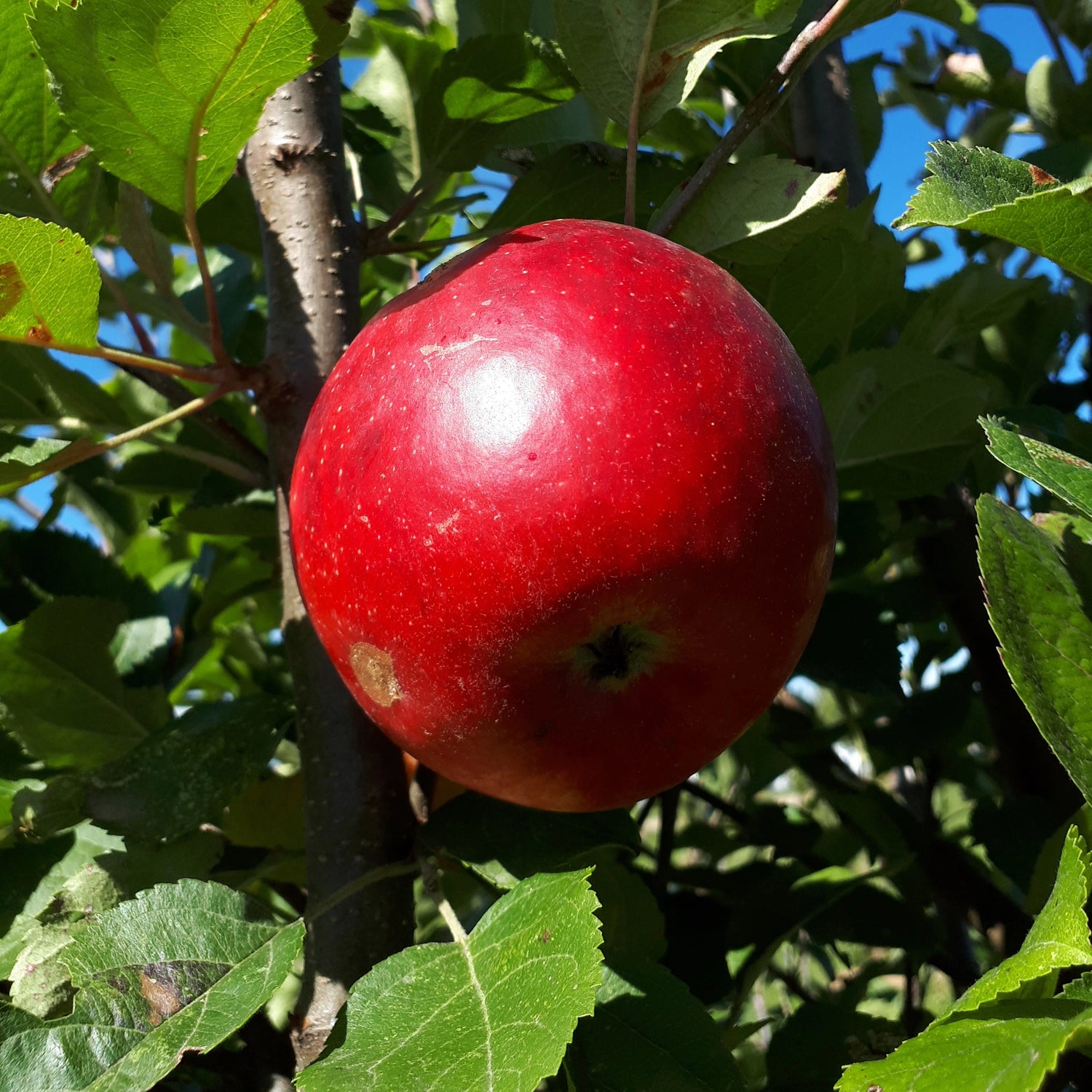
History: Freedom was developed in a breeding program at the New York State Agricultural Experiment Station in Geneva, New York in 1958. The goal was to create an apple that was immune to apple scab, and this particular variety was chosen from 120 other apples that were planted out from seed selected through an intensive breeding program. It was released in 1983 and given the name Freedom to represent its freedom from apple scab.
Why We Grow It: Low maintenance, disease-resistant, vigorous, good flavour, and a good keeper... all in one apple! Freedom is the perfect variety for growing organically, for pick-your-owns, backyards, and community orchards. Large red skinned apple, similar to McIntosh in flavour with sweet, subacidic, sprightly flavour and juicy white flesh. Crunchy, fine grained flesh.

Why We Grow It: These apples feature red blush over green skin and have a rather flattened appearance. They have an intense pineapple flavour that is a pleasant mix of sweet and sharp, and are also crisp, juicy, and high in Vitamin C. As one can imagine, they are great for fresh eating but can also be used for cooking. The tree is vigorous and produces good crops, but does tend to bear fruit biennially. It is also one of more particular trees, being more sensitive to late frosts and drought conditions.


History: A highly regarded cider apple of Normandy, France, where it has been grown for centuries. This cultivar is one of the traditional cultivars in the production of calvados (a brandy made from apples and sometimes pears) in the Pays d’Auge region.
Why we grow it: This cider apple has a unique spicy flavour that is high in tannins, low in acidity, and low in sugar. With it's rich history and beautiful brass coloured juice, this cultivar is a must in every well-rounded cider orchard.
Photo credit: Trizek, CC BY-SA 4.0, via Wikimedia Common


History: Fresco, also known by the brand name Wellant®, was developed through a fruit breeding collaboration between Inova Fruit and the Applied Plant Research at the Wageningen University and Research Center in the Netherlands. The goal was to create an apple variety that better aligned with changing consumer tastes. It was bred in the late 1900s and named Fresco during the years it underwent various tests before being released in 2004 under the brand name Wellant®. It is primarily grown and sold in Europe.
Why We Grow It: Fresco produces a large, deep red fruit that is crunchy with a strong flavour high in both sweetness and tartness. It is excellent for fresh eating and can be used in baking and cooking as well. An excellent multi-purpose apple!
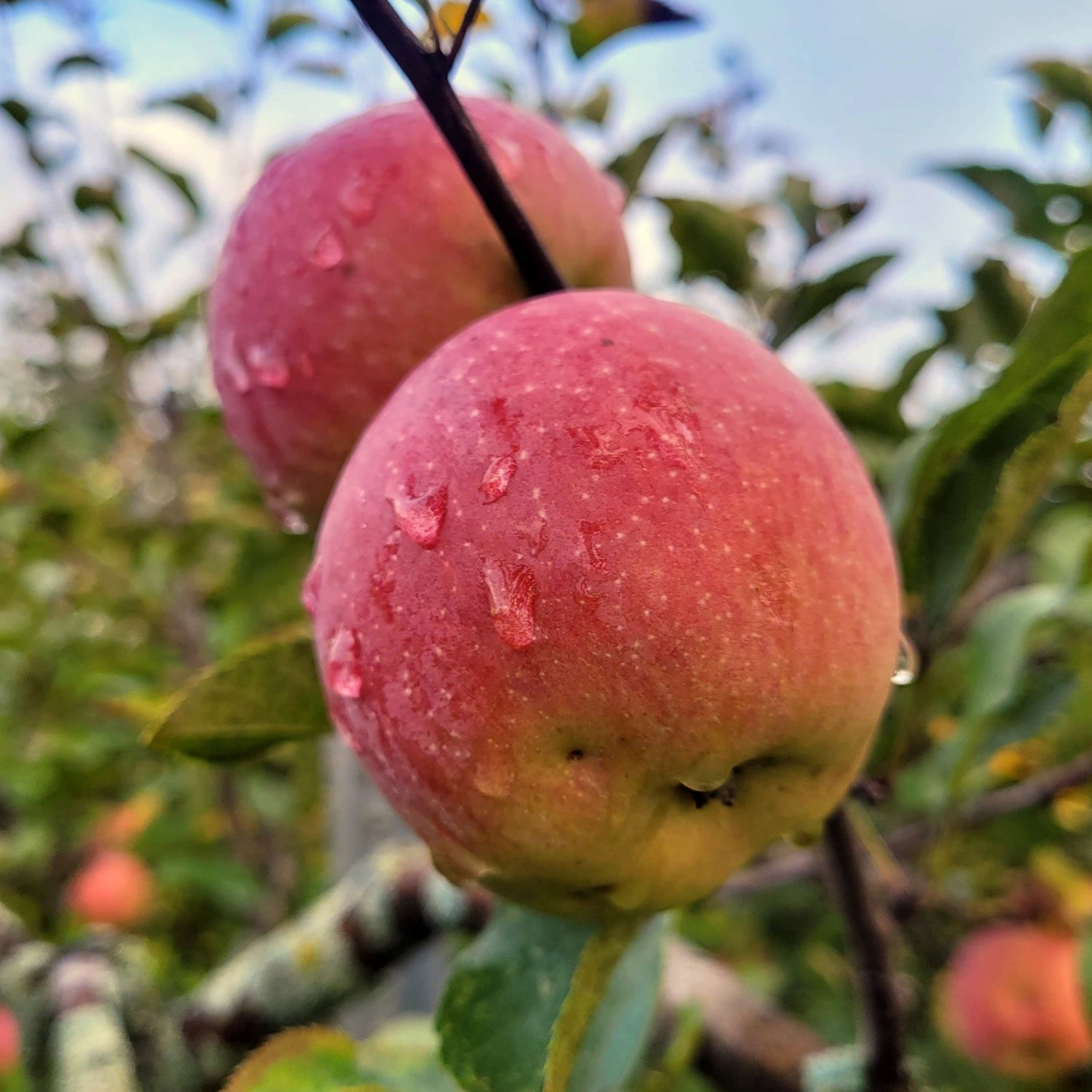
History: Fuji apples were developed at the Tohoku Research Station in Japan in the 1930s and released commercially in 1962. It was named after Fujisaki, the town where it was created. Despite being created in Japan, this apple is actually a mix of two American varieties. Its excellent flavour and attractive appearance has made it one of the most popular apples varieties in the world. It is commonly grown in the US, Japan, and China.
Why We Grow It: Its crisp, very juicy, sweet flesh makes Fuji a very popular variety. It also stores well, lasting about three months. To the best of our knowledge, this is the original strain.

Why We Grow It: Along with the great sweet flavour and juiciness of the original, Fuji BC #2 also boasts redder skin, making it more appealing for those who prefer red apples.
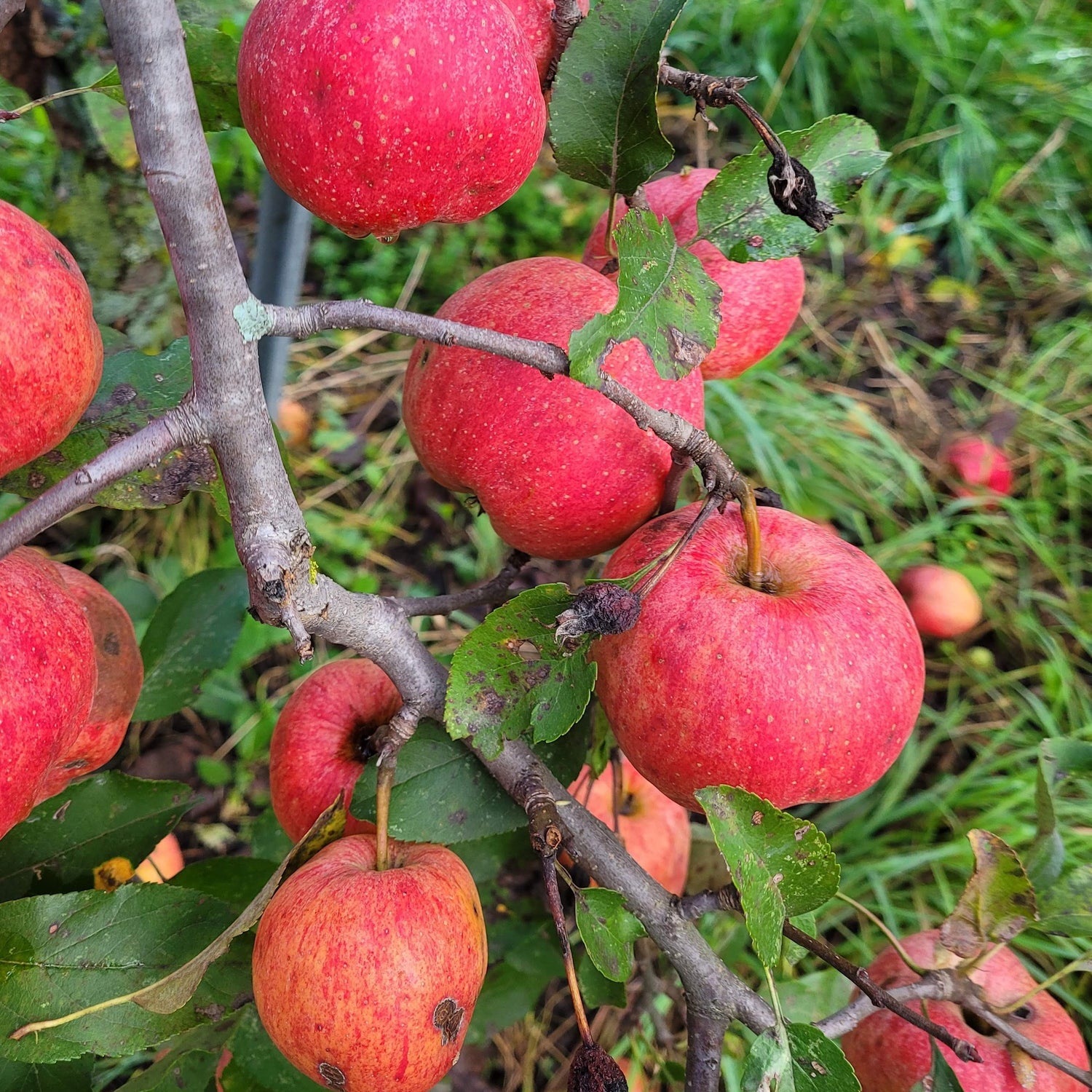
History: Gala apples are one of several varieties created by J.H. Kidd in New Zealand as part of his project to cross Cox's Orange Pippin with American varieties in the 1930s. He definitely succeeded with the Gala apple which has since become one of the most popular apple varieties worldwide and a mainstay in grocery stores.
Why We Grow It: This apple earned its popularity with its amazing flavour, especially when eaten fresh off the tree. Although many sports with a deeper red colour have been introduced and marketed as Gala, they often come at a compromise to flavour so we offer you the original Gala with full sweet crunchiness.
Showing 105/320
Next