All Fruit Trees

All Fruit Trees
Looking for bareroot fruit trees Canada? We offer a wide variety of bareroot fruit trees including apples, apricots, pears, plums, cherries, quince, and peaches that are grown for the Canadian climate & we deliver cold-hardy fruit trees right to your door!
We also offer fruit trees for small gardens, heritage apples Ontario and you can filter all our fruit trees by hardiness zones. Search trees by collection or peruse all the varieties we carry below! We offer flat rate shipping across Canada.




320 products
Sort by:
320 products
320 products
History: This is an old perry pear that has been known since the 1800s in Austria and Northern Switzerland. It was first recorded in 1854 and the name Gelbmostler means "yellow most pear."
Why We Grow It: Although the fruit doesn't keep well, it is prized for its high disease resistance, juiciness, and astringent flavour. The skin is greenish-yellow, speckled with russet spots. It has a sugar content of 10-11% by weight.
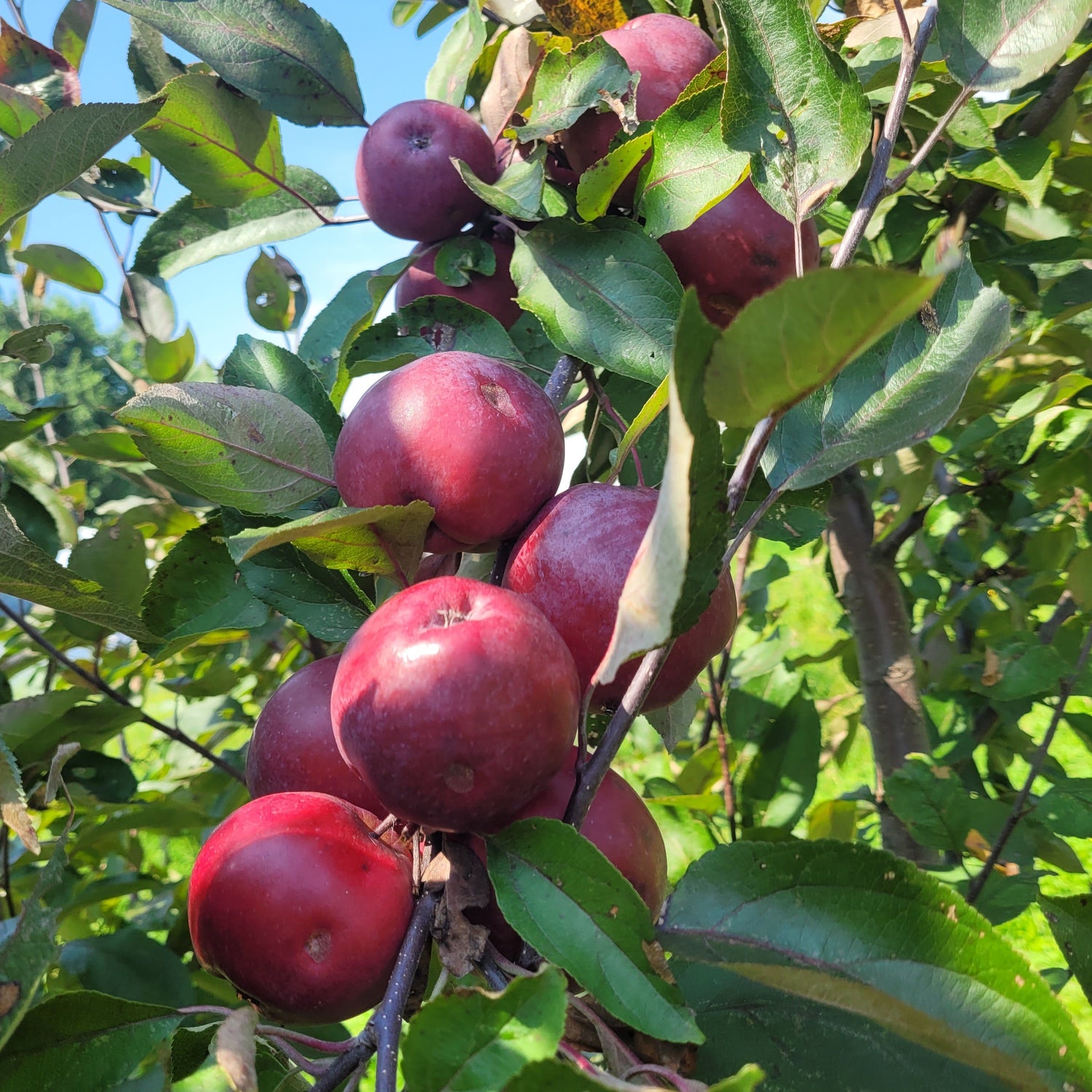
History: The Geneva crabapple was developed in the 1930s in collaboration with the Ottawa Experimental Farm and the New York State Agricultural Research Station based in Ottawa. The creation of this crabapple was head by Isabella Preston who specialized in creating cold-hardy ornamental plants.
Why We Grow It: This attractive crabapple has deep maroon flesh. The tree itself is quite visually appealing, sporting red leaves and bright pink flowers in the spring. The taste is reminiscent of rhubarb and is suitable for cooking as well. As it is a low sugar/high acid juice, it is best blended with another high sugar variety for cider. It also adds a nice red hue to blends.
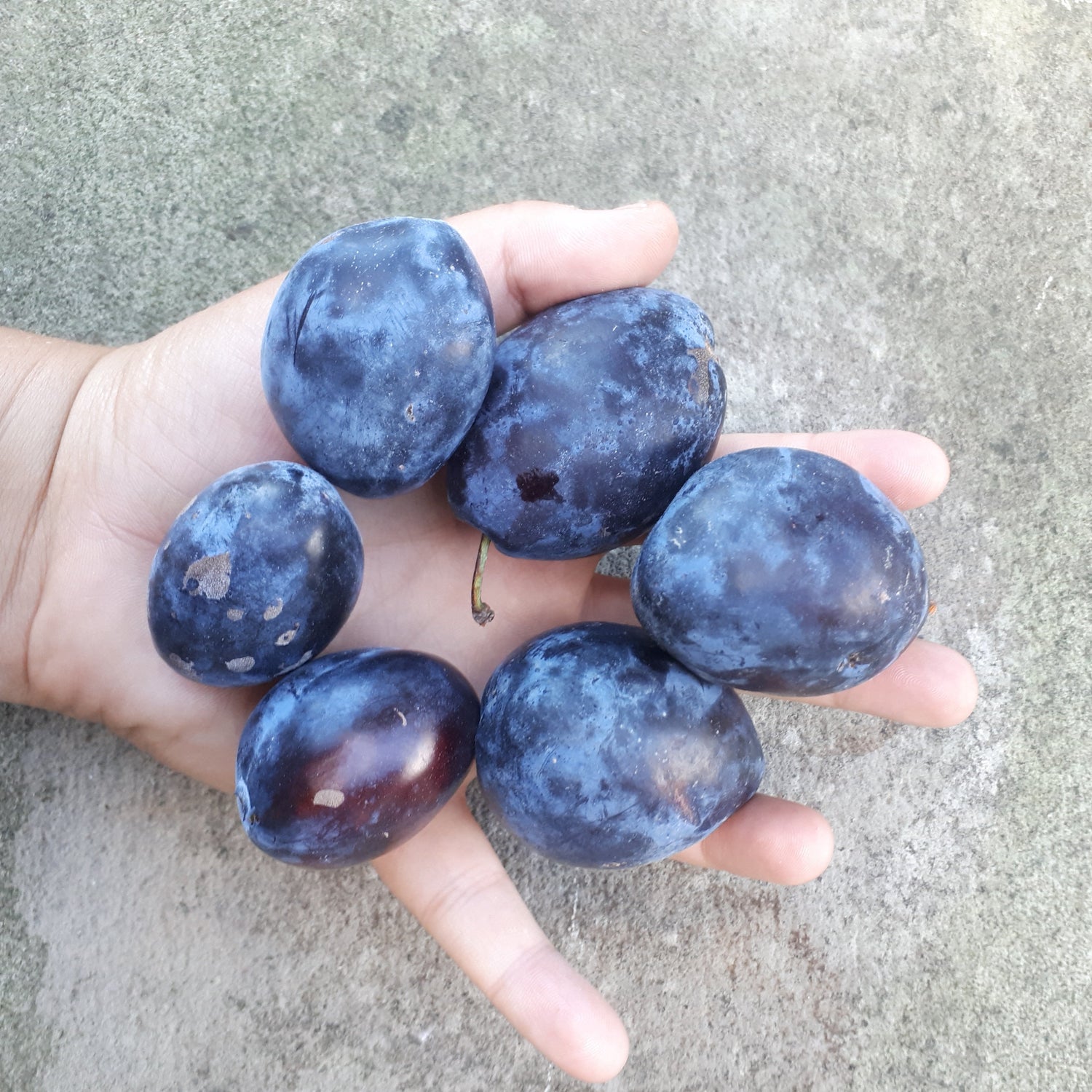
History: German plums are a European variety characteristic of the kind grown in central Europe. Although not much is known about its history, it is believed this variety is at least a couple centuries old.
Why We Grow It: A juicy, freestone plum with an aromatic, sweet flavour. They are great for fresh eating and due to their drier than average nature, are great for baking into traditional German plum desserts. They keep for 2-4 weeks refrigerated, providing ample time to enjoy them fresh or find that perfect recipe.
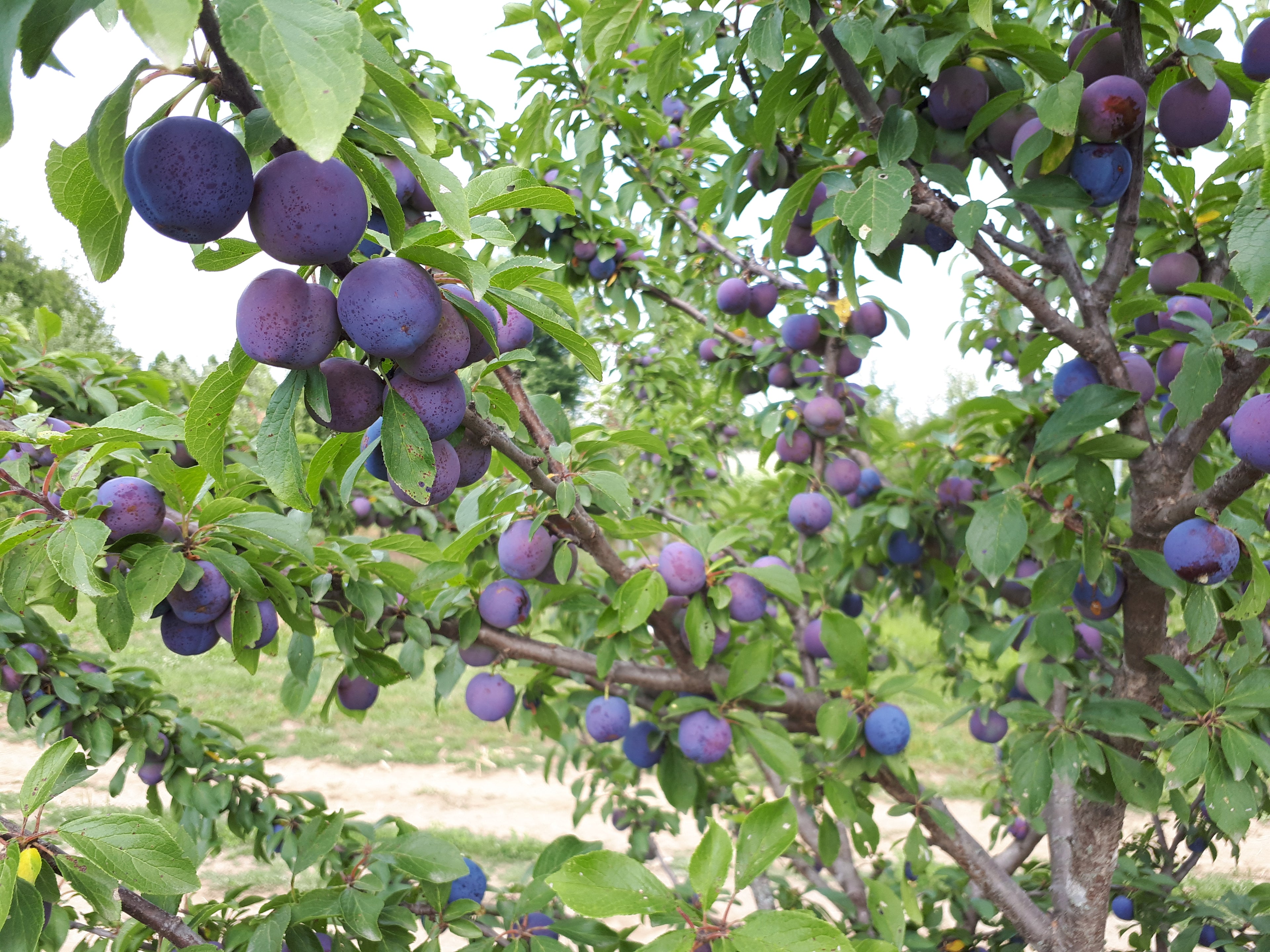
The photo of the plums in hand compares 4 larger Italian plums on the upper right, to 2 smaller German plums on the lower left.
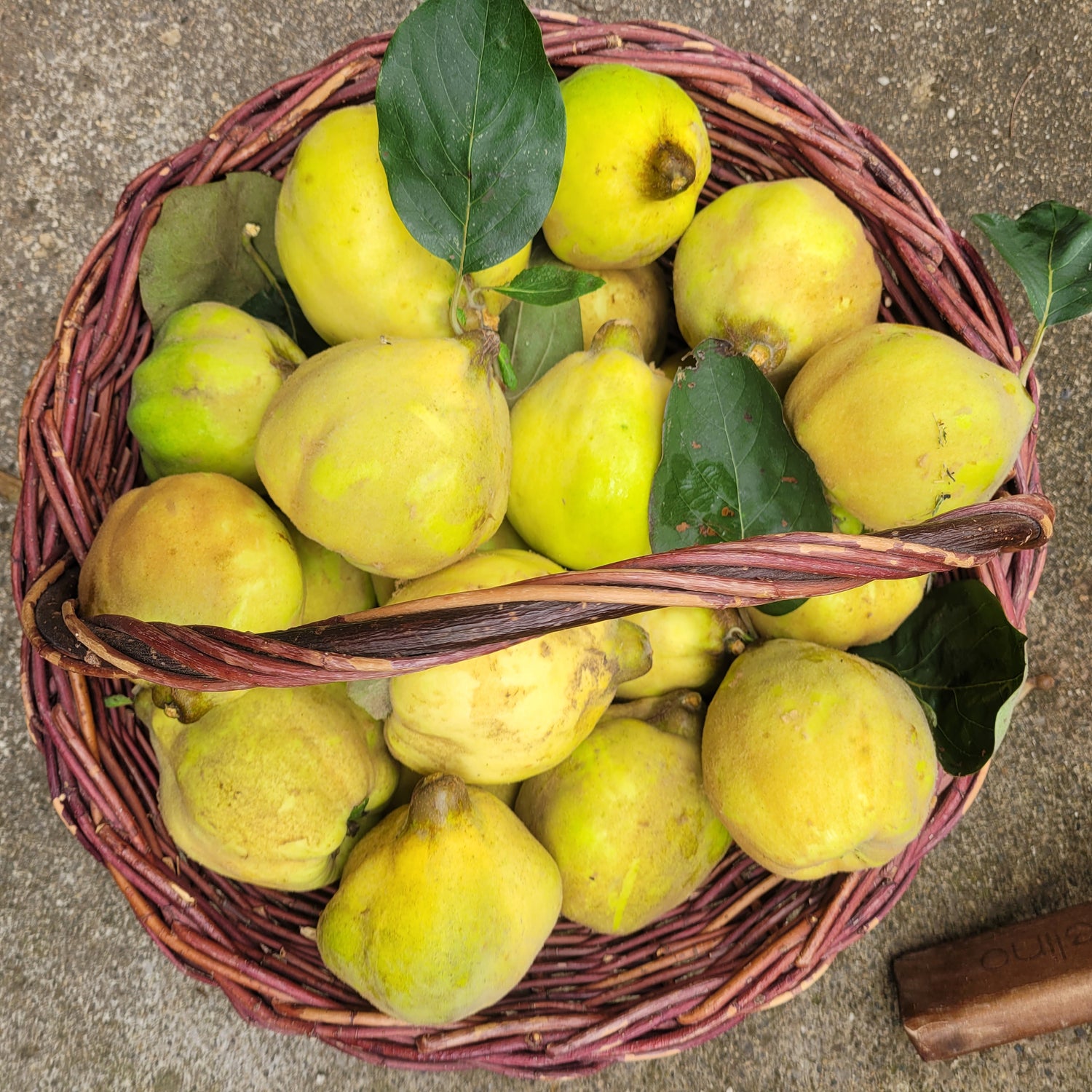
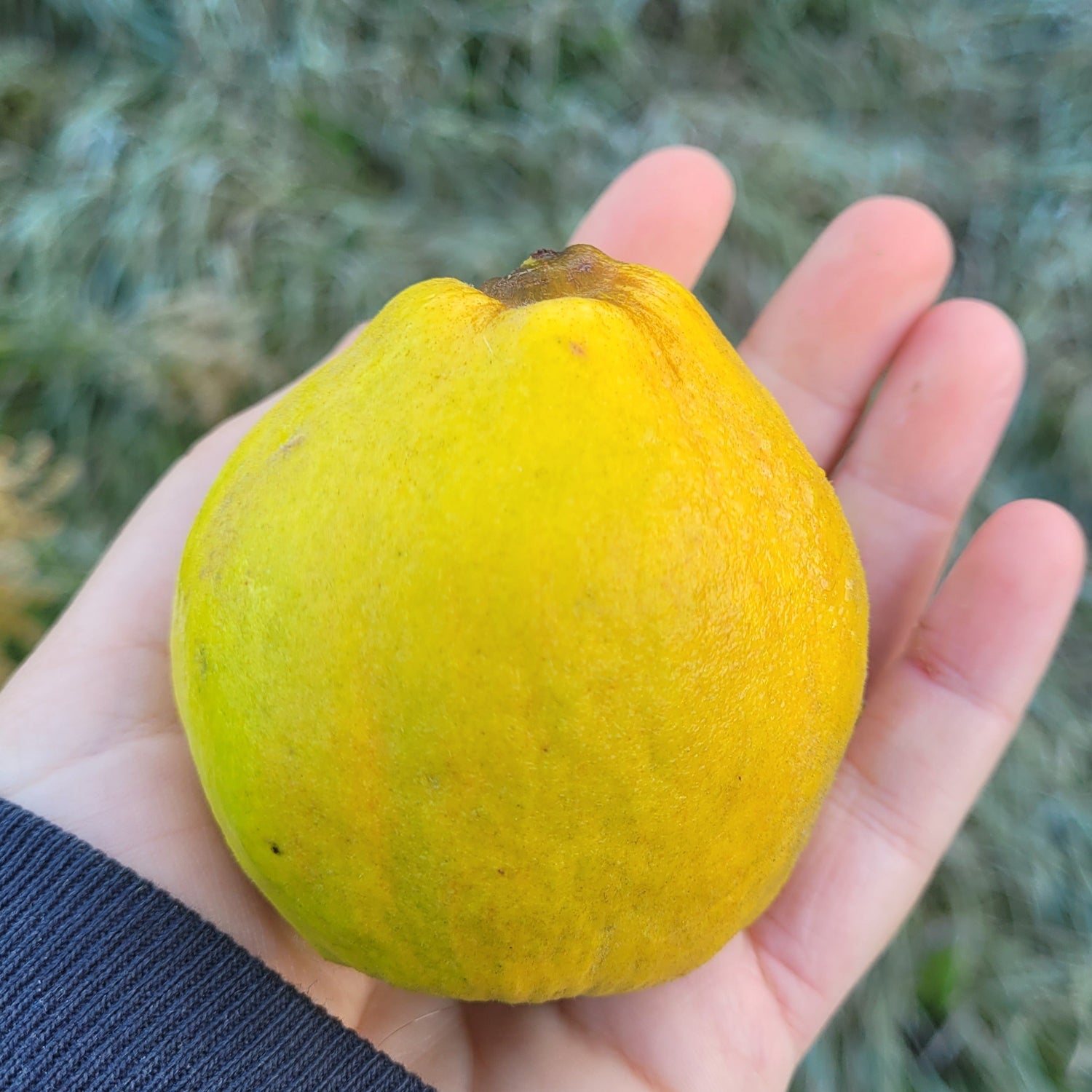
History: Little is known about the history of Giant of Zagreb aside from the fact that it originated in the former country of Yugoslavia. Its country of origin suggests it was developed some time in the 20th century since the nation only lasted from 1918-1992. It was named for Zagreb, a major Yugoslavian city that is now the capital of Croatia.
Why We Grow It: The fruit of Giant of Zagreb are large with greenish-yellow skin and firm white flesh. The flavour is mild for a quince, although this isn't saying much. For those who have never tasted quince, it is a sour-raspberry flavoured experience not soon forgotten. As the flavour profile suggests, it is best used in baking, jellies, sauces (quince sauce or added to apple sauce), or candied. This is one of the hardiest varieties of quince available.


History: Gin pears were first recorded in England in 1886. It was said the perry made from this pear had a juniper flavour, hence the name 'Gin.' It it still quite popular in parts of England.
Why We Grow It: The small fruit of this pear are used chiefly for perry, producing a good quality juice of medium tannins and acidity. The harvested fruit can be kept up to a month until pressing.

History: Ginger Gold has quite the dramatic origin. In 1969 Hurricane Camille hit Virginia and brought awful floods, devastating the orchards of Clyde and Frances "Ginger" Harvey. As Clyde Harvey went to save the few remaining trees in his Winesap orchard, he discovered a mysterious seedling that produced yellow apples instead of red. Genetic testing showed it was a seedling of Golden Delicious, Albermarle Pippin, and an unknown third variety. Clyde named the variety after his wife and it was introduced commercially in 1982. Since then, it has become a commercially popular early variety! In 2007, the Virginia General Assembly proposed a bill to make Ginger Gold the official state apple, although this bill was sadly tabled.
Why We Grow It: It is easy to see why this such a popular early apple! Ginger Gold produces lovely bright yellow apples that sometimes sport a red blush. These medium-large apples have are firm and juicy with a pleasant sweet flavour that has a nice tart finish. The fruit is slow to brown which makes them even better for fresh-eating along with drying. For fans of feeding wildlife, Ginger Gold apples are known to hang onto the tree well after they are ripe.

History: Glowing Heart was bred in Toronto by Fred Jansen, one of the founders of the North American Fruit Explorers (NAFEX). This unique apple is still in its early years.
Why We Grow It: This variety has a unique pink and white flesh and is quite acidic. One bite will make you pucker! Although not the best option for fresh eating, this apple creates an aromatic jelly with rich flavour and can be used in ciders as well. It does well in organic orchards.
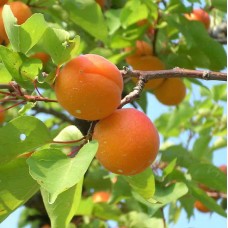
History: Goldcot was bred by researchers in Michigan's snowbelt with the goal of creating a hardier apricot that could withstand harsher winters. They succeeded and Goldcot apricots were introduced in 1967.
Why We Grow It: Both an early and notably hardy cultivar, Goldcot is known to be productive and dependable. The flesh of the fruit is drier than other apricots and has a slight tangy taste that is good for both fresh eating and canning. The tree has a natural semi-dwarf growth habit, great for anyone looking for a smaller apricot tree.


History: Golden Delicious was discovered by chance on a family farm in West Virginia and sold in 1914 to the Stark Brothers Nurseries. It has since become one of the most popular apples in North America. Since 1972, Clay County, where the apple was found, has hosted an annual Golden Delicious Festival and in 1995 it was declared the state fruit of West Virginia. Golden Delicious is also the parent of many varieties, including prominent ones such as Ambrosia and Gala.
Why We Grow It: It is easy to see why this apple is so popular with its attractive golden yellow skin and sweet, crisp cream-coloured flesh. Golden Delicious is a favourite for fresh eating, sauce, and apple butter. On top of that, it is resistant to scab, powdery mildew, and fire blight.

History: Golden Nugget was created more or less by accident when Golden Russet and Cox's Orange Pippin were crossed at the Kentville Agricultural Station in Nova Scotia in 1932. Despite being an accident, once researchers realized how flavourful this variety was they continued to raise it and eventually released it in 1964. Although a delicious apple, its small size prevented it from attaining true commercial success.
Why We Grow It: It is prized for its incredible flavour which is super sweet and tangy like a pineapple. Along with being great for fresh eating, it is also suited for cider. The tree itself boasts decent disease resistance.

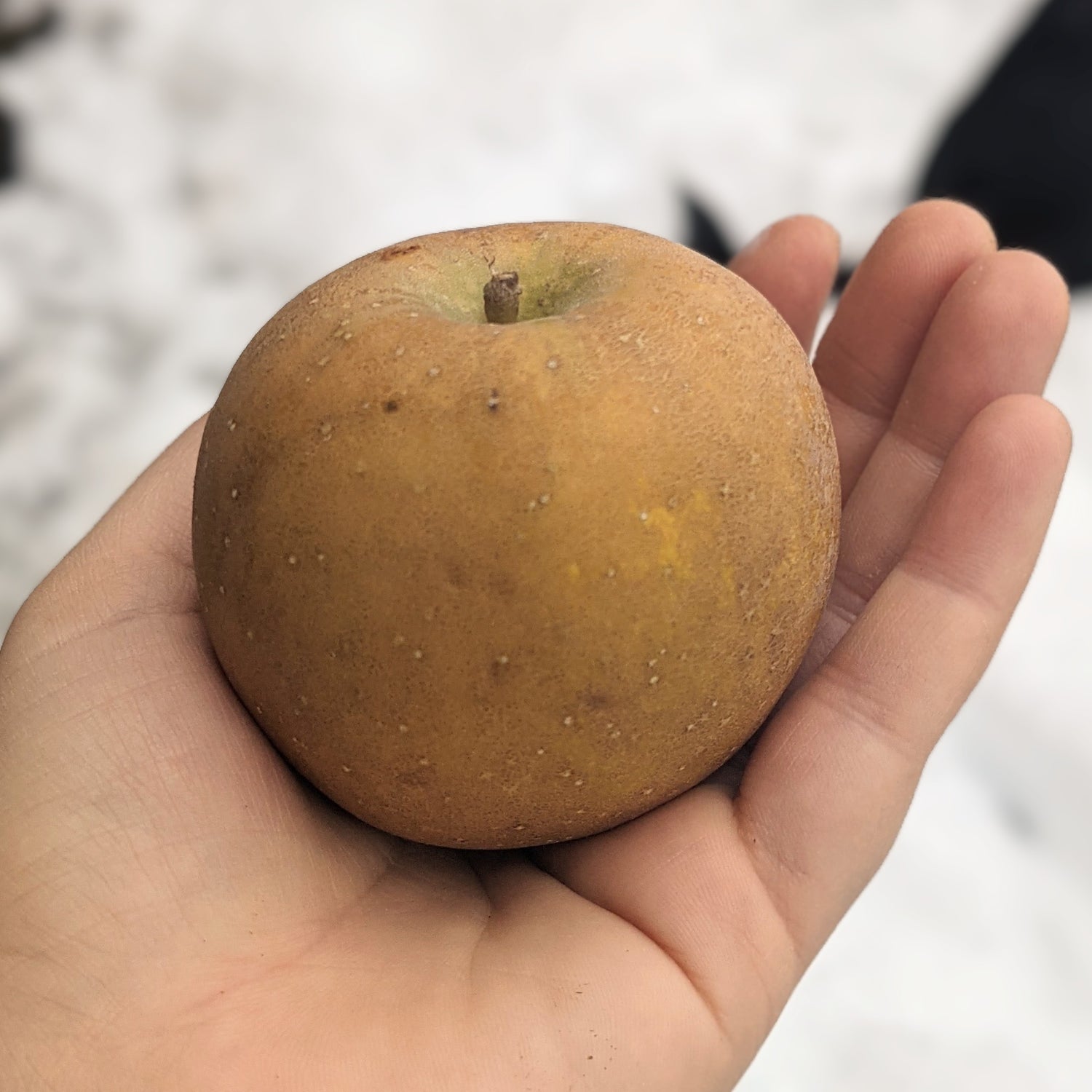
History: The origins of Golden Russet are unclear, but we know it was discovered in New York in the first half of the 1800s. It may have come from the seedling of an English russet variety and could have Ashmead's Kernel parentage. It was grown commercially for some time before falling out of favour, although it has regained some popularity recently due to its strengths in cider production.
Why We Grow It: With both lots of sweetness and acidity, Golden Russet is one of our favourites for fresh eating. The flavourful juice from these apples is also great for making cider. The thick russetted skin discourages insect damage and it is resistant to scab, canker, and powdery mildew. Its tip-bearing habit gives these hardy trees a wispy appearance.

History: Golden Sentinel was developed at the Pacific Agri-Food Research Centre in Summerland, BC. It was first bred in 1986 as part of a breeding program to create high quality columnar apples. It underwent further testing until 1997, after which it was eventually released.
Why We Grow It: Golden Sentinel is wonderful for a variety of reasons! It produces attractive, large yellow apples with a sweet flavour reminiscent of Golden Delicious. The fruit can be eaten fresh or used for baking. Its columnar growth habit means it stays quite thin, making it a great option for container growing and/or those with limited space. This variety is also quite disease resistant.
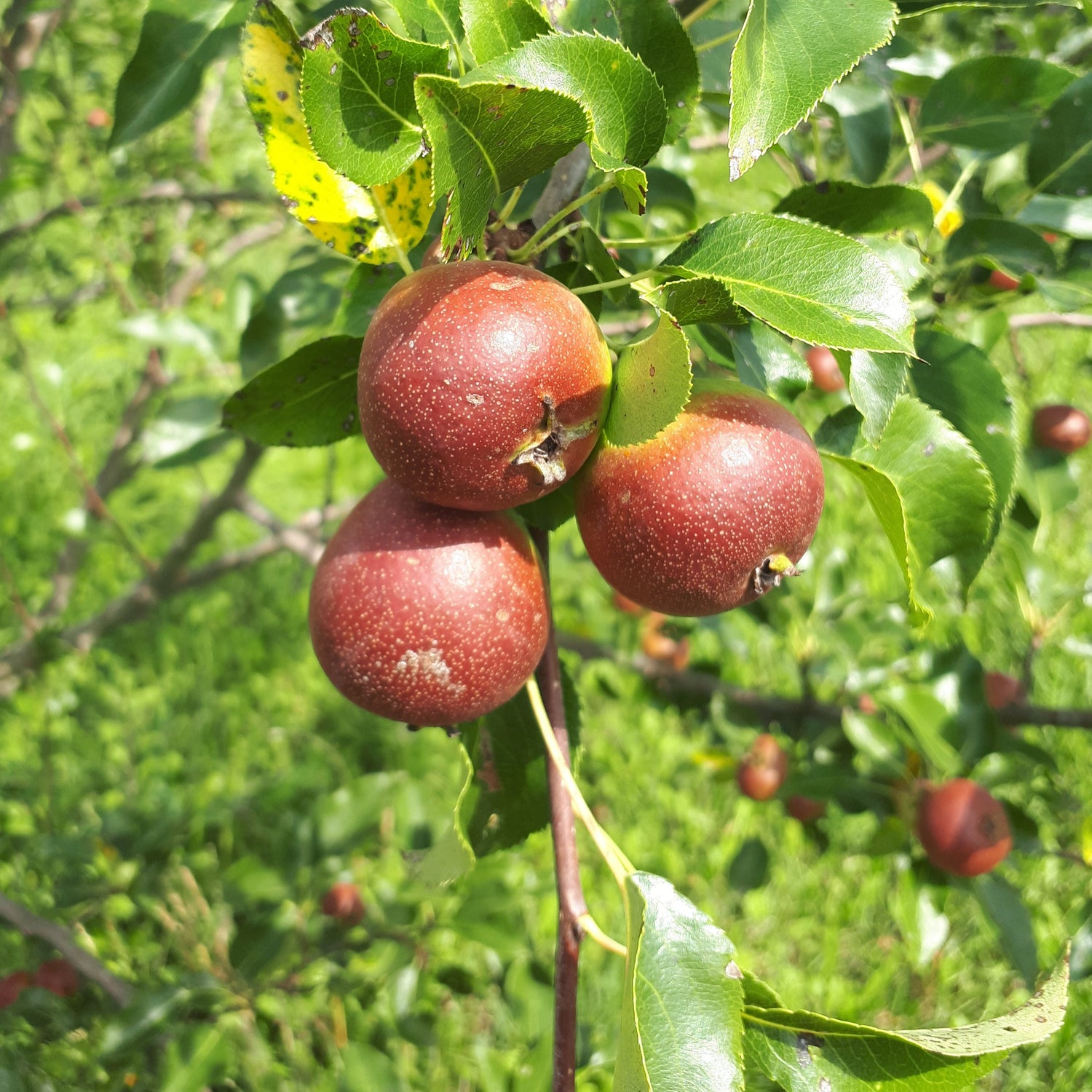
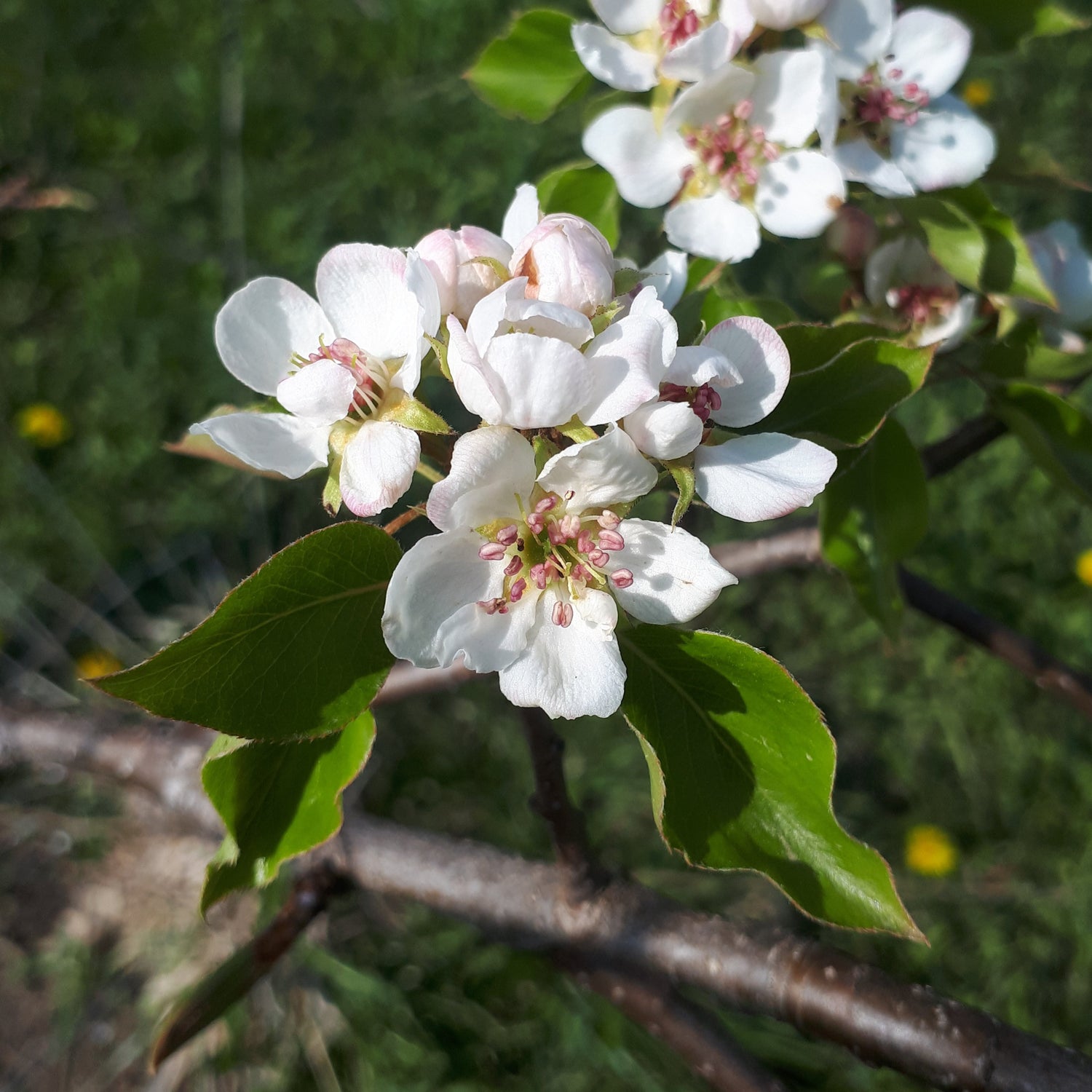
History: Golden Spice was developed by the University of Minnesota and introduced in 1949. It has Ussurian pear (Pyrus ussuriensis) heritage, a separate species from standard European pears (Pyrus communis).
Why We Grow It: Golden Spice is a Ussurian variety with excellent cold-hardiness. The fruit is small and yellow with a sweet, spicy flavour. It is resistant to fireblight.

History: Goldrush was bred specifically for scab resistance as part of the collaborative PRI disease-resistant breeding program run by Purdue University, Rutgers University, and the University of Illinois. It was developed in the 1970s and released in 1994. This variety has a complex heritage of Golden Delicious mixed with a cross of several other varieties for their disease resistance.
Why We Grow It: This is arguably the best scab-resistant variety released from the PRI Breeding Program as far as flavour is concerned. The dense, crisp flesh of this yellow apple is full of sugars and flavour. It is distinctly spicy and tart at first but mellows the longer it is in storage. The fruit stores exceptionally well. This truly multi-purpose apple is also great for drying and, unusually for a modern variety, is good in hard cider.

History: Goodland was developed at the Morden Research Station in Manitoba as part of an effort to breed cold hardy apples for the prairies. It is a seedling of Patten Greening that was selected in 1925 and the variety was introduced commercially in 1955.
Why We Grow It: The cold hardy Goodland produces a medium to large yellow apple with red striping. This crisp, juicy apple has sweet/tart flavour that is great for fresh eating, cooking, and sauce. Unlike most early ripening varieties, Goodland will store well for several months.
Showing 120/320
Next