All Fruit Trees

All Fruit Trees
Looking for bareroot fruit trees Canada? We offer a wide variety of bareroot fruit trees including apples, apricots, pears, plums, cherries, quince, and peaches that are grown for the Canadian climate & we deliver cold-hardy fruit trees right to your door!
We also offer fruit trees for small gardens, heritage apples Ontario and you can filter all our fruit trees by hardiness zones. Search trees by collection or peruse all the varieties we carry below! We offer flat rate shipping across Canada.




320 products
Sort by:
320 products
320 products

History: Granny Smith was discovered by Maria Ann "Granny" Smith as a chance seedling on her and her husband's farm in Australia in 1868. Having grown from apple seeds she had tossed, she found it to be an exceptional apple. She propagated it and brought the apples to market, earning the variety local popularity. She passed away two years later but local growers kept the variety going until it was noticed by the New South Wales Department of Agriculture in 1895. Thanks to its excellent shelf life, it became an important agricultural export and remains one of the most popular apple varieties in the world today. There has been an annual Granny Smith Festival in Eastwood since 1985 to commemorate Maria Ann Smith and her apple that attracts over 80k attendees each year.
Why We Grow It: This classic green apple barely needs an introduction! It is well known for its sweet and sharp flavour that is a delight for fresh eating and for its usage in cooking and baking. As an added bonus, Granny Smith also keeps well in storage and tends to start producing fruit at a young age.
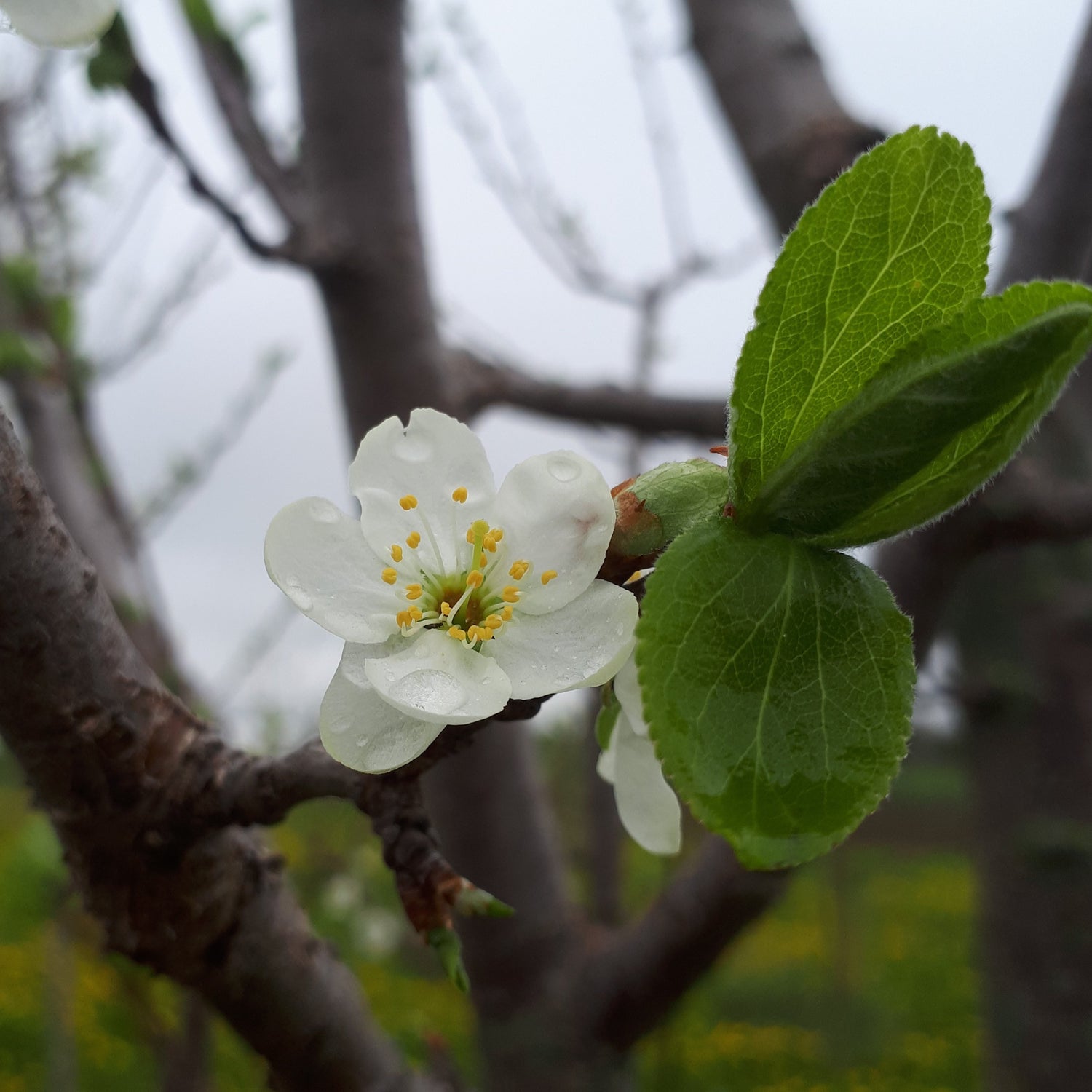
History: Greengage plums are a European variety that originated in Iran, although it is unclear exactly how old they are. They were introduced to England via France in 1724 by Sir William Gage, after whom they were named in English when the French labels were supposedly lost in transit. These sweet plums were later brought to North American colonies where they were grown by prominent figures such as George Washington and Thomas Jefferson. Although they have since fallen out of favour in North America, they are still quite popular in western Europe and occasionally referenced in pop culture. Greengage plums are the namesake of The Greengage Summer, a 1958 novel and subsequent 1961 film, and are mentioned in a Monty Python sketch.
Why We Grow It: It is a shame this plum's popularity declined in North America since it is considered a high-quality dessert fruit, possibly even the best dessert plum. Their bright green flesh is incredibly sweet and can also be used for cooking and preserving. Greengage plum trees tend to have a compact growth habit, great for anyone without a lot of space.

History: Greensleeves was bred as a cross between James Grieve and Golden Delicious by Dr. Frank Alston at the East Malling Research Station in the UK in 1966. In 1981 it received the Royal Horticulture Society Award of Merit and was released the year after.
Why We Grow It: These round, golden apples have a nice sweet/tart flavour that mellows out with maturity. They are great for making juice or cider as well as fresh eating. The tree has low vigour so it naturally stays more compact, a useful feature if you don't have a lot of space.


History: Grimes Golden was discovered on the Grimes farm in what is now West Virginia in 1832. Local legend claims that it grew from a seed planted by John Chapman, better known as Johnny Appleseed. After its discovery, it was widely planted up until the 1930s when it became supplanted by more popular varieties such as its (likely) descendant, Golden Delicious.
Why We Grow It: Although less popular now than Golden Delicious, many claim that Grimes Golden has a superior flavour: sweeter and with a hint of spice. The fruit is great for fresh eating and making cider, and it stores quite well. The tree is moderately resistant to fire blight and mildew.

Species: Prunus dulcis x P. persica
History: Little is known about the origins of Hall's Hardy almonds aside that they are actually a hybrid between an almond and peach. This hybridization allows them to better withstand colder temperatures that normal almonds cannot.
Why We Grow It: Hall's Hardy is a cross between an almond and a peach, giving it the cold hardiness to grow and produce small almonds in our climate. Although the nuts take quite a bit of effort to extract from their shells compared to regular almonds, they have a nice bitter-sweet flavour. They have higher levels of amygdalin than regular sweet almonds, so it is recommended to boil or roast them to remove the toxicity just to be safe, especially if consuming larger quantities. The trees are also quite attractive with ornamental pink blossoms in the spring.
Bareroot Peach & Almond Trees
We are very pleased to be able to offer almond trees to our customers. They are both challenging and rewarding plants to grow. However, due to the unique challenges of growing these trees, and the increased care required for their success, we regrettably cannot offer our standard 90 day guarantee. Please inspect your almond trees to your satisfaction when you pick them up at the nursery, or immediately upon arrival if they are shipped. For shipped trees, make your claim within 7 days of receipt of the trees. After 7 days of receipt, you will have been deemed to have accepted the trees in as-is condition.

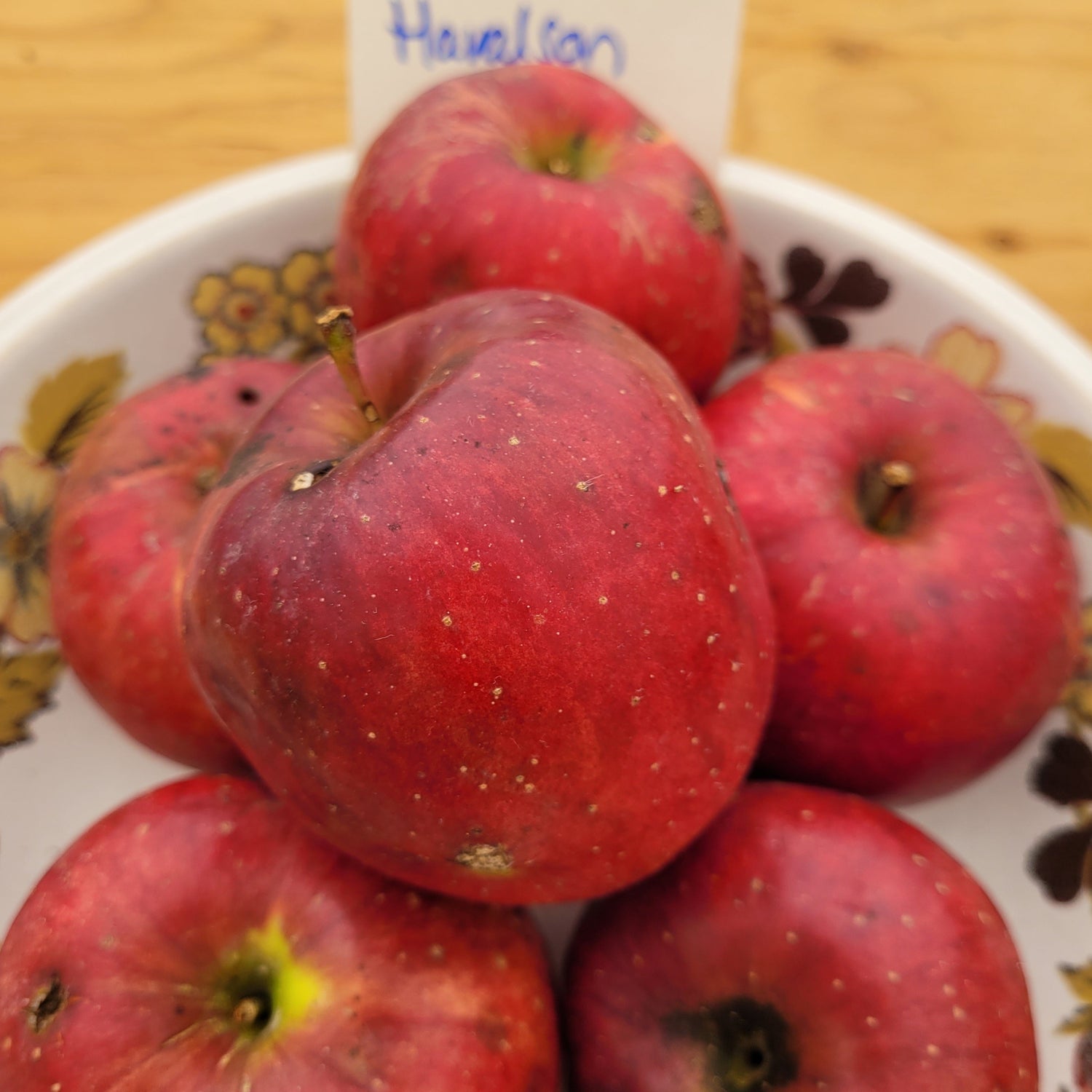
History: Haralson apples were developed at the University of Minnesota in 1922 and named after Charles Haralson who was superintendent of the university's fruit breeding farm. It is one of almost 30 apple varieties the university has developed in its breeding program since it began in 1888.
Why We Grow It: The skin of this variety is striped red with russet dots and the flesh is white, juicy, and of pleasant albeit mild flavour. Haralson boasts excellent cold hardiness and general disease resistance.

History: Harcourt was developed by the University of Alberta and released in 1955. It was named after George Harcourt, a key player in the creation of the university's agricultural program, in honour of his legacy in shaping Albertan agriculture as a professor, civil servant, and horticulturalist.
Why We Grow It: This cold hardy variety produces apples that are lightly waxed with prominent red striping. The fruit is crisp and juicy with a pleasant sweet-tart flavour. Harcourt apples do need to be enjoyed quickly since, like many early-ripening varieties, they do not store well. Fortunately, they are great for juice, sauce, and drying!


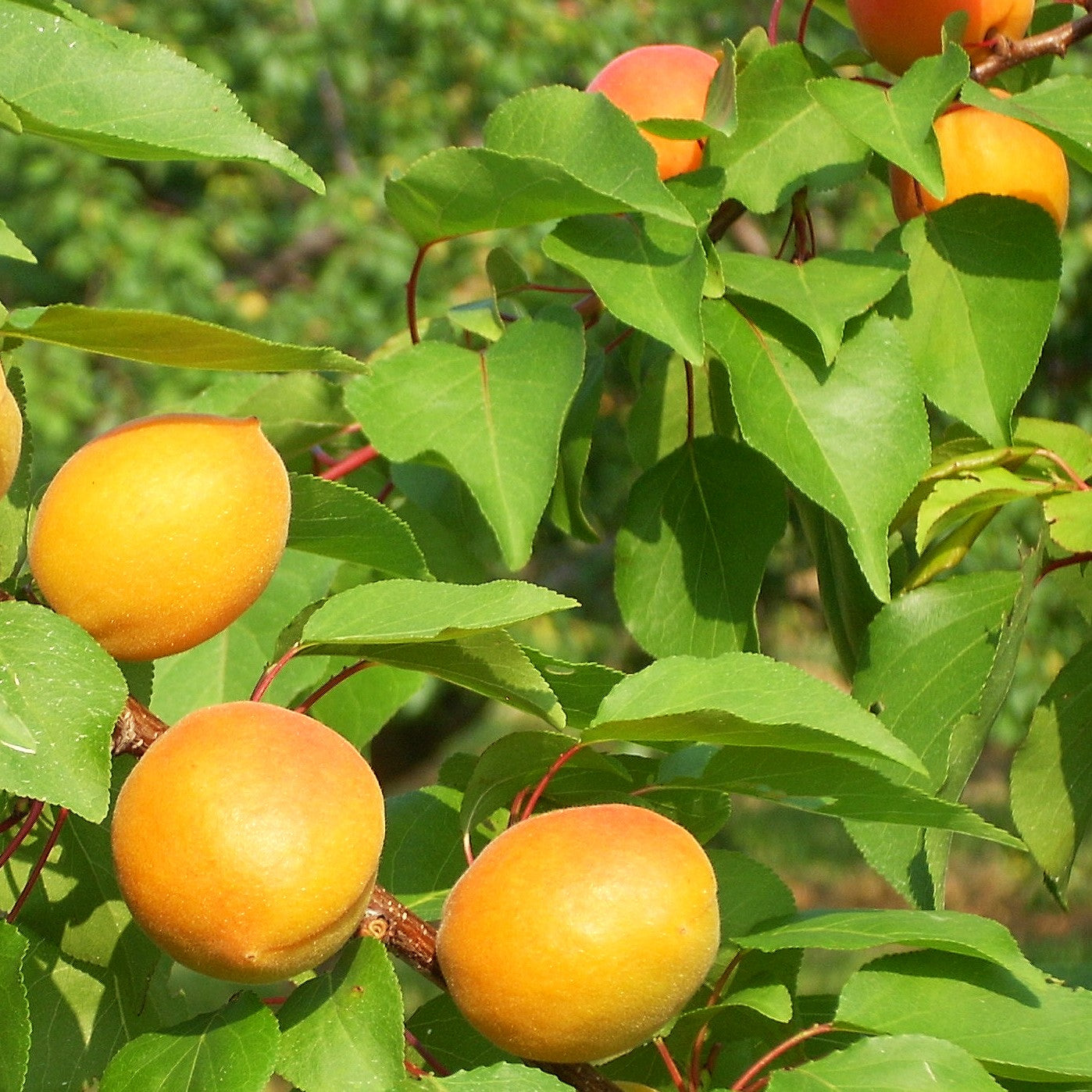
History: Harlayne apricots were developed at the Harrow Research and Development Centre in Ontario and released in 1980. It is one of several specifically bred to survive in a southern Ontario climate and of the Harrow apricots it was the most cold hardy.
Why We Grow It: Harlayne is a cold hardy variety that can tolerate temperatures of -30°C. It is a medium-sized apricot and freestone. The skin is a bright orange with an attractive red blush and the flesh is sweet, making it great for fresh eating along with canning or preserving. Unlike most of our apricots, Harlayne requires a pollinator.

History: Harrison was first described in 1817 by William Coxe and became a very popular cider variety in New Jersey during the 1800s, making it one of few American varieties renowned for its cider properties. Harrison's popularity declined in the early 1900s and it was believed that this variety was lost to time until it was rediscovered in 1976 growing by an old cider mill in New Jersey. This rediscovery was just in time, as what may have been the last known Harrison trees were cut down only a week later. Following successful propagation, it is once again being grown by cider makers across North America. It is considered one of the best American apples both for fresh eating and cider.
Why We Grow It: Harrison produces a high quality cider and can be made into a single variety cider. Unlike most cider apples, Harrison can also be eaten fresh and has a pleasant if somewhat dry taste. It is also scab resistant and crops reliably each year.
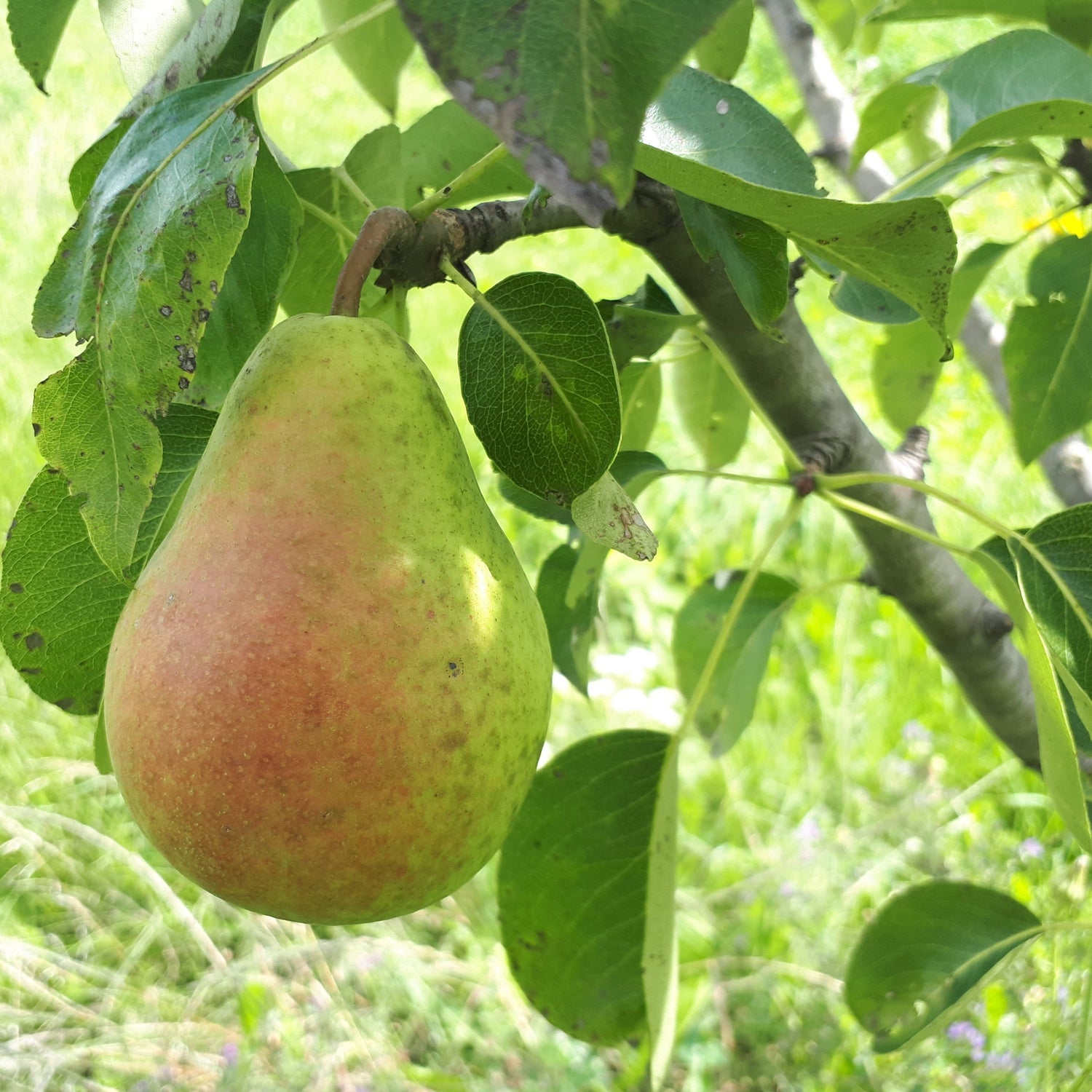
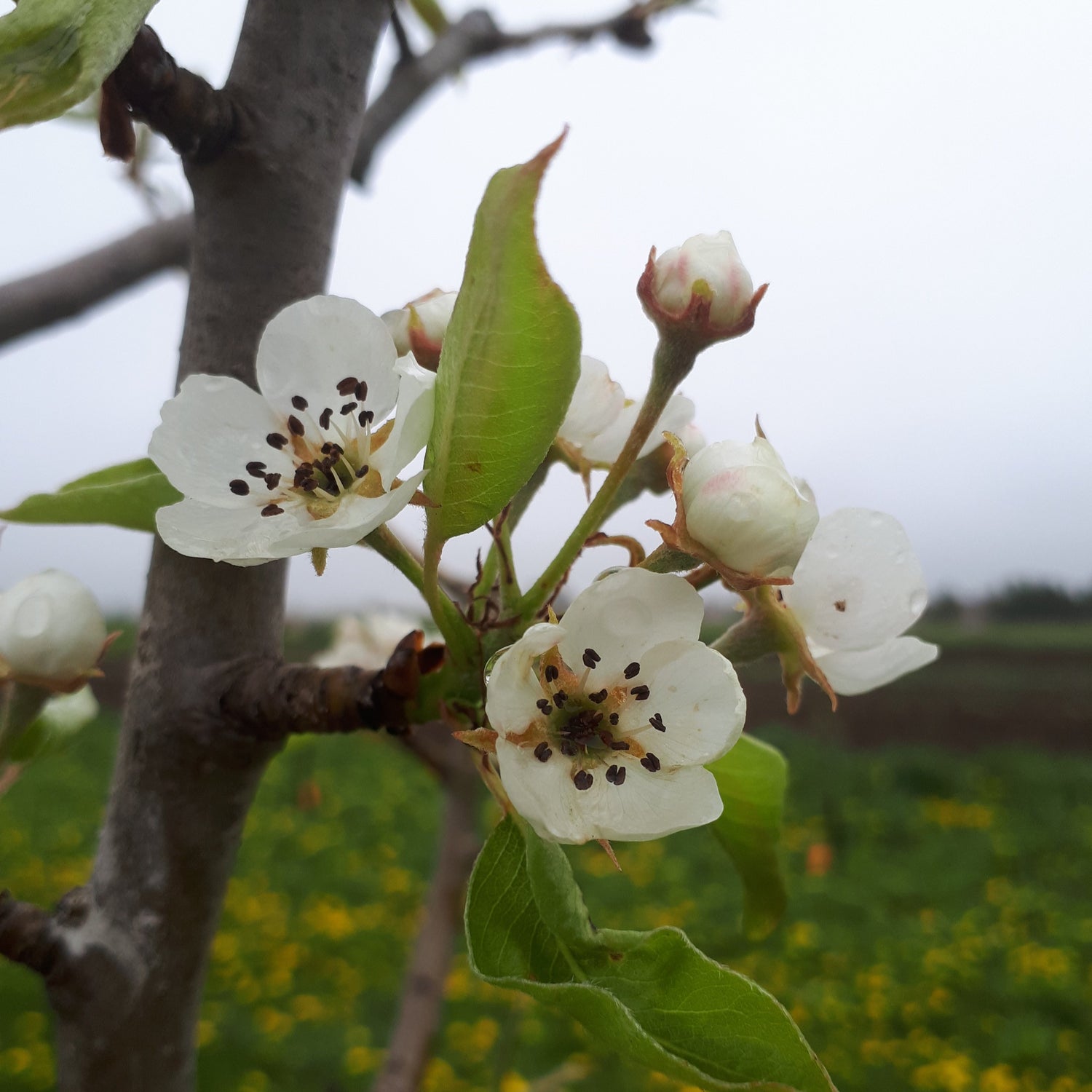
History: Harrow Delight, as the name suggests, was introduced from the pear breeding program at the Harrow Research and Development Center in Ontario in 1981. It is a cross between Bartlett and Purdue 80-51, making it a sibling to Harrow Sweet.
Why We Grow It: Harrow Delight pears are green with red blush when mature. They have sweet, juicy flesh and keep about a month. The tree boasts resistance to both fireblight and scab, making it a good option for anyone looking for a more disease resistant pear variety.

History: Harry Masters Jersey was discovered in the early 1900s at Yarlington Mill (in England) and is thought to be a seedling of Yarlington Mill (the apple variety). It was named after Mr. Masters, a worker at the mill who is thought to have discovered the apple.
Why We Grow It: Although not the most vigorous of apple trees, the fruit itself boasts a medium-full bittersweet juice of vintage quality with low acid that makes it popular among cider connoisseurs. Harry Masters Jersey also starts producing fruit at a young age.

History: There appears to be relatively little information on the origins of Hayatama aside from the fact it originated in Wakayama prefecture in Japan. It is potentially named for Kumano Hayatama Taisha, a Shinto shrine in the area.
Why We Grow It: Hayatama produces small, flattish golden-brown pears that are juicy and crisp with a sweet flavour. Although the fruit is small, the tree produces crops of a good size and will give you an ample harvest.
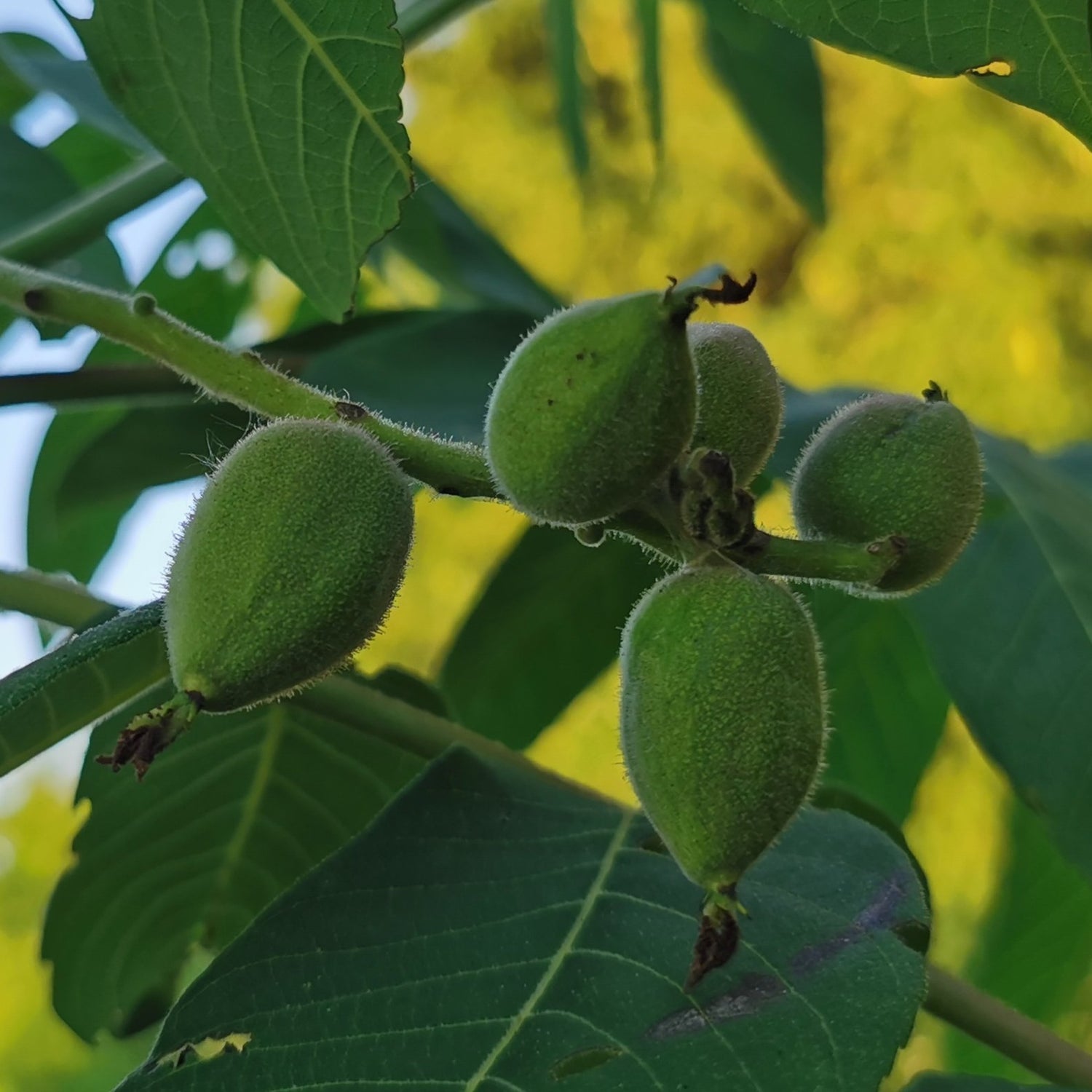
Species: Juglans ailantifolia var. cordiformis or hybrid. Our seeds are collected from trees that may have been cross-pollinated by closely related species so the resulting seedlings may be hybrids.
History: Heartnuts are a sport of the Japanese Walnut that have a heart-shaped shell and kernel instead of the usual elliptical shell. They have good commercial potential in the Great Lakes area where the climate is similar to that of Japan.
Why We Grow It: These trees produce an abundance of tasty nuts that are sweet than other walnuts and lack the bitter aftertaste. Ideally, they will produce heart-shaped nuts but since they are seedlings they may produce the usual rounder nuts of the regular Japanese walnut. They are sensitive to spring frosts for nut production, so they are best planted in a sheltered location.
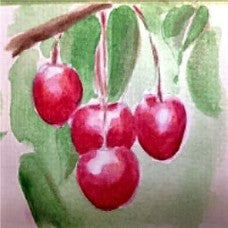
History: Hedelfingen cherries were discovered in Germany around 1850. The variety was named for Hedelfingen, the area where it was found. They were introduced to England in 1907 and are still grown commonly in Europe and North America.
Why We Grow It: This is an excellent quality sweet cherry that is very popular in Ontario. The fruit is dark red in colour with faint speckles, softer flesh, a pleasant juiciness, and a great taste. The trees begin to bear at a young age, the fruit is resistant to cracking, and the blossoms are tolerant of frost.
A recommendation from one of our wonderful customers: Save the pits! Chef Sam advises infusing sweet cherry pits in whiskey for an alluring, aromatic, almond flavoured drink!


History: Hendre Huffcap was first recorded in England either in 1923 or 1963. The confusion stems from whether it and another variety called Lumberskull, which was recorded first in 1923, are actually the same variety. Hendre Huffcap remains a popular perry pear in England.
Why We Grow It: This popular English perry pear has endured due to the high quality juice it produces which is great on its own and in blends. The tree bears heavily and reliably, although some thinning is recommended since the branches can break under the weight of its own crops.
Showing 135/320
Next